
The importance and power of strong leadership to create sustained change with respect to inclusion and diversity

Written by Dr Jill Berry
Thirty years teaching across six different schools in the UK, state and independent, and was a head for the last ten. Has since completed a doctorate and written a book.
This post is based on my contribution to the Boarding Schools’ Association online conference on Inclusion and Diversity on 14th October 2020. Thank you to BSA and Ammy Davies-Potter for inviting me to be part of this event.
“I want to conclude this opening session by focussing on the role of leaders in schools, if we are to move forward and achieve progress with respect to how diverse and inclusive our schools are.
I was a head in the independent sector for 10 years – until 2010. Since then I have worked with many schools and leaders at all levels, focussing on leadership development, so I am still very much involved in the world of education. I am keen to do all I can to support leaders so that THEY can support, and constructively challenge, those they lead to achieve their professional best.
I think it was Vic Goddard, the head of Passmores Academy, who said ‘as a head, you make the weather’. School leaders have the opportunity to model the behaviour they hope others will emulate – students, staff, other leaders across the organisation, governors, even parents – all members of the wider school community. The best leaders I know have a strong sense of moral purpose, integrity and humanity. Their leadership is based on clear principles, and the groups and communities they lead know what these principles are. Ideally, leaders need to LIFT those they lead, rather than grinding them down.
So modelling a principled commitment to respecting diversity and increasing inclusion is going to be part of this. I expect that if you’re in this webinar you share this commitment, and you’re not just ticking a box to show you’ve paid lip-service to the issue.
How do leaders model this commitment? I think it’s about proving yourself to be a strong ally, as Matthew has already mentioned this morning. It’s about being determined to stand by those who face barriers as a result of their ethnicity, religion, culture, age, gender, sexuality or disability – whichever protected characteristic, or, taking into account the issue of intersectionality, whichever multiple characteristics, apply. It’s about giving support to ensure others can take a seat at the table, and they can use their voice and be heard. Can we help to amplify those voices and ensure we model receptivity, especially when what we hear may be challenging and difficult? Can we be strong, powerful allies and encourage those we lead to embrace allyship too? Can we stand up, not stand by? Can we embrace discomfort and recognise that saying nothing doesn’t show respect? Following the killing of George Floyd and the #BlackLivesMatter drive, I was really struck by the Martin Luther King quotation:
‘In the end what we remember will be not the words of our enemies, but the silence of our friends.’
Sometimes when a situation is sensitive, we can feel reluctant to speak up out of fear of saying the wrong thing, choosing the wrong words. I think we’ve realised in recent months that saying nothing could be the worst thing of all. We have to have dialogue. We need to listen and learn, raising our awareness and acting on what we learn. I really liked what Temi said earlier about moving from ‘intention’ to ‘impact’.
I’m very aware that I only have a few minutes, so I’ve given Ammy some recommendations to share with you – podcasts and readings, including an excellent blog post by Hannah Wilson about how to be an effective ally. There are also links to two online events coming up – one specifically for governors, which I hope may be useful for you to pass on to others. See the references at the end of this post.
What do I think is important with respect to strong leadership to create sustained change in this area?
I have four suggestions to make this morning:
- Be clear about your school’s vision and values, and how a respect for diversity and inclusion is reflected in any statement of purpose and priorities and what your school stands for. Ensure your principles are clearly communicated and understood within and beyond the school community, and that these principles are LIVED in the day to day life of the school – in your relationships, practices and policies.
- Be prepared to talk openly about the importance of respecting diversity and fostering inclusion – keep listening and learning. Accept it will be uncomfortable at times, but be willing to embrace the complexity rather than shrinking from it. This involves heads and governors working together, having robust conversations and ensuring you are aligned and pulling in the same direction. It also involves engaging your students in discussion so that they know they are listened to and they are aware of different perspectives and the importance of equitability. They are the next generation – the future and our best chance of achieving sustained change.
- Be willing to advocate for your students where there are tensions, for example between parents and their children over any issue to do with inclusion. I think this is what good schools have always done – while trying to bring parents and children together when there is conflict, helping to resolve difficulties and find a way forward, schools still need to be clear that they are on the child’s side rather than (in the independent sector) automatically on the fee-payer’s, if their principles and moral purpose clearly indicate that this is the right thing to do. Schools have to do the RIGHT thing, not the EASY thing.
- Lastly – work on the curriculum, alongside subject experts, to consider the curricular repercussions of a commitment to diversity and inclusion. I’ve recently read ‘Leaders with Substance’, by headteacher Matthew Evans and he is excellent on the centrality of the curriculum and the focus on WHAT we are teaching and WHY we are teaching it, rather than just HOW we are teaching.
In summary, I think strong leadership is about being a strong ally, and encouraging those you lead to do the same. Courage is clearly needed – there may be pushback from some parents, some governors, some students, some staff. As a head I remember the “This isn’t the kind of community I am buying into” conversation. But if the behaviour or approach behind that sort of comment is actually discriminatory, we have to be strong enough to stand against it.
The resources and links will give further information and sources of support as school leaders determine to do all they can to be strong allies, to address inequity, to make progress and to move forward.
I recognise it isn’t easy.
I strongly believe it IS possible. I don’t think you’d be here if you didn’t share that conviction.
I hope the rest of the day helps to confirm that.
Thank you for listening.”
References:
Anti-racist education – selected resources collated by The Chartered College
Black Lives Matter podcasts
Hannah Wilson (@Ethical_Leader) blog post on how to be an inclusive ally – which contains further resources within it

How to promote an anti-racist culture in social work

Written by Wayne Reid
Professional Officer & Social Worker
[This article was originally published in Community Care magazine (online) on 17/07/20.]
Following the constructive feedback received on my last article, I’ve been keen not to rest on my laurels. Kind words and superlatives are, of course, pleasant and healthy for the ego – but they won’t eliminate the barrage of everyday multidimensional racism. Whilst pausing the platitudes, I’ve been ruminating about clear actions that social work educators, employers and key stakeholders can take to promote anti-racism. My aim in this article is to outline some practical (and skeletal) ideas for social work organisations to consider. I will use the terms people of colour (POC) and Black and ethnic minority interchangeably for ease. Again, I write this article from my own viewpoint, not on behalf of all Black and ethnic minority people or social workers – as we are not a homogenous group. Also, I’m by no means an expert in organisational development/leadership, but I do consider myself as an ‘expert with lived experience’ of personal and professional racism in life and in social work. These are purely my opinions. Contemporary scholars include: @gurnamskhela, @consultancy_hs, @kguilaine and @muna_abdi_phd (Twitter handles).
Black and ethnic minority social workers cannot and should not be expected to ‘fix’ racism
Black and ethnic minority social workers cannot and should not be expected to ‘fix’ the racism in their workplace. However, those of us who are confident and capable enough (with the right support) can have a crucial role in educating, empowering and equipping ourselves and (potential) allies and influencers to enhance and shape anti-racism initiatives in our workplace settings.
EVERYONE has a duty to combat racism (and other forms of discrimination) in the spaces they occupy. This includes reporting racist incidents when they occur; forming like-minded alliances with peers to tackle key issues; raising awareness and making suggestions for positive reform. However, this article is aimed primarily at social work employers, educators and key stakeholders.
Typical organisational responses to tackling anti-racism:
From my cultured social work experience, the responses below generally indicate an organisation’s prioritisation and level of commitment (or not) to anti-racism. However, before any meaningful change can be achieved, social work educators and employers must acknowledge the inherent and intrinsic nature of ‘whiteness’, ‘White fragility’, ‘White privilege’ and white supremacy as subconscious default positions in most (if not all) institutions, structures and organisational cultures. Individual and organisational awareness is an imperative first step for social workers, social work employers and social work educators to address workplace racism effectively. “In a [multifaceted] racist society, it is not enough to be non-racist. We must be anti-racist.”
Broadly, there are 3 typical organisational responses when attempting to tackle racial inequality:
- Keep silent, keep things the same and “hope all this Black Lives Matter (BLM) ‘stuff’ just blows over”. This kind of inaction and paralysis of fear correlates with and reinforces perceptions of ‘White fragility’, ‘White privilege’ and white supremacy for some POC. This type of organisational response usually commends staff for being resilient and deflects attention away from the essential redesign of systems that routinely make people suffer.
- Publish lukewarm organisational statements that recycle and regurgitate previous rhetoric on workforce unity with predictable (and borderline offensive) platitudes – often proposing only superficial changes. For example, publishing a sympathetic, but non-committal kneejerk brief statement; possibly delegating responsibilities to an already overworked Equalities Officer or proposing minor changes to already vague policies/procedures on ‘valuing diversity’ with little or no accountability. Approaches at this level are usually well-intended, but tokenistic and overlook the nuanced obstacles and pitfalls POC face every day. Unfortunately, this response is common.
- Publish an authentic anti-racism action plan outlining significant reforms that commit to specific, measurable, achievable and realistic targets (suggestions below). For example, publishing a strong mission/position statement condemning George Floyd’s murder and racism in all its forms and committing to BASW’s Code of Ethics, anti-oppressive, anti-discriminatory and anti-racist practice. This approach interlinks with the ‘Anti-Racist commitment framework’.
The acid test is to share this article with your social work leaders and see what response you get.
Covert, entrenched and everyday racism in the workplace
If the recent news of police officers taking ‘selfies’ beside the bodies of 2 murdered Black sisters; the recent far-right violent protests in London or the racist comments by Suffolk councillors do not outrage you or alert you to the fact that racism is thriving in this country right now – then you really need to consider whether you have sleepwalked into being an opponent of anti-racism. At the very least, we must be self-aware and honest (with ourselves and others) when our boredom threshold is reached. This can be subliminal and counterproductive to anti-racism at every level. Everyday micro-aggressions (including ‘banter’ in the workplace) can fuel violent racist incidents.
The covert, entrenched and everyday racism in the workplace sometimes indicates the lack of quality cultural diversity and multicultural education and training available (to all staff). Surprisingly, it is rarely acknowledged in social work that race is simply a socially constructed idea with no scientific validity – invented and refined principally to oppress POC. This has modern and everyday ramifications in the working environment. Throughout the Coronavirus pandemic, Black and ethnic minority practitioners have reported to the British Association of Social Workers (BASW) that Personal Protective Equipment (PPE) has clearly been prioritised/withheld on occasions for their white colleagues. Others explained they were made/ordered to visit service-users with suspected COVID-19 (with no PPE and no guidance/support), whilst white managers stayed at the office with ‘their’ supply of PPE and engaged in racist banter. These perverse experiences can be impossible for victims of ‘naked and slippery’ everyday racism to articulate to others or reconcile internally themselves. Furthermore, these incidents are normalised and subsumed in many workplace cultures, with limited opportunities to ‘professionally offload’. In some cases, it’s really not hard to see who the direct descendants of slave-owners are. With some people, it stands out like a beacon, regardless of what they say and do.
As outlined in my previous article, there is a long [history] of atrocities and brutalities endured by Black and ethnic minority people globally. ‘Black lives matter’ is an acknowledgment that our lives need to matter more than they have, that society should apportion them equal weighting. That is why the retort of ‘White’ or ‘All’ Lives Matter in response to BLM is not really comparable or relevant. Would it be right to ask: “What about colon cancer?” during a discussion about breast cancer? Or advise a bereaved mother that ‘all lives matter’ at her child’s funeral? “Save the whales” does not mean other sea life is unimportant. This is not complex stuff and just requires us to revitalise our basic human qualities – compassion, empathy and humanity. Factually, unlike the lives of Black and ethnic minority people, white lives have always mattered. So, to keep proclaiming ‘White lives matter’ adds excessive value to them, tilting us further towards white supremacy. In hard times, surely it is right to protect and support certain groups – particularly vulnerable ones. This does not devalue, disadvantage or discredit any other groups; it just raises general awareness and improves the support available to specific groups that require immediate attention. BLM has its critics, but it is unclear why a movement that promotes equality is demonised by some people who vehemently claim they are not ‘a’ racist.
Anti-racism in social work must be fully considered and dismantled through collaboration with Black and ethnic minority social workers in roles as ‘experts with (personal and professional) lived experience’. This is the only way that Black and ethnic minority social workers’ basic needs can be properly met and their wide-ranging expertise fully utilised. Of course, this approach can only improve the experiences of black and ethnic minority service-users too. It really is just a question of how much of a priority is anti-racism in social work?
So, how can social work employers implement ‘anti-racist practice’ in the workplace?
What might an anti-racist working environment look like? What can social work employers do to promote anti-racism in the workplace? What would the experience be like for Black and ethnic minority social workers? Here is my vision of how this might work in reality:
Recruitment
Anti-racist recruitment targets are set to employ Black and ethnic minority senior leaders and educators to better reflect local communities and the workforce (where necessary/possible).
The ‘Rooney Rule’ is adopted, similar to senior recruitment in American National Football League. This involves at least one POC candidate being interviewed for each senior leader vacancy.
Operations
Anti-racism is: explicitly promoted in mission/position statements (good example here) along with other forms of anti-discrimination; included in relevant polices/procedures and forms part of employees’ employment contracts to underline its importance.
The data on workforce diversity and ‘protected characteristics’ (ethnicity, gender, religion, sexuality etc) informs the support available for minority groups; training for all staff and organisational policies and procedures. The workforce is encouraged to self-declare their identity and individual/group wellbeing at work provisions are developed in partnership with them. Creative wellbeing at work provisions are developed for those who have experienced workplace trauma associated with racism (and other types of discrimination). This includes peer-led support groups for members to reflect fully on their personal and professional experiences. Personal wellbeing is a mandatory agenda item for supervision meetings. By using this ‘identity dashboard’ approach, organisational efforts are more focussed and genuine; progress is properly managed through a cycle of reviewing data output and periodic verbal/written feedback from the workforce.
Safe and informal systems are introduced for Black and ethnic minority social workers in the workplace. For example, discriminatory practices or constructive solutions are made anonymously in an ‘honesty box’ to empower POC without fear of reprisals. Arising issues are then explored in supervision, team meetings or with senior leaders (if necessary).
Annual ethnicity pay audits ensure that any anomalies and discrepancies for Black and ethnic minority staff are properly reviewed and resolved.
The Covid-19 risk assessment is consistently used for all staff (particularly those from Black and ethnic minority groups).
Education
Anti-racist education is recognised as being at the heart of developing a more cultured and inclusive workforce and healthy workplace.
Education providers ‘decolonialise’ social work training programmes with the input of black and ethnic minority academics, social workers and service-users integrated at all stages of programme development and delivery.
Anti-discriminatory, anti-oppressive and anti-racist practice
form a fundamental and mandatory requirement of social workers professional development and registration. This includes a range of educational tools and training opportunities (for different learning styles) to ensure quality cultural diversity education is prioritised and valued. Staff continuously learn and better understand microaggressions, stereotypes and how they can demonstrate ‘anti-racist practice’.
The expertise of specialist external trainers and consultants is instrumental in shaping effective anti-racist approaches – with no reliance on tokenistic online courses.
Allyship
- Anti-racist allyship is understood by senior leaders, educators and practitioners to be vital in combating all manifestations of racism. Educating, empowering and equipping allies to actively support colleagues from marginalised and minority groups is common practice.
- Allyship actively promotes ways in which managers and staff can become allies or become better allies to support their Black and ethnic minority colleagues. Social work employers and educators demonstrate they are willing to keep listening and learning from POC to instigate any meaningful change.
Reverse mentoring
- Anti-racist ‘reverse-mentoring’ enables Black and ethnic minority social workers to mentor senior leaders and educators on anti-racism (especially those with identified ‘anti-racist needs’). It is important reverse-mentoring allows mentors some autonomy in their approach. Furthermore, mentoring agreements (considering confidentiality, power dynamics and conflict resolution) are agreed and signed by both parties at the outset.
Leadership programmes
- To combat ‘glass ceiling racism’, various professional development opportunities are available designed to provide advice/support colleagues from different ethnic and cultural backgrounds to enhance their career progression.
- ‘Positive representation’ recognises the disadvantages and obstacles for POC and provides opportunities (mentoring, nominations, secondments, shadowing etc) to support them in reaching their full potential.
- Due to the representational imbalance, ring-fenced investment and operational resources to support leadership programmes is in place. This addresses the lack of Black and ethnic minority social workers in senior roles and provides support for those who are.
- Unsurprisingly, I cannot be detailed or too prescriptive above due to limited space. Also, the demographics/dynamics in each work setting will vary. However, my suggestions can be cross-referenced with the ‘Anti-Racist commitment framework’. The framework’ provides more detail on: accelerating diversity; educating, empowering and equipping people; leading by example and building transparency. The framework is also compatible with BASW’s Code of Ethics, Working Conditions & Wellbeing Toolkit and mentoring scheme.
Ok, so what needs to happen nationally?
The existing national frameworks and initiatives to support Black and ethnic minority social workers are fragmented and optional. This can create confusion and dilution in their coherence and implementation in practice. Social work has a long history of committing to anti-discriminatory practice, but less in the way of practical mandatory implementation or robust challenge on these issues. Now is the time for the profession to properly address this. I (and no doubt many others) would welcome the prioritisation of sector leaders (including the Chief Social Workers, Social Work England, Directors of Social Services and other key stakeholders) to meaningfully and purposefully move this agenda forward to establish a mandatory ‘anti-discriminatory national framework’ that is universal across social work – in collaboration with BASW.
An important first step, would be to explicitly reintroduce anti-discriminatory, anti-oppressive practices and anti-racist values and ethics into the professional and qualifying education and training standards. This new regime should involve partnership working between key stakeholders to enforce these values and ethics across the professional landscape. Key aims/objectives would be to: ensure consistency, introduce mandatory requirements, emphasise ‘anti-racist’ values and be universally applicable to all social workers like the Professional Capabilities Framework and the professional standards.
We all know that organisations can sometimes be avoidant of anti-racism, but as social workers we must recognise that silence (or inaction) on racism is complicity with the oppressors. Unfortunately, as a profession we have been complacent and have much more to do to cultivate equality, diversity and inclusion in the workplace and society.
BASW England is able to provide advice/support; facilitate consultation and deliver training (where possible) to assist social work organisations in implementing the above approach and embedding the ‘Anti-Racist commitment framework’. For social workers, there are various opportunities through BASW to develop your expertise in this area with our Equality, Diversity and Inclusion Group, events, branch meetings and training programmes. Also, BASW England will be leading a Black and Ethnic Professionals Symposium (BPS) for BASW members from 23/07/20 and a forthcoming anthology, so do contact me at wayne.reid@basw.co.uk or @wayne_reid79 – if you are interested in any of these initiatives. Many of you will also be aware of our campaign to change the imagery on the KCMG medal and our open letter to the Queen. BASW will not remain silent on this issue and we implore you to do the same.
I sincerely hope this article resonates with those with power and influence within social work to rigorously combat racism by integrating a mandatory ‘Anti-racist commitment framework’ (see below). I am confident that this will embed anti-racist values and ethics into practice (not just theory). Also, I also hope anti-oppressive and anti-discriminatory practice can be reaffirmed generally, as sadly, these have slid off the agenda significantly in recent years.
As a footnote, the Criminal Justice Act 1991 (Section 95), contains a section requiring the Home Office (changed to the Ministry for Justice) to annually publish the results of Criminal Courts in England and Wales. This makes it unlawful for those employed in Criminal Justice System (social work educators and employers) to discriminate on the grounds of ‘ethnic background’. This is a powerful tool, possibly under-used, by black and ethnic minority professionals and white officers (allies) who identify racism – particularly in social care generally. This has the potential of legislative support for operational staff who raise the issue of racist practices (where perceived).
Let’s not forget, “when you’re accustomed to privilege, equality feels like oppression”. The only real enemy of progress is ignorance. Social justice must prevail.
‘One world, one race… the human race!’
Race & Equality – 5 Questions for Every Headteacher
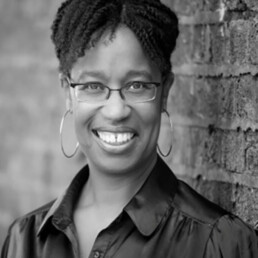
Written by Viv Grant
Director of Integrity Coaching
Like many, following the death of George Floyd, I was swamped by almost daily waves of emotion. I heard someone the other day that their “mind was full and their heart heavy”. It was how I felt too. It was as though my whole nervous system experienced some kind of historical trauma.
The flagrant disregard for the life of a black person brought up many painful memories from my past, of times when I was made to feel “less than” simply because of the colour of my skin.
Swallowing the pain of racism
As a young black woman growing up in the 1970s and 1980s, incidents of racism were peppered throughout my life. When I was 15, I was told by my careers teacher that my aspiration of becoming a nursery nurse was too high and I should consider becoming a cashier in the local supermarket instead.
On another occasion, I was reprimanded for talking in class and told to “go outside and swing on the trees, like my friends and relatives the monkeys do”. Complaining or expressing my hurt was never an option, so I simply learned to swallow the pain.
Despite my school experiences, in 1988 I decided to train as a teacher.
In my first year, I was introduced to the work of Bernard Coard, and his research on “How the West-Indian Child is Made Educationally Sub-normal in the British School Education System.”
It was not the lecturer’s intention, but as the only black student in my year, I felt a deep shame and discomfort when she read excerpts from his book that matched so closely with my own experiences of the British education system. For the majority of the white trainee teachers, Coard’s work was simply an academic treatise. For me it was personal.
I come from a black, working-class family. Social and economic deprivation and racial inequality were the backdrop for my childhood years. No one in the lecture hall shared my story.
As the lecturer read how the structure and design of the British education system had led to many black children underachieving and living with a hidden, yet deep, sense of inferiority, it felt as though she was shining a light on my own hurt, leaving my bruised and conflicted inner world for all to see.
I wanted to get up and leave the lecture hall. I didn’t, but I spent four years at teacher training college wanting to escape. I was tired of being in the minority, tired of being on the outside, tired of fearing that I could never truly achieve in a system that had only ever seen black children as a problem.
Low expectations for black pupils
When I eventually qualified as a teacher, I taught at schools in Brixton and Stockwell. One of them was on the border of a road that had been a flashpoint for the Brixton riots in the late 1980s.
It was a time when, just as we have seen in recent weeks, black people protested against the level of police brutality exhibited towards them. And it was here, at this school, where I faced some of the worst levels of racism.
It was a one-form entry Church of England primary school, where the majority-white teachers believed they were there to save the black children. Expectations for them were incredibly low.
In the early days, children spoke down to me. Why? Because the only other black staff were cleaners, and, on a daily basis, pupils witnessed the derogatory ways their white teachers spoke to them (and to me) and so it perhaps seemed inconceivable that I could be there to teach them.
There were times when I cried in the staff toilets because teachers referred to black boys as “gorillas” and I found my own voice stifled by staffroom hostility when I tried to counter these abhorrent views.
Despite all of this, within six years I rose to the position of headteacher at this school. I used my position to bring about change and ensure that high expectations, a sense of pride and achievement were a reality for every black child at the school.
Quest for change
If ever there was a time for education leaders of all hues to seize the moment and do the same, it is now. Bernard Coard’s conclusions still reverberate around our education system today.
It has not been easy for me to process the emotional pain that has arisen as a result of recent events. But I am continuing to lean into the pain because I know that if I don’t, I limit my own capacity for change; not only for myself, but also for my children and my children’s children.
School leaders have to go on a similar quest. It is perhaps the most difficult quest a leader can take because it will require them to explore issues of identity and integrity and what they truly mean in the context of their own school settings.
It will require them to have difficult conversations and face uncomfortable truths about themselves and their schools. Yet it is these sorts of conversations that truly define leadership and are fundamental to growth and positive change.
Furthermore, it’s only by leaning into the uncomfortable spaces and finding help and support that something new, something better, can be brought to life.
This is what true moral and ethical leadership is about. And it is only by going on this journey that school leaders can effectively model what leadership for racial equality and social justice really look like.
In order to navigate this journey, perhaps for the first time, leaders will have to ask themselves:
- Am I willing to listen to the black communities’ stories of pain, discrimination and hurt?
- Am I prepared to let down my defences and look at my own unconscious biases?
- Am I willing to engage with the weighty feelings and emotions that are a necessary part of this terrain?
- Am I willing to shine a light on every single aspect of my school and our education system and call out all the policies and practices that have limited the progress of black children and black educational professionals?
- In this struggle for racial equality and social justice, what is mineto do?
In my 30-plus years in education, I have seen how an unwillingness to truthfully engage with these questions has hampered progress for all. However, this time I hope things will be different.
In the months and years ahead, black parents will be looking at their children’s schools and wondering whether school leaders have truly heard the deep, searing cry that has shot through the black community for racism to be eradicated.
They will be looking for evidence that their child’s experience of school will be different and that the dreams they hold dear for their children are also held by those who teach them.
We can do better and we must do better. This is a defining moment for our education system; for our black children and black teachers to see that their lives really do matter.
Inclusive Allyship

Written by Yamina Bibi
English Teacher and Assistant Headteacher
This is my speech from the virtual @DiverseEd conversation on 17th October 2020.
Whenever I want to go ‘out out’, I think about my outfit, which colour scarf will match the outfit and the perfect handbag that will enhance that outfit. The handbag might be a large or a small bag. It might have many compartments or just have the one for my phone and purse. My handbags change according to whatever it is I’ve decided to wear that day.
Sometimes, it feels to me like some organisations treat diversity and inclusion like it’s a handbag, picking and choosing the one that enhances their ‘outfit’ for that occasion. Do we just pick the protected characteristic that suits us or are we inclusive allies for every community that we say we represent? Are we committed to anti-discriminatory work in order to be the inclusive allies that we say we are? If so, how is this evident in every sphere of our organisation?
As a visibly muslim female leader, I have experienced workplaces where I have been one of a few Muslim women being represented at a middle and senior leadership level. I have known organisations where SLT are made up of male and or female white heterosexual leaders who claim to be inclusive allies but each time there’s a senior leadership role, it’s the same type of person that gets the job.
Can we truly call ourselves inclusive allies if our leadership teams do not reflect the staff and students we lead and represent? Can we be allies if we do not stand shoulder to shoulder with all marginalised groups and communities and actively ensure their voices are represented and heard? Can we call ourselves inclusive allies if we only stand and advocate for the rights of one community over the rights of other communities?
A few years ago I realised the importance of inclusive allyship in the workplace when I had wonderful white allies advocating for my voice to be heard as a visibly Muslim British woman. I noticed its power when I had colleagues from different communities such as LGTBQ+ community standing shoulder to shoulder with me and others from my community. I particularly noticed how important was for me that, when I spoke about the islamophobia I faced and the way I felt as a Brisih Muslim woman in the workplace, I was listened to and supported by white allies.
I also noticed the power of inclusive allyship when I stood and spoke to my students at an assembly for LGBT week alongside my colleague, Nick Bentley, about the power of intersectional and inclusive allyship. When a BAME student came to me to disclose that they identified as non-binary and they came to tell me because of an assembly I led on gender identity, I realised the power of representation and inclusive allyship.
We cannot underestimate the power of representation and the power of being allies because in so doing, students and staff are taught that who they are matters. They know that they bring their authentic selves to school and work and there is someone who will be recognise them and advocate for them regardless of whether they are from the same community or not.
I am very aware that my current workplace, where my Headteacher is a Muslim woman and where the Senior Leadership Team include BAME leaders, LGBTQ+ leaders and mothers, is different but it shouldn’t be. It should be the norm if we are truly dedicated to diversity and inclusion.
As a result of the diversity of my school, I am longer afraid to show up as my authentic self because I have allies who support me and advocate for me. I also look to actively and positively promote others from diverse backgrounds as a leader to ensure that diversity, inclusion and representation are not just words on our school walls or our School Development Plans but are lived by us all.
At my school, we are aware that there is still work to be done in ensuring that we are truly representative of our staff body. We must actively promote and be held accountable for our anti discriminatory work if we are to call ourselves allies.
So what can we do to ensure that allyship is not just another handbag we pick up when it matches our outfit?
- Schools should provide coaching for members of marginalised groups and communities to help them develop professionally and to ensure they have someone whose key role includes eliciting the brilliance from within them
- Actively partake in anti-discriminatory work and provide unconscious bias training for all staff regularly so we can recognise our own biases and challenge ourselves and each other to check our biases Provide opportunities for people from under presented groups to be seen and heard through in all spaces
- Ensure the curriculum celebrates diversity and inclusion and is embedded in all we do. I am done with seeing curriculums where marginalised communities are always victims, enslaved or need rescuing by someone with privilege and power such as a white heterosexual man. While it is important to remember the hurt and horrors of past experiences, we need to also show our students and staff that diversity and inclusion is a part of any successful society. We must usualise this. We need to celebrate excellence within all communities and we need to scrutinise our curriculum and our organisational values and be held accountable for the narratives we are advocating through our curriculum.
- Organise assemblies and events where colleagues stand shoulder to shoulder to show that inclusive allyship is the way forward in creating a society where everyone is welcome, represented and encouraged to thrive.
Let’s stop picking up D&I like it’s a handbag and ensure it’s a staple item in every organisation by standing with all communities in our words but most importantly, in our actions!
#DiverseEd Virtual Conference - Reflections

Written by Hannah Wilson
Founder and Director of the Belonging Effect (formerly Diverse Educators).
Yesterday, Bennie Kara and I, the co-founders of #DiverseEd hosted our latest virtual event. Bennie is a Deputy Headteacher in the Midlands, and soon to be published author. I am a former Headteacher – we founded a values-based school with Diversity as a core value.
If you missed the event you can view the broadcast via Twitter here or Youtube here.
Panel 1: Diverse Children
Amanda Jane Carter-Philpott – a campaigner for inclusivity – shared her work with refugee children – encouraging us to consider the labels we use and the approaches we need to take to be both inclusive and trauma-informed.
Anton Chisholm – a Maths teacher – reflected on his experience as a black student and now black male teacher, sharing some of the stark workforce statistics. He shared a letter sent by a group of students asking their high-performing school to become actively anti-racist.
David Hermitt – a MAT CEO – shared his trust-wide approach to responding to the impact of COVID-19 on the children with protected characteristics his schools serve. He also suggested how trusts can deploy their diverse staff to enable more children to see visible role models.
Lisa Stephenson – the Founder of the Storymakers Company, one of our partners – encouraged us to consider how we can diversify storytelling to amplify pupil voices. Sharing the pupils’ feedback on their experience of co-creating their own stories emphasised the powerful impact the process had had on them.
Nic Ponsford – the Co-Founder and Co-CEO of our latest partner, GEC, challenged us to think about representation and how our biases are formed. The GEC app and #SmashingStereotypes campaign are some of the practical steps schools can take.
The threads, for me, from part 1 were the need for visibility of diversity, how we can increase and amplify diverse role models and who has voice in our school system.
Part 2: Diverse Curriculum
Amardeep Panesar – a Headteacher – shared her leadership of cultural competency in her school to develop her pupils’ ability to understand, communicate with and effectively interact with people across cultures by being aware of one’s own world view.
Christopher Richards – an international teacher in Spain – addressed the lack of diversity in textbooks and encouraged us to identify the gaps of who is invisible. He urged us to consider the voices being silenced through their absence.
Laila El-Metoui – a consultant and Stonewall Champion – shared her vision for a compassionate and trauma-informed curriculum. She reminded us that visibility and representation are needed every day, all year long. Moreover, that ESOL funding + provision of digital devices are important to ensure all children are supported to access the curriculum.
Sufian Sadiq – a Teaching School Director – emphasised that inclusivity needs to be part of the ethos and culture of the school, not just another box to tick, and it needs to be done in a way that adds value. He urged us to reflect on the micro and macro pictures of diversity and inclusion in the local context and to use the dominant characteristic in your setting as a catalyst for exploring other ones.
Penny Rabiger – our partner speaker for Lyfta – spoke poetically about the power of human storytelling. She invited us to get curious about each other and ask us to share our stories with each other. She is also introduced us to a new word: ‘Firgun (פירגון)’ an informal modern Hebrew term & concept in Israeli culture: genuine, unselfish delight or pride in the accomplishment of the other person.
The threads, for me, from part 2 were for us to consider our perspective, to explore human storytelling and to create opportunities for all stakeholder groups to be catalysts for change.
Part 3: Diverse Staff
Abena Akuffo-Kelly – a Head of Computing/ ICT and Councillor – unpacked her intersectional identity. As she peeled back each layer, she shared the challenges and conflicts of each circle she sits in.
Javay Jeff Welter – a MFL teacher – addressed the lack of diverse males in teaching and asked us to challenge the lack of visible role models. Reflecting on the lack of representation at every layer of the education system he challenged us to consider how we can meaningfully diversify the school workforce.
Lily Bande – a PSHE lead teacher and Councillor – encouraged us all to challenge inequality and discrimination as we see and hear it, by being upstanders and not bystanders, by being consistent in our commitment to making a difference.
Yamina Bibi – an Assistant Headteacher – shared the analogy of diversity not being a handbag that we pick and choose. She spoke passionately about inclusive allyship and how we each need to consider our power and our privilege to address inequities in our workplaces to give voice to those who are marginalised.
Tasha Fletcher – an international teacher – was our partner speaker for Teaglo. Joining us from Uzbekistan, she shared a A-Ha moment during lockdown. Tash was a central voice in the #DailyWritingChallenge and joined me at an #IamRemarkable workshop where we unpack our relationship with self-promotion. Her call to action was there is no better time than now for us to stand up and be counted.
The threads, for me, from part 3 provoked reflections on authenticity, allyship and the call to be upstanders.
Part 4: Diverse Schools
Andrew Moffat – a trust Personal Development Lead and the founder of the ‘No Outsiders’ campaign – reminded us that diversity is not a single issue (one protected characteristic) work but the need for true equality in context – the desired outcome of everyone being equal, everyone being welcome in our schools.
Ebanie Xavier-Cope – a Year 6 teacher and KS2 lead – shared her sobering story of dealing with racism as a teacher. Her distressing experience highlights the need for systemic change – she emphasised that schools need to address these incidents, not the individual who is the victim. The racism she has experienced has galvanised her passion for change and she is leading on projects to re-educate her school community.
Jared Cawley – an international teacher in The Netherlands – talked about the importance of feeling safe in your school, how diverse people can be celebrated not just tolerated. Being given opportunities to thrive, include creating cultures where diverse people can bring their whole selves to work.
Sajid Gulzar – a MAT CEO and OBE recipient – shared his thoughts on talent management and how we need to create open cultures and transparent conversations to have the difficult conversations. From recruitment, to retention to talent-spotting he shared some of the thinking and conversations his team have been having about how to commit to a system wide strategy.
Professor Vini Lander – our partner speaker from the Centre for Race, Education and Decoloniality, encouraged us to create a safe space for all of our children as racism is a safeguarding issue. Race and racism has to matter to all educational leaders because our CYP are demanding that their teachers are conversant in and cognisant of all matters related to race. Her call to arms was for “courageous leadership” to move beyond the status quo and to commit to being ”Racially literate”.
The threads, for me, from part 4 centred around safety and the need to create safe spaces where everyone in our schools can be themselves, where our commitment to inclusion is for our staff as well as our children, and the call for us to be courageous leaders in our commitment to this work.
A massive thank you to everyone who contributed to the event, your contributions were phenomenal. Thank you also to our partners for supporting the event, to my co-host Bennie and wingman (behind the scenes) Richard and to the audience for joining us – your engagement, reflections and questions brought the virtual event to life.
At the end of the event we invited everyone to revisit their #MyDiverseEdPledge from June and to make a new one – please do make a commitment for something you can actively make happen in our collective responsibility to improve diversity, equity and inclusion in schools.
If you have not yet visited our #DiverseEd website the quick link is here.
You can sign up for our monthly #DiverseEd newsletter here.
You can submit a blog for us to publish here.
We will let you know the details for how you can contribute to the Diverse Educators book and will update on the Diversity in Governance series once they are live.
Finally, Bennie and I are hosting Diversity Masterclasses during half-term on October 29th for Teachers, Leaders and Governors if you would like to join us.
My Five Top Tips for Making Your School LGBT-friendly

Written by Jared Cawley
LGBT (lesbian, gay, bisexual and transgender) Pride month seems like a very appropriate time to give extra attention to making sure your school is an inclusive, diverse and safe place for your families, students and workforce who identify as LGBT+. The month of June honours the anniversary of the 1969 Stonewall riots, where LGBT people and allies fought against police brutality and harassment that many were and continue to be subjected to today.
Schools are well-known for their openness and celebration of diversity when it comes to students, but some LGBT teachers still feel isolated and uncomfortable to talk openly about their sexuality. Schools are heteronormative workplaces and being a person who is not ‘straight’ requires some careful navigation. Headteachers and school leaders have a responsibility to sustain a school environment that welcomes diversity, supports equality, and defend all staff, including those who identify as LGBT. If you are a school leader who identifies as heterosexual, or is not part of a minority group, you are less likely to notice the exclusion or the discrimination that may be happening in your school.
As a LGBT teacher and a gay man, I have been subjected to abuse and discrimination throughout my life for loving someone of the same sex. Even though Government legislation has strengthened over the last few years, there is still a long way to go. As a LGBT teacher, I am hypervigilant and cautious about who I ‘come out’ to. This feeling of uncertainty is because being straight is the preferred and presumed sexuality. Choosing to ‘come out’ to students, families and colleagues is fearful, as you do not know their opinions and beliefs when it comes to the LGBT community. Making your school LGBT+ friendly must begin with small, deliberate steps. We must acknowledge that this will not happen overnight, but with thoughtful planning and strong leadership, a school can improve its culture of inclusivity for everyone.
When making cultural change in your school, it is important to avoid tokenism. It is superficial to teach diversity for a week or a month as a bolt on to your curriculum, when that is the only time you discuss LGBT rights or teach how to be anti-racist. All members of your school community is needed to make real change, deliberately walking the walk, instead of just talking the talk.
Below are my five top tips for making your school LGBT+ friendly:
1 Use Inclusive Language
Making small changes around inclusive language can have a huge impact on either making people feel accepted and/or feeling excluded.
Here are my suggestions:
- Instead of greeting your staff team or students with, ‘Good morning ladies and gentlemen, boys and girls’, say, ‘Good morning everyone’. With this, you have included all genders and identities without assuming everyone identifies with the gender they were assigned at birth.
- Challenge students and colleagues who continue to use phrases that diminish showing emotion or acting like a particular gender. For example: ‘man-up’, ‘you throw like a girl’, and ‘boys don’t cry’.
- Stop organising students into boys’ teams and girls’ teams, find different ways.
- Avoid reinforcing gender stereotypes.
2 A LGBT+ friendly school is everyone’s responsibility.
- It is a mistake to think that creating a LGBT+ friendly school should solely be the responsibility of the ‘gay teacher’. It should be a collective responsibility. Headteachers, senior leadership teams, teachers and the rest of the school community should be actively working together to promote an inclusive and diverse environment, ensuring all members of staff and students feel safe and can be their authentic selves.
- CPD and INSET days could involve external speakers, offering your staff a refreshing voice and a different perspective.
- LGBT+ people experience the world differently to their heterosexual counterparts, and school leaders should give them a safe space to talk about their experiences, with the support of their LGBT allies.
3 Be Proud of LGBT Visibility
If you are showing a prospective same sex family around your school, or a LGBT teacher comes for an interview, or a new student who may identify as LGBT or does not know their sexuality, how do they know that this school or future workplace is a safe and inclusive environment where they can be their authentic self?
Here are some suggestions:
- Give teachers a choice to wear LGBT badges/pins or have LGBT lanyards
- Display the Pride flag inside and outside your school. There are many flags here that represent the LGBT+ community.
- Displays. Show your visitors that you celebrate inclusion and diversity. Have displays celebrating LGBT stories and issues.
- Encourage LGBT+ teachers to make a network or support group where they can talk about LGBT issues and use this to show that LGBT+ voices matter.
- Have your senior leadership team and staff go on a learning walk, where the focus is LGBT inclusion. Can you see it represented in your school?
4 Have an inclusive and diverse curriculum
Your curriculum should be well planned and deliberately tailored to minority groups and should not be left to chance. To avoid tokenism, these practices should be carefully planned and seen across all subject areas.
Here are some suggestions:
- Children’s story books should include and promote different family dynamics, including same sex couples, single parents, foster parents, disabled children and parents, families of colour, families of different religions. Here are some ideas.
- In mathematics, have word problems that are inclusive of same sex families. Instead of Mrs. Smith or John, have names that come from a range of countries and heritages.
- In your presentations, ensure that the pictures you use show a range of minority groups.
- In your humanities curriculum, teach about colonisation, the impact of imperialism, and celebrate indigenous communities and customs. See here for more about decolonising your school curriculum.
- Diversify your set texts, offer a range of authors, not just white, heterosexual men.
5 Educate Yourself
I believe the best way to learn more about the LGBT community is to educate yourself, have an open mind and be comfortable with being challenged. I feel there can sometimes be a fear about people who do not belong to a certain minority group, making a mistake or unconsciously offending someone, or using a term or acronym that is outdated.
Here are my suggestions:
Read books and use organisations that specifically discuss LGBT voices in education and whole school approaches:
- Catherine Lee’s ‘Courage in The Classroom. LGBT Teachers share their stories’.
- Shaun Dellenty’s ‘Celebrating Difference. A Whole School Approach to LGBT+ inclusion’.
- Andrew Moffat’s book series for the No Outsiders programme.
- These organisations offer a plethora of teaching resources: Schools Out, Stonewall Education, Mermaids UK, LGBT Ed, and The LGBT Primary Hub.
- The LGBT Primary Hub offers a snappy timeline of our history and glossary of LGBT vocabulary.
In Search of Great Governance

Written by Rosemary Hoyle
Primary School Governor and Chair for over 20 years.
Inspired to write this post by a recent online event held as part of the Freedom to Learn Festival I have been prompted to draw together all my recent thoughts on diversity and the role of governance. In the opening remarks one of the speakers stated that it is a ‘schools’ purpose to create the next generation of global citizens’ and, not to give the game away too soon, that is surely why diversity matters! Looking back over earlier posts that I have written about the core functions of governance and, in particular the one about vision, values and strategy, I can see immediately how the board can lead in this area. In the strategic aims of the school I chair, agreed by the board after consultation with children, staff and the community, we felt strongly that there was a need to make diversity explicit so we state that we want to be –
A school that is at the heart of the community; a good neighbour and engaged with community groups of all ages. A school that builds on our pupils’ own experiences, interests and strengths and helps to develop their sense of identity as local, national and global citizens.
In order to do this, we state that we want ‘A curriculum that exposes children to other cultures and offers opportunities to explore a wide range of ideas’. After listening to the presentations at the Diverse Educators event I think this needs to be even stronger, wider and bolder in its aspirations. It isn’t just learning about others is it? Another of the speakers at the online event talked about being able to be your own authentic self and, surely, in order for that to happen you have to believe that your own ethnicity, your own culture and religion, your own sexuality, your own gender identification or your own disability has a place and is valued and represented in the world around you.
So, let’s get back to the beginning – Yes, for this very important reason diversity matters and it matters to the whole school community. It matters in the curriculum we teach our children and it matters in the resources that support this work. It matters in the public information, the displays and the literature that families see about our schools. It matters in the workplace, in the leaders and staff that the children (and staff) see around them every day in school and it matters in the board of governors. It is part of the ‘ethic of everybody’. (1) It should be a thread that runs through every part of our education system and we, as governors, have a big part to play in leading this. Mary Myatt suggests that governors ‘might ask themselves whether their work is underpinned by doing right by everybody?’ (2) Any boards that have been involved in the Ethical Leadership in Education Project will have given a lot of consideration to this recently but take a moment to look around the boardroom table for there are real dangers in group think from a board that lacks diversity. In the 2019 NGA survey 93% of respondents identified as white and only 10% reported being under 40! (3)
Then look up from that table and look at the school you lead, support and challenge, and ask yourselves are we really inclusive – does diversity matter here? (4) (5)
Here are a series of questions that we governors should ask
-of ourselves:
- How does our board reflect the diversity of the school community it serves?
- Is valuing diversity explicit in our vision and strategy?
- Do we/Should we have a governor who is focused on diversity?
- What training have we undertaken as a board to challenge and reflect on our understanding of diversity?
- How often have we talked about this at a board discussion?
– of our school:
- Does our public information reflect the diversity around us?
- How and where is diversity evident in our curriculum – right from the Early Years?
- Do we have resources for our children from Early Years onwards which have a full range of representation – books, dolls, displays around the school?
- Are our staff confident to answer questions and continue conversations with children about diversity – do they know what language to use?
- What CPD have they been able to access to help them with this?
Notes:
- Dame Alison Peacock quoted in Mary Myatt, Hopeful Schools,2016, p 60-62
- Mary Myatt, Hopeful Schools,2016, p 61
- National Governance Association, School Governance in 2019, [online] at https://www.nga.org.uk/Knowledge-Centre/research-(1)/Annual-school-governance-survey/School-governance-in-2019.aspxaccessed 21/08/2020
- The Ethical Leadership Commission, Framework for Ethical Leadership in Education, [online] at https://www.nga.org.uk/ethicalleadership.aspxaccessed 21/08/2020
- National Governance Association, Everyone on Board, NGA [online] at https://www.nga.org.uk/News/Campaigns/Everyone-on-Board-increasing-diversity-in-school-g.aspxaccessed 21/08/2020
Inclusive Allyship
Written by Hannah Wilson
Founder and Director of the Belonging Effect (formerly Diverse Educators).
Allies:
noun. a state formally cooperating with another for a military or other purpose.
verb. combine or unite a resource or commodity with (another) for mutual benefit.
Allyship:
A lifelong process of building relationships based on trust, consistency, and accountability with marginalized individuals and/or groups of people. not self-defined—work and efforts must be recognized by those you are seeking to ally with.
Why do we need to be Inclusive Allies?
We are all humans. We are all equal. We all need to check our privilege. We need to empathise with the struggle that some people go through. We need to be aware of the obstacles and the barriers in the way of some people on their journey. We need to be aware of the impact of prejudice and discrimination.
#HeForShe and #WhiteAlly are two labels I have heard used in the last few years as the grassroots communities encourage supporters to join their movements for change.
Much like #DiverseEd aims to make connections between the different communities, we need a term to capture everyone who works with others to. At the #CollaborativeSupportForWomen event and our #DiverseEd event we have promoted the idea of Inclusive Allies:
Amy Ferguson spoke about Allyship at the Collaborative Support for Women event and the recording is here.
Patrick Ottley O’Connor spoke about Allyship at the Virtual Diverse Educators event and the recording is here.
Allyship is a process, and everyone has more to learn. Allyship involves a lot of listening. Sometimes, people say “doing ally work” or “acting in solidarity with” to reference the fact that “ally” is not an identity, it is an ongoing and lifelong process that involves a lot of work.
Inclusive Allyship is:
Men working alongside women to smash glass ceilings and advance gender equality.
White people working alongside people of colour to smash concrete ceilings and advance racial equity.
Heterosexual people working alongside Lesbian, Gay, Bisexual, Transgender, Queer and Intersex people to smash the gay glass ceiling.
Able-bodied people working alongside disabled people to smash the glass disability glass ceiling.
How do we support as Inclusive Allies?
Allyship is about confronting othering, ‘isms’, privilege, prejudice. Allyship is about standing up and speaking out on social justice issues.
I found a great website called Diversability which encourages us to think differently about allyship and I have lifted the below advice from The Guide to Allyship.
How to be an Inclusive Ally:
Take on the struggle as your own.
Stand up, even when you feel scared.
Transfer the benefits of your privilege to those who lack it.
Acknowledge that even though you feel pain, the conversation is not about you.
Be willing to own your mistakes and de-centre yourself.
Understand that your education is up to you and no one else.
Being an Inclusive Ally is about white people, straight people and able-bodied people being aware of our privilege. We need to do the work, the inner work, to reflect, to learn and to grow. As an Inclusive Ally there are different roles we can take on to move the conversation and the agenda for diversity, equity and inclusion forward.
7 ways to be an Inclusive Ally:
The Sponsor
The Champion
The Amplifier
The Advocate
The Scholar
The Upstander
The Confidant
Allyship will not always be comfortable. We need to get comfortable with being uncomfortable. We need to check our privilege and realise that our momentary discomfort is not comparable to the long-term discomfort that people live with. Trauma and tragedy are the lived experienced for many people.
The last few months have been emotionally-charged. Our colleagues, our communities and our children who come from diverse backgrounds have potentially been deeply affected by the tragic murder of George Flood. I saw potentially as we cannot assume that everyone has experienced and responded to the most recent Black Lives Matter incident in the same way. To deepen your understanding I recommend reading this article on How to be an Ally During Times of Tragedy.
Becoming and being an Inclusive Ally requires intention, commitment and action. We need to lean in to this space, no matter how hard, how painful and how uncomfortable it is.
What do we do to be Inclusive Allies?
THE DO’S
Do be open to listening
Do be aware of your implicit biases
Do your research to learn more about the history of the struggle in which you are participating
Do the inner work to figure out a way to acknowledge how you participate in oppressive systems
Do the outer work and figure out how to change the oppressive systems
Do use your privilege to amplify (digitally and in-person) historically suppressed voices
Do learn how to listen and accept criticism with grace, even if it’s uncomfortable
Do the work every day to learn how to be a better ally
THE DON’TS
Do not expect to be taught or shown. Take it upon yourself to use the tools around you to learn and answer your questions
Do not participate for the gold medal in the “Oppression Olympics” (you don’t need to compare how your struggle is “just as bad as” a marginalized person’s)
Do not behave as though you know best
Do not take credit for the labour of those who are marginalized and did the work before you stepped into the picture
Do not assume that every member of an under-invested community feels oppressed
For teachers and those working in education we need to consider the impact we can have in our classrooms and our schools. We need to be the change in teaching tolerance and acceptance, we need to celebrate diversity and create a sense of belonging for all identities. We need to ensure that our environments and physically and psychologically safe for everybody. We need to have the big conversations about the world to equip everybody with the knowledge, skills and values to navigate society.
There are 10 Things You Can Do to be an Ally:
Listen
Get educated
Get involved
Show up
Speak up
Intervene
Welcome discomfort
Learn from your mistakes
Stay engaged
Donate
There are some tips here on how to be a teaching tolerance ally here.
For leaders, being an ally is a journey. Even the most inclusive leaders admit they have room to grow. The work never stops, yet it is your choice to start, to practise, and to be better every single day. There is a training programme here you may be interested in on leading like an ally.
Following our most recent Diverse Educators conference in June we have a series of free training videos of the event available for staff CPD on the topics of Landscape, Curriculum, Culture and Leadership: https://www.youtube.com/channel/UC3MxxcAlAy__4H5GiygV7fA?view_as=subscriber
I have also started a series of weekly webcasts with a HR and D&I specialist called #FastForwardDiversityInclusion available here: https://www.eventbrite.co.uk/e/fastforwarddiversityinclusion-a-weekly-webcast-tickets-111397462810
My #DiverseEdPledge from the event is to be a better Inclusive Ally. Let’s all be upstanders for what is right, not bystanders for what is wrong.