
Building Trust, Cultivating Belonging: What We Have Learned from Working with Our GRT Community
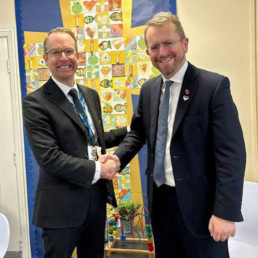
Written by Matthew Parker
Matthew Parker is Head of School at Wolvey CoE VC Primary School, part of the Ignite Federation. The school won the B.D.S.C (Black and Diverse Safeguarding committee) Equity and Inclusion organisation of the year in 2026.
At Wolvey CofE Primary School, we are incredibly proud of our school and the unique community we serve. Around 35% of our pupils come from our Traveller community, alongside a significant Nepalese Gurkha community. This cultural richness is an important part of who we are as a school.
Our vision is simple: “Among us, you are equal.” For us, those words cannot simply sit on a website, a wall or within a school improvement plan. They need to be experienced by the children and families who walk through our doors every day.
Our work with our Gypsy, Roma and Traveller (GRT) community has developed over many years. We certainly would not claim to have all the answers. What we have learned, however, is that meaningful inclusion begins with relationships.
Trust comes before engagement
Schools often talk about wanting families to engage more closely with education. But before asking why a family is not engaging with us, perhaps we need to ask a different question: What have we done to earn their trust?
We recognise that traditional educational settings have not always served GRT children and families well. Distrust does not disappear because a school says that its doors are open. Trust has to be built.
It grows through consistency, listening, compassion and doing what we say we will do. It grows when families know they will be treated with dignity. It grows when we take time to understand communities rather than expecting communities to understand and adapt to us.
Over time, our relationships with our GRT families have become central to the culture of Wolvey. Families who may previously have felt disconnected from education now engage actively with school life. Attendance has improved and children increasingly experience school as somewhere they feel safe, valued and able to succeed.
Representation matters
Belonging is also about being able to see yourself within the culture of your school.
Our celebration of GRT History Month has therefore become an important part of our work. We have collaborated with local artists, community representatives, Warwickshire County Council and other schools to create meaningful opportunities for children to explore and celebrate GRT culture and identity.
One of these projects culminated in a district-wide celebration at Warwickshire Police Headquarters, bringing together children, families, school leaders, police representatives and members of the wider community.
Another has left a permanent legacy within our school. We commissioned a nationally recognised GRT artist to work alongside our children to create a bespoke wolf sculpture representing our school values. The children were involved in the creative process and were able to share their stories, identities and ideas. The finished sculpture represents courage, belonging, kindness and equality.
For our GRT children, it also says something important: You are visible here. Your culture is valued here. You are part of the story of this school.
Belonging should not require assimilation
Perhaps one of the most important lessons we have learned is that inclusion should not require children to leave parts of themselves at the school gate. We want our GRT children to be ambitious. We want them to attend school, engage with learning and experience educational success. We hold high expectations for them because we believe deeply in their potential. But those aspirations should never require them to become less of who they are.
Our children should not need to change their identity in order to succeed within education. Instead, we need to be willing to ask how education can evolve to include them more successfully. That distinction matters.
Schools can become trusted community anchors
We have also learned that our responsibility does not necessarily end at the classroom door. Some of the families within our community experience barriers when accessing healthcare and other public services. Because relationships with school are strong, we have been able to use that trust to help families connect with wider support.
We have worked alongside NHS teams, local doctors and healthcare providers to improve access to vaccinations and preventative healthcare. We also host a monthly pop-up baby surgery within our community, providing families with access to support in a familiar and trusted environment. Similarly, we have worked proactively with local police teams to strengthen relationships with our GRT community.
Where there has historically been distrust or misunderstanding between families and agencies, schools can play an important role in building bridges. This requires honest conversations, advocacy and a willingness to challenge prejudice when we encounter it.
Sometimes inclusion means welcoming. Sometimes it means listening. And sometimes it means being prepared to stand alongside a community and challenge discrimination.
Small changes can have a significant impact
Our work has also given us opportunities to contribute to conversations beyond Wolvey. We worked directly with the Department for Education to support the creation of a film promoting “Best Start in Life” opportunities for GRT families. Its message encouraged families to “take a leap of faith” with education, while also challenging schools to consider the intentional changes they can make to improve inclusion and engagement.
I have also had opportunities to share our learning through GRT conferences and leadership events. I return repeatedly to the same message – there is no single initiative that creates belonging – it is built through the accumulation of intentional actions, relationships and decisions.
From intention to impact
We are proud that this work was recently recognised nationally when Wolvey CofE Primary School was named Equity and Inclusion Organisation of the Year 2026 at the Black and Diverse Safeguarding Awards. It was an incredibly proud moment for our whole school community, but the award matters because of what sits behind it.
During our 2023 Ofsted inspection, inspectors recognised the behaviour, attitudes and engagement of our pupils. Our GRT children enjoy learning, work hard and participate enthusiastically across school life.
For me, those outcomes are connected to something much deeper: children engage when they feel safe; families work with schools when they experience trust; children are more able to flourish when they know that who they are is not merely tolerated, but recognised and valued.
Our experience at Wolvey has taught us that inclusion cannot be performative or temporary. It needs to be sustained, relational and embedded within the everyday culture of a school.
What might other schools consider?
Every school and every community is different. Our approach cannot simply be lifted from Wolvey and replicated somewhere else.
But there are questions that I believe all school leaders can ask:
- How well do we really know our GRT families and communities?
- Have we taken time to listen before deciding what they need?
- What might their previous experiences of education have taught them about schools?
- Where do GRT children see their culture, history and identity reflected within our school?
- Are our expectations high without requiring assimilation?
- How are we building relationships with parents and carers beyond moments of difficulty?
- Could our school act as a bridge between families and other services?
- Are we prepared to challenge prejudice and discrimination when we encounter it?
- Most importantly, how do we know whether our GRT children and families actually experience a sense of belonging?
Our work continues to evolve. We continue to listen, learn and adapt. But one thing has become increasingly clear to me – if we want families to take a leap of faith with education, schools need to be prepared to take a leap of faith too.
We need to move beyond expecting communities to fit into systems that were not necessarily designed with them in mind. We need to build relationships based on dignity, curiosity and trust because our children should never have to choose between their identity and their education. They deserve both. And they deserve schools in which they know, without question: among us, you are equal.

Honouring our Communities
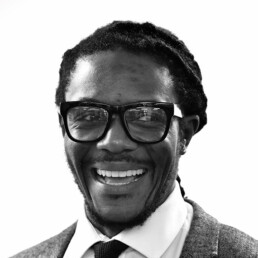
Written by Wayne Reid
Professional Officer & Social Worker
Black History Month invites us to pause, remember, acknowledge and celebrate. However, I would like to see Black history and the reflections it invites being recognised routinely – all year round.
At its simplest, I see ‘community’ as people connected by location, common interests, characteristics or social identity. Although, ‘community’ is much more than just geography or categorisation. It’s about relationships, experiences, knowledge, stories and values that exist between people – providing belonging, identity, ‘tough love’, support and opportunity. Communities have the potential to shape us in ways we don’t always realise until much later in life.
One person from my own professional community who has had a particularly significant influence on my life was a previous manager at the National Probation Service. I refer to him in OUTLANDERS: Hidden Narratives from Social Workers of Colour (in the chapter ‘Ambition Navigation’), because he gave me my first proper frontline role and remains in my orbit.
That opportunity mattered.
Sometimes one person’s recognition of potential can change the direction of a career. A manager can open a door, a colleague can build confidence and a schoolteacher can shape aspirations. As a child, a schoolteacher told me that Black people cannot swim… A stereotype perpetuated by the historic lack of visibility of Black swimmers.
Representation matters – but on its own it’s not enough. People need authenticity, diverse perspectives and forums to articulate their experiences, share their knowledge and demonstrate their expertise. That understanding has significantly influenced my approach to care and leadership.
My own cultural insights have taught me the importance of valuing the diversity within communities, which is sometimes overlooked in favour of assuming cultural homogeneity. We need to move beyond simplistic assumptions about race, culture and identity and appreciate the shared humanity that exists both within and between cultures. This is partly why I founded the Black & Ethnic Minority Professionals Symposium (BPS) and created the Synergy Sessions.
This is also where Shades of Bias (SoB) relates to the idea of community. SoB is a reflective case-study framework for documenting, analysing and addressing discrimination, oppression and racism. At its heart, is an invitation to pause, examine what has happened, consider our own perspectives and think about what needs to happen next. Communities don’t exist outside the influence of bias. They are shaped by the assumptions, attitudes and behaviours of the people within them.
We all have a unique lens through which we see the world.
Therefore, I would advise anyone starting out in social work to be self-aware: anticipate that others may label, stereotype and categorise you – while recognising your own inescapable racialised lens. Self-awareness isn’t about pretending that we are neutral or colourblind observers. Our experiences, identities, upbringings and environments influence how we interpret people and situations.
Reflective practice also means being prepared to ask questions (which may be uncomfortable) – not only of ourselves, but of the people, environments and systems around us. Such questions include:
- What might my own racial lens be obstructing me from seeing?
- Whose perspective, experience or voice is missing?
- Would the same situation be interpreted, scrutinised or responded to in the same way for different racialised groups?
How can we evidence that our policies, decision-making and organisational practices are effective, equitable and inclusive? This question connects directly to the Social Care Workforce Race Equality Standard (SC-WRES), which uses evidence to identify racial inequalities, develop action plans and drive continuous organisational improvement. Its latest findings show that staff from minoritised ethnic backgrounds are 44% less likely to be appointed from shortlist and 50% more likely to face formal disciplinary action, while remaining underrepresented in senior management.
That tells us something important: reflection cannot stop at the individual. We need to examine cultures, structures, policies and decision-making, asking not only “What did I do?” but “What is happening here? Why? Who is affected? What can we do differently?”
The recent statement from the BPS following the tragic death of Professor Jason Arday reinforces this principle. The statement calls for reflection on professional accountability, institutional decision-making, racialised scrutiny, media representation and public commentary, while emphasising the importance of fairness, proportionality, humanity and dignity.
That message connects powerfully with SoB. We can hold people and institutions accountable, while still recognising their humanity; challenge racism while remaining capable of honest conversations about professional standards and scrutinise institutions while appreciating the complexity of individual circumstances. We can ask difficult questions without losing our compassion. Reflection should not be mistaken for an absence of accountability. It should create the conditions for accountability that is thoughtful, proportionate and humane.
This brings me back to Black History Month. Perhaps controversially, I don’t think Black history, culture and achievement should be confined to October. Black history should be acknowledged, taught and celebrated all year round. It should not be reduced predominantly to colonialism, slavery and oppression. Those histories must be understood, but they are not the entirety of Black history. We also need to hear about the stories of innovation, scholarship, creativity, leadership, entrepreneurship, community building, scientific achievement and cultural influence. We also need the countless stories of ordinary people whose contributions have profoundly shaped their families, communities and descendants. If a broad and representative Black history is integrated throughout all stages of education, it becomes part of the story – rather than tokenistic or an afterthought.
Honouring our communities means celebrating the people who opened doors for us, stories that shaped us and the experiences that challenge us to think differently. Communities are not static. They evolve through relationships, disagreements, learning and collective action. Also, importantly, it means understanding our own responsibility within them.
Black History Month can provide a valuable moment of focus, but the greater challenge is what happens after October.
Do we revert back to “all lives matter”?
Or does our learning influence how we see, listen, lead and act?
For me, genuine recognition isn’t a month. It’s a mindset.
It’s about creating communities and spaces where people are not simply represented, but heard. Not simply included, but uplifted. Not simply present, but able to influence the environments we live and work in.
That is how we honour our communities – by remembering our histories (good, bad and ugly), acknowledging our shared humanity, learning from past experiences and helping shape a future in which every community can be seen, heard and valued.
“One world, one race… the human race!”
Have you used Shades of Bias?
Please share your experiences by completing the SoB survey.
Racial Equity in Sheffield: From Commitment to Collective Action
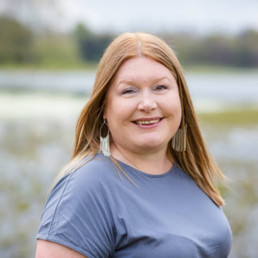
Written by Hannah Wilson
Founder and Director of the Belonging Effect (formerly Diverse Educators).
On Friday, I co-organised and co-hosted a Racial Equity Conference in Sheffield for our partners, Sheffield City Council and Learn Sheffield, in collaboration with our Belonging Effect Associate, Homaira Ibrahim.
We opened the day with Simon Sinek’s Golden Circle, inviting everyone in the room to reflect on and share their why. Why were we there? Why does racial equity matter to us? Why are we committed to doing this work?
Before beginning the programme, we also stood together to show our respect and collectively share our condolences with the family, friends and colleagues of Professor Jason Arday.
It was a poignant way to begin a day centred on race, equity, inclusion and belonging.
But the conference was not simply an opportunity to talk about racial equity. It was an opportunity to explore what racial equity looks like when we examine our systems, interrogate our practice, listen to different lived experiences and consider what we are collectively prepared to change.
Because intention matters. But intention alone does not create equity.
Context and collective responsibility
Our first contributions located the conversation firmly within Sheffield.
Fatima Khan-Shah, Chair of the Race Equality Partnership Sheffield (REPS), explored Sheffield’s race equity journey and the role of REPS, highlighting how race equity sits at the heart of the city’s goals and considering the particular role that education and schools play within this wider context.
Meredith Teasdale-Dixon, Strategic Director at Sheffield City Council, focused on responsibility. How do leaders improve outcomes for children and families across Sheffield? How do we create more equitable opportunities and experiences? And importantly, how do we ensure that our commitment results in measurable change?
Dr Shirley Woods-Gallagher, Assistant Director at Sheffield City Council, then explored belonging through an anti-racist lens.
Her contribution connected race, identity, power and inclusion with wellbeing, achievement and community cohesion. Drawing on Sheffield’s citywide Belonging Framework and wider inclusion work, she challenged us to consider how anti-racist practice moves beyond policies and statements of intent and becomes visible in our everyday behaviours, relationships and decision-making.
There was an important thread emerging: racial equity cannot belong to one team, one strategy, one leader or one organisation – it requires collective responsibility. It also requires effort as mentors, coaches and sponsors. Shirley’s role as mentor coach acting as the ladder and lamp for an AuDHD Black trainee teacher really stood out for very many of the audience.
Moving from allyship to advocacy
My contribution to the day focused on allyship and advocacy and, specifically, the journey we take as allies. I invited colleagues to reflect on privilege, vulnerability and our willingness to get things wrong.
Anti-racist work can create discomfort. It can surface strong emotions. It can challenge our perception of ourselves as inclusive people and force us to recognise the occasions when our intentions and our impact have not aligned. But discomfort cannot become an excuse for disengagement.
We need to develop the confidence and courage to create and hold safe spaces for difficult conversations. We need to become more comfortable with being challenged, with learning from mistakes and with recognising what we do not yet know. And we need to be prepared to challenge language, behaviours, decisions and practices that exclude or disadvantage others.
Jennifer Brown’s Allyship Continuum invites us to consider a journey from Apathetic to Aware, from Aware to Active, and ultimately from Active to Advocate.
Perhaps one of the most important questions we can ask ourselves is not simply:
Where do I think I am on that continuum?
But:
What evidence would somebody else use to place me there?
Allyship is not something we declare. It is something other people experience through our choices, behaviours and actions.
Holding the space for inclusion and belonging
Professor Paul Miller, from the Institute for Equity at University Centre, challenged us through his provocation, Democratic Failure or Democratic Resistance: Holding the Centre-Ground in the Fight for Inclusion and Belonging.
His contribution created space for us to think about the wider environment in which our work is taking place and the importance of continuing to engage with questions of inclusion and belonging when they are contested.
Anti-racist practice does not happen in isolation from society. Our schools, organisations and communities are influenced by the narratives, tensions and inequalities that exist beyond their walls.
This means that our commitment to equity cannot simply be reactive. It requires us to understand the context in which we are leading and educating, while remaining clear about our responsibility to create environments in which every child, family and colleague can experience dignity, safety and belonging.
Intersectionality changes what we see
One of the most important themes of the day was intersectionality. Too often, our organisational approaches separate different aspects of inclusion into parallel workstreams. Race sits here. SEND sits there. Gender, faith, socio-economic disadvantage and other aspects of identity sit somewhere else. But people do not experience their identities separately.
Domini Choudhury, Associate at The Belonging Effect, explored what happens when we frame SEND intersectionally. Her session challenged colleagues to consider the multi-layered barriers some learners and their families navigate when trying to have their needs recognised and met. These include societal and systemic barriers within the SEND system itself, but also culturally specific barriers to diagnosis and support.
Cultural and religious frameworks can shape how disability and additional needs are understood. Practitioner bias and unconscious assumptions can influence whose needs are recognised, how behaviours are interpreted and what support is offered.
This creates an important challenge for leaders:
- What happens when we interrogate our SEND data through an intersectional lens?
- Who is being identified?
- Who is not?
- Who receives support, and when?
- Whose behaviour is interpreted as a need and whose is interpreted as a problem?
The data we collect matters. But the questions we are prepared to ask of that data matter too.
Language, identity and the experiences of Black boys
Johnoi Josephs and Albert Adeyemi, founders of Black Men Teach, focused our attention on the educational experiences of Black boys. Their contribution explored the relationship between the language we use and the realities and self-belief we help to create.
Language is never neutral. The words we use to describe children communicate expectations. They shape relationships. They influence how other adults perceive a child and, over time, can influence how that child perceives themselves.
Johnoi and Albert invited us to think intentionally about how we build pride, belonging and positive identity both inside and outside the classroom, and how we create accessible and empowering learning environments in which Black boys can thrive.
This requires us to move beyond deficit narratives and ask different questions:
- Not What is wrong with this child?
- But What might this child be experiencing?
- Not Why will this family not engage?
- But What barriers might we have created to engagement?
- Not simply How do we raise achievement?
- But How do we create the conditions in which children feel seen, valued, understood and able to succeed?
Whose lived experience are we centring?
Olivia Morrison from The Traveller Movement brought another vital perspective to the conversation. Her session explored the discrimination experienced by Romani (Gypsy), Roma and Irish Traveller people, the equality gaps that persist, and the importance of working in genuine partnership with the communities.
Central to this was the need to centre lived experience within anti-racist activity. There is an important distinction between designing for communities and working with them.
If we are serious about equity, we cannot assume that professional expertise gives us all of the answers. We need to listen to people whose experiences of our institutions and systems may be very different from the experiences we believe we are creating. That requires humility. It also requires us to ask who is missing from the conversations in which decisions about them are being made.
Bringing the conversation back to Sheffield
Homaira Ibrahim, Race Equality Partnership Manager at Sheffield City Council and Belonging Effect Associate, brought the different threads of the day back together through the specific context of race, ethnicity and belonging in Sheffield schools. She shared findings from Sheffield’s Race Equality Commission and its recommendations for education, alongside the city’s ethnicity data and current landscape.
She also highlighted the work of AREAS, the Anti Racist Education Alliance Sheffield, the support available for Sheffield schools and opportunities for future collaboration.
This was important. National conversations help us understand patterns and systems. Research helps us understand evidence. Lived experience helps us understand impact. But ultimately, equity work also has to become local:
- What does our data tell us about our children?
- What are our families telling us?
- What patterns can we see within our institutions?
- And what are we going to do about them?
From conversation to collective action
We ended the day with roundtable discussions prompted by Sheffield City Council’s Director of Belonging, Steve Kay.
Three questions were posed:
- What support, resources or opportunities would help you further develop your anti-racist practice?
- What actions can we take collectively to improve outcomes and opportunities for Roma children, families and communities?
- How can we strengthen engagement with marginalised groups to ensure equitable access to Early Years provision?
For me, these questions captured something important about the day. They moved us from What have we heard? to What are we going to do?
Because conferences can create powerful moments of reflection, connection and learning. But the real test comes afterwards – what changes when we return to our schools, teams, organisations and communities?
We show up. We stand up. We speak up. We check in.
We ended the conference by making commitments:
- We show up – Not only when conversations are comfortable or when racial equity is on the agenda, but consistently.
- We stand up – We challenge inequity when we encounter it. We notice who has power, who has access, who is heard and who may be overlooked.
- We speak up – We use our voices, our influence and our privilege to challenge exclusion and advocate alongside others.
- We check in – We listen. We reflect. We seek feedback. We examine our impact. And when necessary, we change our approach.
Anti-racist practice requires us to move through the fear zone, into the learning zone and onwards into the growth zone. It requires curiosity, humility and courage. And it requires action.
The question is not simply whether we care about racial equity. I imagine that most people who chose to spend Friday in that room do.
The harder questions come next:
- What will we notice that we did not notice before?
- What will we question that we previously accepted?
- Whose experiences will we seek to understand?
- What conversations will we now be willing to have?
- What will we challenge?
- What will we change?
Because our commitment to racial equity cannot be measured solely by what we say in rooms where people have gathered because they already care about it. It must be visible in what happens when we leave those rooms. That is where awareness becomes action. That is where allyship becomes advocacy. And that is where we begin shaping intention into impact.
Continue the learning
For those wanting to continue their learning and reflection, my recommended reading from the day was Emma Dabiri’s What White People Can Do Next.
Professor Miller has also shared the article that he cited in his talk: A common enemy approach to anti-racism in higher education | THE Campus Learn, Share, Connect
The Belonging Effect also has a range of free resources to support individuals, schools and organisations in developing their DEIB practice, including our DEIB Calendar, blogs, toolkits, reading lists and glossaries.
Further development opportunities discussed during the day included Sheffield City Council’s Developing Racial Literacy programme, The Belonging Effect’s Diverse Leaders programme, and our Anti-Racism Virtual Conference.
The conference may have ended on Friday. The work, of course, needs to continue and be sustained.
Freedom of religion or belief: The missing conversation in school belonging?
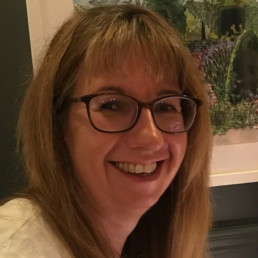
Written by Kathryn Wright
Dr Kathryn Wright is Chief Executive Officer of Culham St Gabriel's Trust, an endowed charitable foundation dedicated to supporting high-quality religion and worldviews education. She works with schools, researchers, policy makers and wider communities to explore how education can foster inclusion, belonging and understanding across difference. Kathryn is passionate about creating opportunities for every child and young person to flourish in diverse and democratic societies. Find out more at www.cstg.org.uk.
When we talk about belonging in schools, we often focus on relationships, representation, voice and participation. These matter enormously. Yet there is another dimension of belonging that we do not always name explicitly: the freedom to be yourself, to express what matters to you, and to know that your identity will be respected.
This is where Freedom of Religion or Belief (FoRB) has an important contribution to make. Culham St Gabriel’s Trust, a charitable foundation, has recently published a new toolkit and model policy offering school leaders a practical framework for creating cultures where every member of the community can flourish.
At first glance, some people may assume that FoRB is only relevant to Religious Education or to pupils from faith backgrounds. In reality, FoRB is much broader. It is a human right that protects the freedom of all people to hold, change, express, or reject religious and non-religious beliefs. It belongs equally to, for example, the Christian, the Muslim, the Jew, the Humanist, the atheist, the Sikh, the spiritual-but-not-religious young person, and the pupil who is still exploring what they think about the world. It also belongs equally to the pupil, the parent, the teacher, the governor, in fact, the whole school community
However, what interests me most is not FoRB as a legal concept, but FoRB as a belonging concept.
Belonging is often described as the experience of being accepted, valued and included. Yet it is difficult to feel that you belong if essential parts of your identity must remain hidden. Equally, it is hard to develop trust within a community if difference is treated as something to fear rather than something to understand.
The toolkit begins with three simple educational principles. Pupils should have opportunities to talk about religion or belief, talk about freedom, and learn about human rights.
These principles resonate strongly with the wider belonging agenda.
When pupils learn to talk about their own beliefs and hear about the beliefs of others, they develop the language and confidence needed to engage across difference. When they learn about freedom, they begin to understand that their rights exist alongside the rights of other people. When they learn about human rights, they discover that dignity, equality and respect are not privileges granted to some, but entitlements belonging to everyone.
Importantly, the framework moves beyond curriculum content. It recognises that belonging is shaped by the daily decisions schools make.
Does staff training include religion and belief literacy? Are teachers equipped to distinguish between genuine curiosity, clumsy language and hate-motivated behaviour? Do policies clearly address antisemitism, anti-Muslim hate and other forms of religiously motivated discrimination? Are pupils given opportunities to express their views respectfully, even when disagreement exists?
These are not peripheral questions. They are questions about culture.
The strongest aspect of the framework is its emphasis on both promoting and protecting FoRB. Too often inclusion work focuses only on celebration. Celebration matters, but it is not enough. Schools must also be prepared to respond when individuals experience prejudice, exclusion or discrimination. The documents acknowledge that some of the most common violations of FoRB in the UK are experienced through discrimination and hate incidents, making active protection just as important as promotion.
This distinction feels particularly significant in our current climate. Schools are navigating increasingly complex conversations about identity, belief, freedom of expression and social cohesion. Leaders can feel caught between competing pressures. Yet the answer is rarely to avoid these conversations. More often, it is to create the conditions where they can happen safely, respectfully and thoughtfully.
That is why belonging and FoRB are such natural partners. Both are grounded in the conviction that people matter. Both seek to create environments where individuals can participate without leaving part of themselves at the door. Both require us to balance individual freedom with collective responsibility.
Ultimately, a school where freedom of religion or belief flourishes is not simply a school where pupils learn about rights. It is a school where those rights shape everyday practice. It is a school where difference is encountered with curiosity rather than suspicion, where dignity is protected, and where every member of the community can say, with confidence: “I belong here.”
Link to the resources: https://www.reonline.org.uk/resources/inclusive-schools-promoting-and-protecting-freedom-of-religion-or-belief/
Embedding Inclusive Allyship into Critical Friendship
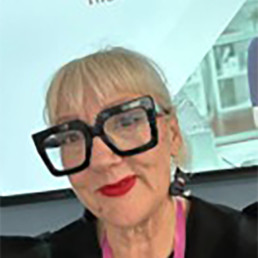
Written by Sarah Vogel
Sarah has been working in development and training since 1989. As a facilitator and coach she has enjoyed successful relationships with clients across a wide variety of sectors. Sarah is currently a trustee at Collaborative Education Trust in Solihull and chairs their People and Culture committee. She has also volunteered at Anawim: Birmingham’s Centre for Women, for 8 years delivering a Confidence Course for vulnerable women.
The role of a critical friend is central to effective governance. Whether serving as a trustee, governor, or board member, we are expected to provide both support and challenge. We build trust and psychological safety while also asking the difficult questions that improve outcomes and strengthen accountability.
But what happens when we combine critical friendship with inclusive allyship?
The result is a more powerful form of governance – one that not only seeks improvement but actively works to ensure that no individual or group is overlooked.
What Is Inclusive Allyship?
Inclusive allyship is the deliberate practice of using your influence to create more equitable outcomes. It requires us to examine our own assumptions, listen to voices that are often underrepresented, and challenge behaviours or systems that may disadvantage others.
Allyship is not about having all the answers. It is about being willing to learn, reflect, and act.
This can involve:
- Recognising our own biases and assumptions.
- Being mindful of language and identity.
- Educating ourselves and staying informed.
- Building relationships with people whose experiences differ from our own.
- Amplifying marginalised voices.
- Challenging inequitable behaviour when we see it.
- Remaining open to feedback, even when it feels uncomfortable.
Inclusive allyship requires courage, curiosity, and a willingness to move beyond our comfort zones.
Why Allyship Matters in Governance
In governance, allyship means intentionally using positional power to ensure that decisions consider a wider range of perspectives and experiences.
Too often, boards focus on overall outcomes without exploring whether those outcomes are experienced equally by different groups. Strong headline results can conceal significant disparities.
Inclusive governance requires us to look deeper.
This means asking questions about:
- Attendance patterns
- Exclusion rates
- SEND outcomes
- Staff progression
- Recruitment practices
- Complaints and concerns
It also means paying attention to boardroom dynamics. Who is contributing to discussions? Whose perspectives are missing? Are assumptions being challenged, or simply accepted?
Inclusive allyship is not separate from good governance- – it strengthens it.
Developing a Curiosity About Disparity
One of the most valuable habits governors and trustees can develop is what I call a disciplined curiosity about disparity.
When we identify differences in outcomes between groups, it is tempting to ask:
“Why are results lower for this group?”
However, that question can unintentionally place responsibility on those experiencing disadvantage.
A more effective approach is to focus on the system itself:
- What might be happening within the system that is producing this gap?
- What evidence do we have?
- Have we heard directly from those affected?
- What perspectives might be missing from our analysis?
These questions move the conversation away from blame and towards understanding.
Three Practical Skills for Inclusive Allyship
- Ask Equity-Focused Questions
When reviewing data, resist the urge to focus solely on overall performance.
Strong results can still mask inequities for specific groups. Looking beneath averages and examining disaggregated data can reveal patterns that would otherwise remain invisible.
The role of a critical friend is not simply to accept the data presented but to explore what it may be hiding.
- Interrupt Bias Using Influence
Bias often appears subtly in discussions and decision-making. As governors and trustees, we have an opportunity to challenge assumptions constructively.
A simple framework can help:
Notice – Identify what you are observing.
“I notice we are talking a lot about behaviour but not about support.”
Name – Gently surface a potential assumption.
“I wonder whether assumptions about certain groups are influencing our discussion.”
Nudge – Move the conversation towards evidence and reflection.
“Could we look at the disaggregated data before reaching a conclusion?”
Small interventions can have a significant impact on the quality of decision-making.
- Use Better Critical Friend Questions
Inclusive governance benefits from asking questions through different lenses.
Equity Lens
- Who benefits most from this decision?
- Who benefits least?
- Who may be disadvantaged?
Impact Lens
- How will we know this works for everyone?
- What would success look like for those most affected?
Curiosity Lens
- What assumptions are we making?
- What evidence supports our view?
- What perspectives are missing?
These questions help boards make more informed and inclusive decisions.
A Governance Responsibility
Inclusive allyship is not about political correctness or compliance. It is about precision.
It is about recognising that averages can conceal inequity. It is about identifying patterns before they become complaints, inspections, or crises. Most importantly, it is about ensuring that the interests of all pupils, staff, and stakeholders are visible within governance discussions.
Strong boards do not wait for problems to emerge. They actively seek evidence, challenge constructively, and make inclusion measurable.
As trustees and governors, we hold influence. Inclusive allyship simply means using that influence deliberately -ensuring that no voice is overlooked and no group becomes invisible in our oversight.
When allyship is embedded into critical friendship, governance becomes more insightful, more effective, and ultimately more equitable.
Beyond The Bookshelf: Creating Change Through Activism
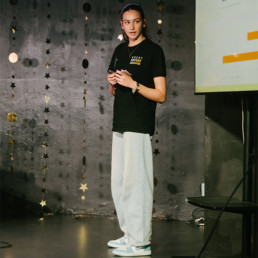
Written by Maria Oprea
Maria Ariana Oprea is a Year 9 student at Caterham High School who wishes to have a future career in Law. She was part of Every Future Foundation 2026, Activism Academy.
When I first joined Activism Academy, I never imagined how much it would change me. I signed up because I cared about making a difference, but I came out with so much more: confidence, new friendships, valuable skills, and the opportunity to create real change in my school community.
My project is called Beyond the Bookshelf. The idea came from the simple question: Does everyone in our school feel represented in our school curriculum? I wanted to make our school curriculum more diverse, starting with the library.
For me, diversity in books is way more than just numbers. It means having authors from different ethnicities, cultures, and backgrounds. It means books with characters that people feel reflected in, whether it’s through experiences or identities. It means exploring stories, histories, and perspectives from around the world so that every student has the opportunity to learn from people who may be different from themselves, while also seeing their own experiences reflected in what they read. It also means helping others develop the same genuine love for reading that I found myself having from a very young age.
Through surveys, research, book sales, and presentations, I gathered the views of students and explored ways our library could become more inclusive. Seeing other students engage with the idea and recognising that their opinions mattered was one of the most rewarding parts of the project. It showed me that positive change can begin with listening, understanding different perspectives, and taking action. No matter how young you are, or how small the change may seem at first, every positive action has the potential to make a real difference.
One of the biggest things I learned is that activism does not always have to be loud or dramatic. Sometimes it starts with asking questions, listening to others, and finding practical ways to improve something that matters. Through Beyond the Bookshelf, I discovered that small changes can have a lasting impact.
I am incredibly grateful to Activism Academy and my amazing mentor, Hannah Wilson, for giving me this opportunity and supporting me every step of the way. This has helped me grow as a person, develop confidence in my voice, and understand that I can help shape the world around me. Most importantly, it showed me that when people come together with a shared purpose, positive change is possible.
Beyond the Bookshelf started off as a project about books, but it became a journey of learning, friendship, and empowerment – and one that I will always be proud of and grateful for.
What Happens When We Listen to Children About Peace?
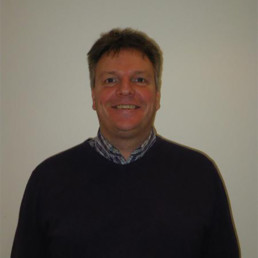
Written by Jim Dees
Jim Dees is the headteacher of West Lodge Primary School. He is the co-founder of YESFest.
On 18th May, more than 70 primary-aged Young Ambassadors for Peace gathered at the House of Lords for An Experiential Peace Dialogue: Living Peace in Action. Hosted by Baroness Verma and attended by members of the House of Lords, including Lord Raval, the event brought together educators, researchers, sustainability leaders, policymakers and community partners to explore an important question: What role can peace education play in helping young people thrive in today’s world? The event brought together educators, researchers, sustainability leaders, policymakers and community partners to explore an important question: What role can peace education play in helping young people thrive in today’s world?
The Young Ambassadors for Peace (YAP) programme, organised by the Brahma Kumaris World Spiritual University UK, brings together primary school pupils to explore peace within the self, peace with others and peace with nature through reflection, dialogue, leadership and action. What stood out most was not the programme itself, but the children. Speaking about peace within the self, peace with others and peace with nature, pupils aged between nine and eleven shared their experiences with remarkable wisdom, clarity and authenticity. They spoke about self-regulation, empathy, interfaith understanding, leadership, sustainability and belonging. They led meditations, answered questions from invited guests and demonstrated that children are capable of far more than we sometimes assume.
One child explained that the programme should focus on young people “to make a better generation.” Another reminded the audience that children are capable of making a positive difference in the world today, not simply in the future.
The event reinforced a growing belief that peace education is not an optional extra. It sits alongside wider conversations around wellbeing, belonging, citizenship, sustainability and pupil agency. At a time when schools are navigating increasing complexity, there is a growing need to create opportunities for children to develop not only knowledge and skills, but also self-awareness, compassion, responsibility and a sense of connection with others and the natural world.
Perhaps most importantly, the showcase highlighted a shift that is gaining momentum across education and beyond: seeing children not as empty vessels to be filled, but as active contributors with voice, agency, insight and wisdom. When we create the conditions for children to lead, reflect and contribute, they often bring perspectives that adults can easily overlook.
Looking ahead, we are keen to strengthen the evidence base for peace education, build partnerships across sectors and communities, and connect practice, research and policy. We would particularly welcome conversations with researchers, universities, schools, charities and organisations interested in collaboration, evaluation and further development of this work.
The next stage of that journey takes place at the Young Ambassadors for Peace Festivals in Oxford (10 June), London (12 June) and Leicester (17 June), where pupils will share their learning through experiential exhibitions, presentations and performances. These events provide an opportunity not only to celebrate the achievements of the children, but also to engage in a wider conversation about the role of peace education in supporting wellbeing, belonging, citizenship, sustainability and positive social change.
Places at all three events must be booked in advance. If you would like to attend, please register at https://yapglobal.org/peacefest2026/. We would particularly welcome educators, researchers, community leaders, policymakers and potential partners who are interested in exploring how peace education can help develop more compassionate, connected and sustainable communities.
Perhaps the most powerful message from the House of Lords came from the children themselves. In a world that often underestimates young people, they reminded us that they are not simply the leaders of tomorrow, but active contributors today — capable of helping to build more compassionate, connected and hopeful futures if we are willing to listen.
Using the Froebelian principles to navigate social justice in early childhood education and beyond
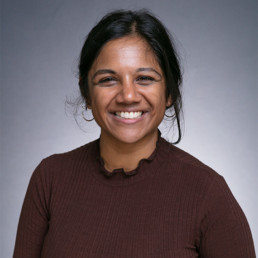
Written by Rachna Joshi
Rachna is a teacher and consultant. She works with under-threes, Nursery and Reception children, and holds an MA in Early Childhood Studies. Rachna writes and speaks at events sharing experience and knowledge, empowering practitioners and provoking questions to disrupt routine practice. She supports schools by guiding educators to implement inspiring practice that reflects their classes. She works as a freelance consultant and with the Froebel Trust as a travelling tutor.
Having a strong set of principles and worldview is taken with us into our role as educators. Principles, like the Froebelian principles, provide a philosophical framework in which to base our actions upon. It acts as a compass to guide us in times when we are uncertain.
The book; Froebel and social justice, looks at the themes of social justice; diversity, equality, equity and participation, and interrogates the ways in which Froebel and his ideas for education articulate and look to achieve social justice in times today.
The Froebelian framework asks us to start with ourselves, and who we are as individuals and educators. Understanding who we are helps us to help others in understanding who they are, for example, working with children to explore a part of their identity in a sensitive way that celebrates their uniqueness and wholly accepts and recognises all different parts of them.
This task does not come without its challenges, bias creeps into our minds, stereotypes, hierarchies of what is acceptable and less acceptable alter our worldviews and ability to see clearly the individual in front of us. The work to reflect on our thoughts and ideas aligns closely with Froebelian and Freieran concepts.
The Froebelian principle of Unity and Connectedness runs through the work of social justice, finding connections, similarities and celebrating differences. As well, the principle Relationship Matters, ensures that we meet the child and their family where they are at, and understand the fluidity of different needs and evolving contexts. When thinking about the children we work with, do we know enough about their family and their culture and do we try to learn or understand the nuances of each child’s unique world? Do we as educators consider the power we hold in our work with children, from simply organising the environment, to the interactions or rules we create to manage the spaces we are in? For example, do we consider babies and young children’s consent when being physically handled? Are we empathetic educators who understand the complexities in children’s worlds? An example that I share in the book discusses the very real fear of the hand dryer in the children’s toilets at a school – what do educators do to empathise with this and remove this feeling of fear.
Whilst exploring the larger themes of social justice the second part of Froebel and Social Justice uses the four freedoms; from fear, from want, of speech and of worship as a lens to tackle the issues of social justice within classroom contexts. These offer a wider exploration of ecological situations that arise which have an impact on the child and the family at the interpersonal level. The freedom from worship is explored through the lens of beliefs, religion, culture and Nature as ways to take part in worthwhile celebrations and events.
Many educators who are unfamiliar with Froebel may not be aware of his own work towards social justice in his context in Germany in the 1800s. He advocated for women to be teachers when during his time this was not the norm, and he ensured his educational institutions were for all children – boys and girls from all different backgrounds which again was not usual for this time. In his ideas of education he constantly wrote books and letters to help change the minds of those within his community towards an approach to education that enables children to think freely for themselves and see the connections of the world around them.
In some places, social justice is an add on, instead of being the foundation of which we hold ourselves in our workplaces. The book Froebel and Social Justice is a practical book that is for educators who work with a range of different aged children to reflect and renew their commitment to creating a socially just world.
Pre-order Froebel and Social justice here: https://www.bloomsbury.com/uk/froebel-and-social-justice-9781350529328/
Maslow’s Hierarchy Was Never Just a Pyramid
Written by Hannah Wilson
Founder and Director of the Belonging Effect (formerly Diverse Educators).
Every educator has seen it. The pyramid – at the bottom sit physiological needs: food, water, shelter, sleep. Above that come safety, belonging, esteem, and finally – at the peak – self-actualisation.
For decades, Abraham Maslow’s hierarchy of needs has shaped educational thinking. It appears in teacher training, wellbeing frameworks, behaviour support models, and school leadership presentations around the world. The message is straightforward: children cannot learn effectively if their basic needs are unmet.
And that insight matters;
- Hungry children struggle to concentrate,
- Unsafe children struggle to trust,
- Disconnected children struggle to engage.
But there is a part of the story many educators have never been told.
Maslow’s ideas were influenced by time spent with the Blackfoot Confederacy in 1938, where he observed a society deeply grounded in community, belonging, collective responsibility, and cultural continuity. In later years, scholars and Indigenous educators have pointed to the similarities between Maslow’s developing ideas and Blackfoot understandings of human wellbeing.
What is especially interesting is that Maslow himself never actually drew the famous pyramid we all recognise today. The pyramid – with its upward climb toward individual success – became a Western interpretation of his theory. And perhaps in that interpretation, something important was lost because many Indigenous worldviews do not see human flourishing as an individual journey upward. They see it as relational.
The Problem With the Pyramid
The modern version of Maslow’s hierarchy is often presented as a ladder:
- First survival…
- Then safety…
- Then belonging…
- Then achievement.
Eventually, if all goes well, a person reaches self-actualisation – becoming the fullest version of themselves. But schools have absorbed this framework in ways that often reinforce individualism rather than connection.
Once students’ basic needs are acknowledged, education systems quickly shift focus toward:
- academic performance,
- achievement,
- productivity,
- competition,
- outcomes.
The underlying message becomes: Now that your needs are met, it is time to succeed.
Yet human wellbeing is not linear:
- Children can experience creativity while carrying trauma,
- Students can achieve highly while feeling lonely,
- Young people can comply academically while feeling culturally unseen.
Many First Nations perspectives understand wellbeing not as a hierarchy, but as an interconnected system of relationships – between self, community, identity, spirit, land, and purpose. Belonging is not a stage to move through. It is foundational.
What Indigenous Wisdom Offers Education
One of the most powerful distinctions in Indigenous understandings of wellbeing is the shift from individual fulfilment to collective flourishing.
In many Western systems, the highest goal is personal achievement:
- reaching your potential,
- standing out,
- becoming successful.
But Indigenous perspectives often place greater emphasis on:
- contribution,
- responsibility,
- kinship,
- cultural continuity,
- community wellbeing.
The question changes from: “How do I become my best self?”
To: “How do I strengthen the wellbeing of the community around me?”
That difference has profound implications for schools because schools frequently reward independence while undervaluing interconnectedness.
We celebrate high achievers, but often overlook:
- kindness,
- emotional safety,
- cultural identity,
- collaboration,
- service,
- belonging.
And yet these are the very things that allow human beings to flourish.
What Would Schools Look Like If We Truly Understood This?
If schools genuinely embraced a more holistic understanding of human needs, education might begin to look very different.
We might prioritise:
- relationships before results,
- connection before compliance,
- identity before standardisation,
- wellbeing before performance.
Students would not simply be prepared for exams or careers – they would be prepared for life in community.
Teachers would spend less time asking: “How do we improve outcomes?”
And more time asking: “Do our students feel seen, safe, valued, and connected?”
Because children learn best when they experience belonging.
Not performative belonging…Not tokenistic inclusion…Real belonging.
The kind that says: “You matter here.”
Beyond Achievement
Many schools today are facing rising levels of anxiety, disengagement, loneliness, and behavioural complexity among young people.
We often respond with interventions, data tracking, wellbeing programs, and behaviour systems, but perhaps part of the deeper issue is that modern education has become disconnected from fundamental human needs.
Not just physical needs – but emotional, relational, cultural, and spiritual ones too. The Indigenous perspectives that influenced Maslow remind us that wellbeing cannot be separated from connection.
A child’s sense of identity matters…Community matters…Purpose matters…Relationship matters…And perhaps the greatest misunderstanding of the pyramid is that human flourishing was never meant to be a solo climb to the top.
A Different Vision for Education
What if success in schools was measured not only by grades, but by:
- empathy,
- contribution,
- resilience,
- belonging,
- cultural strength,
- and the ability to care for others?
What if education was not simply about producing successful individuals, but nurturing connected human beings?
Long before modern psychology attempted to define human motivation, First Nations peoples already understood something essential: people thrive through relationships and belonging to a community.
Perhaps schools have been looking at the pyramid for so long that we forgot to look around us. So perhaps the future of education depends not on climbing higher, but on reconnecting more deeply – to ourselves, to each other, and to community.
Empowering Young People to Change the World
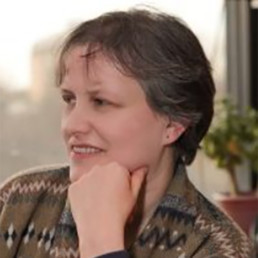
Written by Nicola Wetherall
Nicola is an RE teacher by training, but a specialist and Lead Practitioner for Holocaust, genocide and human rights education at Royal Wootton Bassett Academy, she curates the Empowering Young People to Change the World teacher conference series. She combines her part time role at RWBA with her Associate Professor (Teaching) role at the UCL Centre for Holocaust Education, specialising in curriculum, pedagogy and school development by supporting the Quality Mark process and Beacon School alumni engagement. Nicola founded the Holocaust, their family, me and us schools project.
This year’s DEIB Showcase for #EYP2CtW26 session felt like an expansion – a widening of what we pay attention to in schools, and a reminder that belonging is not an optional extra but a foundation.
We began with Hannah Wilson, who was joined by, and introduced us to, colleagues from the Belonging Effect (formerly Diverse Educators) network, who each brought a richness of experience, context and lived insight that was both energising and deeply grounding. But before I turn to each contribution in turn, I want to say a special thankyou to Hannah, an ally and leader who has supported #EYP2CtW26 conference for many years now, and once again curated a session for us today that was compelling, generous and full of practical wisdom.
So first we welcomed Yassar Hussain – from the UAE – who talked us through GEMS Metropole’s DEIB journey, referring to a range of scholarship that had informed that process, the importance of intentionality, student voice and agency. Yassar’s section was a powerful reminder that belonging doesn’t happen by accident, it’s built through deliberate choices around staff awareness, curriculum representation and student voice. His ‘journey’ within this work, reminded me how small, consistent actions across a year can shift culture, confidence and connection. I think that Yassar’s story offered a practical challenge for all of us: What would it look like to map our own DEIB journey across a year (staff learning, curriculum audits, student voice, community engagement) and treat it as a cycle of listening, acting and refining? For me, his contribution offered #EYP2CtW26 delegates (and me) us a template for intentional, sustainable progress, a next step be it short, medium or long term.
Next, it was a privilege to invite Monia Sahar Zahid and Claire Shooter – from HABS Elstree – who rather beautifully reminded us that belonging isn’t something you switch on in a crisis, it’s the product of the culture you’ve built long before tensions surface. Their emphasis on intellectual humility, visible inclusion and shared experiences offered a powerful blueprint for how schools can create the conditions for safety, trust and connection, even when global events hit the school gates, with a focus on the pastoral and safeguarding rather than the politics or teaching. I was struck by their noticing – their check-ins with staff and students, the human connections and deep rooted respect that revealed. I know several of the anecdotes shared, resonated powerfully with the 460+ educators accessing the session live – and the sense of thanks and gratitude for highlighting those moments was palpable in the chat forum spaces. My takeaway was need to reflect on our own readiness: Do we have the frameworks, shared language and staff confidence to hold difficult conversations before they arrive at our door? The SAFE framework they shared with us and emphasis on defensible decision‑making offer practical starting points for schools wanting to strengthen their approach to belonging, identity and conflict‑sensitive practice. So this was great to share.
Last but not least we were pleased to host Azuraye Williams from the Transform Trust, her contribution brought us back to something deceptively simple but deeply important: belonging starts with people, not paperwork. Her trust‑wide work showed how culture, connection and relationships must come before policies if we want DEIB to be lived rather than laminated, a reminder that systems only shift when humans do. Colleagues were taken with the meaningful and purposeful work undertaken to engage governors, but for me Azuraye left us a practical challenge: How well do we really know the belonging story of our own school? Her trust‑wide approach (surveying every child, engaging DEIB leads, and focusing on each school’s unique context) offered a clear starting point for any setting wanting to move from intention to impact.
It was that intentionality across the session was noticeable and built upon Hannah’s introductory remarks and concluding framing of belonging as a human need. Each contribution built on the last: from GEMS Metropole’s DEEI journey, to navigating global conflict at HABS Elstree, to trust‑wide belonging work at Transform Trust, and throughout, the examples shared (curriculum audits, microaggressions training, belonging surveys, pupil‑led research, ‘people before policies’) reminding us that belonging is not a slogan. It is a practice. A culture. A way of showing up for one another in schools.
In a climate where DEIB work is sometimes misrepresented or politicised, today was a powerful reminder that this work is not about ideology. It is rights‑respecting, dignity‑affirming, and safeguarding‑aligned. It is about ensuring that every child (and every adult) feels safe, seen, valued and able to bring their whole self into a school community. Nothing more complicated, nothing more controversial than that – and yet, the work can feel lonely, induce anxiety and expose vulnerability. I am deeply grateful to Hannah, Yassar, Claire, Monia and Azuraye, for their time, expertise and generosity of sharing, and this thread and spirit continues across the rest of the week.
If you missed this year’s DEIB Showcase for #EYP2CtW26 you can catch up here: https://www.youtube.com/playlist?list=PL5Qv_qeF-NpWPGep25cYsrp0zuYDEPH9c
I’m reminded again that when educators gather with honesty, courage and care, we don’t just learn, we widen our circle of belonging, and in doing so, we create the conditions for empowered young people to do the same.