‘That’s So Gay’ - Practical Steps for How to React When you Hear Homophobic Language in School

Written by Jack Lynch
Jack Lynch (they/them) is a writer, educator, and DEI specialist. As Co-Director and Workshops & Training Lead at Pop’n’Olly, they work with schools, educators, parents, and organisations across the UK to create more inclusive environments. Jack has delivered training to thousands of professionals and authored widely used resources that support good practice in diversity, equity, and inclusion in education.
I was seven years old the first time I heard “gay” used as an insult. It was hurled across the classroom at a boy in the front row, dripping with malice, and I knew instantly this was something I never wanted to be called. The teacher froze. Flustered, uncomfortable, unsure how to react, they simply moved on, pretending it hadn’t happened.
That reaction shaped the rest of my young life. That silence told me everything I needed to know. It told me the adults around me wouldn’t protect me. It told me I was on my own and that the safest thing to do was hide who I was.
In recent years, we have seen a considerable rise in the use of anti-LGBT+ language in primary schools, with the most common being the use of the word ‘gay’ as an insult. We know that 78% of primary school children across the UK hear homophobic language at school. When speaking with LGBT+ young people, they tell me that, much of the time, language like this is said out of the earshot of teachers. This means that when you do hear homophobic language as a member of staff, it is essential you know how to react. If you don’t, you risk that child learning exactly what I did: that they are not safe at school.
There are many reasons why a member of staff might not tackle a homophobic incident in school. In staff training, lack of knowledge and lack of confidence are the two biggest reasons given.
Practical Steps to Tackle Anti-LGBT+ Language
Before we get to some practical step-by-step recommendations of how to tackle specific incidents, it’s important we consider the school’s anti-bullying policy. According to a 2024 Research & Impact Report by LGBT+ anti-bullying charity, Diversity Role Models, ‘1 in 5 primary and secondary students said teachers didn’t inform them, or they weren’t sure if teachers regularly informed them about their school’s anti-bullying rules’.
In order to help staff feel empowered in dealing with incidents of bullying, it is essential to consider the following things:
- Do all your staff (not just SLT) know the school’s anti-bullying policy and are they able to explain this to the children?
- Is your anti-bullying policy inclusive of LGBT+ bullying? It may be useful to include wording in your anti-bullying policy that makes specific reference to homophobic, biphobic and transphobic bullying as well as a statement that everyone is treated equally regardless of their gender or sexual orientation.
This clarity in your policy provides a clear foundation to tackle LGBT+ bullying. However, it is important to go beyond just this and empower staff to tackle LGBT+ bullying when they encounter it. Something I’ve found particularly impactful in schools is an agreed procedure, created with staff, on how to tackle negative LGBT+ language if and when they hear it, including what to say and the next steps to take. Below are some things you may wish to include.
Step 1 – Be Curious. Start by asking questions…
Often children who are using words like ‘gay’ or ‘lesbian’ as an insult are mimicking the behaviour of others. These might be people they know outside of school, friends, family or people they have seen online.
With this in mind, you might wish to start with:
“It sounds like you’re using the word gay/lesbian/trans to mean something bad. Can you explain to me what you understand by that word?”
By approaching the situation with curiosity, the child is much less likely to become defensive for fear of being told off or punished and is more likely to be open to a conversation that develops understanding and empathy for others.
Step 2 – Educate, don’t just punish.
Did you know that, only ‘59% of primary students agreed that their classmates understood that words can hurt’, according to a 2024 Research & Impact Report by Diversity Role Models?
Part of our role as teachers and educators is teaching children empathy and compassion and incidents of anti-LGBT+ language are a fantastic opportunity to do just this.
When primary-age children use the word ‘gay’ as an insult it is often because they’ve heard it used at home and assume it’s OK to use this word. Explaining to a child that firstly, ‘being gay is just another way to be a human and not something to use as an insult’ can open up a conversation about why the child wanted to say something hurtful or offensive in the first place and what would have, instead, been more appropriate behaviour. Explaining that using ‘gay’ as an insult is hurtful to anyone who has a gay relative or friend can come as a surprise to a child and be a real learning curve for them.
Step 3 – Reinforce School Values
The values of your school are the bedrock of your school community as well as laying the foundation for both your anti-bullying policy, equality policy and others. Here is a great place to specifically talk about how using anti-LGBT+ language does not align with the values you have as a school community. You may also wish to use this time to make sure the child understands the anti-bullying policy and what consequences there may be for this behaviour.
Step 4 – Record and Monitor
Keeping accurate and up-to-date records of incidents will help track not only how often these incidents happen but also other useful information such as what language is being used or if the incidents are happening more in a particular year group etc. This information can then inform your school’s proactive work on reducing bullying.
For example, a school I worked with recently had seen an increase in the phrase, ‘That’s so gay’, so they delivered some specific lessons on the impact of using the word gay as an insult. This included making sure all children knew the correct meaning of the word and encouraging the children to think about how it might feel to have that word used as an insult. The session helped children understand that words can hurt others and that everyone has the right to feel safe and supported in their school, no matter their identity.
If the bullying behaviour persists after a proper conversation with a child, it may be appropriate to start imposing sanctions in line with your anti-bullying policy and involve the child’s parents or guardians.
Step 5 – What happens next?
We know that to make the most effective and lasting difference to tackling LGBT+ bullying, a whole school approach is necessary. This means not just making sure everyone in your school community (children, parents, teachers, non-teaching staff etc) is aware of your policies but actively encouraging everyone to buy into your school’s values.
Children are great problem solvers and their perspective on things is often different from that of the adults around them. When we ask children for their ideas on how we can tackle LGBT+ bullying, they are often better than us at fixing things. Our Head of Education, Mel Lane, witnessed this in her own class when a new child in the class used ‘lesbian’ as an insult. Powerfully, it was the children who rallied round and explained why they didn’t use that word as an insult and why it could be hurtful to do so. They didn’t need an adult to step in for them – they felt strongly enough to speak up themselves.
In conclusion, lead with curiosity and education rather than immediate punishment. This means empowering all staff to intervene and deal with incidents of LGBT+ bullying when they see them. For each school this will look different but it can start with simple things like, ensuring all staff know the schools anti-bullying policy, have relevant training on LGBT+ inclusion and have a clear process to follow when tackling incidents.
This proactive approach can help not only reduce the worrying rates of homophobic and anti-LGBT+ language children hear in schools but, in the long term, improve the mental health and well-being of all students, both LGBT+ and not.

Beyond Verbal Communication: How to Help Support Multiple Forms of Expression

Written by Tessa Dodson
Tessa Dodson is an education writer passionate about supporting teachers and fostering inclusive classroom environments. She specializes in covering classroom resources, educational trends, teacher wellness, and practical strategies to help educators succeed.
Every student deserves the opportunity to express themselves authentically. For autistic and neurodivergent learners, nonverbal communication serves as a vital pathway to engagement and self-expression. By embracing varied approaches to communication development, educators can create inclusive classrooms that empower students to share their unique perspectives.
Understanding Nonverbal Cues and Body Language
With around 1 million people in the UK affected by autism, understanding and supporting a variety of communication styles has become increasingly important in today’s classrooms. Communication happens through a combination of words, tone of voice, facial expressions, gestures and body language. For neurotypical individuals, these nonverbal signals occur naturally and help create a shared understanding.
However, autistic and neurodivergent students may process or express these cues differently. Behaviours that appear unusual can simply reflect a different, equally valid way of communicating. For example, their forms of nonverbal communication may include averted eye contact to reduce sensory input and improve focus or repetitive movements like hand-flapping. They may also present unique postures or movements, such as toe-walking, or speak in a monotone.
Effective communication development begins when teachers learn to recognise and respect each student’s authentic signals. The first step is attentive, open observation, such as noticing how a student communicates when they are calm, overwhelmed or stressed. Over time, educators can better understand individual communication patterns and respond in ways that support trust and inclusion.
Incorporating Sign Language for Clearer Communication
In UK classrooms, British Sign Language offers a complete language system for nonverbal or minimally verbal students to express their wants, needs and ideas. For some learners, this form of nonverbal communication can reduce frustration by providing alternative ways to express themselves clearly.
Sign language also lays the foundation for communication by teaching the essential back-and-forth of interaction. For example, making a request or responding to another person helps students develop functional communication skills that can support broader communication development. Applied Behaviour Analysis methods often incorporate sign language to teach these essential communication skills while helping individuals strengthen connections with others. Reliable interaction through signing creates opportunities for social interaction, friendship and classroom participation.
Using Visual Supports to Enhance Understanding
Visual supports help transform spoken information into something concrete and easier to process. For those who think visually, seeing information can make language more predictable, understandable and memorable.
Some examples of visual tools include:
- Daily visual schedules showing the activities planned for the day.
- Visual timers to visually indicate the passing of time .
- Choice boards that allow students to select preferred tasks or materials.
- Feelings charts to help students identify their feelings.
- “I need a break” cards for students to request time away without speaking.
Incorporating Assistive Technology in the Classroom
Assistive technology refers to tools that help students learn, communicate, participate or complete everyday tasks. These tools can range from simple resources such as communication boards to advanced digital solutions. Augmentative and alternative communication (AAC) devices, for instance, allow students to use tablets or other devices to convert words or symbols into speech.
Emerging technologies such as virtual reality (VR) are also expanding opportunities for experiential learning. VR allows educators to create controlled simulations to practice skills and explore environments safely. By reducing unpredictability and allowing students to practice at their own pace, VR provides a comfortable space for improving communication and social interactions.
Why Inclusive Communication Is an Essential Equity Approach
Recent data reveal that approximately 13,000 autistic pupils miss 4.5 months or more of school annually. About 20% of these absences occur because many schools lack the structures to support their needs. While many strategies support meaningful inclusion, embracing multiple forms of expression can help improve equity and access for neurodivergent learners.
When educators respect and integrate nonverbal communication, classrooms become more accessible both physically and culturally. Students can participate more fully in lessons, whether using a communication device to answer questions or expressing needs through a visual card. Most importantly, communication creates connection. Students who express themselves naturally can build friendships and develop a stronger sense of belonging.
An equity approach also needs to work at the system level. It’s essential to provide regular staff training on diverse communication and audit classrooms for sensory and communication access. Educators also need to set clear measures to track participation and progress.
Best Practices for a Multiexpression Classroom
Creating a classroom that supports different communication styles requires curiosity, patience and a willingness to adapt. Teachers should consider these practical strategies:
- Presume competence: Approach every student with the belief that they are capable, intelligent and have valuable ideas to share.
- Observe before interpreting: Learn each student’s communication patterns and personal ways of expressing emotions.
- Reduce sensory barriers: Create supportive spaces such as quiet areas and offer tools like noise-cancelling headphones to help students remain comfortable.
- Prioritise connection over correction: Spend one-on-one time engaging with students’ interests and concerns.
- Build a collaborative support team: Work with specialists, parents and families to create consistent strategies across different settings.
Creating a More Accessible Learning Environment
The most empowering learning environments are those that adapt alongside their students, combining human understanding with practical tools and technology. Supporting multiple forms of expression begins with recognising that communication is multilayered. Every gesture or sign represents an opportunity for connection and participation. By remaining flexible and student-centred, educators ensure every learner feels seen, heard and, most importantly, valued in the classroom.
Cultivating a Culture of Belonging: It Is Never ‘Done’
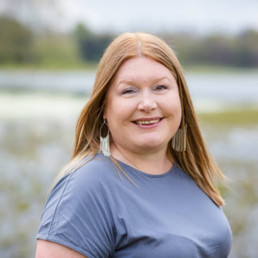
Written by Hannah Wilson
Founder and Director of the Belonging Effect (formerly Diverse Educators).
Last week, I had the privilege of chairing a panel at the IAPS Heads’ Conference exploring a question that sits at the heart of my work: how do we cultivate a culture of belonging for all?
I was joined by three school leaders, Charlotte Crookes, Fergus Llewellyn and Sadia Hussain-Savuk, who generously shared their personal and professional journeys through Diversity, Equity, Inclusion and Belonging (DEIB).
What struck me throughout our conversation was not a claim to expertise or a presentation of perfectly packaged solutions. Instead, there was honesty, vulnerability and a willingness to share what had been learnt along the way. Their reflective and inclusive leadership modelled how we need to show up to start the work and how we position ourselves in order to sustain it.
Belonging is not something we complete
I framed our conversation by considering what we actually mean when we talk about belonging. For me, belonging is about being seen, heard, included, valued and safe. It is about being able to bring our whole selves into a space without having to edit, minimise or leave parts of our identity at the door.
Belonging is not something we achieve, tick off and move on from. It is dynamic. It is relational. It is contextual. Most importantly, it is cyclical.
As our communities change, our understanding needs to change with them. As we learn more about the lived experiences of our pupils, staff and families, we need to be prepared to question practices that may once have seemed inclusive. As the world beyond our school gates changes, we need to consider what those changes mean for the people within them.
The work is never ‘done’.
Looking in the mirror before looking out of the window
One of the recurring themes in our discussion was the importance of reflection. Before asking what everybody else needs to change, leaders need to be prepared to look closely at themselves and their organisations:
- Who feels that they belong here?
- Who does not?
- Whose voices are heard most loudly?
- Whose experiences might we be missing?
- Who has learnt to navigate our culture successfully, and who is expected to adapt themselves in order to fit in?
And, perhaps most provocatively for independent schools: are we really as inclusive as we believe ourselves to be?
These are not comfortable questions. Nor should they be. Cultivating belonging requires us to look in the mirror before we look out of the window.
Responding to the world beyond the school gates
Our conversation also explored the responsibility schools have to respond to what is happening in wider society. I asked Charlotte to reflect on her journey through anti-racism and racial equity, and how school leaders respond when racism, division and social unrest become increasingly visible beyond the school gates.
These moments matter.
Children and young people do not leave the outside world at reception when they arrive at school. Neither do their families or our colleagues. News stories, political discourse, racism, discrimination and social tensions enter our classrooms through the experiences, fears, questions and conversations of the people in them.
Silence communicates something too.
This does not mean leaders need to have an immediate answer to every complex issue. Leadership is not about having all the answers. It is about how we respond when things are difficult, how we support others and the culture we create around us.
Sometimes courageous leadership begins by acknowledging that we do not have all of the answers and need to learn.
Listening to lived experience
Fergus shared reflections from a journey that has considered a range of identities and, crucially, has involved listening to stakeholders about their experiences of school. This is fundamental to bringing the whole school community with us on the journey.
We cannot measure belonging simply by looking at policies, representation or what leaders intended to create. We have to ask people what it feels like to be there. There can be a significant perception gap between our intention and somebody else’s experience.
Listening helps us find that gap. But listening needs to go beyond consultation. If we repeatedly ask people to share their experiences without demonstrating what we have heard, what we have learnt and what we will change, we risk creating consultation fatigue rather than belonging.
The question is not simply: ‘Have we asked?’ It is: ‘What have we changed because we listened?’
Young people should be co-creators, not consumers
Sadia brought another important dimension to the conversation: the role of young people themselves.
Our pupils care deeply about identity, equity and social justice. They notice inconsistency. They question systems. They experience our school cultures differently from the adults who lead them.
So why would we develop DEIB strategies for young people without developing them with young people? It reminds me of the commitment: nothing about us, without us.
Meaningful pupil voice is not about asking pupils to approve decisions that adults have already made. It means creating opportunities for young people to identify issues, shape priorities, challenge thinking and contribute to solutions.
When we involve pupils as co-creators, we communicate something powerful: your experience matters, your voice has value and you have agency within this community. That, in itself, cultivates belonging.
Courage without perfection
As we brought the panel to a close, I asked each panellist what advice they would give to leaders beginning, or developing, their own DEIB journey.
Several themes emerged:
- Being willing to be vulnerable.
- Acknowledging that it does not have to happen to you to matter to you.
- Listening deeply to your stakeholders and involving them as co-creators.
- Distributing responsibility so that inclusion does not become the work of one passionate individual.
- Creating enough psychological safety for people to make mistakes, acknowledge them, learn from them and do better.
- Taking tangible actions, such as signing up to the Halo Code, which challenges hair discrimination.
- Getting started, with small tangible steps to create momentum.
We addressed the fact that one of the dangers of this work is believing that we need to know everything before we can do anything. We do not. We instead need humility, curiosity and courage. We need to know when to lead, when to listen, when to ask for help and when to acknowledge that our understanding has changed.
From intention to impact
I ended the session by thanking Charlotte, Fergus and Sadia for their courageous leadership and their candour. Their stories reminded us that inclusive leadership is not demonstrated by claiming to have got everything right. It is demonstrated by being willing to ask difficult questions, hear difficult answers and respond intentionally to what we learn.
The feedback following the panel reinforced this. One attendee reflected on leaving with a renewed commitment to ensuring every pupil feels ‘seen, safe, valued and supported’, and to creating a culture where belonging is not merely an aspiration but a lived experience.
That distinction matters as:
- Most schools intend for children to belong.
- Most leaders would say they value inclusion.
- Most mission statements contain words such as respect, community, kindness or equality.
The challenge is not necessarily our intention. The real challenge is whether that intention is experienced by everybody.
So perhaps the questions we need to leave ourselves with are these:
- Who belongs in our schools?
- How do we know?
- Who might experience our culture differently from the way we imagine it?
- Whose voice have we not yet heard?
- What are we prepared to change because of what we hear?
And ultimately:
- How will we know when our intention has become impact?
Cultivating belonging is not a project, an initiative or a destination. It is an ongoing commitment to noticing, listening, learning and acting, and then having the courage to begin the cycle again.
Continue the conversation
At The Belonging Effect, our commitment is to Shaping Intention into Impact. Our team supports schools and organisations to move beyond good intentions and create cultures where belonging can be experienced, strengthened and measured.
References and resources
Explore our training and resources on The Belonging Effect website, including our Belonging Toolkit, and continue your professional learning with my book, Cultivating Belonging in Schools.
What Do I Say Right Now?

Written by Orla McKeating
Entrepreneur, coach and motivational speaker
“My parents told me to cross the road when I see a Black or Brown man.” “Can I say the word ‘Black’?” “I don’t think immigrants should come here.” “That’s gay.”
These are conversations I have heard over the last five years through my work with Still I Rise Voices. And increasingly, I hear another question underneath all of them:
“What do I say right now?”
Because our children are growing up in a world where conversations about race, migration, identity, gender, disability, culture and belonging are everywhere. They hear things at home. They see things online. They hear conversations in the playground. They absorb the language of adults around them. And sometimes they bring all of that into the classroom.
For teachers and educators, this can feel like a lot.
You are already carrying enormous responsibility. You are supporting children academically, emotionally and socially, often while navigating significant workload pressures.
The 2025 NASUWT Big Question Survey, which included more than 10,000 teachers across the UK, found that almost half of teachers – 48% – reported a substantial increase in workload over the previous year. Teachers reported working an average of 47 hours a week, including around 12 hours outside the school day.
And in England, the picture is similarly difficult. Research commissioned by the Department for Education found that only 17% of teachers and leaders agreed that they had an acceptable workload in 2023.
So, when we talk about creating inclusive classrooms, we may need to acknowledge something important. Teachers cannot be expected to know everything. They cannot be expected to have all the language. All the answers. All the cultural knowledge. All the confidence. And all the time. That doesn’t mean these conversations aren’t important.
It means we need to give educators the tools and support to have them well.
The Context is Changing
In Northern Ireland especially, the need for these conversations is not theoretical. Our classrooms are changing alongside our communities, and the wider environment children are growing up in matters.
The PSNI recorded 2,260 race-motivated incidents and 1,430 race-motivated crimes during 2025 – the highest 12-month level recorded since this data series began in 2004/05.
The figures don’t tell us what every child is experiencing but they do tell us something about the environment around us.
And educators are often the adults who are expected to help children make sense of that environment. They may be the person a child turns to after hearing something racist. The person who notices that a child has stopped participating. The person who needs to challenge a stereotype without humiliating the child who repeated it. The person trying to support a child who feels different. The person wondering:
“Is this the right language?”
“Should I challenge this?”
“What if I make it worse?”
“What if a parent complains?”
“What if I don’t know enough?”
These questions don’t make you a bad educator. They make you human. We need to move away from fear
One of the things I have learned through working with more than 10,000 children and young people across Ireland and the UK is that the most powerful conversations don’t usually begin with having the perfect answer.
They begin with curiosity.
I have seen a Global Majority girl jump up when she recognised someone who looked like her in a book. Her whole face lit up. “She’s like me!”
I’ve seen a child proudly share parts of their culture with classmates after seeing a character wearing a hijab. I’ve heard teenagers express views about immigration that are uncomfortable to hear. I’ve heard children say, “That’s gay,” followed by laughter.
And these moments matter. Not because every child has suddenly become perfectly inclusive. But because we have an opportunity to pause. To ask:
Why do you think that?
Where did you hear that?
How might that make someone feel?
Is that actually true?
What could we say instead?
That is where learning happens. Not through shame. Not through humiliation. Not through pretending difficult things aren’t being said. But through conversation. Inclusion isn’t about having the perfect words.
I used to think change came through fighting. I fought hard for my mixed-race son and what he experienced in school. I fought against systems. I fought against language.
But over time, I realised that there is another kind of work. The quieter work. The work of sitting together. Listening. Learning about our own biases. Understanding where someone is starting from. Having the conversation. Asking another question. Sharing another story. Changing one word. Opening one book. Helping one child feel seen. Because sometimes one moment can change how a child understands the world. And sometimes one moment can change how an adult understands a child.
So, What Do I Say Right Now?
That is exactly why I created “What Do I Say Right Now?”
It is a practical resource for teachers, educators, parents and anyone who wants to feel more confident navigating difficult conversations around inclusion.
Because sometimes we don’t need another lecture. We need somewhere to start. We need language. We need prompts. We need reassurance. We need to know that we are allowed to say: “I’m not sure, but let’s explore that together.”
There is something beautiful about correcting something without shaming a child. We can start to understand that having a conversation about race does not have to mean having the perfect vocabulary.
And we need somewhere to keep learning.
That is what I want to create through The Inclusion Lab – a hybrid learning platform and trusted space for educators and people who care about creating more inclusive environments to keep learning, asking questions and building confidence.
Because inclusion isn’t a one-off training session. It isn’t a tick box. And it certainly isn’t about getting everything right all the time. It is a practice. A conversation. A commitment. Little by little. Word by word. Story by story.
So, if you have ever found yourself thinking:
What do I say right now?
I’ve created something to help. Download your free copy of “What Do I Say Right Now?” and start with one conversation.
Because language changes things. Connection changes things. Stories change things. Voices change the world. Still We Rise.
Language in the Classroom: The Signals We Send
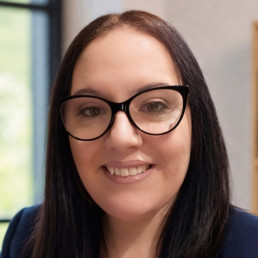
Written by Amy Wilby
I am an experienced senior educational leader, currently serving as an Assistant Headteacher with responsibility for Curriculum, as well as a Trust-wide DEIB Champion, edublogger, and proud mum to a 21-year-old son. Since qualifying as a teacher in 2009, I have built a career rooted in both academic excellence and strong pastoral care. I bring extensive experience across middle and senior leadership, including roles as a Specialist Leader of Education (SLE) and Associate Assistant Headteacher. I hold an NPQSL and a master’s degree in educational leadership, and I am deeply committed to evidence-informed practice, drawing on educational research to enhance teaching, learning, and curriculum design.
Walk into any classroom and you’ll hear a constant flow of language, questions, instructions, feedback, encouragement. It’s so familiar that it can feel almost invisible.
But there’s a deeper question we don’t ask often enough:
What are our words actually signalling to students, and how are they being received?
Because language doesn’t just deliver learning.
It shapes expectations, communicates beliefs, and quietly influences who feels confident, capable, and included. It can also show our own bias, our own understanding of what is an is not acceptable.
If curriculum is what we teach, and literacy is how students access and participate, then language is how belonging is communicated, both directly and indirectly.
The hidden layer: micro-signals in everyday language
Most classroom language is not part of a formal plan. It lives in the small, repeated interactions:
- how we respond to a wrong answer (Nonverbal cues as well as verbal ones)
- who we call on, and how often
- the tone we use when giving instructions
- the way we frame challenge or difficulty
- the ways we build engagement and excitement in our classrooms
These are micro-signals, subtle, often unintentional cues that students pick up quickly.
Over time, they begin to answer questions like:
- Am I seen as capable here?
- Is it safe to take risks?
- Do my contributions matter?
Students don’t just listen to what we say.
They interpret what it means about them.
The Pygmalion versus the Golem effect!
Your expectations matter and the subtext of your language and choices will have an impact.
‘The belief the teachers had in the students’ potential had been unwittingly and nonverbally communicated. More important, these nonverbal messages were then digested by the students and transformed into reality.’ (Acher. S, 2010)
Tone: more powerful than we think
Two teachers can say similar words and send completely different messages.
Consider:
- ‘Not quite. Try again.’
- ‘Not quite yet, let’s think it through together.’
The difference is small, but the signal is significant.
Tone communicates:
- belief (or doubt) in a student’s ability
- patience (or frustration)
- partnership (or hierarchy in the classroom)
- Which classroom environment would you rather take risks in? Which classroom highlights the importance of metacognition and learning the steps? Which one is stressful and the focus on the outcome only?
When tone consistently signals respect and belief, students are more likely to stay engaged, even when learning feels difficult.
Expectations: what we imply, not just what we say
High expectations are often discussed in terms of outcomes. But in practice, they are communicated through language every day.
For example:
- ‘This is tricky, so I don’t expect everyone to get it’
vs - ‘This is challenging, and I’m going to support you to get there’
The first lowers the bar, even if unintentionally.
The second maintains high expectations while offering support.
Students are highly attuned to these cues. Over time, they internalise them:
- who is expected to succeed?
- who is expected to struggle?
- who gets stretched, and who doesn’t?
Ultimately this leads to,
- ‘Who believes in their ability to succeed, and who doesn’t’?
- ‘Who wants to be here, and who doesn’t?’
- ‘Who is going to mask their struggle with other behaviours and who is going to embrace it’?
Inclusive classrooms are not those where work is made easier, but where expectations are consistently high and clearly supported.
Framing: how we position learning
The way we frame tasks and responses shapes how students experience learning.
Deficit framing might sound like:
- ‘Some of you didn’t understand this’
- ‘This group struggled with…’
- ‘You are set… and therefore we are doing something different…’
Asset-based framing shifts the perspective:
- ‘Let’s build on what we’ve started here’
- ‘Here’s where we can go next’
- ‘Learning starts only once it gets tough. Thinking and working hard is good!’
This doesn’t ignore gaps, it reframes them as part of the learning process, rather than a fixed limitation.
Similarly, how we respond to mistakes matters:
- Are they signals of failure?
- Or are they positioned as a normal, valuable part of learning?
The language we choose answers this for students.
The risk: when language goes unchecked
Just as curriculum can become tokenistic, classroom language can become habitual, and habits are powerful.
Without reflection, we may unintentionally:
- call on the same students repeatedly
- soften expectations for some and not others
- use praise that is uneven or limiting. Focusing on the student rather than the choices (‘You’re so clever’ vs ‘That strategy worked well’)
- signal frustration more quickly with certain learners
None of this is usually deliberate.
But over time, these patterns can shape students’ sense of where they fit.
And again, students notice.
What this looks like in practice
The strength of focusing on classroom language is that it’s an immediate, actionable shift.
You don’t need to redesign the curriculum.
You need to become more intentional with what you’re already saying.
- Pause and notice patterns
- Who do you respond to most?
- Whose answers are extended, and whose are closed down?
- When does your tone shift?
- If a student doesn’t know the answer, how do you frame this as a learning opportunity rather than a failure?
- Make belief explicit
- ‘I know you will absolutely give your best to this’
- ‘I believe in you’ (supported with appropriate scaffolding)
These statements matter, especially for students who may not hear them elsewhere.
- Normalise struggle
- ‘This is challenging, but we’ll get there, learning starts once you get stuck’
- ‘This is the part where it gets tricky’
- ‘If you’re finding this hard, you’re in the right place’
This reduces anxiety and increases participation.
- Use inclusive questioning
- Give thinking time before taking answers
- Invite multiple approaches
- Build on responses rather than evaluating them immediately, if a learner gives a partial or incorrect answer, build on it, don’t dismiss it!
‘I can see why you might think that, that’s a really astute observation, however I was thinking more of this…can someone build on this?’
- Be consistent with expectations
- Avoid lowering the bar for some learners
- Instead, increase the scaffolding and support
Why this matters for belonging
Belonging is not built through single moments, it’s built through patterns.
And language is one of the most consistent patterns students experience.
Over time, it tells them:
- You are capable
- Your ideas matter
- You are part of this learning
or you can signal the opposite.
The power of language is that it operates in real time. Every lesson, every interaction, every response is an opportunity to reinforce inclusion.
What you can do tomorrow
If you’re looking for a simple starting point:
- Choose one class and consciously adjust how you respond to incorrect answers
- Add one phrase that signals belief (‘Let’s work through this together’)
- Track who you call on, and aim for greater balance
- Try to build in some tasks that don’t have a definite answer. I like to use 4 seemingly random pictures and ask, ‘Which one is the odd one out and why’? so that everyone has a chance to explain their thinking and get praised for their work! (There is no correct answer, only answers that are not thought of effectively, everyone has the same starting point) This builds confidence over time.
Small, intentional changes in language can have a disproportionate impact.
Final thought
If mirrors and windows help students to see,
and literacy helps them to participate,
then language is what tells them:
‘You belong here and you are valued!’
And often, it does so in ways we don’t even realise until we choose to notice.
Further reading
Achor, S. (2010) The happiness advantage: the seven principles of positive psychology that fuel success and performance at work. New York: Broadway Books.
Erikson Institute (2019) Inclusive language is a classroom superpower, Erikson Institute Blog, 2 October. Available at: https://www.erikson.edu/blog/inclusive-language-is-a-classroom-superpower/
Kratz, J. (2024) ‘6 research-backed inclusive language dos and don’ts’, Forbes, 4 February. Available at: https://www.forbes.com/sites/juliekratz/2024/02/04/6-research-backed-inclusive-language-dos-and-donts/
Roberts, N. (2021) ‘Why we need to ditch deficit labels in SEND language’, TES Magazine, 22 June. Available at: https://www.tes.com/magazine/analysis/general/why-we-need-ditch-deficit-labels-send-language
University College London (UCL) (2023) Using inclusive language in education. Available at: https://www.ucl.ac.uk/teaching-learning/publications/2023/jul/using-inclusive-language-education
Worth-it (2021) How to build positive relationships in school, Worth-it Blog, 17 May. Available at: https://www.worthit.org.uk/blog/positive-relationships-school
Mental Health or Mental Illness? Why Silence Speaks in Teaching

Written by Katja Pavlona
Katja Pavlovna is a teacher in alternative provision and has previously taught in specialist SEMH and prison settings. She runs the lived experience mental illness project Lives Not Labels and is co-author of the book Sorry My Mental Illness Isn't Sexy Enough For You.
There is often – rightly – a lot of talk in education about teacher wellbeing and mental health. Burnout, stress, anxiety and depression are sadly commonplace within our profession. However, something we hear far less about is teacher mental illness.
I was diagnosed with Borderline Personality Disorder (BPD, or to give it its newer name, Emotionally Unstable Personality Disorder, or EUPD) in 2021. Whilst the diagnosis was both a blessing (I knew what was wrong with me) and a curse (it’s incurable, although it can go into remission and be managed), I knew deep down that there was something else going on that BPD couldn’t quite explain. That’s how I ended up with a second diagnosis in 2023 of Schizotypal Personality Disorder (STPD). Managing two different, yet serious, mental conditions is something of a challenge in itself, let alone with the added complication of working full time in a career known for the risks it poses to mental health. So, how on earth do I do it? Truth be told, it’s hard.
Whilst mental health might be a hot topic in education, mental illness certainly is not. Whilst colleagues might join in with me for a moan about how exhausted I am, I can’t imagine them having much to contribute were I to discuss my propensity towards magical thinking, odd interpretations of events, finding hidden meanings in everyday things and my visual, gustatory and olfactory illusions, which are all part of my STPD.
I am extremely fortunate to be able to manage my disorders independently, and am generally classed as low support needs- that is, I function in society as anyone ‘normal’ would, predominantly by masking my symptoms and mirroring those around me. Whilst this does have obvious advantages, it does come with some fairly significant drawbacks too.
As someone who has very high expectations of myself and prides myself on being resourceful, diligent and practically-minded, it’s fair to say that I’m seen as good- even great- at my job. How could that ever be a negative?
The problem is that because my illnesses are well managed, it’s very hard for people to conceptualise that I am actually unwell. I mask so much that my disorders are basically invisible, so it’s very easy to assume they’re not there at all. People assume I’m fine, so when things start to slip, I’m judged harshly for not being able to perform in the same way I could when I was ‘fine’.
A few years ago, I had to take some time off work. I’d been wrongly taken off all of my antipsychotic medication, which led to my psychotic-like STPD symptoms returning. Fairly obviously, I couldn’t teach in that time and was signed off. I was already stressed and anxious- work keeps me stable and grounded and I rarely take time off, so being stuck at home with no interaction or purpose was causing me to deteriorate, quickly. I was then accidentally copied into an email complaining about my absence, which only added to my feelings of guilt. I was having to plan cover lessons around psychotic episodes and hospital trips, but when I returned after two weeks when my medication was reinstated and I was cleared by Occupational Health to return, I was still subjected to snide comments about how much time I’d had off due to the culture of presenteeism. People knew I had a serious mental illness, but it was still hurtful to realise I was seen as a liability.
The thing about mental illness is that everyone claims to be fine with it, until you start showing symptoms. This is, I think, especially true for a personality disorder. I am covered under the Equality Act 2010 for both BPD and STPD, but these are often seen less as a disability and more as a conscious attempt to manipulate. I clearly recall once, whilst temping, being asked to leave the classroom after requesting time off for a psychiatric appointment. Management then interrogated the pupils as to whether they felt safe in the classroom with me. Luckily this incident was dealt with, but I’ll never forget how it made me feel to know they clearly thought I must be dangerous.
The practical side of managing a mental illness in teaching is also difficult. Attending appointments during the school day can be tricky. After I was diagnosed with an eating disorder which arose as a coping mechanism for my personality disorders, I was offered specific treatment (DBT therapy), but this was a two hour session every week for 20 weeks in a neighbouring city. At the time I was teaching in an SEMH school who were extremely understanding and rejigged my timetable to allow me to attend. I suspect many schools wouldn’t be able to be that generous.
Reasonable adjustments can be hard to navigate too. Because of my fears of contamination with food due to the STPD, one of my adjustments is to bring my own lunch to work rather than eat from the canteen. Whilst you wouldn’t think this was likely to be an issue, in one school I worked at, a senior member of staff continuously ‘reminded’ me that teachers had to eat the same food as the pupils as it set a bad example. They weren’t the kind of person I could confide in, so I ended up eating alone in my classroom.
The fact is, my mental illness is always in the back of my mind. I constantly fear another ‘episode’, although I know realistically as long as I’m looking after myself, it’s unlikely. But still I lie awake at night worrying. I am the main earner in my household. If I can’t work, we would stand to lose everything. That’s an enormous pressure to have on my shoulders. Over the course of my career, I have met several teachers with BPD in the schools I’ve worked at. As far as I am aware, I am the only one still in the profession. It’s tough.
It’s not all negative, though. My disorders have given me resilience, creativity and compassion towards others. Some of the more challenging aspects of my disorders- such as BPD impulsivity- I can channel in healthier ways through teaching. I am self-aware enough to pre-empt when symptoms may occur and manage them, and I draw on appropriate support as and when needed. Pattern recognition has been vital in helping me to be proactive in managing my disorders. I love my job, so I’m committed to doing whatever it takes to make sure I can remain in it.
It’s also been an unexpected asset in some of the settings I’ve worked in, most notably alternative provision, prison and PRUs. In recent years I’ve worked with pupils with personality disorder or conduct disorder diagnoses, and it has helped me to better understand their inner experience. I could never share my own diagnoses with them, though. The stigma around personality disorders is so intense that to do so could potentially jeopardise my career.
A few years ago I spoke to a national newspaper about my lived experience project, Lives Not Labels (www.livesnotlabels.com) and received some hateful messages from people who took issue with the fact the article mentioned my career. I was accused of being abusive, manipulative and too unstable to work with children, told I was probably only in education to make false allegations about parents to social services to have their children removed, and threatened that if they knew what school I worked at, they’d destroy my career as people like me are a danger to children, including my own. To see such attitudes on display so plainly was incredibly confronting.
In October of last year, my book Sorry My Mental Illness Isn’t Sexy Enough For You was published which detailed some of the challenges I’ve faced as a teacher with serious mental illness. Although I’ve become gradually more confident in speaking out about my experiences, for many working in education with mental illness, there is too much at stake for them to be able to do the same. It’s clear that strides forward have been made in the realms of teacher mental health, but for those of us with mental illness, resources and understanding are sorely lacking.
Here is the link to my book: https://www.amazon.co.uk/gp/aw/d/1805010670/ref=tmm_pap_swatch_0?ie=UTF8&dib_tag=se&dib=eyJ2IjoiMSJ9.eMN7CSJN8yAXZ5LF9EtaQQ.UXJCGah2s3DoEkFTDqRf2TfZOyzEcavIn2mhgstUTXI&qid=1781934392&sr=8-1
School is so gay

Written by Ian Timbrell
Ian has worked in education for 18 years, including as a teacher and deputy head teacher and now supports schools develop their provision for LGBTQ+ and adopted pupils. He is the author of 'It's More Than Flags and Rainbows', a guide to supporting schools become more LGBTQ+ inclusive.
I remember seeing bullying when I was at school. I remember the names, the laughter, and the way certain words landed harder than others. I also remember how normal it all felt at the time, not because it was harmless, but because nobody really stopped it.
Years later, when I became a teacher, I genuinely believed things would be different. Society had moved on, language had evolved, and schools were far more aware of safeguarding and wellbeing. But standing in classrooms and corridors, I found myself hearing the same phrases, watching the same patterns, and feeling the same familiar knot in my stomach.
What devastated me most was not just that bullying still existed. It was how often it was excused.
“That’s so gay.”
“They don’t mean it like that.”
“It’s just a saying.”
“There are bigger issues we need to focus on.”
I heard these comments repeatedly. Sometimes from pupils, but far more painfully from adults.
For LGBTQ+ people, language like this is never neutral. It carries weight, history, and memory. When a word connected to who you are is used as shorthand for something negative, it teaches you very early on that your identity is something to be laughed at, minimised, or ignored.
As a pupil, that message hurts deeply.
As a teacher, watching it be passed on to another generation is crushing.
Over time, I became increasingly frustrated by the idea that tackling homophobia was somehow an “extra”. Something to get to if there was time. Something that sat below academic outcomes, behaviour targets, or inspection priorities. I watched schools work tirelessly on countless tick-box initiatives, yet hesitate when it came to properly challenging harmful language, often out of fear of backlash or because it was seen as controversial.
But bullying linked to sexuality or gender identity is not less serious because it is verbal. It is not less damaging because it is common. And it is not less urgent because some people are uncomfortable talking about it.
I reached a point where I could no longer accept that this was just how things were. Leaving teaching was not an easy decision, but it became a necessary one. I set up More Than Flags and Rainbows because I wanted to challenge the idea that inclusion is optional and that addressing homophobia is somehow a distraction from “real” education. It is not. It is central to it.
I have worked with children who learned to make themselves smaller to feel safe. I have listened to young people who stayed silent because drawing attention to themselves felt dangerous. I have seen how unchecked language creates cultures where exclusion becomes normal and cruelty becomes background noise.
This work matters because words shape environments. When harmful language goes unchallenged, it sends a clear message about whose feelings matter and whose do not. When schools, and wider society, treat this as a low priority, LGBTQ+ young people pay the price.
This is not abstract to me. It is personal. I have lived it, witnessed it, and ultimately walked away from a career I loved in order to keep challenging it in a different way. And I believe deeply that when we stop making excuses for harm, we create spaces where young people do not just survive, but belong.
Everyday Sexism: A Powerful Call to Action from Laura Bates - What Schools Can No Longer Ignore
Written by Hannah Wilson
Founder and Director of the Belonging Effect (formerly Diverse Educators).
When Laura Bates, founder of the Everyday Sexism Project, addressed the room of boarding school headteachers and senior leaders, her message was not abstract, ideological, or optional. It was urgent, and it was evidence-based.
Drawing on what is now one of the largest datasets of its kind – over 250,000 testimonies, many from children – Bates laid out a reality that schools are already part of, whether they recognise it or not.
This Is Not a “Girls’ Issue”
One of the clearest points: sexism is not about being “anti-boys.” It is instead about the ecosystem young people are growing up in. Rigid gender stereotypes harm everyone – shaping body image pressures for both girls and boys, narrowing subject choices, and reinforcing harmful expectations about relationships, power, and identity.
The idea of a “gender war” or “battle of the sexes” is not only misleading, it actively prevents progress. Instead, Bates reframed the issue: this is about culture, not conflict.
The Scale and Subtlety of the Problem
Some statistics that she shared were stark and made me feel really uncomfortable, despite being familiar with most of them:
- 86% of women in the UK report experiencing sexual harassment
- 72% of women report sexism in the classroom
- 71% of 16-year-old girls report being called “slut” or “slag” on a weekly basis
But just as important is what Bates called “subtle sexism.”
This is the quiet shaping of expectations:
- which subjects feel “appropriate”
- how physical spaces exclude women and girls
- whose voices are taken seriously
- how authority – especially female authority – is undermined
These are not isolated incidents: they are cumulative; they are structured; they are reinforced through media, advertising, peer culture, and increasingly, algorithms.
Language Matters More Than We Admit
The distinction between “groping” and “sexual harassment” is not semantic – it is cultural. So too is the shift from focusing on victims to naming perpetrators, and from passive bystanders to active upstanders. Language shapes what young people think is normal, tolerable, or reportable. If we minimise behaviours in how we speak about them, we normalise them in practice.
As a former English teacher, and now DEIB trainer, the power of language and our language choices are something I think about a lot and explore with our clients regularly.
The Online World Is Not Separate From School
A major theme was the widening gap between adults and young people in digital spaces. Most educators and parents are not digital natives. Yet, their students and their children are.
This gap matters because the online environment is not neutral – it is actively shaping attitudes:
- Influencers like Andrew Tate have amassed billions of views
- Algorithmic pathways can lead users toward extreme misogynistic content in minutes
- Exposure to pornography is now commonly reported around age 13
Bates referenced the “manosphere” – a network of online communities where ideas such as “AWALT” (“all women are like this”) circulate and harden. This is not fringe content. It is mainstream, accessible, and often gamified.
A New Frontier: AI and Exploitation
If that was not enough for us to deal with in our schools and in our homes, then the emerging technologies that are accelerating the problem are the next challenge we face:
- Deepfake and “nudify” tools enabling new forms of abuse
- AI “girlfriends” reshaping expectations of relationships
- Gamified, exploitative systems rewarding harmful behaviour
- Poorly regulated virtual spaces (including metaverses) lacking safeguarding measures
The direction of travel is clear and really concerning. I am conscious that I am not a parent, I am no longer a headteacher and I have recently stood down from being a trustee who led on safeguarding, but I care deeply about our sector, about our society and about our young people. So sitting in a room of school leaders I felt the palpable weight of responsibility on their shoulders as they began to process the enormity of what is rapidly attacking our schools and our homes.
The Youngest Are Most at Risk
Perhaps the most sobering insight: the youngest generation is not the most protected – it is the most exposed. Grooming, radicalisation, and exploitation are no longer rare nor exceptional risks. They are structural features of the environments young people inhabit – and schools sit at the intersection of all of this.
So What Can Schools Do?
Bates did not leave the room without direction but offered some practical advice and signposting.
Effective responses are not one-off assemblies or reactive policies. They are cultural and sustained:
- Start early: challenge gender stereotypes in early childhood
- Explore openly: normalise discussion of relationships, consent, and respect
- Intervene consistently: address language, behaviour, and culture in real time
- Encourage allyship: shift from bystanders to upstanders
- Support staff: particularly where female authority is undermined
- Involve parents: bridging the digital knowledge gap is essential
This is where she signposted organisations such as Tender, Lifting Limits, Beyond Equality, and Bold Voices are already doing critical work alongside schools.
A Cultural Shift, Not a Checklist
Perhaps the most important takeaway is this: sexism does not operate in a vacuum. It is built on foundations – early stereotypes, repeated messages, normalised behaviours.
Which means the solution is not a single intervention, but a process of deconstruction:
- recognising the patterns
- naming them
- and creating genuine alternatives for young people
This is not about removing choice – it is about creating it.
The Question That Remains
Bates left the audience with an implicit challenge to consider: not whether schools should respond – but whether they are prepared for what is already here, and what is coming next. She held up a mirror to remind us that the culture shaping young people today is moving faster than most institutions, so ignoring it is no longer a neutral act.
BSA – thanks for creating the space at the annual conference for this talk (and Gaelle thanks for the invitation to be in the room). Laura – thanks for the clarity and the data that you brought to the conversation.
Closing the Gap by Valuing Multilingualism

Written by Soofia Amin
Soofia Amin is the Multilingual Trust Lead for Tapscott Learning Trust (TTLT). She is also a Specialist Lead in Education for Multilingualism with vast experience in supporting multilingual pupils and their families. Soofia is passionate about developing excellent practice for multilingual pupils whilst promoting their first languages as a resource in both the classroom and the wider school community. She strongly advocates for a whole-school approach to multilingualism and uses her own school’s example to provide effective models of practice for others.
I recently visited a primary school where low writing outcomes for multilingual children had led leaders to search urgently for ways to “close the gap.” For many school leaders, this phrase often leads to discussions about data dashboards, targeted interventions, and heightened accountability measures. These discussions often neglect one key factor: the children’s first languages.
Many children in this school confidently use two or three languages and travel regularly to their countries of origin. Leaders worry that this rich linguistic exposure might be contributing to weaker writing outcomes. While understandable, this view risks misidentifying the problem.
The challenge here is not multilingualism. Rather how much we, as educators, value and use the children’s linguistic proficiency to further their learning, including their writing. If we focus intentionally on using the multilingual children’s rich language skills to support learning, particularly their writing development, outcomes could look very different.
Building Strong Foundations Through Explicit Language Instruction
Language and subject learning develop together. Children do not learn content first and language later; they learn both simultaneously. Evidence from Cummins states that,
“Conceptual knowledge developed in one language helps to make input in the other language comprehensible.” (Cummins, 2000,p.39).
Therefore, embedding spoken language approaches across the curriculum can strengthen literacy and attainment when language is taught explicitly and in context. For multilingual learners, this means making the language demands of lessons visible and teachable.
In practice, this involves modelling how this language is used in speech and writing.
Classroom example: Year 5 science (States of Matter)
The educator explains evaporation using sentences such as:
“When water is heated, it evaporates.”
“As a result, the liquid changes into a gas.”
The educator unpacks key vocabulary like evaporate and evaporation and gives children sentence stems to support their explanations. Alongside the science objective, sits a clear language objective. Children now have the words and sentence structures they need to explain their thinking clearly.
Strengthening Learning Through Cultural and Linguistic Connection
Multilingual children bring a wealth of cultural and linguistic knowledge into the classroom. When educators recognise and build on this, learning becomes more meaningful and inclusive.
Schools that invest in understanding children’s linguistic backgrounds are better placed to design teaching that connects new learning to what children already know.
In practice, this means:
- Gathering information about a child’s home language/s and experiences
- Using this knowledge to make lessons more relevant and accessible
Classroom example: Year 5 science (States of Matter)
The Educator invites children to share where they see evaporation at home: drying clothes, steaming dumplings, or burning incense. Then explicitly links these examples back to the scientific explanation.
By connecting the abstract concept of ‘evaporation’ to something tangible like ‘incense’ or ‘steaming,’ the child is able to relate to it.
Deepening Understanding by Harnessing Home Languages
Research and classroom practice both show that strong first-language skills are crucial for developing English proficiency and achieving academic success.
“The idea that a multilingual classroom is not only beneficial to EAL students but to non-EAL students (suggests) the need for a strategic whole-school approach to language teaching and integration.” (Arnot et al., 2014,p.7)
In practice, schools should:
- Encourage translanguaging as a learning strategy. Translanguaging enables children to first process complex cognitive tasks in their strongest language, before expressing them in English.
- Encourage families to use first languages to support key topics and concepts
Classroom example: Year 5 science (States of Matter)
The children use their first language to clarify why the change is happening. Once they have secured the concept, they then describe it in English.
The child is not cognitively overloaded. They use their first language to handle the heavy lifting of thinking, and only then move on to using English to demonstrate their understanding.
Final Thoughts…
Closing the gap for multilingual children requires a clear understanding of how language underpins attainment, a commitment to evidence-informed practice and a shared vision that places language at the heart of curriculum design.
When leaders get this right, the impact is profound – not only for multilingual children, but for all learners. Prioritising language isn’t just an inclusion strategy; it’s a school improvement strategy.
References
Arnot, M., Schneider, C. and Welply, O. (2014) School approaches to the education of EAL students. Cambridge: The Bell Foundation.
Cummins, J. (2000) Language, Power and Pedagogy: Bilingual Children in the Crossfire. Clevedon: Multilingual Matters.
When teacher recruitment celebrates bias

Written by Neil Lithgo
Neil Lithgo is an experienced international Physics educator with over 20 years’ teaching IB, A-Level, and IGCSE courses. He is interested in evidence-informed pedagogy, STEAM education, and inclusive practices that support neurodivergent learners and teachers. He is the creator of SimpliPhys.com.
I’ve spent some time recently reading teaching job adverts and I started to notice an interesting pattern in the language we use to describe the “ideal” candidate.
Words like “enthusiastic”, “passionate” and “dynamic” appear repeatedly, often far more frequently than descriptors related to reflection, creativity or professional deliberation. That in itself isn’t a problem but it raises some important questions about what our recruitment processes may be unintentionally filtering for and what it may be filtering out.
“Seeking an enthusiastic, passionate and dynamic teacher to join our school.”
There is nothing inherently wrong with this. Who wouldn’t want a teacher who loves their subject and can convey that enthusiasm to students?
However, language like this hides a common and largely unexamined bias in teacher recruitment. One that directly affects hiring outcomes.
For decades, research has shown that recruitment processes are vulnerable to bias, even when intent is fair. A landmark 2004 study by Bertrand and Mullainathan demonstrated that identical CVs received significantly different call-back rates based solely on whether the applicant’s name was perceived as ‘White’ or ‘Black’. Similar findings exist for gender bias, prompting widespread reforms such as anonymised applications and structured scoring.
What did not happen was the normalisation of bias once it was identified. Organisations did not respond by saying, “Sorry, you just sounded too Black” or “You weren’t masculine enough.” Instead, they changed the system.
Yet in teacher recruitment, a parallel bias remains visible and largely unchallenged.
I recently analysed 30 randomly selected teaching job adverts on TES. The most common candidate descriptors were ‘enthusiastic’ (50%), ‘passionate’ (43%), and ‘dynamic’ (37%). By contrast, descriptors associated with reflection, collaboration, or professional deliberation appeared far less frequently (‘reflective’: 7%; ‘imaginative’: 3%).
This is not presented as definitive research but even in a small sample, the pattern is striking.
Schools consistently foreground affective qualities alongside and sometimes above technical competence. These terms are not niche; they are core elements of person specifications. Importantly, they function not as baseline expectations but as comparative qualifiers. Candidates who can visibly perform enthusiasm gain an advantage over those whose motivation is quieter, more internal or expressed through depth rather than display.
More troublingly, this bias is often explicitly reinforced in feedback to unsuccessful candidates: “The other candidate showed more enthusiasm for the school” or “Others appeared more dynamic in the interview.”
This becomes a serious equity issue when viewed through the lens of neurodiversity.
Every day, schools seek teachers who are innovative, committed and deeply invested in student success. Yet the primary tool used to identify them, the traditional interview, often functions less as a window into teaching ability and more as a test of social performance. This system is built on neurotypical norms of communication and disadvantages neurodivergent candidates, particularly those with ADHD and autism.
Commonly, the ADHD child is frequently corrected for being too lively, too chatty, too enthusiastic, for interrupting, oversharing, for just generally being ‘too much.’ This lifelong social feedback often forces the development of a carefully constructed mask. A reserved, calm and controlled exterior designed to pass in neurotypical spaces. Then, as an adult in a job interview, the same individual is evaluated against a checklist that prizes the very “enthusiasm” and “dynamism” they were trained to suppress. The system first punishes the trait, then demands its performance.
For these candidates, the interview is not merely stressful; it is also structurally mismatched. Neuroscience research shows that the ADHD brain is interest-based, thriving on stimulation, immediacy, and interaction, precisely the conditions of a dynamic classroom. By contrast, a static, high-pressure interview environment triggers inhibition, not engagement. Traits such as Rejection Sensitive Dysphoria can flatten affect, while the cognitive load of recalling polished examples under pressure can consume all available executive resources.
The result is a paradox: the candidate who appears subdued in an interview may be the same teacher who energises a project-based classroom.
Recent empirical evidence supports this bias. A 2021 study by Flower et al. found that autistic candidates were rated significantly lower than neurotypical candidates in live interviews. When the same responses were evaluated via written transcript, the gap largely disappeared. The bias was not in what candidates said, but in how they said it, tone, eye contact, rhythm, neurotypical social signals that are wrongly coded as indicators of professionalism or enthusiasm.
In both ADHD and autism, the system mistakes a difference in social cognition for a deficit in employment potential.
Crucially, past recruitment reforms share a core principle: change the system, not the candidate. Blinded applications, structured scoring and evidence-based criteria reduce reliance on subjective cues. Yet these principles have largely stopped at the edge of neurotypicality.
Creating equity means moving beyond accommodations offered only on request toward universally better design. The goal is not to train neurodivergent candidates to perform neurotypically. It is to build recruitment processes sophisticated enough to recognise genuine teaching potential across different cognitive styles.
By applying the same structural thinking used to combat racial and gender bias, focusing on demonstrable skills rather than ‘charisma’, we can dismantle the enthusiasm trap. We can stop conflating the performance of passion with the substance of it.
We can continue to celebrate a narrow, performative ideal of passion and systematically lose a reservoir of talented, dedicated and innovative educators. Or, we can apply the lessons learned from fighting other biases. We can redesign our adverts, de-centre the social audition and structure assessments that look for evidence of practice over performance. By doing so, we won’t just make hiring fairer; we will build stronger, more diverse teams capable of reaching every student.
The passionate teacher is already there. We should be able to create a process that allows the presentation of their enthusiasm to be correctly understood.
Disclaimer:
This piece is about patterns in recruitment culture over time and across institutions, not about any one school or individual process.
References:
Flower RL, Dickens LM, Hedley D. Barriers to Employment: Raters’ Perceptions of Male Autistic and Non-Autistic Candidates During a Simulated Job Interview and the Impact of Diagnostic Disclosure. Autism Adulthood. 2021 Dec 1;3(4):300-309. doi: 10.1089/aut.2020.0075. Epub 2021 Dec 7. PMID: 36601643; PMCID: PMC8992918.