
Freedom of religion or belief: The missing conversation in school belonging?
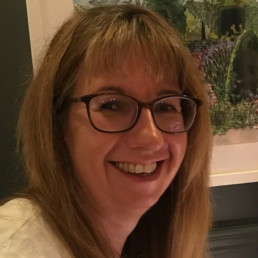
Written by Kathryn Wright
Dr Kathryn Wright is Chief Executive Officer of Culham St Gabriel's Trust, an endowed charitable foundation dedicated to supporting high-quality religion and worldviews education. She works with schools, researchers, policy makers and wider communities to explore how education can foster inclusion, belonging and understanding across difference. Kathryn is passionate about creating opportunities for every child and young person to flourish in diverse and democratic societies. Find out more at www.cstg.org.uk.
When we talk about belonging in schools, we often focus on relationships, representation, voice and participation. These matter enormously. Yet there is another dimension of belonging that we do not always name explicitly: the freedom to be yourself, to express what matters to you, and to know that your identity will be respected.
This is where Freedom of Religion or Belief (FoRB) has an important contribution to make. Culham St Gabriel’s Trust, a charitable foundation, has recently published a new toolkit and model policy offering school leaders a practical framework for creating cultures where every member of the community can flourish.
At first glance, some people may assume that FoRB is only relevant to Religious Education or to pupils from faith backgrounds. In reality, FoRB is much broader. It is a human right that protects the freedom of all people to hold, change, express, or reject religious and non-religious beliefs. It belongs equally to, for example, the Christian, the Muslim, the Jew, the Humanist, the atheist, the Sikh, the spiritual-but-not-religious young person, and the pupil who is still exploring what they think about the world. It also belongs equally to the pupil, the parent, the teacher, the governor, in fact, the whole school community
However, what interests me most is not FoRB as a legal concept, but FoRB as a belonging concept.
Belonging is often described as the experience of being accepted, valued and included. Yet it is difficult to feel that you belong if essential parts of your identity must remain hidden. Equally, it is hard to develop trust within a community if difference is treated as something to fear rather than something to understand.
The toolkit begins with three simple educational principles. Pupils should have opportunities to talk about religion or belief, talk about freedom, and learn about human rights.
These principles resonate strongly with the wider belonging agenda.
When pupils learn to talk about their own beliefs and hear about the beliefs of others, they develop the language and confidence needed to engage across difference. When they learn about freedom, they begin to understand that their rights exist alongside the rights of other people. When they learn about human rights, they discover that dignity, equality and respect are not privileges granted to some, but entitlements belonging to everyone.
Importantly, the framework moves beyond curriculum content. It recognises that belonging is shaped by the daily decisions schools make.
Does staff training include religion and belief literacy? Are teachers equipped to distinguish between genuine curiosity, clumsy language and hate-motivated behaviour? Do policies clearly address antisemitism, anti-Muslim hate and other forms of religiously motivated discrimination? Are pupils given opportunities to express their views respectfully, even when disagreement exists?
These are not peripheral questions. They are questions about culture.
The strongest aspect of the framework is its emphasis on both promoting and protecting FoRB. Too often inclusion work focuses only on celebration. Celebration matters, but it is not enough. Schools must also be prepared to respond when individuals experience prejudice, exclusion or discrimination. The documents acknowledge that some of the most common violations of FoRB in the UK are experienced through discrimination and hate incidents, making active protection just as important as promotion.
This distinction feels particularly significant in our current climate. Schools are navigating increasingly complex conversations about identity, belief, freedom of expression and social cohesion. Leaders can feel caught between competing pressures. Yet the answer is rarely to avoid these conversations. More often, it is to create the conditions where they can happen safely, respectfully and thoughtfully.
That is why belonging and FoRB are such natural partners. Both are grounded in the conviction that people matter. Both seek to create environments where individuals can participate without leaving part of themselves at the door. Both require us to balance individual freedom with collective responsibility.
Ultimately, a school where freedom of religion or belief flourishes is not simply a school where pupils learn about rights. It is a school where those rights shape everyday practice. It is a school where difference is encountered with curiosity rather than suspicion, where dignity is protected, and where every member of the community can say, with confidence: “I belong here.”
Link to the resources: https://www.reonline.org.uk/resources/inclusive-schools-promoting-and-protecting-freedom-of-religion-or-belief/

History’s Warning: Section 28 and the Fight for Future Educational Inclusion

Written by Dr Kayden J. Schumacher
Dr. Kayden J. Schumacher (they/he) is a Research Fellow at Coventry University working across all work packages on the Horizon Europe-funded YOUROPE project, which focuses on strengthening youth participation in European democracy, particularly among underrepresented groups. With a multidisciplinary background spanning psychology, education, health, and social policy, their work explores the intersections of mental health, physical wellbeing, gender diversity, and democratic participation across educational and community settings.
“Those who cannot remember the past are condemned to repeat it.”
(Santayana, 1905, p. 284)
In 1988 the then Prime Minister, Margaret Thatcher and her Conservative Government responded with a moral panic to a same-sex couple in children’s book taking things out of proportion and aiming to pass legislation known as Section 28 (Lee, 2019). Section 28 was part of the Local Government Act (1988) and on paper, it was framed as a safeguard against “promoting homosexuality” in schools. But, in reality, it was a direct state-sanctioned silencing of LGBTQ+ people, specifically students and educators. Passing Section 28 made it against the law for any local authority to “(a) intentionally promote homosexuality or publish material with the intention of promoting homosexuality; (b) promote the teaching in any maintained school of the acceptability of homosexuality as a pretended family relationship” (Local Government Act, 1988).
Looking back, it is staggering to think that such a discriminatory law ostracising an already marginalised group could take root in a country of people who had just been through the AIDS epidemic, where “Silence=Death” (Kerr, 2017) was not just a protest slogan but a daily reality. The 1980s moral climate in the UK was steeped in fear and stigma. Tabloid headlines fuelled homophobia, framing LGBT+ people as a public threat (Collins, 2025; Lovelock, 2018). Thatcher’s government leaned into “traditional family values,” capitalising on public anxieties about social change (Somerville, 1992). The moral panic around LGBT+ visibility in schools was amplified by broader conservative backlash against feminist gains, multiculturalism and what was labelled “political correctness” (Baker, 2022; Duffy, 2025; Weeks, 1990). Conservative MPs used the rhetoric of “protecting children,” but what they were really protecting was cisheteronormative dominance.
Resistance to laws like Section 28 did exist, as it always has. In a now-iconic example, a group of lesbian activists broke into the BBC during the 6 o’clock live news broadcast to protest Section 28 and the harm of this legislation. Their message beamed into living rooms and pubs across the country and was widely noticed, but ultimately did not stop the law from passing, thereby cementing a culture of silence, bullying, and marginalisation in schools across England. For the next 15 years, Section 28 legitimised an environment where LGBT+ students and staff were erased, and where conversations about identity, consent, or healthy relationships could be construed as illegal. For trans and gender-diverse people, whose identities were barely recognised in mainstream discourse, the law meant complete erasure.
When I arrived in England in September 2022, the very day Queen Elizabeth II passed away, I was beginning a PhD exploring trans and gender-diverse experiences in English schools from 1988 to 2023. As someone who grew up in a small, homogeneous Catholic town in the US, hiding my pansexual and transgender identity for fear of backlash, I felt an immediate resonance with what my participants told me about their school years under Section 28. Their stories carried the same themes I had known of silence, shame, and the need to fragment oneself, being one person in school and another in private. But unlike my own experience, their marginalisation was explicitly legislated.
Even after Section 28’s repeal in England in 2003, my participants described school as having a sort of “shadow” of Section 28, where there was an institutionalised culture of cisheteronormativity that persisted in school structures, policies and everyday interactions, despite the repeal of the law. There were still rigid binaries enforced in areas like PE, sex education, toilets, and classrooms. Mental health was rarely openly discussed, LGBT+ teachers often concealed their identities and bodies were policed according to narrow norms without affirmation or recognition of diversity.
The 2010s gave the impression of progress. The Equality Act 2010 legally protected people against discrimination based on “sexual orientation” and “gender reassignment” (Equality Act, 2010, s.7). Ofsted began inspecting for homophobic bullying in 2012 (Ofsted, 2012). The first Trans Pride was held in Brighton in 2013 (McConnell, 2014). Same-sex marriage became legal in England and Wales in 2014, and media representation of trans people increased (BBC’s Boy Meets Girl, Lavern Cox on the Cover of Time, Jazz Jennings’ reality show), there was a perhaps naïve sense that visibility and policy change were working together to build a more inclusive future.
But if history teaches us anything, it is that progress is never linear. The current climate in the UK carries unsettling echoes of the past. Today the UK is seeing the re-emergence of very rigid gender binaries in public discourse, something that harms not only trans people, but everyone whose life does not neatly fit the “trad wife” (Bower, 2024) or “manosphere” (Ging, 2019) mould (More in Common, 2022). There is an increasing disregard for diversity across race, gender, sexual orientation, and religion. Emotional expression is again being boxed in with boys allowed anger but not vulnerability, and girls allowed fragility but not power. And while the internet boom was just beginning in the 1980s, it promised connection and organising for change, it is now equally capable of isolating, surveilling, and policing interactions, echoing Section 28’s original aim: control.
The slogan, “Silence = Death” (Kerr, 2017), born from AIDS activism, still echoes with urgent clarity. Then, it was a rallying cry against government inaction during a health crisis, now, it is a warning, a reminder, and a call to resist the erasure of trans and gender-diverse lives in education and beyond. My research traces these legacies through the stories of trans and gender-diverse students and educators, showing that the repeal of Section 28 did not erase its shadows and its repeal cannot undo systemic harm. Laws can change, but cultures of silence linger, shaping classrooms, policies, and hearts. Section 28 teaches us that silence harms the most marginalised first, but its ripples reach everyone. Representation without structural change leaves the door open for backlash. We must be vigilant: attentive to how quickly silence can return, how rigid binaries can reassert themselves, and how appeals to “protecting children” can be wielded as instruments of control.
The work before us in our democratic society, especially in education is quiet but urgent, we must name injustice where it festers, nurture spaces for complexity, and ensure that trans and gender-diverse students and educators never again endure the sanctioned invisibility that once passed for law. Visibility alone is not enough. Genuine inclusion demands action, care, and relentless attention so that the lessons of the past guide us, the voices of the present are heard, and the future is shaped by courage rather than fear, only then can we ensure we all have remembered the past and are not condemned to repeat it.
References
Baker, P. (2022). Outrageous!: The story of Section 28 and Britain’s battle for LGBT+
education. Reaktion Books.
Bower, L. J. (2024). The thorn in feminism’s side: black feminist reconceptualization and
defence of #tradwives and the #tradwife movement. Journal of Gender Studies, 1–17.
https://doi.org/10.1080/09589236.2024.2423198
Duffy, S. (2025). Moral panics and legal projects: echoes of Section 28 in United Kingdom
transgender discourse and law reform. Gender and Justice, 1(1), 78-99. Retrieved
Aug 15, 2025, from https://doi.org/10.1332/30333660Y2024D000000008
Equality Act 2010, s. 7. (2010). Legislation.gov.uk. Retrieved from
https://www.legislation.gov.uk/ukpga/2010/15/section/7
Ging, D. (2019). Alphas, betas, and incels: Theorizing the masculinities of the
manosphere. Men and masculinities, 22(4), 638-657.
Kerr, T. (2017 June 20). How Six NYC Activists Changed History With ‘Silence =
Death’. The Village Voice. https://www.villagevoice.com/how-six-nyc-activists changed-history-with-silence-death/
Lee, C. (2019). Fifteen years on: the legacy of section 28 for LGBT+ teachers in English
schools. Sex Education, 19(6), 675–690.
https://doi.org/10.1080/14681811.2019.1585800
Local Government Act 1988, c. 9, s. 28. (1988). Legislation.gov.uk. Retrieved from
https://www.legislation.gov.uk/ukpga/1988/9/section/28
Lovelock, M. (2018). Sex, death and austerity: resurgent homophobia in the British tabloid
press. Critical Studies in Media Communication, 35(3), 225-239.
McConnell, F. (2014, September 8). Trans Pride Brighton defines key year for emerging
community. The Guardian. Retrieved from
https://www.theguardian.com/society/2014/sep/08/-sp-trans-pride-brighton-lgbt-equality
More in Common UK. (2022). Britons and gender identity: Navigating common ground and
Collins, M. (2025). “Gays in Your Living Room”: LGBTQ+ television, homophobia, and the
birth of Channel 4 in 1980s Britain. Journalism History, 51(1), 5-23.
Ofsted. (2012). School inspection handbook: handbook for inspecting schools in England
under section 5 of the Education Act 2005 (as amended) from September 2012.
Somerville J. (1992). The New Right and family politics. Economy and society, 21(2), 93
Weeks, J. (1990). Coming Out: Homosexual Politics in Britain from the Nineteenth Century
to the Present. Quartet Books.
What Happens When We Listen to Children About Peace?

Written by Jim Dees
Jim Dees is the headteacher of West Lodge Primary School. He is the co-founder of YESFest.
On 18th May, more than 70 primary-aged Young Ambassadors for Peace gathered at the House of Lords for An Experiential Peace Dialogue: Living Peace in Action. Hosted by Baroness Verma and attended by members of the House of Lords, including Lord Raval, the event brought together educators, researchers, sustainability leaders, policymakers and community partners to explore an important question: What role can peace education play in helping young people thrive in today’s world? The event brought together educators, researchers, sustainability leaders, policymakers and community partners to explore an important question: What role can peace education play in helping young people thrive in today’s world?
The Young Ambassadors for Peace (YAP) programme, organised by the Brahma Kumaris World Spiritual University UK, brings together primary school pupils to explore peace within the self, peace with others and peace with nature through reflection, dialogue, leadership and action. What stood out most was not the programme itself, but the children. Speaking about peace within the self, peace with others and peace with nature, pupils aged between nine and eleven shared their experiences with remarkable wisdom, clarity and authenticity. They spoke about self-regulation, empathy, interfaith understanding, leadership, sustainability and belonging. They led meditations, answered questions from invited guests and demonstrated that children are capable of far more than we sometimes assume.
One child explained that the programme should focus on young people “to make a better generation.” Another reminded the audience that children are capable of making a positive difference in the world today, not simply in the future.
The event reinforced a growing belief that peace education is not an optional extra. It sits alongside wider conversations around wellbeing, belonging, citizenship, sustainability and pupil agency. At a time when schools are navigating increasing complexity, there is a growing need to create opportunities for children to develop not only knowledge and skills, but also self-awareness, compassion, responsibility and a sense of connection with others and the natural world.
Perhaps most importantly, the showcase highlighted a shift that is gaining momentum across education and beyond: seeing children not as empty vessels to be filled, but as active contributors with voice, agency, insight and wisdom. When we create the conditions for children to lead, reflect and contribute, they often bring perspectives that adults can easily overlook.
Looking ahead, we are keen to strengthen the evidence base for peace education, build partnerships across sectors and communities, and connect practice, research and policy. We would particularly welcome conversations with researchers, universities, schools, charities and organisations interested in collaboration, evaluation and further development of this work.
The next stage of that journey takes place at the Young Ambassadors for Peace Festivals in Oxford (10 June), London (12 June) and Leicester (17 June), where pupils will share their learning through experiential exhibitions, presentations and performances. These events provide an opportunity not only to celebrate the achievements of the children, but also to engage in a wider conversation about the role of peace education in supporting wellbeing, belonging, citizenship, sustainability and positive social change.
Places at all three events must be booked in advance. If you would like to attend, please register at https://yapglobal.org/peacefest2026/. We would particularly welcome educators, researchers, community leaders, policymakers and potential partners who are interested in exploring how peace education can help develop more compassionate, connected and sustainable communities.
Perhaps the most powerful message from the House of Lords came from the children themselves. In a world that often underestimates young people, they reminded us that they are not simply the leaders of tomorrow, but active contributors today — capable of helping to build more compassionate, connected and hopeful futures if we are willing to listen.
Supporting Religiously Diverse Staff to Feel Safe and Included in Teacher Training

Written by Belonging Effect
Belonging Effect is committed to shaping intention into impact and supporting people with their Diversity, Equity, Inclusion, & Belonging strategy and training needs.
As schools and teacher training providers continue to build more inclusive environments, conversations about supporting staff from diverse religious backgrounds are becoming increasingly important. While much attention is rightly given to supporting pupils, creating a culture where trainee teachers and school staff feel safe, respected and able to bring their whole selves to work is equally vital.
Recently, a teacher training provider approached us seeking advice on how best to support a trainee teacher who has chosen to wear a niqab. Their question was thoughtful and proactive: how can we ensure she feels welcomed and supported, particularly when there are currently no colleagues within our school communities who wear a niqab?
The answer begins with a simple but often overlooked principle: inclusion is not about making assumptions. It is about creating conditions where people can tell us what they need and trusting them as experts in their own experience.
Start with the Individual
Every person’s experience of faith and religious expression is different. While some women who wear a niqab may choose to remove it in certain professional settings, others may not. Some may require specific adjustments, while others may not need any additional support at all.
The most effective starting point is a respectful conversation with the trainee herself. Rather than focusing on what challenges might arise, ask open questions about what would help her feel comfortable, safe and supported throughout her training journey.
This approach not only avoids assumptions but also demonstrates trust, respect and partnership.
Focus on the Environment, Not Just the Individual
When organisations think about support, attention often centres on the individual who may be perceived as “different”. However, in many cases the greatest opportunity lies in preparing the wider environment.
Religious literacy and awareness training can help colleagues better understand different forms of religious dress and practice. This is not about requiring staff to become experts in every faith tradition. Rather, it is about building confidence, reducing misconceptions and creating a culture where curiosity is respectful and inclusion is everyone’s responsibility.
Small actions can have a significant impact:
- Ensuring all staff engage with the trainee as they would any other colleague.
- Addressing questions or misconceptions through education rather than leaving individuals to explain or defend their choices.
- Encouraging respectful conversations about diversity and inclusion.
- Challenging stereotypes when they arise.
These everyday behaviours often have a greater impact on belonging than any formal policy.
Consider Practical Adjustments
As with any member of staff, there may be practical considerations that support comfort and wellbeing.
Potential adjustments could include:
- Access to well-ventilated spaces during warmer weather.
- Private or discreet spaces if required for personal comfort.
- Consideration of uniform or dress expectations where relevant.
- Opportunities to discuss placement-specific considerations before entering a new school environment.
The key is flexibility and dialogue rather than assuming that particular adjustments will be required.
Representation Matters
Inclusion is reinforced when people can see themselves reflected in their environment.
Schools and training providers may wish to review resources, displays, library books and curriculum materials to ensure they reflect a diverse range of religious identities and experiences. For example, when discussing Muslim communities, representation can extend beyond images of the hijab to include the diversity of ways Muslim women choose to express their faith.
Visible representation helps communicate an important message: you belong here.
Preparing for Questions from Parents and Communities
Inclusion sometimes involves preparing for questions from the wider school community. While most interactions are likely to be positive, schools may occasionally receive enquiries from parents who are unfamiliar with certain forms of religious dress.
Having clear, values-based messaging prepared in advance can help staff respond confidently and consistently. Responses should focus on professional standards, equality, respect and the school’s commitment to creating an inclusive environment for both staff and pupils.
Importantly, the burden of responding to concerns should never fall on the trainee herself.
Cultivating a Culture of Belonging
Ultimately, supporting religiously diverse staff is not about creating special treatment. It is about ensuring that everyone has equal opportunity to thrive.
For teacher training providers, this means moving beyond compliance and towards genuine inclusion. It means recognising that diversity within the teaching workforce enriches schools, broadens perspectives and provides valuable role models for young people.
When organisations focus on listening, representation, religious literacy and everyday respect, they create environments where all trainees can flourish—not despite their identity, but with it fully recognised and valued.
The question is not simply how we support one trainee teacher. The question is how we build school communities where every member of staff feels they belong from the moment they walk through the door.
Final Thoughts
Creating inclusive workplaces requires more than good intentions. It requires curiosity, listening, and a willingness to examine the systems, cultures and assumptions that shape people’s experiences. By taking proactive steps to support religiously diverse staff, schools and training providers can help ensure every educator feels valued, respected and able to thrive.
Call to Action
Please do get in touch if you have worked on an inclusive dress policy and would like to share best practice or if you have lived experience of wearing the niqab at work and would be willing to share your experiences.
Representation Starts Here: Developing Student Leadership Through a DEIB Lens
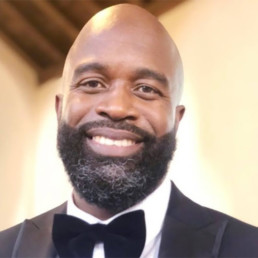
Written by Dwight Weir
Dwight is a Deputy Headteacher and Life Coach. He is also an inspector for British Schools Overseas. Dwight has a passion for coaching and leadership development.
Walk into many schools and you will see student leaders everywhere. Head students. Prefects. Ambassadors. School council representatives. The question is: who gets to lead?
Too often, student leadership reflects the same patterns we see elsewhere in society. The confident voices are heard. The popular students are selected. The pupils who already fit the image of a “leader” are given the opportunities. Representation starts here.
If we are serious about Diversity, Equity, Inclusion and Belonging (DEIB), we must rethink how we identify, develop and celebrate student leaders.
Leadership Is Not a Look
Many schools unintentionally reward visibility over potential. Students who are articulate, academically successful or naturally outgoing are often first in line for leadership opportunities. Meanwhile, quieter pupils, students with SEND, disadvantaged learners, multilingual pupils and those from underrepresented backgrounds can be overlooked.
The result?
Student leadership becomes exclusive rather than inclusive.
A DEIB approach asks a different question: Whose leadership are we missing?
Expanding the Definition of Leadership
Leadership is more than standing on a stage or speaking into a microphone.
Leadership can be:
- The student who welcomes a new classmate.
- The pupil who advocates for accessibility.
- The young person who challenges injustice.
- The learner who quietly supports others every day.
- The student who demonstrates resilience in the face of adversity.
When schools broaden their definition of leadership, more students can see themselves reflected in leadership roles. And when students can see it, they can believe it is possible.
Equity Over Equality
Giving every student the same opportunity is not always enough. Some students need encouragement, coaching, mentoring or targeted development before they feel confident enough to step forward. An equitable approach recognises that leadership pathways should not simply be open; they should be accessible.
This might mean:
- Creating leadership programmes for underrepresented groups.
- Actively encouraging applications from students who would not normally put themselves forward.
- Providing coaching and mentoring.
- Removing unnecessary barriers to participation.
Equity is not lowering standards. It is widening access.
Representation Matters
Students are constantly scanning their environment for signals.
- Who gets chosen?
- Who gets listened to?
- Who gets celebrated?
- Who gets promoted?
When leadership teams reflect the diversity of the student population, powerful messages are sent. Students begin to see that leadership is not reserved for a particular gender, ethnicity, social background, ability level or personality type.
They see possibility…They see belonging…They see themselves…
Moving Beyond Tokenism
Representation alone is not enough. A diverse student leadership team without influence changes very little. Student leaders must have genuine opportunities to shape decisions, influence policy and improve school culture. Their voices should not simply be heard. They should be acted upon.
The most effective schools move from student voice to student influence.
The Leadership Legacy
Student leadership is not just about organising events or leading assemblies. It is about preparing young people for the world they will inherit. When schools develop leadership through a DEIB lens, they cultivate empathy, courage, advocacy, collaboration and social responsibility. They create young people who understand that leadership is not about power over others. It is about creating opportunities for others. Because representation does not begin in the boardroom. It does not begin in parliament. It does not begin in the workplace.
Representation starts here.
In our classrooms. In our corridors. In our student leadership programmes.
And in the belief that every young person has the potential to lead.
Belonging in Schools: From Staff Culture to Pupil Experience
Written by Belonging Effect
Belonging Effect is committed to shaping intention into impact and supporting people with their Diversity, Equity, Inclusion, & Belonging strategy and training needs.
Creating a school where every individual feels they truly belong is one of the most transformative goals a leadership team can pursue. But what does “belonging” actually mean in practice, and how do we move past buzzwords to build genuine, inclusive communities?
In a recent webinar hosted by Iona Kelliher, the Managing Director of Edurio and The Belonging Effect, experts Hannah Wilson and Zahara Chowdhury dug deep into these exact questions. Drawing from their extensive work with schools, they shared practical, actionable insights on how to transform school culture from the staffroom to the classroom.
- Navigating the Biggest Challenges in School Belonging
When it comes to cultivating belonging, school leaders often face roadblocks on two fronts: workforce demographics and communication barriers.
- Workforce Diversification & Retention: Hannah says, recruiting, developing, and retaining a diverse cohort of staff, leaders, and governors remains a major challenge. To overcome this, schools must move toward active listening. Hannah Wilson emphasizes the need for regular feedback loops, structured listening activities, and thorough exit interviews.
- Courageous Conversations: Zahara points out that many educators struggle with having uncomfortable conversations and knowing exactly what to say (and when to say it) in both classrooms and staffrooms.
The Solution: Overcoming these hurdles requires deep consistency. Schools must build a shared language, routine, and approach to belonging so that all students and staff feel secure within the school’s overarching identity – and their own individual identities within it.
- Extending Belonging Beyond the School Gates
Schools do not exist in a vacuum; creating a sense of belonging for children means engaging with families and the wider local community.
- Meet Communities on Their Terms: Zahara advises school leaders to physically step into the community. Go to community strongholds, local environments, or even the supermarket to engage with families where they feel safe and on their terms.
- Co-Create Solutions: True collaboration means enabling what the community actually needs, rather than what school leaders think they need.
- Celebrate Diverse Identities: Highlighting local initiatives that champion diversity can bridge the gap between home and school. For instance, looking at local community projects – like Bristol’s Black Joy Trail – can provide beautiful blueprints for celebrating diverse identities and fostering joy.
- First Steps to Take Right Now
If you want to immediately shift your school’s culture toward greater belonging, the experts recommend starting with these two tangible steps:
- Implement a Shared DEIB Calendar: Build a shared Diversity, Equity, Inclusion, and Belonging (DEIB) calendar for all staff. Review your current assemblies and celebrations against it to see what might be missing, ensuring a healthy balance of focus across various awareness days, weeks, months, and religions.
- Just Ask (and Listen): Be explicit with your school community. Send a clear message stating that you want to ensure everyone feels included, and humbly acknowledge that you might not always get it right. Establish clear, transparent communication lines detailing how you will gather feedback, what you will do with it, and the timelines for action. Whenever possible, look for opportunities to co-create policy with your community, or experiment with frameworks like reverse mentoring.
- Designing a Neuro-inclusive Environment
Many neurodivergent pupils find themselves “tolerating” or masking at school rather than genuinely thriving. Because the traditional school model is highly systemic, reasonable adaptations alone are often not enough.
To address this, schools must look at neuro-inclusivity through a wider lens:
- Consistency in Adjustments: Staff and pupil training on neurodiversity is essential. Any reasonable adjustments made for pupils must be clearly communicated and clarified across the board so that application is consistent.
- Shift from the Individual to the System: Instead of focusing purely on modifying the minoritised student, look at the environment, the people, and the student experience around them. Investigate what everyone needs to learn and do to adapt, with the goal of creating a classroom and community that is universal by design.
- Investigate the “Toleration”: Don’t be afraid to ask students and parents exactly what they are tolerating. Examine the nuances – from transition periods and email communications to clubs and curriculum materials.
- The Danger of “Inclusion Bases”
Many schools utilise inclusion bases or separate spaces for specific pupils, but how does this impact a child’s sense of belonging?
Hannah warns that we must critically examine whether our inclusion efforts are actually forms of hidden segregation or exclusion – such as placing students in a different building, room, or table. Leaders need to act as their own “critical friends” and ask hard, reflective questions: Why are these pupils in that base? Have they been excluded? Do they actually feel more included there? Addressing these systemic questions is incredibly powerful when embedded directly into a school’s strategic development plan.
- Aligning Belonging with Inspection Frameworks (Ofsted)
Belonging is not just a pastoral nice-to-have; it sits squarely within modern inspection expectations. Under current inspection frameworks, Ofsted assesses belonging through the lenses of inclusion and personal development. Inspectors look past simply providing a “seat in the classroom” to evaluate several core areas:
- Curriculum Representation: Does what you teach reflect the diversity of your school’s community? Minority groups, pupils with SEND, and disadvantaged children should feel visible and respected in the curriculum.
- Relational Inclusion: Moving away from a strict reliance on rigid reward and sanction charts, inspectors look at how staff actively build trusting, emotionally safe relationships with pupils -particularly those struggling with behaviour or attendance.
- Pupil and Parent Voice: Evidence is gathered through surveys and discussions to check if learners truly feel they matter, have a voice, and are treated fairly.
- Safe Spaces for Dialogue: School leadership must demonstrate how they handle difficult conversations regarding discrimination and equality to foster peer-to-peer respect.
- Measuring Progress and Overcoming Pushback
How can school leaders ensure that their belonging and anti-harm work is genuinely shifting staff behaviour and building pupil trust?
- Track the Data: Utilising weekly pulse surveys provides a quick, regular check-in on school climate. Interestingly, after robust training, schools often see a temporary spike in reported incidents. Do not panic – this is usually a positive sign of increased consciousness and staff confidence in noticing and naming harm.
- Gather Qualitative Insight: Set up dedicated email inboxes and compile staff case studies to capture the nuances of the student experience. Remember, a wealth of research confirms that belonging and inclusion directly correlate with improved student outcomes and academic progress.
Navigating Community and Staff Pushback
When introducing topics like Pride or LGBT identities, leaders occasionally encounter friction from staff or students. While student voice is vital, areas that impact student safety and prevent harm cannot be ignored.
To move past “complicit compliance” or a snail’s pace, look at pushback with genuine curiosity. Ask yourself: Why is there pushback? Is it due to a lack of inclusion literacy, media influence, high workloads, or a feeling that other areas are being ignored? Often, friction is projected when staff or students feel a lack of belonging and wellbeing themselves. Introducing intersectional role models (such as showcasing that someone can co-exist within multiple identities, like being both LGBT and Muslim) can humanise these conversations and bridge cultural divides.
Looking to Deepen Your Practice?
Cultivating true belonging requires a continuous commitment to training, reflection, and structural change. For school leaders, governors, and trustees looking to further their development, The Belonging Effect offers a wealth of tailored toolkits, books, job boards, and specialised training frameworks – spanning inclusive recruitment, neurodiversity awareness, and governor DEIB oversight.
If you missed Part 1 of the series you can catch up here: Edurio – Belonging in Schools: From Staff Culture to Pupil Experience
Ready to take the next step in measuring culture across your school network? Stay tuned for Part 2 of the series: How to Measure Belonging in Your Trust on 6th July.
AI IS NOT NEUTRAL: Why DEIB, Belonging, and Responsible AI Must Shape the Future of Education and Work
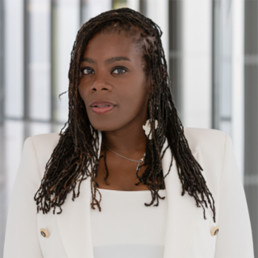
Written by Paulette Watson MBE
Paulette Watson MBE is an award-winning CEO, international speaker, and thought leader in AI, STEM, digital transformation, and inclusive innovation. As Founder and CEO of Academy Achievers, she leads the global #BeMeDigitalInclusion initiative, empowering women and girls, particularly from underrepresented communities, to access opportunities in AI, cloud, cybersecurity, emerging technologies, and the future of work.
“A child could be excluded from opportunity before a teacher even notices — not because of ability, but because an algorithm decided what potential looked like.”
Introduction
Artificial Intelligence is rapidly reshaping education, recruitment, safeguarding, leadership, and the future of work. Every week brings a new tool, a new pilot, a new promise. But while organisations race to adopt AI, a far more urgent question is being left on the table:
Who gets to belong in the future being built?
As the author of She Disrupts: A Black Woman’s Journey in STEM and AI Industries, and through my global work leading #BeMeDigitalInclusion across the UK, Africa, and international networks, I have spent years advocating for equitable pathways into technology, responsible AI adoption, workforce transformation, and inclusive digital futures.
What concerns me most is not AI itself. It is the very real possibility that we automate exclusion at scale and call it progress.
Because AI is not neutral. It reflects the data it is trained on, the systems it learns from, the assumptions embedded within it, and the people who build it. Bias is not removed through automation. Too often, it is amplified.
Leadership Without AI Literacy Is Becoming a Strategic Risk
As a Black woman working across governance, education, digital transformation, and emerging technologies, I have often found myself sitting in rooms where I was both the only Black woman and one of the only people deeply focused on the long-term implications of technology.
I remember completing my Master’s in ICT in 2005, when conversations about automation, digital systems, AI, and emerging technologies were already evolving rapidly. I later completed my MBA in 2008, continuing to explore how technology, leadership, governance, and organisational strategy intersect.
What struck me then, and still concerns me deeply now in 2026, was how many senior leaders responsible for shaping education, workforce systems, safeguarding, governance,
and organisational strategy had little understanding of emerging technologies and their societal impact.
Fast forward almost two decades, and in many spaces, that gap still exists.
The technology has accelerated. So have the risks and the pace of adoption. The risks have accelerated.
The pace of adoption has accelerated.
But leadership understanding has not kept pace.
Too often, AI conversations are delegated entirely to technical teams while boards, governors, executives, and decision-makers remain disconnected from the realities of algorithmic bias, automated decision-making, accessibility, workforce displacement, safeguarding implications, and inclusion.
That disconnect creates operational, ethical, reputational, and human risk. The Belonging Question
One of the most overlooked conversations in AI is belonging. Not representation alone. Belonging.
Belonging is not simply whether someone is invited into the room.
It is whether they can see themselves in the future being built around them.
Through #BeMeDigitalInclusion, I have worked with young girls, Black students, neurodiverse learners, disabled professionals, career changers, educators, and underserved communities who are incredibly capable, creative, and innovative, yet too many quietly disengage because systems subtly communicate:
“This space was not designed with you in mind.”
As someone who is dyslexic, I understand personally how dangerous it is when systems confuse difference with deficit.
Now imagine those same inequalities becoming embedded inside AI systems that shape educational pathways, recruitment, safeguarding, progression, and access to opportunity.
Case Studies in Automated Exclusion
Case Study 1: AI Detecting “High Potential”, But Missing SEND Learners
AI-powered analytics tools are increasingly used to identify “high potential” students, predict attainment, and map intervention pathways. Yet many systems are trained on narrow historical patterns that fail to account for neurodiversity, accessibility needs, trauma, and alternative learning styles.
Through #BeMeDigitalInclusion, I have met young people whose brilliance sits outside traditional systems. If AI only recognises one type of learner, countless young people risk being overlooked before they even have the opportunity to thrive.
Case Study 2: Predictive Behaviour Systems & Black Boys
Research has repeatedly shown that Black boys are disproportionately monitored and excluded from educational systems. If biased historical data feeds predictive AI systems, those inequalities risk becoming digitally reinforced.
Technology should never become a faster route to stereotyping. Yet without intentional governance, inclusive leadership, and bias mitigation, that is exactly what can happen.
Case Study 3: AI Recruitment & Non-Traditional Career Paths
AI-driven recruitment systems often favour traditional career trajectories, elite institutions, and linear progression. But what happens to career changers, mothers returning to work, disabled professionals, self-taught technologists, and community leaders?
They risk becoming invisible, not because of what they lack, but because of what the system was never taught to value.
This matters profoundly in AI itself, where diversity is already critically lacking. The Human Premium
Headlines predict that AI will replace humans. I believe something more nuanced and more urgent is happening.
Human skills are becoming premium.
As automation increases, the value of empathy, ethical judgement, critical thinking, communication, creativity, adaptability, collaboration, cultural intelligence, and leadership will rise significantly.
These are not soft skills.
They are leadership skills.
They are future workforce skills.
And they are the very capabilities that AI cannot replicate.
The future workforce advantage will not belong solely to those who can code.
It will belong to those who can lead humans through complexity, ambiguity, ethics, trust, and change.
AI Literacy Must Become a Human Right
One of the greatest risks emerging now is the unequal distribution of AI literacy.
Too many people are being expected to navigate systems they do not fully understand. Too many children are having decisions made about them by algorithms that their parents, teachers, governors, and leaders have never questioned.
AI literacy cannot become a privilege reserved for technology professionals or elite institutions.
It must become accessible to:
- Teachers
- Parents
- Governors
- Students
- Executives
- Policymakers
- Community leaders
People deserve to understand how algorithms shape decisions, how bias operates, how data is used, and how to participate safely and critically in AI-enabled environments.
Responsible AI Is Not Optional
Responsible AI cannot exist in isolation from diversity, equity, inclusion, and belonging.
They are not parallel conversations.
They are the same essential conversation.
Safe and responsible AI requires:
- Inclusive governance
- Diverse leadership
- Accessible design
- Safeguarding
- Transparency
- Accountability
- Community voice
Without diversity at the centre of AI design and governance, AI risks reproducing inequality on an unprecedented scale.
And without belonging, entire communities may disengage from the very future being built around them.
The #BeMeDigitalInclusion Roundtable
These are exactly the conversations we will continue through the upcoming #BeMeDigitalInclusion Roundtable, where educators, policymakers, industry leaders, governance professionals, and communities will explore:
- Online safety
- Responsible AI
- Workforce transformation
- AI literacy
- Safeguarding
- Accessibility
- Inclusion
- Human skills are becoming premium in the AI era
Because diversity cannot be an afterthought in technological transformation. It must sit at the core, from the first line of code to the first leadership decision. What Educational Leaders Must Do, Right Now
- Build AI Literacy Across Entire School Communities
- Review AI Through a DEIB & Safeguarding Lens
- Include Diverse Voices in AI Decision-Making
- Priorities Human Skills
- Ensure Belonging Remains Visible
- Treat Responsible AI as a Governance Priority, Not Just a Technical One
Educational leaders must act now. Make AI literacy, DEIB, and responsible AI an immediate priority in every school and system. Engage diverse voices, review technology through ethical and safeguarding lenses, and champion human skills and belonging at all levels. Your leadership today will directly shape opportunity, trust, and belonging for generations.
Final Thought
AI will shape the future.
But inclusion will determine whether that future is equitable.
The question is no longer whether AI will transform education and work; it is whether it will.
It already is.
So ask yourself and your organisation: What steps will we take today to ensure everyone can belong in the future we are building?
And who will you include in that decision?
The future will not be defined by the intelligence of our machines alone, but by the courage of our leadership. Let us lead boldly and shape that future together.
Using the Froebelian principles to navigate social justice in early childhood education and beyond

Written by Rachna Joshi
Rachna is a teacher and consultant. She works with under-threes, Nursery and Reception children, and holds an MA in Early Childhood Studies. Rachna writes and speaks at events sharing experience and knowledge, empowering practitioners and provoking questions to disrupt routine practice. She supports schools by guiding educators to implement inspiring practice that reflects their classes. She works as a freelance consultant and with the Froebel Trust as a travelling tutor.
Having a strong set of principles and worldview is taken with us into our role as educators. Principles, like the Froebelian principles, provide a philosophical framework in which to base our actions upon. It acts as a compass to guide us in times when we are uncertain.
The book; Froebel and social justice, looks at the themes of social justice; diversity, equality, equity and participation, and interrogates the ways in which Froebel and his ideas for education articulate and look to achieve social justice in times today.
The Froebelian framework asks us to start with ourselves, and who we are as individuals and educators. Understanding who we are helps us to help others in understanding who they are, for example, working with children to explore a part of their identity in a sensitive way that celebrates their uniqueness and wholly accepts and recognises all different parts of them.
This task does not come without its challenges, bias creeps into our minds, stereotypes, hierarchies of what is acceptable and less acceptable alter our worldviews and ability to see clearly the individual in front of us. The work to reflect on our thoughts and ideas aligns closely with Froebelian and Freieran concepts.
The Froebelian principle of Unity and Connectedness runs through the work of social justice, finding connections, similarities and celebrating differences. As well, the principle Relationship Matters, ensures that we meet the child and their family where they are at, and understand the fluidity of different needs and evolving contexts. When thinking about the children we work with, do we know enough about their family and their culture and do we try to learn or understand the nuances of each child’s unique world? Do we as educators consider the power we hold in our work with children, from simply organising the environment, to the interactions or rules we create to manage the spaces we are in? For example, do we consider babies and young children’s consent when being physically handled? Are we empathetic educators who understand the complexities in children’s worlds? An example that I share in the book discusses the very real fear of the hand dryer in the children’s toilets at a school – what do educators do to empathise with this and remove this feeling of fear.
Whilst exploring the larger themes of social justice the second part of Froebel and Social Justice uses the four freedoms; from fear, from want, of speech and of worship as a lens to tackle the issues of social justice within classroom contexts. These offer a wider exploration of ecological situations that arise which have an impact on the child and the family at the interpersonal level. The freedom from worship is explored through the lens of beliefs, religion, culture and Nature as ways to take part in worthwhile celebrations and events.
Many educators who are unfamiliar with Froebel may not be aware of his own work towards social justice in his context in Germany in the 1800s. He advocated for women to be teachers when during his time this was not the norm, and he ensured his educational institutions were for all children – boys and girls from all different backgrounds which again was not usual for this time. In his ideas of education he constantly wrote books and letters to help change the minds of those within his community towards an approach to education that enables children to think freely for themselves and see the connections of the world around them.
In some places, social justice is an add on, instead of being the foundation of which we hold ourselves in our workplaces. The book Froebel and Social Justice is a practical book that is for educators who work with a range of different aged children to reflect and renew their commitment to creating a socially just world.
Pre-order Froebel and Social justice here: https://www.bloomsbury.com/uk/froebel-and-social-justice-9781350529328/
Maslow’s Hierarchy Was Never Just a Pyramid
Written by Hannah Wilson
Founder and Director of the Belonging Effect (formerly Diverse Educators).
Every educator has seen it. The pyramid – at the bottom sit physiological needs: food, water, shelter, sleep. Above that come safety, belonging, esteem, and finally – at the peak – self-actualisation.
For decades, Abraham Maslow’s hierarchy of needs has shaped educational thinking. It appears in teacher training, wellbeing frameworks, behaviour support models, and school leadership presentations around the world. The message is straightforward: children cannot learn effectively if their basic needs are unmet.
And that insight matters;
- Hungry children struggle to concentrate,
- Unsafe children struggle to trust,
- Disconnected children struggle to engage.
But there is a part of the story many educators have never been told.
Maslow’s ideas were influenced by time spent with the Blackfoot Confederacy in 1938, where he observed a society deeply grounded in community, belonging, collective responsibility, and cultural continuity. In later years, scholars and Indigenous educators have pointed to the similarities between Maslow’s developing ideas and Blackfoot understandings of human wellbeing.
What is especially interesting is that Maslow himself never actually drew the famous pyramid we all recognise today. The pyramid – with its upward climb toward individual success – became a Western interpretation of his theory. And perhaps in that interpretation, something important was lost because many Indigenous worldviews do not see human flourishing as an individual journey upward. They see it as relational.
The Problem With the Pyramid
The modern version of Maslow’s hierarchy is often presented as a ladder:
- First survival…
- Then safety…
- Then belonging…
- Then achievement.
Eventually, if all goes well, a person reaches self-actualisation – becoming the fullest version of themselves. But schools have absorbed this framework in ways that often reinforce individualism rather than connection.
Once students’ basic needs are acknowledged, education systems quickly shift focus toward:
- academic performance,
- achievement,
- productivity,
- competition,
- outcomes.
The underlying message becomes: Now that your needs are met, it is time to succeed.
Yet human wellbeing is not linear:
- Children can experience creativity while carrying trauma,
- Students can achieve highly while feeling lonely,
- Young people can comply academically while feeling culturally unseen.
Many First Nations perspectives understand wellbeing not as a hierarchy, but as an interconnected system of relationships – between self, community, identity, spirit, land, and purpose. Belonging is not a stage to move through. It is foundational.
What Indigenous Wisdom Offers Education
One of the most powerful distinctions in Indigenous understandings of wellbeing is the shift from individual fulfilment to collective flourishing.
In many Western systems, the highest goal is personal achievement:
- reaching your potential,
- standing out,
- becoming successful.
But Indigenous perspectives often place greater emphasis on:
- contribution,
- responsibility,
- kinship,
- cultural continuity,
- community wellbeing.
The question changes from: “How do I become my best self?”
To: “How do I strengthen the wellbeing of the community around me?”
That difference has profound implications for schools because schools frequently reward independence while undervaluing interconnectedness.
We celebrate high achievers, but often overlook:
- kindness,
- emotional safety,
- cultural identity,
- collaboration,
- service,
- belonging.
And yet these are the very things that allow human beings to flourish.
What Would Schools Look Like If We Truly Understood This?
If schools genuinely embraced a more holistic understanding of human needs, education might begin to look very different.
We might prioritise:
- relationships before results,
- connection before compliance,
- identity before standardisation,
- wellbeing before performance.
Students would not simply be prepared for exams or careers – they would be prepared for life in community.
Teachers would spend less time asking: “How do we improve outcomes?”
And more time asking: “Do our students feel seen, safe, valued, and connected?”
Because children learn best when they experience belonging.
Not performative belonging…Not tokenistic inclusion…Real belonging.
The kind that says: “You matter here.”
Beyond Achievement
Many schools today are facing rising levels of anxiety, disengagement, loneliness, and behavioural complexity among young people.
We often respond with interventions, data tracking, wellbeing programs, and behaviour systems, but perhaps part of the deeper issue is that modern education has become disconnected from fundamental human needs.
Not just physical needs – but emotional, relational, cultural, and spiritual ones too. The Indigenous perspectives that influenced Maslow remind us that wellbeing cannot be separated from connection.
A child’s sense of identity matters…Community matters…Purpose matters…Relationship matters…And perhaps the greatest misunderstanding of the pyramid is that human flourishing was never meant to be a solo climb to the top.
A Different Vision for Education
What if success in schools was measured not only by grades, but by:
- empathy,
- contribution,
- resilience,
- belonging,
- cultural strength,
- and the ability to care for others?
What if education was not simply about producing successful individuals, but nurturing connected human beings?
Long before modern psychology attempted to define human motivation, First Nations peoples already understood something essential: people thrive through relationships and belonging to a community.
Perhaps schools have been looking at the pyramid for so long that we forgot to look around us. So perhaps the future of education depends not on climbing higher, but on reconnecting more deeply – to ourselves, to each other, and to community.
School is so gay

Written by Ian Timbrell
Ian has worked in education for 18 years, including as a teacher and deputy head teacher and now supports schools develop their provision for LGBTQ+ and adopted pupils. He is the author of 'It's More Than Flags and Rainbows', a guide to supporting schools become more LGBTQ+ inclusive.
I remember seeing bullying when I was at school. I remember the names, the laughter, and the way certain words landed harder than others. I also remember how normal it all felt at the time, not because it was harmless, but because nobody really stopped it.
Years later, when I became a teacher, I genuinely believed things would be different. Society had moved on, language had evolved, and schools were far more aware of safeguarding and wellbeing. But standing in classrooms and corridors, I found myself hearing the same phrases, watching the same patterns, and feeling the same familiar knot in my stomach.
What devastated me most was not just that bullying still existed. It was how often it was excused.
“That’s so gay.”
“They don’t mean it like that.”
“It’s just a saying.”
“There are bigger issues we need to focus on.”
I heard these comments repeatedly. Sometimes from pupils, but far more painfully from adults.
For LGBTQ+ people, language like this is never neutral. It carries weight, history, and memory. When a word connected to who you are is used as shorthand for something negative, it teaches you very early on that your identity is something to be laughed at, minimised, or ignored.
As a pupil, that message hurts deeply.
As a teacher, watching it be passed on to another generation is crushing.
Over time, I became increasingly frustrated by the idea that tackling homophobia was somehow an “extra”. Something to get to if there was time. Something that sat below academic outcomes, behaviour targets, or inspection priorities. I watched schools work tirelessly on countless tick-box initiatives, yet hesitate when it came to properly challenging harmful language, often out of fear of backlash or because it was seen as controversial.
But bullying linked to sexuality or gender identity is not less serious because it is verbal. It is not less damaging because it is common. And it is not less urgent because some people are uncomfortable talking about it.
I reached a point where I could no longer accept that this was just how things were. Leaving teaching was not an easy decision, but it became a necessary one. I set up More Than Flags and Rainbows because I wanted to challenge the idea that inclusion is optional and that addressing homophobia is somehow a distraction from “real” education. It is not. It is central to it.
I have worked with children who learned to make themselves smaller to feel safe. I have listened to young people who stayed silent because drawing attention to themselves felt dangerous. I have seen how unchecked language creates cultures where exclusion becomes normal and cruelty becomes background noise.
This work matters because words shape environments. When harmful language goes unchallenged, it sends a clear message about whose feelings matter and whose do not. When schools, and wider society, treat this as a low priority, LGBTQ+ young people pay the price.
This is not abstract to me. It is personal. I have lived it, witnessed it, and ultimately walked away from a career I loved in order to keep challenging it in a different way. And I believe deeply that when we stop making excuses for harm, we create spaces where young people do not just survive, but belong.