#DiverseEd’s Top 10 Blogs of 2020-21
Written by Belonging Effect
Belonging Effect is committed to shaping intention into impact and supporting people with their Diversity, Equity, Inclusion, & Belonging strategy and training needs.
We love to amplify the voices, share the journeys, and celebrate the stories of our community. Our blogs vary from sharing lived experience, to reflecting on classroom practice and curriculum design, to evaluating the impact of policy changes. We published 150 blogs from our network last academic year. You can meet our bloggers here and you can review our collection here.
Deepening our thinking around DEI starts with who and what we are reading, helping us to develop our confidence and our competence, both individually and collectively. Reading the blogs by our community provokes reflection and stimulates conversations to help us all understand the breadth and the depth of issues we need to develop an awareness of.
Themes explored in the 2020-21 blog collection include: allyship, belonging, careers, coaching, commitment, community, curriculum, culture, governance, HR, identity, ITTE, language, leadership, policy, recruitment, reflection, representation, research, safeguarding, strategy, teaching, wellbeing.
Here are our Top 10 Most-Read #DiverseEd Blogs in the 2020-21 academic year:
- How do we deal with racism in the classroom – Hannah Wilson
- How to promote an anti-racist culture in social work – Wayne Reid
- Interactive diversity calendar 2021 – Carly Hind/ Dual Frequency
- How does material deprivation intersect with ethnicity to understand the variations in the achievement among BAME students – Nicole Edwards
- Don’t tuck in your labels – Bennie Kara
- Dear Secretary of State – Hannah Wilson
- Gender is wibbly wobbly and timey wimey and gloriously so – Matthew Savage
- Engaging with diversity – giving pupils a voice – Gaurav Dubay
- Black lives matter, then now always – Wayne Reid
- Breaking the cycle anti-racist plan term 1 – Dwain Brandy
Thank you to everyone who has contributed to our #DiverseEd date and please do get in touch if you would like us to publish you. You can find out more about how to submit here.

Five Steps For Starting A School Pride

Written by Edel Cronin
Secondary school senior leader and co founder of Bristol Queer Educators, very Queer and very Irish.
Yesterday my school held its first in-person Pride. The saying of – you can’t be it unless you can see it – very much worked in the reverse for me as I walked into our student Pride lunch club. The room was awash with students celebrating Pride in a rainbow of flags, cakes and community. I never consciously knew what I wasn’t ‘seeing’ during my teenage years but something about walking into a classroom full of Pride colour made me reflect on how my life may have been different had this experience happened in my school. No one was ‘risk assessing’ if it was safe to wear a flag or in some cases a crown! Everyone was fully embracing having a space to loudly celebrate themselves.
Creating a whole school event has not been high on the agenda of most school leaders in the last year and half. I think we have all had 1 or 2 other things taking up our time. However, I would argue that it is in a pandemic where the school year has been full of uncertainty, and at times isolation, we need events like Pride more than ever. Pride gives us an opportunity to remind ourselves and others that our sexuality or gender is something to celebrate.
- Ask for help – Our school’s first Pride took place in June 2020. I sent an email out to staff asking if anyone was interested in organising a virtual school Pride. Five or six staff volunteered, we set up a Teams’ call and got started. We chose to focus on 1 week, took a day each and made tutor resources for that day. You don’t have to do everything from scratch – lots of organisations have free resources and doing even one thing in your school for the first time will make a positive impact on the lives of LGBTQ+ students and staff.
- Make it intersectional – Each member of staff made a resource based on their own area of interest. The only expectation we agreed on was that all resources had to be intersectional. If all your resources are white, able-bodied people from the LG bit of LGBTQIA+ spend some time educating yourself and diversify your resources using organisations like Just Like Us. Your students and staff may fall into one ‘category’ but LGBTQ+ people do not.
- Ask for student input/feedback – If your in a position to ask for student in put in advance fantastic, if not don’t worry. For my initial attempt at school Pride I wasn’t, so instead we did what we would have wanted as students and asked for students feedback to help us plan for future events. Those who fed back also created the base of our student group for the following academic year and led to a whole school LGBT+ History Month the following February.
- Choose an ‘action’ for the month – Pride is celebration, it is also a chance for us to ensure the futures of LGBTQ+ people are less discriminatory. What would your school benefit from in Pride month but also every other month of the year? It could be putting a Pride flag up and keeping it up 24/7 or changing your behaviour policy. Depending on your setting one of these might be more achievable than the other. It is also important to consider student and staff feedback when deciding on your action.
- Share – Share what you’ve done. Many LGBTQ+ educators are the only LGBTQ+ educators in their school. A sense of community is not just important for our students but also ourselves.
Coaching and Mentoring Diverse Leaders
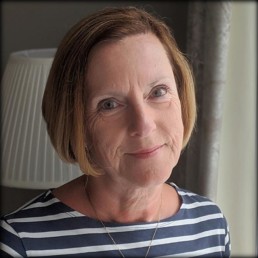
Written by Dr Jill Berry
Thirty years teaching across six different schools in the UK, state and independent, and was a head for the last ten. Has since completed a doctorate and written a book.
Since I finished headship in 2010, I’ve spent a fair amount of time working with aspiring and serving leaders at all levels, supporting and challenging them to step up, to be the best leaders they can be and to fulfil their personal and professional ambitions. It’s been a hugely satisfying and energising part of this ‘post-career’ phase of my life.
I was involved in and supportive of #WomenEd from the very beginning, and as initiatives like #BAMEd, #LGBTEd and #DisabilityEd have come on-stream, and as our awareness of the crucial importance of diversity, equity and inclusion has grown, I’ve been committed to supporting diverse educators, and this has involved my learning more – reading more, watching and listening more, in an attempt to raise my awareness of the perspectives and experiences of those whose lives may be quite different from my own. I’m committed to being an ally, and to encouraging all educators to be allies – and to exhorting all those with leadership responsibility to use any influence they have to empower others, especially those from under-represented groups.
We need strong leaders at all levels – Middle Leaders, Senior Leaders, Heads, Executive Heads – whether you’re leading a specific team, a school or a group of schools. And we need a diverse and inclusive workforce which reflects the communities we serve, and the world we live in, so there are role-models and high profile examples of what our pupils can achieve, and so that we make the most of the strengths and the range of talents of absolutely everyone.
So in terms of coaching, mentoring, supporting and developing leaders – whatever their background, their identity and their lived experience, these are three things I think are especially important.
- Leading is about getting the best from others, and to do that we need to ensure we can see the best in them, and that they see it themselves. Strong leaders can spot potential in those who don’t yet believe it themselves, so that’s my first point. Can you help those you lead to give themselves credit for what they have achieved and, crucially, what they could achieve in the future? Find the bright spots, and ensure they don’t undervalue themselves, or their potential. Show them you value what they are now, and what they are capable of becoming.
- Secondly, but clearly closely related to the first point, this is about building the most positive, mutually respectful and trusting relationships, and communicating. Really listening, being receptive, showing empathy, and trying very hard to understand each other’s point of view. To borrow Nancy Kline’s words: “seek to understand” rather than “seeking to convince”. When you’re working with others, focus on building bridges and not walls.
- And thirdly, finally, never lose a strong sense of hope and a sense of the possible. It’s ten years old, now, but back in the early days of my headship I read a book called ‘The Art of Possibility: Transforming Professional and Personal Life’ by Benjamin and Rosamund Zander, and I did FIND it transformative. We need to see what’s possible, for ourselves and for others, and to help them to see it, and to believe it too. We can be constrained by our fears, our anxiety about facing failure, or disappointment, our aversion to risk. If you are coaching, mentoring and developing diverse leaders, you need to have a clear sense of, and commitment to, what is possible. I recently supported a woman who was applying for an Assistant Principal role in her own school. She almost didn’t apply, and when I asked her why, she said, “I don’t like to fail.” No one likes to fail, but if we aren’t prepared to risk failure we won’t achieve success. What made a difference to her was her 13 year old son saying to her, “But, mum if you don’t apply, you HAVE failed…” And she applied. And it was a really rigorous, robust, challenging process, and she got the job.
So if you’re supporting diverse leaders, remember:
- Find the bright spots – and help them to see them too
- Connect and communicate
- Have hope and see what’s possible.
You can read more blogs by Jill here: https://jillberry102.blog/2021/06/12/coaching-and-mentoring-diverse-leaders/
You can watch Jill’s input at the #DiverseEd event here: https://youtu.be/wnanDncf6Xc
My Journey as an Ally

Written by Ben Hobbis
Teacher, Middle Leader and DSL. Founder of EdConnect and StepUpEd Networks.
I have been on a real journey as an ally. I have been on a journey as a champion for diversity, equity and inclusion. I’m not sure where this passion comes from. I am a heterosexual, white, able bodied man. I know I’ve had it easy compared to my colleagues from different backgrounds within the protected characteristics. I’m not sure where my drive or passion for this comes from. I think it comes out of my moral compass of wanting to help create a more equal and equitable society. I know I can’t change the world, but I know if I don’t play a part I won’t be standing by and living my values.
When I first came into education, I thought inclusion meant ensuring special needs were catered for, that we pushed our gifted and talented children and that we ensured our looked after children and those with medical conditions were cared for. I was naive to think that this was inclusion.
However, I am very fortunate to attend (and soon graduate) from a university, an initial teacher education provider that strongly embodies, embeds and sequences the themes of diversity, equity and inclusion throughout the three years of my Bachelor of Arts in Primary Education. Just to give you some context this is how it was broken down for me:
- First Year – an overview of child development, barriers to learning including SEND, more able, economic deprivation, and English as an additional language.
- Second Year – a whole module dedicated to special educational needs, disabilities, and inclusion; opportunity to complete a placement in a special school.
- Third Year – current issues in education module including sessions on Race, LGBT, Gender, mental health and wellbeing; opportunity to research any area of inclusion and diversity in our educational research module; CPD sessions supporting these topics; in our core module gender issues in STEM is explored.
- All Years – the opportunity to arrange our own placements in special schools, children’s hospitals, and other settings. Opportunity to explore diversity, equity and inclusion on placements.
I’ve spoken to others on similar courses who get the equivalent of a week (if that) to these topics. In some cases, a day. And in some cases, some of these topics are not addressed. As a result, we are doing a disservice to our trainee teachers, our early career teachers, our communities and ultimately our children.
In our current issues module, we produced a training resource on two areas of the module. I chose LGBT and Race. I consider myself to be an ally. To be attuned to the issues (particularly over the last year) that have affected the world. However, I considered, how would I discuss this in the classroom? How would I handle this? And the answer was I didn’t know. Therefore, I felt it my duty to focus my assignment on this. Whilst now having completed the assignment, I am by no means the expert and by no means this being the last piece of CPD I do on the subject; I am pleased to have been supported and encouraged to educate myself further by an institution valuing DEI.
As an ally, I will never fully understand, but I can try to and do everything I can to support others. I have a duty for the children and communities I serve to do so.
Education as the Practice of Freedom
Written by Laura Ciftci
Head of School, NET Academies Trust, #BigLeadershipAdventure participant.
As a rookie member of Big Education’s ground-breaking leadership programme – Big Leadership Adventure – I have been exposed to a wealth and breadth of experiences, key-note speakers, ideas, design-thinking, innovation and new ways of leading. All with the key purpose to ‘develop the mindsets, competencies and behaviours required to innovate in education’.
More recently, we experienced a headline module on diversity, equity and inclusion. Hannah and Adrian McLean, our guides for this module, did not pull any punches and stated from the outset that this session was going to be challenging and would possibly make many members feel rather uncomfortable. Nevertheless, they both insisted, education – especially educational leadership – needs ‘to start getting comfortable with being uncomfortable’. In truth, I found the whole process immensely challenging, both professionally and personally.
In hindsight, the module’s real impact was to champion our cohort into action – real action – with a determination to transfer theory and rhetoric into practice. This rallying cry to alms for all leaders was a clear message on the importance of producing and utilising a diversity, equity and inclusion strategy within our schools. Moreover, instigating conversations that would raise further questions around how we need to rethink teaching practices and policies in an age of multiculturalism. Otherwise, how else would we be able to educate our children to address the many disparities and inequalities within our society?
To Allyship or not to Allyship…? That IS the question:
One such practice and commitment centred round ‘allyship’; more specifically an expectation for all Big Leadership Adventurers to acknowledge and engage with the ‘allyship continuum’: from apathetic, to aware, to active and finally onto the desired goal – to be an advocate for diversity, equity and inclusion. An advocate of diversity, equity and inclusion would actively highlight and raise questions about situations, events, meetings, settings, organisations, senior leadership teams, subject leaders and headteachers, whereby the representation or membership did not reflect the cohort or group they were leading. What struck me as the most poignant part of the whole ‘allyship process’, was a genuine recognition from all the leaders in our cohort, that their journey along the allyship continuum would be a deeply, individual and personal journey.
Moreover, I realised, as I listened to the many painful and explicit narratives of prejudice and racism experienced by my colleagues – as infants, school children and adolescents and now as adults – that my journey to where I am today, had been an infinitely easier one, beyond my ‘disadvantaged’ label. If anything this made my purpose clearer – I wanted to celebrate and showcase our school’s rich diversity, to ensure that we authentically challenged institutional racism and other forms of discrimination. Subsequently, in order to kick start our school’s journey to allyship, we drafted a whole school strategic approach to diversity, equity and inclusion, that embraced the voice of our staff, pupils and wider community. Almost instantly, staff recognised that this commitment would take us beyond diversity, equity and inclusion, but further into social action; the co-dependence of societal changes through a strong, ‘lived’ diversity, equity and inclusion strategy. A focussed strategy, with professional training from the charismatic and knowledgeable Angela Browne helped us to explicitly outline expectations for the culture and climate of our school; facilitating classroom learning to connect with the experiences, histories and resources that every pupil brings to their classroom. Imagine a whole literacy spine that included the cultures, experiences and backgrounds of the pupils they sought to teach! Whilst this process may be in its infancy, we are rightly proud of its authentic germination …
Why here? Why now?
As I reflected further upon the intensity of that diversity, equity and inclusion module, it became apparent we were really being asked to champion a social conscience and critical pedagogy for our future pupils, leaders, work force, politicians and so on. Recognising that pupils and staff need to feel safe, valued, listened to and genuinely appreciated for who they are, rather than complying to a given, predetermined expectation. This sense of belonging, coupled with the freedom and encouragement to determine and discover who they are, would help our pupils to realise that the education system does not define them. Once equipped with the necessary skills, knowledge and beliefs, from diverse and inclusive school communities, they will have the freedom to construct their own unique futures for themselves. Armed with a broad skills base, resilience, acceptance (rather than tolerance, thank you Adrian Mclean for assisting me with the semantics), a good work ethic, humility and an acute awareness of social justice, our pupils and staff will in turn, readily challenge cultural, social and economic biases, that alas, are still systemic within society today. Never has the time been more right to challenge social inequality and to encourage pupils (and staff) to take positive and constructive action under the cultural umbrella of diversity, equity and inclusion.
Hope for the future…
Clearly, the education system is neither perfect nor paradise; quite the contrary in fact. Nevertheless, the system with all its limitations, remains a location of potential, hope and possibility. In that field of possibility, we have the opportunity to work towards diversity, equity and inclusion for our pupils, staff and wider community members. Likewise, to demand of ourselves and those in our charge, ‘an openness of mind and heart that allows us to face reality even as we collectively imagine ways to move beyond boundaries, to transgress. This is education as the practice of freedom’. (Bell Hooks)
And finally…
As our second day of diversity, equity and inclusion module concluded, I felt a deep kinship and professional respect for my fellow ‘Adventurers’. This diverse group of authentic professionals, had challenged me, and in and through that challenge, had allowed me a space of radical openness where I now felt able to authentically support diversity, equity and inclusion, within my own setting. This promising start would, I hope, encourage those in my charge, to learn and grow without limits. This gift of ‘freedom’ for our children today, now seems totally achievable.
Time for Men to ‘Woman Up’!

Written by Patrick Ottley-O'Connor
Executive Headteacher/Principal, Coach, Wellbeing Advocate and #HeForShe Ally.
The United Nations @HeForShe movement has reported that they are seeing the stereotypical gender roles of women at home become more apparent during lockdown and want to highlight positive male models with their new lockdown hashtag of #HeForSheAtHome. Globally women do more than men at home and @HeForShe are asking men to share photos to amplify support & show how you are being #HeForSheAtHome and amplify the aspiration for gender equality.
Although I agree with the aspiration, I felt a little uncomfortable simply sharing an image of me cooking and vacuuming at home, basking in the ‘likes’ and comments telling me how good I am for being #HeForShe. In recent years, I have become more comfortable having uncomfortable conversations with myself; understanding the systemic and societal issues which may have played out in my lucky career is eye opening and allows me to use this privilege to amplify those who do not have it. However, I also know that my #HeForShe allyship must not be self-defined, instead, the work and efforts must be recognized by those you are seeking to ally with.
Consequently, I asked the wonderful #WomenEd community how they think I should respond. As usual, I was not disappointed by the support and challenge that I received! Hannah Wilson, @Ethical_Leader and @WomenEd Co-founder offered support, shared some LeanIn articles exploring this, as well as providing a simple cartoon image to highlight the plight of women.
Alison Kriel, @AlisonKriel raised some important questions:
‘…it’s great that the world is waking up to the fact that most women do at least two jobs, one that’s paid and one that’s unpaid. I think it’s great to share positive images of men supporting in the home, and I’ve no doubt that it’ll be retweeted and celebrated widely. My question is, if #HeForShe is about amplifying the voice of women so that we can be heard, what can be done to celebrate women in the same way. If an image is shared of a man washing up (‘doing the right thing’ as you say), it will be ‘liked’ many times over. What can the movement do to get as many ‘likes’ for a woman doing exactly the same thing? …so how do we level the playing field? How do we highlight the disparity? How do we all become heroes for doing domestic chores?’
There is a danger that my words could sound patronising, or ‘Patrick-onising’ as Mel, my wife, likes to call it! It’s against this backdrop and advice given to me that I cautiously offer my opinion as a man who passionately believes in gender equality and genuine allyship as #HeForShe. That involves me continually investing my time in supporting others, holding myself accountable when mistakes are made, apologising and being prepared to rework my approach towards gender equality as needs change. I’m listening to women to ensure my words and actions are in sync with their message. Without this, words without actions can be detrimental and work against changing the culture.The COVID-19 pandemic has made us all reflect on life, priorities and what really matters. It’s affected all of us in some way. In addition to those who have contracted and suffered the consequences of Covid-19, many families are struggling with financial hardship, bereavement, domestic violence and mental health issues. In addition, many men are now discovering what it’s like to spend much of their time juggling work, childcare, and a household to manage! The work/household juggling challenge is nothing new for many women. Despite women being a significant proportion of the paid workforce, they still do disproportionately more than their fair share of unpaid household work and childcare.
The pandemic has closed schools and childcare providers, exacerbating the stresses and strains of home-schooling, childcare and household tasks. Naomi Ward, @Naomi7444 told me that:
‘This theme is arising in my coaching, especially for the #MTPTproject. My observations are that when this happened and all cards were thrown into the air, is when they feel we defaulted into traditional gender roles. So, caring for the children, housework and teaching / on-line learning pile up into many more hours than usual. Work is interrupted so it takes longer. And there is the mental load of keeping everything going which traditionally falls to women. It’s about communication, honesty, the vulnerability to ask for what we need. The pressure on relationships is real…I guess we all know that this is more complicated and messier than a social media campaign! If it starts a conversation, that’s a good thing.’
The increase and ease of communication, for those with digital access, has enabled working flexibility from home during lockdown’ but not necessarily made life easier when parents are juggling job responsibilities, full-time childcare, and supervision of children’s education…again, this juggling has left many women doing more than their fair share. With almost 1.6 billion children out of school globally, combined with non-keyworkers working from home, more men are in a position to do more housework and childcare during the pandemic. What a great opportunity for men to dive into the daily routines of running a home and caring for their children. Men are increasingly taking shared paternity leave; however, most men have never worked from home for an extended period, as well as managing the housework and childcare.
The pandemic lockdown presents a perfect opportunity for more men to share more fully in-home duties for an extended period of time. This has the potential to start to turn the tide of gender inequality, both at home and work.
Men homeworking during the pandemic could grasp a greater appreciation of more traditional women’s experiences. They could develop a greater understanding of the value of flexible work arrangements. They could adapt to create a new gender balanced role model, to become more equitable gender role models for their own children. Hannah Wilson shared some of her MA research into flexible working:
‘research shows that an organisation is more likely to agree flexible working arrangements if men are requesting these adjustments to their working patterns. I anticipate a surge in requests for flexible working to include part-time, job share and compressed hours as a result of the pandemic. The business case against flexible working in schools has imploded. Perhaps more men will consider fully leaning in to domestic responsibilities?’
#HeForSheAtHome needs men to do their fair share of household tasks, childcare, home learning, planning of activities, and supporting their partner’s career. A genuine equal partnership at home, will surely support gender equality at work as well. In short, I believe that women with equal partners at home have the potential to be more successful at work. If women are less concerned with the impact of their work role on family responsibilities, they should be able to focus more fully to their work and be able to take advantage of career development opportunities.
Mel and I try to role model gender equality for our 5 sons, shaping expectations for their futures. We have to believe that our sons, who have seen us role model equal partnership in our household duties, have a perspective of greater equality for women’s and men’s roles at home and work.
Although I found it difficult as a younger leader, I am now not afraid to ask for and talk about why I need flexibility in my work schedule, e.g. with my children’s/parents’ medical appointments. If it’s only women who request and use flexible work arrangements, paid sick leave, and parental leave, it perpetuates the perception that this flexibility is just for women. In turn, this perpetuates a stigma that stops men from even asking for flexible working. If men do their fair share in creating equal partnerships at home, then we could begin to normalise flexible working for everyone.
My 10 tips for how men can help to bear the load of unpaid work and do their fair share as #HeForSheAtHome:
- Deliberately prioritise work and family responsibilities…and then stick to it, model being #HeForSheAtHome;
- Have a genuine conversation with your partner about household tasks and childcare. Don’t become defensive, but use it as an opportunity to do your fair share;
- Engage with the social family planning and organisation, e.g. organising birthday arrangements, holiday planning, shopping lists, medical appointments;
- Let go of your purely personal aspirations and make a concerted effort to support your partner’s career without reservation. Once you’ve done this build your own aspirations back up in genuine partnership, establishing a clear and shared priority for careers, childcare and household tasks;
- Model how to navigate the messiness of life, by openly communicating family and career goals. Life is messy, so show your kids how to disagree, respecting each other’s viewpoints. Let your children see how and why decisions are made through balance and compromise;
- Develop a positive attitude towards childcare and household responsibilities, to send an enduring message of commitment as #HeForSheAtHome to your children and partner;
- Be authentic in what you do and say. Most people are living the same reality of juggling work, household tasks, childcare, pets, sharing space etc, so avoid creating a utopian image of peace and quiet;
- Let people know that you are doing your fair share at home, by being transparent with your family, friends and paid work colleagues. This will help you to manage your availability and work schedule, to enable you to prioritise family responsibilities;
- Shine a light on what you’re doing as #HeForSheAtHome by talking about the highs and lows in achieving genuine allyship and partnership, so that others feel more comfortable to sharing their own reality;
- Use your #HeForShe as a badge of honour to call out unacceptable language and behaviour towards woman and be heard, don’t just leave it for women to challenge everyday sexism and discrimination.
I was once explaining a strategy to a senior group of executives, when the most senior man interrupted me and stated: “We need to man up and grow some balls!” Although several there had previously warned me about his behaviour, both male and female jaws dropped at his comment.
I paused, before suggesting that in my opinion: ‘…they were a very vulnerable and delicate part of the male anatomy, that when only slightly knocked leave a man writhing around on the floor. Why not say ‘woman up and grow a vagina’, because women seem much more resilient after passing humans out of their bodies?’
The pandemic is presenting new challenges, but the opportunities are now greater as we move forward out of the pandemic. Men now have the opportunity to reinvent their allyship and the ability to act on gender equality to create a new future. The more that men can become #HeForSheAtHome, then the closer we will get to achieving equality for women in the workplace as well. These actions will support your journey in becoming the dad and partner you know you want to be!
In conclusion, my call to men is to:
- regularly communicate and listen to your partner, adapt your thinking, continually revisit and rework what you believe to be correct and become more comfortable being uncomfortable;
- ‘Woman up’ and in the words of @WomenEd be 10% braver in using the pandemic as an opportunity to become more #HeForSheAtHome;
- join the United Nations @HeForShe movement in challenging stereotypical gender roles of women and use your voice to highlight positive male models during lockdown by sharing an image and message with the world to champion gender equality with #HeForSheAtHome.
Access further articles and resources here from Leanin.org:
- https://leanin.org/article/women-shoulder-most-of-the-extra-work-because-of-covid-19?amp=1&__twitter_impression=true
- https://leanin.org/article/womens-workload-and-burnout?amp=1&__twitter_impression=true
- https://leanin.org/education/what-is-maternal-bias?amp=1&__twitter_impression=true
- https://leanin.org/virtual-circle-resources/juggling-work-and-family-during-the-pandemic#
Disability Awareness in Secondary PSHE
Written by Sophie McPhee
PSHE Coordinator in a West Midlands grammar school and Programme Director for the national Year 12 health and wellbeing enrichment programme Change Your Mind.
As committed life-long learners (I hope!), we sometimes get those ‘Oh wow!’ moments where suddenly, our eyes have been opened to a concept we’ve never considered before, and may even be obvious once we’re aware of it, but now we see part of the world in a completely new light. This is exactly what happened during a workshop Liz Wright (http://www.elizabethwright.net/) delivered at my school for our annual Mental Health Week in 2020, where she introduced to me and my students the social model of disability. Up to that point, the closest I had come to really thinking about disability in my 36 years was as a child, when my mum said she didn’t like a particular word beginning with ‘s’ commonly used as an insult when I was growing up in the 90s, because it was derived from the accepted term for people like her sister, who had cerebral palsy.
I feel ashamed to admit that I had to actually be taught to view disability as something created by society and not someone’s physical or mental difference – I had never even given disability the space in my brain for that thought to emerge independently. However despite my shame, it was a blessing, too, as it led to the firm decision during that workshop that disability awareness was not going to be a one-off session for an event week, but become a firm fixture in our PSHE curriculum. I will honestly say that I had never even considered doing this before – but isn’t that the point? If something is not within our lived experience – and I use that term broadly, to include having close contacts who are disabled – then the problem is not that we consciously think it doesn’t matter, but that it doesn’t even enter our head in the first place. I guess that this is a kind of unconscious bias – we only grant an issue more than a fleeting awareness if it relates to us in some way.
To be honest, I was also a little scared of covering this topic in my lessons, even if I did firmly feel that like me, my pupils should be woken up to – and the use of ‘woke’ is not accidental here, nor is it a pejorative – how they can be an ally to people with disabilities. There is absolutely such a thing as ‘non-disabled fragility’ (albeit not as catchy as the ‘white’ equivalent), whereby those of us without disabilities are so scared of getting it wrong, or speaking for or over those with lived experience. I am careful to point out in all my lessons that as a socially privileged woman, I am passing on what I have learned, but am by no means done with that learning. I made sure that once I had finished creating my lesson, I sent it to Liz and she kindly checked it over, patiently and gently pointing out a couple of places where I had used ableist language. It was a model of what educating others should look like – non-judgmentally uncovering and explaining problematic language which could have otherwise embedded problematic thinking.
I have now delivered this lesson to classes in Y9-11, some as live lessons, others as a pre-recorded version followed-up by a post-learning quiz. It appears that it has been successful, gaining an average rating of 4.4 out of 5 from students, most of whom said that they intend to change their language as a result of this lesson, both when referring to and talking to disabled people, and now know that common insult words are often derived from terms used in the past to refer to disability. Very often, pupils judge their lessons on whether they need to know the content for an exam or future career, but in PSHE, it’s not always about that, it’s about what others need them to know. We need, through these and other lessons which explore the vast range of human experience, to help pupils understand that creating a more inclusive and just society does relate to them. It might not do so always in a tangible sense, yet it weaves its way into not only our institutions, systems and processes, but also the quotidian, such as our face-to-face and social media interactions. Additionally, I would argue that there is most certainly a personal benefit to this kind of learning. It is incredibly enriching to understand better those whose experiences of life are different to yours. However, our pupils will only appreciate that benefit if they can first move away from viewing the purpose of education as leading to their future in purely material terms. And that is something all schools have in their power to influence.
You can access the disability awareness lesson at theother16hours.wordpress.com.
Is the sketch "Gerald the Gorilla" on "Not the Nine O'clock News” racist?
Written by Ninna Makrinov
Organisational Psychologist with over 20 years' experience in Higher Education. Currently the Chair of Governors at Water Mill Primary School.
Someone I respect, who works in education, recently shared the sketch on a social online meeting as one of the best comedy sketches of all time. My immediate reaction was physical discomfort. It felt totally inappropriate. I strongly believe this material is racist and we need open conversations about why people still find it funny. In this blog, I share the reason for my reaction. My aim is not for you to watch the sketch (although I have added a link below), but to share some points that might help a conversation if you ever find yourself in a similar situation.
About the sketch
Gerald the Gorilla is a short sketch that portrays an interview where a white professor talks about his work on communication with a gorilla. The gorilla is a white man dressed in a gorilla suit. The gorilla acts as a human and acts as more intelligent than the professor acts. The professor dismisses every comment the gorilla makes.
My reaction
I suppose it is useful to know I am white; I was born and grew up in Chile. It is also useful to know that I have been learning about anti-racism for the last 4 years. I should also point out that I share the view that we are all racist because we live in a racist society (if you want to know more about this, explore Critical Race Theory). I am not judging the individual who shared this, but the specific choice to have shared this material. I am quite sure I might have had a different reaction to the sketch had I watched at some other point in my life. I take this as a sign we can all learn to be more sensitive to the lived experience of people of colour.
When I watched Gerald the Gorilla now I reacted with disgust and disbelief. My visceral reaction was so strong that my body ached for an hour after the meeting. Even as I was experiencing this, I doubted myself. Was the material inappropriate or was I being racist for seeing the link between a man dressed as a gorilla and a black man?
My immediate actions
I did not call the sketch out as racist during the meeting. I wish I had. But I did not. Instead, I looked shocked on camera. I also sent a message off meeting to a friend who was also there to gauge if I was overreacting. They did not see anything wrong so I downplayed my reaction and was saved by the bell, as I had to leave for another meeting.
After 1 hour, I was still uncomfortable. So I Googled: Is the sketch “Gerald the Gorilla” on “Not the Nine O’clock News” racist? I did not find a response. I learnt a little bit more about the programme. I also learnt that people seemed to agree it was very funny. This did not sit right with me.
I then contacted two other great friends who are involved in anti-racism. They both thought the content was shocking and inappropriate. I am sorry I did this, as I caused them additional pain. They both have mixed race children. But I am also glad I shared it with them, as their conviction gave me the energy to take the next steps.
Why the sketch is racist
Historically, black people have been compared to (non-human) apes. This has been used as an excuse for slavery and genocide. You can find out more in this great article on the Historical Foundations of Race by the National Museum of African American History and Culture. For a more specific example, read the article “The man who was caged in a zoo” in The Guardian.
Black people are still mocked by being called monkeys. The term ‘monkey chanting’ is defined by the Oxford Learner’s Dictionary as “rude and offensive comments shouted at a black player by white people who are watching a contest, especially a football (soccer) match.”
I am focusing my reaction on racism. As this was the most obvious to me. I also noticed homophobic and misogynist comments. I might have missed others.
Being anti-racist
The day after the incident, I took action. I posted a comment on the meeting chat. I said:
“Dear all, anyone who saw my face on camera during one of the skits shared yesterday will know I was shocked. I will not explain further here. However, if you want to know more about what I felt, or just drop me a line or call. I did not raise yesterday as I did not feel comfortable about it, but I have been reflecting since and cannot leave this unsaid.
Also, if anyone else felt there was something inappropriate and would like an ally, an informal chat or even a confidential one, please let me know.“
This has sparked conversations. At various levels. Mostly very personal. I am glad that I felt safe to share. I also wonder if others, particularly people of colour, felt othered or directly offended; I imagine they might also have felt that they could not speak up. I hope the conversations keep going. I still have questions: What conversations do we need? How can we understand the lived experience of others? How can we be allies?
Moving forward – how can we prevent this happening (again)?
To finalise, my top ideas on what we can do to prevent situations like this:
- Make a point of meeting and understanding people who are not like you, whatever ‘what you’ means to you. I have learnt a lot about how judgemental I could be through my friends. Those who don’t have the same level of education, who come from different places, who look different, who disagree with my views.
- Organise conversations about race. For me, participating in the anti-racist pedagogies forum at the University of Warwick has been life changing. I have since also organised an anti-racist book club with my (white) friends. I am thinking of an anti-racist film club at work, it feels more relaxing. For those who work in Further or Higher Education, this Box of Broadcast curated list on Law, Race and Decolonisation by Dr Foluke Adebisi is a great starting point.
- Ensure your organisation’s diversity policy is clear on behavioural expectations, available support and formal procedures for complaints.
- Let people know that you support anti–racism.
- Be an active bystander, I took the step a little later than I would have wanted. I hope next time I will speak on the spot. Think back to occasions where you have acted, what happened? When you did not, what could you to when you experience something similar again?
I thought this video proves my point. You can see a family’s reaction while watching the original sketch. Spoiler alert: they were not shocked. Please beware that the contents might be sensitive (it angered me so much I wrote this blog).
It is about time Initial Teacher Training and Education embraced diversity and inclusion
Written by Davinder Dosanjh
Executive Director Leicestershire Secondary SCITT
Thirty-five years in education as a teacher, senior leader, Her Majesty’s Inspector, senior lecturer, teacher educator, I had hoped we would have moved much further forward when we talk about Diversity, Equity and inclusion. I am still not seeing Initial Teacher Training and Education embracing the diverse voices and representing BAME. The decision makers and those on the working groups advising the Department for Education, are the same white faces, from the same organisations.
Policies and initiatives such as the Core Content Framework, Early Careers Framework, have missed opportunities to embed diversity. We are still wedded to the Teachers’ Standards. Teacher Standard 3 and Part 2 of the Teachers’ Standards make no strong statements about embedding diversity, equity and inclusion. The Core Content Framework and Early Career Framework opportunities have merely amplified the Teachers’ Standards into ‘Learn that..’ and ‘Learn how to..’ statements. Examples of systemic racism. These frameworks are a minimum entitlement, so they imply diversity is not part of that prerogative.
Those that train teachers are predominantly, white and middle class. I have been involved with teacher training at a university and a SCITT. Whilst working with both organisations I have asked and sought to be on national bodies which represent these sectors. Never managed to get through the red tape and procedures which maintain the institutional racism. I am just as qualified, have the experience and the track record. Still working out what I am doing wrong or to flip it the other way, what are these national organisations doing which perpetuate these barriers? You have got to be voted on, seconded and then your mates vote you in because you have had the time to network with them. Time to re-examine the criteria for national bodies, working parties, time to have a transformation, give others a voice.
If you have been on a national working group, advisory once, you are to be commended, then pass the baton onto someone else. Insist these groups are diverse and heard at a strategic level.
We need to undertake a more wide-ranging review at the trainee’s journey from pre-application, application, interview, the programme and actual training experience. We need to ask ourselves some critical questions. Then follow the sequence of auditing, action planning, accountability and assessing impact. A starting point are some self-assessment questions below:
Pre-application
Is the marketing diverse and showing a range of positive diverse role-models?
Are we appealing to a diverse range of communities, using a range of networks (Asian radio) not just the traditional career fairs, university, school events?
Application
Who interviews?
Are all interviewers trained beyond safer recruitment, such as Diversity training?
Do we interrogate the data? (those made an offer, rejected, reasons why)
Teacher Educator and Placements
Who are the teacher educators?
Are they diverse?
Can we talent spot and seek out diverse teacher educators?
Are we carefully matching the right teacher educator to the trainee?
How do we deal with any issues of discrimination?
Curriculum
What is the golden thread of Diversity, Equity and Inclusion?
Where is it? What is it?
Who is delivering/facilitating?
Are the role models diverse?
Do we share the mic and encourage allyship?
Evaluation and Quality Assurance
Are the trainee’s voices being heard?
What questions are we asking about Diversity, Equity and Inclusion?
Governance
Is the Steering/Partnership Group diverse?
How can we seek out colleagues from our partner schools to be part of the group?
Is Diversity, Equity and Inclusion a regular agenda item?
I would hope we have moved forward and that any teaching training provider, whether school or university could not ignore a trainee being called a ‘paki’ by pupils like I was. Despite me raising objections, I was told to get on with it, despite this being a regular occurrence. We have policies and procedures to formally report such incidents which were not in place when I undertook my training. More importantly, great communities such as Diverse Educators and BAMEed Network.
I am proud to say the Leicestershire Secondary SCITT has increased the diversity of its cohort from 29% in 2015 to 49% in 2020.
Doing the Inner Work, to do the Outer Work

Written by Ellie Lister
Ellie leads the Big Leadership Adventure programme at Big Education. A multi-academy trust and social enterprise whose mission is to rethink and reshape education.
We have spent the weekend working with our 2020 Big Leadership Adventure group. It is always an energising and uplifting experience – as we learn together as part of their journey as leaders who believe in a ‘big’ education that can change the system. The commitment, passion and dedication of this group of 30 leaders can not be overstated. We salute you all!
The overall theme of the two days was Design Thinking – how can we re-imagine practices by using a range of tools which get us to understand problems differently and then go about solving them in new ways? Inspired by the work of Ideo, this powerful methodology has much to offer us in the sector.
As pupils return from lockdown, many more schools are looking to do things differently. Our leaders are all working on Innovation Projects that harness the learnings from lockdown, to help us to rethink and reshape education.
We know that we cannot achieve ‘a big education’ unless our system values and embodies diversity, equity and inclusion. Having some of the sector-leading experts and trainers as part of the cohort gave an incredible opportunity to draw on their expertise and really explore how this is explicitly linked to our work on the programme. We explored the themes of user-centred design, really actually listening to what those with protected characteristics are saying, and creating the spaces where those conversations can happen.
Adrian McLean and Hannah Wilson skillfully created a safe space for participants to learn, challenge and understand. It was so powerful to start with checking our knowledge of the equalities act – what are the 9 protected characteristics and how many can you name? Between the group we got there – but I for one would not have managed to get all 9 on my own.
We were challenged to think about which of these are visible in our organisations. Where are there explicit practices in our organisation in supporting or addressing these protected characteristics? It was clear that for so many of us, there is not an equal balance of focus on each of those within our organisations. There were some fascinating reflections on the ‘emotional tax’ associated with some of the invisible characteristics, for example disabilities that are non visible. Some areas of practice are much stronger than others, and it was powerful and, at times, very uncomfortable to delve into why this is the case. It was also fascinating to reflect on the difference between what is written in policies and what is actually happening which again can expose some uncomfortable truths. Adrian and Hanah recognised this and urged us to “get comfortable with being uncomfortable.” These reflections and conversations need to happen.
A large focus was on encouraging us to look inwards first. “Doing the inner work, to do the outer work.” This means we need to look personally inwards and consider our own perspectives, privilege and biases before we can meaningfully bring that conversation into our wider organisations. We used the Wheel of Power and Privilege as a tool to consider our own identity and experience and as a way to consider what might be going on for others.
We made an interesting link with our concept of ‘making entry’ – the idea that an essential prerequisite of meaningful work together in a trusting relationship, and that this is achieved only through self disclosure and sharing information about ourselves. It raises many questions about what we choose to disclose – how much, about what and to whom. What is clear is that if we do not tell our own story, others will make one up for us. Some of that story is based on what they can see – the visible characteristics – and some about assumptions they make. Whether we choose to inform them further is our choice.
What is also clear, however, is how powerful it is when people are open about aspects of themselves. We heard stories of the impact of staff sharing their sexual orientation with students and the transformation in attitudes this can enable, as well as safe spaces where students were empowered to be openly vulnerable and really challenge a culture of toxic masculinity.
The group all made pledges for actions to undertake and we will hold ourselves accountable for these commitments.
Day 2 shifted us into some practical action in developing our leadership skills – what we call developing ourselves as a ‘leadership artefact’. We passionately believe that being able to clearly and effectively deliver a ‘stump’ speech is a tool in the changemaker’s tool kit. The ability to convince others, create a compelling narrative and inspire action is essential. Our leaders revisited their stump speech they had delivered as part of the application process, redrafted it in light of the philosophy of education module they have completed, and delivered it to colleagues in small groups.
It was an incredible experience, for both those speaking and those listening and feeding back. Drawing on the 4 oracy strands as a framework for listening and observing, each leader then received detailed feedback about the impact their speech had had on others in the group. We were all reminded again of the power of feedback – such an important part of developing our self awareness and understanding the effect our behaviour has on others. We referenced the ever useful Johari’s window model as a framework where we consider what is known and unknown to self and others.
The energy, commitment and positivity from this group of school leaders, after the first week back at school, was quite a joy to experience. The power of the cohort and drawing on expertise and support from the group could not have been stronger. It is a pleasure to work with this group of leaders and the future feels a little brighter in their presence.
Are you passionate about the need for a holistic education for young people? Applications are open for the Big Leadership Adventure – closing at midnight on the 3rd of May: https://bigeducation.org/bla/