Your most powerful pedagogical tool this year? Storytelling.

Written by Ed Kirwan
Ed Kirwan is Founder and CEO of Empathy Studios, an education and creative studio using the power of film to develop the skill of empathy in all. An educator for 10+ years, Ed was previously a science teacher in London before becoming a professional filmmaker and director with International film festival recognition. Ed also started Empathy Week, the world’s largest empathy festival for schools having reached 2.5 million students across 56 countries.
More storytelling please!
You may roll your eyes if you’re teaching 3-8 year olds as you’ll be actively reading and engaging with stories a lot but this article is still for you too, hear me out…
As educators we all know the power of stories and if you’re a parent you will too (I’m about to become a dad T-2 weeks or so, so i’ve already been thinking what stories I want to read to my newborn – suggestions please)!
But the real question I’m posing to you is not whether you are using stories but are you utilising the skill of storytelling?
Stories and storytelling are not the same thing.
Stories are the raw material, the information and the detail but storytelling, that’s the art form, the active process in which the storyteller engages with emotion, hooks you into a narrative and ultimately takes you outside of your own reality in a way that, in the most powerful of circumstances, can change you.
I’ll never forget an assembly in year 8 when I was at school (early 2000’s). Mr. Wileman, my head of year, stood in front of 180 of us. Holding a can of dog food and with steam pouring out, started his assembly as usual.
“Good morning year 8!”
He took a second, a slight pause as if he was going to continue on to the next part but instead he dips his fork in, gets a chunk of meat and puts it in his mouth, chews and swallows.
“Aeaaaeeewehhhhhh” – the hall erupted.
Mr. Wileman – “what’s wrong with this?”
“It’s dogfood sir!”
Of course it wasn’t. It was a beef stew but the moral of the story has stuck with me – reserve judgement. You don’t always know the full picture. Even if you see something that gives you evidence to support your theory, you might still be wrong. Be curious, give the benefit of the doubt and reserve your judgement.
I’m now a good 20 years past this assembly but that’s the power of storytelling. It wasn’t a story he told, it was the art of storytelling he used.
The science shows us that storytelling has biological, emotional and physical effect. It can significantly lower anxiety and anger in teenage girls and also increase oxytocin and positive emotions whilst decreasing cortisol and pain in hospitalised children.
Storytelling can lower stress, increase bonding and help build resilience.
Storytelling is the oldest form of education known to humans.
I started my career as a science teacher and chemistry specialist, it didn’t scream “storyteller”.
But now as a professional filmmaker, I know that storytelling can be your most powerful pedagogical teaching tool this year. Here’s 3 ideas and ways for you to implement a stronger approach to storytelling into your teaching practice.
1. Bookend stories with ‘check in’s’
Being pulled into a story actually calms our nervous system but adding a structure can help build emotional literacy and regulation. For this we use a feelings wheel and the teacher can follow this flow:
- Ask everyone to check in with themselves for 15 seconds and ask them “how are you feeling right now?” (silence and no need to write anything with also the use of the feelings wheel on the board or in front of them)
- Use a piece of media, read a story with them, utilise a powerful clip you’ve seen, tell a story yourself!
- Check in again and ask again “how are you feeling right now?” which can be in silence again with the use of the feelings wheel at hand.
- You can take this in a few directions but I find the easiest question to ask across all ages is “what was the most important/impactful part of the story for you?” and split off into pairs.
- Come back together as a class and have a quick discussion or share of time.
- Move on to your lesson, activity or class.
There is an intentionality here and a rhythm that students will get used to. I’ve found teachers have said this is impactful especially after break and lunchtimes to regulate students.
2. Encouraging courage and vulnerability.
This doesn’t always have to be you being vulnerable, but as a leader in the classroom, this is only going to happen effectively if you model it. Opening up about a struggle, a triumph, what you did at the weekend or even a person you met who inspires you will set an environment for storytelling. Don’t want to get personal? You don’t have to. There will be something you care about that you can tell as a story.
3.Use Film as a powerful catalyst
OK…. I’m biased as a filmmaker but hear me out.
Storytelling through film is a fantastic distancing technique. You can speak about real issues that affect people in the room but where no one has to share their own personal experience if they don’t want to. The result? the opportunity for a child (or adult in a PD session) to actually feel seen, heard and understood. It doesn’t have to be an “issue” either – it could be simply a story about a way of living or a cultural moment.
Opportunities to hear and see ourselves represented helps to increase our self-esteem and on the flip-side, opportunities to hear a story different than our own increases our perspective – both increase the skill of empathy.
If we feel safe enough to reflect or share a bit of our story alongside the one just told. empathy can really flourish and grow. If empathy is given the opportunity to be developed, the magic happens. Greater understanding > more connections > more trust > better relationships > greater wellbeing and inclusion.
4. Something to try for the brave (BONUS)
This requires some vulnerability but I want to propose the focus shifts from external to internal storytelling – leveraging the stories of everyone already in your community. You may know the energy company EDF in the UK? They have an internal podcast, where employees tell their story and it’s not available to the public – they’ve noted it has had a dramatic impact on wellbeing and shared experiences within the company and invest money and time into keeping it.
Perhaps you could run a storytelling assembly or even charity event. Inspiration for this could be taken from Seanchoiche – an organisation that originated in Ireland but has spread across the world that host nights where people take to the mic and share their story. Simple but incredibly powerful.
To do this well, teachers would certainly need to model a level of vulnerability first to also model the space and maturity needed to respect everyone who is brave enough to share their story.
SO….
If any of this helps spark an idea or you try it out, do let me know.
Ultimately I hope this inspires you to not just tell stories more this year but be a storyteller yourself. Add storytelling into your pedagogical arsenal with purpose – yes even you Chemistry A-level teachers. If you do take up the challenge, you will be building emotional regulation, literacy, connection, empathy and maybe most importantly, relationships.
Notes and Sources:
Thanks for reading – teachers and schools can access cinematic films and stories covering over 100 themes I’ve made on The Empathy Platform here with a 14 day free trial too!
Sources and studies mentioned:
- Goodman, R., & Newman, D. (2014). Testing a Digital Storytelling Intervention to Reduce Stress in Adolescent Females. Storytelling, Self, Society. Read the study here
- Brockington, G., et al. (2021). “Storytelling increases oxytocin and positive emotions and decreases cortisol and pain in hospitalized children.” Proceedings of the National Academy of Sciences (PNAS). Read the full study here.

Freedom of religion or belief: The missing conversation in school belonging?
Written by Kathryn Wright
Dr Kathryn Wright is Chief Executive Officer of Culham St Gabriel's Trust, an endowed charitable foundation dedicated to supporting high-quality religion and worldviews education. She works with schools, researchers, policy makers and wider communities to explore how education can foster inclusion, belonging and understanding across difference. Kathryn is passionate about creating opportunities for every child and young person to flourish in diverse and democratic societies. Find out more at www.cstg.org.uk.
When we talk about belonging in schools, we often focus on relationships, representation, voice and participation. These matter enormously. Yet there is another dimension of belonging that we do not always name explicitly: the freedom to be yourself, to express what matters to you, and to know that your identity will be respected.
This is where Freedom of Religion or Belief (FoRB) has an important contribution to make. Culham St Gabriel’s Trust, a charitable foundation, has recently published a new toolkit and model policy offering school leaders a practical framework for creating cultures where every member of the community can flourish.
At first glance, some people may assume that FoRB is only relevant to Religious Education or to pupils from faith backgrounds. In reality, FoRB is much broader. It is a human right that protects the freedom of all people to hold, change, express, or reject religious and non-religious beliefs. It belongs equally to, for example, the Christian, the Muslim, the Jew, the Humanist, the atheist, the Sikh, the spiritual-but-not-religious young person, and the pupil who is still exploring what they think about the world. It also belongs equally to the pupil, the parent, the teacher, the governor, in fact, the whole school community
However, what interests me most is not FoRB as a legal concept, but FoRB as a belonging concept.
Belonging is often described as the experience of being accepted, valued and included. Yet it is difficult to feel that you belong if essential parts of your identity must remain hidden. Equally, it is hard to develop trust within a community if difference is treated as something to fear rather than something to understand.
The toolkit begins with three simple educational principles. Pupils should have opportunities to talk about religion or belief, talk about freedom, and learn about human rights.
These principles resonate strongly with the wider belonging agenda.
When pupils learn to talk about their own beliefs and hear about the beliefs of others, they develop the language and confidence needed to engage across difference. When they learn about freedom, they begin to understand that their rights exist alongside the rights of other people. When they learn about human rights, they discover that dignity, equality and respect are not privileges granted to some, but entitlements belonging to everyone.
Importantly, the framework moves beyond curriculum content. It recognises that belonging is shaped by the daily decisions schools make.
Does staff training include religion and belief literacy? Are teachers equipped to distinguish between genuine curiosity, clumsy language and hate-motivated behaviour? Do policies clearly address antisemitism, anti-Muslim hate and other forms of religiously motivated discrimination? Are pupils given opportunities to express their views respectfully, even when disagreement exists?
These are not peripheral questions. They are questions about culture.
The strongest aspect of the framework is its emphasis on both promoting and protecting FoRB. Too often inclusion work focuses only on celebration. Celebration matters, but it is not enough. Schools must also be prepared to respond when individuals experience prejudice, exclusion or discrimination. The documents acknowledge that some of the most common violations of FoRB in the UK are experienced through discrimination and hate incidents, making active protection just as important as promotion.
This distinction feels particularly significant in our current climate. Schools are navigating increasingly complex conversations about identity, belief, freedom of expression and social cohesion. Leaders can feel caught between competing pressures. Yet the answer is rarely to avoid these conversations. More often, it is to create the conditions where they can happen safely, respectfully and thoughtfully.
That is why belonging and FoRB are such natural partners. Both are grounded in the conviction that people matter. Both seek to create environments where individuals can participate without leaving part of themselves at the door. Both require us to balance individual freedom with collective responsibility.
Ultimately, a school where freedom of religion or belief flourishes is not simply a school where pupils learn about rights. It is a school where those rights shape everyday practice. It is a school where difference is encountered with curiosity rather than suspicion, where dignity is protected, and where every member of the community can say, with confidence: “I belong here.”
Link to the resources: https://www.reonline.org.uk/resources/inclusive-schools-promoting-and-protecting-freedom-of-religion-or-belief/
This is belonging – a refugee child’s voice
Written by Andrew Moffat
Andrew Moffat has been teaching for 25 years and is currently PD Lead at Excelsior MAT. He is the author of “No Outsiders in our school: Teaching the Equality Act in Primary Schools” and “No Outsiders: everyone different, everyone welcome”. In 2017 Andrew was awarded a MBE for services to equality and diversity in education and in 2019 he was listed as a top ten finalist in the Varkey Foundation Global Teacher Prize.
There are many blogs about belonging on this platform, but rarely do we hear direct from the voice of a child. Here is that voice:
https://www.youtube.com/watch?v=5yxSG2U-aIk
This three-minute film was made at my school last term. My school is a two-form entry primary in Birmingham. The flags were up on lamp posts surrounding the school this time last year. Today, those flags are still there, but now they have become wallpaper. Tattered wallpaper that you don’t really notice.
However, I’m sure some of our children still notice the flags as they file through the gate every morning, searching for that reassurance that they belong; the reassurance that they fit in. Can they bring their whole selves through the gate, and will they feel accepted, embraced, respected?
Last summer, Year 6 children were set a task to write a speech for a MAT-wide oracy competition. The speech could be about a person who inspired you or ‘what equality means to me’. Hussein wrote a speech about Manchester United and showed it to his teacher. She told him this speech was good, but “It wasn’t him”. She suggested he write another and make it about something he felt deeply about; “something that had meaning in his life.” Hussein went away and wrote this second speech in fifteen minutes. This second speech was stunning. And here it is, read by Hussein and his friends.
A little context: Hussein never talked about being a refugee before Year 6. These were conversations he was not ready to have, or rather, conversations educators at the school were not confident enough to have with him. But as Hussein moved into Year 6, we introduced No Outsiders to the school and suddenly, through assemblies and lessons, we were having conversations with all children about difference and diversity. I was leading No Outsiders assemblies every week where we talked openly about refugees and attitudes towards difference within the framework of British Values and the Protected Characteristics. No Outsiders lesson plans using picture books like “The island” by Armin Greder and “Saving the butterfly” by Helen Cooper in Y6 enabled pupils to hold conversations exploring experiences of refugees and relate these experiences to our life in school. No Outsiders gave us the tools to build an inclusive, welcoming narrative so that all children felt reassured that they belonged.
Hussein slowly started opening up about his own experiences as a refugee living in Britain and his peers listened. As he says in the speech, “I felt safe, I felt seen, I felt like I belonged. “
When Hussein first wrote his speech, his teacher sent him to me to read it. I was floored. I knew before he reached the end that I wanted others to hear this; I had to make a recording before he left my school in a matter of weeks. At first, Hussein didn’t want to appear in the film, and I suggested we asked friends in his class to read it for him so that the words were still heard. He liked that idea and very quickly we got permissions for pupils to be filmed. On the day, I wanted Hussein to be around the filming, and he was eager for his peers to get it right; he would coach them as they read his lines. Then half-way through the day he said to me maybe he would like to be in the film after all.
I was working with Felicity from Fledgling Education who was making the film for me. Felicity came up with these great ideas to film children making No Outsiders letters and hold them up at points in the film. She also insisted on every child reading chunks of the speech and getting a recording of Hussein reading all of it which she then used to edit later. There is a moment in the speech where Hussein says, “I am Hussein.” I wanted a “I am Spartacus” moment in the film where we heard all his friends saying that line, but I was worried it might look corny. Felicity knew exactly what she was doing to make it a key moment in the film and she also had the idea to have multiple children say other key lines together to give the impression this was everyone’s story.
The finished film was more than I hoped for. I’ve been sitting on it for two months waiting for the right time to make it public and I always knew I wanted to use Hannah Wilson and The Belonging Effect to launch it because I know that everyone reading this blog is going to be an ally; a friend.
The events that led me to decide to release the film were the footage of masked men closing down Dover port in protest about migrants and then the news of a village in Oxfordshire voting to remove themselves from England because they don’t want refugees housed near them. We are living in challenging times. I hope this short film gives pause for thought.
Andrew Moffat: www.no-outsiders.com
Fledgling Education offers a range of bespoke services, including filmmaking, curriculum consultancy and creative arts workshops. Felicity can be contacted at felicity@fledglingeducation.co.uk
What Happens When We Listen to Children About Peace?
Written by Jim Dees
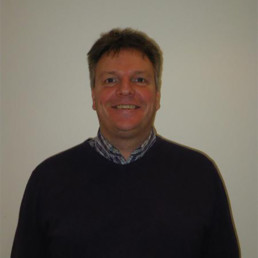
Jim Dees is the headteacher of West Lodge Primary School. He is the co-founder of YESFest.
On 18th May, more than 70 primary-aged Young Ambassadors for Peace gathered at the House of Lords for An Experiential Peace Dialogue: Living Peace in Action. Hosted by Baroness Verma and attended by members of the House of Lords, including Lord Raval, the event brought together educators, researchers, sustainability leaders, policymakers and community partners to explore an important question: What role can peace education play in helping young people thrive in today’s world? The event brought together educators, researchers, sustainability leaders, policymakers and community partners to explore an important question: What role can peace education play in helping young people thrive in today’s world?
The Young Ambassadors for Peace (YAP) programme, organised by the Brahma Kumaris World Spiritual University UK, brings together primary school pupils to explore peace within the self, peace with others and peace with nature through reflection, dialogue, leadership and action. What stood out most was not the programme itself, but the children. Speaking about peace within the self, peace with others and peace with nature, pupils aged between nine and eleven shared their experiences with remarkable wisdom, clarity and authenticity. They spoke about self-regulation, empathy, interfaith understanding, leadership, sustainability and belonging. They led meditations, answered questions from invited guests and demonstrated that children are capable of far more than we sometimes assume.
One child explained that the programme should focus on young people “to make a better generation.” Another reminded the audience that children are capable of making a positive difference in the world today, not simply in the future.
The event reinforced a growing belief that peace education is not an optional extra. It sits alongside wider conversations around wellbeing, belonging, citizenship, sustainability and pupil agency. At a time when schools are navigating increasing complexity, there is a growing need to create opportunities for children to develop not only knowledge and skills, but also self-awareness, compassion, responsibility and a sense of connection with others and the natural world.
Perhaps most importantly, the showcase highlighted a shift that is gaining momentum across education and beyond: seeing children not as empty vessels to be filled, but as active contributors with voice, agency, insight and wisdom. When we create the conditions for children to lead, reflect and contribute, they often bring perspectives that adults can easily overlook.
Looking ahead, we are keen to strengthen the evidence base for peace education, build partnerships across sectors and communities, and connect practice, research and policy. We would particularly welcome conversations with researchers, universities, schools, charities and organisations interested in collaboration, evaluation and further development of this work.
The next stage of that journey takes place at the Young Ambassadors for Peace Festivals in Oxford (10 June), London (12 June) and Leicester (17 June), where pupils will share their learning through experiential exhibitions, presentations and performances. These events provide an opportunity not only to celebrate the achievements of the children, but also to engage in a wider conversation about the role of peace education in supporting wellbeing, belonging, citizenship, sustainability and positive social change.
Places at all three events must be booked in advance. If you would like to attend, please register at https://yapglobal.org/peacefest2026/. We would particularly welcome educators, researchers, community leaders, policymakers and potential partners who are interested in exploring how peace education can help develop more compassionate, connected and sustainable communities.
Perhaps the most powerful message from the House of Lords came from the children themselves. In a world that often underestimates young people, they reminded us that they are not simply the leaders of tomorrow, but active contributors today — capable of helping to build more compassionate, connected and hopeful futures if we are willing to listen.
Maslow’s Hierarchy Was Never Just a Pyramid
Written by Hannah Wilson
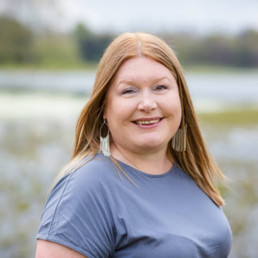
Founder and Director of the Belonging Effect (formerly Diverse Educators).
Every educator has seen it. The pyramid – at the bottom sit physiological needs: food, water, shelter, sleep. Above that come safety, belonging, esteem, and finally – at the peak – self-actualisation.
For decades, Abraham Maslow’s hierarchy of needs has shaped educational thinking. It appears in teacher training, wellbeing frameworks, behaviour support models, and school leadership presentations around the world. The message is straightforward: children cannot learn effectively if their basic needs are unmet.
And that insight matters;
- Hungry children struggle to concentrate,
- Unsafe children struggle to trust,
- Disconnected children struggle to engage.
But there is a part of the story many educators have never been told.
Maslow’s ideas were influenced by time spent with the Blackfoot Confederacy in 1938, where he observed a society deeply grounded in community, belonging, collective responsibility, and cultural continuity. In later years, scholars and Indigenous educators have pointed to the similarities between Maslow’s developing ideas and Blackfoot understandings of human wellbeing.
What is especially interesting is that Maslow himself never actually drew the famous pyramid we all recognise today. The pyramid – with its upward climb toward individual success – became a Western interpretation of his theory. And perhaps in that interpretation, something important was lost because many Indigenous worldviews do not see human flourishing as an individual journey upward. They see it as relational.
The Problem With the Pyramid
The modern version of Maslow’s hierarchy is often presented as a ladder:
- First survival…
- Then safety…
- Then belonging…
- Then achievement.
Eventually, if all goes well, a person reaches self-actualisation – becoming the fullest version of themselves. But schools have absorbed this framework in ways that often reinforce individualism rather than connection.
Once students’ basic needs are acknowledged, education systems quickly shift focus toward:
- academic performance,
- achievement,
- productivity,
- competition,
- outcomes.
The underlying message becomes: Now that your needs are met, it is time to succeed.
Yet human wellbeing is not linear:
- Children can experience creativity while carrying trauma,
- Students can achieve highly while feeling lonely,
- Young people can comply academically while feeling culturally unseen.
Many First Nations perspectives understand wellbeing not as a hierarchy, but as an interconnected system of relationships – between self, community, identity, spirit, land, and purpose. Belonging is not a stage to move through. It is foundational.
What Indigenous Wisdom Offers Education
One of the most powerful distinctions in Indigenous understandings of wellbeing is the shift from individual fulfilment to collective flourishing.
In many Western systems, the highest goal is personal achievement:
- reaching your potential,
- standing out,
- becoming successful.
But Indigenous perspectives often place greater emphasis on:
- contribution,
- responsibility,
- kinship,
- cultural continuity,
- community wellbeing.
The question changes from: “How do I become my best self?”
To: “How do I strengthen the wellbeing of the community around me?”
That difference has profound implications for schools because schools frequently reward independence while undervaluing interconnectedness.
We celebrate high achievers, but often overlook:
- kindness,
- emotional safety,
- cultural identity,
- collaboration,
- service,
- belonging.
And yet these are the very things that allow human beings to flourish.
What Would Schools Look Like If We Truly Understood This?
If schools genuinely embraced a more holistic understanding of human needs, education might begin to look very different.
We might prioritise:
- relationships before results,
- connection before compliance,
- identity before standardisation,
- wellbeing before performance.
Students would not simply be prepared for exams or careers – they would be prepared for life in community.
Teachers would spend less time asking: “How do we improve outcomes?”
And more time asking: “Do our students feel seen, safe, valued, and connected?”
Because children learn best when they experience belonging.
Not performative belonging…Not tokenistic inclusion…Real belonging.
The kind that says: “You matter here.”
Beyond Achievement
Many schools today are facing rising levels of anxiety, disengagement, loneliness, and behavioural complexity among young people.
We often respond with interventions, data tracking, wellbeing programs, and behaviour systems, but perhaps part of the deeper issue is that modern education has become disconnected from fundamental human needs.
Not just physical needs – but emotional, relational, cultural, and spiritual ones too. The Indigenous perspectives that influenced Maslow remind us that wellbeing cannot be separated from connection.
A child’s sense of identity matters…Community matters…Purpose matters…Relationship matters…And perhaps the greatest misunderstanding of the pyramid is that human flourishing was never meant to be a solo climb to the top.
A Different Vision for Education
What if success in schools was measured not only by grades, but by:
- empathy,
- contribution,
- resilience,
- belonging,
- cultural strength,
- and the ability to care for others?
What if education was not simply about producing successful individuals, but nurturing connected human beings?
Long before modern psychology attempted to define human motivation, First Nations peoples already understood something essential: people thrive through relationships and belonging to a community.
Perhaps schools have been looking at the pyramid for so long that we forgot to look around us. So perhaps the future of education depends not on climbing higher, but on reconnecting more deeply – to ourselves, to each other, and to community.
School is so gay

Written by Ian Timbrell
Ian has worked in education for 18 years, including as a teacher and deputy head teacher and now supports schools develop their provision for LGBTQ+ and adopted pupils. He is the author of 'It's More Than Flags and Rainbows', a guide to supporting schools become more LGBTQ+ inclusive.
I remember seeing bullying when I was at school. I remember the names, the laughter, and the way certain words landed harder than others. I also remember how normal it all felt at the time, not because it was harmless, but because nobody really stopped it.
Years later, when I became a teacher, I genuinely believed things would be different. Society had moved on, language had evolved, and schools were far more aware of safeguarding and wellbeing. But standing in classrooms and corridors, I found myself hearing the same phrases, watching the same patterns, and feeling the same familiar knot in my stomach.
What devastated me most was not just that bullying still existed. It was how often it was excused.
“That’s so gay.”
“They don’t mean it like that.”
“It’s just a saying.”
“There are bigger issues we need to focus on.”
I heard these comments repeatedly. Sometimes from pupils, but far more painfully from adults.
For LGBTQ+ people, language like this is never neutral. It carries weight, history, and memory. When a word connected to who you are is used as shorthand for something negative, it teaches you very early on that your identity is something to be laughed at, minimised, or ignored.
As a pupil, that message hurts deeply.
As a teacher, watching it be passed on to another generation is crushing.
Over time, I became increasingly frustrated by the idea that tackling homophobia was somehow an “extra”. Something to get to if there was time. Something that sat below academic outcomes, behaviour targets, or inspection priorities. I watched schools work tirelessly on countless tick-box initiatives, yet hesitate when it came to properly challenging harmful language, often out of fear of backlash or because it was seen as controversial.
But bullying linked to sexuality or gender identity is not less serious because it is verbal. It is not less damaging because it is common. And it is not less urgent because some people are uncomfortable talking about it.
I reached a point where I could no longer accept that this was just how things were. Leaving teaching was not an easy decision, but it became a necessary one. I set up More Than Flags and Rainbows because I wanted to challenge the idea that inclusion is optional and that addressing homophobia is somehow a distraction from “real” education. It is not. It is central to it.
I have worked with children who learned to make themselves smaller to feel safe. I have listened to young people who stayed silent because drawing attention to themselves felt dangerous. I have seen how unchecked language creates cultures where exclusion becomes normal and cruelty becomes background noise.
This work matters because words shape environments. When harmful language goes unchallenged, it sends a clear message about whose feelings matter and whose do not. When schools, and wider society, treat this as a low priority, LGBTQ+ young people pay the price.
This is not abstract to me. It is personal. I have lived it, witnessed it, and ultimately walked away from a career I loved in order to keep challenging it in a different way. And I believe deeply that when we stop making excuses for harm, we create spaces where young people do not just survive, but belong.
Empowering Young People to Change the World
Written by Nicola Wetherall
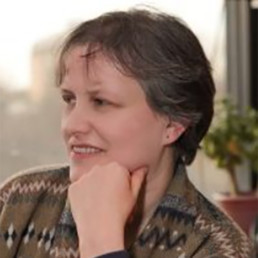
Nicola is an RE teacher by training, but a specialist and Lead Practitioner for Holocaust, genocide and human rights education at Royal Wootton Bassett Academy, she curates the Empowering Young People to Change the World teacher conference series. She combines her part time role at RWBA with her Associate Professor (Teaching) role at the UCL Centre for Holocaust Education, specialising in curriculum, pedagogy and school development by supporting the Quality Mark process and Beacon School alumni engagement. Nicola founded the Holocaust, their family, me and us schools project.
This year’s DEIB Showcase for #EYP2CtW26 session felt like an expansion – a widening of what we pay attention to in schools, and a reminder that belonging is not an optional extra but a foundation.
We began with Hannah Wilson, who was joined by, and introduced us to, colleagues from the Belonging Effect (formerly Diverse Educators) network, who each brought a richness of experience, context and lived insight that was both energising and deeply grounding. But before I turn to each contribution in turn, I want to say a special thankyou to Hannah, an ally and leader who has supported #EYP2CtW26 conference for many years now, and once again curated a session for us today that was compelling, generous and full of practical wisdom.
So first we welcomed Yassar Hussain – from the UAE – who talked us through GEMS Metropole’s DEIB journey, referring to a range of scholarship that had informed that process, the importance of intentionality, student voice and agency. Yassar’s section was a powerful reminder that belonging doesn’t happen by accident, it’s built through deliberate choices around staff awareness, curriculum representation and student voice. His ‘journey’ within this work, reminded me how small, consistent actions across a year can shift culture, confidence and connection. I think that Yassar’s story offered a practical challenge for all of us: What would it look like to map our own DEIB journey across a year (staff learning, curriculum audits, student voice, community engagement) and treat it as a cycle of listening, acting and refining? For me, his contribution offered #EYP2CtW26 delegates (and me) us a template for intentional, sustainable progress, a next step be it short, medium or long term.
Next, it was a privilege to invite Monia Sahar Zahid and Claire Shooter – from HABS Elstree – who rather beautifully reminded us that belonging isn’t something you switch on in a crisis, it’s the product of the culture you’ve built long before tensions surface. Their emphasis on intellectual humility, visible inclusion and shared experiences offered a powerful blueprint for how schools can create the conditions for safety, trust and connection, even when global events hit the school gates, with a focus on the pastoral and safeguarding rather than the politics or teaching. I was struck by their noticing – their check-ins with staff and students, the human connections and deep rooted respect that revealed. I know several of the anecdotes shared, resonated powerfully with the 460+ educators accessing the session live – and the sense of thanks and gratitude for highlighting those moments was palpable in the chat forum spaces. My takeaway was need to reflect on our own readiness: Do we have the frameworks, shared language and staff confidence to hold difficult conversations before they arrive at our door? The SAFE framework they shared with us and emphasis on defensible decision‑making offer practical starting points for schools wanting to strengthen their approach to belonging, identity and conflict‑sensitive practice. So this was great to share.
Last but not least we were pleased to host Azuraye Williams from the Transform Trust, her contribution brought us back to something deceptively simple but deeply important: belonging starts with people, not paperwork. Her trust‑wide work showed how culture, connection and relationships must come before policies if we want DEIB to be lived rather than laminated, a reminder that systems only shift when humans do. Colleagues were taken with the meaningful and purposeful work undertaken to engage governors, but for me Azuraye left us a practical challenge: How well do we really know the belonging story of our own school? Her trust‑wide approach (surveying every child, engaging DEIB leads, and focusing on each school’s unique context) offered a clear starting point for any setting wanting to move from intention to impact.
It was that intentionality across the session was noticeable and built upon Hannah’s introductory remarks and concluding framing of belonging as a human need. Each contribution built on the last: from GEMS Metropole’s DEEI journey, to navigating global conflict at HABS Elstree, to trust‑wide belonging work at Transform Trust, and throughout, the examples shared (curriculum audits, microaggressions training, belonging surveys, pupil‑led research, ‘people before policies’) reminding us that belonging is not a slogan. It is a practice. A culture. A way of showing up for one another in schools.
In a climate where DEIB work is sometimes misrepresented or politicised, today was a powerful reminder that this work is not about ideology. It is rights‑respecting, dignity‑affirming, and safeguarding‑aligned. It is about ensuring that every child (and every adult) feels safe, seen, valued and able to bring their whole self into a school community. Nothing more complicated, nothing more controversial than that – and yet, the work can feel lonely, induce anxiety and expose vulnerability. I am deeply grateful to Hannah, Yassar, Claire, Monia and Azuraye, for their time, expertise and generosity of sharing, and this thread and spirit continues across the rest of the week.
If you missed this year’s DEIB Showcase for #EYP2CtW26 you can catch up here: https://www.youtube.com/playlist?list=PL5Qv_qeF-NpWPGep25cYsrp0zuYDEPH9c
I’m reminded again that when educators gather with honesty, courage and care, we don’t just learn, we widen our circle of belonging, and in doing so, we create the conditions for empowered young people to do the same.
Supporting refugee students in UK schools displaced by war and conflict zones
Written by Muna Mitchell
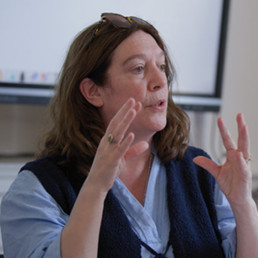
Muna has held Senior Leadership positions in Pastoral, SEND and Safeguarding along with teaching Science in secondary schools across Botswana, Oman and the UK. She Studied for an M.Ed. in Inclusion and Diversity with a focus on supporting Refugees in Education.
As described by the UNHCR “A refugee is a person who has been forced to flee their country due to war, violence, or serious threats to their life, and who requires international protection.”
A total of 117 million people at the end of 2025 were displaced from their homes due to conflict and violence and of those 42 million people became refugees of which approximately 20 million are children. The UNCRC (2000) clearly states that “Every child has a right to an education” however, UNICEF research has shown that children and their subsequent educational chances pay a heavy price during conflict. Education suffers through damage to school buildings by bombing and gunfire, the death or injury of teachers and support staff and the use of school buildings by soldiers. In a war zone, the education system is not the priority as families struggle to find food, shelter, and safety. This means that the education pathway of refugee children may have been interrupted for many years prior to them seeking asylum.
Continued global humanitarian crises force people into countries that are often very dissimilar from their home cultures. Sheikh and Anderson (2018) describe how refugees suffer from profound culture shock on arrival in the UK and must undergo a period of acculturation. Sometimes as a refugee this acculturation occurs more than once depending on the individual person’s journey and the countries they have travelled through. Fuller and Hayes (2020) describe how the experiences a refugee encounters on first arrival are often just as traumatising as those experiences that were left behind. This interweaves the themes of past and present and suggests strongly that in education, for example the voices of child refugees need to be regularly consulted. It seems essential that we ensure that we are not making assumptions around which life experiences are causing distress and where our support needs to be focussed.
The UNHCR has acknowledged that young refugees often have high academic aspirations with education seen as a reliable way to escape less than ideal current circumstances and tertiary education particularly held in high esteem. It also states that higher education and skills are a critical link between learning and earning which allows for sustainable futures and enhanced social cohesion. Stevenson and Willott (2007) suggest that one of the main barriers to education is the initial struggle with academic language and refugees who are given multiple opportunities of English language training with an academic focus are much more likely to attend school. Lack of English language skills make it difficult not only for students to progress in their learning but to make emotional connections with other pupils and staff. The Bristol Refugee Rights impact report (2020/21) states that “There is a lack of strong English progression pathways and support into higher education. Much of the provision is unaccredited and the curriculum is not prescribed.” For schools, there are additional challenges to overcome to provide the right support and monitor student progress and attainment as there is often limited prior data for many refugee students. Education which had been completed in other countries is not always recognized. For example, refugee students may have English Language certificates from their home countries which in theory they could use to access university courses, but UK universities only accept a certificate of English language proficiency (IELTS) which can be expensive to complete.
Refugees who are aiming for Higher Education can sometimes be under tight time constraints to fit into a rigid school system in the UK. Bajwa et al (2017) concludes that refugees entering straight into the secondary school system have a lack of time to establish trust and can sometimes be mistrustful around public figures which impacts their ability to progress forward. As Gately (2018) concludes it is challenging in a short space of time to establish strong pupil staff relationships which could provide guidance for next steps and support refugee students in understanding the options available to them.
The Schools of Sanctuary (2021) network which includes stakeholders such as teachers, support staff, parents, governors, and community groups has as one of its central theme’s being pupil voice. Lawrence (2019) explains that “the voices of child refugees are forgotten, and young people are not regularly consulted about their needs or coping strategies” As mentioned above, the main difficulties of accessing education are language barriers, arrival point in terms of education, lack of informed choices and overcoming gaps in education created by conflict. The key turning point for these children and their subsequent entry to Higher Education seems to centre around their GCSE and A level choices. There are institutional barriers to higher education for students from ethnic minority groups, for students who are then also refugees these barriers are even higher.
Teaching Students to Read the Room: Communication, Consent, and Cultural Competence
Written by Tessa Dodson
Tessa Dodson is an education writer passionate about supporting teachers and fostering inclusive classroom environments. She specializes in covering classroom resources, educational trends, teacher wellness, and practical strategies to help educators succeed.
Educators can foster diversity, equity, inclusion and belonging (DEIB). They must teach young learners about the nuances of people from different backgrounds to help raise a population that recognises the distinct body language, tones and facial expressions, which vary from culture to culture. These teaching techniques are among the most effective at empowering everyone with the tools they need to self-advocate and consider diverse student communication skills.
Scenario-Based Learning and Role-Playing
The UK’s increasingly diverse population makes cultural competence and empathy essential lessons from an early age. Students are more likely to deepen their cultural competence if they experience it firsthand. An educator can start by telling learners about differences in nonverbal communication, including that eye contact is impolite in some regions, such as the Caribbean and East Asia.
To make lessons stick, create a situation in which students must interact to act out responses to different patterns, such as navigating personal space or using direct language to make a request. Educators can also create cards to prompt students to simulate a gathering. Transforming classic games, including charades or Pictionary, is another way to get students to interact with other cultural phrases, physical movements and ideas.
However, it is essential to clarify what is and is not appropriate in these contexts, drawing on insights from the cultures being studied to ensure accuracy and sensitivity.
This activity allows students to speak, hear and witness how others would react, especially for people in marginalised communities. Learners may not regularly interact with these individuals, so shaping the environment is crucial to prepare them for that experience. Cross-cultural exposure and communication can positively affect students’ cultural competence.
Film and Media Analysis
Exposing students to diverse media is one of the best ways to make the content entertaining, engaging and stimulating. There is a low barrier to entry in visual media, making the content accessible and safe to consume, which is important when these topics can be intimidating. Also, it stretches students beyond their cultural echo chambers and challenges their stereotypes.
Teachers can source TV shows, movies, news broadcasts and music videos to display narrative in different ways, all focused on considerate communication, teaching consent and overcoming bias. Ask students to make notes about patterns they see between characters, such as:
- Body language
- Amount of physical contact
- Facial expressions
- Amount of transparency and honesty in conversation
- Level of formality
- Vocal tone
Students can also note any reinforced stereotypes they see, and educators can take them through exercises to dispel and unpack them. It will push learners to unravel their opinions about harmful and inaccurate stereotypes or generalisations in the safe, low-stakes format of media commentary.
Develop a “Reading the Room” Log
Inspire students to think critically about their cross-cultural interactions by recording them in a journal. This is a safe, nonjudgmental place for them to reflect on classroom exercises and real-world conversations. They can ask questions, such as “Did I remember to ask consent before going in for a friendly hug?” or “Did my excited curiosity and frequent questions make them uncomfortable?”
These exercises compel students to practice self-awareness and also celebrate wins when they learn something about another culture and successfully implement those communication skills in real life. The journals are records of every student’s growth as they learn how to interpret nonverbal cues and find reasons to advocate for themselves.
Many educators have used the Curiosity, Attentiveness, Respect and Responsiveness, and Embodiment (CARE) model for authentic cultural lessons, and reflective journaling is one of the best ways to produce cultural humility and mindfulness about DEIB topics. If students are struggling to think about what to write, here are some prompts to get them started:
- Describe a time when someone’s tone did not match their body language.
- Write about a time you reacted to a surprise. If you surprised someone else with a different personality and culture with the same thing, do you think you would get the same reaction?
- Reflect on the cultural stereotypes we discussed in class today and why it is important to overcome them.
- Describe a behaviour that is normal to you and your family, such as giving handshakes to visitors. Research how other cultures would view this practise.
Cultivating Empathy and Agency in Student Communication Skills
Everyone can read the room, no matter who is in there. Teaching consent, cultural sensitivity and intersectional thinking is a nonnegotiable skill in the modern era. These techniques make nebulous concepts tangible for learners of all ages. Eventually, these intentional lessons will craft a respectful society where empathetic communication and consent always come first.
Allyship in Action: Finding and Growing Allies in Education, Work, and Everyday Life
Written by Marie Manley
Marie Manley works for SEE Change Happens. She is an advocate for families and friends of Transgender individuals. She loves talking to customers about their DEIB requirements, explaining how SEE Change Happen can enhance organisations with all things DEIB-related. She comes from an administration and compliance background, she has strong analytical thinking, a love of processes, and a strict attention to detail.
Allyship is something I used to think of as a value – something you believe in. But over time, and through personal experience, I’ve come to understand that allyship is really about what you do. It’s how you show up, how you listen, and how you stand alongside others, especially when it matters most.
For me, this became deeply personal when my husband became my wife. That journey shifted not only how I see the world, but how I experience it. It opened my eyes to the quiet, everyday moments where allyship is either present or absent – in conversations, in systems, and in relationships. It also helped me recognise just how powerful true allies can be.
What I’ve learned is that allyship isn’t confined to one space. It travels with us – through education, into our workplaces, and into our closest relationships. And in each of those spaces, we have the opportunity to both find allies and become one.
Allyship in Education: Where It Often Begins
Education is often where we first encounter difference – different identities, perspectives, and lived experiences. It’s also where many of our beliefs about fairness and belonging start to form.
I’ve seen how powerful it can be when educators create spaces where people feel safe to be themselves. Allyship in education isn’t just about policies or statements; it’s about the everyday behaviours. It’s the teacher who challenges exclusion. The student who speaks up when something doesn’t feel right. The environment that makes space for everyone to be heard.
Finding allies in education often starts with noticing those small but important actions. Who is curious rather than judgmental? Who is willing to challenge bias? Who makes room for others?
But we can’t leave allyship to chance. It needs to be nurtured intentionally. When inclusion is embedded into how education works – from curriculum to culture – allyship becomes part of the norm, not the exception.
Allyship at Work: Moving Beyond Good Intentions
In the workplace, allyship becomes even more visible – and, if I’m honest, sometimes more challenging.
Many organisations talk about diversity and inclusion, but without active allyship, those words can feel hollow. Allyship at work is about what happens in the moments that aren’t scripted – who gets heard in meetings, who is advocated for, who is challenged when something isn’t fair.
Through my own work, I’ve seen that allies are not always the loudest voices. Often, they are the most consistent. They are the people who quietly but firmly stand for fairness, who follow through, and who are willing to learn and adapt.
When my own family experience changed, I noticed these allies more clearly. The colleague who checked in. The leader who made space. The friend who didn’t assume but asked. Those moments mattered more than any formal policy ever could.
That said, organisations do have a responsibility. Allyship shouldn’t rely on individuals alone. It needs to be supported by leadership, embedded into systems, and reinforced through accountability. When that happens, allyship becomes part of how work gets done – not an extra.
Allyship in Family and Friendships: Where It Gets Real
If I’m honest, the most complex space for allyship is often our personal lives.
Family and friendships are where we feel safest – but they are also where bias can go unchallenged. When my husband became my wife, I saw this firsthand.
SEE Change Happen – Fireside chat is an example of finding Allyship:
https://seechangehappen.co.uk/speaking-library/the-making-of-me-joanne-maries-story/
Some people leaned in with openness, curiosity, and love. Others struggled, sometimes without realising the impact of their words or assumptions.
Allyship in these spaces isn’t about having all the right answers. It’s about being willing. Willing to listen. Willing to learn. Willing to say, “I might not fully understand, but I’m here.”
It’s also about courage. Speaking up when something doesn’t sit right. Gently challenging language or behaviour. Choosing connection over comfort.
Resources from organisations like Stonewall (https://www.stonewall.org.uk/) can be incredibly helpful in guiding those first steps, especially for people who want to be supportive but aren’t sure how.
What I’ve come to appreciate is that allies in our personal lives don’t need to be perfect. They just need to be present, open, and committed to growing.
Growing Allyship – Together
Across all these spaces, one thing stands out to me: allyship is deeply human. It’s built on trust, consistency, and care.
It’s not about getting everything right. It’s about being willing to try, to learn, and to keep showing up.
If we want to grow allyship, we need to create environments where people feel safe to ask questions, to reflect, and to be challenged. We need to recognise and value inclusive behaviours. And we need to hold ourselves – and each other – accountable.
This is something I’m incredibly passionate about in my work, and it’s why organisations like SEE Change Happen (https://seechangehappen.co.uk/) exist – to support people and organisations in turning intention into meaningful, lasting change.
A Final Reflection
Allyship has become something very real to me. It’s not theoretical. It’s not abstract. It’s personal, and it’s ongoing.
It shows up in the colleague who creates space. The friend who listens. The family member who is willing to learn. And sometimes, it starts with us – choosing to be that person for someone else.
So, I often come back to a simple question: How am I showing up for others today?
Because when we ask that – and act on it – allyship stops being something we talk about and becomes something we live.