
Inclusion Through a Wider Lens: Identity, Intersectionality and Belonging
Written by Hannah Wilson
Founder and Director of the Belonging Effect (formerly Diverse Educators).
How inclusive is our understanding of inclusion?
Last week, I attended the Empowered Schools inclusion conference alongside a room full of passionate, purposeful educators. The conversations were thoughtful, the commitment was palpable and the collective ambition to improve educational experiences for children and young people was clear.
Yet, as I looked around the room, I found myself reflecting on a contradiction. We were gathered to discuss inclusion, but the room lacked visible diversity. Furthermore, as with many educational inclusion events the conversation focused on the relatively narrow lens of inclusion as Special Educational Needs and Disabilities (SEND).
This is not a criticism of the organisers, speakers or delegates, nor is it a dismissal of the importance of SEND inclusion. The challenges facing children and young people with SEND, their families and the educators supporting them are significant. The commitment to addressing these challenges is both necessary and urgent.
However, it did leave me wondering:
- When we talk about inclusion, who are we including in the conversation?
- Whose identities are we considering?
- Whose experiences are informing our decisions?
- And, perhaps most importantly, who might we be overlooking?
As the conversations developed, we began exploring belonging, racial equity and intersectionality. These discussions reinforced something I have been reflecting on for some time: Inclusion cannot be inclusive if our understanding of identity is exclusive.
The name of the conference also prompted me to reflect on what it means to be an empowered school: Empowered to do what? Empowered by whom? And empowered for whom?
Surely, an empowered school is one where leaders and educators have the knowledge, confidence and courage to recognise and remove barriers to belonging for every member of their community. One where inclusion is not defined by a single characteristic, identity or educational need, but understood through the richness and complexity of human experience.
Inclusion Is Bigger Than One Identity
In education, inclusion has increasingly become synonymous with SEND. This is understandable given the pressures facing schools, the challenges within the SEND system and the urgent need to improve provision and outcomes. However, inclusion is not a synonym for SEND.
Inclusion encompasses the full spectrum of human identity and experience, including race, ethnicity, disability, neurodivergence, gender, sexuality, religion, socioeconomic background, language, culture and family circumstances.
It also requires us to recognise that identities do not exist independently of one another:
- A Black autistic girl does not experience school solely through the lens of race, gender or neurodivergence. Her experiences are shaped by the interaction of all three, alongside other aspects of her identity and the wider social and institutional contexts in which she lives and learns.
- A child from a Romani (Gypsy), Roma and Irish Traveller people background may experience barriers associated with cultural misunderstanding, racism, socioeconomic disadvantage or disrupted educational experiences.
- A Muslim pupil with SEND may experience challenges associated with disability alongside religious discrimination, cultural assumptions or a lack of representation.
This is where intersectionality, a concept developed by Professor Kimberlé Crenshaw, becomes essential to our understanding of inclusion.
Intersectionality helps us recognise how different aspects of identity interact with systems of power, privilege and disadvantage, creating experiences that cannot always be understood by examining individual characteristics in isolation.
Without an intersectional lens, we risk developing inclusive practices that support one aspect of a child’s identity whilst overlooking another. And when that happens, our inclusion becomes conditional, fragmented or incomplete.
Reframing the Seven Principles of Inclusion
The Department for Education’s Inclusive Mainstream Fund guidance identifies seven principles to support schools in developing their approaches to inclusion. These principles provide a useful framework for school leaders, particularly in considering how to strengthen inclusive mainstream provision.
However, the framework also presents an opportunity to ask a broader question: What might these seven principles look like if we applied them to the full diversity of our school communities?
Rather than considering inclusion primarily through a SEND lens, how might we use the principles to explore identity, intersectionality, equity and belonging?
- Ambitious Leadership and Governance
Ambitious leadership and governance that embeds inclusion across the school.
Inclusive leadership requires more than a commitment to meeting individual needs. It requires leaders to understand how organisational cultures, systems, policies and practices shape the experiences of different groups:
- Who makes decisions about inclusion?
- Whose perspectives inform our strategic priorities?
- How representative are our leadership teams and governing bodies of the communities we serve?
- Do our inclusion strategies address racial equity, gender equality, religious diversity, socioeconomic disadvantage and disability?
- Or have we inadvertently created separate agendas that compete for attention and resources?
An intersectional approach encourages leaders to move beyond isolated initiatives towards a coherent, whole-school commitment to equity and belonging.
Reflective question: Whose identities and lived experiences are represented in our inclusion strategy, and whose are missing?
- Evidence-Based Support and Early Intervention
Evidence-based support that prioritises early intervention to catch barriers to learning early.
Identifying barriers early is essential. However, we must also consider how those barriers are recognised, interpreted and addressed:
- Are we examining differences in attendance, attainment, exclusions, suspensions, behaviour sanctions and access to opportunities across different demographic groups?
- Are we exploring how race, gender, disability and socioeconomic disadvantage intersect?
For example, do we understand how racialised assumptions may influence perceptions of behaviour? Are we recognising how girls’ neurodivergent needs may present differently or be overlooked? Are we considering how poverty, housing insecurity or language barriers may influence attendance and engagement?
Evidence-based inclusion requires both quantitative data and qualitative insight. We need to understand not only what is happening, but why it is happening and how it is experienced. This means listening to children, families and staff, particularly those whose experiences may be marginalised or misunderstood.
Reflective question: Are we using evidence to identify systemic barriers and inequalities, or simply to identify individual children who need additional support?
- High-Quality Adaptive Teaching and an Inclusive Curriculum
High quality adaptive teaching with a curriculum designed for all learners.
Adaptive teaching is often understood through differentiation, scaffolding and adjustments to meet learning needs. These approaches are essential, but inclusive teaching also requires us to consider what we teach, whose knowledge we value and whose identities are represented:
- Does our curriculum reflect the diversity of our communities and the wider world?
- Whose histories, stories, achievements and contributions are visible? Whose perspectives are missing or marginalised?
- Are we challenging stereotypes and deficit narratives?
- Are we creating opportunities for children to see themselves reflected positively in their learning whilst developing curiosity, empathy and respect for experiences different from their own?
An inclusive curriculum should be both a mirror and a window. It should affirm children’s identities whilst broadening their understanding of the world. Similarly, adaptive teaching should recognise cultural and linguistic diversity alongside cognitive, physical and sensory differences.
Reflective question: Does our curriculum enable every child to see themselves reflected, represented and respected, whilst also encountering and valuing identities different from their own?
- Enriching Provision Beyond the Classroom
Enriching provision beyond the classroom that all children can access.
Educational inclusion extends far beyond the classroom. Clubs, trips, residential experiences, sports, performances, leadership opportunities and enrichment activities all contribute to children’s confidence, relationships and sense of belonging.
Yet access to these opportunities is not always equitable. Financial barriers may prevent children from participating in trips or extracurricular activities. Religious observance, cultural expectations or caring responsibilities may affect availability. Gender stereotypes may influence who feels welcome in particular activities. Disability-related access requirements may not be fully anticipated or accommodated.
We must also consider the less visible barriers:
- Who is encouraged to participate?
- Who is selected for leadership roles?
- Who feels confident enough to put themselves forward?
- Who sees people like themselves represented in these opportunities?
Providing an opportunity does not automatically mean that everyone can access it, feels welcome within it or benefits equally from it.
Reflective question: Who participates in our enrichment opportunities, who does not, and what might this reveal about the barriers we have yet to remove?
- A Safe and Respectful Culture That Fosters Belonging
A safe and respectful culture that fosters belonging, attendance, and active participation in learning.
This principle sits at the heart of inclusive education. Belonging is not simply about being present, being included in activities or being treated kindly. It is about feeling safe, seen, heard, valued, respected and accepted for who we are.
A school may have welcoming displays, inclusive policies and a strong commitment to kindness, yet children and adults may still experience racism, sexism, ableism, homophobia, religious discrimination or other forms of exclusion.
Psychological safety also matters:
- Can children and colleagues express their identities, share their experiences, challenge inappropriate language and raise concerns without fear of judgement, dismissal or retaliation?
- Do we recognise the difference between an absence of reported discrimination and the presence of genuine belonging?
A culture of belonging requires us to move beyond our intentions and examine the lived experiences of the people within our communities. We cannot assume that because some people feel they belong, everyone does. And we cannot measure belonging solely through attendance, behaviour or participation. We need to ask people how they experience our culture and be prepared to hear answers that challenge our perceptions.
Reflective question: How do we know who experiences belonging in our school, who does not, and what are we prepared to change because of what we discover?
- Strong Partnerships with Families and Wider Services
Strong partnerships with families and wider services.
Families are central to children’s experiences of education. However, meaningful partnership requires more than communication, consultation or inviting parents into school.
It requires us to recognise the diversity of family structures, cultures, languages, experiences and expectations within our communities:
- Do we understand how previous experiences of education, discrimination or institutional mistrust may shape relationships with schools?
- Are our communication methods accessible to families who speak different languages, have additional needs or experience digital exclusion?
- Do we recognise and respect different family structures, including single-parent families, blended families, kinship carers, adoptive families and families with LGBTQ+ parents?
- Are we engaging with communities whose voices have historically been marginalised, or are we relying on the families who already feel confident and comfortable participating?
Strong partnerships require cultural humility, curiosity, trust and a willingness to share power. Rather than assuming we know what families need, we must create opportunities to listen, learn and co-produce solutions.
Reflective question: Which families feel welcomed, listened to and valued as partners in our school, and which might experience our relationships and communication differently?
- Inclusive Environments and Continuous Improvement
Inclusive environments with continuous improvements to physical and functional accessibility.
Accessible environments are fundamental to inclusion. Schools must consider physical accessibility, sensory environments, assistive technologies, communication needs and reasonable adjustments. However, inclusive environments are also cultural, relational and psychological:
- Do our buildings, displays, resources and shared spaces reflect the diversity of the communities we serve?
- Are prayer and reflection spaces considered?
- Are our uniform policies inclusive of religious, cultural and gender-related needs?
- Are toilets and changing facilities accessible, safe and appropriate for different users?
- Do our displays reinforce stereotypes or challenge them?
- Are our school celebrations and traditions welcoming to families from different cultural and religious backgrounds?
- And perhaps most importantly, are we willing to recognise that environments experienced as welcoming by some may feel alienating or unsafe to others?
Continuous improvement requires us to look beyond compliance and ask whether our environments enable everyone to participate with dignity, confidence and a sense of belonging.
Reflective question: Who has our school environment been designed for, and whose needs, identities and experiences have we not yet considered?
From Access to Inclusion to Belonging
As we reflect on these seven principles, I think it is important to distinguish between three concepts that are often used interchangeably:
- Access is about removing barriers so that people can enter, participate and engage.
- Inclusion is about creating the conditions in which people are welcomed, supported, respected and able to contribute meaningfully.
- Belonging is about how people experience those conditions, whether they feel accepted, valued and able to be themselves without compromising their identities.
A child can access a classroom without feeling included.
A child can be included in activities without feeling accepted.
And a child can be physically present within a school community without feeling that they truly belong.
This is why inclusion cannot simply be measured by the provision we offer or the policies we implement. We must also understand how our actions are experienced by those they are intended to support.
Belonging is not something we can declare on behalf of others. It is something we must intentionally cultivate, continuously evaluate and collectively sustain.
From Empowered Schools to Empowered Communities
I left the Empowered Schools conference feeling encouraged by the commitment of the educators in the room, but also challenged by the conversations we still need to have. We need spaces where educators can share expertise, challenge assumptions and explore the complexities of inclusion without feeling that one group’s needs must compete with another’s.
SEND inclusion and racial equity are not competing priorities. Neither are gender equality, religious inclusion, socioeconomic equity or LGBTQ+ inclusion. They are interconnected dimensions of our responsibility to create equitable educational experiences for every child. And intersectionality reminds us that the children, families and colleagues we serve do not fit neatly into the categories we sometimes create.
The seven principles offer us a valuable framework. What matters is the breadth of our interpretation, the courage of our implementation and the impact on the people we serve.
Perhaps the challenge for all of us is to consider not simply how we empower our schools to become more inclusive, but how we empower every child, colleague and family within them to feel safe, seen, heard, valued and able to flourish.
So, as we return to our schools and organisations, I would encourage us to reflect on three questions:
- Whose identities are we centring in our conversations about inclusion?
- Whose experiences might we be overlooking because they fall outside our current understanding or expertise?
- How will we know whether our inclusive intentions are translating into equitable experiences of belonging for everyone?
Because inclusion is not about choosing which identities matter most. It is about recognising that every identity matters, every experience deserves to be understood and every person deserves the opportunity to belong.
An empowered school should be one in which everyone has the opportunity to experience belonging. And that requires us to move beyond good intentions towards meaningful, measurable impact.
The Belonging Effect: Shaping Intention into Impact.
References and Further Reading
Department for Education. Developing an inclusion strategy using the Inclusive Mainstream Fund. DfE guidance
Crenshaw, K. (1989). Demarginalizing the Intersection of Race and Sex: A Black Feminist Critique of Antidiscrimination Doctrine, Feminist Theory and Antiracist Politics. University of Chicago Legal Forum.
Crenshaw, K. (1991). Mapping the Margins: Intersectionality, Identity Politics, and Violence against Women of Color. Stanford Law Review, 43(6), 1241–1299.
The Belonging Effect. www.thebelongingeffect.co.uk

Cultivating a Culture of Belonging: It Is Never ‘Done’
Written by Hannah Wilson
Founder and Director of the Belonging Effect (formerly Diverse Educators).
Last week, I had the privilege of chairing a panel at the IAPS Heads’ Conference exploring a question that sits at the heart of my work: how do we cultivate a culture of belonging for all?
I was joined by three school leaders, Charlotte Crookes, Fergus Llewellyn and Sadia Hussain-Savuk, who generously shared their personal and professional journeys through Diversity, Equity, Inclusion and Belonging (DEIB).
What struck me throughout our conversation was not a claim to expertise or a presentation of perfectly packaged solutions. Instead, there was honesty, vulnerability and a willingness to share what had been learnt along the way. Their reflective and inclusive leadership modelled how we need to show up to start the work and how we position ourselves in order to sustain it.
Belonging is not something we complete
I framed our conversation by considering what we actually mean when we talk about belonging. For me, belonging is about being seen, heard, included, valued and safe. It is about being able to bring our whole selves into a space without having to edit, minimise or leave parts of our identity at the door.
Belonging is not something we achieve, tick off and move on from. It is dynamic. It is relational. It is contextual. Most importantly, it is cyclical.
As our communities change, our understanding needs to change with them. As we learn more about the lived experiences of our pupils, staff and families, we need to be prepared to question practices that may once have seemed inclusive. As the world beyond our school gates changes, we need to consider what those changes mean for the people within them.
The work is never ‘done’.
Looking in the mirror before looking out of the window
One of the recurring themes in our discussion was the importance of reflection. Before asking what everybody else needs to change, leaders need to be prepared to look closely at themselves and their organisations:
- Who feels that they belong here?
- Who does not?
- Whose voices are heard most loudly?
- Whose experiences might we be missing?
- Who has learnt to navigate our culture successfully, and who is expected to adapt themselves in order to fit in?
And, perhaps most provocatively for independent schools: are we really as inclusive as we believe ourselves to be?
These are not comfortable questions. Nor should they be. Cultivating belonging requires us to look in the mirror before we look out of the window.
Responding to the world beyond the school gates
Our conversation also explored the responsibility schools have to respond to what is happening in wider society. I asked Charlotte to reflect on her journey through anti-racism and racial equity, and how school leaders respond when racism, division and social unrest become increasingly visible beyond the school gates.
These moments matter.
Children and young people do not leave the outside world at reception when they arrive at school. Neither do their families or our colleagues. News stories, political discourse, racism, discrimination and social tensions enter our classrooms through the experiences, fears, questions and conversations of the people in them.
Silence communicates something too.
This does not mean leaders need to have an immediate answer to every complex issue. Leadership is not about having all the answers. It is about how we respond when things are difficult, how we support others and the culture we create around us.
Sometimes courageous leadership begins by acknowledging that we do not have all of the answers and need to learn.
Listening to lived experience
Fergus shared reflections from a journey that has considered a range of identities and, crucially, has involved listening to stakeholders about their experiences of school. This is fundamental to bringing the whole school community with us on the journey.
We cannot measure belonging simply by looking at policies, representation or what leaders intended to create. We have to ask people what it feels like to be there. There can be a significant perception gap between our intention and somebody else’s experience.
Listening helps us find that gap. But listening needs to go beyond consultation. If we repeatedly ask people to share their experiences without demonstrating what we have heard, what we have learnt and what we will change, we risk creating consultation fatigue rather than belonging.
The question is not simply: ‘Have we asked?’ It is: ‘What have we changed because we listened?’
Young people should be co-creators, not consumers
Sadia brought another important dimension to the conversation: the role of young people themselves.
Our pupils care deeply about identity, equity and social justice. They notice inconsistency. They question systems. They experience our school cultures differently from the adults who lead them.
So why would we develop DEIB strategies for young people without developing them with young people? It reminds me of the commitment: nothing about us, without us.
Meaningful pupil voice is not about asking pupils to approve decisions that adults have already made. It means creating opportunities for young people to identify issues, shape priorities, challenge thinking and contribute to solutions.
When we involve pupils as co-creators, we communicate something powerful: your experience matters, your voice has value and you have agency within this community. That, in itself, cultivates belonging.
Courage without perfection
As we brought the panel to a close, I asked each panellist what advice they would give to leaders beginning, or developing, their own DEIB journey.
Several themes emerged:
- Being willing to be vulnerable.
- Acknowledging that it does not have to happen to you to matter to you.
- Listening deeply to your stakeholders and involving them as co-creators.
- Distributing responsibility so that inclusion does not become the work of one passionate individual.
- Creating enough psychological safety for people to make mistakes, acknowledge them, learn from them and do better.
- Taking tangible actions, such as signing up to the Halo Code, which challenges hair discrimination.
- Getting started, with small tangible steps to create momentum.
We addressed the fact that one of the dangers of this work is believing that we need to know everything before we can do anything. We do not. We instead need humility, curiosity and courage. We need to know when to lead, when to listen, when to ask for help and when to acknowledge that our understanding has changed.
From intention to impact
I ended the session by thanking Charlotte, Fergus and Sadia for their courageous leadership and their candour. Their stories reminded us that inclusive leadership is not demonstrated by claiming to have got everything right. It is demonstrated by being willing to ask difficult questions, hear difficult answers and respond intentionally to what we learn.
The feedback following the panel reinforced this. One attendee reflected on leaving with a renewed commitment to ensuring every pupil feels ‘seen, safe, valued and supported’, and to creating a culture where belonging is not merely an aspiration but a lived experience.
That distinction matters as:
- Most schools intend for children to belong.
- Most leaders would say they value inclusion.
- Most mission statements contain words such as respect, community, kindness or equality.
The challenge is not necessarily our intention. The real challenge is whether that intention is experienced by everybody.
So perhaps the questions we need to leave ourselves with are these:
- Who belongs in our schools?
- How do we know?
- Who might experience our culture differently from the way we imagine it?
- Whose voice have we not yet heard?
- What are we prepared to change because of what we hear?
And ultimately:
- How will we know when our intention has become impact?
Cultivating belonging is not a project, an initiative or a destination. It is an ongoing commitment to noticing, listening, learning and acting, and then having the courage to begin the cycle again.
Continue the conversation
At The Belonging Effect, our commitment is to Shaping Intention into Impact. Our team supports schools and organisations to move beyond good intentions and create cultures where belonging can be experienced, strengthened and measured.
References and resources
Explore our training and resources on The Belonging Effect website, including our Belonging Toolkit, and continue your professional learning with my book, Cultivating Belonging in Schools.
Your most powerful pedagogical tool this year? Storytelling.

Written by Ed Kirwan
Ed Kirwan is Founder and CEO of Empathy Studios, an education and creative studio using the power of film to develop the skill of empathy in all. An educator for 10+ years, Ed was previously a science teacher in London before becoming a professional filmmaker and director with International film festival recognition. Ed also started Empathy Week, the world’s largest empathy festival for schools having reached 2.5 million students across 56 countries.
More storytelling please!
You may roll your eyes if you’re teaching 3-8 year olds as you’ll be actively reading and engaging with stories a lot but this article is still for you too, hear me out…
As educators we all know the power of stories and if you’re a parent you will too (I’m about to become a dad T-2 weeks or so, so i’ve already been thinking what stories I want to read to my newborn – suggestions please)!
But the real question I’m posing to you is not whether you are using stories but are you utilising the skill of storytelling?
Stories and storytelling are not the same thing.
Stories are the raw material, the information and the detail but storytelling, that’s the art form, the active process in which the storyteller engages with emotion, hooks you into a narrative and ultimately takes you outside of your own reality in a way that, in the most powerful of circumstances, can change you.
I’ll never forget an assembly in year 8 when I was at school (early 2000’s). Mr. Wileman, my head of year, stood in front of 180 of us. Holding a can of dog food and with steam pouring out, started his assembly as usual.
“Good morning year 8!”
He took a second, a slight pause as if he was going to continue on to the next part but instead he dips his fork in, gets a chunk of meat and puts it in his mouth, chews and swallows.
“Aeaaaeeewehhhhhh” – the hall erupted.
Mr. Wileman – “what’s wrong with this?”
“It’s dogfood sir!”
Of course it wasn’t. It was a beef stew but the moral of the story has stuck with me – reserve judgement. You don’t always know the full picture. Even if you see something that gives you evidence to support your theory, you might still be wrong. Be curious, give the benefit of the doubt and reserve your judgement.
I’m now a good 20 years past this assembly but that’s the power of storytelling. It wasn’t a story he told, it was the art of storytelling he used.
The science shows us that storytelling has biological, emotional and physical effect. It can significantly lower anxiety and anger in teenage girls and also increase oxytocin and positive emotions whilst decreasing cortisol and pain in hospitalised children.
Storytelling can lower stress, increase bonding and help build resilience.
Storytelling is the oldest form of education known to humans.
I started my career as a science teacher and chemistry specialist, it didn’t scream “storyteller”.
But now as a professional filmmaker, I know that storytelling can be your most powerful pedagogical teaching tool this year. Here’s 3 ideas and ways for you to implement a stronger approach to storytelling into your teaching practice.
1. Bookend stories with ‘check in’s’
Being pulled into a story actually calms our nervous system but adding a structure can help build emotional literacy and regulation. For this we use a feelings wheel and the teacher can follow this flow:
- Ask everyone to check in with themselves for 15 seconds and ask them “how are you feeling right now?” (silence and no need to write anything with also the use of the feelings wheel on the board or in front of them)
- Use a piece of media, read a story with them, utilise a powerful clip you’ve seen, tell a story yourself!
- Check in again and ask again “how are you feeling right now?” which can be in silence again with the use of the feelings wheel at hand.
- You can take this in a few directions but I find the easiest question to ask across all ages is “what was the most important/impactful part of the story for you?” and split off into pairs.
- Come back together as a class and have a quick discussion or share of time.
- Move on to your lesson, activity or class.
There is an intentionality here and a rhythm that students will get used to. I’ve found teachers have said this is impactful especially after break and lunchtimes to regulate students.
2. Encouraging courage and vulnerability.
This doesn’t always have to be you being vulnerable, but as a leader in the classroom, this is only going to happen effectively if you model it. Opening up about a struggle, a triumph, what you did at the weekend or even a person you met who inspires you will set an environment for storytelling. Don’t want to get personal? You don’t have to. There will be something you care about that you can tell as a story.
3.Use Film as a powerful catalyst
OK…. I’m biased as a filmmaker but hear me out.
Storytelling through film is a fantastic distancing technique. You can speak about real issues that affect people in the room but where no one has to share their own personal experience if they don’t want to. The result? the opportunity for a child (or adult in a PD session) to actually feel seen, heard and understood. It doesn’t have to be an “issue” either – it could be simply a story about a way of living or a cultural moment.
Opportunities to hear and see ourselves represented helps to increase our self-esteem and on the flip-side, opportunities to hear a story different than our own increases our perspective – both increase the skill of empathy.
If we feel safe enough to reflect or share a bit of our story alongside the one just told. empathy can really flourish and grow. If empathy is given the opportunity to be developed, the magic happens. Greater understanding > more connections > more trust > better relationships > greater wellbeing and inclusion.
4. Something to try for the brave (BONUS)
This requires some vulnerability but I want to propose the focus shifts from external to internal storytelling – leveraging the stories of everyone already in your community. You may know the energy company EDF in the UK? They have an internal podcast, where employees tell their story and it’s not available to the public – they’ve noted it has had a dramatic impact on wellbeing and shared experiences within the company and invest money and time into keeping it.
Perhaps you could run a storytelling assembly or even charity event. Inspiration for this could be taken from Seanchoiche – an organisation that originated in Ireland but has spread across the world that host nights where people take to the mic and share their story. Simple but incredibly powerful.
To do this well, teachers would certainly need to model a level of vulnerability first to also model the space and maturity needed to respect everyone who is brave enough to share their story.
SO….
If any of this helps spark an idea or you try it out, do let me know.
Ultimately I hope this inspires you to not just tell stories more this year but be a storyteller yourself. Add storytelling into your pedagogical arsenal with purpose – yes even you Chemistry A-level teachers. If you do take up the challenge, you will be building emotional regulation, literacy, connection, empathy and maybe most importantly, relationships.
Notes and Sources:
Thanks for reading – teachers and schools can access cinematic films and stories covering over 100 themes I’ve made on The Empathy Platform here with a 14 day free trial too!
Sources and studies mentioned:
- Goodman, R., & Newman, D. (2014). Testing a Digital Storytelling Intervention to Reduce Stress in Adolescent Females. Storytelling, Self, Society. Read the study here
- Brockington, G., et al. (2021). “Storytelling increases oxytocin and positive emotions and decreases cortisol and pain in hospitalized children.” Proceedings of the National Academy of Sciences (PNAS). Read the full study here.
Freedom of religion or belief: The missing conversation in school belonging?
Written by Kathryn Wright
Dr Kathryn Wright is Chief Executive Officer of Culham St Gabriel's Trust, an endowed charitable foundation dedicated to supporting high-quality religion and worldviews education. She works with schools, researchers, policy makers and wider communities to explore how education can foster inclusion, belonging and understanding across difference. Kathryn is passionate about creating opportunities for every child and young person to flourish in diverse and democratic societies. Find out more at www.cstg.org.uk.
When we talk about belonging in schools, we often focus on relationships, representation, voice and participation. These matter enormously. Yet there is another dimension of belonging that we do not always name explicitly: the freedom to be yourself, to express what matters to you, and to know that your identity will be respected.
This is where Freedom of Religion or Belief (FoRB) has an important contribution to make. Culham St Gabriel’s Trust, a charitable foundation, has recently published a new toolkit and model policy offering school leaders a practical framework for creating cultures where every member of the community can flourish.
At first glance, some people may assume that FoRB is only relevant to Religious Education or to pupils from faith backgrounds. In reality, FoRB is much broader. It is a human right that protects the freedom of all people to hold, change, express, or reject religious and non-religious beliefs. It belongs equally to, for example, the Christian, the Muslim, the Jew, the Humanist, the atheist, the Sikh, the spiritual-but-not-religious young person, and the pupil who is still exploring what they think about the world. It also belongs equally to the pupil, the parent, the teacher, the governor, in fact, the whole school community
However, what interests me most is not FoRB as a legal concept, but FoRB as a belonging concept.
Belonging is often described as the experience of being accepted, valued and included. Yet it is difficult to feel that you belong if essential parts of your identity must remain hidden. Equally, it is hard to develop trust within a community if difference is treated as something to fear rather than something to understand.
The toolkit begins with three simple educational principles. Pupils should have opportunities to talk about religion or belief, talk about freedom, and learn about human rights.
These principles resonate strongly with the wider belonging agenda.
When pupils learn to talk about their own beliefs and hear about the beliefs of others, they develop the language and confidence needed to engage across difference. When they learn about freedom, they begin to understand that their rights exist alongside the rights of other people. When they learn about human rights, they discover that dignity, equality and respect are not privileges granted to some, but entitlements belonging to everyone.
Importantly, the framework moves beyond curriculum content. It recognises that belonging is shaped by the daily decisions schools make.
Does staff training include religion and belief literacy? Are teachers equipped to distinguish between genuine curiosity, clumsy language and hate-motivated behaviour? Do policies clearly address antisemitism, anti-Muslim hate and other forms of religiously motivated discrimination? Are pupils given opportunities to express their views respectfully, even when disagreement exists?
These are not peripheral questions. They are questions about culture.
The strongest aspect of the framework is its emphasis on both promoting and protecting FoRB. Too often inclusion work focuses only on celebration. Celebration matters, but it is not enough. Schools must also be prepared to respond when individuals experience prejudice, exclusion or discrimination. The documents acknowledge that some of the most common violations of FoRB in the UK are experienced through discrimination and hate incidents, making active protection just as important as promotion.
This distinction feels particularly significant in our current climate. Schools are navigating increasingly complex conversations about identity, belief, freedom of expression and social cohesion. Leaders can feel caught between competing pressures. Yet the answer is rarely to avoid these conversations. More often, it is to create the conditions where they can happen safely, respectfully and thoughtfully.
That is why belonging and FoRB are such natural partners. Both are grounded in the conviction that people matter. Both seek to create environments where individuals can participate without leaving part of themselves at the door. Both require us to balance individual freedom with collective responsibility.
Ultimately, a school where freedom of religion or belief flourishes is not simply a school where pupils learn about rights. It is a school where those rights shape everyday practice. It is a school where difference is encountered with curiosity rather than suspicion, where dignity is protected, and where every member of the community can say, with confidence: “I belong here.”
Link to the resources: https://www.reonline.org.uk/resources/inclusive-schools-promoting-and-protecting-freedom-of-religion-or-belief/
Self Authorisation: What I Learned When Recognition Didn't Come
Written by Saiqua Hussain
Saiqua Hussain is a school leader and researcher passionate about supporting young women from global majority backgrounds into education and leadership. Her MA research (King's College London) explored how South Asian women build legitimacy as leaders in English secondary schools. She is a Trustee at a Grammar School and an elected member of the Chartered College of Teaching.
For a long time, people told me, kindly I think, that what I needed was more confidence. That if I just believed in myself a bit more, put myself forward a bit louder, the recognition would follow. I let that explanation sit for longer than I should have, because it was easier than the alternative. The truth was simpler and harder to say out loud: I already knew I was good. I was just as qualified, just as capable, often more prepared than colleagues who were moving ahead of me. I wasn’t missing self-belief. I was missing something else entirely, and it wasn’t mine to fix.
That question sat with me long enough that I eventually built a Master’s research study around it. How do South Asian women aspiring to headship, or in the early years of it, construct leadership identity and legitimacy in English secondary schools? Twelve headteachers and deputy headteachers later, what came back confirmed what I had lived. It wasn’t a confidence gap. It was a recognition gap.
Competent is not the same as recognised
One of the clearest findings to emerge was that competence, formal authority and recognised legitimacy are three different things, not one thing that automatically follows from the others. A woman could be highly competent and still not be seen as ready. She could hold a senior title and still find her authority wasn’t assumed the way a colleague’s was. Being right about your own ability isn’t the same as having that ability believed.
That’s what I’d been living without quite having the language for it. I did the work. I had the results. And still I found myself doing something extra that I don’t think my peers were doing. Building the evidence case before anyone asked me to. Saying yes to the harder, less visible tasks. Making sure there could be no question, because I already knew there would be a question anyway.
The women in my study described the same pattern in their own words. Some of it showed up as code switching, adapting how they presented themselves depending on the room, sometimes strategically, but sometimes protectively, to pre-empt being dismissed. And sometimes it meant quietly folding parts of themselves away, because the room hadn’t made space for the whole person. None of it was about building confidence. It was about surviving an environment that granted trust unevenly.
From waiting to be granted, to self authorisation
The most important thing the research gave me wasn’t a description of the problem though. It was a way through it. Leadership identity is often described as something you claim and others grant. You put yourself forward, and the people around you either recognise that claim or withhold it. What I found, repeatedly, was a third move that happens when that granting becomes too inconsistent to rely on: self-authorisation. At some point, the women I spoke with, and I recognise this in my own story too, stopped waiting for permission that wasn’t reliably coming, and started generating their own legitimacy from within.
I don’t think that’s an inspirational footnote. I think it’s a necessary adaptation to a system that hasn’t caught up, and it shouldn’t have to be necessary at all.
What I’d want other women to take from this
If you’ve been told your problem is confidence, and it hasn’t sat right with you, trust that instinct. You may not be missing belief in yourself. You may be doing accurate, clear-eyed work in an environment that hasn’t yet learned to see it without being made to look twice. Naming that correctly doesn’t undo the extra labour it’s cost you. But it means you stop trying to fix something in yourself that was never broken.
The rise of ‘Universal design for learning’ – Why every Further Education provider is talking about UDL

Written by Sarah Vickrage
Sarah Vickrage is a Teaching and Inclusion Specialist at the Fellowship of Inspection Nominees, supporting Further Education providers to embed meaningful inclusive practice.
For years, Universal Design for Learning (UDL) has often been viewed as something “nice to have” or an approach championed by SEND specialists. Today, that is changing. Across the further education sector, UDL is moving from the margins into the mainstream as a practical framework for improving teaching quality, supporting inclusion and helping every learner achieve.
Growing interest in UDL also aligns with the direction of travel set out in the Department for Education’s proposed SEND reforms under Universal Support. While the reforms cover the whole education system, they place a strong emphasis on creating a more inclusive mainstream experience, improving consistency of support and reducing barriers to participation. For further education providers, this reinforces a shift away from relying solely on individual interventions and towards designing learning environments that are accessible from the outset, with the assumption that learner variability is entirely normal. UDL provides a practical framework for achieving this: embedding inclusive practice into everyday teaching while continuing to offer targeted support where it is needed most.
Individual reasonable adjustments remain an essential part of high-quality education provision. However, they often rely on diagnosis, disclosure or referral and can also unintentionally create delays or reinforce the idea that some learners are exceptions to the norm.
Why now?
Several factors are bringing UDL into sharper focus across FE. Firstly, colleges are seeing increasingly diverse learner cohorts. We are still seeing the children of the Covid-19 pandemic move into the workplace, and while the pandemic did not create the need for UDL, it highlighted many issues UDL seeks to address. Alongside growing awareness of neurodiversity, there is greater recognition of differences in language, literacy, mental health, disability, prior educational experiences and life circumstances.
Secondly, inclusion is increasingly recognised as an organisational responsibility rather than solely the responsibility of learning support teams. It needs to be embedded into every decision, strategy and policy.
Finally, expectations around quality teaching continue to evolve. Inclusive practice is no longer viewed as an optional enhancement but as a hallmark of effective teaching and learning. For many providers, UDL offers a practical way of bringing these priorities together.
What does UDL look like in practice?
One of the biggest misconceptions is that UDL requires teachers to produce multiple versions of every lesson. When I think back to my first years in teaching where we were expected to make 3 versions of the same worksheet and know exactly who would be working on each sheet before the start of the lesson it makes my toes curl.
Most UDL strategies are simple changes that improve learning for everyone. Many educators are already using these approaches. UDL simply provides a framework for making them intentional and consistent.
Good for everyone, not just some
One of the strengths of UDL is that it avoids creating a divide between “supported learners” and everyone else.
For example, when a learner with ADHD frequently asks for instructions to be repeated, they can be viewed as needing extra support. However, providing instructions verbally, visually and in written form benefits everyone, including learners with anxiety, language differences or those balancing education with other responsibilities.
Clear visual organisation may support an autistic learner, while also reducing cognitive load for someone learning in a second language. Captions on videos help learners with hearing impairments, but they are equally valuable in noisy environments or for learners revising independently.
A strategic opportunity for FE
As providers continue to strengthen their approach to inclusion, UDL offers more than a collection of teaching strategies. It provides a common language that can connect curriculum design, staff development, learner support and quality improvement, ensuring we are all on the same page with the same high standards.
For providers looking to reflect on their current practice, the Fellowship of Inspection Nominees’ inclusion resources provide a useful framework for exploring how effectively inclusion is embedded across the organisation, from leadership decisions through to classroom practice.
Looking ahead
Universal Design for Learning is unlikely to remain a specialist concept for much longer. As FE providers continue to reflect on curriculum quality, teaching and learner experience, UDL provides an opportunity to move beyond asking whether individual learners are being supported and towards asking whether the learning environment itself is designed to enable success.
The most inclusive providers will be those that see accessibility not as something added when a need is identified, but as a fundamental part of high-quality education.
The conversation about UDL has started. The opportunity now is to move from discussion to action, embedding inclusive design into everyday practice so every learner has the opportunity to participate, progress and achieve.
Ask yourself, are you designing education around the barriers the learners face, or are you designing education that removed those barriers in the first place?
What Do I Say Right Now?

Written by Orla McKeating
Entrepreneur, coach and motivational speaker
“My parents told me to cross the road when I see a Black or Brown man.” “Can I say the word ‘Black’?” “I don’t think immigrants should come here.” “That’s gay.”
These are conversations I have heard over the last five years through my work with Still I Rise Voices. And increasingly, I hear another question underneath all of them:
“What do I say right now?”
Because our children are growing up in a world where conversations about race, migration, identity, gender, disability, culture and belonging are everywhere. They hear things at home. They see things online. They hear conversations in the playground. They absorb the language of adults around them. And sometimes they bring all of that into the classroom.
For teachers and educators, this can feel like a lot.
You are already carrying enormous responsibility. You are supporting children academically, emotionally and socially, often while navigating significant workload pressures.
The 2025 NASUWT Big Question Survey, which included more than 10,000 teachers across the UK, found that almost half of teachers – 48% – reported a substantial increase in workload over the previous year. Teachers reported working an average of 47 hours a week, including around 12 hours outside the school day.
And in England, the picture is similarly difficult. Research commissioned by the Department for Education found that only 17% of teachers and leaders agreed that they had an acceptable workload in 2023.
So, when we talk about creating inclusive classrooms, we may need to acknowledge something important. Teachers cannot be expected to know everything. They cannot be expected to have all the language. All the answers. All the cultural knowledge. All the confidence. And all the time. That doesn’t mean these conversations aren’t important.
It means we need to give educators the tools and support to have them well.
The Context is Changing
In Northern Ireland especially, the need for these conversations is not theoretical. Our classrooms are changing alongside our communities, and the wider environment children are growing up in matters.
The PSNI recorded 2,260 race-motivated incidents and 1,430 race-motivated crimes during 2025 – the highest 12-month level recorded since this data series began in 2004/05.
The figures don’t tell us what every child is experiencing but they do tell us something about the environment around us.
And educators are often the adults who are expected to help children make sense of that environment. They may be the person a child turns to after hearing something racist. The person who notices that a child has stopped participating. The person who needs to challenge a stereotype without humiliating the child who repeated it. The person trying to support a child who feels different. The person wondering:
“Is this the right language?”
“Should I challenge this?”
“What if I make it worse?”
“What if a parent complains?”
“What if I don’t know enough?”
These questions don’t make you a bad educator. They make you human. We need to move away from fear
One of the things I have learned through working with more than 10,000 children and young people across Ireland and the UK is that the most powerful conversations don’t usually begin with having the perfect answer.
They begin with curiosity.
I have seen a Global Majority girl jump up when she recognised someone who looked like her in a book. Her whole face lit up. “She’s like me!”
I’ve seen a child proudly share parts of their culture with classmates after seeing a character wearing a hijab. I’ve heard teenagers express views about immigration that are uncomfortable to hear. I’ve heard children say, “That’s gay,” followed by laughter.
And these moments matter. Not because every child has suddenly become perfectly inclusive. But because we have an opportunity to pause. To ask:
Why do you think that?
Where did you hear that?
How might that make someone feel?
Is that actually true?
What could we say instead?
That is where learning happens. Not through shame. Not through humiliation. Not through pretending difficult things aren’t being said. But through conversation. Inclusion isn’t about having the perfect words.
I used to think change came through fighting. I fought hard for my mixed-race son and what he experienced in school. I fought against systems. I fought against language.
But over time, I realised that there is another kind of work. The quieter work. The work of sitting together. Listening. Learning about our own biases. Understanding where someone is starting from. Having the conversation. Asking another question. Sharing another story. Changing one word. Opening one book. Helping one child feel seen. Because sometimes one moment can change how a child understands the world. And sometimes one moment can change how an adult understands a child.
So, What Do I Say Right Now?
That is exactly why I created “What Do I Say Right Now?”
It is a practical resource for teachers, educators, parents and anyone who wants to feel more confident navigating difficult conversations around inclusion.
Because sometimes we don’t need another lecture. We need somewhere to start. We need language. We need prompts. We need reassurance. We need to know that we are allowed to say: “I’m not sure, but let’s explore that together.”
There is something beautiful about correcting something without shaming a child. We can start to understand that having a conversation about race does not have to mean having the perfect vocabulary.
And we need somewhere to keep learning.
That is what I want to create through The Inclusion Lab – a hybrid learning platform and trusted space for educators and people who care about creating more inclusive environments to keep learning, asking questions and building confidence.
Because inclusion isn’t a one-off training session. It isn’t a tick box. And it certainly isn’t about getting everything right all the time. It is a practice. A conversation. A commitment. Little by little. Word by word. Story by story.
So, if you have ever found yourself thinking:
What do I say right now?
I’ve created something to help. Download your free copy of “What Do I Say Right Now?” and start with one conversation.
Because language changes things. Connection changes things. Stories change things. Voices change the world. Still We Rise.
Can Omission Teach as Loudly as Words Complete
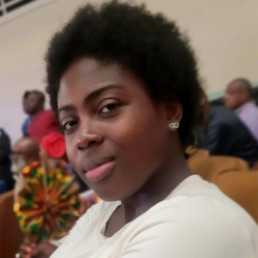
Written by Glenda Obeng
Glenda Obeng is a published author and multifaceted educator with a legal background and a law and politics specialism, serving as Teacher of Social Sciences and Citizenship Curriculum Lead. She is Founder and CEO of The Artourney, which produces multimedia resources praised for illuminating Black, African and Caribbean communities and sparking conversations about identity, belonging and civic agency.
A persistent label in compulsory education is that Black history belongs to a single month. In the UK, Black History Month (BHM) falls in October after Akyaaba Addai-Sebo helped establish it in 1987, choosing October because it aligned with the start of the academic year. BHM has value, but it becomes tokenistic when treated as the only moment Black history is meaningfully explored. Slavery, racism and oppression are important histories, yet when they dominate the narrative, they create a narrow lens and deny pupils the opportunity to understand the full breadth of Black identities, achievements and cultural contributions.
While teaching international relations, in a debate preparation task Person A, a pupil of mixed heritage assigned Egypt expressed surprise to learn it is in Africa. Pupils rarely learn the vast cultures of Africa or the diverse histories and traditions of the Caribbean during formative years. These topics may appear later in further or higher education, but that is neither guaranteed nor equitable. We must move beyond monolithic education and ask, what futures do we limit when we teach only a fraction of the truth?
This concern has historical context. The Swann Report (1985) highlighted systemic barriers faced by ethnic-minority pupils, while the Educationally Subnormal (ESN) scandal of the 1960s–70s showed how Black children were disproportionately removed from mainstream schools and labelled ‘educationally subnormal’. They were steered into narrow practical training instead of a full academic curriculum, leaving many without recognised qualifications and facing long-term barriers to employment and social mobility. There has been progress, ESN schools were closed, equality duties were introduced, and curricula have slowly broadened. Yet a debate in the UK Parliament marking the 40th anniversary of the Swann Report in March 2025 made clear that unequal outcomes and exclusionary practices persist, so reform has not yet translated into equal opportunities for all pupils.
Some may argue that the UK’s White majority reduces the need for racially diverse education. The 2021 Census for England and Wales show those identifying as White British fell from 80.5% to 74.4%; an ageing population and low birth rates mean future growth will likely depend on net migration, so classrooms will only become more diverse as noticeable emigration from the UK continues to rise. Schools should teach cultural literacy and adopt inclusive practices so pupils can navigate shifting cultural environments. Person B, a pupil of North-East African heritage, once asked when I was going to “get my hair done” as I walked through the corridor with my natural 4C afro. I told them, “I do not need to conform to Eurocentric beauty standards to be professional”. Their question was not malicious; it reflected a message many internalise about beauty when navigating an environment as a minority.
Blanket acronyms like ‘BAME’ or ‘BIPOC’, though pragmatic for policy monitoring to some, flatten distinct communities with different histories and needs. If we criticise monolithic curricula, we must also reject monolithic labels. In March 2026 the United Nations General Assembly adopted resolution A/RES/80/250 declaring the trafficking of enslaved Africans and the radicalised chattel enslavement of Africans ‘the gravest crime against humanity’, affirming the need for justice, dignity and healing. Reparations must include educational measures; a truthful curriculum should foster understanding rather than hierarchy. That curriculum must also address everyday signals of belonging.
School rules that label natural or protective hairstyles as ‘extreme’ or ‘unprofessional’ undermine pupils’ confidence and force conformity to Eurocentric norms. Person C, a pupil who habitually used gel to flatten their hair or wore a straight-haired wig, often appeared less confident when their natural hair was out. When I complimented their natural hair, they replied, “don’t, it’s messy”.
Racial literacy should link histories of the Global Majority and Global Minority, recognising power, population and historical context, decentre Eurocentric narratives, and pair sustained, age-appropriate teaching with media literacy so pupils can separate fact from fiction and resist online radicalisation. Person D, a white English young person, said ‘it was not entirely their fault they knew little about other races because they lived in an area where most people look like them and their school did not teach much about race’. Person E, a light-complexion mixed-heritage young person, discussed chemically straightening their hair ‘to pass’ as White. When young people rarely see their cultures, histories or physical features reflected in the curriculum, those who are different often feel pressured to flatten or minimise their identity in public rather than feel proud of who they are and where they come from.
Implementing these insights requires curriculum change, teacher reflexivity, revised policies and supported spaces for complex identities. Schools that treat cultural knowledge as an asset rather than a deficit will improve belonging, attainment and the long-term resilience of all pupils. If education shapes who we become, can we justify teaching anything less than the whole story?
Curriculum is Never Neutral
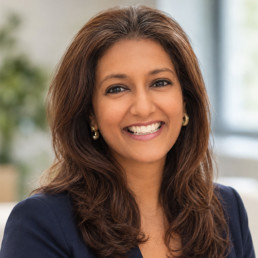
Written by Shilpa Darbar
With over a decade of experience as Head of History, Shilpa’s experience extends beyond classroom instruction to strategic leadership in curriculum development. She has reshaped the History curriculum to promote diversity and inclusiveness, a mission echoed in her published work with Impact and on her Substack. Her expertise in public speaking aids in advocating for educational innovation and elevating varied perspectives.
After sixteen years in education, I’ve realised that the most valuable professional learning hasn’t come from courses or conferences. It’s come from conversations with colleagues, moments of reflection after lessons, and the experiences that have quietly reshaped how I think about teaching, curriculum and leadership.
Those experiences are why I’m starting this newsletter.
Over the years, I’ve collected questions, ideas, successes, mistakes and moments that have challenged my thinking. This is a space to explore them. I’ll be writing about curriculum, middle leadership, diversity and inclusion in education, and the realities of trying to lead meaningful change in schools. I certainly don’t have all the answers—but I do have plenty of questions that I think are worth asking.
Looking back, my journey from NQT to Head of History has been shaped by a series of opportunities that stretched me well beyond my comfort zone.
In my very first year of teaching, I was given the chance to help develop a new Current Affairs programme for Key Stage 3. It was designed to improve pupils’ understanding of the world around them, and although it felt like a daunting responsibility at the time, those lessons quickly became my favourite part of the week.
I loved the challenge of taking complex global issues and transforming them into lessons that encouraged curiosity, discussion and critical thinking. More than anything, I remember my students’ reactions. They were often shocked by the injustice, conflict and inequality they encountered in the news. Their innocence and incredulity at the actions of so-called “grown-ups” was both heart-breaking and deeply hopeful.
In those moments, I found myself thinking: if they respond with such disbelief to the world’s problems, perhaps they will grow up to do better than the generations before them.
Looking back now, I can see that those lessons changed something in me as much as they did my students.
I had trained to teach History, but I was beginning to realise that the most important questions in education often sit beyond the boundaries of any one subject. How do we help young people make sense of the world? How do we nurture curiosity alongside knowledge? How do we prepare students not just to pass exams, but to participate thoughtfully in society?
Without realising it, this was the first of many moments that would shape my philosophy of education. It pushed me towards thinking about educating the whole child—not just through my beloved subject of History, but through every opportunity we have to develop thoughtful, informed and compassionate young people.
Not long afterwards, I also took on the role of Debating Coordinator. Once again, I found myself drawn to work that extended beyond my subject specialism. I wanted students to become confident speakers who could listen carefully, challenge ideas respectfully and build arguments based on evidence rather than opinion. Watching students discover their voice—sometimes literally—reinforced my growing belief that education is about far more than examination results.
As my career progressed into middle leadership, the questions evolved. I became just as interested in leading people as leading curriculum. How do you bring colleagues with you when introducing change? How do you build a department culture where everyone feels valued and challenged? How do you make decisions that are both strategically sound and deeply human?
These are the questions that continue to occupy my thinking today.
My Substack newsletter is my place to think out loud. I’ll share reflections from my own classroom and department, practical ideas that have worked (and those that haven’t), thoughts on curriculum and diversity, and lessons I’ve learnt through leading others. Some posts will be practical, others more reflective, but all will be rooted in the belief that education is ultimately about helping young people flourish.
If you’re a teacher, middle leader, curriculum enthusiast or simply someone who enjoys thinking deeply about education, I hope you’ll find something here that resonates.
RIP Professor Jason Arday: The Tragic Cost of Scrutiny
Written by Hannah Wilson
Founder and Director of the Belonging Effect (formerly Diverse Educators).
Rest in peace, Professor Jason Arday.
The news of his death at just 41 years old is heartbreaking and devastating. A partner, father, son, friend and colleague has been lost.
My social media timeline is awash with tributes to a man who impacted so many. I never met Professor Jason Arday, but I followed and admired him from afar. I feel deeply sad at his loss, angry at how he was treated and sick to my stomach that we find ourselves standing at yet another crossroads where our shared humanity is being questioned.
Professor Arday, a working-class Black man, became the youngest Black professor in the University of Cambridge’s history. His remarkable journey, scholarship and leadership should be remembered and celebrated.
His death is a devastating loss to education. It should also make us confront some difficult questions about racism, scrutiny, trauma, mental health, the media and institutional responsibility.
Content warning: This article discusses mental health, racism and death.
Contribution
Professor Jason Arday dedicated his life to challenging inequality in education, opening doors for those too often left outside them and pushing institutions to become more reflective of the society they serve.
His work helped shape important conversations about race, social mobility, inclusion and educational justice.
A post by The Black Curriculum reminds us that in moments like these, we all have a choice about the stories we amplify. Let us not reduce a life of service, scholarship and advocacy to its final chapter:
- Let us remember the work.
- Let us remember the impact.
- Let us remember the lives changed because he dared to imagine something better.
We need to drive the right narrative, to honour the legacy and to remember the work.
Accusations, Accountability and Humanity
Professor Arday faced serious public accusations concerning his academic work and other aspects of his record. He disputed allegations of deliberate wrongdoing, and some previous allegations had not been upheld.
I fully agree that questions about academic integrity deserve proper scrutiny.
Accountability matters. Investigations matter. Evidence matters. Truth matters.
But people matter too.
An investigation should never become a process in which we forget there is a human being at its centre.
Professor Arday’s family has spoken about the impact of sustained abuse, harassment and misinformation. The precise circumstances surrounding his death have not yet been established publicly, and we should be careful not to claim a medical or legal cause that has not been confirmed.
But acknowledging that uncertainty does not require us to ignore the context in which his death occurred.
Everyone deserves fairness, due process and an opportunity to respond to allegations without being subjected to relentless public humiliation. Scrutiny and accountability are not the same as dehumanisation.
The Media
I firmly believe that our media needs to take a long, hard look at itself.
Professor Arday was subjected to an extraordinary level of public scrutiny. NEWSCORD has catalogued 249 articles published about him over a period of just 22 days.
Think about that… Two hundred and forty-nine articles… Twenty-two days…
Front pages and headlines are not produced in a vacuum. Editors decide which stories deserve repeated attention. Algorithms reward outrage and engagement. Audiences click, share, comment and search for the next revelation.
Collectively, a human being can become content.
Whatever the rights and wrongs of the allegations against Professor Arday, we must be able to ask whether this level and intensity of scrutiny was proportionate and in the public interest.
We must also be prepared to ask another, more uncomfortable question:
Would everybody have been subjected to the same scrutiny?
This is where it is important that we need to acknowledge and talk about racism.
If we cast our memories back to 1993 when Stephen Lawrence was murdered, there was public outcry at the time about the wrongdoing. The media focused on the individuals and the institutions who were in the wrong to ensure that they were held to account. This led to a lengthy investigation and the publication of the Macpherson Report in 1999. It famously concluded that the Metropolitan Police investigation failed due to “institutional racism,” professional incompetence, and a lack of leadership.
I am curious who will be holding to account the individuals and institutions who are collectively responsible for Professor Arday’s death. I wonder who will drive this justice forward for him and for his family.
Racism, Scrutiny and the Invisible Weight
Racism has severe consequences.
It is not always a racial slur or an explicitly discriminatory act. It can operate through systems, cultures, expectations and patterns of behaviour. It can shape who is presumed competent, who is given the benefit of the doubt, who is scrutinised most intensely, whose mistakes are survivable and whose mistakes become defining.
Professor Arday’s death has prompted many Black academics, educators and leaders to speak publicly about the racialised nature of scrutiny and the invisible weight of occupying spaces in which people like them remain underrepresented.
That invisible weight matters:
- The weight of representation.
- The weight of being “the first”.
- The weight of knowing that your success may be treated as evidence of progress while your mistakes may be used as evidence against an entire agenda for equality.
- The weight of wondering whether you will be afforded the same grace as others.
- The weight of having to be resilient again and again and again.
Racism creates trauma. The cumulative experience of racism can affect mental health, physical health which in turn impacts individual levels of confidence, trust, safety, hope and belonging.
We cannot discuss what happened to Professor Arday without being willing to discuss that context.
In His Own Words
A few weeks ago, I signed the Good Law Project’s Solidarity Letter supporting Professor Arday.
On 5 August, as a signatory I received a personal update from him confirming that he had resigned from his position at the University of Cambridge.
He reflected on becoming the youngest Black professor in Cambridge’s history, something he said he could scarcely have imagined as a child growing up with autism and not speaking until he was 11.
More significantly, he described the personal impact of the scrutiny he was experiencing. He wrote of the “profound toll” the accusations, speculation and public commentary had taken on him and those he loved.
And then came the sentence that, reading it again now, feels particularly heart-breaking: “But there comes a point when the personal cost becomes too great.”
He spoke about wanting to be present for his family. He wanted peace… privacy… an ordinary life. He no longer wanted to live under a constant spotlight in which every aspect of his life was subjected to public examination and judgement.
I think we should sit with those words. Sit with that discomfort. Sit with the knowledge that his Black Excellence had led to such significant personal harm.
Institutional Racism
The Macpherson Report famously described institutional racism as the collective failure of an organisation to provide an appropriate and professional service because of someone’s colour, culture or ethnic origin, manifested through processes, attitudes and behaviours that disadvantage minority ethnic people.
Sivanandan, A. Director, Institute of Race Relations, described institutional racism as racism residing, overtly or covertly, within the policies, procedures, operations and cultures of institutions.
These definitions matter because they remind us, as The Commission for Racial Equality stated, that racism does not require an individual person to consciously decide to behave in a racist way.
We need to look at patterns, processes, cultures and consequences.
We need to ask the hard questions about who currently benefits from our systems:
- Who is harmed by them?
- Who is protected?
- Who is exposed?
- Who is believed?
- Who is given grace?
- And who is required to demonstrate exceptional resilience merely to remain in the room?
A lens I emphasise in our Belonging Effect DEIB training is that our focus should be on the impact instead of the intention of our words, behaviours and actions.
There is not an individual who is solely responsible for Professor Arday’s death, there are many people with his blood on their hands.
Representation Matters, but Representation Is Not Enough
Success does not insulate Black professionals from racism, hostility or harassment. In fact, sometimes increased visibility can make the scrutiny greater.
For people of colour occupying significant positions, there can be an invisible mental load attached to being highly visible and underrepresented: the fear of getting something wrong, of being judged more harshly, of being expected to represent more than yourself, or of discovering how precarious acceptance can become when something goes wrong.
That burden must be recognised because representation alone is not inclusion.
Representation without protection is not inclusion.
Visibility without psychological safety is not belonging.
And celebrating someone’s resilience while ignoring what requires them to be resilient in the first place is not progress.
Institutional Responsibility
Universities and the media need to take a long, hard look in the mirror.
It is not enough for institutions to recruit diverse talent, celebrate “firsts”, publish photographs, announce appointments and point to representation as evidence of progress.
Institutions have a responsibility to the human beings behind those achievements:
- What happens when they become vulnerable?
- Who protects them when scrutiny becomes overwhelming?
- Who notices when accountability becomes humiliation?
- Who intervenes when criticism becomes harassment?
- Who considers the cumulative impact of racism, ableism, classism and public scrutiny?
- Who safeguards the person while the process takes place?
We need to lead institutions where people do not have to become exceptionally resilient simply to survive them.
Professor Jason Arday’s death should not become another moment of collective grief followed by institutional silence.
I think it is important to remember that we can hold two things at once:
- We can believe in academic integrity and humanity.
- We can believe in accountability and proportionality.
- We can believe in scrutiny and dignity.
- We can ask legitimate questions about someone’s work without forgetting that there is a human being answering them.
And we can acknowledge that racism does not have to be the only factor operating in a situation for us to examine seriously how race shaped what happened.
My thoughts are with Professor Arday’s family, friends, colleagues and all those mourning him. I have discovered in the last 24 hrs how many of my network were connected to him and have been impacted by his death.
May he rest in peace. May we learn from this tragic loss.
Read, Reflect and Act
Read and engage with the reflections being shared across our network and wider community, including those from: Adam Vasco, Caroline Keep, Chantelle Haughton, Clive Lawrence, Domini Choudhury, Patrick Cozier, Shammi Rahman, The Black Curriculum.
Read Broken Ladders from The Runnymede Trust and consider what the evidence tells us about racism and the experiences of people of colour within UK academia.
Follow, listen to and engage with organisations campaigning for racial equity and racial justice, including: 100 Black Professors, 100 Black Headteachers, Aspiring Heads, BAMEed, DARPL, Everyday Racism, REND, The Black Curriculum and The Runnymede Trust. (Lots of these orgs are listed in our DEIB Directory).
Consider filing a complaint against the media outlets that printed endless stories about Professor Jason Arday.
Consider donating to the GoFundMe page set up by Professor Sir Patrick Vernon OBE FrHistS – ‘In Memory of Dr Jason Atta Kwei Arday: Supporting His Family’.
Most importantly, do not let this conversation disappear when the headlines do.
Racism has consequences. Institutional responsibility matters. Our shared humanity matters.