
Honouring our Communities
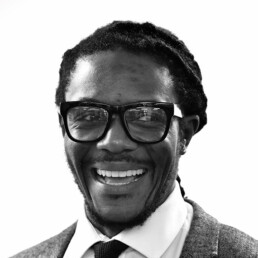
Written by Wayne Reid
Professional Officer & Social Worker
Black History Month invites us to pause, remember, acknowledge and celebrate. However, I would like to see Black history and the reflections it invites being recognised routinely – all year round.
At its simplest, I see ‘community’ as people connected by location, common interests, characteristics or social identity. Although, ‘community’ is much more than just geography or categorisation. It’s about relationships, experiences, knowledge, stories and values that exist between people – providing belonging, identity, ‘tough love’, support and opportunity. Communities have the potential to shape us in ways we don’t always realise until much later in life.
One person from my own professional community who has had a particularly significant influence on my life was a previous manager at the National Probation Service. I refer to him in OUTLANDERS: Hidden Narratives from Social Workers of Colour (in the chapter ‘Ambition Navigation’), because he gave me my first proper frontline role and remains in my orbit.
That opportunity mattered.
Sometimes one person’s recognition of potential can change the direction of a career. A manager can open a door, a colleague can build confidence and a schoolteacher can shape aspirations. As a child, a schoolteacher told me that Black people cannot swim… A stereotype perpetuated by the historic lack of visibility of Black swimmers.
Representation matters – but on its own it’s not enough. People need authenticity, diverse perspectives and forums to articulate their experiences, share their knowledge and demonstrate their expertise. That understanding has significantly influenced my approach to care and leadership.
My own cultural insights have taught me the importance of valuing the diversity within communities, which is sometimes overlooked in favour of assuming cultural homogeneity. We need to move beyond simplistic assumptions about race, culture and identity and appreciate the shared humanity that exists both within and between cultures. This is partly why I founded the Black & Ethnic Minority Professionals Symposium (BPS) and created the Synergy Sessions.
This is also where Shades of Bias (SoB) relates to the idea of community. SoB is a reflective case-study framework for documenting, analysing and addressing discrimination, oppression and racism. At its heart, is an invitation to pause, examine what has happened, consider our own perspectives and think about what needs to happen next. Communities don’t exist outside the influence of bias. They are shaped by the assumptions, attitudes and behaviours of the people within them.
We all have a unique lens through which we see the world.
Therefore, I would advise anyone starting out in social work to be self-aware: anticipate that others may label, stereotype and categorise you – while recognising your own inescapable racialised lens. Self-awareness isn’t about pretending that we are neutral or colourblind observers. Our experiences, identities, upbringings and environments influence how we interpret people and situations.
Reflective practice also means being prepared to ask questions (which may be uncomfortable) – not only of ourselves, but of the people, environments and systems around us. Such questions include:
- What might my own racial lens be obstructing me from seeing?
- Whose perspective, experience or voice is missing?
- Would the same situation be interpreted, scrutinised or responded to in the same way for different racialised groups?
How can we evidence that our policies, decision-making and organisational practices are effective, equitable and inclusive? This question connects directly to the Social Care Workforce Race Equality Standard (SC-WRES), which uses evidence to identify racial inequalities, develop action plans and drive continuous organisational improvement. Its latest findings show that staff from minoritised ethnic backgrounds are 44% less likely to be appointed from shortlist and 50% more likely to face formal disciplinary action, while remaining underrepresented in senior management.
That tells us something important: reflection cannot stop at the individual. We need to examine cultures, structures, policies and decision-making, asking not only “What did I do?” but “What is happening here? Why? Who is affected? What can we do differently?”
The recent statement from the BPS following the tragic death of Professor Jason Arday reinforces this principle. The statement calls for reflection on professional accountability, institutional decision-making, racialised scrutiny, media representation and public commentary, while emphasising the importance of fairness, proportionality, humanity and dignity.
That message connects powerfully with SoB. We can hold people and institutions accountable, while still recognising their humanity; challenge racism while remaining capable of honest conversations about professional standards and scrutinise institutions while appreciating the complexity of individual circumstances. We can ask difficult questions without losing our compassion. Reflection should not be mistaken for an absence of accountability. It should create the conditions for accountability that is thoughtful, proportionate and humane.
This brings me back to Black History Month. Perhaps controversially, I don’t think Black history, culture and achievement should be confined to October. Black history should be acknowledged, taught and celebrated all year round. It should not be reduced predominantly to colonialism, slavery and oppression. Those histories must be understood, but they are not the entirety of Black history. We also need to hear about the stories of innovation, scholarship, creativity, leadership, entrepreneurship, community building, scientific achievement and cultural influence. We also need the countless stories of ordinary people whose contributions have profoundly shaped their families, communities and descendants. If a broad and representative Black history is integrated throughout all stages of education, it becomes part of the story – rather than tokenistic or an afterthought.
Honouring our communities means celebrating the people who opened doors for us, stories that shaped us and the experiences that challenge us to think differently. Communities are not static. They evolve through relationships, disagreements, learning and collective action. Also, importantly, it means understanding our own responsibility within them.
Black History Month can provide a valuable moment of focus, but the greater challenge is what happens after October.
Do we revert back to “all lives matter”?
Or does our learning influence how we see, listen, lead and act?
For me, genuine recognition isn’t a month. It’s a mindset.
It’s about creating communities and spaces where people are not simply represented, but heard. Not simply included, but uplifted. Not simply present, but able to influence the environments we live and work in.
That is how we honour our communities – by remembering our histories (good, bad and ugly), acknowledging our shared humanity, learning from past experiences and helping shape a future in which every community can be seen, heard and valued.
“One world, one race… the human race!”
Have you used Shades of Bias?
Please share your experiences by completing the SoB survey.

Herstory in Leadership

Written by Kiran Satti
Deputy Principal and National Curriculum Lead for Early Reading
This blog was previously published by Oasis Community Learning.
It has now been just over two years since I joined Oasis Community Learning, and I can say with certainty that I am not the same person I was when I arrived. When I first found Oasis, I was broken – I am still not sure how I found the strength to go through the interview process but reading through the blog I was asked to write for Oasis for HerStory month, I know how now. I was broken. Yet, time and time again, I understand growth comes through pain, reflection, discomfort and the difficult work of choosing to remain true to yourself.
One thing I know to be true as a woman from a global majority background, is that very little is ever simple. I was asked to write a version of my Oasis blog a few months ago for Belonging Effect, but I believe everything happens when it’s meant to. This summer has been another sh**show… Reflecting on the death of Jason Arday has made me question the idea of representation and what exactly is the purpose of it? When you’re representative of something different to the status quo, why is your life, your human life the thing that is in the balance?
We’re coming to the end of the summer and I’ve already seen too many reports about Meghan and Harry returning to the UK – and all I can see is a certain demographic of people ready and waiting with their pitchforks. What concerns and saddens me the most is whether Meghan will survive this time… have any lessons been learnt?
The fact is when we see a reimagined representation of a black man or a reimagined face of feminism, who is truly an intersectional representation of feminism… who does this trigger hate in? Why? Are you racist? Are you sexist? Are you projecting? In order for lessons to be learnt, we need to look inwards. Those that are reading this already do – you wouldn’t be in this space reading this otherwise. We know what the deep work is – many of us have had to dig deep to survive and at times dare to thrive.
If we base our assertions on the superficial, if I took the racism I have experienced at face value I would have become bitter. If I took the sexism and misogyny at face value, I would’ve lost my self respect and self worth… my peace of mind is what matters – more than anything.
Peace is a luxury in life. Peace of mind is not hard to come by when you are protected by privilege; when you do not fear for your life because of who you are; when you do not have to fight to be seen or heard as fully human; when you do not have to constantly prove yourself before you are allowed to belong.
Some don’t want you to belong – I have experienced this first hand. And when they’re seeing you blinded their privilege, being careless with your humanity isn’t something they feel guilty for. They have the privilege of not having to see you as a human – you are a threat to their status quo, to their version of success – how dare you arrive in all your worth and disrupt – unintentionally… when we’re living our values, you will disrupt those that aren’t living through values or ethics – and you highlight that fact.
Those who have witnessed my growth through education have often reminded me of my resilience, my determination and my kindness. Looking back, I realise I have always been a trauma-informed and trauma-responsive educator, because my own experiences have shaped how I see the world: its people, its systems and its levers of power. My traumas have not made me weaker. They have sharpened my ability to notice, to listen and to recognise humanity in others – and know what feel when I am not safe.
One pattern I have encountered, particularly when moving into leadership, is projection. At times, it can feel dehumanising: as though another person’s fear, insecurity or need for control is placed onto you until you begin to question yourself. Sometimes the intention seems to be to undermine you, to position you as difficult, or to push you out before you have had the chance to grow into your full potential – all while stifling you, tripping you up, keeping your head under water until you stop kicking… if you know, you know these feelings.
Representation matters deeply, but representation without commitment to the human being can become another kind of harm. The lesson I am taking from Jason Arday’s story is that systems rooted in patriarchy and inequality rarely make space willingly. Jason Arday was a beautiful, gifted black man – he smashed every single stereotype possible in the face of masculinity and academia.
The truth is Empowered women are not always made to feel safe; global majority women are not always truly represented; too often, they are presented as symbols while their voices, experiences and expertise are not fully valued, or at best used to further enable the status quo covering up the inequity it’s still feeding. That is why so many people learn it is safer to shrink once they “get there”. The idea of safety, that luxury of peace of mind, can feel more expensive the more successful you become.
This leaves me with a difficult question: are we selling the children we serve false hope if we do not also tell them the truth about the systems they may have to navigate? The idea and image of leadership – has it really changed? We’ve had glimmers of what could be – Jacinda Ardern, Alexandria Ocasio-Cortez … yet we have Putin, Trump, Netanyahu … we have global leaders destroying Mother Earth because they’re projecting their perceived power through acts of violence and aggression… the manosphere isn’t anything new – it’s been around since misogyny planted patriarchy into the soul of every system reliant now on capitalism… AI is the new world for patriarchy to keep on flourishing, division to keep breeding and inequity to be the face of perceived progress… it’s all a bit sh** really.
Throughout my journey, I have carried words that were never mine to hold:
- You’re too small.
- You’re too pretty; if you weren’t so kind, I would not like you.
- You’re not white.
- You’re too emotional.
- You care too much.
- You’re not ready to lead English.
- You need to be more resilient.
- That’s not the normal way.
For the most part, and unfortunately, it has often been women within certain organisations and institutions who have seen me as a threat to their status quo, they exemplified the dangers of internalised misogyny in women who don’t want to see the value of another woman in the same space: I was someone to contain, question, dismiss or damage before I could reach the potential they could already see in me but would not nurture. Some encounters have been inhumane, unkind and, at times, intentionally cruel.
One person seemed to believe her race made her better than me. Another was threatened by what I could become and made it clear she was not there to enable me, but to try to destroy me. One deeply hurt me. One did break me.
When you are not seen as a human being, it is a feeling you recognise. I have known it since I was little. When the world sees you as something less than fully human because you’re a girl, you learn that only you (and your mum’s tenacity) can plant the seeds of your worth. Only you can keep returning to yourself. Only you can decide that survival is not enough, that shrinking is not safety, and that your peace is worth protecting.
Humanity is what we are. Yet it is sometimes the very thing we fail to recognise in one another. My journey of leadership and growth has taught me that using my voice is not disruption, choosing peace is not weakness, and being true to myself is not optional. It is the foundation of the leader I am still becoming. I never took a child’s feeling of worth and safety for granted when I taught them – I made it very clear to them they were to question me, disagree with me and feel safe to take those risks to enable them to surpass their idea of their own success – and they did. I truly hope, in the age of AI, they are still thinking critically and challenging. As leaders, we should already be questioning, we should already be able to disagree, to challenge… based on our understanding of ourselves and what we think – and that sometimes means you’re going to disagree with yourself if you’re intention is to learn and understand – it doesn’t mean we deny the humanity in each other.
As we’re moving into another academic year, I am hoping we do not witness another gifted human, who is representative of the re-imagined, lose her power, break and fall. Meghan is one of the role models we look at as part of our Building on Barbie leadership work… and that is another hope… I hope we stop recycling the same argument about the commodification of feminism and only seeing the Barbie doll through the male gaze… look beyond the superficial to what the doll is meant to represent – a woman’s body is a woman’s body – it is hers to make the her life choices from… when you contextualise that with the fact that women’s body were not legally part of any medical research, that marital rape was legal until 1993…. Barbie’s silhouette is a challenge to the patriarchy, it’s a call to arms… in some ways, it was a political statement undermining the power of patriarchy and its influence on gender politics… in the 1950’s… the era of the original ‘trad-wife’ – if you look at the timing of the trad wife trend … it’s a reaction to the Barbie movie dissecting gendered assertions.
Caroline Flack. Jason Arday. Amy Winehouse…
I truly hope lessons have been learnt and we take care – we take care and see the human before we feel privileged enough to make comments.
I am starting to see my traumas and lived experience as a gift – the spectrum of human behaviour can be measured in degrees of cruelty and degrees of kindness, motive, perception, and environment all feed into how we choose to behave towards each other.
I’ve had men tell me I shine too bright – one tried to break me, but it’s been the women who have been relentless in their determination to trip me up, belittle me – try and diminish my talent and undermine my professional worth by finding things to pick on…
But I believe everything happens for a reason – I hope Jason Arday’s death does bring change, accountability and CARE.
Reflecting on my two years at Oasis, and navigating certain things this summer, I am grateful for the special, serendipitous moments have manifested. Some becoming forever moments like the my WomenEd chapter coming to life through the Building on Barbie Leadership Project – for now, I feel safe, I feel I am valued and I do feel I belong…
Intersectional Feminism – this is where hope resides.
History’s Warning: Section 28 and the Fight for Future Educational Inclusion
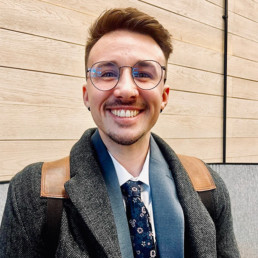
Written by Dr Kayden J. Schumacher
Dr. Kayden J. Schumacher (they/he) is a Research Fellow at Coventry University working across all work packages on the Horizon Europe-funded YOUROPE project, which focuses on strengthening youth participation in European democracy, particularly among underrepresented groups. With a multidisciplinary background spanning psychology, education, health, and social policy, their work explores the intersections of mental health, physical wellbeing, gender diversity, and democratic participation across educational and community settings.
“Those who cannot remember the past are condemned to repeat it.”
(Santayana, 1905, p. 284)
In 1988 the then Prime Minister, Margaret Thatcher and her Conservative Government responded with a moral panic to a same-sex couple in children’s book taking things out of proportion and aiming to pass legislation known as Section 28 (Lee, 2019). Section 28 was part of the Local Government Act (1988) and on paper, it was framed as a safeguard against “promoting homosexuality” in schools. But, in reality, it was a direct state-sanctioned silencing of LGBTQ+ people, specifically students and educators. Passing Section 28 made it against the law for any local authority to “(a) intentionally promote homosexuality or publish material with the intention of promoting homosexuality; (b) promote the teaching in any maintained school of the acceptability of homosexuality as a pretended family relationship” (Local Government Act, 1988).
Looking back, it is staggering to think that such a discriminatory law ostracising an already marginalised group could take root in a country of people who had just been through the AIDS epidemic, where “Silence=Death” (Kerr, 2017) was not just a protest slogan but a daily reality. The 1980s moral climate in the UK was steeped in fear and stigma. Tabloid headlines fuelled homophobia, framing LGBT+ people as a public threat (Collins, 2025; Lovelock, 2018). Thatcher’s government leaned into “traditional family values,” capitalising on public anxieties about social change (Somerville, 1992). The moral panic around LGBT+ visibility in schools was amplified by broader conservative backlash against feminist gains, multiculturalism and what was labelled “political correctness” (Baker, 2022; Duffy, 2025; Weeks, 1990). Conservative MPs used the rhetoric of “protecting children,” but what they were really protecting was cisheteronormative dominance.
Resistance to laws like Section 28 did exist, as it always has. In a now-iconic example, a group of lesbian activists broke into the BBC during the 6 o’clock live news broadcast to protest Section 28 and the harm of this legislation. Their message beamed into living rooms and pubs across the country and was widely noticed, but ultimately did not stop the law from passing, thereby cementing a culture of silence, bullying, and marginalisation in schools across England. For the next 15 years, Section 28 legitimised an environment where LGBT+ students and staff were erased, and where conversations about identity, consent, or healthy relationships could be construed as illegal. For trans and gender-diverse people, whose identities were barely recognised in mainstream discourse, the law meant complete erasure.
When I arrived in England in September 2022, the very day Queen Elizabeth II passed away, I was beginning a PhD exploring trans and gender-diverse experiences in English schools from 1988 to 2023. As someone who grew up in a small, homogeneous Catholic town in the US, hiding my pansexual and transgender identity for fear of backlash, I felt an immediate resonance with what my participants told me about their school years under Section 28. Their stories carried the same themes I had known of silence, shame, and the need to fragment oneself, being one person in school and another in private. But unlike my own experience, their marginalisation was explicitly legislated.
Even after Section 28’s repeal in England in 2003, my participants described school as having a sort of “shadow” of Section 28, where there was an institutionalised culture of cisheteronormativity that persisted in school structures, policies and everyday interactions, despite the repeal of the law. There were still rigid binaries enforced in areas like PE, sex education, toilets, and classrooms. Mental health was rarely openly discussed, LGBT+ teachers often concealed their identities and bodies were policed according to narrow norms without affirmation or recognition of diversity.
The 2010s gave the impression of progress. The Equality Act 2010 legally protected people against discrimination based on “sexual orientation” and “gender reassignment” (Equality Act, 2010, s.7). Ofsted began inspecting for homophobic bullying in 2012 (Ofsted, 2012). The first Trans Pride was held in Brighton in 2013 (McConnell, 2014). Same-sex marriage became legal in England and Wales in 2014, and media representation of trans people increased (BBC’s Boy Meets Girl, Lavern Cox on the Cover of Time, Jazz Jennings’ reality show), there was a perhaps naïve sense that visibility and policy change were working together to build a more inclusive future.
But if history teaches us anything, it is that progress is never linear. The current climate in the UK carries unsettling echoes of the past. Today the UK is seeing the re-emergence of very rigid gender binaries in public discourse, something that harms not only trans people, but everyone whose life does not neatly fit the “trad wife” (Bower, 2024) or “manosphere” (Ging, 2019) mould (More in Common, 2022). There is an increasing disregard for diversity across race, gender, sexual orientation, and religion. Emotional expression is again being boxed in with boys allowed anger but not vulnerability, and girls allowed fragility but not power. And while the internet boom was just beginning in the 1980s, it promised connection and organising for change, it is now equally capable of isolating, surveilling, and policing interactions, echoing Section 28’s original aim: control.
The slogan, “Silence = Death” (Kerr, 2017), born from AIDS activism, still echoes with urgent clarity. Then, it was a rallying cry against government inaction during a health crisis, now, it is a warning, a reminder, and a call to resist the erasure of trans and gender-diverse lives in education and beyond. My research traces these legacies through the stories of trans and gender-diverse students and educators, showing that the repeal of Section 28 did not erase its shadows and its repeal cannot undo systemic harm. Laws can change, but cultures of silence linger, shaping classrooms, policies, and hearts. Section 28 teaches us that silence harms the most marginalised first, but its ripples reach everyone. Representation without structural change leaves the door open for backlash. We must be vigilant: attentive to how quickly silence can return, how rigid binaries can reassert themselves, and how appeals to “protecting children” can be wielded as instruments of control.
The work before us in our democratic society, especially in education is quiet but urgent, we must name injustice where it festers, nurture spaces for complexity, and ensure that trans and gender-diverse students and educators never again endure the sanctioned invisibility that once passed for law. Visibility alone is not enough. Genuine inclusion demands action, care, and relentless attention so that the lessons of the past guide us, the voices of the present are heard, and the future is shaped by courage rather than fear, only then can we ensure we all have remembered the past and are not condemned to repeat it.
References
Baker, P. (2022). Outrageous!: The story of Section 28 and Britain’s battle for LGBT+
education. Reaktion Books.
Bower, L. J. (2024). The thorn in feminism’s side: black feminist reconceptualization and
defence of #tradwives and the #tradwife movement. Journal of Gender Studies, 1–17.
https://doi.org/10.1080/09589236.2024.2423198
Duffy, S. (2025). Moral panics and legal projects: echoes of Section 28 in United Kingdom
transgender discourse and law reform. Gender and Justice, 1(1), 78-99. Retrieved
Aug 15, 2025, from https://doi.org/10.1332/30333660Y2024D000000008
Equality Act 2010, s. 7. (2010). Legislation.gov.uk. Retrieved from
https://www.legislation.gov.uk/ukpga/2010/15/section/7
Ging, D. (2019). Alphas, betas, and incels: Theorizing the masculinities of the
manosphere. Men and masculinities, 22(4), 638-657.
Kerr, T. (2017 June 20). How Six NYC Activists Changed History With ‘Silence =
Death’. The Village Voice. https://www.villagevoice.com/how-six-nyc-activists changed-history-with-silence-death/
Lee, C. (2019). Fifteen years on: the legacy of section 28 for LGBT+ teachers in English
schools. Sex Education, 19(6), 675–690.
https://doi.org/10.1080/14681811.2019.1585800
Local Government Act 1988, c. 9, s. 28. (1988). Legislation.gov.uk. Retrieved from
https://www.legislation.gov.uk/ukpga/1988/9/section/28
Lovelock, M. (2018). Sex, death and austerity: resurgent homophobia in the British tabloid
press. Critical Studies in Media Communication, 35(3), 225-239.
McConnell, F. (2014, September 8). Trans Pride Brighton defines key year for emerging
community. The Guardian. Retrieved from
https://www.theguardian.com/society/2014/sep/08/-sp-trans-pride-brighton-lgbt-equality
More in Common UK. (2022). Britons and gender identity: Navigating common ground and
Collins, M. (2025). “Gays in Your Living Room”: LGBTQ+ television, homophobia, and the
birth of Channel 4 in 1980s Britain. Journalism History, 51(1), 5-23.
Ofsted. (2012). School inspection handbook: handbook for inspecting schools in England
under section 5 of the Education Act 2005 (as amended) from September 2012.
Somerville J. (1992). The New Right and family politics. Economy and society, 21(2), 93
Weeks, J. (1990). Coming Out: Homosexual Politics in Britain from the Nineteenth Century
to the Present. Quartet Books.
Distorted Mirrors, Fogged Windows: A Call for Deeper Representation in Education
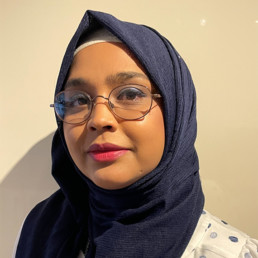
Written by Tamanna Abdul-Karim
Tamanna Abdul-Karim is Assistant Headteacher responsible for Literacy, Equality and Diversity in an inner city school in Birmingham. She has completed the NPQLL and Masters in Educational Leadership and Management /Level 7 Apprenticeship with the National College of Education. She is an English teacher at heart and her desire to create a sense of equality and justice motivates her. It is through education, she hopes to create impact and leave a meaningful legacy.
The concept of “mirrors, windows and sliding doors,” introduced by Dr. Rudine Sims Bishop, has become a foundational framework in conversations around diversity in children’s literature and multicultural education. In her metaphor, mirrors reflect readers’ own identities and lived experiences, windows offer insights into lives different from their own, and sliding doors allow readers to step into those other worlds, fostering deeper engagement and understanding.
This framework is not only relevant in literature — it has transformative potential across all aspects of school life. From curriculum design and cultural representation to enrichment opportunities and even staff recruitment, it offers a way to embed inclusion and equity into the very fabric of educational settings. When embraced authentically, it cultivates a culture where every student is seen, valued, and empowered.
However, if not approached thoughtfully, these mirrors and windows can distort reality. They can perpetuate stereotypes, invisibilise complexity, and contribute to feelings of alienation, shame, or disconnection — particularly for students from minoritised backgrounds.
A Personal Reflection: Distorted Mirrors, Fogged Windows
As a child of Bangladeshi heritage growing up in inner-city Birmingham in the 1990s, my school experience offered only two narratives about my country of origin: that it was poor and that it flooded. While these facts are not untrue, they painted a one-dimensional picture that deeply distorted both my self-image and my understanding of my heritage.
The mirror I was presented with reflected famine-stricken children, submerged villages, and chaotic streets. The window offered a view steeped in deficit — one that suggested my background was something to be downplayed, or even disowned. As a result, I internalised a sense of shame. I learned to code-switch early: Bengali at home, English at school. I adapted the way I spoke, behaved, even the way I ate — compartmentalising parts of my identity to belong.
What my schooling failed to reveal was a far richer, more complex history. I didn’t learn that before colonial rule, Bengal was one of the most prosperous regions in the world — a hub of culture, trade, and innovation. I wasn’t taught about the globally coveted Jamdani textiles, or that Dhaka was once one of the busiest ports on earth. There was no mention of how British colonial policies contributed to devastating famines, or how Bangladesh achieved independence through extraordinary resilience and sacrifice.
This erasure had consequences. It shaped how I saw myself — and how I believed others saw me. It taught me that some stories are celebrated, while others are sidelined.
Who Holds the Mirror? Who Builds the Frame?
This experience highlights a deeper issue: representation is not just about inclusion, but about how people, places, and histories are portrayed — and who gets to do the portraying.
We must ask: Who is holding up the mirror? Whose perspective shapes the window? What frames are we using to present narratives of identity, culture, and heritage?
It is not enough to simply provide visibility. We must examine the structures — the frames and lenses — through which these representations are filtered. If the frame itself is biased or incomplete, then the images it presents will be equally flawed.
A Call to Educators: From Representation to Reimagination
Educators carry immense responsibility. We are not only curators of knowledge — we are architects of perception. Every decision we make about curriculum, literature, resources, or enrichment shapes the mirrors and windows we offer to our students.
This work requires deep reflection. We must interrogate our own biases, challenge inherited narratives, and resist the temptation to present simplified or tokenistic views of cultures and communities. We need to move beyond surface-level inclusion to truly equitable representation.
This begins with unlearning — with a willingness to revisit what we’ve been taught, and to seek out the histories, voices, and perspectives that have long been marginalised.
Because when children see themselves reflected fully — in all their richness and complexity — they stand taller. And when they’re given a window into the full humanity of others, they grow kinder, more curious, and more connected.
Let us hold up better mirrors. Let us open clearer windows. Let us build sliding doors that do not just invite exploration, but also affirm belonging.
Empowerment, Inclusion, and Storytelling: A New Approach to History Education
Written by Dana Saxon
Dana Saxon is an educator, writer, and family historian who seeks to address global inequities in education. Her organisation, Ancestors unKnown, changes the way pupils learn about history, themselves, and the world around them, providing opportunities for them to learn about marginalised histories and stories from their own communities.
Traditional history education can sometimes feel stale and uninspired – a series of dates and old white men who seem to have little or no relevance to the lives of today’s children. This approach, heavily focused on Eurocentric perspectives and the accomplishments of a select few, can leave many students feeling excluded and disconnected from the past.
But, as even Ofsted explained in their 2023 report about history education, “Every pupil is entitled to encounters with the richness of the past and the complexity of historical enquiry”.
A New Approach: Student Stories at the Centre
What if we reframed history education? What if we centred the learning experience around the unique stories of each child?
This is the vision driving Ancestors unKnown, a unique approach to history education that empowers young people by weaving their personal narratives into the larger context of local and global history.
At the heart of our methodology lies the belief that every child’s story is a valuable piece of the historical puzzle. We encourage students to explore their own family and community histories through oral histories and archival research. By interviewing elders, collecting family artefacts, and delving into local archives, children uncover the unique stories of their ancestors and the elders in their community, including their struggles, their triumphs, and their contributions to society.
Then, while our students are empowered to personalise historical research, we help them connect these personal narratives with the untold and often marginalised histories that have shaped our world. As a result, students learn about the contributions of diverse communities, stories about migration, struggles for social justice, and other hidden stories that lie beneath the surface of conventional historical narratives.
The Benefits of Ancestors unKnown
Our integrated approach fosters a profound sense of belonging and empowerment. When children see how their own stories connect to the larger historical narrative, they develop a deeper understanding of their place in the world. They begin to see themselves as active participants in history, not just passive observers.
Furthermore, by sharing their family histories with their classmates, children gain valuable insights into the diverse experiences and perspectives of those around them. This fosters empathy, understanding, and a greater appreciation for the people and communities around them.
With our approach, Ancestors unKnown is making history curriculum more inclusive and equitable. By centring the experiences of diverse communities and highlighting the contributions of marginalised groups, we challenge traditional narratives and create a more representative understanding of the past.
“Our community interviews were really successful!” shared a primary school teacher about their Year 5 Ancestors unKnown project.” We interviewed adults from South America, England, France, China and Nigeria! The children asked some really interesting questions and really enjoyed listening to the different family and community stories.”
Bringing Ancestors unKnown to More Classrooms
Ancestors unKnown provides schools with a toolkit and ongoing support to implement our programme during one school term for Y5 or Y6. We also offer teacher training, parent/community engagement workshops, and access to a network of local historians and storytellers as guest lecturers.
We believe that by empowering teachers, students, and their families with the tools and knowledge to uncover their own historical narratives, we can create a more inclusive and engaging learning experience for everyone.
Ready to transform history education in your school? Learn more about our programme and contact us to bring Ancestors unKnown into your classrooms.
Let’s work together to empower the next generation of historians to tell a different, more inclusive story about the past – a story that includes their ancestors.
Developing a PSHE Curriculum on Antisemitism, based on the teaching of Rabbi Lord Jonathan Sacks

Written by Rabbi Cobi Ebrahimoff
Rabbi Cobi Ebrahimoff is UK Director of Education at The Rabbi Sacks Legacy, where his primary focus is to bring the teachings of Rabbi Sacks into schools and spearhead the development of innovative educational resources.
INTRODUCTION
Within living memory of the Holocaust, after which the world vowed “never again,” antisemitism has returned.
Rabbi Lord Jonathan Sacks offers a unique approach for students to understand why antisemitism is a danger for every single member of British society. In this four part series of lessons, students will explore:
- What is antisemitism?
- The stereotypes, prejudice and discrimination that Jewish people face
- The evolution of antisemitism and how it affects Jewish people today
- How antisemitism may affect them and how to combat it
BACKGROUND TO ANTISEMITSIM
Antisemitism is complex and often contradictory, making it difficult to define. Historically, Jews were persecuted for opposing reasons – being both poor and rich, communists and capitalists, isolated and too integrated.
So, what is antisemitism? It’s not just disliking someone for being different – that’s xenophobia. And it’s not simply criticising Israel – that’s part of democratic debate. Antisemitism is far more dangerous. It’s about persecuting Jews and denying them the right to exist as Jews, with the same rights as everyone else.
Over time, antisemitism has evolved, shifting from religious persecution in the Middle Ages to racial hatred in the 19th and 20th centuries, and now, targeting Israel’s right to exist. This new antisemitism uses human rights as a guise for prejudice.
Why should this matter to all of us? Antisemitism reflects a broader inability to accept difference. History shows that hate starting with Jews never ends with Jews. It’s a warning sign of threats to freedom, humanity, and the dignity of difference – issues that concern us all. That’s why combating antisemitism is a fight we must undertake together.
The Rabbi Sacks Legacy (RSL) is proud to present a new PSHE curriculum designed to provide a comprehensive framework for educating students about the historical and contemporary aspects of antisemitism through the prism of Rabbi Sacks’ unique approach. The curriculum aims to enrich students’ understanding of moral responsibility and create a deep appreciation of social diversity.
The curriculum meets Ofsted’s requirements to promote SMSC (Spiritual, moral, social, and cultural) development and fundamental British values. Under Section 5 inspections, Ofsted will consider how British values are promoted within schools, including the importance of tackling dis- crimination. Education on antisemitism directly supports these objectives, demonstrating the school’s commitment to creating a safe and inclusive environment for all students.
COMPREHENSIVE, READY-TO-USE RESOURCES FOR TEACHERS
Designed for teachers by teachers, the RSL PSHE curriculum comes complete with all the resources needed for seamless implementation. Teachers are provided with:
- Fully developed lesson plans with clear learning objectives aligned with SMSC and Departmental requirements.
- Differentiated activities to challenge higher-ability students and support those who need additional help, ensuring inclusivity in every classroom.
- Interactive multimedia content to engage students and bring complex topics to life.
- Assessment for learning tools to measure student progress and reinforce key challenges and benefits of living in a diverse society.
- Detailed teacher not and PowerPoint presentations, making it easy to deliver high-quality lessons with confidence.
To support high-quality delivery, teachers have access to high-quality training sessions and the opportunity to book expert-led workshops, ensuring that the curriculum is not only implemented effectively but also becomes an integral part of the school’s ethos.
ELEVATE YOUR SCHOOL’S COMMITMENT TO FUNDAMENTAL BRITISH VALUES WITH THE RSL PSHE CURRICULUM
In today’s educational landscape, the responsibility of promoting fundamental British values within schools has never been more significant. The Department for Education mandates that all schools actively promote values such as democracy, the rule of law, individual liberty, mutual respect, and tolerance of those with different faiths and beliefs. These values are integral to students’ spiritual, moral, social, and cultural (SMSC) development, forming the foundation of a cohesive and inclusive society.
The RSL PSHE curriculum empowers schools to fulfil these essential requirements. Developed with the insights of Rabbi Sacks, a leading voice in fostering interfaith dialogue and understanding, this curriculum is designed to address the challenges of antisemitism while broadening students’ understanding of diversity and respect for all.
CURRICULUM ALIGNMENT WITH SMSC DEVELOPMENT AND FUNDAMENTAL BRITISH VALUES
Promoting Mutual Respect and Tolerance
At the core of the curriculum is the “dignity of difference” principle, a concept championed by Rabbi Sacks. Through this lens, students are encouraged to explore and appreciate the benefits of our diverse society. The curriculum challenges students to confront prejudice, including antisemitism, and embrace differences with dignity.
Fostering Individual Liberty
The curriculum empowers students to think critically about the world around them, promoting individual liberty by encouraging them to form opinions.
Reinforcing the values of Democracy and the Rule of Law
The curriculum highlights the importance of the rule of law in protecting individual rights and minorities. It also promotes democratic values by encouraging discussions and debates, respecting different viewpoints, and understanding the processes that uphold democracy.
Enhancing SMSC Development
Through carefully structured sessions with clear learning objectives, differentiated tasks, and comprehensive assessment opportunities, students are guided to reflect on their moral responsibilities, develop social awareness, and cultivate a deep understanding of cultural diversity.
COMMIT TO EXCELLENCE IN EDUCATION
The RSL PSHE curriculum is more than just a teaching tool. It’s a commitment to fostering a school environment where every student learns the value of respect, tolerance, and moral responsibility. By integrating this curriculum into your school’s PSHE sessions, you are meeting Ofsted’s requirements and playing a vital role in shaping a generation that values diversity and upholds the principles of a just and inclusive society.
Build bridges. Break barriers. Adopt the RSL PSHE curriculum today!
The Hypocrisy at the Heart of Racist Riots
Written by Dr Nilufar Ahmed
Dr Nilufar Ahmed is a multi award winning Chartered Psychologist, Academic, and Accredited Psychotherapist. She works as an academic at the University of Bristol where her research and pedagogy focus on Inclusion and Engagement. Her work is situated in an antiracist and Intersectional framework. She is regularly invited to comment in the media on all things psychology and has delivered training, keynotes, and consultancy services across sectors including HE, business, and Government.
Originally published by The Conversation on 9/8/24
When news broke that a 17-year-old male had stabbed a number of young girls in Southport, misinformation swiftly followed. First, that the perpetrator was an asylum seeker or refugee who had come to the UK on a boat. This was discredited and information emerged that the individual was British-born. But the circulation of disinformation, including a fake, Arab-sounding name, led many to argue it must have been a Muslim male.
Though the perpetrator has no known links to Islam, violent, far-right rioters still mobilised to attack mosques. Islamophobic violence spilled onto the streets in the worst race riots Britain has seen in years.
The fact that this misinformation was so readily believed can be partly explained by psychology, and how we think about people who look like us, and about others who don’t.
People are conditioned to identify with their in-group – others who are like them on a range of markers such as race, gender, class or nationality. The maintenance of this shared identity largely requires “us” to be different (meaning better) than “them” by making negative inferences about them.
This automatic psychological response explains how people can see the self and the in-group as complex and fluid (for example, not all white people are criminals) but frame the out-group as homogeneous and fixed. This can lead, as we’ve seen, to some people casting all black men as dangerous, Muslims as terrorists, asylum seekers as opportunistic and refugees as “taking” jobs and healthcare resources, justifying the dislike and even hatred of the out-group.
The racism of this public reaction to a horrific attack on children is stark when you compare it to other recent events.
When a white male killed a 14-year-old black boy named Daniel Anjorin with a sword in May, protesters did not mobilise around the country to “protect children”. Neither were white men as a group deemed a threat to the safety of children.
Whenever crimes, however heinous, are committed by white perpetrators, they are more often viewed as the acts of an individual who was at fault because of mental health issues or falling in with the wrong crowd. There is a long history of disparate treatment of criminals in the media linked to race.
People are socially conditioned to think heinous acts are committed by outsiders. There are a number of cognitive biases at play here, including contextual bias, where decisions are influenced by background information rather than the crime itself, and affinity bias, where people prefer others who are like them.
These biases are present in individual cases, but also across the judicial system. Inequalities in sentencing perpetuate the narrative that people of colour are more dangerous and disposed to crime.
A study commissioned by the Crown Prosecution Service also found that people of colour are significantly more likely to be prosecuted than white people for the same crimes. Such inequity results in overrepresentation in prisons and with convictions. This then feeds the narrative that people of colour are more likely to commit crime – when in fact they are simply more likely to be prosecuted.
The Blame Game
In times of scarcity, this in-group/out-group bias can become simplified and exacerbated to justify withholding resources from the out-group, who the in-group perceives as “undeserving”. Out-group scapegoats offer an easy and reliable way of deflecting responsibility by those with power.
This is what has happened over the past 14 years in Britain. While the Conservative government created an unstable economic climate and deep poverty through cuts to public services and economic turmoil, it is politically convenient to suggest the reason for scarce resources is a small number of asylum seekers.
The previous government used the negative attitudes towards refugees and immigrants as a core pillar of its election campaign. Politicians used increasingly inflammatory language in relation to immigration, blaming immigrants for things like the housing crisis and depleted health resources as a way shifting attention from their cuts in spending.
Anti-racist counter-protests have organised all around the country. Simon Dack News/Alamy
Over time, the scapegoats have been boiled down to one homogenised group of people who are not white. This is apparent in the differential treatment of asylum seekers from Ukraine, who were welcomed to the UK and allowed to work and be housed.
Asylum seekers from the rest of the world are not allowed to work on arrival and receive just £49.18 a week. This feeds the narrative that white people work, while people of colour don’t (though somehow are simultaneously “taking our jobs”).
The relentless scapegoating dovetails with the psychological biases we are all socially conditioned to fall for, creating an “us” and “them” environment that can easily turn violent. The events of the past two weeks have awakened much of Britain to the consequences that can arise when society is defined this way.
Advancing Black history education in the UK
Written by Katie D'Souza
Katie D'Souza is a recent MA Education graduate, whose dissertation titled "Understanding the impact of 'our island story': exploring feelings of identity and belonging for Black British students" is currently under review for publication in the Curriculum Journal. Katie has since worked for a small business called The Educate Group, supports university staff to diversify their curricula and lead more inclusively, and now works at the Office of the Children's Commissioner, helping to ensure that the government listens to the voices of the children and young people living in this country.
Did you know that you can ask your MP to host a roundtable for you in parliament? The Black Curriculum (TBC) founder, Lavinya Stennett, certainly knew this, and last week took the opportunity to bring together key players in the Black history sphere for a critical discussion of Black history education in the UK, hosted by Bell Ribeiro-Addy MP.
TBC’s mission is to work with key stakeholders to embed Black history into the national curriculum. This roundtable sought to find practical and productive actions for ways to achieve this, and further cemented the determination for Black history to be meaningfully incorporated into the national curriculum, all year round.
With contributions from Professor Deirdre Osborne, expert in feminism, race and poetics, Michelle Codrington Rogers, citizenship teacher and NASUWT President, and award-winning history teacher and author Shalina Patel, amongst others, participants left this roundtable energised to arm the next generation of students (and ultimately leaders) with the comprehensive knowledge of history they need to navigate our increasingly globalised world.
A survey conducted by Bloomsbury in 2023 found that more than half (53%) of those surveyed could not name a Black British historical figure, and that only 7% could name more than four. The same survey suggests that less than 1 in 10 Brits believe that Black people have resided in England for more than 1000 years, assumptions erring towards 200 years, when in fact the answer in closer to 2000. Is this really the state of our history education system at the moment?
More can, and should, be done. Teaching Black history does not just build essential knowledge about structural and institutional racism, and Black brilliance, joy, and success. It also helps to create a sense of belonging for students with diverse heritage in UK classrooms, which may even serve to improve attainment and academic progress.
However, as it stands, the only mandatory (statutory) topic on the Key Stage 3 history curriculum is the Holocaust. Whilst the Department for Education has defended this set up as giving schools and teachers the freedom and flexibility to include Black history, in practice, the non-statutory nature translates as schools having little incentive to change their existing approach to history.
Shalina’s powerful account of her experience as a history teacher of 15 years spoke to the importance of the supportive leadership team in her school giving her both the time and resources to construct a department that is committed to building an inclusive history curriculum.
Unfortunately, this is not the case for everyone. When there is resistance to change at management and/or senior leadership team level, it can make it really difficult for teachers to do this important work alone.
Bell’s remarks further emphasised the role that teacher confidence and resources play in delivering a comprehensive Black history education. She reasoned that all teachers must be equipped to do justice to Black history in the classroom, so that the responsibility does not fall solely on teachers of colour. TBC’s resources are a great way to begin to do this, as Robert Primus, a secondary school history teacher, advocated, but this must be paired with some more concrete changes to the way history is taught in our schools.
Therefore, in the face of a general election in July, we urge the next government to consider the following asks from TBC and the other participants at this roundtable:
1 Introduce mandatory racial literacy training
The consensus at the roundtable was that we know teaching Black history is essential but that there are real, practical barriers to achieving this widely across the UK. TBC together with sisters Naomi and Natalie Evans who founded Everyday Racism ask that the next government introduces mandatory racial literacy training for school staff and leaders, under the rationale that racial literacy acts as a form of safeguarding for students from diverse backgrounds. Every adult interacting with children and young people must understand the intersectionality of identity in the UK and how the way that narratives and histories are told in the classroom deeply affects the sense of self and belonging of those listening. It’s imperative that teachers are given the time, headspace and resources to become more racially literate, and we believe making this training statutory is the way to make this happen.
2 Make Black history a statutory part of the curriculum
Recent RSHE guidance published by the Department for Education has proven that if they want to, the government is willing to prescribe what schools should and shouldn’t teach. Whoever forms the next government should make Black history a statutory part of the history curriculum. The reality is that value of teaching Black history for improving cultural understanding, increasing sense of belonging, and students seeing themselves reflected is unfortunately often overlooked by headteachers and senior leaders for whom the current school system places such great emphasis on grades and exam results. Making Black history statutory will support teachers to overcome challenge from their school leadership, as the content will be on official specifications and be included in exam materials too. There has already been some good progress in this space at Key Stage 4, where GCSE exam boards recently introduced a migration thematic study, covering migrants in Britain as well as the history of Notting Hill, but for the Key Stage 3 curriculum much remains to be achieved.
3 Equip teachers to meaningfully integrate Black history
Black history must not be seen as a tick-box exercise but should be meaningfully integrated into the curriculum. To realise this ambition, teachers must be equipped with the resources and empowered with the knowledge and confidence to do justice to Black history without ‘othering’ the stories of the past. For example, learning about Mansa Musa and the richness of West Africa before any mention of the transatlantic slave trade will support both teachers and students to reframe their understanding of Black history. Or when studying medieval England, to simultaneously look at medieval Mali, or Japan, or Baghdad. It is not necessarily a case of overhauling the whole curriculum, but weaving interesting and positive stories into the topics that are already so well known. It is about teaching a full history, not just the version constructed by the victors. As Bell summed up nicely, ‘you’re not learning a complete history if you’re not learning about black history’.
New Official Study Guide for GCSE Set Text Leave Taking by Winsome Pinnock
Written by Samantha Wharton
Samantha is a seasoned educator from East London, with ancestral roots tracing back to the Caribbean nations of Antigua and Guyana. She brings a wealth of academic achievements, including a degree in Communications and Media from Brunel University, a PGCE in English and Drama from the Institute of Education at University College London, and an MA in Black British Literature from Goldsmiths University.
A new official study guide for Leave Taking by Winsome Pinnock, authored by educators Samantha Wharton and Lynette Carr Armstrong, brings a fresh approach to GCSE English literature, enhancing the teaching and learning experience for GCSE English Literature students and teachers.
Samantha Wharton and Lynette Carr Armstrong bring a wealth of expertise from over 50 years of combined experience in education. As co-writers of this study guide, they have meticulously crafted an in-depth exploration of Leave Taking, ensuring that it delves into the nuances of the text with precision and clarity.
But what sets this study guide apart is its academic rigour and its authors’ lived experience and insight. As children of the Windrush generation, Samantha and Lynette possess a profound understanding of the worlds depicted in Pinnock’s play. Their lived experiences and living memories enrich the guide, providing readers with authentic perspectives that resonate with the characters and themes of Leave Taking.
Crucially, Samantha and Lynette had the privilege of consulting with Winsome Pinnock herself during the development of this guide. Pinnock’s invaluable commentary is woven throughout the text, offering readers a rare glimpse into the playwright’s mind and enriching their understanding of her work.
Leave Taking is not just another set text—it is a vital piece of literature amplifying Black voices and sharing insights into the Black British experience. Samantha Wharton and Lynette Carr Armstrong emphasise the importance of showcasing these narratives through Black voices with shared experiences. In a world where the Black experience has been historically erased, texts like Leave Taking must be unpacked and explored with sensitivity and nuance.
This study guide is more than just a pedagogical tool—it is a labour of love, insight, and experience. Samantha has taught Leave Taking at St Angela’s School in London, where staff and students have met it with enthusiasm. The diverse cohort of teachers at St Angela’s have thoroughly enjoyed teaching the text, while the students are excited to see modern characters that reflect their own experiences.
The release of the official study guide for Leave Taking by Winsome Pinnock marks a significant milestone in GCSE English literature. With Samantha Wharton and Lynette Carr Armstrong at the helm, educators and students can embark on a journey of discovery that celebrates Black voices, amplifies lived experiences, and enriches the educational landscape for generations to come.
The duo are committed to supporting teachers in implementing Leave Taking into the classroom. They will offer future training experiences, including workshops and seminars, to provide educators with the tools and insights to effectively teach this text. These training sessions will cover various aspects of the play, including thematic analysis, character studies, and classroom activities.
To inquire about future training opportunities or to reach Samantha Wharton and Lynette Carr Armstrong for further information on the study guide, educators can contact them via email at samantha.wharton@gmail.com and Lynettedcarr@hotmail.com. They are eager to collaborate with schools and educational institutions to enhance the teaching and learning experience of Leave Taking. They are available to answer any queries or provide additional support as needed.
The study guide has received recognition from Lit In Colour, a prominent platform championing diverse voices in literature. It was endorsed in their latest newsletter and featured in The (incomplete) Lit In Colour list, a curated collection of essential resources for educators looking to include diverse perspectives in teaching. This recognition reinforces the guide’s reputation as a valuable tool for promoting inclusivity and representation in education, making it indispensable for educators passionate about diversity and equity.
The official study guide for Leave Taking by Winsome Pinnock can be found through various channels. It is available on the Nick Hern Books website, the same publisher as the play, ensuring authenticity and reliability. Furthermore, the guide can be purchased on popular online platforms like Amazon!
The study guide and texts are available here:
https://www.nickhernbooks.co.uk/leave-taking-gcse-study-guide
https://www.nickhernbooks.co.uk/leave-taking-bundle-deal
https://www.amazon.co.uk/Leave-Taking-GCSE-Student-Guide/dp/1839041366
Press coverage about the play:
‘The godmother of Black British playwrights’ – Guardian on Winsome Pinnock
Guardian ‘Three decades since its debut Winsome Pinnock’s pioneering portrayal of the lives of black Britons feels shockingly contemporary… Pinnock was a pioneer and her piece still hits homethrough its often shocking honesty about the hazards facing black people in Britain’
Time Out ‘A devastatingly powerful story of a British-Caribbean family… whyWinsome Pinnock’s play isn’t on the English Literature syllabus is a mystery to me, given its shocking contemporary relevance… this play warms and devastates’
Two generations. Three incredible women. Winsome Pinnock’s play Leave Taking is an epic story of what we leave behind in order to find home. It premiered in 1987, and was revived at the Bush Theatre, London, in 2018, in a production directed by the Bush’s Artistic Director, Madani Younis.
Using stories and voices to combat the narrative of antisemitic hate: opportunities afforded by the Curriculum for Wales.

Written by Jennifer Harding-Richards
Jennifer is currently on secondment working as RVE and RSE adviser to schools across three local authorities as well as RVE adviser to the SACRE’s in each of the three authorities. She is passionate about education and especially keen on ensuring that social justice and equity are at the heart of all RVE and RSE curriculum planning, development and pedagogy within the Curriculum for Wales. She is the RE Hubs lead for Wales and a member of the steering committee for the Welsh Jewish Heritage Centre. She has previously worked as a freelance educator for the Holocaust Education Trust and has an MA in World Religions.
According to a recent report (ref 1), there were three times the numbers of antisemitic incidents reported across Wales in 2023, compared with 2022. The incidents which included threats, abusive behaviour and assault, represent a rise of 338%.
Wales is the first, and so far, the only home nation to have made the teaching of Black, Asian and Minority Ethnic histories a mandatory element of their curriculum and are committed to being an anti-racist nation by 2030. The anti-racist action plan (ref 2) includes the vision, values, purpose and strategies needed to support this and understandably, education has a large role to play.
The Curriculum for Wales, introduced in 2022, empowers individual schools to craft and cultivate their own unique curriculum. The aim of each school’s curriculum is to nurture students who are:
- ambitious, capable learners, ready to learn throughout their lives
- enterprising, creative contributors, ready to play a full part in life and work
- ethical, informed citizens of Wales and the world
- healthy, confident individuals, ready to lead fulfilling lives as valued members of society.
As we work towards an anti-racist nation, we are reminded about the power of education. Nelson Mandela’s infamous quote ‘education is the most powerful weapon with which you can change the world’ really resonates with the vision that we have in Wales. We know that far-right philosophies and beliefs are infiltrating mainstream culture, and our children are intoxicated with the images, speeches and behaviour of those that preach such ideologies. As educators, we have the responsibility to counteract such narratives and use our privileged position as curriculum designers and teachers to support our learners to become ethical and informed citizens, able to not only take their place within our diverse society, but to contribute and make positive change.
Wales has a rich, diverse and multi-cultural history. We have a rich legacy of inclusive education as well as a welcoming acceptance for the many diverse cultures and followers of faith that have made Wales their home. The story is told of how some of the first Jews in Wales, arriving in Merthyr Tydfil in the eighteenth century, peered through the windows of some local homes, and on seeing a Bible in every one, decided that this was a place where they could stay and be welcomed.
Using Welsh Jewish stories and voices within our school curricula, whilst obviously not eradicating antisemitism in its entirety, will help develop a generation of young people who are able to humanise and personalise others, avoiding stereotypes and challenge the narrative of the media and those with the loudest voices. We want our children to become ethical and informed citizens, capable of independent thought and able to critically engage with the toxicity of hate that surrounds us on a daily basis.
There are so many Welsh Jewish stories that deserve to be told, individuals who have helped shape our society and made a positive impact on others. Leo Abse, for example, a social reformer, and Labour MP for 30 years. He was influential in the shift in laws and norms towards the acceptance of homosexuality and divorce. We want our pupils to engage with discussion around his ideals and values and how they have changed Wales for the better. His aunt, Lily Tobias, had a multilingual childhood in Ystalyfera which fostered in her a political activism, a sense of social justice and a determination to try and change the world. Her legacy cannot ever be underestimated. Kate Bosse Griffiths, escaped Nazi Germany and along with her husband, became a founding member of ‘Cylch Cadwgan’, an organisation that welcomed and celebrated writers, poets and pacifists. Her own writing focused on her feminist ideals and sense of spirituality. She made a huge difference to those around her.
In working towards an anti-racist Wales, in celebrating and recognising cynefin (ref 3) and using our subsidiarity and autonomy to design our own bespoke curriculum for our learners, we have a real opportunity to use stories and voices to challenge stereotypes, antisemitic tropes and narratives of hate.
References
‘We’ve not seen this since the Holocaust’: Antisemitism in Wales up by 300% after outbreak of war:
Anti-racist Wales Action Plan
https://www.gov.wales/anti-racist-wales-action-plan-contents
‘cynefin’
A Welsh word for which there is no direct translation. It refers to the ideas of habitat and a sense of rootedness, It describes the environment in which one is naturally acclimatised.