
Honouring our Communities
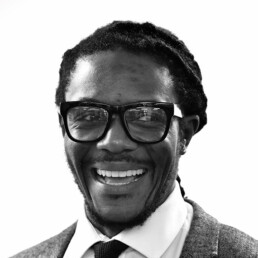
Written by Wayne Reid
Professional Officer & Social Worker
Black History Month invites us to pause, remember, acknowledge and celebrate. However, I would like to see Black history and the reflections it invites being recognised routinely – all year round.
At its simplest, I see ‘community’ as people connected by location, common interests, characteristics or social identity. Although, ‘community’ is much more than just geography or categorisation. It’s about relationships, experiences, knowledge, stories and values that exist between people – providing belonging, identity, ‘tough love’, support and opportunity. Communities have the potential to shape us in ways we don’t always realise until much later in life.
One person from my own professional community who has had a particularly significant influence on my life was a previous manager at the National Probation Service. I refer to him in OUTLANDERS: Hidden Narratives from Social Workers of Colour (in the chapter ‘Ambition Navigation’), because he gave me my first proper frontline role and remains in my orbit.
That opportunity mattered.
Sometimes one person’s recognition of potential can change the direction of a career. A manager can open a door, a colleague can build confidence and a schoolteacher can shape aspirations. As a child, a schoolteacher told me that Black people cannot swim… A stereotype perpetuated by the historic lack of visibility of Black swimmers.
Representation matters – but on its own it’s not enough. People need authenticity, diverse perspectives and forums to articulate their experiences, share their knowledge and demonstrate their expertise. That understanding has significantly influenced my approach to care and leadership.
My own cultural insights have taught me the importance of valuing the diversity within communities, which is sometimes overlooked in favour of assuming cultural homogeneity. We need to move beyond simplistic assumptions about race, culture and identity and appreciate the shared humanity that exists both within and between cultures. This is partly why I founded the Black & Ethnic Minority Professionals Symposium (BPS) and created the Synergy Sessions.
This is also where Shades of Bias (SoB) relates to the idea of community. SoB is a reflective case-study framework for documenting, analysing and addressing discrimination, oppression and racism. At its heart, is an invitation to pause, examine what has happened, consider our own perspectives and think about what needs to happen next. Communities don’t exist outside the influence of bias. They are shaped by the assumptions, attitudes and behaviours of the people within them.
We all have a unique lens through which we see the world.
Therefore, I would advise anyone starting out in social work to be self-aware: anticipate that others may label, stereotype and categorise you – while recognising your own inescapable racialised lens. Self-awareness isn’t about pretending that we are neutral or colourblind observers. Our experiences, identities, upbringings and environments influence how we interpret people and situations.
Reflective practice also means being prepared to ask questions (which may be uncomfortable) – not only of ourselves, but of the people, environments and systems around us. Such questions include:
- What might my own racial lens be obstructing me from seeing?
- Whose perspective, experience or voice is missing?
- Would the same situation be interpreted, scrutinised or responded to in the same way for different racialised groups?
How can we evidence that our policies, decision-making and organisational practices are effective, equitable and inclusive? This question connects directly to the Social Care Workforce Race Equality Standard (SC-WRES), which uses evidence to identify racial inequalities, develop action plans and drive continuous organisational improvement. Its latest findings show that staff from minoritised ethnic backgrounds are 44% less likely to be appointed from shortlist and 50% more likely to face formal disciplinary action, while remaining underrepresented in senior management.
That tells us something important: reflection cannot stop at the individual. We need to examine cultures, structures, policies and decision-making, asking not only “What did I do?” but “What is happening here? Why? Who is affected? What can we do differently?”
The recent statement from the BPS following the tragic death of Professor Jason Arday reinforces this principle. The statement calls for reflection on professional accountability, institutional decision-making, racialised scrutiny, media representation and public commentary, while emphasising the importance of fairness, proportionality, humanity and dignity.
That message connects powerfully with SoB. We can hold people and institutions accountable, while still recognising their humanity; challenge racism while remaining capable of honest conversations about professional standards and scrutinise institutions while appreciating the complexity of individual circumstances. We can ask difficult questions without losing our compassion. Reflection should not be mistaken for an absence of accountability. It should create the conditions for accountability that is thoughtful, proportionate and humane.
This brings me back to Black History Month. Perhaps controversially, I don’t think Black history, culture and achievement should be confined to October. Black history should be acknowledged, taught and celebrated all year round. It should not be reduced predominantly to colonialism, slavery and oppression. Those histories must be understood, but they are not the entirety of Black history. We also need to hear about the stories of innovation, scholarship, creativity, leadership, entrepreneurship, community building, scientific achievement and cultural influence. We also need the countless stories of ordinary people whose contributions have profoundly shaped their families, communities and descendants. If a broad and representative Black history is integrated throughout all stages of education, it becomes part of the story – rather than tokenistic or an afterthought.
Honouring our communities means celebrating the people who opened doors for us, stories that shaped us and the experiences that challenge us to think differently. Communities are not static. They evolve through relationships, disagreements, learning and collective action. Also, importantly, it means understanding our own responsibility within them.
Black History Month can provide a valuable moment of focus, but the greater challenge is what happens after October.
Do we revert back to “all lives matter”?
Or does our learning influence how we see, listen, lead and act?
For me, genuine recognition isn’t a month. It’s a mindset.
It’s about creating communities and spaces where people are not simply represented, but heard. Not simply included, but uplifted. Not simply present, but able to influence the environments we live and work in.
That is how we honour our communities – by remembering our histories (good, bad and ugly), acknowledging our shared humanity, learning from past experiences and helping shape a future in which every community can be seen, heard and valued.
“One world, one race… the human race!”
Have you used Shades of Bias?
Please share your experiences by completing the SoB survey.

RIP Professor Jason Arday: The Tragic Cost of Scrutiny
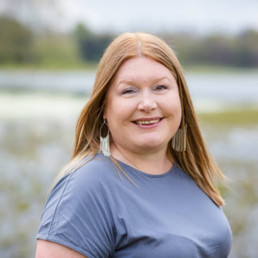
Written by Hannah Wilson
Founder and Director of the Belonging Effect (formerly Diverse Educators).
Rest in peace, Professor Jason Arday.
The news of his death at just 41 years old is heartbreaking and devastating. A partner, father, son, friend and colleague has been lost.
My social media timeline is awash with tributes to a man who impacted so many. I never met Professor Jason Arday, but I followed and admired him from afar. I feel deeply sad at his loss, angry at how he was treated and sick to my stomach that we find ourselves standing at yet another crossroads where our shared humanity is being questioned.
Professor Arday, a working-class Black man, became the youngest Black professor in the University of Cambridge’s history. His remarkable journey, scholarship and leadership should be remembered and celebrated.
His death is a devastating loss to education. It should also make us confront some difficult questions about racism, scrutiny, trauma, mental health, the media and institutional responsibility.
Content warning: This article discusses mental health, racism and death.
Contribution
Professor Jason Arday dedicated his life to challenging inequality in education, opening doors for those too often left outside them and pushing institutions to become more reflective of the society they serve.
His work helped shape important conversations about race, social mobility, inclusion and educational justice.
A post by The Black Curriculum reminds us that in moments like these, we all have a choice about the stories we amplify. Let us not reduce a life of service, scholarship and advocacy to its final chapter:
- Let us remember the work.
- Let us remember the impact.
- Let us remember the lives changed because he dared to imagine something better.
We need to drive the right narrative, to honour the legacy and to remember the work.
Accusations, Accountability and Humanity
Professor Arday faced serious public accusations concerning his academic work and other aspects of his record. He disputed allegations of deliberate wrongdoing, and some previous allegations had not been upheld.
I fully agree that questions about academic integrity deserve proper scrutiny.
Accountability matters. Investigations matter. Evidence matters. Truth matters.
But people matter too.
An investigation should never become a process in which we forget there is a human being at its centre.
Professor Arday’s family has spoken about the impact of sustained abuse, harassment and misinformation. The precise circumstances surrounding his death have not yet been established publicly, and we should be careful not to claim a medical or legal cause that has not been confirmed.
But acknowledging that uncertainty does not require us to ignore the context in which his death occurred.
Everyone deserves fairness, due process and an opportunity to respond to allegations without being subjected to relentless public humiliation. Scrutiny and accountability are not the same as dehumanisation.
The Media
I firmly believe that our media needs to take a long, hard look at itself.
Professor Arday was subjected to an extraordinary level of public scrutiny. NEWSCORD has catalogued 249 articles published about him over a period of just 22 days.
Think about that… Two hundred and forty-nine articles… Twenty-two days…
Front pages and headlines are not produced in a vacuum. Editors decide which stories deserve repeated attention. Algorithms reward outrage and engagement. Audiences click, share, comment and search for the next revelation.
Collectively, a human being can become content.
Whatever the rights and wrongs of the allegations against Professor Arday, we must be able to ask whether this level and intensity of scrutiny was proportionate and in the public interest.
We must also be prepared to ask another, more uncomfortable question:
Would everybody have been subjected to the same scrutiny?
This is where it is important that we need to acknowledge and talk about racism.
If we cast our memories back to 1993 when Stephen Lawrence was murdered, there was public outcry at the time about the wrongdoing. The media focused on the individuals and the institutions who were in the wrong to ensure that they were held to account. This led to a lengthy investigation and the publication of the Macpherson Report in 1999. It famously concluded that the Metropolitan Police investigation failed due to “institutional racism,” professional incompetence, and a lack of leadership.
I am curious who will be holding to account the individuals and institutions who are collectively responsible for Professor Arday’s death. I wonder who will drive this justice forward for him and for his family.
Racism, Scrutiny and the Invisible Weight
Racism has severe consequences.
It is not always a racial slur or an explicitly discriminatory act. It can operate through systems, cultures, expectations and patterns of behaviour. It can shape who is presumed competent, who is given the benefit of the doubt, who is scrutinised most intensely, whose mistakes are survivable and whose mistakes become defining.
Professor Arday’s death has prompted many Black academics, educators and leaders to speak publicly about the racialised nature of scrutiny and the invisible weight of occupying spaces in which people like them remain underrepresented.
That invisible weight matters:
- The weight of representation.
- The weight of being “the first”.
- The weight of knowing that your success may be treated as evidence of progress while your mistakes may be used as evidence against an entire agenda for equality.
- The weight of wondering whether you will be afforded the same grace as others.
- The weight of having to be resilient again and again and again.
Racism creates trauma. The cumulative experience of racism can affect mental health, physical health which in turn impacts individual levels of confidence, trust, safety, hope and belonging.
We cannot discuss what happened to Professor Arday without being willing to discuss that context.
In His Own Words
A few weeks ago, I signed the Good Law Project’s Solidarity Letter supporting Professor Arday.
On 5 August, as a signatory I received a personal update from him confirming that he had resigned from his position at the University of Cambridge.
He reflected on becoming the youngest Black professor in Cambridge’s history, something he said he could scarcely have imagined as a child growing up with autism and not speaking until he was 11.
More significantly, he described the personal impact of the scrutiny he was experiencing. He wrote of the “profound toll” the accusations, speculation and public commentary had taken on him and those he loved.
And then came the sentence that, reading it again now, feels particularly heart-breaking: “But there comes a point when the personal cost becomes too great.”
He spoke about wanting to be present for his family. He wanted peace… privacy… an ordinary life. He no longer wanted to live under a constant spotlight in which every aspect of his life was subjected to public examination and judgement.
I think we should sit with those words. Sit with that discomfort. Sit with the knowledge that his Black Excellence had led to such significant personal harm.
Institutional Racism
The Macpherson Report famously described institutional racism as the collective failure of an organisation to provide an appropriate and professional service because of someone’s colour, culture or ethnic origin, manifested through processes, attitudes and behaviours that disadvantage minority ethnic people.
Sivanandan, A. Director, Institute of Race Relations, described institutional racism as racism residing, overtly or covertly, within the policies, procedures, operations and cultures of institutions.
These definitions matter because they remind us, as The Commission for Racial Equality stated, that racism does not require an individual person to consciously decide to behave in a racist way.
We need to look at patterns, processes, cultures and consequences.
We need to ask the hard questions about who currently benefits from our systems:
- Who is harmed by them?
- Who is protected?
- Who is exposed?
- Who is believed?
- Who is given grace?
- And who is required to demonstrate exceptional resilience merely to remain in the room?
A lens I emphasise in our Belonging Effect DEIB training is that our focus should be on the impact instead of the intention of our words, behaviours and actions.
There is not an individual who is solely responsible for Professor Arday’s death, there are many people with his blood on their hands.
Representation Matters, but Representation Is Not Enough
Success does not insulate Black professionals from racism, hostility or harassment. In fact, sometimes increased visibility can make the scrutiny greater.
For people of colour occupying significant positions, there can be an invisible mental load attached to being highly visible and underrepresented: the fear of getting something wrong, of being judged more harshly, of being expected to represent more than yourself, or of discovering how precarious acceptance can become when something goes wrong.
That burden must be recognised because representation alone is not inclusion.
Representation without protection is not inclusion.
Visibility without psychological safety is not belonging.
And celebrating someone’s resilience while ignoring what requires them to be resilient in the first place is not progress.
Institutional Responsibility
Universities and the media need to take a long, hard look in the mirror.
It is not enough for institutions to recruit diverse talent, celebrate “firsts”, publish photographs, announce appointments and point to representation as evidence of progress.
Institutions have a responsibility to the human beings behind those achievements:
- What happens when they become vulnerable?
- Who protects them when scrutiny becomes overwhelming?
- Who notices when accountability becomes humiliation?
- Who intervenes when criticism becomes harassment?
- Who considers the cumulative impact of racism, ableism, classism and public scrutiny?
- Who safeguards the person while the process takes place?
We need to lead institutions where people do not have to become exceptionally resilient simply to survive them.
Professor Jason Arday’s death should not become another moment of collective grief followed by institutional silence.
I think it is important to remember that we can hold two things at once:
- We can believe in academic integrity and humanity.
- We can believe in accountability and proportionality.
- We can believe in scrutiny and dignity.
- We can ask legitimate questions about someone’s work without forgetting that there is a human being answering them.
And we can acknowledge that racism does not have to be the only factor operating in a situation for us to examine seriously how race shaped what happened.
My thoughts are with Professor Arday’s family, friends, colleagues and all those mourning him. I have discovered in the last 24 hrs how many of my network were connected to him and have been impacted by his death.
May he rest in peace. May we learn from this tragic loss.
Read, Reflect and Act
Read and engage with the reflections being shared across our network and wider community, including those from: Adam Vasco, Caroline Keep, Chantelle Haughton, Clive Lawrence, Domini Choudhury, Patrick Cozier, Shammi Rahman, The Black Curriculum.
Read Broken Ladders from The Runnymede Trust and consider what the evidence tells us about racism and the experiences of people of colour within UK academia.
Follow, listen to and engage with organisations campaigning for racial equity and racial justice, including: 100 Black Professors, 100 Black Headteachers, Aspiring Heads, BAMEed, DARPL, Everyday Racism, REND, The Black Curriculum and The Runnymede Trust. (Lots of these orgs are listed in our DEIB Directory).
Consider filing a complaint against the media outlets that printed endless stories about Professor Jason Arday.
Consider donating to the GoFundMe page set up by Professor Sir Patrick Vernon OBE FrHistS – ‘In Memory of Dr Jason Atta Kwei Arday: Supporting His Family’.
Most importantly, do not let this conversation disappear when the headlines do.
Racism has consequences. Institutional responsibility matters. Our shared humanity matters.
Supporting Neurodivergent Colleagues in Schools

Written by Laura Douglas
Laura is a Freelance 1:1 Study Skills Tutor and Specialist Mentor, working both locally and nationally to support neurodivergent students in receipt of Disabled Student Allowance (DSA) in higher education. Through her Education Consultancy, she supports curriculum development and neuro-inclusive practices, in both school and ITT settings. She is passionate about developing neuro-inclusive practice and in October 2026, she will begin the PhD (Prof) at The University of Lincoln, research focussing on the support given to neurodivergent teachers if this is linked to teacher retention.
Is there a relationship between the number of teachers who leave the profession and neurodivergence? How well supported are neurodivergent colleagues in school? How do we know?
These questions are of interest to me due to my experience of working in initial teacher training (ITT), supporting Early Career Teachers (ECTs), and when working with experienced class teachers and leaders in school. I have found that neurodivergent colleagues, whether formally diagnosed or self-diagnosed, face a range of barriers which impact greatly on their confidence, self-esteem and classroom or leadership practice. I have had many conversations with colleagues about the barriers they face, including a current lack of support and understanding in neuro-inclusive practice. I begin my PhD (Prof) at the University of Lincoln in October 2026 and am looking forward to undertaking research in this important area.
Disabled Student Allowance (DSA)
Since October 2025, I have worked part-time as a freelance 1:1 Study Skills Tutor and Specialist Mentor, supporting neurodivergent students in HEI in receipt of Disabled Student Allowance (DSA). I have supported students during the 2025-6 academic year on ITT programmes and have seen first-hand the difference such mentoring has made to these individuals. In my research I aim to raise the profile of specialist mentoring which is fully funded through DSA, which is available for, but not limited to, undergraduate, postgraduate, ITT and PGCE courses.
Workplace Support
Access to Work is a grant that funds practical support in the workplace for people with a disability or health condition; this grant seems very little known in the education sector. In order to be eligible for an Access to Work grant, there is no requirement to have a formal diagnosis with a condition to apply, with individuals having a disability, illness or health condition that means you need support to do your job. According to GOV.UK (2012), this includes, for example:
- a physical disability, for example if you’re hard of hearing or use a wheelchair
- a learning disability or related condition, for example if you have Down’s syndrome
- a developmental condition, like autism spectrum disorder
- having ADHD or dyslexia
- an illness such as diabetes or epilepsy
- a temporary condition, like a broken leg
- a mental health condition, for example anxiety or depression
Upon finding the grant and reflecting on the enormous number of colleagues in school that this could help, I contacted highly regarded and experienced educators via LinkedIn, including keynote speakers of neurodiversity and an Education Policy Government Advisor – none of these individuals had heard of the grant. This raised many questions, which again has supported my decision to undertake vital research.
Teacher Retention
According to the Department for Education (2024) and recent workforce analyses by City and Guilds (2023 and 2024) approximately 200,000 to 215,000 full-time equivalent (FTE) teachers left the state-funded sector in total over the last five years.
Teachers Leaving the Profession in England
| Academic Year | FTE Leavers (Approx.) | % of Workforce |
| 2023/24 | 40,813 | 9.0% |
| 2022/23 | 43,500 | 9.5% |
| 2021/22 | 43,900 | 9.3% |
| 2020/21 | 36,000 | 8.1% (Pandemic low) |
| 2019/20 | 33,000 | 7.4% (Initial lockdown period) |
| Total (Est.) | ~197,213 | — |
Over 90% of leavers in recent years have cited “non-retirement” reasons for leaving teaching. The most common factors reported in DfE surveys include high workload (84%) and stress/wellbeing (75%) (Maisuria, A., Roberts, N., Long, R. and Danechi, S: 2023).
Approximately 31% to 33% of teachers leave the state-funded sector within five years of qualifying, with an average size of recent qualifying cohorts (which typically range from 23,000 to 28,000 new entrants per year) with roughly 8000 to 9000 teachers from each annual cohort leaving before they reach their sixth year in the classroom. According the most recent studies, this has a cumulative impact, with 40,000 to 45,000 ECTs leaving teaching in the first five years:
| Years After Qualifying | Retention Rate | Estimated % Leaving in that Period |
| 1 Year | ~89.7% | ~10% leave immediately |
| 3 Years | ~76% – 80% | An additional 10-14% leave |
| 5 Years | ~67% – 69% | Another 7-10% leave |
I aim for my research to support an update in national policy to develop clear, systematic training across the education sectors in accessibility for neurodivergent teachers. I aim to develop knowledge and understanding for leaders in schools to understand the difference between reasonable adjustments and adaptations in the workplace, in addition to understanding the support available to neurodivergent teachers. This will, in turn, support teacher retention and support the inclusivity and representation of neurodivergence across the sector.
Bibliography
City & Guilds (2023) Neurodiversity Index Report 2023. [online] Available at: https://77f20764.flowpaper.com/CityandGuildsNeurodiversityIndexReport2023/#page=1 [Accessed 20 June 2026].
City & Guilds (2024). City & Guilds Neurodiversity Index Report 2024. [online] Available at: https://77f20764.flowpaper.com/CityandGuildsNeurodiversityIndexReport2024/#page=1 [Accessed 20 June 2026].
Department for Education (2024). School Workforce in England: report. [online] Available at: https://explore-education-statistics.service.gov.uk/find-statistics/school-workforce-in-england/2024 [Accessed 22 June 2026].
GOV.UK (2012). Get Support in Work If You Have a Disability or Health Condition (Access to Work). [online] GOV.UK. Available at: https://www.gov.uk/access-to-work [Accessed 23 June 2026].
Maisuria, A., Roberts, N., Long, R. and Danechi, S. (2023). Teacher recruitment and retention in England. commonslibrary.parliament.uk. [online] Available at: https://commonslibrary.parliament.uk/research-briefings/cbp-7222/ [Accessed 21 June 2026]
I Don't Want Representation to Be My Privilege - I Want It to Be Every Student's Reality

Written by Gemma Hathaway
EDI Trust Lead for Inspire Education Trust, Assistant Headteacher at Blue Coat School Coventry.
This blog is written by Cami Chan – a Year 13 Student from Blue Coat School, Coventry.
As EDI Lead for our school and Trust, I am proud to support student voices like Cami’s. Her article demonstrates the importance of giving young people opportunities to think critically about representation, identity and belonging within literature and media. Through thoughtful analysis, Cami challenges stereotypes and highlights why diverse perspectives matter within education today.
Creating psychologically safe environments in schools is essential to this work. When students feel safe to express ideas, question assumptions and share their experiences, they develop confidence, empathy and independent thought, skills that are vital both inside and outside the classroom.
My first encounter with literature from a POC’s perspective was in year 10, with Tanika Gupta’s play – The Empress. A historical drama set in the last 14 years of Queen Victoria’s reign, where we follow the main characters Rani Das, a young Ayah fresh off the boat from Kolkata and Abdul Karim, a soon-to-be servant of Queen Victoria into their personal journey within the Great British Empire. Gupta masterfully presents the themes of colonialism as well as showcases the interactions between the white British Empire, and the people of colour. The diverse cast of characters all have a sophisticated depth to them. Rani begins the journey as an ayah with blinding naivety and ends by becoming a school teacher, sharing her wisdom with the next generation. Her growth shows to the audience that even in a disadvantaged position within society, you can create a voice for yourself.
As times change, we are finally able to see more nuanced representations of minorities in the media. Looking at the evolution of Katie Leung’s acting career, she began with playing the character of Cho Chang in the Harry Potter movies. The docile, pretty, smart Chinese girl who was Harry’s object of attraction – and only that. In the movies, Cho Chang’s main appearances were either by the side of Cedric Diggory or with Harry. Later on, the scene where she was dragged by Draco by the coat after “betraying” Dumbledore’s army made her look meek and powerless. The characterisation of Cho Chang in the movies was white male centric, as if her whole personality was based on the handsome, charming white men around her. Because of the small sample size of representation, it creates the idea that Chinese girls only can be like Cho Chang – quiet and powerless, especially to the young audience of the Harry Potter series. It stops people from rejecting and speaking against stereotypes, while forcing a specific view of Chinese people. In recent years, people have taken off their rose-tinted glasses and realised that such caricatures were actually harmful. Consider the release of Bridgerton season 4, a show that bypasses historical accuracies to uplift POC actors. Leung starred as Araminta Gun, the evil stepmother of House Penwood who acted as the antagonist against the main heroine. The character of Araminta is complex, she is seen to be cruel, but it’s what she had to do to keep her title and relevancy in society. In the scene where the Penwoods arrive at Lady Cressida’s ball, Araminta complains about how the party decor was “浮誇 (over the top)” in Cantonese. Rosamund responds in the same language whilst Posy only responds in English. This deliberate act of isolating her child emphasises her manipulation, keeping Rosamund as the “favourite daughter” and disregarding Posy. This portrayal of a malevolent matron who schemes her way in society shows that Chinese people aren’t just meek, math-loving caricatures, these people are real and have complexities to their personalities.
People of all races are nuanced and deserve to be represented. Whilst the works of Dickens and Priestley are well established in English Literature, they fail to reflect on the diversity within classrooms today. Britain has always been a multicultural country and will always be. Modern media such as Bridgerton have begun taking a step in showing the cultural diversity within society, yet at many schools the curriculum remains stuck in the past, focusing mainly on white perspectives. By introducing diversity in media, literature and the like, it inspires children to challenge the labels placed on them, allowing them to more freely express themselves. It’s been a privilege to be able to study literature from diverse perspectives, in GCSE and A-level. However, I don’t want this to only be my privilege, but a norm within school curriculums. Therefore, schools should aim to further widen the texts and material they give to students, not to just focus on one singular experience or perspective.
Cami’s reflections remind us that representation matters because young people deserve to see the full complexity of themselves and others reflected in the stories they study. A broad and inclusive curriculum helps students challenge stereotypes, develop understanding and recognise the value of different perspectives. As schools, we must continue creating cultures where every student feels heard, respected and able to contribute confidently. When young people are empowered to think critically and express themselves authentically, education becomes not only more inclusive, but more meaningful for everyone.
AI in Education: Promise, Peril, and the Diversity Question We Cannot Afford to Ignore
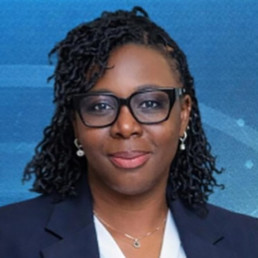
Written by Betty Johnson
Betty Johnson is Director of Rinnovate Recruitment & Consultancy and founder of B3Inspire, a women's empowerment coaching brand. She is a School Improvement Partner, AI in Education advocate, and contributor to an upcoming Routledge publication exploring AI and primary school leadership.
Artificial intelligence is reshaping classrooms at speed. But if we are not careful, we risk automating the very inequalities we have spent decades trying to dismantle.
There is a moment I return to often. I was sitting with a group of teachers in South London, brilliant and committed educators, watching them use an AI writing assistant for the first time. The excitement was palpable. Then one teacher paused and asked quietly: “But does it know our children?”
That question has stayed with me. Because behind it lies the central challenge of our time in education: how do we harness the extraordinary power of artificial intelligence while ensuring it serves every child? Not just the ones whose experiences, languages and cultures it was trained on.
The promise is real
Let us start with what AI can genuinely do. Adaptive learning platforms can tailor content, pacing and assessment to individual learners in ways that even the most devoted teacher simply cannot replicate in real time when managing a class of thirty. Intelligent tutoring systems can offer immediate, personalised feedback. For students with SEND, for English as an Additional Language learners, and for children in under-resourced schools, this is not a trivial benefit. It is potentially transformative.
Research published in AI and Ethics (Fitas et al., 2025) confirms that AI can meaningfully support special needs provision and address language barriers, provided it is deployed thoughtfully and with equity at the centre of design.
The peril we are not talking about loudly enough
Here is the uncomfortable truth. AI systems learn from data. And the data that exists in the world reflects the world as it has been, not as it should be. When a model is trained predominantly on content that centres Western, English-speaking, middle-class experience, it does not arrive at the classroom as a neutral tool. It arrives carrying biases.
Research published in the International Journal of Artificial Intelligence in Education (Baker & Hawn, 2022) found that algorithmic bias in educational AI can produce systematically unfair outcomes across assessment and instruction, disproportionately affecting the very students who most need support. A 2025 review in Frontiers in Education confirmed that unchecked AI models can continue to amplify underlying social and cultural biases, impacting equity and fairness in both assessment and instruction.
“The environment the machine operates in is social in nature. It functions within the socio-technical system that encompasses the cultural values and beliefs of the people using it.”
Put simply: AI is not neutral. It is a mirror. And if we have not yet built a system that reflects the full richness of our children’s identities, we should not be surprised when the mirror distorts.
The digital divide: a growing fault line
There is a second, more immediate danger. Access to AI tools is not equally distributed. Schools in disadvantaged communities face significant challenges in investing in technology and establishing fair access policies. A 2025 study in Frontiers in Education warned explicitly that equitable access to AI tools is crucial to prevent educational inequalities from widening further.
Attainment outcomes continue to vary significantly between ethnic groups in England, with some communities continuing to experience substantial educational disadvantage despite decades of policy attention and intervention. Education Policy Institute data indicates that Gypsy, Roma and Traveller pupils experience some of the largest attainment gaps in England, equivalent to approximately 30 months of learning behind their peers by the end of secondary school. Meanwhile, Universities UK continues to report degree awarding gaps between White students and several minority ethnic groups across higher education.
If AI becomes the new frontier of educational provision and some children cannot access it, or access a version of it that does not truly see them, we will not close those gaps. We will cement them.
What can we actually do? Seven practical steps
- Ask the equity question first.
Before deploying any AI tool in your school, ask who it was trained on. Ask who it serves well and who it might underserve. Demand transparency from providers about their training data and bias testing. This is not a technical question. It is a values question.
- Use AI to reduce teacher workload, not to replace teacher relationship.
The most powerful protective factor for disadvantaged students is a trusted adult who knows them. Use AI to free up that time, for planning, marking and administration, so teachers can invest more of themselves in the human connections that matter most.
- Curate and contextualise AI outputs.
Do not present AI-generated content as given. Teach children and staff to interrogate it. Whose perspective is missing? What has been assumed? This is media literacy for the AI age and it is a diversity lesson in itself.
- Pair AI with inclusive curriculum design.
AI is a tool, not a curriculum. Ensure that what children are doing with AI reflects a genuinely diverse and representative body of knowledge, including authors, histories and contributions from across the global majority.
- Invest in staff training with diversity at the centre.
AI professional development must include bias recognition and culturally responsive pedagogy, not just technical skills. Teachers need to understand not only how to use these tools but when to challenge them.
- Amplify student voice in AI decisions.
Which students are at the table when your school decides how to use AI? If the answer is mainly those who already have power, change the table. Invite your most marginalised students into the conversation. They will see what others miss.
- Advocate beyond your school.
The decisions that shape AI in education are being made at government, policy and corporate levels. Join or create the conversations that push for representative datasets, diverse AI development teams and equity-first regulation. Your voice belongs in those rooms.
A word to women leaders in education
I want to speak directly to the women reading this, particularly those who, like me, came into this profession from communities that have historically been spoken about in education rather than listened to within it.
We are not incidental to this conversation. We are central to it. The research is clear that cultural and social context shapes how AI interacts with learners. We carry that contextual knowledge. We have spent careers navigating systems that were not built with us in mind and we have built extraordinary things within them regardless.
The question is not whether AI will change education. It already is. The question is who gets to shape it. The answer should include every teacher in every underfunded classroom, every headteacher in a school where the children look like the world, and every leader who has ever been the first, the only, or the one they did not expect.
“We do not get a fairer future by accident. We build it, deliberately, strategically and together.”
The next time someone asks whether AI is good or bad for education, resist the binary. The better question is simply this: good or bad for whom? Ask that question consistently and loudly, at every level, and AI in education may yet become the equaliser it promises to be.
References
Baker, R.S. & Hawn, A. (2022). Algorithmic bias in education. International Journal of Artificial Intelligence in Education, 32(4), 1052-1092.
Fitas, R. (2025). Inclusive education with AI: supporting special needs and tackling language barriers. AI and Ethics, 8(2), 115-129.
Education Policy Institute (2024). Annual Report: Ethnicity Gaps.
Universities UK (2019). Black, Asian and Minority Ethnic Student Attainment at UK Universities: Closing the Gap.
Frontiers in Education (2024). Promoting equity and addressing concerns in teaching and learning with artificial intelligence.
Representation Starts Here: Developing Student Leadership Through a DEIB Lens
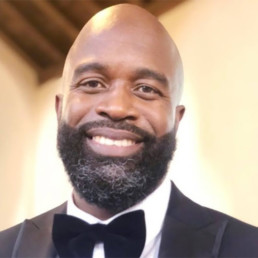
Written by Dwight Weir
Dwight is a Deputy Headteacher and Life Coach. He is also an inspector for British Schools Overseas. Dwight has a passion for coaching and leadership development.
Walk into many schools and you will see student leaders everywhere. Head students. Prefects. Ambassadors. School council representatives. The question is: who gets to lead?
Too often, student leadership reflects the same patterns we see elsewhere in society. The confident voices are heard. The popular students are selected. The pupils who already fit the image of a “leader” are given the opportunities. Representation starts here.
If we are serious about Diversity, Equity, Inclusion and Belonging (DEIB), we must rethink how we identify, develop and celebrate student leaders.
Leadership Is Not a Look
Many schools unintentionally reward visibility over potential. Students who are articulate, academically successful or naturally outgoing are often first in line for leadership opportunities. Meanwhile, quieter pupils, students with SEND, disadvantaged learners, multilingual pupils and those from underrepresented backgrounds can be overlooked.
The result?
Student leadership becomes exclusive rather than inclusive.
A DEIB approach asks a different question: Whose leadership are we missing?
Expanding the Definition of Leadership
Leadership is more than standing on a stage or speaking into a microphone.
Leadership can be:
- The student who welcomes a new classmate.
- The pupil who advocates for accessibility.
- The young person who challenges injustice.
- The learner who quietly supports others every day.
- The student who demonstrates resilience in the face of adversity.
When schools broaden their definition of leadership, more students can see themselves reflected in leadership roles. And when students can see it, they can believe it is possible.
Equity Over Equality
Giving every student the same opportunity is not always enough. Some students need encouragement, coaching, mentoring or targeted development before they feel confident enough to step forward. An equitable approach recognises that leadership pathways should not simply be open; they should be accessible.
This might mean:
- Creating leadership programmes for underrepresented groups.
- Actively encouraging applications from students who would not normally put themselves forward.
- Providing coaching and mentoring.
- Removing unnecessary barriers to participation.
Equity is not lowering standards. It is widening access.
Representation Matters
Students are constantly scanning their environment for signals.
- Who gets chosen?
- Who gets listened to?
- Who gets celebrated?
- Who gets promoted?
When leadership teams reflect the diversity of the student population, powerful messages are sent. Students begin to see that leadership is not reserved for a particular gender, ethnicity, social background, ability level or personality type.
They see possibility…They see belonging…They see themselves…
Moving Beyond Tokenism
Representation alone is not enough. A diverse student leadership team without influence changes very little. Student leaders must have genuine opportunities to shape decisions, influence policy and improve school culture. Their voices should not simply be heard. They should be acted upon.
The most effective schools move from student voice to student influence.
The Leadership Legacy
Student leadership is not just about organising events or leading assemblies. It is about preparing young people for the world they will inherit. When schools develop leadership through a DEIB lens, they cultivate empathy, courage, advocacy, collaboration and social responsibility. They create young people who understand that leadership is not about power over others. It is about creating opportunities for others. Because representation does not begin in the boardroom. It does not begin in parliament. It does not begin in the workplace.
Representation starts here.
In our classrooms. In our corridors. In our student leadership programmes.
And in the belief that every young person has the potential to lead.
AI IS NOT NEUTRAL: Why DEIB, Belonging, and Responsible AI Must Shape the Future of Education and Work
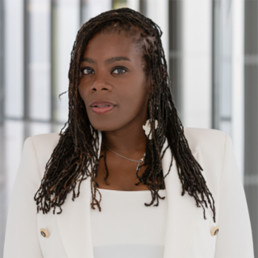
Written by Paulette Watson MBE
Paulette Watson MBE is an award-winning CEO, international speaker, and thought leader in AI, STEM, digital transformation, and inclusive innovation. As Founder and CEO of Academy Achievers, she leads the global #BeMeDigitalInclusion initiative, empowering women and girls, particularly from underrepresented communities, to access opportunities in AI, cloud, cybersecurity, emerging technologies, and the future of work.
“A child could be excluded from opportunity before a teacher even notices — not because of ability, but because an algorithm decided what potential looked like.”
Introduction
Artificial Intelligence is rapidly reshaping education, recruitment, safeguarding, leadership, and the future of work. Every week brings a new tool, a new pilot, a new promise. But while organisations race to adopt AI, a far more urgent question is being left on the table:
Who gets to belong in the future being built?
As the author of She Disrupts: A Black Woman’s Journey in STEM and AI Industries, and through my global work leading #BeMeDigitalInclusion across the UK, Africa, and international networks, I have spent years advocating for equitable pathways into technology, responsible AI adoption, workforce transformation, and inclusive digital futures.
What concerns me most is not AI itself. It is the very real possibility that we automate exclusion at scale and call it progress.
Because AI is not neutral. It reflects the data it is trained on, the systems it learns from, the assumptions embedded within it, and the people who build it. Bias is not removed through automation. Too often, it is amplified.
Leadership Without AI Literacy Is Becoming a Strategic Risk
As a Black woman working across governance, education, digital transformation, and emerging technologies, I have often found myself sitting in rooms where I was both the only Black woman and one of the only people deeply focused on the long-term implications of technology.
I remember completing my Master’s in ICT in 2005, when conversations about automation, digital systems, AI, and emerging technologies were already evolving rapidly. I later completed my MBA in 2008, continuing to explore how technology, leadership, governance, and organisational strategy intersect.
What struck me then, and still concerns me deeply now in 2026, was how many senior leaders responsible for shaping education, workforce systems, safeguarding, governance,
and organisational strategy had little understanding of emerging technologies and their societal impact.
Fast forward almost two decades, and in many spaces, that gap still exists.
The technology has accelerated. So have the risks and the pace of adoption. The risks have accelerated.
The pace of adoption has accelerated.
But leadership understanding has not kept pace.
Too often, AI conversations are delegated entirely to technical teams while boards, governors, executives, and decision-makers remain disconnected from the realities of algorithmic bias, automated decision-making, accessibility, workforce displacement, safeguarding implications, and inclusion.
That disconnect creates operational, ethical, reputational, and human risk. The Belonging Question
One of the most overlooked conversations in AI is belonging. Not representation alone. Belonging.
Belonging is not simply whether someone is invited into the room.
It is whether they can see themselves in the future being built around them.
Through #BeMeDigitalInclusion, I have worked with young girls, Black students, neurodiverse learners, disabled professionals, career changers, educators, and underserved communities who are incredibly capable, creative, and innovative, yet too many quietly disengage because systems subtly communicate:
“This space was not designed with you in mind.”
As someone who is dyslexic, I understand personally how dangerous it is when systems confuse difference with deficit.
Now imagine those same inequalities becoming embedded inside AI systems that shape educational pathways, recruitment, safeguarding, progression, and access to opportunity.
Case Studies in Automated Exclusion
Case Study 1: AI Detecting “High Potential”, But Missing SEND Learners
AI-powered analytics tools are increasingly used to identify “high potential” students, predict attainment, and map intervention pathways. Yet many systems are trained on narrow historical patterns that fail to account for neurodiversity, accessibility needs, trauma, and alternative learning styles.
Through #BeMeDigitalInclusion, I have met young people whose brilliance sits outside traditional systems. If AI only recognises one type of learner, countless young people risk being overlooked before they even have the opportunity to thrive.
Case Study 2: Predictive Behaviour Systems & Black Boys
Research has repeatedly shown that Black boys are disproportionately monitored and excluded from educational systems. If biased historical data feeds predictive AI systems, those inequalities risk becoming digitally reinforced.
Technology should never become a faster route to stereotyping. Yet without intentional governance, inclusive leadership, and bias mitigation, that is exactly what can happen.
Case Study 3: AI Recruitment & Non-Traditional Career Paths
AI-driven recruitment systems often favour traditional career trajectories, elite institutions, and linear progression. But what happens to career changers, mothers returning to work, disabled professionals, self-taught technologists, and community leaders?
They risk becoming invisible, not because of what they lack, but because of what the system was never taught to value.
This matters profoundly in AI itself, where diversity is already critically lacking. The Human Premium
Headlines predict that AI will replace humans. I believe something more nuanced and more urgent is happening.
Human skills are becoming premium.
As automation increases, the value of empathy, ethical judgement, critical thinking, communication, creativity, adaptability, collaboration, cultural intelligence, and leadership will rise significantly.
These are not soft skills.
They are leadership skills.
They are future workforce skills.
And they are the very capabilities that AI cannot replicate.
The future workforce advantage will not belong solely to those who can code.
It will belong to those who can lead humans through complexity, ambiguity, ethics, trust, and change.
AI Literacy Must Become a Human Right
One of the greatest risks emerging now is the unequal distribution of AI literacy.
Too many people are being expected to navigate systems they do not fully understand. Too many children are having decisions made about them by algorithms that their parents, teachers, governors, and leaders have never questioned.
AI literacy cannot become a privilege reserved for technology professionals or elite institutions.
It must become accessible to:
- Teachers
- Parents
- Governors
- Students
- Executives
- Policymakers
- Community leaders
People deserve to understand how algorithms shape decisions, how bias operates, how data is used, and how to participate safely and critically in AI-enabled environments.
Responsible AI Is Not Optional
Responsible AI cannot exist in isolation from diversity, equity, inclusion, and belonging.
They are not parallel conversations.
They are the same essential conversation.
Safe and responsible AI requires:
- Inclusive governance
- Diverse leadership
- Accessible design
- Safeguarding
- Transparency
- Accountability
- Community voice
Without diversity at the centre of AI design and governance, AI risks reproducing inequality on an unprecedented scale.
And without belonging, entire communities may disengage from the very future being built around them.
The #BeMeDigitalInclusion Roundtable
These are exactly the conversations we will continue through the upcoming #BeMeDigitalInclusion Roundtable, where educators, policymakers, industry leaders, governance professionals, and communities will explore:
- Online safety
- Responsible AI
- Workforce transformation
- AI literacy
- Safeguarding
- Accessibility
- Inclusion
- Human skills are becoming premium in the AI era
Because diversity cannot be an afterthought in technological transformation. It must sit at the core, from the first line of code to the first leadership decision. What Educational Leaders Must Do, Right Now
- Build AI Literacy Across Entire School Communities
- Review AI Through a DEIB & Safeguarding Lens
- Include Diverse Voices in AI Decision-Making
- Priorities Human Skills
- Ensure Belonging Remains Visible
- Treat Responsible AI as a Governance Priority, Not Just a Technical One
Educational leaders must act now. Make AI literacy, DEIB, and responsible AI an immediate priority in every school and system. Engage diverse voices, review technology through ethical and safeguarding lenses, and champion human skills and belonging at all levels. Your leadership today will directly shape opportunity, trust, and belonging for generations.
Final Thought
AI will shape the future.
But inclusion will determine whether that future is equitable.
The question is no longer whether AI will transform education and work; it is whether it will.
It already is.
So ask yourself and your organisation: What steps will we take today to ensure everyone can belong in the future we are building?
And who will you include in that decision?
The future will not be defined by the intelligence of our machines alone, but by the courage of our leadership. Let us lead boldly and shape that future together.
Sexuality, privacy, and professional safety
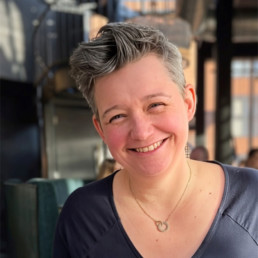
Written by Emma Swift
Emma Swift is a Vice Principal and former trust-wide subject lead for a multi academy trust, specialising in science and initial teacher training. She is the subject lead for Physics for the National Institute of Teaching and Education.
On being visible, being private, and deciding what to carry at work
For some teachers, sexuality is something that barely enters their working life.
For others, it is something they think about constantly not because they want to, but because it shapes how visible, safe, or exposed they feel at work.
This difference matters.
Heteronormativity and the illusion of “not sharing”
Many heterosexual teachers will say they don’t talk about their sexuality at work and genuinely believe it.
But mentioning a spouse, a partner, a weekend plan, or a family photo on a desk is already a form of disclosure. It’s simply one that aligns with what students and colleagues expect, so it passes unnoticed.
For LGBTQ+ teachers, the same casual references can feel loaded. A simple pronoun choice can suddenly feel like a decision with consequences.
This isn’t about oversensitivity. It’s about risk awareness.
Being “out” is not a single decision
There is a persistent narrative that being out is an all-or-nothing state: either you are open, or you are hiding.
The reality is far more nuanced.
You may be:
- Out to colleagues but not students
- Out in one school but not another
- Open in some contexts and private in others
- Comfortable one year and cautious the next
None of these positions are dishonest.
They are strategic.
Teaching is not a neutral workplace. It is shaped by:
- Community attitudes
- School culture
- Leadership support
- Student maturity
- Media narratives
Your safety and wellbeing sit within all of that.
You do not owe visibility to anyone
There can be subtle and sometimes explicit – pressure on LGBTQ+ teachers to be visible “for the students”.
Representation matters.
But representation should never come at the cost of personal safety.
No individual teacher is responsible for fixing systemic inequality.
You are allowed to prioritise:
- Emotional safety
- Job security
- Mental health
- Professional focus
Choosing privacy is not a failure of courage.
It is an assessment of context.
The classroom is not a neutral space
Students talk. Families talk. Communities talk. What is said in a classroom rarely stays there. This is not paranoia – it is experience. Before sharing anything personal, it’s worth asking:
- How might this be repeated?
- How might it be reframed?
- How might it be misunderstood?
Once information enters the student sphere, control over it is lost. That doesn’t mean you should never share; no it means you should share deliberately.
Managing questions about relationships
Students may ask:
“Do you have a husband/wife?”
“Are you married?”
“Do you have a boyfriend/girlfriend?”
You are not required to correct assumptions. You are not required to disclose.
Neutral responses can include:
“I keep my personal life private.”
“That’s not something I discuss with students.”
“I’m here as your teacher.”
Some teachers choose gender-neutral language.
Some choose redirection.
Some choose openness.
The key is that you decide, not the moment.
Professional safety is not the same as secrecy
There is an important distinction between secrecy and privacy.
- Secrecy is driven by fear.
- Privacy is driven by choice.
You can be open with trusted colleagues and private with students. You can advocate for inclusion without narrating your life. You can support LGBTQ+ students without positioning yourself as evidence.
Your professionalism is not diminished by boundaries.
Who gets asked to do the work
In many schools, inclusion work doesn’t get distributed evenly. It often lands on the people most affected by it. I’ve lost count of how many times I’ve been asked to deliver the “LGBT assembly” or lead something for LGBT History Month. As a senior leader, I’m always willing to do an assembly that’s part of the role. But there’s an extra layer here that often goes unacknowledged.
When you are the one standing in front of a room talking about LGBTQ+ lives, you are also the one absorbing the reaction. The looks. The comments. The atmosphere. And when students express strong views which are sometimes openly homophobic, it is often the person most directly affected who is expected to manage that moment.
That carries a cost.
I still remember, around sixteen years ago, sitting in an assembly where a heterosexual male teacher spoke about Alan Turing his work, and what was done to him. It stirred something in me I wasn’t used to feeling in school. At the time, hearing LGBTQ+ lives acknowledged at all felt rare.
That moment stayed with me. And part of why it mattered was that it didn’t come from someone who had to carry the personal weight of it. There’s a difference between choosing to share and being positioned as the one who should. Even smaller moments of coming out can carry that same weight. Not just the big, defining conversations – sometimes it’s the quieter ones that stay with you.
I remember telling one of my A Level classes while working in North London. I wasn’t sure how they would respond, particularly given the strength of religious belief in the room. I had prepared myself for discomfort. Instead, they were warm, protective, and thoughtful. It meant a great deal.
Sometime after I left, one of those students wrote to me. She said she wanted to go into teaching and wrote: “I thought I wanted to be the teacher I needed. Then I realised I wanted to be the person I had.”
That stayed with me.
It’s also important to say that these experiences aren’t the same for everyone. As a lesbian, I’m aware that I may be navigating less immediate risk than some of my gay male colleagues. Context matters too – subjects, age groups, school culture. A PE teacher, for example, may face a very different set of challenges to a science teacher.
All of this shapes who feels able to speak, and when. Which is why inclusion work shouldn’t quietly default to the same people, again and again.
When schools talk about inclusion
If a school claims to value inclusion, that should show up in:
- Clear policies
- Leadership behaviour
- Responses to incidents
- How staff are supported, not showcased
Be wary of environments where inclusion is performative, but protection is absent.
A genuinely inclusive school does not pressure staff into visibility. It ensures that if staff are visible, they are safe.
A final thought
Sexuality at work is not about honesty versus hiding. It’s about context, consent, and control. You are allowed to change your mind. You are allowed to reassess. You are allowed to protect yourself. Professional safety is not selfish.
It is what allows you to keep doing the work well and to keep yourself intact while you do it.
AI Will Shape Education - But Who Gets to Shape AI?
Written by Belonging Effect
Belonging Effect is committed to shaping intention into impact and supporting people with their Diversity, Equity, Inclusion, & Belonging strategy and training needs.
Artificial intelligence is already changing education. From lesson planning and assessment tools to tutoring platforms and student support systems, AI is becoming embedded in how schools operate and how young people learn. The conversation is no longer about whether AI will influence education. It already does.
The real question is this: Who gets to shape the future of AI in education?
Because AI is not neutral. Every AI system reflects the decisions, assumptions, priorities, and perspectives of the people who build it. The data selected. The questions asked. The problems chosen to solve. The voices included – and excluded – from the room.
If we are not intentional, AI risks reinforcing the very inequities education is trying to disrupt. And that matters deeply for schools.
We have already seen examples of AI systems producing biased outcomes:
- Recruitment algorithms favouring certain demographics
- Writing detection tools disproportionately flagging multilingual learners
- Facial recognition systems performing less accurately on darker skin tones
- Predictive technologies reinforcing historical inequalities rather than challenging them
Bias in AI is often not malicious. But it can become invisible, automated, and scaled at a speed education systems have never seen before. That is why educators must be part of shaping AI strategy – not simply responding to it after decisions have already been made.
Teachers, school leaders, inclusion specialists, youth workers, parents, and community voices bring something essential to this conversation: human understanding. Educators understand context: they understand belonging; they understand lived experience; they understand the difference between efficiency and equity.
If AI strategy is shaped only by technologists and commercial interests, we risk creating systems that optimise for speed and standardisation over humanity and inclusion.
But there is another possibility…
AI could become a powerful tool for accessibility, creativity, personalisation, and opportunity – if a broader and more diverse range of people are involved in shaping what responsible AI looks like in practice.
That means we need more diverse voices and thinkers involved: more perspectives; more challenge; more collaboration. We need people from different backgrounds, communities, cultures, identities, and professional experiences helping to shape the future of AI in education. Not because diversity is a “nice to have,” but because it is a safeguard against harm.
At The Belonging Effect, we believe belonging and equity must sit at the centre of conversations about innovation and technology. That is why we are inviting our network to get involved.
Over the coming months, we will be hosting a series of free webinars exploring AI, education, equity, and belonging. These sessions are designed to create accessible spaces for educators and leaders to learn, question, challenge, and contribute to the conversation – regardless of their starting point with AI.
We are also collaborating on a fully funded training programme with our partners at CVP Group for educators and professionals who want to deepen their understanding of AI, inclusive practice, and ethical leadership in this rapidly evolving space.
We are keen to amplify more diverse voices in this conversation as too often, discussions about AI are dominated by a narrow range of perspectives so we want to help change that. Therefore, we are actively looking to publish blogs, reflections, case studies, and opinion pieces from educators, practitioners, community leaders, and changemakers from diverse backgrounds who are thinking critically about AI, inclusion, belonging, and the future of education.
You do not need to be an AI expert. You do not need to work in technology. If you care about equity, representation, belonging, and the future young people are inheriting, your voice matters, because the future of AI in education should not be built for communities without them – it must be built with them.
This moment presents both a challenge and an opportunity as the decisions being made now will shape classrooms, opportunities, and experiences for years to come. We cannot afford for those decisions to be shaped by only a small group of voices. Disrupting bias in AI starts with diversifying who is involved in shaping strategy and that work belongs to all of us.
The future of AI is being written right now. The question is whether education – and the communities most impacted by these technologies – will help write the story.
To join one of our free webinars, apply for the fully funded training programme, or contribute a blog to our growing community of voices, connect with The Belonging Effect today. Our monthly newsletter will be out on Wednesday.
Together, let’s ensure the future of AI in education is inclusive, ethical, and rooted in belonging.
Race and Leadership Roles in Schools – My Story
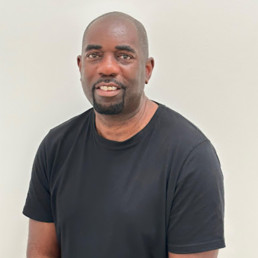
Written by Patrick Cozier
Patrick Cozier is a headteacher, a coach and the author of Calm Leadership.
Desire to be a Headteacher
I came into teaching because of a desire to make a difference to the lives of children. I have always believed that education has the ability to transform lives and create opportunities for young people. My own personal example is one that I always draw strength from. My parents came over from Barbados in the 1960s as part of the Windrush generation – my mother an auxiliary nurse and my father a postal worker. They came here with the intention of creating a better life for their children than they had experienced. Education was at the heart of this dream. And so, it began…
I started teaching in September 1994, in South London. I knew by 1996 that I wanted to be a Headteacher. Working in a school with a high number of Black and Asian children, I could see the impact that myself and some other Black staff in the school had on connecting with those students and providing role models to fuel their aspiration. I recognised pretty early that if we could have that effect as teachers, the potential for Black and Asian leaders to create a significant positive impact was huge. I wanted to be THAT person. From that moment on, everything that I did in my teaching career was done with the intention to propel me towards that aim.
For me it was interesting, because I did not at the time view being Black as a disadvantage. I felt very much as though it was one of my big selling points. I always felt that my ‘Blackness’ (i.e., my cultural heritage, skill set, adaptability, and shared experiences with children from African and Caribbean heritage) would place me in a strong position to lead a school with a mix of cultures. In the early days of my career, I did not see barriers – just dreams, ambitions and goals.
What I did not consider was that my own sense of value and self-belief was only half the story. The challenge was finding ways to ensure that others (in particular governors doing the selecting) could see in me what I saw in me. This was a much bigger challenge than I had anticipated, and I think explains to a large extent why there are comparatively few senior leaders and Headteachers from Black and Asian backgrounds represented in the profession.
Gov.UK – School Teacher Workforce February 2021 shows
- in 2019, 85.7% of all teachers in state-funded schools in England were White British (where ethnicity was known)
- 78.5% of the working age population was White British at the time of the 2011 Census
- 92.7% of headteachers were White British
| Ethnicity | % of the Working Population | % of
Classroom Teachers |
% of Deputies and Assistant Heads | % of Headteachers |
| White British | 85.7 | 84.9 | 89.7 | 92.7 |
| White Irish | 1.5 | 1.5 | 1.7 | 1.8 |
Source: School Workforce in England: November 2019 https://explore-education-statistics.service.gov.uk/find-statistics/school-workforce-in-england
The data in the table above gives a clear indication of the national picture. The percentage of White British teachers in 2019 (84.9) was almost identical to the percentage of the working population that was White British (85.7). The percentage of Headteachers who were White British at this time was 92.7, which shows an over-representation.
Contrast this with the same data for Black African, Black Caribbean and Black Other below.
| Ethnicity | % of the Working Population | % of
Classroom Teachers |
% of Deputies and Assistant Heads | % of Headteachers |
| Black African | 1.9 | 1.0 | 0.4 | 0.2 |
| Black Caribbean | 1.2 | 1.1 | 1.0 | 0.7 |
| Black Other | 0.5 | 0.4 | 0.2 | 0.1 |
Source: School Workforce in England: November 2019 https://explore-education-statistics.service.gov.uk/find-statistics/school-workforce-in-england
The proportion of Headteachers is a significant under-representation of Black heads and as compared to both the general working population and the proportion of classroom teachers.
What this points to is the comparatively poor progression that has been made in the profession for our Black African and Black Caribbean colleagues. So, what is the story here?
There are many theories for why the number of Black Headteachers is so low.
- Poor/biased recruitment processes
- Insufficient opportunities for development of our Black teachers in school
- Black teachers do not want to apply because
- they do not believe they will be given an opportunity or
- they do not see headship itself as an attractive prospect or
- They feel the situation of headship for a person of colour is precarious as they will be judged harshly if things go wrong
In my conversations with colleagues over the years I have encountered all of the above scenarios. It seems to be commonplace and the data certainly supports this view – that is, unless you believe in the meritocratic theory and your view is that there are just insufficient Black candidates who are up to the job. I personally can’t and won’t accept this as a position.
My own journey was nearly derailed by one line manager who tried to sabotage my first ever application for a senior leadership position. This was back in 2001. I was a head of year, and I was keen on promotion. I was confident and believed that I was ready. My line manager did not and told me so – I recall her specific words were ‘I would be worried if you were appointed to a senior leadership role’. Now to be fair, I don’t know whether my Blackness had anything to do with her view, but I do not that she failed to see the potential in me at the time.
However, I was fortunate in that I was confident, and my Headteacher at the time believed in my capacity to do a great job as a senior leader. His support turned out to be critical as following a very successful interview process I was informed by the school that I had applied to that the two references that they had received were in contrast – one very supportive and the other less so. I found that disappointing, but sadly predictable.
The Headteacher of the school that I had applied to (who in the end decided to appoint me) explained to me that what they saw and felt throughout my gruelling two-day interview process was more aligned to the reference from my Headteacher, than that of my immediate line manager – so they took a chance and believed in me. I haven’t looked back since.
But now I think… was I just one of the lucky ones?
Much can be done to change this situation. For example,
- The government should invest in the diversity of our sector and fund leadership development programmes for people of colour.
- Governing bodies need to think about their own makeup and be genuinely committed to proactively recruiting governors who represent the communities served by the school.
- Governing bodies also need to consider how a lack of diversity influences the decisions they make when recruiting senior leaders – in particular they need to seek out training in unconscious bias and use their learning from that to shape thought and process.
- More of our current crop of leaders of colour need to adhere to the ‘each one, teach one’ mantra – we have to give back and help our more junior colleagues navigate their way through the system the way that we have through coaching, mentoring and offering opportunities for work experience and shadowing.
Afraid of own shadow
I started my first headship at the age of 34 in September 2006, just 18 months after I have first become a deputy. It was sooner than I had anticipated, and it was scary. Despite my clear ambition to be a headteacher, I was not expecting it quite so soon. And the truth was, I was not quite ready for what I was taking on. I think I was scared of my own shadow! I was confident that I could learn quickly (and boy, did I have to!), but the journey was a very challenging one and extended me in ways that I did not know was possible.
I was an internal candidate. I applied for the job because I wanted to take advantage of the experience of applying for headships and going through the process. I applied because I was convinced by those around me that I would be a good candidate for the job. I applied because I wanted to compare myself to the competition. Never (and I mean like, ever) did I imagine I would get the job, until the second day of interviews when I was down to the final three candidates from over 30 applicants. Then it hit me… This was REAL! After I was successful on day 2 and I was offered the job, I responded by asking the then Chair of Governors, ‘Are you sure?’. In hindsight, that was a silly (albeit honest) thing to say based on how I felt at the time.
I was excited, but also petrified. To talk about ‘imposter syndrome’ would not do how I felt at the time any justice. I remember saying to my coach (who was a very experienced ex-headteacher) that I just couldn’t get used to the feeling of constantly being on the edge of my comfort zone. It was just not something that I was prepared for.
The first few years were tough and represented a very steep learning curve. My first challenge was not so much about leading the school as leading my colleagues. I was the last one in – the young pretender. Suddenly, I was thrust into having to manage a team of people who were more experienced than I was and who had been at my school for longer than me. My confidence to make decisions when others who I had great respect for, and a sense of awe in some cases, disagreed.
There was also the added pressure of being a young Black Headteacher, at the time one of only 11 secondary school male Black Headteachers of African-Caribbean heritage in the UK. I felt proud, but also daunted. I enjoyed the wearing the cloak of representation. A particular source of joy and strength for me was hearing from Black parents how pleased they were to see me in my role and how much they were rooting for me. That always touched me (and still does) and I used it as fuel to overcome some of the fears of the role. I have always embraced this responsibility as a privilege rather than a burden. However, it is not easy.
The need to be extra-vigilant about what one says is tough and draining. The feeling of being a lone voice at the many tables at which one sits in Headship and as a system leader can be frustrating and dispiriting. These all make the job much more demanding as a person of colour.
However the biggest difficulty that I had as a new Headteacher (and admittedly still now at times) was the propensity that I had for editing myself. It is hard to explain, but as a Black person in a position of leadership there are certain stereotypes about Black people that you are aware of and wish to avoid. I found myself minimising certain aspects of my culture and natural state of being. Below are some examples, with differing degrees of seriousness.
- Turning down my music in the car as I drive through the gates in the morning – not wanting other staff to hear the beautiful thumping reggae beats that set up my positive and confident mood for the day.
- Being cool and calm at ALL times. I was very aware of the stereotype of the ‘angry Black man’, and I never wanted to fall foul of this.
- Restricting the desire to challenge racism whenever and wherever I witnessed it. As a Black person you see it all the time in various different explicit and implicit guises and you want to call it out – but the editing process leads you to pick your battles carefully as you don’t want to be seen as that Black person where ‘everything is about race’.
- I edited my accent. Around friends and family it is entirely natural to speak in our heavy patois dialect. There were times in the early days where I wanted to do so with Black colleagues or students to accentuate that connection and shared experience through a shared language, but the pressure of being the Black Headteacher prevented me from doing so.
When I reflect now on how important these issues are, the conclusion that I draw is that they are crucial. It isn’t so much about the trivial nature of some of the edits described above. There is something more fundamental taking place in my view that gnaws away at the very purpose of diversity. Having diversity in leadership can only make a difference if leaders bring their diversity in with them as they travel through the school gates. To edit oneself is to lose the very difference that your diversity can make. It essentially turns everyone into a middle-class white man.
Based on my reflections of my own journey and experiences, I now make a point of telling our young aspiring Black leaders to be themselves. I tell them that their authenticity is actually what matters the most. They each can bring something different to the role if they are prepared to be brave and resist the temptation to edit.
In the early stages of my headship, I had great support from a range of coaches that I saw in my first few years in post – and each helped me significantly in very different ways. As well as the need to feel like I was worthy of the job, I had that added need to stop falling to the temptation of editing myself. I learned a lot from my coaches. The helped me make sense of my experiences and supported the development of the sense of perspective that I have honed over time. However, my early struggles were tough – and when I think of it now, I reflect on how I might have changed the nature of that support if I could go back as an experienced leader now and help my younger, less experienced self. I have been developing something I refer to as ‘Calm Leadership’ as a means of addressing this (What is calm leadership and why is it important? (sec-ed.co.uk)).
Getting Diversity in a Team Which Is Not Diverse
Although diversity in leadership is the ultimate aim to ensure that leadership is inclusive in its purpose and function, the reality is that many teams are not there in terms of the representation among the leadership. Getting the team to that point is a long-term strategy. In the meantime, it is important to find ways to work with what you have to increase awareness, understanding and to promote diversity of thought and approach.
I have a leadership team that is not diverse. We represent a school community that looks different from the team of senior leaders who are there to represent them. The same is true of my wider staff body. We have done a number of things over the last couple of years to try to move things forward. Some examples are shared below:
- We got our leadership team to read the book White Fragility by Robin DiAngelo and Brit(ish): On Race, Identity and Belonging by Afua Hirsch and to reflect on their own views, perspectives and practice
- Presentation from the me to staff on my own journey to being a Headteacher – sharing my experiences as a Black boy in North London to a Black man
- We showed staff videos recordings of our Black and Asian students talking about their experiences at our school
- We weaved our equality targets into our SDP – so every other departmental plan must reference this
- All student data is broken down and analysed by a range of sub-criteria including ethnic background
- We have a Racial Equity governor
- We have created a Student Cultural Diversity Forum (early stages)
- Zero tolerance of any racist behaviours – even against ‘your own’
- Staff have received training in unconscious bias
- We have reviewed our approach to promoting positive behaviours utilising the skills and experience of an external behaviour specialist
- Every member of staff was given the opportunity to have a book on anti-racism brought for them to read for the summer – 65 took up the offer! We have met twice since September to review, learn and apply
Race and Leadership Roles in Schools
Race matters. Visibility matters. Diversity matters. In leadership roles, they matter even more… so long as they actually make a difference.
Authenticity is the key. We have to train people to be their authentic selves as diverse leaders in order for the diversity of their experiences, backgrounds, thinking approaches and views to bring something different to the table.
In order to benefit from this, we need to make sure that we are doing more to encourage and bring the talent pool of ethnic global majority leaders through the system. We need to get more Black and Asian teachers into the profession and then help them progress their journeys through to leadership. To do this we must carefully consider the current barriers and blockers as to why this is not already the case and find ways to overcome them. This will take leadership at all levels, from the UK Government, down to Local Authorities and Multi-Academy Trusts and ultimately with the school governors and leaders.
If Black and Asian Leaders succeed, then everybody does!