
Inclusion Through a Wider Lens: Identity, Intersectionality and Belonging
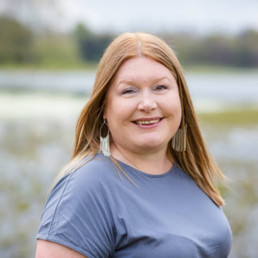
Written by Hannah Wilson
Founder and Director of the Belonging Effect (formerly Diverse Educators).
How inclusive is our understanding of inclusion?
Last week, I attended the Empowered Schools inclusion conference alongside a room full of passionate, purposeful educators. The conversations were thoughtful, the commitment was palpable and the collective ambition to improve educational experiences for children and young people was clear.
Yet, as I looked around the room, I found myself reflecting on a contradiction. We were gathered to discuss inclusion, but the room lacked visible diversity. Furthermore, as with many educational inclusion events the conversation focused on the relatively narrow lens of inclusion as Special Educational Needs and Disabilities (SEND).
This is not a criticism of the organisers, speakers or delegates, nor is it a dismissal of the importance of SEND inclusion. The challenges facing children and young people with SEND, their families and the educators supporting them are significant. The commitment to addressing these challenges is both necessary and urgent.
However, it did leave me wondering:
- When we talk about inclusion, who are we including in the conversation?
- Whose identities are we considering?
- Whose experiences are informing our decisions?
- And, perhaps most importantly, who might we be overlooking?
As the conversations developed, we began exploring belonging, racial equity and intersectionality. These discussions reinforced something I have been reflecting on for some time: Inclusion cannot be inclusive if our understanding of identity is exclusive.
The name of the conference also prompted me to reflect on what it means to be an empowered school: Empowered to do what? Empowered by whom? And empowered for whom?
Surely, an empowered school is one where leaders and educators have the knowledge, confidence and courage to recognise and remove barriers to belonging for every member of their community. One where inclusion is not defined by a single characteristic, identity or educational need, but understood through the richness and complexity of human experience.
Inclusion Is Bigger Than One Identity
In education, inclusion has increasingly become synonymous with SEND. This is understandable given the pressures facing schools, the challenges within the SEND system and the urgent need to improve provision and outcomes. However, inclusion is not a synonym for SEND.
Inclusion encompasses the full spectrum of human identity and experience, including race, ethnicity, disability, neurodivergence, gender, sexuality, religion, socioeconomic background, language, culture and family circumstances.
It also requires us to recognise that identities do not exist independently of one another:
- A Black autistic girl does not experience school solely through the lens of race, gender or neurodivergence. Her experiences are shaped by the interaction of all three, alongside other aspects of her identity and the wider social and institutional contexts in which she lives and learns.
- A child from a Romani (Gypsy), Roma and Irish Traveller people background may experience barriers associated with cultural misunderstanding, racism, socioeconomic disadvantage or disrupted educational experiences.
- A Muslim pupil with SEND may experience challenges associated with disability alongside religious discrimination, cultural assumptions or a lack of representation.
This is where intersectionality, a concept developed by Professor Kimberlé Crenshaw, becomes essential to our understanding of inclusion.
Intersectionality helps us recognise how different aspects of identity interact with systems of power, privilege and disadvantage, creating experiences that cannot always be understood by examining individual characteristics in isolation.
Without an intersectional lens, we risk developing inclusive practices that support one aspect of a child’s identity whilst overlooking another. And when that happens, our inclusion becomes conditional, fragmented or incomplete.
Reframing the Seven Principles of Inclusion
The Department for Education’s Inclusive Mainstream Fund guidance identifies seven principles to support schools in developing their approaches to inclusion. These principles provide a useful framework for school leaders, particularly in considering how to strengthen inclusive mainstream provision.
However, the framework also presents an opportunity to ask a broader question: What might these seven principles look like if we applied them to the full diversity of our school communities?
Rather than considering inclusion primarily through a SEND lens, how might we use the principles to explore identity, intersectionality, equity and belonging?
- Ambitious Leadership and Governance
Ambitious leadership and governance that embeds inclusion across the school.
Inclusive leadership requires more than a commitment to meeting individual needs. It requires leaders to understand how organisational cultures, systems, policies and practices shape the experiences of different groups:
- Who makes decisions about inclusion?
- Whose perspectives inform our strategic priorities?
- How representative are our leadership teams and governing bodies of the communities we serve?
- Do our inclusion strategies address racial equity, gender equality, religious diversity, socioeconomic disadvantage and disability?
- Or have we inadvertently created separate agendas that compete for attention and resources?
An intersectional approach encourages leaders to move beyond isolated initiatives towards a coherent, whole-school commitment to equity and belonging.
Reflective question: Whose identities and lived experiences are represented in our inclusion strategy, and whose are missing?
- Evidence-Based Support and Early Intervention
Evidence-based support that prioritises early intervention to catch barriers to learning early.
Identifying barriers early is essential. However, we must also consider how those barriers are recognised, interpreted and addressed:
- Are we examining differences in attendance, attainment, exclusions, suspensions, behaviour sanctions and access to opportunities across different demographic groups?
- Are we exploring how race, gender, disability and socioeconomic disadvantage intersect?
For example, do we understand how racialised assumptions may influence perceptions of behaviour? Are we recognising how girls’ neurodivergent needs may present differently or be overlooked? Are we considering how poverty, housing insecurity or language barriers may influence attendance and engagement?
Evidence-based inclusion requires both quantitative data and qualitative insight. We need to understand not only what is happening, but why it is happening and how it is experienced. This means listening to children, families and staff, particularly those whose experiences may be marginalised or misunderstood.
Reflective question: Are we using evidence to identify systemic barriers and inequalities, or simply to identify individual children who need additional support?
- High-Quality Adaptive Teaching and an Inclusive Curriculum
High quality adaptive teaching with a curriculum designed for all learners.
Adaptive teaching is often understood through differentiation, scaffolding and adjustments to meet learning needs. These approaches are essential, but inclusive teaching also requires us to consider what we teach, whose knowledge we value and whose identities are represented:
- Does our curriculum reflect the diversity of our communities and the wider world?
- Whose histories, stories, achievements and contributions are visible? Whose perspectives are missing or marginalised?
- Are we challenging stereotypes and deficit narratives?
- Are we creating opportunities for children to see themselves reflected positively in their learning whilst developing curiosity, empathy and respect for experiences different from their own?
An inclusive curriculum should be both a mirror and a window. It should affirm children’s identities whilst broadening their understanding of the world. Similarly, adaptive teaching should recognise cultural and linguistic diversity alongside cognitive, physical and sensory differences.
Reflective question: Does our curriculum enable every child to see themselves reflected, represented and respected, whilst also encountering and valuing identities different from their own?
- Enriching Provision Beyond the Classroom
Enriching provision beyond the classroom that all children can access.
Educational inclusion extends far beyond the classroom. Clubs, trips, residential experiences, sports, performances, leadership opportunities and enrichment activities all contribute to children’s confidence, relationships and sense of belonging.
Yet access to these opportunities is not always equitable. Financial barriers may prevent children from participating in trips or extracurricular activities. Religious observance, cultural expectations or caring responsibilities may affect availability. Gender stereotypes may influence who feels welcome in particular activities. Disability-related access requirements may not be fully anticipated or accommodated.
We must also consider the less visible barriers:
- Who is encouraged to participate?
- Who is selected for leadership roles?
- Who feels confident enough to put themselves forward?
- Who sees people like themselves represented in these opportunities?
Providing an opportunity does not automatically mean that everyone can access it, feels welcome within it or benefits equally from it.
Reflective question: Who participates in our enrichment opportunities, who does not, and what might this reveal about the barriers we have yet to remove?
- A Safe and Respectful Culture That Fosters Belonging
A safe and respectful culture that fosters belonging, attendance, and active participation in learning.
This principle sits at the heart of inclusive education. Belonging is not simply about being present, being included in activities or being treated kindly. It is about feeling safe, seen, heard, valued, respected and accepted for who we are.
A school may have welcoming displays, inclusive policies and a strong commitment to kindness, yet children and adults may still experience racism, sexism, ableism, homophobia, religious discrimination or other forms of exclusion.
Psychological safety also matters:
- Can children and colleagues express their identities, share their experiences, challenge inappropriate language and raise concerns without fear of judgement, dismissal or retaliation?
- Do we recognise the difference between an absence of reported discrimination and the presence of genuine belonging?
A culture of belonging requires us to move beyond our intentions and examine the lived experiences of the people within our communities. We cannot assume that because some people feel they belong, everyone does. And we cannot measure belonging solely through attendance, behaviour or participation. We need to ask people how they experience our culture and be prepared to hear answers that challenge our perceptions.
Reflective question: How do we know who experiences belonging in our school, who does not, and what are we prepared to change because of what we discover?
- Strong Partnerships with Families and Wider Services
Strong partnerships with families and wider services.
Families are central to children’s experiences of education. However, meaningful partnership requires more than communication, consultation or inviting parents into school.
It requires us to recognise the diversity of family structures, cultures, languages, experiences and expectations within our communities:
- Do we understand how previous experiences of education, discrimination or institutional mistrust may shape relationships with schools?
- Are our communication methods accessible to families who speak different languages, have additional needs or experience digital exclusion?
- Do we recognise and respect different family structures, including single-parent families, blended families, kinship carers, adoptive families and families with LGBTQ+ parents?
- Are we engaging with communities whose voices have historically been marginalised, or are we relying on the families who already feel confident and comfortable participating?
Strong partnerships require cultural humility, curiosity, trust and a willingness to share power. Rather than assuming we know what families need, we must create opportunities to listen, learn and co-produce solutions.
Reflective question: Which families feel welcomed, listened to and valued as partners in our school, and which might experience our relationships and communication differently?
- Inclusive Environments and Continuous Improvement
Inclusive environments with continuous improvements to physical and functional accessibility.
Accessible environments are fundamental to inclusion. Schools must consider physical accessibility, sensory environments, assistive technologies, communication needs and reasonable adjustments. However, inclusive environments are also cultural, relational and psychological:
- Do our buildings, displays, resources and shared spaces reflect the diversity of the communities we serve?
- Are prayer and reflection spaces considered?
- Are our uniform policies inclusive of religious, cultural and gender-related needs?
- Are toilets and changing facilities accessible, safe and appropriate for different users?
- Do our displays reinforce stereotypes or challenge them?
- Are our school celebrations and traditions welcoming to families from different cultural and religious backgrounds?
- And perhaps most importantly, are we willing to recognise that environments experienced as welcoming by some may feel alienating or unsafe to others?
Continuous improvement requires us to look beyond compliance and ask whether our environments enable everyone to participate with dignity, confidence and a sense of belonging.
Reflective question: Who has our school environment been designed for, and whose needs, identities and experiences have we not yet considered?
From Access to Inclusion to Belonging
As we reflect on these seven principles, I think it is important to distinguish between three concepts that are often used interchangeably:
- Access is about removing barriers so that people can enter, participate and engage.
- Inclusion is about creating the conditions in which people are welcomed, supported, respected and able to contribute meaningfully.
- Belonging is about how people experience those conditions, whether they feel accepted, valued and able to be themselves without compromising their identities.
A child can access a classroom without feeling included.
A child can be included in activities without feeling accepted.
And a child can be physically present within a school community without feeling that they truly belong.
This is why inclusion cannot simply be measured by the provision we offer or the policies we implement. We must also understand how our actions are experienced by those they are intended to support.
Belonging is not something we can declare on behalf of others. It is something we must intentionally cultivate, continuously evaluate and collectively sustain.
From Empowered Schools to Empowered Communities
I left the Empowered Schools conference feeling encouraged by the commitment of the educators in the room, but also challenged by the conversations we still need to have. We need spaces where educators can share expertise, challenge assumptions and explore the complexities of inclusion without feeling that one group’s needs must compete with another’s.
SEND inclusion and racial equity are not competing priorities. Neither are gender equality, religious inclusion, socioeconomic equity or LGBTQ+ inclusion. They are interconnected dimensions of our responsibility to create equitable educational experiences for every child. And intersectionality reminds us that the children, families and colleagues we serve do not fit neatly into the categories we sometimes create.
The seven principles offer us a valuable framework. What matters is the breadth of our interpretation, the courage of our implementation and the impact on the people we serve.
Perhaps the challenge for all of us is to consider not simply how we empower our schools to become more inclusive, but how we empower every child, colleague and family within them to feel safe, seen, heard, valued and able to flourish.
So, as we return to our schools and organisations, I would encourage us to reflect on three questions:
- Whose identities are we centring in our conversations about inclusion?
- Whose experiences might we be overlooking because they fall outside our current understanding or expertise?
- How will we know whether our inclusive intentions are translating into equitable experiences of belonging for everyone?
Because inclusion is not about choosing which identities matter most. It is about recognising that every identity matters, every experience deserves to be understood and every person deserves the opportunity to belong.
An empowered school should be one in which everyone has the opportunity to experience belonging. And that requires us to move beyond good intentions towards meaningful, measurable impact.
The Belonging Effect: Shaping Intention into Impact.
References and Further Reading
Department for Education. Developing an inclusion strategy using the Inclusive Mainstream Fund. DfE guidance
Crenshaw, K. (1989). Demarginalizing the Intersection of Race and Sex: A Black Feminist Critique of Antidiscrimination Doctrine, Feminist Theory and Antiracist Politics. University of Chicago Legal Forum.
Crenshaw, K. (1991). Mapping the Margins: Intersectionality, Identity Politics, and Violence against Women of Color. Stanford Law Review, 43(6), 1241–1299.
The Belonging Effect. www.thebelongingeffect.co.uk

Cultivating a Culture of Belonging: From Intention to Impact
Written by Hannah Wilson
Founder and Director of the Belonging Effect (formerly Diverse Educators).
Reflections from the Chartered College of Teaching Fellows Webinar
Why should we care about diversity, equity, inclusion and belonging?
This was the question I posed to Fellows of the Chartered College of Teaching when we came together to explore what it means to cultivate a culture of belonging in our schools.
As educators and leaders, we often talk about the importance of creating inclusive environments where every member of our school community feels valued, respected and able to thrive. But how do we know whether our intentions are translating into meaningful experiences? How do we move beyond policies, statements and displays to create cultures where belonging is genuinely experienced by everybody?
Drawing on Simon Sinek’s Golden Circle, I invited participants to begin with their why.
- Why do we need to understand and pay attention to diversity, equity, inclusion and belonging (DEIB) in education?
- Why should DEIB be a golden thread running through every aspect of school life?
- Why should DEIB be everybody’s business, in much the same way that safeguarding is?
- Why do our organisations, colleagues and learners need us to understand DEIB and commit to making a difference?
These are not simply rhetorical questions. They invite us to consider our individual and collective responsibilities as educators.
My starting point is that diversity, equity and inclusion are the conditions we intentionally cultivate so that belonging can be experienced.
Belonging cannot be mandated through a policy or guaranteed through a mission statement. It is shaped by our relationships, behaviours, language, environments and everyday interactions.
During the webinar, we explored belonging through four interconnected lenses: society, schools, staffrooms and classrooms. Each provides an opportunity to reflect on our existing practice and identify where change is needed.
- Belonging in Society: How Do We Develop It?
Before considering belonging in our schools, we need to understand why it matters to us as human beings.
Belonging is a fundamental human need. Maslow’s hierarchy of needs positions love and belonging alongside other essential psychological needs, reminding us that human connection, acceptance and relationships contribute to our wellbeing and development.
But belonging is not simply about being physically present in a space. It is about how we experience that space and how we are treated by the people within it.
I invited Fellows to reflect on their own experiences:
- What does it mean to belong?
- How does it feel when we experience a strong sense of belonging?
- What happens to our confidence, participation and wellbeing when we feel included as an insider?
- Conversely, what happens when we experience exclusion, marginalisation or othering?
Most of us can recall a time when we felt that we belonged somewhere. Equally, many of us can remember the discomfort of feeling like an outsider.
These experiences shape our sense of identity, confidence, agency and connection.
For educators, this understanding is essential. We cannot assume that everybody experiences the same environment in the same way. Our identities, experiences and circumstances influence how we navigate the world and how the world responds to us.
The Equality Act 2010 provides an important legal framework for understanding discrimination and protecting individuals with particular characteristics. However, legal compliance is the minimum expectation, not the ultimate ambition.
Creating a culture of belonging requires us to move beyond compliance towards a genuine commitment to equity, dignity and inclusion.
It requires us to ask not only who is present, but who feels welcome, valued, represented and empowered to participate.
- Belonging in Schools: How Do We Change It?
Schools are communities shaped by shared values, traditions, expectations and relationships. These elements influence the culture experienced by pupils, staff and families. But how often do we interrogate the relationship between our stated values and our lived culture?
From stated values to lived values
Most schools have a set of values displayed prominently on their websites, walls and in their prospectuses.
We might celebrate respect, kindness, integrity, aspiration or community. Yet the real measure of these values is not how frequently they are communicated, but how consistently they are demonstrated.
I encouraged Fellows to consider:
- What are our school values, and how consistently are they modelled?
- How do these values align with our personal and professional values?
- How explicitly do they communicate our commitment to diversity, equity, inclusion and belonging?
- Would every member of our school community recognise these values in their daily experiences?
A school may describe itself as inclusive, but does everybody experience inclusion? A leadership team may believe it is approachable, but do staff feel safe enough to challenge decisions or raise concerns?
Our intentions do not automatically determine somebody else’s experience.
This is why cultivating belonging requires us to listen, reflect and be prepared to challenge our assumptions.
Reconsidering Fundamental British Values
We also explored how Fundamental British Values are presented and experienced within our schools. Democracy, the rule of law, individual liberty, and mutual respect and tolerance of those with different faiths and beliefs are familiar concepts within the education system. However, it is important to understand their policy origins, including their relationship with the Prevent strategy and the Government’s counter-terrorism agenda.
This historical context invites critical reflection:
- How do we communicate these values through assemblies, displays, curriculum content and everyday conversations?
- How might different communities experience the language of Britishness, identity and belonging?
- Are there tensions between celebrating diversity and defining a particular set of values as British?
These questions are not about dismissing shared civic values. They are about ensuring that our approaches are thoughtful, inclusive and responsive to the communities we serve.
Psychological safety: The foundation of belonging
A further dimension of school culture is psychological safety.
Drawing on the work of Amy Edmondson, we explored what it means to create environments where individuals feel able to speak up, ask questions, acknowledge mistakes and challenge ideas without fear of humiliation or punishment.
Consider the following questions:
- If somebody makes a mistake in our team, will it be held against them?
- Can colleagues raise difficult issues or challenge established practices?
- Are differences welcomed, or do individuals experience rejection for being different?
- Is it safe to take interpersonal risks?
- Can people ask for help without being judged?
- Are individual skills, perspectives and talents recognised and utilised?
Psychological safety does not mean avoiding accountability or difficult conversations. Rather, it creates the conditions in which constructive challenge, learning and collective accountability become possible.
When people feel psychologically safe, they are more likely to contribute their ideas, acknowledge uncertainty and participate authentically.
For school leaders, this presents an important challenge: Are we creating cultures where people feel safe enough to speak, and are we prepared to listen when they do?
- Belonging in the Staffroom: How Do We Disrupt It?
We often focus our inclusion efforts on pupils, but what about the adults working within our schools?
Staffroom culture can be a powerful indicator of organisational belonging. The conversations we have, the relationships we develop, the assumptions we make and the behaviours we tolerate all contribute to how colleagues experience their workplace.
Drawing on ideas about educator identity explored through Pride & Progress, we considered the relationship between three dimensions of identity:
- Personal identity: Who we are beyond our professional roles, including our experiences, relationships, values and identities.
- Teacher identity: Who we are in the classroom and how we express our professional selves.
- Colleague identity: Who we are in the staffroom and wider school community.
These identities are interconnected, but they are not always experienced consistently.
Some educators may feel confident and authentic in their classrooms but less comfortable expressing aspects of themselves among colleagues. Others may feel pressure to adapt, conceal or moderate elements of their identity to fit organisational expectations.
This raises an important question: How much of ourselves do we feel able to bring to work?
Authenticity should not require individuals to compromise their psychological safety, professional relationships or career progression.
Listening to staff voice
One of the most effective ways to understand staff belonging is to ask colleagues about their experiences.
During the webinar, I shared a series of questions that schools could adapt for staff surveys, listening exercises or facilitated conversations:
- How safe do you feel in our staffroom?
- How included do you feel within our staff body?
- How represented do you feel within our leadership team?
- How diverse were the role models you encountered during your training and professional development?
- How do staff events and social opportunities support your sense of belonging?
- How equitably are opportunities for professional development, responsibility and promotion allocated?
- What else would you like us to understand about your experience of working in our school?
Importantly, gathering staff voice is only the beginning – if we invite people to share their experiences, we have a responsibility to respond to what we hear. This requires humility, curiosity and a willingness to acknowledge that the culture we believe we have created may not be the culture everybody experiences.
We must also recognise that staff are not a homogeneous group. Their experiences may differ significantly depending on identity, role, seniority, working patterns and access to opportunities. Listening to the loudest or most confident voices will not necessarily reveal the experiences of those who feel least included.
Meaningful staff voice requires both psychological safety and visible action.
- Belonging in the Classroom: How Do We Foster It?
The classroom is where many of our intentions around inclusion are translated into everyday practice.
For learners, belonging is shaped by countless interactions: how they are greeted, whether their names are pronounced correctly, whose stories are represented, how their contributions are received and whether their individual needs are recognised.
We considered the Connected Belonging framework associated with research at the University of Bath and the importance of relationships, connection and participation in fostering a sense of belonging.
A classroom can be welcoming without necessarily being equitable. It can be diverse without being inclusive. It can be well organised without every learner feeling that they matter.
To understand belonging, we need to consider the classroom through the experiences of those who inhabit it.
The Diversity Walk: Seeing our schools through a different lens
One practical activity I shared was the Diversity Walk.
The premise is simple but powerful: imagine navigating your school through the lived experience of somebody whose needs, identity or circumstances differ from your own.
For example, consider the experience of a wheelchair user moving through a typical school day.
- Can they access the school site and enter the building independently?
- Are ramps, lifts, doors and accessible facilities genuinely accessible?
- Can they navigate classrooms and use desks comfortably?
- Are accessible toilets and changing facilities available, appropriate and convenient?
- Can they see themselves positively represented in curriculum materials, books and displays?
- Are displays positioned where they can actually see them?
- Can they participate fully in extracurricular activities and social opportunities?
- Are evacuation procedures designed with their safety and dignity in mind?
This exercise moves us beyond the assumption that a school is inclusive simply because adjustments have been made. It challenges us to examine whether our physical environments, routines and opportunities enable everybody to participate fully and with dignity.
The Diversity Walk can also be adapted to explore other experiences, including those of neurodivergent learners, pupils from different faith backgrounds, children who speak English as an additional language, or those who experience economic disadvantage.
The central question remains the same: Whose experience have we not yet considered?
Student voice: Listening to the learners
Alongside examining our environments, we need to listen directly to the children and young people we teach.
I encouraged Fellows to consider how they might use the following questions to evaluate belonging within their classrooms:
- How safe do you feel in my classroom?
- How included do you feel in my lessons?
- How represented do you feel within our curriculum?
- How diverse are the role models and perspectives we study?
- How do my lessons and classroom environment support your sense of belonging?
- How equitably do I allocate rewards and sanctions?
- What else would you like me to understand about your experience of my teaching, classroom or subject?
These questions invite us to move from evaluating what we provide to understanding what learners experience. They also require us to consider how we gather feedback safely, particularly from learners who may already feel marginalised or reluctant to challenge authority.
We should not assume that silence indicates satisfaction or that participation automatically equates to belonging. A pupil may attend every lesson, complete every task and follow every expectation while still feeling invisible, misunderstood or excluded. Our challenge is to notice, listen and respond.
- From Reflection to Action: What Do We Do Next?
Throughout the webinar, we returned to the relationship between intention and impact.
Many educators enter the profession because they want to make a difference. They care deeply about the children, colleagues and communities they serve. But good intentions alone do not guarantee inclusive outcomes.
Cultivating belonging requires intentional action, critical reflection and the courage to challenge practices that may unintentionally perpetuate inequity.
Understanding our sphere of influence
We concluded by considering our individual and collective spheres of influence. Not everybody has the same level of authority or responsibility within an organisation. However, everybody has opportunities to influence the culture around them:
- As classroom practitioners, we influence our language, relationships, curriculum choices and interactions.
- As middle leaders, we influence team cultures, professional development and decision-making.
- As senior leaders, we influence organisational priorities, policies, resource allocation and accountability.
- And as Fellows of the Chartered College of Teaching, we also have opportunities to influence the wider profession through our leadership, scholarship, advocacy and professional networks.
The question is not simply what needs to change, but what we are prepared to do within our sphere of influence.
Moving from passive support to active allyship
Allyship is an essential part of this responsibility. Being an ally is not simply about expressing support for equity or identifying ourselves as inclusive. It is about how we use our influence, opportunities and privilege to challenge exclusion and advocate for others.
Effective allyship requires us to:
- Recognise injustice and take shared responsibility for challenging it.
- Speak up, even when doing so feels uncomfortable.
- Use our access, influence and privilege to create opportunities for others.
- Listen without centering our own discomfort or experiences.
- Acknowledge mistakes, remain open to feedback and commit to learning.
- Take responsibility for our own education rather than expecting marginalised colleagues or learners to educate us.
Allyship is not a title we award ourselves. It is demonstrated through consistent behaviours and meaningful action. It requires courage, humility and accountability. And it reminds us that belonging is not simply about how we experience our own environment, but how we contribute to the experiences of others.
Conclusion: Shaping Intention into Impact
Cultivating a culture of belonging is not a one-off initiative, a policy review or a training session. It is an ongoing commitment to understanding how our schools are experienced by the people within them:
- It requires us to examine the relationship between our values and behaviours, our intentions and actions, and our assumptions and the lived experiences of others.
- It requires us to recognise that diversity, equity and inclusion are not separate from school improvement, staff wellbeing, curriculum development or educational outcomes. They are fundamental to them.
As we concluded the webinar, I invited Fellows to consider some final reflective questions:
- Who belongs in our schools, and how do we know?
- Who might experience our culture differently from the way we imagine it?
- Whose voices are we listening to, and whose voices are missing?
- What are we prepared to change because of what we hear?
- How will we know whether our actions are making a meaningful difference?
Ultimately, belonging is not something we can claim on behalf of others. It is something they must be able to experience for themselves.
As educators and leaders, we have both the opportunity and the responsibility to cultivate the conditions in which every individual feels safe, valued, respected and empowered to thrive.
Our challenge is to move beyond talking about belonging and start evaluating how it is experienced. Because cultivating belonging is not simply about what we intend to do. It is about the difference we make.
Shaping Intention into Impact.
Celebrating World Book Day: Representation in the Library Matters - for students and for the staff.

Written by Belonging Effect
Belonging Effect is committed to shaping intention into impact and supporting people with their Diversity, Equity, Inclusion, & Belonging strategy and training needs.
Each March the Belonging Effect holds our annual virtual World Book Day event to celebrate the educators in our diverse network who are published authors.
Our Why?
- As a Post-Colonial Literature graduate, as a former English teacher, and as an avid reader, Hannah seeks out representative authors and texts throughout the year to spotlight.
- As the Founder of the Belonging Effect, she is a champion of why representation matters and strives to amplify diverse voices.
- As a published author and co-editor of a book, she is keen to disrupt educational voices including who gets published and who gets platformed.
Our How?
- We host an annual virtual livestream – the authors join me in the Streamyard studio and you watch it on Youtube. The recording then goes on our website.
- We amplify the author, their voice and their book.
- The audience gets to share feedback and ask questions about how they got started, how they found a publisher and the challenges they faced in the writing process.
Our What?
- We hear about their latest book, what they wrote, who they wrote it for and how they got it published.
- You get inspired to put pen to paper as a blogger or as an author.
You can catch up on all of our WBD events archive from 2021-2026 HERE.
So who has joined us from our network at our previous events and which books have we explored?
Our 2021 author line-up:
- Andy Moffat – No Outsiders
- Angie Browne – Lighting the Way
- Bennie Kara – Diversity in Schools
- Daniel Tomlinson-Gray – Big Gay Adventures in Education
- Diana Osagie – Courageous Leadership
- Emma Turner – Let’s Talk About Flex
- Jim Roberson – The Discipline Coach
- Karl Pupe – The Action Hero Teacher
- Viv Grant – Staying Ahead
You can also buy most of the books here on our WBD 2021 Bookshop shelf.
Our 2022 author line-up:
- Amy Sayer – Supporting Mental Health in Your School
- Anoara Mughal – Think!
- Jess Gosling – Becoming a Successful International Teacher
- Dr Kulvarn Atwal – The Thinking School
- Meena Wood – Secondary Curriculum Transformed
- Nadia Lopez – The Bridge to Brilliance
- Nikki Cunningham-Smith – Feel Free to Smile
- Rae Snape – Headteachers’ Handbook
- Sameena Choudry – Equitable Education
- Shaun Dellenty – Celebrating Difference
You can also buy most of the books here on our WBD 2022 Bookshop shelf.
Our 2023 author line-up:
- Action Jackson – Happy School 365
- Aisha Thomas – Representation Matters
- Angeline Aow and Sadie Hollins – Becoming as Totally Inclusive School
- Emma Sheppard – Teaching, Parenting and Creating Family-Friendly Schools
- Emma Turner – Simplicitus
- Dr Haili Hughes – Humans in the Classroom
- Dr Jill Berry – The Dresser
- Karl Pupe – Action Hero Teacher II
- Lekha Sharma – Curriculum to Classroom
- Lindsay Patience/ Lucy Rose – Flex Education
- Mandy Preville-Findlay – Azani Runs
- Miriam Manderson – From Hood to Headship
- Stuart Lawrence – Silence is not an Option
- Tracey Leese – Teach Like a Queen
You can also buy most of the books here on our WBD 2023 Bookshop shelf.
Our 2024 author line-up:
- Dr Adam Brett and Jo Brassington – Pride and Progress
- Alison Rendle and Kit Messenger – Curious Not Furious
- Andre Double – Leading Your International School
- Bismha Afzal – Amna and Amy
- Laura Henry-Allain MBE – My Family, Your Family
- Lucy Kelly – Reimagining the Diary
- Dr Megel Barker – Critical Issues and Global Trends in International Education
- Nadia Hewstone – The Happy Headteacher
- Naomi Evans – Everyday Action, Everyday Change
- Orlene Badu – How to Build Your Anti-racist Classroom
- Rachel Macfarlane – Unity in Diversity
- Sarah Wordlaw – Time to Shake Up the Primary Curriculum
- Troy Jenkinson – The Most Contented Snail
- Yamina Bibi – Thriving in Your First Years of Teaching
You can also buy most of the books here on our WBD 2024 Bookshop shelf.
Our 2025 author line-up:
- Dr Adam Brett and Professor Catherine Lee – The Guide to LGBT+ Research
- Amjad Ali – SEND in Schools
- Andri Zafirakou – Lessons in Life
- Bennie Kara – The Diverse Curriculum
- Caren Onanda and Kemi Oluyinka – Black in School
- Charlotte Rowley and Tracey Leese – Wellbeing Wins for Teachers
- Emily Folorunsho – Succeeding as a History Teacher
- Evelyn Forde – Herstory
- Frances Akinde – Be an Ally not a Bystander
- Dr Karamat Iqbal – British Pakistani Boys, Education and the Role of Religion
- Kerry Kurczij and Zara Shah – Bloomsbury Teacher Guide: Anita and Me
- Dr Kulwinder Maude – Diversity, Equity, Inclusion and Teaching
- Kwame Sarfo-Mensah – Learning to Relearn
- Nicola Harvey – Mindful Little Yogis
- Purvi Gandhi – Student Mental Health
You can also buy most of the books here on our WBD 2025 Bookshop shelf.
Our 2026 author line-up:
- Amy Sayer – How to Build a Meaningful Mental Health Curriculum
- Christopher Clyde Green, Djamila Boothman and Thishani Wijesinghe – All of Us: KS5 Anthology
- Dr Dwight Weir – The Inclusive Leader
- Emma Slade Edmondson – Mixed
- Funmilola Rothery and Natasha Raheem – Equity, Diversity and Inclusion in Schools
- Dr Helen Ross – Literacy Learning Journeys
- Lewis Wedlock – Masculinities in Schools
- Morgan Whitfield – Gifted?
- Nadine Bernard – Your Leadership Matters
- Olly Pike – What Does LGBT+ Mean?
- Patrick Cozier – Calm Leadership
- Priya Bhagrath – Creating an Anti-racist Curriculum for Children with SEND
- Sarah Wordlaw – M is for Misogyny
- Sean Harris – Tackling Poverty and Disadvantage in Schools
- Shareen Wilkinson – Disciplinary Literacy in Primary Schools
- Zahara Chowdhury – Creating Belonging in the Classroom
You can also buy most of the books here on our WBD 2026 Bookshop shelf.
We are now planning ahead for our next event. You can join us on March 4th 2027 for our next virtual WBD event by booking a free place here.
Our 2027 author line-up:
- Dr Dane Morace-Court – Neoliberal Boys: Class, Masculinity and the Crisis in Education
- Delyth Lynch – Beyond Compliance: The DSL’s guide to creating a school-wide culture of safeguarding
- Emma Kell and Clemmie Stewart – Engaging Parents and Carers with School
- Emma Swift and Natalie Chilvers – Succeeding as a Science Teacher
- Jaz Ampaw-Farr – Because of You, This is Me
- Dr Jo Trevenna – Subversion, Power and Hierarchy in Organisations and Society: Carnivalesque Leadership
- Katy Granville-Chapman – Growing Minds: The science of raising thriving teens
- Laura McPhee – Empowering Teachers, Improving Schools: Belonging, psychological safety and school improvement
- Naomi Ishiguro – The Rainshadow Organs
- Pamela Aculey – Buster Finds His Beat
- Rachna Joshi – Froebel and Social Justice (Froebel in Practice)
- Rebbecca Hemmings – A Cultural Humility Approach to Antiracism: Guidance for Compassionate Leadership and Culture
- Shaheen Myers – The Human Side of School Leadership: How Courage, Connection and Care Transform Culture
- Thishani Wijesinghe – Collins A Level Set Text Teacher Guides – Girl, Woman, Other
- Victoria Bagnall – The Neuroinclusive Educator: Creating classrooms where every learner can thrive
- Virginia Mendez – Childhood Unlimited: Parenting Beyond the Gender Bias
You can also buy most of the books here on our WBD 2027 Bookshop shelf.
We hope to see you there!
Do get in touch if you are from our network, have written a book or have a book in the pipeline. We would love to get you on a future event line up. Equally if you want to put pen to paper and start writing we have our blog and are always looking for new voices to amplify there too.
A better historical narrative leads to a sense of belonging
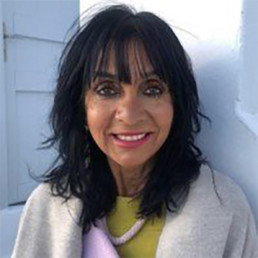
Written by Meena Wood
Meena Kumari Wood is a former HMI (Ofsted), LA Adviser, FE College Principal and Principal of a Secondary Academy, is now a consultant, trainer and leadership coach across the British and International Education sectors.
Original article published in Teach Secondary – Issue 15.6 September 2026
The government’s recent curriculum review presents a golden opportunity for teachers to tackle some pernicious myths while highlighting the value of active citizenship, writes Meena Wood…“The teaching of history through sourced evidence shouldn’t amount to a binary choice of ‘good versus evil’”.
Some 40% of children sitting in classrooms in the UK are from heritages other than White British. We should be empowering our young people to be truly proud of their individual and collective heritages, and the contributions they make to society.
But if children can’t identify themselves within the historical narratives they’re given, how can we hope to create a diverse and cohesive society?
Lasting legacies
Up to now, generations of young people have been taught that Britain was an intrinsic force for good against Nazi tyranny, and ‘saved the world’ in both World Wars. But how many have also learnt that Churchill’s victory also contributed to the committing of atrocities across the Indian Empire?
As Shashi Tharoor observed in his 2017 book, Inglorious Empire, the great Bengal famine of 1943 resulted in the deaths of millions, as rice was exported to feed the Empire’s troops. Churchill, however, attributed the famine to the fact that Indians were “Breeding like rabbits”.
While learning about the history of the British Empire, are students being made aware of the lasting legacies of those employed by the East India Company? Of how certain employees ‘acquired’ riches and subsequently invested them in some of Britain’s finest buildings, and even the de facto ‘purchase’ of a Parliamentary seat? Thomas Pitt, for one, famously founded a Prime Ministerial dynasty (William Pitt, followed by his son) via the purchase of a diamond whilst he was Governor of India.
No statutory requirement to teach British Imperial history currently exists within the National Curriculum. When selecting their GCSE syllabi, schools may therefore be reluctant to opt for the relatively new ‘Migration’ option, due to the complex perspectives involved and relative scarcity of supporting resources.
A binary narrative
Yet the fact remains that the teaching of history really should present a balanced view of colonisation, the British Empire and their impact on peoples from Africa, Asia and Ireland. As Wendy Williams noted in her 2018 review of The Windrush scandal, it was “In part able to happen because of the public’s and officials’ poor understanding of Britain’s colonial history, the history of inward and outward migration, and the history of black Britons.” (see tinyurl.com/ts156-H1).
We can also look to the entrenched binary narrative that surrounds the enslaving of Black Africans by Whites, when the reality was more complex and nuanced. My own birthplace of Zanzibar became (in)famous for its clove plantations, and slavery practised there from the 17th to the 20th century. There are records of Africans sold into chattel by their own tribal chiefs to Arab Traders, for whom Zanzibar served as a key East African trading hub. Slaves were held at Prison Island, worked on plantations there or were transported to other destinations.
The teaching of history through sourced evidence shouldn’t amount to a binary choice of ‘good versus evil’, if only because the selection of that ‘sourced evidence’ will decide the narrative our students end up learning. The presence of different perspectives has to be a feature of history. Otherwise, immutable, unforgiving and often incomplete historical interpretations can persist as intergenerational legacies.
A sense of belonging
More broadly, our children need to see for themselves how our collective history is a multi-faceted prism that continues to have considerable influence over how we live our lives today.
Citizenship, history and geography lessons can and should enable students to learn about the historical unity of European nations when it came to fighting tyranny and fascism alongside the ANZAC, African and Asian troops, the factors that eventually led to the establishment of the EU and the continuing relevance of those factors to today’s ongoing debates over Brexit and migration, among many other issues.
The citizenship curriculum should reference why voting is of paramount importance within a democracy, because it’s only through exploring their identities and communities that children can develop a genuine sense of belonging, pride and active citizenship that will see them supporting efforts towards equality and cohesion.
Perpetuating a polarised view of British history risks creating schisms in our society and a rise in xenophobia towards migrants. These are counter to young people developing global citizenship. The relevance of migration to children’s lives today is perhaps more tangible now than it ever has been, and was especially visible during the 2026 World Cup – a football tournament in which 80% of the England team (and its three highest-scoring players) were of Black or dual heritage.
Approaches that resonate
Young people will further benefit from acquiring the critical literacy and thinking skills needed to thoughtfully question what they see and read, and develop the curiosity to explore topics more deeply.
The Finnish education model, in which critical thinking is embedded across the curriculum, encourages students to hone their research skills, weigh up evidence, understand biases, navigate persuasive arguments and substantiate their conclusions. Only as critical readers will British children be able to understand for themselves the true, multi-faceted legacy of the British Empire when presented with source evidence.
Adopting fresh approaches to the teaching of certain subjects may also simply resonate with children in a more positive way. For instance, learning that the Moghul Empire – and the economic expansion it enabled – lasted in India for 330 years until its dissolution in 1857 by Queen Victoria raises some interesting questions.
Katie Llewellyn is a lead practitioner in Humanities and Social Sciences at Hatch End High School in Harrow. In her telling argument, taking a ‘revisionist view’ when tackling sensitive topics could involve : “Here’s how a topic has been taught. Does this meet current expectations? Is the 1857 ‘Indian Mutiny’ an uprising against political and economic oppression, or even a War of Independence?
“Students love to argue their perspective and reach their own conclusions. Teaching history in this way will give rise to a generation of citizens who think for themselves.”
Diverse histories
As educators, we now face the challenge – and opportunity – of radically rethinking our curriculum and what it teaches. The Historical Association, via its work on this year’s South Asian Heritage Month and other such initiatives, has been leading on the history curriculum review, in a way that could eventually see South Asian history accorded equivalent space within the curriculum as African history, Black slavery and Windrush.
As Louisa Dunn and Hannah Cushion of Kensington Palace’s Schools Team point out, “Including the inspiring stories of the Last Princesses of Punjab in the curriculum offers a way into Empire, migration, activism and resistance. As suffragists, their voices are both human and relatable and signpost their important contributions to British society.”
At a more local level, the ‘Hidden Heritages: One School, Many Stories’ initiative aims to assemble an intergenerational oral history project. Students taking part in the project do so as active historians and curators of the South Asian Cambridgeshire community, preserving local histories and heritages, while simultaneously deepening their understanding of British history.
There is also The British Library’s digital ‘South Asians in Britain, 1830s to present’ showcase, which highlights migrants’ contributions to the country over a span of almost 200 years. These diverse histories include the election of the pioneering political leader Dadabhai Naoroji as MP for Finsbury Central in 1892, as well as the life of Noor Inayat Khan – a British-Indian spy during WWII, who died in Dachau concentration camp for refusing to give up her secrets. South Asian Britain: Connecting Histories, a free web resource
The British Library’s Discovering Historical Sources resource additionally gives teachers and students access to a range of expert articles, activities and notes to support the study of migration and empire in English, citizenship, history, politics and sociology lessons.
We should enable all of our children to become more knowledgeable citizens, pursue opportunities to learn about the various facets of their own heritage, and ultimately join the dots from yesteryear to the present day – but we’ll only see those efforts have a lasting impact, when reflected through a balanced and nuanced curriculum.
Building Trust, Cultivating Belonging: What We Have Learned from Working with Our GRT Community
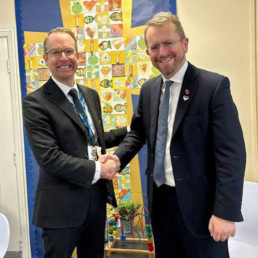
Written by Matthew Parker
Matthew Parker is Head of School at Wolvey CoE VC Primary School, part of the Ignite Federation. The school won the B.D.S.C (Black and Diverse Safeguarding committee) Equity and Inclusion organisation of the year in 2026.
At Wolvey CofE Primary School, we are incredibly proud of our school and the unique community we serve. Around 35% of our pupils come from our Traveller community, alongside a significant Nepalese Gurkha community. This cultural richness is an important part of who we are as a school.
Our vision is simple: “Among us, you are equal.” For us, those words cannot simply sit on a website, a wall or within a school improvement plan. They need to be experienced by the children and families who walk through our doors every day.
Our work with our Gypsy, Roma and Traveller (GRT) community has developed over many years. We certainly would not claim to have all the answers. What we have learned, however, is that meaningful inclusion begins with relationships.
Trust comes before engagement
Schools often talk about wanting families to engage more closely with education. But before asking why a family is not engaging with us, perhaps we need to ask a different question: What have we done to earn their trust?
We recognise that traditional educational settings have not always served GRT children and families well. Distrust does not disappear because a school says that its doors are open. Trust has to be built.
It grows through consistency, listening, compassion and doing what we say we will do. It grows when families know they will be treated with dignity. It grows when we take time to understand communities rather than expecting communities to understand and adapt to us.
Over time, our relationships with our GRT families have become central to the culture of Wolvey. Families who may previously have felt disconnected from education now engage actively with school life. Attendance has improved and children increasingly experience school as somewhere they feel safe, valued and able to succeed.
Representation matters
Belonging is also about being able to see yourself within the culture of your school.
Our celebration of GRT History Month has therefore become an important part of our work. We have collaborated with local artists, community representatives, Warwickshire County Council and other schools to create meaningful opportunities for children to explore and celebrate GRT culture and identity.
One of these projects culminated in a district-wide celebration at Warwickshire Police Headquarters, bringing together children, families, school leaders, police representatives and members of the wider community.
Another has left a permanent legacy within our school. We commissioned a nationally recognised GRT artist to work alongside our children to create a bespoke wolf sculpture representing our school values. The children were involved in the creative process and were able to share their stories, identities and ideas. The finished sculpture represents courage, belonging, kindness and equality.
For our GRT children, it also says something important: You are visible here. Your culture is valued here. You are part of the story of this school.
Belonging should not require assimilation
Perhaps one of the most important lessons we have learned is that inclusion should not require children to leave parts of themselves at the school gate. We want our GRT children to be ambitious. We want them to attend school, engage with learning and experience educational success. We hold high expectations for them because we believe deeply in their potential. But those aspirations should never require them to become less of who they are.
Our children should not need to change their identity in order to succeed within education. Instead, we need to be willing to ask how education can evolve to include them more successfully. That distinction matters.
Schools can become trusted community anchors
We have also learned that our responsibility does not necessarily end at the classroom door. Some of the families within our community experience barriers when accessing healthcare and other public services. Because relationships with school are strong, we have been able to use that trust to help families connect with wider support.
We have worked alongside NHS teams, local doctors and healthcare providers to improve access to vaccinations and preventative healthcare. We also host a monthly pop-up baby surgery within our community, providing families with access to support in a familiar and trusted environment. Similarly, we have worked proactively with local police teams to strengthen relationships with our GRT community.
Where there has historically been distrust or misunderstanding between families and agencies, schools can play an important role in building bridges. This requires honest conversations, advocacy and a willingness to challenge prejudice when we encounter it.
Sometimes inclusion means welcoming. Sometimes it means listening. And sometimes it means being prepared to stand alongside a community and challenge discrimination.
Small changes can have a significant impact
Our work has also given us opportunities to contribute to conversations beyond Wolvey. We worked directly with the Department for Education to support the creation of a film promoting “Best Start in Life” opportunities for GRT families. Its message encouraged families to “take a leap of faith” with education, while also challenging schools to consider the intentional changes they can make to improve inclusion and engagement.
I have also had opportunities to share our learning through GRT conferences and leadership events. I return repeatedly to the same message – there is no single initiative that creates belonging – it is built through the accumulation of intentional actions, relationships and decisions.
From intention to impact
We are proud that this work was recently recognised nationally when Wolvey CofE Primary School was named Equity and Inclusion Organisation of the Year 2026 at the Black and Diverse Safeguarding Awards. It was an incredibly proud moment for our whole school community, but the award matters because of what sits behind it.
During our 2023 Ofsted inspection, inspectors recognised the behaviour, attitudes and engagement of our pupils. Our GRT children enjoy learning, work hard and participate enthusiastically across school life.
For me, those outcomes are connected to something much deeper: children engage when they feel safe; families work with schools when they experience trust; children are more able to flourish when they know that who they are is not merely tolerated, but recognised and valued.
Our experience at Wolvey has taught us that inclusion cannot be performative or temporary. It needs to be sustained, relational and embedded within the everyday culture of a school.
What might other schools consider?
Every school and every community is different. Our approach cannot simply be lifted from Wolvey and replicated somewhere else.
But there are questions that I believe all school leaders can ask:
- How well do we really know our GRT families and communities?
- Have we taken time to listen before deciding what they need?
- What might their previous experiences of education have taught them about schools?
- Where do GRT children see their culture, history and identity reflected within our school?
- Are our expectations high without requiring assimilation?
- How are we building relationships with parents and carers beyond moments of difficulty?
- Could our school act as a bridge between families and other services?
- Are we prepared to challenge prejudice and discrimination when we encounter it?
- Most importantly, how do we know whether our GRT children and families actually experience a sense of belonging?
Our work continues to evolve. We continue to listen, learn and adapt. But one thing has become increasingly clear to me – if we want families to take a leap of faith with education, schools need to be prepared to take a leap of faith too.
We need to move beyond expecting communities to fit into systems that were not necessarily designed with them in mind. We need to build relationships based on dignity, curiosity and trust because our children should never have to choose between their identity and their education. They deserve both. And they deserve schools in which they know, without question: among us, you are equal.
Belonging Begins Before the Classroom: What I Learned from Recruiting Global Majority Career Changers into Teaching

Written by Ayesha Shaikh
Ayesha is a Career Change & Recruitment Specialist at Now Teach, where she led the recruitment element of the Mission 44 Diversity in Education Fund pilot, supporting efforts to increase representation within the teaching profession. A former teacher and senior leader, she brings over 10 years of experience in education across the UK and Dubai. She is passionate about creating more inclusive pathways into teaching and ensuring that people from diverse backgrounds can see themselves reflected in, and feel that they belong within, the profession.
What makes someone believe they could become a teacher?
Perhaps it starts with a moment of recognition: seeing someone like themselves standing at the front of a classroom. Perhaps it’s a conversation with a teacher who inspires them. Or perhaps, after years in another career, it’s the realisation that the skills, experience and perspective they’ve built could make a difference to children and young people. For many career changers, deciding to become a teacher is a significant leap of faith.
So, when we talk about creating a more diverse teaching profession, we need to look beyond how we attract people to teaching. We also need to think about what happens once someone takes that first step. Does the journey into teaching make them feel that there is a place for them? This is one of the biggest questions I’ve been left with after leading the recruitment element of the Mission 44 funded pilot at Now Teach in partnership with Mindful Equity UK and the National Institute of Teaching.
Creating a different route into teaching
The Mission 44 funded pilot was designed to increase the number of teachers from Global Majority backgrounds entering the profession, with a particular focus on career changers aged 35 and over. Funded by Mission 44, a collaborative pilot brought together Now Teach, the National Institute of Teaching (NIoT), and Mindful Equity UK to recruit Global Majority career changers across the West Midlands, with a portion of those recruits joining NIoT’s September 2026 teacher training cohort.
As Project Lead at Now Teach, I led the recruitment element of the pilot. I developed our recruitment approach, built relationships with potential candidates and partners, supported candidates through their journey into teacher training and worked closely with colleagues across the partnership to understand what candidates needed and, where possible, implement those things. Now that the recruitment phase has come to an end, I’ve had the opportunity to step back from the day-to-day work and reflect on what the experience has taught me.
The biggest lesson is a simple one: belonging begins before the classroom.
A candidate doesn’t experience a recruitment funnel
We often describe recruitment as a funnel. Someone hears about an opportunity, expresses an interest, applies, is assessed, receives an offer and eventually begins training. From an organisational perspective, this makes sense. But no candidate experiences their journey as a funnel. They experience it as a series of human interactions, each one shaping their perception of whether this is a profession, and an environment, in which they can see themselves thriving.
A message can make someone feel encouraged to take the next step. A conversation can give them confidence. An application form can feel manageable or overwhelming. A question about eligibility can either provide clarity or create uncertainty. A wait for an answer can either feel reassuringly short or leave someone questioning whether they are making the right decision. An interview, a decision and every interaction in between all contribute to the overall experience.
For a career changer, this can be particularly significant. They may already be questioning whether they are making the right decision, while also considering the financial implications of retraining, balancing wider life or family responsibilities or wondering whether their previous professional experience will really be valued in a school.
This has made me think differently about the role recruitment plays in building confidence. Every interaction is an opportunity to reassure someone that they belong, rather than create another barrier to entering the profession.
Start with listening
One of the most valuable parts of the pilot was the opportunity to listen closely to candidates and understand what was influencing their decisions. It’s easy for organisations to decide what people from underrepresented backgrounds need and then design initiatives around those assumptions. But the more we listened, the clearer it became that there is no single “Global Majority candidate experience”.
People brought different careers, circumstances, ambitions and concerns. For some, finances were central to the decision; for others, location or childcare mattered. Some needed clarity around eligibility, while others needed reassurance that the skills they had developed over many years outside education would be relevant in the classroom. These might sound like practical issues rather than questions of belonging, but they are closely connected. If the route into teaching doesn’t feel accessible within the reality of someone’s life, it becomes much harder for that person to imagine themselves succeeding within the profession.
This reinforced an important principle for me: we need to design with people, not simply for them. Inclusive recruitment starts with curiosity. It means asking candidates what they need, listening to the answers and being willing to adapt, rather than assuming that one intervention or one approach will work for everyone.
Career changers bring more than a career history
The pilot also reinforced for me the enormous potential of career changers. Someone who enters teaching later in life doesn’t arrive empty-handed; they bring years of experience, knowledge and skills that can enrich a school and, ultimately, the experiences of the children and young people within it. They may have led teams, managed complex projects, worked with communities, solved problems, communicated with different audiences, built businesses, worked across cultures or developed deep expertise in a particular field.
At the same time, changing career can mean feeling like an outsider. Career changers are entering a profession with its own language, structures, expectations and traditions, and they may have questions that someone coming directly from university doesn’t. They are also making a significant transition, often alongside financial, family and practical considerations that can make the decision to retrain feel particularly daunting.
That’s why I think we need to stop thinking about career changers simply as another recruitment pool. They are people bringing a wealth of experience into a new profession, and our role is not to lower the bar or remove the standards that make teaching a profession. It’s to make the route into teaching clear, navigable and supportive, while recognising the strengths that people already possess and helping them understand how those strengths can translate into the classroom.
Inclusion lives in the details
The pilot also changed how I think about inclusive recruitment. When we think about diversity and inclusion, we often think about big things: targeted campaigns, dedicated programmes, diversity strategies and new initiatives. These matter, but sometimes inclusion is much quieter and can be found in the details of someone’s experience.
It’s a prompt response to someone’s question. It’s explaining a process clearly and making someone feel comfortable enough to say, “I don’t understand this, can you help me?” It’s recognising that a candidate’s previous career is an asset rather than something they need to leave behind. It’s being flexible when someone’s circumstances require it and taking the time to understand the individual behind the application.
None of these things, in isolation, feels revolutionary. But together, they can fundamentally shape someone’s experience of entering a profession. They can determine whether someone feels that the system is working against them, or whether they feel that there are people within it who genuinely want to see them succeed.
And that’s where I think the connection between diversity and belonging becomes particularly important.
From representation to belonging
Increasing representation matters enormously. Children and young people deserve to see a teaching profession that reflects the diversity of the communities around them, while schools benefit from the breadth of experiences, perspectives and knowledge that a diverse workforce brings.
But representation is not the end point. We also need to think about what happens once people are through the door. Do they feel valued? Are their experiences recognised? Can they see opportunities to progress? Do they feel able to contribute their perspective? Most importantly, do they feel that they belong?
Recruitment can open the door, but belonging is what makes someone believe they can stay on the other side of it. This is why I think diversity and belonging need to be considered together. We cannot focus solely on changing who enters the profession without also thinking about the experience we create for those people once they arrive.
For me, this means that the goal of diversity recruitment shouldn’t simply be to increase the numbers. It should be to create a profession where people can see themselves, recognise the value of what they bring and believe they can thrive.
What I will take forward
When I began working on the Mission 44 pilot, I was focused primarily on recruitment: how could we reach the right people, encourage them to consider teaching and support them through the process and into teacher training? I still care deeply about those questions, but I finish the recruitment phase thinking about something broader: what does it take for someone to believe that they belong?
Sometimes it starts with seeing themselves represented. Sometimes it’s someone believing in their potential. Sometimes it’s a straightforward answer to a difficult question, or a system that is flexible enough to recognise that people arrive with different circumstances and different strengths. And sometimes, it’s simply another person saying, “You have something to offer here.”
That, for me, is the real opportunity within diverse recruitment. It’s not simply about increasing the numbers or meeting a target; it’s about widening the doorway into teaching and helping more people recognise that the experience they’ve accumulated throughout their lives can have a place in the classroom.
The Mission 44 recruitment phase may now be complete, but the questions it has raised will stay with me. If we want a teaching profession that better reflects the communities it serves, we need to think about the whole journey into teaching, not just how we get people through the door, but how we make them want to walk through it.
Because belonging doesn’t begin on a teacher’s first day in school. It begins much earlier – with the first moment someone starts to believe that there might be a place for them in the profession, and that sense of belonging can ultimately benefit countless pupils.
Racial Equity in Sheffield: From Commitment to Collective Action
Written by Hannah Wilson
Founder and Director of the Belonging Effect (formerly Diverse Educators).
On Friday, I co-organised and co-hosted a Racial Equity Conference in Sheffield for our partners, Sheffield City Council and Learn Sheffield, in collaboration with our Belonging Effect Associate, Homaira Ibrahim.
We opened the day with Simon Sinek’s Golden Circle, inviting everyone in the room to reflect on and share their why. Why were we there? Why does racial equity matter to us? Why are we committed to doing this work?
Before beginning the programme, we also stood together to show our respect and collectively share our condolences with the family, friends and colleagues of Professor Jason Arday.
It was a poignant way to begin a day centred on race, equity, inclusion and belonging.
But the conference was not simply an opportunity to talk about racial equity. It was an opportunity to explore what racial equity looks like when we examine our systems, interrogate our practice, listen to different lived experiences and consider what we are collectively prepared to change.
Because intention matters. But intention alone does not create equity.
Context and collective responsibility
Our first contributions located the conversation firmly within Sheffield.
Fatima Khan-Shah, Chair of the Race Equality Partnership Sheffield (REPS), explored Sheffield’s race equity journey and the role of REPS, highlighting how race equity sits at the heart of the city’s goals and considering the particular role that education and schools play within this wider context.
Meredith Teasdale-Dixon, Strategic Director at Sheffield City Council, focused on responsibility. How do leaders improve outcomes for children and families across Sheffield? How do we create more equitable opportunities and experiences? And importantly, how do we ensure that our commitment results in measurable change?
Dr Shirley Woods-Gallagher, Assistant Director at Sheffield City Council, then explored belonging through an anti-racist lens.
Her contribution connected race, identity, power and inclusion with wellbeing, achievement and community cohesion. Drawing on Sheffield’s citywide Belonging Framework and wider inclusion work, she challenged us to consider how anti-racist practice moves beyond policies and statements of intent and becomes visible in our everyday behaviours, relationships and decision-making.
There was an important thread emerging: racial equity cannot belong to one team, one strategy, one leader or one organisation – it requires collective responsibility. It also requires effort as mentors, coaches and sponsors. Shirley’s role as mentor coach acting as the ladder and lamp for an AuDHD Black trainee teacher really stood out for very many of the audience.
Moving from allyship to advocacy
My contribution to the day focused on allyship and advocacy and, specifically, the journey we take as allies. I invited colleagues to reflect on privilege, vulnerability and our willingness to get things wrong.
Anti-racist work can create discomfort. It can surface strong emotions. It can challenge our perception of ourselves as inclusive people and force us to recognise the occasions when our intentions and our impact have not aligned. But discomfort cannot become an excuse for disengagement.
We need to develop the confidence and courage to create and hold safe spaces for difficult conversations. We need to become more comfortable with being challenged, with learning from mistakes and with recognising what we do not yet know. And we need to be prepared to challenge language, behaviours, decisions and practices that exclude or disadvantage others.
Jennifer Brown’s Allyship Continuum invites us to consider a journey from Apathetic to Aware, from Aware to Active, and ultimately from Active to Advocate.
Perhaps one of the most important questions we can ask ourselves is not simply:
Where do I think I am on that continuum?
But:
What evidence would somebody else use to place me there?
Allyship is not something we declare. It is something other people experience through our choices, behaviours and actions.
Holding the space for inclusion and belonging
Professor Paul Miller, from the Institute for Equity at University Centre, challenged us through his provocation, Democratic Failure or Democratic Resistance: Holding the Centre-Ground in the Fight for Inclusion and Belonging.
His contribution created space for us to think about the wider environment in which our work is taking place and the importance of continuing to engage with questions of inclusion and belonging when they are contested.
Anti-racist practice does not happen in isolation from society. Our schools, organisations and communities are influenced by the narratives, tensions and inequalities that exist beyond their walls.
This means that our commitment to equity cannot simply be reactive. It requires us to understand the context in which we are leading and educating, while remaining clear about our responsibility to create environments in which every child, family and colleague can experience dignity, safety and belonging.
Intersectionality changes what we see
One of the most important themes of the day was intersectionality. Too often, our organisational approaches separate different aspects of inclusion into parallel workstreams. Race sits here. SEND sits there. Gender, faith, socio-economic disadvantage and other aspects of identity sit somewhere else. But people do not experience their identities separately.
Domini Choudhury, Associate at The Belonging Effect, explored what happens when we frame SEND intersectionally. Her session challenged colleagues to consider the multi-layered barriers some learners and their families navigate when trying to have their needs recognised and met. These include societal and systemic barriers within the SEND system itself, but also culturally specific barriers to diagnosis and support.
Cultural and religious frameworks can shape how disability and additional needs are understood. Practitioner bias and unconscious assumptions can influence whose needs are recognised, how behaviours are interpreted and what support is offered.
This creates an important challenge for leaders:
- What happens when we interrogate our SEND data through an intersectional lens?
- Who is being identified?
- Who is not?
- Who receives support, and when?
- Whose behaviour is interpreted as a need and whose is interpreted as a problem?
The data we collect matters. But the questions we are prepared to ask of that data matter too.
Language, identity and the experiences of Black boys
Johnoi Josephs and Albert Adeyemi, founders of Black Men Teach, focused our attention on the educational experiences of Black boys. Their contribution explored the relationship between the language we use and the realities and self-belief we help to create.
Language is never neutral. The words we use to describe children communicate expectations. They shape relationships. They influence how other adults perceive a child and, over time, can influence how that child perceives themselves.
Johnoi and Albert invited us to think intentionally about how we build pride, belonging and positive identity both inside and outside the classroom, and how we create accessible and empowering learning environments in which Black boys can thrive.
This requires us to move beyond deficit narratives and ask different questions:
- Not What is wrong with this child?
- But What might this child be experiencing?
- Not Why will this family not engage?
- But What barriers might we have created to engagement?
- Not simply How do we raise achievement?
- But How do we create the conditions in which children feel seen, valued, understood and able to succeed?
Whose lived experience are we centring?
Olivia Morrison from The Traveller Movement brought another vital perspective to the conversation. Her session explored the discrimination experienced by Romani (Gypsy), Roma and Irish Traveller people, the equality gaps that persist, and the importance of working in genuine partnership with the communities.
Central to this was the need to centre lived experience within anti-racist activity. There is an important distinction between designing for communities and working with them.
If we are serious about equity, we cannot assume that professional expertise gives us all of the answers. We need to listen to people whose experiences of our institutions and systems may be very different from the experiences we believe we are creating. That requires humility. It also requires us to ask who is missing from the conversations in which decisions about them are being made.
Bringing the conversation back to Sheffield
Homaira Ibrahim, Race Equality Partnership Manager at Sheffield City Council and Belonging Effect Associate, brought the different threads of the day back together through the specific context of race, ethnicity and belonging in Sheffield schools. She shared findings from Sheffield’s Race Equality Commission and its recommendations for education, alongside the city’s ethnicity data and current landscape.
She also highlighted the work of AREAS, the Anti Racist Education Alliance Sheffield, the support available for Sheffield schools and opportunities for future collaboration.
This was important. National conversations help us understand patterns and systems. Research helps us understand evidence. Lived experience helps us understand impact. But ultimately, equity work also has to become local:
- What does our data tell us about our children?
- What are our families telling us?
- What patterns can we see within our institutions?
- And what are we going to do about them?
From conversation to collective action
We ended the day with roundtable discussions prompted by Sheffield City Council’s Director of Belonging, Steve Kay.
Three questions were posed:
- What support, resources or opportunities would help you further develop your anti-racist practice?
- What actions can we take collectively to improve outcomes and opportunities for Roma children, families and communities?
- How can we strengthen engagement with marginalised groups to ensure equitable access to Early Years provision?
For me, these questions captured something important about the day. They moved us from What have we heard? to What are we going to do?
Because conferences can create powerful moments of reflection, connection and learning. But the real test comes afterwards – what changes when we return to our schools, teams, organisations and communities?
We show up. We stand up. We speak up. We check in.
We ended the conference by making commitments:
- We show up – Not only when conversations are comfortable or when racial equity is on the agenda, but consistently.
- We stand up – We challenge inequity when we encounter it. We notice who has power, who has access, who is heard and who may be overlooked.
- We speak up – We use our voices, our influence and our privilege to challenge exclusion and advocate alongside others.
- We check in – We listen. We reflect. We seek feedback. We examine our impact. And when necessary, we change our approach.
Anti-racist practice requires us to move through the fear zone, into the learning zone and onwards into the growth zone. It requires curiosity, humility and courage. And it requires action.
The question is not simply whether we care about racial equity. I imagine that most people who chose to spend Friday in that room do.
The harder questions come next:
- What will we notice that we did not notice before?
- What will we question that we previously accepted?
- Whose experiences will we seek to understand?
- What conversations will we now be willing to have?
- What will we challenge?
- What will we change?
Because our commitment to racial equity cannot be measured solely by what we say in rooms where people have gathered because they already care about it. It must be visible in what happens when we leave those rooms. That is where awareness becomes action. That is where allyship becomes advocacy. And that is where we begin shaping intention into impact.
Continue the learning
For those wanting to continue their learning and reflection, my recommended reading from the day was Emma Dabiri’s What White People Can Do Next.
Professor Miller has also shared the article that he cited in his talk: A common enemy approach to anti-racism in higher education | THE Campus Learn, Share, Connect
The Belonging Effect also has a range of free resources to support individuals, schools and organisations in developing their DEIB practice, including our DEIB Calendar, blogs, toolkits, reading lists and glossaries.
Further development opportunities discussed during the day included Sheffield City Council’s Developing Racial Literacy programme, The Belonging Effect’s Diverse Leaders programme, and our Anti-Racism Virtual Conference.
The conference may have ended on Friday. The work, of course, needs to continue and be sustained.
Cultivating a Culture of Belonging: It Is Never ‘Done’
Written by Hannah Wilson
Founder and Director of the Belonging Effect (formerly Diverse Educators).
Last week, I had the privilege of chairing a panel at the IAPS Heads’ Conference exploring a question that sits at the heart of my work: how do we cultivate a culture of belonging for all?
I was joined by three school leaders, Charlotte Crookes, Fergus Llewellyn and Sadia Hussain-Savuk, who generously shared their personal and professional journeys through Diversity, Equity, Inclusion and Belonging (DEIB).
What struck me throughout our conversation was not a claim to expertise or a presentation of perfectly packaged solutions. Instead, there was honesty, vulnerability and a willingness to share what had been learnt along the way. Their reflective and inclusive leadership modelled how we need to show up to start the work and how we position ourselves in order to sustain it.
Belonging is not something we complete
I framed our conversation by considering what we actually mean when we talk about belonging. For me, belonging is about being seen, heard, included, valued and safe. It is about being able to bring our whole selves into a space without having to edit, minimise or leave parts of our identity at the door.
Belonging is not something we achieve, tick off and move on from. It is dynamic. It is relational. It is contextual. Most importantly, it is cyclical.
As our communities change, our understanding needs to change with them. As we learn more about the lived experiences of our pupils, staff and families, we need to be prepared to question practices that may once have seemed inclusive. As the world beyond our school gates changes, we need to consider what those changes mean for the people within them.
The work is never ‘done’.
Looking in the mirror before looking out of the window
One of the recurring themes in our discussion was the importance of reflection. Before asking what everybody else needs to change, leaders need to be prepared to look closely at themselves and their organisations:
- Who feels that they belong here?
- Who does not?
- Whose voices are heard most loudly?
- Whose experiences might we be missing?
- Who has learnt to navigate our culture successfully, and who is expected to adapt themselves in order to fit in?
And, perhaps most provocatively for independent schools: are we really as inclusive as we believe ourselves to be?
These are not comfortable questions. Nor should they be. Cultivating belonging requires us to look in the mirror before we look out of the window.
Responding to the world beyond the school gates
Our conversation also explored the responsibility schools have to respond to what is happening in wider society. I asked Charlotte to reflect on her journey through anti-racism and racial equity, and how school leaders respond when racism, division and social unrest become increasingly visible beyond the school gates.
These moments matter.
Children and young people do not leave the outside world at reception when they arrive at school. Neither do their families or our colleagues. News stories, political discourse, racism, discrimination and social tensions enter our classrooms through the experiences, fears, questions and conversations of the people in them.
Silence communicates something too.
This does not mean leaders need to have an immediate answer to every complex issue. Leadership is not about having all the answers. It is about how we respond when things are difficult, how we support others and the culture we create around us.
Sometimes courageous leadership begins by acknowledging that we do not have all of the answers and need to learn.
Listening to lived experience
Fergus shared reflections from a journey that has considered a range of identities and, crucially, has involved listening to stakeholders about their experiences of school. This is fundamental to bringing the whole school community with us on the journey.
We cannot measure belonging simply by looking at policies, representation or what leaders intended to create. We have to ask people what it feels like to be there. There can be a significant perception gap between our intention and somebody else’s experience.
Listening helps us find that gap. But listening needs to go beyond consultation. If we repeatedly ask people to share their experiences without demonstrating what we have heard, what we have learnt and what we will change, we risk creating consultation fatigue rather than belonging.
The question is not simply: ‘Have we asked?’ It is: ‘What have we changed because we listened?’
Young people should be co-creators, not consumers
Sadia brought another important dimension to the conversation: the role of young people themselves.
Our pupils care deeply about identity, equity and social justice. They notice inconsistency. They question systems. They experience our school cultures differently from the adults who lead them.
So why would we develop DEIB strategies for young people without developing them with young people? It reminds me of the commitment: nothing about us, without us.
Meaningful pupil voice is not about asking pupils to approve decisions that adults have already made. It means creating opportunities for young people to identify issues, shape priorities, challenge thinking and contribute to solutions.
When we involve pupils as co-creators, we communicate something powerful: your experience matters, your voice has value and you have agency within this community. That, in itself, cultivates belonging.
Courage without perfection
As we brought the panel to a close, I asked each panellist what advice they would give to leaders beginning, or developing, their own DEIB journey.
Several themes emerged:
- Being willing to be vulnerable.
- Acknowledging that it does not have to happen to you to matter to you.
- Listening deeply to your stakeholders and involving them as co-creators.
- Distributing responsibility so that inclusion does not become the work of one passionate individual.
- Creating enough psychological safety for people to make mistakes, acknowledge them, learn from them and do better.
- Taking tangible actions, such as signing up to the Halo Code, which challenges hair discrimination.
- Getting started, with small tangible steps to create momentum.
We addressed the fact that one of the dangers of this work is believing that we need to know everything before we can do anything. We do not. We instead need humility, curiosity and courage. We need to know when to lead, when to listen, when to ask for help and when to acknowledge that our understanding has changed.
From intention to impact
I ended the session by thanking Charlotte, Fergus and Sadia for their courageous leadership and their candour. Their stories reminded us that inclusive leadership is not demonstrated by claiming to have got everything right. It is demonstrated by being willing to ask difficult questions, hear difficult answers and respond intentionally to what we learn.
The feedback following the panel reinforced this. One attendee reflected on leaving with a renewed commitment to ensuring every pupil feels ‘seen, safe, valued and supported’, and to creating a culture where belonging is not merely an aspiration but a lived experience.
That distinction matters as:
- Most schools intend for children to belong.
- Most leaders would say they value inclusion.
- Most mission statements contain words such as respect, community, kindness or equality.
The challenge is not necessarily our intention. The real challenge is whether that intention is experienced by everybody.
So perhaps the questions we need to leave ourselves with are these:
- Who belongs in our schools?
- How do we know?
- Who might experience our culture differently from the way we imagine it?
- Whose voice have we not yet heard?
- What are we prepared to change because of what we hear?
And ultimately:
- How will we know when our intention has become impact?
Cultivating belonging is not a project, an initiative or a destination. It is an ongoing commitment to noticing, listening, learning and acting, and then having the courage to begin the cycle again.
Continue the conversation
At The Belonging Effect, our commitment is to Shaping Intention into Impact. Our team supports schools and organisations to move beyond good intentions and create cultures where belonging can be experienced, strengthened and measured.
References and resources
Explore our training and resources on The Belonging Effect website, including our Belonging Toolkit, and continue your professional learning with my book, Cultivating Belonging in Schools.
Herstory in Leadership
Written by Kiran Satti
Deputy Principal and National Curriculum Lead for Early Reading
This blog was previously published by Oasis Community Learning.
It has now been just over two years since I joined Oasis Community Learning, and I can say with certainty that I am not the same person I was when I arrived. When I first found Oasis, I was broken – I am still not sure how I found the strength to go through the interview process but reading through the blog I was asked to write for Oasis for HerStory month, I know how now. I was broken. Yet, time and time again, I understand growth comes through pain, reflection, discomfort and the difficult work of choosing to remain true to yourself.
One thing I know to be true as a woman from a global majority background, is that very little is ever simple. I was asked to write a version of my Oasis blog a few months ago for Belonging Effect, but I believe everything happens when it’s meant to. This summer has been another sh**show… Reflecting on the death of Jason Arday has made me question the idea of representation and what exactly is the purpose of it? When you’re representative of something different to the status quo, why is your life, your human life the thing that is in the balance?
We’re coming to the end of the summer and I’ve already seen too many reports about Meghan and Harry returning to the UK – and all I can see is a certain demographic of people ready and waiting with their pitchforks. What concerns and saddens me the most is whether Meghan will survive this time… have any lessons been learnt?
The fact is when we see a reimagined representation of a black man or a reimagined face of feminism, who is truly an intersectional representation of feminism… who does this trigger hate in? Why? Are you racist? Are you sexist? Are you projecting? In order for lessons to be learnt, we need to look inwards. Those that are reading this already do – you wouldn’t be in this space reading this otherwise. We know what the deep work is – many of us have had to dig deep to survive and at times dare to thrive.
If we base our assertions on the superficial, if I took the racism I have experienced at face value I would have become bitter. If I took the sexism and misogyny at face value, I would’ve lost my self respect and self worth… my peace of mind is what matters – more than anything.
Peace is a luxury in life. Peace of mind is not hard to come by when you are protected by privilege; when you do not fear for your life because of who you are; when you do not have to fight to be seen or heard as fully human; when you do not have to constantly prove yourself before you are allowed to belong.
Some don’t want you to belong – I have experienced this first hand. And when they’re seeing you blinded their privilege, being careless with your humanity isn’t something they feel guilty for. They have the privilege of not having to see you as a human – you are a threat to their status quo, to their version of success – how dare you arrive in all your worth and disrupt – unintentionally… when we’re living our values, you will disrupt those that aren’t living through values or ethics – and you highlight that fact.
Those who have witnessed my growth through education have often reminded me of my resilience, my determination and my kindness. Looking back, I realise I have always been a trauma-informed and trauma-responsive educator, because my own experiences have shaped how I see the world: its people, its systems and its levers of power. My traumas have not made me weaker. They have sharpened my ability to notice, to listen and to recognise humanity in others – and know what feel when I am not safe.
One pattern I have encountered, particularly when moving into leadership, is projection. At times, it can feel dehumanising: as though another person’s fear, insecurity or need for control is placed onto you until you begin to question yourself. Sometimes the intention seems to be to undermine you, to position you as difficult, or to push you out before you have had the chance to grow into your full potential – all while stifling you, tripping you up, keeping your head under water until you stop kicking… if you know, you know these feelings.
Representation matters deeply, but representation without commitment to the human being can become another kind of harm. The lesson I am taking from Jason Arday’s story is that systems rooted in patriarchy and inequality rarely make space willingly. Jason Arday was a beautiful, gifted black man – he smashed every single stereotype possible in the face of masculinity and academia.
The truth is Empowered women are not always made to feel safe; global majority women are not always truly represented; too often, they are presented as symbols while their voices, experiences and expertise are not fully valued, or at best used to further enable the status quo covering up the inequity it’s still feeding. That is why so many people learn it is safer to shrink once they “get there”. The idea of safety, that luxury of peace of mind, can feel more expensive the more successful you become.
This leaves me with a difficult question: are we selling the children we serve false hope if we do not also tell them the truth about the systems they may have to navigate? The idea and image of leadership – has it really changed? We’ve had glimmers of what could be – Jacinda Ardern, Alexandria Ocasio-Cortez … yet we have Putin, Trump, Netanyahu … we have global leaders destroying Mother Earth because they’re projecting their perceived power through acts of violence and aggression… the manosphere isn’t anything new – it’s been around since misogyny planted patriarchy into the soul of every system reliant now on capitalism… AI is the new world for patriarchy to keep on flourishing, division to keep breeding and inequity to be the face of perceived progress… it’s all a bit sh** really.
Throughout my journey, I have carried words that were never mine to hold:
- You’re too small.
- You’re too pretty; if you weren’t so kind, I would not like you.
- You’re not white.
- You’re too emotional.
- You care too much.
- You’re not ready to lead English.
- You need to be more resilient.
- That’s not the normal way.
For the most part, and unfortunately, it has often been women within certain organisations and institutions who have seen me as a threat to their status quo, they exemplified the dangers of internalised misogyny in women who don’t want to see the value of another woman in the same space: I was someone to contain, question, dismiss or damage before I could reach the potential they could already see in me but would not nurture. Some encounters have been inhumane, unkind and, at times, intentionally cruel.
One person seemed to believe her race made her better than me. Another was threatened by what I could become and made it clear she was not there to enable me, but to try to destroy me. One deeply hurt me. One did break me.
When you are not seen as a human being, it is a feeling you recognise. I have known it since I was little. When the world sees you as something less than fully human because you’re a girl, you learn that only you (and your mum’s tenacity) can plant the seeds of your worth. Only you can keep returning to yourself. Only you can decide that survival is not enough, that shrinking is not safety, and that your peace is worth protecting.
Humanity is what we are. Yet it is sometimes the very thing we fail to recognise in one another. My journey of leadership and growth has taught me that using my voice is not disruption, choosing peace is not weakness, and being true to myself is not optional. It is the foundation of the leader I am still becoming. I never took a child’s feeling of worth and safety for granted when I taught them – I made it very clear to them they were to question me, disagree with me and feel safe to take those risks to enable them to surpass their idea of their own success – and they did. I truly hope, in the age of AI, they are still thinking critically and challenging. As leaders, we should already be questioning, we should already be able to disagree, to challenge… based on our understanding of ourselves and what we think – and that sometimes means you’re going to disagree with yourself if you’re intention is to learn and understand – it doesn’t mean we deny the humanity in each other.
As we’re moving into another academic year, I am hoping we do not witness another gifted human, who is representative of the re-imagined, lose her power, break and fall. Meghan is one of the role models we look at as part of our Building on Barbie leadership work… and that is another hope… I hope we stop recycling the same argument about the commodification of feminism and only seeing the Barbie doll through the male gaze… look beyond the superficial to what the doll is meant to represent – a woman’s body is a woman’s body – it is hers to make the her life choices from… when you contextualise that with the fact that women’s body were not legally part of any medical research, that marital rape was legal until 1993…. Barbie’s silhouette is a challenge to the patriarchy, it’s a call to arms… in some ways, it was a political statement undermining the power of patriarchy and its influence on gender politics… in the 1950’s… the era of the original ‘trad-wife’ – if you look at the timing of the trad wife trend … it’s a reaction to the Barbie movie dissecting gendered assertions.
Caroline Flack. Jason Arday. Amy Winehouse…
I truly hope lessons have been learnt and we take care – we take care and see the human before we feel privileged enough to make comments.
I am starting to see my traumas and lived experience as a gift – the spectrum of human behaviour can be measured in degrees of cruelty and degrees of kindness, motive, perception, and environment all feed into how we choose to behave towards each other.
I’ve had men tell me I shine too bright – one tried to break me, but it’s been the women who have been relentless in their determination to trip me up, belittle me – try and diminish my talent and undermine my professional worth by finding things to pick on…
But I believe everything happens for a reason – I hope Jason Arday’s death does bring change, accountability and CARE.
Reflecting on my two years at Oasis, and navigating certain things this summer, I am grateful for the special, serendipitous moments have manifested. Some becoming forever moments like the my WomenEd chapter coming to life through the Building on Barbie Leadership Project – for now, I feel safe, I feel I am valued and I do feel I belong…
Intersectional Feminism – this is where hope resides.
Freedom of religion or belief: The missing conversation in school belonging?
Written by Kathryn Wright
Dr Kathryn Wright is Chief Executive Officer of Culham St Gabriel's Trust, an endowed charitable foundation dedicated to supporting high-quality religion and worldviews education. She works with schools, researchers, policy makers and wider communities to explore how education can foster inclusion, belonging and understanding across difference. Kathryn is passionate about creating opportunities for every child and young person to flourish in diverse and democratic societies. Find out more at www.cstg.org.uk.
When we talk about belonging in schools, we often focus on relationships, representation, voice and participation. These matter enormously. Yet there is another dimension of belonging that we do not always name explicitly: the freedom to be yourself, to express what matters to you, and to know that your identity will be respected.
This is where Freedom of Religion or Belief (FoRB) has an important contribution to make. Culham St Gabriel’s Trust, a charitable foundation, has recently published a new toolkit and model policy offering school leaders a practical framework for creating cultures where every member of the community can flourish.
At first glance, some people may assume that FoRB is only relevant to Religious Education or to pupils from faith backgrounds. In reality, FoRB is much broader. It is a human right that protects the freedom of all people to hold, change, express, or reject religious and non-religious beliefs. It belongs equally to, for example, the Christian, the Muslim, the Jew, the Humanist, the atheist, the Sikh, the spiritual-but-not-religious young person, and the pupil who is still exploring what they think about the world. It also belongs equally to the pupil, the parent, the teacher, the governor, in fact, the whole school community
However, what interests me most is not FoRB as a legal concept, but FoRB as a belonging concept.
Belonging is often described as the experience of being accepted, valued and included. Yet it is difficult to feel that you belong if essential parts of your identity must remain hidden. Equally, it is hard to develop trust within a community if difference is treated as something to fear rather than something to understand.
The toolkit begins with three simple educational principles. Pupils should have opportunities to talk about religion or belief, talk about freedom, and learn about human rights.
These principles resonate strongly with the wider belonging agenda.
When pupils learn to talk about their own beliefs and hear about the beliefs of others, they develop the language and confidence needed to engage across difference. When they learn about freedom, they begin to understand that their rights exist alongside the rights of other people. When they learn about human rights, they discover that dignity, equality and respect are not privileges granted to some, but entitlements belonging to everyone.
Importantly, the framework moves beyond curriculum content. It recognises that belonging is shaped by the daily decisions schools make.
Does staff training include religion and belief literacy? Are teachers equipped to distinguish between genuine curiosity, clumsy language and hate-motivated behaviour? Do policies clearly address antisemitism, anti-Muslim hate and other forms of religiously motivated discrimination? Are pupils given opportunities to express their views respectfully, even when disagreement exists?
These are not peripheral questions. They are questions about culture.
The strongest aspect of the framework is its emphasis on both promoting and protecting FoRB. Too often inclusion work focuses only on celebration. Celebration matters, but it is not enough. Schools must also be prepared to respond when individuals experience prejudice, exclusion or discrimination. The documents acknowledge that some of the most common violations of FoRB in the UK are experienced through discrimination and hate incidents, making active protection just as important as promotion.
This distinction feels particularly significant in our current climate. Schools are navigating increasingly complex conversations about identity, belief, freedom of expression and social cohesion. Leaders can feel caught between competing pressures. Yet the answer is rarely to avoid these conversations. More often, it is to create the conditions where they can happen safely, respectfully and thoughtfully.
That is why belonging and FoRB are such natural partners. Both are grounded in the conviction that people matter. Both seek to create environments where individuals can participate without leaving part of themselves at the door. Both require us to balance individual freedom with collective responsibility.
Ultimately, a school where freedom of religion or belief flourishes is not simply a school where pupils learn about rights. It is a school where those rights shape everyday practice. It is a school where difference is encountered with curiosity rather than suspicion, where dignity is protected, and where every member of the community can say, with confidence: “I belong here.”
Link to the resources: https://www.reonline.org.uk/resources/inclusive-schools-promoting-and-protecting-freedom-of-religion-or-belief/