
Herstory in Leadership
Written by Kiran Satti
Deputy Principal and National Curriculum Lead for Early Reading
This blog was previously published by Oasis Community Learning.
It has now been just over two years since I joined Oasis Community Learning, and I can say with certainty that I am not the same person I was when I arrived. When I first found Oasis, I was broken – I am still not sure how I found the strength to go through the interview process but reading through the blog I was asked to write for Oasis for HerStory month, I know how now. I was broken. Yet, time and time again, I understand growth comes through pain, reflection, discomfort and the difficult work of choosing to remain true to yourself.
One thing I know to be true as a woman from a global majority background, is that very little is ever simple. I was asked to write a version of my Oasis blog a few months ago for Belonging Effect, but I believe everything happens when it’s meant to. This summer has been another sh**show… Reflecting on the death of Jason Arday has made me question the idea of representation and what exactly is the purpose of it? When you’re representative of something different to the status quo, why is your life, your human life the thing that is in the balance?
We’re coming to the end of the summer and I’ve already seen too many reports about Meghan and Harry returning to the UK – and all I can see is a certain demographic of people ready and waiting with their pitchforks. What concerns and saddens me the most is whether Meghan will survive this time… have any lessons been learnt?
The fact is when we see a reimagined representation of a black man or a reimagined face of feminism, who is truly an intersectional representation of feminism… who does this trigger hate in? Why? Are you racist? Are you sexist? Are you projecting? In order for lessons to be learnt, we need to look inwards. Those that are reading this already do – you wouldn’t be in this space reading this otherwise. We know what the deep work is – many of us have had to dig deep to survive and at times dare to thrive.
If we base our assertions on the superficial, if I took the racism I have experienced at face value I would have become bitter. If I took the sexism and misogyny at face value, I would’ve lost my self respect and self worth… my peace of mind is what matters – more than anything.
Peace is a luxury in life. Peace of mind is not hard to come by when you are protected by privilege; when you do not fear for your life because of who you are; when you do not have to fight to be seen or heard as fully human; when you do not have to constantly prove yourself before you are allowed to belong.
Some don’t want you to belong – I have experienced this first hand. And when they’re seeing you blinded their privilege, being careless with your humanity isn’t something they feel guilty for. They have the privilege of not having to see you as a human – you are a threat to their status quo, to their version of success – how dare you arrive in all your worth and disrupt – unintentionally… when we’re living our values, you will disrupt those that aren’t living through values or ethics – and you highlight that fact.
Those who have witnessed my growth through education have often reminded me of my resilience, my determination and my kindness. Looking back, I realise I have always been a trauma-informed and trauma-responsive educator, because my own experiences have shaped how I see the world: its people, its systems and its levers of power. My traumas have not made me weaker. They have sharpened my ability to notice, to listen and to recognise humanity in others – and know what feel when I am not safe.
One pattern I have encountered, particularly when moving into leadership, is projection. At times, it can feel dehumanising: as though another person’s fear, insecurity or need for control is placed onto you until you begin to question yourself. Sometimes the intention seems to be to undermine you, to position you as difficult, or to push you out before you have had the chance to grow into your full potential – all while stifling you, tripping you up, keeping your head under water until you stop kicking… if you know, you know these feelings.
Representation matters deeply, but representation without commitment to the human being can become another kind of harm. The lesson I am taking from Jason Arday’s story is that systems rooted in patriarchy and inequality rarely make space willingly. Jason Arday was a beautiful, gifted black man – he smashed every single stereotype possible in the face of masculinity and academia.
The truth is Empowered women are not always made to feel safe; global majority women are not always truly represented; too often, they are presented as symbols while their voices, experiences and expertise are not fully valued, or at best used to further enable the status quo covering up the inequity it’s still feeding. That is why so many people learn it is safer to shrink once they “get there”. The idea of safety, that luxury of peace of mind, can feel more expensive the more successful you become.
This leaves me with a difficult question: are we selling the children we serve false hope if we do not also tell them the truth about the systems they may have to navigate? The idea and image of leadership – has it really changed? We’ve had glimmers of what could be – Jacinda Ardern, Alexandria Ocasio-Cortez … yet we have Putin, Trump, Netanyahu … we have global leaders destroying Mother Earth because they’re projecting their perceived power through acts of violence and aggression… the manosphere isn’t anything new – it’s been around since misogyny planted patriarchy into the soul of every system reliant now on capitalism… AI is the new world for patriarchy to keep on flourishing, division to keep breeding and inequity to be the face of perceived progress… it’s all a bit sh** really.
Throughout my journey, I have carried words that were never mine to hold:
- You’re too small.
- You’re too pretty; if you weren’t so kind, I would not like you.
- You’re not white.
- You’re too emotional.
- You care too much.
- You’re not ready to lead English.
- You need to be more resilient.
- That’s not the normal way.
For the most part, and unfortunately, it has often been women within certain organisations and institutions who have seen me as a threat to their status quo, they exemplified the dangers of internalised misogyny in women who don’t want to see the value of another woman in the same space: I was someone to contain, question, dismiss or damage before I could reach the potential they could already see in me but would not nurture. Some encounters have been inhumane, unkind and, at times, intentionally cruel.
One person seemed to believe her race made her better than me. Another was threatened by what I could become and made it clear she was not there to enable me, but to try to destroy me. One deeply hurt me. One did break me.
When you are not seen as a human being, it is a feeling you recognise. I have known it since I was little. When the world sees you as something less than fully human because you’re a girl, you learn that only you (and your mum’s tenacity) can plant the seeds of your worth. Only you can keep returning to yourself. Only you can decide that survival is not enough, that shrinking is not safety, and that your peace is worth protecting.
Humanity is what we are. Yet it is sometimes the very thing we fail to recognise in one another. My journey of leadership and growth has taught me that using my voice is not disruption, choosing peace is not weakness, and being true to myself is not optional. It is the foundation of the leader I am still becoming. I never took a child’s feeling of worth and safety for granted when I taught them – I made it very clear to them they were to question me, disagree with me and feel safe to take those risks to enable them to surpass their idea of their own success – and they did. I truly hope, in the age of AI, they are still thinking critically and challenging. As leaders, we should already be questioning, we should already be able to disagree, to challenge… based on our understanding of ourselves and what we think – and that sometimes means you’re going to disagree with yourself if you’re intention is to learn and understand – it doesn’t mean we deny the humanity in each other.
As we’re moving into another academic year, I am hoping we do not witness another gifted human, who is representative of the re-imagined, lose her power, break and fall. Meghan is one of the role models we look at as part of our Building on Barbie leadership work… and that is another hope… I hope we stop recycling the same argument about the commodification of feminism and only seeing the Barbie doll through the male gaze… look beyond the superficial to what the doll is meant to represent – a woman’s body is a woman’s body – it is hers to make the her life choices from… when you contextualise that with the fact that women’s body were not legally part of any medical research, that marital rape was legal until 1993…. Barbie’s silhouette is a challenge to the patriarchy, it’s a call to arms… in some ways, it was a political statement undermining the power of patriarchy and its influence on gender politics… in the 1950’s… the era of the original ‘trad-wife’ – if you look at the timing of the trad wife trend … it’s a reaction to the Barbie movie dissecting gendered assertions.
Caroline Flack. Jason Arday. Amy Winehouse…
I truly hope lessons have been learnt and we take care – we take care and see the human before we feel privileged enough to make comments.
I am starting to see my traumas and lived experience as a gift – the spectrum of human behaviour can be measured in degrees of cruelty and degrees of kindness, motive, perception, and environment all feed into how we choose to behave towards each other.
I’ve had men tell me I shine too bright – one tried to break me, but it’s been the women who have been relentless in their determination to trip me up, belittle me – try and diminish my talent and undermine my professional worth by finding things to pick on…
But I believe everything happens for a reason – I hope Jason Arday’s death does bring change, accountability and CARE.
Reflecting on my two years at Oasis, and navigating certain things this summer, I am grateful for the special, serendipitous moments have manifested. Some becoming forever moments like the my WomenEd chapter coming to life through the Building on Barbie Leadership Project – for now, I feel safe, I feel I am valued and I do feel I belong…
Intersectional Feminism – this is where hope resides.

I Don't Want Representation to Be My Privilege - I Want It to Be Every Student's Reality

Written by Gemma Hathaway
EDI Trust Lead for Inspire Education Trust, Assistant Headteacher at Blue Coat School Coventry.
This blog is written by Cami Chan – a Year 13 Student from Blue Coat School, Coventry.
As EDI Lead for our school and Trust, I am proud to support student voices like Cami’s. Her article demonstrates the importance of giving young people opportunities to think critically about representation, identity and belonging within literature and media. Through thoughtful analysis, Cami challenges stereotypes and highlights why diverse perspectives matter within education today.
Creating psychologically safe environments in schools is essential to this work. When students feel safe to express ideas, question assumptions and share their experiences, they develop confidence, empathy and independent thought, skills that are vital both inside and outside the classroom.
My first encounter with literature from a POC’s perspective was in year 10, with Tanika Gupta’s play – The Empress. A historical drama set in the last 14 years of Queen Victoria’s reign, where we follow the main characters Rani Das, a young Ayah fresh off the boat from Kolkata and Abdul Karim, a soon-to-be servant of Queen Victoria into their personal journey within the Great British Empire. Gupta masterfully presents the themes of colonialism as well as showcases the interactions between the white British Empire, and the people of colour. The diverse cast of characters all have a sophisticated depth to them. Rani begins the journey as an ayah with blinding naivety and ends by becoming a school teacher, sharing her wisdom with the next generation. Her growth shows to the audience that even in a disadvantaged position within society, you can create a voice for yourself.
As times change, we are finally able to see more nuanced representations of minorities in the media. Looking at the evolution of Katie Leung’s acting career, she began with playing the character of Cho Chang in the Harry Potter movies. The docile, pretty, smart Chinese girl who was Harry’s object of attraction – and only that. In the movies, Cho Chang’s main appearances were either by the side of Cedric Diggory or with Harry. Later on, the scene where she was dragged by Draco by the coat after “betraying” Dumbledore’s army made her look meek and powerless. The characterisation of Cho Chang in the movies was white male centric, as if her whole personality was based on the handsome, charming white men around her. Because of the small sample size of representation, it creates the idea that Chinese girls only can be like Cho Chang – quiet and powerless, especially to the young audience of the Harry Potter series. It stops people from rejecting and speaking against stereotypes, while forcing a specific view of Chinese people. In recent years, people have taken off their rose-tinted glasses and realised that such caricatures were actually harmful. Consider the release of Bridgerton season 4, a show that bypasses historical accuracies to uplift POC actors. Leung starred as Araminta Gun, the evil stepmother of House Penwood who acted as the antagonist against the main heroine. The character of Araminta is complex, she is seen to be cruel, but it’s what she had to do to keep her title and relevancy in society. In the scene where the Penwoods arrive at Lady Cressida’s ball, Araminta complains about how the party decor was “浮誇 (over the top)” in Cantonese. Rosamund responds in the same language whilst Posy only responds in English. This deliberate act of isolating her child emphasises her manipulation, keeping Rosamund as the “favourite daughter” and disregarding Posy. This portrayal of a malevolent matron who schemes her way in society shows that Chinese people aren’t just meek, math-loving caricatures, these people are real and have complexities to their personalities.
People of all races are nuanced and deserve to be represented. Whilst the works of Dickens and Priestley are well established in English Literature, they fail to reflect on the diversity within classrooms today. Britain has always been a multicultural country and will always be. Modern media such as Bridgerton have begun taking a step in showing the cultural diversity within society, yet at many schools the curriculum remains stuck in the past, focusing mainly on white perspectives. By introducing diversity in media, literature and the like, it inspires children to challenge the labels placed on them, allowing them to more freely express themselves. It’s been a privilege to be able to study literature from diverse perspectives, in GCSE and A-level. However, I don’t want this to only be my privilege, but a norm within school curriculums. Therefore, schools should aim to further widen the texts and material they give to students, not to just focus on one singular experience or perspective.
Cami’s reflections remind us that representation matters because young people deserve to see the full complexity of themselves and others reflected in the stories they study. A broad and inclusive curriculum helps students challenge stereotypes, develop understanding and recognise the value of different perspectives. As schools, we must continue creating cultures where every student feels heard, respected and able to contribute confidently. When young people are empowered to think critically and express themselves authentically, education becomes not only more inclusive, but more meaningful for everyone.
Understanding Why Mattering Matters for Black Teachers: A Qualitative Approach to Understanding Black Teacher Mattering
Written by Tara Elie
Tara Elie teacher, psychologist, lecturer and coach. Tara has diverse experience in education and Learning and Development spanning over decades. She is renowned for her engaging training delivery, both face-to-face and virtually. Her performance background, alongside her passion for supporting individuals and organisations to flourish and thrive, characterise her delivery style. Tara has completed research on Black Teacher Mattering which she is delivering in keynotes. She is passionate about teacher wellbeing and uses the theories of Positive Psychology to inform her work with all clients with a proven record of success. Tara stands for social justice and social change. She appreciates and celebrates the individual, their differing backgrounds, cultures, experiences, perceptions, and values.
In my study, I set out to understand how Black teachers in London experience mattering in their professional lives. Because there is limited UK-based research in this area, I chose a qualitative methodology. My focus was not on measuring experience, but on understanding meaning, interpretation, and lived reality.
I was drawn to qualitative research because it allows for depth and nuance when exploring complex social and psychological experiences (Hill et al., 1997).
It quickly became clear to me that Black teachers’ experiences are not uniform. They are shaped by intersecting factors such as race, gender, school context, and role. A quantitative approach would not capture this complexity, particularly in relation to more subtle or systemic experiences such as microaggressions or colourism (Holt, 1976).
Key Themes
From the analysis, three overarching themes emerged: Representation, Racism, and Reinforcement, supported by ten sub-themes. What stood out most strongly for me throughout the data was a persistent tension between visibility and value.
Many participants described being highly visible as Black teachers, yet not always feeling equally valued or recognised within their professional environments.
Representation
One of the strongest themes for me was representation. Participants often linked their sense of mattering to their visibility as Black teachers in schools and wider society. Many expressed pride in their role and recognised the importance of representation for Black students’ identity, confidence, and aspirations.
Several participants described themselves as role models. This was not framed as symbolic, but as deeply meaningful. They saw their presence as shaping what Black students believed was possible for them, and this gave their work a strong sense of purpose.
Authenticity also came through strongly. Participants described feeling most valued when they could bring their “whole self” to work — including aspects of culture, identity, and communication style. When they felt able to do this, their sense of belonging and mattering increased. When they felt they had to suppress parts of themselves, that sense often diminished.
Voice was another key element. I was particularly struck by how powerful it was when participants felt genuinely heard by leadership. For some, this was a turning point after long periods of feeling overlooked. Being listened to — and seeing that listening lead to action — was often described as affirming their professional worth.
Racism
Racism emerged as the most dominant and consistently experienced theme across all interviews. Participants described a wide spectrum of experiences, from subtle microaggressions to overt racism involving both colleagues and students.
A recurring issue was racialised stereotyping, particularly being labelled “aggressive” when expressing themselves assertively. Many participants described this as “tone policing”, where their professional communication was questioned or reframed in racialised terms. This had a clear impact on confidence and professional freedom.
Workload and expectation also featured strongly. Several participants felt they were expected to work harder than white colleagues to achieve the same recognition. Some linked this directly to inequities in pay, progression, and informal responsibility within schools.
Access to leadership was another key issue. Participants often felt that promotion pathways were less accessible to them, shaped by informal networks and organisational culture rather than transparent processes.
I was also struck by how often participants described being expected to take responsibility for managing behavioural issues involving Black students. This created tension between professional role expectations and racialised assumptions about identity and expertise.
Overall, racism was consistently described as undermining mattering by reducing fairness, recognition, and belonging.
Reinforcement
Alongside these challenges, participants also described powerful sources of reinforcement that strengthened their sense of mattering.
Recognition from colleagues and senior leaders was highly valued, especially when it was specific, sincere, and linked to professional contribution. In some cases, formal recognition such as pay progression was experienced as particularly meaningful, especially when explicitly connected to expertise and impact. However, what stood out most for me was the strength of student relationships.
Nearly every participant described deeply affirming experiences with pupils, including gratitude, affection, admiration, and long-term appreciation. These moments were often emotionally significant and acted as a powerful reminder of purpose.
Parents and carers also contributed to this sense of reinforcement, particularly when they actively expressed appreciation or sought out individual teachers because of their impact.
What I found particularly striking was how reinforcement and racism often coexisted. Participants could feel deeply valued in one context (for example, by students) while simultaneously feeling devalued in another (for example, by institutional structures). This created a complex and sometimes contradictory experience of mattering.
Overall, what emerged for me from this research is that mattering for Black teachers in London is not stable or uniform. It is something constantly shaped through the interaction of representation, racism, and reinforcement.
While representation and relationships can strongly enhance feelings of value and purpose, these are often disrupted by systemic and interpersonal racism that undermines fairness, recognition, and belonging.
Mattering, in this sense, is not simply about being present in schools. It is about whether Black teachers feel seen, heard, valued, and able to exist authentically within the profession they serve.
Can We Teach That? RSE 2026 and LGBT+ Inclusive Education in Primary School

Written by Jack Lynch
Jack Lynch (they/them) is a writer, educator, and DEI specialist. As Co-Director and Workshops & Training Lead at Pop’n’Olly, they work with schools, educators, parents, and organisations across the UK to create more inclusive environments. Jack has delivered training to thousands of professionals and authored widely used resources that support good practice in diversity, equity, and inclusion in education.
“What can and can’t we teach about LGBTQ+ lives under this new RSE guidance?”
With the new Relationships and Sex Education (RSE) Guidance 2026 set to come into force in England from September, this has been one of the most common questions I’m asked when working with primary school leaders and educators, at the moment.
In our conversations with schools and educators, I am hearing two clear messages. Firstly, the language and messaging of the RSE guidance around LGBTQ+ inclusion is deeply concerning and that, alongside other consultations and revisions of legislation, it’s providing less clarity, more questions, and increased fear and division. Secondly, it’s making educators want to work even harder to ensure that every child feels like they belong.
With LGBTQ+ bullying significantly increasing and the mental wellbeing of LGBTQ+ young people at some of its lowest levels, I am working even harder to empower schools to continue to remain inclusive and show every child that they belong. After spending months scouring the legislation and working with our legal team at Pop’n’Olly to understand what the legislation does and does not say, I can say with absolute confidence that LGBTQ+ inclusive education is very possible under RSE 2026.
LGBTQ+ inclusive education at primary level is broader than simply teaching about LGBTQ+ identities. It’s about teaching children that families can look different but that all families are characterised by love and care. It’s about teaching children that we aren’t limited to speaking, behaving or dressing in certain ways because of our gender and, finally, teaching children that there are many different ways to be human. So let me break this down a little further.
Family and Relationship Diversity
This guidance calls specifically for schools to recognise that “families of many forms provide a nurturing environment for children, and can include single parent families, same-sex parents, families headed by grandparents, young carers, kinship carers, adoptive parents and foster parents/carers” and that “Teaching should illustrate a wide range of family structures in a positive way, and care should be taken to ensure that children are not stigmatised based on their home circumstances.”
This provides a clear message that teaching about family diversity should be truly representative of all families. This provides a brilliant legislative basis for this work, which is a cornerstone of inclusive education in the lower age groups of primary and is key to making sure that children from non-traditional family structures can see themselves represented. This positive representation at early ages has been shown to significantly increase the mental well-being of all children, providing them with the important messaging that, whatever their family looks like, they belong.
Tackling Stereotyping
The RSE guidance also targets stereotyping, and specifically gender stereotyping, stating that by the end of primary school pupils should know “how stereotypes can be unfair, negative, destructive or lead to bullying and how to challenge a stereotype” as well as saying that schools should “avoid language or activities which repeat or enforce gender stereotypes”.
This focus on challenging negative stereotypes already forms a key part of many schools’ inclusive curricula and is a key element of LGBTQ+ inclusive education, as we know that gender stereotypes often underpin homophobic, biphobic and transphobic bullying. When we teach about diversity, rather than binary gender stereotypes, rates of bullying based on protected characteristics are shown to decrease, which aligns perfectly with schools’ duties under the Equality Act 2010 and Public Sector Equality Duty to ‘eliminate discrimination, advance equality of opportunity and foster good relations between people who share a protected characteristic and those who do not.’
LGBTQ+ Identities
The RSE guidance section on lesbian, gay, bisexual and transgender content is where the majority of the concerns we are hearing from schools lie. The section specifically states that “Pupils should also be taught the facts and the law about biological sex and gender reassignment” and that “schools should be mindful that beyond the facts and the law about biological sex and gender reassignment there is significant debate, and they should be careful not to endorse any particular view or teach it as fact”. Feedback we are hearing from schools, educators and, indeed, parents and families is that the wording here is ambiguous and lacks clarity as well as concerns about how trans and gender non-confirming pupils can be supported and included.
My intention in this article is not to tell schools how to interpret this wording, as that is not my place and every school will approach this differently based on their specific setting. However, what I can say is that at no point is this guidance saying that schools cannot teach that LGBT+ people exist. In fact, the guidance is clear that schools should teach pupils to “recognise that people with the protected characteristic of gender reassignment, as with the other protected characteristics, have protection from discrimination and should be treated with respect and dignity”.
Teaching about LGBTQ+ identities in primary can be done in a range of ways including (but not limited to) having books with positive LGBTQ+ representation, having diverse representation on display boards, not hiding someone’s LGBTQ+ identity when using role models (e.g. Alan Turing in a history lesson) as well as specific lessons that cover what LGBTQ+ means. Teaching about LGBTQ+ should always have a clear learning objective and align with the schools curriculum and values, showing clearly that LGBTQ+ topics are not an ‘add on’ or taught because of any personal agenda but have a clear educational purpose that is aligned with the guidance and legislation.
I want to be clear, the new RSE guidance and surrounding legislation does NOT mean we have to stop teaching about LGBTQ+ lives, it does NOT mean we have to stop supporting LGBTQ+ pupils. What is most important is that schools are clearer than ever before on how and why they are teaching about LGBTQ+ identities: how this aligns with their ethos, values, and educational objectives; how they are interpreting the guidance; and how LGBTQ+ education fits within their wider work on inclusion of other protected characteristics.
For more information on guidance and legislation that relates to LGBT+ education, Pop’n’Olly have recently released a ‘LGBT+ Equality Legislation: Guidance for Schools’ resource which outlines the legislation in England, Wales, Scotland and Northern Ireland. This resource also provides information on what the legislation says about common areas of concern such as religious/belief conflicts and parents’ right to withdraw. You can download this for free at www.popnolly.com/free-resources
Disclaimer: This information is not a substitute for legal advice and is solely intended to support good practice by offering general information on the legal principles relevant to LGBT+ education in schools. It is the responsibility of schools to know their own legal responsibilities and independent advice should be sought where necessary.
Representation Starts Here: Developing Student Leadership Through a DEIB Lens
Written by Dwight Weir
Dwight is a Deputy Headteacher and Life Coach. He is also an inspector for British Schools Overseas. Dwight has a passion for coaching and leadership development.
Walk into many schools and you will see student leaders everywhere. Head students. Prefects. Ambassadors. School council representatives. The question is: who gets to lead?
Too often, student leadership reflects the same patterns we see elsewhere in society. The confident voices are heard. The popular students are selected. The pupils who already fit the image of a “leader” are given the opportunities. Representation starts here.
If we are serious about Diversity, Equity, Inclusion and Belonging (DEIB), we must rethink how we identify, develop and celebrate student leaders.
Leadership Is Not a Look
Many schools unintentionally reward visibility over potential. Students who are articulate, academically successful or naturally outgoing are often first in line for leadership opportunities. Meanwhile, quieter pupils, students with SEND, disadvantaged learners, multilingual pupils and those from underrepresented backgrounds can be overlooked.
The result?
Student leadership becomes exclusive rather than inclusive.
A DEIB approach asks a different question: Whose leadership are we missing?
Expanding the Definition of Leadership
Leadership is more than standing on a stage or speaking into a microphone.
Leadership can be:
- The student who welcomes a new classmate.
- The pupil who advocates for accessibility.
- The young person who challenges injustice.
- The learner who quietly supports others every day.
- The student who demonstrates resilience in the face of adversity.
When schools broaden their definition of leadership, more students can see themselves reflected in leadership roles. And when students can see it, they can believe it is possible.
Equity Over Equality
Giving every student the same opportunity is not always enough. Some students need encouragement, coaching, mentoring or targeted development before they feel confident enough to step forward. An equitable approach recognises that leadership pathways should not simply be open; they should be accessible.
This might mean:
- Creating leadership programmes for underrepresented groups.
- Actively encouraging applications from students who would not normally put themselves forward.
- Providing coaching and mentoring.
- Removing unnecessary barriers to participation.
Equity is not lowering standards. It is widening access.
Representation Matters
Students are constantly scanning their environment for signals.
- Who gets chosen?
- Who gets listened to?
- Who gets celebrated?
- Who gets promoted?
When leadership teams reflect the diversity of the student population, powerful messages are sent. Students begin to see that leadership is not reserved for a particular gender, ethnicity, social background, ability level or personality type.
They see possibility…They see belonging…They see themselves…
Moving Beyond Tokenism
Representation alone is not enough. A diverse student leadership team without influence changes very little. Student leaders must have genuine opportunities to shape decisions, influence policy and improve school culture. Their voices should not simply be heard. They should be acted upon.
The most effective schools move from student voice to student influence.
The Leadership Legacy
Student leadership is not just about organising events or leading assemblies. It is about preparing young people for the world they will inherit. When schools develop leadership through a DEIB lens, they cultivate empathy, courage, advocacy, collaboration and social responsibility. They create young people who understand that leadership is not about power over others. It is about creating opportunities for others. Because representation does not begin in the boardroom. It does not begin in parliament. It does not begin in the workplace.
Representation starts here.
In our classrooms. In our corridors. In our student leadership programmes.
And in the belief that every young person has the potential to lead.
Empowering Young People to Change the World

Written by Nicola Wetherall
Nicola is an RE teacher by training, but a specialist and Lead Practitioner for Holocaust, genocide and human rights education at Royal Wootton Bassett Academy, she curates the Empowering Young People to Change the World teacher conference series. She combines her part time role at RWBA with her Associate Professor (Teaching) role at the UCL Centre for Holocaust Education, specialising in curriculum, pedagogy and school development by supporting the Quality Mark process and Beacon School alumni engagement. Nicola founded the Holocaust, their family, me and us schools project.
This year’s DEIB Showcase for #EYP2CtW26 session felt like an expansion – a widening of what we pay attention to in schools, and a reminder that belonging is not an optional extra but a foundation.
We began with Hannah Wilson, who was joined by, and introduced us to, colleagues from the Belonging Effect (formerly Diverse Educators) network, who each brought a richness of experience, context and lived insight that was both energising and deeply grounding. But before I turn to each contribution in turn, I want to say a special thankyou to Hannah, an ally and leader who has supported #EYP2CtW26 conference for many years now, and once again curated a session for us today that was compelling, generous and full of practical wisdom.
So first we welcomed Yassar Hussain – from the UAE – who talked us through GEMS Metropole’s DEIB journey, referring to a range of scholarship that had informed that process, the importance of intentionality, student voice and agency. Yassar’s section was a powerful reminder that belonging doesn’t happen by accident, it’s built through deliberate choices around staff awareness, curriculum representation and student voice. His ‘journey’ within this work, reminded me how small, consistent actions across a year can shift culture, confidence and connection. I think that Yassar’s story offered a practical challenge for all of us: What would it look like to map our own DEIB journey across a year (staff learning, curriculum audits, student voice, community engagement) and treat it as a cycle of listening, acting and refining? For me, his contribution offered #EYP2CtW26 delegates (and me) us a template for intentional, sustainable progress, a next step be it short, medium or long term.
Next, it was a privilege to invite Monia Sahar Zahid and Claire Shooter – from HABS Elstree – who rather beautifully reminded us that belonging isn’t something you switch on in a crisis, it’s the product of the culture you’ve built long before tensions surface. Their emphasis on intellectual humility, visible inclusion and shared experiences offered a powerful blueprint for how schools can create the conditions for safety, trust and connection, even when global events hit the school gates, with a focus on the pastoral and safeguarding rather than the politics or teaching. I was struck by their noticing – their check-ins with staff and students, the human connections and deep rooted respect that revealed. I know several of the anecdotes shared, resonated powerfully with the 460+ educators accessing the session live – and the sense of thanks and gratitude for highlighting those moments was palpable in the chat forum spaces. My takeaway was need to reflect on our own readiness: Do we have the frameworks, shared language and staff confidence to hold difficult conversations before they arrive at our door? The SAFE framework they shared with us and emphasis on defensible decision‑making offer practical starting points for schools wanting to strengthen their approach to belonging, identity and conflict‑sensitive practice. So this was great to share.
Last but not least we were pleased to host Azuraye Williams from the Transform Trust, her contribution brought us back to something deceptively simple but deeply important: belonging starts with people, not paperwork. Her trust‑wide work showed how culture, connection and relationships must come before policies if we want DEIB to be lived rather than laminated, a reminder that systems only shift when humans do. Colleagues were taken with the meaningful and purposeful work undertaken to engage governors, but for me Azuraye left us a practical challenge: How well do we really know the belonging story of our own school? Her trust‑wide approach (surveying every child, engaging DEIB leads, and focusing on each school’s unique context) offered a clear starting point for any setting wanting to move from intention to impact.
It was that intentionality across the session was noticeable and built upon Hannah’s introductory remarks and concluding framing of belonging as a human need. Each contribution built on the last: from GEMS Metropole’s DEEI journey, to navigating global conflict at HABS Elstree, to trust‑wide belonging work at Transform Trust, and throughout, the examples shared (curriculum audits, microaggressions training, belonging surveys, pupil‑led research, ‘people before policies’) reminding us that belonging is not a slogan. It is a practice. A culture. A way of showing up for one another in schools.
In a climate where DEIB work is sometimes misrepresented or politicised, today was a powerful reminder that this work is not about ideology. It is rights‑respecting, dignity‑affirming, and safeguarding‑aligned. It is about ensuring that every child (and every adult) feels safe, seen, valued and able to bring their whole self into a school community. Nothing more complicated, nothing more controversial than that – and yet, the work can feel lonely, induce anxiety and expose vulnerability. I am deeply grateful to Hannah, Yassar, Claire, Monia and Azuraye, for their time, expertise and generosity of sharing, and this thread and spirit continues across the rest of the week.
If you missed this year’s DEIB Showcase for #EYP2CtW26 you can catch up here: https://www.youtube.com/playlist?list=PL5Qv_qeF-NpWPGep25cYsrp0zuYDEPH9c
I’m reminded again that when educators gather with honesty, courage and care, we don’t just learn, we widen our circle of belonging, and in doing so, we create the conditions for empowered young people to do the same.
AI Will Shape Education - But Who Gets to Shape AI?

Written by Belonging Effect
Belonging Effect is committed to shaping intention into impact and supporting people with their Diversity, Equity, Inclusion, & Belonging strategy and training needs.
Artificial intelligence is already changing education. From lesson planning and assessment tools to tutoring platforms and student support systems, AI is becoming embedded in how schools operate and how young people learn. The conversation is no longer about whether AI will influence education. It already does.
The real question is this: Who gets to shape the future of AI in education?
Because AI is not neutral. Every AI system reflects the decisions, assumptions, priorities, and perspectives of the people who build it. The data selected. The questions asked. The problems chosen to solve. The voices included – and excluded – from the room.
If we are not intentional, AI risks reinforcing the very inequities education is trying to disrupt. And that matters deeply for schools.
We have already seen examples of AI systems producing biased outcomes:
- Recruitment algorithms favouring certain demographics
- Writing detection tools disproportionately flagging multilingual learners
- Facial recognition systems performing less accurately on darker skin tones
- Predictive technologies reinforcing historical inequalities rather than challenging them
Bias in AI is often not malicious. But it can become invisible, automated, and scaled at a speed education systems have never seen before. That is why educators must be part of shaping AI strategy – not simply responding to it after decisions have already been made.
Teachers, school leaders, inclusion specialists, youth workers, parents, and community voices bring something essential to this conversation: human understanding. Educators understand context: they understand belonging; they understand lived experience; they understand the difference between efficiency and equity.
If AI strategy is shaped only by technologists and commercial interests, we risk creating systems that optimise for speed and standardisation over humanity and inclusion.
But there is another possibility…
AI could become a powerful tool for accessibility, creativity, personalisation, and opportunity – if a broader and more diverse range of people are involved in shaping what responsible AI looks like in practice.
That means we need more diverse voices and thinkers involved: more perspectives; more challenge; more collaboration. We need people from different backgrounds, communities, cultures, identities, and professional experiences helping to shape the future of AI in education. Not because diversity is a “nice to have,” but because it is a safeguard against harm.
At The Belonging Effect, we believe belonging and equity must sit at the centre of conversations about innovation and technology. That is why we are inviting our network to get involved.
Over the coming months, we will be hosting a series of free webinars exploring AI, education, equity, and belonging. These sessions are designed to create accessible spaces for educators and leaders to learn, question, challenge, and contribute to the conversation – regardless of their starting point with AI.
We are also collaborating on a fully funded training programme with our partners at CVP Group for educators and professionals who want to deepen their understanding of AI, inclusive practice, and ethical leadership in this rapidly evolving space.
We are keen to amplify more diverse voices in this conversation as too often, discussions about AI are dominated by a narrow range of perspectives so we want to help change that. Therefore, we are actively looking to publish blogs, reflections, case studies, and opinion pieces from educators, practitioners, community leaders, and changemakers from diverse backgrounds who are thinking critically about AI, inclusion, belonging, and the future of education.
You do not need to be an AI expert. You do not need to work in technology. If you care about equity, representation, belonging, and the future young people are inheriting, your voice matters, because the future of AI in education should not be built for communities without them – it must be built with them.
This moment presents both a challenge and an opportunity as the decisions being made now will shape classrooms, opportunities, and experiences for years to come. We cannot afford for those decisions to be shaped by only a small group of voices. Disrupting bias in AI starts with diversifying who is involved in shaping strategy and that work belongs to all of us.
The future of AI is being written right now. The question is whether education – and the communities most impacted by these technologies – will help write the story.
To join one of our free webinars, apply for the fully funded training programme, or contribute a blog to our growing community of voices, connect with The Belonging Effect today. Our monthly newsletter will be out on Wednesday.
Together, let’s ensure the future of AI in education is inclusive, ethical, and rooted in belonging.
Race and Leadership Roles in Schools – My Story
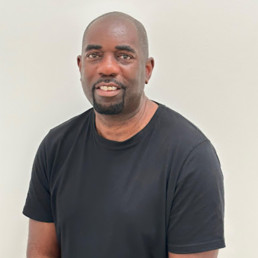
Written by Patrick Cozier
Patrick Cozier is a headteacher, a coach and the author of Calm Leadership.
Desire to be a Headteacher
I came into teaching because of a desire to make a difference to the lives of children. I have always believed that education has the ability to transform lives and create opportunities for young people. My own personal example is one that I always draw strength from. My parents came over from Barbados in the 1960s as part of the Windrush generation – my mother an auxiliary nurse and my father a postal worker. They came here with the intention of creating a better life for their children than they had experienced. Education was at the heart of this dream. And so, it began…
I started teaching in September 1994, in South London. I knew by 1996 that I wanted to be a Headteacher. Working in a school with a high number of Black and Asian children, I could see the impact that myself and some other Black staff in the school had on connecting with those students and providing role models to fuel their aspiration. I recognised pretty early that if we could have that effect as teachers, the potential for Black and Asian leaders to create a significant positive impact was huge. I wanted to be THAT person. From that moment on, everything that I did in my teaching career was done with the intention to propel me towards that aim.
For me it was interesting, because I did not at the time view being Black as a disadvantage. I felt very much as though it was one of my big selling points. I always felt that my ‘Blackness’ (i.e., my cultural heritage, skill set, adaptability, and shared experiences with children from African and Caribbean heritage) would place me in a strong position to lead a school with a mix of cultures. In the early days of my career, I did not see barriers – just dreams, ambitions and goals.
What I did not consider was that my own sense of value and self-belief was only half the story. The challenge was finding ways to ensure that others (in particular governors doing the selecting) could see in me what I saw in me. This was a much bigger challenge than I had anticipated, and I think explains to a large extent why there are comparatively few senior leaders and Headteachers from Black and Asian backgrounds represented in the profession.
Gov.UK – School Teacher Workforce February 2021 shows
- in 2019, 85.7% of all teachers in state-funded schools in England were White British (where ethnicity was known)
- 78.5% of the working age population was White British at the time of the 2011 Census
- 92.7% of headteachers were White British
| Ethnicity | % of the Working Population | % of
Classroom Teachers |
% of Deputies and Assistant Heads | % of Headteachers |
| White British | 85.7 | 84.9 | 89.7 | 92.7 |
| White Irish | 1.5 | 1.5 | 1.7 | 1.8 |
Source: School Workforce in England: November 2019 https://explore-education-statistics.service.gov.uk/find-statistics/school-workforce-in-england
The data in the table above gives a clear indication of the national picture. The percentage of White British teachers in 2019 (84.9) was almost identical to the percentage of the working population that was White British (85.7). The percentage of Headteachers who were White British at this time was 92.7, which shows an over-representation.
Contrast this with the same data for Black African, Black Caribbean and Black Other below.
| Ethnicity | % of the Working Population | % of
Classroom Teachers |
% of Deputies and Assistant Heads | % of Headteachers |
| Black African | 1.9 | 1.0 | 0.4 | 0.2 |
| Black Caribbean | 1.2 | 1.1 | 1.0 | 0.7 |
| Black Other | 0.5 | 0.4 | 0.2 | 0.1 |
Source: School Workforce in England: November 2019 https://explore-education-statistics.service.gov.uk/find-statistics/school-workforce-in-england
The proportion of Headteachers is a significant under-representation of Black heads and as compared to both the general working population and the proportion of classroom teachers.
What this points to is the comparatively poor progression that has been made in the profession for our Black African and Black Caribbean colleagues. So, what is the story here?
There are many theories for why the number of Black Headteachers is so low.
- Poor/biased recruitment processes
- Insufficient opportunities for development of our Black teachers in school
- Black teachers do not want to apply because
- they do not believe they will be given an opportunity or
- they do not see headship itself as an attractive prospect or
- They feel the situation of headship for a person of colour is precarious as they will be judged harshly if things go wrong
In my conversations with colleagues over the years I have encountered all of the above scenarios. It seems to be commonplace and the data certainly supports this view – that is, unless you believe in the meritocratic theory and your view is that there are just insufficient Black candidates who are up to the job. I personally can’t and won’t accept this as a position.
My own journey was nearly derailed by one line manager who tried to sabotage my first ever application for a senior leadership position. This was back in 2001. I was a head of year, and I was keen on promotion. I was confident and believed that I was ready. My line manager did not and told me so – I recall her specific words were ‘I would be worried if you were appointed to a senior leadership role’. Now to be fair, I don’t know whether my Blackness had anything to do with her view, but I do not that she failed to see the potential in me at the time.
However, I was fortunate in that I was confident, and my Headteacher at the time believed in my capacity to do a great job as a senior leader. His support turned out to be critical as following a very successful interview process I was informed by the school that I had applied to that the two references that they had received were in contrast – one very supportive and the other less so. I found that disappointing, but sadly predictable.
The Headteacher of the school that I had applied to (who in the end decided to appoint me) explained to me that what they saw and felt throughout my gruelling two-day interview process was more aligned to the reference from my Headteacher, than that of my immediate line manager – so they took a chance and believed in me. I haven’t looked back since.
But now I think… was I just one of the lucky ones?
Much can be done to change this situation. For example,
- The government should invest in the diversity of our sector and fund leadership development programmes for people of colour.
- Governing bodies need to think about their own makeup and be genuinely committed to proactively recruiting governors who represent the communities served by the school.
- Governing bodies also need to consider how a lack of diversity influences the decisions they make when recruiting senior leaders – in particular they need to seek out training in unconscious bias and use their learning from that to shape thought and process.
- More of our current crop of leaders of colour need to adhere to the ‘each one, teach one’ mantra – we have to give back and help our more junior colleagues navigate their way through the system the way that we have through coaching, mentoring and offering opportunities for work experience and shadowing.
Afraid of own shadow
I started my first headship at the age of 34 in September 2006, just 18 months after I have first become a deputy. It was sooner than I had anticipated, and it was scary. Despite my clear ambition to be a headteacher, I was not expecting it quite so soon. And the truth was, I was not quite ready for what I was taking on. I think I was scared of my own shadow! I was confident that I could learn quickly (and boy, did I have to!), but the journey was a very challenging one and extended me in ways that I did not know was possible.
I was an internal candidate. I applied for the job because I wanted to take advantage of the experience of applying for headships and going through the process. I applied because I was convinced by those around me that I would be a good candidate for the job. I applied because I wanted to compare myself to the competition. Never (and I mean like, ever) did I imagine I would get the job, until the second day of interviews when I was down to the final three candidates from over 30 applicants. Then it hit me… This was REAL! After I was successful on day 2 and I was offered the job, I responded by asking the then Chair of Governors, ‘Are you sure?’. In hindsight, that was a silly (albeit honest) thing to say based on how I felt at the time.
I was excited, but also petrified. To talk about ‘imposter syndrome’ would not do how I felt at the time any justice. I remember saying to my coach (who was a very experienced ex-headteacher) that I just couldn’t get used to the feeling of constantly being on the edge of my comfort zone. It was just not something that I was prepared for.
The first few years were tough and represented a very steep learning curve. My first challenge was not so much about leading the school as leading my colleagues. I was the last one in – the young pretender. Suddenly, I was thrust into having to manage a team of people who were more experienced than I was and who had been at my school for longer than me. My confidence to make decisions when others who I had great respect for, and a sense of awe in some cases, disagreed.
There was also the added pressure of being a young Black Headteacher, at the time one of only 11 secondary school male Black Headteachers of African-Caribbean heritage in the UK. I felt proud, but also daunted. I enjoyed the wearing the cloak of representation. A particular source of joy and strength for me was hearing from Black parents how pleased they were to see me in my role and how much they were rooting for me. That always touched me (and still does) and I used it as fuel to overcome some of the fears of the role. I have always embraced this responsibility as a privilege rather than a burden. However, it is not easy.
The need to be extra-vigilant about what one says is tough and draining. The feeling of being a lone voice at the many tables at which one sits in Headship and as a system leader can be frustrating and dispiriting. These all make the job much more demanding as a person of colour.
However the biggest difficulty that I had as a new Headteacher (and admittedly still now at times) was the propensity that I had for editing myself. It is hard to explain, but as a Black person in a position of leadership there are certain stereotypes about Black people that you are aware of and wish to avoid. I found myself minimising certain aspects of my culture and natural state of being. Below are some examples, with differing degrees of seriousness.
- Turning down my music in the car as I drive through the gates in the morning – not wanting other staff to hear the beautiful thumping reggae beats that set up my positive and confident mood for the day.
- Being cool and calm at ALL times. I was very aware of the stereotype of the ‘angry Black man’, and I never wanted to fall foul of this.
- Restricting the desire to challenge racism whenever and wherever I witnessed it. As a Black person you see it all the time in various different explicit and implicit guises and you want to call it out – but the editing process leads you to pick your battles carefully as you don’t want to be seen as that Black person where ‘everything is about race’.
- I edited my accent. Around friends and family it is entirely natural to speak in our heavy patois dialect. There were times in the early days where I wanted to do so with Black colleagues or students to accentuate that connection and shared experience through a shared language, but the pressure of being the Black Headteacher prevented me from doing so.
When I reflect now on how important these issues are, the conclusion that I draw is that they are crucial. It isn’t so much about the trivial nature of some of the edits described above. There is something more fundamental taking place in my view that gnaws away at the very purpose of diversity. Having diversity in leadership can only make a difference if leaders bring their diversity in with them as they travel through the school gates. To edit oneself is to lose the very difference that your diversity can make. It essentially turns everyone into a middle-class white man.
Based on my reflections of my own journey and experiences, I now make a point of telling our young aspiring Black leaders to be themselves. I tell them that their authenticity is actually what matters the most. They each can bring something different to the role if they are prepared to be brave and resist the temptation to edit.
In the early stages of my headship, I had great support from a range of coaches that I saw in my first few years in post – and each helped me significantly in very different ways. As well as the need to feel like I was worthy of the job, I had that added need to stop falling to the temptation of editing myself. I learned a lot from my coaches. The helped me make sense of my experiences and supported the development of the sense of perspective that I have honed over time. However, my early struggles were tough – and when I think of it now, I reflect on how I might have changed the nature of that support if I could go back as an experienced leader now and help my younger, less experienced self. I have been developing something I refer to as ‘Calm Leadership’ as a means of addressing this (What is calm leadership and why is it important? (sec-ed.co.uk)).
Getting Diversity in a Team Which Is Not Diverse
Although diversity in leadership is the ultimate aim to ensure that leadership is inclusive in its purpose and function, the reality is that many teams are not there in terms of the representation among the leadership. Getting the team to that point is a long-term strategy. In the meantime, it is important to find ways to work with what you have to increase awareness, understanding and to promote diversity of thought and approach.
I have a leadership team that is not diverse. We represent a school community that looks different from the team of senior leaders who are there to represent them. The same is true of my wider staff body. We have done a number of things over the last couple of years to try to move things forward. Some examples are shared below:
- We got our leadership team to read the book White Fragility by Robin DiAngelo and Brit(ish): On Race, Identity and Belonging by Afua Hirsch and to reflect on their own views, perspectives and practice
- Presentation from the me to staff on my own journey to being a Headteacher – sharing my experiences as a Black boy in North London to a Black man
- We showed staff videos recordings of our Black and Asian students talking about their experiences at our school
- We weaved our equality targets into our SDP – so every other departmental plan must reference this
- All student data is broken down and analysed by a range of sub-criteria including ethnic background
- We have a Racial Equity governor
- We have created a Student Cultural Diversity Forum (early stages)
- Zero tolerance of any racist behaviours – even against ‘your own’
- Staff have received training in unconscious bias
- We have reviewed our approach to promoting positive behaviours utilising the skills and experience of an external behaviour specialist
- Every member of staff was given the opportunity to have a book on anti-racism brought for them to read for the summer – 65 took up the offer! We have met twice since September to review, learn and apply
Race and Leadership Roles in Schools
Race matters. Visibility matters. Diversity matters. In leadership roles, they matter even more… so long as they actually make a difference.
Authenticity is the key. We have to train people to be their authentic selves as diverse leaders in order for the diversity of their experiences, backgrounds, thinking approaches and views to bring something different to the table.
In order to benefit from this, we need to make sure that we are doing more to encourage and bring the talent pool of ethnic global majority leaders through the system. We need to get more Black and Asian teachers into the profession and then help them progress their journeys through to leadership. To do this we must carefully consider the current barriers and blockers as to why this is not already the case and find ways to overcome them. This will take leadership at all levels, from the UK Government, down to Local Authorities and Multi-Academy Trusts and ultimately with the school governors and leaders.
If Black and Asian Leaders succeed, then everybody does!
Breaking Barriers Together: How Teachers Can Use New FA & Barclays Resources to Support Girls’ Confidence and Inclusion in Sport
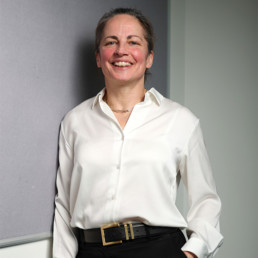
Written by Sue Day
Sue Day MBE, Director of Women’s Football, the FA.
Despite huge progress in women and girls’ football over the past few years, too many girls still face invisible, but very real, barriers to taking part. Confidence, body image, misogyny, exclusion by boys, and gender stereotypes continue to shape girls’ experiences long before they reach the pitch.
That’s why The FA and Barclays, have launched Made for This Game: Breaking Barriers – a new suite of free, curriculum-linked educational resources designed specifically for primary and secondary schools. The aim is simple but urgent: to help teachers and pupils unpack the societal pressures that hold girls back, and to build environments where every young person feels they belong.
Why this matters for educators
Research continues to paint a stark picture:
- Girls are 3.4 times more likely than boys to lack confidence in physical activity.
- They are more than twice as likely to feel less resilient.
- 71% of primary teachers say girls are held back by feeling excluded by boys.
- By secondary school, body confidence and self-consciousness become the biggest barriers.
What the new resources offer
The Breaking Barriers resources are designed not only to empower girls, but to engage all pupils in understanding bias, stereotypes and inclusion.
- Primary resources (Ages 5-11): Focused on misogyny, inclusion and challenging gender stereotypes.
- Secondary resources (Ages 11-16): Addressing more complex barriers, specifically body confidence and mental wellbeing, which are primary drivers for girls dropping out of sport during teenage years.
Central to the content are videos featuring CBBC and Strictly star Molly Rainford, who joins pupils in honest, age-appropriate conversations.
Support for teachers, too
A dedicated visual podcast for teachers also helps guide these conversations. Hosted by comedian and women’s football fan Maisie Adam, the episode brings together Lioness legend Rachel Brown-Finnis and Educating Yorkshire’s Matthew Burton to explore the wider societal challenges young people face and how teachers and adults can actively help by addressing these barriers to participation head on.
How you can get involved
These resources are free, ready to use, and flexible enough to fit into PSHE, assemblies, tutor time or PE.
Explore & download here: https://bit.ly/3NNvhIs
Diversity in children and young peoples’ reading

Written by Sarah Bagshaw-McCormick
Sarah Bagshaw-McCormick has 25 years experience in schools, professional development and leadership. She has spent the last 5 years working in teacher-education, with a focus on teacher and leader professional development as a learning designer. Over her career, Sarah has developed expertise in literacy, English, and school leadership. Throughout this work, Sarah finds and creates opportunities to embed and champion Social Justice, Equity, Diversity, Inclusion and Belonging.
The global culture wars are busy creating division within and across communities. And, much too close to home, schools are banning books and removing them from the shelves of libraries for questionable reasons. Let’s reflect on why diversity in children’s reading is good.
For some time, following the events of 2020, schools, libraries and the publishing industry were making positive headway in diversifying the representation in books made available to children and young people. But in the last 12 months that has changed. The political landscape and divisive political narratives have had a tangible effect on the proportion of children’s books written by and featuring diverse characters (Inclusive Books for Children, 2025).
It is ironic that, in this national year of reading, I (and others) should have to make a case for considering and championing of diverse representation in texts. In this blog I will invite you to consider the role that diverse representation in texts can play in bringing us together and the benefits of diversity of representation in the texts read by all pupils.
Diversity of authorship and representation means books that are written by, and feature characters, experiences and places that encompass a diversity of experiences, cultures or backgrounds. This can include racially diverse writers and characters. It can include a variety of socio-economic backgrounds, encompassing different homes, such as flats, council houses or temporary accommodation, or it can include characters with disabilities, both learning and physical.
Reflection
Consider your own experiences of the world growing up and now. Is it easy for you to find books that feature characters like you, and experiences that are familiar to you?
Three decades ago, Sims-Bishop (1990) provided us with the analogy of books as mirrors, windows and sliding glass doors to describe the role that books can have in allowing children to see themselves in books, see others in books and enter whole new worlds through books. This is reinforced by more recent evidence, which suggests that narrative fiction has the potential to support young people to understand themselves and others. Let’s start by exploring the ideas of books as mirrors, windows and doors.
Mirrors
There is a power to seeing characters like you in print. Whether the thing you have in common is your age, gender identity, disability, home, or socio-economic status. Reading texts with central characters, events and settings that young readers relate to is important.
Relating to characters in stories make children feel seen, in being seen they feel important and find comfort in knowing that others are experiencing the same things as them (Santi, 2023). This empowers young people, not only allowing them to see themselves in texts, but also to understand themselves more deeply (Santi, 2023). This has a positive impact on young peoples’ self-esteem (Koss 2015; Wopperer, 2011).
In addition to this, books that are representative of young peoples’ lives and interests are beneficial for encouraging volitional reading. Diverse texts enable young people to access books which are personally meaningful by reflecting and representing their identities, lives and experiences (Picton and Clark, 2022).
Windows
In addition to understanding themselves, diverse authorship and representation in texts enables children and young people to understand and experience other people, their lives and experiences, through interacting with texts. In fact, this has the potential to change children and young peoples’ attitudes to people whose identity or points of view differ from their own (Kaufman and Libby, 2012). By reading books which expose children and young people to different cultures, perspectives or experiences than their own, they are enabled to pay closer attention to the needs of others. Reading texts with diverse authors and diverse representation can help children to develop empathy (reference).
Sliding Glass doors
The texts children read offer them opportunities to enter into new worlds, both realistic and magical. Neuroscience has explored how readers experience immersion into these worlds and the benefits of this.
When people read fiction, research suggests that their brain reacts in ways that are very similar to the way it reacts to ‘real life’ experiences. When children and young people are actively engaged in reading, it is thought that reading is a form of neural simulation, which enables them to practice socio-emotional responses in a low-stakes environment (Tamir et al, 2015). This also allows children and young people to experience situations they’ve never experienced themselves, which is beneficial, because of its potential to positively impact their attitudes and behaviours in relation to their peers and others in their communities.
“Children… want to see the world reflected back at them just as much as they want to read about worlds they don’t know” (p.22 Excluded voices report).
Reflection
How do the texts in your library and classroom provide children with mirrors, windows and sliding glass doors?
Where might you improve your offer?
How could you find out whether the children agree with you?
So, we know that in providing children with these mirrors, windows and glass doors is beneficial, but beyond this analogy there are wider benefits of accessing texts with diverse authors, settings, experiences and characters.
Access to diverse texts is inclusive. The presence of texts that reflect the realities of children and young peoples’ lives communicates pupils’ value. This can support belonging, make young people feel welcome and create psychological safety (Bulatowicz, 2017; Lifshitz, 2016).
More than this seeing characters who share their background, identity and experiences (particularly characters who are complex, successful and vibrant) expands young peoples’ sense of what is possible for them (The linking network, 2024). This provides young people inspiration, which informs their future aspirations, and makes concrete the reality of the adage ‘you can’t be what you can’t see’.
Access to and engagement with diverse texts supports readers to build personal connections to characters and stories (Hafflin & Barksdale-Ladd, 2001). These diverse stories are also supportive of young peoples’ autonomy in reading choices (Webber et al., 2024). These positive experiences support their reading motivation (Cremin, 2023 -NATE), which in turn positively impacts children and young peoples’ volitional reading.
The opposite is also true. When books that reflect diverse experiences of the world are not available to young people it excludes them from seeing themselves as readers, can signal a lack of importance and lead young people to conclude the literacy and literature are not for them (Bronson, 2016; short, 2018).
So, it is essential that we choose to surround children with books that are affirming, communicate their value and offer them opportunities to explore their own and others’ identities.
“We know that if children feel invited into the world of books, when they recognise elements of themselves in the pages, they are more likely to form a love of reading”. (P.4 Excluded voices report).
Reflection
What do the books available to children in your setting communicate to them?
Do the texts available support reading motivation and volitional reading?
How could you check with the children and young people?
If you are looking for diverse recommendations for children and young peoples’ literature, please join me at my teachers’ reading club at The House of Books and Friends on the 14th April.
or
Subscribe to my blog, where I will share reading recommendations following the event. See my previous reading recommendations for children and young people here.
References
Bishop, R. S. (1990, March). Windows and mirrors: Children’s books and parallel cultures. In California State University reading conference: 14th annual conference proceedings (pp. 3-12).
Bulatowicz, D. M. (2017). Diverse Literature in Elementary School Libraries: Who Chooses and Why? (Doctoral dissertation, Montana State University).
Cremin, Teresa (2023). Motivation and reading: Focusing on disengaged readers. Teaching English(32) pp. 32–36.
Hefflin, B. R., & Barksdale-Ladd, M. A. (2001). African American children’s literature that helps students find themselves: Selection guidelines for grades K-3. The Reading Teacher, 54(8), 810-819.
Inclusive Books for Children. (2025). Excluded Voices report. https://www.inclusivebooksforchildren.org/excluded-voices-report
Kaufman, G. F., & Libby, L. K. (2012). Changing beliefs and behavior through experience-taking. Journal of personality and social psychology, 103(1), 1.
Kucirkova, N. (2019). How could children’s storybooks promote empathy? A conceptual framework based on developmental psychology and literary theory. Frontiers in psychology, 10, 121.
Koss, M. D. (2015). Diversity in contemporary picturebooks: A content analysis. Journal of Children’s Literature, 41(1).
Picton, I., & Clark, C. (2022). Seeing yourself in what you read: Diversity and children and young people’s reading in 2022. National Literacy Trust. PISA (2011). Do students today read for pleasure, 1057-1092.
Santi, E. (2023, May 12). Reading and narrative fiction: Understanding ourselves and others. BERA. https://www.bera.ac.uk/blog/reading-and-narrative-fiction-understanding-ourselves-and-others
Tamir, D. I., Bricker, A. B., Dodell-Feder, D., & Mitchell, J. P. (2016). Reading fiction and reading minds: The role of simulation in the default network. Social Cognitive and Affective Neuroscience, 11(2), 215–224.
The Linking Network. (2024, December 4). Diversity in children’s books: Why representation matters. https://thelinkingnetwork.org.uk/diversity-in-childrens-books-why-representation-matters/
Webber, C., Wilkinson, K., Duncan, L. G., & McGeown, S. (2025). Motivating book reading during adolescence: qualitative insights from adolescents. Educational Research, 67(1), 79-97.
Wopperer, E. (2011). Inclusive literature in the library and the classroom. Knowledge Quest, 39(3), 26.