
Written by Matthew Parker
Matthew Parker is Head of School at Wolvey CoE VC Primary School, part of the Ignite Federation. The school won the B.D.S.C (Black and Diverse Safeguarding committee) Equity and Inclusion organisation of the year in 2026.
At Wolvey CofE Primary School, we are incredibly proud of our school and the unique community we serve. Around 35% of our pupils come from our Traveller community, alongside a significant Nepalese Gurkha community. This cultural richness is an important part of who we are as a school.
Our vision is simple: “Among us, you are equal.” For us, those words cannot simply sit on a website, a wall or within a school improvement plan. They need to be experienced by the children and families who walk through our doors every day.
Our work with our Gypsy, Roma and Traveller (GRT) community has developed over many years. We certainly would not claim to have all the answers. What we have learned, however, is that meaningful inclusion begins with relationships.
Trust comes before engagement
Schools often talk about wanting families to engage more closely with education. But before asking why a family is not engaging with us, perhaps we need to ask a different question: What have we done to earn their trust?
We recognise that traditional educational settings have not always served GRT children and families well. Distrust does not disappear because a school says that its doors are open. Trust has to be built.
It grows through consistency, listening, compassion and doing what we say we will do. It grows when families know they will be treated with dignity. It grows when we take time to understand communities rather than expecting communities to understand and adapt to us.
Over time, our relationships with our GRT families have become central to the culture of Wolvey. Families who may previously have felt disconnected from education now engage actively with school life. Attendance has improved and children increasingly experience school as somewhere they feel safe, valued and able to succeed.
Representation matters
Belonging is also about being able to see yourself within the culture of your school.
Our celebration of GRT History Month has therefore become an important part of our work. We have collaborated with local artists, community representatives, Warwickshire County Council and other schools to create meaningful opportunities for children to explore and celebrate GRT culture and identity.
One of these projects culminated in a district-wide celebration at Warwickshire Police Headquarters, bringing together children, families, school leaders, police representatives and members of the wider community.
Another has left a permanent legacy within our school. We commissioned a nationally recognised GRT artist to work alongside our children to create a bespoke wolf sculpture representing our school values. The children were involved in the creative process and were able to share their stories, identities and ideas. The finished sculpture represents courage, belonging, kindness and equality.
For our GRT children, it also says something important: You are visible here. Your culture is valued here. You are part of the story of this school.
Belonging should not require assimilation
Perhaps one of the most important lessons we have learned is that inclusion should not require children to leave parts of themselves at the school gate. We want our GRT children to be ambitious. We want them to attend school, engage with learning and experience educational success. We hold high expectations for them because we believe deeply in their potential. But those aspirations should never require them to become less of who they are.
Our children should not need to change their identity in order to succeed within education. Instead, we need to be willing to ask how education can evolve to include them more successfully. That distinction matters.
Schools can become trusted community anchors
We have also learned that our responsibility does not necessarily end at the classroom door. Some of the families within our community experience barriers when accessing healthcare and other public services. Because relationships with school are strong, we have been able to use that trust to help families connect with wider support.
We have worked alongside NHS teams, local doctors and healthcare providers to improve access to vaccinations and preventative healthcare. We also host a monthly pop-up baby surgery within our community, providing families with access to support in a familiar and trusted environment. Similarly, we have worked proactively with local police teams to strengthen relationships with our GRT community.
Where there has historically been distrust or misunderstanding between families and agencies, schools can play an important role in building bridges. This requires honest conversations, advocacy and a willingness to challenge prejudice when we encounter it.
Sometimes inclusion means welcoming. Sometimes it means listening. And sometimes it means being prepared to stand alongside a community and challenge discrimination.
Small changes can have a significant impact
Our work has also given us opportunities to contribute to conversations beyond Wolvey. We worked directly with the Department for Education to support the creation of a film promoting “Best Start in Life” opportunities for GRT families. Its message encouraged families to “take a leap of faith” with education, while also challenging schools to consider the intentional changes they can make to improve inclusion and engagement.
I have also had opportunities to share our learning through GRT conferences and leadership events. I return repeatedly to the same message – there is no single initiative that creates belonging – it is built through the accumulation of intentional actions, relationships and decisions.
From intention to impact
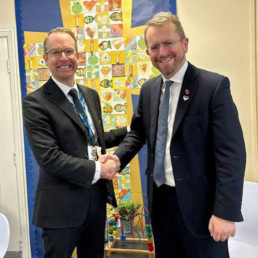
We are proud that this work was recently recognised nationally when Wolvey CofE Primary School was named Equity and Inclusion Organisation of the Year 2026 at the Black and Diverse Safeguarding Awards. It was an incredibly proud moment for our whole school community, but the award matters because of what sits behind it.
During our 2023 Ofsted inspection, inspectors recognised the behaviour, attitudes and engagement of our pupils. Our GRT children enjoy learning, work hard and participate enthusiastically across school life.
For me, those outcomes are connected to something much deeper: children engage when they feel safe; families work with schools when they experience trust; children are more able to flourish when they know that who they are is not merely tolerated, but recognised and valued.
Our experience at Wolvey has taught us that inclusion cannot be performative or temporary. It needs to be sustained, relational and embedded within the everyday culture of a school.
What might other schools consider?
Every school and every community is different. Our approach cannot simply be lifted from Wolvey and replicated somewhere else.
But there are questions that I believe all school leaders can ask:
- How well do we really know our GRT families and communities?
- Have we taken time to listen before deciding what they need?
- What might their previous experiences of education have taught them about schools?
- Where do GRT children see their culture, history and identity reflected within our school?
- Are our expectations high without requiring assimilation?
- How are we building relationships with parents and carers beyond moments of difficulty?
- Could our school act as a bridge between families and other services?
- Are we prepared to challenge prejudice and discrimination when we encounter it?
- Most importantly, how do we know whether our GRT children and families actually experience a sense of belonging?
Our work continues to evolve. We continue to listen, learn and adapt. But one thing has become increasingly clear to me – if we want families to take a leap of faith with education, schools need to be prepared to take a leap of faith too.
We need to move beyond expecting communities to fit into systems that were not necessarily designed with them in mind. We need to build relationships based on dignity, curiosity and trust because our children should never have to choose between their identity and their education. They deserve both. And they deserve schools in which they know, without question: among us, you are equal.