Breaking Barriers Together: How Teachers Can Use New FA & Barclays Resources to Support Girls’ Confidence and Inclusion in Sport
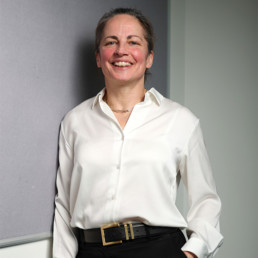
Written by Sue Day
Sue Day MBE, Director of Women’s Football, the FA.
Despite huge progress in women and girls’ football over the past few years, too many girls still face invisible, but very real, barriers to taking part. Confidence, body image, misogyny, exclusion by boys, and gender stereotypes continue to shape girls’ experiences long before they reach the pitch.
That’s why The FA and Barclays, have launched Made for This Game: Breaking Barriers – a new suite of free, curriculum-linked educational resources designed specifically for primary and secondary schools. The aim is simple but urgent: to help teachers and pupils unpack the societal pressures that hold girls back, and to build environments where every young person feels they belong.
Why this matters for educators
Research continues to paint a stark picture:
- Girls are 3.4 times more likely than boys to lack confidence in physical activity.
- They are more than twice as likely to feel less resilient.
- 71% of primary teachers say girls are held back by feeling excluded by boys.
- By secondary school, body confidence and self-consciousness become the biggest barriers.
What the new resources offer
The Breaking Barriers resources are designed not only to empower girls, but to engage all pupils in understanding bias, stereotypes and inclusion.
- Primary resources (Ages 5-11): Focused on misogyny, inclusion and challenging gender stereotypes.
- Secondary resources (Ages 11-16): Addressing more complex barriers, specifically body confidence and mental wellbeing, which are primary drivers for girls dropping out of sport during teenage years.
Central to the content are videos featuring CBBC and Strictly star Molly Rainford, who joins pupils in honest, age-appropriate conversations.
Support for teachers, too
A dedicated visual podcast for teachers also helps guide these conversations. Hosted by comedian and women’s football fan Maisie Adam, the episode brings together Lioness legend Rachel Brown-Finnis and Educating Yorkshire’s Matthew Burton to explore the wider societal challenges young people face and how teachers and adults can actively help by addressing these barriers to participation head on.
How you can get involved
These resources are free, ready to use, and flexible enough to fit into PSHE, assemblies, tutor time or PE.
Explore & download here: https://bit.ly/3NNvhIs

Mixed Messages: The High Stakes of Social Sorting
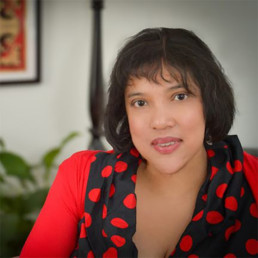
Written by Domini Choudhury
Domini Choudhury is an associate trainer, an award-winning EDI consultant, a former Deputy and Acting Headteacher for 17 years, a local authority consultant and an Evidence Advocate for the Research Schools Network, part of the Education Endowment Foundation (EEF).
According to official statistics, the mixed-heritage population is now the UK’s fastest-growing demographic. The 2021 Census revealed that 1.7 million people across England and Wales identify as mixed-race, a tripling since 2001 (King’s College London, 2025). Yet, in the eyes of a hospital computer or a school database, we are often reduced to a glitch. When our social sorting systems rely on a “White-plus” baseline, the messages aren’t just mixed; they’re dangerous.
The Challenge of the Checkbox
Supporting mixed-heritage children and young people in schools comes with a minefield of challenges. We are navigating outdated terminology, the complexities of identity development during adolescence, and the fluctuating sense of belonging within different communities. These journeys are often further complicated by orientalism, colourism, or a perceived “proximity to whiteness” which is not always a universal advantage.
To address this, we must first dismantle the social construct of “mixed-ness.” Until 2001, “mixed” categories didn’t even exist on the UK Census, making long-term data comparison nearly impossible. Even now, the categories remain stiflingly limited. Society’s default stereotype of a mixed person is someone racialised as White and either Black or Brown. This is codified in official data: almost every category begins with “White and…”, implying that Whiteness is the mandatory baseline of our society. If you don’t fit that specific mold, you are relegated to the generic: “Any other Mixed or multiple ethnic background.”
When Data Becomes a Danger
I face this erasure personally. As someone of both Bangladeshi and Chinese heritage, I am frequently forced to choose: either to select one, or select “Mixed Other.” To pick one is to deny half of my identity; to pick “Other” is to make my heritage invisible.
Even when I try to claim both, the technology fails me. Alphabetised computer systems often default my ethnicity to “Bangladeshi,” leaving my Chinese heritage on the cutting floor. In the eyes of the algorithm, half of my identity is a glitch.
This isn’t just a matter of hurt feelings; it has life-and-death implications. I once faced an emergency operation while unconscious. Since my hospital record only listed me as Bangladeshi, the medical team was unaware of my Chinese ancestry, a vital piece of genetic information that carried a high risk of a specific drug intolerance.
The Educational Blind Spot
In our schools, we rely heavily on ethnicity data to drive interventions, allocate finances, and analyze outcomes. As the proportion of mixed-heritage students rises, our “boxes” are becoming increasingly obsolete.
Since both of my heritages are broadly categorised as “Asian,” the system often fails to recognise me as mixed-heritage at all. Despite the fact that Bangladeshi and Chinese cultures are poles apart, the “Asian-Asian” mix is frequently ignored by a system that only understands “mixed” if it involves a White parent. I am left feeling officially bereft of the identity I am proud to hold.
A System in Need of a Reset
The flaws go deeper than just the “mixed” label. Consider that “Bangladeshi” appears as an ethnicity category when it is, in fact, a nationality, one that has only existed since 1971. Conflating nationality with ethnicity (like using “Bangladeshi” instead of “Bengali”) is a separate systemic failure entirely, but that is a post for another day.
For now, we must recognize that our current method of categorising people is failing. We need a radical overhaul of how we see, record, and support the diverse reality of the UK today. We are more than a “White-plus” variable. It’s time the system caught up.
References:
UK Government (2021) List of ethnic groups. Available at: https://www.ethnicity-facts-figures.service.gov.uk/style-guide/ethnic-groups/ (Accessed: 21 April 2026).
Slade-Edmondson, E. (2026) ‘What does it mean to grow up mixed-race in a world that is obsessed with tidy boxes and simple definitive answers, and what does a journey towards belonging look like?’, Emma Slade-Edmondson Blog, February. Available at: https://www.thebelongingeffect.co.uk/what-does-it-mean-to-grow-up-mixed-race-in-a-world-that-is-obsessed-with-tidy-boxes-and-simple-definitive-answers-and-what-does-a-journey-towards-belonging-look-like/ (Accessed: 21 April 2026).
Mansaray, A. and Nwosu, C. (2025) Mixed-Heritage Young People’s Educational Experiences in London: An Exploratory Study. London: King’s College London. Available at: https://www.kcl.ac.uk/ecs/assets/projects/mixed-heritage-final.pdf (Accessed: 21 April 2026).
Morris, N. (2021) Mixed/Other: Explorations of Multiraciality in Modern Britain. London: Trapeze.
The Power of Your Network #ILW2026

Written by Ben Hobbis
Teacher, Middle Leader and DSL. Founder of EdConnect and StepUpEd Networks.
Last month we marked the International Leadership Week (ILW) 2026 – an annual event organised and curated by the Institute of Leadership. At Step Up, we’ve been fortunate to collaborate and work with the institute over the last two years including being nominated for an award at their 2024 leadership awards and speaking at their members reception at Warwick Castle in 2025.
When Karen (IoL’s events manager) informed us of this year’s theme, The Power of Your Network for ILW2026, we knew we had to be involved. The IoL itself has organised a range of virtual live events along with networking breakfasts across the UK – as well as members of the institute organising their own events to coincide with the theme.
As networking in education can be a minefield and, in most cases, the unknown, we set about bringing together some of the best-connected people in education. We brought together Yamina Bibi, Johnoi Josephs, Tim Mobbs and Hannah Wilson to have an open and honest discussion around the power of networking. We decided to spend each 10 minute section of the event on one of the sub-topics from the theme.
We started with the topic of ‘building and sustaining powerful networks’ in which our panellists gave some great tips and tricks of how you can start from scratch. These included using tools such as social media, blogging and attending face-to-face events to connect with the people who you feel most aligned to. We also acknowledged that whilst following people you admire behind a screen is easy, the actual notion of networking can be very uncomfortable and difficult; saying yes to things is important and contributing to develop your network but also be real clear on boundaries and values.
Our next topic was exploring connected leadership and collective wisdom by being intentional and connecting with the right people. Tim shared the importance of purpose and belonging in creating a network (both your own personal network but also a formal network); whilst Hannah shared her intention in creating a network to fall in line with relocating at various points throughout her career.
A topic close to everyone’s hearts on the panel was the importance of diversity, inclusion and global connectivity. Yamina spoke passionately about intentionality around representation and that in 2026 not having networks and events that are diverse and represent the audience is not acceptable – something we all echoed and agreed with. The panel spoke also to the importance of challenging biases and being mindful about how we navigate these spaces. We also talked about the importance of ensuring these spaces are physically and mentally accessible for all. We also shared recommended read from this question – ‘The Art of Gathering’ by Priya Parker. I made so many notes from this question from our panel’s responses, demonstrating the passion and importance of the topic.
All the panelists have been involved in establishing networks themselves and our next question where we explored the legacy through networks saw everyone share some magical moments that had stayed with them throughout their networking journey. Before finally, thinking towards the future – what does the future of networking look like in education? In which our panel very much explored key themes of psychological safety, belonging, Johnoi’s phrase of collaboration and not competition, collective impact and having clear rules and expectations of engagement and inviting people into spaces.
A huge thank you to Yamina, Johnoi, Tim and Hannah for joining us and for their honesty and authenticity. We couldn’t have held this event without you. This blog is very much a summary of the fantastic event, you can watch the full event back on YouTube here – do watch and comment, let us know your thoughts and key takeaways.
It was a great event, which highlighted the importance of knowing how to navigate networking within the sector. A huge thank you to IoL for bring this important issue to the forefront of our minds. For further information about networking, visit these links:
- IoL International Leadership Week
- Hannah Wilson’s keynote at the Step Up 1st Birthday Event
- Ziggy Moore’s SLT Podcast episode on networking in education
Nurturing the "Healthiest Generation": Tackling the Dual Crisis in Childhood Wellbeing
Written by Elizabeth Iheoma
Elizabeth believes that the best leadership happens when passion meets purpose. With a career spanning 20 years in Further Education, Elizabeth has mastered the art of leading through uncertainty by staying rooted in her core values. She isn't just a leader in the office; she is a deeply invested member of her community, serving on a local governing board and partnering with health experts to bring preventive wellness into schools.
The numbers are in, and they paint a sobering picture of the “silent crisis” facing our children. Recent data from over 1.1 million children in England (2024-2025) reveals that while many children are maintaining a healthy weight, a significant portion is falling through the cracks. By the time children reach Year 6, over 22% are living with obesity.
In response, the government has launched a robust package of preventative measures, including junk food advertising restrictions and the expansion of free school meals and universal breakfast clubs. The goal? To foster the healthiest generation of children ever.
More Than Just Physical Health
Physical fitness is only one side of the coin. The mental health of our young people is reaching a critical tipping point. Consider these statistics:
- A 50% increase in the likelihood of young people developing mental health problems over the last three years.
- 5 in 30 children in an average classroom are now likely to struggle with their mental wellbeing.
- Two-thirds of young people prefer seeking support outside of a traditional GP setting to avoid stigma and long waiting lists.
As specialist services become overstretched, the need for early support services has never been more urgent. These services provide the “breathing room” children need to build resilience and navigate the stresses of growing up before they reach a crisis point.
Our Solution: A “Tried and Tested” Approach
To support national efforts, we have developed an innovative Children’s Wellbeing Programme. We believe that learning about health shouldn’t feel like a chore. Our approach turns essential principles—like regular exercise and balanced nutrition—into engaging, fun, and constructive experiences for children.
By presenting these life skills in an “informative and innovative” way, we aim to reverse deteriorating health trends and give children the tools they need to flourish both physically and mentally.
We Need Your Insight
We are currently conducting vital market research into wellbeing programs specifically designed for children (ages 3–18) and their caregivers.
If you work with parents and infants or children in the 3–18 age bracket, we want to hear from you. Your professional perspective is essential to ensuring these programs are as effective and accessible as possible.
Would you be open to answering a few brief questions to help inform our research? Please click on the link to share your thoughts. Together, we can build a more resilient future for our children.
For Professionals in an Early Years Setting
https://forms.gle/PE2x94m2DnY7fF1B8
For Professionals in a Primary School Setting
https://forms.gle/gc6TQkXGKhPusTo39
For Professionals in a Primary School Setting
https://forms.gle/X93f3D1rVKbg8TbMA
Sources
The Children’s Society
https://www.childrenssociety.org.uk/what-we-do/our-work/well-being/mental-health-statistics
GOV.UK
Diversity in children and young peoples’ reading

Written by Sarah Bagshaw-McCormick
Sarah Bagshaw-McCormick has 25 years experience in schools, professional development and leadership. She has spent the last 5 years working in teacher-education, with a focus on teacher and leader professional development as a learning designer. Over her career, Sarah has developed expertise in literacy, English, and school leadership. Throughout this work, Sarah finds and creates opportunities to embed and champion Social Justice, Equity, Diversity, Inclusion and Belonging.
The global culture wars are busy creating division within and across communities. And, much too close to home, schools are banning books and removing them from the shelves of libraries for questionable reasons. Let’s reflect on why diversity in children’s reading is good.
For some time, following the events of 2020, schools, libraries and the publishing industry were making positive headway in diversifying the representation in books made available to children and young people. But in the last 12 months that has changed. The political landscape and divisive political narratives have had a tangible effect on the proportion of children’s books written by and featuring diverse characters (Inclusive Books for Children, 2025).
It is ironic that, in this national year of reading, I (and others) should have to make a case for considering and championing of diverse representation in texts. In this blog I will invite you to consider the role that diverse representation in texts can play in bringing us together and the benefits of diversity of representation in the texts read by all pupils.
Diversity of authorship and representation means books that are written by, and feature characters, experiences and places that encompass a diversity of experiences, cultures or backgrounds. This can include racially diverse writers and characters. It can include a variety of socio-economic backgrounds, encompassing different homes, such as flats, council houses or temporary accommodation, or it can include characters with disabilities, both learning and physical.
Reflection
Consider your own experiences of the world growing up and now. Is it easy for you to find books that feature characters like you, and experiences that are familiar to you?
Three decades ago, Sims-Bishop (1990) provided us with the analogy of books as mirrors, windows and sliding glass doors to describe the role that books can have in allowing children to see themselves in books, see others in books and enter whole new worlds through books. This is reinforced by more recent evidence, which suggests that narrative fiction has the potential to support young people to understand themselves and others. Let’s start by exploring the ideas of books as mirrors, windows and doors.
Mirrors
There is a power to seeing characters like you in print. Whether the thing you have in common is your age, gender identity, disability, home, or socio-economic status. Reading texts with central characters, events and settings that young readers relate to is important.
Relating to characters in stories make children feel seen, in being seen they feel important and find comfort in knowing that others are experiencing the same things as them (Santi, 2023). This empowers young people, not only allowing them to see themselves in texts, but also to understand themselves more deeply (Santi, 2023). This has a positive impact on young peoples’ self-esteem (Koss 2015; Wopperer, 2011).
In addition to this, books that are representative of young peoples’ lives and interests are beneficial for encouraging volitional reading. Diverse texts enable young people to access books which are personally meaningful by reflecting and representing their identities, lives and experiences (Picton and Clark, 2022).
Windows
In addition to understanding themselves, diverse authorship and representation in texts enables children and young people to understand and experience other people, their lives and experiences, through interacting with texts. In fact, this has the potential to change children and young peoples’ attitudes to people whose identity or points of view differ from their own (Kaufman and Libby, 2012). By reading books which expose children and young people to different cultures, perspectives or experiences than their own, they are enabled to pay closer attention to the needs of others. Reading texts with diverse authors and diverse representation can help children to develop empathy (reference).
Sliding Glass doors
The texts children read offer them opportunities to enter into new worlds, both realistic and magical. Neuroscience has explored how readers experience immersion into these worlds and the benefits of this.
When people read fiction, research suggests that their brain reacts in ways that are very similar to the way it reacts to ‘real life’ experiences. When children and young people are actively engaged in reading, it is thought that reading is a form of neural simulation, which enables them to practice socio-emotional responses in a low-stakes environment (Tamir et al, 2015). This also allows children and young people to experience situations they’ve never experienced themselves, which is beneficial, because of its potential to positively impact their attitudes and behaviours in relation to their peers and others in their communities.
“Children… want to see the world reflected back at them just as much as they want to read about worlds they don’t know” (p.22 Excluded voices report).
Reflection
How do the texts in your library and classroom provide children with mirrors, windows and sliding glass doors?
Where might you improve your offer?
How could you find out whether the children agree with you?
So, we know that in providing children with these mirrors, windows and glass doors is beneficial, but beyond this analogy there are wider benefits of accessing texts with diverse authors, settings, experiences and characters.
Access to diverse texts is inclusive. The presence of texts that reflect the realities of children and young peoples’ lives communicates pupils’ value. This can support belonging, make young people feel welcome and create psychological safety (Bulatowicz, 2017; Lifshitz, 2016).
More than this seeing characters who share their background, identity and experiences (particularly characters who are complex, successful and vibrant) expands young peoples’ sense of what is possible for them (The linking network, 2024). This provides young people inspiration, which informs their future aspirations, and makes concrete the reality of the adage ‘you can’t be what you can’t see’.
Access to and engagement with diverse texts supports readers to build personal connections to characters and stories (Hafflin & Barksdale-Ladd, 2001). These diverse stories are also supportive of young peoples’ autonomy in reading choices (Webber et al., 2024). These positive experiences support their reading motivation (Cremin, 2023 -NATE), which in turn positively impacts children and young peoples’ volitional reading.
The opposite is also true. When books that reflect diverse experiences of the world are not available to young people it excludes them from seeing themselves as readers, can signal a lack of importance and lead young people to conclude the literacy and literature are not for them (Bronson, 2016; short, 2018).
So, it is essential that we choose to surround children with books that are affirming, communicate their value and offer them opportunities to explore their own and others’ identities.
“We know that if children feel invited into the world of books, when they recognise elements of themselves in the pages, they are more likely to form a love of reading”. (P.4 Excluded voices report).
Reflection
What do the books available to children in your setting communicate to them?
Do the texts available support reading motivation and volitional reading?
How could you check with the children and young people?
If you are looking for diverse recommendations for children and young peoples’ literature, please join me at my teachers’ reading club at The House of Books and Friends on the 14th April.
or
Subscribe to my blog, where I will share reading recommendations following the event. See my previous reading recommendations for children and young people here.
References
Bishop, R. S. (1990, March). Windows and mirrors: Children’s books and parallel cultures. In California State University reading conference: 14th annual conference proceedings (pp. 3-12).
Bulatowicz, D. M. (2017). Diverse Literature in Elementary School Libraries: Who Chooses and Why? (Doctoral dissertation, Montana State University).
Cremin, Teresa (2023). Motivation and reading: Focusing on disengaged readers. Teaching English(32) pp. 32–36.
Hefflin, B. R., & Barksdale-Ladd, M. A. (2001). African American children’s literature that helps students find themselves: Selection guidelines for grades K-3. The Reading Teacher, 54(8), 810-819.
Inclusive Books for Children. (2025). Excluded Voices report. https://www.inclusivebooksforchildren.org/excluded-voices-report
Kaufman, G. F., & Libby, L. K. (2012). Changing beliefs and behavior through experience-taking. Journal of personality and social psychology, 103(1), 1.
Kucirkova, N. (2019). How could children’s storybooks promote empathy? A conceptual framework based on developmental psychology and literary theory. Frontiers in psychology, 10, 121.
Koss, M. D. (2015). Diversity in contemporary picturebooks: A content analysis. Journal of Children’s Literature, 41(1).
Picton, I., & Clark, C. (2022). Seeing yourself in what you read: Diversity and children and young people’s reading in 2022. National Literacy Trust. PISA (2011). Do students today read for pleasure, 1057-1092.
Santi, E. (2023, May 12). Reading and narrative fiction: Understanding ourselves and others. BERA. https://www.bera.ac.uk/blog/reading-and-narrative-fiction-understanding-ourselves-and-others
Tamir, D. I., Bricker, A. B., Dodell-Feder, D., & Mitchell, J. P. (2016). Reading fiction and reading minds: The role of simulation in the default network. Social Cognitive and Affective Neuroscience, 11(2), 215–224.
The Linking Network. (2024, December 4). Diversity in children’s books: Why representation matters. https://thelinkingnetwork.org.uk/diversity-in-childrens-books-why-representation-matters/
Webber, C., Wilkinson, K., Duncan, L. G., & McGeown, S. (2025). Motivating book reading during adolescence: qualitative insights from adolescents. Educational Research, 67(1), 79-97.
Wopperer, E. (2011). Inclusive literature in the library and the classroom. Knowledge Quest, 39(3), 26.
Closing the Gap by Valuing Multilingualism
Written by Soofia Amin
Soofia Amin is the Multilingual Trust Lead for Tapscott Learning Trust (TTLT). She is also a Specialist Lead in Education for Multilingualism with vast experience in supporting multilingual pupils and their families. Soofia is passionate about developing excellent practice for multilingual pupils whilst promoting their first languages as a resource in both the classroom and the wider school community. She strongly advocates for a whole-school approach to multilingualism and uses her own school’s example to provide effective models of practice for others.
I recently visited a primary school where low writing outcomes for multilingual children had led leaders to search urgently for ways to “close the gap.” For many school leaders, this phrase often leads to discussions about data dashboards, targeted interventions, and heightened accountability measures. These discussions often neglect one key factor: the children’s first languages.
Many children in this school confidently use two or three languages and travel regularly to their countries of origin. Leaders worry that this rich linguistic exposure might be contributing to weaker writing outcomes. While understandable, this view risks misidentifying the problem.
The challenge here is not multilingualism. Rather how much we, as educators, value and use the children’s linguistic proficiency to further their learning, including their writing. If we focus intentionally on using the multilingual children’s rich language skills to support learning, particularly their writing development, outcomes could look very different.
Building Strong Foundations Through Explicit Language Instruction
Language and subject learning develop together. Children do not learn content first and language later; they learn both simultaneously. Evidence from Cummins states that,
“Conceptual knowledge developed in one language helps to make input in the other language comprehensible.” (Cummins, 2000,p.39).
Therefore, embedding spoken language approaches across the curriculum can strengthen literacy and attainment when language is taught explicitly and in context. For multilingual learners, this means making the language demands of lessons visible and teachable.
In practice, this involves modelling how this language is used in speech and writing.
Classroom example: Year 5 science (States of Matter)
The educator explains evaporation using sentences such as:
“When water is heated, it evaporates.”
“As a result, the liquid changes into a gas.”
The educator unpacks key vocabulary like evaporate and evaporation and gives children sentence stems to support their explanations. Alongside the science objective, sits a clear language objective. Children now have the words and sentence structures they need to explain their thinking clearly.
Strengthening Learning Through Cultural and Linguistic Connection
Multilingual children bring a wealth of cultural and linguistic knowledge into the classroom. When educators recognise and build on this, learning becomes more meaningful and inclusive.
Schools that invest in understanding children’s linguistic backgrounds are better placed to design teaching that connects new learning to what children already know.
In practice, this means:
- Gathering information about a child’s home language/s and experiences
- Using this knowledge to make lessons more relevant and accessible
Classroom example: Year 5 science (States of Matter)
The Educator invites children to share where they see evaporation at home: drying clothes, steaming dumplings, or burning incense. Then explicitly links these examples back to the scientific explanation.
By connecting the abstract concept of ‘evaporation’ to something tangible like ‘incense’ or ‘steaming,’ the child is able to relate to it.
Deepening Understanding by Harnessing Home Languages
Research and classroom practice both show that strong first-language skills are crucial for developing English proficiency and achieving academic success.
“The idea that a multilingual classroom is not only beneficial to EAL students but to non-EAL students (suggests) the need for a strategic whole-school approach to language teaching and integration.” (Arnot et al., 2014,p.7)
In practice, schools should:
- Encourage translanguaging as a learning strategy. Translanguaging enables children to first process complex cognitive tasks in their strongest language, before expressing them in English.
- Encourage families to use first languages to support key topics and concepts
Classroom example: Year 5 science (States of Matter)
The children use their first language to clarify why the change is happening. Once they have secured the concept, they then describe it in English.
The child is not cognitively overloaded. They use their first language to handle the heavy lifting of thinking, and only then move on to using English to demonstrate their understanding.
Final Thoughts…
Closing the gap for multilingual children requires a clear understanding of how language underpins attainment, a commitment to evidence-informed practice and a shared vision that places language at the heart of curriculum design.
When leaders get this right, the impact is profound – not only for multilingual children, but for all learners. Prioritising language isn’t just an inclusion strategy; it’s a school improvement strategy.
References
Arnot, M., Schneider, C. and Welply, O. (2014) School approaches to the education of EAL students. Cambridge: The Bell Foundation.
Cummins, J. (2000) Language, Power and Pedagogy: Bilingual Children in the Crossfire. Clevedon: Multilingual Matters.
Mirrors and Windows: Rethinking the Curriculum for Inclusive Classrooms
Written by Amy Wilby
I am an experienced senior educational leader, currently serving as an Assistant Headteacher with responsibility for Curriculum, as well as a Trust-wide DEIB Champion, edublogger, and proud mum to a 21-year-old son. Since qualifying as a teacher in 2009, I have built a career rooted in both academic excellence and strong pastoral care. I bring extensive experience across middle and senior leadership, including roles as a Specialist Leader of Education (SLE) and Associate Assistant Headteacher. I hold an NPQSL and a master’s degree in educational leadership, and I am deeply committed to evidence-informed practice, drawing on educational research to enhance teaching, learning, and curriculum design.
Walk into most classrooms and you’ll see a curriculum that has been carefully planned, structured, and sequenced. In most schools, this planning is grounded in research, designed to support the acquisition and retention of knowledge.
But there’s a deeper question we don’t ask often enough:
Who gets to see themselves in it, and who doesn’t?
This is where the concept of mirrors and windows becomes essential to inclusive education.
The idea is simple, but powerful:
- Mirrors: Students see their own identities, experiences, and cultures reflected
- Windows: Students gain insight into lives and perspectives different from their own
A truly inclusive curriculum does both, consistently, not occasionally.
Because when students only experience windows, they may feel invisible.
And when they only experience mirrors, they miss the opportunity to understand others.
What do we mean by ‘mirrors and windows’?
If we want genuinely engaging and inclusive classrooms, we need both.
The problem: Representation is often surface, level
Many schools are already working to diversify their curriculum, but often in ways that don’t go far enough, or lack careful consideration of how content is framed.
You might see:
- A one-off lesson or assembly, such as during Black History Month
- Efforts to diversify reading materials in the library
- Occasional references to global perspectives, often framed as ‘meanwhile, elsewhere…’ and confined to specific subjects
These are well-intentioned, but they risk becoming add-ons rather than meaningful integration.
And students notice the difference.
Why this matters for belonging
Students can tell when inclusion is occasional, symbolic, or performative, and this can have the opposite effect to what is intended.
Instead of feeling seen, they can feel outside the main narrative.
Curriculum is not just about knowledge, it’s about belonging.
When students consistently see themselves reflected through the Mirrors of the curriculum:
- Their sense of legitimacy increases
- Engagement improves (with positive effects on attendance and behaviour)
- Confidence grows
- Equity becomes something that is lived, not just discussed
At the same time, windows help to build:
- Empathy
- Cultural understanding
- A broader view of the world
This isn’t an ‘extra’ it’s foundational.
What this looks like in practice
Creating an inclusive curriculum doesn’t require starting from scratch. It’s about intentional, thoughtful adjustments over time.
To begin you could consider the following:
- Audit what’s already there
Start by asking:
- Whose stories are centred?
- Whose voices are missing?
- Are certain groups only represented through struggle?
This process is often revealing.
Too often, diverse histories are framed primarily through oppression. A more balanced approach:
- Includes innovation, leadership, and cultural contributions
- Presents individuals as active agents, not just recipients of injustice
This doesn’t ignore difficult histories, it places them within a fuller, more accurate context.
- Move beyond ‘add and stir’
Inclusion isn’t about inserting isolated examples, it’s about integration.
For example:
- Literature: diversify authors across the year, not just within one unit, include local, national and international texts
- History: embed multiple perspectives within the same topic, rather than adding them at the end
- Science: highlight contributions from a wider range of scientists and challenge assumptions about who belongs in the field
- Avoid single stories
Be careful not to reduce groups to one narrative.
- Don’t present marginalised groups only through struggle
- Include stories of success, leadership, creativity, and everyday life
Students need multidimensional representations.
They should encounter people as fully human, complex, nuanced, and varied.
This leads to richer learning and a more honest curriculum.
- Make it subject, specific
Inclusion is not just a humanities issue, it is a whole, curriculum responsibility.
- Maths: use real, world problems that reflect diverse contexts
- English: select texts that provide both mirrors and windows
- Geography: avoid deficit narratives and explore cultural diversity with depth
- Science: challenge narrow perceptions of who can be a scientist.
Every subject has a role to play.
- Involve student voice
Ask students directly:
- Do you see yourself in what we learn?
- What would you like to see more of?
Their responses often highlight gaps that adults may overlook—and involving them builds both agency and belonging.
Common pitfalls to avoid
Even with strong intentions, there are common missteps:
- Tokenism: adding one example and considering the work done
- Over, correction: forcing representation in ways that feel inauthentic
- Stereotyping: simplifying identities rather than showing complexity
- Inconsistency: inclusion appearing in isolated moments rather than as a sustained approach
Inclusion works when it is planned, consistent, and authentic.
What you can do tomorrow
If you’re not sure where to start, begin small:
- Gather feedback from a class or year group (through a form or discussion) – The Global Equality collective has a fantastic platform for gathering student and staff voice and producing kaleidoscopic data to help to understand where any gaps exist.
- Review an upcoming scheme of work and ask: Where are the mirrors and windows?
- Identify one meaningful change that improves representation
You don’t need to do everything at once, but you do need to start intentionally.
Final thought
An inclusive curriculum isn’t about ticking boxes or meeting requirements.
It’s about answering a simple but powerful question:
‘Does every student feel seen here, and are they being helped to see others?’
When the answer becomes consistently ‘yes,’
you’re not just delivering content, you’re building belonging.
Further Reading
Bhorkar, S., Campbell, R. and Claro, J. (2025) ‘Beyond the tick-box: diversity in the curriculum’, Impact: Journal of the Chartered College of Teaching. Available at: https://my.chartered.college/impact_article/beyond-the-tick-box-diversity-in-the-curriculum/
Bishop, R. S. (1990) ‘Mirrors, windows, and sliding glass doors’, Perspectives: Choosing and Using Books for the Classroom, 6(3). Available at: https://scenicregional.org/wp-content/uploads/2017/08/Mirrors-Windows-and-Sliding-Glass-Doors.pdf
Geographical Association (n.d.) Cultural diversity in geography education. Available at: https://geography.org.uk/ite/initial-teacher-education/geography-support-for-trainees-and-ects/learning-to-teach-secondary-geography/geography-subject-teaching-and-curriculum/teaching-thematic-geography/cultural-diversity-in-geography-education/
Kara, B. (2020) A little guide for teachers: diversity in schools. London: Sage Publications Ltd.
The Global Equality Collective Global Equality Collective KnowHow. Available at: GEC KnowHow
Pearson (2023) Pearson School Report: Diversity and Inclusion. Available at: https://web.archive.org/web/20231204193347/https://www.pearson.com/en-gb/schools/insights-and-events/topics/diversity-inclusion/schools-report.html
Teach First (2020) STEMinism: How to encourage more girls to study STEM subjects. Available at: https://www.teachfirst.org.uk/sites/default/files/2020-02/teach_first_steminism_report.pdf
Does your belonging culture include every Generation?

Written by Alex Atherton
Alex Atherton is an award-winning speaker, trainer and consultant who focuses on Gen Z recruitment & retention and leading multigenerational workplaces. He is the author of The Snowflake Myth: Explaining Gen Z in the Workplace and Beyond. He is also a former secondary school headteacher.
Age ranges are growing across UK workplaces.
This is largely because the proportion of workers aged 65 and over has more than doubled in the last two decades.
A four generation workplace with an age range of fifty, if not sixty, years has become increasingly common. At the younger end Generation Z now account for over a quarter of the workforce, with that figure set to exceed a third globally by 2030.
At no point in modern history have so many different generational experiences been present in the same building, on the same Teams call, or trying to agree on what a productive working culture looks like.
Concept of generations
The concept of generations is useful in terms of analysing outlooks and attitudes over time. Fifteen to twenty years is long enough for there to have been enough economic, social, political and technological change for that exercise to be worthwhile.
But we are all the same species, and there is no guillotine between them. Whilst the concept is useful it is also limited, and generational stereotypes serve no one. Differences within generations are far bigger than those between, and I strongly recommend you treat everyone as individuals first with no generational label.
Analysing the impact of change over time can offer clues when understanding your workforce, and therefore what needs to be done to ensure everyone feels they belong.
I want to differentiate between ‘age’ and ‘generations’. The former is, of course, a protected characteristic. The latter is cohort-based. Opinions and outlooks may change for individuals over time, but there is something about those created in the formative years which stick with people in different ways and to various extents.
It would be an interesting tribunal case that sought to separate the two fully. My argument is organisations who consider the full range of their age diversity to be a considerable asset are in a better position to thrive, and considering generational perspective is part of that exercise.
This is the set of names and dates that I use. You may find others elsewhere, which is fine as it reinforces the idea that these are not hard and fast:
- Silent Generation (1925-1945: 81-100 years old)
- Baby Boomers (1946-1964: 62-80 years old)
- Generation X (1965-1980: 46-61 years old)
- Millennials (1981-1996: 30-45 years old)
- Generation Z (1997-2012: 14-29 years old)
- Generation Alpha (2013-2028: max 13 years old)
The snowflake problem
I came into this topic area as a reaction to the youngest generation currently in the workplace, Gen Z, being labelled as ‘snowflakes’.
In my book The Snowflake Myth, I argue that the stereotypes routinely applied to Gen Z (lazy, unreliable, apathetic etc) tell us more about a failure to understand them than about who they actually are.
Gen Z’s academic record is off the scale compared to all who came before them. They are more likely than any previous generation to work nights and weekends for higher pay. They are the most diverse generation we have ever seen, and the most vocal advocates for equity, diversity, inclusion and belonging in the workplace.
Calling them snowflakes is not a neutral observation. It is an exclusion.
But you know this, otherwise you would not be on this website. So what to do?
Belonging Is not age-selective
Let me tell you something else you already know. When belonging is present, engagement rises, wellbeing is protected and performance improves. When it is absent, the damage is real.
Does your belonging culture extend to the oldest and youngest people in your organisation?
Gen Z in the workplace will tell you, should you ask them, that they are watching. They notice whether the DEIB commitments on your website show up in how decisions are made and who gets a seat at which table. They notice whether authenticity is genuinely embedded in your culture, or whether the sign behind reception is performative. They notice whether any effort has been made to understand their experience, or whether they are simply expected to adapt.
The Boomers (and Silents too) will also give you their feedback as to whether they belong or now feel marginalised, but you may need to work a little harder to capture their voice. It is too tempting to consider that your belonging culture is in the right place because a clear majority say they belong. It needs to work at both ends of your age range.
What multi-generational belonging looks like
The good news is that this is less complicated than it sounds. It requires curiosity more than strategy.
It means seeking genuine feedback from colleagues, and on an ongoing basis rather than just at onboarding.
It means recognising that a generation which grew up collaborating online, co-creating content and working simultaneously on shared documents brings real and underutilised strengths to any team.
It means deliberately noticing what is happening at the edges, and across every group. That includes noticing that the older colleagues who had their eyes wide open as the new recruits refused to stay late or take work home started wanting the same themselves. What used to be ‘Gen Z demands’ has now extended elsewhere.
It means understanding that cross-generational collaboration is not a nice idea for an away day. It is about driving better decisions and developing ownership amongst your workforce that creates the belonging culture you need.
Most importantly, it means accepting that belonging is not something organisations can get away with extending only to the groups they find easiest to champion.
To what extent does your belonging culture cover the full breadth of your age range?
Teaching Teens About the U.S. – Iran Conflict: Building Context and Curiosity in the Classroom
Written by Zahara Chowdhury
Zahara leads on equality, diversity and inclusive education in higher education. She has over a decade of experience in middle and senior positions in secondary education. Zahara is author of Creating Belonging in the Classroom: a Practical Guide to Having Brave and Difficult Conversations. She is founder of the School Should Be blog and podcast, a platform that amplifies diverse and current topics that impact secondary school classrooms, students and teachers.
Secondary students today are growing up in a world where global politics shape their lives more than ever before. The ongoing tensions between America and Iran can feel far removed from British classrooms, yet understanding them helps young people make sense of international relations, energy security, and differing systems of governance.
While the conflict between America and Iran is fundamentally connected to wider Gulf States, their politics and history, it is also distinct. The Iran–U.S. relationship centres on power, ideology, and regional influence, shaped by Iran’s changing political regime since the 1979 revolution and America’s strategic interests in energy, trade, and security.
And yes, teachers are already under immense pressure. Here is another topic that society expects teachers and schools to ‘take care of’. It’s a tough and exhausting gig. But also one that our students want and need us to explore with them.
Topics like this require both time and sensitivity to unpack. This blog and lesson outline are designed to offer a way in, curiosity first, expertise second.
Lesson outline: Exploring the Iran–U.S. Relationship
Lesson Objective
To help students understand how different forms of governance, lived experiences, and global relationships shape international conflict and cooperation.
Before the Lesson – Independent Exploration
Some of these curiosity questions can be set as homework, pre-reading and post-research, giving students time to explore, think and come prepared with ideas. Teachers can take the same approach — set aside a couple of hours for a “deep dive” using trusted sources such as:
- Empire: World History Podcast
- The Conversation (there are various articles that can be searched on this website)
- The Steven Bartlett Podcast (March 2026 episode on Iran and America)
- Al Jazeera – news perspectives
- BBC – news perspectives
Be aware that students will likely use social media platforms such as TikTok, Instagram, or YouTube for information. It’s worth pre-empting this and giving advice on how to stay safe and critical online:
- Be mindful and present when watching; if anything graphic or distressing appears, mute or report the content immediately.
- Remember the task is academic — the goal is to understand, not consume upsetting material.
- If students find good, informative videos, encourage them to fact-check using class knowledge about research skills, misinformation and disinformation.
Important!
If you’ve got to this point in this article and realise your students may not yet have a strong grasp of misinformation and disinformation, this is a perfect moment to connect with colleagues through a systems-thinking approach. Work across subject areas — such as PSHE, tutor time, History, Politics, and English — to design a mini integrated curriculum plan. This helps all students develop the confidence to evaluate complex global issues critically and respectfully.
In line with systems thinking, you can also communicate proactively with parents or carers, explaining how the school intends to approach this subject in a politically impartial, research-informed, and curriculum-aligned way. Reassure families that lessons are guided by teacher professionalism and inclusive pedagogy and practice, and that the goal is always to make school a safe space for information, understanding, empathy, and compassion.
Now…back to the plan:
Starter Discussion – “Understanding Perspectives”
Drawing on pre-reading or factual handouts you’ve distributed, design group, pair or a class wide discussion with the following questions:
- How is Iran governed? How is America governed?
- What might life look like for a teenager growing up in Tehran compared to London or New York?
- How does my lived experience in a Western democracy shape how I understand Iran or America?
- How can I “decentre” my perspective to appreciate experiences beyond my own?
Main Exploration – “Why the Tensions?”
You could set the following as group based research questions, ask students to prepare mini presentations or use an impactful teaching and learning approach that suits the students sitting in front of you:
- Why does America care about Iran? Why does Iran care about America?
- What is Israel’s role in this picture? Why is there animosity between Israel and Iran?
- What are their main trade or economic interests (oil, security partnerships, military influence)?
- What are the key political and sociological issues at play — religion, nationalism, sanctions, regional security?
- How does this conflict affect my life now or in the future (energy costs, migration, security, global cooperation)?
More Activity Ideas:
- Use a map from Prisoners of Geography to explore how geography shapes power and alliances.
- Role-play a UN negotiation between the U.S., Iran, Israel, and neutral nations (if your school has a debate club or a Model the United Nations team and club, draw on this expertise).
Reflection or homework task: write a reflective paragraph on how your perspective changed during the lesson. Give students a phrase bank with compassionate, thoughtful and evaluative language and literacy (knock on the door of your English and History, Philosophy, RE teacher friends…they’ve probably got a document full of these, ready to go).
Teen-Friendly Facts: Understanding the Context
Put the below into a reference crib sheet for students to have to hand during the lesson. Ask them to construct questions based on these facts. If you don’t know the answers, that’s fine! It’s another research project sorted.
- In 1979, Iran’s monarchy was overthrown, and the Islamic Republic was established under religious leadership.
- The U.S. and Iran were once allies, but relations fractured after the revolution and the embassy hostage crisis.
- America worries about Iran’s nuclear programme and regional influence; Iran sees the U.S. as a threat to its sovereignty.
- Iran and Israel have longstanding animosity rooted in ideological and regional rivalries.
- Energy and oil play a central role in both countries’ interests in the region.
- Economic sanctions have shaped everyday life in Iran, affecting trade, inflation, and access to technology.
- Conflicts in neighbouring countries often draw in both Iranian and American involvement.
- Global politics already impact young people — from energy costs to international study opportunities.
The book, Prisoners of Geography by Tim Marshall, is absolutely brilliant and when I read it over 5 years ago, it majorly informed my approach to critical thinking and teaching historical context in my subject area – Marshall now has a series and a Prisoners of Geography version for primary school children – I highly recommend it.
And lastly, my book, Creating Belonging in the Classroom by Zahara Chowdhury to support you to navigate difficult conversations and subject matter in the classroom.
By approaching difficult world events with openness, curiosity, clear boundaries and compassion, teachers empower students to manage complexity, not avoid it. Schools can and should be safe spaces for curiosity, evidence-based discussion, and the building of informed, empathetic young citizens. And, we are all more than equipped and able to do it – we just need to trust ourselves – and schools need to trust their staff too.