
Section 28: 20 Years On
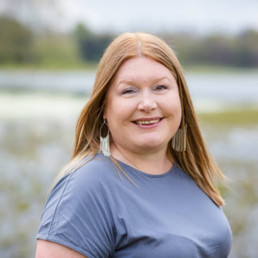
Written by Hannah Wilson
Founder and Director of the Belonging Effect (formerly Diverse Educators).
Yesterday marked 20 years since Section 28 was repealed whilst also celebrating Trans Awareness Week. There is a brilliant thread on X here breaking down the key information all educators should know about this piece of problematic legislation which weaponised an identity group.
20 years ago, I had joined the teaching profession as a NQT at a boys’ school in Kent.
Homophobia was an issue.
I cannot remember having any training on my PGCE or in my NQT year about prejudice-based behaviour.
I cannot remember Section 28 being mentioned in either training programmes either.
After a year, I moved to London for a Head of Year role at a boys’ school in Surrey.
Homophobia was an issue.
But I felt more empowered to tackle it and I delivered the ‘Some People Are Gay – Get Over It! assemblies from Stonewall.
After three years, I then moved to a co-ed school in Mitcham.
Homophobia was an issue.
But we had strong whole school behaviour systems and consistent accountability so we tried to keep on top of it.
I also leveraged my pastoral and my curriculum leadership responsibilities to educate and to challenge the attitudes of our students.
After six years, I moved to a co-ed school in Morden as a Senior Leader (still in the same trust).
Homophobia was an issue.
But we had zero tolerance to discrimination and robust behaviour systems in place so we chipped away at it.
Three years later I relocated to Oxfordshire to be a Headteacher of a secondary school and Executive Headteacher of a primary school.
Homophobia was an issue.
But as a Headteacher with a committed SLT and visible role models, we hit it head on.
One of my favourite assembly moments in my twenty years in education was Bennie’s coming out assembly at our school. The courage and vulnerability she embodied as she shared the personal impact of the harmful attitudes, language and behaviour humanised the problem. We braced ourselves for the fallout, for the criticisms, but she was instead enveloped with love and respect by our community instead.
20 years on… six schools later…
Thousands of students… thousands of staff… thousands of parents and carers…
Homophobia was an issue – in every context, in every community, to a lesser or greater extent we have had to tackle prejudice and discrimination directed explicitly at the LGBTQ+ community.
Since leaving headship I have run a PGCE, consulted for national organisations, trained staff in schools, colleges and trusts (in the UK and internationally), coached senior leaders.
I am not a LGBTQ+ trainer – we have experts with lived experience who train on that. I speak about DEI strategy, inclusive cultures, inclusive language, inclusive behaviours and belonging. Yet, in every training session the experience of the LGBQT+ community comes up. It comes up especially with educators who started their careers in schools pre-2003 who talk about the shadow it has cast over them. It comes up with those starting their careers in schools asking when at interview you can ask if it is okay to be out.
Section 28 may have been repealed, we may be 20 years on, but have we really made any progress when it comes to tackling homophobia in our schools, in our communities and in our society?
Homophobia was and still is an issue.
As a cisgender, heterosexual woman homophobia has not personally impacted me. I have never had to hide my sexuality. I have been able to talk openly about who I am in a relationship with. I have not had to navigate assumptions, bias nor prejudice when it comes to who I date, who I love and who I commit to. This is a privilege I am aware of, but that I have also taken for granted.
A ‘big gay assembly’ may have been one of my professional highlights, but one of my personal low points was going on a night out to a gay club in Brighton in my early thirties, and my gay male friend being beaten up in the toilets in a supposed safe space by a homophobic straight man.
This is the reality for a lot of people I care about. Family, friends and colleagues who do not feel safe in our society. Members of my network who often do not feel safe in our schools.
It is our duty to ensure that our schools, our system and our society are safe for people to just be.
To be themselves… to be accepted… to be out at work (should they wish to be)… to be in love… to be able to talk about their relationships and their families…
It is our duty to ensure that we see progress in the next 20 years – as we are seeing a scary global regression of LGBTQ+ rights.
It is our duty to counter the current rhetoric – especially when it comes from our politicians who are weaponizing the LGBQT+ community.
It is our duty to challenge the haters and the trolls – if we as educators do not tackle it, then who else will?
Our gay students, staff, parents and carers need us to be allies. They need us to stand up, to speak out and to say this is not okay, this is enough.
Some signposting for organisations and resources to support you and your school:
Partnerships:
- Schools Out UK – they run LGBT History month and we collaborate on activities.
- Educate and Celebrate – they ran our LGBTQ+ training and school award for us.
- LGBTed – we hosted their launch at our very first #DiverseEd event.
- No Outsiders – we collaborate with them and celebrate their work.
- Pride and Progress – we partner with them and support their work.
- Just Like Us – we collaborate with them and amplify their Inclusion Week.
- Diversity Role Models – we collaborate with them and amplify their great resources.
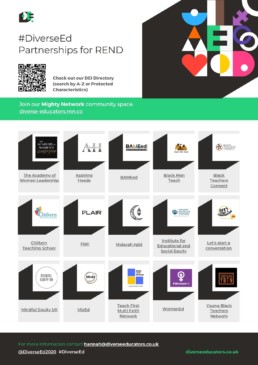
- There are lots of other brilliant organisations and individuals working this space listed in our DEI Directory here.
Communities:
- ASCL – LGBTQ+ Leaders Network
- NAHT – LGBTQ+ Network
- NEU – LGBTQ+ Inclusion
- Pride and Progress – have an active P&P group in the #DiverseEd Mighty Network.
Books:
- Paul Baker – Outrageous
- Jo Brassington and Adam Brett – Pride and Progress
- Shaun Dellenty – Celebrating Difference
- Catherine Lee – Pretended
- Daniel Tomlinson-Gray – Big Gay Adventures
Podcasts:
Blogs:
- Amy Ashenden – Faith as a Barrier
- David Church – Take Back the Narrative
- David Lowbridge-Ellis – Keep Chipping Away
- David Weston – Pride Matters
- Dominic Arnall – Primary School Storytime
- Dominic Arnall – Section 28 is Still Hanging Over Us
- Gerlinde Achenback – Age Appropriate
- Ian Timbrell – Fight Against RSE
- Jared Cawley – My Wellbeing
- Katherine Fowler – Audit Your Curriculum
- Peter Fullagar – Don’t Look Back
- Rob Ward – Parents Support It and Students Want It
- STEP Study – Improving Support
- Vicki Merrick – Increasingly Visible
Resources:
- Bethan Hughes and Holly Parker-Guest – LGBT+ Inclusion toolkit
- David Lowbridge-Ellis – The Queer Knowledge Organiser
Training:

Trans People are Loved: Diverse Educators in Allyship
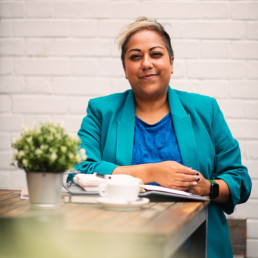
Written by Bennie Kara
Co-Founder of Diverse Educators
When a community comes together, beautiful things can happen. Here at Diverse Educators, we have witnessed the rise of transphobic narratives nationally and internationally and have felt, as many others do, an acute sense of helplessness about how to be active allies for the trans and non-binary people we know and love.
When we were approached by a member of the non-binary community in despair at hearing and experiencing such a wave of transphobia and gender critical rhetoric, we gathered associates and friends to discuss how we could do something, anything, to raise our voices and show that we could be ‘together-strong’. In time, this shaped into an evening solidarity event to take place virtually. We wanted to bring people together to signal, even in the smallest ways, that there is work to be done in protecting those who are increasingly marginalised in our society.
It was clear from the outset that we did not want to just focus on how difficult the social environment is for trans and non-binary people. We wanted, collectively, to use our voices to highlight both the reality for trans and non-binary people and the green shoots that we can see around us.
Our speakers were wonderful. Jo Brassington (they/them), a Diverse Educators Associate, outlined the legal aspects of trans and non-binary identities in schools. The wealth of comments and questions after their section showed that there is a real need for educators to have access to training on how to support and protect their trans and non-binary young people and colleagues. Hannah Jepson, (she/they) a business psychologist and expert in workplace inclusion, followed with a precis that highlighted the work of the corporate world in supporting trans and non-binary people at work. There were some enlightening comments in response showcasing best practice in the workplace. Finally, George White (he/him), a trans teacher and independent consultant/trainer on transgender identities and the Catholic faith, outlined the green shoots in how Catholicism is shifting the established narrative on trans and non-binary people.
Hannah Wilson, the speakers and I left the solidarity event feeling heartened that over 60 people had given their time to attend the event, with feedback that indicated a real need for follow up. While we knew that we wouldn’t be able to find distinct ways forward immediately, the networking and signposting that took place was useful in forging connections so that action can be possible in the future.
What we do in miniature creates ripples that, in turn, can create waves. This event served to show how much there is to do still in support of the trans and non-binary community, and each attendee was asked to pledge, if possible, what their next steps were using the hashtag #TransPeopleAreLoved. The pledges appeared like pebbles in the pond.
This is allyship.
Launching a network for new leaders made me a better ally

Written by Ben Hobbis
Teacher, Middle Leader and DSL. Founder of EdConnect and StepUpEd Networks.
Are you a new leader, like the idea of leadership but struggle to find the balance between teaching and leading? Are you someone who wants to lead or be a leader, but not knowing how to get there, feeling a bit stagnant? You might be a leader developing, but in the wrong organisation? You might not see leaders like you? This is why Step Up was set up.
Step Up is a new network for new and aspiring leaders in education, particularly at middle and senior leadership levels in schools. Upon starting the social media account, and subsequent network, we surveyed people to find out who our community are and what they want/need. This has been incredibly useful. It’s been great getting to know our community.
From this research and insight, we have constructed five ‘leadership themes’ that we base our content and output around. We base our speakers, events, blogs and much more around these themes. The five themes are: Leadership Journeys, Leadership Barriers & Challenges, Leadership Development, Leadership Wellbeing and Leadership Diversity. Now, whilst many of these will overlap when people speak, present and write to these.
I personally as the founder wanted to ensure that whatever we do, we are inclusive and that we are diverse in order to create a community where our network members belong. Now, as a heterosexual, white, able bodied, cisgender man who doesn’t have children and is fairly financially stable, I know I’ve had it easier than others. However, I have always committed to be an inclusive ally and a HeForShe ally also. I have been a keen supporter and champion of Diverse Educators since signing up to social media and their journey started. One thing I have released is that I’ve continued to learn as an ally.
One of the biggest learning curves was Step Up’s Launch Event. As I co-hosted alongside one of my fellow network leaders, WomenEd’s own Elaine Hayes, I listened attentively to our speakers. I listened to their vulnerability; to their negative and positive experiences; to their struggles; to their hopes and wishes; to their experience and tips. I felt quite emotional in parts listening to in some cases abhorrent behaviour that they (or colleagues, friends or family) had been subjected to as part of their journey.
I’ve summarised some of the key takeaways from some of the presentations, that may be useful for the audience reading this…
Parm Plummer, WomenEd’s Global Strategic Leader and a Secondary Assistant Headteacher based in Jersey presented on Women in Leadership. Her talk initially started with sharing the fantastic work of WomenEd: their campaigns, partnerships, networks (including their global reach) and the development opportunities they provide for female leaders. Parm then went on to help navigate the process of stepping up as a female leader. Initially, sharing the only image of a woman that came up during a Google search; before going on to provide tips to write a job application through to negotiating your terms. Parm gave tips including finding allies and joining networks.
Helen Witty, a neurodivergent Lead SENDCo based in the East of England who gave a pre-recorded video on Neurodivergent Leadership. She shared an insight into her job and life, as a SENDCo with ADHD. She shared about how being open about her ADHD at her job interview and how it positively impacts her life and those who she works with. Helen also gave a fantastic insight into the role of a SENDCo, for all those who aspire to this role.
Stephanie Shaldas, a secondary deputy headteacher leading on diversity and inclusion based in London. Her talk Leadership in Colour: Senior Leadership as a Black American Woman started with a story from March 2021 whilst she was working as an Acting Co-Headteacher. This story was based around Prince William visiting her school. What was a forty-five minute visit, led to a weekend of trending on Twitter, including one Tweet: ‘Who dressed up the secretary in African cloth and trotted her out?’ Stephanie went onto talk about her journey and how she felt like school leaders didn’t look like her, when she was in her early career. She shared her inspiring path to leadership including her own education as well as teaching and leadership roles at middle and senior level spanning both curriculum and pastoral. As Stephanie said, “If I can, then you can!” – find your why and explore your passions!
Mubina Ahmed, Head of Science Faculty, based in London gave a presentation titled: ‘Using my minority lens to lead.’ Mubina went on to talk about how she used her minority ethnic background to her strength in her leadership journey. She posed the key question: ‘Do we have equity in teaching?’ Mubina used research and evidence to back up every piece of advice and information that she gave; talking about building allies to help you bring your chair to the table.
Albert Adeyemi, co-founder of Black Men Teach and a Head of Year based in the East of England gave a talk based around wellbeing and belonging in leadership. He spoke eloquently about the importance of wellbeing, how every interaction with others builds up to this. He narrated the sense of being needed versus feeling wanting and knowing what you need to fill your cup, to achieve wellbeing and belonging. The part that really blew me away was a surprise from Albert, a spoken word about belonging; a part of the event which brought a tear to my eye.
Jaycee Ward, a phase leader in a Yorkshire primary school, spoke about imposter syndrome, based around her journey as a young senior leader. Jaycee narrated her journey to date and how she has completely changed her narrative and inner critic. She shared her five top tips for combatting imposter syndrome: Seek Support, Embrace Vulnerability, Celebrate Achievements, Self-Compassion, Self-Reflection. Something, everyone at the event resonated with.
Nicola Mooney, a secondary deputy headteacher based in the South West of England, who also volunteers for WomenEd and MTPT Project, gave an interesting presentation on ‘non-linear career paths’. She shared her journey through her career to date including multiple maternity leaves and periods of IVF. Nicola shared how by not going through the ‘traditional’ upward trajectory has enabled her to be successful both as a teacher and as a mother. It was a talk many welcomed, knowing it is not as simple and always useful to be continually promoted.
I feel very privileged to have spent time in the virtual room with these fantastic Diverse leaders. Step Up (and I) will continue championing for diversity, equity, and inclusion within the education leadership sector; and will ensure everyone has the chance to share their stories. If you want to get involved and find out more, then follow us on X (formerly Twitter) @StepUpNet_Ed and check out our website: www.stepupednet.wordpress.com.
Take Back the Narrative: Reflections on #DiverseEd Conference

Written by David Church
David is an LGBTQ+ education consultant and former Deputy Head Teacher. He has over 10 years experience in education and is passionate about supporting schools to develop an LGBTQ+ inclusive culture and curriculum. Outside of education, David is a Regional Ambassador for It Gets Better UK.
Attending the #DiverseEd Conference in Bristol on Saturday felt perfectly timed. The backdrop of recent developments from the UK government regarding the trans community weighed heavily on my mind as I prepared for the day ahead. It seemed as if the trans community was under siege from multiple angles: teachers potentially being allowed to discriminate against trans young people in schools (https://www.thepinknews.com/2023/09/23/ehrc-guidance-trans-misgendering-pupils-schools/) and the proposed ban on trans women from women’s wards (https://www.theguardian.com/society/2023/oct/03/trans-hospital-patients-in-england-to-be-banned-from-female–and-male-only-wards).
As a cisgender gay man who had previously faced adversity under the infamous Section 28 (and the legacy since), I felt a deep empathy for the trans community, witnessing their increasing vulnerability and the reported surge in hate crimes against them (https://www.gov.uk/government/statistics/hate-crime-england-and-wales-2022-to-2023/hate-crime-england-and-wales-2022-to-2023).
As an LGBTQ+ education consultant, I was acutely aware that action was needed to ensure the safety of trans+ children, young people, and staff in schools. Fortunately, the conference offered a range of sessions on just this, highlighting the need for greater trans inclusion & diversity.
Every session I attended resonated with me on both a personal and professional level, but my mind was consumed with the urgent need to address the ongoing challenges faced by the trans community.
The first workshop I attended was led by Sarah Bonnell School, focusing on social justice in schools and empowering students to enact change within their communities. Their discussion of “cold anger” as a catalyst for change struck a chord with me (https://www.psychologytoday.com/gb/blog/brave-talk/202109/4-types-anger-everyone-should-know-about). This anger, when harnessed, could drive the transformation needed to combat the prevailing discourse around trans inclusion.
Equally, Shaun Dellenty’s keynote, highlighted the importance of challenging the narrative of fear and division, emphasising that we are stronger together, whether or not we identify as trans. The theme that stuck in my mind: How do we channel this anger and negative energy into positive action?
Similarly, in Bennie Kara’s keynote, the power of stories to reshape narratives was explored. She discussed how we need to move beyond viewing the trans community as victims or dangerous (a perception which has continuously been fed by media and entertainment). The history of LGBTQ+ rights is full of unsung heroes such as Marsha P. Johnson and Sylvia Rivera, who spearheaded the original Stonewall uprising. Yet, their stories are often overlooked in the narrative of our school curricula.
It is imperative that we teach about these individuals to reframe the narrative and challenge prejudices and biases. This will foster a more respectful society, one that goes beyond mere tolerance to genuine acceptance of every individual, regardless of their identity.
Jo Brassington, in their session on trans and non-binary inclusion in schools, passionately reminded us that silence and indifference regarding trans+ inclusion make us complicit. It reminded me of the words of David Morrison, Chief of Army in the Australian Army, which echo this sentiment: “The standard you walk past is the standard you accept.”
This is not about understanding what it means to be trans but about having compassion and acceptance for every trans person; knowing them as individuals and hearing their story. Stories have been central to human culture since time began, and it is now time to reshape these stories in the public eye. As agents of change, we must stand with the trans community, working towards a compassionate view that acknowledges them as individuals.
The #DiverseEd Conference offered a glimpse into the power of collective action, empathy, and storytelling to take back the narrative, ensuring that the voices and experiences of the trans community are heard, respected, and valued. We, as educators, have a unique opportunity to lead this transformation, shaping a more inclusive and compassionate society by ensuring our curriculum fosters a positive narrative of a range of trans people; from the books we read, to the significant role models we explore and the policies we have in place. Taking back the narrative is not just a goal; it’s a collective responsibility that we must all be conscious about in our schools.
The Power of Networking
Written by Belonging Effect
Belonging Effect is committed to shaping intention into impact and supporting people with their Diversity, Equity, Inclusion, & Belonging strategy and training needs.
#DiverseEd Table Photo
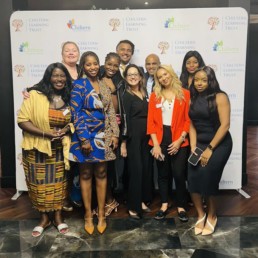
This Friday night we joined the team at Chiltern Learning Trust for their annual Racial Equity Network Dinner (#REND). We had been unable to make it the last two years running despite really wanting to attend and support it, but this year we were able to make it happen.
We sponsored a Diverse Educators’ table and invited some of our collaborative partners from the race section of our DEI DIrectory to join us on our table. It was brilliant to finally all be together in person! It is not very often we are in the same room, at the same time – the energy was palpable and we were very much the ‘naughty table’ as we needed to take advantage and connect whilst we could.
Thanks for joining the team from #DiverseEd:
- Nadine from Aspiring Heads
- Rhia from Black Teachers Connect
- Jemma from Let’s Start a Conversation Today
- Aretha and Youlande from Mindful Equity
- Louise and Marcus from MixEd
Getting to Luton for 6pm on a Friday night, at the end of a long year and a hard term, was not for the faint-hearted. Our table travelled from Manchester, Nottingham, Birmingham, Watford, London, Kent, the New Forest and Bath to attend the event. The journey to the event is very much a metaphor for the direction of travel of the work – it is non-linear, frustratingly slow and there are lots of obstacles to navigate including poor conditions and route closures.
We were delighted to be in the room where it was happening, along with 480 other attendees, who all care about and are committed to affecting change when it comes to racial equity in the education system. We had a lot of other connections and collaborative partners at the event including:
- Diana from the Academy of Women Leaders
- Frankie from BAMEed SEND
- Albert and Johnoi from Black Men Teach
- Iona and Sam from Edurio
- Daryl from Flair
- Paul and Andrea from the Institute for Equity, University Centre
- Penny from The Linking Network
- Bukky, Flora, Yamina, Kiran and Emma from #WomenEd
In the more formal part of the event before the eating and networking started, there were a series of short presentations from a range of speakers:
- Sufian Sadiq – shared a heartfelt reflection on the fatigue and frustration of how slow the rate of change in this work is for him, his peers and his family. His call to action was for solidarity.
- Professor Paul Miller – shared the systemic data to highlight the structural and societal barriers for people of colour in our sector. His call to action was for allies to leverage their power.
- Sarah Owen MP – shared a personal narrative of being a biracial pupil and how this work could have helped her journey as a pupil but also now as a politician. Her call to action was to create greater belonging.
- Dr Patrice Evans – shared a quote from Obama and reflected on her journey being the only black woman in many spaces. Her call to action was to collect the stones and to use them to build empires.
- Hannah Wilson – shared her awareness of being a white person speaking to a room of global majority and then used the space to amplify the organisations in the room doing brilliant work in this space. Her call to action was to join the coalition.
- Assistant Professor Derron Wallace – shared a comparative lens to the data and the activity in the US compared to the UK and questioned what our collective strategy for racial equity is. His call to action was that everyone needs to own the role they have to play.
In the less formal part of the evening it was great to see, chat to and smile across the room at Alison from CCT, Mary from Myatt and Co, Tom from Ambition School Leadership, Phillippa and Sajid from PACT, David and Ena from Venturers Trust, James and Sharon from Inclusive MAT, Antonia and Bhamini from Pioneer Educational Trust, Adam from OTSA, Thahmina and Omar from CST, amongst others.
#REND is a brilliant example for the power of networking. The event was a magnet for people seeking a shared vision, a unified purpose, a collective agency. Together we are stronger, and we can go further.
Do check out the social media posts via the event hashtag #REND and put the draft date for the 2024 #REND event in your diaries: Friday 12th July. We will have a table there again and will invite new partners from our DEI Directory to join us. It would be great to see you there and they are increasing capacity to 600 for next year’s event.
DEI Directory Flyer
My Allyship Journey - Part 2
Written by Ben Hobbis
Teacher, Middle Leader and DSL. Founder of EdConnect and StepUpEd Networks.
ally (noun): a person or organisation that actively supports the rights of a minority or marginalised group without being a member of it.
allyship (noun): active support for the rights of a minority or marginalised group without being a member of it.
I’ve been an ally for all my adult life. However, it was only a few years ago I recognised this. Initially I realised I was an ally for women, or a #HeForShe.
The reason for recognising I was an ally for women (or sex equality/equity), was my previous experience. Working as a retail and Human Resources professional, I had been an ally for women. I’d worked with women who had been through pregnancies and were returning to work, women who had gone through a miscarriage, women who were working flexibly. I also worked within female heavy environments often with men who did not understand, empathise or appreciate what was happening around them. Hearing sexist comments and people laughing/ not challenging. I realised I didn’t like it. I realised it was wrong.
Upon joining education, I thought on entering a female heavy profession, surely there’s no gender inequalities here. Oh how wrong I was. I followed #WomenEd, I’d first known about them because one of the co-founders, Keziah Featherstone was one of my teachers. I then read more and more, I read blogs, I bought and read their blog, I attended virtual events and I even spoke at an event as a #HeForShe.
I then followed many of the other grassroots networks: BAMEed, LGBTed, DisabilityEd, Mindful Equity, Diverse Educators and many more. I continued to read, to educate myself, to try and understand the problem, whilst I knew I wasn’t living it myself. After reading, hearing people talk at online events, hearing their stories, often including stories of mistreatment, discrimination and inequity.
I then realised I was not just an ally for gender, but all protected characteristics, I was an inclusive ally.
I’ve learnt more and more about myself and my allyship journey, learning how I can become a better ally. This will be a lifelong journey for me.
Julie Kratz @NextPivotPoint refers to the term ally as an umbrella term. They state there are five key roles to being an ally: the mentor, the sponsor, the advocate, the coach, the challenger. I know I’m an advocate, but am I the mentor, sponsor, coach and challenger? I’m probably not as strong there, so that’s my challenge now, to continue to reflect on and develop my role as an ally in society. Therefore, I’m sharing my allyship goals:
- Challenge the usage of language.
- Coach and Mentor others to become allies.
- Advocate for equity by amplifying DEI through social media, my networks, and my day job.
- Sponsor and nurture diverse talent inside and outside of work.
To achieve this, I know I need to engage more with fellow allies and the networks I engage with, as well as those I am an ally to. Therefore, another goal is to attend an in-person event (or more than one) for a network I am an ally to. This will enable me to further develop and amplify as an ally.
As the world continues to evolve, so does my allyship.
Being Comfortable Being Uncomfortable
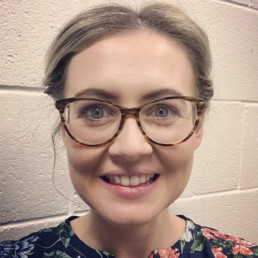
Written by Bethan Hughes
Bethan Hughes is a Second in English in a West Midlands secondary school and joint contributor to the LGBTQ+ toolkit on Diverse Educators.
I am a 33-year-old lesbian who has, probably only recently, become really quite comfortable in my own skin. The irony being that this is, probably only because of a lifetime of enduring being uncomfortable. When you exist outside the norms of society and outside of the dominant discourse, there is an odd sense of not quite ever being ‘inside’ where it is comfortable and instead watching from the other side of the metaphorical windowpane.
What does it actually mean to be comfortable? Comfortable is synonymous with safety, being content with where you are and what’s happening and maintaining the status quo. Comfortable keeps things the same. Being comfortable allows the same practices to continue. Which unless you are a white, heterosexual male might not be beneficial to you and contribute, whether directly or indirectly, to more challenges for others.
Yet to shatter, or at least wobble, the status quo involves putting yourself into a more uncomfortable position. It means speaking up in a meeting if you don’t agree with something or holding someone to account if their views or actions don’t align with what you believe to be morally right. It means having difficult conversations which might not go the way that you want them to go. It’s taking a deep breath, closing your eyes and being prepared to be the first domino to fall. And that’s tough. Especially when you could choose to take the easier route by keeping your mouth shut and trundling on with your daily business. And so, the cycle continues.
Why should I want to be uncomfortable, I hear you say? If we (truly) want to live in a just society then we all need to play our part. But we can’t do this if we are only focusing on the struggles that we personally face; as Martin Luther King said, “no one is free until we are all free.” If we can begin to take steps towards change by only being a tad uncomfortable, surely this is something that we can all commit to?
What might this look like in my educational setting?
- Always start from a place of mutual respect. If you are heading into difficult conversation territory, then this is always a solid start.
- When a student makes a comment or asks a ‘difficult’ question – explore it. Instead of ignoring a ‘that’s so gay,’ comment, address it and explain why the phrase is derogatory. Sometimes a conversation can begin to change someone’s attitudes or at least begin to challenge their ingrained value system.
- If you notice someone being spoken over in a meeting or their ideas not being heard; use your privilege to support that person or to credit their ideas. Consider when you are the most, or one of the most, powerful people in the room and how you can use this to amplify the voices of others. Or, if you don’t hold that power, can you join forces with someone else and support each other?
- Speak to share and not change minds. Use your voice to share your experience or your own feelings whilst being mindful that a conversation often won’t be enough to completely change someone’s mind. Share first and understand that changing minds can be a longer process.
- Speak from your personal experience and not on behalf of others. Also be open to credible sources when discussing information that is not personal to you.
- If you notice something that needs addressing, bring it up to those who have the power to change it. Perhaps the display in the science corridor only celebrates the achievements of men. Perhaps there is a lack of diversity in your English curriculum. Perhaps there is limited policy or support for your LGBTQ+ students. Be brave enough to have that conversation and to do something about it.
- Be patient with yourself and others. Change takes time but begins once we start to go into those uncomfortable spaces.
It’s easy to do nothing but if you have the privilege to do so; be 10% braver and have that conversation so that some of us who are perpetually uncomfortable, can be a little more comfortable.
Acceptance: Still so much work to be done.

Written by Kelly Richens
Programme Director, BASCITT. BASCITT is proud to celebrate diversity and promote equality and inclusivity (see here)
Applying to train to teach is a daunting enough task; the whole construction of your personal statement and how it defines you, all of your work experience, your qualifications and who will be your referees. All wrapped up in the deep emotions of taking this huge step towards becoming a life-changer for young people.
If this wasn’t searching enough in terms of self-exploration and presenting yourself, there is a section that says ‘Criminal Record and Professional Misconduct’ in which an applicant can make any relevant declaration.
I had an email confirming an application in which there had been such a declaration. Imagine my horror when I opened the webpage to view the application and read: ‘I am unsure whether this is a safeguarding issue, however I feel it necessary to raise and protect myself and others from misunderstanding. I am transgender.’
A flood of emotions ensued: rage that this applicant had felt being transgender could be a safeguarding issue; sadness that whilst she wanted to share this information, she had chosen to include in in a section labelled ‘criminal record’; fear that there are groups of people without the psychological safety to just be who they are without recourse of judgement; and the smallest amount of pride that she had actually been brave to share at all.
So rather than my first conversation with this applicant about her potential qualities as a teacher, I had to have a difficult conversation of reassuring and coaching her that she was in safe hands with us. What a shame that we could not talk instantly about her joy of her subject, or why she was applying to us. Her being transgender was a huge distraction from this and that is wrong.
Whilst I reflect on this, and have since interviewed and offered a training place to this lovely individual, based on her merit, I am still left without an answer of how do we stop this happening again? Keep promoting inclusivity? Keep the courageous conversations going? Keep educating and keep that positive momentum going on how we can continue to aim for a world in which an individual does not fear themselves being viewed through a judgmental lens? Instead a place where everyone can be celebrated for who they are and what they have to offer our pupils.
Embracing Equity
Written by Ben Hobbis
Teacher, Middle Leader and DSL. Founder of EdConnect and StepUpEd Networks.
Equity (noun) – the quality of being fair and impartial.
This year’s theme for International Women’s Day is embracing equity. I have to admit over five years ago, if you asked me what this word meant, I could not have told you. I was uneducated and naïve in this area. I had to educate myself.
Five years ago, I would have said I was a champion for equality. I had done this in my previous roles in retail, particularly when it came to recruiting. In my last store, I had a very diverse team across the nine protected characteristics across the Equality Act. And this recruitment was not tokenistic, we had a fantastic team who were brilliant at what they did, and their diversity all brought something to the table. What I did not realise at that time was that I actually was a champion for equity, without knowing it. I was also an ally, but I did not recognise this either.
I believe I am a real champion for equity. This comes down to my allyship. As a white, able bodied, straight male, I have a duty to champion, advocate and push for equity. I see this in my day job as a teacher. As the champion for those 30 children who I serve, I must be the one to challenge decision making that directly impacts my children, decisions that affect them both negatively and positively. As a leader in a school, I must champion equity of opportunity. For example, as Personal Development Leader, one of the first things I enacted was to remove the Head Boy and Head Girl positions, they were limiting because of sex. We now have a mixture of students involved with our student leadership and pupil voice systems. And I am pleased to say in a boy heavy school, we have a large group of girls leading from the front and I am so proud to watch and champion them. As the leader of a grassroots network, I am constantly challenging colleagues in terms of the diversity of event line ups and who our intended audience is.
I recognise, I have not had it as hard as my female counterparts (but also my counterparts who are BAME, LGBTQ+ and so on). Therefore, I must embrace equity in my life and my work. We should all be striving to create an equitable society and not allow equity to be ignored. Embrace equity!
The Time is Now

Written by Matthew Savage
A global education leader, Matthew supports schools worldwide with radical, fresh ways of knowing, helping everyone to be seen, heard, known and belong. A disabled wheelchair user, and parent to two, neuroqueer, adult children, he, his wife and their dingowolf live on the Isle of Skye.
I write this as a father, and as an educator. I am angry, and I am scared.
Occasionally, partly as an experiment, I will share simultaneously on Facebook a) an innocuous post with a smiling photo of me; and b) a ‘call to action’ in support of my two trans children in an alarmingly transphobic world. The former consistently attracts lots of engagement, and the latter virtually none. My inference, corroborated by conversations I have had, is that a majority of people do not want even to enter what they see as a polarised and toxic debate.
This seems to me to be a victory for transphobia, and the ‘gender-critical’ right wing: that it is now widely accepted that we need to debate this at all, when any debate over the human rights of any other protected characteristic would be widely deemed abhorrent. Therefore, whilst some would argue that now is the time for calm debate, and for pause and reflection, this post is none of these. For I would argue that there is also a time for advocacy and allyship, and for activism and action. And the time is now.
I was young enough to experience the acidic effect of Section 28 as a teenager. Growing up in the 1980s, I was oblivious of the identities and expressions of the LGBTQ+ community: in part, this was due to a cowardly and shameful lack of representation in the media, sport and public life, and, in part, to the ignorance and fear of the blinkered society which tried to bring me up; but it was also due to the inability and incapacity of educators even to talk about those lives, even as so many of those same lives were being decimated by a new, deadly virus.
This violent clause was repealed in Scotland in 2000 (it seems the nation I now call home was ever ahead of its southern neighbours), as one of the earliest pieces of legislation enacted by the nascent Scottish parliament and, eventually, by Westminster in 2003. Peace had defeated violence, and love had vanquished hate. However, violence and hate, it seems, had not been beaten, but had merely lurked, waiting for their renaissance; and a new Section 28 lies on the horizon.
At the time of writing this, just over 205,000 people have signed a parliamentary petition calling for the government to “Remove LGBT content from the Relationships Education curriculum”, and this is now awaiting a date for parliamentary debate. Meanwhile, just over only 92,000 people have signed a counter-petition calling for that same government not to do so, and the government is only obliged to ‘respond’.
That is 120% more hatred than love, and 120% more violence than peace.
There is no debate, when it comes to deciding who has human rights and who does not. There is no calm when some of the most oppressed, attacked and marginalised children, young people and adults in our society are under attack. There is no reflection, when the facts and the statistics instantly destroy the hatred, on the too few occasions they are shared. And there is no pause, when children’s and young people’s very lives are in danger.
I write this as a father, and as an educator. I am angry, and I am scared.
Please give your voice to peace and love, both through this petition, and through literally any other means possible.
The time is now.