
Supporting Parental Engagement for EAL Students

Written by Emma Sheppard
Emma founded The MTPT Project, the UK's charity for parent teachers, in 2016 when on maternity leave with her first child. She has 12 years experience as an English teacher, Lead Practitioner and ITT Lead, and now runs The MTPT Project full time.
I’m now into my third year of immigrant living, having relocated to France with my family in 2021, and – amongst all the other rather enormous changes – one of the most insightful experiences has been navigating the French education system with two children now in infant and primary school.
For context, our move to France marked the first time in twelve years that I hadn’t started September as a teacher. As a consequence, it was also the first time as a mother that I had been responsible for all the school runs, dropping my children off at their class, rather than breakfast club or handing over from an after school nanny. My children are bilingual, thanks to my French husband, and my French is competent, but – oh my! – have I felt the panicked feeling of perpetual confusion, catch up and miscommunication over the last two years!
Of course, having previously worked in schools with a high percentage of EAL, bilingual and multi-lingual students, and even managed our EAL department, it has been fascinating to be on the “other side”. But this insight has pertained, not to my children’s experience (indeed, my daughter is arguably more comfortable in French than in English), but to how we can support the parents in our communities who may not be fluent English.
Here’s what’s been really helpful for me, as the “F(French)AL” parent at the school gate…
Information Evenings
A short information evening early on in the term where parents get the chance to see their children’s classroom, leaf through their books, visually take in which book is the planner, which is for reading, what homework might look like etc., is a great starting point. It provides the opportunity for parents to demonstrate their level of English, and for teachers to take note of any families that might need additional support in clarity of communication. It also introduces parents to each other so that families speaking the same language can find each other and build community, or get added to the class WhatsApp group so they don’t miss out on important reminders or get togethers.
I make a point of speaking up at these meetings, and talking to the teacher afterwards so that they can really hear the extent of my clumsiness in French, but some parents might not feel comfortable doing this. Quietly engaging with parents as they come in, or leave the meeting with more than a “hello”, “good bye” can be a good way for teachers to get a better idea of how much English our families have.
Asking all parents in these meetings, their preferred means of communication – email, telephone, in-person, notes in planners – is a sensible way to secure clarity of communication from the start. Some parents may be able to speak and understand English confidently, but their literacy skills may be weaker. Some parents may be adept at using Google translate and balk at telephone conversations. Equally, for our native or fluent English speakers, email may be far preferable in a busy working day, to the interruption of a telephone call.
At the School Gate
The relaxed, conversational moments at the school gate are a great opportunity to show with smiles and gestures that students have had a great day, or to point out an important piece of information in a letter going home, or even to tackle challenges. This might be normal practice at primary level, but is particularly helpful for parents without much English who may otherwise have no means of knowing how school is going.
The hovering time afforded to me by the physical presence of teaching and support staff at the gate of my children’s first school meant that I was able to get to grips with how school lunches worked, wraparound care, strike days, when to bring in packed lunches, what on earth the system of cover teachers was in France. Remember that different countries have hugely different approaches to all aspects of education, and ways of doing things outside the classroom might be completely alien to some of our families – they were to me!
At secondary level, it might be trickier, especially beyond KS3 where students are more independent, but knowing which parents do collect their students, and swapping in a gate duty once in a while is a great opportunity for relationship building.
Inclusive Homework
Never have I had such thorough French lessons as when my son started CP, the equivalent of Year 2 when children learn to read in France. Every evening, he was required to read through syllables and increasingly complex passages from his Taoki text book. My pronunciation, vocabulary and understanding of French linguistics improved immeasurably over this year, even if I still can’t differentiate between the different ‘oo’ sounds. I now have two miniature teachers, as well as the shadow of their teachers to support my progress in French.
Homework activities – and resourcing these effectively – that allow parents to learn alongside their children, even if they are doing this surreptitiously rather than pro-actively, are a great way to boost parents’ own language skills.
Celebrate Home Languages
Yes, yes, I’m an English teacher and will leap at any chance to read a story and perform in front of an audience, but the jokes from parents and teachers about helping them to improve their English have resulted in a termly story-time slot for three year groups in my children’s current school.
As English speakers, we’re in the privileged position of speaking the global language of business, and as such, English is a valued language in most countries. Unfortunately though, this means that we look down – as a general culture – on other languages or consider them irrelevant.
This contempt is interlaced with prejudice, and I’ve definitely been on the receiving end of light-hearted mockery or messaging coming through my children and their friends, that indicates that these attitudes are also present in France. It creates tension, wariness and defensiveness and I’m incredibly conscious of the parents and teachers who make room for me, and are generous with my language – allowing me to make mistakes and feeding me vocabulary when I stumble – and those who look at me with fear or discomfort when I begin talking.
Story time has provided an opportunity to celebrate English – I deliver with props and songs and emphasis, and follow-up worksheets – and the children love it and share this enthusiasm with their families. Not all parents will be interested or available for a set up like this, but events like World Book Day, a Home Cultures or International Day, are great opportunities to invite primary school parents to come in and tell a story in their home language. At secondary level, this could take the form of a drop down day or afternoon where parents, students and teachers set up a national market place stall of treats, games and language challenges for students to explore.
Offering community languages as an optional GCSE is also a hugely important signal that other languages are valued in your school. Parents need to be informed of how their can support their children with this extra-curricular commitment, and the importance of speaking, reading and writing the home language. Some parents might even be interested in supporting with language clubs, additional tuition, mock paper marking, or speaking exams.
Most importantly, remember that language limitations don’t make parents lesser, and it is definitely not our role as teachers to dictate how much English our students’ parents should speak, or the languages that should be spoken at home. Bilingualism and multilingualism are a gift, and “Time and Place” bilingualism – where specific locations (e.g. home and school) – are delineated for one or other language is a tried and proven method for building native fluency in more than one language.
Parents’ English may improve over time, or they may be very content with the level of language they have. This may be particularly true if they have secondary aged children and school is the only reason they need to understand or use their English. With small adjustments – many of which are attitudinal – we can embrace the parents of our EAL students and facilitate inclusive environments where they can engage with their children’s education in a way that feels appropriate to them.

Turn Up, Speak Up and Speak Out

Written by Frances Akinde
Frances Akinde is: a SEND Adviser & Inspector; an AT trainer; an Art Advocate; an Anti-racist schools coach and a ND Champion. She is a former advisory teacher (SEND/SLCN) and Secondary Special Headteacher (Autism). She holds certifications including NPQH, MAEd, NASENco.
During the last weekend of May 2023, I attended the TUC Black Workers conference on behalf of the NAHT (National Association of Head Teachers).
The TUC (Trades Union Congress) is a federation of UK trade unions representing around 5.5 million workers from 48 unions across industries, all committed to collective action. One of the main requirements of affiliation is that-
‘An organisation has a clear commitment to promote equality for all and to eliminate all forms of harassment, prejudice and unfair discrimination, both within its own structures and through all its activities, including its own employment practices.
TUC rules and standing orders | TUC, last updated June 22.
The NAHT joined the TUC in October 2014 under Russell Hobby, who was general secretary at the time. The other education unions that are members of the TUC are the NEU, NASUWT and the NSEAD (a specialist trade union for art, craft & design educators, which I am also a member of), the Scottish union EIS and Welsh union, UCAC amongst others. Out of the four biggest teaching unions, only ASCL is not a member of the TUC.
The TUC holds a number of annual conferences that supplement the general work of the congress. The Black Workers Conference, in particular, focuses on issues and concerns affecting Black workers in the UK. In this context, Black is used as a political term to describe all workers of colour. The conference is used as a platform for Black workers and their trade union representatives to discuss and address issues around racial discrimination, inequality and barriers to employment. It is also a good chance to network and share experiences.
As a member of the NAHT Leaders for Race Equality network, I saw attending the conference as a chance to learn from the TUC’s anti-racist efforts and how this is being applied in the NAHT and other education unions.
In October 2022, The TUC released a report, ‘Going forward: An action plan to build an anti-racist trade union movement’. It states that ‘For our unions to thrive, recruiting Black members and addressing racism at work has to be at the core of our work. This will grow our movement, make it diverse and truly representative of the working class of modern-day Britain.’
From Action plan to build an anti-racism trade union movement | TUC
This Black Workers conference was the first since the action plan was launched. Various motions were presented to build on this commitment, including ones from the NEU and NASUWT.
One of NASUWT’s motions focused on tackling Islamophobia and anti-Muslim hate in all forms within our education system. This is part of their ‘Big Conversation on Racial Justice’ campaign, which was launched in 2021.
NASUWT | Big Conversation on Racial Justice
One of NEU’s motions focused on tackling institutional racism for all workers, building on work already presented in their ‘Anti-racism charter: Framework for developing an anti-racist approach,’ which is based on the testimony of over 1000 Black teachers about the impact of racism in their workplaces.
As well as listening and voting on the motions, I also attended a variety of workshops and talks, which were all very inspiring.
Overall, I enjoyed attending the conference. I left feeling empowered and energised by the activism I witnessed and the powerful discussions that took place. Since attending this conference, I have grown even more determined to turn up, speak up and speak out against racism and other inequalities.
However, despite NAHT being a large union of around 49,000 members, more specifically, over 100 members within the Leaders of Race Equality network, I was the lone delegate. In contrast, there was a large representation from both NASUWT and NEU.
The TUC’s ‘Jobs and recovery monitor – BME Workers 2023’ report, published May 2023, highlights that-
‘BME workers face systemic disadvantage and discrimination in the labour market, whether it be lower employment rates and higher unemployment rates, lower pay, more insecure work, or occupational segregation.’
Jobs and recovery monitor – BME Workers 2023 | TUC
Black leaders in education are not exempt from this, and sadly, many of us have been the victims of both racism and performative allyship. Therefore, it was disappointing not to have more members from NAHT there.
With over 800,000 members represented across our education unions, our unions have the power to use their combined voices to successfully campaign for critical issues such as fairer pay and Ofsted reforms. Education’s next priority needs to be committing to actively working together to eradicate systemic racism in education. Part of that is ensuring that Black leaders in education are actively part of national conversations around tackling inequalities, as our voices are crucial.
10 Engaging Diversity Books for Children: Promoting Inclusion and Understanding
Written by Rachelle Carter
Rachelle Carter is co-director of Madeleine Lindley Ltd, a key children’s book supplier based in Chadderton, Oldham. Its staff are experienced and well-equipped to help primary schools rejuvenate and refresh their class libraries with the latest and most engaging books. The business has played a vital role in supplying many of the UK's primary school libraries for over 35 years.
Reading across a range of cultures and experiences not only broadens children’s worldviews but also nurtures an appreciation of the wider world. Being exposed to a range of books that cover different representations allows children to feel connected and included, and allowing a child to explore various narratives through books through a multitude of narratives is a cornerstone in exposing a child to inclusion and understanding.
Here, children’s literacy specialist Madeleine Lindley Ltd explores ten notable books that celebrate diversity, promote inclusivity, and stimulate the imagination. For primary school teachers, this list can serve as a great starting point from which to build a classroom library or wider school library with books that promote inclusion. It is important to remember that the representation of diversity will differ from classroom to classroom. Use this list to explore the types of books you can consider for your classroom, and explore the broad range of diversity and inclusion books yourself to find the perfect books for your children.
1. Uncle Bobby’s Wedding by Sarah S. Brannen
Uncle Bobby’s Wedding takes a delicate approach to introduce the concept of same-sex marriages. As the story unfolds, young readers journey alongside Chloe, the protagonist who initially fears she will lose her beloved Uncle Bobby when he announces his wedding. The story’s gentle narrative helps children understand that love transcends all boundaries and that families come in all shapes and sizes. Moreover, it instils the idea that a change does not equate to loss, a valuable lesson for children.
2. The Best Me! by Marvyn Harrison
In The Best Me!, Marvyn Harrison promotes the importance of self-esteem and individuality, focusing on the central character’s journey, Nia. Nia learns to embrace her unique identity and sees the beauty in everyone’s differences, breaking away from societal expectations. The book delivers the fundamental message that everyone should feel empowered to be their true selves.
3. The Proudest Blue by Ibtihaj Muhammad and S.K. Ali
The story revolves around Asiya’s first day of school, with her wearing a bright blue hijab. Her younger sister, Faizah, sees Asiya’s hijab as a symbol of pride and strength. The Proudest Blue introduces children to the concept of faith in oneself and the richness of cultural diversity, helping them recognise and respect religious practices that might differ from their own.
4. Grandad’s Camper by Harry Woodgate
Grandad’s Camper presents a loving relationship between Grandad and Gramps. Following Gramps’s passing, Grandad ceases his adventuring until his granddaughter reignites his passion. The book addresses LGBTQ+ relationships and loss sensitively, fostering understanding that love is universal, extending beyond conventional family setups.
5. Speak Up! by Nathan Bryon
Speak Up! is a compelling narrative about using one’s voice to champion what’s right. The protagonist, Rocket, inspires children with her bravery, as she stands up for her community’s park. This story encourages children to be courageous, fostering a sense of responsibility, and motivating them to stand up for what they believe in.
6. Just Like Me by Vanessa Brantley-Newton
Just Like Me is a collection of poetic narratives, celebrating diversity, self-love, and acceptance. Vanessa Brantley-Newton’s character-driven poems encourage children to explore and celebrate their identities, recognising that everyone’s story is unique and equally important.
7. The Bubble Boy by Stewart Foster
The Bubble Boy introduces the character of Joe, a boy with severe combined immunodeficiency who lives in a sterile environment. This narrative fosters empathy, giving children a glimpse into the lives of those living with health conditions, ultimately encouraging them to be understanding and respectful.
8. Jamie: A Joyful Story of Friendship, Bravery and Acceptance by L. D. Lapinski
Jamie paints a picture of an inclusive world where each individual is unique and cherished. The story explores themes of friendship, bravery, and acceptance, helping children appreciate the diverse characteristics that make us all human.
9. Fight Back by A. M. Dassu
Fight Back explores the resilience of a young refugee, teaching children about the realities of displacement and courage. This book encourages understanding of global issues and empathy towards individuals who’ve experienced adversities beyond their control.
10. No Ballet Shoes In Syria by Catherine Bruton
This book captures the experiences of Aya, a refugee girl in Syria who finds solace in the world of ballet. No Ballet Shoes In Syria allows children to empathise with the struggles of refugees and appreciate the power of passion, dedication, and the arts.
Find diversity books for your library
Cultivating an environment that values diversity is an important part of fostering an enriching, inspiring, and inclusive environment for your children. To help you in doing this, Madeleine Lindley Ltd helps curate an inclusive, engaging, and ever-evolving reading environment for your primary school. By filling your library with books that celebrate differences, you are not just introducing children to a multitude of perspectives, but also instilling a lifelong love for reading.
Woke, but not too woke?
Written by Bilkis Miah
Bilkis brings a powerful perspective to the table, shaped by her upbringing as a British-Bangladeshi immigrant. With experience in both management consulting and the education sector, she offers a rare blend of expertise and cultural insight. Her unwavering commitment to breaking down barriers and challenging norms has positioned her as a powerful voice for change. Bilkis is not just a thought leader, but a driving force for positive impact, inspiring and empowering communities everywhere to re-imagine what is possible.
Inclusivity, or ‘wokeness’ as it’s come to be known, isn’t political correctness gone mad, it’s an essential move for our children.
To see how ‘wokeness’ is perceived in education, you only have to open the newspaper to see that Robert Halfon, Chair of the Education Select Committee, condemned the use of the term ‘white privilege’ last year. Halfon claimed – and this is as much as I can agree on – that there is an ‘opposite reality [to privilege] for the white working class across society’.
But surely this is a question of semantics? Isn’t it more important to make sure we’re not entering a class war, and pitting one group against another? Using terms like ‘white privilege’ isn’t the reason why so many white working-class children are failing. It’s a systemic problem, including underfunded schools, economic inequality, and the lack of opportunities for social mobility.
Understanding communities
So, what’s even more important is that we come up with initiatives and programmes that help future generations. For this to work, it’s important to listen to the community, such as teachers and parents, but also to ask children what they need. We need to understand the context that is breeding such inequalities, and let communities know that their voices are being heard. We’re all complex and layered humans, and there are nuances to navigate. For example, in Tower Hamlets where we’re based, there is a majority British-Bangladeshi and white working-class population. Things like living in an intergenerational home, or having parents who have little or no formal education are real issues that our children have to deal with. When we asked parents what they were worried about, it was the same common theme – they were worried about losing their children to a world they didn’t understand.
But there needs to be impact on beliefs and understanding the community has over these issues. It has to reach communities beyond the school gates, it can’t just be up to teachers. This is where we saw an opportunity to take parents and carers from all backgrounds on a journey to clearer awareness; one that helps communities understand what we mean by diversity and inclusion and to have the tools they need when they come across it in their lives. We do through our home activity kits. The kits encourage families and children to think and learn about themselves and the world around them through fun, paper-based activities. Importantly it doesn’t centre around having digital access – digital poverty in our community is a real obstacle – rather, the focus is on spending quality bonding time away from the screen through activities like journaling, reading and art to name but a few.
Real-world wokeness
Last year we saw St Paul’s Girls School renaming their ‘head girl’ position to ‘head of school’. This may seem like a superficial change, but the reasons behind it are key. And no, this isn’t ‘political correctness gone mad’. It’s really important that we don’t define our pupils by gender, race, religion, sexuality, class or ability. All the stereotypes that come with these narrow categorisations have wider societal implications. By changing the title from ‘head girl’ to ‘head of school’, staff are saying to their pupils, ‘We recognise you, and you can achieve anything regardless of your gender’. It’s not boxing girls into certain roles, or qualifying success with terms like ‘girl boss’ – you’re a boss, period. This is so important when we think about a healthy, diverse workforce for the future. Even in our pilot project, we’ve heard comments from children such as “Boys will have more important jobs as they have bigger brains.” Statements like these may seem inane, but it’s essential to dismantle them as soon as you notice them, so they don’t have the opportunity to entrench further.
Importantly, when you’re talking about making sure to teach about stereotypes at school, and embedding this into school policy, make sure to take families on the journey with you. It never ceases to amaze me how many schools don’t necessarily ask parents the tough questions: ‘What worries you?’, ‘What are your main concerns around teaching about stereotypes?’. Not only does this let families feel heard, but it allows you as the teacher to understand their concerns, and have the opportunity to allay some of those fears. More often than not, parents want the same as you – for their children to have all options open to them.
The Pen and The Community: What a football cage taught me about community

Written by Mohamed Abdallah
With almost two decades of experience, Mohamed started his journey in youth work and pupil referral units before spearheading groundbreaking inclusive practices and systems as a leader in an 'Outstanding' all-through mainstream school. Driven by a relentless commitment to positive change, Mohamed now dedicates his efforts to collaborating with school leaders across the nation as the Head of the Inclusive Leadership Course at The Difference.
“We are meaningful as individuals only through our interconnections”
Alexander and Conrad (2022)
The “success” I experienced as a youth worker, a practitioner in a Pupil Referral Unit, and as a senior leader in mainstream schools has at times been credited to me or my leadership, and that often makes me feel uneasy.
Partly because I experience imposter syndrome on a regular basis. But mostly because everything that “I have achieved” only happened through collective efforts.
It was only achievable because a community of people pooled together their desire, commitment, skills and knowledge to make a difference to the lives of children.
And this is why I don’t believe in individual heroes or saviours.
It sounds like I’m being a little contrary, but I hope that when you get to the end of this post it will be clear that what I am proposing instead is so much more liberating, freeing us from the idea that success is a purely individualistic journey. I think the opposite is true, that the collective efforts are more empowering than the individual endeavours of one.
KEY INGREDIENTS
Most of my childhood and teenage years were spent on Studley Estate in Stockwell. And to this day, that time remains one of the most significant chapters of my life. And it is the sense of community I experienced there which has become an integral part of my identity. It influenced how I grew, how I socialise, how I make decisions, and where I feel a true sense of belonging. It is also where I worked out what my skills and qualities are and helped me develop a wealth of knowledge about my community.
Throughout my life, whether as a child on Studley Estate, a youth worker in the community, or as a senior leader within schools, there are three key ingredients that formed an active and healthy community which stood out for me. These three ingredients are: DISCOVERY, COLLABORATION and ACTIVITY
Let me share their significance using a personal example from my childhood.
THE PEN
The Pen, the football cage right in the heart of our estate.
Discovery
As a child, I discovered a community of children who played regularly in the Pen and shared the same passion for football. It became our meeting point after school and on weekends, it fulfilled our need for play and socialisation through football. The discovery of the Pen and our shared love for football became our major connection.
Within our little community of talented footballers, we recognised and celebrated our differences. Some of us supported different teams (I’m a lifelong Liverpool fan), but our shared passion for football forged a bond that transcended those differences. We had an instant connection, rooted in our passion and knowledge of football and our ability to play the game.
Each of us brought something unique to the table. I play as a defender, and that was a valuable asset in a team full of players who wanted to play in attack. We recognised the unique skills and qualities that every player brought which in turn helped us create a space where everyone felt safe, where a shared passion and a common purpose thrived. We discovered our purpose, to have fun through the medium of football.
Collaboration
Looking back, reflecting on us as young children, it was incredible how well we collaborated with one another. We organised ourselves into teams, we agreed on how long a game should be, and we always accepted the result of a game without any adult involvement.
The centre of the Pen became our arena for collaboration, where we waited until everyone who wanted to play had arrived before selecting teams. It was a joint effort, facilitated by everyone present in The Pen at that moment. We recognised that each person who joined us was not only a football player but also an active agent in creating the ideal space for play.
We understood, even at a young age, that leadership could emerge from anyone, regardless of age, background, or footballing ability. We acknowledged the leadership potential within us all.
Activity
And then, we played, we mobilised our assets into collective activity.
We acted collectively in our game, where there was fairness, equity and trust. And though the game was always competitive, we always prioritised fun. Without the intervention of adults, we treated each other with mutual respect, accepting the game’s outcome and naturally resolving any conflicts that arose.
This collective activity involved every single one of us, as we recognised that to play a game of football it required the collective participation of all of us.
We discovered each other and our assets, collaborated in shaping teams, what type of game we would play, and engaged in the activity of the game in a way that was organic and purposeful.
COMMUNITY
These key ingredients can work for any community, including school communities.
Discovery is at the heart of every strong community.
It means discovering how and where people may have a sense of belonging, forming friendships, and feeling supported in their growth and development, discovering their own assets and capabilities. It’s about discovering spaces where people can come together, share their experiences, and provide a nurturing environment for children.
Opportunities to discover spiritual connection, helping people to collectively share values, wisdom, their gifts and connect to much needed resources, services, and opportunities for personal and community development.
When we foster genuine discovery which lead to connections among different groups, we create a tapestry of relationships that weaves us closer together.
Collaboration is essential for community growth and progress.
It means working together on projects, initiatives, and events that have a positive impact on people’s lives. Sharing skills, knowledge, and experiences, and creating a collective pool of wisdom and expertise. Collaborating contributes to the support of one another, exchanging ideas that work toward common goals addressing social issues to promote inclusivity, and create a sense of unity.
When we collaborate, we tap into the diverse strengths of our community and achieve outcomes that are greater than what any individual or group could accomplish alone.
Activity is about taking collective action and empowering every individual within the community to contribute to its well-being and success. It means staff, children and families being active participants in decision-making processes, having their voices heard, and realising their potential as change-makers.
They can collectively act by engaging in volunteerism, advocacy, and community-building activities alongside the local community. Acting together can foster a culture of empathy, respect, and social responsibility within school communities. And in turn promoting social justice and supporting those in need by empowering them through their assets. Most importantly a school and local community taking ownership of their community’s future.
When we act collectively, we create a sense of agency and shared responsibility, leading to a stronger, more resilient community.
BY THE COMMUNITY
To be a community member is to care, to take responsibility, to acknowledge your collective power.
To be a community member is to cultivate meaningful connection to the numerous relationships and institutions on our doorstep.
So, I want to return to where I started.
Our communities are shaped by our interactions, our relationships, and the wisdom we share with one another. When we achieve something, it is because we have worked with others, supported one another, shared resources and acted together.
And this is why I don’t believe in individual heroes, whether they are people or institutions. Because it is the collective efforts of many that is heroic. It is our collective power that creates sustainable change.
Not a single person.
It requires collective risk taking to effect change. It doesn’t happen overnight, it takes time, but it is sustainable. It is designed by the community; it is done by the community, and it is sustained by the community.
If you are curious to learn more about Drawbridge and how we can help schools foster meaningful community engagement? Feel free to reach out to me at mohamed@drawbridge.org.uk.
Navigating School Life

Written by Matt Taylor-Roberts
Matt Taylor-Robert (He/Him) is the Founder and Managing Director of Proud 2 b Parents and with his husband, Matt is an adoptive parent to their amazing son. He feels privileged to work for a regional adoption agency as an independent panel member and has previously worked for an independent foster agency within the same role. However, he had to step away from this role due to becoming a foster carer for this agency. Matt has previously worked within Children's Services for a local authority. To find out more about Proud 2 b Parents please head over www.proud2bparents.co.uk.
As a gay dad, I embarked on a remarkable journey when my child entered school. From the early days of reception to the transitions and milestones of Year 1, I’ve witnessed firsthand the joys, challenges, and triumphs of being an LGBTQ+ parent in the educational system. I therefore wanted to share my experiences, insights, and reflections, shedding light on the unique journey of a LGBT+ parent navigating their child’s schooling.
From the first day of reception, I was determined to create an inclusive environment where my child would thrive. I approached the school teachers, emphasizing the importance of embracing diversity and promoting acceptance among all. I was pleasantly surprised by their open-mindedness and commitment to fostering an inclusive atmosphere. They then looked to me to answer their questions and point them in the right direction of equity and inclusion.
Throughout the early years of schooling, I discovered the significance of building strong relationships with teachers, other parents, and school staff. By being open about my family’s structure, I paved the way for understanding and acceptance. I actively engaged in school activities, volunteering my time and participating in parent-teacher meetings to establish connections and develop a sense of community. I, myself, joined the board of governors, while my partner became the chair of the PTA, ensuring we echoed the ‘normality’ of our family.
As my child progressed through reception and Year 1, I encountered occasional misconceptions and stereotypes surrounding LGBTQ+ parenting. I sometimes took these opportunities to educate and enlighten, sharing our family’s story and dispelling any doubts or concerns. Other times I was exhausted from educating others in the playground and just wanted to stand quietly in the rain, waiting for my ‘baby’ to finish school for the weekend.
Fortunately, my child has not faced overt bullying or bias but we have heard comments such as ‘why do you have two dads’, ‘are they your two dads’ and he has always been the child used for ‘every family is different’.
In Reception and Year 1, schools often organise events and activities that celebrate families, we always ensured one of our son’s parents were there to represent his family and that he had a cheering face in the crowds. We went to ‘Mother day or special person day’ events and planted seeds and enjoyed afternoon tea, as well as engaging in ‘fathers day’ sports activities.
We always felt that collaborating with teachers was pivotal to ensuring my child’s educational experience was positive and affirming. Regular communication, sharing important milestones, and addressing any concerns or questions were key aspects of this partnership. By fostering a strong parent-teacher relationship, we ensured our child received the support they needed to flourish academically and emotionally.
Looking back on the last two years of my child’s journey through school, I’ve witnessed the power of acceptance, education, and collaboration in creating an inclusive environment. While challenges may arise, embracing diversity, building relationships, challenging assumptions, and advocating for inclusivity have proven transformative.
By sharing my experiences, I hope to inspire other LGBT+ families to approach their child’s school journey with confidence, knowing that their unique perspectives and experiences contribute to a more accepting and inclusive educational environment for all.
The Power of Networking
Written by Belonging Effect
Belonging Effect is committed to shaping intention into impact and supporting people with their Diversity, Equity, Inclusion, & Belonging strategy and training needs.
#DiverseEd Table Photo
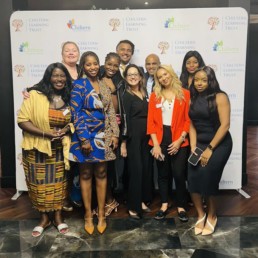
This Friday night we joined the team at Chiltern Learning Trust for their annual Racial Equity Network Dinner (#REND). We had been unable to make it the last two years running despite really wanting to attend and support it, but this year we were able to make it happen.
We sponsored a Diverse Educators’ table and invited some of our collaborative partners from the race section of our DEI DIrectory to join us on our table. It was brilliant to finally all be together in person! It is not very often we are in the same room, at the same time – the energy was palpable and we were very much the ‘naughty table’ as we needed to take advantage and connect whilst we could.
Thanks for joining the team from #DiverseEd:
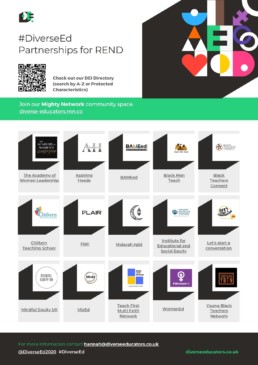
- Nadine from Aspiring Heads
- Rhia from Black Teachers Connect
- Jemma from Let’s Start a Conversation Today
- Aretha and Youlande from Mindful Equity
- Louise and Marcus from MixEd
Getting to Luton for 6pm on a Friday night, at the end of a long year and a hard term, was not for the faint-hearted. Our table travelled from Manchester, Nottingham, Birmingham, Watford, London, Kent, the New Forest and Bath to attend the event. The journey to the event is very much a metaphor for the direction of travel of the work – it is non-linear, frustratingly slow and there are lots of obstacles to navigate including poor conditions and route closures.
We were delighted to be in the room where it was happening, along with 480 other attendees, who all care about and are committed to affecting change when it comes to racial equity in the education system. We had a lot of other connections and collaborative partners at the event including:
- Diana from the Academy of Women Leaders
- Frankie from BAMEed SEND
- Albert and Johnoi from Black Men Teach
- Iona and Sam from Edurio
- Daryl from Flair
- Paul and Andrea from the Institute for Equity, University Centre
- Penny from The Linking Network
- Bukky, Flora, Yamina, Kiran and Emma from #WomenEd
In the more formal part of the event before the eating and networking started, there were a series of short presentations from a range of speakers:
- Sufian Sadiq – shared a heartfelt reflection on the fatigue and frustration of how slow the rate of change in this work is for him, his peers and his family. His call to action was for solidarity.
- Professor Paul Miller – shared the systemic data to highlight the structural and societal barriers for people of colour in our sector. His call to action was for allies to leverage their power.
- Sarah Owen MP – shared a personal narrative of being a biracial pupil and how this work could have helped her journey as a pupil but also now as a politician. Her call to action was to create greater belonging.
- Dr Patrice Evans – shared a quote from Obama and reflected on her journey being the only black woman in many spaces. Her call to action was to collect the stones and to use them to build empires.
- Hannah Wilson – shared her awareness of being a white person speaking to a room of global majority and then used the space to amplify the organisations in the room doing brilliant work in this space. Her call to action was to join the coalition.
- Assistant Professor Derron Wallace – shared a comparative lens to the data and the activity in the US compared to the UK and questioned what our collective strategy for racial equity is. His call to action was that everyone needs to own the role they have to play.
In the less formal part of the evening it was great to see, chat to and smile across the room at Alison from CCT, Mary from Myatt and Co, Tom from Ambition School Leadership, Phillippa and Sajid from PACT, David and Ena from Venturers Trust, James and Sharon from Inclusive MAT, Antonia and Bhamini from Pioneer Educational Trust, Adam from OTSA, Thahmina and Omar from CST, amongst others.
#REND is a brilliant example for the power of networking. The event was a magnet for people seeking a shared vision, a unified purpose, a collective agency. Together we are stronger, and we can go further.
Do check out the social media posts via the event hashtag #REND and put the draft date for the 2024 #REND event in your diaries: Friday 12th July. We will have a table there again and will invite new partners from our DEI Directory to join us. It would be great to see you there and they are increasing capacity to 600 for next year’s event.
DEI Directory Flyer
DEI in our Independent School

Written by Jami Edwards-Clarke
Director of D&I at Hurstpierpoint College, Housemistress and PE Teacher
Recently, we have seen change of all types firstly in the fight against a global pandemic and secondly with the Black Lives Matter movement which has brought to the forefront issues surrounding inequality around the world.
Naturally, we have all been challenged to take a deeper look into how we live our own lives, perform our jobs and even analyse our subconscious thoughts and feelings. Our school, as an independent school of excellence, is not exempt from this challenge and has therefore decided to tackle this head on with the creation of a role – the Director of Diversity and Inclusion.
As the postholder, my hope is to work closely with a team of well-informed staff members along with passionate students to bring about positive changes so that we think more critically about diversity and inclusion. Working together with both the pupil and staff platform, I hope to create opportunities for change within our academic and co-curricular programmes, ensuring that when our students leave Hurst they have a thorough awareness of issues surrounding race, gender, sexuality, ethnicity, disability, class, religion and therefore head out into the world with everything necessary to find their way.
We started this journey with the creation of staff and pupil platforms along with holding an INSET outlining our goals for moving forward. In both cases, the support from members of staff and pupils has been overwhelming and brilliant which will help to drive this movement forward with great positivity and gravitas. I feel incredibly excited and optimistic that we can and will make huge strides towards a more diverse and inclusive environment for all members of its community – staff and pupils alike.
It is important for us to remember that our school is an independent school. It sounds silly to say, but this statement leads us to consider what it is that a school is for. We can probably agree that the role of school is to educate our young people – but what does the word ‘educate’ really mean? Is it to enable young people access to the best academic outcomes, achieving the top grades at GCSE and A-level? Is it to enable young people access to the job market, ensuring that they leave school able to achieve wealth and prosperity? Or is education about more than just grades and careers? Is education about exposing young people to what it truly means to be human, in all its messiness and uncomfortable truths, in the hope that the next generation can make the world a better, more equal place?
Over recent years, our academic curriculum has been fine-tuned to ensure young people are able to achieve their full potential. This has been supplemented by co-curricular and pastoral programmes that ensure the whole child is nourished with an extremely rich diet. This is to be celebrated. Yet as academic programmes have been fine-tuned to meet the needs of the new exam specifications, what social, cultural and historical learning has been lost as a result of the formal learning programmes followed by each department?
Staff Training
In our end of year INSET session, Heads of Department were invited to reflect upon the diversity contained within their curriculum areas with their staff. The reflection was structured through a series of questions that placed the teachers into the role of the student, considering the view of the world they were left with at the end of their courses. You can see the questions below:
- You are a young person at the end of your learning journey within the department. What view of the world have you developed through our learning programmes?
- You are a young person who identifies as belonging to a minority group. What view of yourself have you developed through our learning programmes?
- What culturally diverse learning opportunities are already overtly present within our curriculum?
- What opportunities are currently being missed to engage with culturally diverse learning in our existing curriculum?
- What changes could be made to our curriculum in order to make it more culturally diverse?
While there was much to celebrate in our curriculum, it was recognised by all that there was much still to do. While equal representation of gender was an area of real strength, with a concerted effort made in typically male-dominated subject areas such as Psychology, Physics and English to better represent women, more work needs to be done to strengthen the recognition of the contribution of BAME and LGBTQ+ groups. However, many departments began to uncover some uncomfortable truths about the relationship between the learning experience within their curriculum areas and the content of the exam board specifications which they deliver.
A running theme throughout the reflection was that curriculum content determined by specification lacks diversity, particularly in studied set texts and persons of interest. This is extremely problematic for the world view our students are left with, which has become dominated by the achievements of the white, heterosexual male.
Many HoDs articulated this frustration, while also commenting on their desire to do better. In Physics, we have pledged to celebrate the contributions of more diverse Physicists. In Business and Economics, they have pledged to challenge the view that the marketplace, its workforce and consumers are there to be exploited. In the Sociology Department, the LGBTQ+ community in Brighton will continue to be celebrated for the pursuance of identity and rights issues. The Modern Foreign Languages Department has pledged to include more cultural case studies that expose our young people to issues within French and Spanish speaking countries beyond Europe.
An area of significant influence could well be sport and the arts. Perhaps articulated most beautifully by a student of Dance:
“I have learnt through the study of Dance that I do not have to identify myself with a socially constructed label in order for me to make sense to others for whom I do not represent the norm or for whom I represent a threat to their own sense of self. It is ok to simply be who I am”.
Dance student
These curriculum areas create the cultural fabric of any school and therefore will be fundamental in providing our young people with a meaningful exposure to the reality of what it means to be human. From the field, to the stage or to the art studio, each recognises its importance in developing a greater sense of awareness within our community. Each also recognises that this will require them to take a greater level of risk within performance, challenging the conventions and structures that have been embedded into the very fabric of the college throughout the course of its history and questioning its output in creative and sporting endeavours. We cannot afford to simply continue to play it safe – and nor should we.
The most important change to make is with the exam boards themselves. Therefore, the most important pledge to make of all will be for HoDs to lobby exam boards to include greater diversity within specification content. Hurst has the chance to pave the way for independent schools to join forces to challenge exam boards and also the Department for Education to develop a broad and balanced curriculum that embraces and celebrates diversity as a core principle.
While we continue to uncover some uncomfortable truths in the independent sector, it is important that we take conscious steps to embed long-lasting, meaningful change that will enable our young people to be the generation that makes a better, more equal world for us all.
The Voices of Our Staff Platform:
I believed myself to be an inclusive, liberal, accepting woman. I’d like to believe I still am, but I was, and continue to be, incredibly naive about how the world works, and the disadvantages too many people face. I was sat watching When They See Us (Netflix, true crime) and got halfway through the first episode before breaking down in tears. The reality was finally hitting me in waves, I’d sat for weeks watching the news, my anger building. The social media accounts I follow increased to include more education and understanding; the conversations with friends focused on clarifications and questions. This shouldn’t be a post about my white experiences, but merely a recognition that we all have a lot more to learn.
I want to understand, I want to empathise, I want to change and support, empower and encourage. I want to do this without being a ‘white saviour’, so I also need to learn how. How to speak about race – which I think focuses on listening – so that’s why I’m part of this group. I feel proud to be part of this strong and united group of staff and students, and am eager to see how our ideas, discussions and momentum positively affect individuals, communities and lives.
Phoebe Lewis, Psychology Teacher
The current state of the world demands that we do all that we can, as individuals and collectively, to strive for social justice and equality. I hope that the discussions and education delivered through this platform will broaden the perspective of staff and students alike and will result in real progress towards greater diversity at Hurst. Such progress will enrich and enliven the experience of everyone.
Hannah Linklater-Johnson, Head of Higher Education
I, like so many, have been affected by the BLM movement. For me the response represents more than an intellectual argument about equality and academic discussion about race issues. For me the news coverage and the videos I have watched evoke an emotional response. Initially these were all coloured by the sour taste of fear, fear stemming from the stirring up of memories that had been hidden away from public view. However, the bitter taste instilled by white supremist groups and thoughtless comments is being tempered by a gradually growing sense of hope.
For me there was no option of not being a part of the Diversity and Inclusion group at our school. I needed to be a part of the change I wanted to see happening and this gave me the platform for my voice to be heard. This group will help Hurst move towards fully embracing a culture that is stronger and healthier, with values built around core beliefs of equality, parity and fairness. Together we are working on changing behaviours, developing new ways of thinking, planning and ensuring that all parts of policy creation or decision-making are scrutinised under this new light. To quote Maudette Uzoh, this platform exists to help us ‘cultivate an environment where it’s impossible for racism of any sort to sprout or thrive’.
We are looking to develop our INSET training and our department meetings not to tick the box or create a moment to celebrate how ‘woke’ we are. Our aim is to educate ourselves, each other, our staff, our pupils, and our parents. To push forward positive change. A change we hope to see not only reflected in reducing bias, through training and awareness, but also in policy change so all processes are embedded with the expectation to always create a culture that embraces diversity and is founded on inclusivity. This means becoming a community in which any form of racism will not be overlooked, dismissed, belittled, or tolerated.
It is a sad and, perhaps, little-known truth, that victims of racism often stay silent. There is a fear of being judged, of being told once again ‘it’s only a joke’, of being told they are ‘overreacting’. There is always another way of being told that one ‘isn’t quite right’ for the job, position, role, without stating the reality of the more appalling truth. Coupled with the emotional response the victim is left knowing, logically, they are in the right, but feeling diminished, vulnerable, exposed, and frightened. It is therefore encouraging that the Diversity and Inclusion group began with members saying that this could not be tolerated, and that to allow one comment to pass unchecked, unchallenged, is to set a tone that suggests racism is acceptable. To support the victim, to stand with them as an ally is to give them the freedom of speech which has so long been denied and is empowering for the community as a whole.
On a personal level, it is this new dialogue I find most exciting. Sharing my experiences and my views, and seeing them being acted upon with sympathy, has been liberating and empowering. There is very little I will not talk about, I am known for being, perhaps, too forthright. But the terrible, overt and violent racism experienced when I was younger and the day-to-day casual racism I have learned to tolerate, is something I have hidden away. It is too painful and too damaging. I have friends and colleagues who have said to me, in the past, that they don’t know anyone affected by racism first-hand. Now, because of the Diversity and Inclusion group, this is the first time I have felt able to say, ‘but you know me.’
Sarah Watson-Saunders, English Teacher
The Voices of Our Pupil Platform
The changes I hope to see are mostly concerned with encouraging the education of pupils about race and diversity. Part of this is to do with the curriculum itself, for instance, there should be more focus in history about the atrocities of British colonisation. Not to make students ashamed of Britain, but to prevent a whitewashed pride inhibiting the desire to improve our country; and there should be more literature written by authors from ethnic minorities in English. Whilst teachers are understandably tied to the exam curriculum, I would argue that as an independent school, petitioning exam boards to diversify curriculums would have more impact than individual students doing so – this platform provides an ideal collaborative way to achieve this.
Outside of lessons, I would also hope for more encouragement for students to educate themselves on racism and how to be a better ally/activist. Many teachers currently have a ‘what I’m reading at the moment’ poster on their classroom doors. Why not expand that to include recommendations for podcasts, films and books which help educate about the experience of ethnic minorities?
Finally, education is meaningless without action. Whilst students cannot yet vote, we are able to email our MP and sign petitions. I hope to see the development of an ‘activist culture’. Students should be encouraged to email their local MP and be given the tools to do so in the most effective manner.
Saoirse, student
I joined the diversity and inclusion platform because I believe every young person must understand issues regarding diversity. There are issues that are sometimes naively neglected because the slavery of the British Empire was abolished or because America has had an African American President. But pretending that this means equality is naive and just because society is more equal than before does not mean we should settle for anything less than complete equality. We, as the next generation of leaders, must understand this if we are ever to see the end of inherent racism. We should all actively educate each other to learn about these issues, which is another reason why I joined this platform.
There’s no denying that the pupils who leave our school are statistically more likely to be successful because we’re a predominantly middle-class independent school. This makes the issue of racism something which should not be neglected because if it is then we would be doing a huge disservice to the future. I believe that the college has to ensure that diversity is a dialogue that is constantly engaged with.
I hope to see more in-class discussions that deviate from subject-based content in the national curriculum and incorporate diversity and inclusion – with teachers taking an active role in reflecting on how they can improve their lesson plans to ensure that these discussions take place; and that the content they are teaching is reflective of the equal society that we will hopefully see in the future.
It’s these changes – such as constantly educating on these issues and ensuring teachers are up-to-date with key issues – that I hope we can adopt as a college which will hopefully allow us, the pupils, to leave the college with an understanding of how an equal and inclusive society could look.
Aengus, student
I joined the Diversity Platform because I felt that, as a community, we have a long way to go in terms of challenging bigotry and making our school a safer and more accepting place for people in all minority groups. Given the extensive white privilege within our context, I think we tend to look past issues like racism because we simply don’t see it as a part of our lives. It’s on the news, social media, TV but not explicitly within our own lives. Due to this lack of experience, we stop educating our children, stop reading articles and watching shows because even though we are aware of racism, and give it a passing “it’s just so awful” when the topic arises, we don’t feel as though we have to fight against it because it has never happened to us.
For our community to begin to function in a way that is accepting and respectful of its students of colour, LGBTQ+ and female, we must begin to educate pupils on these issues and their past. The world is an unfair place and if our pupils go into it with no knowledge of how people should be treated, and the issues brought upon us by the past, then they will have a major shock – because the world isn’t like our community, you can’t just give someone a clearing or pastoral alert if they say something offensive. Often, I hear people referring to us as the ‘bubble’ which would be alright except for the fact that this bubble is causing harm by leaving hundreds of children uneducated about crucial topics. The bubble needs to be reassessed.
Change won’t be easy. Many people, from teachers to parents to pupils, may be prejudiced towards minority groups without being aware of it and for this change to occur we have to recognise that. We must see in ourselves, and other people, the beliefs we may hold that aren’t necessarily accepting and could be harmful to others. Instead of punishing this we should recognise it, educate, and work to shift some of those beliefs. For this change to happen we need to re-evaluate our syllabuses. The English syllabus, for example, has next to no literature written by people of colour, and is mostly written by men. Or our sex education department – why do we teach our pupils about only heterosexual relations? Or our History department, we learn about many of these ‘great’ leaders, failing to include the part where they were slave owners! There is so much change to be made and although it may seem daunting at first, and will take time and constant effort, the outcome will be so worthwhile. A community which thrives because you know that every child who enters and departs will see a suitable, well-rounded, non-discriminatory education. This is the time for change and these children are the future. Let them make that change.”
Anna, student
Diversity is about all of us, and about us having to figure out how to walk through this world together.
This Diversity and Inclusion INSET video was created by the staff and pupil platform – please feel free to watch.
Pride Matters: 5 actions for inclusion and quality for leaders

Written by David Weston
Co-CEO of Teacher Development Trust; Chair DfE CPD group; author, campaigner and speaker.
The annual month of pride comes around and it can be a difficult one for school and system leaders to tackle. The will is there, so what’s the best way? How can LGBTQ+ inclusivity be approached effectively and sensitively with staff, and with children and young adults?
In this article, David Weston, Teacher Development Trust’s co-CEO (Innovation & Research), draws on his experience as a founder of an LGBTQ+ teacher community, a trainer for LGBTQ+ school leaders and as a campaigner for LGBTQ+ rights. TDT is a national charity that supports schools to tap into the power of school improvement through people development, inclusive of all.
It’s worth reflecting first that while parties and celebrations are often the visible part, this month is an annual moment to focus all of humanity’s mind on what we still need to do to remove barriers, decrease inequality and create greater inclusion for all people who fit under the LGBTQ+’s broad rainbow. Even here in the UK, pride matters:
- Because countless LGBTQ+ individuals are still subjected to conversion therapies that attempt to erase their identity, and the government’s promises to deal with this remain unfulfilled.
- Because LGBTQ+ children are much less likely to receive proper relationship and sex education that helps them navigate their lives
- Because many LGBTQ+ youth are at a higher risk of homelessness due to family rejection.
- Because LGBTQ+ people often face discrimination in healthcare, leading to worse health outcomes.
- Because transgender individuals are often denied their right to self-identify and face additional barriers in accessing legal and medical support.
- Because LGBTQ+ individuals still face significant barriers in the workforce, including wage gaps and discrimination.
- Because LGBTQ+ history is often overlooked or omitted in education, leaving many unaware of the community’s contributions, rich heritage and ongoing struggles.
- Because suicide rates among LGBTQ+ youth are disproportionately high, which speaks to the urgent need for societal acceptance and support.
- Because many countries around the world still criminalise homosexuality, and LGBTQ+ individuals face persecution and violence, whether as citizens or even as visitors.
There has, of course, been a huge amount to celebrate as well. Pride marches and celebrations now are also a joyful and colourful reminder of the progress made. The ability to legally live freely, to love who you want, to marry, to have children – all these things represent such extraordinary progress. But no matter how far things have come, there are always hurdles that others won’t face. The emerging sense through childhood of feeling different, the attitudes of some groups and traditions that range from making LGBTQ+ people feel unwelcome all the way to genuine fear for their lives.
As a leader, making sure that staff and young people feel included is not just a moral imperative, it has genuine advantages. When adults or children feel afraid to be honest about their lives, constantly policing how they look, what they say or how they react in case they give something away, it affects their performance, their learning, their wellbeing. When workplaces and classrooms feel inclusive, open, with a celebration of difference, it allows everyone to give their best.
Here’s 5 actions that every leader can take:
- Policy Review and Implementation: School leaders should ensure that policies are inclusive of LGBTQ+ people. This includes anti-bullying policies, codes of conduct, dress codes, and any other rules or regulations. It should include the way that the school recruits and supports staff and pupils. These policies should explicitly mention protections for LGBTQ+ individuals and should be enforced consistently.
- Staff Training: Provide regular training for all staff on LGBTQ+ issues, ensuring they understand the importance of inclusive language, the challenges that LGBTQ+ students and staff may face, and how to address discriminatory behaviour. This knowledge will help them to create a more supportive environment for LGBTQ+ students and staff.
- Student & Staff Support Services: Establish or strengthen support services for LGBTQ+ staff and students. This could include setting up an LGBTQ+ Alliance (or similar group), providing counselling services with counsellors who are trained in LGBTQ+ issues, and ensuring that health and sex education classes are inclusive of LGBTQ+ experiences.
- Promote Visibility and Awareness: Celebrate LGBTQ+ History Month, participate in Pride events, and integrate LGBTQ+ history and contemporary issues into the curriculum. This helps to normalise LGBTQ+ identities and experiences and can contribute to a more inclusive school culture.
- Engage with the Wider Community: School leaders should communicate with parents, carers and the wider community about the school’s commitment to LGBTQ+ inclusion. This can help to build a supportive environment not only within the school but also in the students’ lives outside of school.
Together, we learn and we evolve. If you would like to explore how TDT can help your school or trust to embed a thriving, research led culture of professional development that sticks, please get in touch.
Footnote:
LGBTQ+ is an umbrella acronym that includes people who identify as Lesbian, Gay, Bisexual, Trans*, Queer (or sometime Questioning) and the plus indicates that it encompasses all other related communities around gender and sexuality, including those who are Intersex, Non-binary, Asexual, Aromantic, Pansexual and more.
Languages in the Community

Written by Mair Bull
Former teacher and content writer for BBC Bitesize. Now works at Manchester Metropolitan University in the Curriculum and Rise teams.
Recently, we launched our first flexible learning Short Course, a trailblazing Office for Students pilot, part of the Government’s lifelong learning and upskilling agendas. We started with the unit ‘Languages in the Community’. We have a fantastic first group who really enjoyed learning about the course structure and being introduced to Urdu. Each week we will explore another of Greater Manchester’s most popular languages and learn more about the city and our community. In addition, the unit explores how we communicate (using both verbal and non-verbal forms) and create inclusive and welcoming spaces, no matter the level of spoken English.
This innovative pilot enables students to study flexibly and from 2025 to ‘stack’ their courses to build up to a full degree. We have started initially with Level 4 and students can ‘stack’ to achieve a Certificate of Higher Education (equivalent to first year of a degree).
Initially, our Short Courses are aimed at those working or volunteering in education, health and social care. Most students in the pilot do not have degrees and so this new and exciting opportunity offers them a chance to gain a qualification whilst still working in roles such as classroom assistants, nursery staff, childminders and social care associates. However, the flexibility of the structure means the courses have also attracted those with degrees, such as teachers, using the courses as part of on-going CPD, especially as they recognise the importance of staying up to date following the significant impact of Covid-19 on young people and families.
The Short Courses have been developed each step of the way with equality, diversity and inclusion at the core. Initially, we hired independent consultants from Diverse History UK, as part of our quality assurance review panel to scrutinise our inclusion curriculum planning.
The courses aim to role-model the best in flexible, inclusive and innovative practice. We want these courses to inspire and empower students, building that bridge between their previous experiences and these new level 4 opportunities. Our structure means that students come together in-person weekly for workshops, plus additional asynchronous online activities, which students work through independently at a time that suits them. There are no essays or exams, instead the assessments are authentic and can be applied directly to the students’ own setting.
Key to the success of the Short Courses is the importance of creating a welcoming community, where students from all backgrounds and experiences feel they belong and can enjoy sharing the learning journey with others.
The potential of the Short Courses model has really captured the attention of the sector and beyond, and we are exploring opportunities with our engineering employer partners creating a CAD (Computer Aided Design) and 3D printing course, with our award-winning Print City team. In addition, we are bringing on new units all the time, including Speech, Language and Communication; Mental Health and Wellbeing; plus Risk and Safeguarding.
To find out more visit: www.mmu.ac.uk/study/short-courses