Global Citizenship and the Role of a Global Network in Education

Written by Nadim M Nsouli
Nadim M. Nsouli is Founder, Chairman and CEO of Inspired Education. Founded in 2013, he re-evaluated traditional teaching methods and created a new model for modern education. Today, 80,000 students in 111 Inspired schools across 24 countries benefit from a student-centred approach and globally relevant curriculum.
With digital communication facilitating the exchange of ideas, the world is more interconnected than ever before. As such, it’s increasingly common for individuals to identify as global citizens. This presents opportunities for young people. Yet also poses challenges.
Adapting to globalisation necessitates a strong sense of self-identity and an open mind. Individuals engage with other cultures and challenge stereotypes. Thus, learners must be equipped with the knowledge, skills, and values to navigate and contribute to the world in which they want to live.
There’s a growing recognition that educating for global citizenship is of importance. In 2012, the United Nations Secretary-General, Ban Ki-Moon, said “Education is about more than literacy and numeracy. It is also about citizenry”. Global Citizenship is an all-encompassing concept that acknowledges the web of connections and interdependencies in the world. According to Ban Ki-moon, “Education must fully assume its essential role in helping people to forge more just, peaceful and tolerant societies.”
Students’ desire for international travel and cross-cultural programmes has been apparent for some time. In the past, a one-dimensional approach to this was for an institution to partner with a pre-existing educational facility in the location of interest. However, we’ve witnessed a substantial transformation in the way educational institutions operate, i.e., the emergence and rapid growth of global school networks. With a presence across countries and continents, they’re bringing about a new age of learning possibilities.
Educational institutions are recognising that global citizenship education can develop and enhance much-needed values and skills that will better equip students in a changing world. The concept of ‘global campuses’ has gained prominence, wherein the focus is on cultivating a multicultural ethos.
The Inspired Education Group demonstrates this model with 111 institutions that provide its students with opportunities beyond the capabilities of a single entity. Nadim Nsouli, CEO and Founder, describes it: “We’re now present in 24 countries around the world. This allows 80,000 students from different cultural backgrounds to meet and learn from one another.” Each campus offers a safe space to explore complex and controversial global issues. This approach encourages learning from, and about, people, places, and cultures that are different from our own.
Beneficiaries of the Global Approach to Education
Academic freedom and inquiry are encouraged in international education. It’s a force for promoting open, safe, and peaceful environments. The ability to cultivate global citizenship is grounded in the commitment to giving learners the tools to bring about positive change.
To be effective global citizens, individuals need to be proactive, innovative, and adaptable. They must be able to identify and solve problems, make informed decisions, think critically, articulate persuasively, and work collaboratively.
An educational institution is traditionally centred on imparting knowledge to its students through academia. However, the acquisition of these ‘soft skills’ is also needed to succeed in workplaces and other aspects of 21st-century life. At the crux of fostering global citizenship education – and by association, these skills – is a network.
How a Global Approach Translates to the Classroom
The powerful message of Aesop’s quote “In union there is strength” has never been more relevant than it is today, as educational institutions embrace multiculturalism. Many campuses are now interconnected, which allows students to access any of them – and their specialisms – with ease. This is even more powerful with the addition of extracurricular activities facilitated abroad, providing invaluable experiences. Nadim states: “To develop a rigorous global understanding, an education for global citizenship should also include opportunities for young people to experience local communities. Global campuses, exchange programmes and summer camps offer this.”
Teaching global citizenship itself requires methodologies that facilitate a respectful and empathetic atmosphere. This includes techniques like in-depth discussions and cause and consequence analyses. The objective is to foster critical thinking and encourage learners to explore, develop, and articulate their views while respectfully listening to others. “This is an important step,” says Nadim, “These methods of critical discussion may not be unique, but used in combination with a global perspective, they build understanding and foster skills like critical thinking, questioning, communication, and cooperation.”
Facilitating a participatory classroom environment requires a significant shift in the role of the teacher. They move from being the primary source of knowledge and direction to a facilitator. One which guides as students adapt to think critically, assess evidence, make informed decisions, and work collaboratively with others.
Creating an active classroom environment requires the adoption of a learner-centred approach. This means that the teacher becomes an organiser of knowledge, creating a holistic environment that supports students. As Nadim affirms: “Rather than being passive individuals simply answering questions and competing with their peers, learners must assume an active role. This means taking responsibility for their learning as well as their understanding of the global context of their lives”.
Summary
The notion that all human beings are equal members of the human race is central to the concept of global citizenship. Regrettably, entrenched beliefs in the supposed superiority of certain groups persist in our words, actions, and systems. The educational space is no exception. It can manifest, knowingly or unknowingly, in policies and curricula.
We view the world based on our own culture, values, and experiences. Hence a range of perspectives will exist on any given issue. Thus, gaining a comprehensive understanding of a subject relies on the exploration of other cultures.
As the world grapples with complex problems, global citizenship education has emerged as the gold standard of any institution. This is fuelled by a growing movement promoting peace, human rights, and sustainability. These three pillars are the foundation upon which global citizenship education stands. As Nadim remarks, “The future belongs to young people who can think critically and creatively, collaborating across borders and cultures.”

A Curriculum That Empowers Young People in Care

Written by Anu Roy
Anu is a TeachFirst leadership Alumni and digital trustee and teacher committee lead for charities in England and Scotland. She is currently a digital curriculum development manager and works in inclusive education projects incorporating tech.
This year is the first time I have developed and designed curriculum models for young people in the care system. Although students I have taught in previous roles come from a range of backgrounds, this role is the first time I have looked at curriculum specifically through the lens of an education that often forgets the difficulties faced by care experienced young people.
Out of nearly 12 million children living in England, just over 400,000 are in the social care system at any one time. They face a lot of disruption in their learning journey due to personal circumstances, financial difficulties and challenging home circumstances. This means in comparison to their peers, care experienced young people fall behind in most education and health outcome indicators.
Working with a team of educators, social workers, web developers and UX/UI designers, these are the ways we believe curriculum development can help experienced young people thrive:
- Introduce context alongside technical concepts: technical concepts across all subjects can be difficult for CEYP to master in a short space of time so contextual information wedged on either side of a technical explanation will enable their understanding and grasp to learn and embed the technicality in their wider learning framework.
- Champion peer learning– CEYP could have challenging interactions with direct instruction if it reminds them of unpleasant previous instructor situations therefore activities that use peer learning not only lowers the stakes for them to develop their self confidence and interactivity in a lesson but encourages building friendships within the classroom while learning key concepts together.
- Open ended ethos– instructors and teachers should veer away from specifying the outcome of a learning topic as ‘to achieve grade _’- instead the learning objectives should first be anchored to exploring the curiosity around the topic with prompts such as ‘what would happen if____?’ or ‘what could we learn if we explored how___’. Academic pressure to perform instantly can feel overwhelming for CEYP. While they should not be met with lowered expectations, instead the reframing helps to welcome them to first explore before learning the topic and moving on to an evaluative stage where they gain more agency.
- Knowledge connection outside the classroom-Learning feels more relevant for CEYP when they are introduced to topics through the lens of real world use. Introducing a curriculum through a skills development framework linked to increased employment motivates them to understand the use of each topic, further strengthened by real world examples, work based scenarios and soft skill demonstrations. It helps them bridge the transition from education to active skill application and any learning based curriculum should also have opportunities through project work for practical applications related to public speaking, project management, team building and problem solving for CEYP to gain experience in these areas.
Many educators are unaware of the students in their classrooms who come from a care experienced background. While this should not be the only aspect of their identity to focus on, a student centered approach to relationship building alongside these curriculum findings should enable educators to build strong relationships by understanding the story and journey many of their students have taken to make it to the classroom and learn each day. Aimed with this knowledge and bespoke approach, schools and their wider communities can foster a sense of belonging for care experienced young people, something they have been denied of for too long.
The sea belongs to me again: Steering my disabled body through an able-bodied world
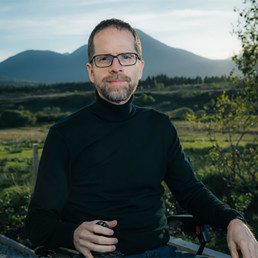
Written by Matthew Savage
A global education leader, Matthew supports schools worldwide with radical, fresh ways of knowing, helping everyone to be seen, heard, known and belong. A disabled wheelchair user, and parent to two, neuroqueer, adult children, he, his wife and their dingowolf live on the Isle of Skye.
On a coaching call recently, my dog, Luna, and I were surprised by a sudden knocking at our front door. I apologised to my coachee, grabbed my crutches and went to investigate. Our house is at the remotest edge of a small crofting township on the Isle of Skye, in north west Scotland, and so doorstep visitors are extremely rare. Usually, Luna alerts us when anyone appears even on the horizon, but her guard was clearly down, and the knocking made us both jump.
We moved to Skye in the summer of 2021, post-lockdowns and having recently returned to the UK after a decade working in the international schools sector, our two children soon to fly our family nest. Like so many itinerant educators, enriching and mind-opening though the experience had definitely been, we were determined to find roots, and this was, we hoped, to be our ‘forever home’.
It offered a remoteness that appealed strongly to my inner introvert, and with nature at its absolute grandest at our finger- and toetips, I would be able to do some of the things I loved the most, every single day, hiking, trailrunning or losing myself in Luna-exhausting walks. In fact, there was a footpath from the end of our drive, snaking across the moors to a colony of harbour seals, but one jewel on a rugged coastline I longed to explore from the rocks, a kayak, or even, if I could brave the temperature, the waters themselves.
However, the weekend before our move, I began to fall ill. A complex neurological disorder would, within just a few months, confine me to a wheelchair, completely unable to walk. Swapping two legs for four wheels, my life would change unrecognisably. Two years on, try as I might and despite the ‘disability pride’ badge occupying pride of place below my computer monitor, I am struggling to be proud of my disability, even though – with each passing day, week, month – the lines between my disability and me are disappearing completely.
Many of my everyday symptoms – the allodynia that secretly burns my skin, the angry twitches that shock my muscles, the stammer that silently benights my speech, the spasticity which tugs my shrinking legs – are invisible to others. But everyone can see that I cannot walk, and learning to navigate an able-bodied world with a disabled body has taught me so much. About our bodies and all the things we take for granted; about a world designed and built by and for those who can walk; and about the power perpetuated by that design and construction, the tyranny of physical space.
I am privileged to be engaged in a project, with tp bennett architects and in association with ECIS, in which we aim directly to challenge that power and to seek what we are calling ‘liberated school spaces’. Teams of educators, architects and students will explore how the different spaces in our schools – circulation, classroom, sustenance, personal and outdoor – can too easily exclude, marginalise and oppress the very, marginalised groups they should most seek to include. A school campus, like the world beyond its gates, is, in so many ways, an instrument of power, and that has to change.
But it is beyond the school gates that I have most experienced this tyranny myself, and I share here some small windows into my story. These snippets are about planes, trains and automobiles; about bathrooms, doors, and bathroom doors; and about curb cuts, actual and metaphorical. Because all of these have, in their own way, kept me on the margins of society; because I know that my ‘protected’ characteristic is unprotected, tyrannised even; and because each of these spaces could, and should, be liberated.
Beyond the safe and known confines of our Highlands bungalow, I navigate any internal or external space in my electric wheelchair. The ‘door’ is a convenient metaphor for the portal to any community of power (we talk about getting our ‘foot in the door’, for example); but that portal, for me, is literal. If I want to enter or exit any building, or room therein, I am typically faced with a heavy, handled, hinged, outward-opening door, despite the fact that the only door that is easy and safe to open in a wheelchair is a sliding door, manual or, better still, mechanised.
This challenge is everywhere, in many an ‘accessible’ hotel bedroom, and especially so when I want to enter an ‘accessible’ bathroom. Almost every time I have wanted to use a public bathroom, I have had to ask a stranger if they would open it for me. As someone who does not believe students should have to ask for permission to use the bathroom, I certainly do not think I should have to do so myself. To add insult to injury, many an accessible bathroom does not provide sufficient turning space either; and flying out of one airport recently, I was told there was no accessible bathroom available at all.
As a consequence, I commonly try to minimise my fluid intake when out of my house, so that I do not have to suffer the indignity of a bathroom whose ‘accessibility’ is but a mirage, a performative badge that may tick boxes but does not liberate the disabled user. This is not to mention the bizarre requirement in many a public space that a wheelchair user report to a cashier in a nearby shop to collect, and return, the special bathroom key. I recognise this is to ensure able-bodied users do not occupy this targeted space – but, again, the design, much as it may seek to liberate, does anything but.
Whilst I love the success with which Zoom masks my disability, I love my face-to-face work. Norah Bateson calls this aphanipoiesis, the communing and commingling of multiple stories in a submerged, liminal space from which could eventually emerge a seedling of hope. And for me, professionally, nothing compares to this; how fortunate am I that the pandemic lifted its pall such that I can safely travel around the world again. And yet each flight, or succession thereof, treads on my agency and dignity, and my comfort and safety, at every juncture.
The system through which one requests special assistance when booking a flight varies between airlines in all but one thing: its complexity. Even airlines which build it into the booking process rarely pass this information on to the check-in staff, leaving me having to explain my medical condition and requirements again, all in earshot of an increasing, and increasingly irritated queue. And most airlines require persistent and repeated phonecalls and emails to secure a promise only that they will endeavour to provide said assistance.
I used to rely on the airport wheelchairs, but the understaffing of the privatised assistance teams, combined with the fact that most airport wheelchairs are not self-propelling, left me, too often, stranded in a corner, facing a wall, without access to food, water or a bathroom for several hours. Therefore, I invested in a foldable, electric wheelchair, which is now, to all intents and purposes, my legs. Just as I manage, despite numerous objections, to take it to the plane door, I am always promised that it will be returned to the door on landing; but, on landing, I am commonly told that it has been “lost”, panic setting in until it is discovered again, somewhere in the baggage hall.
Going through security is, at best, undignified and, at worst, invasive; on only one occasion have I been permitted to take my wheelchair onboard, and so my agency is taken away with it; boarding is a spectacle, whether or not I manage to avoid being forcibly strapped into the onboard wheelchair; the safety instructions, written or spoken, never mention someone like me; my crutches are routinely confiscated, and retrieving them, should I need the (inaccessible) bathroom, is laboursome.
And, on landing, it is not uncommon for me to remain on board for up to an hour after everyone else has disembarked, the crew for the following flight patiently caring for me until assistance has arrived. Every flight I take takes away a little part of me, and I am lesser forever thereafter. And yet, with intentionality, consultation and compassion, air travel is a space that could easily be liberated. The likes of Sophie Morgan fight this fight on my behalf; I used to give feedback myself, but nothing ever changed, and it is hard then not to give up on feedback altogether.
I love curb cuts. Designed in California by Ed Roberts and others in the 1950s and 1960s, they took one of the discriminating spikes of hostile architecture, and literally excised it to create a ramp that directly benefits people like me, but from which everyone else also benefits. Such a powerful idea is this that I use its metaphorical equivalent as one of the instruments of equity and justice through which every aspect of the school experience can be adapted for universal belonging.
However, whenever I navigate the pavements of a city, I have learned not to depend upon the existence of the actual curb cuts which would enable me to move, unencumbered, through those built environments. The only city where I have not faced this difficulty was Amsterdam, but this is because of the prevalence, far further up the food chain, of the bicycle; the wheelchair was an afterthought. I often talk to schools about the tussle, in any practice, between coincidence and consistency, and this is, fundamentally, an equity issue. The same is true for the humble curb cut.
In London recently, I selected a restaurant based on its social media and website having declared it fully accessible, only to arrive and find there was a step to enter the premises. This is not just frustrating; it is humiliating, distressing, and infuriating. The step may as well be a brick wall. Then there is the construction work which has temporarily diverted pedestrians on to the road, but without a ramp to cut that curb. And on a recent train journey, a step-free station was closed, which meant I had to ask several strangers to lift me, on my wheelchair, from the train at the next station.
Which brings me to the ramps, installed or designed with the best intentions, deliberate acts of inclusion, whose gradient is simply too steep to carry my wheelchair safely upwards. On at least three occasions this year, it is only the sharpest reflexes of a group of adults coincidentally nearby that prevented my wheelchair tipping backwards and sending me tumbling to likely serious injury below. Or the promised ramps which, for whatever reason, did not materialise, leaving me depending, again, on others, this time to lift me up the steps to the upper level.
I share none of these stories, any more than I would the myriad other stories I kept back, to elicit pity. No disabled person I know wants that. I only aim to offer a window into the tyranny, intentional or otherwise, of the able-bodied over those whose body is disabled, but one example of the power exerted by physical spaces over those for whom said power is but a pipe dream.
Too often, the burden of fighting for accessibility, equity and justice falls to those on the margins. Some schools I visit thank me for shedding a light on the inaccessibility of their campus; it is not uncommon for a school to ask a queer educator (or student) to educate the school on the harm of a cis-/hetero-normative curriculum, culture and climate; and many a school will finally seek to adapt to the needs of the minoritized only when an educator or student happens to inhabit that particular minority. And yet, as my own story epitomises, disability is a characteristic that could suddenly strike any one of us, temporarily or permanently, at any point of our life.
Consequently, I have had no choice but to adapt myself and my life to a world which has not, nor will it, adapt to me. The crutches offered to me, by default, collapsing bruisingly beneath my faceward-falling body too many times, I commissioned bespoke crutches which not only could bear my full weight but also came with attachments for mud, sand and even snow. And I invested in a disability-adapted, fully recumbent, motorised trike, on which I can now explore the lanes and byways of rural Skye, without depending upon anybody else.
Meanwhile, let us return to our unexpected visitor, knocking to the surprise of Luna and me in the midst of my coaching call. He was part of a team, funded by the charity, Paths for All, who were rendering fully wheelchair-accessible the entire footpath from the end of our drive to the rocky shore in the distance. And he wanted to inspect my trike, to make sure that the sharpest bend in the new path could accommodate its particular turning cycle.
I may cry easily these days, but I was moved to tears by this gesture. The view from my front room, until now teasing me with a landscape that I could only watch and imagine, was soon to be liberated. Both natural and built environment were bending to my needs, and the power was shifting. Very soon, I would be able to cycle to the sea, for the first time since we moved here. The seals may not have missed me, but I have certainly missed them; and, in this space, for the first time, I would finally feel free. I have yet to manage kayaking, and I cannot swim any more, but still, in a small but significant way, the sea belongs to me again.
Black History Month: Dismantling inequalities in education for better outcomes
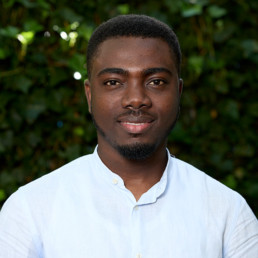
Written by Henry Derben
Henry Derben is the Media, PR, and Policy Manager at Action Tutoring - an education charity that supports disadvantaged young people in primary and secondary to achieve academically and to enable them to progress in education, employment, or training by partnering high-quality volunteer tutors with pupils to increase their subject knowledge, confidence and study skills.
Before the pandemic disrupted education, students from Black ethnic backgrounds had the lowest pass rate among all major ethnic groups at the GCSE level. However, the 2022-23 GCSEs marked a notable shift from the pre-pandemic period, with Black students on average achieving similar English and maths pass rates comparable to students of other ethnic groups.
Black History Month is celebrated in October each year in the UK to recognise the historic achievements and contributions of the Black community. It is also a prime moment to reflect on the state of education and how it can be reshaped to create a more equitable and inclusive future.
As part of activities to mark Black History Month at Action Tutoring, we had an insightful conversation on how to ensure better outcomes and a more enabling environment for Black pupils in schools with Hannah Wilson, a co-founder of Diverse Educators, a coach, development consultant and trainer of Diversity, Equity, and Inclusion practice. Hannah’s former roles in education include head of secondary teacher training, executive headteacher, and vice-chair of a trust board.
Below are some highlights of the conversation.
Re-examining Black history in the UK curriculum
Black History Month in the UK often focuses on the celebrated figures and events in mostly Black American history, such as the civil rights movement and famous Black personalities. However, Hannah highlights an important criticism – the lack of focus on UK Black identities.
“We want to move to the point where Black culture and identity are integrated throughout the curriculum,” Hannah explains, advocating for a more inclusive and comprehensive approach. The celebration of Black identity is that it’s often a lot of Black men being spoken about and not Black women, queer people, and disabled people. Thinking about that intersectionality and looking at the complexity and the hybridity of those different parts of identity often gets overlooked as well.”
A new Pupil Experience and Wellbeing survey by Edurio shows that pupils of Any Other Ethnic Group (48%) are 21% more likely to rarely or never feel that the curriculum reflects people like them than White British/Irish Students (27%). Additionally, Mixed/Multiple ethnic groups (16%) and Black/African/Caribbean/Black British students (18%) are the least likely to feel that the curriculum reflects them very or quite often.
Unpacking performance gaps
Data has shown that while a high percentage of Black students pursue higher education, they often struggle to obtain high grades, enter prestigious universities, secure highly skilled jobs, and experience career satisfaction. The journey to understanding the root causes of these educational disparities is a complex one.
Hannah recommended the need to rethink career education and the lack of diversity, equity, and inclusion strategies that often work in isolation.
“I don’t think all schools are carefully curating the visible role models they present. The adage about if you can’t see it can’t be it, and the awareness around the navigation into those different career pathways. I think that is saying that schools could do better. There’s a bridge there to be built around the pathways we are presenting as opportunities on the horizon for young people as well. Representation within the workforce is another key aspect. We need to address the lack of Black representation in leadership positions, not only in schools but also in higher education.”
The early years and disadvantage
Disadvantage often begins at an early age. Children from low-income backgrounds, including Black children, start school at a disadvantage. Hannah pointed out that the key to dismantling this cycle lies in reimagining the curriculum, the approach to teaching, and in valuing cultural consciousness.
“It’s important to start with the curriculum. The curriculum in the early years should be diverse and inclusive. The thought leaders within that provision or within that key stage are often quite white. That’s often the disconnect at a systemic level when it comes to policymaking around provision for the early years. Who is designing the policy for the early years? Who’s designing the curriculum for the early years? Are we being intentional about representation in the early years?”
“However, we need to move beyond simply adding diversity as a “bolt-on.” Their representation should be integral to the curriculum, not an afterthought. As young as our children join the education system, what can we do differently from the get-go to think about identity representation.”
Breaking the concrete ceiling
While tutoring is a viable method to help bridge the gap for underperforming students, Hannah stressed the need to change the system fundamentally. Rather than continually implementing interventions when problems arise, it’s best to revisit the structure of the school day, the diversity of teaching staff, and the core content of the curriculum.
“It has to start with the curriculum, surely tutoring and mentoring all of those interventions like mediation support mechanisms are so powerful, we know that make up the difference. But what are we actually doing to challenge the root cause? We have to stop softball. We’re often throwing money at the problem, but not actually fixing the problems or doing things differently. We need a big disruption and conscious commitment to change, but it needs to be collective.”
“We need to address the concrete ceiling that often prevents Black pupils from accessing leadership opportunities. Career guidance, sponsorship, and mentoring should be part of the solution to break these patterns. Collective action is essential to create lasting change.”
The power of engaged parents
Change should also start at home. Parents and guardians play a crucial role in a child’s education, particularly in the early years. Hannah suggests a shift in the dynamic between schools and parents.
“Thinking about how we work with parents and create a true partnership and collaboration. That to me, is what some schools perhaps need to revisit – their kind of plans, commitment, or the ways they work with different stakeholders. Engaging parents more closely is definitely a way of helping them get involved in schools so they’re part of that change cycle.”
The call to action for allies
In conclusion, Hannah’s powerful call to action focuses on allyship, encouraging non-Black people to actively support and contribute to the ongoing struggle for equity and inclusion in education.
I think for people who identify as being white, the reflection and awareness of your own experience with schooling, where your identity is constantly being affirmed and validated because you saw yourselves in the classroom, in the teachers, in the leaders, in the governors, and in the curriculum, that’s often taken for granted. It’s time for us to step back, see those gaps, and to appreciate how that affirms us, but how that could actually really erode someone’s sense of self when they don’t see themselves in all of those different spaces.”
There should be a conscious intention that educators make about what they teach, who they teach, and how they teach it, to really think about representation and the positive impact it has on young people. And being very mindful that we don’t then just perpetuate certain stereotypes and not doing pockets of representation and pockets of validation.”
Hannah’s insights underscore the urgency of addressing the disparities in our education system. As Black History Month wraps up, let’s heed the call to action and take collective steps toward a more inclusive and empowering education system that taps and nurtures the potential of all young Black students.
The Differences Between Equality and Equity

Written by Governors for Schools
Governors for School finds, places, and supports skilled volunteers as governors and trustees on school and academy boards. They support schools across England and Wales to run effectively by finding high calibre governors to bring their skills and expertise to the table – and improve education for children.
One of the reasons many governors volunteer their time to local school boards is to help make the educational landscape a fairer and more inclusive place. However, for all pupils to thrive, governors must appreciate the diverse and complex ways in which some members of the school community face a disproportionate number of educational obstacles compared to their peers. Such groups of pupils can include, but are not limited to:
- Pupils from less advantaged households.
- Students who have English as a second language.
- Pupils who have a disability as outlined by the Equality Act 2010.
- Members of the LGBTQ+ community.
- People from ethnic minority backgrounds.
- And much more.
Since launching our Inclusive Governance campaign, we’ve noted that one of the best ways governors can do their bit to make schools more inclusive is to make a conscious effort to discuss equality and equity in board meetings. But what do these terms mean?
Put simply, equality means treating everyone the same way, irrespective of factors such as status or identity. Equity, on the other hand, means treating people differently in certain circumstances for equality of opportunity to be possible.
Creating equity is important within society as it puts students on a more level playing field, leads to better social and economic outcomes across wider society, allows students to feel more engaged and looked after, and leaves staff feeling more confident that they’re succeeding in their role.
The following illustration from the Interaction Institute for Social Change demonstrates that while equality means giving everyone access to the same resources, some people may not be able to utilise these resources due to factors outside of their control. As such, governing boards must put measures in place to ensure their actions are both equal and equitable, ensuring every pupil has the same experience.
When it comes to speaking about providing equity within schools, it’s important that governing boards are…
- Advocating for equality and equity within the wider vision and strategic direction of a school.
Consider whether the school’s vision and strategic direction is relevant and beneficial to all pupils. Governors could, for example, ask questions about targeted measures the school is taking to raise attainment among less advantaged pupils or those with special educational needs and disability (SEND), as well as how they will measure success in this area. Beyond academic attainment, governors may ask questions about whether the school is living up to its stated values, such as community-mindedness, compassion, or friendship. For example, does the school provide reintegration support for vulnerable pupils who may have spent time outside of school? Is this support appropriate and tailored to their different and potentially complex needs?
- Having discussions with students, caregivers, staff, and other stakeholders to understand how policies and actions being taken by the school are likely to affect them.
Having meaningful discussions across the school community can be a great way to catch underlying flaws in current plans. For example, ensuring lighting and paint colours on walls take into consideration visually impaired children. Other issues could include talking to people within the transgender community about changes to policies surrounding changing their names on registers.
- Looking closely at budgets and determining whether the school’s financial decisions benefit pupils in an equitable way.
As a board, listening to every governor’s perspective about the allocation of resources is a great way to ascertain whether funds are appropriately spent. For example, a governor with a background in SEND issues may have a very different perspective from a governor with experience of an alternative provision education. As this campaign highlights, attracting governors from a wide range of backgrounds onto school boards is one of the best ways to ensure pupils from across the community are well-represented.
Catch up with the rest of our Inclusive Governance campaign
For more support on pushing for inclusive practices within your governing landscape, you can have a look at our campaign webpage. You can also follow us on Twitter, LinkedIn, and/or Facebook for updates on the campaign.
Section 28: 20 Years On
Written by Hannah Wilson
Founder and Director of the Belonging Effect (formerly Diverse Educators).
Yesterday marked 20 years since Section 28 was repealed whilst also celebrating Trans Awareness Week. There is a brilliant thread on X here breaking down the key information all educators should know about this piece of problematic legislation which weaponised an identity group.
20 years ago, I had joined the teaching profession as a NQT at a boys’ school in Kent.
Homophobia was an issue.
I cannot remember having any training on my PGCE or in my NQT year about prejudice-based behaviour.
I cannot remember Section 28 being mentioned in either training programmes either.
After a year, I moved to London for a Head of Year role at a boys’ school in Surrey.
Homophobia was an issue.
But I felt more empowered to tackle it and I delivered the ‘Some People Are Gay – Get Over It! assemblies from Stonewall.
After three years, I then moved to a co-ed school in Mitcham.
Homophobia was an issue.
But we had strong whole school behaviour systems and consistent accountability so we tried to keep on top of it.
I also leveraged my pastoral and my curriculum leadership responsibilities to educate and to challenge the attitudes of our students.
After six years, I moved to a co-ed school in Morden as a Senior Leader (still in the same trust).
Homophobia was an issue.
But we had zero tolerance to discrimination and robust behaviour systems in place so we chipped away at it.
Three years later I relocated to Oxfordshire to be a Headteacher of a secondary school and Executive Headteacher of a primary school.
Homophobia was an issue.
But as a Headteacher with a committed SLT and visible role models, we hit it head on.
One of my favourite assembly moments in my twenty years in education was Bennie’s coming out assembly at our school. The courage and vulnerability she embodied as she shared the personal impact of the harmful attitudes, language and behaviour humanised the problem. We braced ourselves for the fallout, for the criticisms, but she was instead enveloped with love and respect by our community instead.
20 years on… six schools later…
Thousands of students… thousands of staff… thousands of parents and carers…
Homophobia was an issue – in every context, in every community, to a lesser or greater extent we have had to tackle prejudice and discrimination directed explicitly at the LGBTQ+ community.
Since leaving headship I have run a PGCE, consulted for national organisations, trained staff in schools, colleges and trusts (in the UK and internationally), coached senior leaders.
I am not a LGBTQ+ trainer – we have experts with lived experience who train on that. I speak about DEI strategy, inclusive cultures, inclusive language, inclusive behaviours and belonging. Yet, in every training session the experience of the LGBQT+ community comes up. It comes up especially with educators who started their careers in schools pre-2003 who talk about the shadow it has cast over them. It comes up with those starting their careers in schools asking when at interview you can ask if it is okay to be out.
Section 28 may have been repealed, we may be 20 years on, but have we really made any progress when it comes to tackling homophobia in our schools, in our communities and in our society?
Homophobia was and still is an issue.
As a cisgender, heterosexual woman homophobia has not personally impacted me. I have never had to hide my sexuality. I have been able to talk openly about who I am in a relationship with. I have not had to navigate assumptions, bias nor prejudice when it comes to who I date, who I love and who I commit to. This is a privilege I am aware of, but that I have also taken for granted.
A ‘big gay assembly’ may have been one of my professional highlights, but one of my personal low points was going on a night out to a gay club in Brighton in my early thirties, and my gay male friend being beaten up in the toilets in a supposed safe space by a homophobic straight man.
This is the reality for a lot of people I care about. Family, friends and colleagues who do not feel safe in our society. Members of my network who often do not feel safe in our schools.
It is our duty to ensure that our schools, our system and our society are safe for people to just be.
To be themselves… to be accepted… to be out at work (should they wish to be)… to be in love… to be able to talk about their relationships and their families…
It is our duty to ensure that we see progress in the next 20 years – as we are seeing a scary global regression of LGBTQ+ rights.
It is our duty to counter the current rhetoric – especially when it comes from our politicians who are weaponizing the LGBQT+ community.
It is our duty to challenge the haters and the trolls – if we as educators do not tackle it, then who else will?
Our gay students, staff, parents and carers need us to be allies. They need us to stand up, to speak out and to say this is not okay, this is enough.
Some signposting for organisations and resources to support you and your school:
Partnerships:
- Schools Out UK – they run LGBT History month and we collaborate on activities.
- Educate and Celebrate – they ran our LGBTQ+ training and school award for us.
- LGBTed – we hosted their launch at our very first #DiverseEd event.
- No Outsiders – we collaborate with them and celebrate their work.
- Pride and Progress – we partner with them and support their work.
- Just Like Us – we collaborate with them and amplify their Inclusion Week.
- Diversity Role Models – we collaborate with them and amplify their great resources.
- There are lots of other brilliant organisations and individuals working this space listed in our DEI Directory here.
Communities:
- ASCL – LGBTQ+ Leaders Network
- NAHT – LGBTQ+ Network
- NEU – LGBTQ+ Inclusion
- Pride and Progress – have an active P&P group in the #DiverseEd Mighty Network.
Books:
- Paul Baker – Outrageous
- Jo Brassington and Adam Brett – Pride and Progress
- Shaun Dellenty – Celebrating Difference
- Catherine Lee – Pretended
- Daniel Tomlinson-Gray – Big Gay Adventures
Podcasts:
Blogs:
- Amy Ashenden – Faith as a Barrier
- David Church – Take Back the Narrative
- David Lowbridge-Ellis – Keep Chipping Away
- David Weston – Pride Matters
- Dominic Arnall – Primary School Storytime
- Dominic Arnall – Section 28 is Still Hanging Over Us
- Gerlinde Achenback – Age Appropriate
- Ian Timbrell – Fight Against RSE
- Jared Cawley – My Wellbeing
- Katherine Fowler – Audit Your Curriculum
- Peter Fullagar – Don’t Look Back
- Rob Ward – Parents Support It and Students Want It
- STEP Study – Improving Support
- Vicki Merrick – Increasingly Visible
Resources:
- Bethan Hughes and Holly Parker-Guest – LGBT+ Inclusion toolkit
- David Lowbridge-Ellis – The Queer Knowledge Organiser
Training:
Trans People are Loved: Diverse Educators in Allyship
Written by Bennie Kara
Co-Founder of Diverse Educators
When a community comes together, beautiful things can happen. Here at Diverse Educators, we have witnessed the rise of transphobic narratives nationally and internationally and have felt, as many others do, an acute sense of helplessness about how to be active allies for the trans and non-binary people we know and love.
When we were approached by a member of the non-binary community in despair at hearing and experiencing such a wave of transphobia and gender critical rhetoric, we gathered associates and friends to discuss how we could do something, anything, to raise our voices and show that we could be ‘together-strong’. In time, this shaped into an evening solidarity event to take place virtually. We wanted to bring people together to signal, even in the smallest ways, that there is work to be done in protecting those who are increasingly marginalised in our society.
It was clear from the outset that we did not want to just focus on how difficult the social environment is for trans and non-binary people. We wanted, collectively, to use our voices to highlight both the reality for trans and non-binary people and the green shoots that we can see around us.
Our speakers were wonderful. Jo Brassington (they/them), a Diverse Educators Associate, outlined the legal aspects of trans and non-binary identities in schools. The wealth of comments and questions after their section showed that there is a real need for educators to have access to training on how to support and protect their trans and non-binary young people and colleagues. Hannah Jepson, (she/they) a business psychologist and expert in workplace inclusion, followed with a precis that highlighted the work of the corporate world in supporting trans and non-binary people at work. There were some enlightening comments in response showcasing best practice in the workplace. Finally, George White (he/him), a trans teacher and independent consultant/trainer on transgender identities and the Catholic faith, outlined the green shoots in how Catholicism is shifting the established narrative on trans and non-binary people.
Hannah Wilson, the speakers and I left the solidarity event feeling heartened that over 60 people had given their time to attend the event, with feedback that indicated a real need for follow up. While we knew that we wouldn’t be able to find distinct ways forward immediately, the networking and signposting that took place was useful in forging connections so that action can be possible in the future.
What we do in miniature creates ripples that, in turn, can create waves. This event served to show how much there is to do still in support of the trans and non-binary community, and each attendee was asked to pledge, if possible, what their next steps were using the hashtag #TransPeopleAreLoved. The pledges appeared like pebbles in the pond.
This is allyship.
Proud 2 b Me!!
Written by Matt Taylor-Roberts
Matt Taylor-Robert (He/Him) is the Founder and Managing Director of Proud 2 b Parents and with his husband, Matt is an adoptive parent to their amazing son. He feels privileged to work for a regional adoption agency as an independent panel member and has previously worked for an independent foster agency within the same role. However, he had to step away from this role due to becoming a foster carer for this agency. Matt has previously worked within Children's Services for a local authority. To find out more about Proud 2 b Parents please head over www.proud2bparents.co.uk.
As a proud parent of a young person attending Proud 2 b Me, the UK’s only youth group specifically for children with LGBT+ parents or carers, I am constantly amazed at the benefits of this service and why there isn’t more like it across the UK.
Proud 2 b Me provides a safe space for young people aged eight and above to engage in various fun activities, such as kayaking, ice skating, and pizza making. However, the true essence of this youth group lies in allowing for discussions, offering support, and encouraging young people to navigate their unique family structures and be open about their identities.
Proud 2 b Me acts as a safe place where children 8 years and up can openly discuss their family structures and experiences, allowing them to explore and understand their own thoughts and feelings. The group sessions facilitate meaningful conversations about topics like handling prejudice, telling others about their family (‘coming out’), and embracing individuality. Witnessing my child interact with their peers, hearing their stories, and exchanging insights has been an incredible journey of self-discovery for them. The support received from like-minded individuals who face similar challenges has been invaluable.
Having inclusive spaces that celebrate diversity in all its forms is essential for children to grow and thrive, as well as meeting others from various backgrounds and family dynamics, the youth group encourages acceptance and develops a sense of belonging. By engaging in activities like kayaking, placard making and ice skating young people can develop friendships that extend beyond their family situations. They learn to appreciate differences, respect one another’s experiences, and build a strong support network that can be relied upon in times of need.
Coming out about one’s family structure can be a sensitive and complex process for some young people. Proud 2 b Me offers a supportive environment where individuals can openly discuss their feelings and experiences. The group provides guidance on how to approach conversations about their family structure with friends, classmates, and teachers, equipping them with the tools to navigate potential challenges confidently. Through discussions, and sharing personal anecdotes, these young people gain the necessary skills to articulate their identities and advocate for themselves authentically.
Peer support is the backbone of the community. Recognising the power of connecting with others who share similar experiences, the youth group facilitates friendships and support opportunities. The sense of camaraderie that emerges from these relationships is immeasurable. Young people can find comfort in knowing they are not alone and that others understand their journeys. The validation and encouragement received from peers empower them to embrace their identities proudly and combat any negativity they may encounter.
Proud 2 b Me provides a nurturing and supportive environment where young people can freely express themselves. Through engaging activities and facilitated discussions, the youth group equips our children with the tools to navigate conversations about their family structure and embrace their connection to the LGBT+ community.
Find out more here:
Launching a network for new leaders made me a better ally

Written by Ben Hobbis
Teacher, Middle Leader and DSL. Founder of EdConnect and StepUpEd Networks.
Are you a new leader, like the idea of leadership but struggle to find the balance between teaching and leading? Are you someone who wants to lead or be a leader, but not knowing how to get there, feeling a bit stagnant? You might be a leader developing, but in the wrong organisation? You might not see leaders like you? This is why Step Up was set up.
Step Up is a new network for new and aspiring leaders in education, particularly at middle and senior leadership levels in schools. Upon starting the social media account, and subsequent network, we surveyed people to find out who our community are and what they want/need. This has been incredibly useful. It’s been great getting to know our community.
From this research and insight, we have constructed five ‘leadership themes’ that we base our content and output around. We base our speakers, events, blogs and much more around these themes. The five themes are: Leadership Journeys, Leadership Barriers & Challenges, Leadership Development, Leadership Wellbeing and Leadership Diversity. Now, whilst many of these will overlap when people speak, present and write to these.
I personally as the founder wanted to ensure that whatever we do, we are inclusive and that we are diverse in order to create a community where our network members belong. Now, as a heterosexual, white, able bodied, cisgender man who doesn’t have children and is fairly financially stable, I know I’ve had it easier than others. However, I have always committed to be an inclusive ally and a HeForShe ally also. I have been a keen supporter and champion of Diverse Educators since signing up to social media and their journey started. One thing I have released is that I’ve continued to learn as an ally.
One of the biggest learning curves was Step Up’s Launch Event. As I co-hosted alongside one of my fellow network leaders, WomenEd’s own Elaine Hayes, I listened attentively to our speakers. I listened to their vulnerability; to their negative and positive experiences; to their struggles; to their hopes and wishes; to their experience and tips. I felt quite emotional in parts listening to in some cases abhorrent behaviour that they (or colleagues, friends or family) had been subjected to as part of their journey.
I’ve summarised some of the key takeaways from some of the presentations, that may be useful for the audience reading this…
Parm Plummer, WomenEd’s Global Strategic Leader and a Secondary Assistant Headteacher based in Jersey presented on Women in Leadership. Her talk initially started with sharing the fantastic work of WomenEd: their campaigns, partnerships, networks (including their global reach) and the development opportunities they provide for female leaders. Parm then went on to help navigate the process of stepping up as a female leader. Initially, sharing the only image of a woman that came up during a Google search; before going on to provide tips to write a job application through to negotiating your terms. Parm gave tips including finding allies and joining networks.
Helen Witty, a neurodivergent Lead SENDCo based in the East of England who gave a pre-recorded video on Neurodivergent Leadership. She shared an insight into her job and life, as a SENDCo with ADHD. She shared about how being open about her ADHD at her job interview and how it positively impacts her life and those who she works with. Helen also gave a fantastic insight into the role of a SENDCo, for all those who aspire to this role.
Stephanie Shaldas, a secondary deputy headteacher leading on diversity and inclusion based in London. Her talk Leadership in Colour: Senior Leadership as a Black American Woman started with a story from March 2021 whilst she was working as an Acting Co-Headteacher. This story was based around Prince William visiting her school. What was a forty-five minute visit, led to a weekend of trending on Twitter, including one Tweet: ‘Who dressed up the secretary in African cloth and trotted her out?’ Stephanie went onto talk about her journey and how she felt like school leaders didn’t look like her, when she was in her early career. She shared her inspiring path to leadership including her own education as well as teaching and leadership roles at middle and senior level spanning both curriculum and pastoral. As Stephanie said, “If I can, then you can!” – find your why and explore your passions!
Mubina Ahmed, Head of Science Faculty, based in London gave a presentation titled: ‘Using my minority lens to lead.’ Mubina went on to talk about how she used her minority ethnic background to her strength in her leadership journey. She posed the key question: ‘Do we have equity in teaching?’ Mubina used research and evidence to back up every piece of advice and information that she gave; talking about building allies to help you bring your chair to the table.
Albert Adeyemi, co-founder of Black Men Teach and a Head of Year based in the East of England gave a talk based around wellbeing and belonging in leadership. He spoke eloquently about the importance of wellbeing, how every interaction with others builds up to this. He narrated the sense of being needed versus feeling wanting and knowing what you need to fill your cup, to achieve wellbeing and belonging. The part that really blew me away was a surprise from Albert, a spoken word about belonging; a part of the event which brought a tear to my eye.
Jaycee Ward, a phase leader in a Yorkshire primary school, spoke about imposter syndrome, based around her journey as a young senior leader. Jaycee narrated her journey to date and how she has completely changed her narrative and inner critic. She shared her five top tips for combatting imposter syndrome: Seek Support, Embrace Vulnerability, Celebrate Achievements, Self-Compassion, Self-Reflection. Something, everyone at the event resonated with.
Nicola Mooney, a secondary deputy headteacher based in the South West of England, who also volunteers for WomenEd and MTPT Project, gave an interesting presentation on ‘non-linear career paths’. She shared her journey through her career to date including multiple maternity leaves and periods of IVF. Nicola shared how by not going through the ‘traditional’ upward trajectory has enabled her to be successful both as a teacher and as a mother. It was a talk many welcomed, knowing it is not as simple and always useful to be continually promoted.
I feel very privileged to have spent time in the virtual room with these fantastic Diverse leaders. Step Up (and I) will continue championing for diversity, equity, and inclusion within the education leadership sector; and will ensure everyone has the chance to share their stories. If you want to get involved and find out more, then follow us on X (formerly Twitter) @StepUpNet_Ed and check out our website: www.stepupednet.wordpress.com.
Take Back the Narrative: Reflections on #DiverseEd Conference
Written by David Church
David is an LGBTQ+ education consultant and former Deputy Head Teacher. He has over 10 years experience in education and is passionate about supporting schools to develop an LGBTQ+ inclusive culture and curriculum. Outside of education, David is a Regional Ambassador for It Gets Better UK.
Attending the #DiverseEd Conference in Bristol on Saturday felt perfectly timed. The backdrop of recent developments from the UK government regarding the trans community weighed heavily on my mind as I prepared for the day ahead. It seemed as if the trans community was under siege from multiple angles: teachers potentially being allowed to discriminate against trans young people in schools (https://www.thepinknews.com/2023/09/23/ehrc-guidance-trans-misgendering-pupils-schools/) and the proposed ban on trans women from women’s wards (https://www.theguardian.com/society/2023/oct/03/trans-hospital-patients-in-england-to-be-banned-from-female–and-male-only-wards).
As a cisgender gay man who had previously faced adversity under the infamous Section 28 (and the legacy since), I felt a deep empathy for the trans community, witnessing their increasing vulnerability and the reported surge in hate crimes against them (https://www.gov.uk/government/statistics/hate-crime-england-and-wales-2022-to-2023/hate-crime-england-and-wales-2022-to-2023).
As an LGBTQ+ education consultant, I was acutely aware that action was needed to ensure the safety of trans+ children, young people, and staff in schools. Fortunately, the conference offered a range of sessions on just this, highlighting the need for greater trans inclusion & diversity.
Every session I attended resonated with me on both a personal and professional level, but my mind was consumed with the urgent need to address the ongoing challenges faced by the trans community.
The first workshop I attended was led by Sarah Bonnell School, focusing on social justice in schools and empowering students to enact change within their communities. Their discussion of “cold anger” as a catalyst for change struck a chord with me (https://www.psychologytoday.com/gb/blog/brave-talk/202109/4-types-anger-everyone-should-know-about). This anger, when harnessed, could drive the transformation needed to combat the prevailing discourse around trans inclusion.
Equally, Shaun Dellenty’s keynote, highlighted the importance of challenging the narrative of fear and division, emphasising that we are stronger together, whether or not we identify as trans. The theme that stuck in my mind: How do we channel this anger and negative energy into positive action?
Similarly, in Bennie Kara’s keynote, the power of stories to reshape narratives was explored. She discussed how we need to move beyond viewing the trans community as victims or dangerous (a perception which has continuously been fed by media and entertainment). The history of LGBTQ+ rights is full of unsung heroes such as Marsha P. Johnson and Sylvia Rivera, who spearheaded the original Stonewall uprising. Yet, their stories are often overlooked in the narrative of our school curricula.
It is imperative that we teach about these individuals to reframe the narrative and challenge prejudices and biases. This will foster a more respectful society, one that goes beyond mere tolerance to genuine acceptance of every individual, regardless of their identity.
Jo Brassington, in their session on trans and non-binary inclusion in schools, passionately reminded us that silence and indifference regarding trans+ inclusion make us complicit. It reminded me of the words of David Morrison, Chief of Army in the Australian Army, which echo this sentiment: “The standard you walk past is the standard you accept.”
This is not about understanding what it means to be trans but about having compassion and acceptance for every trans person; knowing them as individuals and hearing their story. Stories have been central to human culture since time began, and it is now time to reshape these stories in the public eye. As agents of change, we must stand with the trans community, working towards a compassionate view that acknowledges them as individuals.
The #DiverseEd Conference offered a glimpse into the power of collective action, empathy, and storytelling to take back the narrative, ensuring that the voices and experiences of the trans community are heard, respected, and valued. We, as educators, have a unique opportunity to lead this transformation, shaping a more inclusive and compassionate society by ensuring our curriculum fosters a positive narrative of a range of trans people; from the books we read, to the significant role models we explore and the policies we have in place. Taking back the narrative is not just a goal; it’s a collective responsibility that we must all be conscious about in our schools.