What Families of Neurodivergent Students Want Teachers to Know

Written by Tessa Dodson
Tessa Dodson is an education writer passionate about supporting teachers and fostering inclusive classroom environments. She specializes in covering classroom resources, educational trends, teacher wellness, and practical strategies to help educators succeed.
There is often a gap between what schools think neurodivergent students and their families need and what they actually need. Neurodivergence refers to differences in how the brain processes information and includes common conditions such as ADHD, dyslexia, autism spectrum disorder and dyspraxia. Neurodivergent children may have different day-to-day experiences at school depending on how their needs are met and understood.
While most schools may focus on formal plans and processes, parents and guardians tend to prioritise everyday understanding and clear communication. Here are some of the things that families want teachers to know and what they feel will most impact their neurodivergent child in school.
Seeing the Child Beyond the Label
Parents and carers want teachers to see neurodivergent children as individuals, rather than defining them by a diagnosis. Estimates suggest that one in seven students is neurodivergent, highlighting how common neurodivergent diagnoses are within the school population.
While diagnostic labels provide a good starting point to understand a child better, they can only describe certain traits. They don’t offer the full picture of a child’s school experience. For instance, two pupils with the same condition may have entirely different sensory profiles, communication styles and emotional needs. For this reason, educators need to remain curious and adapt their teaching methods based on ongoing observation rather than fixed assumptions.
Prioritising Acceptance
Families would want educators to go beyond awareness of a child’s condition and focus on accepting and supporting them as they are, including adjusting the environment to help them succeed. This approach often produces positive outcomes. For example, an autism centre that advocates this acceptance-based approach reports that 98% of parents observed an improvement in their child’s ability to start conversations with others.
Communicating Clearly
Families often emphasise regular, straightforward communication. Small, meaningful updates about daily experiences often matter more than formal review points. When communication is consistent across staff and settings, children are more likely to feel secure and understand expectations. Mixed messages, on the other hand, can create uncertainty and make school feel less predictable for neurodivergent learners.
Individualised education programs (IEPs) involve structured meetings that bring parents and educators together to formally map out a child’s individual support needs and learning goals. IEP meetings are a good example of how schools and families can work collaboratively to create more consistent and supportive learning environments for neurodivergent children.
Understanding Behaviour as Communication
Families understand that behaviour is often a form of communication rather than simple compliance or disruption. When a neurodivergent child becomes overwhelmed, withdrawn or reactive, there is usually an unmet need driving that response. What seems like erratic behaviour from a child with autism, for example, may reflect sensory overload or anxiety.
According to the Department for Education, 166,041 students in England are autistic, with over 70% attending mainstream schools. These figures highlight that many teachers are working with autistic pupils every day, often in classroom settings where they may encounter difficult behavioural responses linked to unmet sensory or emotional needs.
In these situations, approaches that explore the cause of behaviour, rather than focusing solely on managing the outward response, are often more effective and respectful of the child’s experience.
Providing Flexible and Responsive Support
Effective support is rarely one-size-fits-all. Adjustments that work well for one child may not suit another, even when their diagnosis is similar. What families value most is educators’ ability to adapt support in real time, depending on how the child is managing on a given day. Rather than relying on preplanned strategies, using responsive approaches for teaching neurodivergent students allows educators to recognise and meet children’s changing needs more effectively.
Creating Safe Environments for Learning
Guiding and teaching neurodivergent students successfully involves creating environments where children feel safe, understood, and supported in everyday classroom situations. Sensory needs, predictable routines and thoughtful transitions can all make a meaningful difference. For example, offering a neurodivergent child a quiet place to calm down when things get too noisy or overwhelming can help them ease back into learning.
The Right Kind of Support
What families of neurodivergent students consistently ask for is not more complexity, but greater clarity, responsiveness and understanding in school. When teachers combine professional expertise with attentiveness to lived experience, children are more likely to feel supported and able to access learning in meaningful ways.

Can We Teach That? RSE 2026 and LGBT+ Inclusive Education in Primary School

Written by Jack Lynch
Jack Lynch (they/them) is a writer, educator, and DEI specialist. As Co-Director and Workshops & Training Lead at Pop’n’Olly, they work with schools, educators, parents, and organisations across the UK to create more inclusive environments. Jack has delivered training to thousands of professionals and authored widely used resources that support good practice in diversity, equity, and inclusion in education.
“What can and can’t we teach about LGBTQ+ lives under this new RSE guidance?”
With the new Relationships and Sex Education (RSE) Guidance 2026 set to come into force in England from September, this has been one of the most common questions I’m asked when working with primary school leaders and educators, at the moment.
In our conversations with schools and educators, I am hearing two clear messages. Firstly, the language and messaging of the RSE guidance around LGBTQ+ inclusion is deeply concerning and that, alongside other consultations and revisions of legislation, it’s providing less clarity, more questions, and increased fear and division. Secondly, it’s making educators want to work even harder to ensure that every child feels like they belong.
With LGBTQ+ bullying significantly increasing and the mental wellbeing of LGBTQ+ young people at some of its lowest levels, I am working even harder to empower schools to continue to remain inclusive and show every child that they belong. After spending months scouring the legislation and working with our legal team at Pop’n’Olly to understand what the legislation does and does not say, I can say with absolute confidence that LGBTQ+ inclusive education is very possible under RSE 2026.
LGBTQ+ inclusive education at primary level is broader than simply teaching about LGBTQ+ identities. It’s about teaching children that families can look different but that all families are characterised by love and care. It’s about teaching children that we aren’t limited to speaking, behaving or dressing in certain ways because of our gender and, finally, teaching children that there are many different ways to be human. So let me break this down a little further.
Family and Relationship Diversity
This guidance calls specifically for schools to recognise that “families of many forms provide a nurturing environment for children, and can include single parent families, same-sex parents, families headed by grandparents, young carers, kinship carers, adoptive parents and foster parents/carers” and that “Teaching should illustrate a wide range of family structures in a positive way, and care should be taken to ensure that children are not stigmatised based on their home circumstances.”
This provides a clear message that teaching about family diversity should be truly representative of all families. This provides a brilliant legislative basis for this work, which is a cornerstone of inclusive education in the lower age groups of primary and is key to making sure that children from non-traditional family structures can see themselves represented. This positive representation at early ages has been shown to significantly increase the mental well-being of all children, providing them with the important messaging that, whatever their family looks like, they belong.
Tackling Stereotyping
The RSE guidance also targets stereotyping, and specifically gender stereotyping, stating that by the end of primary school pupils should know “how stereotypes can be unfair, negative, destructive or lead to bullying and how to challenge a stereotype” as well as saying that schools should “avoid language or activities which repeat or enforce gender stereotypes”.
This focus on challenging negative stereotypes already forms a key part of many schools’ inclusive curricula and is a key element of LGBTQ+ inclusive education, as we know that gender stereotypes often underpin homophobic, biphobic and transphobic bullying. When we teach about diversity, rather than binary gender stereotypes, rates of bullying based on protected characteristics are shown to decrease, which aligns perfectly with schools’ duties under the Equality Act 2010 and Public Sector Equality Duty to ‘eliminate discrimination, advance equality of opportunity and foster good relations between people who share a protected characteristic and those who do not.’
LGBTQ+ Identities
The RSE guidance section on lesbian, gay, bisexual and transgender content is where the majority of the concerns we are hearing from schools lie. The section specifically states that “Pupils should also be taught the facts and the law about biological sex and gender reassignment” and that “schools should be mindful that beyond the facts and the law about biological sex and gender reassignment there is significant debate, and they should be careful not to endorse any particular view or teach it as fact”. Feedback we are hearing from schools, educators and, indeed, parents and families is that the wording here is ambiguous and lacks clarity as well as concerns about how trans and gender non-confirming pupils can be supported and included.
My intention in this article is not to tell schools how to interpret this wording, as that is not my place and every school will approach this differently based on their specific setting. However, what I can say is that at no point is this guidance saying that schools cannot teach that LGBT+ people exist. In fact, the guidance is clear that schools should teach pupils to “recognise that people with the protected characteristic of gender reassignment, as with the other protected characteristics, have protection from discrimination and should be treated with respect and dignity”.
Teaching about LGBTQ+ identities in primary can be done in a range of ways including (but not limited to) having books with positive LGBTQ+ representation, having diverse representation on display boards, not hiding someone’s LGBTQ+ identity when using role models (e.g. Alan Turing in a history lesson) as well as specific lessons that cover what LGBTQ+ means. Teaching about LGBTQ+ should always have a clear learning objective and align with the schools curriculum and values, showing clearly that LGBTQ+ topics are not an ‘add on’ or taught because of any personal agenda but have a clear educational purpose that is aligned with the guidance and legislation.
I want to be clear, the new RSE guidance and surrounding legislation does NOT mean we have to stop teaching about LGBTQ+ lives, it does NOT mean we have to stop supporting LGBTQ+ pupils. What is most important is that schools are clearer than ever before on how and why they are teaching about LGBTQ+ identities: how this aligns with their ethos, values, and educational objectives; how they are interpreting the guidance; and how LGBTQ+ education fits within their wider work on inclusion of other protected characteristics.
For more information on guidance and legislation that relates to LGBT+ education, Pop’n’Olly have recently released a ‘LGBT+ Equality Legislation: Guidance for Schools’ resource which outlines the legislation in England, Wales, Scotland and Northern Ireland. This resource also provides information on what the legislation says about common areas of concern such as religious/belief conflicts and parents’ right to withdraw. You can download this for free at www.popnolly.com/free-resources
Disclaimer: This information is not a substitute for legal advice and is solely intended to support good practice by offering general information on the legal principles relevant to LGBT+ education in schools. It is the responsibility of schools to know their own legal responsibilities and independent advice should be sought where necessary.
AI in Education: Promise, Peril, and the Diversity Question We Cannot Afford to Ignore

Written by Betty Johnson
Betty Johnson is Director of Rinnovate Recruitment & Consultancy and founder of B3Inspire, a women's empowerment coaching brand. She is a School Improvement Partner, AI in Education advocate, and contributor to an upcoming Routledge publication exploring AI and primary school leadership.
Artificial intelligence is reshaping classrooms at speed. But if we are not careful, we risk automating the very inequalities we have spent decades trying to dismantle.
There is a moment I return to often. I was sitting with a group of teachers in South London, brilliant and committed educators, watching them use an AI writing assistant for the first time. The excitement was palpable. Then one teacher paused and asked quietly: “But does it know our children?”
That question has stayed with me. Because behind it lies the central challenge of our time in education: how do we harness the extraordinary power of artificial intelligence while ensuring it serves every child? Not just the ones whose experiences, languages and cultures it was trained on.
The promise is real
Let us start with what AI can genuinely do. Adaptive learning platforms can tailor content, pacing and assessment to individual learners in ways that even the most devoted teacher simply cannot replicate in real time when managing a class of thirty. Intelligent tutoring systems can offer immediate, personalised feedback. For students with SEND, for English as an Additional Language learners, and for children in under-resourced schools, this is not a trivial benefit. It is potentially transformative.
Research published in AI and Ethics (Fitas et al., 2025) confirms that AI can meaningfully support special needs provision and address language barriers, provided it is deployed thoughtfully and with equity at the centre of design.
The peril we are not talking about loudly enough
Here is the uncomfortable truth. AI systems learn from data. And the data that exists in the world reflects the world as it has been, not as it should be. When a model is trained predominantly on content that centres Western, English-speaking, middle-class experience, it does not arrive at the classroom as a neutral tool. It arrives carrying biases.
Research published in the International Journal of Artificial Intelligence in Education (Baker & Hawn, 2022) found that algorithmic bias in educational AI can produce systematically unfair outcomes across assessment and instruction, disproportionately affecting the very students who most need support. A 2025 review in Frontiers in Education confirmed that unchecked AI models can continue to amplify underlying social and cultural biases, impacting equity and fairness in both assessment and instruction.
“The environment the machine operates in is social in nature. It functions within the socio-technical system that encompasses the cultural values and beliefs of the people using it.”
Put simply: AI is not neutral. It is a mirror. And if we have not yet built a system that reflects the full richness of our children’s identities, we should not be surprised when the mirror distorts.
The digital divide: a growing fault line
There is a second, more immediate danger. Access to AI tools is not equally distributed. Schools in disadvantaged communities face significant challenges in investing in technology and establishing fair access policies. A 2025 study in Frontiers in Education warned explicitly that equitable access to AI tools is crucial to prevent educational inequalities from widening further.
Attainment outcomes continue to vary significantly between ethnic groups in England, with some communities continuing to experience substantial educational disadvantage despite decades of policy attention and intervention. Education Policy Institute data indicates that Gypsy, Roma and Traveller pupils experience some of the largest attainment gaps in England, equivalent to approximately 30 months of learning behind their peers by the end of secondary school. Meanwhile, Universities UK continues to report degree awarding gaps between White students and several minority ethnic groups across higher education.
If AI becomes the new frontier of educational provision and some children cannot access it, or access a version of it that does not truly see them, we will not close those gaps. We will cement them.
What can we actually do? Seven practical steps
- Ask the equity question first.
Before deploying any AI tool in your school, ask who it was trained on. Ask who it serves well and who it might underserve. Demand transparency from providers about their training data and bias testing. This is not a technical question. It is a values question.
- Use AI to reduce teacher workload, not to replace teacher relationship.
The most powerful protective factor for disadvantaged students is a trusted adult who knows them. Use AI to free up that time, for planning, marking and administration, so teachers can invest more of themselves in the human connections that matter most.
- Curate and contextualise AI outputs.
Do not present AI-generated content as given. Teach children and staff to interrogate it. Whose perspective is missing? What has been assumed? This is media literacy for the AI age and it is a diversity lesson in itself.
- Pair AI with inclusive curriculum design.
AI is a tool, not a curriculum. Ensure that what children are doing with AI reflects a genuinely diverse and representative body of knowledge, including authors, histories and contributions from across the global majority.
- Invest in staff training with diversity at the centre.
AI professional development must include bias recognition and culturally responsive pedagogy, not just technical skills. Teachers need to understand not only how to use these tools but when to challenge them.
- Amplify student voice in AI decisions.
Which students are at the table when your school decides how to use AI? If the answer is mainly those who already have power, change the table. Invite your most marginalised students into the conversation. They will see what others miss.
- Advocate beyond your school.
The decisions that shape AI in education are being made at government, policy and corporate levels. Join or create the conversations that push for representative datasets, diverse AI development teams and equity-first regulation. Your voice belongs in those rooms.
A word to women leaders in education
I want to speak directly to the women reading this, particularly those who, like me, came into this profession from communities that have historically been spoken about in education rather than listened to within it.
We are not incidental to this conversation. We are central to it. The research is clear that cultural and social context shapes how AI interacts with learners. We carry that contextual knowledge. We have spent careers navigating systems that were not built with us in mind and we have built extraordinary things within them regardless.
The question is not whether AI will change education. It already is. The question is who gets to shape it. The answer should include every teacher in every underfunded classroom, every headteacher in a school where the children look like the world, and every leader who has ever been the first, the only, or the one they did not expect.
“We do not get a fairer future by accident. We build it, deliberately, strategically and together.”
The next time someone asks whether AI is good or bad for education, resist the binary. The better question is simply this: good or bad for whom? Ask that question consistently and loudly, at every level, and AI in education may yet become the equaliser it promises to be.
References
Baker, R.S. & Hawn, A. (2022). Algorithmic bias in education. International Journal of Artificial Intelligence in Education, 32(4), 1052-1092.
Fitas, R. (2025). Inclusive education with AI: supporting special needs and tackling language barriers. AI and Ethics, 8(2), 115-129.
Education Policy Institute (2024). Annual Report: Ethnicity Gaps.
Universities UK (2019). Black, Asian and Minority Ethnic Student Attainment at UK Universities: Closing the Gap.
Frontiers in Education (2024). Promoting equity and addressing concerns in teaching and learning with artificial intelligence.
Beyond The Bookshelf: Creating Change Through Activism
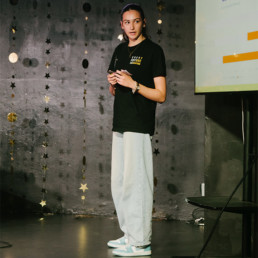
Written by Maria Oprea
Maria Ariana Oprea is a Year 9 student at Caterham High School who wishes to have a future career in Law. She was part of Every Future Foundation 2026, Activism Academy.
When I first joined Activism Academy, I never imagined how much it would change me. I signed up because I cared about making a difference, but I came out with so much more: confidence, new friendships, valuable skills, and the opportunity to create real change in my school community.
My project is called Beyond the Bookshelf. The idea came from the simple question: Does everyone in our school feel represented in our school curriculum? I wanted to make our school curriculum more diverse, starting with the library.
For me, diversity in books is way more than just numbers. It means having authors from different ethnicities, cultures, and backgrounds. It means books with characters that people feel reflected in, whether it’s through experiences or identities. It means exploring stories, histories, and perspectives from around the world so that every student has the opportunity to learn from people who may be different from themselves, while also seeing their own experiences reflected in what they read. It also means helping others develop the same genuine love for reading that I found myself having from a very young age.
Through surveys, research, book sales, and presentations, I gathered the views of students and explored ways our library could become more inclusive. Seeing other students engage with the idea and recognising that their opinions mattered was one of the most rewarding parts of the project. It showed me that positive change can begin with listening, understanding different perspectives, and taking action. No matter how young you are, or how small the change may seem at first, every positive action has the potential to make a real difference.
One of the biggest things I learned is that activism does not always have to be loud or dramatic. Sometimes it starts with asking questions, listening to others, and finding practical ways to improve something that matters. Through Beyond the Bookshelf, I discovered that small changes can have a lasting impact.
I am incredibly grateful to Activism Academy and my amazing mentor, Hannah Wilson, for giving me this opportunity and supporting me every step of the way. This has helped me grow as a person, develop confidence in my voice, and understand that I can help shape the world around me. Most importantly, it showed me that when people come together with a shared purpose, positive change is possible.
Beyond the Bookshelf started off as a project about books, but it became a journey of learning, friendship, and empowerment – and one that I will always be proud of and grateful for.
Literacy matters: From Mirrors and Windows to Voice and Participation

Written by Amy Wilby
I am an experienced senior educational leader, currently serving as an Assistant Headteacher with responsibility for Curriculum, as well as a Trust-wide DEIB Champion, edublogger, and proud mum to a 21-year-old son. Since qualifying as a teacher in 2009, I have built a career rooted in both academic excellence and strong pastoral care. I bring extensive experience across middle and senior leadership, including roles as a Specialist Leader of Education (SLE) and Associate Assistant Headteacher. I hold an NPQSL and a master’s degree in educational leadership, and I am deeply committed to evidence-informed practice, drawing on educational research to enhance teaching, learning, and curriculum design.
Walk into most classrooms and you’ll see literacy everywhere, embedded in reading tasks, writing activities, and assessment criteria. It’s carefully planned, structured, and aligned to curriculum goals.
But there are deeper questions we don’t ask often enough:
- Who can actually access it, use it, and shape it, and who can’t?
- Does the ability to decode mean that students can fully understand the context?
- How can literacy build social and cultural capital?
- Does literate signal included?
In the same way that an inclusive curriculum depends on mirrors and windows, an inclusive approach to literacy depends on something equally powerful:
Access, voice, and participation.
If ‘Mirrors and Windows’ help students see, literacy determines whether they can engage, respond, and belong.
From mirrors and windows to literacy as power
The idea of mirrors and windows gives us a strong foundation:
- Mirrors: students see themselves reflected
- Windows: students understand others
But there’s a crucial next step.
Seeing is not the same as participating.
A student might recognise themselves in a text (a mirror), or learn about another perspective (a window). But without the literacy skills to interpret, question, and respond, their role remains passive.
Literacy is what turns:
- mirrors into validation
- windows into understanding
- classrooms into spaces of participation
Without literacy, inclusion risks staying at the level of representation. With it, inclusion becomes something students actively experience.
Literacy as access: who gets in?
Just as curriculum design asks whose stories are told, literacy asks:
Who can access those stories in the first place?
Who is advantaged and disadvantaged by the choices of text and the metaphorical language that is frequently used in education?
When literacy is secure:
- Students can engage with the full curriculum
- They can navigate complex texts, instructions, and ideas
- They can move confidently across subjects
- If they truly understand the text, they begin to understand the subtext, the meaning and the inference.
When it isn’t:
- The curriculum becomes partially inaccessible
- Learning is fragmented
- Students may disengage, not from lack of ability, but from lack of access and from cognitive overload!
This is where literacy builds directly from curriculum thinking. It ensures that mirrors and windows are not just present, but reachable.
Literacy as voice: who gets heard?
Mirrors validate identity, but literacy enables expression.
In an inclusive classroom, it’s not enough for students to see themselves reflected. They need opportunities to:
- articulate their thinking
- share their experiences
- challenge ideas
- contribute to discussions
This is where literacy becomes deeply connected to belonging.
Because belonging isn’t just about recognition, it’s about being heard and taken seriously.
Expanding literacy here means valuing multiple forms of communication:
- spoken language
- storytelling
- debate and discussion
- digital and visual expression
When these are embedded into classroom practice, more students find ways to participate meaningfully.
Literacy as participation: who gets to shape the learning?
Windows help students understand the world.
Literacy allows them to interact with it.
Through literacy, students:
- question what they read
- connect ideas across topics
- collaborate with others
- form and defend their own viewpoints
This shifts them from consumers of knowledge to contributors.
And this is where belonging becomes tangible.
A classroom is not inclusive because of what is displayed on the walls or listed in the curriculum. It becomes inclusive when students can actively take part in the learning experience, when they can influence it, respond to it, and see their role within it.
‘Without enough language – a word gap – a child is seriously limited in their enjoyment of school and success beyond’. (Harley, 2018, p. 2)
The risk: when literacy is overlooked
There’s a parallel here with the ‘add and stir’ approach to curriculum.
Just as representation can become tokenistic, literacy can become:
- overly focused on technical skills in isolation
- detached from meaning and purpose
- assessed more than it is lived
- Focused on written rather than oral assessment
When this happens:
- Students may decode text without truly engaging
- Writing becomes performative rather than expressive
- Participation is limited to those already confident
- Those with a word gap are continually disadvantaged, this is not inclusive; this does not increase a sense of belonging.
And again, students notice.
They can tell when literacy is something they do for school, rather than something that gives them power within it.
What this looks like in practice
Building on mirrors and windows, schools can strengthen inclusion through literacy by being equally intentional.
- Make literacy visible across the curriculum
Ask:
- Where are students reading, writing, speaking, and thinking deeply?
- Who is thriving in these moments, and who isn’t?
- Is there a large focus on extracts rather than rich and extended reading? This may feel more inclusive, however appropriately scaffolded pieces, allow all learners to build their vocabulary and feel more confident in their linguistic ability.
- Connect literacy to meaning, not just mechanics
- Use texts that matter
- Create purposeful writing opportunities
- Prioritise discussion and dialogue
- Focus on metaphorical language as well. Idioms and common metaphors, where not understood, can create a sense of isolation and ‘otherness’.
- Plan for participation, not just completion
- Build in structured talk across all subjects
- Use collaborative tasks
- Create space for multiple perspectives
- Scaffold up, don’t recue the reading to support students
- Value different starting points
- Recognise that students arrive with different literacy experiences
- Scaffold without limiting
- Maintain high expectations with appropriate support
- Keep student voice central
Just as with curriculum:
- Do students feel confident contributing?
- Do they feel listened to?
- What helps them engage—and what holds them back?
Expanding inclusion beyond representation
Mirrors and windows ensure that students can see.
Literacy ensures that they can:
- access what they see
- respond to it
- participate in shaping it
Without literacy, inclusion can remain symbolic.
With literacy, it becomes functional, lived, and sustained.
What you can do tomorrow
To build on your work around mirrors and windows:
- Review a lesson or scheme and ask: Where is the literacy demand here? Who might struggle to access it?
- Add one structured opportunity for student voice (discussion, reflection, or debate)
- Adapt a task so students are not just reading, but responding, making inferences, questioning, or creating. Do this in a subject other than English or the Humanities.
- Plan which common idioms can be used in different units, this may feel outdated, however they are often used in History, English and other GCSE and A level exams as we as in common discourse. Not knowing these can disadvantage and disengage!
Small shifts here can have a significant impact on participation and belonging.
Final thought
If the first question of an inclusive curriculum is:
“Do students see themselves and others?”
Then the next question must be:
“Can they do something with what they see?”
Because true inclusion isn’t just about visibility.
It’s about access, voice, and participation.
And that’s what makes literacy a superpower.
Further reading:
Harley
Harley, J. (2018) Foreword. In: Why closing the word gap matters: Oxford language report. Oxford: Oxford University Press, p. 2.
Burnett, Merchant & Neumann
Burnett, C., Merchant, G. and Neumann, M. (2020) ‘Closing the gap? Overcoming limitations in sociomaterial accounts of early literacy’, Journal of Early Childhood Literacy, 20(1), pp. 111–113. Available at: https://doi.org/10.1177/1468798419896067
Global Equality collective
Global Equality Collective GEC KnowHow Bookshop. Available at: GEC KnowHow Bookshop
Global Equality Collective 6 books to diversify your bookshelf (NCAFF). Available at: https://www.thegec.education/blog/6-books-to-diversify-your-bookshelf-ncaff
Kara
Kara, B. (2020) A little guide for teachers: diversity in schools. London: Sage Publications Ltd.
Quigley
Quigley, A. (2018) Closing the vocabulary gap. London: Routledge.
Wilby
Wilby, A. (2024) ‘Privilege, knowledge, and access: navigating education through cultural capital’, Global Equality Collective Blog, 12 September. Available at: https://www.thegec.education/blog/privilege-knowledge-and-access-navigating-education-through-cultural-capital
Worth-it (2021) How to build positive relationships in school, Worth-it Blog, 17 May. Available at: https://www.worthit.org.uk/blog/positive-relationships-school
Supporting Religiously Diverse Staff to Feel Safe and Included in Teacher Training
Written by Belonging Effect
Belonging Effect is committed to shaping intention into impact and supporting people with their Diversity, Equity, Inclusion, & Belonging strategy and training needs.
As schools and teacher training providers continue to build more inclusive environments, conversations about supporting staff from diverse religious backgrounds are becoming increasingly important. While much attention is rightly given to supporting pupils, creating a culture where trainee teachers and school staff feel safe, respected and able to bring their whole selves to work is equally vital.
Recently, a teacher training provider approached us seeking advice on how best to support a trainee teacher who has chosen to wear a niqab. Their question was thoughtful and proactive: how can we ensure she feels welcomed and supported, particularly when there are currently no colleagues within our school communities who wear a niqab?
The answer begins with a simple but often overlooked principle: inclusion is not about making assumptions. It is about creating conditions where people can tell us what they need and trusting them as experts in their own experience.
Start with the Individual
Every person’s experience of faith and religious expression is different. While some women who wear a niqab may choose to remove it in certain professional settings, others may not. Some may require specific adjustments, while others may not need any additional support at all.
The most effective starting point is a respectful conversation with the trainee herself. Rather than focusing on what challenges might arise, ask open questions about what would help her feel comfortable, safe and supported throughout her training journey.
This approach not only avoids assumptions but also demonstrates trust, respect and partnership.
Focus on the Environment, Not Just the Individual
When organisations think about support, attention often centres on the individual who may be perceived as “different”. However, in many cases the greatest opportunity lies in preparing the wider environment.
Religious literacy and awareness training can help colleagues better understand different forms of religious dress and practice. This is not about requiring staff to become experts in every faith tradition. Rather, it is about building confidence, reducing misconceptions and creating a culture where curiosity is respectful and inclusion is everyone’s responsibility.
Small actions can have a significant impact:
- Ensuring all staff engage with the trainee as they would any other colleague.
- Addressing questions or misconceptions through education rather than leaving individuals to explain or defend their choices.
- Encouraging respectful conversations about diversity and inclusion.
- Challenging stereotypes when they arise.
These everyday behaviours often have a greater impact on belonging than any formal policy.
Consider Practical Adjustments
As with any member of staff, there may be practical considerations that support comfort and wellbeing.
Potential adjustments could include:
- Access to well-ventilated spaces during warmer weather.
- Private or discreet spaces if required for personal comfort.
- Consideration of uniform or dress expectations where relevant.
- Opportunities to discuss placement-specific considerations before entering a new school environment.
The key is flexibility and dialogue rather than assuming that particular adjustments will be required.
Representation Matters
Inclusion is reinforced when people can see themselves reflected in their environment.
Schools and training providers may wish to review resources, displays, library books and curriculum materials to ensure they reflect a diverse range of religious identities and experiences. For example, when discussing Muslim communities, representation can extend beyond images of the hijab to include the diversity of ways Muslim women choose to express their faith.
Visible representation helps communicate an important message: you belong here.
Preparing for Questions from Parents and Communities
Inclusion sometimes involves preparing for questions from the wider school community. While most interactions are likely to be positive, schools may occasionally receive enquiries from parents who are unfamiliar with certain forms of religious dress.
Having clear, values-based messaging prepared in advance can help staff respond confidently and consistently. Responses should focus on professional standards, equality, respect and the school’s commitment to creating an inclusive environment for both staff and pupils.
Importantly, the burden of responding to concerns should never fall on the trainee herself.
Cultivating a Culture of Belonging
Ultimately, supporting religiously diverse staff is not about creating special treatment. It is about ensuring that everyone has equal opportunity to thrive.
For teacher training providers, this means moving beyond compliance and towards genuine inclusion. It means recognising that diversity within the teaching workforce enriches schools, broadens perspectives and provides valuable role models for young people.
When organisations focus on listening, representation, religious literacy and everyday respect, they create environments where all trainees can flourish—not despite their identity, but with it fully recognised and valued.
The question is not simply how we support one trainee teacher. The question is how we build school communities where every member of staff feels they belong from the moment they walk through the door.
Final Thoughts
Creating inclusive workplaces requires more than good intentions. It requires curiosity, listening, and a willingness to examine the systems, cultures and assumptions that shape people’s experiences. By taking proactive steps to support religiously diverse staff, schools and training providers can help ensure every educator feels valued, respected and able to thrive.
Call to Action
Please do get in touch if you have worked on an inclusive dress policy and would like to share best practice or if you have lived experience of wearing the niqab at work and would be willing to share your experiences.
School is so gay

Written by Ian Timbrell
Ian has worked in education for 18 years, including as a teacher and deputy head teacher and now supports schools develop their provision for LGBTQ+ and adopted pupils. He is the author of 'It's More Than Flags and Rainbows', a guide to supporting schools become more LGBTQ+ inclusive.
I remember seeing bullying when I was at school. I remember the names, the laughter, and the way certain words landed harder than others. I also remember how normal it all felt at the time, not because it was harmless, but because nobody really stopped it.
Years later, when I became a teacher, I genuinely believed things would be different. Society had moved on, language had evolved, and schools were far more aware of safeguarding and wellbeing. But standing in classrooms and corridors, I found myself hearing the same phrases, watching the same patterns, and feeling the same familiar knot in my stomach.
What devastated me most was not just that bullying still existed. It was how often it was excused.
“That’s so gay.”
“They don’t mean it like that.”
“It’s just a saying.”
“There are bigger issues we need to focus on.”
I heard these comments repeatedly. Sometimes from pupils, but far more painfully from adults.
For LGBTQ+ people, language like this is never neutral. It carries weight, history, and memory. When a word connected to who you are is used as shorthand for something negative, it teaches you very early on that your identity is something to be laughed at, minimised, or ignored.
As a pupil, that message hurts deeply.
As a teacher, watching it be passed on to another generation is crushing.
Over time, I became increasingly frustrated by the idea that tackling homophobia was somehow an “extra”. Something to get to if there was time. Something that sat below academic outcomes, behaviour targets, or inspection priorities. I watched schools work tirelessly on countless tick-box initiatives, yet hesitate when it came to properly challenging harmful language, often out of fear of backlash or because it was seen as controversial.
But bullying linked to sexuality or gender identity is not less serious because it is verbal. It is not less damaging because it is common. And it is not less urgent because some people are uncomfortable talking about it.
I reached a point where I could no longer accept that this was just how things were. Leaving teaching was not an easy decision, but it became a necessary one. I set up More Than Flags and Rainbows because I wanted to challenge the idea that inclusion is optional and that addressing homophobia is somehow a distraction from “real” education. It is not. It is central to it.
I have worked with children who learned to make themselves smaller to feel safe. I have listened to young people who stayed silent because drawing attention to themselves felt dangerous. I have seen how unchecked language creates cultures where exclusion becomes normal and cruelty becomes background noise.
This work matters because words shape environments. When harmful language goes unchallenged, it sends a clear message about whose feelings matter and whose do not. When schools, and wider society, treat this as a low priority, LGBTQ+ young people pay the price.
This is not abstract to me. It is personal. I have lived it, witnessed it, and ultimately walked away from a career I loved in order to keep challenging it in a different way. And I believe deeply that when we stop making excuses for harm, we create spaces where young people do not just survive, but belong.
Understanding Why Mattering Matters for Black Teachers
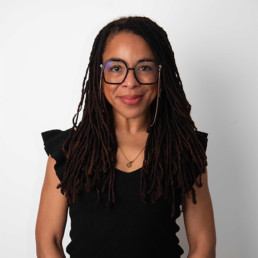
Written by Tara Elie
Tara Elie teacher, psychologist, lecturer and coach. Tara has diverse experience in education and Learning and Development spanning over decades. She is renowned for her engaging training delivery, both face-to-face and virtually. Her performance background, alongside her passion for supporting individuals and organisations to flourish and thrive, characterise her delivery style. Tara has completed research on Black Teacher Mattering which she is delivering in keynotes. She is passionate about teacher wellbeing and uses the theories of Positive Psychology to inform her work with all clients with a proven record of success. Tara stands for social justice and social change. She appreciates and celebrates the individual, their differing backgrounds, cultures, experiences, perceptions, and values.
A Gap in the Research
As I explored the literature on mattering and education, one issue became increasingly clear: there is very little UK-based research exploring how Black teachers (BTs) experience mattering within schools. Existing research has focused on Black students (Howard-Vital, 1991; Scott, 1996), or on teachers in specific curriculum areas such as Physical Education (Gaudreault et al., 2018). Research specifically examining BTs has largely come from the United States (Milner, 2006; Love, 2016; Carey, 2019).
This gap matters. Conversations about diversity in education often focus on recruitment statistics or representation targets, but much less attention is given to how Black teachers actually experience school environments once they enter the profession. For me, this raises important questions about belonging, recognition, and professional identity. Do Black teachers feel valued? Do they feel seen? Do they feel that what they contribute genuinely matters?
What Does “Mattering” Actually Mean?
Psychologically, mattering refers to the experience of feeling valued by others and believing that we add value to the lives of others. Rosenberg (1985) connected mattering to self-esteem, describing it as being treated with respect and having one’s value acknowledged. Elliott (2009) similarly described mattering as the belief that we make a meaningful difference.
What I find particularly powerful about these definitions is that mattering is not simply about praise or confidence. It is relational. It is about whether people feel psychologically significant within the spaces they occupy.
For Black teachers, however, this experience can become more complicated when viewed through the lens of race. Elliott (2009) identifies awareness — being noticed and distinguishable from others — as an important component of mattering. Yet Jensen’s (2011) research on Black men in Denmark suggests that visibility is not always experienced positively when connected to racial “othering”.
This feels especially relevant within education. Black teachers may be highly visible within predominantly white institutions whilst simultaneously feeling unheard, stereotyped, or professionally overlooked. Visibility alone does not create mattering. In fact, being visible without being genuinely valued may deepen feelings of marginality.
Dignity, Fairness, and Recognition
The literature repeatedly highlights dignity and fairness as central to mattering. Prilleltensky (2019) describes dignity as “the backbone of mattering”, whilst Perryman and Calvert (2020) connect worthiness to fair and just treatment.
I think this is particularly important when considering the experiences of BTs. If teachers experience stereotyping, inequitable treatment, or exclusion from opportunities, this can undermine not only confidence but also their sense of professional worth.
Recognition also matters deeply. Ryan (1985) argues that positive feedback strengthens motivation and well-being, whilst Prilleltensky (2014) suggests that feeling valued increases people’s confidence to contribute actively within their communities. In schools, acknowledgement from colleagues and leaders can reinforce a teacher’s sense that their work is meaningful. Conversely, a lack of recognition can contribute to invisibility.
Relationships, Belonging, and Authenticity
One theme that appears consistently throughout the literature is the importance of relationships. Gaudreault et al. (2018) found that relationships and support formed the foundation of teachers’ experiences of mattering. Although their research focused on Physical Education teachers, I believe the findings resonate strongly with the experiences of BTs.
Teaching is deeply relational work. The quality of relationships with students, colleagues, and leaders can shape whether teachers experience schools as places of belonging or exclusion.
Belonging itself appears closely linked to mattering. Warstadt, Daly and Bjorkland (2021) found that teachers with higher well-being often experience a stronger sense of belonging within their school communities. This supports Baumeister and Leary’s (1995) argument that the need to belong is a fundamental human motivation.
For BTs working in predominantly white educational spaces, belonging may carry even greater significance. Experiences of isolation or tokenism can weaken professional attachment, whilst authentic inclusion can strengthen resilience and professional identity.
I was also particularly drawn to Deci and Ryan’s Self-Determination Theory (1985), which suggests that people thrive when they experience competence, autonomy, and relatedness. For Black teachers, the opportunity to work authentically — without suppressing aspects of racial or cultural identity — may be central to experiencing mattering.
Mattering, Burnout, and Retention
The literature also suggests a strong connection between mattering, burnout, and retention. Barrenechea (2022) found that teachers who feel valued and able to add value experience higher levels of mental health and self-efficacy, reducing the likelihood of burnout. Conversely, Perryman and Calvert (2020) identify workload and work-life balance as key drivers of teachers leaving the profession. For BTs, however, these pressures may be compounded by experiences of racial marginalisation, limited recognition, or diminished belonging.
The racial dimension of mattering feels especially important in the context of the #BlackLivesMatter movement, which increased awareness of Black marginalisation and the importance of Black mattering more broadly (Carey, 2019). Within education, Kohli and Pizarro (2016) argue that BTs committed to social justice frequently experience structural and interpersonal racism, contributing to burnout and, in some cases, departure from the profession altogether.
Representation data reinforces this concern. The Department for Education (2023) reported that 85.1% of teachers in England were white British, despite significantly greater ethnic diversity within London. This underrepresentation potentially increases experiences of marginality for BTs and may undermine their sense of mattering within schools.
Progression and Professional Value
The literature also suggests that race can shape access to leadership opportunities. Miller (2016) argues that Black educators often require “white sanction” to progress professionally, whilst Wallace (2020) found that Black male teachers in London were frequently channelled into racialised roles yet blocked from senior leadership progression.
What I find striking here is the tension between praise and progression. Teachers may be valued symbolically whilst still being denied genuine access to power, influence, or advancement. Francis’ (2021) work on Black female teachers similarly found that race often had a more negative impact on professional experience than gender.
Despite these challenges, many BTs enter teaching because they genuinely want to make a difference. Perryman and Calvert (2020) identify this as a key driver for teachers, whilst Dinkins and Thomas (2016) found that some Black educators were motivated by their own difficult school experiences and a desire to become positive role models for future generations.
Conclusion
Ultimately, the literature suggests that mattering is central to understanding the experiences of Black teachers. Feeling valued, recognised, supported, and able to contribute authentically may influence not only well-being, but also retention, progression, and long-term commitment to the profession. For me, this is why mattering matters. If schools are serious about inclusion, then representation alone is not enough. We also need to ask whether Black teachers feel that they genuinely belong, whether their voices are heard, and whether their contribution is truly valued within the profession.
Sexuality, privacy, and professional safety

Written by Emma Swift
Emma Swift is a Vice Principal and former trust-wide subject lead for a multi academy trust, specialising in science and initial teacher training. She is the subject lead for Physics for the National Institute of Teaching and Education.
On being visible, being private, and deciding what to carry at work
For some teachers, sexuality is something that barely enters their working life.
For others, it is something they think about constantly not because they want to, but because it shapes how visible, safe, or exposed they feel at work.
This difference matters.
Heteronormativity and the illusion of “not sharing”
Many heterosexual teachers will say they don’t talk about their sexuality at work and genuinely believe it.
But mentioning a spouse, a partner, a weekend plan, or a family photo on a desk is already a form of disclosure. It’s simply one that aligns with what students and colleagues expect, so it passes unnoticed.
For LGBTQ+ teachers, the same casual references can feel loaded. A simple pronoun choice can suddenly feel like a decision with consequences.
This isn’t about oversensitivity. It’s about risk awareness.
Being “out” is not a single decision
There is a persistent narrative that being out is an all-or-nothing state: either you are open, or you are hiding.
The reality is far more nuanced.
You may be:
- Out to colleagues but not students
- Out in one school but not another
- Open in some contexts and private in others
- Comfortable one year and cautious the next
None of these positions are dishonest.
They are strategic.
Teaching is not a neutral workplace. It is shaped by:
- Community attitudes
- School culture
- Leadership support
- Student maturity
- Media narratives
Your safety and wellbeing sit within all of that.
You do not owe visibility to anyone
There can be subtle and sometimes explicit – pressure on LGBTQ+ teachers to be visible “for the students”.
Representation matters.
But representation should never come at the cost of personal safety.
No individual teacher is responsible for fixing systemic inequality.
You are allowed to prioritise:
- Emotional safety
- Job security
- Mental health
- Professional focus
Choosing privacy is not a failure of courage.
It is an assessment of context.
The classroom is not a neutral space
Students talk. Families talk. Communities talk. What is said in a classroom rarely stays there. This is not paranoia – it is experience. Before sharing anything personal, it’s worth asking:
- How might this be repeated?
- How might it be reframed?
- How might it be misunderstood?
Once information enters the student sphere, control over it is lost. That doesn’t mean you should never share; no it means you should share deliberately.
Managing questions about relationships
Students may ask:
“Do you have a husband/wife?”
“Are you married?”
“Do you have a boyfriend/girlfriend?”
You are not required to correct assumptions. You are not required to disclose.
Neutral responses can include:
“I keep my personal life private.”
“That’s not something I discuss with students.”
“I’m here as your teacher.”
Some teachers choose gender-neutral language.
Some choose redirection.
Some choose openness.
The key is that you decide, not the moment.
Professional safety is not the same as secrecy
There is an important distinction between secrecy and privacy.
- Secrecy is driven by fear.
- Privacy is driven by choice.
You can be open with trusted colleagues and private with students. You can advocate for inclusion without narrating your life. You can support LGBTQ+ students without positioning yourself as evidence.
Your professionalism is not diminished by boundaries.
Who gets asked to do the work
In many schools, inclusion work doesn’t get distributed evenly. It often lands on the people most affected by it. I’ve lost count of how many times I’ve been asked to deliver the “LGBT assembly” or lead something for LGBT History Month. As a senior leader, I’m always willing to do an assembly that’s part of the role. But there’s an extra layer here that often goes unacknowledged.
When you are the one standing in front of a room talking about LGBTQ+ lives, you are also the one absorbing the reaction. The looks. The comments. The atmosphere. And when students express strong views which are sometimes openly homophobic, it is often the person most directly affected who is expected to manage that moment.
That carries a cost.
I still remember, around sixteen years ago, sitting in an assembly where a heterosexual male teacher spoke about Alan Turing his work, and what was done to him. It stirred something in me I wasn’t used to feeling in school. At the time, hearing LGBTQ+ lives acknowledged at all felt rare.
That moment stayed with me. And part of why it mattered was that it didn’t come from someone who had to carry the personal weight of it. There’s a difference between choosing to share and being positioned as the one who should. Even smaller moments of coming out can carry that same weight. Not just the big, defining conversations – sometimes it’s the quieter ones that stay with you.
I remember telling one of my A Level classes while working in North London. I wasn’t sure how they would respond, particularly given the strength of religious belief in the room. I had prepared myself for discomfort. Instead, they were warm, protective, and thoughtful. It meant a great deal.
Sometime after I left, one of those students wrote to me. She said she wanted to go into teaching and wrote: “I thought I wanted to be the teacher I needed. Then I realised I wanted to be the person I had.”
That stayed with me.
It’s also important to say that these experiences aren’t the same for everyone. As a lesbian, I’m aware that I may be navigating less immediate risk than some of my gay male colleagues. Context matters too – subjects, age groups, school culture. A PE teacher, for example, may face a very different set of challenges to a science teacher.
All of this shapes who feels able to speak, and when. Which is why inclusion work shouldn’t quietly default to the same people, again and again.
When schools talk about inclusion
If a school claims to value inclusion, that should show up in:
- Clear policies
- Leadership behaviour
- Responses to incidents
- How staff are supported, not showcased
Be wary of environments where inclusion is performative, but protection is absent.
A genuinely inclusive school does not pressure staff into visibility. It ensures that if staff are visible, they are safe.
A final thought
Sexuality at work is not about honesty versus hiding. It’s about context, consent, and control. You are allowed to change your mind. You are allowed to reassess. You are allowed to protect yourself. Professional safety is not selfish.
It is what allows you to keep doing the work well and to keep yourself intact while you do it.
AI Will Shape Education - But Who Gets to Shape AI?
Written by Belonging Effect
Belonging Effect is committed to shaping intention into impact and supporting people with their Diversity, Equity, Inclusion, & Belonging strategy and training needs.
Artificial intelligence is already changing education. From lesson planning and assessment tools to tutoring platforms and student support systems, AI is becoming embedded in how schools operate and how young people learn. The conversation is no longer about whether AI will influence education. It already does.
The real question is this: Who gets to shape the future of AI in education?
Because AI is not neutral. Every AI system reflects the decisions, assumptions, priorities, and perspectives of the people who build it. The data selected. The questions asked. The problems chosen to solve. The voices included – and excluded – from the room.
If we are not intentional, AI risks reinforcing the very inequities education is trying to disrupt. And that matters deeply for schools.
We have already seen examples of AI systems producing biased outcomes:
- Recruitment algorithms favouring certain demographics
- Writing detection tools disproportionately flagging multilingual learners
- Facial recognition systems performing less accurately on darker skin tones
- Predictive technologies reinforcing historical inequalities rather than challenging them
Bias in AI is often not malicious. But it can become invisible, automated, and scaled at a speed education systems have never seen before. That is why educators must be part of shaping AI strategy – not simply responding to it after decisions have already been made.
Teachers, school leaders, inclusion specialists, youth workers, parents, and community voices bring something essential to this conversation: human understanding. Educators understand context: they understand belonging; they understand lived experience; they understand the difference between efficiency and equity.
If AI strategy is shaped only by technologists and commercial interests, we risk creating systems that optimise for speed and standardisation over humanity and inclusion.
But there is another possibility…
AI could become a powerful tool for accessibility, creativity, personalisation, and opportunity – if a broader and more diverse range of people are involved in shaping what responsible AI looks like in practice.
That means we need more diverse voices and thinkers involved: more perspectives; more challenge; more collaboration. We need people from different backgrounds, communities, cultures, identities, and professional experiences helping to shape the future of AI in education. Not because diversity is a “nice to have,” but because it is a safeguard against harm.
At The Belonging Effect, we believe belonging and equity must sit at the centre of conversations about innovation and technology. That is why we are inviting our network to get involved.
Over the coming months, we will be hosting a series of free webinars exploring AI, education, equity, and belonging. These sessions are designed to create accessible spaces for educators and leaders to learn, question, challenge, and contribute to the conversation – regardless of their starting point with AI.
We are also collaborating on a fully funded training programme with our partners at CVP Group for educators and professionals who want to deepen their understanding of AI, inclusive practice, and ethical leadership in this rapidly evolving space.
We are keen to amplify more diverse voices in this conversation as too often, discussions about AI are dominated by a narrow range of perspectives so we want to help change that. Therefore, we are actively looking to publish blogs, reflections, case studies, and opinion pieces from educators, practitioners, community leaders, and changemakers from diverse backgrounds who are thinking critically about AI, inclusion, belonging, and the future of education.
You do not need to be an AI expert. You do not need to work in technology. If you care about equity, representation, belonging, and the future young people are inheriting, your voice matters, because the future of AI in education should not be built for communities without them – it must be built with them.
This moment presents both a challenge and an opportunity as the decisions being made now will shape classrooms, opportunities, and experiences for years to come. We cannot afford for those decisions to be shaped by only a small group of voices. Disrupting bias in AI starts with diversifying who is involved in shaping strategy and that work belongs to all of us.
The future of AI is being written right now. The question is whether education – and the communities most impacted by these technologies – will help write the story.
To join one of our free webinars, apply for the fully funded training programme, or contribute a blog to our growing community of voices, connect with The Belonging Effect today. Our monthly newsletter will be out on Wednesday.
Together, let’s ensure the future of AI in education is inclusive, ethical, and rooted in belonging.