
The LGBT Educators Report 2025

Written by Ashley Robyn Harker
Ashley Harker is a North London based Trans humanities teacher. She is a trustee of the national Woodcraft Folk and Vice-Chair of Epping Forest District Museum.
The LGBT+ Educators report highlights the prevalence of othering and discriminatory treatment of LGBT+ and particularly trans teachers working in England and Wales’s education sector.
From a survey of over 50 LGBT+ educators in the National Education Union (NEU) 78% had seriously considered leaving the teaching profession as well as 60% believing queerphobia to be on the rise in their schools and half believing that it was treated as a lesser form of discrimination by their school leadership.
Major issues found are a lack of support, trust or respect for LGBT+ educators’ identity, experiences or contributions in schools as well as repeated cases of targeting and poor treatment of LGBT+ individuals.
In terms of recruitment and retention:
- 85% of cis LGBT+ educators reported they felt they faced greater difficulties in getting a job compared with straight cis teachers.
- 40% of LGBT+ educators believed that school employers negatively considered LGBT+ candidates.
- A third of LGBT+ (40% of trans) educators had the role they applied for changed after it was offered (most usually going from a permanent role to temporary).
- Trans and Black educators on average had to interview for nearly 3 times as many roles compared with white and cis LGBT+ educators and Trans Women often have worked in more than 3 times as many schools as cis LGBT+ educators.
- 57% of binary trans educators had started their current role in the past 12 months and 80% of LGBT+ educators leaving or potentially leaving their school at the end of the academic year were trans (with 66% not securing a role).
In terms of treatment in schools:
- 45% of LGBT+ educators believed they were treated differently in the workplace, with 1/3 stating they were treated differently by colleagues including being told not to come out or hide their identity by SLT.
- 90% of LGBT+ educators had heard homophobic and transphobic language used in schools. Educators were more likely to hear and be subjected to Transphobic language than Homophobic language from colleagues.
- Only 47% of LGBT+ educators had received any form of training on LGBT+ topics in an educational setting, with only a third who had requested such training for their school having it delivered.
- Only 33% of trans educators stated they were able to use the toilets and changing facilities that aligned with their gender. 78% of trans educators had had to argue for access to school toilets.
- 93% of LGBT+ believed that how their schools acknowledged LGBT+ topics had little to no impact and 50% of educators who had attempted to include LGBT+ topics in their curriculum had been ignored or told not to.
- 18% of LGBT+ educators had not been included in school trips or residentials because of or in part because of their LGBT+ identity.
The report also highlights the impact recent and historic decisions against LGBT+ equality have had on the education sector:
- 50% of LGBT+ educators believed that their school was still impacted by Section 28 and 100% believed something similar could be put in place in the near future.
- 88% of LGBT+ (including all trans) educators reported that their mental health had deteriorated following the For Women Scotland Supreme Court ruling with 44% stating that this had impacted their ability to work. 50% reported the decision had had a negative impact on pupils.
- Only 25% had been approached or supported by colleagues following these decisions. A quarter stated that their schools had already made changes such as removing gender neutral toilets, amending pupil’s school data or denying trans staff access to toilets following the Supreme Court ruling.
The survey for the LGBT+ Educators report was carried out between May and August 2025.
The research was led by Ashley Harker and covered LGBT+ Educators experiences of recruitment, perception, policy, curriculum, bullying, training and opportunities in education.

Empowering Young People to Change the World
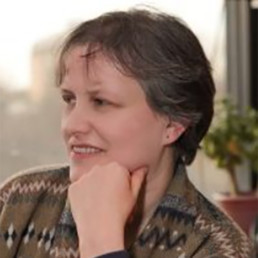
Written by Nicola Wetherall
Nicola is an RE teacher by training, but a specialist and Lead Practitioner for Holocaust, genocide and human rights education at Royal Wootton Bassett Academy, she curates the Empowering Young People to Change the World teacher conference series. She combines her part time role at RWBA with her Associate Professor (Teaching) role at the UCL Centre for Holocaust Education, specialising in curriculum, pedagogy and school development by supporting the Quality Mark process and Beacon School alumni engagement. Nicola founded the Holocaust, their family, me and us schools project.
This year’s DEIB Showcase for #EYP2CtW26 session felt like an expansion – a widening of what we pay attention to in schools, and a reminder that belonging is not an optional extra but a foundation.
We began with Hannah Wilson, who was joined by, and introduced us to, colleagues from the Belonging Effect (formerly Diverse Educators) network, who each brought a richness of experience, context and lived insight that was both energising and deeply grounding. But before I turn to each contribution in turn, I want to say a special thankyou to Hannah, an ally and leader who has supported #EYP2CtW26 conference for many years now, and once again curated a session for us today that was compelling, generous and full of practical wisdom.
So first we welcomed Yassar Hussain – from the UAE – who talked us through GEMS Metropole’s DEIB journey, referring to a range of scholarship that had informed that process, the importance of intentionality, student voice and agency. Yassar’s section was a powerful reminder that belonging doesn’t happen by accident, it’s built through deliberate choices around staff awareness, curriculum representation and student voice. His ‘journey’ within this work, reminded me how small, consistent actions across a year can shift culture, confidence and connection. I think that Yassar’s story offered a practical challenge for all of us: What would it look like to map our own DEIB journey across a year (staff learning, curriculum audits, student voice, community engagement) and treat it as a cycle of listening, acting and refining? For me, his contribution offered #EYP2CtW26 delegates (and me) us a template for intentional, sustainable progress, a next step be it short, medium or long term.
Next, it was a privilege to invite Monia Sahar Zahid and Claire Shooter – from HABS Elstree – who rather beautifully reminded us that belonging isn’t something you switch on in a crisis, it’s the product of the culture you’ve built long before tensions surface. Their emphasis on intellectual humility, visible inclusion and shared experiences offered a powerful blueprint for how schools can create the conditions for safety, trust and connection, even when global events hit the school gates, with a focus on the pastoral and safeguarding rather than the politics or teaching. I was struck by their noticing – their check-ins with staff and students, the human connections and deep rooted respect that revealed. I know several of the anecdotes shared, resonated powerfully with the 460+ educators accessing the session live – and the sense of thanks and gratitude for highlighting those moments was palpable in the chat forum spaces. My takeaway was need to reflect on our own readiness: Do we have the frameworks, shared language and staff confidence to hold difficult conversations before they arrive at our door? The SAFE framework they shared with us and emphasis on defensible decision‑making offer practical starting points for schools wanting to strengthen their approach to belonging, identity and conflict‑sensitive practice. So this was great to share.
Last but not least we were pleased to host Azuraye Williams from the Transform Trust, her contribution brought us back to something deceptively simple but deeply important: belonging starts with people, not paperwork. Her trust‑wide work showed how culture, connection and relationships must come before policies if we want DEIB to be lived rather than laminated, a reminder that systems only shift when humans do. Colleagues were taken with the meaningful and purposeful work undertaken to engage governors, but for me Azuraye left us a practical challenge: How well do we really know the belonging story of our own school? Her trust‑wide approach (surveying every child, engaging DEIB leads, and focusing on each school’s unique context) offered a clear starting point for any setting wanting to move from intention to impact.
It was that intentionality across the session was noticeable and built upon Hannah’s introductory remarks and concluding framing of belonging as a human need. Each contribution built on the last: from GEMS Metropole’s DEEI journey, to navigating global conflict at HABS Elstree, to trust‑wide belonging work at Transform Trust, and throughout, the examples shared (curriculum audits, microaggressions training, belonging surveys, pupil‑led research, ‘people before policies’) reminding us that belonging is not a slogan. It is a practice. A culture. A way of showing up for one another in schools.
In a climate where DEIB work is sometimes misrepresented or politicised, today was a powerful reminder that this work is not about ideology. It is rights‑respecting, dignity‑affirming, and safeguarding‑aligned. It is about ensuring that every child (and every adult) feels safe, seen, valued and able to bring their whole self into a school community. Nothing more complicated, nothing more controversial than that – and yet, the work can feel lonely, induce anxiety and expose vulnerability. I am deeply grateful to Hannah, Yassar, Claire, Monia and Azuraye, for their time, expertise and generosity of sharing, and this thread and spirit continues across the rest of the week.
If you missed this year’s DEIB Showcase for #EYP2CtW26 you can catch up here: https://www.youtube.com/playlist?list=PL5Qv_qeF-NpWPGep25cYsrp0zuYDEPH9c
I’m reminded again that when educators gather with honesty, courage and care, we don’t just learn, we widen our circle of belonging, and in doing so, we create the conditions for empowered young people to do the same.
Sexuality, privacy, and professional safety
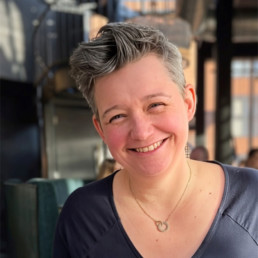
Written by Emma Swift
Emma Swift is a Vice Principal and former trust-wide subject lead for a multi academy trust, specialising in science and initial teacher training. She is the subject lead for Physics for the National Institute of Teaching and Education.
On being visible, being private, and deciding what to carry at work
For some teachers, sexuality is something that barely enters their working life.
For others, it is something they think about constantly not because they want to, but because it shapes how visible, safe, or exposed they feel at work.
This difference matters.
Heteronormativity and the illusion of “not sharing”
Many heterosexual teachers will say they don’t talk about their sexuality at work and genuinely believe it.
But mentioning a spouse, a partner, a weekend plan, or a family photo on a desk is already a form of disclosure. It’s simply one that aligns with what students and colleagues expect, so it passes unnoticed.
For LGBTQ+ teachers, the same casual references can feel loaded. A simple pronoun choice can suddenly feel like a decision with consequences.
This isn’t about oversensitivity. It’s about risk awareness.
Being “out” is not a single decision
There is a persistent narrative that being out is an all-or-nothing state: either you are open, or you are hiding.
The reality is far more nuanced.
You may be:
- Out to colleagues but not students
- Out in one school but not another
- Open in some contexts and private in others
- Comfortable one year and cautious the next
None of these positions are dishonest.
They are strategic.
Teaching is not a neutral workplace. It is shaped by:
- Community attitudes
- School culture
- Leadership support
- Student maturity
- Media narratives
Your safety and wellbeing sit within all of that.
You do not owe visibility to anyone
There can be subtle and sometimes explicit – pressure on LGBTQ+ teachers to be visible “for the students”.
Representation matters.
But representation should never come at the cost of personal safety.
No individual teacher is responsible for fixing systemic inequality.
You are allowed to prioritise:
- Emotional safety
- Job security
- Mental health
- Professional focus
Choosing privacy is not a failure of courage.
It is an assessment of context.
The classroom is not a neutral space
Students talk. Families talk. Communities talk. What is said in a classroom rarely stays there. This is not paranoia – it is experience. Before sharing anything personal, it’s worth asking:
- How might this be repeated?
- How might it be reframed?
- How might it be misunderstood?
Once information enters the student sphere, control over it is lost. That doesn’t mean you should never share; no it means you should share deliberately.
Managing questions about relationships
Students may ask:
“Do you have a husband/wife?”
“Are you married?”
“Do you have a boyfriend/girlfriend?”
You are not required to correct assumptions. You are not required to disclose.
Neutral responses can include:
“I keep my personal life private.”
“That’s not something I discuss with students.”
“I’m here as your teacher.”
Some teachers choose gender-neutral language.
Some choose redirection.
Some choose openness.
The key is that you decide, not the moment.
Professional safety is not the same as secrecy
There is an important distinction between secrecy and privacy.
- Secrecy is driven by fear.
- Privacy is driven by choice.
You can be open with trusted colleagues and private with students. You can advocate for inclusion without narrating your life. You can support LGBTQ+ students without positioning yourself as evidence.
Your professionalism is not diminished by boundaries.
Who gets asked to do the work
In many schools, inclusion work doesn’t get distributed evenly. It often lands on the people most affected by it. I’ve lost count of how many times I’ve been asked to deliver the “LGBT assembly” or lead something for LGBT History Month. As a senior leader, I’m always willing to do an assembly that’s part of the role. But there’s an extra layer here that often goes unacknowledged.
When you are the one standing in front of a room talking about LGBTQ+ lives, you are also the one absorbing the reaction. The looks. The comments. The atmosphere. And when students express strong views which are sometimes openly homophobic, it is often the person most directly affected who is expected to manage that moment.
That carries a cost.
I still remember, around sixteen years ago, sitting in an assembly where a heterosexual male teacher spoke about Alan Turing his work, and what was done to him. It stirred something in me I wasn’t used to feeling in school. At the time, hearing LGBTQ+ lives acknowledged at all felt rare.
That moment stayed with me. And part of why it mattered was that it didn’t come from someone who had to carry the personal weight of it. There’s a difference between choosing to share and being positioned as the one who should. Even smaller moments of coming out can carry that same weight. Not just the big, defining conversations – sometimes it’s the quieter ones that stay with you.
I remember telling one of my A Level classes while working in North London. I wasn’t sure how they would respond, particularly given the strength of religious belief in the room. I had prepared myself for discomfort. Instead, they were warm, protective, and thoughtful. It meant a great deal.
Sometime after I left, one of those students wrote to me. She said she wanted to go into teaching and wrote: “I thought I wanted to be the teacher I needed. Then I realised I wanted to be the person I had.”
That stayed with me.
It’s also important to say that these experiences aren’t the same for everyone. As a lesbian, I’m aware that I may be navigating less immediate risk than some of my gay male colleagues. Context matters too – subjects, age groups, school culture. A PE teacher, for example, may face a very different set of challenges to a science teacher.
All of this shapes who feels able to speak, and when. Which is why inclusion work shouldn’t quietly default to the same people, again and again.
When schools talk about inclusion
If a school claims to value inclusion, that should show up in:
- Clear policies
- Leadership behaviour
- Responses to incidents
- How staff are supported, not showcased
Be wary of environments where inclusion is performative, but protection is absent.
A genuinely inclusive school does not pressure staff into visibility. It ensures that if staff are visible, they are safe.
A final thought
Sexuality at work is not about honesty versus hiding. It’s about context, consent, and control. You are allowed to change your mind. You are allowed to reassess. You are allowed to protect yourself. Professional safety is not selfish.
It is what allows you to keep doing the work well and to keep yourself intact while you do it.
AI Will Shape Education - But Who Gets to Shape AI?

Written by Belonging Effect
Belonging Effect is committed to shaping intention into impact and supporting people with their Diversity, Equity, Inclusion, & Belonging strategy and training needs.
Artificial intelligence is already changing education. From lesson planning and assessment tools to tutoring platforms and student support systems, AI is becoming embedded in how schools operate and how young people learn. The conversation is no longer about whether AI will influence education. It already does.
The real question is this: Who gets to shape the future of AI in education?
Because AI is not neutral. Every AI system reflects the decisions, assumptions, priorities, and perspectives of the people who build it. The data selected. The questions asked. The problems chosen to solve. The voices included – and excluded – from the room.
If we are not intentional, AI risks reinforcing the very inequities education is trying to disrupt. And that matters deeply for schools.
We have already seen examples of AI systems producing biased outcomes:
- Recruitment algorithms favouring certain demographics
- Writing detection tools disproportionately flagging multilingual learners
- Facial recognition systems performing less accurately on darker skin tones
- Predictive technologies reinforcing historical inequalities rather than challenging them
Bias in AI is often not malicious. But it can become invisible, automated, and scaled at a speed education systems have never seen before. That is why educators must be part of shaping AI strategy – not simply responding to it after decisions have already been made.
Teachers, school leaders, inclusion specialists, youth workers, parents, and community voices bring something essential to this conversation: human understanding. Educators understand context: they understand belonging; they understand lived experience; they understand the difference between efficiency and equity.
If AI strategy is shaped only by technologists and commercial interests, we risk creating systems that optimise for speed and standardisation over humanity and inclusion.
But there is another possibility…
AI could become a powerful tool for accessibility, creativity, personalisation, and opportunity – if a broader and more diverse range of people are involved in shaping what responsible AI looks like in practice.
That means we need more diverse voices and thinkers involved: more perspectives; more challenge; more collaboration. We need people from different backgrounds, communities, cultures, identities, and professional experiences helping to shape the future of AI in education. Not because diversity is a “nice to have,” but because it is a safeguard against harm.
At The Belonging Effect, we believe belonging and equity must sit at the centre of conversations about innovation and technology. That is why we are inviting our network to get involved.
Over the coming months, we will be hosting a series of free webinars exploring AI, education, equity, and belonging. These sessions are designed to create accessible spaces for educators and leaders to learn, question, challenge, and contribute to the conversation – regardless of their starting point with AI.
We are also collaborating on a fully funded training programme with our partners at CVP Group for educators and professionals who want to deepen their understanding of AI, inclusive practice, and ethical leadership in this rapidly evolving space.
We are keen to amplify more diverse voices in this conversation as too often, discussions about AI are dominated by a narrow range of perspectives so we want to help change that. Therefore, we are actively looking to publish blogs, reflections, case studies, and opinion pieces from educators, practitioners, community leaders, and changemakers from diverse backgrounds who are thinking critically about AI, inclusion, belonging, and the future of education.
You do not need to be an AI expert. You do not need to work in technology. If you care about equity, representation, belonging, and the future young people are inheriting, your voice matters, because the future of AI in education should not be built for communities without them – it must be built with them.
This moment presents both a challenge and an opportunity as the decisions being made now will shape classrooms, opportunities, and experiences for years to come. We cannot afford for those decisions to be shaped by only a small group of voices. Disrupting bias in AI starts with diversifying who is involved in shaping strategy and that work belongs to all of us.
The future of AI is being written right now. The question is whether education – and the communities most impacted by these technologies – will help write the story.
To join one of our free webinars, apply for the fully funded training programme, or contribute a blog to our growing community of voices, connect with The Belonging Effect today. Our monthly newsletter will be out on Wednesday.
Together, let’s ensure the future of AI in education is inclusive, ethical, and rooted in belonging.
Race and Leadership Roles in Schools – My Story
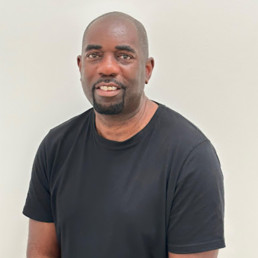
Written by Patrick Cozier
Patrick Cozier is a headteacher, a coach and the author of Calm Leadership.
Desire to be a Headteacher
I came into teaching because of a desire to make a difference to the lives of children. I have always believed that education has the ability to transform lives and create opportunities for young people. My own personal example is one that I always draw strength from. My parents came over from Barbados in the 1960s as part of the Windrush generation – my mother an auxiliary nurse and my father a postal worker. They came here with the intention of creating a better life for their children than they had experienced. Education was at the heart of this dream. And so, it began…
I started teaching in September 1994, in South London. I knew by 1996 that I wanted to be a Headteacher. Working in a school with a high number of Black and Asian children, I could see the impact that myself and some other Black staff in the school had on connecting with those students and providing role models to fuel their aspiration. I recognised pretty early that if we could have that effect as teachers, the potential for Black and Asian leaders to create a significant positive impact was huge. I wanted to be THAT person. From that moment on, everything that I did in my teaching career was done with the intention to propel me towards that aim.
For me it was interesting, because I did not at the time view being Black as a disadvantage. I felt very much as though it was one of my big selling points. I always felt that my ‘Blackness’ (i.e., my cultural heritage, skill set, adaptability, and shared experiences with children from African and Caribbean heritage) would place me in a strong position to lead a school with a mix of cultures. In the early days of my career, I did not see barriers – just dreams, ambitions and goals.
What I did not consider was that my own sense of value and self-belief was only half the story. The challenge was finding ways to ensure that others (in particular governors doing the selecting) could see in me what I saw in me. This was a much bigger challenge than I had anticipated, and I think explains to a large extent why there are comparatively few senior leaders and Headteachers from Black and Asian backgrounds represented in the profession.
Gov.UK – School Teacher Workforce February 2021 shows
- in 2019, 85.7% of all teachers in state-funded schools in England were White British (where ethnicity was known)
- 78.5% of the working age population was White British at the time of the 2011 Census
- 92.7% of headteachers were White British
| Ethnicity | % of the Working Population | % of
Classroom Teachers |
% of Deputies and Assistant Heads | % of Headteachers |
| White British | 85.7 | 84.9 | 89.7 | 92.7 |
| White Irish | 1.5 | 1.5 | 1.7 | 1.8 |
Source: School Workforce in England: November 2019 https://explore-education-statistics.service.gov.uk/find-statistics/school-workforce-in-england
The data in the table above gives a clear indication of the national picture. The percentage of White British teachers in 2019 (84.9) was almost identical to the percentage of the working population that was White British (85.7). The percentage of Headteachers who were White British at this time was 92.7, which shows an over-representation.
Contrast this with the same data for Black African, Black Caribbean and Black Other below.
| Ethnicity | % of the Working Population | % of
Classroom Teachers |
% of Deputies and Assistant Heads | % of Headteachers |
| Black African | 1.9 | 1.0 | 0.4 | 0.2 |
| Black Caribbean | 1.2 | 1.1 | 1.0 | 0.7 |
| Black Other | 0.5 | 0.4 | 0.2 | 0.1 |
Source: School Workforce in England: November 2019 https://explore-education-statistics.service.gov.uk/find-statistics/school-workforce-in-england
The proportion of Headteachers is a significant under-representation of Black heads and as compared to both the general working population and the proportion of classroom teachers.
What this points to is the comparatively poor progression that has been made in the profession for our Black African and Black Caribbean colleagues. So, what is the story here?
There are many theories for why the number of Black Headteachers is so low.
- Poor/biased recruitment processes
- Insufficient opportunities for development of our Black teachers in school
- Black teachers do not want to apply because
- they do not believe they will be given an opportunity or
- they do not see headship itself as an attractive prospect or
- They feel the situation of headship for a person of colour is precarious as they will be judged harshly if things go wrong
In my conversations with colleagues over the years I have encountered all of the above scenarios. It seems to be commonplace and the data certainly supports this view – that is, unless you believe in the meritocratic theory and your view is that there are just insufficient Black candidates who are up to the job. I personally can’t and won’t accept this as a position.
My own journey was nearly derailed by one line manager who tried to sabotage my first ever application for a senior leadership position. This was back in 2001. I was a head of year, and I was keen on promotion. I was confident and believed that I was ready. My line manager did not and told me so – I recall her specific words were ‘I would be worried if you were appointed to a senior leadership role’. Now to be fair, I don’t know whether my Blackness had anything to do with her view, but I do not that she failed to see the potential in me at the time.
However, I was fortunate in that I was confident, and my Headteacher at the time believed in my capacity to do a great job as a senior leader. His support turned out to be critical as following a very successful interview process I was informed by the school that I had applied to that the two references that they had received were in contrast – one very supportive and the other less so. I found that disappointing, but sadly predictable.
The Headteacher of the school that I had applied to (who in the end decided to appoint me) explained to me that what they saw and felt throughout my gruelling two-day interview process was more aligned to the reference from my Headteacher, than that of my immediate line manager – so they took a chance and believed in me. I haven’t looked back since.
But now I think… was I just one of the lucky ones?
Much can be done to change this situation. For example,
- The government should invest in the diversity of our sector and fund leadership development programmes for people of colour.
- Governing bodies need to think about their own makeup and be genuinely committed to proactively recruiting governors who represent the communities served by the school.
- Governing bodies also need to consider how a lack of diversity influences the decisions they make when recruiting senior leaders – in particular they need to seek out training in unconscious bias and use their learning from that to shape thought and process.
- More of our current crop of leaders of colour need to adhere to the ‘each one, teach one’ mantra – we have to give back and help our more junior colleagues navigate their way through the system the way that we have through coaching, mentoring and offering opportunities for work experience and shadowing.
Afraid of own shadow
I started my first headship at the age of 34 in September 2006, just 18 months after I have first become a deputy. It was sooner than I had anticipated, and it was scary. Despite my clear ambition to be a headteacher, I was not expecting it quite so soon. And the truth was, I was not quite ready for what I was taking on. I think I was scared of my own shadow! I was confident that I could learn quickly (and boy, did I have to!), but the journey was a very challenging one and extended me in ways that I did not know was possible.
I was an internal candidate. I applied for the job because I wanted to take advantage of the experience of applying for headships and going through the process. I applied because I was convinced by those around me that I would be a good candidate for the job. I applied because I wanted to compare myself to the competition. Never (and I mean like, ever) did I imagine I would get the job, until the second day of interviews when I was down to the final three candidates from over 30 applicants. Then it hit me… This was REAL! After I was successful on day 2 and I was offered the job, I responded by asking the then Chair of Governors, ‘Are you sure?’. In hindsight, that was a silly (albeit honest) thing to say based on how I felt at the time.
I was excited, but also petrified. To talk about ‘imposter syndrome’ would not do how I felt at the time any justice. I remember saying to my coach (who was a very experienced ex-headteacher) that I just couldn’t get used to the feeling of constantly being on the edge of my comfort zone. It was just not something that I was prepared for.
The first few years were tough and represented a very steep learning curve. My first challenge was not so much about leading the school as leading my colleagues. I was the last one in – the young pretender. Suddenly, I was thrust into having to manage a team of people who were more experienced than I was and who had been at my school for longer than me. My confidence to make decisions when others who I had great respect for, and a sense of awe in some cases, disagreed.
There was also the added pressure of being a young Black Headteacher, at the time one of only 11 secondary school male Black Headteachers of African-Caribbean heritage in the UK. I felt proud, but also daunted. I enjoyed the wearing the cloak of representation. A particular source of joy and strength for me was hearing from Black parents how pleased they were to see me in my role and how much they were rooting for me. That always touched me (and still does) and I used it as fuel to overcome some of the fears of the role. I have always embraced this responsibility as a privilege rather than a burden. However, it is not easy.
The need to be extra-vigilant about what one says is tough and draining. The feeling of being a lone voice at the many tables at which one sits in Headship and as a system leader can be frustrating and dispiriting. These all make the job much more demanding as a person of colour.
However the biggest difficulty that I had as a new Headteacher (and admittedly still now at times) was the propensity that I had for editing myself. It is hard to explain, but as a Black person in a position of leadership there are certain stereotypes about Black people that you are aware of and wish to avoid. I found myself minimising certain aspects of my culture and natural state of being. Below are some examples, with differing degrees of seriousness.
- Turning down my music in the car as I drive through the gates in the morning – not wanting other staff to hear the beautiful thumping reggae beats that set up my positive and confident mood for the day.
- Being cool and calm at ALL times. I was very aware of the stereotype of the ‘angry Black man’, and I never wanted to fall foul of this.
- Restricting the desire to challenge racism whenever and wherever I witnessed it. As a Black person you see it all the time in various different explicit and implicit guises and you want to call it out – but the editing process leads you to pick your battles carefully as you don’t want to be seen as that Black person where ‘everything is about race’.
- I edited my accent. Around friends and family it is entirely natural to speak in our heavy patois dialect. There were times in the early days where I wanted to do so with Black colleagues or students to accentuate that connection and shared experience through a shared language, but the pressure of being the Black Headteacher prevented me from doing so.
When I reflect now on how important these issues are, the conclusion that I draw is that they are crucial. It isn’t so much about the trivial nature of some of the edits described above. There is something more fundamental taking place in my view that gnaws away at the very purpose of diversity. Having diversity in leadership can only make a difference if leaders bring their diversity in with them as they travel through the school gates. To edit oneself is to lose the very difference that your diversity can make. It essentially turns everyone into a middle-class white man.
Based on my reflections of my own journey and experiences, I now make a point of telling our young aspiring Black leaders to be themselves. I tell them that their authenticity is actually what matters the most. They each can bring something different to the role if they are prepared to be brave and resist the temptation to edit.
In the early stages of my headship, I had great support from a range of coaches that I saw in my first few years in post – and each helped me significantly in very different ways. As well as the need to feel like I was worthy of the job, I had that added need to stop falling to the temptation of editing myself. I learned a lot from my coaches. The helped me make sense of my experiences and supported the development of the sense of perspective that I have honed over time. However, my early struggles were tough – and when I think of it now, I reflect on how I might have changed the nature of that support if I could go back as an experienced leader now and help my younger, less experienced self. I have been developing something I refer to as ‘Calm Leadership’ as a means of addressing this (What is calm leadership and why is it important? (sec-ed.co.uk)).
Getting Diversity in a Team Which Is Not Diverse
Although diversity in leadership is the ultimate aim to ensure that leadership is inclusive in its purpose and function, the reality is that many teams are not there in terms of the representation among the leadership. Getting the team to that point is a long-term strategy. In the meantime, it is important to find ways to work with what you have to increase awareness, understanding and to promote diversity of thought and approach.
I have a leadership team that is not diverse. We represent a school community that looks different from the team of senior leaders who are there to represent them. The same is true of my wider staff body. We have done a number of things over the last couple of years to try to move things forward. Some examples are shared below:
- We got our leadership team to read the book White Fragility by Robin DiAngelo and Brit(ish): On Race, Identity and Belonging by Afua Hirsch and to reflect on their own views, perspectives and practice
- Presentation from the me to staff on my own journey to being a Headteacher – sharing my experiences as a Black boy in North London to a Black man
- We showed staff videos recordings of our Black and Asian students talking about their experiences at our school
- We weaved our equality targets into our SDP – so every other departmental plan must reference this
- All student data is broken down and analysed by a range of sub-criteria including ethnic background
- We have a Racial Equity governor
- We have created a Student Cultural Diversity Forum (early stages)
- Zero tolerance of any racist behaviours – even against ‘your own’
- Staff have received training in unconscious bias
- We have reviewed our approach to promoting positive behaviours utilising the skills and experience of an external behaviour specialist
- Every member of staff was given the opportunity to have a book on anti-racism brought for them to read for the summer – 65 took up the offer! We have met twice since September to review, learn and apply
Race and Leadership Roles in Schools
Race matters. Visibility matters. Diversity matters. In leadership roles, they matter even more… so long as they actually make a difference.
Authenticity is the key. We have to train people to be their authentic selves as diverse leaders in order for the diversity of their experiences, backgrounds, thinking approaches and views to bring something different to the table.
In order to benefit from this, we need to make sure that we are doing more to encourage and bring the talent pool of ethnic global majority leaders through the system. We need to get more Black and Asian teachers into the profession and then help them progress their journeys through to leadership. To do this we must carefully consider the current barriers and blockers as to why this is not already the case and find ways to overcome them. This will take leadership at all levels, from the UK Government, down to Local Authorities and Multi-Academy Trusts and ultimately with the school governors and leaders.
If Black and Asian Leaders succeed, then everybody does!
Everyday Sexism: A Powerful Call to Action from Laura Bates - What Schools Can No Longer Ignore
Written by Hannah Wilson
Founder and Director of the Belonging Effect (formerly Diverse Educators).
When Laura Bates, founder of the Everyday Sexism Project, addressed the room of boarding school headteachers and senior leaders, her message was not abstract, ideological, or optional. It was urgent, and it was evidence-based.
Drawing on what is now one of the largest datasets of its kind – over 250,000 testimonies, many from children – Bates laid out a reality that schools are already part of, whether they recognise it or not.
This Is Not a “Girls’ Issue”
One of the clearest points: sexism is not about being “anti-boys.” It is instead about the ecosystem young people are growing up in. Rigid gender stereotypes harm everyone – shaping body image pressures for both girls and boys, narrowing subject choices, and reinforcing harmful expectations about relationships, power, and identity.
The idea of a “gender war” or “battle of the sexes” is not only misleading, it actively prevents progress. Instead, Bates reframed the issue: this is about culture, not conflict.
The Scale and Subtlety of the Problem
Some statistics that she shared were stark and made me feel really uncomfortable, despite being familiar with most of them:
- 86% of women in the UK report experiencing sexual harassment
- 72% of women report sexism in the classroom
- 71% of 16-year-old girls report being called “slut” or “slag” on a weekly basis
But just as important is what Bates called “subtle sexism.”
This is the quiet shaping of expectations:
- which subjects feel “appropriate”
- how physical spaces exclude women and girls
- whose voices are taken seriously
- how authority – especially female authority – is undermined
These are not isolated incidents: they are cumulative; they are structured; they are reinforced through media, advertising, peer culture, and increasingly, algorithms.
Language Matters More Than We Admit
The distinction between “groping” and “sexual harassment” is not semantic – it is cultural. So too is the shift from focusing on victims to naming perpetrators, and from passive bystanders to active upstanders. Language shapes what young people think is normal, tolerable, or reportable. If we minimise behaviours in how we speak about them, we normalise them in practice.
As a former English teacher, and now DEIB trainer, the power of language and our language choices are something I think about a lot and explore with our clients regularly.
The Online World Is Not Separate From School
A major theme was the widening gap between adults and young people in digital spaces. Most educators and parents are not digital natives. Yet, their students and their children are.
This gap matters because the online environment is not neutral – it is actively shaping attitudes:
- Influencers like Andrew Tate have amassed billions of views
- Algorithmic pathways can lead users toward extreme misogynistic content in minutes
- Exposure to pornography is now commonly reported around age 13
Bates referenced the “manosphere” – a network of online communities where ideas such as “AWALT” (“all women are like this”) circulate and harden. This is not fringe content. It is mainstream, accessible, and often gamified.
A New Frontier: AI and Exploitation
If that was not enough for us to deal with in our schools and in our homes, then the emerging technologies that are accelerating the problem are the next challenge we face:
- Deepfake and “nudify” tools enabling new forms of abuse
- AI “girlfriends” reshaping expectations of relationships
- Gamified, exploitative systems rewarding harmful behaviour
- Poorly regulated virtual spaces (including metaverses) lacking safeguarding measures
The direction of travel is clear and really concerning. I am conscious that I am not a parent, I am no longer a headteacher and I have recently stood down from being a trustee who led on safeguarding, but I care deeply about our sector, about our society and about our young people. So sitting in a room of school leaders I felt the palpable weight of responsibility on their shoulders as they began to process the enormity of what is rapidly attacking our schools and our homes.
The Youngest Are Most at Risk
Perhaps the most sobering insight: the youngest generation is not the most protected – it is the most exposed. Grooming, radicalisation, and exploitation are no longer rare nor exceptional risks. They are structural features of the environments young people inhabit – and schools sit at the intersection of all of this.
So What Can Schools Do?
Bates did not leave the room without direction but offered some practical advice and signposting.
Effective responses are not one-off assemblies or reactive policies. They are cultural and sustained:
- Start early: challenge gender stereotypes in early childhood
- Explore openly: normalise discussion of relationships, consent, and respect
- Intervene consistently: address language, behaviour, and culture in real time
- Encourage allyship: shift from bystanders to upstanders
- Support staff: particularly where female authority is undermined
- Involve parents: bridging the digital knowledge gap is essential
This is where she signposted organisations such as Tender, Lifting Limits, Beyond Equality, and Bold Voices are already doing critical work alongside schools.
A Cultural Shift, Not a Checklist
Perhaps the most important takeaway is this: sexism does not operate in a vacuum. It is built on foundations – early stereotypes, repeated messages, normalised behaviours.
Which means the solution is not a single intervention, but a process of deconstruction:
- recognising the patterns
- naming them
- and creating genuine alternatives for young people
This is not about removing choice – it is about creating it.
The Question That Remains
Bates left the audience with an implicit challenge to consider: not whether schools should respond – but whether they are prepared for what is already here, and what is coming next. She held up a mirror to remind us that the culture shaping young people today is moving faster than most institutions, so ignoring it is no longer a neutral act.
BSA – thanks for creating the space at the annual conference for this talk (and Gaelle thanks for the invitation to be in the room). Laura – thanks for the clarity and the data that you brought to the conversation.
Teaching Students to Read the Room: Communication, Consent, and Cultural Competence

Written by Tessa Dodson
Tessa Dodson is an education writer passionate about supporting teachers and fostering inclusive classroom environments. She specializes in covering classroom resources, educational trends, teacher wellness, and practical strategies to help educators succeed.
Educators can foster diversity, equity, inclusion and belonging (DEIB). They must teach young learners about the nuances of people from different backgrounds to help raise a population that recognises the distinct body language, tones and facial expressions, which vary from culture to culture. These teaching techniques are among the most effective at empowering everyone with the tools they need to self-advocate and consider diverse student communication skills.
Scenario-Based Learning and Role-Playing
The UK’s increasingly diverse population makes cultural competence and empathy essential lessons from an early age. Students are more likely to deepen their cultural competence if they experience it firsthand. An educator can start by telling learners about differences in nonverbal communication, including that eye contact is impolite in some regions, such as the Caribbean and East Asia.
To make lessons stick, create a situation in which students must interact to act out responses to different patterns, such as navigating personal space or using direct language to make a request. Educators can also create cards to prompt students to simulate a gathering. Transforming classic games, including charades or Pictionary, is another way to get students to interact with other cultural phrases, physical movements and ideas.
However, it is essential to clarify what is and is not appropriate in these contexts, drawing on insights from the cultures being studied to ensure accuracy and sensitivity.
This activity allows students to speak, hear and witness how others would react, especially for people in marginalised communities. Learners may not regularly interact with these individuals, so shaping the environment is crucial to prepare them for that experience. Cross-cultural exposure and communication can positively affect students’ cultural competence.
Film and Media Analysis
Exposing students to diverse media is one of the best ways to make the content entertaining, engaging and stimulating. There is a low barrier to entry in visual media, making the content accessible and safe to consume, which is important when these topics can be intimidating. Also, it stretches students beyond their cultural echo chambers and challenges their stereotypes.
Teachers can source TV shows, movies, news broadcasts and music videos to display narrative in different ways, all focused on considerate communication, teaching consent and overcoming bias. Ask students to make notes about patterns they see between characters, such as:
- Body language
- Amount of physical contact
- Facial expressions
- Amount of transparency and honesty in conversation
- Level of formality
- Vocal tone
Students can also note any reinforced stereotypes they see, and educators can take them through exercises to dispel and unpack them. It will push learners to unravel their opinions about harmful and inaccurate stereotypes or generalisations in the safe, low-stakes format of media commentary.
Develop a “Reading the Room” Log
Inspire students to think critically about their cross-cultural interactions by recording them in a journal. This is a safe, nonjudgmental place for them to reflect on classroom exercises and real-world conversations. They can ask questions, such as “Did I remember to ask consent before going in for a friendly hug?” or “Did my excited curiosity and frequent questions make them uncomfortable?”
These exercises compel students to practice self-awareness and also celebrate wins when they learn something about another culture and successfully implement those communication skills in real life. The journals are records of every student’s growth as they learn how to interpret nonverbal cues and find reasons to advocate for themselves.
Many educators have used the Curiosity, Attentiveness, Respect and Responsiveness, and Embodiment (CARE) model for authentic cultural lessons, and reflective journaling is one of the best ways to produce cultural humility and mindfulness about DEIB topics. If students are struggling to think about what to write, here are some prompts to get them started:
- Describe a time when someone’s tone did not match their body language.
- Write about a time you reacted to a surprise. If you surprised someone else with a different personality and culture with the same thing, do you think you would get the same reaction?
- Reflect on the cultural stereotypes we discussed in class today and why it is important to overcome them.
- Describe a behaviour that is normal to you and your family, such as giving handshakes to visitors. Research how other cultures would view this practise.
Cultivating Empathy and Agency in Student Communication Skills
Everyone can read the room, no matter who is in there. Teaching consent, cultural sensitivity and intersectional thinking is a nonnegotiable skill in the modern era. These techniques make nebulous concepts tangible for learners of all ages. Eventually, these intentional lessons will craft a respectful society where empathetic communication and consent always come first.
Hidden neurodivergence in Headteachers: The cost of coping in school leadership
Written by Nadia Hewstone
Nadia is a certified executive school leadership coach. She left headship to start Destino Coaching and now supports school leaders with their own development as well as development of their teams.
I have worked with many neurodivergent headteachers and there are enough of us that it matters. It seems obvious to me that naming this would be a good place to start when exploring how we create cultures of true belonging in schools
Leadership in schools is still too often framed through a narrow set of criteria of what competence should look like. Headteachers are expected to be calm but not intense, visionary but not unconventional, relational but not emotionally honest, organised but without visible effort, resilient but never overwhelmed. It’s unrealistic if we are to make the role sustainable for anyone and impossible for colleagues who are neurodivergent.
For those of us whose minds work differently, leadership can become a lifelong performance of translating ourselves into something more acceptable. That performance has a cost.
There are many headteachers in schools who appear highly capable while privately they are running on fumes. I know this as I have coached quite a few headteacher who experience this. Headteachers can hold ten competing priorities in their mind at once, solve three crises before lunch and make brave decisions under pressure and we praise them for it (Isn’t that what we mean by ‘exceptional leader’?).
But what is less visible is the rebound. By this I mean the exhaustion after masking all day and the sleeplessness after carrying everyone else’s needs. The mental load of the constant self-monitoring is huge for neurodivergent headteachers and many also experience shame and emotional crashes in private. They become experts in coping so early and so well that no one notices they are coping at all.
Education rewards outputs. If deadlines are met, assemblies delivered, budgets balanced, decisions made and outcomes improved, few people ask what it took internally.
Working as a coach, together with my own experience, has taught me that ‘high functioning’ can simply mean functioning through adrenaline or anxiety while sacrificing health, relationships and rest. Some leaders build entire careers on emergency energy because praise becomes part of the trap.
Many traits associated with neurodivergence can be powerful assets in headship. To name a few:
- pattern recognition
- strategic thinking
- creativity under constraint
- moral clarity
- urgency and momentum
- hyperfocus in crisis
- deep empathy
- innovation
- willingness to challenge broken systems
- seeing what others overlook
Schools often need exactly these qualities in their leaders. Unfortunately, organisations often admire what leaders achieve but judge or try to correct the traits or ways of working that made those achievements possible.
I experienced this constantly as a headteacher. I was labelled ‘full on’, ‘intense’, ‘marmite’ and (a personal favourite) ‘too passionate’ by my colleagues. I was advised by my seniors to ‘tone myself down’ in meetings so that others would find me ‘less intimidating’.
I hear similar stories now in coaching conversations and often wonder what this says about our proximity to true inclusion in education.
For some of us, diagnosis arrives late. After years of wondering why things that looked easy for others felt disproportionately hard. Years spent overcompensating and assuming a personal flaw where there was, in fact, a different operating system.
My experience is that diagnosis brings relief, but also grief. Grief for the years spent mislabelled, for the self-criticism and for how many people benefited from my coping while my family and I paid for it privately.
I’m currently in the messy middle that is titration on stimulant medication. Titration can be challenging because finding the right dose often involves trial and error, and each adjustment takes time before you know whether it is helping. I’ve been dealing with side effects such as appetite loss, mood swings (my family are very patient with my impatience and short-tempered outbursts), anxiety and headaches. It is beginning to settle but I can see why many people give up part way through. I have wondered, more than once, if titration would be possible for a serving headteacher.
For some neurodivergent leaders, diagnosis marks a shift in relationships too. Our colleagues (and sometimes our friends and family) only knew the endlessly available version of us and become less comfortable with the updated version that starts to emerge. More brutally put, some people were more comfortable while our distress remained invisible.
When you begin to ask for clarity, rest, support, flexibility or space, you may be told you have changed. And in some ways, you have. All of this can be very confusing and sad.
If education wants sustainable leadership, we need to widen our understanding of professionalism and wonder what it might look like to start recognising neurodivergence in senior leadership, not just pupils?
This starts with ending the glamorisation of overwork and a shift towards valuing different communication styles. For colleagues with ADHD, we must reduce unnecessary bureaucracy that drains executive function. For autistic colleagues, we need greater understanding that consistency can look different across nervous systems. For all headteachers, we must prioritise recovery, not just performance.
This requires governors and trusts to commit to inclusive leadership cultures, because we cannot preach inclusion for children while punishing it in our adults.
I drafted this poem about my difference and my friend and colleague, Tessa encouraged me to share it with you, which is where the inspiration for this article started. So here it is:
A Different Current
I was not made defective,
just distinct.
The fault is not within my mind,
but in a world that asks
every mind to fit the mould.
A star is not inappropriate
for shining brightly.
My thoughts move like rivers,
wild, winding, bright,
carrying storms and clarity
in the same breath.
I am not broken
for blooming in my own season,
I am not less
for feelings bigger
and bolder
than you understand.
Let the world grow wider.
Let it make room
for minds that leap,
wander, wonder
and expand into our own light.
I am still here,
still learning, still becoming,
still wholly my own.
Meet me gently,
join me if you dare.
To the Headteacher reading this at 11:47pm. The one with the tabs open, replaying a meeting from earlier and wondering why everything feels harder than it seems to for everyone else.
I want to tell you that I see you carrying brilliance and fatigue in equal measure. You are not failing because leadership feels costly. You have simply been succeeding in an environment that charges you double.
There are headteachers whose schools have been held together by minds that do not fit the mould. The next chapter of school leadership should not require those minds to break themselves in order to belong anymore. We were not meant to all be the same and so perhaps the bravest leadership of all is no longer pretending otherwise.
If we want schools that recognise and cater for difference rather than schools that try to ‘manage’ inclusion, then we need spaces to think differently together. We need to find ways to sustain rather than deplete our headteachers.
That is why this June we are gathering leaders, educators and changemakers for Destino Live: Creating Inclusive Change, our first ever Destino conference. We will help you formulate a plan for building a genuinely inclusive culture in your school. We are not interested in inclusion slogans; we want to talk about inclusion as practice and courageous change.
I believe that the future of education cannot be built on burnout, masking and outdated definitions of professionalism. People willing to widen the path have to drive the change that is needed.
Breaking Barriers Together: How Teachers Can Use New FA & Barclays Resources to Support Girls’ Confidence and Inclusion in Sport
Written by Sue Day
Sue Day MBE, Director of Women’s Football, the FA.
Despite huge progress in women and girls’ football over the past few years, too many girls still face invisible, but very real, barriers to taking part. Confidence, body image, misogyny, exclusion by boys, and gender stereotypes continue to shape girls’ experiences long before they reach the pitch.
That’s why The FA and Barclays, have launched Made for This Game: Breaking Barriers – a new suite of free, curriculum-linked educational resources designed specifically for primary and secondary schools. The aim is simple but urgent: to help teachers and pupils unpack the societal pressures that hold girls back, and to build environments where every young person feels they belong.
Why this matters for educators
Research continues to paint a stark picture:
- Girls are 3.4 times more likely than boys to lack confidence in physical activity.
- They are more than twice as likely to feel less resilient.
- 71% of primary teachers say girls are held back by feeling excluded by boys.
- By secondary school, body confidence and self-consciousness become the biggest barriers.
What the new resources offer
The Breaking Barriers resources are designed not only to empower girls, but to engage all pupils in understanding bias, stereotypes and inclusion.
- Primary resources (Ages 5-11): Focused on misogyny, inclusion and challenging gender stereotypes.
- Secondary resources (Ages 11-16): Addressing more complex barriers, specifically body confidence and mental wellbeing, which are primary drivers for girls dropping out of sport during teenage years.
Central to the content are videos featuring CBBC and Strictly star Molly Rainford, who joins pupils in honest, age-appropriate conversations.
Support for teachers, too
A dedicated visual podcast for teachers also helps guide these conversations. Hosted by comedian and women’s football fan Maisie Adam, the episode brings together Lioness legend Rachel Brown-Finnis and Educating Yorkshire’s Matthew Burton to explore the wider societal challenges young people face and how teachers and adults can actively help by addressing these barriers to participation head on.
How you can get involved
These resources are free, ready to use, and flexible enough to fit into PSHE, assemblies, tutor time or PE.
Explore & download here: https://bit.ly/3NNvhIs
Mixed Messages: The High Stakes of Social Sorting
Written by Domini Choudhury
Domini Choudhury is an associate trainer, an award-winning EDI consultant, a former Deputy and Acting Headteacher for 17 years, a local authority consultant and an Evidence Advocate for the Research Schools Network, part of the Education Endowment Foundation (EEF).
According to official statistics, the mixed-heritage population is now the UK’s fastest-growing demographic. The 2021 Census revealed that 1.7 million people across England and Wales identify as mixed-race, a tripling since 2001 (King’s College London, 2025). Yet, in the eyes of a hospital computer or a school database, we are often reduced to a glitch. When our social sorting systems rely on a “White-plus” baseline, the messages aren’t just mixed; they’re dangerous.
The Challenge of the Checkbox
Supporting mixed-heritage children and young people in schools comes with a minefield of challenges. We are navigating outdated terminology, the complexities of identity development during adolescence, and the fluctuating sense of belonging within different communities. These journeys are often further complicated by orientalism, colourism, or a perceived “proximity to whiteness” which is not always a universal advantage.
To address this, we must first dismantle the social construct of “mixed-ness.” Until 2001, “mixed” categories didn’t even exist on the UK Census, making long-term data comparison nearly impossible. Even now, the categories remain stiflingly limited. Society’s default stereotype of a mixed person is someone racialised as White and either Black or Brown. This is codified in official data: almost every category begins with “White and…”, implying that Whiteness is the mandatory baseline of our society. If you don’t fit that specific mold, you are relegated to the generic: “Any other Mixed or multiple ethnic background.”
When Data Becomes a Danger
I face this erasure personally. As someone of both Bangladeshi and Chinese heritage, I am frequently forced to choose: either to select one, or select “Mixed Other.” To pick one is to deny half of my identity; to pick “Other” is to make my heritage invisible.
Even when I try to claim both, the technology fails me. Alphabetised computer systems often default my ethnicity to “Bangladeshi,” leaving my Chinese heritage on the cutting floor. In the eyes of the algorithm, half of my identity is a glitch.
This isn’t just a matter of hurt feelings; it has life-and-death implications. I once faced an emergency operation while unconscious. Since my hospital record only listed me as Bangladeshi, the medical team was unaware of my Chinese ancestry, a vital piece of genetic information that carried a high risk of a specific drug intolerance.
The Educational Blind Spot
In our schools, we rely heavily on ethnicity data to drive interventions, allocate finances, and analyze outcomes. As the proportion of mixed-heritage students rises, our “boxes” are becoming increasingly obsolete.
Since both of my heritages are broadly categorised as “Asian,” the system often fails to recognise me as mixed-heritage at all. Despite the fact that Bangladeshi and Chinese cultures are poles apart, the “Asian-Asian” mix is frequently ignored by a system that only understands “mixed” if it involves a White parent. I am left feeling officially bereft of the identity I am proud to hold.
A System in Need of a Reset
The flaws go deeper than just the “mixed” label. Consider that “Bangladeshi” appears as an ethnicity category when it is, in fact, a nationality, one that has only existed since 1971. Conflating nationality with ethnicity (like using “Bangladeshi” instead of “Bengali”) is a separate systemic failure entirely, but that is a post for another day.
For now, we must recognize that our current method of categorising people is failing. We need a radical overhaul of how we see, record, and support the diverse reality of the UK today. We are more than a “White-plus” variable. It’s time the system caught up.
References:
UK Government (2021) List of ethnic groups. Available at: https://www.ethnicity-facts-figures.service.gov.uk/style-guide/ethnic-groups/ (Accessed: 21 April 2026).
Slade-Edmondson, E. (2026) ‘What does it mean to grow up mixed-race in a world that is obsessed with tidy boxes and simple definitive answers, and what does a journey towards belonging look like?’, Emma Slade-Edmondson Blog, February. Available at: https://www.thebelongingeffect.co.uk/what-does-it-mean-to-grow-up-mixed-race-in-a-world-that-is-obsessed-with-tidy-boxes-and-simple-definitive-answers-and-what-does-a-journey-towards-belonging-look-like/ (Accessed: 21 April 2026).
Mansaray, A. and Nwosu, C. (2025) Mixed-Heritage Young People’s Educational Experiences in London: An Exploratory Study. London: King’s College London. Available at: https://www.kcl.ac.uk/ecs/assets/projects/mixed-heritage-final.pdf (Accessed: 21 April 2026).
Morris, N. (2021) Mixed/Other: Explorations of Multiraciality in Modern Britain. London: Trapeze.