AI IS NOT NEUTRAL: Why DEIB, Belonging, and Responsible AI Must Shape the Future of Education and Work
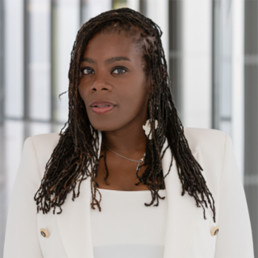
Written by Paulette Watson MBE
Paulette Watson MBE is an award-winning CEO, international speaker, and thought leader in AI, STEM, digital transformation, and inclusive innovation. As Founder and CEO of Academy Achievers, she leads the global #BeMeDigitalInclusion initiative, empowering women and girls, particularly from underrepresented communities, to access opportunities in AI, cloud, cybersecurity, emerging technologies, and the future of work.
“A child could be excluded from opportunity before a teacher even notices — not because of ability, but because an algorithm decided what potential looked like.”
Introduction
Artificial Intelligence is rapidly reshaping education, recruitment, safeguarding, leadership, and the future of work. Every week brings a new tool, a new pilot, a new promise. But while organisations race to adopt AI, a far more urgent question is being left on the table:
Who gets to belong in the future being built?
As the author of She Disrupts: A Black Woman’s Journey in STEM and AI Industries, and through my global work leading #BeMeDigitalInclusion across the UK, Africa, and international networks, I have spent years advocating for equitable pathways into technology, responsible AI adoption, workforce transformation, and inclusive digital futures.
What concerns me most is not AI itself. It is the very real possibility that we automate exclusion at scale and call it progress.
Because AI is not neutral. It reflects the data it is trained on, the systems it learns from, the assumptions embedded within it, and the people who build it. Bias is not removed through automation. Too often, it is amplified.
Leadership Without AI Literacy Is Becoming a Strategic Risk
As a Black woman working across governance, education, digital transformation, and emerging technologies, I have often found myself sitting in rooms where I was both the only Black woman and one of the only people deeply focused on the long-term implications of technology.
I remember completing my Master’s in ICT in 2005, when conversations about automation, digital systems, AI, and emerging technologies were already evolving rapidly. I later completed my MBA in 2008, continuing to explore how technology, leadership, governance, and organisational strategy intersect.
What struck me then, and still concerns me deeply now in 2026, was how many senior leaders responsible for shaping education, workforce systems, safeguarding, governance,
and organisational strategy had little understanding of emerging technologies and their societal impact.
Fast forward almost two decades, and in many spaces, that gap still exists.
The technology has accelerated. So have the risks and the pace of adoption. The risks have accelerated.
The pace of adoption has accelerated.
But leadership understanding has not kept pace.
Too often, AI conversations are delegated entirely to technical teams while boards, governors, executives, and decision-makers remain disconnected from the realities of algorithmic bias, automated decision-making, accessibility, workforce displacement, safeguarding implications, and inclusion.
That disconnect creates operational, ethical, reputational, and human risk. The Belonging Question
One of the most overlooked conversations in AI is belonging. Not representation alone. Belonging.
Belonging is not simply whether someone is invited into the room.
It is whether they can see themselves in the future being built around them.
Through #BeMeDigitalInclusion, I have worked with young girls, Black students, neurodiverse learners, disabled professionals, career changers, educators, and underserved communities who are incredibly capable, creative, and innovative, yet too many quietly disengage because systems subtly communicate:
“This space was not designed with you in mind.”
As someone who is dyslexic, I understand personally how dangerous it is when systems confuse difference with deficit.
Now imagine those same inequalities becoming embedded inside AI systems that shape educational pathways, recruitment, safeguarding, progression, and access to opportunity.
Case Studies in Automated Exclusion
Case Study 1: AI Detecting “High Potential”, But Missing SEND Learners
AI-powered analytics tools are increasingly used to identify “high potential” students, predict attainment, and map intervention pathways. Yet many systems are trained on narrow historical patterns that fail to account for neurodiversity, accessibility needs, trauma, and alternative learning styles.
Through #BeMeDigitalInclusion, I have met young people whose brilliance sits outside traditional systems. If AI only recognises one type of learner, countless young people risk being overlooked before they even have the opportunity to thrive.
Case Study 2: Predictive Behaviour Systems & Black Boys
Research has repeatedly shown that Black boys are disproportionately monitored and excluded from educational systems. If biased historical data feeds predictive AI systems, those inequalities risk becoming digitally reinforced.
Technology should never become a faster route to stereotyping. Yet without intentional governance, inclusive leadership, and bias mitigation, that is exactly what can happen.
Case Study 3: AI Recruitment & Non-Traditional Career Paths
AI-driven recruitment systems often favour traditional career trajectories, elite institutions, and linear progression. But what happens to career changers, mothers returning to work, disabled professionals, self-taught technologists, and community leaders?
They risk becoming invisible, not because of what they lack, but because of what the system was never taught to value.
This matters profoundly in AI itself, where diversity is already critically lacking. The Human Premium
Headlines predict that AI will replace humans. I believe something more nuanced and more urgent is happening.
Human skills are becoming premium.
As automation increases, the value of empathy, ethical judgement, critical thinking, communication, creativity, adaptability, collaboration, cultural intelligence, and leadership will rise significantly.
These are not soft skills.
They are leadership skills.
They are future workforce skills.
And they are the very capabilities that AI cannot replicate.
The future workforce advantage will not belong solely to those who can code.
It will belong to those who can lead humans through complexity, ambiguity, ethics, trust, and change.
AI Literacy Must Become a Human Right
One of the greatest risks emerging now is the unequal distribution of AI literacy.
Too many people are being expected to navigate systems they do not fully understand. Too many children are having decisions made about them by algorithms that their parents, teachers, governors, and leaders have never questioned.
AI literacy cannot become a privilege reserved for technology professionals or elite institutions.
It must become accessible to:
- Teachers
- Parents
- Governors
- Students
- Executives
- Policymakers
- Community leaders
People deserve to understand how algorithms shape decisions, how bias operates, how data is used, and how to participate safely and critically in AI-enabled environments.
Responsible AI Is Not Optional
Responsible AI cannot exist in isolation from diversity, equity, inclusion, and belonging.
They are not parallel conversations.
They are the same essential conversation.
Safe and responsible AI requires:
- Inclusive governance
- Diverse leadership
- Accessible design
- Safeguarding
- Transparency
- Accountability
- Community voice
Without diversity at the centre of AI design and governance, AI risks reproducing inequality on an unprecedented scale.
And without belonging, entire communities may disengage from the very future being built around them.
The #BeMeDigitalInclusion Roundtable
These are exactly the conversations we will continue through the upcoming #BeMeDigitalInclusion Roundtable, where educators, policymakers, industry leaders, governance professionals, and communities will explore:
- Online safety
- Responsible AI
- Workforce transformation
- AI literacy
- Safeguarding
- Accessibility
- Inclusion
- Human skills are becoming premium in the AI era
Because diversity cannot be an afterthought in technological transformation. It must sit at the core, from the first line of code to the first leadership decision. What Educational Leaders Must Do, Right Now
- Build AI Literacy Across Entire School Communities
- Review AI Through a DEIB & Safeguarding Lens
- Include Diverse Voices in AI Decision-Making
- Priorities Human Skills
- Ensure Belonging Remains Visible
- Treat Responsible AI as a Governance Priority, Not Just a Technical One
Educational leaders must act now. Make AI literacy, DEIB, and responsible AI an immediate priority in every school and system. Engage diverse voices, review technology through ethical and safeguarding lenses, and champion human skills and belonging at all levels. Your leadership today will directly shape opportunity, trust, and belonging for generations.
Final Thought
AI will shape the future.
But inclusion will determine whether that future is equitable.
The question is no longer whether AI will transform education and work; it is whether it will.
It already is.
So ask yourself and your organisation: What steps will we take today to ensure everyone can belong in the future we are building?
And who will you include in that decision?
The future will not be defined by the intelligence of our machines alone, but by the courage of our leadership. Let us lead boldly and shape that future together.

Using the Froebelian principles to navigate social justice in early childhood education and beyond
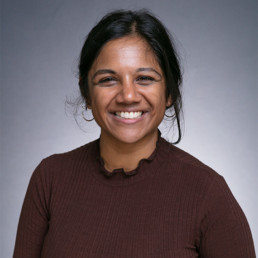
Written by Rachna Joshi
Rachna is a teacher and consultant. She works with under-threes, Nursery and Reception children, and holds an MA in Early Childhood Studies. Rachna writes and speaks at events sharing experience and knowledge, empowering practitioners and provoking questions to disrupt routine practice. She supports schools by guiding educators to implement inspiring practice that reflects their classes. She works as a freelance consultant and with the Froebel Trust as a travelling tutor.
Having a strong set of principles and worldview is taken with us into our role as educators. Principles, like the Froebelian principles, provide a philosophical framework in which to base our actions upon. It acts as a compass to guide us in times when we are uncertain.
The book; Froebel and social justice, looks at the themes of social justice; diversity, equality, equity and participation, and interrogates the ways in which Froebel and his ideas for education articulate and look to achieve social justice in times today.
The Froebelian framework asks us to start with ourselves, and who we are as individuals and educators. Understanding who we are helps us to help others in understanding who they are, for example, working with children to explore a part of their identity in a sensitive way that celebrates their uniqueness and wholly accepts and recognises all different parts of them.
This task does not come without its challenges, bias creeps into our minds, stereotypes, hierarchies of what is acceptable and less acceptable alter our worldviews and ability to see clearly the individual in front of us. The work to reflect on our thoughts and ideas aligns closely with Froebelian and Freieran concepts.
The Froebelian principle of Unity and Connectedness runs through the work of social justice, finding connections, similarities and celebrating differences. As well, the principle Relationship Matters, ensures that we meet the child and their family where they are at, and understand the fluidity of different needs and evolving contexts. When thinking about the children we work with, do we know enough about their family and their culture and do we try to learn or understand the nuances of each child’s unique world? Do we as educators consider the power we hold in our work with children, from simply organising the environment, to the interactions or rules we create to manage the spaces we are in? For example, do we consider babies and young children’s consent when being physically handled? Are we empathetic educators who understand the complexities in children’s worlds? An example that I share in the book discusses the very real fear of the hand dryer in the children’s toilets at a school – what do educators do to empathise with this and remove this feeling of fear.
Whilst exploring the larger themes of social justice the second part of Froebel and Social Justice uses the four freedoms; from fear, from want, of speech and of worship as a lens to tackle the issues of social justice within classroom contexts. These offer a wider exploration of ecological situations that arise which have an impact on the child and the family at the interpersonal level. The freedom from worship is explored through the lens of beliefs, religion, culture and Nature as ways to take part in worthwhile celebrations and events.
Many educators who are unfamiliar with Froebel may not be aware of his own work towards social justice in his context in Germany in the 1800s. He advocated for women to be teachers when during his time this was not the norm, and he ensured his educational institutions were for all children – boys and girls from all different backgrounds which again was not usual for this time. In his ideas of education he constantly wrote books and letters to help change the minds of those within his community towards an approach to education that enables children to think freely for themselves and see the connections of the world around them.
In some places, social justice is an add on, instead of being the foundation of which we hold ourselves in our workplaces. The book Froebel and Social Justice is a practical book that is for educators who work with a range of different aged children to reflect and renew their commitment to creating a socially just world.
Pre-order Froebel and Social justice here: https://www.bloomsbury.com/uk/froebel-and-social-justice-9781350529328/
Maslow’s Hierarchy Was Never Just a Pyramid
Written by Hannah Wilson
Founder and Director of the Belonging Effect (formerly Diverse Educators).
Every educator has seen it. The pyramid – at the bottom sit physiological needs: food, water, shelter, sleep. Above that come safety, belonging, esteem, and finally – at the peak – self-actualisation.
For decades, Abraham Maslow’s hierarchy of needs has shaped educational thinking. It appears in teacher training, wellbeing frameworks, behaviour support models, and school leadership presentations around the world. The message is straightforward: children cannot learn effectively if their basic needs are unmet.
And that insight matters;
- Hungry children struggle to concentrate,
- Unsafe children struggle to trust,
- Disconnected children struggle to engage.
But there is a part of the story many educators have never been told.
Maslow’s ideas were influenced by time spent with the Blackfoot Confederacy in 1938, where he observed a society deeply grounded in community, belonging, collective responsibility, and cultural continuity. In later years, scholars and Indigenous educators have pointed to the similarities between Maslow’s developing ideas and Blackfoot understandings of human wellbeing.
What is especially interesting is that Maslow himself never actually drew the famous pyramid we all recognise today. The pyramid – with its upward climb toward individual success – became a Western interpretation of his theory. And perhaps in that interpretation, something important was lost because many Indigenous worldviews do not see human flourishing as an individual journey upward. They see it as relational.
The Problem With the Pyramid
The modern version of Maslow’s hierarchy is often presented as a ladder:
- First survival…
- Then safety…
- Then belonging…
- Then achievement.
Eventually, if all goes well, a person reaches self-actualisation – becoming the fullest version of themselves. But schools have absorbed this framework in ways that often reinforce individualism rather than connection.
Once students’ basic needs are acknowledged, education systems quickly shift focus toward:
- academic performance,
- achievement,
- productivity,
- competition,
- outcomes.
The underlying message becomes: Now that your needs are met, it is time to succeed.
Yet human wellbeing is not linear:
- Children can experience creativity while carrying trauma,
- Students can achieve highly while feeling lonely,
- Young people can comply academically while feeling culturally unseen.
Many First Nations perspectives understand wellbeing not as a hierarchy, but as an interconnected system of relationships – between self, community, identity, spirit, land, and purpose. Belonging is not a stage to move through. It is foundational.
What Indigenous Wisdom Offers Education
One of the most powerful distinctions in Indigenous understandings of wellbeing is the shift from individual fulfilment to collective flourishing.
In many Western systems, the highest goal is personal achievement:
- reaching your potential,
- standing out,
- becoming successful.
But Indigenous perspectives often place greater emphasis on:
- contribution,
- responsibility,
- kinship,
- cultural continuity,
- community wellbeing.
The question changes from: “How do I become my best self?”
To: “How do I strengthen the wellbeing of the community around me?”
That difference has profound implications for schools because schools frequently reward independence while undervaluing interconnectedness.
We celebrate high achievers, but often overlook:
- kindness,
- emotional safety,
- cultural identity,
- collaboration,
- service,
- belonging.
And yet these are the very things that allow human beings to flourish.
What Would Schools Look Like If We Truly Understood This?
If schools genuinely embraced a more holistic understanding of human needs, education might begin to look very different.
We might prioritise:
- relationships before results,
- connection before compliance,
- identity before standardisation,
- wellbeing before performance.
Students would not simply be prepared for exams or careers – they would be prepared for life in community.
Teachers would spend less time asking: “How do we improve outcomes?”
And more time asking: “Do our students feel seen, safe, valued, and connected?”
Because children learn best when they experience belonging.
Not performative belonging…Not tokenistic inclusion…Real belonging.
The kind that says: “You matter here.”
Beyond Achievement
Many schools today are facing rising levels of anxiety, disengagement, loneliness, and behavioural complexity among young people.
We often respond with interventions, data tracking, wellbeing programs, and behaviour systems, but perhaps part of the deeper issue is that modern education has become disconnected from fundamental human needs.
Not just physical needs – but emotional, relational, cultural, and spiritual ones too. The Indigenous perspectives that influenced Maslow remind us that wellbeing cannot be separated from connection.
A child’s sense of identity matters…Community matters…Purpose matters…Relationship matters…And perhaps the greatest misunderstanding of the pyramid is that human flourishing was never meant to be a solo climb to the top.
A Different Vision for Education
What if success in schools was measured not only by grades, but by:
- empathy,
- contribution,
- resilience,
- belonging,
- cultural strength,
- and the ability to care for others?
What if education was not simply about producing successful individuals, but nurturing connected human beings?
Long before modern psychology attempted to define human motivation, First Nations peoples already understood something essential: people thrive through relationships and belonging to a community.
Perhaps schools have been looking at the pyramid for so long that we forgot to look around us. So perhaps the future of education depends not on climbing higher, but on reconnecting more deeply – to ourselves, to each other, and to community.
School is so gay

Written by Ian Timbrell
Ian has worked in education for 18 years, including as a teacher and deputy head teacher and now supports schools develop their provision for LGBTQ+ and adopted pupils. He is the author of 'It's More Than Flags and Rainbows', a guide to supporting schools become more LGBTQ+ inclusive.
I remember seeing bullying when I was at school. I remember the names, the laughter, and the way certain words landed harder than others. I also remember how normal it all felt at the time, not because it was harmless, but because nobody really stopped it.
Years later, when I became a teacher, I genuinely believed things would be different. Society had moved on, language had evolved, and schools were far more aware of safeguarding and wellbeing. But standing in classrooms and corridors, I found myself hearing the same phrases, watching the same patterns, and feeling the same familiar knot in my stomach.
What devastated me most was not just that bullying still existed. It was how often it was excused.
“That’s so gay.”
“They don’t mean it like that.”
“It’s just a saying.”
“There are bigger issues we need to focus on.”
I heard these comments repeatedly. Sometimes from pupils, but far more painfully from adults.
For LGBTQ+ people, language like this is never neutral. It carries weight, history, and memory. When a word connected to who you are is used as shorthand for something negative, it teaches you very early on that your identity is something to be laughed at, minimised, or ignored.
As a pupil, that message hurts deeply.
As a teacher, watching it be passed on to another generation is crushing.
Over time, I became increasingly frustrated by the idea that tackling homophobia was somehow an “extra”. Something to get to if there was time. Something that sat below academic outcomes, behaviour targets, or inspection priorities. I watched schools work tirelessly on countless tick-box initiatives, yet hesitate when it came to properly challenging harmful language, often out of fear of backlash or because it was seen as controversial.
But bullying linked to sexuality or gender identity is not less serious because it is verbal. It is not less damaging because it is common. And it is not less urgent because some people are uncomfortable talking about it.
I reached a point where I could no longer accept that this was just how things were. Leaving teaching was not an easy decision, but it became a necessary one. I set up More Than Flags and Rainbows because I wanted to challenge the idea that inclusion is optional and that addressing homophobia is somehow a distraction from “real” education. It is not. It is central to it.
I have worked with children who learned to make themselves smaller to feel safe. I have listened to young people who stayed silent because drawing attention to themselves felt dangerous. I have seen how unchecked language creates cultures where exclusion becomes normal and cruelty becomes background noise.
This work matters because words shape environments. When harmful language goes unchallenged, it sends a clear message about whose feelings matter and whose do not. When schools, and wider society, treat this as a low priority, LGBTQ+ young people pay the price.
This is not abstract to me. It is personal. I have lived it, witnessed it, and ultimately walked away from a career I loved in order to keep challenging it in a different way. And I believe deeply that when we stop making excuses for harm, we create spaces where young people do not just survive, but belong.