
Attainment, Wellbeing and Recruitment

Written by Miriam Hussain
Miriam Hussain is a Director and Teacher of English within a Trust in the West Midlands. She has held a range of roles within education such as: Assistant Headteacher and Chair of Governors. She is also a Curriculum Associate and Ambassador for Teach First. Miriam is a Regional Lead for Litdrive, a charity and Subject Association for English teachers. She is also studying a Masters at the University of Oxford. Her twitter is @MiriamHussain_
The recent report from Sutton Trust (linked below) on the 19th of October 2023 stated that the attainment gap between disadvantage pupils and their peers had widened. This was massively concerning not only to me but a number of other school leaders across the country. The gap is now at its highest level since 2011, removing any progress made in the last decade. A gut-wrenching statistic. There are a lot of reasons for this, you only need to log on to Twitter (X) and see the quote tweets and replies to see people responding and citing the following: the government, economic and political inequality, social care and poverty. When I read the report however the first thing that cropped up into mind was recruitment. Having spent my career in working in schools in severe low socioeconomic deprivation but also disadvantage it made me think about the immense challenges for our young people today. The long list of barriers to social mobility for thousands of students alongside how would the best teachers be attracted to schools in these pressure cooker environments.
The Guardian in 2023 stated that almost a third of teachers who qualified in the last decade have since left the profession. This coupled with the growing attainment gap is a disaster. The article (linked below) went on to state that 13% of teachers in England that qualified in 2019 then resigned within two years resulting in 3000 teachers leaving the profession. They cited being overworked, stressed and not feeling value as the reasons. Ultimately, why work in education if you can get the same amount of money elsewhere or more, for less stress and work. How can we make teaching more attractive so that future talent doesn’t leave or quit. Ultimately, it will be these teachers who close the attainment gap so what do leaders within schools need to do to provide the conditions for teachers to stay;
- A wellbeing policy. Kat Howard in her blog (linked below) on Workload Perception states that wellbeing policies should be an explicit obligation to recognise the importance of taking care of staff. It is not a pizza party or copious amounts of high sugar foods on an evening where staff are expected to work late but instead a series of initiatives which support staff and elevate pressures throughout the year such as; giving time back to staff in the form of PPA at home, Golden tickets for staff where they can have a day for themselves via a raffle or specific initiatives through the year eg parents evenings, inviting people into meetings that only need to be there rather than everyone, having an email embargo of when emails can and can’t be sent. These are all important and need to be considered. Alongside, this its also having transparent conversations to support members of staff with flexible working with an ever-changing work force in addition to growing childcare commitments. These different viewpoints of work are critical. What I really enjoyed about Kat’s blog is that first and foremost having a wellbeing policy is ensuring that wellbeing is a reoccurring agenda item rather than a tick box activity. It forces the dialogue and critical conversations to change the face of education. It is providing policy led support for all stakeholders in education.
- Improve retention of staff via CPD. Leaders of schools need to be intentional with the CPD offer within their school or trust. How is the Professional Development meeting staff needs but more importantly developing them? What NPQs are staff being offered alongside leadership pathways within the trust or school? What does the next set of Middle or Senior Leadership look and feel like? Ultimately what is the offer you are giving to have the very best teachers working with your schools and trust to address the attainment gap?
- Schools have to offer a safe environment with a clear behaviour policy. If we want high calibre staff to teach in deprived areas leaders need to ensure that their staff are safe, SLT are visible and clear routines are being implemented. It is critical to ensure no learning time is lost as well as providing the right conditions within classrooms to address educational disadvantage. From my own experience an effective behaviour policy is the bedrock of any school. Students within these communities need consistent practices more than anything else. Clear procedures, habits and processes supports staff moral massively. The behaviour policy needs to be established and revisited daily.
- A good example of getting it right with a plethora of examples and research is of course Joe Kirby’s blog (linked below); Hornets, Slugs, Bees and Butterflies: not to do lists and the workload relief revolution. Critically it asks and answers how school leaders can support teachers and staff within education. There are many layers within the blog that I could delve into but what stood out to me was the Hornet section – High Effort, Low – impact initiatives within schools. Several Trusts implement these strategies on a daily basis, Pupil Progress meetings, Pointless Paperwork, Seating plans with data. They take a lot of time and within those high-pressure environments very little is done with that information afterwards it’s merely meeting a deadline. In the reality of school life, they are ineffective and unproductive. We then have slugs, copying out learning objectives, flight paths and big ideas with no detail. Instead, school cultures should be focused on the high impact strategies some of them described in the Kirby’s blog as; quizzes, booklets and sharing resources. Just because something has always been done does not mean that is how it always needs to me. With the recruitment crisis we are in we need to be thinking how we make schools flourishing institutions with systems that allow staff to do so.
I do believe these are within our control as leaders we need to be able to provide the right conditions and systems for our teachers, staff and individuals. Kat ends her blog with stating that in order to ‘improve conditions for all staff if time is taken’. Time being used to listen to what each stakeholder has to say and then making the necessary changes to have a positive and purposeful impact. Conversations should be seen as the framework that drives not only attainment, wellbeing and recruitment forward but all facets of school procedures. As Joe Kirby put it, less time on the Slugs and Hornets and more time on the Butterflies. Let’s stop wasting time in education.
References
Sutton Trust comment on Key Stage 4 performance data – Sutton Trust

Section 28: 20 Years On
Written by Hannah Wilson
Founder and Director of the Belonging Effect (formerly Diverse Educators).
Yesterday marked 20 years since Section 28 was repealed whilst also celebrating Trans Awareness Week. There is a brilliant thread on X here breaking down the key information all educators should know about this piece of problematic legislation which weaponised an identity group.
20 years ago, I had joined the teaching profession as a NQT at a boys’ school in Kent.
Homophobia was an issue.
I cannot remember having any training on my PGCE or in my NQT year about prejudice-based behaviour.
I cannot remember Section 28 being mentioned in either training programmes either.
After a year, I moved to London for a Head of Year role at a boys’ school in Surrey.
Homophobia was an issue.
But I felt more empowered to tackle it and I delivered the ‘Some People Are Gay – Get Over It! assemblies from Stonewall.
After three years, I then moved to a co-ed school in Mitcham.
Homophobia was an issue.
But we had strong whole school behaviour systems and consistent accountability so we tried to keep on top of it.
I also leveraged my pastoral and my curriculum leadership responsibilities to educate and to challenge the attitudes of our students.
After six years, I moved to a co-ed school in Morden as a Senior Leader (still in the same trust).
Homophobia was an issue.
But we had zero tolerance to discrimination and robust behaviour systems in place so we chipped away at it.
Three years later I relocated to Oxfordshire to be a Headteacher of a secondary school and Executive Headteacher of a primary school.
Homophobia was an issue.
But as a Headteacher with a committed SLT and visible role models, we hit it head on.
One of my favourite assembly moments in my twenty years in education was Bennie’s coming out assembly at our school. The courage and vulnerability she embodied as she shared the personal impact of the harmful attitudes, language and behaviour humanised the problem. We braced ourselves for the fallout, for the criticisms, but she was instead enveloped with love and respect by our community instead.
20 years on… six schools later…
Thousands of students… thousands of staff… thousands of parents and carers…
Homophobia was an issue – in every context, in every community, to a lesser or greater extent we have had to tackle prejudice and discrimination directed explicitly at the LGBTQ+ community.
Since leaving headship I have run a PGCE, consulted for national organisations, trained staff in schools, colleges and trusts (in the UK and internationally), coached senior leaders.
I am not a LGBTQ+ trainer – we have experts with lived experience who train on that. I speak about DEI strategy, inclusive cultures, inclusive language, inclusive behaviours and belonging. Yet, in every training session the experience of the LGBQT+ community comes up. It comes up especially with educators who started their careers in schools pre-2003 who talk about the shadow it has cast over them. It comes up with those starting their careers in schools asking when at interview you can ask if it is okay to be out.
Section 28 may have been repealed, we may be 20 years on, but have we really made any progress when it comes to tackling homophobia in our schools, in our communities and in our society?
Homophobia was and still is an issue.
As a cisgender, heterosexual woman homophobia has not personally impacted me. I have never had to hide my sexuality. I have been able to talk openly about who I am in a relationship with. I have not had to navigate assumptions, bias nor prejudice when it comes to who I date, who I love and who I commit to. This is a privilege I am aware of, but that I have also taken for granted.
A ‘big gay assembly’ may have been one of my professional highlights, but one of my personal low points was going on a night out to a gay club in Brighton in my early thirties, and my gay male friend being beaten up in the toilets in a supposed safe space by a homophobic straight man.
This is the reality for a lot of people I care about. Family, friends and colleagues who do not feel safe in our society. Members of my network who often do not feel safe in our schools.
It is our duty to ensure that our schools, our system and our society are safe for people to just be.
To be themselves… to be accepted… to be out at work (should they wish to be)… to be in love… to be able to talk about their relationships and their families…
It is our duty to ensure that we see progress in the next 20 years – as we are seeing a scary global regression of LGBTQ+ rights.
It is our duty to counter the current rhetoric – especially when it comes from our politicians who are weaponizing the LGBQT+ community.
It is our duty to challenge the haters and the trolls – if we as educators do not tackle it, then who else will?
Our gay students, staff, parents and carers need us to be allies. They need us to stand up, to speak out and to say this is not okay, this is enough.
Some signposting for organisations and resources to support you and your school:
Partnerships:
- Schools Out UK – they run LGBT History month and we collaborate on activities.
- Educate and Celebrate – they ran our LGBTQ+ training and school award for us.
- LGBTed – we hosted their launch at our very first #DiverseEd event.
- No Outsiders – we collaborate with them and celebrate their work.
- Pride and Progress – we partner with them and support their work.
- Just Like Us – we collaborate with them and amplify their Inclusion Week.
- Diversity Role Models – we collaborate with them and amplify their great resources.
- There are lots of other brilliant organisations and individuals working this space listed in our DEI Directory here.
Communities:
- ASCL – LGBTQ+ Leaders Network
- NAHT – LGBTQ+ Network
- NEU – LGBTQ+ Inclusion
- Pride and Progress – have an active P&P group in the #DiverseEd Mighty Network.
Books:
- Paul Baker – Outrageous
- Jo Brassington and Adam Brett – Pride and Progress
- Shaun Dellenty – Celebrating Difference
- Catherine Lee – Pretended
- Daniel Tomlinson-Gray – Big Gay Adventures
Podcasts:
Blogs:
- Amy Ashenden – Faith as a Barrier
- David Church – Take Back the Narrative
- David Lowbridge-Ellis – Keep Chipping Away
- David Weston – Pride Matters
- Dominic Arnall – Primary School Storytime
- Dominic Arnall – Section 28 is Still Hanging Over Us
- Gerlinde Achenback – Age Appropriate
- Ian Timbrell – Fight Against RSE
- Jared Cawley – My Wellbeing
- Katherine Fowler – Audit Your Curriculum
- Peter Fullagar – Don’t Look Back
- Rob Ward – Parents Support It and Students Want It
- STEP Study – Improving Support
- Vicki Merrick – Increasingly Visible
Resources:
- Bethan Hughes and Holly Parker-Guest – LGBT+ Inclusion toolkit
- David Lowbridge-Ellis – The Queer Knowledge Organiser
Training:
'Teaching Transgender Awareness Using No Outsiders' - new film resource for schools

Written by Andrew Moffat
Andrew Moffat has been teaching for 25 years and is currently PD Lead at Excelsior MAT. He is the author of “No Outsiders in our school: Teaching the Equality Act in Primary Schools” and “No Outsiders: everyone different, everyone welcome”. In 2017 Andrew was awarded a MBE for services to equality and diversity in education and in 2019 he was listed as a top ten finalist in the Varkey Foundation Global Teacher Prize.
This week is Transgender Awareness Week which is a great opportunity to launch our new film, “Teaching Transgender Awareness using No Outsiders. The film shows that there are trans children in our schools today and many of those schools are doing an excellent job keeping them safe.
The Keeping Children Safe In Education guidance (Gov.UK, 2023) sets out expectations for schools to safeguard LGBT children;
“Risks can be compounded where children who are LGBT lack a trusted adult with whom they can be open. It is therefore vital that staff endeavour to reduce the additional barriers faced and provide a safe space for them to speak out or share their concerns with members of staff.” (para 204)
Schools in England and Wales are currently waiting for DfE guidance on gender and gender identity. In July 2023, The Times reported that proposed gender guidance had been pulled;
“A Whitehall source said that No10 and Badenoch had out forward a series of proposals to strengthen the guidance to the attorney general and government lawyers. The strongest – and a reflection of the governments concerns – was a blanket ban on social transitioning.” (Swinford, 2023)
The article quoted a government source saying:
“More information is needed about the long term implications of allowing a child to live as though they are the opposite gender and the impact that may have on other children too.” (Swinford, 2023)
The aim of this new film from No Outsiders is to show that schools are already working successfully with trans children and their parents. Schools are delivering age-appropriate lessons where children demonstrate knowledge and understanding and are taught about non-judgement, respect and acceptance of others.
My aim was to make a gentle film to take the heat out of the debate. In the film, we see Sam, a trans man living in Birmingham, return to his primary school to meet his former Y6 teacher. Sam sits in the seat where he sat as an 11 year old, and they discuss how his life has changed since then. His teacher describes how the school has moved on to reflect equality and inclusion today. Sam watches and comments on footage of a No Outsiders lesson at a school in Hertfordshire where transgender awareness is taught, and we hear Year 6 children speak eloquently on the subject. The film shows two parents (one is Sam’s Dad) talking about their experiences bringing up a trans child and the huge support they received from their respective schools. We also see Year 6 children in Bristol discuss texts used in their lessons and respond to the question, “Are you too young to know about this?”
I really wanted to show in this film that parents are working with schools, schools are listening, teachers are working hard to get it right. There is nothing scary or unusual about this. As teachers, we are good at putting the best interests of the children we teach at the heart of our policy and practice. My message to the DfE is, please let us get on with it. Schools want to get this right; we want to work with parents and children to create an environment where every child knows they belong.”
So, what now? What to do with the film? My first thought was to put a link on X (formerly twitter) and the No Outsiders facebook page, but I am aware of the toxic debate around this subject currently and I want to protect all the children and adults in the film. Of course, I realise once it is up on youtube, I lose control of who watches and where it goes, and in the coming months it may well pick up negative responses. but I feel in the first few weeks at least, for the first few views I would like allies to be seeing it. So, I immediately thought of Diverse Educators; a place where educators meet and support each other to make the world a better place. This should be the early audience for the film. Please feel free to share with friends and colleagues, show in staff meetings and use as a stimulus for discussion. I want people to see it. I hope people find it useful.
Watch the film here and feel free to share as you wish. https://www.youtube.com/watch?v=CIH7I_SEU0E&t=3s
What is No Outsiders?
The ‘No Outsiders’ programme was created in order to build an ethos of community cohesion and respect for difference. It has had a positive impact on schools, teachers, children, and communities and has received widespread commendation within the education sector. In 2017, CEO Andrew Moffat was awarded an MBE medal by The Queen (UK) for equality and diversity work in education. In 2019 he was a top 10 finalist in the Varkey Foundation Global Teacher Prize: a $1million award for outstanding contributions to the profession.
Teacher training related to the ‘No Outsiders’ programme has had widespread recognition. In the year 2023 January – November, Andrew Moffat has delivered No Outsiders training in 85 schools across the UK, and at numerous conferences and events, teaching over 35,000 children a No Outsiders lesson and training over 11,000 staff.
The No Outsiders guide “No Outsiders: everyone different, everyone welcome” is available here https://www.amazon.co.uk/s?k=andrew+moffat&crid=3OT7CA7JHVOS2&sprefix=%2Caps%2C308&ref=nb_sb_ss_recent_1_0_recent
A new No Outsiders scheme will be published April 2024.
Why students should be taught the truth about Remembrance
Written by Selena Carty
Cultural and Ancestral Genealogist, Global War Heritage Specialist, Identity and Empowerment Consultant and Founder of BlackPoppyRose.
I was recently asked by the British Army to contribute to its new set of school resources on Remembrance. As the founder of BlackPoppyRose, I accepted the opportunity. My aims are to enlighten all people of the contributions of African, Black, West Indian, Caribbean Pacific Islands and Indigenous communities to history in wars/revolutions and rebellions.
So, let me ask you a question: How do you mark Remembrance Day? For me, I remember Albert Carty who served in World War I in the No’2 Construction Battalion. After arriving in the UK, he travelled across England and Scotland as part of the lumberjack battalion. He returned home after the war and became a father to seven sons. Five went on to join the Royal Canadian Airforce and served in World War II. The remembrance of families doing their part in a world that had set so many apart.
Remembrance means a connection to yesterday and the yesterdays before yesterday, which brings light the relevance of our actions today. When I think about Remembrance, I think of my mother, father, grandparents and great grandparents. I think about the legacies of family. I wouldn’t be here today if it were not for the efforts made by those who made choices before I came into existence.
There is a crucial need to improve how we explain the significance of Remembrance to young people, especially in the UK. We live in a cosmopolitan modern world where everything is moving a lot faster than I remember. Everything is now! (Like Amazon Prime deliveries, with no understanding of the framework, planning and years of innovation to make this happen.)
The legacies that have built the worlds we see today are very often under-educated, misinterpreted or omitted. The more we do to encourage Remembrance will allow us to come together with our own unique stories and share the impacts that the changing worlds and legacies before us have had and will still have on us in the present and near future.
To know that you are connected to something that has passed is significant to why we are here, why we speak the languages we do, why our names are what they are, why we can call more than one place our home or ancestral homes, and even the accessibility to the music that we listen to. All this enables each of us to have a unique perspective about Remembrance that we all benefit from.
Where should children start to learn about their past? With their immediate families as well as their peers and friends’ parent are also potential sources of information teachers. Additionally, organisations like BlackPoppyRose can help point them in the right direction. We also encourage students to check their local libraries, bookshops, museums, galleries and archives as well as the internet by using key phrases or tags.
So, what more can schools do to teach pupils about Remembrance? Tell the truth about what you know. We all have a version of ‘truth’. Telling the truth resonates stronger than untruths as it allows us to identify with the world we currently live in and the legacies we have inherited from the past. It will help to understand the choices made by so many in uncertain times. We cannot change the past, but we can be open and honest about what has happened, allowing us all to work together to find improvements on things that are pre-existing and still affecting us all today.
The British Army has created a library of resources for secondary schools. To access its Remembrance resource, visit https://tinyurl.com/ye2928v7
Anti-racism in the Early Years
Written by Rachna Joshi
Rachna is a teacher and consultant. She works with under-threes, Nursery and Reception children, and holds an MA in Early Childhood Studies. Rachna writes and speaks at events sharing experience and knowledge, empowering practitioners and provoking questions to disrupt routine practice. She supports schools by guiding educators to implement inspiring practice that reflects their classes. She works as a freelance consultant and with the Froebel Trust as a travelling tutor.
Originally published for Early Education in 2020:
https://early-education.org.uk/guest-blog-from-rachna-joshi-anti-racism-in-the-early-years/
Introduction
Race and racism in society is as important as ever; I am writing not only as a British South Asian who has experienced racism, but as an ally against white supremacy and anti-Black sentiment that perpetuates our consciousness.
Structural racism is insidious, and we need to look at ourselves and think about the messages we perpetuate. The racism that comes through our thinking, language and gestures shows the undercurrent of white supremacy in the ways that we perceive the world.
Context
This was written to respond to the systemic racism in education as a profession.
It is great that some people are more aware and doing what they can to ‘be anti-racist’, but this needs to continue – it’s a movement, not a moment.
There are many problems with systemic racism in Early Childhood settings, and I hope to provide some suggestions and links for your own reflective practice –I can’t tell you what to do, it is your journey and up to you to educate yourself, but I hope this helps on that journey.
Reading articles on racism may be uncomfortable, as it is an upheaval of what we know, and what is normal, and this is because ‘normal’ is inherently racist. I want to ask questions that may not be answered here, because this is a point of introspection and individual responsibility when it comes to looking after our children and being ‘players’ in a wider world. You need to ask yourself questions, consider who you are and what your call to action is for change.
Classrooms
Often as Educators we are seen as though we are already doing “the good work”, yet this topic brings about a space for deep introspection. When you set up and manage your classrooms ensure representation is embedded and not an ‘add on’. White, cisgender heteronormativity cannot be the default.
Classroom changes need to look beyond book corners and skin colour paints. Colleagues shared with me the lack of thought behind some small world people resources as the shop only provided white people. The representative resources already exist, unfortunately it is not mainstream, but this needs to change. Audit your dressing up clothes, food items and hair related products for your role play areas – ask parents to donate items. Tune into and value the voices in the classroom that come from wider communities. Consider the characters and stories that are shared – what message is being shared around skin colour, femininity and hair when using Frozen characters for example?
Development Matters and the EYFS People and Communities ELG explicitly reference “similarities and differences between themselves and others, and among families, communities and traditions” if we decipher the curriculum through this lens we may see that we should already be exposing children to a variety of cultures to provide opportunity for discussion with children. Presumably these statements are based on the research that expressions of racial prejudice peak by age 4 or 5 (Aboud, 2008). However, often we only hear about wider cultures and practices through celebrations: Eid, Diwali, Hannukah, Chinese New Year, this ‘add-on’ doesn’t provide the deeper discussion of cultures and values that encompass the everyday for the children that celebrate these festivals. What are you doing to ensure that all communities are represented and respected? And how do you incorporate these communities into your usual practice and provision? How do you ensure that your practice provides a wider perspective?
Curricula
There needs to be deeper consideration of how curricula can be decolonised, ensuring key figures are discussed and explored. It is not enough to teach the history of enslavement and civil rights (which are important stories that represent the struggle so many marginalised communities have experienced) it is about countering the narrative that to be non-white is not normal.
“Cultural capital” needs to include key public figures, artists and musicians, but also everyday heroes that children may see in the community. We want our children to have a foundation of curiosity, knowledge, and respect for differences, so that they don’t absorb the idea that the lives of black, and other people of colour are only about struggle.
Acknowledging cultural capital means noticing, celebrating, and valuing difference. Most schools celebrate white men- Samuel Pepys when learning about the Great Fire of London, Pablo Picasso, Charles Dickens, William Shakespeare, Buzz Aldrin and Neil Armstrong in the recent Moon Landings celebrations. Where are the Black people? Are we giving an accurate representation of history if the only figures we see are white men? What about Mary Seacole, Steve McQueen, Katharine Johnson, Ai WeiWei, Anish Kapoor?
To question my own biases when planning curriculum drivers, I have begun to ensure a set of questions are on the top of every curriculum document:
- Have you addressed sustainability?
- Have you shown a variety of families/gender roles?
- Have you included characters and perspective from a variety of backgrounds, especially those who are under-represented?
- Have you included stories that show a range of emotions for discussion?
- Is there an opportunity for cultural capital?
Cultural practices are often forgotten and seen as an ‘add on’. An example might be a discussion of eating with hands vs. eating with knives and forks – some things that might be seen as a norm in one culture is the opposite in another. Have you made space for this in your classroom and your own understanding of your children and their cultures?
Reflection and Response
Are you prepared to discuss race, or answer a question on race when it occurs in the classroom and ensure you have done best for that child?
Ensure you are prepared to talk about skin colour, culture, religion so you’re not scrambling for words when a child asks a direct question about these things. Have you spoken to families to ask them how they have approached discussing skin colour? How are you ensuring families feel confident to discuss race?
Ultimately as practitioners we are familiar with constant reflection, but it takes more to look closely at the implicit bias that we perpetuate. Don’t be afraid to talk about it, but make sure you research and read up – educate yourself. Make lifestyle changes that involve taking on these wider perspectives beyond your early education practice.
Leadership
What do your leadership teams look like? In predominantly white areas there may be little diversity, but is there diversity in the content that is taught to children? Are staff aware of the wider world and implications of their bias? Are staff considering the possibility of providing only a white view of the world to children? Is there a consideration from leadership teams to reflect on systemic racism in schools and settings, and how could this be tackled? Could your schools consider mandatory staff training on Black history, global non-white-led history and open discussion of unlearning of implicit bias (by consultants who specialise in this area)?
Are you questioning decisions that perpetuate anti-blackness and racism in your school? If you are white, do you stand up for your underrepresented colleagues, who may not have the privilege to stand up for themselves?
Institutions
When Early Childhood Education institutions are questioned, the inherent tokenistic nature of BAME representation is revealed. When representation is conceived through a lens of empty diversity that leads to tokenistic representation in chairs and boards, then what message does this send, and what actual intervention does this make in challenging implicit bias and institutional racism?
The government response to including Black History and minority ethnic representation into the curriculum was that it is up to teachers to do this (see petition response). Where in Initial Teacher Training is there a discussion of systemic racism and bias and how practitioners can support BAME families appropriately? In Early Childhood academia, a privileged position to be in, majority of academics are white and therefore research continues to remain whitewashed.
A large part of the wider work to tackle racism is to look at our institutions and policies. Our institutions are built upon racist ideologies and anti-blackness. There are petitions to change how our curriculum looks at a wider policy level but these are often rejected. There needs to be a whole government strategy, that needs to be continually lobbied by all Early Education influencers and those in positions of power who are allies in this movement.
Further Reading
Blogs and Articles
Laura Henry-Allain’s article in Nursery World
An Abolitionist Coalition Grassroots Movement in Education
US based article writing about racism in preschool
Nursery practitioner David Cahn writes about allyship and racism in Early Years
Decolonising curriculums
Practitioner’s roles in decolonising curriculums
Reflection on anti-racism in schools
Making changes to the curriculum
Parliament response to Decolonisation of curriculum petition
Talking race with children and families
How to respond to children when they ask race related questions
Parents guide to Black Lives Matter
Social Media Accounts to Follow
Black Nursery Manager Instagram @theblacknurserymanager
The Conscious Kid Instagram @theconsciouskid
Jamal Carly Instagram @Jamal.Carly
JossyCare Instagram @JossyCare
Laura Henry-Allain Twitter @IamLauraHenry
Resources
National Literacy Trust Book list
Spud and Yam Irish and Jamaican musicians
Black History Resources for UK schools
References
Aboud, F. E. (2008). A social-cognitive developmental theory of prejudice. In S. M. Quintana & C.
McKown (Eds.), Handbook of race, racism, and the developing child (p. 55–71). John Wiley & Sons, Inc.
Empowering Through Education: The Rastafarian Scheme of Work

Written by Johnoi Josephs
Johnoi Josephs is the Associate Assistant Principal at a school in West London where he specialises in Behaviour, Attendance and Pastoral Programmes. He also teaches RE, Citizenship and Sociology. As well as teaching he is the co-founder of Black Men Teach which aims to build a space where Black Males and Boys can thrive in education. For him, BMT is important because representation matters in all sense and so we need to illustrate presence in every industry/profession. Johnoi aims to live a life of servitude where he is able to make as much impact as possible when it comes to education.
In the pursuit of a more inclusive and culturally diverse education system, it’s essential to recognise the power of representation. As a black male teacher from Jamaica, my journey in creating the Rastafarian Scheme of Work was fuelled by a desire to pay homage to my roots and provide students with a curriculum that embraces their own cultural identities. This endeavour was not only a personal passion, but a fundamental step towards decolonising the curriculum.
The Inspiration
The spark for this project ignited during a conversation with a friend. We delved into the complexities of decolonising the curriculum, particularly within Religious Studies. It was clear that this endeavour required a nuanced approach. Armed with this newfound determination, I set out to create a curriculum that would bridge the gap between mainstream education and the rich tapestry of Rastafarianism.
A Journey of Dedication
Crafting the Rastafarian Scheme of Work was no small feat. Balancing it with my other responsibilities was a challenge, but I knew this endeavour was a crucial step towards a more inclusive educational experience. I dedicated days of my summer holidays to ensure that this curriculum would be comprehensive, engaging, and transformative for students.
Empowering Through Knowledge
The Rastafarian Scheme of Work is a meticulously designed curriculum that empowers KS3 students with deep understanding of Rastafarianism. This comprehensive course comprises:
- Seven Detailed Lessons: Each lesson is designed to provide students with a holistic view of Rastafarianism, encompassing its origins, beliefs, practices, and cultural significance.
- Medium Term Plan (MTP) Breakdown: This plan outlines the progression of the curriculum, ensuring a seamless and immersive learning experience.
- Knowledge Organiser: A valuable resource that condenses essential information, allowing students to review and reinforce their understanding.
- Assessment: A tool to evaluate students’ grasp of the material, providing valuable feedback for both educators and learners.
- Extra Resources: Supplementary materials enrich the learning journey, offering a well-rounded exploration of Rastafarianism.
The Power of Representation
Incorporating diverse perspectives and cultural awareness in education is not merely a matter of political correctness, but a fundamental necessity for the holistic development of students. Research consistently demonstrates the profound impact of representation on learning outcomes, social integration, and well-being.
- Enhancing Learning Outcomes: Inclusive curricula positively affect student motivation and achievement levels, leading to higher academic performance.
- Fostering Inclusivity and Belonging: Representation in education helps foster a sense of inclusivity and belonging, leading to increased participation, improved social integration, and a stronger sense of community within the school.
- Cultivating Empathy and Global Awareness: Exposure to diverse perspectives cultivates empathy and a broader understanding of the world, a critical skill in an increasingly interconnected and globalised society.
- Mitigating Stereotypes and Biases: Inclusive education challenges harmful stereotypes and biases, fostering a more accurate and nuanced understanding of different cultures and identities.
Transforming Schools: A Call to Action
Given the wealth of research supporting the importance of representation and cultural awareness in education, educators must take proactive steps towards decolonising the curriculum. The Rastafarian Scheme of Work is a prime example of how a curriculum rooted in cultural authenticity can drive positive learning outcomes and empower students to embrace their identities.
By embracing diverse perspectives, we not only enrich the educational experience, but also prepare students to navigate an increasingly diverse and interconnected world. Through inclusive education, we can truly empower the next generation to become compassionate, culturally aware global citizens.
Incorporating the Rastafarian Scheme of Work into your curriculum is a significant step towards creating an environment where every student from certain backgrounds can feel valued, seen, and heard. Together, we can work towards a more inclusive and equitable education system that prepares students for a future marked by understanding, empathy, and respect.
Launching a network for new leaders made me a better ally

Written by Ben Hobbis
Teacher, Middle Leader and DSL. Founder of EdConnect and StepUpEd Networks.
Are you a new leader, like the idea of leadership but struggle to find the balance between teaching and leading? Are you someone who wants to lead or be a leader, but not knowing how to get there, feeling a bit stagnant? You might be a leader developing, but in the wrong organisation? You might not see leaders like you? This is why Step Up was set up.
Step Up is a new network for new and aspiring leaders in education, particularly at middle and senior leadership levels in schools. Upon starting the social media account, and subsequent network, we surveyed people to find out who our community are and what they want/need. This has been incredibly useful. It’s been great getting to know our community.
From this research and insight, we have constructed five ‘leadership themes’ that we base our content and output around. We base our speakers, events, blogs and much more around these themes. The five themes are: Leadership Journeys, Leadership Barriers & Challenges, Leadership Development, Leadership Wellbeing and Leadership Diversity. Now, whilst many of these will overlap when people speak, present and write to these.
I personally as the founder wanted to ensure that whatever we do, we are inclusive and that we are diverse in order to create a community where our network members belong. Now, as a heterosexual, white, able bodied, cisgender man who doesn’t have children and is fairly financially stable, I know I’ve had it easier than others. However, I have always committed to be an inclusive ally and a HeForShe ally also. I have been a keen supporter and champion of Diverse Educators since signing up to social media and their journey started. One thing I have released is that I’ve continued to learn as an ally.
One of the biggest learning curves was Step Up’s Launch Event. As I co-hosted alongside one of my fellow network leaders, WomenEd’s own Elaine Hayes, I listened attentively to our speakers. I listened to their vulnerability; to their negative and positive experiences; to their struggles; to their hopes and wishes; to their experience and tips. I felt quite emotional in parts listening to in some cases abhorrent behaviour that they (or colleagues, friends or family) had been subjected to as part of their journey.
I’ve summarised some of the key takeaways from some of the presentations, that may be useful for the audience reading this…
Parm Plummer, WomenEd’s Global Strategic Leader and a Secondary Assistant Headteacher based in Jersey presented on Women in Leadership. Her talk initially started with sharing the fantastic work of WomenEd: their campaigns, partnerships, networks (including their global reach) and the development opportunities they provide for female leaders. Parm then went on to help navigate the process of stepping up as a female leader. Initially, sharing the only image of a woman that came up during a Google search; before going on to provide tips to write a job application through to negotiating your terms. Parm gave tips including finding allies and joining networks.
Helen Witty, a neurodivergent Lead SENDCo based in the East of England who gave a pre-recorded video on Neurodivergent Leadership. She shared an insight into her job and life, as a SENDCo with ADHD. She shared about how being open about her ADHD at her job interview and how it positively impacts her life and those who she works with. Helen also gave a fantastic insight into the role of a SENDCo, for all those who aspire to this role.
Stephanie Shaldas, a secondary deputy headteacher leading on diversity and inclusion based in London. Her talk Leadership in Colour: Senior Leadership as a Black American Woman started with a story from March 2021 whilst she was working as an Acting Co-Headteacher. This story was based around Prince William visiting her school. What was a forty-five minute visit, led to a weekend of trending on Twitter, including one Tweet: ‘Who dressed up the secretary in African cloth and trotted her out?’ Stephanie went onto talk about her journey and how she felt like school leaders didn’t look like her, when she was in her early career. She shared her inspiring path to leadership including her own education as well as teaching and leadership roles at middle and senior level spanning both curriculum and pastoral. As Stephanie said, “If I can, then you can!” – find your why and explore your passions!
Mubina Ahmed, Head of Science Faculty, based in London gave a presentation titled: ‘Using my minority lens to lead.’ Mubina went on to talk about how she used her minority ethnic background to her strength in her leadership journey. She posed the key question: ‘Do we have equity in teaching?’ Mubina used research and evidence to back up every piece of advice and information that she gave; talking about building allies to help you bring your chair to the table.
Albert Adeyemi, co-founder of Black Men Teach and a Head of Year based in the East of England gave a talk based around wellbeing and belonging in leadership. He spoke eloquently about the importance of wellbeing, how every interaction with others builds up to this. He narrated the sense of being needed versus feeling wanting and knowing what you need to fill your cup, to achieve wellbeing and belonging. The part that really blew me away was a surprise from Albert, a spoken word about belonging; a part of the event which brought a tear to my eye.
Jaycee Ward, a phase leader in a Yorkshire primary school, spoke about imposter syndrome, based around her journey as a young senior leader. Jaycee narrated her journey to date and how she has completely changed her narrative and inner critic. She shared her five top tips for combatting imposter syndrome: Seek Support, Embrace Vulnerability, Celebrate Achievements, Self-Compassion, Self-Reflection. Something, everyone at the event resonated with.
Nicola Mooney, a secondary deputy headteacher based in the South West of England, who also volunteers for WomenEd and MTPT Project, gave an interesting presentation on ‘non-linear career paths’. She shared her journey through her career to date including multiple maternity leaves and periods of IVF. Nicola shared how by not going through the ‘traditional’ upward trajectory has enabled her to be successful both as a teacher and as a mother. It was a talk many welcomed, knowing it is not as simple and always useful to be continually promoted.
I feel very privileged to have spent time in the virtual room with these fantastic Diverse leaders. Step Up (and I) will continue championing for diversity, equity, and inclusion within the education leadership sector; and will ensure everyone has the chance to share their stories. If you want to get involved and find out more, then follow us on X (formerly Twitter) @StepUpNet_Ed and check out our website: www.stepupednet.wordpress.com.
No time to say “we don’t have time” when it comes to diversity in literature

Written by Jessica Tacon
Jessica Tacon is second in charge of the English Department at City of London Academy Highgate Hill and is a member of NATE’s (National Association for the Teaching of English) ‘Reviewing Literature’ working group. She created The Right Writing campaign which aims to improve racial diversity in English Education.
Knee-jerk: “a quick reaction that does not allow you time to consider something carefully”
When a topic or issue becomes present in the public eye (often despite having always been of paramount importance, as is the case with diversity and inclusion in education) or it begins to feel more urgent, there can be pressure to actively resist or even just to react.
The pressure that I am referring to here comes from the expectation that education should be diverse and inclusive, something which has failed to be considered over decades. The pressure point is the realisation of this failing; the need to respond becomes pressurising as organisations need to be seen as doing the ‘right’ thing.
But the bottom line is that schools absolutely must not be exhibiting knee-jerk or quick-fix solutions to improving the diversity and inclusion of education. We need to make it a priority to find that beautiful balance between speed and solutions; remember, the first organisation to make changes in the way of diversity and inclusion is not necessarily the organisation doing the work most properly.
Making time, not taking time
Showing support for a cause without taking action at first can be a good thing. Note I said “can”. Far too many organisations, schools included, have used the excuse of wanting to ‘take their time’ as a guise for the fact that, actually, diversity and inclusion isn’t their priority. To this aim, time must be carved out at a systemic level to plan, implement and maintain changes in the education sector.
What can this look like? In reality there isn’t a one size fits all approach, it can look like many things. For specific questions to help schools to approach changes or to reflect on whether their current approach(es) are purposeful in the ways that truly matter, please see the full version of this article on the Pearson website.
With so many pressures on our time and headspace, tokenism, virtue-signalling and ‘quick’ fixes (which usually fix very little) can be tempting. But when we look at the absolutely unarguable benefits of a truly diverse and inclusive education, we cannot afford to not consider every single aspect of the above questions in everything that we do.
Evaluating English
Let’s look at the subject of English as an example. English A Level uptake has been declining for some time; research is still being done as to why but initial findings show that students do not feel that English is relevant for them or offers them career pathways. In 2018/19, only 19% of students who took English Literature at A Level were Black, Asian or of a Minority Ethnicity (Source: GOV.uk available on request).
Where does this lack of students studying English at A Level come from? In 2018 The Runnymede Trust found that nearly 92% of teachers in state funded schools were White, in 2020 Publishing Perspectives found that only 13% of people working in the publishing industry were Black, Asian or of a Minority Ethnicity and it is not unusual for a pupil to leave school having never studied a book by a Black author, as shown in research carried out by Penguin Random House. It does not take too much evaluation to see the vicious cycle that has been created: everywhere that young people turn they do not see themselves. This forms one example of why all the aforementioned changes need to happen, if it even needed to be pointed out in the first place.
A real reflection
As the writer Junot Díaz puts it:
“You know, vampires have no reflections in a mirror? There’s this idea that monsters don’t have reflections in a mirror…It’s that if you want to make a human being into a monster, deny them, at the cultural level, any reflection of themselves. And growing up, I felt like a monster in some ways. I didn’t see myself reflected at all.”
What Díaz describes here about representation is one facet of these changes; schools must look beyond “representation, and the pitfalls of tokenism, to thinking about how schools can be proactive in tackling racism” as The Runnymede Trust puts it.
Ultimately, what we are offering in educational settings is not truly an education until every aspect of education has changed to represent, include and celebrate every child. We are already behind, now we must come together and push forward diversity. There is no other option.
“But is it age-appropriate?”

Written by Gerlinde Achenbach
Gerlinde Achenbach is a senior education consultant and former primary headteacher. Her career spans more than 35 years, with over 30 years teaching in schools. Since 2021 she has been supporting schools across the UK with Equity, Diversity & Inclusion, specifically LGBTQ+ inclusion. Her expertise is in leadership and changing school culture.
It’s now 20 years since Section 28 was repealed in England yet in primary schools we’re still, it seems, reluctant to talk with young people about being lesbian, gay, bisexual, trans or more. Some of us can’t get past the LGBT+ acronym, never actually defining what each letter stands for.
“Can I say ‘gay’ in Year 2?” one lead teacher for EDI was asked recently. We were talking during a recent 1:1 coaching session on developing best LGBT+ inclusive practice across the school. Deeply frustrated, the teacher bemoaned her experience with colleagues: “Some of them won’t include it beyond PSHE. Others never get round to it, telling me they’ve run out of time.”
Many primary class teachers are fearful of parental backlash in front of groups of other parents and their children. Some know that their senior leader colleagues are just as wary. And it’s true, this is one area where some parents and carers often feel emboldened to speak their mind. It’s embarrassing to be on the receiving end and, if you’re not confident about why we’re including LGBT+ themes in our learning and our environments, it’s easier to put your head in the sand. But let’s not forget that it’s statistically very likely that every family will have someone – parent, uncle or aunt, sibling, cousin or grandparent – who is lesbian, gay, bisexual, trans, queer or more.
“We want to make sure it’s age appropriate…”, say primary schools.
The DfE’s compulsory guidance on RSE came into force in September 2020, stating, ‘Primary schools are enabled and encouraged to cover LGBT content if they consider it appropriate to do so.’
With an independent review currently in progress to ‘advise the Secretary of State for Education on what is appropriate to teach in relationships and sex education and health education, and at what age’ , the stakes for ‘age-appropriate’ are high.
Of course, it’s important that the curriculum is appropriate for the age and experience of the children in each year group. But let’s not forget that when we talk about equity, diversity and inclusion, we’re moving beyond curriculum into the realm of whole school culture. The reservations we may have about being LGBT+ inclusive in younger year groups do not sit well with a culture of inclusivity and belonging. As a Primary Headteacher, I know that the majority of primary schools now include at least a handful of same-sex parented families, and often at least one child questioning their gender. That’s not forgetting the afore-mentioned LGBT+ relatives and friends. Surely we owe it to all the children living in LGBT+ families to see their own lived experience validated by our practice and provision? At the very least, our culture and curriculum should reflect and represent our LGBT+ children, both those who know it already and those who will know it soon enough. It’s our moral duty.
So, what could be more appropriate, for EYFS up, than talking about how families are made up differently, and that they have love for each other in common? Quite simply it is appropriate to have a curriculum where we share stories with young children about families and individuals who may dress, speak, identify or love differently from those they know, whilst talking about kindness and respect. We must also surely help children try to understand the injustice of being discriminated against, or harmed, simply for loving someone of the same gender.
We know that learning about sexual orientations other than heterosexuality does not ‘make you gay’, any more than learning that some people question the gender assigned them at birth ‘makes you trans’. Young people are discerning and knowledge is power. If any of the above applies to them, they will learn about it in a safe, accepting space. If it doesn’t apply, they have learned respect and compassion for others. Is it then morally acceptable to put our heads in the sand when we know that through educating our children, we educate our families and our communities?
Put simply, LGBT+ inclusion is about showing respect and compassion for all LGBT+ people as equal members of our diverse school and wider communities. It’s about being included in every aspect of school life and knowing you belong.
It’s always appropriate, at every age.
Environment and Identity: A Fragile Balance
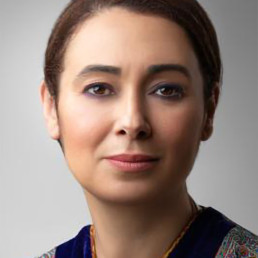
Written by Rachida Dahman
Rachida Dahman is an international educator, a language and literature teacher, and an educational innovator. She started her career in Germany as a teacher trainer advocating the importance of relationships above academics. She then moved to Luxembourg where she teaches German language and literature classes to middle and high school students. She is an award-winning poet, co-author of the best-selling book, ATLAS DER ENTSCHEIDER Entscheiden wie die Profis- Dynamik, Komplexität und Stress meistern.
In a complex world with complex problems, young people are struggling to uncover their identities. Social media and social constructs simplify thinking into binary perspectives that are limiting their capacities to grow and develop an understanding of themselves and the world. Unfortunately, some school curricula and environments may be contributing to this growing problem that directly impacts student wellbeing.
So much of students’ worlds seem to fall into a good/bad, right/wrong, preconstructed view of what they should think, believe, feel, and who they should or should not be. In this binary construct, students are not able to explore their own perceptions, opinions, or understandings because they have not had the freedom to develop the ability to observe, ask questions, discuss, and learn about differing perspectives in a constructive way. Schools should strive to create an environment that welcomes and encourages students to share, explore, and grow. In order for them to feel safe to do so, the atmosphere must not be argumentative. Rather, it must be one that approaches differences from a lens of love and learning.
It may seem easier to avoid discussing controversial topics in order to steer away from conflict and difficulty that stir emotions. However, when we participate in this avoidance, we miss out on an opportunity to teach students how to explore their feelings, have rigorous, meaningful conversations, and learn from those with differing viewpoints in a positive way. By modeling an avoidance behavior, we are inadvertently supporting this binary way of thinking that leads to a hindrance in student growth. In order to assist in students’ development, schools can create an environment where people are able to discuss controversial subjects in a respectful way that comes from a place of learning, understanding, and growing rather than judgment.
Schools should be a safe place for contemplation, evaluation, and learning and not one that prescribes what students should think and how they fit into a pre-described way of being. This freedom, or lack thereof, has a direct impact on student wellbeing. Educators should be inviting students each morning to feel strong and capable, supporting them in framing their own personalities and identities. In order to do that, they must feel safe sharing who they are in an environment designed to listen and learn without fear of others jumping into a defensive or attack mode. A safe space environment is cyclical in nature. In order for students to feel heard without judgment they must also learn to listen without judgment. One cannot occur without the other.
Students must learn to find value in the opinions, thoughts, and beliefs of others. Educators can assist in this learning by teaching students that there are 101 perspectives on the same problem. Rather than always presenting a definitive answer, issues can be explored from various angles. In addition, we must teach and model the use of kind words that are full of love rather than aggression, and that strive to unite rather than divide. As you enter your schools every day, ask yourselves these questions:
- Am I encouraging differing viewpoints and creating a safe space for them to be shared?
- Am I modeling a behavior of openness for judgment-free conversations?
- Am I demonstrating kind, accepting language?
- How can I help students to avoid defensive or aggressive language and responses?
The formation of identity and wellbeing is fragile. Schools have a responsibility to create environments that are conducive to open discussions, free from aggression, and safe for honest and authentic conversations geared toward learning, understanding, and growth. It is through this climate of successful cooperation and mutual support that we can counteract the negative impacts of binary thinking and help students create healthy identities.