
I can teach a diverse curriculum!
Written by Yvonne Eba
Yvonne Eba is a current head of English in a Catholic school and PhD student who is studying Education. She is currently writing a thesis based around race, racism, masculinity within the student experiences of British Nigerian men. Within her role as head of department she has transformed the curriculum by intentionally adding more diverse texts and poems. She is focused on building a rich, ambitious and holistic curriculum in a school which is predominantly black. She has dedicated the last decade developing young people through workshops, fellowships, tuition and mentoring.
At the tender age of 15 I was uniquely passionate about being able to teach kids life transforming lessons within the confinements of a classroom or lecture hall. I found it odd that kids weren’t being taught the purpose behind their subject or life long learning skills attached. i.e Why are kids not taught in Maths the art of saving, investment and tithing or taught in English how to write and compose an effective CV. This passion consistently grew and when I started my company at 21 ( shout out to Life Creations) we created sessions and packages which did exactly that – taught kids things they could use outside the classroom.
But this wasn’t enough.
As I became a Head of English I finally saw this dream come to life again but I had no idea how much work, brain power, focus and buy-in from a team it would take to actually manifest it. I have been watching and reading numerous articles by Dena Eden ( Director of Secondary English curriculum) who states the importance of consistency in curriculum starts with ” texts studied, sequencing of units and lessons and the pace of lessons”
So flash back with me and picture this – I was in a new school, new role and I had heaps of ambition and zeal to:
” transform the lives of young people through the power of challenging , ambitious texts and units which were personal to them“.
I was passionate about:
” ensuring ideas around marginalising black people or the discussions around who can say the N word or not when reading out an extract were no longer normalised or championed through texts like Of Mice and Men. Which were branded outdated yet needed?”
and I wanted students
“to see and read authors and poets from diverse backgrounds within the context of: race, gender and class”
whilst
“still getting them GCSE ready and abiding by the demands of the national curriculum”.
It’s been a journey, tussle and challenging but with some giants and shakers on the team and the never-ending grace of God we have made some shifts and changes. The last HOD I spoke to reassured me that her curriculum changes and the seamless nature of its delivery took five years inclusive of assessments and consistency.
It’s important on this journey that you pace yourself and get feedback from your team and students on how they feel it is going.
Here’s five things I have learnt so far :
- Make the curriculum ambitious: it is absolutely imperative regardless of the demographics of students you have that the texts you choose challenge and enrich them. This can be intentionally captured through the tier of language used and the content within the chosen text/ unit and the big ideas and questions which are evoked.
- Make it accessible for your team : getting a buy in isn’t always the easiest thing and resistance is inevitable at first. But don’t take it personal; as human beings we are creatures of habit and it’s a natural reaction for people to feel underprepared or scared of change. However ensuring the lessons provided along with the new units, week by week plans and DO NOWs are of a high quality will often make the process swifter for your team. It is important that there is unification of moral purpose as we teach according to our experience, beliefs and morals which could often add to the complexity of running a team. So providing strategic resources would help each teacher feel confident to approach and teach the new text. This is your time as a HOD to overcommunicate, overcommunicate and overcommunicate again. Also be transparent with your team that this is NEW to you too!
- Make purposeful assessments : it is important that when building your curriculum you are intentional about what you are testing the students on during your lessons and at the end of the unit. It is imperative that students are being tested on the skills and knowledge you have taught them throughout the set time. i.e If you have been teaching them Frankenstein (play version) and analysing the purpose of language in key extracts the end of unit test will not be an imaginative writing piece from the scientist if these skills haven’t been taught. I always think about what we are assessing the students and how this is preparing them for their greatest assessments in y11 which are their GCSEs. From year 7 we look at language analysis which will help them in the Language Papers and analysis of extracts whilst providing them questions in an exam style layout which helps them for literature
- Make it personal : don’t just follow trends ensure your curriculum represents the cohort of your kids you are teaching. Ask yourself genuine questions : can they relate to these characters? Is this personal to them? Will they feel represented? Will they be inspired? What type of learners would you like them to leave as?
- Make it literacy and oracy inclusive : ensure you provide space for students to discuss their thoughts and demonstrate their understanding of the new topic at hand. It is good to address misconceptions consistently during DO NOW tasks, live marking and through plenaries however it is even better when the kids can articulate their understanding or lack of it themselves
I still have a long way to go but my word for the year to my team was this will become “seamless” in fact the word for the year is “seamless” ( by fire and force!).
I have taken out a lot of texts, bought new texts, returned some texts, changed some units and its content, revised, redrafted, dipped into the budget, took advice, listened a lot, spoke a lot, asked a lot, vented a lot and finally realised this isn’t about what I want to teach them its about what is best FOR their academic development.
So I am in an honourable position to be able to be part of history – I am currently speaking with other HODs on ways they can get the best English curriculum for their kids.
Do connect with me to see our latest curriculum map and to discuss ways to help shape English together!

“Because it makes us feel more comfortable” – Gender, Bodies, and Elephants in PE Swimming Lessons

Written by Justus Schwenzer
Justus Schwenzer (he/him) is a secondary teacher for PE, music, and English. Dedicated to fostering safe and inclusive learning spaces built on openness, belonging, and acceptance, he is passionate about research on equity, diversity, and inclusion in education.
The new school term has begun, and swimming is the new topic in PE. As a new member of staff, I am surprised to learn that our normally mixed-sex lessons are now split into separate “boys” and “girls” classes for swimming. This immediately raises questions for me, and I am curious to hear how my Year 10 students make sense of it.
“Why do you think our school chooses single-sex swimming lessons over the usual mixed-sex PE lessons?”
One of the students is bold enough to share: “Because it makes us feel more comfortable”. Such an honest response, perhaps hesitant, self-conscious, or even a little presumptuous in speaking for everyone.
But this raises the central question of this blog: Does separating students by sex really create comfort for everyone, or does it mask the deeper issues and avoid the tough questions that make PE feel uncomfortable in the first place?
This blog argues that single-sex swimming lessons are not automatically a solution for creating a truly welcoming and supportive learning environment. Instead, creating comfort, trust, and inclusion requires reflective practice that addresses the underlying issues of visibility, vulnerability, and equity in PE.
Is single-sex swimming more “comfortable” because it caters to innate abilities?
PE is, and probably always will be, a particularly gendered space. In this educational setting, bodies are in the spotlight and the centre of attention. A student saying “comfortable” might be pointing to culturally entrenched ideas about gender, such as the expectation that “strong boys” and “delicate girls” engage in activities thought to match their innate abilities. Historical debris of traditional gendered expectations still echoes through PE curricula and teaching practices, even though such narrow ideas of ‘ideal’ bodies are being critically challenged and perceived as outdated.
Is single-sex swimming more “comfortable” because it makes students feel less exposed and vulnerable?
Swimming differs from other curriculum topics due to heightened visibility of the body and a different dress code. The swimming pool represents a space where questions of respectable dress, visibility, and decency are grounded in the historic development of the sport. Interpreting “comfortable” as feeling protected and less vulnerable is therefore not far-fetched. “Girls” may want to feel protected from unwanted looks and the cisgender, heterosexual, sexualised (“male”) gaze. Additionally, mixed-sex PE may create religious distress for students with religious beliefs that emphasise modesty, making single-sex PE feel more “comfortable” for them. But can a safe and non-judgemental atmosphere not be created in mixed-sex swimming through reflective teaching practices?
When underlying beliefs and struggles that contribute to shame and anxiety in the pool are not addressed, opting for single-sex swimming lessons is more of a band-aid solution. Single-sex PE does not replace the work that has to be done to make this setting a safe, body-positive environment without judgement. Students are still together in a group with other people, tempted to compare and contrast their bodies, still trying to navigate puberty, hormones, and bodily changes. The work to support our students and help them feel “comfortable” in their own bodies does not go away.
Who is “us” in single-sex swimming lessons?
The “us” is still often defined as “boys” and “girls”. Single-sex PE creates binary groupings and potentially confines PE into “traditional” forms that reproduce inequitable sets of gendered power relations. What happens to students who cannot or do not want to say whether they should join the “boys” or the “girls”? Landi (2025) gives an example of how queer and trans students (that is how the youth in this study referred to themselves collectively) are marginalised in these moments, their bodies made to sit at a fault line of the system, creating barriers that leave them feeling erased. Students whose bodies fit neatly into the categories of “male” and “female” are privileged by the system. Heteronormativity is encouraged in those moments, creating a shield of invisibility around other sexual and gender identities. Others are left with the burden of accepting an option that does not represent them, potentially leaving them exposed, unprotected, and threatened.
Towards inclusive and welcoming swimming lessons in PE
I am aware that single-sex PE and mixed-sex PE are highly complex issues deeply entrenched in politics, (sporting) culture, religion, and society. The swimming pool tends to amplify particular issues. Despite these challenges, even long-standing practices in PE can benefit from reflection. Supporting all students means creating space for open, critical dialogue across perspectives. So, ask yourself what life lessons we want to teach our students, the type of world we envision for young people to move through, and who is allowed to move freely within it. Addressing the elephant in the pool might just make everybody feel a little bit more “comfortable”.
Belonging, Empathy, and a Curriculum that Sees Every Child

Written by Chloe Watterston
Chloe is an educator, athlete, and advocate for inclusive, curiosity-driven learning, dedicated to creating spaces where every young person feels safe, valued, and empowered. Her work across mainstream and SEND education, community projects, and curriculum reform is driven by a passion for amplifying marginalised voices and breaking down barriers to learning.
Belonging is not a bonus; it is a basic human need. Students who feel unseen, misunderstood, or undervalued will never thrive, no matter how carefully a curriculum looks on paper. Too often, belonging is treated as an afterthought- diversity weeks, a handful of posters in corridors, or the occasional themed assembly. These gestures may be well-meaning, but they fall short. True belonging requires more than decoration. It demands integration, empathy, and truth-telling.
Empathy has been stripped from education by a Eurocentric curriculum. When children encounter only one narrative, their own reflected back endlessly, or someone else’s never shown, they are denied the chance to be curious about differences. This absence breeds prejudice, isolation, and a narrow sense of the world. Representation matters, but not as an add-on or a gesture. It matters because it reflects humanity in its full breadth.
Learning outcomes are directly shaped by belonging. Research shows that students who feel they belong are more likely to achieve academically, develop social intelligence, and build resilience. A school that makes children feel like outsiders, whether because of race, culture, gender identity, or ability, unintentionally closes doors. Belonging must be woven into the fabric of school life from the start, not treated as an optional extra. When it is cultivated intentionally, young people gain the freedom to be curious, to trust, and to empathise. Without it, they turn elsewhere for meaning- often online, where they encounter narrow and sometimes toxic narratives about themselves and others.
Our most powerful tool for building empathy is storytelling. Stories act as mirrors, windows, and sliding doors: mirrors so children see themselves reflected; windows so they can look into other lives; and doors so they can step into perspectives far from their own. When children never see themselves in a story, they are told- silently but forcefully- that they are invisible. When they never encounter differences, they are denied the chance to develop empathy. Books, films, oral histories, and local community stories should not be treated as extras outside the ‘real curriculum.’ They are the curriculum.
Narratives that exclude Black contributions to science, art, geography, and literature are not neutral; they are erasure. Inclusive education cannot be about “adding diversity” on top of a whitewashed foundation. It must be about truth-telling. Black histories should be present in every subject, in every classroom, and in everyday conversations. Integration often provokes discomfort, but discomfort is not failure. It is learning. A curriculum rooted in truth will not always feel comfortable, but it will always be necessary.
Grades, too, can be barriers to belonging. Exams reward memorisation under pressure, punishing those who do not thrive in such conditions. For many learners, especially those from marginalised groups, this reinforces inequity rather than reducing it. Success needs to be redefined. Coursework and project-based assessment can value creativity, local histories, and lived experiences. A ‘D grade’ (which, in modern terms, equates to a Grade 3) may reflect extraordinary resilience and achievement in context. True equity means measuring children not against a singular rubric, but against their own journeys.
In classrooms, empathy cannot be demanded without exposure to difference. Curiosity grows when children encounter diverse stories and have safe spaces to talk about identity, race, gender, and belonging. Teachers play a vital role here. Students learn not only from what is said, but from what is modelled. When teachers show curiosity, challenge harmful narratives, and treat difference as opportunity rather than threat, they teach children to do the same.
Next come the practical shifts. Local heroes and community changemakers can be celebrated so that children encounter role models on their own doorstep. Equity, diversity, and inclusion must be reviewed with the same seriousness as safeguarding or attainment. Schools can use existing frameworks, such as the Equality Act and the Gatsby Benchmarks, to embed equity into daily structures rather than treating it as an extra burden. Above all, as discussed, storytelling should sit at the heart of the curriculum across all subjects.
Generations of young people are growing up in a world of polarisation, online radicalisation, and systemic inequality. After years of austerity, many are absorbing harmful narratives from the sources they trust most. They deserve better. They deserve an education that reflects them rather than erases them, and teachers willing to model curiosity and courage. As an Anti-Racism in the Curriculum panellist put it: young people are themselves an oppressed group- no one knows what it is like to be a child in 2025 except the children of 2025. Schools must listen to them, reflect them, and prepare them not only for exams, but for life lived with empathy and justice.
Inherited histories remind us that the curriculum is not abstract. It is rooted in the cultures and communities that shape who we are. My poem (see my article next week) – captures this truth:
“For the ones who carry the world in their veins – and make this island beat.”
This is Britain: a mosaic of footsteps, flavours, languages, and inventions, built by travellers, migrants, and dreamers. It is not a fantasy of purity, but a reality of mixture and connection. A curriculum that denies this truth denies the very heartbeat of the nation.
Now education must prioritise empathy with the same seriousness it gives to literacy and numeracy. Belonging should be woven into every subject, student voice must be valued, and leaders held accountable for equity. Success must be redefined so that growth, creativity, and resilience stand alongside grades. Every child should be able to look at the curriculum and find themselves reflected in it, while also seeing and stepping into the lives of others.
Going forward, if we want to raise a generation capable of compassion, critical thinking, and courage, education must be transformed into a tool for connection, not division.
Belonging is the root. Empathy is the bridge. Truth is the curriculum.
How Unconscious Bias Affects Student Learning

Written by Eleanor Hecks
Eleanor Hecks is a writer who is passionate about helping businesses create inclusive and diverse spaces. She serves as the Editor in Chief of Designerly Magazine.
Unconscious bias in the education sector occurs when teachers or other adults at a school unknowingly inflict biases on students, hindering their learning. Teachers might not even know they possess these biases, let alone that they are hurting students. It is essential to recognize how implicit bias manifests in the classroom and how to keep it from continuing.
Types of Unconscious Bias
Students of all ages are like sponges, and high school students especially carry the skills they learn in high school into the workforce. If they witness and internalize a teacher with hidden bias, that could affect how they treat their classmates and future co-workers. That is why it is crucial to spot and address unconscious bias as soon as possible.
A common way bias manifests is with issues of race. Sometimes, teachers will call on their white students more or assume that because English is not a student’s first language, that student is a poor writer or less intelligent. These are untrue assumptions based on a student’s skin colour.
Teachers might also be unconsciously biased against students with disabilities. They might assume someone with a physical disability has a mental disability as well or give the student more or less work, deeming them unfit for the regular curriculum. These biases harm the students who are directly impacted and the students witnessing it occur, leading to a continued use of these assumptions or feelings of inadequacy.
Other common implicit biases include sexual orientation, gender identity and socioeconomic standing. Treating students differently based on these attributes harms their education and sense of self-worth.
6 Tips to Support DEI Efforts to Mitigate Bias
Many students have overlapping social identities that create compounded experiences of discrimination and privilege, known as intersectionality. This makes it more important than ever to consciously and unconsciously treat all students equitably and respectfully.
Below are some actionable tips to support DEI efforts and mitigate bias.
1. Have Uncomfortable Conversations
Discussions of race or gender are sensitive topics that often make teachers and students uncomfortable. Still, these conversations are crucial to break down hidden bias. Students might feel more comfortable after having their concerns addressed in an appropriate, educational way.
2. Identify Biases
Teachers often unknowingly reinforce biases on students, so it is essential to identify and address them. If a teacher witnesses a student display bias toward a peer, the teacher should calmly intervene and help the student realize why their words or actions are harmful.
Teachers should also serve as positive examples. At the administration level, leaders should hire educators from diverse backgrounds and offer implicit bias training and tests to help support DEI in the school.
3. Foster Teacher and Student Relationships
Fostering a more profound connection allows teachers to understand their students better and identify ways they have misjudged them based on unconscious bias. Hands-on activities are a way to bond and learn, with 86% of teachers reporting increased engagement in the classroom as a result.
4. Adopt a Flexible Mindset
Too often, people believe that ignoring someone’s race, gender or other characteristic is being inclusive. This idea can be harmful, as there are distinct differences between people that should be acknowledged and embraced. Understanding what makes each student unique can help them learn best and prevent them from feeling ashamed of themselves.
5. Provide Equitable Learning for All Students
Separating students based on perceived intelligence can make them feel better or worse than their classmates. When everyone does the same assignment and works together, students have equitable learning opportunities to succeed and feel confident in their abilities.
Teachers should emphasize needs-based support. When a student needs more resources or support to succeed, teachers can provide accommodations to help them fully participate. This could include extra tools, more detailed instructions or a quiet place to work.
6. Assess Teaching Materials
Take note of the teaching material in a curriculum and see where gaps in the knowledge or outdated information exist. Students learn better when they see themselves in the material, and narrow recounts of history or books narratives that center only on one group can harm all students.
Unlearning Unconscious Bias in Classrooms
Implicit bias can harm students and hinder their learning. Educators and administrators must identify their own biases and instances of bias around them to combat these issues before they negatively impact the students.
#RENDBristol - a day of hope, connectivity and solidarity.
Written by Hannah Wilson
Founder and Director of the Belonging Effect (formerly Diverse Educators).
Another Saturday… another grassroots event… this time I co-organised and co-hosted the inaugural #REND event in Bristol.
My friends and family who are not in education do not get it – ‘Why do you work on Saturdays Hannah?’ I get asked regularly when challenged about my work life balance. My reply is often the same – it does not feel like work when it is driven by purpose and passion. And the work is too important and too urgent – how else would we get 100 people together to talk about racial equity?
So when Domini and Rahima reached out to me in early June and asked me to join them in co-organising the first REND event in the SW, my answer was a firm yes. Having attended multiple #REND events in Luton, Birmingham and London, it was great to be holding one closer to my home in Bath. As a friend of Sufian and a supporter of Chiltern Learning Trust I wanted to help them mobilise the movement to other parts of the country to help spread the word.
Brought up in North Devon, I also always love delivering DEIB training and supporting educational organisations in the South West with their DEIB strategy. When we talk about legacy, my hopes are to grow consciousness, confidence and competence in DEIB matters in the less diverse parts of the country. We all know that the shires and the white-majority parts of the country need these events and these conversations as much as the cities and the more diverse parts of the country.
Once we got the green light from Sufian to start planning we began to plan the event. Having all attended the black-tie Friday night events we wanted to disrupt things and try a different model to make it more inclusive and more accessible to attend. So we decided to pilot a lunchtime event instead. Furthermore, instead of a dress-up event and a formal meal we went for a more casual affair and a DIY approach. We realised quite quickly how much work we were taking on so we reached out to Tanisha to join the organising team. A big thank you from all of us to Jo and the team at Cotham School for generously hosting us and for so many of the staff who rolled up their sleeves at the event.
Our approach thus meant that we did not need to secure large sponsors – we wanted the event to be grassroots and we were keen to elevate the small orgs, charities/ CICs and individuals doing the work in our region – hence we built a marketplace into the event flow. A massive thank you to our exhibitors who supported the event: Belonging Effect, Cabot Learning Federation, Courageous Leadership, HGS Education Ltd, Jigsaw Education Group, PGS Educators, SARI, Somerset Research School , South Gloucestershire Race Equality Network and Teacheroo.
Curating the line-up of speakers – we were committed to amplifying a local headteacher, a regional academic, best practice from Wales alongside national thought leaders, role models and researchers. We mapped out how many speakers we could fit into the schedule and landed on part 1 with 3 speakers before our Caribbean lunch and part 2 with 3 more speakers post-lunch. We have so much appreciation for our speakers for the work they do, for travelling to join us on a weekend and for speaking for free: Canon David Hermitt, Del Planter, Diana Osagie, Lilian Martin, Dr Marie-Annick Gournet and Sufian Sadiq. (For reference the slide deck from the main hall is here).
With all of the details confirmed we then began to market the event on our socials and across our networks. Our call to action was simple: “Following on from the sell out Racial Equity: Network Dinners launched by Chiltern Teaching School and continued around the country we are delighted to announce the arrival of the event in Bristol. The Racial Equity: Network Dinner is an opportunity for people across the education sector who share and appreciate the importance of racial equity, to come together to celebrate, network and enjoy a delicious meal”.
Our target was to bring 100 people together for our first event and we were only a few people shy on the day – our challenge now is to get everyone to return to our next event and bring someone with them who needs to be in the room to hear the messages that were shared.
The day was a whirlwind: from blowing up balloons, to laying the tables, serving the food, to greeting our speakers and holding space for our guests – the time disappeared quickly. It was brilliant to see so many familiar faces in the room, to meet virtual connections in person and to connect with new people from the area who are committed to making educational space more inclusive, more representative and ultimately safer for our global majority communities and colleagues.
Thank you for the positive feedback we have already received:
- Fern Hughes: “With 100 brilliant attendees, the room was full of purpose, passion and powerful conversation. Networking and connecting with so many inspiring people working across education — a sector close to my heart — made the day even more meaningful”.
- Adrian McLean:“#REND Bristol did things in style! Expertly arranged by Domini Choudhury Tanisha Hicks-Beresford Rahima Khatun-Malik & Hannah Wilson – we left with full hearts and a full belly!”
- David Stewart: “I’m not one for networking events. I find them superficial, surface-level, and inauthentic. But today completely changed that. Today I was invited to the REND Bristol event — the passion, authenticity, and energy brought by the exhibitors, guest speakers, and organisers was outstanding. Conversations were deep and particularly meaningful. Every speaker shared their story with pride and optimism for the future, and the organisers made the entire day run seamlessly”.
- Saima Akhtar: “Race equity work in education is not just important, it is transformative. It shapes futures, dismantles barriers, and creates spaces where every learner can thrive. As educators and advocates, we carry a profound responsibility to drive this work forward with urgency and courage. The progress we make today will define the opportunities of tomorrow. The conversations and energy in this space never fail to inspire me, but today, thanks to REND, I feel like my inspiration has had an energy drink! Let’s keep pushing boundaries, challenging norms, and ensuring that equity is not just a vision but a lived reality for every child”.
So what’s next?
If you attended we would love to hear your feedback – including what worked and what we can improve at a future event – please do complete the feedback form: REND Bristol Saturday 22 Nov 2025 feedback. Domini, Rahima, Tanisha and I are then meeting next weekend to review the event and the feedback to confirm our next steps as we want to keep the connections, the conversations and the momentum going.
In the meanwhile, you can join the conversation on LinkedIn – we have a #REND networking group here and we have collated all of the #RENDBristol reflection posts here. If you are not on Linkedin then you can join our private community space on Mighty Networks and find the #REND community group here.
We have also created a page on the Belonging Effect’s website for more information about #REND events around the country (it will be updated over the coming weeks). Ann, who joined us as a delegate in Bristol, is hosting #RENDLondon on Friday 12th December – you can book a ticket here.
For people who live and work in Bristol, we would love to see you at our #DiverseEd Hub – Tanisha and I host it at the Bristol Cathedral School each half-term, our next meet up is after school on Wednesday 3rd December.
When I relocated to Bath in 2023, we hosted a #DiverseEd event at Bridge Learning Campus in Bristol. We are delighted to be hosting our next regional #DiverseEd event at IKB Academy in Keynsham on June 13th. Get in touch if you would like to exhibit/ facilitate a session – the line-up will be confirmed in the new year.
Some final signposting:
- I chatted to a few people about Black Men Teach, you can find them and 200+ other orgs supporting schools, colleges and trusts in our DEIB Directory.
- We would love to publish some more blogs reflecting on the themes from the event, please email me with any submissions.
- Hopefully you got to say hello to Adele from Teacheroo – we collaborate on a jobs board with them to connect diverse educators with settings who are committed to the work. We host free adverts for vacancies for ITTE, DEIB / anti-racist leaders and for governors/ trustees – do get in touch if we can help you promote career development opportunities with our network.
Thank you to everyone who attended and supported #RENDBristol – we look forward to sending out more follow up information and opportunities from our speakers and exhibitors from this event and to reconnecting soon.
“Third Space” Mentoring for Diverse Trainee Teachers
Written by Hannah Wilson
Founder and Director of the Belonging Effect (formerly Diverse Educators).
We can develop our beginner teachers to know their craft and know their subject, but where is the space to know themselves? Navigating teaching as a cisgender, heterosexual, able-bodied white woman meant I was often in the majority in most spaces I occupied in my early career. As I progressed in my career I experienced some sexism but on the whole I was left pretty unscathed, my identity was not something that came up.
Our friends at Now Teach have coined a layer of support/ piloted an approach called “Third Space” Mentoring where their career-changing trainee teachers receive triangulated support from a subject mentor, a professional mentor and a ‘3rd space’ mentor, someone with shared lived experience.
At the Belonging Effect we already support hundreds of ITTE and ECF providers through our DEIB training, coaching and consultancy, alongside hosting virtual annual conferences in January and June for each cohort. But, over the last few years we have been thinking and talking about this approach as a team and we have been considering how we can further support the development and retention of trainee and early career teachers who hold diverse identities and who come from marginalised communities.
For our BE team and for the ITTE and ECF providers we work with, we often get asked to support teachers who are struggling, not in the classroom, but in navigating their identity. The trainee is perhaps the only person with their identity in the cohort or in the school. There often is not a mentor in their school nor in their provider who shares their lived experience. One provider reached out for help and advice as they had a Muslim Asian Hijabi woman training to teach science, and she had been placed in a school with an all-male science department, with a male mentor. We provided a safe space for her to work with a mentor who looked like her, who understood her and could help her navigate the unique barriers she was facing.
So in a nutshell, “Third Space” mentoring involves creating a supportive environment where individuals can develop skills and find new perspectives. The space creates a pause between different roles and tasks, where a person can use the time to reflect, re-center and decompress. This neutral space enables collaboration and focuses on an individual’s holistic development. The safety of the space enables an exploration of authenticity and vulnerability, being guided by someone who has walked a similar path.
Through “Third Space” mentoring we can ensure that we are helping our trainees by triangulating their subject development, their professional development and their teacher identity development. Here is some helpful research from McIntyre and Hobson (2015) entitled: Supporting beginner teacher identity development: external mentors and the third space: McIntyre and Hobson 2015 pre-publication.pdf In it they cite a range of theoretical frameworks:
“While the concept of identity is understood and employed in different ways by different writers (Beijaard et al., 2004) and is problematic (Roth, 2008), our own conceptualisation is informed by poststructuralist accounts of identities as multi-layered, multifaceted, dynamic and constantly evolving or in continual flow (Hall, 2000; Gee, 2000; Hamilton, 2010). We also recognise that identity transmutations are linked to socio-contextual factors and to power (Lumby, 2009; Beauchamp and Thomas, 2009), a point which is especially apposite for understanding teacher identities, with some writers seeing these as particularly vulnerable, unstable and susceptible to school and national policy pressures and contexts (Lasky, 2005; Leaton Gray, 2006)”.
Why is this an important development?
- With an increased focus on DEIB and representation we know that ITTE and ECF providers are consciously trying to attract and recruit more diverse candidates so that our workforce better reflects the communities that we serve.
- We need to design more inclusive approaches and spaces to better support our trainees.
- We need to train our staff in our provider and hold to account the staff in our placement schools to do the work – to unlearn and to relearn, in order to fully commit to ensuring that our trainees can flourish and thrive.
How does it differ from conventional mentoring?
- The “Third Space” can be the transition between activities, a chance to pause and reflect, rather than the activity itself.
- It can also refer to a physical or metaphorical space that is neither home nor work, allowing for different kinds of interactions and collaborations.
- The “Third Space” can be a site of cultural hybridity, where new identities and perspectives are formed through the intersection of different cultures.
What are the key aspects of “Third Space” mentoring?
- Individualised support: Working with a dedicated coach/ mentor to develop your own program of inquiry and practice, supporting you in navigating life’s challenges and making lasting changes.
- Developmental support: Mentoring can help with specific issues like career direction, professional development, and learning new skills.
- Collaborative problem-solving: Creating a neutral space where people from different backgrounds can come together to share perspectives and find innovative solutions.
- Holistic approach: Focusing on helping individuals integrate their values and find balance in both their work and personal lives.
Are there some examples of how “Third Space” Mentoring can support, develop and retain diverse trainees?
- Age – we support career changes and those trainees who are shifting their professional identity from being the expert in one field to being the novice in another field.
- Disability – we support trainees who are neurodivergent in processing school life, in self-advocating for what they need whilst developing coping strategies.
- Parenthood – we support trainee parent-teachers in navigating their caring responsibilities and in managing their additional responsibilities.
- Race – we support trainee teachers who are racialised as being black and brown, in exploring their experiences and in considering the weight of representation.
- Sexuality – we support trainee teachers who are LGBT+ in ensuring their safety and in navigating any challenges they face with their community.
- Wellbeing – we support trainee teachers in building a toolkit of strategies to manage their own mental health and wellbeing.
How can we help?
- Would your trainee teachers and early career teachers benefit from an additional layer of mentoring as they navigate their way in the education profession?
- We have a brilliant team of experienced coaches and mentors who want to provide an extra layer of support, virtually, to your ITT trainees and possibly to your ECTs at your sibling providers too.
- We hope this will support trainees who are navigating their identity and lived experiences as they develop their professional identity, enabling them to flourish and thrive, to stay and succeed in the teaching profession.
- We are running another pilot of our “Third Space” DEIB Mentoring for ITTs and ECTs in Spring and Summer 2026.
How do we register our interest?
- The “Third Space” DEIB Mentoring for ITTs and ECTs pilot will run from January-July 2026.
- Your trainees can join a virtual mentoring circle for 4 x 1hr half-termly group sessions.
- Our Belonging Effect Associates will hold a safe virtual space for them and their peers to explore identity themes such as: age, disability, faith, menopause, mental health and wellbeing, neurodiversity, parenthood, race, sexuality and intersectional identities.
- Places are £200+VAT per participant.
- Fill in this Google form to express an interest: https://forms.gle/5dLN9fzQ8qBeaCvw9
- Contact Hannah@thebelongingeffect.co.uk to book places for your trainee and early career teachers.
Why schools need to address anti-LGBT bullying
Written by Eleanor Formby
Eleanor Formby (she/her) is Professor of Sociology and Youth Studies at Sheffield Hallam University, UK. She has 25 years’ experience in (predominantly qualitative) social research and evaluation, and for nearly 20 years her work has focussed on the life experiences of LGBT+ people. Eleanor has written numerous articles in these areas and is the author of Exploring LGBT spaces and communities.
Next month will see Anti-Bullying Week (November 10-14), and Sheffield Hallam University research highlights that lesbian, gay, bisexual and trans (LGBT) young people are still at risk of being bullied at school.
The study is the largest of its kind ever conducted in England, with over 61,000 pupils and staff from 853 schools taking part. It focused specifically on homophobic, biphobic and transphobic (HBT) bullying—i.e. that directed at people because of their actual or assumed sexual or gender identity—and on LGBT inclusion in schools.
It’s often assumed that ‘progress’—thinking particularly about LGBT rights—is a steady march forward, and to be fair, the past 25 years have seen significant changes for LGBT people in the UK. In 2015, the UK was ranked number one on the ILGA-Europe rainbow map, which rates 49 European countries on the basis of laws and policies that directly impact on LGBT people’s human rights. Around the same time, the UK government invested over £6 million in efforts to prevent and respond to HBT bullying in schools, which included our research. The year our research finished, the Government announced that relationships and sex education (RSE) would become compulsory in English secondary schools—and that it should include LGBT content. For a while, there was reason to feel cautiously optimistic.
But things began to change.
Despite commissioning our research, the Conservative government delayed releasing the findings for five years—an unprecedented move. The study was only published after a change in government.
During this period, rhetoric from the government became increasingly hostile, particularly towards trans people. In April 2025, a high-profile supreme court ruling on gender was followed by a controversial ‘interim update’ from the Equality and Human Rights Commission. In the 2025 ILGA-Europe rainbow map the UK dropped to 22nd place—we’re now the second worst country for LGBT-related laws in Western Europe and Scandinavia.
Recently the government has also revised its guidance on RSE, with reduced references to trans people (just once in a subheading). It explicitly states that schools “should not teach as fact that all people have a gender identity”, and “should avoid materials that… encourage pupils to question their gender”. This language echoes Section 28—the infamous law that, until 2003, banned local authorities from “promoting homosexuality” and prevented schools from teaching the “acceptability of homosexuality”.
Against this backdrop, a new book demonstrates that HBT (homophobic, biphobic and transphobic) bullying is still happening—but also that schools can make a difference.
Our findings show that many schools respond to bullying after it happens, rather than trying to prevent it in the first place. In primary schools, efforts often focus on educating children about inappropriate language. Fewer schools are embedding HBT bullying prevention within everyday teaching, or in visible displays in school.
Where LGBT inclusion is happening, it often takes place in assemblies, or sometimes in secondary schools during PSHE (personal, social, health and economic education) lessons, or in ‘drop-down days’ when normal lessons are suspended. In some primary schools, specific books are used.
There are also barriers, for example a lack of time and staff capacity available in schools, and a lack of funding to invest in resources, facilities or training to help do this work well. Some staff don’t feel supported by school leadership. Others worry about complaints from parents or uncertainty about what’s ‘age appropriate’. In the current context, these concerns and associated lack of confidence are likely to grow.
But when schools get it right, there is real impact, for instance LGBT pupils—and those with LGBT family members—feel safer and more understood. Others feel more able to ask questions about issues that confuse or concern them.
This is why it’s so concerning that the UK seems to be moving backwards. Instead of helping schools create more inclusive environments, recent guidance—and arguably the suppression of important research—risk making things worse for LGBT young people, and those with LGBT family members. Teachers are left uncertain about what they’re allowed to say or teach, and pupils may feel more isolated.
It’s difficult to understand why any government would risk children and young people’s wellbeing in this way.
As we prepare to mark Anti-Bullying Week, it’s important to remember that (to borrow from previous policy, seemingly long-forgotten) every child matters—and deserves to feel safe and included, so schools need to address anti-LGBT bullying. To make that a reality, we need to support schools—not leave them uncertain or under-resourced.
Why Intersectionality is the Future of ERGs
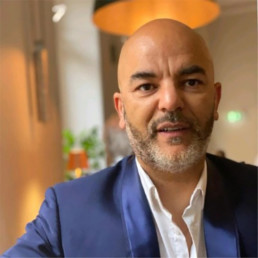
Written by Matthew Page
Intersectionality and Identity Consultant | Trustee at The Fostering Network | Transformative Coach | Speaker | Award Winning Lived Care Experienced Leader | Doggie Dad
In today’s dynamic and sometimes challenging landscape, the conversations around diversity, equity, and inclusion (DEI) have never been more critical. We’re seeing a shift, a recalibration, and in some corners, even a fear of engaging with DEI initiatives. Yet, it’s precisely in this environment that the power of Employee Resource Groups (ERGs) becomes even more pronounced. However, if ERGs are to truly thrive and deliver on their promise, they must embrace a crucial concept: intersectionality.
For too long, ERGs have often operated in silos. We have a Women’s ERG, a BAME (Black, Asian, and Minority Ethnic) ERG, an LGBTQ+ ERG, a Disability ERG, and so forth. Each group does incredibly important work within its specific remit, advocating for its members and fostering a sense of community. But imagine the amplified impact if these groups, rather than standing alone, could discover their shared struggles and collective strengths.
This is where intersectionality isn’t just a buzzword; it’s the glue. It’s the understanding that individuals hold multiple identities that intersect and overlap, creating unique experiences of both privilege and disadvantage. The term was originally coined by American legal scholar Kimberlé Crenshaw in 1989. She used it to highlight the “double discrimination” faced by Black women, who often experienced both racism and sexism but found that the legal system at the time couldn’t address the combined effects of the two.
My work is all about introducing people to this basic, yet profoundly powerful, principle. I help ERGs recognise that while their specific focus is vital, there are countless threads that connect them. When a Women’s ERG and a BAME ERG realise they are both fighting for equitable pay, or when a Disability ERG and an LGBTQ+ ERG discover shared ground in advocating for inclusive language, that’s when the magic happens.
Pulling various ERGs together through the power of intersectionality is something I’m seeing time and time again, and it’s truly powerful in the current climate. We should all be working and fighting the cause in a much more united way, shouldn’t we? This collective approach not only strengthens the impact of each individual ERG but also fosters a more inclusive and understanding workplace culture for everyone. It moves us beyond a ‘them and us’ mentality towards a ‘we’ that is far more resilient and effective.
My journey to understanding the profound importance of identity and belonging began in a very personal way. Growing up in foster care, I had no real sense of my own identity. I was told my father, whom I had never met, was from Jamaica, which was the extent of my knowledge about my roots. It wasn’t until I took part in the TV show DNA Family Secrets that my world truly opened up. The show discovered that my family actually originated from the Seychelles – a revelation that completely shifted my understanding of who I am and where I come from. This personal experience of uncovering my intersecting identities, and the sense of belonging it brought, deeply informs my passion for helping others find theirs within organisations.
I have the privilege of working with fantastic organisations like NatWest, Transport for London, and the British Transport Police, guiding their ERGs through this journey. We explore how to break down those silos, build bridges between groups, and harness the collective power of their diverse members. The results are not just theoretical; they are tangible shifts towards more unified advocacy, greater mutual support, and a more robust, future-proof approach to DEI.
Intersectionality isn’t just the future of ERGs; it’s the pathway to a more inclusive, empathetic, and ultimately, a more effective workplace for all. Let’s unite, understand, and empower one another.
Disagreeing Well in The Age of Disconnect
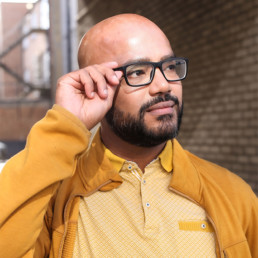
Written by Dr Lalith Wijedoru
Dr Lalith Wijedoru loves stories with impact. He is a coach, public speaker, and facilitator who harnesses the connecting power of stories to improve social health and emotional wellbeing. In his former career as an NHS consultant paediatrician in emergency medicine, he was part of multiple national award-winning teams in staff engagement using this storytelling approach. Lalith's storytelling consultancy Behind Your Mask now supports employees across multiple work sectors including tech, law, finance, education, healthcare, and the arts.
It’s the interview question that every medical school applicant is expecting to be asked: “Why do you want to be a doctor?” All around the world, aspiring doctors like me somehow managed to say in one way or another: “I want to help people.” Thankfully, University College London (UCL) Medical School gave me the chance to prove it.
As a paediatrician, I played a crucial role in the health of children by providing treatment, preventing disease and injury, and advocating for them. My medical training made me well-versed in the interplay between mind (mental health) and body (physical health).
The coronavirus pandemic was a tsunami that swept disconnect across the planet. Restrictions on our movement outside the home with limited exercise affected all of our physical health. The seismic shift to online working and video conferencing affected our mental health. For me, the biggest impact was social distancing. That had a detrimental effect on our social health.
Social health is our ability to form and maintain positive relationships: those which are healthy and meaningful. Relationships can be with friends, neighbours, and our work colleagues. Our physical, emotional, and spiritual wellbeing depend on strong social bonds with others. Social distancing and remote working threatened our ability and need to deepen human connections.
When we say ‘find your tribe’, we are harking back to our animal ancestors who recognized there was great safety in surrounding ourselves with those who looked and acted like you. Things that were different represented danger, a potential threat. Xenophobia has clear evolutionary roots linked to survival. There is a sense of unity and belonging when you surround yourself with people who share facets of your identity. People who get you in some way. Others who understand you.
Our modern world has become far less segregated than the rest of the animal kingdom. The diversity that has always been there now, for the most part, co-exists in far closer proximity with far greater visibility than ever before. Social connectivity is far from homogenous, but for all the benefits of living in a diverse community, it comes with its challenges.
Diversity is not just in the more obvious visual protected characteristics of ethnicity, gender, or age. It also means diversity of thought, opinion, and belief. With that comes the potential for clash, conflict, and disconnect. So how can we cultivate meaningful relationships in a world that is disconnected ideologically and politically whilst connected digitally?
The vitriol that is not uncommonly seen on social media, the emotional and physical hostility that plays out in protests and counter-protests, and the division that is preached by certain political leaders all fan the flames of discontent, disagreement, and disconnect. People screaming their opinions at each other without consideration to what someone else has to say. Putting fingers in their ears while reciting ‘la-la-la-la’ to block out alternative views. We live in an age of not listening.
I love my alma mater for many things, but in the decades since graduating I am particularly proud of one of its recent initiatives. A campaign called Disagreeing Well. It includes a public panel discussion series, a podcast called The Bridge, and online courses on critical thinking for diverse communities where conflicting opinions and ideas exist and are expressed.
One of the things I learned from the campaign’s public series was the concept of epistemic humility. Being humble with your assumptions about your own knowledge. Recognizing that your understanding of the world is incomplete. Aware that as a consequence, you may not perceive things as clearly as you think you do.
One of the skills to promote disagreeing well is to listen carefully to each other. Listen with the intention to truly understand someone’s lived experience. Listen not with the intention to reply, fix, or criticize. My storytelling consultancy was born out of a time of great disconnect. I strive to create spaces and opportunities for us to truly listen to each other. To listen to our true, personal stories without interruption, without fear of judgment or reprimand or insult.
So what would my medical school interviewee-self think of the doctor I became? I may not be helping paediatric patients and their families with their physical and mental health anymore, but I am certainly helping people with their social health. Stories have the power to educate, engage, and inspire. One of the powers of stories that I like the most are their powers to connect. We can agree to disagree, but through stories we can kickstart respectful conversations that inevitably lead us to find the things that we do agree on. And that can only be a good thing for diversity.
Racism is a Safeguarding Issue: Education as a Safe Haven
Written by Chloe Watterston
Chloe is an educator, athlete, and advocate for inclusive, curiosity-driven learning, dedicated to creating spaces where every young person feels safe, valued, and empowered. Her work across mainstream and SEND education, community projects, and curriculum reform is driven by a passion for amplifying marginalised voices and breaking down barriers to learning.
Schools often pride themselves on being safe spaces, yet for many students, they are anything but. Racism in education is not simply a matter of representation or curriculum – it is a safeguarding issue. Children are being radicalised online, marginalised in classrooms, and silenced when they try to speak out. Ignoring racism doesn’t protect students; it perpetuates harm.
When we talk about safeguarding, we picture child protection protocols, online safety lessons, and anti-bullying strategies. But racism is rarely given the same urgency, often treated as a ‘behavioural’ problem rather than a threat to wellbeing. This omission has consequences. Experiencing racism is traumatic: it damages mental health, erodes self-worth, and disrupts learning. And when schools fail to act, they can become complicit in further harm.
We should be challenged to confront that denial and reframe anti-racism as a fundamental safeguarding duty. Decolonising the curriculum isn’t about adding diverse content – it’s about telling the truth: truth about the roots of white supremacy, about global histories and contributions, and about the systemic barriers that harm marginalised children daily.
When schools silence conversations or refuse to acknowledge racism, they create unsafe spaces. Anti-racist practice must become part of safeguarding training, staff culture, and classroom discussions. Students should never feel their identity is ‘too political’ to discuss or their experiences are ignored.
The Scale of the Problem
The numbers are stark:
- In 2019, the NSPCC reported that incidents of racial abuse and racist bullying of children had risen by a fifth within four years.
- In 2021, the Guardian reported that UK schools recorded 60,177 racist incidents in a five-year period (Anti-bullying Alliance)
- A 2020 World Economic Forum report found 95% of young Black British people have witnessed racist language in education. (Forum)
- According to the Department for Education, Black Caribbean pupils are up to three times more likely to be excluded than their white peers (gov.uk).
Yet, many schools still treat racist incidents as isolated behaviour problems rather than safeguarding red flags.
Why Racism is a Safeguarding Concern
- Radicalisation Risk: Extremism targets isolated, angry, or vulnerable children, grooming them with online narratives that can spread through classrooms.
- Chronic Trauma: Racism’s impact isn’t a one-off bruise – it creates long-term psychological harm, raising rates of anxiety, depression, and physical health issues.
- Unsafe Environments: When students see racism dismissed or ignored, they stop reporting it. Silence doesn’t mean equality; it signals danger.
A child who doesn’t feel safe being themselves is not safeguarded. Schools must explicitly name racism in safeguarding policies and act with urgency.
Moving Beyond Performative Action
Assemblies and diversity displays are not enough. Anti-racist practice must be embedded into school culture. Senior leaders should model vulnerability, showing staff and students that it’s okay to feel uncomfortable when confronting prejudice. Teachers must be empowered to respond to racism confidently, while safeguarding teams must be trained to treat racist abuse with the same seriousness as other forms of harm.
Practical Steps for Schools & Teachers
- Embed Anti-Racism in Safeguarding Training
- Include racist bullying, harassment, and microaggressions in safeguarding protocols.
- Train staff on how to document, escalate, and resolve cases effectively.
- Create Anonymous Reporting Channels
- Allow students to report racism through secure, anonymous forms or ‘trusted adult’ programs.
- Ensure reporting leads to visible action to build trust.
- Audit School Culture and Discipline
- Analyse sanctions, exclusions, and behaviour logs for racial bias.
- Survey students on whether they feel safe and valued.
- Actively Celebrate Identity
- Representation shouldn’t be tokenistic or restricted to a single month. Displays, assemblies, and lessons should celebrate diversity all year round.
- Partner with Communities
- Collaborate with local advocacy groups, parents, and faith leaders to create a united, culturally competent safeguarding network.
Long-Term Steps to Discuss and Implement
- Mandatory Racial Literacy and Trauma-Informed Training
- Establish ongoing professional development for all staff, governors, and leadership teams.
- Include practical anti-bias strategies, restorative approaches, and equity-based leadership skills.
- Curriculum Reform and Decolonisation
- Conduct curriculum audits to identify gaps, Eurocentric bias, and opportunities to embed global histories and diverse voices across all subjects.
- Create working groups that include teachers, students, and parents to co-develop inclusive resources.
- Embed Equity into School Policies
- Ensure behaviour, uniform, and attendance policies are reviewed annually for cultural bias.
- Introduce an anti-racism charter, making equity a measurable school-wide goal.
- Equitable Recruitment and Retention
- Develop strategies to hire and support staff from marginalised backgrounds.
- Introduce mentorship programs and leadership pipelines to diversify senior leadership teams.
- Student Voice and Leadership Structures
- Formalise pupil-led diversity and equity councils with genuine decision-making power.
- Include students in policy discussions, curriculum planning, and cultural initiatives.
- Partnerships with Universities and Cultural Organisations
- Collaborate with museums, archives, and community-led organisations to integrate local and hidden histories into learning.
- Use these partnerships to expand professional development opportunities for staff.
- Data-Driven Accountability
- Track racial disparities in exclusions, attainment, and access to enrichment opportunities.
- Publish anonymised annual reports to maintain transparency and measure progress.
- Wellbeing Infrastructure
- Create a system of proactive pastoral care to address the emotional toll of racism on students and staff.
- Offer external counselling, mentoring, and safe spaces for reflection and healing.
Authors, Poets & Works to Teach
Bringing diverse voices into the curriculum is a powerful anti-racist action. Consider introducing:
- Akala – Natives: Race and Class in the Ruins of Empire (critical nonfiction for older students).
- Kayo Chingonyi – Kumukanda, a tender and nostalgic collection exploring Black identity, masculinity, and heritage.
- Malorie Blackman – Noughts & Crosses series, a compelling exploration of racism and justice.
- Claudia Rankine – Citizen, poetry that captures microaggressions and systemic inequality.
- Dean Atta – The Black Flamingo, a verse novel celebrating identity and self-expression.
- Benjamin Zephaniah – Poems such as The British, exploring multiculturalism and belonging.
- Patrice Lawrence – Orangeboy, a gripping novel about youth identity, loyalty, and race in the UK.
Did You Know?
Britain’s multicultural history long predates Windrush:
- John Blanke: A Black trumpeter in Henry VIII’s court, documented in royal artwork and paid a musician’s wage in the 1500s.
- Mary Prince: The first Black woman to publish an autobiography in Britain (1831), a pivotal voice in the abolition movement.
- Walter Tull: One of Britain’s first Black professional footballers and the first Black officer to lead white troops in WWI.
These stories remind us that diversity isn’t new – it is woven into Britain’s history.
Call for Support
Safeguarding means every child feels safe to exist as themselves. Parents, governors, and communities need to be part of this conversation. Anti-racism is not a ‘school initiative’; it goes beyond the gates. Schools should partner with grassroots organisations, listen to marginalised voices, and build trust that extends into families and local communities.
The stakes are too high to ignore. Racism must be treated with the same gravity as abuse or neglect, because its effects can be just as devastating. Schools are in a unique position to interrupt these cycles by becoming proactive, empathetic, and brave. Yet, policymakers must back this with funding, training, and clear frameworks, but every teacher already has the power to make a difference:
- Believe students when they share their experiences.
- Advocate for systemic change.
- Build safe, inclusive spaces where every voice is valued.
Schools are uniquely placed to break cycles of harm, disrupt extremism, and model empathy for the next generation.
A motto to guide your practice after this reading: Safety is not silence; true safeguarding starts with uncomfortable truth.