
BLAM UK BOOK: Global Black Narratives for the classroom: Vol 1 & 2
Written by Bettina Ogbomoide
Project Coordinator at BLAM UK (Black Learning Achievement and Mental Health UK). Passionate about Black studies, and dedicated to educating and exploring the cultures and histories of the African diaspora.
Too often, Black history is limited to the margins of the school calendar, and only acknowledged during Black History Month, which also normally tends to focus on specific narratives i.e. the transatlantic slave trade or the civil rights movement in America. This approach not only restricts the richness and diversity of Black experience, often excluding Black Britain altogether, but also squanders the opportunity to engage students with a fuller, more accurate version of global and British history.
At BLAM UK, we believe that Black history is not an add-on, but rather it is an integral part of understanding the world we live in. This is why we developed Global Black Narratives for the Classroom, a two-volume educational resource designed to facilitate primary school teachers to embed Black history, including British and global narratives throughout the academic year. Rooted in England’s National Curriculum, the books aim to save teacher’s time, boost their confidence and subject knowledge, and make it easy to teach global Black histories in a way that is accessible and inclusive.
Volume 1: Black Britain and Europe
The first volume focuses on the histories of Black communities in Britain and across Europe. It offers creative lesson plans for themes ranging from early Black presence in Tudor England to 20th-century activism and cultural movements. By highlighting figures such as Claudia Jones, Olive Morris, and Josephine Baker, the book challenges educators to expand their understanding of British and European history beyond narrow Eurocentric, male-domoinated, traditional narratives.
Volume 2: Africa, the Americas, and the Caribbean
The second volume provides a broader global context. It provides a deep dive into African histories before colonialism, the cultural traditions of the Caribbean, and the layered experiences of Afro-descendant communities across the Americas. Through guided activities and thought-provoking content, students are encouraged to explore the global interconnectedness of Black narratives and resistance.
Both volumes are filled with practical tools which include lesson plans, engaging worksheets and creative activities, making it easier for teachers to deliver high-quality lessons with confidence and cultural sensitivity.
At its core, Global Black Narratives for the Classroom equips educators with the toolkit they need to centre Black perspectives in the curriculum, not just occasionally or tokenistically, but consistently and meaningfully. By doing so, we not only enhance the learning experience for all students, but we also create a more inclusive and culturally relevant and responsive educational environment.
Teachers who are seeking to counter the narrow, divisive rhetoric we are seeing increase, or are committed to anti-racist pedagogy will find in these books an invitation for reflection and the opportunity to increase your subject knowledge. All whilst encouraging critical thinking, and opening up space for alternative perspectives and more diverse stories to be told in the classroom.
You can purchase Global Black Narratives Volumes 1 & 2 from independent, Black-owned bookstores Book Love and Afrori Books, as well as Amazon, and Routledge.
Please see the links below to purchase:
Book Love (Black-owned anti-racist bookseller)
Vol 1: Global Black Narratives for the Classroom Africa, the Americas and the Caribbean
Vol 2: Global Black Narratives for the Classroom: Britain and Europe
Afrori Books (Black-owned independent book shop)
Brighthelm Church & Community Centre, Brighton and Hove, Brighton BN1 1YD
Vol 1: Global Black Narratives for the Classroom: Black Britain and Europe –
Vol 2: Global Black Narratives for the Classroom: Africa, the Americas and the Caribbean
Routledge
Vol 1: Global Black Narratives for the Classroom: Black Britain and Europe
Vol 2: Global Black Narratives for the Classroom: Africa, the Americas and the Caribbean
Amazon
Vol 1: Global Black Narratives for the Classroom: Black Britain and Europe
Vol 2: Global Black Narratives for the Classroom: Africa, the Americas and the Caribbean
Order our book and spread the word!
BLAM UK is here to transform the way we think about Black narratives, one classroom at a time!

“When they try to deny us, resist with Shades of Bias!”

Written by Wayne Reid
Professional Officer & Social Worker
In recent years, the social work profession has made declarations of support for anti-discriminatory, anti-oppressive and anti-racist practice. However, circular conversations, intensive dialogue, never-ending searches for ‘evidence’ and performative actions ensure that a critical gap persists: a lack of tangible reforms and person-centred support in real-world professional settings. This is the void in which Shades of Bias was conceived – to help move us beyond repetitive rhetoric and towards meaningful action.
In a profession built on values and ethics, social workers often find themselves navigating the culture war minefields of bias – sometimes as victims/survivors, sometimes as observers/witnesses and sometimes (albeit unintentionally), as perpetrators or people responsible. Shades of Bias emerges not as a blunt instrument of blame or guilt, but as a structured, compassionate and forward-thinking innovation for critical thinking and scalable change.
What is Shades of Bias?
Shades of Bias is a pioneering and universal case study framework designed to enable critical reflection on how discrimination, oppression and racism manifests in social work and beyond. It is a simple process for documenting, analysing and addressing instances of bias, whether it is experienced directly, observed/witnessed or perpetrated (by the person/people responsible). Shades of Bias can be used by:
- Victims/survivors of discrimination, to articulate their experiences in a therapeutic and structured way
- Witnesses and observers, to reflect on incidents of bias they encounter and contribute to ethical practice
- Those responsible for bias, to engage in non-punitive reflection, learning, and personal growth
The framework has 3 pathways and one vision. It embraces intersectionality and is underpinned by the protected characteristics in the Equality Act 2010. Based on anti-discriminatory, anti-oppressive and anti-racist values and ethics, Shades of Bias helps to create a culture of accountability, inclusion, self-expression and systemic change.
Whether you are a victim/survivor, witness/observer, or person responsible for bias, Shades of Bias provides a psychologically safe structure to:
- Reveal the event or issue
- Reflect on its dynamics and impact
- Repair through learning, growth and accountability
A philosophical framework for reflection
At its core, Shades of Bias is a conscious rejection of ‘tick-box EDI’ and a bold call for social work to live up to its ethical mandate. It is grounded in anti-discriminatory, anti-oppressive and anti-racist values. However, it reaches beyond these to promote dignified empowerment and restorative learning. Shades of Bias is intentionally non-punitive – designed not to shame, but to enable growth, positive change and cultural competence. It recognises that progress depends not just on systems changing, but on individuals reflecting, learning and being brave enough to do better.
Shades of Bias is an adaptable, expansive and multidimensional framework for healing, self-examination and transformation across policy, practice and education. It provides:
- A safe space to document injustices and validate lived experiences
- A professional development tool that promotes ethical decision-making and inclusive practice
- A resource for institutions to use anonymised case studies to promote collective learning and inform organisational change
It is intended for Shades of Bias to become the standardised framework for documenting discrimination and exposing harmful systemic patterns that are often ignored.
Shades of Bias has the following self-explanatory sections:
- Case study title
- Background and context
- Nature of the incident
- How was the situation handled?
- Reflection and learning
- Reflection and learning (for the person/people responsible for bias)
Shades of Bias is available in multiple formats – PDF, Word, and as an online Microsoft Form – and is supported by detailed guidance.
Shades of Bias does not aim to replace regulation or formal policies/procedures – it offers an accessible middle space between silence and escalation. Its aim is to document harm, cultivate learning and disrupt harmful patterns – especially when more formal channels may be unresponsive.
Unlike many reports that merely outline problems or recommend solutions that are not implemented, Shades of Bias is a universal template developed by BASW England members and staff to document, analyse and support people in real-world scenarios.
Origins rooted in lived reality
Shades of Bias was co-developed and co-produced in response to a groundswell of concerns from Black and Global Majority BASW England members. It is the culmination of collective contributions from frontline practitioners and thought leaders from the Black and Ethnic Minority Professionals Symposium (BPS), Professional Capabilities and Development (PC & D) group, Anti Racist Movement (A.R.M), School of Shabs, BASW England and myself. The concerns raised include:
- Students facing racism during placements and academic experiences
- Practice educators encountering bias in assessment and supervisory contexts
- Newly Qualified Social Workers (NQSWs) struggling against institutional racism in recruitment, progression, and workplace culture
These concerns were escalated through BASW (British Association of Social Workers) and representations made to key stakeholders and partners, highlighting systemic racism in social work education, early career pathways and relevant regulatory frameworks.
Shades of Bias’s launch is timely. Its development coincided with the publication of The Child Safeguarding Review Panel “It’s Silent”: Race, racism and safeguarding children report, which highlighted a lack of accountability in addressing racism in safeguarding practices.
Importantly, Shades of Bias is informed by BASW’s Code of Ethics; Professional Capabilities Framework (PCF); the Local Government Association’s Standards for employers of social workers in England; Social Work England’s professional standards and the Social Care Workforce Race and Equality Standards (SC WRES). Also, it is a logical progression from the BASW England ‘Anti-racism in Social Work’ activities across the UK (between 27/05/20 – 26/09/21) report.
Shantel Thomas, founder of the award winning Anti-Racist Movement (A.R.M.), BPS member and key partner said: “Shades of Bias is more than a tool – it’s a bold declaration that lived experience matters, and that reflection is the first step towards action. As the A.R.M. collective, we are proud to stand behind this transformative framework, which empowers practitioners not only to reveal and reflect on harm, but to repair and rebuild with integrity. This is how we dismantle racism – from the inside out.”
Shabnam Ahmed MBE, founder of School of Shabs, BPS member and key partner said: “Shades of Bias is a transformative tool, powerful for both deep reflection and bold action. It empowers self-agency by giving voice to silenced experiences and challenging the minimisation of racism. True change demands bravery: to recognise that both courage and vulnerability can sit side by side. The discomfort is necessary for accountability. When we face these truths together, change and anti-racism becomes possible.”
More than just a template
Shades of Bias can be used to inform policy, practice and education, as follows:
- In policy, it can inform consultation responses and track systemic patterns of discrimination
- In practice, it serves as a supervision tool, a CPD mechanism and a reflective journal
- In education, it supports students and educators to explore bias meaningfully and sensitively
- It encourages multi-level perspectives and multi-disciplinary dialogue
Shades of Bias can be used:
- Individually for personal reflection, CPD or supervision
- Within teams to address group dynamics and organisational culture
- Across institutions as part of safeguarding, HR processes, whistleblowing or reflective learning
The section for people responsible for the bias supports individuals who have engaged in discriminatory, oppressive or racist actions/behaviours whether knowingly or unwittingly. It has a structured, non-punitive approach to reflection, helping individuals to take responsibility, learn and commit to anti-discriminatory, anti-oppressive and anti-racist practices.
The template encourages people responsible for bias to:
- Recognise and understand personal biases
- Acknowledge and address the harm they have caused
- Align themselves with professional ethics and regulatory expectations
- Contribute to a culture of self-honesty and transformative change
From seed to systemic
Social workers have shared the benefits of implementing and applying Shades of Bias:
- “We all have biases. It’s the human condition. Recognising them is what makes the difference.”
- “I love the guidance questions under each section because it helps me think and probe further into the situation. By the time I get to the reflection at the end, I have literally torn apart the entire situation and now, allows me to think beyond the situation. The fact that the case study is going to be used to “repair” gives me the motivation to complete this.”
- “The ideas are innovative and a pragmatic approach to seeking to achieve change. I can see how I could use it either in my role as a Practice Educator and/or when I take on Anti-Racism within the organisation. The Reveal>Reflect>Repair part is easily relatable too.”
- “I do feel it’s really positive and I could completely relate as a neuro diverse Black woman. Thank you I feel it’s a great resource and is easy to understand.”
- “I just wanted to say that Shades of Bias is a fantastic and ingenious idea! I am genuinely impressed with the depth and thoughtfulness that has gone into developing this framework.”
- “Shades of Bias is a fantastic initiative. This addresses an area often overlooked, as many instances of discrimination, particularly from managers towards social workers, result in disciplinary action but rarely focus on the underlying bias. The burden of proof unfortunately falls on the aggrieved party, who often belongs to the global majority. While this is a positive step, I still believe we need stronger action at the policy level.”
Shades of Bias helps to foster a culture of honesty, humility and hope – centred on the belief that accountability is not an accusation, but a duty of care and professionalism. It is a framework for all levels of the profession – from students and practitioners to senior leaders, from academics to policy influencers. Shades of Bias supports the profession’s evolving need for brave, psychologically safe spaces that honour complexity, intersectionality and human emotions.
What distinguishes Shades of Bias is its belief that transformation starts within. By confronting our blind spots, we move towards integrity and self-awareness. By documenting injustice, we can seed change. By embracing our discomfort, we honour the dignity of others.
Shades of Bias is not a one-off resource. It is a philosophy, a practice and a call to action. If widely adopted, it has the power to humanise systems, reimagine accountability and hardwire social justice into the fabric of social work and beyond. When bias is revealed and reflection is authentic, repair becomes possible.
“When they try to deny us, resist with Shades of Bias!”
‘One world, one race… the human race!’
Download the Shades of Bias case study template and the full suite of materials and templates today at: https://basw.co.uk/shades-bias.
Ten years of ‘No Outsiders’ assemblies: driving inclusion at a whole school level

Written by Andrew Moffat
Andrew Moffat has been teaching for 25 years and is currently PD Lead at Excelsior MAT. He is the author of “No Outsiders in our school: Teaching the Equality Act in Primary Schools” and “No Outsiders: everyone different, everyone welcome”. In 2017 Andrew was awarded a MBE for services to equality and diversity in education and in 2019 he was listed as a top ten finalist in the Varkey Foundation Global Teacher Prize.
No Outsiders assemblies are 10 years old this month! Hooray! This is amazing – it’s gone by in a flash and I can remember each one like it was only yesterday … all 693 of them and with over 300,000 views.
The point of a No Outsiders assembly is to make the ethos real. The No Outsiders scheme is based on 43 picture books with a progression of lesson plans written for children in Reception to Year 6. The picture books are great; I’m using some wonderful authors and classic reads in there. Some of the picture books are based on real life stories, but it’s still different to discussing a photo taken of a real person in the last week.
I realized in the early days of introducing the scheme in my school, that the lesson plans were not enough. You can’t build a whole school ethos on 6 lesson plans in each year group spread over the year; you need a weekly inclusion injection. Assemblies are the way to do this – everyone together discussing and driving the inclusive narrative. My aim was to find interesting current pictures to discuss with children and find ways to reach a ‘No Outsiders’ conclusion: “That’s why we say there are no outsiders here- everyone is welcome.” The assemblies became a key driver in our effort to develop the inclusive language and understanding. Everyone attended the weekly assemblies, and I encouraged staff to comment and relate to their own experiences in front of the children. Furthermore, as all the teachers were in the assembly, they would be referencing it throughout the week with their class.
I was worried when I first started doing the assemblies that we were summarising with the same sort of conclusion every week and I was reflecting whether children might get bored and start blandly replying, “No Outsiders” to every question, but it never happened. Even so, I started thinking about better questions and discussions; foster empathy skills and critical thinking; get a debate going with the children- ‘why does that person think that?’ and give them space to consider new and different ideas to their own.
Oracy changed everything. I remember attending an oracy inset at my school in about 2021 and it was a game changer. The oracy lead at the time suggested we worked together and used No Outsiders assemblies to teach oracy and it was a perfect solution to both our aims.
The aim in oracy is to teach children to speak; to use sentence stems and articulate their feelings; to agree and disagree. Disagreeing is ok as long as you disagree respectfully. This was key for No Outsiders because I could put in to practice this idea that different opinions were ok as long as you voiced them with respect and non-judgement. The ability to hold two points of view and balance opinions has always been central to a no outsiders ethos- I’m not teaching children what to think; rather I am teaching children to think. Now, using oracy, I had strategies and literally scripts (sentence stems) that I could use to encourage children to see other points of view and articulate those points of view in a reasoned manner, without necessarily agreeing with those points of view.
The first No Outsiders assembly was published on June 27th 2015. Looking back at my first attempt., it’s very different to the No Outsiders assemblies I am publishing today. It’s short, there are few questions and there is no attempt at recognising different points of view. Still, it’s a good first attempt and interesting to see how far we have come since June 2015.
Here it is (June 27th 2015): https://no-outsiders-assembly.blogspot.com/2015/06/assembly-picture-1-british-values.html
The picture shows a hand holding an old photo at chest height of an army squad. The focus is on the photo and the medals pinned to the jacket of the person holding up the photo. We can’t see their face.
Our activity:
Sword Beach, France Normandy veteran Alan King, from the Norwich and District NVA, holds a photo of himself (front second left) and his comrades from B Company taken on VE Day 1945, as dozens of British veterans made a cross-Channel pilgrimage to Normandy to honour the legacy of comrades killed in the D-Day landings 71 years ago. Photograph: Jonathan Brady/PA
- Who is this man?
- Why does he wear medals?
- Who do you think is in the photo he holds?
- What happened on June 6th 1944?
- Why does Alan King want this photo to be seen?
- What do you think are his feelings about that time?
The obvious change over the last 10 years is the development of questions. I would still use the photo today but if I were writing this assembly in 2025, the questioning would be completely different. Here’s a plan using the same picture but ten years on. The questions to ask the children use italics.
Our activity:
- What do you see in the picture? What do you think this story is about?
- There are two pictures here, how do you think they are related?
The photo shows Alan King who is a France Normandy Veteran.
- What is a Veteran?
- What does “France Normandy” mean – what famous event happened on the beaches at Normandy in WW2?
Alan holds a picture showing his comrades, taken on VE day in 1945. Alan is in the picture on the front row, second left.
- Why do you think Alan is holding this picture?
- What is VE day, what does it stand for and what happened on that day?
- We can’t see Alan’s face in the photo today; we just see his medals and the old Alan in the photo he holds. Why do you think the photographer chose to do this?
- Do you think the photographer should have sown Alan’s face? What are the arguments for and against this decision?
This photo of Alan was taken in 2015 as dozens of veterans crossed the English channel to Normandy to honour the legacy of comrades killed in the D-Day landings on June 6th 1944.
- What were the D-Day landings, what happened on that day?
- Why do you think veterans chose to make the crossing again 71 years later?
-
- On the day in 1944 how many people do you think were involved in the crossing? (there were 175,000 soldiers involved.) Why only dozens today?
- Why do we still remember that time when it was so long ago? Why not forget about it?
- What can we learn from Alan?
- Why is this about No Outsiders?
- Which British value is this about?
I love the questions about the focus of the image- why can’t we see Alan’s face? This is a great debate, and we can encourage pupils to think about and articulate both sides of the argument using sentence stems such as:
- “I would like to start by saying…”
- “I can see both sides: on the one hand, ___________, on the other…”
- “One argument might be…”
- “Building on…”
- “That’s an interesting point, have you thought about…”
Today I always end my assemblies with the two questions, “Why is this about No Outsiders?” and, “Which British value is this about?” to ground the discussion in our school and link it back to the experience of the children in school.
So, how should I finish this ten year anniversary blog post? It can only be to choose 5 of my favourite assemblies. It’s an impossible task to choose 5 out of over 500 so I will select 5 assemblies that reflected key events at the time. A key strength of these assemblies is I can write them quickly in response to any news event that I think schools need to talk about. I can respond right away, and schools can use the resource the next day.
1 – The death of Queen Elizabeth II
The photo shows thousands of people congregating outside Buckingham Palace.
I struggled at first to think of an angle that linked to No Outsiders and then when commentators kept referring to the stability and constant presence that the Queen represented in their lives, I realised my focus could be on how equality laws and attitudes have changed while she was on the throne and also how people from different backgrounds felt the same way about her. This assembly is by far the most viewed assembly of the last ten years. https://no-outsiders-assembly.blogspot.com/2022/09/queen-elizabeth-ii-1926-2022.html
I did meet the Queen in 2017 when I received a MBE. I had about one minute with her, and she asked what I did in school. I told her what No Outsiders was aiming for and how we taught it in schools – I got in the protected characteristics and British Values! I think she didn’t quite know what to say at first and my boyfriend in the audience who was watching said you could see her concentrating and thinking of a reply. Then she said, “Very important for all our futures, I should think.”
2 – England losing the Euros final 2024
The photo shows Gareth Southgate in a kit on a pitch cheering. The impression is he has just scored a goal.
The Euro final between England and Spain was held on a Sunday evening in July 2024 and I knew that the game was going to be the only topic of conversation in school the next day. It had to be the theme for the Monday morning assembly, but I didn’t want to be writing an assembly at 10:00 on a Sunday evening about the result. I needed an assembly that could be used in schools the next day regardless of the result.
I found a fantastic article on radio 4 about Gareth Southgate and a speech he gives to the players in the changing room before every match. In the speech, Gareth talks about what it means to be English and about Pride in the game. He also says this:
“I am the England men’s football team manager. I have a responsibility to the wider community to use my voice and so do the players. It’s their duty to interact with the public on matters such as equality, inclusivity, racial injustice, while using the power of their voices to help put debates on the table; to raise awareness and educate.”
A Head teacher contacted me after using this assembly to say it visibly lifted the children on Monday morning after they came in despondent and disappointed because of the result. That was exactly the response I hope for. This assembly became the third most viewed of the ten years.
3 – General elections
The photo shows Prime Minister Theresa May standing alongside Lord Bucket Head at the count in her constituency for the general election.
General elections give us a wonderful opportunity to talk about British values and this picture from 2017 says it all. It’s a perfect vehicle to get children discussing democracy and how it works.
The assembly also referenced Mr Fish Finger who stood in Westmorland and Lonsdale. Questions to consider included:
- 37,469 more people voted for Theresa May than voted for Lord Buckethead; why?
- Do you think Lord Buckethead and Mr Fishfinger wanted to win?
- Why do you think Mr Fishfinger and Lord Buckethead stood for election?
- Some people voted for either Mr Fishfinger or Lord Buckethead. Did their votes count? Why?
- Should Lord Buckethead and Mr Fishfinger be allowed to take part in elections? What would happen if they won?
- What does this story demonstrate about democracy in the UK?
- Why is this about No Outsiders?
4 – Fish and Chips
The photo shows Gary Lineker in a cafe tucking in to a plate of fish and chips.
When the horrific violence against refugees erupted last summer in Southport and across the country, I published assemblies for schools to use when they returned in September. In the autumn term 2024 I was invited by a school in Southport to deliver No Outsiders training to their staff. Five other local schools joined the training and the local police also came.
This assembly was a direct response to any voices arguing refugees are not welcome, by making clear how England has benefitted from refugees. In a short video, Gary Lineker celebrates National Fish and Chip day, by asking where all the food on his plate originates.
I recently asked the Head Teacher of the school where I delivered training to reflect on the impact of that training a year later and here is his response:
“The No Outsiders programme has had a huge impact at our school. The assemblies are fresh, relevant and provide wonderful opportunities for interactive assemblies that cover vital issues. In addition, the units of work for classrooms provide a depth of discussion that has really improved provision at our school. The programme has been embraced by the whole school community and is one of the most positive things we have undertaken in the last few years.”
5 – Start of a school year
The photo shows a sky dive formation involving 113 people making a flower shape in the sky.
The most re-used assembly of the last ten years has placed this one as the second most viewed overall. It’s perfect for the first assembly of a new school year. I find small ways to update it every time I repost, but the essence remains the same. It uses a photo of a world record flower formation skydive performed by an international crew and asks what is the impact when people of different nationality, gender, religion etc work together. Why don’t all the black sky divers stay together, and the white sky divers stay together? The flower formation took 13 attempts to get right; why didn’t they give up after 5?
There’s also a lone figure top left who is not part of the formation – who are they, what are they doing? What do you think people are shouting to them? My most recent update included questions about how the photo was taken- from what angle and form where? And how long would the divers have to make the formation? What can we learn from them?
https://ks1no-outsiders-assembly.blogspot.com/2024/09/start-of-school-year.html
I want to say thank you to anyone who has used a No Outsiders assembly over the last ten years and also to anyone who has got in touch to give feedback. I can’t see a time when I won’t be writing and publishing these assemblies; I think I’ll be writing them long after I am retired! The assemblies still give me joy both to write and deliver, and when things get challenging in the world outside, they give me hope. These assemblies are my way of saying “It’s going to be ok – we can get through this together. Together we are strong.”
Here’s to the next ten years. Cheers!
Signposting:
No Outsiders assemblies are published weekly free to access on the No Outsiders website www.no-outsiders.com
Andrew Moffat also sends assemblies in powerpoint form to schools on a mailing list each week. To join the free mailing list and receive the power points, contact Andrew on his school email a.moffat@excelsiormat.org
Designing Neurodivergent-Friendly Classrooms: Rethinking Inclusion from the Inside Out

Written by Sana Siddiq
Sana Siddiq is an educator, coach, and creator of The Elevate Framework™, guiding schools to lead with empathy, equity, and emotional safety. Her work centres neurodivergent inclusion, systemic transformation, and holistic development—supporting educators to unlearn outdated systems and build compassionate, conscious spaces where every learner can thrive.
As the educational landscape evolves, the call for inclusive classrooms has grown louder. But inclusion, when viewed through a neurotypical lens, often amounts to little more than accommodation. True inclusion must be co-designed with, not just for, neurodivergent learners—and that demands a radical reimagining of the systems, assumptions, and environments we teach within.
A Paradigm Shift: From “Fixing the Child” to Rethinking the System
Traditional classroom models are built on industrial-era expectations of standardisation, control, and passive compliance. These models were never designed for neurodivergent minds—and expecting children with ADHD, autism, sensory sensitivities, or anxiety to thrive in such spaces without reconfiguration is not just misguided, it’s unjust.
Instead of asking: How can we make this child fit the classroom? we must ask: How can we make the classroom fit the child?
This isn’t just semantics—it’s a shift in power, responsibility, and educational ethos. Inclusion is not the work of putting ramps in place for those who can’t walk the stairs. It’s the work of redesigning the building altogether.
What Does a Neurodivergent-Friendly Classroom Actually Look Like?
- Sensory-Conscious Spaces
Sensory overwhelm is one of the most commonly misunderstood barriers to learning. Yet classrooms are often visually cluttered, fluorescent-lit, noisy environments. We must move beyond tokenistic “calm corners” and instead build entire spaces that are:
- Predictable in layout
- Low-arousal in aesthetic (muted tones, warm lighting)
- Flexible in sensory offerings (noise-cancelling headphones, wiggle stools, movement options)
Rather than viewing sensory needs as “special,” we can normalise and embed these supports universally, benefiting all learners.
- Regulation as a Collective Culture
Many schools still use behaviourist models—token charts, clip systems, sanctions—that confuse dysregulation with defiance. But neuroscience tells us that the developing brain cannot access executive functioning when in fight, flight, or freeze. What a dysregulated child needs is not a consequence—it’s co-regulation.
Neurodivergent-friendly classrooms:
- Teach and model regulation proactively
- Offer regular body breaks, movement prompts, and access to regulation tools
- Embed emotional check-ins as a non-negotiable part of the day
- Universal Design for Learning (UDL)
UDL isn’t about creating “special resources.” It’s a mindset that recognises there is no one-size-fits-all learner.
This means:
- Offering multiple means of engagement (movement-based, visual, auditory)
- Supporting alternative ways of showing knowledge (video, drawing, mind maps, voice recordings)
- Designing flexible tasks from the outset, rather than retrofitting support
- Agency and Autonomy as Core Pedagogy
Many neurodivergent children feel disempowered by school systems that reward obedience over authenticity. Reclaiming agency is not just empowering—it’s protective.
You might:
- Involve students in co-creating classroom agreements
- Offer opt-in group work, or self-paced learning tasks
- Provide choices in how, where, and when work is completed
Thought Leadership: We Need a Cultural Shift, Not a Checklist
This work is not about box-ticking or surface-level strategies. It is about dismantling ableist structures baked into our educational systems.
We must move away from the deficit narrative that views neurodivergence as a problem to be solved. Instead, we need to centre neurodivergent voices, lived experience, and expertise in how classrooms are shaped. Ask yourself:
- Who are our systems currently built for?
- Whose needs are framed as “challenging”?
- Who has to work harder just to belong?
The answers to these questions reveal more about our values than any mission statement.
Leadership Implications: Inclusion Is a Leadership Practice
School leaders must lead this shift with courage. Neurodivergent-friendly practice must be embedded into:
- Curriculum design
- CPD and teacher training
- Safeguarding and wellbeing policies
- Recruitment, voice, and governance
Inclusion cannot rest on the shoulders of one passionate SENDCo or learning support assistant. It must be championed, funded, and normalised from the top down.
In Summary
Designing neurodivergent-friendly classrooms is not about making tweaks to traditional practice. It’s about interrogating the very foundations of what we call “normal” in education. It’s about rejecting the idea that some learners are “too much,” and instead building a world that is wide enough to hold all ways of being.
Because the truth is, what works for neurodivergent children works better for all children: more agency, more flexibility, more emotional safety, more belonging.
And that’s not just inclusion—that’s transformation.
Why Black History Is More Than Just a Month: Embedding Legacy, Learning and Leadership All Year Round
Written by Ellisha Soanes
Ellisha is a multi award-winning Equality, Diversity, and Inclusion Specialist. Ellisha worked as Director of Equality Diversity Inclusion for several colleges and adult education in East Anglia, and as a lecturer teaching EDI has worked in the education sector for the over 10 years, and in the health and social care/ Public Health sector for over 20 years. Ellisha works as an international consultant and collaborates with businesses and community projects to empower others and create new opportunities through leadership. Ellisha has worked closely with the Department of Education, and continues to do so on creating changes, sitting at parliamentary boards. She has been featured in global news journals as column writer and papers.
As we mark five years since the murder of George Floyd, the question many of us in education and leadership circles are still grappling with is this: how do we move from reactive to proactive when it comes to race, equity, and inclusion? How do we ensure that Black history is not confined to a single month in October, but becomes a golden thread woven through every aspect of our curriculum, policies, and culture?
The answer lies not in performative gestures, but in intentional action.
Black history is British history, world history, and human history. It doesn’t start or end with the transatlantic slave trade or the U.S. civil rights movement — though those are key chapters. But if that’s all we teach, what message does that send to our Black students and to other students and colleagues? That our legacy begins with oppression?
We must ask better questions and dig deeper. Were we not inventors, pioneers, warriors, scholars? Black Tudors existed. Black soldiers fought in both World Wars. Ancient Kemet — known today as Egypt — led the world in medicine, astronomy, and education. Our contributions span centuries and continents.
So how can educators ensure that Black history is embedded all year round, not just dusted off for October? Here are three practical steps based on my experience:
- Invest in Training and Development – Begin With Yourself
One of the most common questions I ask educators is: Were you taught Black history in school? For most, the answer is no — or if yes, only slavery and civil rights.
This is not just a gap in knowledge. It’s a gap in identity, empathy, and understanding.
You can’t teach what you don’t know. That’s why anti-racism training is vital. But it’s not enough to attend a workshop and tick a box. True transformation starts with self-reflection. What are your biases? What stories are missing from your own education?
Before you try to lead young people, work with your own teams first. Create spaces where educators can learn, unlearn, and build confidence in delivering diverse content. Challenge the assumption that Black history is “extra” – it’s essential.
- Appoint EDI Ambassadors at Every Level
Embedding diversity is not the responsibility of the one Black staff member, the LGBTQ+ colleague, or someone with a disability. It must be everyone’s job.
That’s why I always recommend appointing Equality, Diversity, and Inclusion (EDI) ambassadors across all levels — from your governing board (yes, even your governors should include an EDI champion) to your reception team.
These ambassadors shouldn’t just represent communities — they should lead change. Help shape policy, organise events, challenge bias, and ensure that inclusive practice is not a side project but a core priority.
By having representation across your organisation, you ensure accountability — and create role models who are visible, vocal, and valued.
- Adopt Student-Led Approaches: Celebrate ‘Heroes on Your Doorstep’
Young people don’t just want to be taught — they want to co-create.
Some of our most impactful work has come from listening to what students want to see in their curriculum. For example, in our public services courses, students highlighted local Black heroes — people whose stories are often forgotten, but who made a lasting impact.
One such figure is Derrick Bobbington Thomas, one of the first Black servicemen from the Windrush generation in Suffolk. His story, shared by students, was a powerful reminder of the richness of local history.
Another initiative included working with Wooden Roots, an African drumming group deeply rooted in African history and culture. Not only did they bring energy and rhythm to our college campuses, but they also played a role in the Black Panther movie — showcasing how African heritage resonates on global stages. https://www.voice-online.co.uk/news/uk-news/2024/06/05/black-panther-african-drumming-company-to-offer-bursaries-for-underrepresented-groups/
Partnering with local charities, community groups, and Windrush societies is a brilliant way to fill in the historical gaps. They offer stories, speakers, and resources that textbooks don’t. And they help students see that Black history is not something far away — it’s here, in our towns, schools, and families, as author and collobarting with young people and communities I’m proud to say linking with your community, helped create black history interactive workbook used across schools in the east of the region and beyond. Elimu little book of knowledge- find your free copy here: https://www.aspireblacksuffolk.org.uk/_files/ugd/63af3a_5af8d55d89244cde90d0a8387a0aaa82.pdf
Nelson Mandela once said, “Education is the most powerful weapon you can use to change the world.” That change doesn’t happen overnight — but it begins with honest conversations, committed people, and consistent actions.
Black history isn’t just for October. It’s for every subject, every classroom, and every child.
When we expand the narrative, we empower minds. When we recognise the full spectrum of Black excellence, and when we embed this knowledge into the very fabric of our schools and organisations, we don’t just tick boxes — we transform lives.
So let’s not wait for a headline or a month. Let’s lead with purpose, educate with passion, and celebrate Black history — every day of the year.
Check out these articles to help you find your own heroes on your doorstep..
How do you plan good lessons on homosexuality when resources only tell half the story? A call for proper representation in religious education textbooks

Written by Jonny Tridgell
Jonny began his career as a secondary school teacher in 2009 and has since been a head of sixth form, head of department and lead practitioner for EDI. He has also worked in teacher education as a mentor, curriculum tutor and general tutor on the University of Oxford PGCE. He completed his MSc in Education (Digital and Social Change) at Oxford in 2024. He is currently working as Equality, Diversity & Inclusion Data and Insights Officer at Jesus College, Oxford, alongside roles as a teacher, teacher educator and researcher.
Imagine you are planning a GCSE lesson on Christian beliefs about homosexuality, but you don’t feel confident about the topic. You might have a theology degree and a PGCE in religious education, but have never really studied queer theology, or maybe you are one of the many non-specialists delivering these lessons in the UK (Orchard, 2024). You’re not sure where to begin planning your lesson. Do you do a debate with the students? Perhaps you could do some textual study, but then which texts? You know that Christianity has often the basis for homophobia, but you also don’t want to suggest to your students that Christianity is prejudiced or bad. So, what do you do next?
You might look for shared resources made by a colleague or look online. You might use AI. One solution would be to use a textbook or revision guide endorsed by your exam board. Jackson et al (2010) found that many teachers used textbooks just for that and in my experience as an educator and researcher, many teachers (including me), still do. Textbooks are helpful for pitching, but also, geared as many are to exams, provide a great deal of reassurance. However, there is a risk to this, because RE textbooks in the UK tend to sanitise and essentialise Christian beliefs about homosexuality and to present these through a Eurocentric lens.
In a recent paper for The British Journal of RE (Tridgell, 2025), I found that textbooks represent Christian approaches to homosexuality in a way that has been sanitised, excising those churches that promote explicitly anti-LGBTQ+ views. These textbooks also generally excluded African Christianities and churches, portraying African Christians as recipients of aid or evangelism only, not as theologians. One reason for this might be a desire to promote community cohesion by only presenting socially acceptable or “positive” views of Christianity as real Christianity (see arguments made by Smith et al, 2018), even if this presents a view of Christianity that is false. The Eurocentric approach here is perhaps even more troubling, given the way this might exclude those whose experience of Christianity is not reflected in these textbooks.
As a gay RE teacher who studied Christian approaches to homosexuality, I can plan these lessons carefully and accurately, and I feel confident about balancing the need for academic integrity with keeping students (and myself) safe in the classroom. My years teaching about Christian attitudes to homosexuality have taught me hard lessons about framing; in my view, it is always best to treat this as a theology lesson, rather than an ethics one – that is, thoughtfully examining different Christian views across the breadth of the religion but never debating whether it is okay to be LGBTQ+ or if homophobia and transphobia are allowed. Importantly, I am not trying to criticise those who lack this confidence or this experience – I understand why someone might reach for a textbook to help plan this lesson – but I am critical of publishers who put out resources that fail to properly help with this planning. RE/RS teachers – especially those who have other specialisms – need proper support and guidance about what to teach and how to teach it. In short, RS/RE textbooks should:
- Include the full range of Christian views of homosexuality, including those that advocate for conversion therapy or other forms of anti-LGBTQ+ violence
- Include Christianities (both anti-LGBTQ+ churches and those that are affirming, along with those in between) from across the world, including Africa across all areas of Christian life.
- Recognise the inherent “messiness” of religion, and that belonging to a denomination does not mean someone’s personal beliefs necessarily fully align with its official teachings
- Frame lessons on LGBTQ+ people through theology rather than ethics; it is not safe to debate the existence of LGBTQ+ people nor is it reasonable to ask whether Christianity as a whole is homophobic; better to evaluate how a text is being used, for example, or ask why churches might have different views.
If you are the teacher I described, I would advocate caution and some reflection on whether the resource you are using really reflects the full story. If you are a textbook publisher or academic resource-maker, I hope this serves to call you in; community cohesion requires us to do epistemic justice (Fricker, 2003) to all those in our community – it is not served by pretending the world is not as it is. After all, how can we champion LGBTQ+ liberation and decolonisation if we only tell half the story?
Jonny’s article “Sanitised, essentialised and Eurocentric: an analysis of the (mis)representation of Christian beliefs about homosexuality and African Christianity in English RE textbooks” has been published Open Access here.
Switching on the local talent resource in international schools.

Written by Laura Mitchelson
Laura is a freelancer helping schools in Retention and Engagement. Previous roles include Director of Enrollment and Communications at Dwight School Hanoi, Impact and Innovation Unit Advisor at Qibao Dwight High School, Secondary Language Teacher at Millfield School.
According to the OECD’s Teaching and Learning International Survey (TALIS) 2018, the average annual professional development hours for teachers internationally is around 62 hours per year. Some would argue it should be more, some might debate the value of some of that PD but it’s there.
In other industries like healthcare, retail, finance, banking, IT and telecoms, the average number of hours of professional development received each year is also about 60 hours but there is one difference – in those industries, it doesn’t matter which part of the organisation you are from, you have access to the same amount of professional development – it might depend on how long you have been with the business or what level you are at, whereas in the international school sector, teachers almost always have access to many more hours of PD than their colleagues in the business management side of the school do.
When will Finance, IT, HR and Operations teams be given the same access to professional development and learning support as their teacher peers?
There is a lot to consider here – it is the road less travelled, so proceeding with caution makes sense. To start requires us looking at THREE things:
- What are the existing professional qualifications that school management team staff have? Are Finance Directors ACCA certified? Does the HR Manager have an SHRM certification? Does the IT Director have the CITM? Do school leaders and governors know these accreditations and their issuing bodies well enough to assess candidates at interview stage in these professions and does the school look for these at the recruitment stage?
- When, how and what should make up the professional development that these management team staff receive once they are at a school? Is there a career growth pathway, planned support for professional growth, where does the budget come from?
- Where can teaching and non-teaching staff come together in professional development? Soft skills development with a focus on areas like team leadership, project management, budgeting, running effective meetings, and reporting are all areas of growth that are common to educators and business managers.
By developing ALL staff, schools respect both the notion of professional growth in general, and allow these school management professionals to be seen on a level with the wonderfully qualified and heavily professionally developed teaching staff. It is appropriate and right that we shine a spotlight here.
Schools have a wide variety of options available to them when they embark on the professional development of their school business management teams. Here are some approaches that can be considered depending on the stage and needs of the individuals and teams in place:
- Internal or External Mentoring
- Coaching
- Shadow Days
- Language Lessons
- Observations
- Internal/External Training
- Online study
- Master’s Degree support
- On-the-job training
- Industry body membership
- Conference attendance
- Career Mapping
- High quality appraisals
- 360 appraisals
- Job rotation
- Internship programs
- Group coaching
- E-learning
- In-house workshops
- Day release to further education
- Supported Local/virtual networking
- Employee wellness programs
With a pay disparity between international teachers and those, often local staff, who work in ‘support’ roles like IT, Admin, HR, Finance and Operations, divisions and rifts can form, and by actively supporting the professional growth of those who work in these functions, schools can reap significant benefits in the areas of school reputation, retention, cross-departmental collaboration, and organisational resilience.
There is room for much more discussion of this topic in the coming years.
Reflecting on the real-world application of my gender justice research

Written by Angharad Morgan
Angharad is a Secondary Social Science teacher in Newcastle and Gender Action Programme Lead. She has also recently taken on a Research Assistant role at Liverpool University, working on the Men4Change impact project. Alongside this, Angharad is undertaking her PhD in Education and Social Justice at Lancaster University. Her research uses feminist and queer theory to look at the role of male facilitators in challenging models of masculinity. Angharad is President of the NEU Newcastle District and will be Assistant Branch Secretary from September. Any spare time is spent outdoors with her 8-year-old daughter, and her ability to read and walk simultaneously saves a lot of time.
In 2019, at the age of 29 I decided to retrain as a teacher. I’d become a single mother at 26 and that slightly unexpected turn of events changed my life trajectory forever. I’d always been interested in education and teaching, something which perhaps I didn’t realise initially; from volunteering with classes in school to joining the Aimhigher programme whilst at university.
In my short time as a teacher, I had seen an apparent lack of justice, so this inspired me to act. When I received my acceptance letter onto the PhD in Education and Social Justice in 2022, I wept with joy and didn’t realise how much there would be to learn. It was a long way from my MSc in forensic psychology 11 years prior. I had the opportunity to write on a range of topics and my perceptions were challenged and understanding tested by each passing paper. Now, in 2025, I am halfway through what I have affectionately named “The Big One”, a modest 45,000-word thesis which will soon qualify me to be a Dr that responds in an emergency (albeit a social justice one).
My passion has always been gender justice, and I believed that I would spend my time working with women and girls and their experiences of navigating the education system. However, I had also spent a lot of time reading and talking about notorious influences and began to reflect on the types of masculinity they promoted. I noticed several programmes that worked with men take centre stage in recent years. I therefore wanted to gain an insight into how the male facilitators working in gender justice go about their work.
- How do they navigate models of masculinity?
- What does masculinity mean to them?
- How do they perceive themselves in a traditionally female-led environment?
- What motivated them to want to do that work?
- How do they recognise intersectionality?
Over the past 9 months I have been exploring the answers to these questions with 12 male youth facilitators working in the North of England. I used semi-structured interviews and photo-elicitation (an arts-based method in which participants were asked to provide a photo of what they perceived to represent masculinity) to explore facilitators experiences in the gender justice space. I was incredibly lucky with the participants’ insight and honesty.
As a teacher, it is important that any research I do has practical applications in an educational space. It’s all very well having theories, but they need to be practical and accessible to educators. In my recent talk at the RWBA’s Empowering Youth Conference I was asked some fantastic questions, but there was one that I didn’t get a chance to respond to, around the real-world application of my research. As my work has evolved, I’m beginning to understand it’s possible impact and application in education in the following ways:
- The importance of collective action for gender justice to truly be a reality. All educators need to be equipped to respond to challenging topics and feel confident to embed this in their practice. This means that teacher training and universities need to step up and prioritise discussions of gender, sexuality, mental health and healthy relationships with students (and colleagues!).
- Relationships with young people based around their exploration, questioning and critical thinking are key to opening up conversations. Many educators would aspire to this, but there needs to be an environment and culture within education that allows this to happen. How can educators be given the capacity to create these learning spaces?
- Although my research has focused on the role of male facilitators, over 75% of staff in schools/nurseries are women. Therefore, we need to identify how we can continue to have these open conversations with young boys, whilst also recognising that many of these conversations will be facilitated by women. Many schools do not have the budget to bring in external facilitators and male teachers cannot be expected to be experts on these topics. Therefore, female educators need to be engaged in these discussions as well.
- The importance of identity, belonging and reflection. My participants vocalised how this work has made them reflect on their positionality. As educators, we must reflect on our own positionality in our educational space, considering what brought us there. We can also explore our influences and how this impacts how we respond to young people and colleagues around us. It can be easy in these discussions to ignore the differing identities and experiences of the people we teach and work with.
I’m looking forward to further analysing my interviews over the next year and I hope that my work will add further insight into how we can continue to grow the gender justice movement at a time when these discussions are being silenced.
Inclusive leadership - a thought for caregivers
Written by Clare Haly
With a passion for truly inclusive teaching and learning, Clare has a background in education spanning 20 years. During this time, she has led at a senior level in both secondary and primary settings, improving whole school teaching and learning, cross-curricular literacy and staff development, and most recently Inclusion and SEND.
‘It is just so lonely. The playground, work, the other parents, the judgement and assumptions…It’s exhausting, and yes lonely…’
I am not the first person to comment on the complexities of flexible working. Thankfully voices are being raised that are far louder than mine, and there are some welcome shifts where understanding is beginning to seep in, that perhaps the ‘privilege’ of flexible working may actually be more of a necessity.
I get the challenge for leaders in education, I have lived it. We are teachers, we love our jobs, our vocation, our classes, our children. As if the Leadership do not have enough to think about. Children need excellent teachers in front of them, they require, and deserve consistency. But, and there is a but, it is well documented that teachers are leaving in droves, and this is not just because of the intense pressures of the job itself, but because caregiving responsibilities also really matter.
‘Family comes first’
There is no silver bullet or magic formula to help those people who find themselves in complex situations managing multiple caregiving roles. And this is not about the stereotype of the ‘working mum trying to have it all’. In the case referenced above, the man I speak of is grieving his wife who died suddenly. He has two sons, one aged 4 and the other just 6 months. This father also has an ageing parent, who is also bereaved and living with Parkinson’s disease. The logistical struggle is obvious. The emotional one is enormous. This man is also excellent at his job. One he cannot do well because of inflexibility at work. Imagine if his place of work was one of welcome and joy and a place where he could thrive within the time he could give knowing that that was enough. Instead he is rushed, stressed, apologetic, clock watching, anxious. Is this the premise for excellent output at work? What would the impact be of such a person in front of a class?
Part time does not mean part competent. Working flexibly does not mean working below par. Flexible working can be done well in schools. But it is yet to be the norm. It takes commitment, forward planning, clever recruitment, budgeting, compassion and a willingness to learn. It demands brave leadership with a trust in one’s staff and in oneself. But when successful, the outcomes are overwhelmingly positive. When teachers feel invested in, trusted, valued, they thrive. And the impact of a thriving, calm, indeed happy teacher on their pupils is not to be underestimated. You don’t need me to tell you that.
What I am questioning is how many of us truly practise this duty of care to well-being outside of the appraisal system and think holistically about the people that make our schools what they are, and the circumstances they live with outside of school. The amount of time I hear the well meaning phrases ‘family first’, ‘you must look after yourself’ – but in reality, as a caregiver, how is this meant to become your truth?
‘Middle years’
In Caroline Criado-Perez’ Invisible Women she points out that women in particular, are penalised socially and financially because of the assumed caregiving roles they carry. In our ‘middle years’ particularly, many of us as women, find ourselves not only grappling with the joys and complexities of raising children, but also tending to changing circumstances of family members, for those who become unwell, or the challenges that older age in particular can bring. So this is not about the balance of having children and having a career. This is about having a sense of empathy for the challenges staff face that pull them away from the classroom because they physically cannot be at the helm, rigidly, all the time. We are losing excellent, creative, inspirational practitioners because of a lack of flexibility.
The impact of stress on our educational colleagues and peers is well documented. The job is challenging enough without the guilt, pressure and constant stream of apology or sense of atonement that manifests itself while trying to juggle multiple adult responsibilities. I applaud those companies, institutions and yes, schools moving to acknowledge that life is not linear and that hours cannot always be rigid. But in education there is still some way to go.
Care packages and school clubs of course are invaluable and teachers that are also parents and/or caregivers are of course grateful for the support these services offer. But flexible working responds to more than logistics. Flexible working allows for improved wellbeing, not just time management: togetherness within whatever relationship has the need – in all phases of the caregiver spectrum, time for a neurodivergent child, an elderly parent, an unwell spouse; reflection, respite.
Being a caregiver should not be an alternative to a career in education, and too often teachers have to choose. I believe though that we have enough good educational leaders who have the creativity and courage to find a way to allow, indeed welcome, brilliant teachers back into school flexibly. Again: Part time does not mean part competent, flexible does not mean below par.
If we are to reach our ambition for a truly diverse edu-community then we must always be human first in our approach to how our schools are run. A truly inclusive school will empower their staff through flexible working where it is needed. As ever, it is all too easy to assume we know someone’s story. We must continue to look beyond appearances, there is always more than meets the eye.
My Experience as a Speaker at the Diverse Educators Conference in Scotland: A Step Towards Change
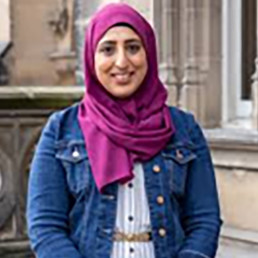
Written by Sadia Hussain-Şavuk
Sadia Hussain-Şavuk, originally a Biology teacher, is now a Diversity, Equality and Inclusion Lead working predominantly with schools within the independent sector providing teacher training, pupil workshops and consultancy in her main area of anti-racism. In addition to this she sits on a number of boards including the BSA/IELA Inclusion Advisory Board and is co-chair of the Curriculum Reforms workstream of the Anti-Racism in Education Programme.
In February, I had the incredible honour of speaking at the inaugural Diverse Educators Conference in Scotland. As the first event of its kind, the conference was a bold and inspiring step towards promoting inclusivity, representation, and meaningful change within education. The atmosphere was charged with energy, optimism, and a deep-seated belief in the power of education to shape a better future for all.
The Power of Positivity
One of the most striking things about the conference was the positivity and passion that the participants brought to the table. Educators from across Scotland, with diverse backgrounds and experiences, gathered together not only to share their ideas but to spark action. There was a sense of unity and purpose that made the event feel more like a movement than a typical conference. As I stood before such an engaged audience, it was incredibly reassuring to see how committed these educators were to making positive changes in their schools, classrooms, and communities. Whether it was promoting inclusivity in the curriculum, advocating for equitable opportunities, or fostering a more diverse learning environment, it was clear that the educators in the room were not just talking about change – they were living it. It’s moments like these that remind me why I became an educator in the first place: to make a difference. And seeing so many others who share that same drive was truly inspiring.
The Challenges We Still Face
Despite the immense positivity, there was an undercurrent of concern that stayed with me throughout the conference. While we celebrated the progress that has been made and the steps that are being taken to make education more inclusive, we cannot ignore the slow pace of change. It is difficult to not feel a sense of frustration when you consider how far we still have to go. Although there are pockets of progress, systemic barriers persist. In many schools, diverse perspectives are still sidelined or tokenised. Too often, young people with marginalised identities still face barriers to success, whether that be in terms of representation, access to resources, or the recognition of their unique challenges. As educators, we know that it’s not enough to simply raise awareness. The real work lies in creating long-term, sustainable change. But when progress is slow, it feels as though we are failing the very students we are meant to serve. The young people of today – those who will shape our tomorrow – are waiting for us to do better. And while I am hopeful for the future, it’s hard to ignore the gap between where we are now and where we need to be.
A Call to Action
The Diverse Educators Conference served as both a celebration of what’s been achieved and a reminder of the work that remains to be done. I left the event with a renewed sense of purpose, but also a deeper understanding of the urgent need for change. As educators, we must keep pushing the boundaries of what is possible. We must continue to challenge the status quo and demand that every child, regardless of their background, has access to a truly equitable education. We cannot afford to wait for change to happen on its own – we must be the ones to make it happen. The diversity, passion, and commitment I witnessed at the conference filled me with hope, but I also know that it will take all of us – working together, side by side – to ensure that the next generation of students can thrive in an educational system that fully supports their needs and potential. In the end, the Diverse Educators Conference wasn’t just a moment of celebration – it was a call to action. It was a reminder that our work is far from over, and that every step we take towards inclusivity and equity is a step closer to a brighter future for all. Let’s not rest until that future becomes a reality.