
“Because it makes us feel more comfortable” – Gender, Bodies, and Elephants in PE Swimming Lessons

Written by Justus Schwenzer
Justus Schwenzer (he/him) is a secondary teacher for PE, music, and English. Dedicated to fostering safe and inclusive learning spaces built on openness, belonging, and acceptance, he is passionate about research on equity, diversity, and inclusion in education.
The new school term has begun, and swimming is the new topic in PE. As a new member of staff, I am surprised to learn that our normally mixed-sex lessons are now split into separate “boys” and “girls” classes for swimming. This immediately raises questions for me, and I am curious to hear how my Year 10 students make sense of it.
“Why do you think our school chooses single-sex swimming lessons over the usual mixed-sex PE lessons?”
One of the students is bold enough to share: “Because it makes us feel more comfortable”. Such an honest response, perhaps hesitant, self-conscious, or even a little presumptuous in speaking for everyone.
But this raises the central question of this blog: Does separating students by sex really create comfort for everyone, or does it mask the deeper issues and avoid the tough questions that make PE feel uncomfortable in the first place?
This blog argues that single-sex swimming lessons are not automatically a solution for creating a truly welcoming and supportive learning environment. Instead, creating comfort, trust, and inclusion requires reflective practice that addresses the underlying issues of visibility, vulnerability, and equity in PE.
Is single-sex swimming more “comfortable” because it caters to innate abilities?
PE is, and probably always will be, a particularly gendered space. In this educational setting, bodies are in the spotlight and the centre of attention. A student saying “comfortable” might be pointing to culturally entrenched ideas about gender, such as the expectation that “strong boys” and “delicate girls” engage in activities thought to match their innate abilities. Historical debris of traditional gendered expectations still echoes through PE curricula and teaching practices, even though such narrow ideas of ‘ideal’ bodies are being critically challenged and perceived as outdated.
Is single-sex swimming more “comfortable” because it makes students feel less exposed and vulnerable?
Swimming differs from other curriculum topics due to heightened visibility of the body and a different dress code. The swimming pool represents a space where questions of respectable dress, visibility, and decency are grounded in the historic development of the sport. Interpreting “comfortable” as feeling protected and less vulnerable is therefore not far-fetched. “Girls” may want to feel protected from unwanted looks and the cisgender, heterosexual, sexualised (“male”) gaze. Additionally, mixed-sex PE may create religious distress for students with religious beliefs that emphasise modesty, making single-sex PE feel more “comfortable” for them. But can a safe and non-judgemental atmosphere not be created in mixed-sex swimming through reflective teaching practices?
When underlying beliefs and struggles that contribute to shame and anxiety in the pool are not addressed, opting for single-sex swimming lessons is more of a band-aid solution. Single-sex PE does not replace the work that has to be done to make this setting a safe, body-positive environment without judgement. Students are still together in a group with other people, tempted to compare and contrast their bodies, still trying to navigate puberty, hormones, and bodily changes. The work to support our students and help them feel “comfortable” in their own bodies does not go away.
Who is “us” in single-sex swimming lessons?
The “us” is still often defined as “boys” and “girls”. Single-sex PE creates binary groupings and potentially confines PE into “traditional” forms that reproduce inequitable sets of gendered power relations. What happens to students who cannot or do not want to say whether they should join the “boys” or the “girls”? Landi (2025) gives an example of how queer and trans students (that is how the youth in this study referred to themselves collectively) are marginalised in these moments, their bodies made to sit at a fault line of the system, creating barriers that leave them feeling erased. Students whose bodies fit neatly into the categories of “male” and “female” are privileged by the system. Heteronormativity is encouraged in those moments, creating a shield of invisibility around other sexual and gender identities. Others are left with the burden of accepting an option that does not represent them, potentially leaving them exposed, unprotected, and threatened.
Towards inclusive and welcoming swimming lessons in PE
I am aware that single-sex PE and mixed-sex PE are highly complex issues deeply entrenched in politics, (sporting) culture, religion, and society. The swimming pool tends to amplify particular issues. Despite these challenges, even long-standing practices in PE can benefit from reflection. Supporting all students means creating space for open, critical dialogue across perspectives. So, ask yourself what life lessons we want to teach our students, the type of world we envision for young people to move through, and who is allowed to move freely within it. Addressing the elephant in the pool might just make everybody feel a little bit more “comfortable”.

Unity at a Time of Polarisation

Written by Johnoi Josephs and Omena Osivwemu
Johnoi Josephs is an award-winning educator, mentor, and Assistant Principal in South London, co-founder of Black Men Teach, and a specialist in Student Climate and Culture whose work centres on representation, visibility, and creating environments where young people can truly thrive.
Omena Osivwemu is a Policy Officer specialising in Race Equality in Education for the largest education union, a freelance writer and speaker, and education and antiracism consultant. Formerly a Primary Teacher, Humanities Lead and School Governor, she has taught in Key Stage 1 and 2 across England and Spain. Currently, Omena works with a range of organisations, such as The Black Curriculum, Lit in Colour, BLAM UK, and BERA.
Political players who are stoking division, hate and fear across our nation and around the world, are better funded and more organised than we have seen in our lifetime. We are witnessing rising misinformation, conspiracy and hateful violence in society, which is bleeding into our schools and colleges. We must ensure classrooms are safe spaces for all pupils to develop historical understanding, critical thinking and media literacy. Classrooms should be the place where children and young people express their ideas, listen to others and develop their empathy and mutual respect- especially in disagreement. Thus, educators are called to be courageous and stand up against hate in all its forms- be it racism, Islamophobia, antisemitism, misogyny, transphobia and homophobia, or anti-migrant sentiments- because we need unity at a time of polarisation.
This was the theme for the NEU’s (National Education Union) annual Black Educators Conference 2025 (BEC), which unified over 600 Black and Global Majority heritage (GMH) educators together in Birmingham across a weekend in November.
“The best BEC I have attended!” (NEU member & teacher)
Attending BEC as a first-time delegate and workshop facilitator, I (Johnoi Josephs) found it an energising and grounding experience. The theme, Unity at a time of Polarisation, could not have been more fitting. What struck me was the collective understanding that meaningful change does not rest on the shoulders of a few. As the conference reminded us, it’s better when we all do a little something, than when some of us do a few things. That framing alone speaks directly to school leaders like myself, navigating increasingly complex educational landscapes.
Over the course of the weekend, we joined the charismatic Jeffrey Boakye on his journey from classroom teacher to widely recognised author and broadcaster. We learnt a thing or two from Dr Lesley Nelson-Addy’s edifying keynote exploring key research reports on issues of school exclusion, misogynoir and the Eurocentric curriculum (see Runnymede Trust’s reporting below).
Central to the conference was the plight of overseas trained/ migrant teachers, who are actively recruited in their home countries, often by large multi-academy chains, to plug the gaps of the teacher recruitment and retention crisis here in England. Yet, once recruited, these overseas trained colleagues receive little relocation support or induction, and are facing inequitable, exploitative pay and working conditions. (Read more here and here.)
BEC 2025 illuminated these issues and more, such as the stunted progression of Black and GMH teachers and long-overdue anti-racist curriculum reform. We explored legal, academic and lived-experience insights that challenge the systemic injustice and inequities facing migrant and racialised staff and pupils in our schools. Esteemed speakers included Professor Paul Miller, a leading voice in Black and migrant teacher experiences in the UK, and Rajiv Sharma, a Public Law Barrister specialising in Immigration and Asylum work. Equally, a selection of the many grassroots organisations doing the work in our schools, communities and institutions were a part of the conversation, including but not limited to, Nadine Bernard and Aspiring Heads, Leaders Like Us, Lit in Colour, The Black Curriculum, Black Men Teach, Justice 4 Windrush, Educate Against Islamophobia, Maslaha and more.
One of the most personally resonant moments came from Jeffrey Boakye’s reminder: “If we are not at the table, we are on the menu.” As a Black school leader, this landed heavily. BEC reminded me that leadership does not exclude us – school leaders – from our community. If anything, it calls us to be even more present. Our communities, our unions, our institutions are strengthened when we take our place within them.
What I appreciated most was being in a space that spoke directly to my visible intersectionality as a Black educator. The language, the framing, the unapologetic celebration of identity and contribution, these were affirmations I didn’t realise I needed. And beyond the sessions, the atmosphere mattered: the laughter, the connections and reconnections, the sense of shared purpose. The “vibes” were not incidental; they were part of the learning. They reminded me that remaining in this profession is not only a career decision, but also a duty of representation, community, and continuity.
Educators left with their commitment renewed, their belonging reinforced and a reminder that unified we are strong and can collectively push for change in education and beyond!
If you too want to unite our communities in love, hope and unity, join the Together Alliance and stand against those sowing division and hate.
Useful links & resources:
- Join the Together Alliance and stand in unity against the far-right.
- Black Men Teach programmes: teacher training, pupil mentorship and values development.
- The Anti-Racism Framework is free to download and supports educators and leaders to develop a whole-school anti-racism strategy.
- Thinking Beyond the Box: A collection of recommendations for change by Black researchers and practitioners.
- NEU’s model policy for Overseas Trained Teachers sets out a comprehensive framework covering ethical recruitment and relocation support to induction, pay, and progression.
- Lit in Colour: Free Teaching Resources KS1- 5.
- Runnymede Trust Report (2025) – History on loop: the sustained impact of school exclusions on Black communities.
- Runnymede Trust Report (2024) – Misogynoir in the Workplace: Understanding the Experiences of Black Women in Leadership Positions.
- Runnymede Trust & Lit in Colour Report (2021) – Lit In Colour: Diversity in Literature in English Schools.
Belonging, Empathy, and a Curriculum that Sees Every Child

Written by Chloe Watterston
Chloe is an educator, athlete, and advocate for inclusive, curiosity-driven learning, dedicated to creating spaces where every young person feels safe, valued, and empowered. Her work across mainstream and SEND education, community projects, and curriculum reform is driven by a passion for amplifying marginalised voices and breaking down barriers to learning.
Belonging is not a bonus; it is a basic human need. Students who feel unseen, misunderstood, or undervalued will never thrive, no matter how carefully a curriculum looks on paper. Too often, belonging is treated as an afterthought- diversity weeks, a handful of posters in corridors, or the occasional themed assembly. These gestures may be well-meaning, but they fall short. True belonging requires more than decoration. It demands integration, empathy, and truth-telling.
Empathy has been stripped from education by a Eurocentric curriculum. When children encounter only one narrative, their own reflected back endlessly, or someone else’s never shown, they are denied the chance to be curious about differences. This absence breeds prejudice, isolation, and a narrow sense of the world. Representation matters, but not as an add-on or a gesture. It matters because it reflects humanity in its full breadth.
Learning outcomes are directly shaped by belonging. Research shows that students who feel they belong are more likely to achieve academically, develop social intelligence, and build resilience. A school that makes children feel like outsiders, whether because of race, culture, gender identity, or ability, unintentionally closes doors. Belonging must be woven into the fabric of school life from the start, not treated as an optional extra. When it is cultivated intentionally, young people gain the freedom to be curious, to trust, and to empathise. Without it, they turn elsewhere for meaning- often online, where they encounter narrow and sometimes toxic narratives about themselves and others.
Our most powerful tool for building empathy is storytelling. Stories act as mirrors, windows, and sliding doors: mirrors so children see themselves reflected; windows so they can look into other lives; and doors so they can step into perspectives far from their own. When children never see themselves in a story, they are told- silently but forcefully- that they are invisible. When they never encounter differences, they are denied the chance to develop empathy. Books, films, oral histories, and local community stories should not be treated as extras outside the ‘real curriculum.’ They are the curriculum.
Narratives that exclude Black contributions to science, art, geography, and literature are not neutral; they are erasure. Inclusive education cannot be about “adding diversity” on top of a whitewashed foundation. It must be about truth-telling. Black histories should be present in every subject, in every classroom, and in everyday conversations. Integration often provokes discomfort, but discomfort is not failure. It is learning. A curriculum rooted in truth will not always feel comfortable, but it will always be necessary.
Grades, too, can be barriers to belonging. Exams reward memorisation under pressure, punishing those who do not thrive in such conditions. For many learners, especially those from marginalised groups, this reinforces inequity rather than reducing it. Success needs to be redefined. Coursework and project-based assessment can value creativity, local histories, and lived experiences. A ‘D grade’ (which, in modern terms, equates to a Grade 3) may reflect extraordinary resilience and achievement in context. True equity means measuring children not against a singular rubric, but against their own journeys.
In classrooms, empathy cannot be demanded without exposure to difference. Curiosity grows when children encounter diverse stories and have safe spaces to talk about identity, race, gender, and belonging. Teachers play a vital role here. Students learn not only from what is said, but from what is modelled. When teachers show curiosity, challenge harmful narratives, and treat difference as opportunity rather than threat, they teach children to do the same.
Next come the practical shifts. Local heroes and community changemakers can be celebrated so that children encounter role models on their own doorstep. Equity, diversity, and inclusion must be reviewed with the same seriousness as safeguarding or attainment. Schools can use existing frameworks, such as the Equality Act and the Gatsby Benchmarks, to embed equity into daily structures rather than treating it as an extra burden. Above all, as discussed, storytelling should sit at the heart of the curriculum across all subjects.
Generations of young people are growing up in a world of polarisation, online radicalisation, and systemic inequality. After years of austerity, many are absorbing harmful narratives from the sources they trust most. They deserve better. They deserve an education that reflects them rather than erases them, and teachers willing to model curiosity and courage. As an Anti-Racism in the Curriculum panellist put it: young people are themselves an oppressed group- no one knows what it is like to be a child in 2025 except the children of 2025. Schools must listen to them, reflect them, and prepare them not only for exams, but for life lived with empathy and justice.
Inherited histories remind us that the curriculum is not abstract. It is rooted in the cultures and communities that shape who we are. My poem (see my article next week) – captures this truth:
“For the ones who carry the world in their veins – and make this island beat.”
This is Britain: a mosaic of footsteps, flavours, languages, and inventions, built by travellers, migrants, and dreamers. It is not a fantasy of purity, but a reality of mixture and connection. A curriculum that denies this truth denies the very heartbeat of the nation.
Now education must prioritise empathy with the same seriousness it gives to literacy and numeracy. Belonging should be woven into every subject, student voice must be valued, and leaders held accountable for equity. Success must be redefined so that growth, creativity, and resilience stand alongside grades. Every child should be able to look at the curriculum and find themselves reflected in it, while also seeing and stepping into the lives of others.
Going forward, if we want to raise a generation capable of compassion, critical thinking, and courage, education must be transformed into a tool for connection, not division.
Belonging is the root. Empathy is the bridge. Truth is the curriculum.
Empathy Week 2026: My Culture, Your Culture, Our Culture
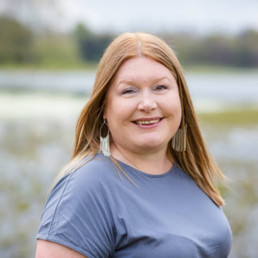
Written by Hannah Wilson
Founder and Director of the Belonging Effect (formerly Diverse Educators).
My Culture, Your Culture, Our Culture
Culture is more than traditions, food, language, or clothing. It is the story of who we are and where we come from. It shapes our values, our beliefs, the way we see the world, and how we connect with others. During Empathy Week, the theme “My culture, your culture, our culture” reminds us that understanding culture is not just about learning facts – it is about learning empathy.
Celebrating Your Own Culture
Celebrating your own culture is important because it helps you understand yourself. Your culture carries the experiences of your family, ancestors, and community. It gives you a sense of identity and belonging. When you recognise and value your culture, you gain confidence in who you are and where you come from.
For many people, culture is also a source of strength. Traditions, celebrations, and shared values can provide comfort during difficult times and joy during happy ones. They remind us that we are part of something bigger than ourselves. When we celebrate our culture, we honour the sacrifices, struggles, and achievements of those who came before us.
Celebrating your own culture also helps prevent it from being forgotten. In a fast-changing world, traditions and languages can easily fade away. By sharing stories, practising customs, and passing them on to younger generations, we keep culture alive. This is especially important for cultures that have been marginalised or misunderstood. Pride in one’s culture can be a powerful act of resilience.
Celebrating Other People’s Cultures
While celebrating your own culture helps you understand yourself, celebrating other people’s cultures helps you understand the world. Every culture has its own history, values, and ways of expressing meaning. When we take the time to learn about them, we broaden our perspectives.
Celebrating other cultures builds empathy. It allows us to step outside our own experiences and see life through someone else’s eyes. This understanding reduces stereotypes, fear, and prejudice. Instead of focusing on differences as barriers, we begin to see them as opportunities to learn.
Respecting and celebrating other cultures also creates more inclusive communities. When people feel that their culture is acknowledged and valued, they feel seen and accepted. This sense of belonging strengthens relationships and encourages cooperation. It reminds us that diversity is not a weakness but a strength.
Our Shared Culture
When we celebrate both our own culture and the cultures of others, we begin to create our culture – a shared space built on respect, curiosity, and understanding. This shared culture does not erase individual identities. Instead, it connects them.
“Our culture” is found in moments of listening, sharing, and standing up for one another. It is present when we celebrate cultural festivals together, learn new languages or traditions, and challenge discrimination. It is built when we choose kindness over judgement and curiosity over assumptions.
In a globalised world, our lives are increasingly connected. Schools, workplaces, and communities are made up of people from many different backgrounds. Learning to appreciate both our differences and our similarities helps us live together more peacefully and respectfully.
Why It Matters
Celebrating culture – your own and others’ – is important because it builds empathy. Empathy allows us to understand feelings, experiences, and perspectives that are different from our own. It encourages compassion and reminds us of our shared humanity.
When we value culture, we value people. And when we value people, we create a world that is more inclusive, respectful, and kind.
Empathy Week reminds us that while we may come from different cultures, we all share the same need to be understood, respected, and accepted. By celebrating my culture, your culture, and our culture, we take a step closer to a more empathetic world.
Find out more and register your school to be part of Empathy Week 2026 here.
ASPIRE: Creating a culture where everyone can flourish
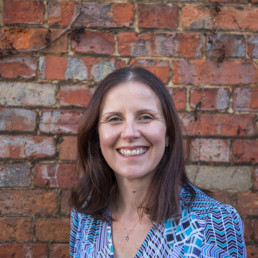
Written by Michele Deeks
Michele Deeks is a psychologist whose passion is helping people to be at their best more of the time. She is a Director of Work Positive and co-creator of the At My Best product range.
There seems to be an ever-growing body of evidence suggesting that our education system simply isn’t working for many teachers or learners. From the All-Party Parliamentary Group for Education’s inquiry into the Loss of Love of Learning, through to reports showing unprecedented levels of staff stress and burnout, the challenges seem to be numerous.
It can be hard to know how to even begin to make things better. Something we can all influence, however, is the culture in our classrooms and institutions. Dr Sue Roffey, a psychologist and academic with extensive expertise in whole school wellbeing, has developed the ASPIRE model for flourishing cultures. The six principles in this model stimulate both discussion and action on what we can do day-to-day to enable everyone to be at their best.
In this video Sue talks to me about the ASPIRE model and its potential to transform staff and pupils’ experience of education.
https://vimeo.com/1140772098?fl=ip&fe=ec
ASPIRE is an acronym for Agency, Safety, Positivity, Inclusion, Respect and Equity. It is a model of culture that draws inspiration from developmental and child psychology, positive psychology and neuroscience as well as extensive education research and Dr Roffey’s own experience and practice in schools across the world.
So what does each principle look and feel like in practice?
Agency
Agency is about empowerment. Agency in the classroom is evident where every pupil recognises they have a voice and a choice. Where learners are active agents in their learning, where they are involved in shaping what happens in their classroom, recognising not only how they can influence their own experiences, but how they can positively impact their peers and teachers too.
Safety
A safe educational setting keeps everyone safe from physical harm and mental distress, but it goes beyond that – in a safe environment everyone is accepted for themselves; everyone feels able to make contributions and take risks without fearing punishment, blame or humiliation.
Positivity
A strong sense of positivity in the classroom isn’t about ignoring what’s wrong or being unrealistic about what’s possible, but about shifting the focus to what’s working well. It’s about creating a culture that values and encourages a positive mindset, positive emotions, strengths-based language and solution-focused actions. It is also about having fun together.
Inclusion
An inclusive environment is one that demonstrates appreciation of diversity in a way that encourages behaviours and practices that increase everyone’s sense of belonging. Inclusivity means celebrating each person’s unique place in the world and valuing our shared humanity. It is about ensuring that everyone feels they matter and can contribute.
Respect
Treating others in the way they prefer to be treated sits at the heart of the principle of respect. Where respect is embedded in an educational setting it’s evident the whole person is valued, hierarchical privilege is minimised and there’s thoughtful consideration for differences in perspectives, contexts, feelings and needs.
Equity
Strong themes of fairness and flexibility are evident in environments that prioritise equity, with a recognition and understanding that one size does not fit all. Different accommodations are made for different students and staff to enable everyone to achieve optimal levels of contribution and outcome.
Each of the six principles brings something different to a culture. It is challenging for staff and students to flourish when any are missing. The principles also interact, overlap and affirm each other with individual behaviours, routines and habits sometimes being indicative of several.
So how can we embed ASPIRE in practice? Dr Roffey argues that culture isn’t something that can be imposed – it’s a shared responsibility. It’s something that everyone within an education setting influences on a daily basis. Culture is made up of our daily behaviours and practices. If we’re looking to change ‘how we do things around here’ we need to work out what we need to be doing differently and what perhaps needs more emphasis. There is no particular principle of ASPIRE that you need to start with. Instead, it’s about starting where it makes sense in your setting, working collaboratively to explore what’s working well and identifying clear, tangible actions that you can take to make sure your culture is one where everyone can flourish.
Watch the webinar (46 mins) to hear Dr Roffey explain the background to the ASPIRE model and the newly launched ASPIRE Culture Cards.
Sanctuaries of Inclusion & Incubators of Innovation!

Written by Laura McPhee
Laura McPhee is Director of Education at University Schools Trust. Prior to this, Laura was an experienced headteacher. She has a proven track record of leading transformational change management and successful school improvement journeys across London. Laura is a facilitator for the National Professional Qualification facilitator for Headship (NPQH) and a School Improvement consultant. She holds a number of trustee positions and enjoys guest lecturing for ITT courses. She is the author of 'Empowering Teachers, Improving Schools: Belonging, Psychological Safety & School Improvement' and a co-author of 'Tackling Poverty and Disadvantage in Schools.'
I’m sitting at the back of the teacher training induction session, pretending to read the welcome pack, when a large imposing figure appears at the front. He thanks us all for coming and quickly moves on to a lengthy monologue, warning us of the perils that lie ahead. He informs us in no uncertain terms, that training to be a teacher will be the most challenging thing we’ll ever have to do.
‘Hmmm. Doubt that. I’ve beaten cancer twice,’ says a jolly voice next to me, beaming.
I’ve been hiding in the back row with the other ‘mature’ students – who, as it turns out, are not so mature after all. The beaming voice is Kate, who like me, has a healthy disregard for rules. We become fast friends and slope off for coffee.
But the introductory ‘talk’, with hints of a dark reckoning, is still ringing in my ear. I thought this was the beginning of a new adventure, so why did it already feel like a zero-sum game?
I was yet to realise that the well-meaning individual, terrifying us all into submission that day, was in fact preparing us for the high stakes career that lay ahead.
As educators, we champion accountability. But accountability in the absence of psychological safety, can stifle innovation, limit progress and encourage poor behaviours.
I was lucky. I was a quick learner and, for the most part I was surrounded by exceptional teams and leaders who were extraordinarily generous with their expertise and professional support. But that hasn’t always been the case.
The evidence base suggests I’m not alone.
I would bet my mortgage that you, or someone you know, has at one time or another been worried about expressing their opinion at work for fear of reprisal. Perhaps you’ve thought twice about sharing a concern or idea? Or were afraid to ask a question? Maybe you’ve faced unfair criticism, chastisement or social exclusion.
Perhaps you’ve had to battle systemic barriers in the workplace?
The sector at large has been impacted. In a profession that is high stakes, a lack of psychological safety has, at times, resulted in exclusionary practice. This is amplified when weak education policy creates perverse incentives. For example, through ‘off – rolling’ or exclusionary practice around admissions.
We’re also seeing a direct correlation between staff engagement and pupil engagement. Unsurprisingly, when staff feel trusted, purposeful and supported. So do pupils.
However, research shows that our sense of belonging isn’t evenly distributed, with disadvantaged pupils and Black pupils reporting significantly lower levels of inclusivity. (Jerrim, 2025).
There’s much debate across the sector about what it means to belong, yet too often a crucial part of the conversation is overlooked. Psychological safety is the missing part of the puzzle for many pupils, parents and educators.
Professor of leadership and management, Amy Edmonson describes psychological safety as the ability to share concerns, ask questions and provide supportive challenge, without fear of reprisal.
Let’s be clear, this is a well-researched field, with a robust evidence base that points to the benefits of psychological safety across industries.
Research shows that organisations with the highest levels of psychological safety are more resilient and innovative. They perform better than others.
When we remember we’re people first, professionals second; we can connect the dots. Higher levels of psychological safety positively impact staff retention and productivity.
Remarkably, there’s very little information for school leaders about how to practically apply the principles of psychological safety. And yet, there has never been a more urgent need to consider the psychological safety and belonging for staff and pupils.
Hence my research in this area was borne out of personal and professional frustration…
Whilst cross-referencing the evidence base, with qualitative data from schools and universities nationally that have strong cultures, recurring themes began to emerge. This took the form of 10 pillars, or areas of school strategy that we want to ensure are underpinned by psychological safety to foster inclusivity:
- Leading with purpose
- Creating a culture of belonging
- Cognitive diversity
- Learning from failure
- Professional Development
- Coaching and Mentoring
- Distributed leadership
- Flexible working
- Innovation
- Place-based support for the community.
I’ll be using this blog to explore these 10 pillars; sharing research, evidence informed practice and case studies that exemplify psychological safety in schools for staff, pupils and the wider school community.
Frameworks for implementation:
Typically practitioners engaged in developing psychologically safe environments are signposted to Dr. Timothy Clark’s, 4 stages of psychological safety:
- Stage 1 – INCLUSION SAFETY: feels included and part of a team
- Stage 2 – LEARNER SAFETY: safe to learn and ask questions
- Stage 3 – CONTRIBUTOR SAFETY: safe to contribute and share ideas
- Stage 4 – CHALLENGER SAFETY: safe to contribute and challenge the status quo
Whilst this model prompts some useful thinking, it’s not without its challenges. We know from our own experience that progress is rarely linear! However, we could be forgiven for interpreting this framework as though we should be smoothly transitioning from one stage to the next. In reality there may be very good reasons why teams or individuals stall or need to revisit key principles to deepen their understanding. Of course, it’s also quite possible for team members to be moving at a different pace.
We know that too often underrepresented groups are required to carry out their roles in workplaces that are not inclusive or reflect the systemic barriers that exist in wider society. Yet these colleagues still need to move beyond stage 1 to find agency and autonomy.
For this reason, many practitioners have embraced Amy Edmonson’s 4 Domains of Psychological Safety as outlined in ‘The Fearless Organization Scan’:
- Attitude to failure and risk
- Inclusion and diversity
- Open conversation
- Willingness to help
This model reminds us to keep all four domains in mind when cultivating psychological safety. We can see how these domains are intrinsically linked and interdependent.
What might success look like if we’re brave enough to hold ‘open conversation’ and become ‘willing to help’? How can this approach drive more impactful solutions and tangible outcomes when it comes to inclusion?
Furthermore, we know that when it comes to psychological safety, the work is never done. Rather it is constantly evolving. It’s dynamic and shifts based on each new interaction and or shared experience…
“Psychological safety creates sanctuaries of inclusion and incubators of innovation.”
Dr. Timothy Clark
When 'Belonging' Replaces 'Equity': The Silence of White Male Educators
Written by Hannah Wilson
Founder and Director of the Belonging Effect (formerly Diverse Educators).
Across schools, colleges and trusts, a quiet linguistic shift has taken root. Many white male educators – often in leadership roles, often well-meaning – are talking less about diversity, equity, and inclusion (DEI) and more about belonging. At first, it sounds like progress. Who could possibly argue with belonging? It’s warm, inclusive, even healing.
But beneath that linguistic comfort lies something more complicated. When white male educators embrace “belonging” while sidestepping conversations about diversity, equity and inclusion, they risk participating in a subtle but powerful form of avoidance – one that centres comfort over accountability, and cohesion over justice.
The Appeal of ‘Belonging’
There’s no denying the emotional resonance of belonging. Everyone wants to feel seen, valued, and part of a community. The word signals care and connection – qualities deeply needed in our schools.
Yet belonging, in its current popular use, carries a kind of neutrality that makes it especially attractive to those uncomfortable with conversations about race, power, and privilege. It sounds universal and non-political. It doesn’t demand that we ask who has been excluded, whose histories have been erased, or whose comfort is prioritized.
For many white male educators, “belonging” feels like safer ground. It lets them express empathy without stepping into the uneasy territory of systemic inequity. It invites community-building without requiring structural change.
But that safety is precisely the problem.
What Gets Lost When We Skip DEI
Belonging, when untethered from the work of diversity, equity, and inclusion, risks becoming a hollow promise. It shifts the focus from systems to feelings – from justice to comfort.
- Diversity asks: Who is here? Who is missing?
- Equity asks: Who has access to opportunity and resources? Who are the gatekeepers?
- Inclusion asks: Whose voices shape our culture and decisions? Who is being silenced?
- Belonging, in its best form, should ask: How do we ensure everyone feels valued within equitable systems?
But too often, belonging is invoked instead of those questions, not because of them. It becomes a way to soothe rather than to solve – a way to look caring without confronting the root causes of exclusion.
In that sense, “belonging” can function as the linguistic comfort food of educational leadership: it fills us up emotionally but leaves the deeper hunger for justice untouched. In other words, it is a plaster on a problem, the problem just becomes hidden.
The Silence of Power
Language choices are never neutral, especially when made by those in positions of authority. White male educators still hold disproportionate power in most educational spaces – whether as principals, governors, professors, or thought leaders. Their voices shape what counts as acceptable discourse.
When those voices go quiet around diversity, equity, and inclusion, the silence speaks volumes. It signals to colleagues and students that DEI is passé, divisive, or optional. It allows institutions to drift away from equity work under the comforting banner of belonging.
And when belonging becomes the new vocabulary of leadership, it risks recentring white male experience – transforming a call for justice into a call for harmony, where discomfort is avoided rather than embraced as part of growth.
This silence doesn’t just maintain the status quo; it legitimises it. It says, “We care, but not enough to change.”
The Cost of Comfort
The consequences of this linguistic shift are real.
- DEI initiatives lose funding or visibility because “we’re focusing on belonging now.”
- Educators of colour are asked to “bring everyone together” instead of naming inequity.
- Students from marginalised backgrounds hear that they “belong,” but still experience microaggressions, biased pedagogy, and uneven discipline.
The rhetoric of belonging, when detached from diversity and equity, offers inclusion without transformation. It becomes a story we tell ourselves about progress, even as the systems of inequity remain intact.
True belonging is not created through slogans, surveys, or drop down days. It grows when power is redistributed, voices long ignored are amplified, and systems are redesigned to ensure fairness. Without that foundation, belonging is little more than an emotional gloss over structural inequity (or some pretty icing on some stale cake).
A Call Back to Courage
None of this is to say that belonging doesn’t matter. It matters deeply. But belonging must be built on top of equity, not in place of it.
White male educators, in particular, have a responsibility to stay in the discomfort – to speak not just about togetherness, but about justice. Silence is not neutrality; it is complicity. And shifting the language without shifting the practice is not progress – it’s retreat.
Belonging that is worth having will always be born from honesty, from the willingness to look directly at inequity and to act against it. It requires courage, humility, and a refusal to choose comfort over truth.
A Final Thought
If we are serious about belonging, then we must be serious about diversity, equity, and inclusion. Because real belonging does not come from soft language – it comes from hard work.
Belonging without equity is not inclusion.
It’s avoidance dressed as empathy.
The challenge for white male educators – and indeed, for all of us – is to ensure that our words do not outpace our courage.
Thus, we must become more conscious of who we are when we are doing DEIB work, we must be confident we are tackling problems and not causing further harm, we must be competent in navigating each layer of our workplace culture as belonging is only surfaced when diversity, equity and inclusion are established and embedded in the foundations.
Defying Gravity: The Moral and Systemic Corruption of the UK - A Wicked Retrospective
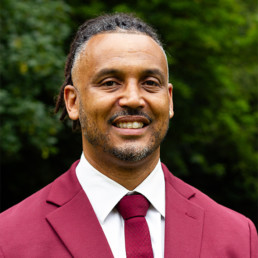
Written by Adrian McLean
Ambassador of Character, Executive Headteacher, TEDx Speaker, BE Associate Trainer & Coach, Governors for Schools Trustee, Positive Disruptor
My family and I were like most people across the country. We had been waiting for the new Wicked film to drop. We booked release day and went in ready for the spectacle. The film delivered what we expected: strong performances, sharp visuals and a story that still hits. But I walked out thinking about something else entirely. Beneath the entertainment sat a message about power, belonging and corruption that felt uncomfortably close to home. That is what pushed me to write this piece.
Wicked lands because it shows how fear, pressure and status can twist people who start with decent intentions. You watch two leaders take different paths, both shaped by the same system that rewards silence and punishes dissent. That world is fiction, but the pattern matches the UK’s struggle with Diversity, Equity, Inclusion and Belonging (DEIB). When a system prizes comfort over justice, virtues start to warp into vices and inequality becomes normal.
The Emerald City and the Illusion of UK Stability
Elphaba is excluded from the start. Her difference becomes a tool for control. The Wizard turns that fear into policy by stripping the animals of their rights. Oz calls itself prosperous, but the shine hides a rotten core.
The UK does the same. The claim of stability masks persistent, recorded inequities. Black Caribbean pupils are still excluded from school at far higher rates than White British pupils, which fuels the Schools to Prison Pipeline. Minority ethnic jobseekers continue to submit far more applications for the same employer interest. Data from the Social Metrics Commission shows Black and minority ethnic people are more than twice as likely to experience relative poverty and face higher exposure to fuel and food insecurity. None of this is new. It is repeated in every major review that looks at structural inequality.
The pattern is simple. Exclusion begins with a label, then becomes a story, then becomes a policy. When a state or organisation frames a group as a threat to stability, belonging becomes conditional and rights become flexible. Oz had the silencing of the animals. We have exclusions, unequal labour market outcomes and cost of living impacts that fall hardest on the same groups every time.
Virtues Turned into Vices
Wicked shows that the Wizard’s regime survives because people with influence let their virtues bend under pressure. They do not wake up intending to harm anyone, they drift into it.
Glinda thrives because she is charming and quick to connect. Her core virtue is affability. She wants harmony, status and approval. Under pressure, this slides into moral silence. She denies Elphaba to keep her place in the system and tells herself that compromise keeps things stable.
The UK has Glindas’ in politics, business and education. These are the institutional centrists who talk about fairness without taking risks that would cost them capital or access. They avoid reforms that would unsettle sponsors, investors or senior colleagues. When DEIB becomes politically inconvenient, they retreat. Their instinct for consensus turns into complacency and the result is stalled progress.
Elphaba’s driving virtue is conviction. She sees injustice and refuses to look away. She fights for the animals when no one else will. Under pressure, this hardens into isolation. She stops listening and her stance becomes so rigid that her allies shrink back. The regime uses that isolation to paint her as the problem.
The UK has Elphabas in social movements, school leadership and community activism. They push equity forward when institutions resist. The risk is that their conviction becomes inflexible. When leaders hold the line alone, they become easy to discredit. They get written off as difficult, extreme or disruptive, even when their claims are evidence backed.
The Wizard builds his authority by shaping the story people live inside. He presents order, progress and unity. Behind the curtain is manipulation and fear. His virtue is charisma coupled with organisational skill. Under pressure, this becomes populism. He manufactures enemies to distract from his failures.
The UK has seen its own operators of conformity. The rise of symbolic politics is one example. The volume of flags, organisational figureheads and public posturing has increased while pay gaps, attainment gaps and poverty rates keep widening. It is easier to demand visible allegiance than to fix structural problems.
A core tactic in this pattern is the creation of a convenient scapegoat. In Wicked, the Wizard convinces the public that Elphaba is responsible for every disruption in Oz. The accuracy of the claim is irrelevant. The story does the work. Parts of UK discourse follow the same script when complex economic pressures are reduced to a simple claim that immigrants are the cause of national strain. This persists even when economic data shows that immigration contributes net labour, tax revenue and essential workforce capacity. The point is not evidence. The point is to give the public a target that keeps attention away from systemic failure. When critics raise equity issues, they are dismissed as divisive or ideological. This mirrors the way the Wizard and Madame Morrible brand Elphaba as wicked to steer attention away from his regime.
Defying the Wizard: finding the mean
Elphaba’s turning point comes when she stops running and confronts the system head-on. She rejects the false choice between silence and isolation. She does not become Glinda. She does not become a fanatic. She chooses the difficult mean between the two.
The UK needs the same shift. Our current system rewards leaders who avoid conflict or leaders who burn out fighting it alone. We need leaders who will act before the next inquiry or crisis forces their hand. That requires policy choices that tackle the structural inequities we keep measuring but rarely fix.
Three moves that will help to shift the system.
- Mandatory and enforced pay transparency
Ethnicity and disability pay gap reporting should match the current gender reporting model with annual publication and mandatory action plans. This exposes the blocks that keep certain groups stuck at the bottom of organisational hierarchies. When data is public, silence becomes harder and accountability becomes real. This cuts off the pattern where affability turns into complacency. - De-biasing the talent pipeline
Hiring and promotion systems need unbiased review at the early stages and consistent scoring frameworks at later stages. Several public bodies and trusts have already piloted these methods with measurable gains in fairness and diversity. The point is not ideology. It is basic organisational integrity. Merit cannot be judged if bias enters the process before talent is seen. This stops conviction from becoming isolated because people no longer have to fight as lone moral actors to access opportunity. - Anchoring belonging in policy
Belonging cannot remain an aspiration or marketing phrase. It needs to sit inside the cost of living strategy, local authority funding decisions and NHS workforce plans. Policies should undergo Equality Impact Assessments (EIA) that account for race, disability, gender and income as a minimum. The data already exists. The gap is political will. Without structural safeguards, the same groups get hit first every time the economy tightens.
The most potent lesson from Wicked is that silence and fear serve the powerful. Until the core structure of the UK (Emerald City) is challenged, the wicked labels, the resulting inequalities and the denial of Belonging will persist.
Call to Action
Belonging will not grow by itself. It grows when people stop accepting shortcuts, scapegoats and silence.
- Challenge claims that have no evidence. Look at the data, not the headline.
- Ask leaders for the numbers behind their decisions and push for policies that close gaps rather than mask them.
- In workplaces, demand transparent reporting, fair recruitment and consistent standards.
- Back colleagues who raise equity issues instead of leaving them exposed.
These steps are not dramatic, but they are the ones that stop a society falling for the Wizard’s story and start shifting it toward something fairer.
What Are You Actually Fighting For?
Written by Chloe Watterston
Chloe is an educator, athlete, and advocate for inclusive, curiosity-driven learning, dedicated to creating spaces where every young person feels safe, valued, and empowered. Her work across mainstream and SEND education, community projects, and curriculum reform is driven by a passion for amplifying marginalised voices and breaking down barriers to learning.
Closing Reflections on Anti-Racism in Education
For three articles, we have explored the urgency of anti-racism in education: racism as a safeguarding issue, the policy–practice disconnect, and the role of belonging and empathy in curriculum reform. Each piece has shared evidence, strategies, and practical steps for schools and teachers.
But sometimes data isn’t enough. Sometimes policy isn’t enough. Sometimes what we need is language that speaks not only to the head, but to the heart.
This final post in the series is not an essay. It is a poem. A truth-telling. A mirror held up to the contradictions of nationalism and the realities of Britain’s multicultural identity. It is a reminder of why anti-racism in the curriculum matters- not as an ‘add-on’, but as the honest story of who we are.
What are you actually fighting for?
(For the ones who carry the world in their veins – and make this island beat.)
What are you actually fighting for?
I mean-
have you stopped to taste the air you’re breathing?
That air laced with the spices from the corner shop down the road,
the samosa stand next to the bus stop,
the Portuguese bakery with custard tarts that taste like heaven on a tired Tuesday.
You yell about purity with a mouth that still carries
last night’s tikka masala.
And the flags-
Oh, the flags!
You wave them like swords,
St George’s cross stitched bold on cotton,
blood-red lines cutting through white.
But you forgot, didn’t you?
That St George wasn’t from here.
That the saint you scream under
was born somewhere foreign,
his story carried by traders and travellers
long before your postcode was drawn on a map.
Your symbol is a migrant.
Your flag is an immigrant.
But you raise it like a shield
against the very soil it grew from.
And the Union flag-
a stitched-together puzzle of histories,
threads from Scotland, Ireland, England,
woven into a single declaration:
We are many.
We are mixed.
We are made from meeting points,
from ports and ships and stories that came crashing in with the tide.
A union.
A blend.
A patchwork cloak.
You’ve wrapped it tight,
but you’re choking on the irony.
What are you actually fighting for?
Because from here, it looks like fear
dressed up in patriotism,
looks like rage you can’t name,
painted on banners you don’t understand.
Your voice is loud,
but your knowledge is quiet.
History echoes,
and you drown it out with chants
that sound more like hollow drums than truth.
Meanwhile-
your lunch is an onion bhaji,
grease soaking through the paper bag,
and when you stumble home tonight,
you’ll flick through menus like passports:
Chinese, Indian, Thai,
a taste of somewhere else in every bite.
Your belly says yes
to the world you say no to.
It’s easy, isn’t it,
to hate what you don’t know,
but love it on a plate?
To fear what you can’t pronounce,
but crave it for dinner?
Your fork is braver than your heart.
Your stomach more open than your mind.
We see you,
draped in cotton stitched overseas,
trainers made in Vietnam,
phone built from hands in factories
that have never felt British soil,
but hold your future tighter than you do.
You call this pride.
But we call it forgetting.
Forgetting that this island
is a mosaic of footsteps,
a patchwork of prayers,
a hand-me-down jacket
from centuries of travellers.
You wear history
like a blindfold.
What are you actually fighting for?
A myth?
A memory that never belonged to you?
An idea of “pure”
that never existed?
Even the soil beneath you
was shaped by glaciers that wandered here
from somewhere else.
We are a nation
built by boats and borders crossed,
by accents and spices,
by stories sewn into every street sign.
We are not a closed book.
We are an anthology.
And you’re standing in the middle of it
with a marker,
trying to black out pages
that taught you how to read.
So, here’s my truth:
No flag can save you from yourself.
You can clutch it, wave it,
let it snap and crack in the wind
like an angry tongue,
but it will not make you right.
Because that red cross you worship
was carried here by immigrants,
and the jack you wear like armour
is stitched together from difference,
not division.
So we ask you again:
What are you actually fighting for?
Because this island was never yours to guard- it was always ours to share.
And no matter how high you raise that flag,
it cannot erase the taste of curry on your breath,
the Cantonese whispers in your takeaway,
the Portuguese custard on your tongue,
the Turkish barber shaping your hair,
the Nigerian nurse who will hold your hand when you’re old and afraid.
This is Britain.
Not the fantasy you’re screaming for,
but the truth you’re standing on.
A country made rich by every hand that built it.
A song of accents rising through city streets.
An anthem of:
borrowed flavours- jerk chicken and jollof, shawarma, sushi, samosas and sourdough, pho, peri-peri, and pints of chai;
borrowed words- bungalow, ketchup, robot, shampoo, khaki, curry, chocolate, chaos, pyjamas;
borrowed technologies- printing presses, steam engines, satellites, trains that run on rails laid by migrant hands;
borrowed clothing- saris and suits, turbans and trainers, jeans born in Italy, stitched in Bangladesh;
borrowed rhythms- jazz and jungle, bhangra beats and punk guitar, Afrobeats shaking London basements;
borrowed stories – sagas, scriptures, epics, and myths ferried here on waves and winds;
borrowed inventions – recipes, languages stitched together like patchwork quilts, passports of possibility, hand-me-down hope,
and second chances.
Lower your flag.
Take a seat.
Hear the harmony in your own history-
This isn’t a solo,
it is a symphony.
And know this:
the strongest nations are not guarded by gates,
but opened by arms.
—-
The poem above speaks directly to the myths we tell ourselves as a nation. It exposes the irony of waving a flag stitched together from migration, while demanding purity that never existed. It challenges us to look honestly at the mosaic of influences – food, music, language, technology, healthcare, labour – that make Britain what it is.
This isn’t just a political reflection. It’s an educational one. When schools shy away from teaching the truth, when they reduce Black history to a week in October, when they treat diversity as tokenism rather than truth- they do children a profound disservice. They deny them the tools of empathy, the skills of critical thinking, and the pride of belonging.
Anti-racism in the curriculum is not about ‘teaching politics’. It’s about teaching reality. It’s about ensuring that when children open a textbook, they see the world as it is: interconnected, complex, and beautiful in its diversity.
Final Messages
- Curriculum is a mirror, a window, and a door. Children must see themselves reflected, see others clearly, and step into unfamiliar worlds with curiosity rather than fear.
- Representation is accuracy. Britain’s history is not monocultural. It is centuries of migration, invention, and exchange. To hide that truth is to teach falsehood.
- Empathy is not optional. It is a skill, and like literacy or numeracy, it must be taught, practised, and embedded.
- Belonging is safeguarding. A child who feels invisible, erased, or unsafe is not protected. Anti-racism is child protection.
Every chant in the street, every flag raised in anger, every online echo of hate is a reminder: education is where we break these cycles or allow them to continue. If we fail to tell the truth in classrooms, we leave children vulnerable to lies outside them.
This reminder is a call to remember that Britain has never been a closed island. It is, and always has been, a crossroads. A patchwork. A symphony. The curriculum must reflect that, not as a concession, but as the truth.
How Unconscious Bias Affects Student Learning

Written by Eleanor Hecks
Eleanor Hecks is a writer who is passionate about helping businesses create inclusive and diverse spaces. She serves as the Editor in Chief of Designerly Magazine.
Unconscious bias in the education sector occurs when teachers or other adults at a school unknowingly inflict biases on students, hindering their learning. Teachers might not even know they possess these biases, let alone that they are hurting students. It is essential to recognize how implicit bias manifests in the classroom and how to keep it from continuing.
Types of Unconscious Bias
Students of all ages are like sponges, and high school students especially carry the skills they learn in high school into the workforce. If they witness and internalize a teacher with hidden bias, that could affect how they treat their classmates and future co-workers. That is why it is crucial to spot and address unconscious bias as soon as possible.
A common way bias manifests is with issues of race. Sometimes, teachers will call on their white students more or assume that because English is not a student’s first language, that student is a poor writer or less intelligent. These are untrue assumptions based on a student’s skin colour.
Teachers might also be unconsciously biased against students with disabilities. They might assume someone with a physical disability has a mental disability as well or give the student more or less work, deeming them unfit for the regular curriculum. These biases harm the students who are directly impacted and the students witnessing it occur, leading to a continued use of these assumptions or feelings of inadequacy.
Other common implicit biases include sexual orientation, gender identity and socioeconomic standing. Treating students differently based on these attributes harms their education and sense of self-worth.
6 Tips to Support DEI Efforts to Mitigate Bias
Many students have overlapping social identities that create compounded experiences of discrimination and privilege, known as intersectionality. This makes it more important than ever to consciously and unconsciously treat all students equitably and respectfully.
Below are some actionable tips to support DEI efforts and mitigate bias.
1. Have Uncomfortable Conversations
Discussions of race or gender are sensitive topics that often make teachers and students uncomfortable. Still, these conversations are crucial to break down hidden bias. Students might feel more comfortable after having their concerns addressed in an appropriate, educational way.
2. Identify Biases
Teachers often unknowingly reinforce biases on students, so it is essential to identify and address them. If a teacher witnesses a student display bias toward a peer, the teacher should calmly intervene and help the student realize why their words or actions are harmful.
Teachers should also serve as positive examples. At the administration level, leaders should hire educators from diverse backgrounds and offer implicit bias training and tests to help support DEI in the school.
3. Foster Teacher and Student Relationships
Fostering a more profound connection allows teachers to understand their students better and identify ways they have misjudged them based on unconscious bias. Hands-on activities are a way to bond and learn, with 86% of teachers reporting increased engagement in the classroom as a result.
4. Adopt a Flexible Mindset
Too often, people believe that ignoring someone’s race, gender or other characteristic is being inclusive. This idea can be harmful, as there are distinct differences between people that should be acknowledged and embraced. Understanding what makes each student unique can help them learn best and prevent them from feeling ashamed of themselves.
5. Provide Equitable Learning for All Students
Separating students based on perceived intelligence can make them feel better or worse than their classmates. When everyone does the same assignment and works together, students have equitable learning opportunities to succeed and feel confident in their abilities.
Teachers should emphasize needs-based support. When a student needs more resources or support to succeed, teachers can provide accommodations to help them fully participate. This could include extra tools, more detailed instructions or a quiet place to work.
6. Assess Teaching Materials
Take note of the teaching material in a curriculum and see where gaps in the knowledge or outdated information exist. Students learn better when they see themselves in the material, and narrow recounts of history or books narratives that center only on one group can harm all students.
Unlearning Unconscious Bias in Classrooms
Implicit bias can harm students and hinder their learning. Educators and administrators must identify their own biases and instances of bias around them to combat these issues before they negatively impact the students.