Anti-bullying beyond Anti-Bullying Week
Written by Hannah Glossop
Head of Safeguarding at Judicium Education. Previously a Designated Safeguarding Lead and Assistant Head, Hannah now leads audits and delivers training to support schools with all aspects of their safeguarding.
2021 was yet another year where we saw a raft of deeply worrying examples of bullying. Research from the Anti-Bullying Alliance highlights that bullying continues to play a big part in young people’s lives: “Data we collected from pupil questionnaires completed between September 2020 and March 2021 also showed that one in five (21%) pupils in England report being bullied a lot or always.” High profile cases such as the institutional racism within the cricket world show that bullying in relation to our nine protected characteristics is a problem that goes far beyond schools.
Anti-Bullying Week 2021 brought with it a range of wonderful resources, tweets and articles in relation to anti-bullying back in November. As we march through the academic year, it is essential that we do not lose momentum and that we pay particular attention to tackling any bullying related to protected characteristics. So how can you do this?
1.Involve your pupils.
Consider an anonymous survey of your pupils, asking how many have witnessed bullying at school. This will give you a much clearer picture of how much is going on at your school and which groups are particularly targeted. Show students that you are taking bullying seriously and involve them in the policy decisions. Create a version of the bullying policy that is accessible for younger pupils.
2.Embed a culture of vigilance.
Empower both staff and students to act when they see or hear bullying taking place, either in person or online. Review the ways in which bullying is reported at your school-will all staff know how to progress bullying disclosures? Do students recognise that many nasty remarks may violate the Equality Act? Do students have a way to report bullying which avoids them having to speak face-to-face to a member of staff? Promote your anti-bullying work around the school, share it online and tell parents and carers. If pupils know you are taking it seriously, they are more likely to report it.
3.Identify hotspots.
Identify any particular areas in school, times of the day or online platforms where bullying seems to be taking place more frequently. Where possible, increase supervision in worrying areas or at problematic times of the day. If much of your reported bullying is taking place online, use external resources such as your Safer Schools Officer to explain when online abuse crosses a line and becomes illegal activity-for example hate crime and blackmail.
4.Curriculum.
Educate young people around the protected characteristics, what the Equality Act means and what impact this Act has on everyday life. Ofsted have recently updated their guidance on ‘Inspecting teaching of the protected characteristics in schools,’ noting that “No matter what type of school they attend, it is important that all children gain an understanding of the world they are growing up in, and learn how to live alongside, and show respect for, a diverse range of people.” In addition, the Proposed changes to Keeping Children Safe in Education 2022 include a new section on schools’ obligations under the Equality Act 2020, adding schools, “should carefully consider how they are supporting their pupils and students with regard to particular protected characteristics – including sex, sexual orientation, gender reassignment and race.”
5.Record and review.
Paragraph 78 of the Ofsted’s School Inspection Handbook lists the “Information that schools must provide by 8am on the day of inspection” and includes:
- “Records and analysis of bullying, discriminatory and prejudiced behaviour, either directly or indirectly, including racist, sexist, disability and homophobic/biphobic/transphobic bullying, use of derogatory language and racist incidents.”
Rather than seeing this as a mere Ofsted “tick box” exercise, use these records to fully explore which forms of bullying are happening within and around your school. Ensure that each reported bullying instance is recorded, using your behaviour management or safeguarding reporting mechanisms. Investigate any trends in these reports, share these with governors and senior leaders and take meaningful action to address these. For example, if disability-related bullying is becoming prevalent, think about what resources are needed to both educate children and show them that this form of abuse will not be tolerated.
Over the coming months ahead of the next annual Anti-Bullying Week, bear the above in mind and remember that embedding some of these ideas could make many of your students feel much less segregated from school life and much more likely to thrive.

“You never get a second chance to make a first impression.”
Written by Corinna Richards
An avid crocheter, who also happens to teach, train and lead.
“You never get a second chance to make a first impression.”
— Andrew Grant.
Whether Oscar Wilde or Will Rogers said it first, isn’t for this purpose particularly important. What any student or teacher with a facial disfigurement will tell you, is that it’s true. And the experience of that is hugely important. It’s always been true, but in our “beauty bias” society, looking different – whatever that difference may be, is a big deal. Having a facial or ‘visible difference’ can be excruciating. Our physical appearance matters in first impressions. I’m not saying it should, but from my experience it does.
I blog about this from two perspectives. Firstly, as a person with a congenital facial disfigurement who works in Education and secondly as an EdD student. I’ve just turned 50, and “back in the day” plastic surgery wasn’t as developed as it is now. I had my first plastic, corrective surgery at the age of 11, so I spent my primary school years looking very different. My skull fused together in the womb prematurely which caused my eyes to be extremely wide set and for my nose to be virtually flat with two small nostrils. You can imagine…
However, like everyone, I’ve adapted, over-compensated and fought my way back. I always wanted to teach and that’s what I’ve always done. Apart from three terms in suburbia I’ve always taught in inner city London and only once did I have any issues regarding my face from a pupil. I loved and still do, the diversity of the inner-city, the children were remarkably accepting of my appearance, we were all shapes and sizes together, the issue of ‘normal’ just never seemed too prevalent. The same couldn’t be said for the parents! The suspicion of my appearance was always there, in some heated exchanges a name regarding my appearance would slip out (yawn… I’ve never heard that one before…) and I’ve even had some parents ask my secretary what is wrong with my face! (One of the many reasons I prefer children to adults!)
But last year, I had a bit of a shock.
I am in the third of year of EdD at UEL and I am studying the lived experience of Imposter Phenomenon in Teacher Educators. It’s really interesting, but it wasn’t my first choice. Initially, I wanted to study IP in teachers with visible differences. I couldn’t find any. I didn’t know any. I didn’t know any teachers with facial burns, or severe acne, or disfiguring birthmarks or craniosynostosis… statistically they must exist (I am for one)… but where are they? I then thought about all the pupils I have taught over nearly 30 years… lots of differences, but when did I teach a child who was like me? I don’t think I have. Where are these children and where are the teachers?
Recently, in an updated version of Malory Towers, a young actor, Beth Bradfield, with a visible difference joined the cast, but how often do we see actors with facial burns or scars? Possibly in James Bond, but then of course, only as the villain. I attended my first DEI event last weekend, it was brilliant. Representation matters. Yes, it does. So how do I help other people like me have the courage to stand in front of groups of people and teach. I spent decades of my life trying to hide my face. I was desperate to make my visible difference invisible. It seems like I might not be the only one.
For more information visit:
‘Changing Faces’:
The Katie Piper Foundation: www.katiepiperfoundation.org.uk
Headlines:
Belonging, safely

Written by Gemma Hargraves
Gemma Hargraves is a Deputy Headteacher responsible for Safeguarding, Inclusion and Wellbeing.
Reflecting on several sessions from the recent Diverse Educators virtual conference it struck me that so much of our EDI work is also vital safeguarding work. As a Deputy DSL I spend my days balancing pastoral care, safeguarding, History teaching and various other responsibilities. Until now I actually hadn’t realised how my EDI work is complementary to my safeguarding work.
All readers will have heard that “you can’t be what you can’t see” and this need for recognition and role models extends to safeguarding too. Pupils need to know they are in an environment where they are valued and celebrated in order to feel truly safe. It strikes me that a pupil may not disclose various issues if they feel they would not be heard, understood or believed. Beit a neurodiverse pupil struggling with issues around consent, an LBGTQ+ young person experiencing unkindness, a disabled child faced with ableism daily or a person of colour dealing with regular microaggressions. Of course having a diverse staff body, including in senior positions, may help ensure all pupils feel safe and a sense of belonging but active allies have a vital role to play here. Pupils in the first presentation said “ignorance breeds intolerance” and I would build on that to say in safeguarding terms ignorance is dangerous. We all need to be professionally curious whilst being respectful. @AspringHeads gave some examples of shocking things Black teachers have been asked, including endless comments about hair, skin colour or names, and comments of this nature to Black pupils would absolutely be considered a safeguarding concern.
A key part of safeguarding is also accurate and timely recording of incidents; this is key to tracking trends and understanding context to actively promote inclusion. If we are to ensure all pupils are safe and can thrive, we need to have a clear picture of incidents or challenges faced. We have a duty to ensure that pupils are not negatively labelled or stereotyped based on any characteristic and teachers have high expectations of all pupils. Safeguarding is also about preventing harm to children’s development and taking action to enable all children and young people to have the best outcomes – here EDI is clearly vital and we can see tangible returns on investment in diversifying the curriculum. Of course, we reinforce this by the displays around school, the books studied, the trips that are offered etc but the culture individual teachers nurture in their classrooms is key to both EDI and safeguarding.
As was made clear at Diverse Educators recently, good intentions are not enough. We must act. EDI requires resourcing, time and energy. It must not be an afterthought in another year of TAGs marking and administration, staffing issues and COVID challenges ad infinitum. Safeguarding is everyone’s responsibility and so is EDI. We need to recognise and respect cultures, traditions and changes but with clear red lines in terms of safeguarding to ensure everyone can bring their whole self to school and be safe. Sometimes we hear “I don’t see colour” but surely we must see it, value it, celebrate it and protect all children regardless.
University And Chronic Illness
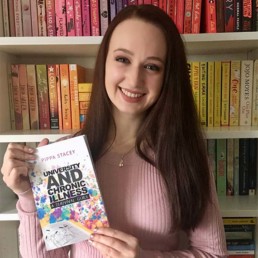
Written by Pippa Stacey
Pippa Stacey is a writer and blogger based in Yorkshire. She studied BSc Psychology in Education at the University of York, and acquired her chronic illness during the first year of her studies. As a graduate, Pippa now works in online communications in the charity sector, as well as freelance writing and blogging in a personal capacity at Life Of Pippa.
During my first year of university, I was your typical student: studying hard, partying harder, travelling the country with various sports teams and for dance competitions, volunteering, and working towards an honours degree. By the same time the following year, I was struggling to stand up on my own.
I’d been battling for answers to my mystery symptoms since the age of 15, but it was only when my health significantly relapsed and I was struck down by an onslaught of debilitating pain and fatigue, that I was finally diagnosed with Myalgic Encephalomyelitis (ME/CFS). Naturally, this all happened during my very first year of university, just as my young adult life was beginning.
With plenty of support and adjustments, I managed to continue my studies and graduated in 2016, but it wasn’t without its challenges. Adapting to life as a newly disabled student, I often felt lonely, isolated, and like nobody else in the world could understand what I was going through. I distinctly remember being shocked at what little support was available and how much I had to advocate for myself, how hard I had to fight for what I was entitled to, and how disheartening it often seemed. Being a student can be a tough time for any young person but dealing with a fluctuating health condition adds a whole new dimension of difficulty.
Despite this, my time at university formed some of the very best years of my life. I studied a subject I loved and graduated with a 2:1, met a wonderful group of friends who I still see regularly, and got to live in the beautiful city of York… where I’ve remained ever since!
It’s no secret that the world of education and employment have a long way to go before they can be described as truly inclusive. However, I hope that by sharing my story, more people in similar situations to my own will feel better informed not only about the challenges being a student can bring, but also how to tackle these head-on and have the best experience possible.
After I completed my own higher education, I knew I wanted to create a resource that would fill the gap I so painfully felt during my own student years.
My debut non-fiction book, University and Chronic Illness: A Survival Guide, is a chatty and relaxed, yet balanced and informative, resource: one that’s sincere and realistic about the challenges of studying with a fluctuating health condition, yet one which will hopefully empower future students to make informed decisions and to really get the most out of their time at university. Essentially, this book is made up of all the things I wish I’d had somebody to tell me back then.
The advice in this book comes from somebody who’s experienced the process first-hand: somebody who knows that your reasons for going to university often stretch far beyond only the lectures and studying. My book therefore strives to encompass all aspects of student life: socialising, independent living, managing your money, and what to do when things go wrong.
As well as this guide hopefully being useful to individual students with long-term conditions, I’m doing everything in my power to make sure it also reaches university, college and school support staff, to help them better understand the unique challenges such students can face. My hope is that it will help to spark some important conversations about how to ensure the education system becomes as inclusive as possible, and perhaps even one day, facilitate social change.
Above all else, however, I hope that any prospective or current chronically ill students reading this now know that they’re not alone. It can sometimes feel as though your hard work is going unnoticed, I know, but I sincerely and wholeheartedly believe in you. Your struggles are valid, and you deserve to celebrate every little victory your journey brings. Never forget that.
#HonestyAboutEditing - The Campaign
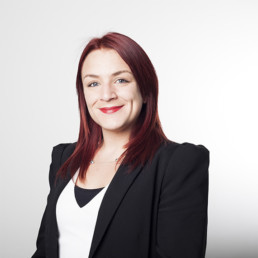
Written by Suzanne Samaka
Suzanne Samaka is a 33-year-old mum from Watford. She grew up in a single parent, working class family, which has given her a strong sense of working hard to achieve. She has spent 15 years working for a high street bank in a number of roles, mainly around relationships and people.
How can I make a difference to the mental health of our young people? That was my question and it hit me like a lightning bolt one evening. To give some context to my life, I am a stepmother to four children, have a two year old daughter and have recently given birth to my second baby. I also work full time in banking.
Sadly, for the past four years a member of our family has suffered with anorexia. It is fair to say we will never know the root cause of this and maybe neither will they, but it is apparent that they are not alone in the anxiety, depression, physical and mental health challenges that they have faced in their adolescent years. I’ve been to eating disorder in-patient clinics and I have always been shocked and saddened by how full these units are with adolescent girls and boys alike.
The pandemic has meant young people have spent more time at home and online but I must stress this isn’t only a post-pandemic problem. They are seeing more content than ever that is edited or filtered and it is having a disastrous effect on their self-esteem. The statistics don’t lie and in the UK, 9 out of every 10 girls with low body esteem, put their health at risk by not seeing a doctor or by skipping meals. A survey conducted by the Royal Society for Public Health asked 14-24 year olds in the UK how social media platforms impacted their health and well-being. The survey results found that Snapchat, Facebook, Twitter and Instagram were all linked to increased feelings of depression, anxiety, poor body image and loneliness. More than two thirds (68%) of young people surveyed support social media platforms highlighting when a photo has been manipulated.
I have been contacted by many teachers who have told me about conversations with their students who feel under pressure from social media perfection or crippling loneliness when they feel that their face doesn’t fit. I have also been contacted by countless parents who are terrified of how body conscious their children are, with ages starting from as young as 8. I have also spoken with many adults who have suffered their own mental health challenges in their adolescent years, signing the petition because they just can’t fathom how they would have survived against the odds that the youth of today are growing up with. The more people I speak to about the petition, the more it makes me want to ensure there is change, protection and honesty to give our young people a fair chance in today’s world.
Now there is one thing I need to make crystal clear. I have nothing against social media. In fact I think it can be hugely positive to all of our lives. I also have nothing against editing or filtering, it is completely each to their own. What I have a problem with is the lack of honesty, which is causing young people to believe they need to be flawless yet striving for this is damaging their mental health. Do I believe social media is the problem for the challenges in youth mental health? No. Does it exacerbate the problem? Absolutely. Mental health challenges can quickly become deeply rooted and leave scars for life. Our children and young people deserve better than that.
In trying to evoke change I have recently begun a petition on Change.org to amend the social media laws to state when an image has been filtered or digitally edited. This is now the law in a number of countries, Norway being the most recent. If it can happen there why not in the UK? What I am hoping this solution could do is to help our young people and next generation to understand that these posts aren’t real and their true self is more important, as well as their mental and physical health.
What I have realised is that each individual can help create positive change. It really does only take 30 seconds to put your name against the petition and then share with your own network. The momentum of this campaign has been amazing with several MPs on board, charity organisations and individuals who are experts in their fields. Collaboration is key here. If we all pull together we really can protect our next generation. I’m a parent. An auntie. A person who cares. That is all it takes. Somebody to do something.
Whilst my family has been my first hand experiences of mental health challenges in young people, I have just seen one too many examples to not do something about it. In the words of Emma Watson, If not me, who? If not now, when?
The link to the campaign is https://www.change.org/ChangeSocialMediaLaws
The link to the details of the survey completed by the Royal Society for Public Health is available here https://www.rsph.org.uk/static/uploaded/d125b27c-0b62-41c5-a2c0155a8887cd01.pdf
You can connect with the author – Suzanne Samaka via the following social media accounts:
- Instagram – @protectyouthmentalhealth
- Twitter – @SuzanneSamaka
- #HonestyAboutEditing
Sustainable Wellbeing and Lifelong Learning: Education as if People and Planet Matter
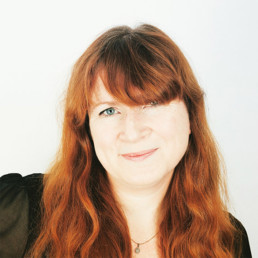
Written by Dr Harriet Marshall
Head of Educational Research at Lyfta and has been a global education advocate for over 20 years, as a teacher, researcher, consultant and education project leader.
Education is stuck between 6th extinction predictions and talk of a 2nd renaissance in human capabilities resulting from the 4th industrial, technological revolution. Though there are obvious contradictions between these two trajectories, there are also areas of overlap – both can seem immensely overwhelming and both are frequently accompanied by calls for a change in mindset. The problem I have observed here links to how often the ‘mindset change’ strategies work with a very narrow definition of education. Whenever there is talk of ‘educational solutions’ it is usually in reference to formal schooling and the education of young people, as if this is the only educational space that is of any importance.
Formal schooling (e.g. primary, secondary or SEN providers for 4 to 18 year olds) can no longer be considered in isolation from, or as any more significant than, other educational spaces in life. Especially not if we are to have any chance at all of meeting key climate and energy targets or the United Nation’s 17 Sustainable Development Goals.
It is easy to understand why formal school has been historically targeted for humanity’s medicinal or instrumentalist agendas. It is a neatly bounded space with relatively clear systems and structures, and crucially it is a space which the majority of us actually understand (mostly because we experienced it – let’s be honest, everyone has an opinion of how the education system should or should not be that is mostly derived from their own experiences of schools). And so, we’ve had the following kind of thinking… Quick, we don’t have enough people with the right skills, let’s change the school curriculum. Quick, there’s a growing gap between rich and poor, let’s change the school curriculum. Quick, we need to act differently or we’ll all boil or drown because of climate change, let’s change the school curriculum.
Our learning does not stop when we leave formal schooling, in fact this sort of thinking is incredibly damaging.
Let us therefore start by emphasising the need for an all-inclusive, lifelong learning definition of educational and learning spaces. UNESCO’s Institute for Lifelong Learning has been doing exactly this and have demonstrated how vital it is for all educational sectors and spaces to work more effectively together if we are to have any hope of creating a more sustainable and socially just world. To this end, we need to better understand and incorporate intergenerational learning and participation, especially in country contexts like the UK where age-divides have never been so wide. Related to this is the need to better demonstrate the equal importance of non-formal schooling learning spaces for all ages, from the after-school club for children to the day centre for older people.
Following on from a broader and more inclusive understanding of education – we then need to re-examine the idea of a curriculum for life both in terms of content and pedagogy. Sociologists of education have illustrated for decades the importance of examining educational policy and practice through a lens of power and control. The need to be aware of how core knowledge is constructed, selected, prioritised and recontextualised (and by who) in educational spaces has never been so urgent. Recognising the historical power of ‘traditional’ knowledge disciplines and their corresponding linear models of knowledge acquisition is crucial because sometimes they are in opposition to the sort of interdisciplinary knowledge and systems-thinking also required for innovation and action for a more sustainable world. An illustration of the legacy of this power dynamic can be seen in formal schooling today. Take two minutes to reflect upon (a) which subjects are deemed the most important and why, and (b) when new curricula like ‘citizenship’, ‘environmental studies’ or ‘social and emotional learning’ are added, what status do they really have in relation to those subjects that have a clear line of ‘progress’ towards an exam (to be used as a form of credit to exchange for future employment)?
Of course, we no longer know what ‘employment’ is going to look like in the next few years as jobs and industries shift at breakneck speed. This fact alone requires any ‘curriculum for life’ to be something that can adapt to external shifts and needs, where the ability to ‘unlearn’ and ‘relearn’ will be all part and parcel of general learning how to learn and where progress will be measured in a whole range of ways.
One of the most powerful curricular and pedagogical concepts I believe around today is the idea of ‘sustainable wellbeing’. When we are reconsidering the purpose of education or learning in the current #NoGoingBack context, this is one of the best answers anyone can give. Policy makers and educators in Finland have certainly thought so, where sustainable wellbeing has been made one of the six guiding principles of the education system (others include equity and equality; inclusiveness and life-long learning). A growing body of thinking around this concept makes for exciting reading in the way, for example, it brings together the fields of positive psychology, ecology and environmental science (to name just a few).
The beauty of sustainable wellbeing as a guiding principle for a curriculum for life is that it speaks to our needs as individuals simultaneously separate from and in relation to wider societal and planetary needs. Sustainable wellbeing recognises the interconnections between our own health, wellbeing and that of others. If we properly recognise the interdependent nature of all of the goals, it is also at the heart of the UN’s Sustainable Development Goals (see previous piece on education for/about the SDGs here). Our futures will not be ‘sustainable’ unless others feel the same way. Sustainable wellbeing helps us understand purpose and the wider systems at work, in so doing, it can support resilience building. The guiding principle of sustainable wellbeing suggests a curriculum that supports the development of: empathy skills and interbeing understanding; an associated set of values related to equity and global social justice; and knowledge that is sensitive to indigenous as well as more dominant knowledge forms required for addressing the world’s increasingly complex ‘wicked’ problems.
For education to be powerful, relevant and guided by the principle of sustainable wellbeing we have to stop thinking in age, space, time and knowledge silos – however this may not necessarily require the radical systemic changes some are calling for. Could we instead begin reimagining and empowering all learning spaces through a better demonstration of their impact and value? Could we emphasise the importance of intergenerational methodologies and spaces through the sharing of the growing numbers of amazing examples of practice (for example, local cross-generational sustainable living projects)? Could we raise the profile of social and emotional learning, social justice education or ecological literacy by better showing how it is also a crucial variable for achieving academic success and/or health and wellbeing? Those of us in the bubble of sustainable development or environmental education also need to remember that not everyone shares our assumptions or values – in so doing we are less likely to judge those who, for example, want to adapt systems in an ‘evolution not revolution’ way.
We must also remember that there are forces at play that will continue to shift educational systems and spaces whether we like it or not. These forces are frequently outside of the control of educationalists and policy makers and have the potential to render any radical plans for system reform redundant. For example, if we decide that the current emphasis on performance in examinations is the root cause of our problems and set about enacting reform, it could be that progress measurement is forced to change soon anyway (think about the impact of Covid-19 when formal exams went out the window and imagine how we are going to police examination performance when mobile technology is no longer ‘external’ to a learner’s body and therefore invisible to an examiner’s eye). If we are serious about creating education systems where ‘people and planet matter’ then we need to start with what is in our control and is ambitiously achievable – my favourite contender is our collective power to change our perceptions. We can change our perceptions of what we consider important learning spaces (ie not just formal educational institutions) and we can talk more about learning opportunities throughout life. We can work towards a loosely agreed set of values, skills and knowledge forms required for individual and planetary resilience and sustainable wellbeing. We can strengthen or create the interdisciplinary and intergenerational learning spaces needed if humanity is to adapt, innovate, survive and thrive.
People and planet will matter more to all of us when we better recognise that all education and learning spaces matter, regardless of how old we are or what stage of life we are at. Unless we do this, we run the major risk of implying that saving the future of the planet, humanity and biodiversity is solely the responsibility of the young. Just because we are 65 does not mean that we are too old to change our behaviours or unlearn old knowledge, but an over-emphasis on 4-18 schooling gives us the excuse to say that it is so.
Therapeutic...
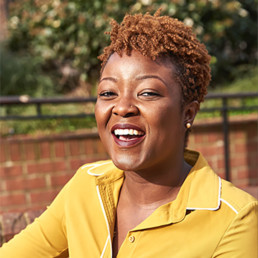
Written by Ayo Awotona
Ayo Awotona specializes in confidence building for girls in education. She does this through programs, workshops, and keynote speeches.
This blog post serves as both a loving reminder and some encouragement! Just like our physical health, it is vital to check on our mental health and discover ways to improve or sustain it.
One approach is understanding what you find therapeutic.
Fun fact: the Greek origin of “therapeutic” means to attend (a.k.a to deal with) or to treat.
It is usually associated with medicinal treatment. However, there are many other methods and activities that help treat and restore our mental health.
Being open to exploring different activities is worthwhile to know what is therapeutic for each of us.
Two of my personal methods are not having any social media notifications on my phone and having daily “switch off” and “wind down” times (actually scheduled on my calendar to avoid my workaholic tendencies from taking over!).
The significant benefits we get to enjoy include:
- Outlet/Release
- Neutralises stress and worry
- Creates ease
Essentially, we are intentionally taking care of our well-being and creating a healthy environment in our minds.
So the question remains – what do you find therapeutic?
I challenge you to make a quick list of therapeutic activities and methods you would like to try out this week.
If this is proving to be a struggle for whatever reason, perhaps these two questions would help:
- What is your focus on?
- Does it help or hinder you?
2020-2021 has been particularly difficult to navigate through – for many many reasons! Many of the plans we once had in place have been changed or swept away and intentionally embracing change has become our new way of life.
Now is a pretty good time to ask ourselves “what am I focusing on?” Whether good or bad, what we focus on, is what our minds will consume.
Many of us probably appreciate a good camera, one may be its ability to focus. The better focus the camera has, the sharper and clearer the picture.
It’s a similar approach to life; when we are intentionally focused on our priorities, we capture a clearer vision and direction for our future.
Let’s be mindful and careful of what we’re giving our attention to. Because what we give our attention to, our time and energy go with it.
The Psychology of Our Quarrels
Written by Russell Ridgeway
Russell Ridgeway is an American writer based in Budapest, Hungary. He writes in business, tech, and fashion as well as creative fiction. You can reach him by email (russell@lensawork.com), or on LinkedIn and other social media platforms.
Quarrels do happen in our everyday relationships, with our family members, significant others, co-workers, and friends. Is it normal to have them regularly? What can we do about them? Do they have to be ongoing, or are there specific ways to reduce their frequency and intensity? Let’s take a closer look at this actual and significant topic, and find solutions that could work.
There are those types of people who avoid conflicts in contact, sometimes both parties. In other relationships, one person tends to fight more than the other, or the people keep changing roles. And it is becoming a pattern, which they cannot handle well, as the people involved are not sure what to do. No wonder why; we lack this kind of education!
How Quarrels Work
By observing, analyzing, and coming up with solutions to your quarrels, you can make your life better. Doesn’t matter who you usually fight with. This is what you, or more ideally, both of you should be doing. Realize that each of these scenarios has a starting point, a major phase with intense emotions, and a closing point. Why is this crucial to observe?
By doing so you can see some interesting patterns. Be it a relationship between married couples, parents and children, siblings, or co-workers, it always happens similarly! If you observe them, you can realize that there are only a few typical scenarios that keep repeating themselves. When the two (or more) of you start with the same words, actions, or things!!
Think of the analogy of a cup. Your cup is your relationship. When you fill into it a bit of a quarrel at times, it becomes fuller and fuller until it reaches its full capacity. That’s also the point when your relationship can’t take more at any one time, so it blows up!
How Do We Fight
You should take a piece of paper, and write down the following:
- How do you usually start fighting?
- What do you say to each other?
- How do you both feel?
List two of the most common types of your quarrels. Try looking at yourselves like someone neutral, an outsider. Remember, you don’t have to be one with your fight! Key points to consider: In what kinds of situations do they come up? How do we usually behave? What is the other saying that triggers us? How do we both react to each other?
Look for those situations in which these fights appear. Observe both of your moods consciously. Were you already under pressure because of other things? Were you tired? Did you sleep enough? Were you adding fuel to the fire just because the other person also hurt you? Did you try to consciously stop fighting, hurting the other’s feelings, or come to a solution?
You Are in Control
Did you allow the fight to take the best of you, feeling you are powerless? We often give away our power to the fight, when we should aim to do the opposite: disallow it to become ugly in the very beginning. Before expressing your pain, and thus hurting the other person, ask yourself to take it easy. Say to yourself, I am in control, not my pain. You should aim not to hurt the other.
Start to take control the earliest possible, before the quarrel gets big! This is the best way to alter its outcome to what you want it to be. Many times, what we say to the other person isn’t as hurtful as how we say it. When this happens, remember, that this won’t make your contact better and surely doesn’t lead to your desired outcome! When you start observing it, you are in control!
Fighting is like being in trance, we tend to lose our conscious behavior. Our survival mechanisms are turning on, switching off our intellect. So, what you need to do is, get yourself out of this state! Start moving if you were sitting earlier, go out into the fresh air, take some deep breaths, wash your face… Do the same with your feelings, switch them to positive ones! Remember who is the boss!!
Quarrels and fights are inevitable. Like it or not, they are a natural part of each human connection. Therefore, your aim should be to avoid them as much as possible. How? By reducing their frequency, strength, and length. If you strive to make them more and more temporary, and less significant each time, you create a win-win situation for everyone.
Think of things that the other person likes and be willing to give them that instead of what you like. Have a conversation to clarify each other’s needs before it is too late. If you want to make any of your relationships work.
Building Leadership Presence through Awareness of Self
Written by Yamina Bibi
English Teacher and Assistant Headteacher
During the #WomenEd Global Unconference 2021, I spoke about how we can go about tackling our inner critic so that we can limit the influence of it on us as women.
I shared some specific strategies that have really helped me like labelling how I am feeling and seeking support from other women through coaching.
Despite presenting on this, I have really struggled this week to mute my unkind inner critic.
Having started as an AHT role in a new school this year, I have felt like a novice despite being a senior leader for a few years now. I guess in some ways I am because I am new to the system, rules and routines of the school. I know that it’s normal to feel this way but unfortunately this week I have been unable to soothe my inner critic, which tells me that I should be able to do this since I’ve done this job before. This negative self talk then creates a heaviness in my heart and mind and has even stopped me from sleeping well.
These are the unkind things that have played over and over again in my head:
‘You’ve been doing this for a while and you’re still not good.’
‘You can’t even teach properly so what makes you think you can lead?’
‘You were better as a classroom teacher instead of being SLT.’
Through coaching, I have been able to listen to this negative self talk and interrupt my tendency of letting it control me and all I do. I have learned to notice when I go from pressure to stress and acknowledge these thoughts and feelings. I have learned to notice when I am comparing myself to others and telling myself that I’m not good enough because they are better.
However, what I’ve really noticed is that when we’re on social media, it’s so easy to assume that everything and everyone else is doing better than us. It’s easy to believe that other teachers and leaders are superhuman experts who know all there is to know and can do everything and that, in comparison, we can’t do anything.
Let’s be honest. In schools, we are all working hard especially during these challenging times. We are all doing our best for our staff and students but no, we don’t know everything and it’s absolutely fine to say that.
As part of Resilient Leaders Elements™, we learn to share our strengths as well as our areas of development. I’ve been so afraid to do this in the past because I have feared that everyone would know what I knew about myself: I’m a fraud and failure. I now know that being open about my developmental needs with the people I trust and who support me does not make me a failure, it makes me an authentic leader.
Before RLE, I always thought I was an authentic leader but I realised that only allowing people to see my strengths and never sharing my struggles meant that others thought I was a superwoman. Maybe that’s what I wanted then but I definitely don’t want that anymore.
As leaders, we have a duty to model vulnerability and authenticity. True authentic leaders increase their leadership presence by modelling that we all have strengths and areas of development. In sharing this, hopefully others in our sphere of influence will do the same and then we can truly support them and their needs.
Alongside this, we must also pause, reflect and acknowledge our successes. Write it down, read it on paper and read it aloud to ourselves and others. What we are doing is so important and we cannot diminish that because our inner critic is telling us otherwise.
Let’s share all of who we are so that we can continue doing what we love without fear and that unkind inner critic holding us back.
“I’m in hospital Liz.”
Written by Liz Wright
Elizabeth Wright FRSA is an editor, consultant, speaker, and activist. She brings forth all of her life experience to challenge people around disability, diversity, and inclusion.
I gulped at the message. It was from Jade, my graphic designer for Conscious Being and we were a week out from releasing issue 2. As a magazine editor, as a writer, as a speaker and consultant, I am so used to working to deadlines that my first thought was how are we going to get this issue out on time.
For years now I have been jumping to so many other people’s tunes, to doing everything possible to reach the needs of the client, without actually looking at and addressing my own needs. I am a disabled woman and live everyday with the effects of this identity. Tiredness from PMS, experiences of ableism, and using more energy than a non-disabled person to move my limb different body, is my reality every day, every month. Like a yoyo, my energy levels are unpredictable; my muscle pain is unpredictable. Everything I do, by default, is slower than someone with two hands and two legs. And yet, for years, I would push on, trying to keep up with my non-disabled peers.
In the past year I have decided that enough is enough when it comes to stretching my lovely body beyond its limits – all to please others who don’t know the actual lived experience of my impairment. Boundaries have been key to finding that sweet spot. Placing boundaries around my time and energy levels means that I am finding it a lot easier to say no to people and to stand up for myself in demanding that my needs be met too. The difference in myself has been astounding – I am more productive when working because I have had the rest that I need, I am more joyful, and dare I say it, interesting, because I actually make time to go places and see people. Life has blossomed as it hasn’t done in a very long time.
My activism has gone to the next level too – I am proud of my limb different body and what it has done for me and what I know it will do for me in the future. It has taught me many lessons and given me deep knowledge about the flaws in society and how we have to have structural and cultural change around work and success. My physical and mental fatigue wasn’t because of my impairment, it was because of the undue pressure that society puts on us to be productive and to ignore our very basic human needs to rest and relax.
When I started the magazine Conscious Being, a magazine by and for disabled women and non-binary people, I knew that I only wanted to hire other disabled creatives who deserved a platform and a space of their own. With as fair and equitable pay for these creatives as I could afford. I also knew that I wanted the core editorial and creative teams to feel that their health and wellbeing took precedence over anything else. I never wanted anyone to feel that they couldn’t tell me when they weren’t well and when they needed rest and a day off. I wanted Conscious Being to reflect the core of what I had learnt about taking care of myself – that when we look after and prioritise ourselves and our needs, that is when we can meet the needs of others in a beautiful and empathetic way.
Jade was in hospital and she wasn’t sure how long she would be in there for. As much as a slight panic hit my core first, that residual fear of not meeting deadlines, I knew that Jade’s health and wellbeing was more important than any release date of a magazine. And as Jade’s boss I told her so. I took hold of the reins, I assured her that we would work with her timings and that she had to just focus on recovery now. At the end of the day, disabled or not, we are only human, not machines. And as much as the world we live in would like you to believe that we don’t have a choice, unless your job deals in life and death situations, we can choose to push back deadlines, say no to things, and demand that our needs be met.
Issue 2 of Conscious Being came out on the 7th of September. A week late, but a much better magazine for it. The way the team pulled together and rallied around Jade was inspired. And the end result has been a happier and healthier graphic designer and a magazine and team that we can all be proud of.
—
We would like to thank Diverse Ed for being a sponsor of Conscious Being Magazine – the magazine by and for disabled women and non-binary people. If you would like to be a sponsor in the next issue please reach out to Editor-in-Chief Liz Wright at – liz@consciousbeingmagazine.com
You can grab your copy of issue 2 here – Conscious Being Magazine