
A Curriculum That Empowers Young People in Care

Written by Anu Roy
Anu is a TeachFirst leadership Alumni and digital trustee and teacher committee lead for charities in England and Scotland. She is currently a digital curriculum development manager and works in inclusive education projects incorporating tech.
This year is the first time I have developed and designed curriculum models for young people in the care system. Although students I have taught in previous roles come from a range of backgrounds, this role is the first time I have looked at curriculum specifically through the lens of an education that often forgets the difficulties faced by care experienced young people.
Out of nearly 12 million children living in England, just over 400,000 are in the social care system at any one time. They face a lot of disruption in their learning journey due to personal circumstances, financial difficulties and challenging home circumstances. This means in comparison to their peers, care experienced young people fall behind in most education and health outcome indicators.
Working with a team of educators, social workers, web developers and UX/UI designers, these are the ways we believe curriculum development can help experienced young people thrive:
- Introduce context alongside technical concepts: technical concepts across all subjects can be difficult for CEYP to master in a short space of time so contextual information wedged on either side of a technical explanation will enable their understanding and grasp to learn and embed the technicality in their wider learning framework.
- Champion peer learning– CEYP could have challenging interactions with direct instruction if it reminds them of unpleasant previous instructor situations therefore activities that use peer learning not only lowers the stakes for them to develop their self confidence and interactivity in a lesson but encourages building friendships within the classroom while learning key concepts together.
- Open ended ethos– instructors and teachers should veer away from specifying the outcome of a learning topic as ‘to achieve grade _’- instead the learning objectives should first be anchored to exploring the curiosity around the topic with prompts such as ‘what would happen if____?’ or ‘what could we learn if we explored how___’. Academic pressure to perform instantly can feel overwhelming for CEYP. While they should not be met with lowered expectations, instead the reframing helps to welcome them to first explore before learning the topic and moving on to an evaluative stage where they gain more agency.
- Knowledge connection outside the classroom-Learning feels more relevant for CEYP when they are introduced to topics through the lens of real world use. Introducing a curriculum through a skills development framework linked to increased employment motivates them to understand the use of each topic, further strengthened by real world examples, work based scenarios and soft skill demonstrations. It helps them bridge the transition from education to active skill application and any learning based curriculum should also have opportunities through project work for practical applications related to public speaking, project management, team building and problem solving for CEYP to gain experience in these areas.
Many educators are unaware of the students in their classrooms who come from a care experienced background. While this should not be the only aspect of their identity to focus on, a student centered approach to relationship building alongside these curriculum findings should enable educators to build strong relationships by understanding the story and journey many of their students have taken to make it to the classroom and learn each day. Aimed with this knowledge and bespoke approach, schools and their wider communities can foster a sense of belonging for care experienced young people, something they have been denied of for too long.

Seeing the Unseen
Written by Tyrone Sinclair
Tyrone is deputy headteacher of Addey & Stanhope School in London. He was a contributor to the BBC Teach resource, Supporting care-experienced children.
A significant majority of educators are drawn to the profession because they aspire to be catalysts for change. However, they are often taken aback by the limitations they encounter as they grapple with the multifaceted aspects of the profession. Change through support is a very delicate skill, one often not covered thoroughly whilst training, but it necessitates intentional leadership at an institutional level. Nonetheless, educators possess a unique liberty in that we are all leaders, regardless of our level of authority. We all possess the capacity to foster safety and facilitate opportunities for change within our respective spheres of influence, whether it be in our classrooms, through the curriculum, parental engagement, meetings, trips, and so forth – the possibilities are endless.
We are currently living in one of the most inclusive eras in human history. Whilst this allows for celebration, it also compels us to delve deeper and consider who is being included. Whose voices are being marginalised? Whose experiences are being disregarded? Who is seen and who is unseen? Ultimately, how is equity being applied in these circumstances?
The fight for inclusivity is a pursuit of social justice that extends far beyond the confines of the classroom. Its effects can be recognised and rewarded on a global scale. Although we may be making progress towards inclusive equity, it is important to acknowledge that not all spaces prioritise safety or consideration for all individuals. Education, therefore, is an embodiment of social justice as it endeavours to address the various inequalities that exist within society by creating opportunities and explicitly striving to provide equal opportunities for all.
This raises the question – what can I, as an educator, do? Amidst the external pressures, deadlines, targets, and ever-expanding job description, how can I make a meaningful change?
I believe the answer lies not in what can be done, but rather in how it can be done. I have been challenging educators to reconsider the spaces they create for safety. I urge them to contemplate the most vulnerable student who may ever enter their classrooms. Consider all the safeguarding concerns, whether they are rooted in familial or contextual factors. Reflect on the experiences these students have endured not only throughout their short lives, but even on that very morning. Contemplate the sacrifices and who they have to leave at the door just so they can walk into your space and conform.
Care-experienced young people are often among the most vulnerable individuals we encounter. The range of experiences they may have endured is vast, but more often than not, these experiences are far from ideal. Imagine the worst possible scenario. Consider the impact this must have on their worldview and how this trauma manifests itself in their thoughts, pathology, behaviours, and even their physical wellbeing. Now, take into account the intersectionalities that these young people may identify with. How much more challenging would it be for those from marginalised groups? How would you connect with such a young person? How would you welcome them into your space? What measures would you put in place to support, encourage, reassure, and protect them? How would you guide them if things went awry? Undoubtedly, your approach would be thoughtful, compassionate, and considerate. We know that for every vulnerable young person we are aware of and deem worthy of intervention, there are countless others who remain unknown and unsupported. Moreover, the strain on resources and support services makes it even more arduous for marginalised groups to access the help they need. Thus, your approach and support as an educator are pivotal to the safety and wellbeing of these young people, as your intervention may be the only kind they receive. Consequently, every interaction becomes an opportunity for intervention.
The experience of marginalised groups is to be unseen. This is often unintentional, but it is undeniably systemic and institutionalised. As educators, we are on the frontlines, and it is our duty to intentionally see what the world chooses to ignore. We must consciously consider worldviews and experiences that may differ fundamentally from our own. We must be intentional about change.
What can care-experienced young people teach us?
Acknowledging the unseen requires us to not only consider young people who have experienced care, but also challenges us to broaden our considerations even before they enter the system. Many care-experienced young people were once students in someone’s classroom, often unseen and unnoticed. However, we have the privilege of seeing the unseen and deliberately choosing to create safety for them within the spaces we control and have influence over.
For more information about the BBC Teach resource, Supporting care-experienced children, please visit https://tinyurl.com/ywykzd5h
Black History Month: Dismantling inequalities in education for better outcomes
Written by Henry Derben
Henry Derben is the Media, PR, and Policy Manager at Action Tutoring - an education charity that supports disadvantaged young people in primary and secondary to achieve academically and to enable them to progress in education, employment, or training by partnering high-quality volunteer tutors with pupils to increase their subject knowledge, confidence and study skills.
Before the pandemic disrupted education, students from Black ethnic backgrounds had the lowest pass rate among all major ethnic groups at the GCSE level. However, the 2022-23 GCSEs marked a notable shift from the pre-pandemic period, with Black students on average achieving similar English and maths pass rates comparable to students of other ethnic groups.
Black History Month is celebrated in October each year in the UK to recognise the historic achievements and contributions of the Black community. It is also a prime moment to reflect on the state of education and how it can be reshaped to create a more equitable and inclusive future.
As part of activities to mark Black History Month at Action Tutoring, we had an insightful conversation on how to ensure better outcomes and a more enabling environment for Black pupils in schools with Hannah Wilson, a co-founder of Diverse Educators, a coach, development consultant and trainer of Diversity, Equity, and Inclusion practice. Hannah’s former roles in education include head of secondary teacher training, executive headteacher, and vice-chair of a trust board.
Below are some highlights of the conversation.
Re-examining Black history in the UK curriculum
Black History Month in the UK often focuses on the celebrated figures and events in mostly Black American history, such as the civil rights movement and famous Black personalities. However, Hannah highlights an important criticism – the lack of focus on UK Black identities.
“We want to move to the point where Black culture and identity are integrated throughout the curriculum,” Hannah explains, advocating for a more inclusive and comprehensive approach. The celebration of Black identity is that it’s often a lot of Black men being spoken about and not Black women, queer people, and disabled people. Thinking about that intersectionality and looking at the complexity and the hybridity of those different parts of identity often gets overlooked as well.”
A new Pupil Experience and Wellbeing survey by Edurio shows that pupils of Any Other Ethnic Group (48%) are 21% more likely to rarely or never feel that the curriculum reflects people like them than White British/Irish Students (27%). Additionally, Mixed/Multiple ethnic groups (16%) and Black/African/Caribbean/Black British students (18%) are the least likely to feel that the curriculum reflects them very or quite often.
Unpacking performance gaps
Data has shown that while a high percentage of Black students pursue higher education, they often struggle to obtain high grades, enter prestigious universities, secure highly skilled jobs, and experience career satisfaction. The journey to understanding the root causes of these educational disparities is a complex one.
Hannah recommended the need to rethink career education and the lack of diversity, equity, and inclusion strategies that often work in isolation.
“I don’t think all schools are carefully curating the visible role models they present. The adage about if you can’t see it can’t be it, and the awareness around the navigation into those different career pathways. I think that is saying that schools could do better. There’s a bridge there to be built around the pathways we are presenting as opportunities on the horizon for young people as well. Representation within the workforce is another key aspect. We need to address the lack of Black representation in leadership positions, not only in schools but also in higher education.”
The early years and disadvantage
Disadvantage often begins at an early age. Children from low-income backgrounds, including Black children, start school at a disadvantage. Hannah pointed out that the key to dismantling this cycle lies in reimagining the curriculum, the approach to teaching, and in valuing cultural consciousness.
“It’s important to start with the curriculum. The curriculum in the early years should be diverse and inclusive. The thought leaders within that provision or within that key stage are often quite white. That’s often the disconnect at a systemic level when it comes to policymaking around provision for the early years. Who is designing the policy for the early years? Who’s designing the curriculum for the early years? Are we being intentional about representation in the early years?”
“However, we need to move beyond simply adding diversity as a “bolt-on.” Their representation should be integral to the curriculum, not an afterthought. As young as our children join the education system, what can we do differently from the get-go to think about identity representation.”
Breaking the concrete ceiling
While tutoring is a viable method to help bridge the gap for underperforming students, Hannah stressed the need to change the system fundamentally. Rather than continually implementing interventions when problems arise, it’s best to revisit the structure of the school day, the diversity of teaching staff, and the core content of the curriculum.
“It has to start with the curriculum, surely tutoring and mentoring all of those interventions like mediation support mechanisms are so powerful, we know that make up the difference. But what are we actually doing to challenge the root cause? We have to stop softball. We’re often throwing money at the problem, but not actually fixing the problems or doing things differently. We need a big disruption and conscious commitment to change, but it needs to be collective.”
“We need to address the concrete ceiling that often prevents Black pupils from accessing leadership opportunities. Career guidance, sponsorship, and mentoring should be part of the solution to break these patterns. Collective action is essential to create lasting change.”
The power of engaged parents
Change should also start at home. Parents and guardians play a crucial role in a child’s education, particularly in the early years. Hannah suggests a shift in the dynamic between schools and parents.
“Thinking about how we work with parents and create a true partnership and collaboration. That to me, is what some schools perhaps need to revisit – their kind of plans, commitment, or the ways they work with different stakeholders. Engaging parents more closely is definitely a way of helping them get involved in schools so they’re part of that change cycle.”
The call to action for allies
In conclusion, Hannah’s powerful call to action focuses on allyship, encouraging non-Black people to actively support and contribute to the ongoing struggle for equity and inclusion in education.
I think for people who identify as being white, the reflection and awareness of your own experience with schooling, where your identity is constantly being affirmed and validated because you saw yourselves in the classroom, in the teachers, in the leaders, in the governors, and in the curriculum, that’s often taken for granted. It’s time for us to step back, see those gaps, and to appreciate how that affirms us, but how that could actually really erode someone’s sense of self when they don’t see themselves in all of those different spaces.”
There should be a conscious intention that educators make about what they teach, who they teach, and how they teach it, to really think about representation and the positive impact it has on young people. And being very mindful that we don’t then just perpetuate certain stereotypes and not doing pockets of representation and pockets of validation.”
Hannah’s insights underscore the urgency of addressing the disparities in our education system. As Black History Month wraps up, let’s heed the call to action and take collective steps toward a more inclusive and empowering education system that taps and nurtures the potential of all young Black students.
How we can make archaeology more inclusive
Written by Raksha Dave
Raksha Dave is an archaeologist, broadcaster and president of the Council for British Archaeology, within which also sits the Young Archaeologists Club. Raksha also works with arts organisations to help them find ways to encourage diversity and inclusivity in their environments.
When people ask me about how we can make archaeology more welcoming and inclusive, I often think about my four-year-old self. I was obsessed with dinosaurs and begged my mum to buy me a book about them. It opened my eyes to a new world. I still have the book. I found a world that I obsessively wanted to discover and felt as much right as any child to do so.
My teachers encouraged and supported my passion, fueling my interest through their teaching. No one ever doubted I could be an archaeologist. No one ever said that this was a profession where, even as recently as in 2020, 97 per cent are white.
The next generation of brilliant archaeologists aren’t teenagers, they’re children. We need to engage them in the subject, but we’re failing. The profession needs to do better at communicating that archaeology isn’t just about ditches and digging if it’s to widen its appeal.
Archaeology is about the remains people leave behind whether that was an hour ago or 3,000 years ago. When any child opens their door, they are immersed in an archaeological environment: old signs on the sides of buildings; windows bricked up; changes in the architecture and age of buildings; and old boundary markers. There is so much to discover just on our doorsteps which can shed light on the past.
Excavation can mean researching an old camper van, recording the objects left at a refugee camp in Calais, or researching a World War Two encampment. Archaeologists are even researching the remains of contemporary music festivals which can help us understand more about people who lived – and feasted in the past; like our prehistoric ancestors at Durrington Walls, near Stonehenge, more than 4,500 years ago.
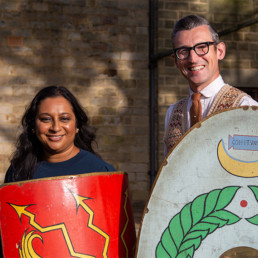
Archaeology is also about rethinking our past. I’ve just been working with BBC Teach on a new Live Lesson for primary schools about the Romans. Filmed on location at Vindolanda Fort, on Hadrian’s Wall, it’s about discovering who might have been living at the Roman fort. We think of forts as simply military settlements to defend and protect, but that wasn’t true in Roman times. Forts were actually attached to large settlements with people from all walks of life. The military would bring their families, and lots of traders would be attracted to the settlement to sell crafts, food or offer services.
The Live Lesson sets children a mystery to find out why objects like a toy wooden sword and a luxury Roman shoe have been found at the site (you’ll have to watch the programme to find the answer). I hope it encourages children across the country to become more curious about the past and helps them to relate to the people who lived at Vindolanda. Seeing ourselves in the past, being able to discover and experience people’s lives through relatable objects like shoes, toys, hair clips and jewellery enables children to make a direct connection to their own lives.
As well as seeing ourselves in the past, archaeology also needs to shrug off its dusty academic image. It is a multi-disciplinary subject which spans the humanities and sciences. It really is accessible to young people through apprenticeships as much as through degrees.
Almost all of archaeology in the UK is undertaken by commercial organisations. Their focus is on planning and building infrastructure. From new houses to railways, archaeologists work alongside civil engineers and planners to help these projects come to fruition. More than 200 archaeologists worked on the Crossrail project, discovering tens of thousands of artefacts of significant importance.
Any child should feel that archaeology is a profession, or an interest they can nurture, where they can feel they belong. Demystifying the topic, helping them understand it can happen on their doorstep, and showing how very diverse our past is, can help children to see themselves in archaeology and feel curious to know more.
The Romans – History Live Lesson is available to watch on BBC Teach. For more information and teaching resources, please visit: https://bbc.in/3tx4uWx
Why students should be taught the truth about Remembrance
Written by Selena Carty
Cultural and Ancestral Genealogist, Global War Heritage Specialist, Identity and Empowerment Consultant and Founder of BlackPoppyRose.
I was recently asked by the British Army to contribute to its new set of school resources on Remembrance. As the founder of BlackPoppyRose, I accepted the opportunity. My aims are to enlighten all people of the contributions of African, Black, West Indian, Caribbean Pacific Islands and Indigenous communities to history in wars/revolutions and rebellions.
So, let me ask you a question: How do you mark Remembrance Day? For me, I remember Albert Carty who served in World War I in the No’2 Construction Battalion. After arriving in the UK, he travelled across England and Scotland as part of the lumberjack battalion. He returned home after the war and became a father to seven sons. Five went on to join the Royal Canadian Airforce and served in World War II. The remembrance of families doing their part in a world that had set so many apart.
Remembrance means a connection to yesterday and the yesterdays before yesterday, which brings light the relevance of our actions today. When I think about Remembrance, I think of my mother, father, grandparents and great grandparents. I think about the legacies of family. I wouldn’t be here today if it were not for the efforts made by those who made choices before I came into existence.
There is a crucial need to improve how we explain the significance of Remembrance to young people, especially in the UK. We live in a cosmopolitan modern world where everything is moving a lot faster than I remember. Everything is now! (Like Amazon Prime deliveries, with no understanding of the framework, planning and years of innovation to make this happen.)
The legacies that have built the worlds we see today are very often under-educated, misinterpreted or omitted. The more we do to encourage Remembrance will allow us to come together with our own unique stories and share the impacts that the changing worlds and legacies before us have had and will still have on us in the present and near future.
To know that you are connected to something that has passed is significant to why we are here, why we speak the languages we do, why our names are what they are, why we can call more than one place our home or ancestral homes, and even the accessibility to the music that we listen to. All this enables each of us to have a unique perspective about Remembrance that we all benefit from.
Where should children start to learn about their past? With their immediate families as well as their peers and friends’ parent are also potential sources of information teachers. Additionally, organisations like BlackPoppyRose can help point them in the right direction. We also encourage students to check their local libraries, bookshops, museums, galleries and archives as well as the internet by using key phrases or tags.
So, what more can schools do to teach pupils about Remembrance? Tell the truth about what you know. We all have a version of ‘truth’. Telling the truth resonates stronger than untruths as it allows us to identify with the world we currently live in and the legacies we have inherited from the past. It will help to understand the choices made by so many in uncertain times. We cannot change the past, but we can be open and honest about what has happened, allowing us all to work together to find improvements on things that are pre-existing and still affecting us all today.
The British Army has created a library of resources for secondary schools. To access its Remembrance resource, visit https://tinyurl.com/ye2928v7
Anti-racism in the Early Years
Written by Rachna Joshi
Rachna is a teacher and consultant. She works with under-threes, Nursery and Reception children, and holds an MA in Early Childhood Studies. Rachna writes and speaks at events sharing experience and knowledge, empowering practitioners and provoking questions to disrupt routine practice. She supports schools by guiding educators to implement inspiring practice that reflects their classes. She works as a freelance consultant and with the Froebel Trust as a travelling tutor.
Originally published for Early Education in 2020:
https://early-education.org.uk/guest-blog-from-rachna-joshi-anti-racism-in-the-early-years/
Introduction
Race and racism in society is as important as ever; I am writing not only as a British South Asian who has experienced racism, but as an ally against white supremacy and anti-Black sentiment that perpetuates our consciousness.
Structural racism is insidious, and we need to look at ourselves and think about the messages we perpetuate. The racism that comes through our thinking, language and gestures shows the undercurrent of white supremacy in the ways that we perceive the world.
Context
This was written to respond to the systemic racism in education as a profession.
It is great that some people are more aware and doing what they can to ‘be anti-racist’, but this needs to continue – it’s a movement, not a moment.
There are many problems with systemic racism in Early Childhood settings, and I hope to provide some suggestions and links for your own reflective practice –I can’t tell you what to do, it is your journey and up to you to educate yourself, but I hope this helps on that journey.
Reading articles on racism may be uncomfortable, as it is an upheaval of what we know, and what is normal, and this is because ‘normal’ is inherently racist. I want to ask questions that may not be answered here, because this is a point of introspection and individual responsibility when it comes to looking after our children and being ‘players’ in a wider world. You need to ask yourself questions, consider who you are and what your call to action is for change.
Classrooms
Often as Educators we are seen as though we are already doing “the good work”, yet this topic brings about a space for deep introspection. When you set up and manage your classrooms ensure representation is embedded and not an ‘add on’. White, cisgender heteronormativity cannot be the default.
Classroom changes need to look beyond book corners and skin colour paints. Colleagues shared with me the lack of thought behind some small world people resources as the shop only provided white people. The representative resources already exist, unfortunately it is not mainstream, but this needs to change. Audit your dressing up clothes, food items and hair related products for your role play areas – ask parents to donate items. Tune into and value the voices in the classroom that come from wider communities. Consider the characters and stories that are shared – what message is being shared around skin colour, femininity and hair when using Frozen characters for example?
Development Matters and the EYFS People and Communities ELG explicitly reference “similarities and differences between themselves and others, and among families, communities and traditions” if we decipher the curriculum through this lens we may see that we should already be exposing children to a variety of cultures to provide opportunity for discussion with children. Presumably these statements are based on the research that expressions of racial prejudice peak by age 4 or 5 (Aboud, 2008). However, often we only hear about wider cultures and practices through celebrations: Eid, Diwali, Hannukah, Chinese New Year, this ‘add-on’ doesn’t provide the deeper discussion of cultures and values that encompass the everyday for the children that celebrate these festivals. What are you doing to ensure that all communities are represented and respected? And how do you incorporate these communities into your usual practice and provision? How do you ensure that your practice provides a wider perspective?
Curricula
There needs to be deeper consideration of how curricula can be decolonised, ensuring key figures are discussed and explored. It is not enough to teach the history of enslavement and civil rights (which are important stories that represent the struggle so many marginalised communities have experienced) it is about countering the narrative that to be non-white is not normal.
“Cultural capital” needs to include key public figures, artists and musicians, but also everyday heroes that children may see in the community. We want our children to have a foundation of curiosity, knowledge, and respect for differences, so that they don’t absorb the idea that the lives of black, and other people of colour are only about struggle.
Acknowledging cultural capital means noticing, celebrating, and valuing difference. Most schools celebrate white men- Samuel Pepys when learning about the Great Fire of London, Pablo Picasso, Charles Dickens, William Shakespeare, Buzz Aldrin and Neil Armstrong in the recent Moon Landings celebrations. Where are the Black people? Are we giving an accurate representation of history if the only figures we see are white men? What about Mary Seacole, Steve McQueen, Katharine Johnson, Ai WeiWei, Anish Kapoor?
To question my own biases when planning curriculum drivers, I have begun to ensure a set of questions are on the top of every curriculum document:
- Have you addressed sustainability?
- Have you shown a variety of families/gender roles?
- Have you included characters and perspective from a variety of backgrounds, especially those who are under-represented?
- Have you included stories that show a range of emotions for discussion?
- Is there an opportunity for cultural capital?
Cultural practices are often forgotten and seen as an ‘add on’. An example might be a discussion of eating with hands vs. eating with knives and forks – some things that might be seen as a norm in one culture is the opposite in another. Have you made space for this in your classroom and your own understanding of your children and their cultures?
Reflection and Response
Are you prepared to discuss race, or answer a question on race when it occurs in the classroom and ensure you have done best for that child?
Ensure you are prepared to talk about skin colour, culture, religion so you’re not scrambling for words when a child asks a direct question about these things. Have you spoken to families to ask them how they have approached discussing skin colour? How are you ensuring families feel confident to discuss race?
Ultimately as practitioners we are familiar with constant reflection, but it takes more to look closely at the implicit bias that we perpetuate. Don’t be afraid to talk about it, but make sure you research and read up – educate yourself. Make lifestyle changes that involve taking on these wider perspectives beyond your early education practice.
Leadership
What do your leadership teams look like? In predominantly white areas there may be little diversity, but is there diversity in the content that is taught to children? Are staff aware of the wider world and implications of their bias? Are staff considering the possibility of providing only a white view of the world to children? Is there a consideration from leadership teams to reflect on systemic racism in schools and settings, and how could this be tackled? Could your schools consider mandatory staff training on Black history, global non-white-led history and open discussion of unlearning of implicit bias (by consultants who specialise in this area)?
Are you questioning decisions that perpetuate anti-blackness and racism in your school? If you are white, do you stand up for your underrepresented colleagues, who may not have the privilege to stand up for themselves?
Institutions
When Early Childhood Education institutions are questioned, the inherent tokenistic nature of BAME representation is revealed. When representation is conceived through a lens of empty diversity that leads to tokenistic representation in chairs and boards, then what message does this send, and what actual intervention does this make in challenging implicit bias and institutional racism?
The government response to including Black History and minority ethnic representation into the curriculum was that it is up to teachers to do this (see petition response). Where in Initial Teacher Training is there a discussion of systemic racism and bias and how practitioners can support BAME families appropriately? In Early Childhood academia, a privileged position to be in, majority of academics are white and therefore research continues to remain whitewashed.
A large part of the wider work to tackle racism is to look at our institutions and policies. Our institutions are built upon racist ideologies and anti-blackness. There are petitions to change how our curriculum looks at a wider policy level but these are often rejected. There needs to be a whole government strategy, that needs to be continually lobbied by all Early Education influencers and those in positions of power who are allies in this movement.
Further Reading
Blogs and Articles
Laura Henry-Allain’s article in Nursery World
Kate Moxley’s podcast discusses blackness in Early Years with Liz Pemberton and “The Early Years Orchestra” episode with Jamal Carly
An Abolitionist Coalition Grassroots Movement in Education
US based article writing about racism in preschool
Nursery practitioner David Cahn writes about allyship and racism in Early Years
Decolonising curriculums
Practitioner’s roles in decolonising curriculums
Reflection on anti-racism in schools
Making changes to the curriculum
Parliament response to Decolonisation of curriculum petition
Talking race with children and families
How to respond to children when they ask race related questions
Parents guide to Black Lives Matter
Social Media Accounts to Follow
Black Nursery Manager Instagram @theblacknurserymanager
The Conscious Kid Instagram @theconsciouskid
Jamal Carly Instagram @Jamal.Carly
JossyCare Instagram @JossyCare
Laura Henry-Allain Twitter @IamLauraHenry
Resources
National Literacy Trust Book list
Spud and Yam Irish and Jamaican musicians
Black History Resources for UK schools
References
Aboud, F. E. (2008). A social-cognitive developmental theory of prejudice. In S. M. Quintana & C.
McKown (Eds.), Handbook of race, racism, and the developing child (p. 55–71). John Wiley & Sons, Inc.
Empowering Through Education: The Rastafarian Scheme of Work

Written by Johnoi Josephs
Johnoi Josephs is the Associate Assistant Principal at a school in West London where he specialises in Behaviour, Attendance and Pastoral Programmes. He also teaches RE, Citizenship and Sociology. As well as teaching he is the co-founder of Black Men Teach which aims to build a space where Black Males and Boys can thrive in education. For him, BMT is important because representation matters in all sense and so we need to illustrate presence in every industry/profession. Johnoi aims to live a life of servitude where he is able to make as much impact as possible when it comes to education.
In the pursuit of a more inclusive and culturally diverse education system, it’s essential to recognise the power of representation. As a black male teacher from Jamaica, my journey in creating the Rastafarian Scheme of Work was fuelled by a desire to pay homage to my roots and provide students with a curriculum that embraces their own cultural identities. This endeavour was not only a personal passion, but a fundamental step towards decolonising the curriculum.
The Inspiration
The spark for this project ignited during a conversation with a friend. We delved into the complexities of decolonising the curriculum, particularly within Religious Studies. It was clear that this endeavour required a nuanced approach. Armed with this newfound determination, I set out to create a curriculum that would bridge the gap between mainstream education and the rich tapestry of Rastafarianism.
A Journey of Dedication
Crafting the Rastafarian Scheme of Work was no small feat. Balancing it with my other responsibilities was a challenge, but I knew this endeavour was a crucial step towards a more inclusive educational experience. I dedicated days of my summer holidays to ensure that this curriculum would be comprehensive, engaging, and transformative for students.
Empowering Through Knowledge
The Rastafarian Scheme of Work is a meticulously designed curriculum that empowers KS3 students with deep understanding of Rastafarianism. This comprehensive course comprises:
- Seven Detailed Lessons: Each lesson is designed to provide students with a holistic view of Rastafarianism, encompassing its origins, beliefs, practices, and cultural significance.
- Medium Term Plan (MTP) Breakdown: This plan outlines the progression of the curriculum, ensuring a seamless and immersive learning experience.
- Knowledge Organiser: A valuable resource that condenses essential information, allowing students to review and reinforce their understanding.
- Assessment: A tool to evaluate students’ grasp of the material, providing valuable feedback for both educators and learners.
- Extra Resources: Supplementary materials enrich the learning journey, offering a well-rounded exploration of Rastafarianism.
The Power of Representation
Incorporating diverse perspectives and cultural awareness in education is not merely a matter of political correctness, but a fundamental necessity for the holistic development of students. Research consistently demonstrates the profound impact of representation on learning outcomes, social integration, and well-being.
- Enhancing Learning Outcomes: Inclusive curricula positively affect student motivation and achievement levels, leading to higher academic performance.
- Fostering Inclusivity and Belonging: Representation in education helps foster a sense of inclusivity and belonging, leading to increased participation, improved social integration, and a stronger sense of community within the school.
- Cultivating Empathy and Global Awareness: Exposure to diverse perspectives cultivates empathy and a broader understanding of the world, a critical skill in an increasingly interconnected and globalised society.
- Mitigating Stereotypes and Biases: Inclusive education challenges harmful stereotypes and biases, fostering a more accurate and nuanced understanding of different cultures and identities.
Transforming Schools: A Call to Action
Given the wealth of research supporting the importance of representation and cultural awareness in education, educators must take proactive steps towards decolonising the curriculum. The Rastafarian Scheme of Work is a prime example of how a curriculum rooted in cultural authenticity can drive positive learning outcomes and empower students to embrace their identities.
By embracing diverse perspectives, we not only enrich the educational experience, but also prepare students to navigate an increasingly diverse and interconnected world. Through inclusive education, we can truly empower the next generation to become compassionate, culturally aware global citizens.
Incorporating the Rastafarian Scheme of Work into your curriculum is a significant step towards creating an environment where every student from certain backgrounds can feel valued, seen, and heard. Together, we can work towards a more inclusive and equitable education system that prepares students for a future marked by understanding, empathy, and respect.
Launching a network for new leaders made me a better ally

Written by Ben Hobbis
Teacher, Middle Leader and DSL. Founder of EdConnect and StepUpEd Networks.
Are you a new leader, like the idea of leadership but struggle to find the balance between teaching and leading? Are you someone who wants to lead or be a leader, but not knowing how to get there, feeling a bit stagnant? You might be a leader developing, but in the wrong organisation? You might not see leaders like you? This is why Step Up was set up.
Step Up is a new network for new and aspiring leaders in education, particularly at middle and senior leadership levels in schools. Upon starting the social media account, and subsequent network, we surveyed people to find out who our community are and what they want/need. This has been incredibly useful. It’s been great getting to know our community.
From this research and insight, we have constructed five ‘leadership themes’ that we base our content and output around. We base our speakers, events, blogs and much more around these themes. The five themes are: Leadership Journeys, Leadership Barriers & Challenges, Leadership Development, Leadership Wellbeing and Leadership Diversity. Now, whilst many of these will overlap when people speak, present and write to these.
I personally as the founder wanted to ensure that whatever we do, we are inclusive and that we are diverse in order to create a community where our network members belong. Now, as a heterosexual, white, able bodied, cisgender man who doesn’t have children and is fairly financially stable, I know I’ve had it easier than others. However, I have always committed to be an inclusive ally and a HeForShe ally also. I have been a keen supporter and champion of Diverse Educators since signing up to social media and their journey started. One thing I have released is that I’ve continued to learn as an ally.
One of the biggest learning curves was Step Up’s Launch Event. As I co-hosted alongside one of my fellow network leaders, WomenEd’s own Elaine Hayes, I listened attentively to our speakers. I listened to their vulnerability; to their negative and positive experiences; to their struggles; to their hopes and wishes; to their experience and tips. I felt quite emotional in parts listening to in some cases abhorrent behaviour that they (or colleagues, friends or family) had been subjected to as part of their journey.
I’ve summarised some of the key takeaways from some of the presentations, that may be useful for the audience reading this…
Parm Plummer, WomenEd’s Global Strategic Leader and a Secondary Assistant Headteacher based in Jersey presented on Women in Leadership. Her talk initially started with sharing the fantastic work of WomenEd: their campaigns, partnerships, networks (including their global reach) and the development opportunities they provide for female leaders. Parm then went on to help navigate the process of stepping up as a female leader. Initially, sharing the only image of a woman that came up during a Google search; before going on to provide tips to write a job application through to negotiating your terms. Parm gave tips including finding allies and joining networks.
Helen Witty, a neurodivergent Lead SENDCo based in the East of England who gave a pre-recorded video on Neurodivergent Leadership. She shared an insight into her job and life, as a SENDCo with ADHD. She shared about how being open about her ADHD at her job interview and how it positively impacts her life and those who she works with. Helen also gave a fantastic insight into the role of a SENDCo, for all those who aspire to this role.
Stephanie Shaldas, a secondary deputy headteacher leading on diversity and inclusion based in London. Her talk Leadership in Colour: Senior Leadership as a Black American Woman started with a story from March 2021 whilst she was working as an Acting Co-Headteacher. This story was based around Prince William visiting her school. What was a forty-five minute visit, led to a weekend of trending on Twitter, including one Tweet: ‘Who dressed up the secretary in African cloth and trotted her out?’ Stephanie went onto talk about her journey and how she felt like school leaders didn’t look like her, when she was in her early career. She shared her inspiring path to leadership including her own education as well as teaching and leadership roles at middle and senior level spanning both curriculum and pastoral. As Stephanie said, “If I can, then you can!” – find your why and explore your passions!
Mubina Ahmed, Head of Science Faculty, based in London gave a presentation titled: ‘Using my minority lens to lead.’ Mubina went on to talk about how she used her minority ethnic background to her strength in her leadership journey. She posed the key question: ‘Do we have equity in teaching?’ Mubina used research and evidence to back up every piece of advice and information that she gave; talking about building allies to help you bring your chair to the table.
Albert Adeyemi, co-founder of Black Men Teach and a Head of Year based in the East of England gave a talk based around wellbeing and belonging in leadership. He spoke eloquently about the importance of wellbeing, how every interaction with others builds up to this. He narrated the sense of being needed versus feeling wanting and knowing what you need to fill your cup, to achieve wellbeing and belonging. The part that really blew me away was a surprise from Albert, a spoken word about belonging; a part of the event which brought a tear to my eye.
Jaycee Ward, a phase leader in a Yorkshire primary school, spoke about imposter syndrome, based around her journey as a young senior leader. Jaycee narrated her journey to date and how she has completely changed her narrative and inner critic. She shared her five top tips for combatting imposter syndrome: Seek Support, Embrace Vulnerability, Celebrate Achievements, Self-Compassion, Self-Reflection. Something, everyone at the event resonated with.
Nicola Mooney, a secondary deputy headteacher based in the South West of England, who also volunteers for WomenEd and MTPT Project, gave an interesting presentation on ‘non-linear career paths’. She shared her journey through her career to date including multiple maternity leaves and periods of IVF. Nicola shared how by not going through the ‘traditional’ upward trajectory has enabled her to be successful both as a teacher and as a mother. It was a talk many welcomed, knowing it is not as simple and always useful to be continually promoted.
I feel very privileged to have spent time in the virtual room with these fantastic Diverse leaders. Step Up (and I) will continue championing for diversity, equity, and inclusion within the education leadership sector; and will ensure everyone has the chance to share their stories. If you want to get involved and find out more, then follow us on X (formerly Twitter) @StepUpNet_Ed and check out our website: www.stepupednet.wordpress.com.
No time to say “we don’t have time” when it comes to diversity in literature
Written by Jessica Tacon
Jessica Tacon is second in charge of the English Department at City of London Academy Highgate Hill and is a member of NATE’s (National Association for the Teaching of English) ‘Reviewing Literature’ working group. She created The Right Writing campaign which aims to improve racial diversity in English Education.
Knee-jerk: “a quick reaction that does not allow you time to consider something carefully”
When a topic or issue becomes present in the public eye (often despite having always been of paramount importance, as is the case with diversity and inclusion in education) or it begins to feel more urgent, there can be pressure to actively resist or even just to react.
The pressure that I am referring to here comes from the expectation that education should be diverse and inclusive, something which has failed to be considered over decades. The pressure point is the realisation of this failing; the need to respond becomes pressurising as organisations need to be seen as doing the ‘right’ thing.
But the bottom line is that schools absolutely must not be exhibiting knee-jerk or quick-fix solutions to improving the diversity and inclusion of education. We need to make it a priority to find that beautiful balance between speed and solutions; remember, the first organisation to make changes in the way of diversity and inclusion is not necessarily the organisation doing the work most properly.
Making time, not taking time
Showing support for a cause without taking action at first can be a good thing. Note I said “can”. Far too many organisations, schools included, have used the excuse of wanting to ‘take their time’ as a guise for the fact that, actually, diversity and inclusion isn’t their priority. To this aim, time must be carved out at a systemic level to plan, implement and maintain changes in the education sector.
What can this look like? In reality there isn’t a one size fits all approach, it can look like many things. For specific questions to help schools to approach changes or to reflect on whether their current approach(es) are purposeful in the ways that truly matter, please see the full version of this article on the Pearson website.
With so many pressures on our time and headspace, tokenism, virtue-signalling and ‘quick’ fixes (which usually fix very little) can be tempting. But when we look at the absolutely unarguable benefits of a truly diverse and inclusive education, we cannot afford to not consider every single aspect of the above questions in everything that we do.
Evaluating English
Let’s look at the subject of English as an example. English A Level uptake has been declining for some time; research is still being done as to why but initial findings show that students do not feel that English is relevant for them or offers them career pathways. In 2018/19, only 19% of students who took English Literature at A Level were Black, Asian or of a Minority Ethnicity (Source: GOV.uk available on request).
Where does this lack of students studying English at A Level come from? In 2018 The Runnymede Trust found that nearly 92% of teachers in state funded schools were White, in 2020 Publishing Perspectives found that only 13% of people working in the publishing industry were Black, Asian or of a Minority Ethnicity and it is not unusual for a pupil to leave school having never studied a book by a Black author, as shown in research carried out by Penguin Random House. It does not take too much evaluation to see the vicious cycle that has been created: everywhere that young people turn they do not see themselves. This forms one example of why all the aforementioned changes need to happen, if it even needed to be pointed out in the first place.
A real reflection
As the writer Junot Díaz puts it:
“You know, vampires have no reflections in a mirror? There’s this idea that monsters don’t have reflections in a mirror…It’s that if you want to make a human being into a monster, deny them, at the cultural level, any reflection of themselves. And growing up, I felt like a monster in some ways. I didn’t see myself reflected at all.”
What Díaz describes here about representation is one facet of these changes; schools must look beyond “representation, and the pitfalls of tokenism, to thinking about how schools can be proactive in tackling racism” as The Runnymede Trust puts it.
Ultimately, what we are offering in educational settings is not truly an education until every aspect of education has changed to represent, include and celebrate every child. We are already behind, now we must come together and push forward diversity. There is no other option.
Take Back the Narrative: Reflections on #DiverseEd Conference

Written by David Church
David is an LGBTQ+ education consultant and former Deputy Head Teacher. He has over 10 years experience in education and is passionate about supporting schools to develop an LGBTQ+ inclusive culture and curriculum. Outside of education, David is a Regional Ambassador for It Gets Better UK.
Attending the #DiverseEd Conference in Bristol on Saturday felt perfectly timed. The backdrop of recent developments from the UK government regarding the trans community weighed heavily on my mind as I prepared for the day ahead. It seemed as if the trans community was under siege from multiple angles: teachers potentially being allowed to discriminate against trans young people in schools (https://www.thepinknews.com/2023/09/23/ehrc-guidance-trans-misgendering-pupils-schools/) and the proposed ban on trans women from women’s wards (https://www.theguardian.com/society/2023/oct/03/trans-hospital-patients-in-england-to-be-banned-from-female–and-male-only-wards).
As a cisgender gay man who had previously faced adversity under the infamous Section 28 (and the legacy since), I felt a deep empathy for the trans community, witnessing their increasing vulnerability and the reported surge in hate crimes against them (https://www.gov.uk/government/statistics/hate-crime-england-and-wales-2022-to-2023/hate-crime-england-and-wales-2022-to-2023).
As an LGBTQ+ education consultant, I was acutely aware that action was needed to ensure the safety of trans+ children, young people, and staff in schools. Fortunately, the conference offered a range of sessions on just this, highlighting the need for greater trans inclusion & diversity.
Every session I attended resonated with me on both a personal and professional level, but my mind was consumed with the urgent need to address the ongoing challenges faced by the trans community.
The first workshop I attended was led by Sarah Bonnell School, focusing on social justice in schools and empowering students to enact change within their communities. Their discussion of “cold anger” as a catalyst for change struck a chord with me (https://www.psychologytoday.com/gb/blog/brave-talk/202109/4-types-anger-everyone-should-know-about). This anger, when harnessed, could drive the transformation needed to combat the prevailing discourse around trans inclusion.
Equally, Shaun Dellenty’s keynote, highlighted the importance of challenging the narrative of fear and division, emphasising that we are stronger together, whether or not we identify as trans. The theme that stuck in my mind: How do we channel this anger and negative energy into positive action?
Similarly, in Bennie Kara’s keynote, the power of stories to reshape narratives was explored. She discussed how we need to move beyond viewing the trans community as victims or dangerous (a perception which has continuously been fed by media and entertainment). The history of LGBTQ+ rights is full of unsung heroes such as Marsha P. Johnson and Sylvia Rivera, who spearheaded the original Stonewall uprising. Yet, their stories are often overlooked in the narrative of our school curricula.
It is imperative that we teach about these individuals to reframe the narrative and challenge prejudices and biases. This will foster a more respectful society, one that goes beyond mere tolerance to genuine acceptance of every individual, regardless of their identity.
Jo Brassington, in their session on trans and non-binary inclusion in schools, passionately reminded us that silence and indifference regarding trans+ inclusion make us complicit. It reminded me of the words of David Morrison, Chief of Army in the Australian Army, which echo this sentiment: “The standard you walk past is the standard you accept.”
This is not about understanding what it means to be trans but about having compassion and acceptance for every trans person; knowing them as individuals and hearing their story. Stories have been central to human culture since time began, and it is now time to reshape these stories in the public eye. As agents of change, we must stand with the trans community, working towards a compassionate view that acknowledges them as individuals.
The #DiverseEd Conference offered a glimpse into the power of collective action, empathy, and storytelling to take back the narrative, ensuring that the voices and experiences of the trans community are heard, respected, and valued. We, as educators, have a unique opportunity to lead this transformation, shaping a more inclusive and compassionate society by ensuring our curriculum fosters a positive narrative of a range of trans people; from the books we read, to the significant role models we explore and the policies we have in place. Taking back the narrative is not just a goal; it’s a collective responsibility that we must all be conscious about in our schools.