
Guidance for Navigating the DEIJ Journey

Written by Doline Ndorimana
Doline Ndorimana is a passionate educator dedicated to diversity, equity, inclusion, and justice (DEIJ) and advocating student voice and agency. She is a DEIJ Workshop Leader, Middle Years Program Language Consultant, an Accreditation Evaluator for the Council of International Schools, and a member of the TIE editorial team.
I love my job as an educator and I love spending time with kids, especially teenagers. I believe each child should feel a sense of belonging at school, that is why I champion the work of diversity, equity, inclusion, and justice (DEIJ). However, it is not only for our students but also for our colleagues. If our colleagues don’t feel that they belong, they will not be able to serve our students well. This is what makes the job of a DEIJ leader in schools important and challenging at the same time. Experience over time has changed the way I see and do this work. Through frustrations, disappointments, failures, and good wins as well, I’ve grown to see DEIJ work as a complicated marriage worth fighting for. On the one hand, it’s conflict work and on the other hand, it’s relational work.
To deal with conflicts, we have to maintain an open dialogue where the goal is not proving that we are right but making things right. To maintain a good relationship, we have to constantly work on it. It’s not linear, but cyclical, and just because we have already dealt with an issue, does not mean that we will not deal with it anymore or re-adjust our expectations as we grow and change. It also means that, oftentimes, we will take one step forward and three steps back. Consequently, as DEIJ practitioners, we constantly negotiate and regulate expectations, norms, and practices, which can take a toll on us and affect us negatively if we are not careful. I’ve thought about a few guidelines that can help us maintain our sense of self and wellbeing so that we can continue to do this important, complex, and rewarding work.
Guide One: Get To Know Yourself as Much as Possible
It can be difficult to get to know yourself, especially when people are constantly evolving; but in this context, it’s an important task to undertake in order to effectively extend your thinking and make you a better version of yourself. Without personal introspection and understanding, unprocessed emotions and insecurities can interfere with your growth. It’s easy to get caught up in what other people think, wanting or even needing other’s approval and validation. But these external affirmations can put too much emphasis on the ego and without regular praise, you may begin to question your values and self-worth. Good, constructive feedback from knowledgeable and experienced people can be beneficial to your personal growth. However, if you don’t have a strong sense of self, rather than truly listening to and learning from this feedback, you may get caught up in hurt feelings, pushing back, or even trying to prove you’re right or justify your position.
When you are getting closer to knowing who you are, you will understand that serving the cause is more important than belonging to the cause. When the importance of belonging to a cause outweighs the importance of the cause, you are more focused on finding and creating opportunities that validate your choice of doing this work and belonging to the cause rather than truly serving the cause. In other words, you spend more time trying to show and prove to people that you’re right. Your focus then becomes things that are out of your control and that leads to burnout. But if the focus is on serving the cause, and in the case of DEIJ work, creating a culture of belonging and inclusion for all, then the focus is not on an individual’s vision. The cause is much bigger than that. You’re learning to know who you are and who you are becoming, and you don’t need to prove that to anyone. What actually matters is looking at how we can fix the problems we face. How do we get to a resolution? How do we find common grounds so we can all be part of the solution?
Guide Two: “The First Step to Engagement is Disengagement” (Simon Sinek)
As DEIJ leaders, we often face difficult conversations with our colleagues, particularly those who are resisting change, and sometimes this leads to insensitive comments that can trigger strong emotions. Here we have a choice. We can either act on those emotions and be confrontational with our colleagues and ultimately lose them, or we can stop, take a step back, listen, sit with our own emotions, and get curious. Why am I feeling this way? What is it that was said that got me this upset? What are my emotions telling me? Acknowledge and unpack these emotions. Once you know what’s going on, you can deal with them and then move on. Whether it takes 30 minutes or two days, it doesn’t matter. What matters is that we work through this process, otherwise these unprocessed emotions become a distraction to our goals. Once our emotions are processed, we can then shift our attention to our goal and ask ourselves, what do I want from this conversation? Why did I go to speak to them in the first place? It’s only then that we can disengage ourselves and listen from our colleague’s frame of reference and not our own because the highest purpose here is progress or resolution. This is when we say to our colleague that “in the interest of building a safe place for everyone at work, I would love to have your thoughts. I want your input because I want you to be part of the solution. We need everyone, including you. Help me understand!”
Guide Three: Know Your School Community
As we get into these roles and settle in, it’s good to communicate and exchange with other DEIJ leaders from other schools to learn from each other, but we need to remember that our schools are different. Comparing and contrasting schools and wanting to do the same thing as another school did can be detrimental to our work. “The process is too slow and we’re not making progress. I need to push and challenge more, just like it was done at X school.” These are some of the thoughts I’ve had before. But X school’s DEIJ journey, as well as its environment, might be different from your school. If we think of DEIJ work as a complicated marriage that’s worth fighting for, then working on your marriage using someone else’s marriage toolkit might not work. You need to find your own toolkit and that requires spending time trying different tools until you figure out which ones work for you in your context. In order to find the right tools, it is important to get to know our own individual school cultures and members. Hearing and learning from other DEIJ leaders are important as long as we remember that our situations are different.
In their book School Culture Rewired, Gruenert and Whitaker offer a list of things that convey a school culture. They suggest we look at “the social glues that hold people together, the way things are done, deeply embedded beliefs and assumptions, the pattern behavior that distinguish us from them as well as a set of behaviors that seem strange to new employees” (2014). These things will indicate what ought to be celebrated, ignored, and ultimately what to anticipate. Spending time learning about our school communities will best prepare us for our roles as it will give us the knowledge we need to make a strategic plan with actions specifically designed for our schools and communities. But this can only be effective if done, planned, and mapped in conjunction with heads of school and senior leadership where questions, apprehensions, and negotiations will inform our work ahead, which brings me to the next point.
Guide Four: Have a Shared Vision and Values
It is important that DEIJ leaders and senior leadership have a shared understanding of the job responsibilities and challenges. It is essential to sit down with senior leadership and decide on shared values and a vision of what DEIJ work will look like and how it will show up in the community. Without shared values and a shared vision, it is easy for cliques to be created. It might seem to some that only a certain group does the work and others are viewed as “not willing” to do the work. This creates division and ultimately slows down the process and progress. Remember that our job is to bring people together and avoid the “us versus them” mentality. Moreover, without shared values and a shared vision, we end up being the only ones trying to make the marriage work, which never works.
Discuss what you want to see in your institution with senior leadership before going out on the field. For example, if one of your core values is to “embrace and respect the uniqueness of each individual of our community,” discuss what that means practically and how this shows up every day. Does that mean that we encourage everyone to live their authentic selves and show up as their true selves? Great! Do we have structures and systems put in place for people to be their true selves however they define it? This is important because we cannot ask people to be their true selves if the environment itself is not ready for people to see and support them. For example, if we have a teacher who shows up and asks everyone including colleagues, students, and parents to address them as “them” and “Teacher Smith” or “Mx Smith” because they are non-binary, are we going to be supportive? Will we as an institution be able to stand up to parents and other shareholders who express discontentment and say, “This is who we are and aspire to be. We are an inclusive school, and we embrace and respect the uniqueness of each individual of our community. We believe it is good for our students to be exposed to a great diversity of people and perspectives.” Can we as an institution do this, knowing that we might lose enrollments and the board might get involved. Does the board share our vision and values? This is only one example of the kinds of courageous discussions that we need to have before we tell people that they can be their true selves. If our answers to the questions above are no’s, see that as a first step in the right direction. We have had these important discussions and realized that we have work to do as an institution, and that is fine. What is not fine nor fair is to expect the DEIJ leader to fix an institutional challenge by themselves. Instead, a collective effort spread throughout the different parts of the organization led by both the DEIJ leader and senior leadership is required, so our school can live up to its vision and values.
This is a hard task to do. It is not only a step but an ongoing process, a strategic plan that represents mid-to-long term goals. It is both the foundation and frame of our DEIJ work. In other words, it is what will make or break our continuous efforts for making our schools a safe and inclusive place for all.
Guide Five: Explore Emotions
DEIJ work is both conflict and relational work and as such, emotions have a great role to play. When dealing with implicit biases, it can feel as if our identities are challenged and being confronted with the idea that we have either contributed directly or indirectly to systems that have harmed and left many people behind can be hard to take. Much harder is when, as educators, we come to realize that there is a chance that some of our students that we deeply care about were left behind due to our own implicit biases. In this case, grief, remorse, shame, and anger are only a few emotions that can be experienced. As DEIJ leaders, it is important that we recognize and understand this.
Susan David, in her book Emotional Agility, explains the importance of facing emotions with acceptance and generosity. If we want everyone to be part of the solution, it is important to give time to people to feel and validate their feelings because “when we don’t attend to emotions, they metastasize and they grow and when they grow, they can take over.” Consequently, we arm ourselves even more, and this can mean that we disengage completely and don’t do the work because it is very hard and painful to deal with our own emotions (David, 2016). Let’s say that we see a micro-aggression behavior. We should respond to that and speak to the person in private. I personally believe that a private conversation is always more effective than a public one (although debatable, depending on the act itself). As we’re having these conversations, we need to keep in mind that the purpose is not to shame the person, but to make space for a discussion on implicit biases and its impact on our students and staff. If the conversations become emotionally charged, it’s okay to give people space to feel and let them know that you understand. You can say something like, “I can see you’re upset. It’s hard. Yes, I know! And what I just said might feel like who you are is being challenged and that’s okay. I understand that this was never your intention. In some cases, like these, we need to move away from intention and focus more on the impact. Doing this work means that we’re just not going to feel good at times and that’s okay because it is through discomfort that we grow. We need everyone, including you, to make this school a place where everyone can belong. I am therefore asking you, as hard as it is, to fight the discomfort and not me.” You can even invite your colleague to circle back within the next few days and revisit this conversation. The point here is to keep people in the conversation and make them aware that it takes all of us to make it happen and that feeling the emotions we feel is part of the process for us to grow. As DEIJ leaders, coaching is part of our job as well.
Senior leadership needs to be in agreement on this practice because one thing that could ruin our efforts is that after this conversation, our colleague turns to leadership who then discredits the work done before. Which, on the one hand, takes away the opportunity for that person to lean into discomfort and to learn and grow. And on the other hand, perpetuates and safeguards exclusionary practices in our institution. This goes back to Guide Four. It is important to understand that by trying to reduce or avoid people’s discomfort, it can reinforce inequities.
The importance of knowing who you are and disengaging so that you can engage are even more important here because, as DEIJ leaders, we have to “be the bigger person.” Being a bigger person does not mean that we do not have boundaries. On the contrary, being a bigger person means that we understand that our mission is bigger than ourselves and that the highest purpose is improvement, not being right. It means that sometimes “we are way-seeking rather than truth seeking,” so when we have conversations with our colleagues, “we can instead look to tell, with them, the stories of their best future selves” (Alchin, 2022).
Guide Six: Make Parents Your Partners
Every parent wants what’s best for their child and, of course, they are willing to stand up for that belief. We, educators, may not always agree with what parents are fighting for or against but, ultimately, we have the same goal. We all want to develop well educated, thriving students. Oftentimes, we label parents as difficult, entitled, bigots, etc. when they push back against DEIJ work. But, what if instead of labeling them, we include them more in our conversations and initiatives? There’s a good chance that parents are afraid of a new initiative simply because they are misinformed, afraid, or have assumptions that might be wrong. It is up to us to reassure them and give them space to ask questions and hopefully relieve their fears. For example, if as a school we think it is important for our students to learn more about LGBTQ+ education, it might be a good idea to invite parents and share our plans with them. They might think that we are forcing on their children a certain set of values that is not ours to teach, but this will be our opportunity to set the record straight, discover their fears and apprehensions, and figure out together as partners how to deal with it while keeping in mind that we are preparing our students to become empathetic global citizens and that in our community each child should be treated with dignity and respect by everyone regardless of their backgrounds and identities.
If as a school, we believe in multilingualism and the importance of using translanguaging in our classes, teachers whose native language is not English are a great asset. Having parents’ meetings and informing them of our plans might remove the assumptions of some who believe their child won’t master English if they are not only taught by native speakers of English. Instead, we offer them another perspective informed by research and give them the opportunity to ask questions and express their concerns. This way, we can potentially change the narrative, inform parents, and hopefully bridge the gap between what parents think DEIJ work is and what we, as a school, believe it is.
Informing parents of any major new initiative will create important dialogues, get them involved, and inform us of what to anticipate and where the roadblocks are. More importantly, this will foster a relationship that can only be beneficial to making our schools more inclusive.
Guide Seven: Find Your People
Having a support system is very important as the work is extremely demanding and can take a toll on you. It is, therefore, important to be surrounded with uplifting, diverse, critical, honest, loving, and fun people to accompany you on this journey. You will need these people to swear, offload, to laugh, and feel loved; to hear that you’re doing the right thing and that they’re proud of you; to hear when you’re wrong but also to hear, “Here’s another perspective.”
These guides help me navigate the world of DEIJ, a world that I am passionate about and continue to learn from. However, this is only my perspective, and I am forever open to other perspectives.
References
Alchin, N (2022). Authenticity – what’s really going on? Retrieved from https://nickalchinuwcsea.blogspot.com/2019/08/authenticity-whats-really-going-on.html?q=authenticity
David, S. (2016). Emotional Agility: Get Unstuck, Embrace Change, and Thrive in Work and Life. New York: Avery/Penguin Random House.
Gruenert, S., & Whitaker, T. (2015). School culture rewired: how to define, assess, and transform it. Alexandria, Virginia USA, ASCD.
Also Inspired by the work of Simon Sinek, TD. Jakes, Brene Brown, Chimananda Ngozi Adichie, Emmanuel Acho, Adam Grant, Anne Laure Buffet, and the amazing support from my People wherever you are in the world. My TIE editorial family and the many many conversations I’ve had with educators, students, parents, heads of school, support staff, and more. Thank you!

A journey with the experienced other - coaching and leadership development
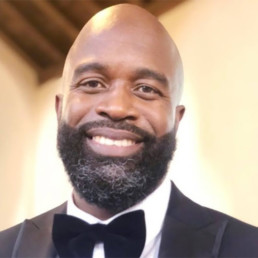
Written by Dwight Weir
Dwight is a Deputy Headteacher and Life Coach. He is also an inspector for British Schools Overseas. Dwight has a passion for coaching and leadership development.
Coaching is the process used to enable the coachee to reach their goals or achieve clarity about their life, whether it’s about leadership development, career change, family, personal development or just managing work-life balance. This blog will focus on coaching as a vehicle for leadership development.
Leadership development training encourages the use of hands-on practical training (Woyach and Cox 1997). The training is more effective if it is context specific (Creasy and Cotton 2004; Barnett 2001 and Kouzes and Posner’s 1995) and engages the use of a mentor or coach (Paterson and West-Burnham 2005) and is personalised (Owen 2007 and Patterson and West-Burnham 2005).
Coaching has played a significant role in my own leadership development journey. As a not so recent participant in one of the UK’s flagship leadership development programmes, we were grouped according to where we lived or worked for group coaching. We participated in many leadership development tasks which involved role playing, presentations, discussions and a variety of simulation activities. Even after almost 10 years since the training, this has been the most effective CPD I have ever had, for a number of reasons but more so due to the dynamic coaching relationship I had with an experienced Headteacher – the experienced other.
Even though I have studied, researched and written about leadership and leadership development, I haven’t had the time to exclusively link coaching theory to coaching practice. Being part of a coaching group propelled me further towards developing my own leadership due to expertise of the experienced other. Having been on this journey, coaching relationships can be likened to a journey with ‘three-selves’; self-discovery, self-realisation and self-actualisation.
At the time of my training, coaching was only a theory for me, group coaching was an even more distant concept. The experience gained as part of the group coaching enabled us to collaborate professionally at an authentic level due to the conventions of group coaching which became apparent throughout the coaching experience. Learnings from the group coaching appears to be performance focus (McGurk 2012) as there was a focus on development orientation, effective feedback, performance orientation and planning/goal setting. From this experience it was evident that the growth expected in group coaching is collective as the outcome will be achieved as a result of the collective sum. Whilst participating in group coaching a number of variables became evident during the process:
- Collective Growth – the collective process we used as a coaching group to develop our ‘virtual school’ (a project within the training) was dependent on a combined effort. This might not be the same for all coaching groups but can be expected when group coaching participants are working towards an agreed outcome, knowing that the progress of the group is dependent on the progress of all.
- Cooperative Reflection – as we developed our virtual school we regularly reflected on our progress and the impact we were having as a team. We always evaluated our efforts with the intention to improve. This was, reflection with a purpose.
- Collective Honesty and Openness – we benefited from this process as we knew that collectively only honesty and openness truly informed each of us on our individual and collective process. The idea that feedback is a gift kept us open to feedback knowing that gifts can be returned or embraced. The relationships that we developed meant that as we fed-back to each other we respected the feedback given, knowing it was honest.
In addition to group coaching we also had one to one coaching sessions. These were particularly helpful as I focused on my own development outside the group and the impact it had within the group. This approach was more intense as the focus was more on the individual and our areas for development. This level of coaching involved powerful questioning, Using ideas, shared decision- making and encouraging problem-solving.
Coaching as part of leadership development is most effective when you are on a journey with an experienced other. Genuine experience in the field helps the experienced other to relate, ask thoughtful, reflective and relevant questions linked to the context in which the coachee works and is developing their leadership.
Effective coaching during leadership development fosters and unearths the ‘three-selves’; self-discovery, self-realisation and self-actualisation.
DEI in our Independent School

Written by Jami Edwards-Clarke
Director of D&I at Hurstpierpoint College, Housemistress and PE Teacher
Recently, we have seen change of all types firstly in the fight against a global pandemic and secondly with the Black Lives Matter movement which has brought to the forefront issues surrounding inequality around the world.
Naturally, we have all been challenged to take a deeper look into how we live our own lives, perform our jobs and even analyse our subconscious thoughts and feelings. Our school, as an independent school of excellence, is not exempt from this challenge and has therefore decided to tackle this head on with the creation of a role – the Director of Diversity and Inclusion.
As the postholder, my hope is to work closely with a team of well-informed staff members along with passionate students to bring about positive changes so that we think more critically about diversity and inclusion. Working together with both the pupil and staff platform, I hope to create opportunities for change within our academic and co-curricular programmes, ensuring that when our students leave Hurst they have a thorough awareness of issues surrounding race, gender, sexuality, ethnicity, disability, class, religion and therefore head out into the world with everything necessary to find their way.
We started this journey with the creation of staff and pupil platforms along with holding an INSET outlining our goals for moving forward. In both cases, the support from members of staff and pupils has been overwhelming and brilliant which will help to drive this movement forward with great positivity and gravitas. I feel incredibly excited and optimistic that we can and will make huge strides towards a more diverse and inclusive environment for all members of its community – staff and pupils alike.
It is important for us to remember that our school is an independent school. It sounds silly to say, but this statement leads us to consider what it is that a school is for. We can probably agree that the role of school is to educate our young people – but what does the word ‘educate’ really mean? Is it to enable young people access to the best academic outcomes, achieving the top grades at GCSE and A-level? Is it to enable young people access to the job market, ensuring that they leave school able to achieve wealth and prosperity? Or is education about more than just grades and careers? Is education about exposing young people to what it truly means to be human, in all its messiness and uncomfortable truths, in the hope that the next generation can make the world a better, more equal place?
Over recent years, our academic curriculum has been fine-tuned to ensure young people are able to achieve their full potential. This has been supplemented by co-curricular and pastoral programmes that ensure the whole child is nourished with an extremely rich diet. This is to be celebrated. Yet as academic programmes have been fine-tuned to meet the needs of the new exam specifications, what social, cultural and historical learning has been lost as a result of the formal learning programmes followed by each department?
Staff Training
In our end of year INSET session, Heads of Department were invited to reflect upon the diversity contained within their curriculum areas with their staff. The reflection was structured through a series of questions that placed the teachers into the role of the student, considering the view of the world they were left with at the end of their courses. You can see the questions below:
- You are a young person at the end of your learning journey within the department. What view of the world have you developed through our learning programmes?
- You are a young person who identifies as belonging to a minority group. What view of yourself have you developed through our learning programmes?
- What culturally diverse learning opportunities are already overtly present within our curriculum?
- What opportunities are currently being missed to engage with culturally diverse learning in our existing curriculum?
- What changes could be made to our curriculum in order to make it more culturally diverse?
While there was much to celebrate in our curriculum, it was recognised by all that there was much still to do. While equal representation of gender was an area of real strength, with a concerted effort made in typically male-dominated subject areas such as Psychology, Physics and English to better represent women, more work needs to be done to strengthen the recognition of the contribution of BAME and LGBTQ+ groups. However, many departments began to uncover some uncomfortable truths about the relationship between the learning experience within their curriculum areas and the content of the exam board specifications which they deliver.
A running theme throughout the reflection was that curriculum content determined by specification lacks diversity, particularly in studied set texts and persons of interest. This is extremely problematic for the world view our students are left with, which has become dominated by the achievements of the white, heterosexual male.
Many HoDs articulated this frustration, while also commenting on their desire to do better. In Physics, we have pledged to celebrate the contributions of more diverse Physicists. In Business and Economics, they have pledged to challenge the view that the marketplace, its workforce and consumers are there to be exploited. In the Sociology Department, the LGBTQ+ community in Brighton will continue to be celebrated for the pursuance of identity and rights issues. The Modern Foreign Languages Department has pledged to include more cultural case studies that expose our young people to issues within French and Spanish speaking countries beyond Europe.
An area of significant influence could well be sport and the arts. Perhaps articulated most beautifully by a student of Dance:
“I have learnt through the study of Dance that I do not have to identify myself with a socially constructed label in order for me to make sense to others for whom I do not represent the norm or for whom I represent a threat to their own sense of self. It is ok to simply be who I am”.
Dance student
These curriculum areas create the cultural fabric of any school and therefore will be fundamental in providing our young people with a meaningful exposure to the reality of what it means to be human. From the field, to the stage or to the art studio, each recognises its importance in developing a greater sense of awareness within our community. Each also recognises that this will require them to take a greater level of risk within performance, challenging the conventions and structures that have been embedded into the very fabric of the college throughout the course of its history and questioning its output in creative and sporting endeavours. We cannot afford to simply continue to play it safe – and nor should we.
The most important change to make is with the exam boards themselves. Therefore, the most important pledge to make of all will be for HoDs to lobby exam boards to include greater diversity within specification content. Hurst has the chance to pave the way for independent schools to join forces to challenge exam boards and also the Department for Education to develop a broad and balanced curriculum that embraces and celebrates diversity as a core principle.
While we continue to uncover some uncomfortable truths in the independent sector, it is important that we take conscious steps to embed long-lasting, meaningful change that will enable our young people to be the generation that makes a better, more equal world for us all.
The Voices of Our Staff Platform:
I believed myself to be an inclusive, liberal, accepting woman. I’d like to believe I still am, but I was, and continue to be, incredibly naive about how the world works, and the disadvantages too many people face. I was sat watching When They See Us (Netflix, true crime) and got halfway through the first episode before breaking down in tears. The reality was finally hitting me in waves, I’d sat for weeks watching the news, my anger building. The social media accounts I follow increased to include more education and understanding; the conversations with friends focused on clarifications and questions. This shouldn’t be a post about my white experiences, but merely a recognition that we all have a lot more to learn.
I want to understand, I want to empathise, I want to change and support, empower and encourage. I want to do this without being a ‘white saviour’, so I also need to learn how. How to speak about race – which I think focuses on listening – so that’s why I’m part of this group. I feel proud to be part of this strong and united group of staff and students, and am eager to see how our ideas, discussions and momentum positively affect individuals, communities and lives.
Phoebe Lewis, Psychology Teacher
The current state of the world demands that we do all that we can, as individuals and collectively, to strive for social justice and equality. I hope that the discussions and education delivered through this platform will broaden the perspective of staff and students alike and will result in real progress towards greater diversity at Hurst. Such progress will enrich and enliven the experience of everyone.
Hannah Linklater-Johnson, Head of Higher Education
I, like so many, have been affected by the BLM movement. For me the response represents more than an intellectual argument about equality and academic discussion about race issues. For me the news coverage and the videos I have watched evoke an emotional response. Initially these were all coloured by the sour taste of fear, fear stemming from the stirring up of memories that had been hidden away from public view. However, the bitter taste instilled by white supremist groups and thoughtless comments is being tempered by a gradually growing sense of hope.
For me there was no option of not being a part of the Diversity and Inclusion group at our school. I needed to be a part of the change I wanted to see happening and this gave me the platform for my voice to be heard. This group will help Hurst move towards fully embracing a culture that is stronger and healthier, with values built around core beliefs of equality, parity and fairness. Together we are working on changing behaviours, developing new ways of thinking, planning and ensuring that all parts of policy creation or decision-making are scrutinised under this new light. To quote Maudette Uzoh, this platform exists to help us ‘cultivate an environment where it’s impossible for racism of any sort to sprout or thrive’.
We are looking to develop our INSET training and our department meetings not to tick the box or create a moment to celebrate how ‘woke’ we are. Our aim is to educate ourselves, each other, our staff, our pupils, and our parents. To push forward positive change. A change we hope to see not only reflected in reducing bias, through training and awareness, but also in policy change so all processes are embedded with the expectation to always create a culture that embraces diversity and is founded on inclusivity. This means becoming a community in which any form of racism will not be overlooked, dismissed, belittled, or tolerated.
It is a sad and, perhaps, little-known truth, that victims of racism often stay silent. There is a fear of being judged, of being told once again ‘it’s only a joke’, of being told they are ‘overreacting’. There is always another way of being told that one ‘isn’t quite right’ for the job, position, role, without stating the reality of the more appalling truth. Coupled with the emotional response the victim is left knowing, logically, they are in the right, but feeling diminished, vulnerable, exposed, and frightened. It is therefore encouraging that the Diversity and Inclusion group began with members saying that this could not be tolerated, and that to allow one comment to pass unchecked, unchallenged, is to set a tone that suggests racism is acceptable. To support the victim, to stand with them as an ally is to give them the freedom of speech which has so long been denied and is empowering for the community as a whole.
On a personal level, it is this new dialogue I find most exciting. Sharing my experiences and my views, and seeing them being acted upon with sympathy, has been liberating and empowering. There is very little I will not talk about, I am known for being, perhaps, too forthright. But the terrible, overt and violent racism experienced when I was younger and the day-to-day casual racism I have learned to tolerate, is something I have hidden away. It is too painful and too damaging. I have friends and colleagues who have said to me, in the past, that they don’t know anyone affected by racism first-hand. Now, because of the Diversity and Inclusion group, this is the first time I have felt able to say, ‘but you know me.’
Sarah Watson-Saunders, English Teacher
The Voices of Our Pupil Platform
The changes I hope to see are mostly concerned with encouraging the education of pupils about race and diversity. Part of this is to do with the curriculum itself, for instance, there should be more focus in history about the atrocities of British colonisation. Not to make students ashamed of Britain, but to prevent a whitewashed pride inhibiting the desire to improve our country; and there should be more literature written by authors from ethnic minorities in English. Whilst teachers are understandably tied to the exam curriculum, I would argue that as an independent school, petitioning exam boards to diversify curriculums would have more impact than individual students doing so – this platform provides an ideal collaborative way to achieve this.
Outside of lessons, I would also hope for more encouragement for students to educate themselves on racism and how to be a better ally/activist. Many teachers currently have a ‘what I’m reading at the moment’ poster on their classroom doors. Why not expand that to include recommendations for podcasts, films and books which help educate about the experience of ethnic minorities?
Finally, education is meaningless without action. Whilst students cannot yet vote, we are able to email our MP and sign petitions. I hope to see the development of an ‘activist culture’. Students should be encouraged to email their local MP and be given the tools to do so in the most effective manner.
Saoirse, student
I joined the diversity and inclusion platform because I believe every young person must understand issues regarding diversity. There are issues that are sometimes naively neglected because the slavery of the British Empire was abolished or because America has had an African American President. But pretending that this means equality is naive and just because society is more equal than before does not mean we should settle for anything less than complete equality. We, as the next generation of leaders, must understand this if we are ever to see the end of inherent racism. We should all actively educate each other to learn about these issues, which is another reason why I joined this platform.
There’s no denying that the pupils who leave our school are statistically more likely to be successful because we’re a predominantly middle-class independent school. This makes the issue of racism something which should not be neglected because if it is then we would be doing a huge disservice to the future. I believe that the college has to ensure that diversity is a dialogue that is constantly engaged with.
I hope to see more in-class discussions that deviate from subject-based content in the national curriculum and incorporate diversity and inclusion – with teachers taking an active role in reflecting on how they can improve their lesson plans to ensure that these discussions take place; and that the content they are teaching is reflective of the equal society that we will hopefully see in the future.
It’s these changes – such as constantly educating on these issues and ensuring teachers are up-to-date with key issues – that I hope we can adopt as a college which will hopefully allow us, the pupils, to leave the college with an understanding of how an equal and inclusive society could look.
Aengus, student
I joined the Diversity Platform because I felt that, as a community, we have a long way to go in terms of challenging bigotry and making our school a safer and more accepting place for people in all minority groups. Given the extensive white privilege within our context, I think we tend to look past issues like racism because we simply don’t see it as a part of our lives. It’s on the news, social media, TV but not explicitly within our own lives. Due to this lack of experience, we stop educating our children, stop reading articles and watching shows because even though we are aware of racism, and give it a passing “it’s just so awful” when the topic arises, we don’t feel as though we have to fight against it because it has never happened to us.
For our community to begin to function in a way that is accepting and respectful of its students of colour, LGBTQ+ and female, we must begin to educate pupils on these issues and their past. The world is an unfair place and if our pupils go into it with no knowledge of how people should be treated, and the issues brought upon us by the past, then they will have a major shock – because the world isn’t like our community, you can’t just give someone a clearing or pastoral alert if they say something offensive. Often, I hear people referring to us as the ‘bubble’ which would be alright except for the fact that this bubble is causing harm by leaving hundreds of children uneducated about crucial topics. The bubble needs to be reassessed.
Change won’t be easy. Many people, from teachers to parents to pupils, may be prejudiced towards minority groups without being aware of it and for this change to occur we have to recognise that. We must see in ourselves, and other people, the beliefs we may hold that aren’t necessarily accepting and could be harmful to others. Instead of punishing this we should recognise it, educate, and work to shift some of those beliefs. For this change to happen we need to re-evaluate our syllabuses. The English syllabus, for example, has next to no literature written by people of colour, and is mostly written by men. Or our sex education department – why do we teach our pupils about only heterosexual relations? Or our History department, we learn about many of these ‘great’ leaders, failing to include the part where they were slave owners! There is so much change to be made and although it may seem daunting at first, and will take time and constant effort, the outcome will be so worthwhile. A community which thrives because you know that every child who enters and departs will see a suitable, well-rounded, non-discriminatory education. This is the time for change and these children are the future. Let them make that change.”
Anna, student
Diversity is about all of us, and about us having to figure out how to walk through this world together.
This Diversity and Inclusion INSET video was created by the staff and pupil platform – please feel free to watch.
Pride Matters: 5 actions for inclusion and quality for leaders

Written by David Weston
Co-CEO of Teacher Development Trust; Chair DfE CPD group; author, campaigner and speaker.
The annual month of pride comes around and it can be a difficult one for school and system leaders to tackle. The will is there, so what’s the best way? How can LGBTQ+ inclusivity be approached effectively and sensitively with staff, and with children and young adults?
In this article, David Weston, Teacher Development Trust’s co-CEO (Innovation & Research), draws on his experience as a founder of an LGBTQ+ teacher community, a trainer for LGBTQ+ school leaders and as a campaigner for LGBTQ+ rights. TDT is a national charity that supports schools to tap into the power of school improvement through people development, inclusive of all.
It’s worth reflecting first that while parties and celebrations are often the visible part, this month is an annual moment to focus all of humanity’s mind on what we still need to do to remove barriers, decrease inequality and create greater inclusion for all people who fit under the LGBTQ+’s broad rainbow. Even here in the UK, pride matters:
- Because countless LGBTQ+ individuals are still subjected to conversion therapies that attempt to erase their identity, and the government’s promises to deal with this remain unfulfilled.
- Because LGBTQ+ children are much less likely to receive proper relationship and sex education that helps them navigate their lives
- Because many LGBTQ+ youth are at a higher risk of homelessness due to family rejection.
- Because LGBTQ+ people often face discrimination in healthcare, leading to worse health outcomes.
- Because transgender individuals are often denied their right to self-identify and face additional barriers in accessing legal and medical support.
- Because LGBTQ+ individuals still face significant barriers in the workforce, including wage gaps and discrimination.
- Because LGBTQ+ history is often overlooked or omitted in education, leaving many unaware of the community’s contributions, rich heritage and ongoing struggles.
- Because suicide rates among LGBTQ+ youth are disproportionately high, which speaks to the urgent need for societal acceptance and support.
- Because many countries around the world still criminalise homosexuality, and LGBTQ+ individuals face persecution and violence, whether as citizens or even as visitors.
There has, of course, been a huge amount to celebrate as well. Pride marches and celebrations now are also a joyful and colourful reminder of the progress made. The ability to legally live freely, to love who you want, to marry, to have children – all these things represent such extraordinary progress. But no matter how far things have come, there are always hurdles that others won’t face. The emerging sense through childhood of feeling different, the attitudes of some groups and traditions that range from making LGBTQ+ people feel unwelcome all the way to genuine fear for their lives.
As a leader, making sure that staff and young people feel included is not just a moral imperative, it has genuine advantages. When adults or children feel afraid to be honest about their lives, constantly policing how they look, what they say or how they react in case they give something away, it affects their performance, their learning, their wellbeing. When workplaces and classrooms feel inclusive, open, with a celebration of difference, it allows everyone to give their best.
Here’s 5 actions that every leader can take:
- Policy Review and Implementation: School leaders should ensure that policies are inclusive of LGBTQ+ people. This includes anti-bullying policies, codes of conduct, dress codes, and any other rules or regulations. It should include the way that the school recruits and supports staff and pupils. These policies should explicitly mention protections for LGBTQ+ individuals and should be enforced consistently.
- Staff Training: Provide regular training for all staff on LGBTQ+ issues, ensuring they understand the importance of inclusive language, the challenges that LGBTQ+ students and staff may face, and how to address discriminatory behaviour. This knowledge will help them to create a more supportive environment for LGBTQ+ students and staff.
- Student & Staff Support Services: Establish or strengthen support services for LGBTQ+ staff and students. This could include setting up an LGBTQ+ Alliance (or similar group), providing counselling services with counsellors who are trained in LGBTQ+ issues, and ensuring that health and sex education classes are inclusive of LGBTQ+ experiences.
- Promote Visibility and Awareness: Celebrate LGBTQ+ History Month, participate in Pride events, and integrate LGBTQ+ history and contemporary issues into the curriculum. This helps to normalise LGBTQ+ identities and experiences and can contribute to a more inclusive school culture.
- Engage with the Wider Community: School leaders should communicate with parents, carers and the wider community about the school’s commitment to LGBTQ+ inclusion. This can help to build a supportive environment not only within the school but also in the students’ lives outside of school.
Together, we learn and we evolve. If you would like to explore how TDT can help your school or trust to embed a thriving, research led culture of professional development that sticks, please get in touch.
Footnote:
LGBTQ+ is an umbrella acronym that includes people who identify as Lesbian, Gay, Bisexual, Trans*, Queer (or sometime Questioning) and the plus indicates that it encompasses all other related communities around gender and sexuality, including those who are Intersex, Non-binary, Asexual, Aromantic, Pansexual and more.
Bye bye Birmingham – a personal reflection on EDI work

Written by Gemma Hargraves
Gemma Hargraves is a Deputy Headteacher responsible for Safeguarding, Inclusion and Wellbeing.
After seven years teaching at a wonderful school in Birmingham, I’m moving on. This felt like an opportune moment to reflect on what I’ve learnt from leading on Equality, Diversity and Inclusion in the youngest city in Europe. I was asked to take this on in Spring 2020, (whilst on maternity leave) and I hope I have done the role justice (although I know there is so much more to do). I have also visited dozens of primary schools as part of my responsibility to oversee transition, and whilst my experience has perhaps been limited due to the nature of my school (independent, selective) I have some sense of what makes Birmingham such a fantastic place to teach and learn today.
It has to be acknowledged that EDI work is challenging – it can be incredibly rewarding, frustrating and demanding in equal measure. Conversations about race, gender, sexuality and class are not universally welcomed, and some colleagues are sensitive, defensive or disinterested when inclusive language is discussed. Here I would add a Maya Angelou quote that guides me and helps me appreciates even small gains (because she says it better than I ever could) – Do the best you can until you know better. Then when you know better, do better.
A challenge and opportunity of a Birmingham school, especially a selective one, is the range of family backgrounds. Some have same sex parents, whilst some have strong beliefs that this is not acceptable. Some embrace SEND support, others shun it. Some welcome conversations around identity, others shut this out. As Josiah Isles mentioned in his April blog here – We need to step into the shoes of a Muslim student who attends school five times a week, an Islamic school on Saturdays and their local mosque every evening. This quote is more meaningful to me as Josiah’s school is actually where I went to school 11-16. For me, to see that my old school is undergoing this important work as I myself am reflecting as a senior leader in education means a great deal.
Reading recently The Birmingham Book: lessons in urban leadership and policy from the Trojan Horse Affair really made me appreciate the wider landscape I’d walked in to when I started at a Birmingham school. Initially, I hadn’t fully appreciated the context and impact of all the publicity on schools not far away. The book, edited by Colin Diamond, professor of Education at Birmingham University (just across the road from my school), is a collection of essays from people who “have lived and breathed Birmingham education for many years”. The accounts opened my eyes to a challenging period in recent educational history, but also to positives to have come out of it – relationships between school and communities, a greater understanding of the impact of deprivation and a celebration of the potential of Birmingham. This is reiterated in the aforementioned blog by Isles where he says A school is, after all, the heart of the community. The leadership takeaways at the end of chapters are useful reminders – about values, integrity, culture and understanding community dynamics, I plan to take this forward to my next school. I’ve also discovered some great YA fiction from Birmingham authors such as If Your Read This by Kereen Getten who we are lucky enough to have visiting our school to talk to pupils soon.
Birmingham Commonwealth Games showcased the city and featured volunteers from our staff and student body (and countless other local schools). To see the city receive this positive attention was heart-warming and well deserved. The beauty of the Commonwealth Games coverage was in the showcasing the heritage and identity of modern Birmingham and this is where future EDI work must focus, in any area – an appreciation of the history and heritage but also a celebration of modern identities. As a History teacher, it is also clear that we can critique previously accepted interpretations of the past, and view the past anew through lenses of today. This is how we can promote an authentic sense of belonging.
I am incredibly grateful to have worked at my school, which is playing a leading role within the King Edward VI Foundation in the city. The Foundation values state that The schools … should be rooted in the communities that they serve and be responsive to the nature of those communities. In particular, all of the schools are committed to making themselves as accessible as possible to all pupils, whatever their background or circumstances. I have to believe that this is achievable and that my school, with an excellent and developing Assisted Places programme, will be an appealing option for academically able students from across the region regardless of socioeconomic status. Personally, it may be indulgent but I have to acknowledge here how much I value the incredible pupils I’ve taught along the way; many of whom have driven EDI and helped maintain momentum at times of conflicting priorities. And of course, the staff – those who lead tirelessly, those who teach incredible lessons and support pupils every day, and those who support the workings of a school in subtle but vital ways.
Over the past three years of leading on EDI I’ve realised that we need to shout about the work – raise the profile. Avoiding performative activism on social media, but celebrating progress (whilst acknowledging that the work goes on). I’ve nominated colleagues for Rising Star Awards and National Diversity Awards and have nominated pupils for National Diversity Awards, NASEN Young Advocate of the Year and West Midlands Young Active Citizens Awards. I hope this helps people feel valued but also shows the whole school community that EDI work is valued and recognised. I would encourage more schools to recognise their staff and pupils in this way, alongside small daily acts of gratitude and recognition that mean so much to colleagues and pupils.
We are now three years on from when many schools stumbled or strengthened their EDI efforts following publicity around the Black Lives Matter movement and then Everyone’s Invited. There is more to do but I have faith that the schools of Birmingham, especially the King Edwards Foundation can lead the way.
Addressing the Legacy of Section 28 & Supporting Diverse Families

Written by Troy Jenkinson
Equality, Diversity & Inclusion Specialist, children’s author, public speaker and former Primary Headteacher and Executive Headteacher. https://troyjenkinson.com/
Today, more than ever, we should strive for equality in our schools. Seeing how LGBTQ+ culture has been embraced in colourful Pride events and the peppering of queer characters in the media, you could be forgiven for thinking we had turned a corner in equality. We have come a long way, triumphing over the Section 28 policy (the 1988 amendment to the UK Educational Bill silencing queer teachers) and the partial decriminalisation of homosexuality. We have fought hard for rights to marry, adopt and live our lives showing our “True Colors” to quote Cyndi Lauper.
Digging deeper, you realise how far we still need to go. The ILGA (2020) reports 70 countries still criminalise homosexuality; 6 punishable by death, 57 with lengthy prison sentences. Only 68 countries offer broad protection for their LGBTQ+ population. High profile media events point to continued educational need. Florida’s “Don’t Say Gay” Bill (March 2022) mirror’s Thatcher’s vindictive 1988 Section 28. We have not learned. Cripplingly unfair acts such as harsh laws to imprison LGBTQ+ people for life in Uganda reported by the BBC in March 2023 marginalise our community.
The UK once topped the ILGA table of European countries for LGBTQ rights (2015), but slumped 14 places by 2022, accredited to governmental failures and its abandonment of its promise on gender recognition and equality plans. The statistics speak for themselves. Galop (2021) reported “LGBT+ hate crime is disproportionately on the rise in the UK.” Two thirds of LGBTQ+ people experienced homophobic violence or abuse. This likelihood only increases for ethnic minority and trans people.
The question we have to ask ourselves is; why?
Bullying is borne from ignorance. Section 28 has long-lasting effects on our educational establishments. Stonewall reports LGBTQ+ students are twice as likely to have been bullied than their non-queer compatriots (42% compared to 21%). Teachers echo this; 85% of secondary and 45% of primary staff acknowledge homophobic bullying in their schools.
With less than half of LGBTQ+ students (48%) experiencing positive messaging to support them, it is high time we as educationalists did something about it. The government introduced Relationships and Sex Education Guidance (2019) but left it open to interpretation stating:
“Schools should ensure that all of their teaching is sensitive and age appropriate in approach and content. At the point at which schools consider it appropriate to teach their pupils about LGBT, they should ensure that this content is fully integrated into their programmes of study for this area of the curriculum rather than delivered as a standalone unit or lesson. Schools are free to determine how they do this, and we expect all pupils to have been taught LGBT content at a timely point as part of this area of the curriculum.” (DfE, 2019)
Robert Long (2023), concludes schools are still not required to “promote” same-sex marriage:
“Governors, teachers and non-teaching staff in schools, parents and pupils, are free to hold their own religious or philosophical beliefs about marriage of same sex couples.” (Long, 2023)
Schools need help to sensitively support all pupils and tackle the endemic victimisation. They need to address inequality and inclusion in their curriculum and how they support diverse families. There is little guidance for parents themselves.
From my own experience of coming out, my parents found it traumatic; relating it to grieving as they tackled a myriad of questions, hyped by media negativity:
- Would I grow up happy and fulfilled?
- Would I be bullied?
- Would I die of a terrible disease?
- Would they have grandchildren?
Though this was in the 2000s, it is still a very real issue for some individuals today.
Recently, I worked with international colleges supporting staff and students from countries with poor human rights for LGBTQ+ citizens. I became fascinated by the term “Straight Privilege.” Those not identifying as LGBTQ+ do not have to come out, or seek out role models in the public eye. It is an interesting concept to explore.
As a headteacher, influenced by Andrew Moffatt, I introduced weekly “No Outsiders Assemblies.” Using news images, I positively identified people who stood up for their rights or succeeded despite potential marginalisation. This ranged from Malorie Blackman’s interpretation of historical figure, Rosa Parks for Doctor Who and Jacinda Ardern’s maternity arrangements as New Zealand’s Prime Minister, to discussing the controversies of a gay kiss at the 2018 Winter Olympics.
Working with a family whose children experienced bullying for having same sex parents, inspired me to publish my first children’s book “The Best Mummy Snails in the Whole Wide World.” Since, I have delivered countless assemblies, workshops and key notes speeches aimed at fighting the corner and being the role-model, I never had in school.
Reducing barriers to inclusion by casting a wide net

Written by Mahlon Evans-Sinclair
Mahlon Evans-Sinclair is an experienced educator with extensive participation in the fields of learning, professional & personal development, and EDI (Equity, Diversity and Inclusion).
Recently, I updated some guidance on the ‘use of pronouns’ as part of a wider report writing set of guidelines.
From the outset, I’ll say that I didn’t like the singular focus being placed on pronouns. Given that it’s an agitator for many, it felt like it was getting in the way of a wider message about how to write for a document that’s official in nature, but also personal in content. Additionally, the wording gave off a ‘need to know’ basis about any change/accommodation needed for the child in this regard. The twin issues for me in this are that (1) at a school-wide level, it requires the ‘push for assistance’ button to be pressed before ‘support’ can be given and (2) it can lead to a reactive ‘when prompted to’ attitude from teaching staff, with relation to promoting good practice of inclusion as default across the board.
So I changed the wording from a focus on pronouns to a wider acknowledgement to ‘Inclusive Language’ and in doing so, I added the following points:
- Inclusive language is affirming of all students, regardless of identity marker. (It reduces anxiety and barriers associated with identity presentation and supports feeling respected, understood and represented).
- [With regards to gender] Use of gendered terms are perfectly appropriate in many contexts (such as report writing) and don’t need to be consistently avoided, however consideration to use inclusive terms is encouraged across all interactions with students.
- Where a request has been made by both student and parent/guardian to use only the student’s name or [different] pronoun, [this will be communicated] directly.
In updating the guidance, there were a few things I wanted to contextualise, so separate from the document I gave further framing:
- Firstly, we should be working to reduce any barrier of inclusion related to accessing the feeling of being part of/belonging in a space.
- Thinking about it from the famously used and adapted ‘equality/equity’ image, we should be working to remove the fence completely (inclusion/liberation), rather than suggesting that we will treat everyone equally unless there has been a request made by the person facing the greatest barrier for an equitable ‘accommodation’.
- Furthermore, it’s understood that it’s not the responsibility of the person facing the oppression to educate others about it, so if we were to take that into account in this case, being inclusive in our language from the start takes the burden off of students having to ‘out’ themselves in highly visible and potentially unsafe way to feel validated in their identity.
- Finally, (in this case), moving the conversation away from being specifically on gender and reactive in its nature, we have the opportunity to move it to being about being ‘Intentional, Individual and Inclusive’ that both affirms the purpose of the space as well as those who are part of it.
Census Results Reaffirm the Importance of the New Vision for Religious Education
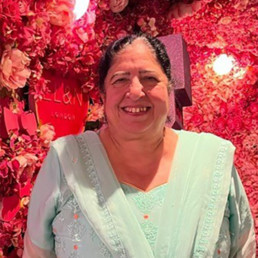
Written by Bushra Nasir CBE DL BSc (Hons.)
Mrs. Bushra Nasir is currently Chief Executive Officer (CEO) of the Drapers’ Multi- academy Trust (MAT) comprising of 5 schools in London. She line manages the Headteacher of each school and the MAT Executive team. All the schools are now judged at least Good by OFSTED and provide great opportunities for social mobility in an area of high deprivation.
Have you ever been asked about the meaning of life in the classroom? What about the origins of the universe or beliefs about what happens when we die? If you have then you have the same experience as the seven in ten parents who talk about these topics at home with their child. This was the finding from a new survey by Culham St Gabriel’s Trust, which found religion and philosophy was a hot topic at home. It’s unsurprising then that a majority of parents – almost seven in ten, saw value in the religious and worldviews approach to religious education.
Though the Census reveals that traditional religious affiliation is declining, society isn’t necessarily becoming less religious. Many people still engage with these questions because they are at the heart of what it is to be human. Societies have pondered these questions for thousands of years – and it is our privilege as teachers to continue this tradition and help the next generation explore both religious and non-religious responses to them. The reality is that everyone has a worldview. It is our unique way of understanding, experiencing and responding to the world around us.
The Census results have emboldened the renewed focus amongst educators on how we teach religion and belief in the classroom. Many of these conversations have been informed by the thinking behind the 2018 Commission on RE report that recommended both religious and non-religious perspectives be taught through a worldviews approach. What the Commission recommends is that the worldviews approach becomes the lens through which these ideas are taught.
What does this mean? To have a worldview is to appreciate the lived experience of religion or belief, and also that this may change over time. A worldview is a way of appreciating the pluralistic and diverse nature of belief in modern Britain. People’s worldviews may be made up of both religious and non-religious ideas. For example, ideas about how people should behave may be rooted in a religious belief, but may also have a moral or ethical perspective.
Research done by the think tank Theos prior to the Census confirmed this understanding of belief. It found that about half (51%) of those who identify as non-religious said they do not believe in God. Whilst the number of atheists is significant in its own right, we should not take ticking ‘non-religious’, in a census survey to imply people do not engage with some of the fundamental issues encountered in both religious and non-religious worldviews. They do so, but increasingly outside of a traditional religious affiliation.
A religion and worldview curriculum is about engaging with this idea in the classroom. Since the 2018 Commission on RE report, many schools have started to adopt these principles into their curriculum. I’ve witnessed first-hand the advantages. Students find that they have more of a chance to express themselves as well as engaging meaningfully with events they may already be reading about on their phones or in the news outside of school. RE teachers report finding the approach more academic, and a better use of their specialism. Meanwhile, senior school leaders such as myself appreciate the way this academic and knowledge-rich approach to the subject is consolidated and complements learning in English and humanities subjects.
What should I do if my school isn’t teaching a religion and worldviews curriculum? There are a number of very useful resources which teachers can access through the National Association of Teachers of RE website, to bring the curriculum to their students. However, as someone who is a Champion for RE in schools, I am familiar with some of the poor statistics around the teaching of the subject. More often than not, it’s up to us as senior leaders to ensure there is space for the subject on the timetable. Teaching RE to all pupils is a statutory requirement, and a number of schools ignore this by offering a tokenistic version of the subject. This does young people a disservice and denies them their entitlement to the high quality education in religion and worldviews that they need for life in the modern world.
At a recent debate in Parliament, I was struck by the number of politicians of all parties who made this precise point. Not only can high-quality RE play a role in helping young people get to grips with their worldview, it is also an important part of developing them as young citizens in modern Britain. MPs praised the subject’s ability to provide young people with skills of critical thinking, debating and empathy for the viewpoints of others as well as an appreciation that beyond Britain, the vast majority of the world still follows one of the major religious traditions. This is the type of young person we want to see leaving our school system – ready for modern Britain and the world beyond.
Returning to school in 2023, I look forward to the ongoing conversations students are having in their RE lessons about the changing nature of faith and belief in modern Britain. Of course, the subject of the Census has already come up in many RE lessons, and listening to students reflect on what the results mean suggests they are already getting to grips with their own worldview. Indeed, since these discussions, many have become more curious about the place of religion and belief in our society, and it has prompted them to question and explore their own worldviews, as well as those of their peers. RE lessons are contributing to a more positive, curious and intellectually stimulating environment in many schools. I’d like to see every student in every school experience that.
Stargazing: a Data Story

Written by Matthew Savage
A global education leader, Matthew supports schools worldwide with radical, fresh ways of knowing, helping everyone to be seen, heard, known and belong. A disabled wheelchair user, and parent to two, neuroqueer, adult children, he, his wife and their dingowolf live on the Isle of Skye.
“If you wanna do data science, learn how it is a technical, cultural, economic, and social discipline that has the ability to consolidate and rearrange societal power structures.”
(Hugo Bowne-Anderson, Data Science Anthropologist)
“…saying so to some
Means nothing; others it leaves
Nothing to be said.”
(‘Nothing to be Said’ by Philip Larkin)
When my friends and family ask me what I do, and I say that I help schools worldwide use data more effectively, their response reminds me of Larkin’s poem. Because data is cold and remote, right? And a world away from the purpose of education. In fact, many an educator fears data, and rightly so, as the stick with which they have been, or might be, beaten, in the name of accountability.
However, for me, data, and assessment, are a moral and a revolutionary act. Data and assessment are, if you like, the Great Leveller.
Since being introduced to the worlds of ‘warm’ and ‘street’ data, the sometimes messy tangle of my thoughts about assessment have been woven together as an ensign for equity and justice.
As school leaders, if do not ask ourselves, as Norah Bateson would do, “But what is the warm data on this”, if we allow ourselves to take any piece of data out of context, to pluck it, cold, from the ecosystem on which it depends, and which depends on it, we are compounding “already wicked problems”.
And if we do not “pound the pavement”, and intentionally seek the authentic stories of those students, and groups, currently residing on the margins of successful learning and positive wellbeing in our community then, again, as Freire would say, this is a violence which “dehumanizes the oppressed”.
However, if we take all the jigsaw pieces of data at our disposal, and we carefully put them together, something amazing, and revolutionary can happen. A wise ‘data storyteller’ with whom I have the privilege to work explained to me that, for her, data in our schools is a galaxy. We need to seek out even the faintest stars, and join them together into constellations; each constellation will help us read the story of the marginalised students in our care, and render our schools more equitable and just as a result.
So the next time I am asked what I do, I will say that I am a stargazer. And that will be enough.
References:
- Warm Data Lab. Available at: https://warmdatalab.net/warm-data (Accessed: January 2, 2023).
- Safir, S. and Dugan, J. Street Data: A next generation model for equity, pedagogy, and school transformation. Corwin, Thousand Oaks, CA, 2021
- Freire, Paolo. Pedagogy of the Oppressed: 30th Anniversary Edition, Bloomsbury Publishing USA, 2014
Opportunities

Written by Lindsay Patience
Lindsay Patience is the co-founder of Flexible Teacher Talent. She is a Teach First Ambassador, a School Leader and a mother.
Opportunities are usually so exciting and positive, but they can also be a cause of frustration and worry.
Sometimes when an opportunity comes along we ask ourselves: Can I do this? Should I do this? Is this the right thing for me at this time? Are the risks too great? Is this what I want?
I’m usually very much of the mindset that opportunities should be grasped with both hands, we should be 10% braver as #WomenEd say. I think it’s important to take opportunities when they arise to develop myself, to show others it can be done, to make progress, to drive change. Sometimes I feel privileged to have access to opportunities and sometimes I feel I’ve worked really hard to get to them, sometimes I have both of these feelings concurrently. I feel a certain sense of duty to embrace opportunities for myself, for others women, for my children. To show that I can do it, they can do it, we can do it.
I’ve recently been faced with a situation where I have a huge professional opportunity, it is everything I could have hoped for, almost unbelievably so. But it has come at a really bad time for me. I’ve just had my third child, a much hoped for and loved rainbow baby after a sad loss the year before. How I work in the next year or two may need to be substantially different and I’m just not sure I have the capacity to take on the new opportunity that I’ve worked hard to secure. What a waste! What frustrating timing! If it was all just six months or a year later! But it isn’t – it’s now.
So I’ve come to the conclusion that saying no to opportunities can be brave too. It can show others healthy boundary setting and set a good example as a role model. I’m prioritising different things at the moment. It wasn’t the right time but I can make an impact in other ways, there are other paths that I can take later on when I’m ready, when the timing is better. It feels hard to make that decision, it seems both selfish and self destructive in a very confusing way.
I think we often say no to opportunities because of imposter syndrome or to comply with gender norms or because the system prevents us from making genuine choices. Because of this there is a guilt and a fear of saying no to opportunities. We must push ourselves, feel grateful for the opportunity, be a role model and a trail blazer. But sometimes the best thing for you, your personal choice in your unique set of circumstances is to say no to the opportunity. Not to grasp it but to let it pass, maybe delay it, maybe give it up forever. Sometimes that is the best thing to do and the right thing to do. But this can feel wasteful, ungrateful, shrouded in guilt and potential regret. It can lead to resentment and anger where the decision is forced by circumstances. There’s also an undercurrent here of unfairness – I’m in this position because I’m a mother, are fathers facing these same missed opportunities? That pressure and guilt I feel about the opportunity, is that largely because of my position as a woman and a mother? As with so many things, when intersectionality is considered there is likely even more pressure to “be what you can’t see”, to take the opportunities because they may not come again, to want to get the rewards you’ve worked so hard for.
Sometimes it’s ok to let an opportunity pass. They say when one door closes, another one opens – even if you are the one to close the door yourself this is still the case. I will have to be brave enough to trust that there will be other opportunities at the right time for me.
But what do we need to change so that people can truly make choices about opportunities that present themselves? Greater flexibility in how we work? Greater flexibility on timing for starting jobs/projects? Better childcare options? Changes to societal norms and pressure? More opportunities for those with protected characteristics? If we want the best people for the job then we need to think differently about the opportunities people have and how to support them in taking them.