Being an Inclusive Ally; a Way of Being
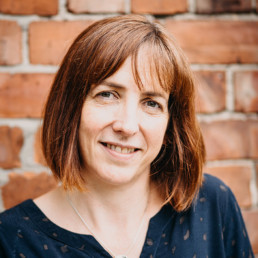
Written by Professor Rachel Lofthouse
Professor of Teacher Education and Director of CollectivED in the Carnegie School of Education at Leeds Beckett University.
An ally is someone who supports under-represented groups and takes action to bring about change. Adrian McLean suggests that inclusive allyship is a ‘way of being’. This strikes a chord with me because at times we use the same phrase about coaching.
A ‘way of being’ means taking an active stance in the world and making conscious decisions about our relationships with others. A ‘way of being’ allows us to transform ourselves, positively influence the lives of others and create fairer, more just and more successful institutions and society. As a ‘way of being’ inclusive allyship alters our thinking and our actions, making what at first is likely to need deliberate work and to sometimes feel uncomfortable, become a non-negotiable part of our identity and positionality.
But what does it mean to be an inclusive ally, what does it require of us and why is it necessary?
These were the underpinning themes of a recent webinar which I was proud to chair. The event was co-hosted by CollectivEd, the Carnegie School of Education and DiverseEd, with panellists Adrian McLean, Bennie Kara, Hannah Wilson and Damien Page. Through their provocations and responses to questions we gained opportunities to explore the theme. The panellists’ contributions blended personal narratives with challenges to participants to reflect on their own roles and actions as allies. Childhoods, school and family experiences, spheres of influence, the need for personal advocacy and opportunities to disrupt and challenge the status quo were discussed. I have taken their words and propositions and threaded them together as my personal way of making meaning of my learning.
Though we have privilege not everyone shares it.
Have intention and be bold.
We can challenge what happens in front of our eyes,
Call out inequality and hand-over the mic.
With commitment we learn.
With energy we act.
With empathy we change.
With power we lever.
Show solidarity and live with discomfort.
If we share the work, it will be done sooner.
Lives will be richer and our society fairer.
Expect equity for all.
Webinar Panellists
Bennie Kara:
Bennie is a deputy head teacher. She is also a professional associate of the Centre for Race, Education and Decoloniality at Carnegie school of Education, Leeds Beckett University. She is the author of ‘Diversity in Schools and a co-founder of #DiverseEd.
Adrian McLean:
Adrian is a MAT leader, and a trustee of Governors for Schools. He is also a speaker, trainer and mentor.
Damien Page:
Damien is Professor of Education and Dean of the Carnegie school of Education, Leeds Beckett University. His research interests include alternative provision and surveillance in education.
Hannah Wilson:
Hannah is a leadership development consultant, and former principal. She is co-founder of #DiverseEd and #WomenEd. Hannah is a CollectivEd Fellow and works in a range of coaching roles.
The Diverse Educators’ Inclusive Allyship Toolkit:
- Video: Yamina Bibi https://www.thebelongingeffect.co.uk/our-resources/ (Session 3/ October)
- Video: Amy Ferguson https://www.youtube.com/watch?v=yDDDcLKV13E
- Video: Patrick Ottley O’Connor https://www.pscp.tv/w/1ynJOqLYgBEKR
- Blog: Yamina Bibi https://www.thebelongingeffect.co.uk/inclusive-allyship-2/
- Blog: Hannah Wilson https://www.thebelongingeffect.co.uk/inclusive-allyship/

How does material deprivation intersect with ethnicity to understand the variations in the achievement among BAME students?
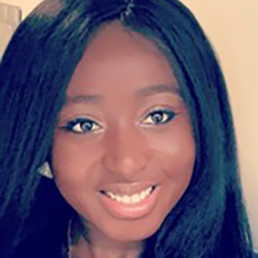
Written by Nicole Edwards
Deputy Curriculum leader for Social Sciences/Aspiring Heads Student 2020-21
This blog will explore the relationship between material deprivation (social class) and the differences in achievement among Black and Minority Ethnic Groups (BAME) within the United Kingdom.
It can be argued that there are differences in achievement on groups classified as BAME. According to a report published by the UK Government (2019) titled ‘GCSE results (Attainment 8)’ highlights that overall, students classified as Chinese or Asian tend to have a high attainment 8 score. For example, on average Chinese students scored 64.3 out of 90 and Asian students scored 51.2 out of 90, whereas students classified as Black, scored on average 44.9 out of 90 (UK Government, 2019). However, there are some significant differences in achievement among students classified as Asian. For example, according to the above report, Indian students tend to have a higher attainment 8 score, of 50.6 out of 90 (UK Government, 2019) compared with that of Pakistani students, who score on average, 46.2 out of 90. Similarly, there are variations in achievement amongst students classified as Black. For example, Black African students on average have a higher attainment 8 score of 47.3 out of 90 compared with Black Caribbean who score on average 39.40 out of 90 (UK Government, 2019).
The material deprivation theory (which links to social class) could be useful in understanding why there are variations in achievement among BAME groups, which could have an impact on life chances. The term ‘material deprivation’ refers to households which are unable to afford basic resources (including educational resources, school uniform, food etc). The term ‘life chances’ coined by sociologist, Weber, refers to the chances that different social groups have of obtaining those things in society regarded as desirable. For example, educational qualifications or of suffering those things regarded as undesirable, such as, low income. According to Guy Palmer (2012) almost 50% of BAME students tend to come from low-income families which can impact their life chances. For example, some may lack the necessary economic capital to access high-quality education. This includes, not being able to afford extra tuition to support with their learning outside of the classroom, computer devices and internet access for online learning. An article written by Jimenez (2020) discusses the impact of the ‘digital divide’ during the COVID-19 pandemic, on ethnic minority students in the UK, highlights that some students from low-income families less likely to have access to the internet, leading to a gap in educational progress.
Furthermore, the intersectional relationship between ethnicity and material deprivation, can be reflected in statistical data on Free school meals (FSM) and achievement. In a report by UK Government (2019) indicates that a number of Pakistani, Bangladeshi, Black African and Caribbean students from low-income families are eligible for FSM. The material deprivation theory can therefore account for the underperformance of some Pakistani, Bangladeshi, Black African/Caribbean students are on FSM, because some of them are unable to afford the necessary academic resources to help them with their studies. As a result, ethnic minorities who are materially deprived and who on FSM tend to make less academic progress than that of students who are not on FSM. As supported by UK Government Report (2019) highlights that pupils on FSM made -0.53 progress, compared with students non-FSM students, who made 0.05 progress on average in 2019. However, not all ethnic minorities who are classified as FSM underperform significantly in education. It is important to note that Chinese students classified as FSM, made an average progress of 0.66 (UK Government, 2019). In addition, the difference between the progress of Chinese students on FSM and Chinese students who are non-FSM tends to be minimal. Therefore, in this instance, it might be worthwhile understanding whether culture, rather than material deprivation, has more of a significant impact the achievement of Chinese students.
In conclusion, this blog has discussed how material deprivation intersects with ethnicity in relation to achievement among some BAME students. It has referred to statistical data on attainment scores of BAME groups, including, Chinese (who tend to have a high attainment score) Asian and Black ethnic groups. Notably, there are variations in achievement within both Asian and Black ethnic groups. The material deprivation theory has proven to be useful in understanding the impact of lack of income and resources upon the achievement of some BAME students.
References
Jiménez, D (2020) The Disproportionate Educational Impact of Covid-19 on BAME students. Available at: https://epigram.org.uk/2020/09/03/the-disproportionate-impact-of-covid-19-in-bame-students/ .
Palmer, G. (2012) The Poverty Site. Available at: www.poverty.ac.uk.
UK Government (2019) GCSE results (‘Attainment 8’). Available at: https://www.ethnicity-facts-figures.service.gov.uk/education-skills-and-training/11-to-16-years-old/gcse-results-attainment-8-for-children-aged-14-to-16-key-stage-4/latest
What does it mean to belong in our diverse school communities?

Written by Jac Bastian
Has worked at Diversity Role Models for 4 years and has trained thousands of staff members, delivered workshops to students at every phase and created a range of teaching resources on LGBT+ inclusion.
For most of us, diversity is the reality of our schools. We are communities made up of people from a wide range of backgrounds, cultures, religions and so much more. Diversity Role Models’ recent report found that 14% of secondary students surveyed identified as part of the LGBT+ community. This diversity is the reality of school life, but ensuring that students and staff who are LGBT+ feel like they belong in our schools is the challenge we all face. Sadly, our report also found that only 27% of secondary students felt that someone who was LGBT+ would feel safe to come out at their school. If we cannot be ourselves it is hard to feel like we belong.
For nearly 10 years Diversity Role Models have brought LGBT+ and ally role models into classrooms to celebrate our differences, to embed empathy and to help transform school cultures to ensure all students feel like they belong. In primary we focus on celebrating diverse families and in secondary we explore the impact of discrimination and derogatory language. In my four years working with the charity, I’ve had the privilege of seeing first-hand the impact of role model stories on young people in schools across the country.
For me, our workshops have two clear purposes. Firstly, it is to provide positive representation, reassurance and inspiration for any students who may be questioning their sexual orientation or gender identity. To let them know that they can live a happy, successful life being their true self and they deserve to feel like they belong in their school. I’ve had so many students tell me that our workshop was the first time they’d seen someone like themselves represented in their school and we know what a difference that can make.
The second purpose of our workshops is for all the other students who do not identify as part of the LGBT+ community. It is vital that those students understand the role they have in shaping the culture of a school and understand what they can do to ensure others feel like they belong. A personal highlight of mine was hearing two Year 10 boys discussing homophobic language after hearing a powerful personal story on the subject from our role model Alex. One turned to the other and said, “you know when we call James a faggot…maybe that’s not ok!”. It, of course, seems obvious to us that such behaviour is not ok. But allowing students the chance to reflect on the often-unintended impact of such language allowed them the space to reconsider and change their behaviours. At the end of our workshops 84% of secondary students anonymously say they would support a friend who came out as LGBT+. That’s the power of personal stories. If I’d seen even half that number of my classmates say they’d have supported me to come out it would have totally changed my time at school.
One of the key findings of our report was that schools that regularly taught about LGBT+ identities were also the schools in which students said that homophobic, biphobic and transphobic language and bullying was less common. To ensure our LGBT+ students feel like they belong we must embed visibility and actively celebrate the diversity of our school communities. We must embed this in our ethos and values, in our lessons, assemblies, libraries, displays and even in the examples we use. A member of our Student Voice Group once told me that her maths teacher used an example of a same-sex couple in a maths problem and from that moment on she knew there was at least one person at the school she could talk to if she needed. No matter how small, each action we take can make a difference.
To make this easier for teachers we’ve made a series of videos featuring stories from our inspiring role models freely available for this term. With LGBT History Month almost upon us, now is the time to actively embrace this visibility across the curriculum and embed it in the culture of our schools. Our schools are already diverse and it’s time we took the necessary steps to ensure every student feels like they belong.
Nothing to See Here
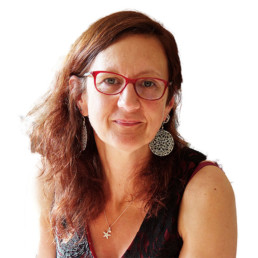
Written by Lena Carter
Writes and speaks extensively on a range of issues related to inclusion and equity.
In December I wrote a post about my achievements in 2020:
https://lenabellina.wordpress.com/2020/12/31/pride-after-a-fall-or-the-highs-and-lows-of-2020/
It was a bit cryptic and I made reference to a new piece of information that I had come upon that had helped me to understand myself a bit better.
I am now in a position to say that the information was a diagnosis of ADHD. At 51 years old, I have finally found some more answers to my life-long feelings of “otherness” and restlessness.
After diagnosis, I wrote a letter to my closest friends explaining what I had found out and shared some of the reasons for me seeking diagnosis:
* the fact that I was very close to burning out, having tried to fit in and keep going over many years in spite of the immense effort of trying to manage and keep a lid on my hyperactivity and poor focus regulation.
* the fact that being 51, peri menopausal and in the middle of a pandemic seems to have massively diminished the efficacy of my coping mechanisms, honed over 5 decades….
* the fact that, after years of soul-searching, talking, writing and trying to fix myself, there was still a part of my jigsaw missing.
If you are interested, this is the best summing up of what I have been living that I have read. The lost girls: ‘Chaotic and curious, women with ADHD all have missed red flags that haunt us’ | Attention deficit hyperactivity disorder | The Guardian
And this has been astonishingly enlightening. https://www.additudemag.com/secrets-of-the-adhd-brain/
Of course, me being me, I immediately thought that I would need to “get on and write a book about it”, or at least add yet another Postscript to my other book to help other people in my situation. But actually, this diagnosis isn’t about me helping other people. Yet, at any rate. It is about me helping me, and accepting help from others, to understand what I can do to improve the quality of my life, albeit at a more advanced age than might have been ideal.
In fact, looking back myself at my book, with the knowledge I now have, I can see that it makes very good sense as a record of an undiagnosed woman with ADHD who was trying to progress along a journey of self-discovery without the right map:
https://open.spotify.com/show/6fYtR94Xjo2HdrK0f2wDIu?si=8xobMQG8ROWp2QelRwso-Q
And as I read this, now, with the benefit of hindsight, I really wonder why a penny didn’t drop sooner: http://www.pedagoo.org/wellbeing-15-16-teacher5adayslowchat-scotedchat/
Fortunately for me and everyone else, I don’t need to write the book in any case as, in a slightly spooky parallel universe way, an amazing woman called Emma Mahony has already written it. I mean, she claims it is about her, a Modern Languages teacher who sought diagnosis at 51, after a life full of incredible achievements but also blighted by constantly being at odds with the world….but she has done a pretty damn good job at writing about my experiences, without ever having met me.
Emma’s book is my new bible, along with a range of other sites she recommends. I would strongly recommend it to anyone with an interest in knowing more. https://www.amazon.co.uk/Better-Late-Than-Never-Understand/dp/1789561949
So, for now, I am not writing a book. I am not trying to save the world. I am not trying to blame everyone else or just keep trying harder. I am learning to accept that my brain doesn’t work in quite the same way as most people’s. I am also coming to understand that, with that, comes challenges but also great possibilities.
I am slowly and cautiously accepting that the Story of My Self from now on is the story of having both a hidden disability and a superpower. Maybe when I feel a bit more at ease with this, I will write more, do more, advocate more. Or maybe not. Maybe I will just live for a bit.
In the meantime, here’s a playlist of songs that help me to make sense of it. https://open.spotify.com/playlist/3Kv3z4a5bBtywBEtL7dWct?si=udMhonMqQdaceOBMUcFb9Q
A Wider Sense of “Normal”
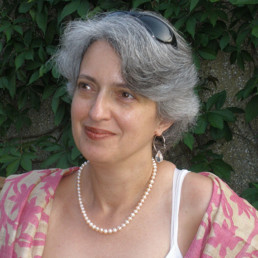
Written by Artemi Sakellariadis
(she, her) Director, Centre for Studies on Inclusive Education (CSIE)
It all started with a quiet, precious family moment on New Year’s Day: father and son snuggled up on the sofa. Savouring the moment, he took a selfie. Then, in the spur of the moment, he improvised a tongue-in-cheek caption and posted it on twitter.
Then something spectacular happened. First a few responses trickled in, then a few more, then literally hundreds of responses poured in, and within a couple of days the BBC wanted an interview. And then, slowly, posts quietened down and the whole thread now rests in the ether, testament to love, inclusion and a powerful counter narrative of difference.
It seems that everyone who posted in that thread shares a common experience and a remarkable secret. “So terrible being the dad of a learning disabled young man” said the original tweet. In response, countless others posted photos of happy moments with disabled family members, with similar comments.
“Yep, it’s awful” said a father pictured with his son, both grinning unreservedly. “Yes, I find it terrible also…” said another, posting a photo of a precious moment. And on it went: family photos brimming with joy were posted with comments such as: “Untold misery”, “Wouldn’t wish it on anyone….”, “So little to feel joyful about”, “Absolutely horrendous”, “Don’t know how we manage”. And all the while, the father who started this thread was responding to posts with more sarcasm, for example: That looks especially unhappy. / I am so sorry for you. / Continuous pain and misery, I can tell. / No love, no intimacy. / Oh that looks grim. Stuck inside all the time [for an outdoor photo] / No fun at all. / That looks absolutely tragic.
If you thought that the common experience is raising a disabled child, this blog post is especially for you. I cannot see what that would be, as every child and every family are different. I was referring to the common experience of dealing with other people’s misconceptions: regularly coming up against widespread assumptions about how terrible it must be to have a disabled child.
“And the remarkable secret?” I hear you ask. You may have guessed. It is the knowledge that raising a disabled child is not a tragedy. It is remarkable precisely because it is a secret, i.e. not widely known (and that is not because those who know it are not saying it, but because those who do not know it are not listening).
Reading through all these posts reminded me of Emily Perl Kingsley’s “Welcome to Holland” (1987), where she likens the experience of having a disabled child to the experience of planning a holiday in one place (Italy) and finding yourself in another (Holland). She describes how initially you might resent the situation, or the place where you are now (Holland, in the holiday analogy), and how difficult it must be to keep hearing everyone else say what a wonderful time they had in the place of your dreams (Italy, in the holiday analogy). Yet, over time, you realise that you are in a different place, which may be slower-paced and less flashy than where you wanted to be, but it also has things to offer which you would not have found in the place of your dream (for example windmills, tulips and Rembrandt in the holiday analogy). And, she concludes, if you spend your life mourning for a dream you have lost, you may not be able to enjoy the existence you have found.
I often wish that more educators would take the journey which Emily Perl Kingsley describes. It would mean that disabled children are better understood and appreciated for who they are, rather than regularly seen as a poorer version of an imagined alternative self without impairments. Educators may not have harboured dreams for children in the way parents usually do, but this journey would help them see disabled children for who they are; not who they are not.
As I have written elsewhere (2012), being different does not make anyone less worthy and we may need to redefine what we consider “normal”. Instead of referring to what is shared by most people – which is better described as “usual” – I suggest that, if we are to use the word “normal” at all, it refers to the full spectrum of human diversity: everything that is a natural expression of our shared humanity.
You do not have to take my word for it. After all, I am neither disabled nor parent to a disabled child. This writing, like all my work, is from the position of a disabled people’s ally. But do, please, visit this twitter thread and hear this message from all these families who have first-hand experience of living with disability. The original tweet has been liked over 23,600 times and retweeted almost 1,500 times. The full thread can be viewed at https://twitter.com/RoseUnwin/status/1345152389079326721.
REFERENCES
Kingsley, E.P. (1987) Welcome To Holland. Available at: www.emilyperlkingsley.com/welcome-to-holland (accessed January 2021).
Sakellariadis, A.I. (2012) A wider sense of normal? Seeking to understand Pierre Rivière through the lens of autism. Emotion, Space and Society, 5 (4): 269–78, special issue on Pierre Rivière.
Diverse Educators: A Manifesto
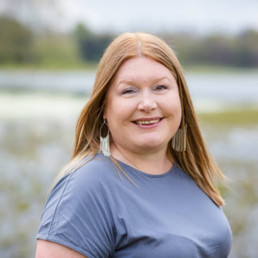
Written by Hannah Wilson
Founder and Director of the Belonging Effect (formerly Diverse Educators).
In August 2020, at the end of the first UK lockdown to curb the spread of Covid-19, Bennie and I sat in the sun in my garden, down the road from the school that we had started together a few years previous and we drafted a proposal for a book. We had met through Twitter and #WomenEd 5 years before that, we were both English teachers and secondary school leaders, we are both feminists who are passionate about diversity, equity and inclusion in the school system. When I secured my headship, Bennie applied to my Deputy Headteacher, and led on our values-based curriculum with diversity and equality embedded across it. A regular topic of conversation in the time we worked together was about the books we were reading and the books we were going to write, individually and together. We knew it would happen one day!
Many of you will know that Bennie is the reason Diverse Educators was started, she came to my office one day and shared her frustration with me at having to split herself multiple ways to go to different events each weekend to explore her intersectional identity. I checked my privilege as a heterosexual, cisgender, able-bodied white woman and reflected on this. We discussed the idea of hosting one event and inviting the communities from #WomenEd, #BAMEEd, #LGBTed and #DisabilityEd to come together, at the same time, under one roof to have a joined up conversation about identity. Our inaugural Diverse Educators event was in January 2018, at which #LGBTed officially launched and Bennie closed the grassroots event with a powerful message: ‘Don’t Tuck in Your Labels’.
Fast forward three years and Bennie is now a Deputy Headteacher at an all-through school where she is leading on curriculum and I am working independently as a Leadership Development Consultant, Facilitator and Coach specialising in diversity, equity and inclusion. We launched the Diverse Educators website, with the help of our partners, in the middle of a global pandemic in response to the spotlight on racial inequities, and the amplification of Black Lives Matters, triggered by George Floyd’s murder. At our first virtual event in June 2020, we were joined by over thirteen thousand people.
The world has finally woken up to the need for social justice, society can no longer ignore it and the school system can no longer not prioritise the urgent need to embed the diversity, equity and inclusion agenda strategically into our schools. Bennie has recently published her first book: A Little Guide For Teachers: Diversity in Schools and we are now inviting the #DiverseEd community to lean in and contribute to our book: Diverse Educators: A Manifesto.
Our book will be structured, like our website, around the Equalities Act. There will be ten chapters, one for each of the nine Protected Characteristics (Age; Disability; Gender Reassignment; Pregnancy and Maternity; Marriage and Civil Partnership; Race; Religion and Belief; Sex; Sexual Orientation) with a tenth chapter exploring intersectionality.
Each chapter will have a chapter editor who will work with ten contributors offering a multiplicity of perspectives on the protected characteristic being explored in the chapter. Each submission will be 1200-1500 words long. Each contributor will interweave personal and professional narrative, framed in theory, to respond to current and historic debates. The chapter editor will write the introduction to the chapter to give context and to frame the chapter’s narratives, arguments and provocations.
We are committed to capturing the collective voice of our community and to showcasing the diverse lived experiences of educators. We are keen for Diverse Educators: A Manifesto to be both academic and accessible. You can review the style guide here. We intend for the book to be solutions-focused with high-quality input on practice, pedagogy, people management and policy.
We would love to hear from you if you would like to contribute. You can submit an expression of interest here. Thank you in advance for your time, energy, experience, expertise and support in contributing to our #DiverseEd book, we are looking forward to celebrating the collective commitment and amplifying your voice.
Why Decolonise the Curriculum?
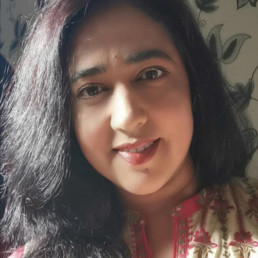
Written by Nuzhat Uthmani
Primary Teacher specialising in Global Citizenship and Antiracist education
I posed a survey through @Scotedpolls recently in which 25% of respondents said they did not feel they needed to decolonise the curriculum. Despite the majority of respondents expressing an interest in learning more, this statistic stuck with me. Is it because educators don’t understand what the term means or is it because they don’t see that there is an inherent problem with our curriculum? Let me address both these possibilities.
This time last year, even I had not heard of this term. Lockdown allowed me the freedom to invest in my own professional development and, as an advocate of global citizenship, I learnt more about decolonising the curriculum and its impact on the education system.
Traditionally, much of our curriculum is framed around the successes of the British Empire. It fails to acknowledge the contribution of communities and nations without which the empire would not have been as successful or wealthy as it once was. The stories of what those nations sacrificed as a result has been hidden away for centuries. Decolonising the curriculum refers to the inclusion of those stories, characters and contributions of others around the world that has impacted on the lives that we live today.
The Black Lives Matter movement is seeking to do this by raising awareness of how the UK gained from the slave trade while committing human rights abuses on those communities. However, as educators we must be mindful of not promoting a stereotypical view of certain groups. When we teach about slavery, we should be mindful to also teach about the contribution of Black, Asian and Ethnic Minorities to Science, the Arts and Politics for example.
I’m on a mission now to embed diversity across all the curriculum. It does not mean scrapping everything we know and teaching new topics, instead it involves a mind-shift from educators, ensuring the inclusion of diverse examples and resources in their daily teaching. It means ensuring that one narrative doesn’t dominate out curriculum but a diversity of perspectives and experiences are represented.
So, what about those in our community who feel nothing needs to change? My question to those is how inclusive is your practice? Holding standalone themed weeks is a box ticking exercise we need to move away from and embrace diversity in all that we do. If you rarely use books with characters of colour, if you only use examples from the Western world, then that is not inclusive to those learners who never see their heritage valued within the classroom, so please think again.
If you want to learn more please check my blog on Global Citizenship Education for lesson plans, research, and links to a variety of organisations who are all working towards establishing anti-racist education and can help you get started on your journey to offering a more inclusive and diverse curriculum.
A Reflection on My First Year of Teaching, Inspired by #DiverseEd

Written by Char Aramis
A primary NQT who uses they/them pronouns. Char blogs at transteacher.wordpress.com
Along with many others, I had the joy of listening (and tweeting!) along to the online #DiverseEd event on 17th October. When Hannah Wilson (@Ethical_Leader) asked me to write a blog response, it took me a while to decide on a subject, but we all know that the best way to improve is to reflect on what we’ve done before, so here is a reflection on my first year of teaching through a lens of diversity and inclusion.
I am going to use the things I have learned over the last few months to reflect on the things that I taught and the way that I taught them – specifically topic in terms 1, 2 and 4, because covering everything would make this blog far too long. However, I am still new to this – and to teaching! – so I welcome any additional points or suggestions you may have after reading this.
Because of the topics we studied, most of the issues here relate to race, ethnicity and nationality. For context, we were based in an area in the South West of England where nearly 85% of people were born in the British Isles. Of the rest, a good chunk hail from Poland, with others from Romania, the Philippines, Turkey and Bangladesh making up the rest. In my class, about half of the children had English as an additional language, including children from all of the countries listed above plus one or two others. Roughly two-thirds of them would generally be considered White.
So then, let’s get started. As I’m sure many schools did, we ran a Black History topic at the start of the year. Each year group focused on a significant Black person from history and we studied Nelson Mandela. We also briefly mentioned Martin Luther King Jr and Katherine Johnson in an end-of-term art project, which was displayed in the school for the rest of the year.
Now, if I recall correctly, these had been decided before I joined the school. Nonetheless, I don’t think I noticed at the time that thing that appears strikingly obvious to me now: none of these figures is from British history. Most of them, as is common in our studies of Black history in British schools, are from the United States and Nelson Mandela is of course from South Africa. I wonder if perhaps this is worse: I expect South Africa – a country that many of these pupils may never have heard of – seems much more remote and less relevant to them than America, which they at least engage with regularly through film and television.
We discussed racism and protests and fair treatment, but I certainly lacked the confidence and knowledge to address these subjects in the way they deserved (it was my first ever term of teaching). I do still feel that I would benefit from further training and resources to support this.
If I were to teach Black history as a topic again, I would definitely seek to choose a figure or subject that is more relevant to British history. The Bristol bus boycott or Windrush, for example. If I had to teach Nelson Mandela, I would link it back to racism in the UK around the same time – although we had no official segregation, I could teach about Britain before the Race Relations Act(s) and cases such as that of the marriage between Seretse Khama and Ruth Williams.
Our term 2 topic was extreme weather, specifically tropical storms. We focused on tornadoes and Kansas because we linked this to The Wizard of Oz. There was essentially no representation of any under-represented groups here – focussing for the moment on the topic teaching and not any subjects that are or could be discussed in relation to the book.
In the interests of allowing children to be seen in our curriculum and broadening pupils’ geographical knowledge beyond “the West” (I notice that the National Curriculum for KS2 only requires geographical study of regions of “the United Kingdom, … a European country, and … North or South America”), we perhaps could instead have looked instead at the Philippines, Bangladesh or the Pacific Islands (one child in the class was from Melanesia), which can also experience tornadoes, typhoons and cyclones. The difficulty here I think would be in deciding whether to focus on one over the others and if so, which one. Additionally, it would have been very specific to my class and much less relevant to the parallel classes in the year group. However, it could have been an opportunity for certain pupils to talk about the countries their families come from and perhaps teach their peers something of the language they use at home.
In term 4, we studied the Amazon Rainforest. I had planned a lesson on the history of the major city of Manaus, including its (pre-)colonial history and the impacts of the rubber industry, but I never got a chance to deliver it because we closed for lockdown. This is a subject which, I’m sure, deserves more than one lesson but the focus of our topic was actually on the physical geography – rivers and rainforests – as well as map work with a little human geography squeezed in.
I never fully finished the plan for this lesson so it’s difficult to evaluate it, but if I were to come back to this topic, I think it is worth considering the perspective from which I tell this history. It is important to show the effects that the arrival of Europeans had on indigenous populations and their home, and to consider the way they were treated. I do think I would probably need some support to do that topic justice.
There is an awful lot more to be considered regarding both the content and approach of my first year of teaching but that will have to wait for future blog posts – probably over on my own blog. Thank you for reading – any comments, feedback or questions are welcomed and encouraged.
Interactive Diversity Calendar 2021
Written by Dual Frequency
Dual Frequency is a teaching resource provider that seeks to promote dialogue in relation to inclusion
This December, Dual Frequency is thrilled to share with you a brand new interactive diversity calendar that can be used in schools, education settings and other organisations to ensure you never miss a significant date in the EDI calendar.
Why is the diversity calendar important?
Because diversity matters, every single day! The more we immerse ourselves in diverse groups, the more we will be able to celebrate positive representation of these groups, and the richer our communities become.
How can you implement the diversity calendar within your organisation?
The diversity calendar includes a mixture of equality, diversity and inclusion related events along with key dates. This is not intended as an exhaustive list. At a glance you can see the key dates that are listed each month, click the date to be signposted to a resource and more information, plus suggestions of how you can celebrate the date.
How does the colour code in the diversity calendar 2021 work?
The calendar is colour coded to the strands of the Equality Act 2010. It is important to value everybody’s contribution to society all year round: far too many communities are so regularly overlooked in the Gregorian calendar. By focusing on the protected characteristics that fall under the Equality Act, our hope is these communities will no longer be overlooked but celebrated in contrast.
If you require the calendar in a different format, such as large text or on an (accessible) yellow background, then let us know and we will do our best to meet your requirements.
How do I get my calendar?
Download yours right now by clicking this link: https://www.dualfrequency.co.uk/diversity-and-inclusion-calendar-2021
If you are in a position to make a donation for your calendar, then we appreciate this. It helps to keep a grassroots organisation like Dual Frequency running and makes a huge difference to our community fund which ensures we can pay our contributors for their time and efforts.
Lest We Forget
Written by Angie Browne
Education leader and founder of Nourished Collective. Author of Lighting the Way: The Case for Ethical Leadership in Schools
I have been busier than ever lately, which is a great problem to have, but as I was explaining to a group of school leaders this week, it’s also a sobering problem to have. Sobering because most of my work comes from supporting organisations who are embracing Diversity, Equity and Inclusion in the wake of the murder of George Floyd on May 25th 2020 in Minneapolis, Minnesota.
As I am going about my work, a refrain that repeats itself over and over is ‘lest we forget’. For most of us, ‘lest we forget’ has come to have meaning through commemorative war services, services honouring soldiers that have fought and died. However, the phrase, with biblical roots, is generally attributed to Rudyard Kipling’s usage in his poem ‘Recessional’.
It seems curious to have landed on this phrase, used to celebrate British imperial power and rue its demise by Kipling. Curious because I now use it with such de-colonising intent. But, the mind does strange things and perhaps, because I am an English teacher, I so often find myself with fragments of phrases echoing about the chamber of my mind with no direct realisation of the connections being made in there, the relevance to events past and present.
Inheritance, legacy and leaving the world in better shape than I found it are such important concepts for me. I feel grateful to my ancestors daily, seek to be a good ancestor as much as I can and work in ways that allow me to live out an ambition of leaving behind something ‘good’.
I cannot read ‘Dulce et Decorum Est’ without it bringing a lump to my throat. Who is not haunted by the final lines of the poem? Every single time I taught this poem the urgency of English teaching, of education and of creating a world in which our young were not sent to senseless deaths stirred me.
If you could hear, at every jolt, the blood
Come gargling from the froth-corrupted lungs,
Obscene as cancer, bitter as the cud
Of vile, incurable sores on innocent tongues,—
My friend, you would not tell with such high zest
To children ardent for some desperate glory,
The old Lie: Dulce et decorum est
Pro patria mori.
Who among us is not moved by the futility of youthful death articulated in Brooke’s ‘The Soldier’. With a boy of my own now, with young male cousins and nephews galore, imagining a past in which they were sent to a far off end is heart-breaking, and the urgency of creating a better future feels ever more important.
If I should die, think only this of me:
That there’s some corner of a foreign field
That is forever England. There shall be
In that rich earth a richer dust concealed;
A dust whom England bore, shaped, made aware,
Gave, once, her flowers to love, her ways to roam;
A body of England’s, breathing English air,
Washed by the rivers, blest by suns of home.
‘Lest we forget’ comes to me when I deliver Diversity, Equity and Inclusion work because we must not keep churning out the mistakes of the past, we must not forget those that have died in senseless circumstances.
‘Lest we forget’ means that I punctuate my work with the people and the places of those whose lives we commemorate as we learn about the limitations of our humanity and commit to doing better. It means that we remember Stephen Lawrence, the black British teenager who was murdered on April 22nd 1993 in a knife attack in London by a group of his contemporaries. It means that we recognise a bus stop in Eltham, a small corner of South-East London where lies a richer meaning, a responsibility we all have to do better.
As educators the detail about Stephen Lawrence and the boys who murdered him are essential. On the day of Lawrence’s murder he had been at school, his murderers were also of school age. It is vital to my work that we anchor details like this and not allow ourselves the get-out clause of distant proximity, of hazy memory, of foggy facts. Not allow this to obscure the urgency of the work we all know we need to undertake. Work that will ensure that no teenager dies alone at a bus stop, no teenager leaves our school gates and commits such a heinous and hate-filled crime.
‘Lest we forget’ means we remember Bijan Ebrahimi, a disabled Iranian refugee murdered in Bristol on the July 14th 2013 by a man called Lee James. Lee James had been, but a 17-year-old boy when the hate-fuelled campaign against Ebrahimi had begun. Let’s not shy away from the detail and let’s be clear on the facts. Ebrahimi was beaten, dragged into the street and set alight to by a mob who had lost their minds. There is a corner of a street in Bristol where lies a richer meaning, a responsibility we all have to do better.
‘Lest we forget’ means we anchor our work to a deeper purpose. We commit to the individuals whose deaths should make for a future in which it never happens again. In the ambition, the scope, the reach of the work we engage in to tackle homophobic, transphobic and biphobic behaviour we remember Ian Baynham. We say his name. We compute the detail of the brutal attack of a 62-year-old gay man on September 25th 2009 in Trafalgar Square. We acknowledge that his attackers were of school-age at the time of the attack that led to his death. We commemorate his life in a small corner of Trafalgar Square, acknowledging a richer meaning, a responsibility we all have to do better.
At the heart of Diversity, Equity and Inclusion work for me is a desire to be respectful enough to know who we remember and why. At a personal level, it’s about a past that stretches way back to times when my ancestors were enslaved, put on boats and then brutally put to work, my responsibility to them is to make the absolute most of my liberation. At a societal level, it’s about saying the names of the people who have given their lives needlessly, and collectively understanding what we want and need to do differently to create the kind of society we are all proud of. At an institutional level, it’s about being bold enough to give the lives of Stephen Lawrence, Bijan Ebrahimi, Ian Baynham and countless others meaning through the ambition of our work, our curriculum, our institutional cultures, our organisational structures and processes.
So, over the coming weeks and months, I urge you not to forget, not to get sloppy about who we remember, why we remember them and what our remembrance means for the future. I encourage you to take care and not slip into the laziness of statements like ‘when all the George Floyd stuff happened’. Remember, with care and attention to the details, the dates, the names and follow that golden thread of careful thought through to its manifestation in precise, detailed and luminary action in your work and your life.