
Navigating School Life
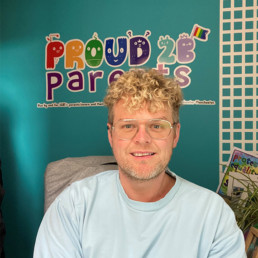
Written by Matt Taylor-Roberts
Matt Taylor-Robert (He/Him) is the Founder and Managing Director of Proud 2 b Parents and with his husband, Matt is an adoptive parent to their amazing son. He feels privileged to work for a regional adoption agency as an independent panel member and has previously worked for an independent foster agency within the same role. However, he had to step away from this role due to becoming a foster carer for this agency. Matt has previously worked within Children's Services for a local authority. To find out more about Proud 2 b Parents please head over www.proud2bparents.co.uk.
As a gay dad, I embarked on a remarkable journey when my child entered school. From the early days of reception to the transitions and milestones of Year 1, I’ve witnessed firsthand the joys, challenges, and triumphs of being an LGBTQ+ parent in the educational system. I therefore wanted to share my experiences, insights, and reflections, shedding light on the unique journey of a LGBT+ parent navigating their child’s schooling.
From the first day of reception, I was determined to create an inclusive environment where my child would thrive. I approached the school teachers, emphasizing the importance of embracing diversity and promoting acceptance among all. I was pleasantly surprised by their open-mindedness and commitment to fostering an inclusive atmosphere. They then looked to me to answer their questions and point them in the right direction of equity and inclusion.
Throughout the early years of schooling, I discovered the significance of building strong relationships with teachers, other parents, and school staff. By being open about my family’s structure, I paved the way for understanding and acceptance. I actively engaged in school activities, volunteering my time and participating in parent-teacher meetings to establish connections and develop a sense of community. I, myself, joined the board of governors, while my partner became the chair of the PTA, ensuring we echoed the ‘normality’ of our family.
As my child progressed through reception and Year 1, I encountered occasional misconceptions and stereotypes surrounding LGBTQ+ parenting. I sometimes took these opportunities to educate and enlighten, sharing our family’s story and dispelling any doubts or concerns. Other times I was exhausted from educating others in the playground and just wanted to stand quietly in the rain, waiting for my ‘baby’ to finish school for the weekend.
Fortunately, my child has not faced overt bullying or bias but we have heard comments such as ‘why do you have two dads’, ‘are they your two dads’ and he has always been the child used for ‘every family is different’.
In Reception and Year 1, schools often organise events and activities that celebrate families, we always ensured one of our son’s parents were there to represent his family and that he had a cheering face in the crowds. We went to ‘Mother day or special person day’ events and planted seeds and enjoyed afternoon tea, as well as engaging in ‘fathers day’ sports activities.
We always felt that collaborating with teachers was pivotal to ensuring my child’s educational experience was positive and affirming. Regular communication, sharing important milestones, and addressing any concerns or questions were key aspects of this partnership. By fostering a strong parent-teacher relationship, we ensured our child received the support they needed to flourish academically and emotionally.
Looking back on the last two years of my child’s journey through school, I’ve witnessed the power of acceptance, education, and collaboration in creating an inclusive environment. While challenges may arise, embracing diversity, building relationships, challenging assumptions, and advocating for inclusivity have proven transformative.
By sharing my experiences, I hope to inspire other LGBT+ families to approach their child’s school journey with confidence, knowing that their unique perspectives and experiences contribute to a more accepting and inclusive educational environment for all.

The Fight Against RSE

Written by Ian Timbrell
Ian is an education consultant and trainer, supporting schools develop their provision for LGBT+ pupils and their RSE curriculum. He has worked in education for 15 years; including as a class teacher and a deputy head teacher.
The cursory glance at social media and the internet suggests that UK RSE curricula include suggestions of bondage, is opposed by most people, is queering education and is a risk to safeguarding. But what is the truth behind this opposition?
The backlash
Broadly, objections can be categorised into three areas: secrecy around RSE; developmentally inappropriate materials; the inability to withdraw from lessons; and the ‘queering’ of education.
The secrecy around RSE
A common oppositional narrative is that schools refuse to show what materials they are using. This view essentially accuses all teachers of not safeguarding their children. We’re not asked to show all materials so why is RSE different? If schools were to publish every piece of planning and resource used, the workload would push an already overworked system to the brink of collapse. This is not to say that there is no transparency. Generally, schools will share this information upon request, or through parent consultations.
RSE is developmentally inappropriate
Opponents of RSE claim it contains messages of anal sex, bondage, pornography and self-stimulation at age 4-6. My son is 9 and I would be horrified if he learnt any of these at his age. But he’s not. Because none of it is in the RSE frameworks.
Proponents of this message often use excerpts of preparatory paperwork as evidence for inappropriate content. But these aren’t in the mandatory documents. As part of any curriculum design process, you look at a wide range of documents to find out everything that is out there. That doesn’t mean that Governments use them, or that you agree with them.
I am not saying that no school has ever used inappropriate materials, but critics fail to acknowledge that these mistakes are in the smallest percentage of schools and instead of banning RSE for all, the individual school should take the appropriate action to ensure appropriate nature of the materials they are using in lessons.
The inability to withdraw from lessons
In Wales, parents are not allowed to withdraw pupils from RSE lessons. Being told that we cannot withdraw our children from any areas of their life is bound to put some people’s heckles up. However, the reality is that this is the case for pretty much every other area of the curriculum. Schools would not allow withdrawal from English or Maths, so why should it be allowed from a framework that aims to develop healthy, happy people?
One of the reasons that withdrawing from all RSE lessons is not as simple as some would like you to think, is that effective RSE is primarily not delivered as ‘RSE lessons’. RSE encourages friendships and respect and so it is impossible to withdraw from any lesson that develops these attributes. What the parents here are generally saying is that they want them withdrawn from sex education and/or mentions of sexuality or gender. Withdrawing from RSE frameworks as a whole is impossible, but withdrawing from sections would be a logistical nightmare for schools and is not realistic.
The ‘Queering’ of Education
This phrase is fascinating, especially because it has no agreed universal meaning. Most opponents seem to be using it as a phrase to suggest that ‘Queer Theory’ is now underpinning education. They are conflating the true meaning of Queer Theory with conspiracy theories to suggest that there is collusion in education and health to somehow convert children to become LGBT+. This is rooted in LGBTphobia and is not founded on anything but discrimination and panic culture.
The real reasons for the backlash
The most obvious and largest group appear to be transphobic and homophobic. The reality is that up to 10% of the population are LGBTQ+ and if we do not ever discuss these things, this whole section of society will grow up wondering why they feel different. But also by deliberately not mentioning LGBTQ+ people, we are saying that they don’t exist, which is phobic in and of itself. Inclusion of LGBTQ+ people on displays, in books and in lessons is not going to turn anyone LGBTQ+, but it will make our world a more inclusive and tolerant place.
An argument opponents to RSE also use is that they don’t want sex talked about to three-year-olds. But sex doesn’t need to be mentioned. At that age, it’s about realising that there are different families and challenging gender stereotypes.
The final reason that I will talk about here is religion. A minority use religion as a reason for their children not to be ‘exposed’ to LGBT+ or gender discussions. I follow a number of LGBTQ religious individuals and organisations, and I can tell you that religion does not spread hate, people do.
Conclusion
In 2021, 5 parents took the Welsh Government to court to ban RSE. Unsurprisingly, they lost the court case as many of the disproved views from above were put forward as ‘evidence’.
The fact is, no matter what change happens in schools, there are always opponents and critics. But when you couple inevitable bemoaners with homophobia and transphobia, there was bound to be pushback. But RSE is key to making the UK an inclusive country and the vast majority of us know that it is the right thing to do and trust the teachers to do the best by their children.
The Time is Now
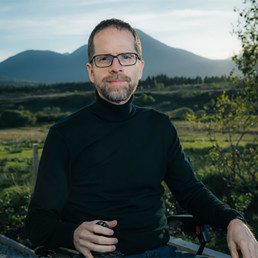
Written by Matthew Savage
A global education leader, Matthew supports schools worldwide with radical, fresh ways of knowing, helping everyone to be seen, heard, known and belong. A disabled wheelchair user, and parent to two, neuroqueer, adult children, he, his wife and their dingowolf live on the Isle of Skye.
I write this as a father, and as an educator. I am angry, and I am scared.
Occasionally, partly as an experiment, I will share simultaneously on Facebook a) an innocuous post with a smiling photo of me; and b) a ‘call to action’ in support of my two trans children in an alarmingly transphobic world. The former consistently attracts lots of engagement, and the latter virtually none. My inference, corroborated by conversations I have had, is that a majority of people do not want even to enter what they see as a polarised and toxic debate.
This seems to me to be a victory for transphobia, and the ‘gender-critical’ right wing: that it is now widely accepted that we need to debate this at all, when any debate over the human rights of any other protected characteristic would be widely deemed abhorrent. Therefore, whilst some would argue that now is the time for calm debate, and for pause and reflection, this post is none of these. For I would argue that there is also a time for advocacy and allyship, and for activism and action. And the time is now.
I was young enough to experience the acidic effect of Section 28 as a teenager. Growing up in the 1980s, I was oblivious of the identities and expressions of the LGBTQ+ community: in part, this was due to a cowardly and shameful lack of representation in the media, sport and public life, and, in part, to the ignorance and fear of the blinkered society which tried to bring me up; but it was also due to the inability and incapacity of educators even to talk about those lives, even as so many of those same lives were being decimated by a new, deadly virus.
This violent clause was repealed in Scotland in 2000 (it seems the nation I now call home was ever ahead of its southern neighbours), as one of the earliest pieces of legislation enacted by the nascent Scottish parliament and, eventually, by Westminster in 2003. Peace had defeated violence, and love had vanquished hate. However, violence and hate, it seems, had not been beaten, but had merely lurked, waiting for their renaissance; and a new Section 28 lies on the horizon.
At the time of writing this, just over 205,000 people have signed a parliamentary petition calling for the government to “Remove LGBT content from the Relationships Education curriculum”, and this is now awaiting a date for parliamentary debate. Meanwhile, just over only 92,000 people have signed a counter-petition calling for that same government not to do so, and the government is only obliged to ‘respond’.
That is 120% more hatred than love, and 120% more violence than peace.
There is no debate, when it comes to deciding who has human rights and who does not. There is no calm when some of the most oppressed, attacked and marginalised children, young people and adults in our society are under attack. There is no reflection, when the facts and the statistics instantly destroy the hatred, on the too few occasions they are shared. And there is no pause, when children’s and young people’s very lives are in danger.
I write this as a father, and as an educator. I am angry, and I am scared.
Please give your voice to peace and love, both through this petition, and through literally any other means possible.
The time is now.
What it really feels like to lead Diversity, Equality and Inclusion
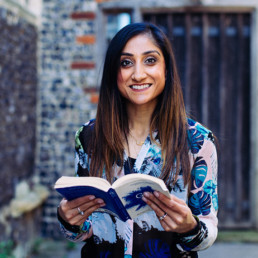
Written by Zahara Chowdhury
Zahara leads on equality, diversity and inclusive education in higher education. She has over a decade of experience in middle and senior positions in secondary education. Zahara is author of Creating Belonging in the Classroom: a Practical Guide to Having Brave and Difficult Conversations. She is founder of the School Should Be blog and podcast, a platform that amplifies diverse and current topics that impact secondary school classrooms, students and teachers.
When I was given a DEI Lead role, I genuinely jumped with joy. It’s my dream job and dream career long term. I’ve delivered workshops, I’ve written, blogged and podcasted more and more about the work I do and I’ve been approached by several people looking to do similar for their organisations. Then I hit a very long ‘DEI-esque’ break: maternity leave. The time has forced me to reflect, feel and be still in many ways about my work. Now that I return as Head of Whole School DEI and Wellbeing, here is a short account of what it really feels like to lead DEI for an organisation and a few tips for DEI and School Leaders looking to create and support this role in their organisations.
It’s overwhelming and underestimated
DEI is everyone’s responsibility because it affects everyone – quite literally. Yet, it’s only recently become a ‘buzz word’ or perhaps only recently has it been given the accolade it deserves; it cannot be ignored. The rise (gift) of wokeism and a Gen Z workforce means it has to matter more.
Needless to say, for many people in the workplace (older millennials like myself, Gen X, baby boomers…) DEI is overwhelming because we are being forced to unlearn or reconfigure what we’ve normalised and learned not just professionally, but personally through our own lived experiences; our personal truths, if you will.
In most cases in the workplace, DEI learning has to happen in a very small window of time, sometimes your own time and at double speed. With post-Covid, work-life imbalance and Adam Grant’s perfect explanation of languishing that many of us are experiencing, it’s safe to say, (un/re)learning about DEI may not be high on anyone’s agenda.
That’s hard work. It’s overwhelming for a DEI Lead who has the responsibility to navigate this change for an entire organisation. At best, they’ll get it onto your radar, at worst, the organisation will be accused of tokenism.
As a DEI lead in education, I purposefully and actively use the words ‘organisation’ and ‘workplace’ because often, people mistake schools for being anything but. Working across a few sectors has taught me schools have very similar ‘issues’ to any other workplace – albeit they’re not really profit making, they don’t benefit from increasing budgets, they’re constantly at the forefront (or receiving end) of any social change or adversity, and they don’t (in many cases) have specialised, on site HR (Trusts, the independent sector, FE all have similar needs and issues). You might say, it makes the work in education more complex and dare I say it, requiring more skill.
Doing this work solo in the first instance, with it still being regarded as ‘new’ (although I’m getting tired of this excuse now) can be justified, but is a big job. But let me caveat this: DEI is a strategic and leadership responsibility which needs its own entire infrastructure. Equally, that does not mean an existing assistant head, deputy or ‘lead’ in schools capacity (desire, interest, or expertise) to do it.
DEI is specialised work, which needs time, strategising, an infrastructure, money, respect and skill – it should be at the heart of your people strategy and at the centre of your safeguarding strategy. It cannot be an add on – it just doesn’t work.
You will always be wired and triggered
Glennon Doyle quite perfectly explains to go where you are triggered in her wonderful book, Untamed. The exact quotation is plastered all over my workplace to remind me of my purpose and ‘why’. Working in DEI is so rewarding – there is nothing more purposeful than making people feel seen, heard, important and real. There is nothing more rewarding than seeing people flourish. Equally, it is so uncomfortable and hard. Really hard. There is nothing more painful than seeing people struggle mentally, physically and emotionally just because of who they are. This takes its toll.
You constantly worry about missing important dates; you want to include everyone and fear missing out on anyone from your DEI strategy; you are at the receiving end of nearly every ‘people’ problem and issue the organisation may encounter. You have an overwhelming sense of guilt and responsibility all at the same time.
The paradox is that the ‘work’ should and almost needs to happen overnight, yet it is not an overnight process.
Intersectionality becomes how you read, translate and respond to EVERYTHING. uncomfortable conversations are your comfortable conversations. A safe space is always vulnerable. And, beyond all of this, you are strategising, leading, managing, and implementing valuable policies and practices to make life so much better for everyone around you.
Whilst navigating Organisational DEI, how do you navigate yourself?
This is something I had to learn fast.
- Strategy and a timeline are key to keep you grounded, on track and suppress the overwhelm. You cannot do it overnight, no matter how urgent and pressing the work is. The top level work takes time and your Headteacher/Leader should give you time to listen, understand and identify key priorities, culture needs, opportunities and more to put a strategy in place. DEI cannot be checked off in a 1 hour CPD session, or even 3 hours of CPD. It cannot be addressed in a few lessons. It is a range of themes, a culture, a mindset and curriculum that needs to be integrated into your whole school and organisation strategy. Rest assured that the work is never done, it just gets better and better.
- You cannot do it alone. Sometimes, schools and teachers (myself included) adopt a martyrdom approach – one person manages and does it all. They become the DEI ‘expert’. They become the go to for ‘everything DEI’ whether that be strategy, staff training, student activities, DEI in the curriculum, operations and more. This can lead to a breakdown in communication, stress, loneliness, workplace conflict, more stress and most importantly, limited impact. DEI can and should be the responsibility of many. There are several strands, areas and several skills that are needed to successfully implement DEI. Once you, as Head of DEI, have created your strategy and proposed the resources needed, reach out to relevant stakeholders; reach out for expertise and give the work the importance and infrastructure it needs.
- Set your boundaries and know ‘your people.’ Leading DEI is a privilege. It is transformative for organisational culture at every level. There is so much to do and you will be pulled, pushed, challenged and propelled in every direction. In many ways this is exciting. In some ways, it can take over your life. Set your boundaries and always come back to the organisation’s vision and your strategy. This will help you set boundaries, manage expectations and make an impact.
Those who lead or specifically work in DEI are good people. They are intensely empathetic, compassionate, intuitive, just, human, brave and vulnerable (I’m biased, I know!). Identify your inner circle, the people you can trust, offload to, seek advice and guidance from. These people will fast become friends, your professional safe space.
Accept that you won’t get ‘DEI right’ first time and you’ll make mistakes, need correcting and need to keep learning constantly. This is a huge, transformative opportunity for you and your organisation – positively embrace it, no matter how scary it may seem.
In conclusion…
Would I change anything about being head of DEI? Absolutely not. I love my work. So much. It is meaningful, testing, and challenging, and I adore every impact it has. And, what do I love most? It’s about steady, meaningful change. It encourages people to confidently speak their truth(s), belong, be seen and be heard. It’s about kindness and respecting difference. It brings out the best in people – and as cheesy as it sounds, that’s the core of what we need for sustainable workplaces, better education and ultimately, good people.
For more support in leading DEI at your school or organisation feel free to get in touch and I highly recommend www.thegec.org and www.thebelongingeffect.co.uk for your DEI training and development needs too.
Flour on my Face
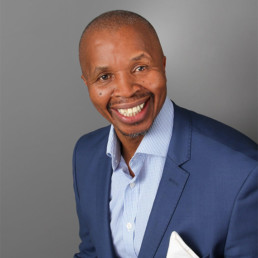
Written by Siya Twani
I am a Motivational Speaker who speaks in schools and businesses, on Diversity, Equality & Inclusion, Resilience and Mental toughness.
My name is Siya and I speak in schools and businesses across the country and internationally. Like Nelson Mandela I am a man who stuck my neck out like a giraffe and spoke up against the Apartheid regime. This resulted in me being arrested, tortured, and put in prison for four years. I have a lived experience of facing, the odds, and reinvented myself by defying the regime in letting my voice be heard and recognised as co-equal. The struggle for belonging has been my life long struggle. I went to prison because I wanted to create a South Africa and a world where all of us as human beings can experience the joy of belonging, not just some but ALL OF US TOGETHER.
Our children are dual heritage. My children have struggled with belonging and acceptance or not being accepted for who you are.
My youngest son is Sipho. When he was about nine years old, Sipho and Megan were friends at primary school and one Friday after school Sipho went to play with Megan at her house. On collecting Sipho I noticed that he was covered in white powder, before I could enquire Megan said, ‘Look Siya I made Sipho white like me.’ I said, ‘That is so lovely Megan’, as she was just an innocent child, wanting a friend to look like her. All Megan’s dolls were white and so thought because all her world is white therefore Sipho as friend needed to be white. It was an innocent gesture and attempt of acceptance and inclusion. She wanted Sipho not to feel different.
Now fast forward to when we moved from Essex to Edinburgh. Now in Edinburgh one beautiful summer’s day, I decided to take my three beautiful children to a park to play on the swings at a local park. As we entered through the gate, myself and my children were subjected to racial abuse, called monkeys and told to get out of her you are dirty, you brown people. They taunted my children. They went on to say, ’You are not welcome here’, and my children broke down in tears. I approached these ignorant white kids who were never exposed to a people of different colour or background. They all ran out of the park. Three of the older teens came back to the park to apologise. I then took that opportunity to educate these young people and expand their horizons. I asked them, can you imagine what it must feel like being spat at, called names, being bullied all because I was different? Can you imagine the power of your words, attitudes, and behaviours towards my children? I went to ask them. One day how would they feel if their own children were subjected to racial trauma and abuse. They were stunned and all they did they kept apologising and their apology was accepted as I said to them. it takes a strong person to apologise for their mistakes.
I wish I could say that was the last time that my three little children were subjected to racial trauma and abuse. That incident is stuck in their minds as they often reminisce about it and how big daddy protected then form those empty-headed idiots.
In writing this blog I do not want you anyone of you as readers the impression that either myself or my children had persecution complex. It was our daily bread” our daily experience of being a dual heritage family in predominantly white village just outside of Edinburgh, called Black Hall and by the very nature of the demographics was predominantly white.
My daughter who was then 10 and my son who was then 8 were the only dual heritage children in the whole school. Again, the demon of racism that taunted me growing up in South Africa was now tormenting and terrorising my children and impacting on their mental health and wellbeing. I remember my daughter having cultural and racial identity crisis. One day she locked herself in the bathroom bleached herself because she wanted to be white like all the other kids in the school. She took the scissors and cut her hair off because it was not blond like her mums and the kids in the school. These two stories of my children’s lived experience and their struggle of belonging or not belonging is a real one to this very day. When people see my children, they don’t see white people first they say black children because they are not “pure white” like everybody else around them.
To this day my children live with this creative tension that, for white people they will never be white enough and for black people they will never be black enough. They are in no man’s land. I went to prison in South Africa so my children and my grandchildren could experience the joy of belonging and not have to go through what I went through because of racially divided South Africa. Not so long ago in this country there were signs in the 60s saying, No blacks, no Irish, no gay, no Jews and no dogs.
It was Dr Martin Luther King in his famous speech ‘I have a dream’……. who said, “I have a dream that my four little children will one day live in a nation where they will not be judged by the colour of their skin, but by the content of their character.” The question I ask myself is …why should they be judged in the first place whether they are black, white gay or not gay, trans or not, short, or tall?
The incident I related above of those young people in the park. They did not realise the impact of their words, attitudes, behaviour and the racial trauma my children suffered as the result of their ignorance. Because really, racism is a child of ignorance. They did not know how it would make my children feel for the rest of their lives. ‘Sticks and stones may break my bones, but words will never hurt me’ those words cut deep into the psyche of my children, and profoundly affected their mental health, wellbeing and sense of belonging.
“I’ve learned that people will forget what you said, people will forget what you did, but people will never forget how you made them feel.” ― Maya Angelou
My passion is to educate, empower and expand young people’s horizons about Diversity & Inclusion That is why I speak in schools and delivery inclusion and diversity workshops and promoting mutual respect. Celebrating diversity and not seeing diversity as a threat but as a strength that unites all human beings. Because there’s only one Race …The human Race.
In my culture we do not have the concept of stranger danger. Every is potential friend or a friend you haven’t met yet. The word for community in Zulu is Umphakathi meaning we are together on the inside. No one is excluded or marginalised, picked on, we all experience the sense of belonging to one another.
In the stage play and movie HIGH SCHOOL Musical : After Gabriella and Troy successfully perform their song (“Breaking Free”), Ms. Darbus gives them the lead roles, making Sharpay and Ryan understudies. Both teams win their respective competitions, and the entire school gathers in the gym to celebrate (“We’re All In This Together”). Chad asks Taylor out, and Sharpay makes peace with Gabriella. We need to be curious, embrace, celebrate diversity and respect differences and not see differences as threat but as a strength.
This is what drives me into schools because as Nelson Mandela said, “Education is the most powerful weapon with which we can change the world”.
As a passionate, engaging educator I have moral obligation to educate, empower and enthuse young people to make this world a better place to live in.
Instead of putting flour on my face… let’s put flowers in each child’s life so they can thrive.
“No one is born hating another person because of the color of his skin, or his background, or his religion. People must learn to hate, and if they can learn to hate, they can be taught to love, for love comes more naturally to the human heart than its opposite.” – Nelson Mandela
Building a Multi-Faith Space

Written by Hollie Panther
DEI Lead, Mental Health First Aider, secondary Science & Psychology teacher and Teach First Ambassador.
Experiences of, and learnings from, establishing a space for prayer and celebration of religious diversity in a secondary school.
The last school I worked in had a majority non-religious student population, but a diverse spread of religions among those who did follow a faith; many religions had just one follower within the student body. A parent of one such student had mentioned that they were uncomfortable being open about their faith due to the amount of discrimination they’d received in the past. As D&I Lead, a large part of my strategy to improve religious inclusion in the school was to open a Multi-Faith Space. When I started, there was no designated place to pray; my previous school did have a prayer room, but it was hidden away and only students or staff who asked about it were encouraged to use it. I wanted to create a space that people from all religions could use, so that it would encourage some sense of community, which I thought those who were the solo followers of their faith within the school might’ve been lacking. I also wanted it to be a place of celebration and curiosity, so that any student could learn about diverse faiths if they wanted to. The space was initially opened as a work-in-progress during Ramadan, to give Muslim students a place to pray and be away from food if they needed it. During this time I also designated a toilet block for Wudu, the practice of washing before prayer, and delivered whole school talks educating students about Ramadan and how to support students who were fasting. Feedback from this was unsolicited and overwhelmingly positive — parents of Muslim pupils wrote in to the school to congratulate and give thanks for the ‘exemplary inclusion effort for Ramadan’; my wish is for this approach to Ramadan to become the norm in all schools, so all pupils can celebrate the diversity of religious practices alongside one another.
Working alongside the Multi-Faith Space was the Religion & Spirituality Society, which I established as a student-led club who met at lunchtime to explore and learn about various religions. The leaders of the society planned activities and presentations for the group, and brought in occasional themed snacks too — I’m hoping the society will meet in the Multi-Faith Space going forwards, to ensure they are surrounded by diverse religions, with the opportunity to learn about them being easily accessible.
The Multi-Faith Space is two small rooms off of the Library, where I have put up shelves on each wall and designated each of the six walls to a major world religion (Christianity, Islam, Judaism, Sikhism, Hinduism, Buddhism). I reached out to religious leaders in the community to see if they would be happy to donate a copy of their religion’s text or any artefacts that could go on the shelves. This took the form of finding email addresses of local Mosques, Churches, Gurdwaras etc, or filling in contact forms on their website, and Googling ‘free copy Jewish, Hindu, Buddhist etc text’, and making sure in my message I invited them to send my request on to anyone else they thought might be able to help out. As a result of this I had an incredible array of items gifted to the Multi-Faith Space by several local religious groups, and had an insightful and useful meeting with the representative of Judaism from the West Sussex SACRE (every county council have representatives of world religions, who are keen to come into schools to deliver lessons / assemblies etc on their religion, I’m hoping the next D&I Lead and teachers of RE will be able to make use of this otherwise untapped source after my introductions — none of the RE teachers in the school had heard of them). Several sources of items and books posted them to me or dropped them in to the school, but I also visited several organisations to collect their donations, which I really enjoyed, as it took me to places I wouldn’t have ordinarily visited within my local community.
I organised a Grand Opening for the Multi-Faith Space to which I invited all the local contributors, as well as staff and religious students. The student leader of Religion & Spirituality Society was invited to cut the ribbon; it was a great opportunity for me to connect up school staff and the pupils who will be running the Religion & Spirituality Society next year with community religious leaders (over donuts and cookies), so that they are able to lean on them for support with the society and also with RE teaching as the school grows. One community attendee at the Grand Opening came from the Baháʼís, a religion I admittedly hadn’t heard of when they initially made contact, but which I learnt much about through talking to this local follower at the event. They also donated several items and books to the Multi-Faith Space, and though they didn’t have a designated wall and shelves, I set up a table in the space to display their information, and was really glad to be representing a greater diversity of faiths than I had originally planned for.
I had a student volunteering with me for their Duke of Edinburgh’s Bronze award, who helped me plan the space and also worked in the Design Technology (DT) room on a signpost to go outside of the Multi-Faith Space, which featured laser-cut arrows, each one with a different place of worship on it — ‘Hindu Mandir’, ‘Sikh Gurdwara’ etc. Unfortunately, because the student could only work on this under supervision by the DT teacher, due to technology issues and absence, the sign was not finished in time for the Grand Opening — I look forward to seeing photos of it in pride of place when it’s completed in the Autumn term.
My advice to anyone thinking about building such a space would be to absolutely go for it — the only spend was on the shelves and snacks for the Grand Opening, as well a couple of items to represent religions who didn’t get back to me to contribute anything. The rest was furniture that was already in the school, and the items and books gifted by the religious community were invaluable — so it’s doable on a tiny budget, I would just encourage anyone wanting to build one to start early, and get your message with the call for help / donations really clear and send it to as many people as possible, ideally alongside an invite to a Grand Opening — and then chase them up if they haven’t replied; I got the impression that everyone wanted to help, but that sometimes there are multiple people within a place of worship who read the emails, so they may not get picked up the first time around.
On the whole, I really enjoyed building the Multi-Faith Space and I’m really proud of what I achieved with this — the Grand Opening was on my penultimate day working at the school, so it really feels like a legacy I’m leaving behind; a tangible asset to the school community that will continue my work without me.
‘There was no one left to speak out for me’
Written by Matthew Savage
A global education leader, Matthew supports schools worldwide with radical, fresh ways of knowing, helping everyone to be seen, heard, known and belong. A disabled wheelchair user, and parent to two, neuroqueer, adult children, he, his wife and their dingowolf live on the Isle of Skye.
Over the past week, most of the candidates for the leadership of the UK government have been seeking power in part through rabidly attacking an already marginalised and vulnerable group, in scenes reminiscent of some of the most repugnant moral panics in the darkest corners of history.
Every day, my two adult trans kids wake up to a world whose media and politicians render their very existence problematic, dangerous and contingent. This week, along with the hundreds of thousands of other trans and non-binary people in the UK, they are especially under attack.
In order to help my children, and an entire community, gain and retain protected access to the very same things you would wish for yourselves and your family – the right to be, love, and be loved unconditionally – I would like to invite you to consider some of the following steps:
🏳️⚧️ LEARN: In a time where lies run rampant, read and discover the truth about trans identity and what it means to be trans or non-binary today. I provide training for schools across the world on this, and I am happy to signpost resources on any possible question you might have too.
🏳️⚧️ LISTEN: Listen to the voices of trans and non binary adults and young people. Here is a very powerful, short film which makes this point far more powerfully than I can: bit.ly/3yHxGJ2. And listen to my podcast, “Jack and Me”, on Apple (apple.co/3HI5SXA), Spotify (spoti.fi/3MqC3OU) or wherever you get your podcasts.
🏳️⚧️ CHALLENGE: Once you have listened and learned, be brave enough to challenge and inform others. This is where the most potent activism happens – in everyday conversations. This is where minds are changed.
🏳️⚧️ ADVOCATE: Speak truth to power. Our government and our media need to be held to account. And give voice to the voiceless. There are lots of ways we can do that, from letters to petitions, and in the very choices we make.
I believe that our country is so much better than this. I believe that, in years to come, we will look back at this time with the same horror and shame with which we remember the provenance of Section 28.
But I also believe that the only way that the benevolent many can drown out the noise of the hateful few is if we do not stay silent. In this, I am reminded of Niemöller’s 1946 poem:
First they came for the Communists
And I did not speak out
Because I was not a Communist
Then they came for the Socialists
And I did not speak out
Because I was not a Socialist
Then they came for the trade unionists
And I did not speak out
Because I was not a trade unionist
Then they came for the Jews
And I did not speak out
Because I was not a Jew
Then they came for me
And there was no one left
To speak out for me
Please stand with me, and speak out for my two children too – because #TransRightsAreHumanRights. 🏳️⚧️
#Miscourage: The Worst Week of My Life
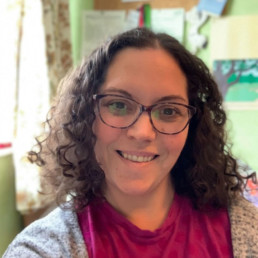
Written by Amy Keenan
Having been an English teacher since 2006 across a range of different settings, I have seen a lot, done a lot and struggled a lot. Whilst holding departmental and whole school TLRs, I have learnt a lot about teaching, realised I've still got a lot more I could learn and realised the importance of looking after ourselves and our teams.
Firstly I want to make it clear that I’m not writing this for sympathy but because I’m still in need of talking / thinking this through and the reality is that this is quite a lonely issue when it really shouldn’t be. So, I’m gladly joining Tommy’s #MisCOURAGE campaign.
In August I got the best news ever: a little + in the window of a Clear Blue pee stick. It was something I’d been waiting to see for 10 months and worried that I may never see when it looked like there may be a problem with my ovulation.
However on 11th September a scan saw my pregnancy was only 4 weeks along when it should have been around 10.
Words cannot explain the emotions that follow such an emotionless phrase: “it’s a non-viable pregnancy”
Holding back my tears caused me physical pain. Once at home I had to go through the trauma of calling another hospital, one with an early pregnancy unit, to discuss my options.
My surgical miscarriage was scheduled for the 16th September (sadly the day before my birthday) and the nurses were so kind. However with only a handful of people who knew I felt so alone.
And to be honest, I still do.
Miscarriage, whether natural or medically induced, seems like our version of Voldemort. Everyone’s scared to say its name out loud. Maybe we’re scared of breaking down? Or making people uncomfortable? Or inviting it into our or our friends’ lives? Who knows, but it leaves those who go through it in pain and without many people to talk to.
I’m lucky to have my husband, who was exactly what I needed when I was in hospital. But I’m scared to talk to him now. I know it’s irrational, but I do feel guilty. Not because I did anything wrong but because it was my body that didn’t do what it was supposed to. And, worse still, I’m terrified that it may happen again or that the problems they were looking into before the pregnancy (and never found an answer to) will turn out to be something real, something serious, something that means it’s unlikely that I’ll have a healthy pregnancy.
I don’t wish to sound melodramatic, and maybe that’s another reason I’m finding it easier to talk to anonymous internet people. The problem is, as well, that I ‘stiff upper lipped’ it when I went back to work so now feel that I can’t break down and let out what’s inside when one of the few who knows asks if I’m OK.
In these past months I’ve found that the pain remains and sneaks up on me. I’ve shed a few tears while I’ve been driving to or from work and I’ve found myself withdrawing from life recently. This past fortnight I’ve forced myself to go out and although I enjoy myself once I’m with my friends the desire to curl up under my duvet and sleep is very strong. This has also had an impact on my job; once I returned from my week off I had a lot to catch up on, but I didn’t feel the same enthusiasm and passion as I normally did. I struggled to stay focussed during my frees and have found it hard to motivate myself to work once I arrived home. All this has kept me with my head barely above water these past few months. Luckily, once I started drafting this blog post last week I started to feel a bit better and I felt some of my passion return and with it my motivation; I still have an enormous pile of marking to catch up with, but I’m not hiding from it any more. I don’t want to hide from it any more.
And I don’t want to hide from what happened. I want to confront it head on:
I had a miscarriage and I still feel pangs of guilt & sadness about what my body took away from me and my husband.
I am worried that it will happen again.
But I will not live in fear of it happening again.
I will have a family, I just don’t know when yet and that’s OK.
Parents overwhelmingly support LGBT+ inclusive education and students want it, so how do we get started?
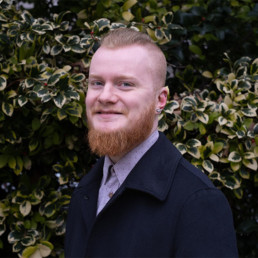
Written by Rob Ward
Education Programmes Manager at Just Like Us
LGBT+ inclusive education has a history of being intensely scrutinised. Social media continues to bubble away, highlighting the dynamic landscape of support for, and respect of, LGBT+ people, meanwhile educators grapple with exactly what is classed as “timely” and “age-appropriate” for LGBT+ inclusive education within RSE.
Without skipping a beat, Ofsted is fulfilling its commitment to reviewing schools for their adherence to RSE guidance – guidance which became compulsory for schools in the midst of a period of upheaval in education and wider society not seen in living memory. Educators currently find themselves juggling advice from exam boards, a student body still reeling from isolation and disruption over the last two years, and ever-growing working hours to try to bridge the gap between the two. The backdrop that LGBT+ education finds itself in today could not be more crowded, with competing stakeholders from across society offering opinions on what should be happening in our schools.
Independent research published by Just Like Us on the most varied stakeholder of them all – children’s parents – has found that the overwhelming majority is supportive towards LGBT+ inclusive education. 82% of UK parents believe that it is ‘important’ for their children to learn about LGBT+ families, such as some pupils having gay parents. However, parents also reported a lack of resources to help with this – only 34% said they felt their school was adequately resourced to help educate their children and 33% have never spoken to their child about what LGBT+ means.
In the context of increased commentary and scrutiny on LGBT+ in education, these findings highlight the importance parents place on fully inclusive education for their own children. It’s a clear signal that parents are looking for teachers to take the lead and support them in providing high quality, fully LGBT+ inclusive education for their children, as they do across other areas of the curriculum. Students report the same; previous research has highlighted how the majority of young people are looking for LGBT+ inclusive RSE education, alongside subject curriculums that embed LGBT+ inclusion throughout (79% and 67% respectively). More than half of LGBT+ pupils are looking for support from their teachers to set up inclusive initiatives like Pride Groups for LGBT+ and ally pupils to help a wider network of their peers.
When taken together, these findings should represent a green light to educators to push for inclusive education. Parents are expecting it, students are asking for it, and all the while Ofsted is continuing to check for it. So how can teachers go about it?
Engaging in visibility days, LGBT+ History Month and School Diversity Week throughout the year can be powerful, visual ways that a school can demonstrate its commitment to building safe, inclusive environments for all its students. Sue Sanders’ work on usualising vs actualising LGBT+ topics within subject curricula also offers a strong framework to review and edit schemes of work to embed a variety of stories and viewpoints within existing topics across the school.
Beyond engaging in visibility days and reviewing who and what gets taught about, setting up LGBT+ and ally groups is the best way to make long-term change. We help schools to set up and run these on Just Like Us’ Pride Groups programme, by providing staff and Student Leader training as well as ready-to-go resources for just £99 a year. Pride Groups also help to incorporate inclusion and celebration of LGBT+ lives within a school’s ethos, and provide a platform for student voice to help guide further development of inclusivity within schools long term.
While the backdrop for LGBT+ inclusion may be loud, dissonant and confusing right now, educators are used to cutting through this. Parents want their children to be educated about LGBT+ lives, while students continue to show a desire to learn about them. More than ever, teachers should feel empowered to explore how they can incorporate LGBT+ stories within their teaching and dispel misinformation, putting their fine-tuned teaching practice and pedagogy to use to meet their students where they are, helping them along their journey to exploring and celebrating the LGBT+ lives and history around them.
SEND Perspective: Why is it important to introduce intersectionality conversations in UK schools? Exploring seven top tips to address it.
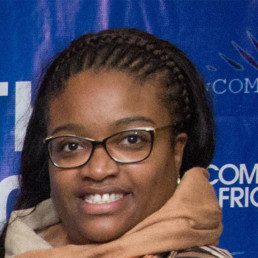
Written by Dilma de Araujo PhD (c)
SEND specialist. She has more than ten years of experience in education working in different educational institutions in the private and public sectors from early years to higher education levels, addressing special education needs; education policy research; gender inclusion and diversity.
‘A year nine boy of Black Caribbean heritage, claiming free school meals and with special education needs to represent a ‘typical’ student likely to be excluded from school.’
(Hawkins, 2019 p.14)
The Special Education Needs field involves a broad spectrum, where intersectional topics and issues such as gender, race and socioeconomic status are susceptible to emerge and often become a matter of great concern if the appropriate support and awareness initiatives are not in place. Hence, reflecting in the above statement by Hawkins (2019), it suggests that there are some significant points concerning financial, social and academic disadvantage and vulnerability indicators that should be addressed differently in our schools and educational institutions, raising awareness and incorporating a culture of dialogue, involving parents, carers and local communities actively in dynamic and creative activities in which different participants and agencies work in constructive partnership and collaboration (e.g. mental health and wellbeing practitioners; Local Authorities representatives, teachers, special education needs coordinators, local and national community activists and artists) aiming to improve not only black students, but all the multicultural and non-multicultural spectrum of school.
Thus, the role of schools, teachers and educational leaders can represent a crucial transformational factor. Hence, schools are designed to be a place where inclusion patterns and strong affinity bows of compassion, understanding and unity are consistently nurtured by adults, children and local communities. Aiming to generate diversity and equal dimensions within our multicultural society. To provide a healthy, safe and inclusive teaching and learning environments. Thus, school leadership teams have the responsibility to explore and address the following issues:
- Bias in the assessment process indicating over, under, misidentification and diagnosis;
- Rational parental response to historical discriminatory bias in the identification;
- Assessing migration’s resulting in different family health and cognitive endowments;
- Differential parenting behaviours and home learning environments;
- Differential experiences of deprivation between ethnic groups (Haye, 2021).
School senior leadership teams’ responsibility towards the implementation of an inclusive and diverse curriculum, programmes, initiatives and cultural activities in order to improve the multicultural perspective in their schools, taking into consideration students mental, cognitive, physical, emotional conditions, needs and circumstances raising the bars towards a positive learning performance and outcomes. In this line of thought, seven essential foundational strategies focus on the improvement of a culture of dialogue and reflective approaches concerning language, thoughts and actions, aiming to clarify different points of view and perspectives related to race, social, cultural inclusion.
Tip 1: Nurturing a culture of dialogue
Promoting dialogues involving racial matters in school can reduce bias, prejudice and pejorative attitudes. Thus, it is important reshape the teaching and learning approaches and behaviours may improve mutual respect, compassion, self and multicultural knowledge. E.g. cooperation involving students, teachers and other school staff. They can organize special pod-cast, webinars and school radio where life testimonials and experiences could address topics related to racial discrimination, macroaggressions and microaggressions.
Tip 2: Promoting reflection in and on action
Applying reflective practices to enhance teaching and learning is crucial to obtain valuable and effective results. Reflecting in-action provides the opportunity to explore and evaluate the academic practice and activities while the learning is taking place, opening the horizons not only for behaviour alignments and changings but also delivering and feedback strategies. Thus, promoting reflection-on-action practices is essential to improve the educational experience and activities built after interaction between teachers and students, mitigating biased attitudes and thoughts during teaching and assessment practices.
Tip 3: Preparing for and welcoming different perspectives
For many children and young people, teachers and school endeavours are the primary sources of information and knowledge. Hence, education institutions should be ready to face and address complex ways of think, behaviour and acting. To introduce potentially challenging conversations about race is essential to give quality training to teachers and staff, organizing regular meetings with parents and local communities and invest in multicultural representation in senior leadership posts in the educational organization.
Tip 4: Identifying students’ mental & emotional, cultural and traumatic journeys
The mental, emotional, cultural and traumatic journeys can impact and determine how children and young people absorb information and knowledge. Therefore, continuous evaluation, assessing, screening and reviewing students is vital to support teachers and students. Teaching practices can improve effectively when students’ needs are identified and properly monitoring based on child-centred approach, diverse curriculum, strong values and beliefs. Consequently, a positive impact can be generated in students’ performance, experiences and outcomes.
Tip 5: Encouraging the use of inclusive and diverse materials, resources and activities
The art of generating a culture of promoting human and racial rights, educational acceptance between adults and children, and constructing positive and dominant social and educational role models becomes the lynchpin of approaching complex topics. As a result, curricula, educational materials, schools’ displays and decorations, learning and leisure activities can be practical tools to combat the nature of privilege, supremacy and oppressive attitudes.
Tip 6: Exploring affective and embodied dynamic of learning
Starting from years early to higher education, recognizing and embracing the critical pedagogy in the daily schooling environment impacting teaching and learning practices through literature and other forms of creative arts aiming to explore and obtain the best of students’ ideas, beliefs, thoughts and aspirations. Learning dynamics could pass through a moment in which creative reflections are based on realistic expectations about a sense of identity, belonging, and existence, thus they could be co-related with all topics, disciplines and courses.
Tip 7: Creating a safe community learning environment
Local communities are an extension of the classroom and learning environment. It is crucial to the communication, interaction and mutual respect between school staff, local organizations and communities. Solid connections can be established through parents, governors and charities. It can help exchange experience, knowledge and update policies and general information.
In this context, addressing race paradigms and curriculum decolonization in the special education needs field can potentially represent a way to liberate bias, discrimination, preconceived thoughts, pejorative language. Additionally, all the changes and adjustments should be raised with the desire to generate productive and constructive empowerment by implementing effective anti-discrimination, SEND race and multicultural policies (also addressing migrants and refugee students). Thus, the field of SEND involving multicultural, race and education can essentially be empowered when individuals from different social, cultural, racial and educational backgrounds join forces not only to change policies but to be the ‘maker, developer and keeper’ of each one of them, aiming to embrace an open door of opportunities to nurturing the teaching and learning best practices.
Reference:
Hawkins, A. (2019) School Exclusion: The Parent Guide. London.
Haye. M, (2021). Special Education Jungle. Finding the racial minority voices in SEND. Retrieved [07/12/2021] from https://www.specialneedsjungle.com/finding-racial-minorityvoicessend/?utm_source=hootsuite&utm_medium=linkedin&utm_term=special+needs+jungle+ltd&utm_content=SocialOroMedia.
PjBL, (2020) Project Based Learning Toolkit. Retrieved [17/12/2021] from https://project-based-learning-toolkit.com/reflection/.
Thurber, A., Harbin, M.B, & Bandy, J. (2019).Teaching Race: Pedagogy and Practice. Vanderbilt University Centre for Teaching, Retrieved [07/12/2021] from https://cft.vanderbilt.edu/teaching-race/.