‘I’m so glad we have one of you here!’
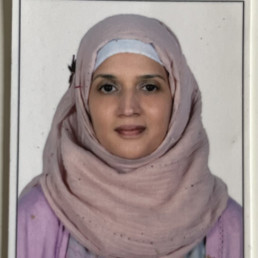
Written by Nabiha Mohamed
I am a British born Muslim Pakistani Geography teacher, who loves rocks and the Marvel Universe. I have spent 13 years living in Abu Dhabi but have now returned to the UK and am living in Bristol. I have taught in both comprehensive and independent schools, both of which I have enjoyed very much. I am a creative being who overthinks everything! I love to learn, and I have recently woken up to the fact that I am one of the few teachers of colour in this country and am now feeling the responsibility of this weighing heavy on my shoulders. Keen to ‘make a difference’ in the schools, I would love to connect with other teachers of colour in the UK.
We have been hit with comments like these throughout our lives. We have become accustomed to these ‘microaggressions’ in every aspect of our daily routines, and by ‘we’, I mean, people of colour.
As a British Asian Muslim woman (that’s a lot of labels already) born and raised in this country, I had never heard of the term ‘microaggressions’, until about 2 years ago in a CPD session at school. It was a turning point for me, in my career and my personal life. I have since been educating myself around the topics of unconscious bias, microaggressions and sense of belonging, particularly in schools. It’s been a rollercoaster ride since then, highs and lows in my teaching career, in my understanding of the issue and trying to work out how best to teach students to be assertive and staff to be ‘awake’. I am no professor in this area, I am not perfect, but I have grown to become passionate about this topic as one I can relate to and hopefully, an area I can help change in schools.
I have come to realise that many people who fire microaggressions at you, are often wonderful, kind, well-meaning people. They just don’t think about the gravity of their words; if you did have the courage to call them out on their inappropriate comments, they would be utterly devastated, which also makes us hold back on speaking up. Three recent examples I can think of (all said by adults):
- I can never learn the names of the girls who wear hijabs, they all look the same.
- I’m so glad we have one of you here now at school, the kids really needed someone like you.
- I loved culture day; it was my favourite day of the year! I loved all the costumes students wore; they were beautiful.
Costumes? I don’t wear my salwar kameez on Halloween, love.
I have delivered CPD sessions and assemblies on Unconscious Bias and Microaggressions to both staff and students recently, with the aim to give students of colour the confidence to speak up and say, ‘that’s not okay’ and to educate teachers on what many of their students go through daily as they go about their lives.
The thing is… I said in my assembly that I promised myself, whenever anyone was to say anything inappropriate directed at me, I would speak up and tell them. If ‘we don’t do this’, I said, ‘things will never change.’ Did I speak up when the above microaggressions came my way? Shamefully, no I did not. WHY, oh WHY did I not say anything?! Because, they were all lovely people who didn’t mean any harm. Because I, aged 47, did not know how to handle the situation at that exact moment, and if I couldn’t, how could I expect a child to?
However, I want to break the cycle. I want to have the confidence to say ‘errmmm, no’, and I want to teach students to be able to do the same in a respectful way, but I don’t know how to. We have school policies on explicit racism but there is nothing in means of reporting the implicit microaggressions from students or staff. Should there be? Is there a need? Do we ask our EDI Leader to speak to the guilty ones or should we have the guts to do it ourselves? But the interesting, or annoying thing amongst these questions in my head is, why am I struggling to speak up like I am the guilty one? I haven’t done anything wrong.

The Misuse of Gender

Written by Katy Carpenter
Katy is a Pastoral Lead and EDI Lead in a Birmingham primary school. She is currently studying for her PhD in Education, researching how children explore and negotiate gender through creative writing.
Graham et al (2017) wrote that gender is typically constructed within a binary of two natural biological entities – man and woman. As such, it is very easy to conclude that gender is inherently linked to one’s sex. Even a modern understanding of gender as a social construction and a form of expression finds itself difficult to detach itself, semantically, and conceptually, from one’s being male or female. The language around gender remains restricted to a range of words pertaining to masculinity and femininity, a binary mode of thinking which reduces our positioning of people who deviate from the gender norm as either masculine women or feminine men. It seems that without this binary, we would find it very difficult to understand gender-diverse people.
How have we gotten here, why is this the case, and need it be? Our historical, social and cultural norms have made it so that gender appears to be indistinguishably linked to sex, and historically, sex and gender have been treated as synonymous in law and culture (Case, 1995). Even contemporary culture continues to conflate sex and gender. On an application form I will often be asked to identify my gender, and drop-down options usually are a choice of male, female, non-binary, or prefer not to say. Now if what HR wanted to know was how I express myself, they could change these options to masculine, feminine (due to where we are in history these terms are still helpful in denoting a style or aesthetic), non-binary, prefer not to say, and in addition they might even add a few other options like flamboyant, assertive, glamorous. Of course, this would be limitless and unmanageable. It also wouldn’t be very useful to HR because when this question is being asked, what they actually want to know is my sex assigned at birth, or indeed, whether I don’t find this label relevant to my ability to do the job, in which case I might opt for non-binary or even the as question-raising option, prefer not to say.
The conflation of sex and gender is problematic. When we use the terms interchangeably, people end up confused. I treat gender as a social construct, historically derivative of the male/ female sex binary but actually conceptually distinct from it. A popular view of gender is one of whether you’re male (a biological occurrence), female (a biological occurrence), or reject those biological categories (a social occurrence). The drop-down boxes on application forms suggest that this is also an institutional view of gender. However, an important distinction between sex (meaning one’s sex assigned at birth) and gender (meaning one’s expression- which has both personal and political motivations) needs to be upheld, else we need not have two terms at all. A semantic and thus conceptual conflation of sex and gender subsequently leads to a confusion of the debate around matters pertaining to gender. Indeed, one of the outcomes of this conflation is that when I talk about gender with my friends and colleagues, I am taken to be discussing transgender matters. Channel 4’s Gender Wars, which aired earlier this summer, looked promising in bringing discussion about gender to a wider audience than academics and people leading EDI work, however in focusing on the debate around the trans community, it unfortunately upheld the impression that all debates around gender are debates around trans issues. The gender discussion is much wider than this, and there is a difference between the matter of being transgender and the critical questioning of the boundaries of gender presentation.
In relying on a binary between masculinity and femininity when developing a framework for conceptualising gender, even those who accept and embrace gender fluidity are restricted to this idea of two ends of a linear spectrum and everything else in-between. I suggest a different way of picturing gender (because let’s face it, things that come with a picture are always easier to understand). I suggest an egg, where male, female and intersex people reside centrally in the yolk, and the white circle around the outside is the space of gender – how one expresses oneself. By removing the image of the line, one form of gender presentation is no nearer to or further from any one sex than it is another, and thus releases itself from the binary of masculine and feminine forms of presentation.
In her 1990 book Gender Trouble, Judith Butler controversially questioned the category of woman. This was contentious because it destabilised ‘woman’ as a protected and distinguished category, with fundamental difference to men, something centuries of feminist work unwittingly embedded. This idea set ablaze the acknowledging of gender (in a feminist context, the doing of womanhood) as a process of construction – gender as a doing rather than a being, separate from sex. This was called gender performativity. With this different understanding came the possibility of a critical evolution around identity and performance. There is much yet to be explored.
References
Butler, J (1990) Gender Trouble. Feminism and the Subversion of Identity. Routledge, New York.
Case, M. A., (1995) Disaggregating gender from sex and sexual orientation: The effeminate man in the law and feminist jurisprudence. Yale Law Journal, pp.1-105.
Channel 4 (2023) Gender Wars.
Graham, K., Treharne, G.J. and Nairn, K. (2017) Using Foucault’s theory of disciplinary power to critically examine the construction of gender in secondary schools. Social and Personality Psychology Compass, 11(2).
Languages in the Community
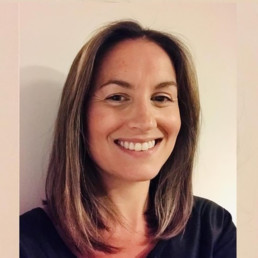
Written by Mair Bull
Former teacher and content writer for BBC Bitesize. Now works at Manchester Metropolitan University in the Curriculum and Rise teams.
Recently, we launched our first flexible learning Short Course, a trailblazing Office for Students pilot, part of the Government’s lifelong learning and upskilling agendas. We started with the unit ‘Languages in the Community’. We have a fantastic first group who really enjoyed learning about the course structure and being introduced to Urdu. Each week we will explore another of Greater Manchester’s most popular languages and learn more about the city and our community. In addition, the unit explores how we communicate (using both verbal and non-verbal forms) and create inclusive and welcoming spaces, no matter the level of spoken English.
This innovative pilot enables students to study flexibly and from 2025 to ‘stack’ their courses to build up to a full degree. We have started initially with Level 4 and students can ‘stack’ to achieve a Certificate of Higher Education (equivalent to first year of a degree).
Initially, our Short Courses are aimed at those working or volunteering in education, health and social care. Most students in the pilot do not have degrees and so this new and exciting opportunity offers them a chance to gain a qualification whilst still working in roles such as classroom assistants, nursery staff, childminders and social care associates. However, the flexibility of the structure means the courses have also attracted those with degrees, such as teachers, using the courses as part of on-going CPD, especially as they recognise the importance of staying up to date following the significant impact of Covid-19 on young people and families.
The Short Courses have been developed each step of the way with equality, diversity and inclusion at the core. Initially, we hired independent consultants from Diverse History UK, as part of our quality assurance review panel to scrutinise our inclusion curriculum planning.
The courses aim to role-model the best in flexible, inclusive and innovative practice. We want these courses to inspire and empower students, building that bridge between their previous experiences and these new level 4 opportunities. Our structure means that students come together in-person weekly for workshops, plus additional asynchronous online activities, which students work through independently at a time that suits them. There are no essays or exams, instead the assessments are authentic and can be applied directly to the students’ own setting.
Key to the success of the Short Courses is the importance of creating a welcoming community, where students from all backgrounds and experiences feel they belong and can enjoy sharing the learning journey with others.
The potential of the Short Courses model has really captured the attention of the sector and beyond, and we are exploring opportunities with our engineering employer partners creating a CAD (Computer Aided Design) and 3D printing course, with our award-winning Print City team. In addition, we are bringing on new units all the time, including Speech, Language and Communication; Mental Health and Wellbeing; plus Risk and Safeguarding.
To find out more visit: www.mmu.ac.uk/study/short-courses
Addressing the Legacy of Section 28 & Supporting Diverse Families

Written by Troy Jenkinson
Equality, Diversity & Inclusion Specialist, children’s author, public speaker and former Primary Headteacher and Executive Headteacher. https://troyjenkinson.com/
Today, more than ever, we should strive for equality in our schools. Seeing how LGBTQ+ culture has been embraced in colourful Pride events and the peppering of queer characters in the media, you could be forgiven for thinking we had turned a corner in equality. We have come a long way, triumphing over the Section 28 policy (the 1988 amendment to the UK Educational Bill silencing queer teachers) and the partial decriminalisation of homosexuality. We have fought hard for rights to marry, adopt and live our lives showing our “True Colors” to quote Cyndi Lauper.
Digging deeper, you realise how far we still need to go. The ILGA (2020) reports 70 countries still criminalise homosexuality; 6 punishable by death, 57 with lengthy prison sentences. Only 68 countries offer broad protection for their LGBTQ+ population. High profile media events point to continued educational need. Florida’s “Don’t Say Gay” Bill (March 2022) mirror’s Thatcher’s vindictive 1988 Section 28. We have not learned. Cripplingly unfair acts such as harsh laws to imprison LGBTQ+ people for life in Uganda reported by the BBC in March 2023 marginalise our community.
The UK once topped the ILGA table of European countries for LGBTQ rights (2015), but slumped 14 places by 2022, accredited to governmental failures and its abandonment of its promise on gender recognition and equality plans. The statistics speak for themselves. Galop (2021) reported “LGBT+ hate crime is disproportionately on the rise in the UK.” Two thirds of LGBTQ+ people experienced homophobic violence or abuse. This likelihood only increases for ethnic minority and trans people.
The question we have to ask ourselves is; why?
Bullying is borne from ignorance. Section 28 has long-lasting effects on our educational establishments. Stonewall reports LGBTQ+ students are twice as likely to have been bullied than their non-queer compatriots (42% compared to 21%). Teachers echo this; 85% of secondary and 45% of primary staff acknowledge homophobic bullying in their schools.
With less than half of LGBTQ+ students (48%) experiencing positive messaging to support them, it is high time we as educationalists did something about it. The government introduced Relationships and Sex Education Guidance (2019) but left it open to interpretation stating:
“Schools should ensure that all of their teaching is sensitive and age appropriate in approach and content. At the point at which schools consider it appropriate to teach their pupils about LGBT, they should ensure that this content is fully integrated into their programmes of study for this area of the curriculum rather than delivered as a standalone unit or lesson. Schools are free to determine how they do this, and we expect all pupils to have been taught LGBT content at a timely point as part of this area of the curriculum.” (DfE, 2019)
Robert Long (2023), concludes schools are still not required to “promote” same-sex marriage:
“Governors, teachers and non-teaching staff in schools, parents and pupils, are free to hold their own religious or philosophical beliefs about marriage of same sex couples.” (Long, 2023)
Schools need help to sensitively support all pupils and tackle the endemic victimisation. They need to address inequality and inclusion in their curriculum and how they support diverse families. There is little guidance for parents themselves.
From my own experience of coming out, my parents found it traumatic; relating it to grieving as they tackled a myriad of questions, hyped by media negativity:
- Would I grow up happy and fulfilled?
- Would I be bullied?
- Would I die of a terrible disease?
- Would they have grandchildren?
Though this was in the 2000s, it is still a very real issue for some individuals today.
Recently, I worked with international colleges supporting staff and students from countries with poor human rights for LGBTQ+ citizens. I became fascinated by the term “Straight Privilege.” Those not identifying as LGBTQ+ do not have to come out, or seek out role models in the public eye. It is an interesting concept to explore.
As a headteacher, influenced by Andrew Moffatt, I introduced weekly “No Outsiders Assemblies.” Using news images, I positively identified people who stood up for their rights or succeeded despite potential marginalisation. This ranged from Malorie Blackman’s interpretation of historical figure, Rosa Parks for Doctor Who and Jacinda Ardern’s maternity arrangements as New Zealand’s Prime Minister, to discussing the controversies of a gay kiss at the 2018 Winter Olympics.
Working with a family whose children experienced bullying for having same sex parents, inspired me to publish my first children’s book “The Best Mummy Snails in the Whole Wide World.” Since, I have delivered countless assemblies, workshops and key notes speeches aimed at fighting the corner and being the role-model, I never had in school.
What Does it Mean to Belong?
Written by Hannah Wilson
Founder and Director of the Belonging Effect (formerly Diverse Educators).
Some people think that framing DEI work under belonging softens it and dilutes it, whilst I do understand this critique, I personally believe that belonging is the door-opener to the conversations about DEI, it is the way-in for many to enter the space.
Belonging to me is being seen, being heard, being valued, being safe. Belonging is not about fitting in but about being accepted, loved and respected for who we are. When we belong, we feel included, we feel connected and we can flourish as we can be ourselves without fear of judgment. We belong when noone makes us feel like an outsider, noone others us. We belong when we are celebrated, not tolerated.
I always start my training session with any stakeholder group by exploring the language and unpacking the acronyms that can inhibit the work. I share the linguistic/ acronym journey of DI (Diversity and Inclusion) becoming EDI (Equality, Diversity and Inclusion) and iterating into DEI (Diversity, Equity and Inclusion). With the J for Social Justice appearing with some saying DEIJ and others saying JEDI. Noticeably, the addition of the B has been a more recent trend in the last 3 years.
Belonging appeared in our consciousness and in our vocabulary in the wake of George Floyd’s murder. As we saw corporate commitments to doing the work, I observed a trend on LinkedIn. People in my network who were Heads of DI/ EDI/ DEI were becoming Heads of Belonging. A subtle shift in language which reframed their role. Their remit was to be responsible for levels of belonging in their organisation and to use this lens to scrutinise policies, processes and practices.
I started sharing this observation with the school people I was training and it always resonated – show me an educator who would answer No to the question: Do you want all of your learners to belong in your classroom/ school? In some ways it is a bit of a trick question when you then follow up with more probing questions about belonging in the curriculum and in the library. They have already said Yes so how do they now do a U-turn and say No?
I began to extend the questioning to the adult experience: Which adults belong in your school? Which parents belong in your playground? Who belongs in our education system? Each question was a provocation to invite some reflection and discussion, to shift people out of their own bubbles and to exercise some awareness and some empathy for others.
Using my coaching skills to create a safe space, to take people beyond their comfort levels and to increase their consciousness is a facilitation strategy I am constantly refining. A safe space means that we can be courageous and that we can challenge one another but that we do it in a mindful way. The wheel of power of privilege exercise I regularly use is a tool that can create high levels of discomfort but it is a great way to unpack the ‘perception gap’ and emphasise why some people might have a greater sense of belonging than others.
Linking the census data for the country to the workforce census for our profession to attrition data for the sector to hate crime data in society to staff and student survey data, is another way to increase awareness of who belongs and why this might be. As an English teacher I use the data to tell the story of a space and I ask the question: What story is the data telling us about who belongs here?
So when I am delivering keynotes and workshops on Creating a Culture of Belonging, with the acute awareness that I am a cis-het, white, able-bodied woman who is facilitating the conversation, I am not letting people off of the hook, but I am instead creating a container for some radical candor. I am holding up the mirror to myself and to others to recognise that we might have taken our own sense of belonging for granted and that we might assume that others feel/ experience our spaces in the same way as we do, when the reality is that there are gaps which can quickly become gulfs.
I remind people in our training sessions that belonging and love are at the centre of Maslow’s hierarchy of needs. Noone can progress to the upper tiers of esteem or self-actualisation without a sense of connection. More importantly it is also a reminder that we do not belong if our physiological and safety needs are not being met. A stark example of this is found in the Just Like Us 2021 Report – Growing Up LGBTQ+ published as we came out of lockdown.
Belonging is the goal of our DEI work. Belonging is also the outcome of our DEI work. Belonging surveys can be helpful as they baseline how people are currently feeling about their experience – we can baseline and benchmark belonging by role, by group, by identity and listen to/ learn from what we are being told. Belonging is not fluffy, when used intentionally, it instead creates insight from the different portals it opens up for us to explore.
For example, women between 30-39 who are parents/ carers and who are seeking flexible working vote with their feet and leave our sector in droves each year. How can we create more family-friendly schools to create a greater sense of belonging for that group of professionals?
For example, mixed race is the fasting growing racial identity in primary school pupils nationally. How can we recruit and retain more teachers of colour who represent the communities that we serve? How does having increased role models in the staff increase the levels of belonging for our pupils?
A culture of belonging is one where we are courageous and curious, one where we are open to challenge and committed to change. It is one where we ask searching questions and where we listen to the often hard truths that are revealed.
So as everyone jumps on the ‘Belonging Bandwagon’ and it becomes the newest buzz word at edu-events, can we make sure we are not skirting around DEI issues but getting to the heart of the matter? And when we are talking about belonging at events and in our schools can we be more aware of who is in the room, of who is talking, of who is listening and what that also tells us about the sense of belonging or the lack of?
Reducing barriers to inclusion by casting a wide net
Written by Mahlon Evans-Sinclair
Mahlon Evans-Sinclair is an experienced educator with extensive participation in the fields of learning, professional & personal development, and EDI (Equity, Diversity and Inclusion).
Recently, I updated some guidance on the ‘use of pronouns’ as part of a wider report writing set of guidelines.
From the outset, I’ll say that I didn’t like the singular focus being placed on pronouns. Given that it’s an agitator for many, it felt like it was getting in the way of a wider message about how to write for a document that’s official in nature, but also personal in content. Additionally, the wording gave off a ‘need to know’ basis about any change/accommodation needed for the child in this regard. The twin issues for me in this are that (1) at a school-wide level, it requires the ‘push for assistance’ button to be pressed before ‘support’ can be given and (2) it can lead to a reactive ‘when prompted to’ attitude from teaching staff, with relation to promoting good practice of inclusion as default across the board.
So I changed the wording from a focus on pronouns to a wider acknowledgement to ‘Inclusive Language’ and in doing so, I added the following points:
- Inclusive language is affirming of all students, regardless of identity marker. (It reduces anxiety and barriers associated with identity presentation and supports feeling respected, understood and represented).
- [With regards to gender] Use of gendered terms are perfectly appropriate in many contexts (such as report writing) and don’t need to be consistently avoided, however consideration to use inclusive terms is encouraged across all interactions with students.
- Where a request has been made by both student and parent/guardian to use only the student’s name or [different] pronoun, [this will be communicated] directly.
In updating the guidance, there were a few things I wanted to contextualise, so separate from the document I gave further framing:
- Firstly, we should be working to reduce any barrier of inclusion related to accessing the feeling of being part of/belonging in a space.
- Thinking about it from the famously used and adapted ‘equality/equity’ image, we should be working to remove the fence completely (inclusion/liberation), rather than suggesting that we will treat everyone equally unless there has been a request made by the person facing the greatest barrier for an equitable ‘accommodation’.
- Furthermore, it’s understood that it’s not the responsibility of the person facing the oppression to educate others about it, so if we were to take that into account in this case, being inclusive in our language from the start takes the burden off of students having to ‘out’ themselves in highly visible and potentially unsafe way to feel validated in their identity.
- Finally, (in this case), moving the conversation away from being specifically on gender and reactive in its nature, we have the opportunity to move it to being about being ‘Intentional, Individual and Inclusive’ that both affirms the purpose of the space as well as those who are part of it.
What if we replace toxic masculinity with intersectional masculinity?
Written by Zahara Chowdhury
Zahara leads on equality, diversity and inclusive education in higher education. She has over a decade of experience in middle and senior positions in secondary education. Zahara is author of Creating Belonging in the Classroom: a Practical Guide to Having Brave and Difficult Conversations. She is founder of the School Should Be blog and podcast, a platform that amplifies diverse and current topics that impact secondary school classrooms, students and teachers.
In 2021, I led a conference at Beaconsfield High School on how schools can overcome toxic masculinity by revisiting their gender behaviour policies. 16 schools, students and parents heard from Hira Ali, Harry Moore, Leila May Lawrence, Aaron Pandher and the Global Equality Collective, The Terrence Higgins Trust and Headteacher, Peter Tang, on how we can create equitable behaviour policies and create a culture of respect in secondary schools. Over a year on, the discussion continues as schools are now tasked with tackling the rise of online hate and misogyny fuelled by Andrew Tate.
In schools, amidst the pressures of a recruitment crisis, a cost of living crisis and exam period, education about misogyny and sexism is being called on. As someone who is heavily involved in leading, researching and writing about this area, I worry, as an educator, as a parent and as a human, we’re talking more than we’re listening. An uncomfortable opinion perhaps: in the age of social media, content consumption, likes, comments and information overload we are overwhelmed with the problems, the dangers and fear. Whilst these feelings may be justified, we are looking for quick solutions before we understand the problems of toxic masculinity.
For those of us who parent and teach, we know young people can be insecure sponges, looking for a sense of belonging, validation and acceptance. Amidst the doom and gloom of school, online comparison and tackling their mental health, they’re also looking for fun. We know how impressionable young people are. We know for the most part, they just want to fit in – and therefore they look and listen for where this might be. So many have found a sense of belonging, entertainment and acceptance online with accounts and material that perpetuates – in this case – historic and systemic misogyny. The conference I led and articles I’ve written are tools to support schools to resolve this. What I realise now, though, is I was yet again facilitiating a great deal of information (albeit, valid and necessary) without listening to those it affected: the boys.
Professor Scott Galloway explains that our understanding of masculinity has been misconstrued and in many ways, caught up, in toxic masculinity – or what we perceive to be toxic masculinity. The data, research and case studies show that young men need support, whereas social media and the news imply masculinity is the problem – this all becomes a vicious cycle of information where many of us end up none the wiser.
Of course, as a woman and a woman of colour, I am well aware of the whataboutisms, counterarguments and rebuttals that may be flung my way. For the sake, success and safety of all our students, we now need to pause and create space for intersectional male experiences of our young people.
I say this because, as simple as it may sound, every young boy we come across has a different lived experience and whilst we hurry to find out how to make sure our children are safe, educated and staying away from the vile content they come across online, are we actually listening to them?
- Are we listening to the boy who has sisters he loves and respects, and knows exactly how to ally with women – because he is surrounded by strong people?
- Are we listening to Black and Asian boys who are still living amidst the trauma of George Floyd’s murder, and recently, the tragic murder of Keenan Anderson?
- Are we listening to Muslim boys who feel their faith and identity are constantly under a negative spotlight, or a spotlight entrenched in patriarchy and misogyny?
- Are we listening to boys who don’t like sport, but don’t know where else to go on the school playground?
- Are we listening to boys who are gay and don’t know where to turn, who to talk to, out of fear of what may happen?
- Are we listening to boys who are constantly told to be strong, but don’t know how?
- Are listening to boys who are vulnerable, without dismissing their feelings?
- Are we listening to boys who are struggling with their mental health but don’t know where to turn?
- Are we listening to boys who are told they will take on responsibility for the family once they’re old enough?
- Are we listening to girls who have wonderful relationships with their fathers and brothers and are collectively working together for equality and equity?
- Are we listening to boys and girls who share healthy relationships?
I could go on, and on and on. And, I know the same questions apply to women – intersectional feminism is perhaps a more well known term than intersectional masculinity. Equally, there is an absolute understanding and appreciation that intersectional masculinity is systemically privileged and of course, within that hierarchy of privilege, some men are more privileged than others. Having taught boys for a good few years and now, parenting a boy, I think part of the solution here is not just to teach them, but to listen. To understand who they are and who they want to be; to listen and then question their understanding of social norms, gender stereotypes and more. To understand their relationships, their communication, their hobbies.
There is research to suggest teenagers fare better in group therapy; the best conversations I’ve had with boys is in small groups, in the classroom. It’s the best place to listen to their lived experiences, challenge and discuss their views and form trusting and safe relationships – for them and young female students, too. Plus, the banter can be pretty entertaining.
Listening is a part of a wider solution and I know we are all still trying to figure out what that is. For now, though, let’s change their algorithm and introduce them to positive online male role models such as:
- Steven Bartlett
- Vex King
- Jay Shetty
- Marcus Rashford
- Ali Abdaal
- Dr Alex George
…and I’m sure the list can be much longer. There is absolutely a need to rid systemic and social structures of misogyny. Part of that battle – perhaps, part of the solution – is to listen to the experiences of young men too.
“Andrew Tate is a father figure to me” - lessons learned from talking to young people in schools
Written by Bold Voices
Bold Voices is an award-winning social enterprise preparing and empowering school communities to recognise and tackle gender inequality and gender-based violence through the delivery of educational talks, workshops, training and resources for young people, teachers and parents.
On January 3rd, the Bold Voices team arrived for our first staff training of the year. We love delivering staff training in schools, and we were excited to be back, if slightly unprepared for the early start and January rain. The session ran smoothly and the staff were engaged and passionate, all seemed as usual until we asked if there were any questions. Dozens of anxious hands shot up and they all had the same question – “what can we do about Andrew Tate?”
It wasn’t a surprise to any of the team, especially after the most recent news over the Christmas break, but the number of times his name has come up in schools in January has been unprecedented.
Back in July 2022 we began to hear students talk about Tate, and in order to get ahead of what we could see was a growing issue, Bold Voices released our Parent and Staff Toolkits to equip adults with the skills and confidence to have conversations about the ‘King of Toxic Masculinity’ with the young people in their lives. As the education sector catches up with the fact that this popular figure is not going anywhere anytime soon, we have seen a whole range of approaches to dealing with his popularity amongst teenage boys.
One strategy which we’ve seen is the blanket ban – sanctions for anyone who says his name in school. Another approach is whole school assemblies to speak about the harms of his content and messages. The young people we’ve spoken to don’t feel this works; they either say they feel silenced, or that the school is making too much of it. It is completely understandable that this is how many schools are responding. We certainly don’t have all the answers at Bold Voices, and we are always keen to hear back from other educators and parents who have found effective ways to address this issue (please let us know!) but for now we are encouraging schools to focus on one method that we know can have an impact: starting a conversation.
However, the reality is, these conversations are not easy. Here is a snippet of how they normally go:
“Miss, can I ask you a question? What’s your opinion of Andrew Tate?”
“Well, I’m much more interested in your opinion – what do you think of him?”
“He’s a top G miss. He teaches men how to be men. He makes money. He gets females. He’s a fighter. He is a traditionalist. He has four Bugattis. Those trafficking charges are lies. Those things he says? Taken out of context. Miss, it’s the Matrix. He’s a father figure to me.”
These conversations don’t always feel possible, or respectful, because these young people have internalised the message that anyone arguing against Tate is an idiot, hasn’t woken up to the truth, or they’re simply wrong. This makes it much harder to do our jobs – but we have seen success. In a school which had banned any mention of his name amongst pupils, when we opened up a conversation in a classroom, the feedback we received afterwards was: “I thought Andrew Tate was good but I realised what he does and all the hate against women.”
So what can we do to make more of those conversations successful? How can we move from fear of even starting a conversation, and those that go nowhere, to helping young people to choose for themselves if they want to continue to support Tate and his harmful messages?
Our response is three things (and they’re not easy):
STEP 1: TALK ABOUT HIM – BUT DON’T CONDEMN HIM
This can feel extremely difficult when the messages Tate puts forward are so explicitly dangerous and incite violence, but the more we condemn his words, the more we play into a right or wrong binary that pushes defensive teenagers even further away. Narratives around the Matrix incorporate the idea that there is a “great lie” going on, and figures like Tate (and Trump and other populists who brand themselves as anti-establishment) use this condemnation to push the idea: “that’s what they want you to think”. Break out of this binary by opening a dialogue and empowering young people to see all sides and opinions and to have the autonomy to make their own decisions about who they follow and believe. The aim should not be to have our children believe everything we believe because it’s scary when they don’t; we want to raise a generation of critical thinkers who can form their own opinions.
STEP 2 – MAKE ANDREW TATE UNCOOL AGAIN
This ties into avoiding condemnation – when we stand up and tell young people he is dangerous we give him notoriety and power. Andrew Tate has branded himself as the antidote to cancel culture, so his popularity is not tied to his morality. Not only that, his messaging around gender roles mean that he can discredit those who speak out against him with misogynistic myths – case in point, I asked a student if he would stop liking him if Tate was convicted for the trafficking charges and he said “well, the women are probably just lying for money and attention.”
Attempts to laugh at Andrew Tate have been more successful in damaging his reputation than pointing out how dangerous he is. The closest to this that I’ve seen is this twitch streamer’s video and Greta Thunberg’s infamous tweet. What I don’t like about these tactics is that they use old tropes of emasculation to put a pin in his puffed up performance of masculinity. Relying on his tools to tear him down won’t create meaningful change in the long run (we’ll just see a newer version of him spring up to his place).
STEP 3 – ASK THE RIGHT QUESTIONS
This brings us to the most important point – we need to change what questions we’re asking about Andrew Tate – instead of asking “what can we do about him?” we need to ask “what is it about him?” And “what is it about this current climate that allows his version of masculinity to thrive?”
His brand of masculinity is what draws people towards him: words like traditional, realist, role model for how to be a man. To most adults he looks like a cartoon of all the most ridiculous tropes of toxic masculinity; the cars, the money, the ideas about mental health. The alleged trafficking of women, the misogyny. So when we’ve looked at why he’s so popular the next question needs to be, what is the context and climate that means he is appealing?
When having these conversations I like to zoom right in, then all the way out. Instead of arguing his actual points with evidence or debating his intentions, I ask questions about what he represents, then look at the bigger picture, and ask why is that appealing right now?
The context in which boys are gravitating towards Andrew Tate is one in which they feel victimised and powerless. As an educator in the gender-based violence sector this can feel frustrating. But ignoring it and saying, “suck it up”, men have had power since the beginning of time, is not helping anyone.
Conversations around violence against women have completely transformed since I was at school less than 10 years ago. In a way that we can see paralleled with the movement for racial justice, conversations around gender-based violence have been radically shifted by events of the past decade: The #MeToo movement, Everyone’s Invited, Ofsted investigations, Sarah Everard’s death and many more. It’s confusing for young people.
Girls, trans and non-binary pupils have more awareness and knowledge than ever (thank you TikTok) about the ways in which they are victimised within a culture of gender-based violence. And they still suffer many different forms of this. But boys feel under siege too. They feel more under threat of being falsely accused than ever. Andrew Tate offers them a different narrative from the one in which they feel they’ve been cast as the baddies. There are no alternative models of masculinity on offer. We go into schools and tell young people that what Andrew Tate puts forward is an unrealistic stereotype of masculinity that ultimately harms everyone. Sometimes they see that, but when we exist in a system that punishes those who don’t fit a stereotype, we construct a reality where it is preferable to be an Andrew Tate rather than a man who can express his emotions and show weakness and vulnerability.
The quote at the beginning says it all. “Andrew Tate is a father figure”. This is how teenage boys feel when there aren’t any other role models for masculinity that seem valuable in today’s world.
The options are; see the problem with masculinity and try your best to not embody it, or go sit with Andrew, the realist, who can show you how to stop apologising for being a man in a world where stereotypes are just ‘the way things are supposed to be’.
As educators on this subject we can tell you that having these conversations on the ground is hard work. It’s a painful slog that feels unrelenting and sometimes futile. Watching boys copy his physical stance, treat me with suspicion, shout down my logic and questions and cling to their idolisation of him makes me realise something; they are clinging tightly because he makes them feel safe and understood. And taking that away is difficult and can feel cruel when we aren’t offering good enough alternatives. If it was anybody but Tate, I would never question a vulnerable year 9 boy’s father figure and role model. I’m so glad he has that. I wish it wasn’t one who would teach him that depression isn’t real, that he should value women as possessions, and that his worth is measured in what he can win, and how dominating he can be. I want to give him a hug.
LET’S COME BACK NOW TO OUR THREE SOLUTIONS.
1- Talk about him, don’t condemn him. At Bold Voices we will keep going into schools and having these conversations. And if you have young people in your life please use our toolkits to start having these conversations too. This part is the intervention and it’s more necessary than ever. The aim is not to condemn and create a right or wrong, it’s to open a dialogue where there is more than one narrative to choose from.
2- Make Tate uncool – but not him specifically and not through emasculation. Instead through promoting other role models of masculinity who seem more appealing than Tate. We look to people like Marcus Rashford, Stormzy, and Steph Curry (get in touch if you have others you promote!)
3- Look at the conditions that make Tate popular. Ask questions and don’t stop asking.
WANT TO LEARN MORE?
- Toolkit: How to Talk to Young People About Andrew Tate – Bold Voices
- Article: (7 minute read) How to respond to boys inspired by Andrew Tate Mark Roberts – TES
- Article: (5 minute read) Andrew Tate: How schools are tackling his influence Alice Evans – BBC
- Article: (6 minute read) What is going on with this Andrew Tate hand gesture? Sophia Smith Galer – Vice
HOW CAN WE HELP?
Bold Voices is an award-winning social enterprise preparing and empowering school communities to recognise and tackle gender inequality and gender-based violence.
Resources: Activities for the classroom, toolkits, blog posts and lesson plans for discussing gender inequality and gender based violence. Sign up to be the first to hear about new resources we create through our newsletter.
In Person Talks and Workshops: Discover our staff training, pupil talks and workshops, led by experienced facilitators and delivering on key topics relating to gender inequality and gender based violence.
A Mother Tongue: Not a Metric of Disadvantage
Written by Elen Jones
Director at Ambition Institute. Former teacher in South London and West Wales.
We celebrate International Mother Language Day on 21st February. Let’s re-frame the discourse around EAL and celebrate the wealth that comes with being multi-lingual rather than considering those who have EAL as deprived because of it.
I had a great aunt who once explained to me why she didn’t teach her children to speak her mother tongue: Welsh. She was a passionate educator, a teacher all her working life and she supported me in applying to and eventually attending university. She believed that learning Welsh would take up space in her children’s memories, space that could otherwise have been used for something more useful. So the children didn’t learn any Welsh.
Now since my aunt made that decision, over half a century ago, we know much more about the process of learning and how our memories work. Thanks to the awareness of cognitive science that is accumulating in the sector, we know that long term memory has huge capacity. No knowledge is going to fall out of a person’s long-term memory in order to accommodate another language. However, being EAL, having a mother tongue other than English, is often framed as a challenge at best, a disadvantage at worst. Seldom is the discourse a celebration of the diversity of language in our communities.
Language is the tool we use to communicate, to make meaning and to articulate our thinking. We can only use what we know to do this. The word for turquoise in Welsh is gwyrddlas, literally translated greenblue. In Welsh to think and the mind are the same word: meddwl. These subtleties of perception and understanding give those of us who are EAL more, not less, to think with and about. Studies into the cognitive processes of those who are bilingual have found a number of advantages for cognition.
Like any aspect of identity, each individual with EAL is shaped by their own experience and one’s mother language is just one aspect of identity that intersects with many others. Many EAL learners who enter the English education system early in their lives fare well, at least as well as those with English as a mother tongue. Those who enter the education system later tend to fare less well. Pupils who are EAL and live in poverty are less likely to make good educational progress than their peers. Supporting EAL pupils to progress along language levels and grade boundaries, and to become fluent in the languages of their communities, is important, of course; but in the drive to do so, do we sometimes omit the ways in which EAL pupils can enrich the understanding of others by sharing their perceptions and experiences?
On International Mother Language Day let’s actually celebrate. The diversity of language, and of thinking and culture that come with it, add huge wealth to our communities. The day-to-day support for people with different identities that translation, re-explanation and careful communication requires of us as members of communities with a range of mother languages builds inclusion. It’s a habitual reminder that we are all both other and the same in many regards.
I recently had a long train journey from London to North Wales. On the last leg I shared a seat with a German family. I speak almost no German. They spoke almost no English. The mother had two sons and the boys squeezed in between the two of us. I understood almost nothing of their conversation, but as a mother of young children I completely understood the efforts involved in trying to keep two energetic, hot, excited and travel-weary children entertained and contained for a long journey. The final part of the train journey follows the coast of North Wales along the Irish Sea. As the train approached the coastline one of the boys called out meer. In Welsh y môr, in English the sea. Without a common language we all knew what we were talking about.
Using language is one of the qualities that unites us as humans. Let’s celebrate the way in which we all use language, and all use different languages, to communicate and form communities. All else being equal (and too often it is not) pupils are richer, not poorer, for celebrating their mother tongue.
When Does Identity Matter?
Written by Mahlon Evans-Sinclair
Mahlon Evans-Sinclair is an experienced educator with extensive participation in the fields of learning, professional & personal development, and EDI (Equity, Diversity and Inclusion).
A good rule of thumb is being able to articulate its relevance to yourself.
I often read many stories/recollections that involve identity markers as a descriptor.
I’ve reasoned with the many manifestations of how people use them and figure that whatever the expression, the main reason is to draw attention to something that seemingly has relevance to the story… but does it always…
A former colleague would often tell stories and when an identity descriptor would come up, they would often pause and say ‘and (e.g. race) is relevant to the story here because’… At first it would take me out of the story as I would wonder what the point of drawing attention to it was for, but the more I heard it being said, the more I felt comfortable and more understanding of its intention – It was a signifier for both the storyteller and the audience that the inclusion of this marker was intentional and why.
In thinking about how we use markers in education, sometimes we implicitly state things and expect that others instinctively know what we mean, or we (un)intentionally ‘add weight’ to the meaning of our stories by throwing in unexplained identity markers as though they are adjectives.
Consider for example that one of the students in a class has a learning difference that needs to be taken into account. It makes sense to say, ‘and this status matters here because (it will help with your planning/seating arrangements/conversations with them and their family)’. Consider that the same student happens to be the only non-white student in the class. Would stating that there’s a ‘Black kid with dyslexia’ in the class be helpful in the same way?
It’d be useful to think about what you’re actually intending to state.
– Is the race as important as the learning difference?
– Do the race and the learning difference compound?
– Are there no other ways of describing the student?
You could say that this would be simply solved by knowing and using the student’s name – yes(!) – however, we don’t always do this, especially when retelling a story to an audience who may not have the same level of connection to the subject matter.
So, consider when telling a story that involves an identity marker (such as race, gender, age, sexual orientation, physical or mental difference, etc), add in a clarifier of ‘their identity matters here because…’ and see if it actually does.