
Belonging Matters
Written by Laura McPhee
Laura McPhee is Director of Education at University Schools Trust. Prior to this, Laura was an experienced headteacher. She has a proven track record of leading transformational change management and successful school improvement journeys across London. Laura is a facilitator for the National Professional Qualification facilitator for Headship (NPQH) and a School Improvement consultant. She holds a number of trustee positions and enjoys guest lecturing for ITT courses. She is the author of 'Empowering Teachers, Improving Schools: Belonging, Psychological Safety & School Improvement' and a co-author of 'Tackling Poverty and Disadvantage in Schools.'
As part of this series I’ll be catching up with professionals who share a keen interest in all things related to belonging, inclusion and psychological safety…
This week I’m joined by Sarah Wordlaw, Headteacher and author of ‘Time to Shake Up the Primary Curriculum’ and ‘M is for Misogyny: Tackling Discrimination against Women and Girls in Primary School.’
Sarah Wordlaw, Headteacher & author of ‘Time to Shake Up the Primary Curriculum’ & ‘M is for Misogyny.’
’Q) Can you describe a time when you felt like you belonged?
A) The first time I felt like I genuinely belonged in a professional space was probably when I attended London South Teaching School hub’s Diverse Leaders event. Prior to this I don’t think I fully acknowledged or even realised that I hadn’t felt that sense of connection; until I was invited to a space where all of a sudden, I wasn’t the minority.
As for life beyond school, that would have to be the first time I attended a Pride event. I distinctly remember thinking, these are my people! Again, there was that sense of connection. It was as if someone was holding a mirror up. We had a shared experience, a shared story.
When you start to consider intersectionality and all of the complexities that brings, it gets really interesting. I have mixed heritage, so I suppose I’ve always felt as though I straddle two worlds, without necessarily feeling like I belong to either. I’ve needed to move between spaces seamlessly and code switch.
Of course, our lived experience informs how we engage and interact. We have all have layers to our identity and experiences that inform our choices.
Q) What strategies have you found helpful for building psychological safety in self and others?
A) I’ve found being honest about myself and my identity has really helped to build connection. When you’re able to share parts of yourself and parts of your identity, then I think that builds credibility and trust. You’re able to say – you know who I am and what I stand for, let’s move forward together in this shared vision (whatever that may be). This has become more pronounced for me as I moved through my leadership journey. As a less experienced leader, I wasn’t necessarily ready to do that. I was concerned about how I would be judged and what other’s perception of leadership was. Over time I’ve come to believe that who we are, is how we lead; that’s what I’ve come to value.
When it comes to developing others, I think fostering a culture that enables team members to share ideas and challenge the status quo is really important. That means as leader I have to model being flexible in my thinking and demonstrate that I’m open to being challenged, as well as challenging others; that we’re all in this together!
Q) What advice would you give your younger self?
A) I think it’s important to take space and acknowledge that whatever has taken place in the past; you did your very best with the information that you had…
So perhaps on reflection I would simply say to myself, it’s ok to ask for help and that you don’t always have to be ‘the strong one.’
Q) What does the sector need to consider when it comes to developing psychological safety?
A) Meaningful connections and relationships with each other are invaluable. Too many ‘wellbeing’ initiatives today are surface level. Treats in the staffroom are nice, but it won’t have the impact you’re looking for. We need to really understand our teams and a culture of psychological safety enables this. It’s more than a nice to have, it helps with staff retention and of course once we take the time to know and understand our teams and ensure everyone is pulling in the same direction – we’re able to enact our vision and strategy in a much more meaningful way. Who wouldn’t want that for their pupils and wider school community?

“Third Space” Mentoring for Diverse Trainee Teachers
Written by Hannah Wilson
Founder and Director of the Belonging Effect (formerly Diverse Educators).
We can develop our beginner teachers to know their craft and know their subject, but where is the space to know themselves? Navigating teaching as a cisgender, heterosexual, able-bodied white woman meant I was often in the majority in most spaces I occupied in my early career. As I progressed in my career I experienced some sexism but on the whole I was left pretty unscathed, my identity was not something that came up.
Our friends at Now Teach have coined a layer of support/ piloted an approach called “Third Space” Mentoring where their career-changing trainee teachers receive triangulated support from a subject mentor, a professional mentor and a ‘3rd space’ mentor, someone with shared lived experience.
At the Belonging Effect we already support hundreds of ITTE and ECF providers through our DEIB training, coaching and consultancy, alongside hosting virtual annual conferences in January and June for each cohort. But, over the last few years we have been thinking and talking about this approach as a team and we have been considering how we can further support the development and retention of trainee and early career teachers who hold diverse identities and who come from marginalised communities.
For our BE team and for the ITTE and ECF providers we work with, we often get asked to support teachers who are struggling, not in the classroom, but in navigating their identity. The trainee is perhaps the only person with their identity in the cohort or in the school. There often is not a mentor in their school nor in their provider who shares their lived experience. One provider reached out for help and advice as they had a Muslim Asian Hijabi woman training to teach science, and she had been placed in a school with an all-male science department, with a male mentor. We provided a safe space for her to work with a mentor who looked like her, who understood her and could help her navigate the unique barriers she was facing.
So in a nutshell, “Third Space” mentoring involves creating a supportive environment where individuals can develop skills and find new perspectives. The space creates a pause between different roles and tasks, where a person can use the time to reflect, re-center and decompress. This neutral space enables collaboration and focuses on an individual’s holistic development. The safety of the space enables an exploration of authenticity and vulnerability, being guided by someone who has walked a similar path.
Through “Third Space” mentoring we can ensure that we are helping our trainees by triangulating their subject development, their professional development and their teacher identity development. Here is some helpful research from McIntyre and Hobson (2015) entitled: Supporting beginner teacher identity development: external mentors and the third space: McIntyre and Hobson 2015 pre-publication.pdf In it they cite a range of theoretical frameworks:
“While the concept of identity is understood and employed in different ways by different writers (Beijaard et al., 2004) and is problematic (Roth, 2008), our own conceptualisation is informed by poststructuralist accounts of identities as multi-layered, multifaceted, dynamic and constantly evolving or in continual flow (Hall, 2000; Gee, 2000; Hamilton, 2010). We also recognise that identity transmutations are linked to socio-contextual factors and to power (Lumby, 2009; Beauchamp and Thomas, 2009), a point which is especially apposite for understanding teacher identities, with some writers seeing these as particularly vulnerable, unstable and susceptible to school and national policy pressures and contexts (Lasky, 2005; Leaton Gray, 2006)”.
Why is this an important development?
- With an increased focus on DEIB and representation we know that ITTE and ECF providers are consciously trying to attract and recruit more diverse candidates so that our workforce better reflects the communities that we serve.
- We need to design more inclusive approaches and spaces to better support our trainees.
- We need to train our staff in our provider and hold to account the staff in our placement schools to do the work – to unlearn and to relearn, in order to fully commit to ensuring that our trainees can flourish and thrive.
How does it differ from conventional mentoring?
- The “Third Space” can be the transition between activities, a chance to pause and reflect, rather than the activity itself.
- It can also refer to a physical or metaphorical space that is neither home nor work, allowing for different kinds of interactions and collaborations.
- The “Third Space” can be a site of cultural hybridity, where new identities and perspectives are formed through the intersection of different cultures.
What are the key aspects of “Third Space” mentoring?
- Individualised support: Working with a dedicated coach/ mentor to develop your own program of inquiry and practice, supporting you in navigating life’s challenges and making lasting changes.
- Developmental support: Mentoring can help with specific issues like career direction, professional development, and learning new skills.
- Collaborative problem-solving: Creating a neutral space where people from different backgrounds can come together to share perspectives and find innovative solutions.
- Holistic approach: Focusing on helping individuals integrate their values and find balance in both their work and personal lives.
Are there some examples of how “Third Space” Mentoring can support, develop and retain diverse trainees?
- Age – we support career changes and those trainees who are shifting their professional identity from being the expert in one field to being the novice in another field.
- Disability – we support trainees who are neurodivergent in processing school life, in self-advocating for what they need whilst developing coping strategies.
- Parenthood – we support trainee parent-teachers in navigating their caring responsibilities and in managing their additional responsibilities.
- Race – we support trainee teachers who are racialised as being black and brown, in exploring their experiences and in considering the weight of representation.
- Sexuality – we support trainee teachers who are LGBT+ in ensuring their safety and in navigating any challenges they face with their community.
- Wellbeing – we support trainee teachers in building a toolkit of strategies to manage their own mental health and wellbeing.
How can we help?
- Would your trainee teachers and early career teachers benefit from an additional layer of mentoring as they navigate their way in the education profession?
- We have a brilliant team of experienced coaches and mentors who want to provide an extra layer of support, virtually, to your ITT trainees and possibly to your ECTs at your sibling providers too.
- We hope this will support trainees who are navigating their identity and lived experiences as they develop their professional identity, enabling them to flourish and thrive, to stay and succeed in the teaching profession.
- We are running another pilot of our “Third Space” DEIB Mentoring for ITTs and ECTs in Spring and Summer 2026.
How do we register our interest?
- The “Third Space” DEIB Mentoring for ITTs and ECTs pilot will run from January-July 2026.
- Your trainees can join a virtual mentoring circle for 4 x 1hr half-termly group sessions.
- Our Belonging Effect Associates will hold a safe virtual space for them and their peers to explore identity themes such as: age, disability, faith, menopause, mental health and wellbeing, neurodiversity, parenthood, race, sexuality and intersectional identities.
- Places are £200+VAT per participant.
- Fill in this Google form to express an interest: https://forms.gle/5dLN9fzQ8qBeaCvw9
- Contact Hannah@thebelongingeffect.co.uk to book places for your trainee and early career teachers.
World Book Day 2025
Written by Robert Davies
Rob Davies is Associate Assistant Headteacher at Calderstones School in Liverpool. This role involves leading on anti-racism in education, sharing practical strategies, reflections, and initiatives to create a more inclusive, representative, and equitable school. He shares insights on decolonising the curriculum, diversifying reading materials, and fostering anti-racist practices in schools.
Another year, another World Book Day—same costumes, same characters. Harry and Hermione? Check. Little Red Riding Hood? Of course. The Gruffalo? Naturally. And let’s not forget Mrs. Trunchbull, stomping through the halls. Sound familiar? Thought so.
But here’s the thing—World Book Day can be so much more. It’s time to move beyond the usual suspects and reimagine it through a truly diverse lens. Let’s make it an event where every student sees themselves in the stories we celebrate.
Every year, World Book Day celebrates the magic of stories. But whose stories are we telling? Who do they inspire? When books and characters overwhelmingly reflect white, middle-class experiences, whose voices are missing? Are we selecting a diverse range of books that offer all children equitable opportunities to see themselves?
If not, isn’t it just Book Day?
At its core, World Book Day aims to “promote reading for pleasure, offering every child and young person the opportunity to have a book of their own.” But if we fail to approach it through an anti-racist lens, are we truly serving all students?
The Representation Gap in Children’s Books
In the UK, 33.5% of school-aged children come from ethnic minority backgrounds. Yet, between 2017 and 2019, only 7% of children’s books featured characters from these cultures—and just 5% had a Black, Asian, or Minority Ethnic main character.
Research shows that when children see themselves in books, it shapes their sense of identity and possibility.
Despite limited representation, excellent books exist that help students feel seen, foster belonging, and cultivate a love of reading. But do schools actively seek them out?
The issue goes beyond just introducing diverse books. What if teachers haven’t read them, or don’t understand their significance?
Whose culture has capital?
With a predominantly white teaching workforce (Runnymede Trust, 2020), how often is World Book Day shaped through an anti-racist lens? One of the biggest motivators for reading is emotion—how books make us feel (Dungworth et al., 2004). Naturally, educators promote books that resonated with them in childhood, shaped by their own experiences.
If most books being championed reflect the same narrow cultural perspectives, what message does that send? Who do these books inspire—and who gets left out?
Research further supports this. More children from ethnic minority backgrounds than white backgrounds say they don’t see themselves in what they read (40% vs. 30.5%), with Black students feeling this most acutely.
Making It a World Book Day
If World Book Day is to truly reflect all students, schools must take active steps to make it more inclusive. That’s exactly what we did at Calderstones School this year.
As one of Liverpool’s largest secondary comprehensive schools, diversity is our strength. But we recognised that World Book Day needed to reflect that diversity, ensuring all students felt represented and engaged.
So, we embraced the ‘world’ in World Book Day. We focused on books and authors from a variety of cultures and languages, fostering conversations about students’ mother tongues and cultural backgrounds.
We collaborated with Greenbank Primary School and Leeds Beckett University to involve primary school students and Global Ambassadors. Together, they read books from their home countries in their native languages—including Arabic, Basque, Farsi, French, Greek, Mandarin, Polish, Russian, Urdu, and more.
By showcasing this linguistic and cultural diversity, we highlighted the vital importance of representation in education. The readings were recorded, edited, and shared on the school’s social media. The response? Overwhelmingly positive. For many in our community, this was the first time their language and heritage were visibly celebrated in school.
How to Rethink World Book Day in Your School
If we are serious about delivering a truly inclusive World Book Day, here’s lets start with the following: 1. Move Beyond the Same Old Costumes
Rather than dressing up as characters from GCSE texts, consider why these books dominate the curriculum. Less than 1% of GCSE students study a book by a writer of colour—so why reproduce that marginalisation on World Book Day?
- Conduct a Student Voice
Ask students:
- What books would you love to explore?
- Do you see your culture and heritage reflected in the school library?
- What stories are missing from the shelves?
- Use these insights to shape book selections and discussions.
- Explore Translated Literature
Many beloved English books originated in other languages—Pinocchio was originally Italian. What other global stories could students discover? World Book Day can be an opportunity to highlight the rich traditions of storytelling from around the world.
Final Thought: A Call to Action
By embracing the ‘world’ in World Book Day, we made it more meaningful for our students. This is a step in the right direction—but it can’t stop here. Schools must challenge traditional reading lists, elevate diverse voices, and ensure that every child sees themselves in the stories they read.
We can’t diversify the teaching workforce overnight, but we can broaden our thinking. We must ensure that we view events like World Book Day through an anti-racist lens.
Because if World Book Day doesn’t include all stories, is it really World Book Day at all?
Our identities: A fixed entity?
Written by Becky Shewell
My name is Becky Shewell and I am a Qualified Teacher of the Deaf, graduating with an MSc in Deaf Education with Distinction from The University of Manchester in 2023. I am the creator and founder of The Shewell IntersectionaliTREE, a database of books with positive and incidental role model representation, so children can see themselves to be themselves.
Often, when people think about their identity, the ‘big’ categories spring to mind. Their gender, sexuality, ethnicity, belief systems and so on. Of course, these form our identities, but during my time running workshops and talks as creator/founder of The Shewell IntersectionaliTREE, I’ve concluded that identities are much more nuanced than this. I usually start my workshops asking people to name five words they identify with and what surprised me is that often, people name traits related to their day-to-day lives. Words like dog-lover, vegan, mother, educator, singer and so on. I found this fascinating, as I didn’t expect this, thinking they would choose words that fall into much broader categories.
As for me, I identify as a queer, disabled woman but I do not necessarily identify by those things first. I am also a cyclist, sister, partner, creator and educator. The second set of traits are those which I embody on a day-to-day basis, that I really relate to. They are linked to the fact that I’m a queer, disabled woman because those overarching identities play into the life that I have shaped, and that has been shaped for me by external factors. I am a cyclist, because this is a low impact sport that I can participate in, as I have a form of hip dysplasia that stops me from being, say, a runner. I am a sister, which is a large part of my identity as a woman. A creator, because I have experienced challenges as a queer woman and an educator, because of the privileges of growing up in a loving environment and wanting to give that back. This is what speaks to me when I think about intersectionality and when I develop content to support our intersectional young people, through The Shewell IntersectionaliTREE, a library database of books with diverse, intersectional characters that our young people can relate to.
Our identity is not made up of single, fixed categories, but how these play out to create deeper, more meaningful traits that we really share when we want somebody to know about us and what makes us tick. It is a result of how all these intersecting identities shape us over time, as well as the social factors that have granted us privilege and power or discrimination and marginalisation.
Bronfenbrenner’s Ecological Systems Theory (1977) (Bronfenbrenner’s Ecological Systems Theory) even goes as far to draw into question how much our belief systems are really a choice, and not just shaped by our experiences, such as the family, place and opportunities we are born into. Indeed, our environment has a high impact on us; shaping our world view, choices and how we interact with each other. This was a focus on the PDGipEd/MSc Deaf Education course at The University of Manchester, where we considered differing parental views, to ensure the best care possible.
So, when we think about identity, are we thinking about it in a nuanced enough way? I think now, we are doing a good job of presenting a diverse range of characters on media platforms with d/Deaf and disabled characters on soap shows like Waterloo Road and Eastenders, queer shows like Heartstopper readily available on Netflix and a wide range of storybooks with intersectional representation in the mainstream bookstores. Yet, in a recent Masters project I carried out, participants found that the portrayal of these characteristics, or identities, is very much focussed on the identity trait and usually one identity trait, rather than a more nuanced and intersectional approach. For example, in d/Deaf storybooks, the focus is often on the fact that the character is d/Deaf and how the character could manage this. But being d/Deaf isn’t the entirety of somebody’s personality. They could also be interested in superheroes, or have two mums, or go to India for Diwali each year and this might be just important to them. Being d/Deaf is a part of their experience, which doesn’t necessarily need to form the whole of the plot line and perhaps, could be more powerfully represented as a part of their experience.
There is a rise of books with this type of incidental representation; for example, where the plot may be about a d/Deaf character having adventures as a superhero, and they just happen to take out their hearing aids for bedtime. Does this not give our diverse children and young people a chance to feel normalised, to see themselves reflected in positive, everyday role models for better self-esteem? I think, in our world, we are in danger of polarising and simplifying people too much. Why not recognise that we are nuanced and complex individuals, with a range of feelings, experiences and characteristics; both good and bad? I think this would encourage young people, and wider society, to develop more acceptance and understanding both within and outside of themselves; preventing narrower, polarized viewpoints that, I feel, seem to pervade the current mainstream media.
An Explicit Commitment to Inclusion and Diversity
Written by The MTPT Project
The UK’s only charity for parent teachers, with a particular focus on the parental leave and return to work period.
Like many organisations, The MTPT Project responded to the horrific murder of George Floyd in 2020 by sitting up and paying attention to the voices of the global majority colleagues within our community.
In many ways, we were fortunate: four years after our founding as a social media handle and grass roots network, 2020 was also the year that we registered as a charity. We had a near-clean sheet to start from; few ingrained cultural issues within our organisation to unpick, and a whole lot of learning to do.
Even before The MTPT Project was ready for its current growth, it was very clear to me that we had the potential to be part of the problem: if we were empowering colleagues with networking and coaching opportunities over the parental leave period, they were more likely to remain in the profession. They were more likely to remain in the profession happily. They were more likely to have more options open to them. They were more likely to progress into leadership, and increase their earnings.
Our first Diversity and Inclusion report was published in 2020, and stated, “we recognise that if we fail to explicitly engage with a diverse range of teachers, then we will play a part in disadvantaging certain groups within the education system. This is not what we want.” (MTPT, 2020)
By 2023, our commitment had evolved further: “We recognise that by retaining a diverse range of teachers in the education system when they become parents, we are providing our students with powerful role models. In the long term, we therefore also want the demographic of these groups to represent the student body that we serve.” (MTPT, 2023)
As of October 2024, there are a number of things worth celebrating: in our annual Diversity and Inclusion report, we shared that 22.5% of the participants on our 1:1 and group coaching programmes in the previous academic year were colleagues from global majority backgrounds. This is more than the 10% of Black, Asian, Mixed and Chinese teachers in our wider workforce (DfE, 2024), and closer to the 31% of students from these backgrounds (DfE, 2024).
What’s more, following the first Return to Work workshop of this academic year, we got even closer to our 31% target, with 30% of participants attending our live workshop identifying as Asian, Black, from Mixed ethnic backgrounds, or Chinese.
These statistics look great, but why are they important? Well, while maternal identities and experiences may vary by ethnicity and culture, motherhood intersects with many other identity markers.
By ensuring fully inclusive support is available to the mothers in our workforce, we are also providing support for one aspect of a Muslim mother’s identity. Or for a working class mother’s identity. Or for a lesbian mother’s identity.
By increasing representation across our communal events, we are defeating the “only” phenomenon whereby our community members feel welcome, but are still the only Bangladeshi participant in a workshop, or the only colleague who identifies as Mixed race in a group coaching session.
As representation increases, the identity of the organisation changes, along with its impact: this is a place for us, and we too shall benefit from what The MTPT Project has to offer.
This representation has not come about by chance, but rather an explicit resistance to the ease of creating an organisation that simply reflected its Founder, rather than the education system that we serve.
Start with Stats
As an organisation, what are your key measurables? For The MTPT Project, they are: engagement in our coaching programmes, engagement in our workshops, and involvement in our core team. What are your bench-markers for these measurables, and why? For us, we moved away from aiming for the 10% workforce representation because this in itself is a statement of underrepresentation.
Get Educated, Create Space and Listen
Read, listen to podcasts, attend events. Stop talking when others share their lived experiences, and thank them for doing so. If you ask for support, do so judiciously and with humility: it is not our colleagues’ responsibility to teach us, but some may be very happy to be part of your organisation’s journey. Then reflect on what all this means for your organisation, and your core work.
Be What You Can See
We worked explicitly on our visible role modelling. Whether this was using stock images for our event promotion, or seeking out and platforming our case studies. Wherever possible, we favour images of people of colour and we use these across all our channels: promotional fliers, social media, website, newsletters, panel line ups, guests we recommend for podcasts. If we have the choice between an overrepresented face and an underrepresented face, we go with the face we suspect may need an explicit welcome.
Protect and Empower
Cost will always be a barrier in the education sector, and this is only exacerbated by the expense that comes with parenthood. There are lots of other nuanced reasons why someone from whatever counts as a ‘minority group’ in your organisation (one of ours is men!) may not feel as comfortable asking for funding or opportunities as someone from the majority group.
Wherever we can, we remove this barrier by seeking funding specifically for colleagues from global majority backgrounds, or finding other ways to earmark coaching and workshop places. The message is: we have saved a place for you at this table, and it is ready for you when you arrive. It has made a real difference to engagement.
Make Mistakes with Humility and Without Ego
For someone used to privilege (and a people pleaser!), this is easier said than done. I have made mistakes. Things have not worked. Thankfully, I have not caused awful offence along the way but there have been moments of clumsiness borne from ignorance or simply the natural consequence of experimenting and taking a risk. If a strategy doesn’t work, respond with pragmatism: roll with the learning process, reflect and take stock and… do more listening.
References:
MTPT Project, 2020, Diversity and Inclusion Report, https://mcusercontent.com/bda931ab27a93e7c781617948/files/94280f62-c7e3-4ae8-8362-9b20f86dfa17/2020_Diversity_Report.pdf
MTPT Project, 2023, Diversity and Inclusion Report, https://www.mtpt.org.uk/wp-content/uploads/2023/09/2023-Diversity-and-Inclusion-Report.pdf
DfE, 2024, Schools Workforce Census, https://explore-education-statistics.service.gov.uk/find-statistics/school-workforce-in-england
DfE, 2024, School Pupils and their Characteristics, https://explore-education-statistics.service.gov.uk/find-statistics/school-pupils-and-their-characteristics
Reflecting on Privilege and Pupil Premium
Written by Gemma Hargraves
Gemma Hargraves is a Deputy Headteacher responsible for Safeguarding, Inclusion and Wellbeing.
I recently attended a national Pupil Premium Conference in Birmingham. The first speaker asked for people to raise their hands if they have personally experienced poverty – I have not, so I did not raise my hand. The number of people who did was striking. I was reminded of my experience at Bukky Yusuf’s session at the first Diverse Educators conference when we were asked how many boxes we tick in terms of diversity. I am very aware of my luck, my privilege, and whilst my father would have proudly proclaimed his working class roots he made sure I had a comfortable upbringing never wanted for anything.
Spending the day surrounded by educators who care deeply about supporting students and families eligible for Pupil Premium I was struck by the need to get to know these students at my school better. Since joining the school in September I know some very well, for various reasons, but others I have not met yet. Sean Harris’s keynote was compelling about rewriting the story of disadvantage in schools and communities.
We cannot assume all students in receipt of Pupil Premium funding face the same challenges. When I say “we” I mean myself, as Deputy Headteacher in charge of Pupil Premium strategy, but all teachers and staff in schools. Vital here are Form Tutors who see the students every morning and offer a caring and consistent welcome. Also, Receptionists, canteen staff, all teachers and leaders in schools. “We” here should also mean policy makers – those who decide who qualifies for Pupil Premium, and Service Pupil Premium, and who doesn’t but who also need to be supported (of course this is all students but I am especially thinking of those who are only just above the Pupil Premium qualifying line, disadvantaged sixth formers, of young careers, of others with additional needs). We must all endeavour to know these pupils as individuals and to give them opportunities to shine.
There are practical and logistical challenges of course. Schools Week this week reported that school will have to wait until May to find out their pupil premium funding allocations for 2024-25. The data was supposed to be out in March but had been hit by a ‘problem’ with identifying eligible reception pupils. This clearly makes it more challenging for schools to budget and perhaps recruit but we just not lose sight of the children affected. Similarly, when focusing on outcomes, Progress 8 or some other measure we must remember there are individual students and families behind these numbers.
Of course, our approach must be intersectional. A child is not only “Pupil Premium” they may also be a devout Muslim, disabled, a child of LGBT+ parents or indeed all or none of these but we will only know and be able to celebrate this if we get to know the pupils and families better. We must find funds to support them in ways they need, not what we assume will be generically helpful.
And while literacy is of course important and key to probably every Pupil Premium strategy, and improving educational outcomes can be transformative, we must also focus on cultivating a sense of belonging, confidence and joy. I’ve been doing a lot of work on inclusion, diversity and belonging in schools over the past few years, but this conference gave me a renewed focus on poverty and inequality. In the spirit of pledges from previous WomenEd and DiverseEd events, I am now committing to spend more time reading, thinking, and researching about poverty and inequality in my community but also, of course, getting to know the students and families so they can truly flourish.
A Class Apart
Written by Dr Teresa Crew
Dr Teresa Crew SFHEA is a Senior Lecturer in Social Policy with research interests relating to various social inequalities. More specifically Dr Crew's research explores the barriers faced by working class people in education. She is the author of the book "Higher Education and Working Class Academics: Precarity and Diversity in Academia" (Palgrave Macmillan, 2020) which examined the experiences of working class academics. Her second book, “The Intersections of a Working Class Academic Identity. A Class Apart”, will be published by Emerald in July 2024.
The echo of footsteps resonating through university hallways often carries with it a narrative of unearned advantage. This is in stark contrast to the uphill climb some have faced just to set foot on these grounds. For many working class academics (WCAs) like myself, each step reflects complex feelings of taking pride in rising above class constraints combined with a persistent sense of unease that we do not fully belong within these elite spaces. Far from being unique, this reveals that despite loud diversity rhetoric, quiet biases continue obstructing the WCA experience.
My extensive research incorporating over 250 interviews and surveys WCAs across the UK over the past 5 years reveals systemic barriers continue to make academia an inhospitable environment for many scholars from disadvantaged backgrounds. Nearly 75% faced ingrained classism subtly woven through campus culture via small slights eroding confidence in belonging. These obstacles are likely deterring talented potential working class scholars from pursuing academic careers.
Classist microaggressions served as the ever present undercurrent with manifestations ranging from derogatory comments questioning their credentials and mocking regional accents. Women endured layered inequities – both gender and class biases. Unpaid service tasks consumed valuable time otherwise dedicated to scholarly writing necessary for advancement, reflecting embedded biases limiting their mobility. Ethnic minority WCAs encountered underrepresentation and racialised stereotypes that questioned their intellectual capacity, coupled with the assumption that their presence was simply a result of diversity initiatives rather than merit.
My research also exposed profound institutional fractures at the intersection of class and disability. Participants recounted struggles to obtain reasonable adjustments. This disregard for individual needs was particularly harmful for those reliant on precarious incomes, as the absence of family wealth amplifies their vulnerability.
Our lived experiences offer a crucial counterpoint highlighting how WCAs display remarkable resilience, strong “aspirational capital” and determination. WCAs typically serve as mentors, role models, and support systems for many marginalised students. We offer innovative teaching methods and curricular interventions aimed at uplifting excluded voices and dismantling entrenched hierarchies. These interventions, informed by lived experiences at the margins, adds unique depth and insight to WCA scholarship, making us invaluable assets that enrich the tapestry of academic discourse.
Despite our remarkable resilience and talent, WCAs often find their potential curtailed rather than nurtured. Hiring discrimination, promotion bias, and precarious employment create significant hurdles, constructing invisible yet potent barriers to curtail our career advancement. Overburdened workloads and the absence of tailored support networks further exacerbate these challenges, creating a “chilly climate” within academia that often discourages many WCAs from reaching their full potential.
We must actively dismantle these barriers by challenging entrenched structures and disrupting the harmful effects of classist practices that erode individual aspirations and stifle working class potential. This demands bold, systemic change.
Key areas of action include:
- #MakeIt10. To create real equal opportunities, we must end unfair treatment based on an individual’s social class background and add social class as a protected characteristic in the Equality Act 2010
- WCAs need stable employment with living wages, enforceable rights, and consistent hours.
- Targeted career development programmes and mentoring specifically for WCAs.
These strategic interventions, informed by the powerful narratives of WCAs navigating the system, hold the key to unlocking the transformative potential of an inclusive academia. Only then can we ensure that knowledge and empowerment reach all corners of society, shaping a future where the collective brilliance of diverse minds, regardless of background, can truly flourish.
‘I’m so glad we have one of you here!’
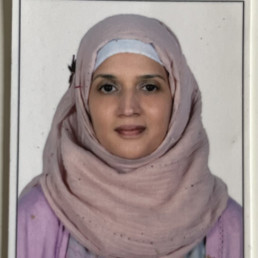
Written by Nabiha Mohamed
I am a British born Muslim Pakistani Geography teacher, who loves rocks and the Marvel Universe. I have spent 13 years living in Abu Dhabi but have now returned to the UK and am living in Bristol. I have taught in both comprehensive and independent schools, both of which I have enjoyed very much. I am a creative being who overthinks everything! I love to learn, and I have recently woken up to the fact that I am one of the few teachers of colour in this country and am now feeling the responsibility of this weighing heavy on my shoulders. Keen to ‘make a difference’ in the schools, I would love to connect with other teachers of colour in the UK.
We have been hit with comments like these throughout our lives. We have become accustomed to these ‘microaggressions’ in every aspect of our daily routines, and by ‘we’, I mean, people of colour.
As a British Asian Muslim woman (that’s a lot of labels already) born and raised in this country, I had never heard of the term ‘microaggressions’, until about 2 years ago in a CPD session at school. It was a turning point for me, in my career and my personal life. I have since been educating myself around the topics of unconscious bias, microaggressions and sense of belonging, particularly in schools. It’s been a rollercoaster ride since then, highs and lows in my teaching career, in my understanding of the issue and trying to work out how best to teach students to be assertive and staff to be ‘awake’. I am no professor in this area, I am not perfect, but I have grown to become passionate about this topic as one I can relate to and hopefully, an area I can help change in schools.
I have come to realise that many people who fire microaggressions at you, are often wonderful, kind, well-meaning people. They just don’t think about the gravity of their words; if you did have the courage to call them out on their inappropriate comments, they would be utterly devastated, which also makes us hold back on speaking up. Three recent examples I can think of (all said by adults):
- I can never learn the names of the girls who wear hijabs, they all look the same.
- I’m so glad we have one of you here now at school, the kids really needed someone like you.
- I loved culture day; it was my favourite day of the year! I loved all the costumes students wore; they were beautiful.
Costumes? I don’t wear my salwar kameez on Halloween, love.
I have delivered CPD sessions and assemblies on Unconscious Bias and Microaggressions to both staff and students recently, with the aim to give students of colour the confidence to speak up and say, ‘that’s not okay’ and to educate teachers on what many of their students go through daily as they go about their lives.
The thing is… I said in my assembly that I promised myself, whenever anyone was to say anything inappropriate directed at me, I would speak up and tell them. If ‘we don’t do this’, I said, ‘things will never change.’ Did I speak up when the above microaggressions came my way? Shamefully, no I did not. WHY, oh WHY did I not say anything?! Because, they were all lovely people who didn’t mean any harm. Because I, aged 47, did not know how to handle the situation at that exact moment, and if I couldn’t, how could I expect a child to?
However, I want to break the cycle. I want to have the confidence to say ‘errmmm, no’, and I want to teach students to be able to do the same in a respectful way, but I don’t know how to. We have school policies on explicit racism but there is nothing in means of reporting the implicit microaggressions from students or staff. Should there be? Is there a need? Do we ask our EDI Leader to speak to the guilty ones or should we have the guts to do it ourselves? But the interesting, or annoying thing amongst these questions in my head is, why am I struggling to speak up like I am the guilty one? I haven’t done anything wrong.
The Intersection of Diversity and Climate Justice
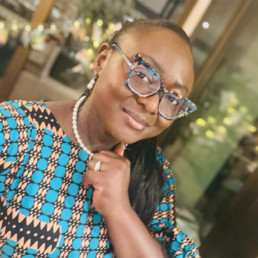
Written by Ndah Mbawa
Ndah runs Happier Every Chapter, a literacy service committed to helping schools and families improve diversity awareness and reading attainment through library diversity audits and the provision of diverse, inclusive and representative bestsellers for children. Her passion for decolonising mindsets within the school-to-workplace pipeline and supercharging the will/skill to read is shared by her teenage daughters, Kirsten & Aiyven.
The issue of climate change affects us all regardless of race, ethnicity, gender, or socioeconomic status. Be that as it may, it is becoming increasingly clear that certain communities are disproportionately more impacted by the effects of climate change, and that these communities often belong to groups who have historically faced discrimination and marginalization. The intersection of diversity and climate justice is one that cannot be ignored. It must be addressed if the hope to build a sustainable and just future for all is to be realised.
Take the uneven distribution of environmental burdens and benefits as a case in point of how diversity intersects with climate justice. Largely, communities of colour and low-income communities are more likely to live near polluting industries and toxic waste sites, and are therefore more likely to suffer from the health impacts of pollution and environmental degradation. If you don’t believe me, this Princeton University article may convince you. When I watched the critically acclaimed Erin Brokovitch in 2000, I didn’t realise the issue was as severe as Black People being 75% more likely to live in fence line communities than White People in the United States. These same communities are also more likely to experience the devastating effects of climate change, such as flooding, heat waves, and droughts. They are therefore facing a double burden: more likely to be exposed to environmental harms, and more vulnerable to the impacts of climate change. Coming back to our shores, according to the Environment Agency, households within 20% of the most socially deprived areas in the UK have a greater likelihood of flood risk than households in less deprived areas. The Grenfell tower fire incident of 2017 revealed a deep division between the rich and poor. Had the cladding which the developers used as a case for climate change to reduce the operational energy/emission costs not been flammable, we wouldn’t be having this conversation. The tragedy of this community which even though located in one of London’s wealthiest boroughs had become the most unequal place in Britain, exposed the underlining gaping social inequalities in our society as well as poorly informed climate change/justice initiatives and weak control over conditions pertaining to the already constantly degrading state of low-cost renting. This Guardian article put it well when it said, “fire is an inequality issue”.
Whether in North America, Europe, Australia or Africa, the recognition of traditional knowledge and indigenous perspectives is waning to dire levels. Indigenous communities who have thrived and lived in harmony with the natural environment for thousands of years have developed sophisticated strategies for adapting to changes in the climate. However, today, these communities are often excluded from decision-making processes around climate justice and have little to no voice in shaping policy. Makes you wonder how much education on climate change reaches communities like this in the first place. Surely the Inuit communities in the Greenland or Quebec who are experiencing melting sea ice making hunting and fishing more dangerous and unpredictable wouldn’t mind contributing to initiatives that may affect the future of their natural environment? Maybe we are missing a trick. Maybe by recognizing and valuing traditional knowledge and indigenous perspectives, we can build more sustainable and resilient systems that are better equipped to address the challenges of climate change in those particular places. For the climate justice movement to be inclusive, equitable and authentic, diversity of the key players is critical. Being a global problem, it requires collective action with engagement of a wide range of stakeholders from all impacted communities whether that be the younger generation, women, global majority people and others who have traditionally been excluded from decision-making processes.
Suffice to say, the intersection of diversity and climate justice is a critical issue that demands our urgent attention and action. The hope of a sustainable and just future for all might be a bit of a struggle to achieve without the due address that this status quo needs. There’s no denying the impact and relentless onslaught of climate change but as a collective we don’t seem ready. Hurricane Katrina in 2005 showed just how much when the low-income communities in New Orleans were disproportionately affected because they lacked the resources to evacuate or rebuild their homes.
While we carry on with efforts to educate our generation, we mustn’t forget the younger generation who will bear the brunt of our actions and decisions. It is also vital to educate them on climate change and how they can limit its advancement. One excellent way to do this is through books. Have a read of our blog post with some amazing book recommendations to teach children all about climate change in celebration of Earth Day.
If you are an educator looking to improve the literacy outcomes of your pupils especially the lowest attaining 20% or you simply want to diversify your school library collection, then speak to us. Happier Every Chapter works with schools, academies across the UK to improve reading attainment and diversity awareness through diversity audits and monthly boxes/bundles of diverse, inclusive and representative bestsellers with different curriculum aligned themes each month.
Being Comfortable Being Uncomfortable
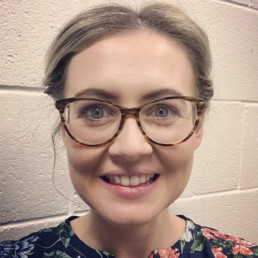
Written by Bethan Hughes
Bethan Hughes is a Second in English in a West Midlands secondary school and joint contributor to the LGBTQ+ toolkit on Diverse Educators.
I am a 33-year-old lesbian who has, probably only recently, become really quite comfortable in my own skin. The irony being that this is, probably only because of a lifetime of enduring being uncomfortable. When you exist outside the norms of society and outside of the dominant discourse, there is an odd sense of not quite ever being ‘inside’ where it is comfortable and instead watching from the other side of the metaphorical windowpane.
What does it actually mean to be comfortable? Comfortable is synonymous with safety, being content with where you are and what’s happening and maintaining the status quo. Comfortable keeps things the same. Being comfortable allows the same practices to continue. Which unless you are a white, heterosexual male might not be beneficial to you and contribute, whether directly or indirectly, to more challenges for others.
Yet to shatter, or at least wobble, the status quo involves putting yourself into a more uncomfortable position. It means speaking up in a meeting if you don’t agree with something or holding someone to account if their views or actions don’t align with what you believe to be morally right. It means having difficult conversations which might not go the way that you want them to go. It’s taking a deep breath, closing your eyes and being prepared to be the first domino to fall. And that’s tough. Especially when you could choose to take the easier route by keeping your mouth shut and trundling on with your daily business. And so, the cycle continues.
Why should I want to be uncomfortable, I hear you say? If we (truly) want to live in a just society then we all need to play our part. But we can’t do this if we are only focusing on the struggles that we personally face; as Martin Luther King said, “no one is free until we are all free.” If we can begin to take steps towards change by only being a tad uncomfortable, surely this is something that we can all commit to?
What might this look like in my educational setting?
- Always start from a place of mutual respect. If you are heading into difficult conversation territory, then this is always a solid start.
- When a student makes a comment or asks a ‘difficult’ question – explore it. Instead of ignoring a ‘that’s so gay,’ comment, address it and explain why the phrase is derogatory. Sometimes a conversation can begin to change someone’s attitudes or at least begin to challenge their ingrained value system.
- If you notice someone being spoken over in a meeting or their ideas not being heard; use your privilege to support that person or to credit their ideas. Consider when you are the most, or one of the most, powerful people in the room and how you can use this to amplify the voices of others. Or, if you don’t hold that power, can you join forces with someone else and support each other?
- Speak to share and not change minds. Use your voice to share your experience or your own feelings whilst being mindful that a conversation often won’t be enough to completely change someone’s mind. Share first and understand that changing minds can be a longer process.
- Speak from your personal experience and not on behalf of others. Also be open to credible sources when discussing information that is not personal to you.
- If you notice something that needs addressing, bring it up to those who have the power to change it. Perhaps the display in the science corridor only celebrates the achievements of men. Perhaps there is a lack of diversity in your English curriculum. Perhaps there is limited policy or support for your LGBTQ+ students. Be brave enough to have that conversation and to do something about it.
- Be patient with yourself and others. Change takes time but begins once we start to go into those uncomfortable spaces.
It’s easy to do nothing but if you have the privilege to do so; be 10% braver and have that conversation so that some of us who are perpetually uncomfortable, can be a little more comfortable.