
On single-sex schools

Written by Hollie Panther
DEI Lead, Mental Health First Aider, secondary Science & Psychology teacher and Teach First Ambassador.
Should they still exist in this day and age?
Currently in the UK around 10% of state secondary schools are single-sex (most secondary schools in England were single-sex until the 1970s in England, though in Scotland and Wales there has always been more of a co-ed approach). Broadly, I feel that segregating learners based on any characteristic that doesn’t directly affect their learning should stop (i.e. I’m still for schools that specialise in SEND and disability, and those that specialise in educating learners with behavioural issues — though I wonder if such learners would in fact benefit from incorporation into mainstream schools if done well, as opposed to lumping them in there due to budget restrictions?). Interestingly, nowadays it seems single-sex schools don’t technically prevent other-sexed learners from joining, just as religious schools don’t technically prevent learners joining who follow religions other than that the school centers on, and indeed, learners who come out as trans aren’t made to change schools, due to protection under the 2010 Equality Act.
When engaging with some of the research literature on this topic, it was difficult to find a clear answer as to whether single-sex schooling improves academic outcomes. With a critical hat on, it seemed much of the evidence may have been subject to confirmation bias — that is, that researchers set out to find support for their preferred method of education. There is some evidence for the idea that gender stereotypical subject uptake (i.e. English for girls and STEM for boys) occurs less in single-sex schools, but after I stumbled across a study published in possibly the most highly regarded journal within science, ‘Science’, I decided I’d look no further:
The authors argued that the movement towards single-sex education “is deeply misguided, and often justified by weak, cherry-picked, or misconstrued scientific claims rather than by valid scientific evidence”. The study goes on to conclude that “there is no well-designed research showing that single-sex education improves students’ academic performance, but there is evidence that sex segregation increases gender stereotyping and legitimizes institutional sexism.” (Halpern et al., 2011)
One more, slightly perpendicular, point on research in this area: I’d bet most of the research cited in arguments for single-sex schooling doesn’t consider trans and non-binary pupils. Interestingly, there is evidence suggesting that girls’ schools tend to be better set up to support gender-diverse pupils than boys’ or co-ed schools, due to their more critical and less binary approach to gender (Renz, 2020). It will be interesting to see what effects research finds on trans and non-binary pupils in different types of schools going forward, now that such learners are being considered more in this research area. Even though such pupils are a minority, their experiences are valid and deserve to be described when taking into account whether to legislate on single-sex schooling.
Having taught science in a ‘boys’’ school, I can’t say I noticed any advantages to it being single-sex. Female sixth formers talked of a culture of sexual harassment from younger male pupils which they believed came from girls not being usualised in the school. After trans and non-binary pupils started coming out in the school community, questions were raised as to whether to drop the ‘Boys’ from the school’s name altogether — I would be in favour of this, and more.
Ultimately, I’m against single-sex schooling as I can’t see any real benefits and don’t really see that it has a place within modern society. Single-sex education came about because society believed that men and women should learn different things, due to their differing abilities and also roles within society. Racial segregation in education came about for similar reasons, and no-one would suggest that was a sensible thing to continue, even if one race would do better out of single-race schools.
Let’s move forwards and scrap single-sex schools.

The link between Kintsugi and being a neurodiverse teacher
Written by Kelly Richens
Programme Director, BASCITT. BASCITT is proud to celebrate diversity and promote equality and inclusivity (see here)
Foreword by Programme Director, Dr Kelly Richens
Inspired by Hannah Wilson of Diverse Educators, we at the Basingstoke Alliance SCITT are on a real journey to have authenticity around the diversity of our trainees. Are we making progress? For sure, having open discussions, celebrating our differences, making sure all our trainees feel valued for who they are and not being defined by their protected characteristics. Are we there yet? Absolutely not. Whilst in our safe bubble the trainees are openly talking and writing about their lived experiences, yet there still remains a lot of fear. Our openly gay and bisexual trainees do not feel enabled to discuss this within their school communities. And another one of my trainees, recently diagnosed with autism on top of her ADHD, has written a heartfelt article about her struggle of living and fitting into our neurotypical world. She feels unable to add her name for fear of prospective employers discriminating against her, and this saddens me hugely. Please read her article below, maybe share it with your neurodiverse trainees, or maybe all your trainees, so they can maybe have an insight into the mind of someone who sees the world through a ‘rainbow of vibrant tones and hues’.
“I’m sorry. I didn’t mean to…” seems to be the phrase most used by myself since starting teacher training. If it isn’t a meeting I’ve missed, a document I have forgotten to photocopy or a person I’ve accidentally offended, you could say training to be a teacher would be a lot easier. That’s the thing with neurodiversity, as it is now called (for years I think I was simply referred to as odd); you have to take the bad with the good really. You will inevitably, and unfortunately forget, offend and not quite understand elements of everyday life that other people find easier to navigate. Some say it’s a “superpower”. Agreeing outright with this is difficult for me. My opinion is slightly more nuanced; do I think I’m different? Amazing? Eccentric? Fun? Exciting? Yes. Do I view the world through, not rose-tinted glasses, but through a rainbow of vibrant tones and hues? Yes, most definitely. I see through a filter that is completely unique to me, and so does everyone else, but the neurodiverse in me, adds that little sprinkle of “je ne sais quoi” that makes me stand out that little bit more than I sometimes would like.
That said, for all the little particles that make me “me”, there are a plethora of heartbreakingly awful things that accompany that diagnosis. As a child, I was so incredibly that “ADHD kid” in the class, that I didn’t learn to read or write for years. Everything was a struggle. I don’t envy my parents, who were incredibly patient. Those extra-curricular English classes for special needs? I went to those. Did I go to the Art club? Who has time for that when you can barely sit still in any seat for that matter. Can you imagine that I didn’t sleep through the night until I was five!? I didn’t get an official diagnosis until I was twenty-one, and when I started my training, I decided that I needed that extra bit of help (for my needs), as the struggles I had kept as hidden as I could for years, started to crack. At the end of the consultation with the psychiatrist, I felt as though I had been dealt a sentence; “Yes, your ADHD is quite clear… I would also recommend you look into a diagnosis for ASD too…” I know I shouldn’t have cried after I ended that call, but I did. I liked being the girl with the letters after her name; BA, BA hons, PGdip, PGCE, MA… but now I felt I could add another reel of letters right after them. I could feel the hot tears roll down my cheeks, and I felt so alone in that moment. Why was I crying? I had known about the ADHD; I had even made my peace with that bubbly and quirky kid, but now I felt that this new possibility was another part of me, I hadn’t met. A part of me I hadn’t quite reconciled with. What would be these new hardships? Would people treat me differently? What would the future hold?
That fear of the unknown plagued me for weeks, until I realised that it didn’t change anything. If I was Autistic as well, I had always been so. To look to the past isn’t useful if one cannot learn from it. As a trainee teacher, I walk into that Art classroom, and I try to perfect the burgeoning skills that I have been taught every day. That doesn’t make each day a new and surprising one. You wouldn’t know until you have experienced it, that every lesson is in fact, the unknown. You are constantly treading water; but you are living. Sure, you can “know” your students. You could probably pick out the slightly “spicier” ones (as I like to call them), but you will never know what will happen during that one hour. Plan away. Do what I do. Create a scripted and timed lesson. Imagine the questions you will ask and the students you will direct them to… you would be surprised what can make a classroom become a war zone. It could rain? They could have accidentally eaten a chocolate raisin (and who likes chocolate raisins, am I right?) and that could set them off and create the carnage we all fear. Anything can tip a lesson over the edge, but maybe it’s the uncertainty that we all like? Maybe it’s making a difference, or maybe it’s doing something different every day. Whatever it is, we have each taken that leap.
As someone who is neuro-divergent, and I come back to my initial point (see how we get distracted?); those difficulties and anxieties that others have, we feel them that much worse. I am not trying to negate that neurotypical people don’t feel the same as we do, but the intensity and the frequency of those fears are on a whole other level. Being different isn’t always a superpower when you are upset or are struggling, but when you finally get through the strife and hardships, and you have finally made it through that learning curve (and you will. I assure you. It will take longer than other people, and you may offend, be late and all the other stuff you will inevitably do, but you will make it), and it will be worth it. That part of you that doesn’t quite match up with everyone else’s idea of normality, is in fact what makes you the role model to that child who, without knowing it, was looking for someone like you to show them the way. You will be that person that they will look to when they need advice. You be that bright rainbow guiding light in their lives. You will add that extra fizzy colour to an otherwise, maybe drab day or week. You will be, trust me, far more patient with that SEND student when other teachers may not quite understand or care. You will have that insider knowledge that leads to making breakthroughs that others, may not make. You see them, because you have been there.
It takes a long time to perfect your superpower. You must go through an obstacle course of pain, tears and misunderstandings before you feel as though being different is a superpower, but it is worth it. A lot of people say hers don’t always wear capes. They don’t. Some wear glasses, or have a pocket full of post-it notes with lists of things to do (I do!) My phone is constantly ringing because I have reminders to do absolutely everything; from doing the washing, to creating a PowerPoint. I’ve slowly learnt to adapt, like Darwin’s theory of evolution (and the finches on the Galapagos islands… but that’s probably a story for another time!) and navigating my world. You will to. It just takes time.
It is capital to address these struggles; ours are sometimes far worse and more unbearable, and people who don’t suffer from them can’t always understand it. But being uniquely different makes us part of this wonderfully weird and diverse army. I like being part of this club now. I appreciate what I have gone through, and I try to not make as many excuses for myself anymore. I’ve learnt to apologise, but I have also learnt from those hurdles as well. I’m now, in fact, unapologetically me.
As an art teacher, I always think of myself like the Japanese art form of Kintsugi; the term means “golden joinery”, and is the art of repairing broken pottery by mending it with lacquer mixed with gold or silver powder. You can see the cracks, but once they are repaired, they are celebrated. Each chip is a lesson learnt. There is a beauty in imperfection… and who is perfect anyway?
I want to be a reflective teacher, as well as a reflective, diverse and eccentric individual. I’ve made my peace with being different, and so should you. I haven’t quite mastered the perpetual anxiety yet, but it’s a journey. We always ask our pupils to try their best and I am doing the same. Being neurodivergent is a journey, just like life. Be kind to yourself. Breathe, and don’t forget to communicate your needs. You never know who might be listening.
Don’t Look Back in ELT or LGBTQ* Lament
Written by Peter Fullagar
Self-employed ELT & DEI editor, writer and consultant. Creating Principled, Just & Fresh content.
I imagine for some of you reading this, you may have no idea what ELT is. Or EFL, ESP, EAL, EAP, ESL, ESOL … the acronyms are endless. I prefer to use ELT (English Language Teaching) to describe what I’ve been teaching and creating materials for over the last twenty years. For the other acronyms, I’ll put a small glossary at the end.
Yes, ELT has enabled many of us in the profession to travel the world and see different countries and cultures – usually on a minuscule pay packet, too. However, I’d like to see ELT on a par with ‘regular’ teaching and materials so that we can benefit from all our experiences and expertise together.
Like mainstream education, the ELT industry is working hard to become more inclusive and representative in its materials, not to mention its teams within publishing and teaching. Although I’m mainly focusing on materials here, I feel it’s worth mentioning that native speakerism is, unfortunately, still prevalent in the industry. Advertisements which specify for native English speakers are discriminating against the teachers who have gone through the process of learning and mastering another language. Invaluable experience, if you ask me. For an interesting (and successful) story, see Rachel Tsateri’s blog post on native speakerism and her personal experience.
Take an ELT coursebook published in the last twenty years and look through it, if you can. See how we represented people to learners of English. White, heteronormative, ‘Western’ (UK & US), non-disabled, middle class, neurotypical, stereotypically gendered and aged, slim … I could go on. One particular activities book, published in 2001, looks at ‘controversial’ issues, with ‘Gays and jobs’ being one unit. I discuss this in a blog post – Queerience: I am neither a taboo nor an issue. OK, so it’s twenty years old, but did we really think that was acceptable even then?
As a gay (queer) cis man, I’m determined to make a difference to help represent the LGBTQ* community in ELT materials. Out of the protected characteristics, it will probably be the last one to be addressed in ELT. Some of the biggest ELT markets are also those that criminalise LGBTQ*. According to the Human Dignity Trust, 71 jurisdictions criminalise private, consensual, same-sex sexual activity. Almost half of these are in the Commonwealth. Therefore, one of the biggest issues for me is how can we represent marginalised communities in countries where the very essence of the identity is forbidden? How do we reach those people in those countries who identify as part of the forbidden community? If people don’t see themselves represented, then they may believe that their very being is wrong. That’s what growing up in Section 28 did for me.
Things are changing for the LGBTQ* community in ELT. The commitment by publishers to incorporate DEI initiatives in their daily working life is encouraging. I worked on in-house guidelines for a major ELT publisher. Freelancers like me are producing their own inclusive materials. But there is still a long way to go. Do publishers go fully inclusive with an LGBTQ* family and risk losing a large portion of their income? Or does a publisher go fully inclusive with an LGBTQ* family and lead the way in representing the reality of the world? I know which one I’d prefer.
I said I’d help with a little glossary:
EFL – English as a foreign language (TEFL = teaching …)
ESP – English for specific purposes
EAL – English as an additional language
EAP – English for academic purposes
ESL – English as a second language
ESOL – English for speakers of other languages
Special Interests
Written by Nadia Hewstone
Nadia is a certified executive school leadership coach. She left headship to start Destino Coaching and now supports school leaders with their own development as well as development of their teams.
Hunter is not Hunter’s real name – he chose it for this blog. It is taken from the Japanese anime series, Hunter X Hunter. The show features the protagonist Gon, on a mission to train himself as a hunter. He reunites with his father, who is alive and an accomplished hunter too. This is one of Hunter’s special interests. He doesn’t just like it, he lives it.
Hunter has been hooked on the Rubik’s cube for years. He spends hours working on improving his solves. His favourite events at cubing competitions are 3×3 blind and 4×4 blind. He talks about algorithms and memorization all the time. It makes no difference to him if you take part in the conversation (which I can’t because I don’t understand it). When he meets someone new he judges their usefulness to him based on how well they can solve a cube. I’m not that useful to him.
He has had many interests over the years. He wore a spiderman costume for over a year once. He taught himself how to play a Japanese flute, learnt how to graffiti and covered our garage. A particular favourite of mine was his interest in detectives. We sourced him a set of detective items from obscure dealers online and he made traps and spied on us for months. He studied Sherlock Holmes and took on many of his traits for a while. When we booked a villa in Mallorca one summer, he spent 10 days inside watching the series starring Benedict Cumberbatch over and over. By the time we flew home he had decided to take up the violin.
These interests envelop him and drive him – they have a mad urgency that is quite exciting but also tiring at times.
He understands now that being in a community of enthusiasts helps him. So we travel all around the country attending Rubik’s cube competitions. These events consist of 2 days of sitting in a hall of 200 hundred (mostly) boys clicking their cubes and discussing the merits of different brands of lubrication. It’s given him so much more joy than we could ever simulate at home. It’s also enabled him to talk about being autistic. In the evenings, in the bar of the hotel, he socialises and it brings me great joy.
Penny is my daughter – the name is taken from Big Bang Theory, her favourite TV show. She watches it on a loop. It’s a comedy but she never laughs at it. She has glasses the same as Penny’s and uses phrases from the series all the time. She wants to be a brain surgeon and study sciences like many of the characters in the series.
Penny’s interests aren’t as clear as Hunter’s. Apparently this is common in girls with autism. She does have things she likes, really likes but doesn’t have hobbies in the same way Hunter does. She worries about her friendships (which are hard work for her). She does like series / TV shows so we have moved through lots of them and on days when she is very low she watches all 8 Harry Potter movies without sleeping. She is very capable and could achieve almost anything. When she takes up a hobby she excels very quickly (football. piano, singing, drama, swimming) but loses interest just a fast. This means her interests don’t show in the same way as Hunter’s do. She does like to talk and talk and talk about the social politics of school, the family, my work etc.
Penny sometimes talks at me all evening and doesn’t let me move. Her favourite criticism of me is ‘I don’t feel like you’re completely present Mum’. What is impressive about her is that when she sets her mind to something she achieves excellent results. If she ever does a manicure for me, for example, it far exceeds the quality of a salon experience. She’s meticulous, a perfectionist, in fact. This is probably why she gives up on things – she sets such high standards for herself that it tires her out.
Be A Light In The Spaces You Occupy
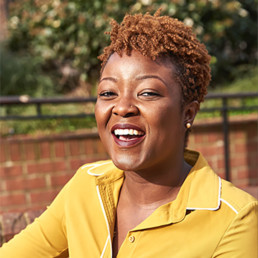
Written by Ayo Awotona
Ayo Awotona specializes in confidence building for girls in education. She does this through programs, workshops, and keynote speeches.
One of the great aspects of being a servant leader is being a light. It might sound strange but essentially it means having the ability to step into workplaces (physically or virtually) and speak hope, truth, and wisdom. It’s having the ability to help teams see situations with a new perspective and encourage them to have a can-do attitude.
Light is associated with visibility and helps to see things thoroughly, and servant leaders can provide that type of light. We can see things that others may not, such as highlighting why certain areas are not functioning well and cultivating a plan to tackle the problem.
How Can We Be Lights?
There are many ways we can be a light in our working environment and below I share four ways:
- Be perceptive/observant – This ultimately means being able to see deeper than what is on the surface; finding what systems are working or not and why, seeing how to implement new changes and reinforce what is already working well, etc.
- Be strategic – This definitely takes teamwork to brainstorm and create effective strategies to help run programmes, projects, or systems more smoothly.
- Spread hope – We can bring reassurance to others and brighten up the atmosphere by simply being hopeful and positive, reminding them of the vision and goal of the organisation/school.
- Embracing our individuality – Before being servant leaders, we are human with our own character traits and personalities. We can become more relatable and connect better with our colleagues/others because we come as ourselves.
What’s The Significance of Being A Light?
You might be wondering why it’s so important to be a light? Well, to give an illustration, we know there’s a stark contrast between darkness and light.
Imagine living in a house that is dimly lit for a whole week, and when the lights get fixed, everything becomes so much brighter and clearer. Similarly, we can be a light in dimly lit situations and see things through a new lens to help make what was ambiguous clear.
Many of us have experienced other people being lights in our world, maybe our mums, a friend, a mentor, etc. They brought hope, warmth, or made things visible that were not clear to us.
In Conclusion
In one way or another, all of us have the capability of being a light in each others’ lives. Specifically, in a working setting, servant leaders can be a light to spread hope, encourage change where necessary and bring new perspectives to improve overall work efficiency and efficacy.
Sorry My Mental Illness Isn’t Sexy Enough For You

Written by Katja Pavlona
MFL Teacher and founder of Sorry My Mental Illness Isn’t Sexy Enough For You
If I told you I had a serious health condition that kills one in ten of its sufferers, how would you feel? Sad? Sympathetic? Curious?
How would you behave towards me? Kindly? Compassionately?
If I told you my condition was a personality disorder, would you still feel the same? Or would you become fearful? Avoid me? Spread rumours about me? Tell everyone I’m clearly unstable/ an attention seeker/ making it up/ a danger to others because of my diagnosis?
I have experienced all of the above reactions, and let me tell you the fact that 10% of people with Borderline Personality Disorder commit suicide, and up to 75% will attempt it at least once in their lifetime, does not gain you much sympathy.
I decided to speak out about being a teacher with BPD (also known as EUPD/ Emotionally Unstable Personality Disorder) after years of battling with the NHS to obtain a diagnosis.
BPD is characterised by nine main criteria. However to qualify for a diagnosis, a patient only needs to demonstrate five of the nine characteristics. This often leads to misdiagnosis, most frequently with bipolar disorder and CPTSD. In BPD the main features are fear of abandonment, unstable relationships which flit between idealisation and devaluation (splitting), unclear or shifting self image, impulsive and self-destructive behaviours, self harm, extreme mood swings and emotional dysregulation, feelings of emptiness and outbursts of uncontrollable anger. I don’t have all of the symptoms, but the ones I do have can severely affect my life.
Symptoms tend to lessen with age and I am no exception. My late teens and early twenties were chaotic and self-destructive. Training as a teacher was singularly the best thing I did to gain control over my illness.
Teaching gave me purpose, distraction and structure, and I found rapport with teenagers came easily. My impulsive tendencies can be a real asset in the classroom when I need to be flexible with my approach, and my sensitivity to others makes me extremely perceptive to the needs of young people. It also means I am able to negotiate sensitive conversations well due to my high levels of empathy and hyper-awareness of non-verbal cues. My tendency towards black and white thinking means students know my boundaries are consistent, and the very nature of BPD means that my practice is automatically trauma-informed. The idea that people with BPD are a threat to children is totally unfounded.
I decided to ‘out’ myself during a staff CPD session on mental health. So much of the mental health discussion is centred around anxiety and depression due to the stigma and misinformation around more serious conditions. I felt people needed to realise there are many people who have no voice in the discussion about mental illness.
Colleagues were shocked at my disclosure- I am very high functioning and there is little to give away that I live with one of the most serious and stigmatised mental illnesses there is. After I spoke out about my diagnosis, I was surprised to find I wasn’t the only teacher in my school with BPD. For some reason, people in general seem to think mentally ill people are all rounded up and hidden away on reserves somewhere. They find it quite shocking that we’re living in the community with largely normal lives.
Alongside BPD I also experience psychotic symptoms such as hallucinations (mostly olfactory, tactile and gustatory, but also occasionally auditory and visual) delusions and paranoia. It’s unknown whether my psychosis is a part of the BPD or if it’s a hangover from my family history of schizophrenia.
Over the years I’ve learned to use my environment and context to help me work out what is and isn’t real, but it can make life difficult and it isn’t always 100% foolproof. I have been signed off work for brief periods of time, I do struggle with suicidal ideation, I take mood stabilisers and antipsychotics, I have to engage in therapy and I can be difficult to work with when I’m not on form. But I am determined to be the best teacher I can be.
It’s important to give our young people diverse role models. But whereas LGBTQ+ and BAME teachers can speak freely about their experiences, if I were to do the same it would likely end my career. My school are supportive, but insist that any media work I undertake has to be anonymous. I cannot show my face and my true identity must be kept secret. Society isn’t ready for people like me just yet. The stigma of a personality disorder is simply too large.
The greatest irony is that I am fairly confident that few- if any- of my students would care that I have a personality disorder. Their parents? That’s likely a different story. But I’ve found young people are surprisingly tolerant. They value openness. And in all honesty they have already worked out I don’t conform to the stereotype of a teacher. The green hair, nose ring, loud 80s jumpsuits and tattoos gave that away early on.
I’ve found schools generally want to be supportive. There are still some things they aren’t getting quite right. I was somewhat bemused at one school that, upon disclosing my diagnosis, immediately began discussing reduced timetables and responsibilities. For some people with mental illnesses, myself included, this isn’t always the right approach. At the time of writing I am teaching full time, studying for a Master’s and also a school leadership qualification. If ever there was a mental illness that the phrase ‘the devil makes work for idle hands’ could be applied to, BPD is probably it. Staying busy is key to keeping me on track.
If you work with someone with a personality disorder, it’s also important to think about how you frame their behaviour. Borderlines are known for having problems with managing their emotions and it’s something we have to work really, really hard to stay functional and maintain relationships. It’s probably the biggest battle we have.
So when we give an opinion, stand up for ourselves or raise an issue, don’t roll your eyes and dismiss/trivialise it as ‘over-exaggeration’ or ‘over-dramatic’ and chalk it up to us having BPD. We are people with thoughts, feelings and personalities outside of BPD, and this kind of attitude is invalidating and belittling. Sometimes our label is a convenient excuse to sideline us, especially in a professional context, and we are very aware of it. The same goes for difficult conversations and confrontation with colleagues. If these situations are mismanaged, they can be catastrophic.
One of the main areas that schools need to work on is the language used around mental health. Too many times in schools I hear students using mental health as an insult: “Psycho”, “Schizo”, “She’s mental,” “He’s crazy,”, “You’re triggering me so bad right now.” I’ve also heard, “He’s such a narc,” (short for someone with Narcissistic Personality Disorder) and there was a trend a few months back for students declaring any drama to be “so borderline.” I always challenge this, but I suspect I’m in the minority.
The simple fact is that mental health doesn’t have the same status as race and gender when it comes to tackling stigmatising language. This extends to HR too. Nothing is more frustrating than the fact I’ve spent time delivering training on BPD in schools only to repeatedly see my condition referred to as ‘Bipolar Personality Disorder’ in emails (it doesn’t exist) and Occupational Health forms. It’s not hard to use the correct terminology and avoid mis-labelling.
This isn’t the only area where some schools are lacking. Whilst jobhunting last year, I decided to declare my BPD as a disability on application forms. The reason for this was twofold- I need reasonable adjustments in place to enable me to do my job properly, and also many schools subscribe to the government’s Disability Confident scheme which guarantees interviews to disabled candidates who meet the minimum criteria.
I applied for dozens of jobs where I met all of the job requirements and wasn’t offered a single interview, even for schools that boasted they were part of the Disability Confident programme. I emailed two schools asking for feedback on my application in an effort to find out why I wasn’t getting interviews. Neither responded directly to my questions. Many schools boasted on their websites about their commitment to diversity and equality. Apparently this didn’t extend to disability equality.
I was curious as to whether my decision to declare BPD had played a part in my rejections and so removed it from job applications. In the following weeks, I was shortlisted for interview six times. Of course I can’t prove this to be discrimination in any concrete way. Fortunately, as the saying goes, one person’s trash is another’s treasure, and I am due to take up a post in the senior leadership team of an alternative provision school where my lived experience of mental health is considered a strength rather than a failing.
As a result of my experiences, I decided to set up a mental health project called Sorry My Mental Illness Isn’t Sexy Enough For you, which focuses open sharing the lived experiences of those with mental health conditions, especially the ones that aren’t ‘sexy’ such as personality disorders, dissociative conditions and psychosis.
There is a separate section on the website for teachers to share their stories of mental health and many of these show how little progress has been made in schools. For this reason I set up a campaign for all schools to become Disability Confident in an effort to remove barriers for teachers with mental illnesses. I have also written in the media and spoken on podcasts.
This has attracted opposition and negativity. I have received messages telling me I am a terrible role model, that I am damaging children, I bring the reputation of the profession into disrepute and that I shouldn’t be a teacher. They don’t affect me. When you have a mental illness, you develop the skin of a rhino. For every person sending abuse, there are twenty more telling you how speaking out has helped them.
My hope in writing this is that it helps leaders realise that teachers with mental illnesses are a valuable resource and we quite often can make our conditions work in our favour to enable us to be good, or even outstanding, teachers. Yes we may need support, to varying degrees, but we aren’t the burden that we’re made out to be if you handle us properly. I also hope that it encourages teachers to be open about their own mental health and possibly, one day, could even mean that we don’t have to hide who we are from our students.
Links:
Sorry My Mental Illness Isn’t Sexy Enough For You website: www.livesnotlabels.co.uk
Sorry My Mental Illness Isn’t Sexy Enough For You Instagram: @livesnotlabels
Disability Confident Campaign: https://bit.ly/3JSVRZE
The benefits that English second language workers can bring to your workplace

Written by Paul Holcroft
Paul Holcroft is the Managing Director at Croner.
Organisations are actively seeking out, not just multi-talented workers, but also multilingual employees to join their workforce.
Hiring workers who can fluently communicate in more than one language is seen as a huge positive business asset. Employees fluent through ‘lingua franca’ allows you to trade in wider foreign fields and on international scales.
Its significance proves business success goes far beyond just being fluent in English. And through that, more employers are seeing the benefit of recruiting multilingual and ethnically diverse workers.
Read how hiring an ethnically diverse workforce, with a penchant for languages, can prove beneficial for your brand-name and succession.
Understanding the customers’ needs on another level
Your brand-name will be publicly viewed as a workplace which understands the importance of diversity and inclusion. The benefits for this will return to you, through the growth of your clientele field. And the same will occur with your customers’ commitments.
It’s worth taking notes on the new market-realms you can effectively tap into. You’ll be able to appreciate and explore them, through better insight from your multilingual employees. Learning about local customs, rituals, and beliefs can increase customer relations and marketing services.
Stronger customer loyalty and relations
Through diverse workforces, you can bring about great benefits to your customer relations. A stronger rapport means business interaction will run more smoothly and efficiently.
Employees will share lingual mindsets and cultural backgrounds, which means they can establish queries to greater lengths and depths. And their understanding for customer satisfaction and objectives will remain completely exclusive.
Your clients will be left with confidence and appreciation for your tailored services. And with strengthened trust, you can keep confident that their loyalty will transpire into business profit and succession.
In-house translation support
You can effectively utilise employees who are bilingual, multilingual, or polyglots for any business projects that require language-centricity.
They can be used for a wide range of communicative work-tasks, like drafting legal contracts, writing dual-language materials, and international marketing campaigns. You’ll be guaranteed high quality content and easily accessible services.
Different level of talent and skill set
Employees with multilingual capabilities bring a completely different type of skill set to the table. Research by the National Institute of Health found bilingual people were able to switch tasks and process information faster than monolinguals.
It allowed employees to work efficiently within fast-moving work environments. Meaning they’ll adapt effectively to hypergrowth and business expansion; and can handle new and unfamiliar experiences easier than others.
Honing on this talent means workers will more likely remain in your employment. They’ll feel appreciated, valued, and aspire to progress further in their career with you.
Minimising the PR mistakes
Recruiting employees, fluent in the language you’re working in, allows you to expand without a fear for linguist mistakes.
Facing marketing errors and translation issues reflects badly on your business name. When venturing into new markets and cultural demographics, your projects shouldn’t manifest costly business mistakes.
If you do conduct business that extends geography, language, and culture, it’s vital to have an in-depth understanding in that field. And you should understand ways to adapt your values and intentions to succeed in the new market.
The importance of diversity and inclusion in business
Diversity and inclusion often go together – but are two completely different amenities.
You’ll benefit from utilising both strategies to strengthen equal opportunities in your workplace.
A diverse workplace will attract employees from all walks of life. Your business will be recognised as a place of equal opportunities and career progression.
It’s fair to say, not all businesses are able to hire candidates from a wide range of backgrounds and linguistics.
But through taking a proactive approach towards creating a diverse workforce, you’ll be able to attract talent and corporate reputation – all benefiting business prosperity and succession.
How colourful is your staffroom? Recruiting, retaining and supporting the careers of ethnically diverse teachers
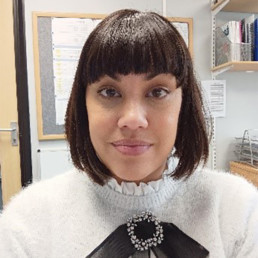
Written by Caroline Lowing
School Improvement Lead for HISP Multi-academy Trust. She was previously a Deputy Headteacher and has worked in Secondary education for 18 years. Caroline co-chairs the ASCL Ethnic Diversity Network and sits on Council for the South East of England. Caroline aims to be a Headteacher in the next 2 – 4 years.
Recently me and my colleague, Gurpall Badesha, presented to a room of school, college and trust leaders at the ASCL Conference on Recruiting and Retaining teachers of colour.
We hugely enjoyed the experience and got some great feedback but that wasn’t the best thing about it. The best thing was that most of the people in the room were white.
Since becoming co-chair of ASCL’s Ethnic Diversity Network I have really tried to carve out the time to be more informed and involved with the ED&I agenda and all of the fantastic organisations out there. I’ve attended meetings and webinars, I have had so many energising conversations and met so many inspirational people.
Even in the short time that I have been involved in this work I have noticed a big change. It is no secret that statistics around the recruitment, retention and career progression of people of colour in education are woeful. The DfE have reported that, in 2019, 85.7% of teachers were white with a staggering 92.7% of headteachers were white. Every way that you look at it, education has a big problem.
However, these statistics and what they mean for the young people that we serve can sometimes stop us in our tracks. The need to delve deeper and deeper into the implications is often overwhelming. I completely understand that we need to be heard and we need to share our own lived experiences. Goodness knows that I have told my own story many times and personal stories about, for example, being repeatedly mistaken for a teaching assistant when you are a Headteacher, are incredibly powerful.
The issue is that, often, the conversation will only go this far. The recent transformation in ED&I in education has been around what can actually do to enact change. This is why I was so pleased to see so many white school leaders in our session. These are people that want change and they want to learn how they can make that change from their position of relative privilege.
Providing solutions is hard. Coming up with ideas that work within every context is impossible. However, the magnitude of the problem coupled with the constant feeling of getting it wrong has led to a feeling of helplessness. When we shared ideas in our session, such as approaching parents from ethnically diverse backgrounds on the school gate to apply for governor roles, it was a joy to see people scribble it down to take back to base. Equally, it was wonderful to hear about schools that already have effective practices. For example, one school tracked its alumni through university and then approached students of colour to support them through joining the profession. I was frantically scribbling, then.
There is absolutely a lot to do to improve the recruitment and retention of people of colour in education but I am genuinely optimistic about the future, not least because school leaders on a mission get things done!
If you would like to know more about ASCL’s Ethnic Diversity Network then please contact Caroline at c.lowing@hispmat.org or she is on Twitter @caroline8779
Making the DEI mission of your school mean more than just words.
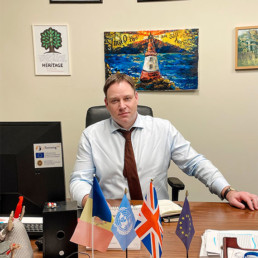
Written by Rob Ford
Rob is an educator for nearly 30 years, a history and politics teacher, a school leader in various schools in the UK and was principal of Wyedean School in the UK, before being appointed as Director of Heritage International School group.
“Our lives begin to end the day we become silent about the things that matter”. MLK
As my colleague sobbed with frustration and emotion in my room one afternoon, after a long day at school, going through what had just happened in class, I realised in that moment how powerless I felt there and then as a person but I knew how powerful my school’s culture, ethos and policies truly were in these awful moments. More than just words when put to the test to support my colleague as she asked for my help as a school leader.
My colleague, an international teacher, had been on the receiving end of a racist comment and it underlined to me just how much work we still have to do in our schools and communities to ensure such hurtful and offensive moments don’t happen especially when it comes to the words, beliefs and actions of children and young people in our care.
When we found the students responsible and put in place the necessary sanctions & follow up actions warranted, the comment from one parent said this to try and downplay the incident; “It’s like he was at the same table when the waiter was abused but all get thrown out of the restaurant”.
Illustrating perfectly with the choice of words that even the most liberal, educated, wordly wise and enlightened of school communities, especially those with many nationalities and a strong global outlook, need to continue to work together with the whole community, to challenge and change such mindsets. In contrast, the students were actually very contrite, apologised, owned their responsibility and repaired the damage done with their teacher who was prepared to move forward with them on this basis.
We cannot ever be silent on such issues as school leaders, nor should we feel powerless individually to tackle these issues successfully. We need to prioritise clear policies, culture, staff training and meaningful education in schools around issues & attitudes such as racism, nationalism, prejudice and hate that, unfortunately, have become more widespread in the 2020s around the globe. Doing nothing or hoping it won’t ever be something you will have to address is not an option either for any school leader.
Your school culture is not international because it says it in the title.
It is always quite surprising how many school leaders feel that issues around racism will never affect them because they are “an international school”. This is a very false assumption as much as stating how many different nationalities are in the school community. It doesn’t mean a school is diverse, equitable or inclusive and it’s a “lazy assumption” and derelict to avoid having a practical strategy in place because you say you are in the school’s name. Words matter here.
You need a robust Diversity, Equity and Inclusion Policy in place.
Your DEI policy should sit alongside the handful of ones, like Safeguarding, SEND, Teaching and Learning, Complaints, that you have in crumpled paper form, covered in notes and highlighter on your desk as a school leader because they are used as part and parcel of daily school life. There are some really effective, comprehensive and robust DEI policies out there to look at and adapt to your school.
Your DEI policy needs to be regularly reviewed, a governor responsible, a senior leader made responsible for it, and for it to be made publicly available, for your whole community to be aware of it with the key points clear. Get good outside experts to scrutinise it and for them to challenge you as a leader, your governors and your team on it as COBIS did to me and my school last year as part of our standards accreditation.
You need regular CPD for staff awareness and all your team believe and operate in this culture.
I couldn’t imagine annual staff training in August or regular CPD throughout the year, without time spent on our DEI, any more than I would leave safeguarding, the fire drill or Teaching and Learning out of what is central in the education and duty of care towards children. There are some incredible voices and forums out there for schools to follow and engage with and bring that outside expertise and experience to your school. Especially for schools and communities operating in homogenised and monoglot environments. Your DEI policy needs to be even more central in your strategy.
There are some incredible voices and forums out there for schools to follow and engage with and bring that outside expertise and experience to your school so tap into it; for example we have used Jon Gibson and Backdrop Education for staff training around inclusion and equity, America House in Chisinau extensively on diversity training, our governors have worked with Jackie Beard, a NLG and used the DEI programmes from NGA. COBIS have been working with Angela Browne and Hannah Wilson to deliver DEI training in schools and we are signing staff up for this outstanding & highly recommended programme for the courses this year. We also follow Hannah’s work in offering free DEI conferences and webinars to educators in the UK and around the World.
Raise student (and parental) awareness regularly, celebrating and commemorating our global, diverse communities in school daily life.
This is where you need to be prepared to be less than silent, especially in a World of labels thrown at schools such as “woke” or “cancel culture” for daring to celebrate and commemorate events in the global calendar such as Black History Month or Holocaust Remembrance. Do not shy away from what may be perceived as difficult topics or fearful of reactions.
In those school boards in the USA, where some parent groups are challenging schools for holding Black History Month events this February, because they believe it is teaching “CRT” (critical race theory), school leaders are tackling this challenge head on legally as we finally see this “false equivalence” called out and for a many, a hill definitely worth a stand on.
In Eastern Europe, the ugly racism black English footballers endured recently playing Hungary, became a very good debate topic for our IGCSE and A Level students and I was proud to see all of them call it out for the hate and ugliness it was. These are not the values these students want or their part of the world to be associated with.
We also are facing in Eastern Europe the contextual challenge of the conflict of Russia towards Ukraine, with students of both countries in our community, so we have worked with teachers on how to handle difficult questions on it and deal with issues that may arise from students in a safe arena of dialogue. This is the very reason why we educate children.
Make your community more inclusive and diverse.
This should include a recruitment policy that is more than just centred towards white Anglo-American educators and truly brings the global community to your school. I still hear the positive words of one of my students when she said coming to Heritage is like going abroad each day.
The same is about the speakers you have in school, the role models for children chosen and what you study in the curriculum. I have no issue with special days or months for events in the global curriculum calendar because it is a good excuse to highlight the work that is consciously there daily and it is not just for one day.
Schools shouldn’t worry about the odd criticism on social media because you celebrate or commemorate one day either, as long as this isn’t the only time some topics or events are looked at and studied. A “one off” is not a school culture but it is a good starting point to build on. Throughout this academic year, the UN’s #FightRacism campaign has underscored so many wider curricular events especially through whole school assemblies and cross curricular days we have aligned with as a school.
Conclusion.
We should live up to our school’s mission, culture and ethos, especially where we want future leaders to lead with the very values we claim we are about in our schools to young people including diversity, equity, justice and inclusion for a better future. Or as school leaders we will end up remaining silent on what matters most.
Ukraine, Russia, Palestine, Israel, Afghanistan, Covid-19, Climate Change…and so much more: how to get Political Impartiality right.
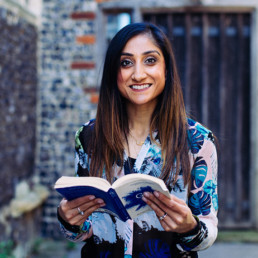
Written by Zahara Chowdhury
Zahara leads on equality, diversity and inclusive education in higher education. She has over a decade of experience in middle and senior positions in secondary education. Zahara is author of Creating Belonging in the Classroom: a Practical Guide to Having Brave and Difficult Conversations. She is founder of the School Should Be blog and podcast, a platform that amplifies diverse and current topics that impact secondary school classrooms, students and teachers.
The last few weeks, or perhaps years, feel like a surreal blur when thinking about our global context. From the outbreak of Covid-19 to the recent war in Ukraine, it is now as if we are living through the dystopian and historical literature I once taught through fictional and non-fiction texts in the classroom. As teachers and educators there is an expectation that we not only educate students about these topics, but we must know and be aware of every article and news feed that emerges on a daily basis. In many ways, the recent Political Impartiality Guidance released by the DfE was as much to refresh our responsibilities as educators, but also to reassure teaching professionals too; unfortunately, social media coverage and wider analysis of the guidance seems to suggest the opposite. Our students and colleagues want to learn, discuss and explore current affairs, but how do we do this in light of this guidance and a school climate, where GCSEs, A Levels, limited time and limited resources dominate?
Much of the specific economic and political facts go over my head (even as a DEI Lead). Equally, my advice to teachers and schools is that you do not need to be a global, political, geographical or economic expert to address these matters. Instead, in order to get political impartiality ‘right’, whilst prioritising curriculum, teaching, learning and pastoral needs, we must remember what teachers and schools do best: we can critically navigate and evaluate the differing perspectives of world politics without being political. We can support students in how to challenge and respectfully discuss contentious topics. We can also help our students learn to be empathetic, acknowledge their emotions whilst being mindful of others too.
However, this in itself is challenging considering the ‘diversity’ within teacher training and lived experiences too. To help teachers and education professionals, below are some key learning points and explanations that can help schools get political impartiality right; if we are aware of them, we are more likely to create inclusive, safe spaces for all of our students and staff too.
Media Bias
There has been an outpouring of sympathy, global empathy, local and community charity and Influencer support for Ukrainian refugees – and rightly so. It has been heart-warming and necessary to see so many come together at a time of intense suffering to protect and support our human race. However, the media coverage and perception of refugee status has been problematic. In many ways, it seems some Western media outlets have usualised poverty, strife, pain and refugee status for particular races and regions but portray it as wrong for Western, white, ‘blue eyed’ individuals to experience the same. The question for teachers that might arise here is how do we explore such controversial media bias without making it ‘political’?
Aisha Thomas, founder of Representation Matters, asks a pivotal question: what story is your curriculum telling – a question that could not be more relevant in light of media bias, social media algorithms and being politically impartial in the classroom.
- Does your curriculum teach success stories from the East, North, South and West?
- Does it teach socio economic barriers (and opportunities) in the West, East, North and South?
- Is it gender equitable?
- Does it elevate the voices of all protected characteristics? Does every member of your class ‘see’ and ‘hear’ themselves in lessons?
- Is it intersectional?
- Is it fair?
- Is it truthful?
- Does it allow students to question, critique and evaluate the situations independently?
These are worthwhile questions to bring to the forefront of any CPD training and classroom work you do to strategically address belonging, equity, anti-bullying and teacher/student safety.
The media sources referenced above also contain bias – pretty much everything we read, see and explore does. However, it is important to explore the language and literacy of a range of media sources so students are able to have critical, mature and nuanced discussions – what every school ultimately aspires to!
Selective Empathy
Selective empathy is when we empathise with a particular group, particular causes and people for many reasons: it is dominant in the news; we relate to it, or maybe it feels close to ‘home’. Whatever ‘it’ is, it somehow resonates so much that we find ourselves becoming socially just, publicly outraged and visibly allying with a particular cause or issue. For example, you may notice that certain members of staff or students visibly ally with some causes more than others, whether that be the war in Ukraine, the Israeli-Palestinian conflict, anti-Semitism or LGBT+ rights.
Being selective in how and with whom we empathise in a globally diverse society is problematic. In many ways, it can lead to ‘whataboutisms’, alienation and further antagonism. If we are really committed to creating a diverse and inclusive world where protected characteristics need not exist and everyone feels a sense of belonging, we must approach all areas of DEI consistently – with nuance and transparent, shared values. Schools, teachers and students will need to ask themselves how they are creating safe, equitable spaces of belonging regardless of geography, economics, beliefs and values. Individuals with and without protected characteristics, individuals from marginalised and non-marginalised backgrounds need work together to create a sustainable culture for DEI. Equally, centralising ‘lived experiences’, the intersections of society and people who often fall victim to decisions and events beyond their control are who we need to ally with – they need our voice and their voices amplified. This is not political, that is just empathy and being human.
However, acknowledging our empathetic responsibilities can feel jarring; it can make some feel uncomfortable, critique ‘woke culture’ and more. Some may feel they are able to unapologetically selectively empathise – why should it matter that I empathise with one cause more than another? Why does it matter that I share my outrage for the war in Ukraine but not Syria? The answer to this question requires some introspective work:
- if we felt uncomfortable advocating for the rights and safety of Palestinian citizens in the Spring/summer of 2021, but little discomfort advocating for the safety and rights of Israeli citizens (I am using citizens and geography intentionally here as this is not a Semitic discussion), we must ask why? Does this discomfort or lack of responsibility enter your sphere of allyship with Ukrainian refugees? If not, why? If yes, why? If you feel your heart pang when you see your child or your students in a young Ukrainian child, but not in a Palestinian, Afghan or Syrian child, question why? If you are collecting charitable donations for Ukrainian refugees but this did not necessarily feel as urgent or necessary last summer again, question it. Do you find supporting and understanding the barriers faced by the LGBT+ community more accessible than anti-racism? Why?
These are difficult questions. They are challenging, jarring and some may choose to dismiss them immediately. I encourage you to work through the discomfort and potential feelings of offence. This is not a criticism, unnecessary ‘wokeism’ or misplaced social justice work; this is a call to critically address and navigate feelings of empathy. Empathy is a skill that needs to be nurtured and learned. Allyship is a set of actions that need to be consistently practiced and addressed. This is only possible if we are always sitting and working through our discomfort. It does not need to shake our core values and beliefs – instead, it reinforces that our core values and beliefs are wholly inclusive and respectful of all human life – not selective.
Intersectionality
The last 3 years isn’t a movie set in the past or a book we might be currently studying in lessons. It isn’t a case study for exam boards (yet). It is the lived experience of all of us. There are intersections to recognise, people to listen to and an opportunity to learn about globalisation, economics and geography in real life. Ask students what changes they’ve noticed: Chanel, Netflix and more no longer trading in Russia- what does this actually mean for the global economy, but also the different intersections of society? Create opportunities to learn about the intersections of economics and business and what the world will look like beyond this war. Ask students to question the impact of certain decisions and suggestions they see (and potentially support or refute) on social media. This can help overcome the fear and uncertainty associated with the current global climate – along with create opportunities for young people in a new and equitable manner.
Explore global inequality and diverse perspectives – why and how is the current world a result of a past world? There are multiple answers to explore here. This is where history, PSHE, RE, Geography, Economics, Philosophy and Politics can take precedence on the curriculum. Consider the questions and ways in which these topics are explored in their relative subject areas and how other subject areas can adopt their approaches. How can we make changes or additions to curriculum areas to explore wider perspectives?
Intersectionality is in effect, the very key to the success of every student, regardless of their background, protected characteristic, lived experience and more. An appreciation and amplification of nuance within our schools, society, student and staff body will create a culture of belonging and there is plenty of research to suggest that ‘belonging’ leads to success.
It is possible to remain politically impartial and work within a rich and valuable teaching environment. If we take a proactive, diverse and critical approach to current affairs we will be able to overcome the fear and discomfort associated with discussing ever-changing global and social climates. And, ultimately, we have the power in a classroom to create trusting and safe spaces for our students, communities and professional bodies – something that often goes amiss in the ‘politics of social media!