
The forty year apology: My biology was never the problem
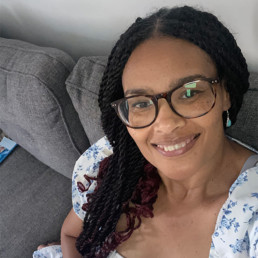
Written by Ashtrid Turnbull
Ashtrid Turnbull is a biologist, a deputy head, and a mother of neuro-distinct twin daughters. Over thirty years in education, she has witnessed how high-achieving, neuro-distinct women across all sectors trade their physical health for professional and personal acceptance.
I have spent twenty seven years as a biologist and a senior leader. For nearly three decades I have lived a double life. In public I am the composed executive navigating the high stakes complexity of professional leadership. In private I have been the woman perpetually apologising for the mess of her own mind.
I have watched countless women like me, the high fliers, the multi taskers, the chaos wizards who can stabilise a company in a crisis but lose their keys while they are still in their hand, be told they are faulty.
We were told that our brains lacked the hardware for focus. We were told our spontaneity was a lack of discipline. We spent years accruing a staggering amount of shame while we tried to squeeze our expansive, electric brains into a dull grey box of neurotypical expectations. I am part of the system that helped build that box. For that I am truly sorry.
The December Revelation
In December 2025, a landmark international study was published in Psychological Medicine by researchers from the University of Bath, King’s College London, and Radboud University (Hargitai et al., 2025). It did the one thing no one has bothered to do in forty years of clinical research into neurodiversity. It stopped looking only for what is wrong with us. Instead, for the first time in a study of this magnitude, they looked at our strengths.
The researchers found that traits like our spontaneity and our ability to hyperfocus are not just personality quirks to be managed. They are biological protective factors. They are linked to higher creativity and a type of psychological resilience that the world desperately needs.
This is the flipping of the script we have waited for. The science finally proves that we are not broken. We are simply a collection of immense strengths that have never been capitalised on properly because the system was too busy trying to medicate them away.
The Metabolic Cost of the Mundane
As a biologist this finding wrecked me. It confirmed that our brains are not generalists. They are specialists. We are built for the high signal and the high stakes. We do not have an attention deficit. We have a biological refusal to waste our life force on the mundane.
When we are forced to operate in environments that prize compliance over brilliance, we pay a massive metabolic cost. We are high definition systems being forced to run on a less than optimised dial up network. The exhaustion you feel is not a character flaw. It is the result of a high torque system being forced to idle for too long. Understanding how to integrate this knowledge into a world that still values the grey box is how we begin to explore the uncomfortable middle ground.
The Ownership of the Middle Ground
I am done with the two extremes of this conversation. I am tired of the ‘ADHD is a superpower’ fluff that ignores the daily struggle. I am equally tired of the ‘just try harder’ boardroom culture that ignores the reality of our biology. The truth is found somewhere in the middle.
Empowerment is not about waiting for the world to become completely ADHD or autism friendly. That is highly unlikely to happen. Real empowerment, the ultimate unmasking, is about taking ownership of your own biology and the energy ledger that comes with it. This requires a three way pact of responsibility.
What we owe ourselves: We owe ourselves self knowledge. We must understand that our rapid scanning of a room is actually a high speed search for a signal. We owe ourselves the bravery to say that while we can solve a crisis in ten minutes, we cannot sit in a two hour meeting without a total exhaustion of our internal resources.
What we owe others: We owe the world clear communication about how we operate. We owe them the effort to find systems that actually serve our high signal hardware, rather than pretending that yet another paper planner is going to save the day.
What others owe us: Others owe us a willingness to adapt and a recognition that focus looks different in a neuro distinct brain. They owe us the space to be brilliant even if it comes with the beautiful, creative mess that often follows in our wake.
Driving the Hardware
The 2025 research is our scientific permission to stop pretending. It is our evidence that our traits are the very things that make us capable of the brilliance the world so desperately needs right now.
We are the ones who stay calm when the atmosphere reaches boiling point, but lose our minds over a tax return. We are the ones who see the patterns others miss because we are looking at the whole sky, while they are staring at the pavement.
We are the ones who can synthesise a thousand disparate data points into a single visionary strategy in an afternoon, but forget to eat because our internal focus is so absolute. We are the architects of the unconventional and the first responders to the impossible. Our brains do not lack order. They simply operate on a frequency that a linear world has forgotten how to tune into.
I am done with the narrative of the broken woman. I am finished with the idea that our worth is measured by our ability to perform administrative gymnastics in an environment that drains our batteries to zero before lunchtime.
It is time we stopped apologising for our hardware. It is time we stopped trying to patch a system that was never actually glitching. We are not a problem to be solved. We are a biological resource to be understood, respected, and finally, driven with the skill and the pride that this incredible machinery deserves.
Call to Action: If this resonates, I want to hear from you.
Whether you are a woman in leadership navigating your own metabolic debt, or a mother supporting a neurodivergent daughter through the triple jump years of Year 10 to university, you are not alone in the mess. It is time we stopped apologising for our hardware and started driving it with pride.
I am currently developing a framework to help chaos wizards move past the narrative of disorder and towards a model of cognitive efficiency.
References: Hargitai, L. et al. (2025). Playing to your strengths improves wellbeing in ADHD. University of Bath. Read the study summary here.

When teacher recruitment celebrates bias

Written by Neil Lithgo
Neil Lithgo is an experienced international Physics educator with over 20 years’ teaching IB, A-Level, and IGCSE courses. He is interested in evidence-informed pedagogy, STEAM education, and inclusive practices that support neurodivergent learners and teachers. He is the creator of SimpliPhys.com.
I’ve spent some time recently reading teaching job adverts and I started to notice an interesting pattern in the language we use to describe the “ideal” candidate.
Words like “enthusiastic”, “passionate” and “dynamic” appear repeatedly, often far more frequently than descriptors related to reflection, creativity or professional deliberation. That in itself isn’t a problem but it raises some important questions about what our recruitment processes may be unintentionally filtering for and what it may be filtering out.
“Seeking an enthusiastic, passionate and dynamic teacher to join our school.”
There is nothing inherently wrong with this. Who wouldn’t want a teacher who loves their subject and can convey that enthusiasm to students?
However, language like this hides a common and largely unexamined bias in teacher recruitment. One that directly affects hiring outcomes.
For decades, research has shown that recruitment processes are vulnerable to bias, even when intent is fair. A landmark 2004 study by Bertrand and Mullainathan demonstrated that identical CVs received significantly different call-back rates based solely on whether the applicant’s name was perceived as ‘White’ or ‘Black’. Similar findings exist for gender bias, prompting widespread reforms such as anonymised applications and structured scoring.
What did not happen was the normalisation of bias once it was identified. Organisations did not respond by saying, “Sorry, you just sounded too Black” or “You weren’t masculine enough.” Instead, they changed the system.
Yet in teacher recruitment, a parallel bias remains visible and largely unchallenged.
I recently analysed 30 randomly selected teaching job adverts on TES. The most common candidate descriptors were ‘enthusiastic’ (50%), ‘passionate’ (43%), and ‘dynamic’ (37%). By contrast, descriptors associated with reflection, collaboration, or professional deliberation appeared far less frequently (‘reflective’: 7%; ‘imaginative’: 3%).
This is not presented as definitive research but even in a small sample, the pattern is striking.
Schools consistently foreground affective qualities alongside and sometimes above technical competence. These terms are not niche; they are core elements of person specifications. Importantly, they function not as baseline expectations but as comparative qualifiers. Candidates who can visibly perform enthusiasm gain an advantage over those whose motivation is quieter, more internal or expressed through depth rather than display.
More troublingly, this bias is often explicitly reinforced in feedback to unsuccessful candidates: “The other candidate showed more enthusiasm for the school” or “Others appeared more dynamic in the interview.”
This becomes a serious equity issue when viewed through the lens of neurodiversity.
Every day, schools seek teachers who are innovative, committed and deeply invested in student success. Yet the primary tool used to identify them, the traditional interview, often functions less as a window into teaching ability and more as a test of social performance. This system is built on neurotypical norms of communication and disadvantages neurodivergent candidates, particularly those with ADHD and autism.
Commonly, the ADHD child is frequently corrected for being too lively, too chatty, too enthusiastic, for interrupting, oversharing, for just generally being ‘too much.’ This lifelong social feedback often forces the development of a carefully constructed mask. A reserved, calm and controlled exterior designed to pass in neurotypical spaces. Then, as an adult in a job interview, the same individual is evaluated against a checklist that prizes the very “enthusiasm” and “dynamism” they were trained to suppress. The system first punishes the trait, then demands its performance.
For these candidates, the interview is not merely stressful; it is also structurally mismatched. Neuroscience research shows that the ADHD brain is interest-based, thriving on stimulation, immediacy, and interaction, precisely the conditions of a dynamic classroom. By contrast, a static, high-pressure interview environment triggers inhibition, not engagement. Traits such as Rejection Sensitive Dysphoria can flatten affect, while the cognitive load of recalling polished examples under pressure can consume all available executive resources.
The result is a paradox: the candidate who appears subdued in an interview may be the same teacher who energises a project-based classroom.
Recent empirical evidence supports this bias. A 2021 study by Flower et al. found that autistic candidates were rated significantly lower than neurotypical candidates in live interviews. When the same responses were evaluated via written transcript, the gap largely disappeared. The bias was not in what candidates said, but in how they said it, tone, eye contact, rhythm, neurotypical social signals that are wrongly coded as indicators of professionalism or enthusiasm.
In both ADHD and autism, the system mistakes a difference in social cognition for a deficit in employment potential.
Crucially, past recruitment reforms share a core principle: change the system, not the candidate. Blinded applications, structured scoring and evidence-based criteria reduce reliance on subjective cues. Yet these principles have largely stopped at the edge of neurotypicality.
Creating equity means moving beyond accommodations offered only on request toward universally better design. The goal is not to train neurodivergent candidates to perform neurotypically. It is to build recruitment processes sophisticated enough to recognise genuine teaching potential across different cognitive styles.
By applying the same structural thinking used to combat racial and gender bias, focusing on demonstrable skills rather than ‘charisma’, we can dismantle the enthusiasm trap. We can stop conflating the performance of passion with the substance of it.
We can continue to celebrate a narrow, performative ideal of passion and systematically lose a reservoir of talented, dedicated and innovative educators. Or, we can apply the lessons learned from fighting other biases. We can redesign our adverts, de-centre the social audition and structure assessments that look for evidence of practice over performance. By doing so, we won’t just make hiring fairer; we will build stronger, more diverse teams capable of reaching every student.
The passionate teacher is already there. We should be able to create a process that allows the presentation of their enthusiasm to be correctly understood.
Disclaimer:
This piece is about patterns in recruitment culture over time and across institutions, not about any one school or individual process.
References:
Flower RL, Dickens LM, Hedley D. Barriers to Employment: Raters’ Perceptions of Male Autistic and Non-Autistic Candidates During a Simulated Job Interview and the Impact of Diagnostic Disclosure. Autism Adulthood. 2021 Dec 1;3(4):300-309. doi: 10.1089/aut.2020.0075. Epub 2021 Dec 7. PMID: 36601643; PMCID: PMC8992918.
What Makes People Stay Working in a School?
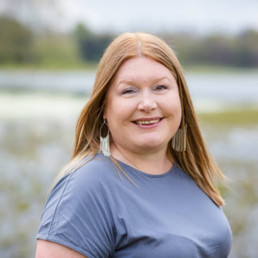
Written by Hannah Wilson
Founder and Director of the Belonging Effect (formerly Diverse Educators).
Schools are more than buildings where learning happens. They are communities shaped by the people who work within them. While recruitment is vital, the real measure of a successful school is not just who it attracts – but who it keeps. People stay in schools where they feel valued, supported, developed, and able to belong as their whole selves.
Creating this kind of environment requires intentional action across recruitment, development, and retention, underpinned by a commitment to diversity, inclusion, equity, and a genuine culture of belonging.
Recruitment: Attracting People Who Can Thrive
Recruitment is often the first experience someone has of a school’s culture. It sends a powerful message about who is welcome and who belongs.
Inclusive recruitment starts with equitable processes. Job descriptions that focus on essential skills rather than narrow experiences, transparent pay structures, and flexible working options all help to widen the pool of applicants. When schools actively challenge bias in recruitment – through diverse interview panels, structured questioning, and clear criteria – they create fairer opportunities and stronger teams.
Representation also matters. A diverse workforce brings broader perspectives, lived experiences, and role models for pupils. Schools that value diversity are clear about it in their recruitment messaging, policies, and practice – not as a tick-box exercise, but as a strength that enriches learning and working life for everyone.
Crucially, recruitment should be about values alignment, not conforming to fit in. People are more likely to stay when they are hired for who they are and what they bring, not for how closely they match a preconceived mould.
Development: Investing in People, Not Just Roles
People stay in schools where they can grow. Professional development is not simply about compliance or career progression – it is about feeling invested in and trusted.
High-quality development opportunities should be accessible and equitable. This means ensuring that part-time staff, support staff, early career colleagues, and those from underrepresented groups all have access to meaningful training, mentoring, and leadership pathways. When development is uneven, so too is retention.
An inclusive approach to development recognises that people learn and progress differently. Coaching, peer collaboration, reflective practice, and flexible CPD pathways allow individuals to build confidence and capability in ways that suit their needs and aspirations.
Development also includes emotional and professional support. Schools are demanding environments, and staff wellbeing matters. Leaders who prioritise workload management, psychological safety, and open communication create spaces where people feel able to ask questions, make mistakes, and learn – key ingredients for long-term commitment.
Retention: Creating Reasons to Stay
Retention is not achieved through loyalty alone; it is earned through daily experiences.
People stay in schools where they feel respected and heard. Inclusive workplaces actively seek staff voice, involve colleagues in decision-making, and respond thoughtfully to feedback. When people believe their perspectives matter, they are more likely to remain engaged and committed.
Equitable processes play a critical role in retention. Fair appraisal systems, transparent progression routes, and consistent approaches to performance management build trust. When staff see fairness in how decisions are made – about opportunities, recognition, or challenge – they are more likely to feel secure and valued.
Belonging is perhaps the most powerful factor of all. A culture of belonging goes beyond diversity policies; it is felt in everyday interactions. It shows up in how meetings are run, how differences are respected, how conflict is handled, and how success is celebrated. Belonging means people do not feel they have to hide parts of themselves to succeed.
Leadership and Culture: The Thread That Connects It All
Leadership is the golden thread running through recruitment, development, and retention. Inclusive leadership is intentional, reflective, and values-driven. It recognises power, challenges inequity, and models behaviours that others can trust.
Leaders set the tone for whether a school is a place people endure or a place they choose to stay. When leaders demonstrate empathy, fairness, and accountability, they help create a culture where people feel safe, motivated, and proud to work.
Importantly, inclusion and belonging are not static goals. They require ongoing learning, honest conversations, and a willingness to adapt. Schools that embrace this journey openly send a clear message: everyone matters here.
A School People Want to Stay In
People stay working in schools where they feel connected to purpose, supported in practice, and recognised as individuals. When recruitment is inclusive, development is equitable, and retention is driven by belonging, schools become places where staff can flourish – professionally and personally.
In building diverse teams, inclusive workplaces, and fair systems, schools do more than retain staff. They create communities that reflect the values they aim to instil in their pupils: respect, opportunity, and belonging for all.
#RENDBristol - a day of hope, connectivity and solidarity.
Written by Hannah Wilson
Founder and Director of the Belonging Effect (formerly Diverse Educators).
Another Saturday… another grassroots event… this time I co-organised and co-hosted the inaugural #REND event in Bristol.
My friends and family who are not in education do not get it – ‘Why do you work on Saturdays Hannah?’ I get asked regularly when challenged about my work life balance. My reply is often the same – it does not feel like work when it is driven by purpose and passion. And the work is too important and too urgent – how else would we get 100 people together to talk about racial equity?
So when Domini and Rahima reached out to me in early June and asked me to join them in co-organising the first REND event in the SW, my answer was a firm yes. Having attended multiple #REND events in Luton, Birmingham and London, it was great to be holding one closer to my home in Bath. As a friend of Sufian and a supporter of Chiltern Learning Trust I wanted to help them mobilise the movement to other parts of the country to help spread the word.
Brought up in North Devon, I also always love delivering DEIB training and supporting educational organisations in the South West with their DEIB strategy. When we talk about legacy, my hopes are to grow consciousness, confidence and competence in DEIB matters in the less diverse parts of the country. We all know that the shires and the white-majority parts of the country need these events and these conversations as much as the cities and the more diverse parts of the country.
Once we got the green light from Sufian to start planning we began to plan the event. Having all attended the black-tie Friday night events we wanted to disrupt things and try a different model to make it more inclusive and more accessible to attend. So we decided to pilot a lunchtime event instead. Furthermore, instead of a dress-up event and a formal meal we went for a more casual affair and a DIY approach. We realised quite quickly how much work we were taking on so we reached out to Tanisha to join the organising team. A big thank you from all of us to Jo and the team at Cotham School for generously hosting us and for so many of the staff who rolled up their sleeves at the event.
Our approach thus meant that we did not need to secure large sponsors – we wanted the event to be grassroots and we were keen to elevate the small orgs, charities/ CICs and individuals doing the work in our region – hence we built a marketplace into the event flow. A massive thank you to our exhibitors who supported the event: Belonging Effect, Cabot Learning Federation, Courageous Leadership, HGS Education Ltd, Jigsaw Education Group, PGS Educators, SARI, Somerset Research School , South Gloucestershire Race Equality Network and Teacheroo.
Curating the line-up of speakers – we were committed to amplifying a local headteacher, a regional academic, best practice from Wales alongside national thought leaders, role models and researchers. We mapped out how many speakers we could fit into the schedule and landed on part 1 with 3 speakers before our Caribbean lunch and part 2 with 3 more speakers post-lunch. We have so much appreciation for our speakers for the work they do, for travelling to join us on a weekend and for speaking for free: Canon David Hermitt, Del Planter, Diana Osagie, Lilian Martin, Dr Marie-Annick Gournet and Sufian Sadiq. (For reference the slide deck from the main hall is here).
With all of the details confirmed we then began to market the event on our socials and across our networks. Our call to action was simple: “Following on from the sell out Racial Equity: Network Dinners launched by Chiltern Teaching School and continued around the country we are delighted to announce the arrival of the event in Bristol. The Racial Equity: Network Dinner is an opportunity for people across the education sector who share and appreciate the importance of racial equity, to come together to celebrate, network and enjoy a delicious meal”.
Our target was to bring 100 people together for our first event and we were only a few people shy on the day – our challenge now is to get everyone to return to our next event and bring someone with them who needs to be in the room to hear the messages that were shared.
The day was a whirlwind: from blowing up balloons, to laying the tables, serving the food, to greeting our speakers and holding space for our guests – the time disappeared quickly. It was brilliant to see so many familiar faces in the room, to meet virtual connections in person and to connect with new people from the area who are committed to making educational space more inclusive, more representative and ultimately safer for our global majority communities and colleagues.
Thank you for the positive feedback we have already received:
- Fern Hughes: “With 100 brilliant attendees, the room was full of purpose, passion and powerful conversation. Networking and connecting with so many inspiring people working across education — a sector close to my heart — made the day even more meaningful”.
- Adrian McLean:“#REND Bristol did things in style! Expertly arranged by Domini Choudhury Tanisha Hicks-Beresford Rahima Khatun-Malik & Hannah Wilson – we left with full hearts and a full belly!”
- David Stewart: “I’m not one for networking events. I find them superficial, surface-level, and inauthentic. But today completely changed that. Today I was invited to the REND Bristol event — the passion, authenticity, and energy brought by the exhibitors, guest speakers, and organisers was outstanding. Conversations were deep and particularly meaningful. Every speaker shared their story with pride and optimism for the future, and the organisers made the entire day run seamlessly”.
- Saima Akhtar: “Race equity work in education is not just important, it is transformative. It shapes futures, dismantles barriers, and creates spaces where every learner can thrive. As educators and advocates, we carry a profound responsibility to drive this work forward with urgency and courage. The progress we make today will define the opportunities of tomorrow. The conversations and energy in this space never fail to inspire me, but today, thanks to REND, I feel like my inspiration has had an energy drink! Let’s keep pushing boundaries, challenging norms, and ensuring that equity is not just a vision but a lived reality for every child”.
So what’s next?
If you attended we would love to hear your feedback – including what worked and what we can improve at a future event – please do complete the feedback form: REND Bristol Saturday 22 Nov 2025 feedback. Domini, Rahima, Tanisha and I are then meeting next weekend to review the event and the feedback to confirm our next steps as we want to keep the connections, the conversations and the momentum going.
In the meanwhile, you can join the conversation on LinkedIn – we have a #REND networking group here and we have collated all of the #RENDBristol reflection posts here. If you are not on Linkedin then you can join our private community space on Mighty Networks and find the #REND community group here.
We have also created a page on the Belonging Effect’s website for more information about #REND events around the country (it will be updated over the coming weeks). Ann, who joined us as a delegate in Bristol, is hosting #RENDLondon on Friday 12th December – you can book a ticket here.
For people who live and work in Bristol, we would love to see you at our #DiverseEd Hub – Tanisha and I host it at the Bristol Cathedral School each half-term, our next meet up is after school on Wednesday 3rd December.
When I relocated to Bath in 2023, we hosted a #DiverseEd event at Bridge Learning Campus in Bristol. We are delighted to be hosting our next regional #DiverseEd event at IKB Academy in Keynsham on June 13th. Get in touch if you would like to exhibit/ facilitate a session – the line-up will be confirmed in the new year.
Some final signposting:
- I chatted to a few people about Black Men Teach, you can find them and 200+ other orgs supporting schools, colleges and trusts in our DEIB Directory.
- We would love to publish some more blogs reflecting on the themes from the event, please email me with any submissions.
- Hopefully you got to say hello to Adele from Teacheroo – we collaborate on a jobs board with them to connect diverse educators with settings who are committed to the work. We host free adverts for vacancies for ITTE, DEIB / anti-racist leaders and for governors/ trustees – do get in touch if we can help you promote career development opportunities with our network.
Thank you to everyone who attended and supported #RENDBristol – we look forward to sending out more follow up information and opportunities from our speakers and exhibitors from this event and to reconnecting soon.
The Hidden Wounds of Leadership: When Strength Becomes Survival
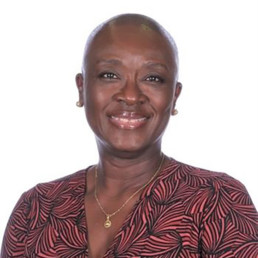
Written by Remi Atoyebi
Remi Atoyebi is an experienced Headteacher and ICF Certified Transformational and Leadership Coach. She is a contributor to The Headteachers’ Handbook and a mentor to over 50 school leaders across the UK. As a leader from a Global Majority background, she is passionate about inclusive leadership, psychological safety, and creating safe spaces for underrepresented voices.
As one of just a handful of leaders from a Global Majority background in the area I serve, I’ve had to do more than lead a school. I’ve had to build trust from the ground up, raise community aspirations, and create a sanctuary of belonging for children who had so often been left behind. Publicly, I was praised. Data climbed. Headlines followed. People saw progress.
But what they didn’t see was me.
They didn’t see the toll it took: emotionally, mentally, physically, to keep showing up, every single day, as the “strong one.” The “resilient” one. The one who could weather it all. Behind the applause, I was slowly falling apart.
As a Black woman in leadership, I became an expert at navigating systems that were never designed for me to thrive in. I wore the armour of excellence because I had no choice. I bore the weight of expectation, not just professionally, but culturally: the silent pressure to prove, to represent, to protect. I was leading a school, yes. But I was also holding up the dreams of my community, the pride of my family, and the unsaid duty to never falter.
Then one day, my body gave in. I was taken by ambulance from work to A&E. I had suffered a Transient Ischemic Attack (TIA): https://www.nhs.uk/conditions/transient-ischaemic-attack-tia/ and soon after, I was diagnosed with Post-traumatic stress disorder(PTSD): https://www.nhs.uk/mental-health/conditions/post-traumatic-stress-disorder-ptsd/overview/
These events were not from one tragic moment, but from the relentless drip-feed of stress, microaggressions, harassment, racial trauma, and systemic pressure that had compounded over years.
The trigger was one parent’s sustained harassment over two and a half years: sometimes emailing up to three times a day to make unnecessary demands, engaging in attention-seeking behaviours, inciting other parents, and making incessant reports to the Local Authority Designated Officer (LADO), Office for Standards in Education, Children’s Services and Skills (OFSTED), the Teacher Regulatory Agency (TRA), and the Information Commissioner’s Office (ICO).
I had been leading while bleeding.
This is what we don’t talk about enough. The unspoken cost of being the first. The only. The one expected to be everything to everyone. For many Black women in leadership, success often comes wrapped in loneliness. We carry the school, the staff, the children, their families and then we carry what no one else sees: the barbed comments, the subtle exclusions, the extra scrutiny.
Over time, I’ve come to name this for what it is…structural neglect. Not always overt. Not always intentional. But neglect nonetheless: of our wellbeing, our emotional safety, our humanity. Mental health services are not culturally competent. DEI work barely scratches the surface. And leadership frameworks rarely account for the invisible labour of navigating bias and battling stereotypes.
The Equality Act 2010 lists both Race and Disability as protected characteristics. But where was the protection when I was unravelling from the inside out? Where were the policies that acknowledged the trauma of ‘performing strength’ in the face of constant pressure? Where was the care for leaders like me?
And let’s talk about race and mental health. Black women are less likely to be referred for therapy, more likely to be misdiagnosed, more likely to go unheard. (https://www.mind.org.uk/information-support/tips-for-everyday-living/racism-and-mental-health/#HowRacismCanAffectYourMentalHealth).
In leadership, the expectation to remain poised and polished becomes a ‘prison’. We silence our needs just to be seen as competent and effective.
So, how do we disrupt this?
We start by telling the truth. We say out loud that leadership takes a toll. We give permission to ourselves and others to feel, to pause, to say “this is too much.”
We embed trauma-informed approaches not just for children, but for the adults in our schools, especially those living through racialised experiences. We make room for healing. For culturally competent therapy. For coaching that holds space rather than just drives outcomes.
We must let go of the myth that strength means silence, and in its place, we embrace a deeper truth that vulnerability is not weakness, it is wisdom. It is the path to healing, to connection and to lasting change.
I’m still healing. I’m still learning how to lead without sacrificing myself. Still untangling from a version of success that asked me to shrink, to be silent, to disappear. But no more. From here on, I will be leading differently: to protect my health, my wellbeing and ultimately, my life.
And if my story does anything, I hope it reminds someone, maybe you, that you are not alone. That leadership must never cost you your health. That you don’t have to break to belong and succeed.
Switching on the local talent resource in international schools.
Written by Laura Mitchelson
Laura is a freelancer helping schools in Retention and Engagement. Previous roles include Director of Enrollment and Communications at Dwight School Hanoi, Impact and Innovation Unit Advisor at Qibao Dwight High School, Secondary Language Teacher at Millfield School.
According to the OECD’s Teaching and Learning International Survey (TALIS) 2018, the average annual professional development hours for teachers internationally is around 62 hours per year. Some would argue it should be more, some might debate the value of some of that PD but it’s there.
In other industries like healthcare, retail, finance, banking, IT and telecoms, the average number of hours of professional development received each year is also about 60 hours but there is one difference – in those industries, it doesn’t matter which part of the organisation you are from, you have access to the same amount of professional development – it might depend on how long you have been with the business or what level you are at, whereas in the international school sector, teachers almost always have access to many more hours of PD than their colleagues in the business management side of the school do.
When will Finance, IT, HR and Operations teams be given the same access to professional development and learning support as their teacher peers?
There is a lot to consider here – it is the road less travelled, so proceeding with caution makes sense. To start requires us looking at THREE things:
- What are the existing professional qualifications that school management team staff have? Are Finance Directors ACCA certified? Does the HR Manager have an SHRM certification? Does the IT Director have the CITM? Do school leaders and governors know these accreditations and their issuing bodies well enough to assess candidates at interview stage in these professions and does the school look for these at the recruitment stage?
- When, how and what should make up the professional development that these management team staff receive once they are at a school? Is there a career growth pathway, planned support for professional growth, where does the budget come from?
- Where can teaching and non-teaching staff come together in professional development? Soft skills development with a focus on areas like team leadership, project management, budgeting, running effective meetings, and reporting are all areas of growth that are common to educators and business managers.
By developing ALL staff, schools respect both the notion of professional growth in general, and allow these school management professionals to be seen on a level with the wonderfully qualified and heavily professionally developed teaching staff. It is appropriate and right that we shine a spotlight here.
Schools have a wide variety of options available to them when they embark on the professional development of their school business management teams. Here are some approaches that can be considered depending on the stage and needs of the individuals and teams in place:
- Internal or External Mentoring
- Coaching
- Shadow Days
- Language Lessons
- Observations
- Internal/External Training
- Online study
- Master’s Degree support
- On-the-job training
- Industry body membership
- Conference attendance
- Career Mapping
- High quality appraisals
- 360 appraisals
- Job rotation
- Internship programs
- Group coaching
- E-learning
- In-house workshops
- Day release to further education
- Supported Local/virtual networking
- Employee wellness programs
With a pay disparity between international teachers and those, often local staff, who work in ‘support’ roles like IT, Admin, HR, Finance and Operations, divisions and rifts can form, and by actively supporting the professional growth of those who work in these functions, schools can reap significant benefits in the areas of school reputation, retention, cross-departmental collaboration, and organisational resilience.
There is room for much more discussion of this topic in the coming years.
Turning Vision into Action: Practical Steps for Building Diverse and Inclusive School Governance

Written by Krystian McInnis
Krystian McInnis is a Religious Education consultant, advisor, and researcher specialising in decolonising and diversifying Religious Education. With a career that spans the public, private, and charity sectors, he brings extensive national and international experience in curriculum diversification and decolonisation. As the Co-Founder of Reimagining Education, Krystian is dedicated to creating a more inclusive and equitable educational system where everyone feels seen, heard, and that they belong.
As I reach the conclusion of this blog series on the importance of diversity in school governance, I feel it paramount to close by exploring the final critical phase for success: action. Having previously discussed the profound impact that diverse governing boards can have on student success, school culture, and community engagement, it’s arguably time to move from theory to practice. With the call for diversity is clear, yet little traction still appearing to be being made, the time has come, for schools and trusts turn blue-sky ideas into concrete, lasting change?
Therefore, this final blog will outline practical next steps that educational leaders, school boards, and trustees can take to ensure their governance structures are diverse, inclusive, and reflective of the communities they serve.
- Commit to a Diversity Strategy with Clear Goals
The first step in creating a diverse governing board is making a clear, intentional commitment to diversity at all levels of governance. For genuine change to come about, it is vital that this commitment be reflected in the school’s action plan, vision and arguably leadership performance objectives too. It’s not enough to express the desire for diversity, it must be woven into the fabric of the school’s governance strategy. Therefore, schools and trusts must ensure they:
- Set measurable diversity goals for their boards, such as increasing representation from underrepresented groups within a set timeframe.
- Establish a diversity working party that includes key stakeholders, such as governors, school leaders, and community representatives, to oversee and implement these goals.
- Publicly commit to diversity through mission statements or diversity pledges, making it a visible priority for all members of the school or trust.
- Implement Inclusive Recruitment Practices
To diversify school governing boards, schools and trusts must rethink their recruitment processes. Traditional recruitment methods often result in boards that reflect the status quo, typically lacking in diversity, with remarks of ‘we have always done it this way’, far too commonly used. By changing how boards recruit members, schools can ensure that they attract a wider range of candidates with varied experiences and backgrounds. In practice, the necessary steps should include:
- Actively reaching out to underrepresented communities through outreach campaigns, including advertising board positions within the local community, local media, and through social media platforms that engage diverse audiences.
- Creating a skills-based recruitment process that prioritises a broad range of perspectives, ensuring that all candidates are evaluated for their ability to contribute to the school’s overall mission, not just for their professional credentials.
- Partnering with diversity-focused organisations to identify potential board members who can bring new perspectives to governance.
- Provide Tailored Training and Support for New Governors
Recruitment is just one part of the puzzle. Once new members are on the governing board, it’s crucial to ensure they are equipped to succeed. Adequate training and support will help diverse governors feel empowered to contribute effectively, ensuring that their diverse perspectives are heard and valued. Therefore, I would recommend that schools and trusts:
- Revise induction programs to include training on key topics such as cultural competency, anti-racism, inclusive leadership, and unconscious bias.
- Create a mentorship program for new governors, pairing them with experienced board members who can guide them through the challenges of governance and help them navigate any organisational barriers they may face.
- Encourage ongoing professional development for all board members to foster a culture of continuous learning and reflection.
- Track and Use Diversity Metrics to Guide Decision-Making
To ensure that diversity is being both prioritised and sustained, it is of utmost importance schools and trusts track diversity metrics. This data not only helps boards to measure their progress but also provides valuable insight into where gaps exist and where further action is needed. Whilst it might appear difficult at first, collecting and using data effectively requires:
- Tracking diversity metrics such as gender, ethnicity, disability, and socioeconomic status among governors to assess the diversity of the board.
- Using this data to set goals for recruitment and retention, as well as to identify potential barriers that may prevent underrepresented groups from joining the board.
- Regularly reviewing the data to assess the effectiveness of diversity strategies and adjusting recruitment and development practices as needed.
- Foster a Culture of Inclusion at Every Level of Governance
A truly diverse governing board is one where all members, regardless of their background, feel welcomed, valued, and empowered to contribute. With a top-down approach still heavily ingrained within the educational system, the culture of the board plays a crucial role in the long-term success of diversity initiatives. Therefore, schools and trusts must:
- Develop an inclusive culture that actively encourages and celebrates diverse viewpoints. This includes ensuring that all voices are heard in meetings, that different perspectives are respected, and that decision-making processes are inclusive.
- Address and challenge any discriminatory behaviour or microaggressions that may arise, creating a safe environment for diverse board members to express their views and ideas.
- Recognize the contributions of diverse members and ensure that their insights are valued in shaping school policies, strategies, and outcomes.
The Road Ahead: The Future of Inclusive Governance
So, as this series concludes, I hope it’s clear that diversity in school governance is not a destination, but an ongoing journey. However, by taking the practical steps outlined, I am confident that schools and trusts can move from aspiration to action, ensuring that their governing boards are not only diverse in makeup but also genuinely inclusive in practice.
The path to inclusive governance requires commitment, accountability, and a willingness to challenge the status quo, however, by embedding diversity at the heart of governance, schools can build stronger, more resilient organisations that are better able to meet the needs of every student. As an industry, we must embrace this opportunity to lead with intention, innovation, and inclusion—because when school governance reflects the diversity of the communities it serves, the whole school system thrives.
Therefore, as this series draws to a close, I ask that we challenge ourselves with one final question: What practical step can my school or trust take today to begin building a more diverse and inclusive governing body?
Reflecting on the real-world application of my gender justice research

Written by Angharad Morgan
Angharad is a Secondary Social Science teacher in Newcastle and Gender Action Programme Lead. She has also recently taken on a Research Assistant role at Liverpool University, working on the Men4Change impact project. Alongside this, Angharad is undertaking her PhD in Education and Social Justice at Lancaster University. Her research uses feminist and queer theory to look at the role of male facilitators in challenging models of masculinity. Angharad is President of the NEU Newcastle District and will be Assistant Branch Secretary from September. Any spare time is spent outdoors with her 8-year-old daughter, and her ability to read and walk simultaneously saves a lot of time.
In 2019, at the age of 29 I decided to retrain as a teacher. I’d become a single mother at 26 and that slightly unexpected turn of events changed my life trajectory forever. I’d always been interested in education and teaching, something which perhaps I didn’t realise initially; from volunteering with classes in school to joining the Aimhigher programme whilst at university.
In my short time as a teacher, I had seen an apparent lack of justice, so this inspired me to act. When I received my acceptance letter onto the PhD in Education and Social Justice in 2022, I wept with joy and didn’t realise how much there would be to learn. It was a long way from my MSc in forensic psychology 11 years prior. I had the opportunity to write on a range of topics and my perceptions were challenged and understanding tested by each passing paper. Now, in 2025, I am halfway through what I have affectionately named “The Big One”, a modest 45,000-word thesis which will soon qualify me to be a Dr that responds in an emergency (albeit a social justice one).
My passion has always been gender justice, and I believed that I would spend my time working with women and girls and their experiences of navigating the education system. However, I had also spent a lot of time reading and talking about notorious influences and began to reflect on the types of masculinity they promoted. I noticed several programmes that worked with men take centre stage in recent years. I therefore wanted to gain an insight into how the male facilitators working in gender justice go about their work.
- How do they navigate models of masculinity?
- What does masculinity mean to them?
- How do they perceive themselves in a traditionally female-led environment?
- What motivated them to want to do that work?
- How do they recognise intersectionality?
Over the past 9 months I have been exploring the answers to these questions with 12 male youth facilitators working in the North of England. I used semi-structured interviews and photo-elicitation (an arts-based method in which participants were asked to provide a photo of what they perceived to represent masculinity) to explore facilitators experiences in the gender justice space. I was incredibly lucky with the participants’ insight and honesty.
As a teacher, it is important that any research I do has practical applications in an educational space. It’s all very well having theories, but they need to be practical and accessible to educators. In my recent talk at the RWBA’s Empowering Youth Conference I was asked some fantastic questions, but there was one that I didn’t get a chance to respond to, around the real-world application of my research. As my work has evolved, I’m beginning to understand it’s possible impact and application in education in the following ways:
- The importance of collective action for gender justice to truly be a reality. All educators need to be equipped to respond to challenging topics and feel confident to embed this in their practice. This means that teacher training and universities need to step up and prioritise discussions of gender, sexuality, mental health and healthy relationships with students (and colleagues!).
- Relationships with young people based around their exploration, questioning and critical thinking are key to opening up conversations. Many educators would aspire to this, but there needs to be an environment and culture within education that allows this to happen. How can educators be given the capacity to create these learning spaces?
- Although my research has focused on the role of male facilitators, over 75% of staff in schools/nurseries are women. Therefore, we need to identify how we can continue to have these open conversations with young boys, whilst also recognising that many of these conversations will be facilitated by women. Many schools do not have the budget to bring in external facilitators and male teachers cannot be expected to be experts on these topics. Therefore, female educators need to be engaged in these discussions as well.
- The importance of identity, belonging and reflection. My participants vocalised how this work has made them reflect on their positionality. As educators, we must reflect on our own positionality in our educational space, considering what brought us there. We can also explore our influences and how this impacts how we respond to young people and colleagues around us. It can be easy in these discussions to ignore the differing identities and experiences of the people we teach and work with.
I’m looking forward to further analysing my interviews over the next year and I hope that my work will add further insight into how we can continue to grow the gender justice movement at a time when these discussions are being silenced.
Inclusive leadership - a thought for caregivers
Written by Clare Haly
With a passion for truly inclusive teaching and learning, Clare has a background in education spanning 20 years. During this time, she has led at a senior level in both secondary and primary settings, improving whole school teaching and learning, cross-curricular literacy and staff development, and most recently Inclusion and SEND.
‘It is just so lonely. The playground, work, the other parents, the judgement and assumptions…It’s exhausting, and yes lonely…’
I am not the first person to comment on the complexities of flexible working. Thankfully voices are being raised that are far louder than mine, and there are some welcome shifts where understanding is beginning to seep in, that perhaps the ‘privilege’ of flexible working may actually be more of a necessity.
I get the challenge for leaders in education, I have lived it. We are teachers, we love our jobs, our vocation, our classes, our children. As if the Leadership do not have enough to think about. Children need excellent teachers in front of them, they require, and deserve consistency. But, and there is a but, it is well documented that teachers are leaving in droves, and this is not just because of the intense pressures of the job itself, but because caregiving responsibilities also really matter.
‘Family comes first’
There is no silver bullet or magic formula to help those people who find themselves in complex situations managing multiple caregiving roles. And this is not about the stereotype of the ‘working mum trying to have it all’. In the case referenced above, the man I speak of is grieving his wife who died suddenly. He has two sons, one aged 4 and the other just 6 months. This father also has an ageing parent, who is also bereaved and living with Parkinson’s disease. The logistical struggle is obvious. The emotional one is enormous. This man is also excellent at his job. One he cannot do well because of inflexibility at work. Imagine if his place of work was one of welcome and joy and a place where he could thrive within the time he could give knowing that that was enough. Instead he is rushed, stressed, apologetic, clock watching, anxious. Is this the premise for excellent output at work? What would the impact be of such a person in front of a class?
Part time does not mean part competent. Working flexibly does not mean working below par. Flexible working can be done well in schools. But it is yet to be the norm. It takes commitment, forward planning, clever recruitment, budgeting, compassion and a willingness to learn. It demands brave leadership with a trust in one’s staff and in oneself. But when successful, the outcomes are overwhelmingly positive. When teachers feel invested in, trusted, valued, they thrive. And the impact of a thriving, calm, indeed happy teacher on their pupils is not to be underestimated. You don’t need me to tell you that.
What I am questioning is how many of us truly practise this duty of care to well-being outside of the appraisal system and think holistically about the people that make our schools what they are, and the circumstances they live with outside of school. The amount of time I hear the well meaning phrases ‘family first’, ‘you must look after yourself’ – but in reality, as a caregiver, how is this meant to become your truth?
‘Middle years’
In Caroline Criado-Perez’ Invisible Women she points out that women in particular, are penalised socially and financially because of the assumed caregiving roles they carry. In our ‘middle years’ particularly, many of us as women, find ourselves not only grappling with the joys and complexities of raising children, but also tending to changing circumstances of family members, for those who become unwell, or the challenges that older age in particular can bring. So this is not about the balance of having children and having a career. This is about having a sense of empathy for the challenges staff face that pull them away from the classroom because they physically cannot be at the helm, rigidly, all the time. We are losing excellent, creative, inspirational practitioners because of a lack of flexibility.
The impact of stress on our educational colleagues and peers is well documented. The job is challenging enough without the guilt, pressure and constant stream of apology or sense of atonement that manifests itself while trying to juggle multiple adult responsibilities. I applaud those companies, institutions and yes, schools moving to acknowledge that life is not linear and that hours cannot always be rigid. But in education there is still some way to go.
Care packages and school clubs of course are invaluable and teachers that are also parents and/or caregivers are of course grateful for the support these services offer. But flexible working responds to more than logistics. Flexible working allows for improved wellbeing, not just time management: togetherness within whatever relationship has the need – in all phases of the caregiver spectrum, time for a neurodivergent child, an elderly parent, an unwell spouse; reflection, respite.
Being a caregiver should not be an alternative to a career in education, and too often teachers have to choose. I believe though that we have enough good educational leaders who have the creativity and courage to find a way to allow, indeed welcome, brilliant teachers back into school flexibly. Again: Part time does not mean part competent, flexible does not mean below par.
If we are to reach our ambition for a truly diverse edu-community then we must always be human first in our approach to how our schools are run. A truly inclusive school will empower their staff through flexible working where it is needed. As ever, it is all too easy to assume we know someone’s story. We must continue to look beyond appearances, there is always more than meets the eye.
Diversity, Equity, Inclusion, and Belonging in Leadership: Shaping the Future of the Teaching Workforce

Written by Susi Waters
Susi Waters, Operations Manager at Norfolk Research School; the Research Schools Network (RSN) Regional EDI Link (East of England and East Midlands); and Operations Manager and ITT Strategic Lead at the Julian Teaching School Hub.
In today’s educational landscape, fostering diversity, equity, inclusion, and belonging (DEIB) feels essential for creating a supportive and effective teaching workforce that reflects the lived experiences of the students we serve. This blog post offers some thoughts on the importance of DEIB in educational leadership and highlights the challenges and opportunities for improvement.
Understanding Intersectionality and Privilege in Leadership
One of the key considerations in promoting DEIB in education is recognising intersectionality — the overlapping and interconnected nature of social categorisations such as race and ethnicity, gender, disability, and socioeconomic status. Leadership roles in education have historically been dominated by white cisgender individuals without disabilities, but there’s a growing call for more inclusive representation.
Many of us are familiar with the concept of “checking our privilege,” which can sometimes trigger defensiveness. It’s helpful to remember that, in this context, “privilege” refers to an absence of disadvantage. Having “white privilege” doesn’t equate to guaranteed success; it means that one’s skin colour hasn’t posed societal barriers.
Chris Hildrew, a headteacher in Somerset, articulates this experience well:
“I am usually in the majority. I joke about how I have the privilege full house: White. Male. English. Straight. Cisgender. Middle class. […] When I speak, people listen. They always have. I expect them to.“
Data from Edurio(2021) and NFER (2024) reveal that the representation of non-white educators, disabled individuals, and LGBTQIA+ educators remains low in leadership positions. Addressing these disparities calls for thoughtful recruitment, retention, and career development strategies.
The Role of ITT Recruitment in Teacher Diversity
Recruiting a diverse teaching workforce starts with how we market initial teacher training (ITT) programmes. While people of colour are overrepresented among applicants for ITT, they are significantly underrepresented in the teaching workforce overall. In fact, 60% of schools in England had an all-white teaching staff in 2021 – 22, with 86% having an all-white senior leadership team.
Research by Dr. Gabriella Beckles-Raymond (2020) underlines the importance of targeted recruitment strategies aimed at attracting African, Caribbean, and Asian teachers. Schools and training providers might benefit from adopting inclusive messaging and outreach initiatives to encourage individuals from underrepresented backgrounds to explore teaching careers.
Recruitment should be thoughtful. For instance, we could consider:
- Do providers offer pre-application support, like explaining the English school system to those who didn’t grow up here?
- Are interview processes truly inclusive? Do they provide interview questions in advance or offer online options?
- Is the interview panel diverse in terms of race, gender, and age?
Making sure that trainee teachers have the right support means addressing barriers that can impede career progression. Access to mentorship, leadership training, and workplace policies that foster inclusion are all important aspects to think about.
Making Teaching a Sustainable Career for All
For many educators, especially those from marginalised groups, remaining in the profession long-term can be tough. Research from BERA (2019) on LGBTQIA+ teachers and the “Missing Mothers” project (2024) highlights how workplace culture, lack of support, and discrimination can push talented educators away from the profession.
To encourage sustainability in teaching careers, schools should implement policies that accommodate diverse needs, such as:
- Support for teachers going through menopause.
- Flexible work arrangements for primary caregivers.
Anti-discrimination policies that protect neurodivergent and LGBTQIA+ individuals.
Leadership: Breaking Barriers and Creating Opportunities
Leadership in education needs to evolve to better reflect the communities it serves. Disparities persist; for instance, men are twice as likely to take on leadership positions as women, even though women comprise the majority of the teaching workforce. Gaps remain in representation among racial and ethnic minorities, disabled individuals, and LGBTQIA+ professionals.
Educational leaders can play a significant role in advocating for equity by:
- Sponsoring and mentoring diverse talent.
- Implementing transparent hiring and promotion practices.
- Encouraging conversations about privilege and systemic barriers.
- Revisiting senior leadership recruitment processes to ensure job descriptions and interview processes don’t unintentionally place women, disabled individuals, or caregivers at a disadvantage.
Moving Forward
We should ask ourselves: are we really setting up all teachers to enjoy a sustainable and fulfilling career?
Rethinking our approach to leadership is key — not just at senior levels but also in shaping the next generation of educators. There are alternative pathways to leadership in education beyond headteacher roles, such as Teaching School Hubs, Research Schools, and ITT leadership. These roles often offer flexibility, hybrid options, and meaningful opportunities to affect educational policy.
Ultimately, if we don’t act, the next generation of teachers will mirror those who currently remain in the system. Without deliberate attention and change, we risk perpetuating a cycle where leadership remains uniform. However, by embracing diversity, equity, inclusion, and belonging, we have the potential to create a teaching workforce where all educators feel valued and every child sees themselves reflected in their role models.
To cultivate a more inclusive educational system, leaders should commit to ongoing education and implementing best practices. By embracing these principles, we can nurture a teaching workforce where diversity is celebrated, equity is upheld, inclusion is practised, and belonging is experienced by all. The future of education rests on leaders willing to challenge the status quo and promote DEIB at every level.
This blog is a summary of a session that Susi delivered as part of Derby Research School’s Change Champions conference in autumn 2024; it forms part of the RSN and Norfolk Research School’s ongoing work around EDI and developing diverse voices.
All sources and recommended reading can be found here and you can watch the full session here.