
Unsettling Deficit Narratives: Race, Identity and Belonging in English Schools

Written by John Doyle
I am a PhD candidate in Sociology at Sheffield Hallam University, having previously conducted research with the Roma-Slovak community entitled 'So much to offer: an exploration of learning and cultural wealth with Roma-Slovak post-16 students'. I have had a career in the public sector, including education, and I am committed to inclusion and a strengths-based approach for all students.
Last week, the final report of the Francis Review was released, promising to address diversity in teaching, curriculum and assessment. The report is comprehensive, and it reinforces the principle that the national curriculum must reflect the diversity of modern Britain. Crucially, it says diversity in the curriculum is not an optional enhancement.
But the report is advisory, and we need evidence that the Department for Education will act on these recommendations.
Two days after reading the report, I attended the Belonging Effect (formerly Diverse Educators) one-day event and was inspired by all the presenters who demonstrated the breadth and depth of thinking and practical ways forward to address diversity and equity in education. If we are to enable more children to see themselves in the curriculum, we need the insights and expertise of these presenters and other activists to inform educational development at national and local levels.
Curriculum diversity cannot be optional
The Francis Review suggests that subjects such as English must include “alternative” texts. Yet this is already possible within current policy. If take-up remains marginal, it is because diverse texts are treated as supplements. It is time to recognise that cultural capital goes beyond Shakespeare and Dickens, and that new texts contribute to building the cultural capital recognised and valued in a diverse Britain.
As The Belonging Effect has noted, the report makes no mention of structural racism. This weakens the development of diversity and lacks a consideration of the impact of racism on students within the education system.
My research: challenging deficit narratives
My research, Unsettling Deficit Narratives: Race, Identity and Belonging in English Schools, examines how everyday school practices—curriculum choices, behaviour systems and informal interactions—can reproduce structural racism in subtle but powerful ways. This aligns well with The Belonging Effect’s aims to ensure that everyone feels they truly belong in their place of learning. As they have stated, belonging is the moment when people stop trying to fit in and start being fully themselves.
The research aims to unsettle deficit assumptions that problematise racially minoritised students and frame their cultures as barriers to achievement. The study illuminates how everyday practices, relationships, and policies embody what Paul Warmington (2024) terms a ‘vanishingly small’ space for recognising racism in education, and how what Kalwant Bhopal (2024) defines as a ‘discourse of denial’ shapes teachers’ and leaders’ responses. The framing of education as a race-neutral, knowledge-rich approach endorses Eurocentric models and exclusionary practices. It marginalises attempts at anti-racism through curriculum reform, teacher development, or recognition of the social and cultural capital that racially minoritised students bring to the learning context. The research explored how educational institutions can value the skills, knowledge, and experiences of students from ethnically diverse and marginalised communities.
Students thrive when the curriculum sees them
There are individual teachers and school leaders who are open to change and to explore a more diverse curriculum. The students themselves thrive in settings that reflect their heritages and identities and demonstrate informed and critical approaches to knowledge, with a strong sense of Britain’s historical and contemporary global position. The institution of education, however, remains resistant in its policies, practices, and commitment to a knowledge-rich curriculum in both local and broader contexts. All of which points to the need for a stronger national direction to realise local potential in our schools.
The emphasis in education needs to shift from a deficit-based approach to one that values and builds upon students’ heritages and identities. If there is a deficit, it is the deficit in the education offer, which fails to consider the context of the young person, their fluid and intersectional identities and the racialised aspect of their lives now and in their futures. As one teacher described, we “fit kids into schools, not us looking outward”. Similarly, the students eloquently articulated the issues of an education system that needs to be, “… not just looking at England but how other countries saw us.” This was not a call to reject British identity, but to enrich it—to see themselves as part of the fabric of what Britain is today: globally connected and ethnically diverse.
As a school leader told me, their previous school, a predominantly White British school had embarked on a decolonisation of the curriculum led by the head teacher, which “…really opened my eyes as to how our curriculum is not reflective of the world or our communities”. These words capture the crux of the issue. A diverse curriculum is not only for multicultural schools; it is essential for all schools in a globally connected country.
What needs to change
Belonging is when every student sees themselves reflected in the curriculum and feels engaged in and contributes to their learning. Some educators are already doing this work, and organisations like The Belonging Effect are leading the way. But without policy backing, progress will remain isolated to the passionate, not embedded in the system. Challenging structural racism also means changing curriculum content and delivery, and it is time for this to be acknowledged in our pedagogy. The Francis report may be advisory, but action must be taken, and there is not enough in the report to be clear how this will take place. Progressing a more diverse curriculum must be reflected in the accountability frameworks of education and school leaders. Our understandings of knowledge-rich education need to reflect the commitment to diversity and belonging. A curriculum adapted to our 21st-century world requires us to acknowledge that structural and institutional racism are features of our education system. We can move from a deficit model to engage students and foster a sense of belonging, and this deserves a national directive.

Limitless Belief - An Inclusive and Diverse Experience

Written by Sarah Pengelly
Sarah has taught in London Primary schools for 12-years specialising in Literacy and PSHE, studied for an MA Educational Psychotherapy and previously worked at the BBC. For the past 5-years, she has been working with non-profit charity, Human Values Foundation, to develop a new values-led PSHE programme called The Big Think.
How can you make the work of DEI for organisations of all shapes and sizes itself feel inclusive and not a tick-box exercise?
That’s what I wanted to find out through Chickenshed’s 90-minute taster session for senior leaders, HR, DEI, and people-focused professionals.
I attended with my colleague Avanti from The Big Think, who facilitates life skills learning in schools in her other roles. We wanted to see how it applies to both our work at The Big Think as a values-based educational programme, and she wanted to examine her own facilitation practice.
Chickenshed? What’s that?
‘Chickenshed is a theatre company for absolutely everyone. For fifty years, we’ve created bold and beautiful work from our limitless belief in each other.’
With over 800 members of all ages and abilities, Chickenshed are able to invite to the table an unbelievable range of authentic voices, that most of us have never heard from, and that will deeply resonate with all of us.
As part of their outreach mission to help develop a genuine and active DEI journey for all workplaces, Chickenshed facilitate a bespoke package created for each setting or company. No mandatory one-size-fits-all diversity trainings.
‘The work of diversity and inclusion is never finished. It has to always be active and evolving to ensure shifting needs are being met and all voices are being heard.’ says Dave, the Senior Producer who is holding the space for this session.
This 90-minutes taster is described as a facilitated ‘experience’ to see how they approach DEI and how they could work with your organisation. This gently participatory and immersive session ensures that all participants are able to emotionally invest in the start of a personal journey to find belonging for all.
Our Purpose – to rediscover our humanity through joy and hope.
As a starting point, Dave shares this helpful re-framing of DEI. True inclusion is something that comes from ‘inside of us’, rather than something to be accommodated. Chickenshed use this framing, together with the power of the creative arts, to share personal stories that spark these hidden feelings inside all of us, so that everyone can begin to connect and belong.
Be accessible in all ways.
Another stand-out difference is their approach to accessibility. Strangely, this is often overlooked in many DEI sessions.
‘We aren’t just talking about practical accessibility like ramps, we are talking about emotional accessibility where everyone feels able to show their true selves all of the time,’ says Dave.
Slow down. Listen. I mean really hear.
We hear from Paul, who is introduced as having cerebral palsy that affects all movement, including his breathing. We are asked to give him the time he needs to speak, so he can pace his breathing with his speech. We are told his new wheelchair has extra squeaky foot-holds, so we will need to be patient and listen carefully to hear his words.
Paul performs his poem, Traffic Lights about what it feels like to be constantly held on red. His performance is rhythmic and powerful as he shows us the frustration of living in such a frenetic, fast paced world with little space for being really seen or heard. He is asking for a slowing of time, so that he has a chance of participating more fully or at least having the opportunity to move to amber, or maybe even green.
Get creative. Notice and nurture unique vision.
Interspersed between the powerful voices and perspective sharing, are short, fun, engaging tasks that involve image associations, and how we’ve felt included and/or excluded in physical spaces, and metaphorical ones. We aren’t required to get up and perform or overshare our views. It’s not a strategy session. It’s just the beginning of a journey of opening up to this important work, with some lightness and humour brought by Ashly, the lead facilitator and experienced actor.
We see a short film about Chickenshed Producer Maya highlighting intersectionality, using her walker whilst directing a large theatre company in a production.
‘I move differently and I see things differently. I get the actors to do the same.’
Keep it simple. Offer everyone a seat at the table.
Zack, a black actor and dancer with cerebral palsy, shares a free-form piece about the daily grind of being invisible via his travels on the London tube network. Days and days on repeat. It’s hard to hear. Then, the simplicity of a genuine offer of a seat, without any fuss.
‘Hey! You want a seat?’
He poses this question to all of us in the room, representing multiple roles and organisations: Would you give me a seat at the table?
A powerful question. An invitation. To all of us.
Chickenshed’s DEI work is done differently and it’s a joy to be a part of it. If you want your team to take part in a similar journey, then Chickenshed are the team to travel alongside you.
Course Information and Contact Details:
Designed for senior leaders, HR, DEI, and people-focused professionals, this session brings together individuals from a range of corporate organisations to explore how inclusive mindsets and empathetic communication can strengthen workplace culture.
Chickenshed have over 50 years of experience as an inclusive theatre company. Their training uses real stories, lived experiences, and reflective discussion to challenge assumptions and open up new perspectives.
This taster is an opportunity to experience the approach first-hand and consider how it might support wider conversations around inclusion in your organisation.
If you’re interested in finding out more, I’d be happy to connect with you:
Dave Carey: davec@chickenshed.org.uk
Mobile: 07846 097896
Equitable Education?

Written by Alex Fairlamb
Alex is an Educational Consultant and an experienced Senior Leader with Trust-Wide leadership experience working in the North East. She is an Specialist Leader in Education, Evidence Leader in Education and an Honorary Fellow of the Historical Association as well as sitting on their Secondary Committee. Alex is a published author of books and textbooks and she has recently submitted her PhD thesis which focuses on equity and equality within education. Her specialities are teaching and learning, professional development, literacy and oracy, designing History curriculums and diversifying curriculums. Alex also facilitates delivering an NPQLL.
“A quarter of adults in England do not have basic functional numeracy or literacy skills to get on life. This extrapolates to around 10 million unskilled adults across Britain.” (The Sutton Trust, 2018)
Growing up, I was frequently told that education was the greatest social leveller of us all. Yet, does our education system in 2025 stand up to this supposed ideal? Arguably not. This is particularly the case when we explore the voices of those who feel and have experienced a system that has excluded them. At a time when Ofsted has produced a new inspection framework (Ofsted, 2025) which is anchored in the idea of ‘Inclusion’ and Sir Martyn Oliver has announced the broadening of the term vulnerability to encompass a greater range of criteria and experiences (Schools Week, 2025), it feels apt to explore what further could be done to ensure that education is equitable and that is fosters a sense of belonging.
The current state of play
There are multiple metrics and demographic lenses that can be examined that will help to highlight the lack of equity in education across England across the many phases and key stages. One such example includes looking at GCSE data through the lens of socio-economic and geographical region which would tell us that in 2025 ‘28.4% of pupils in London achieved grade 7 or above (down 0.1pp from last year), compared to 17.8% in the North East (unchanged since last year)’ (The Sutton Trust, 2025). If we were to explore national outcomes further using GCSE and A Level data, we would find that gaps exist between Pupil Premium (PP) and non-PP students, Free School Meal (FSM) and non-FSM students, gender, ethnicity and race and so on.
Similar gaps are also seen in EYFS and primary schools. If we were to explore ethnicity, EYFS data highlights that ‘most lower-attaining ethnic groups saw their gaps widen in 2024 compared with 2019, most notably among Black African, pupils of Any Other Black background and Black Caribbean pupils (who fell further behind White British pupils by at least 0.8 months)’ (Education Policy Institute, 2025). Moreover, that by age 11 ‘the low attainment levels of Gypsy Roma and Traveller of Irish Heritage pupils are also significant’ (Education Policy Institute, 2025). In short, there is a systemic and continuous lack of equity within education that impacts students from EYFS to age 19. There is no use in proportioning blame to any particular phase (because that’s not possible, or helpful), so instead we should consider how collaboration can be powerful if we are to tackle core pillars of ensuring education results in success for all at every stage.
What is noticeable about the mountains of data that can be found which focus on protected characteristics and socio-economic or geographical status is that it seems to be very binary, with cohorts of children grouped together as one homogenous whole under different umbrella ‘labels’. This is not always useful. Mccrae et al (2025) have recently published a discussion paper which highlights the issues that diagnostic overshadowing causes with effective SEND provision within mainstream schools, and the paper acts as a worthy caution about the issues of ‘labels before children’ as an approach to education.
As we know, each child is unique and will experience their own set of individual barriers. These barriers can often be intersectional and cannot be reduced to a singular metric alone with generic hypothesise then made about the reason for an attainment gap. I’ll give an example: I was a girl who grew up in a rural setting in the North East, who refused to read at age 4, who had a difficult transition to secondary school, had varying economic experiences throughout her younger life and moved home frequently, had divorced parents, and lived through multiple family traumas. What do we expect that my outcomes were? Do we follow the rabbit hole of my gender (girl) and assume that my outcomes were strong? Or do we follow the joint rabbit hole of ‘rural’ and ‘North East’ and assume that my outcomes were poor, particularly compared to peers living in more affluent, suburban and southern areas of the country? I cannot fathom how my outcomes (the answer is, they were very positive) could be reduced to a category of ‘girl’ and my outcomes be explained using generic assumptions of success based on this. In the year that I took my GCSEs, there were 2,868,818 female GCSE entries. So, to explore reasons for my outcomes through the same lens as a girl growing up in central London in an affluent household in continuous provision from EYFS to Year 13 would be unhelpful. Yet, that is currently how we analyse data and make assumptions about what should be done to close the attainment gap. There has got to be a better way for us to examine such rich mines of data in a way that draws in the experiences of individual students that help us to see beyond lazy generalisations and flawed attempts at interventions.
One such body that has done this is The Global Equality Collective who have produced a thorough report (The Research — Global Equality Collective) detailing the views of 26,000 respondents across thirty countries and therefore it is unique in how it draws together intersectional data. As part of their research, they were able to unpick the narratives behind why attainment gaps exist for children by seeing out their lived experiences and then create an Inclusion Index. Examples include their findings that ‘one third of Black students report feeling that their ethnic identity is not valued or recognised in the curriculum, leading to feelings of disengagement with the content and their sense of belonging’ and that only ‘around 41.3% agree that they feel “seen” in the curriculum. Of those students that disagree, SEND, Global Majority, and LGBTQIA+ students feel most excluded and disengaged’ (Global Equality Collective, 2025) Through the appreciation of the kaleidoscope of experiences that young people have at multiple different points in their educational career using reports such as this, we can better understand the unique barriers of individual students and use these to draw together evidence-led policy changed and initiatives which are going to drive equity and ensure that education is an equal playing field for all.
What might those evidence-led changes be?
My thesis for my PhD, which focuses on equity and equality in education, argues that there are multiple pillars (Fig. 1: https://drive.google.com/file/d/1LlzsZ9avhS-uZbvkkDIO4_CSG6B3qMsK/view?usp=drive_link ) of educational provision which can help to foster a sense of belonginess and ensure true inclusion. These pillars are not ‘stand alone islands’ and instead they must act in an inter-connected way, each one supporting the other in supporting the pediment of equity.
Pillar 1: Curriculum. Decolonised, diverse, ambitious, underpinned by rich texts and rooted in high expectations. Curriculum continuity from Year 1 to Year 13
Pillar 2: Teaching and Learning. High expectations of all, inclusive strategies (e.g. inclusive questioning, responsive, scaffolded, teach to the top)
Pillar 3: Literacy and oracy. Literacy and oracy gap chased down and closed through tiered provision (whole school, targeted, specialist) informed by diagnostic testing.
Pillar 4: Pastoral systems and initiatives. Hygiene banks, collaborative work with cultural institutions, PD which fosters a culture of belonging
Pillar 5: Strong leadership. Clear vision and structures in place to support equitable education, teachers and Middle Leaders trained and empowered to tackle disadvantage
The full detail and examination of the pillars are detailed in my thesis and so this blog will act as a short summary of two of those pillars: curriculum and teaching and learning.
Pillar 1: Curriculum
My argument is that to tackle issues such as the transition gap (which is larger in some regions than others) and to foster a sense of belonging, we must adjust the curriculum from EYFS-Year 13. At the time of writing this blog, the Curriculum Assessment Review has not yet been published. However, the interim report (DfE, 2025) states that:
As well as making sure that children and young people can see themselves represented in the curriculum, it will be important that we also make sure they encounter the unfamiliar, and have their horizons stretched and broadened; representation does not and must not mean restriction to only some frames of reference for particular children or groups of children. Inclusion is also prompted by shared experiences, the creation of connections, and the ability to see and experience a wide range of perspectives. Clearly there is a need to appropriately balance the requirement to ensure coherence and efficacy in the curriculum with inclusivity; while also ensuring we do not detract from the importance and impact of what is currently taught.
From this, we can appreciate that our curriculum would benefit from becoming more globalised in its content. That’s not to say to throw the baby out with the bathwater and start from scratch but instead explore where conversations can take place which broaden the lens of representation and identify where we can meaningfully carve out curriculum space to bring these narratives to the forefront. Taking History at KS3 as an example, it would of course be sensible to retain aspects of British history such as the Anglo-Saxons and the Norman Conquest, key monarchs, the Glorious Revolution and the Industrial Revolution. However, within those existing topics we could broaden it so that learn more about the experiences of ‘ordinary’ people (as in peasantry in the medieval period and working class in later periods), women, disabled people and Black Tudors and many more. This would result in lessons where students become more adept at ‘reading against the grain’ with sources and it would create the conditions whereby they can engage with scholarship, such as Hallie Rubenhold’s ‘The Five’ (2019) and David Olusoga’s ‘Black and British’ (2021), to better appreciate how history is a verb and that new interpretations emerge over time. Moreover, by globalising our curriculum better, we can explore topics that are incredibly vital to our understanding of the world and British history that have often not been included in the ‘traditional canon’ of the study of the past, such as The Silk Roads, West African Kingdoms (particularly important if later studying the Trans-Atlantic Enslavement Trade later in the curriculum) and South-East Asian history. Counsell’s work perfectly brings this to life in ‘Changing Histories’ which has focused on tackling this ‘mono-narrative’ and can be succinctly summed up as ensuring that children learn that ‘Britain is a part of the world, and not the centre of it’ (2019) For me, this would enable students to better appreciate our rich and interconnected global history, as well as engender representation and promote a greater understanding of cultures and their past. Moreover, this helps our curriculum to evolve from using just ‘key dates/months’ to share diverse narratives, and instead embed them as part of the curriculum, thus helping to avoid ‘othering.’
Linked to this is curriculum continuity and how we can ensure that as children move between different phases and educational institutions, we can create the conditions for joined up thinking which result in high expectations and an ambitious curriculum for all. In my experience as someone who has worked in secondary only and then in an all-through school, I hold my hands up to recognising that for too long I had a poverty of expectations about what children knew and could do by the time they crossed the threshold into my classroom in Year 7. There is much data available that demonstrates how a disconnect of understanding between primary and secondary phases contributes to a transition gap whereby the attainment and a sense of belonging of our students drops. Too often, it is children from underserved communities that feel the impact of this the most. Instead, if we can cultivate opportunities for primary and secondary colleagues to work together to map a curriculum narrative across the key stages and delve deep into what content is studied when and what skills are developed at which point, those who receive the children in later years can better pitch their curriculum in terms of being ambitious. Again, in history, what might that look like? (Fig. 2) Given the National Curriculum gives ample space for interpretation of which topics to study; content can sometimes be tricky to map across primary and into secondary. However, there are mechanisms in place whereby forums can be established and digital forms can be completed which would help to better pinpoint what is being studied in primaries and when (and I say that as someone who was in a Trust with 30 primaries in) in order for secondary to pick up the threads studied earlier and continue the narrative. Moreover, in history, we can find common ground when looking at age and stage expected outcomes when it comes to a skills progression model (Fig. 3). This too can help to create more ambitious lessons later in a student’s educational career as teachers can be better versed at knowing what foundations have been put into place in advance, rather than assuming a ground zero approach which results in either repeated or ‘dumbed down’ content. We must get better at visiting different key stage classrooms across primary, secondary and Further Education and finding out more about the depth and quality of what is taught to better appreciate the brilliance that our children bring with them to our own doors.
Fig 2: https://drive.google.com/file/d/1z70UWh9hyzPM_UXf0qt7gBhMh_h11bFi/view?usp=drive_link
Fig 3: https://drive.google.com/file/d/1aVuYr74X8F4nq_e24R80t8eMsdBADE-z/view?usp=drive_link
Finally, a further key aspect draws upon the fantastic work that Mary Myatt (2024) has been discussing for years: ensuring that curriculums are underpinned by rich texts. For the reading gap to close, we must ensure that students are continuously exposed to rich texts containing ambitious vocabulary. Such texts, when supported by strategies such as teacher-led modelled reading and echo reading, place storytelling and narratives at the centre of learning. By implementing an approach across the curriculum where powerful texts are included meaningfully within lessons with strategic reading strategies alongside them, we can develop the reading, writing and speaking skills of all students. Obviously, there are students with below expected reading ages that (once diagnostically tested) require targeted interventions and specific scaffolding within lessons, but by ensuring that there is consistent engagement with rich texts as a whole-class strategy we can contribute to raising the reading ages of all before us. This is particularly important for our underserved children and for those who might not have much exposure to reading beyond the school gates (for a range of reasons). From this, pillar 2 (teaching and learning) and pillar 3 (literacy and oracy) are interconnected with pillar 1 terms of the delivery of the texts but also the wider school culture and interventions that need to take place to ensure high standards of literacy and oracy provision.
The right to read, write and talk is a fundamental necessity and fosters inclusion through the communication of knowledge, ideas, thoughts and emotions. This is why, for me, pillar 5: strong leadership, is massively important as this will require leaders to be unapologetic in their drive to ensure that literacy and oracy are the bedrock of the curriculum and that they commit time to developing staff who are empowered to achieving this aim, anchored in a culture of no children leaving education at 16 being below their expected reading age.
Pillar 2: Teaching and Learning (T&L)
The implementation of the curriculum is massively important in terms of ensuring that we use inclusive strategies that ensure that we check for the progress of all students and create the conditions for all to succeed. Over the past few years, there has been a change of approach in terms to how we deploy T&L strategies so that we are more evidence-led and are ‘responsive’ to student needs. Whilst admirable, these positive developments have sometimes been bogged down in a lack of knowledge as to what responsive/adaptive teaching is (beyond the Ofsted wording), the imposition of whole-school generic strategies to ensure compliance and conformity, and because of the former a lack of subject specific professional learning opportunities. This must change as adaptive teaching rooted in an ethos of ‘teaching to the top’ is vital to ensuring that we are being ambitious with what the children who sit before us can learn. Rachel Ball and I have written at length about the importance of scaffolding as a T&L strategy (The Scaffolding Effect, 2025) and the below surmises many of our arguments about why it creates the conditions for equitable learning and high expectations for all.
Generally, we have begun to move away from the era of tiered learning objectives and “they’ll never be able to do that” to better appreciating the importance of not creating a curriculum of the privileged and excluding students from accessing a feeling of challenge. However, we must be prepared to invest significant in time in working within our schools to codify high-leverage T&L strategies such as inclusive questioning, scaffolding and continuous checks for understanding which are then developed through a subject specific and/or age expected lens so that practitioners have the expertise to exercise their agency when deploying these parts of their T&L toolkit day in day out.
Moreover, we must ensure that every teacher becomes increasingly skilled at pinpointing the sweet spot of ‘desirable difficulties’ (Bjork, 1994) in creating ‘satisfyingly challenging’ lessons alongside knowing what the individual barriers are that children will need scaffolds to overcome. This links back to the discussion paper by Mccrae et al (2025) which talks about truly knowing our students and not purely seeing labels. Instead, it should be about how we become skilled at using the data that we have about our students (such as attendance, FSM status, prior attainment etc) to forensically anticipate what scaffolds are going to be the most effective for that student, whilst keeping our pitch high. Then, within the lesson, using our inclusive checks for understanding to adapt. The error has been in the past that we have often seen those barriers and lowered our expectations, so that we expect less of students and so will then strip out content or give an easier task to complete. However, all this does is exacerbate the attainment gap by denying some students the opportunity to achieve the same goals as their peers and access the same enriching curriculum content. For true inclusion to exist, we need to not fall foul of the bias and unconscious bias that discussion papers such as Mccrae’s (2025) outline and instead take time to do the work to acknowledge those biases and then change our mindset about what children can do (irrespective of their starting points and backgrounds) and how to ensure that they experience success. This is how equitable and therefore equal education can be achieved; by creating a toolkit of high-leverage, inclusive T&L strategies which teachers have the agency and expertise to know how and when to deploy.
What next?
In terms of what the next steps are, some things are tied to external factors such as the outcome of the Curriculum and Assessment Review (CAR) and the resulting changes that will ripple through future changes to the National Curriculum and examination specifications. My hope is that a wide range of stakeholder voices will be called upon to meaningfully contribute to the implementation of the CAR outcomes to avoid missing an opportunity to ensure that a more globalised, ambitious curriculum is outlined. From this, I think it would be prudent for leaders to examine literature surrounding representation and inclusion (beyond just the new Ofsted framework, as this will result in a surface level tick list approach) so that the reforms are implemented through a lens which is going to ensure that children and their barriers are truly recognised and understood.
Added to this, leaders must work with their teachers, the SENDCo, designated teacher, pastoral and learning support teams to put into place a chunked, sequential subject and/or age/stage professional learning programme that places inclusion at the centre of it. By creating a shared T&L vision, rooted in inclusion, and then working together to pinpoint effective T&L strategies which are focused in on one by one as yearly golden threads of focus, we can hopefully move the dial closer towards equity for all.
Note: It must be noted that I am not a specialist in Alternative Provision nor Specialist Schools settings, and so my thesis focused on mainstream provision. I do believe that the pillars can also apply to those settings, but there are those more versed and expert than me who can better translate them so that the nuances are explored appropriately.
References
Ball, R. and Fairlamb, A. (2025) The Scaffolding Effect. Supporting All Students to Succeed. (London: Routledge)
Bjork, R. A. (1994). Memory and metamemory considerations in the training of human beings. In J. Metcalfe and A. Shimamura (Eds.), Metacognition: Knowing about knowing (pp. 185–205). Cambridge, MA: MIT Press.
Cambridge Assessment (2009) GCSE Uptake and Results, by Gender 2002-2007, Statistics Report Series No. 13. Available online at: GCSE Uptake and Results, by Gender 2002-2007. [Accessed on 29.10.25]
Counsell, C. (2019) Schools History Project Conference
Department for Education (2025) Curriculum and Assessment Review Interim Report. Available online at: Curriculum and Assessment Review: interim report. [Accessed on 29.10.25]
Global Equality Collective (2025) The Inclusion Index. Tracking the issues most affecting inclusion and belonging in schools. Available online at: https://www.thegec.education/the-gec-inclusion-index?hsCtaAttrib=188813083675. [Accessed on 29.10.25]
Mccrae, P., Barker, J., and Goodrich, J. (2025) Inclusive Teaching—Securing Strong Educational Experiences and Outcomes for All Students. Available online at: Inclusive Teaching: A New Approach for SEND Challenges [Accessed on 29.10.25]
Myatt, M. (2024) Not all books are the same, Myatt&Co Online. Available online at: Not all books are the same – by Mary Myatt – Curriculum 101 [Accessed on 29.10.25]
Olusoga, D. (2021) Black and British: A Forgotten History (London: Picador)
Rubenhold, H. (2019) The Five. The Untold Lives of the Women Killed by Jack the Ripper. (New York City: Doubleday)
The Sutton Trust (2018) Britain’s dying dream of social mobility. Available online at: Britain’s dying dream of social mobility – The Sutton Trust [Accessed on 29.10.25]
The Sutton Trust (2025) Sutton Trust response to GCSE Results Day 2025. Available online at: Sutton Trust response to GCSE Results Day 2025 – The Sutton Trust [Accessed on 29.10.25]
Whittaker, F. (2025) Ofsted research proposes definition of pupil ‘vulnerability’, Schools Week (Online) Available online at: Ofsted research proposes definition of pupil ‘vulnerability’, [Accessed on 29.10.25]
Curriculum and Assessment Review Analysis
Written by Belonging Effect
Belonging Effect is committed to shaping intention into impact and supporting people with their Diversity, Equity, Inclusion, & Belonging strategy and training needs.
Steps in Evolution?
The work of Becky Francis and her team should be commended. It is no small feat to be able to manage a volume of feedback and try to create something new. The Final Report of the Curriculum and Assessment Review is comprehensive. This analysis intends only to consider the evolution of diversity in the curriculum in the Final Report.
So what does the Final Report tell us?
The recommendations made about diversity in the curriculum emphasise that the National Curriculum should be for all young people, reflecting the diversity of society and ensuring all children feel included and represented.
A key recommendation is that the Government reviews and updates all Programmes of Study, and, where appropriate, the corresponding GCSE Subject Content to include stronger representation of the diversity that makes up modern society, allowing more children to see themselves in the curriculum.
Specific subject recommendations intended to support diversity and representation include:
- History Programmes of Study should be adjusted to support the wider teaching of the subject’s inherent diversity, which involves analysing a wide range of sources and incorporating local history where appropriate. This enriches the curriculum by introducing a broader mix of perspectives and connections.
- English Literature GCSE subject content should be reviewed to ensure students study texts drawn from the full breadth of our literary heritage, including more diverse and representative texts.
- Design and Technology (D&T) curriculum and GCSE content should explicitly embed the teaching of social responsibility and inclusive design throughout the design process.
- Geography Programmes of Study should undergo minor refinements to make content more relevant and inclusive.
- Music Programmes of Study for Key Stages 1 to 3 should be revised to ensure a curriculum pathway that allows a range of genres and repertoires to be covered.
The curriculum principles guiding the reforms assert that diverse contributions to subject disciplines enable a complete, broad, and balanced curriculum, and that efforts should support equal opportunities and challenge discrimination.
However, the recommendations aimed at increasing diversity in the curriculum might be considered problematic due to several inherent tensions, dependencies on factors outside the Review’s remit, and practical limitations on implementation.
Tension with Retaining Core Knowledge and Content
The Review emphasised that while the curriculum must reflect the diversity of society, this ambition is balanced by the need to ensure mutual access to core knowledge.
- The curriculum principle states that core knowledge and key works that shape a subject must remain central. This focus can limit the extent to which new, diverse content is introduced or prioritized over established material – and also brings into question the definition of ‘established’.
- In History, teachers requested clearer guidance to reflect diversity without replacing core content. The suggested solution relies on updating the aims and refreshing the non-statutory examples to introduce a broader mix of perspectives, but not replacing existing essential topics. There are profound questions as to how we define ‘core’ content as this has been largely defined by colonial standards.
Dependence on Teacher Autonomy and External Resources
Implementing diverse curricula largely depends on the capacity and choices of individual schools and teachers, which can lead to inconsistent application.
- Diverse representation is sometimes judged as being more appropriately achieved through teacher selection of content rather than centralized prescription in the national curriculum.
- For these localised choices to work, they require support from high-quality exemplification resources (like those produced by Oak National Academy) and a wider selection of inclusive materials from publishers and exam boards.
- In English Literature, while the curriculum allows for a range of texts, current practice often lacks breadth and diversity due to the limited availability of resources and a tendency for teachers to rely on well-established works.
Failure to Address Systemic and Financial Barriers
The recommendations primarily address curriculum content but cannot resolve major underlying issues related to funding, infrastructure, and socio-economic disadvantage.
- In Design and Technology (D&T), implementing elements like inclusive design faces significant barriers extending beyond the curriculum, such as a lack of specialist staff, lack of infrastructure, and the cost of delivery.
- In Music, attainment gaps are substantial, with Music identified as having the highest disadvantage attainment gap of any subject at GCSE. This disparity is driven by the fact that success relies heavily on the ability to read music, which is often developed through additional, out-of-classroom instrumental tuition that benefits higher-income households. The recommendation is only to explore ways to better optimise the investment in music education, rather than guaranteeing equitable, mandatory in-school tuition needed to close this gap.
- The review also warned that substantial curriculum changes intended to promote inclusion must remain cognisant of the potential negative impact on the workload of education staff and the overall stability of the system.
- The report makes no explicit reference to systemic racism (although this is not a surprise).
Philosophical Conflict
The review panel acknowledged that promoting social justice involves dilemmas, as sometimes potential solutions designed to improve inclusivity may risk greater harm and inequities than the problem they seek to solve. Furthermore, efforts to reflect diversity must be careful not to limit children to “narrow frames of reference based on their background”, which as a phrase presents problematic interpretations.
Implications of the November 2025 Final Report
The November 2025 Final Report retains the principle that the national curriculum must reflect the diversity of modern Britain, but makes clear that representation is a requirement of entitlement, not an optional enhancement.
This reframing is significant. It shifts the locus of responsibility beyond schools to the national “knowledge supply chain”: publishers, resource platforms, awarding bodies and subject associations. The Review therefore acknowledges that representational breadth is structurally mediated.
The reframing does not take away responsibility for individual schools and teachers to ensure that a diverse curriculum is taught.
We must remember that Becky Francis’ report, as thorough as it is in some ways, remains a recommendation to the DfE, and that the DfE can choose to reject recommendations as they see fit. The true test of listening is how much is heard – and it is clear that teachers and students alike have expressed their desire for meaningful representation in the curriculum. It remains to be seen, as always.
Written collaboratively by Belonging Effect Associates Bennie Kara and Krys McInnis
From Diverse Educators to The Belonging Effect: Our Next Chapter
Written by Belonging Effect
Belonging Effect is committed to shaping intention into impact and supporting people with their Diversity, Equity, Inclusion, & Belonging strategy and training needs.
When we launched Diverse Educators, our mission was clear: to amplify voices, celebrate differences, and build a more inclusive education system. Over the years, we have worked with countless educators, leaders, and communities who share that passion. Together, we have created space for powerful conversations about diversity, equity, inclusion, belonging and representation.
But as our work has deepened, so has our understanding.
We have learned that diversity is only the starting point. It is not enough to bring different people into the room – we have to make sure everyone feels that they truly belong once they are there.
That realisation has inspired our next chapter: moving forwards we are The Belonging Effect.
Why We Changed Our Name
The name Diverse Educators reflected who we were when we began – a grassroots community of people passionate about diversity in education. But over time, we have grown into something broader and deeper. Our work now spans sectors, reaches new audiences, and focuses not just on who is present, but on how people feel within those spaces.
Belonging is the bridge between diversity, equity and inclusion – it is the emotional outcome of equity in action. It is the moment when people stop trying to fit in and start being fully themselves.
We chose The Belonging Effect because belonging is not just a concept; it is a ripple. When one person feels they belong, it impacts their team, their classroom, their community. It is an effect that multiplies.
The Butterfly and Ripple Effects
As we explored our new identity, we reflected deeply on the Butterfly Effect and the Ripple Effect – both powerful, globally recognised metaphors for change and impact.
The Butterfly Effect reminds us that even the smallest action can create far-reaching consequences; that a single moment of courage, kindness, or inclusion can transform a culture.
The Ripple Effect shows us how belonging spreads – how one person feeling seen and valued can influence everyone around them.
Together, these ideas capture the essence of what we do: small, intentional acts of belonging that create waves of change across systems, organisations, and communities.
That is the heart of The Belonging Effect.
What the Change Means for Our Community
Our values remain the same – but our lens is sharper. We are continuing our commitment to diversity, equity, inclusion and representation, but we are framing it through the power of belonging. (We added the B to the acronym DEI several years ago and we support organisations on their DEIB strategy and people who are DEIB leaders).
This shift means:
- Expanding our work beyond education into workplaces and communities.
- Developing tools and training that help people cultivate belonging, not just talk about diversity.
- Measuring impact not only by who is at the table, but by who feels seen, heard, and valued.
Looking Ahead
This is not a departure from our roots – it is a deepening of them. The Belonging Effect is the natural evolution of everything Diverse Educators stood for.
We are excited to step into this new identity with you – our community, our collaborators, and our champions. Together, we will keep creating spaces where everyone belongs and can thrive.
From Policy to Practice: Why Schools Can’t Wait for Permission to Change

Written by Chloe Watterston
Chloe is an educator, athlete, and advocate for inclusive, curiosity-driven learning, dedicated to creating spaces where every young person feels safe, valued, and empowered. Her work across mainstream and SEND education, community projects, and curriculum reform is driven by a passion for amplifying marginalised voices and breaking down barriers to learning.
A child who feels unsafe today cannot wait for a policy tomorrow. Policy may set ideals, but practice shapes futures. Too often, though, the people who live and breathe education, the teachers in classrooms and the pupils in their care, are absent from the spaces where policy is made. We are told to wait for more research, more reviews, more proof. Yet the proof is already here, played out daily in classrooms and corridors across the country.
Diversity without anti-racism is nothing. Euphemism is the enemy of truth. If education is to be just, the compass must be the stories of pupils and the lived experiences of teachers. Policies written in isolation from practice do not protect children; they leave them exposed. The task is to close this gap- not gradually, but urgently, honestly, and with courage.
At the recent Anti-Racism in Education Conference led by The Black Curriculum, one theme rang clear: the gulf between those who draft policies and those who deliver them.
On paper, education is framed as the great equaliser. Policies promise fairness, opportunity, and protection. Yet between the page and the classroom, those promises are lost. Teachers are expected to diversify curricula without training or resources. Pupils are promised inclusion while staffrooms remain homogenous. The result is predictable: lofty commitments at national level, fragmented efforts at school level, and a profession left carrying ideals without the tools to deliver them.
This disconnect is not neutral. When policy lags, children suffer. When euphemism replaces truth, racism goes unchallenged. When accountability is weak, minoritised teachers leave, students are silenced, and inequities deepen.
What the Evidence Already Shows
The problem is not a lack of data. The picture is already painfully clear. Almost half of schools in England have no Black, Asian, or Minority Ethnic teachers (Mission44). In schools where staffrooms lack diversity, teachers of colour are more likely to leave (UCL). Pay gaps remain, with Black teachers outside London earning less than white colleagues, and the disparities widening further at leadership level (NEU). Nine percent of schools fail to report ethnicity data at all, sidestepping scrutiny under the Equality Act (NEU).
This mismatch between pupils and staff undermines belonging. In fact, schools with the most diverse student bodies often have the least diverse staffrooms and the highest turnover. The climate within schools adds to the problem: Black teachers report feeling less supported, more bullied, and more likely to leave the profession prematurely (NFER).
Meanwhile, grassroots organisations such as DARPL, Lit in Colour, and the HALO Collective are already producing solutions. The challenge is not innovation, but uptake. As one panellist at the Anti-Racism in Education Conference put it: “We don’t need more data to prove what’s happening; we need action.”
From Initiative to Infrastructure: Levers for Change
Anti-racism cannot survive as a project or an occasional initiative; it must be treated as structural reform. That means embedding it into the very infrastructure of education.
It begins with governance and accountability. Governors should receive racial literacy training, and inspections must explicitly evaluate anti-racism alongside safeguarding and attainment. Local authority teams need to ensure that curricula reflect the communities they serve.
Teacher training must also be reimagined. No teacher should qualify without studying systemic racism, and all ITT and PGCE programmes should include mandatory modules on decolonising curricula, equity in behaviour, and racial literacy. Placement schools themselves should be assessed for inclusivity before being approved for trainees.
Policies cannot remain untouched. Behaviour, uniform, and admissions frameworks must be audited for bias, with disproportionate exclusions treated with the same seriousness as safeguarding failures. Euphemism must end: racism is not “bullying” or “unchallenged behaviour.”
Retention and progression for teachers of colour is equally urgent. Mentorship and leadership pipelines need to be developed, pay equity audits should become routine, and climate surveys must capture who feels valued, who feels isolated, and who is being pushed out.
Finally, the curriculum must be understood as a matter of structural reform, not individual goodwill. Decolonisation cannot depend on the enthusiasm of a handful of teachers. Instead, resourced and funded schemes of work must embed diverse voices across every subject. ‘Diversity weeks’ are no substitute for sustained, embedded practice.
This all leads to the deeper question: What Is Education For?
Ultimately, this debate circles back to purpose. Do we want schools to be comfortable – or do we want them to be true?
A Eurocentric curriculum is not neutral; it is erasure. Racism softened into euphemism is not diplomacy; it is complicity. When Black teachers leave at higher rates, this is not attrition; it is structural inequity.
Every delay, every euphemism, prolongs harm. Children notice. Teachers burn out. Communities lose faith.
Education cannot be reduced to paperwork or political cycles. It should be the place where truth is spoken, belonging is built, and futures are shaped. The evidence is here. The stories are here. The only question left is whether we have the courage to act.
Curriculum Shifts That Matter
Anti-racism is not about box-ticking. It is about truth telling. Teachers can bring this to life by introducing writers such as Andrea Levy, whose Small Island sheds light on the Windrush generation, or Caryl Phillips, who’s Crossing the River traces histories of displacement. Poetry and storytelling from figures such as Grace Nichols, Linton Kwesi Johnson, and Jackie Kay provide equally vital perspectives. Hidden histories also belong at the heart of the curriculum: Sophia Duleep Singh, the suffragette princess; and Claudia Jones, founder of Notting Hill Carnival. Representation here is not inclusion for its own sake. It is historical accuracy.
Britain’s multicultural history runs far deeper than the Windrush generation. Ignatius Sancho, born in 1729, became the first Black man to vote in Britain and was also a composer whose letters capture the intellectual life of 18th century London. In 1773, Phillis Wheatley published her poetry in London while still enslaved in America, just 20 years old at the time. Claudia Jones, as mentioned above, deported from the US, went on to become a leading voice in British anti-racism and founded The West Indian Gazette as well as Notting Hill Carnival.
For teachers, the invitation is simple: introduce one ‘hidden history’ into your lesson this week, then ask your students why they had not encountered it before. Leaders should take a hard look at workforce data and ask who is leaving, and why. Governors must review equity with the same seriousness as safeguarding. Policymakers, meanwhile, should stop asking for “more data” and instead start funding the grassroots work already making an impact.
Policy may set ideals, but practice shapes futures.
If the system will not lead the way, then schools themselves must light the path.
“Third Space” Mentoring for Diverse Trainee Teachers
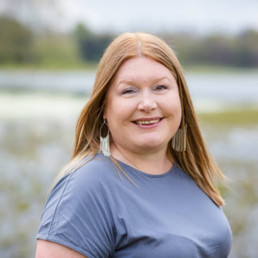
Written by Hannah Wilson
Founder and Director of the Belonging Effect (formerly Diverse Educators).
We can develop our beginner teachers to know their craft and know their subject, but where is the space to know themselves? Navigating teaching as a cisgender, heterosexual, able-bodied white woman meant I was often in the majority in most spaces I occupied in my early career. As I progressed in my career I experienced some sexism but on the whole I was left pretty unscathed, my identity was not something that came up.
Our friends at Now Teach have coined a layer of support/ piloted an approach called “Third Space” Mentoring where their career-changing trainee teachers receive triangulated support from a subject mentor, a professional mentor and a ‘3rd space’ mentor, someone with shared lived experience.
At the Belonging Effect we already support hundreds of ITTE and ECF providers through our DEIB training, coaching and consultancy, alongside hosting virtual annual conferences in January and June for each cohort. But, over the last few years we have been thinking and talking about this approach as a team and we have been considering how we can further support the development and retention of trainee and early career teachers who hold diverse identities and who come from marginalised communities.
For our BE team and for the ITTE and ECF providers we work with, we often get asked to support teachers who are struggling, not in the classroom, but in navigating their identity. The trainee is perhaps the only person with their identity in the cohort or in the school. There often is not a mentor in their school nor in their provider who shares their lived experience. One provider reached out for help and advice as they had a Muslim Asian Hijabi woman training to teach science, and she had been placed in a school with an all-male science department, with a male mentor. We provided a safe space for her to work with a mentor who looked like her, who understood her and could help her navigate the unique barriers she was facing.
So in a nutshell, “Third Space” mentoring involves creating a supportive environment where individuals can develop skills and find new perspectives. The space creates a pause between different roles and tasks, where a person can use the time to reflect, re-center and decompress. This neutral space enables collaboration and focuses on an individual’s holistic development. The safety of the space enables an exploration of authenticity and vulnerability, being guided by someone who has walked a similar path.
Through “Third Space” mentoring we can ensure that we are helping our trainees by triangulating their subject development, their professional development and their teacher identity development. Here is some helpful research from McIntyre and Hobson (2015) entitled: Supporting beginner teacher identity development: external mentors and the third space: McIntyre and Hobson 2015 pre-publication.pdf In it they cite a range of theoretical frameworks:
“While the concept of identity is understood and employed in different ways by different writers (Beijaard et al., 2004) and is problematic (Roth, 2008), our own conceptualisation is informed by poststructuralist accounts of identities as multi-layered, multifaceted, dynamic and constantly evolving or in continual flow (Hall, 2000; Gee, 2000; Hamilton, 2010). We also recognise that identity transmutations are linked to socio-contextual factors and to power (Lumby, 2009; Beauchamp and Thomas, 2009), a point which is especially apposite for understanding teacher identities, with some writers seeing these as particularly vulnerable, unstable and susceptible to school and national policy pressures and contexts (Lasky, 2005; Leaton Gray, 2006)”.
Why is this an important development?
- With an increased focus on DEIB and representation we know that ITTE and ECF providers are consciously trying to attract and recruit more diverse candidates so that our workforce better reflects the communities that we serve.
- We need to design more inclusive approaches and spaces to better support our trainees.
- We need to train our staff in our provider and hold to account the staff in our placement schools to do the work – to unlearn and to relearn, in order to fully commit to ensuring that our trainees can flourish and thrive.
How does it differ from conventional mentoring?
- The “Third Space” can be the transition between activities, a chance to pause and reflect, rather than the activity itself.
- It can also refer to a physical or metaphorical space that is neither home nor work, allowing for different kinds of interactions and collaborations.
- The “Third Space” can be a site of cultural hybridity, where new identities and perspectives are formed through the intersection of different cultures.
What are the key aspects of “Third Space” mentoring?
- Individualised support: Working with a dedicated coach/ mentor to develop your own program of inquiry and practice, supporting you in navigating life’s challenges and making lasting changes.
- Developmental support: Mentoring can help with specific issues like career direction, professional development, and learning new skills.
- Collaborative problem-solving: Creating a neutral space where people from different backgrounds can come together to share perspectives and find innovative solutions.
- Holistic approach: Focusing on helping individuals integrate their values and find balance in both their work and personal lives.
Are there some examples of how “Third Space” Mentoring can support, develop and retain diverse trainees?
- Age – we support career changes and those trainees who are shifting their professional identity from being the expert in one field to being the novice in another field.
- Disability – we support trainees who are neurodivergent in processing school life, in self-advocating for what they need whilst developing coping strategies.
- Parenthood – we support trainee parent-teachers in navigating their caring responsibilities and in managing their additional responsibilities.
- Race – we support trainee teachers who are racialised as being black and brown, in exploring their experiences and in considering the weight of representation.
- Sexuality – we support trainee teachers who are LGBT+ in ensuring their safety and in navigating any challenges they face with their community.
- Wellbeing – we support trainee teachers in building a toolkit of strategies to manage their own mental health and wellbeing.
How can we help?
- Would your trainee teachers and early career teachers benefit from an additional layer of mentoring as they navigate their way in the education profession?
- We have a brilliant team of experienced coaches and mentors who want to provide an extra layer of support, virtually, to your ITT trainees and possibly to your ECTs at your sibling providers too.
- We hope this will support trainees who are navigating their identity and lived experiences as they develop their professional identity, enabling them to flourish and thrive, to stay and succeed in the teaching profession.
- We are running another pilot of our “Third Space” DEIB Mentoring for ITTs and ECTs in Spring and Summer 2026.
How do we register our interest?
- The “Third Space” DEIB Mentoring for ITTs and ECTs pilot will run from January-July 2026.
- Your trainees can join a virtual mentoring circle for 4 x 1hr half-termly group sessions.
- Our Belonging Effect Associates will hold a safe virtual space for them and their peers to explore identity themes such as: age, disability, faith, menopause, mental health and wellbeing, neurodiversity, parenthood, race, sexuality and intersectional identities.
- Places are £200+VAT per participant.
- Fill in this Google form to express an interest: https://forms.gle/5dLN9fzQ8qBeaCvw9
- Contact Hannah@thebelongingeffect.co.uk to book places for your trainee and early career teachers.
Seen, Valued… and Able: Designing Classrooms for Social and Academic Belonging

Written by Tricia Taylor
With more than 25 years’ experience teaching and leading in schools across the UK and the USA, Tricia founded TailoredPractice to bridge the gap between research and classroom practice. Driven by a passion for making learning work for everyone, she now partners with schools worldwide to translate cognitive science into practical strategies that challenge and support all learners. A regular Learning & the Brain Conference speaker and author of Connect the Dots: The Collective Power of Relationships, Memory and Mindset, she is also Head of Teaching and Learning at Mallorca International School.
Belonging isn’t separate from academic teaching. Strategies that build knowledge—when done correctly—also build belonging.
A heartfelt card from reception (kindergarten) child to a headteacher, which says: “I love it how you always pay attention to me when I am talking.”
I know the headteacher who received this on the last day of term. She kneels to students’ height, meets their eyes and listens without rushing. It’s powerful when that’s modelled from the top. Behind the scenes, great leaders, like this one, also put systems in place so belonging is as much social as it is academic. Yes, we greet students at the door AND we also design routines, teaching strategies and feedback structures that help every students feel seen, valued and able to learn.
Belonging has two strands
In school, when we talk about ‘belonging’, we often focus on the social—names, greetings, being known. That matters. But students also need academic belonging: the steady sense that their thinking belongs here, that they can see what ‘good’ looks like, and that there’s a fair and achievable route to get there. The strands work best together: warmth without stretch becomes ‘nice but low challenge’; stretch without safety shuts down risk-taking.”
- Social belonging: feeling accepted, respected, included, and emotionally safe with peers and adults.
- Academic belonging: feeling like a valued, accepted and legitimate member of the subject community—“people like me do this work here”—with clear expectations and support to succeed.
Students’ experiences of race, language, gender or identity can shape whether they feel safe and legitimate in the classroom community, socially, emotionally and academicially. As Glenn Whitman from the Center for Transformative Teaching & Learning writes, “Belonging is not a monolithic thing you either have or don’t have … each student will feel a sense of belonging in some spaces but not others.”
Barriers to belonging (what we saw)
This year, when the teachers and I brainstormed barriers to belonging, we could see both social and academic situations when students lack that sense of belonging.
- Social (& emotional) barriers. Mispronounced or shortened names; not knowing who to sit with at lunch; wondering “Does my teacher like me?”; cliques and subtle hierarchies; loneliness; curriculum or displays that don’t reflect students’ identities; inconsistent behaviour norms — “I don’t know how to act here”; lack of trust that it’s safe to be yourself.
- Academic barriers. Unclear success criteria; errors made public with no way to repair; low-challenge tasks that signal low expectations; speed mistaken for worth while the class moves on; English as an additional language without scaffolds; risky participation structures (like round-robin reading or hands-up dominance); tracking/setting that labels students.
- When they overlap. Participation feels risky or pointless; attention shifts to self-protection and working memory overloads with worry. The result is less learning.
What students say works
When teenagers describe classes where they belong, two themes surface. They feel they belong when (1) teachers intentionally build trust and peer relationships, for example, using seating to encourage peer interaction rather than as punishment—and when (2) teachers use supportive structures: rehearsal before sharing (turn-and-talk), specific and actionable feedback, clear scaffolding of complex concepts, and treating wrong answers as opportunities for growth rather than labels of who is “smart” or “dumb.” (Keyes, 2019). Together, these strategies draw in students who might otherwise hold back—socially, emotionally, and academically.
Classroom strategies — a dual purpose
Have a look at these common high-impact strategies for budding knowledge and see how—when done correctly—they also create a sense of academic belonging:
Strategy |
What is it? |
How it connects to belonging |
| Spaced retrieval | Short, low-stakes questions on prior learning, spaced over time (no peeking). | Early wins and visible progress show “I can do this here.” Thinking hard to retrieve is valued over ‘the right answer’. |
| Hands-down questioning (Question → pause → name) | Ask, wait 3–5 seconds, then invite a student by name. | Protected think time; wider participation beyond the quickest hands. |
| Oracy (talk partners) | Structured partner talk with sentence stems and rotating roles. | Every voice rehearsed, heard and valued; confidence and precision to share ideas increases. |
Checking all for understanding |
Mini-whiteboards, exit tickets, “show me” checks—then adjust teaching. | Everyone’s thinking counts; mistakes become next steps, not labels. My teacher is paying attention to my progress. |
Make them routine
Belonging grows when school feels reliable: steady relationships, clear expectations, visible support, fair access. That happens when our best strategies run as predictable routines. Predictability lowers anxiety, frees working memory and signals a way in… every lesson.
Let’s take a popular strategy like the Do Now — a 2–3 minute starter students begin immediately on entry. Four quick steps:
- On screen before entry: three retrieval questions (last lesson / last week / last month).→ students walk in knowing what’s expected. The clarity signals: “There’s a place for me here.”
- Students get straight to work: 2 minutes of quiet thinking and recording answers.→ Everyone has something they can attempt. Early wins show: “I can do this.”
- Teacher scan: circulates, glances at responses, offers a quick prompt or encouragement, and notes who might need support.→ The teacher is paying attention; my thinking matters.
- Whole-class spotlight: share one item together; mistakes are treated as part of the process.→ Errors aren’t labels; they’re part of learning. Students feel safe to take risks.
Same time, same steps, every day: the routine creates early wins and builds academic belonging.
Leaders set the tone
When a school leader models real attention—and builds systems so every adult does the same—students sense they matter. In the lesson, they run a simple test: Can I see what “good” looks like? Do I have a fair shot at producing it here? Is someone paying attention to my thinking? Good design lets them answer yes, yes, and yes.
So leaders, If belonging is an initiative in your school, make sure the strategies you model in professional development build belonging socially and academically. It’s not either/or — both matter.
Further Reading
- Keyes, T. S. (2019). Factors that promote classroom belonging and engagement among high school students. School Community Journal, 29(1), 171–200. (Student interviews highlighting the importance of trust, supportive participation, and error-as-learning.) Link
- Lawrie, S. I., Carter, D., et al. (2025). A tale of two belongings: Social and academic belonging differentially shape academic and psychological outcomes among university students. Frontiers in Psychology. Link
- Walton, G. M., & Cohen, G. L. (2007). A question of belonging: Race, social fit, and achievement. Journal of Personality and Social Psychology, 92(1), 82–96. Link
- Whitman, G. (2024). Setting the Conditions for Learning: Why Belonging and Great Teaching Always Matter. Center for Transformative Teaching & Learning. Link
Why schools need to address anti-LGBT bullying

Written by Eleanor Formby
Eleanor Formby (she/her) is Professor of Sociology and Youth Studies at Sheffield Hallam University, UK. She has 25 years’ experience in (predominantly qualitative) social research and evaluation, and for nearly 20 years her work has focussed on the life experiences of LGBT+ people. Eleanor has written numerous articles in these areas and is the author of Exploring LGBT spaces and communities.
Next month will see Anti-Bullying Week (November 10-14), and Sheffield Hallam University research highlights that lesbian, gay, bisexual and trans (LGBT) young people are still at risk of being bullied at school.
The study is the largest of its kind ever conducted in England, with over 61,000 pupils and staff from 853 schools taking part. It focused specifically on homophobic, biphobic and transphobic (HBT) bullying—i.e. that directed at people because of their actual or assumed sexual or gender identity—and on LGBT inclusion in schools.
It’s often assumed that ‘progress’—thinking particularly about LGBT rights—is a steady march forward, and to be fair, the past 25 years have seen significant changes for LGBT people in the UK. In 2015, the UK was ranked number one on the ILGA-Europe rainbow map, which rates 49 European countries on the basis of laws and policies that directly impact on LGBT people’s human rights. Around the same time, the UK government invested over £6 million in efforts to prevent and respond to HBT bullying in schools, which included our research. The year our research finished, the Government announced that relationships and sex education (RSE) would become compulsory in English secondary schools—and that it should include LGBT content. For a while, there was reason to feel cautiously optimistic.
But things began to change.
Despite commissioning our research, the Conservative government delayed releasing the findings for five years—an unprecedented move. The study was only published after a change in government.
During this period, rhetoric from the government became increasingly hostile, particularly towards trans people. In April 2025, a high-profile supreme court ruling on gender was followed by a controversial ‘interim update’ from the Equality and Human Rights Commission. In the 2025 ILGA-Europe rainbow map the UK dropped to 22nd place—we’re now the second worst country for LGBT-related laws in Western Europe and Scandinavia.
Recently the government has also revised its guidance on RSE, with reduced references to trans people (just once in a subheading). It explicitly states that schools “should not teach as fact that all people have a gender identity”, and “should avoid materials that… encourage pupils to question their gender”. This language echoes Section 28—the infamous law that, until 2003, banned local authorities from “promoting homosexuality” and prevented schools from teaching the “acceptability of homosexuality”.
Against this backdrop, a new book demonstrates that HBT (homophobic, biphobic and transphobic) bullying is still happening—but also that schools can make a difference.
Our findings show that many schools respond to bullying after it happens, rather than trying to prevent it in the first place. In primary schools, efforts often focus on educating children about inappropriate language. Fewer schools are embedding HBT bullying prevention within everyday teaching, or in visible displays in school.
Where LGBT inclusion is happening, it often takes place in assemblies, or sometimes in secondary schools during PSHE (personal, social, health and economic education) lessons, or in ‘drop-down days’ when normal lessons are suspended. In some primary schools, specific books are used.
There are also barriers, for example a lack of time and staff capacity available in schools, and a lack of funding to invest in resources, facilities or training to help do this work well. Some staff don’t feel supported by school leadership. Others worry about complaints from parents or uncertainty about what’s ‘age appropriate’. In the current context, these concerns and associated lack of confidence are likely to grow.
But when schools get it right, there is real impact, for instance LGBT pupils—and those with LGBT family members—feel safer and more understood. Others feel more able to ask questions about issues that confuse or concern them.
This is why it’s so concerning that the UK seems to be moving backwards. Instead of helping schools create more inclusive environments, recent guidance—and arguably the suppression of important research—risk making things worse for LGBT young people, and those with LGBT family members. Teachers are left uncertain about what they’re allowed to say or teach, and pupils may feel more isolated.
It’s difficult to understand why any government would risk children and young people’s wellbeing in this way.
As we prepare to mark Anti-Bullying Week, it’s important to remember that (to borrow from previous policy, seemingly long-forgotten) every child matters—and deserves to feel safe and included, so schools need to address anti-LGBT bullying. To make that a reality, we need to support schools—not leave them uncertain or under-resourced.
Why Intersectionality is the Future of ERGs
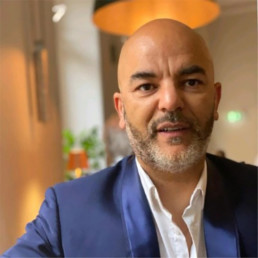
Written by Matthew Page
Intersectionality and Identity Consultant | Trustee at The Fostering Network | Transformative Coach | Speaker | Award Winning Lived Care Experienced Leader | Doggie Dad
In today’s dynamic and sometimes challenging landscape, the conversations around diversity, equity, and inclusion (DEI) have never been more critical. We’re seeing a shift, a recalibration, and in some corners, even a fear of engaging with DEI initiatives. Yet, it’s precisely in this environment that the power of Employee Resource Groups (ERGs) becomes even more pronounced. However, if ERGs are to truly thrive and deliver on their promise, they must embrace a crucial concept: intersectionality.
For too long, ERGs have often operated in silos. We have a Women’s ERG, a BAME (Black, Asian, and Minority Ethnic) ERG, an LGBTQ+ ERG, a Disability ERG, and so forth. Each group does incredibly important work within its specific remit, advocating for its members and fostering a sense of community. But imagine the amplified impact if these groups, rather than standing alone, could discover their shared struggles and collective strengths.
This is where intersectionality isn’t just a buzzword; it’s the glue. It’s the understanding that individuals hold multiple identities that intersect and overlap, creating unique experiences of both privilege and disadvantage. The term was originally coined by American legal scholar Kimberlé Crenshaw in 1989. She used it to highlight the “double discrimination” faced by Black women, who often experienced both racism and sexism but found that the legal system at the time couldn’t address the combined effects of the two.
My work is all about introducing people to this basic, yet profoundly powerful, principle. I help ERGs recognise that while their specific focus is vital, there are countless threads that connect them. When a Women’s ERG and a BAME ERG realise they are both fighting for equitable pay, or when a Disability ERG and an LGBTQ+ ERG discover shared ground in advocating for inclusive language, that’s when the magic happens.
Pulling various ERGs together through the power of intersectionality is something I’m seeing time and time again, and it’s truly powerful in the current climate. We should all be working and fighting the cause in a much more united way, shouldn’t we? This collective approach not only strengthens the impact of each individual ERG but also fosters a more inclusive and understanding workplace culture for everyone. It moves us beyond a ‘them and us’ mentality towards a ‘we’ that is far more resilient and effective.
My journey to understanding the profound importance of identity and belonging began in a very personal way. Growing up in foster care, I had no real sense of my own identity. I was told my father, whom I had never met, was from Jamaica, which was the extent of my knowledge about my roots. It wasn’t until I took part in the TV show DNA Family Secrets that my world truly opened up. The show discovered that my family actually originated from the Seychelles – a revelation that completely shifted my understanding of who I am and where I come from. This personal experience of uncovering my intersecting identities, and the sense of belonging it brought, deeply informs my passion for helping others find theirs within organisations.
I have the privilege of working with fantastic organisations like NatWest, Transport for London, and the British Transport Police, guiding their ERGs through this journey. We explore how to break down those silos, build bridges between groups, and harness the collective power of their diverse members. The results are not just theoretical; they are tangible shifts towards more unified advocacy, greater mutual support, and a more robust, future-proof approach to DEI.
Intersectionality isn’t just the future of ERGs; it’s the pathway to a more inclusive, empathetic, and ultimately, a more effective workplace for all. Let’s unite, understand, and empower one another.