Belonging Matters

Written by Laura McPhee
Laura McPhee is Director of Education at University Schools Trust. Prior to this, Laura was an experienced headteacher. She has a proven track record of leading transformational change management and successful school improvement journeys across London. Laura is a facilitator for the National Professional Qualification facilitator for Headship (NPQH) and a School Improvement consultant. She holds a number of trustee positions and enjoys guest lecturing for ITT courses. She is the author of 'Empowering Teachers, Improving Schools: Belonging, Psychological Safety & School Improvement' and a co-author of 'Tackling Poverty and Disadvantage in Schools.'
As part of this series I’ll be catching up with professionals who share a keen interest in all things related to belonging, inclusion and psychological safety…
This week I’m joined by Sarah Wordlaw, Headteacher and author of ‘Time to Shake Up the Primary Curriculum’ and ‘M is for Misogyny: Tackling Discrimination against Women and Girls in Primary School.’
Sarah Wordlaw, Headteacher & author of ‘Time to Shake Up the Primary Curriculum’ & ‘M is for Misogyny.’
’Q) Can you describe a time when you felt like you belonged?
A) The first time I felt like I genuinely belonged in a professional space was probably when I attended London South Teaching School hub’s Diverse Leaders event. Prior to this I don’t think I fully acknowledged or even realised that I hadn’t felt that sense of connection; until I was invited to a space where all of a sudden, I wasn’t the minority.
As for life beyond school, that would have to be the first time I attended a Pride event. I distinctly remember thinking, these are my people! Again, there was that sense of connection. It was as if someone was holding a mirror up. We had a shared experience, a shared story.
When you start to consider intersectionality and all of the complexities that brings, it gets really interesting. I have mixed heritage, so I suppose I’ve always felt as though I straddle two worlds, without necessarily feeling like I belong to either. I’ve needed to move between spaces seamlessly and code switch.
Of course, our lived experience informs how we engage and interact. We have all have layers to our identity and experiences that inform our choices.
Q) What strategies have you found helpful for building psychological safety in self and others?
A) I’ve found being honest about myself and my identity has really helped to build connection. When you’re able to share parts of yourself and parts of your identity, then I think that builds credibility and trust. You’re able to say – you know who I am and what I stand for, let’s move forward together in this shared vision (whatever that may be). This has become more pronounced for me as I moved through my leadership journey. As a less experienced leader, I wasn’t necessarily ready to do that. I was concerned about how I would be judged and what other’s perception of leadership was. Over time I’ve come to believe that who we are, is how we lead; that’s what I’ve come to value.
When it comes to developing others, I think fostering a culture that enables team members to share ideas and challenge the status quo is really important. That means as leader I have to model being flexible in my thinking and demonstrate that I’m open to being challenged, as well as challenging others; that we’re all in this together!
Q) What advice would you give your younger self?
A) I think it’s important to take space and acknowledge that whatever has taken place in the past; you did your very best with the information that you had…
So perhaps on reflection I would simply say to myself, it’s ok to ask for help and that you don’t always have to be ‘the strong one.’
Q) What does the sector need to consider when it comes to developing psychological safety?
A) Meaningful connections and relationships with each other are invaluable. Too many ‘wellbeing’ initiatives today are surface level. Treats in the staffroom are nice, but it won’t have the impact you’re looking for. We need to really understand our teams and a culture of psychological safety enables this. It’s more than a nice to have, it helps with staff retention and of course once we take the time to know and understand our teams and ensure everyone is pulling in the same direction – we’re able to enact our vision and strategy in a much more meaningful way. Who wouldn’t want that for their pupils and wider school community?

Holding Space Without Burning Out: Understanding Compassion Fatigue and How We Safeguard Ourselves
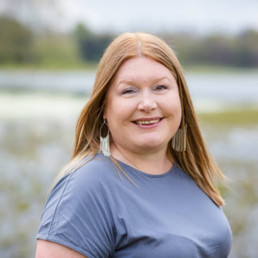
Written by Hannah Wilson
Founder and Director of the Belonging Effect (formerly Diverse Educators).
In caring professions – and in deeply relational roles – holding space for others is sacred work. Whether you are a therapist, coach, nurse, social worker, teacher, spiritual leader, or simply the person everyone turns to in crisis, you are entrusted with stories that carry pain, trauma, grief, and vulnerability. But holding space comes at a cost if we do not tend to ourselves. Compassion fatigue is not a failure of resilience. It is often the natural consequence of caring deeply in the presence of trauma. And safeguarding ourselves is not selfish – it is ethical.
What Is Compassion Fatigue?
Compassion fatigue is the emotional and physical exhaustion that can develop when we are repeatedly exposed to others’ suffering. It is sometimes described as the “cost of caring.” Unlike burnout, which develops from chronic workplace stress and systemic pressures, compassion fatigue is closely tied to exposure to trauma – directly or indirectly. Over time, witnessing others’ pain can begin to shift our nervous system, our worldview, and even our sense of safety.
You may notice:
- Emotional numbness or irritability
- Difficulty concentrating
- A reduced sense of empathy
- Sleep disturbances
- Feeling overwhelmed or depleted
- Intrusive thoughts about clients or stories you have heard
For those working with trauma survivors, there is also the risk of vicarious trauma – a cumulative shift in our internal world as we absorb repeated accounts of trauma. This does not mean we are weak. It means we are human.
Trauma Exposure Changes the Nervous System
When we hold space for trauma, our nervous system is activated. Even if the trauma did not happen to us, our body often responds as if it were present. We may feel tightness in the chest, shallow breathing, or a subtle hypervigilance. Without intentional processing, these responses accumulate. Over time, the body may stay in a low-level stress response.
If we are not aware of this, we may:
- Over-identify with others’ pain
- Carry stories home with us
- Lose perspective
- Begin to feel helpless or hopeless
The more attuned we are, the more we are affected. This is why safeguarding ourselves must be woven into our professional practice – not treated as an afterthought.
Safeguard 1: Supervision Is Not Optional
Clinical supervision, reflective practice, or professional consultation is one of the most protective factors against compassion fatigue.
Supervision provides:
- A space to process emotional responses
- Containment for complex trauma material
- Ethical guidance and accountability
- Perspective when we feel stuck
- A reminder that we are not alone
Without supervision, helpers can become isolated in their internal processing. Isolation amplifies stress. Supervision is not a sign that we cannot cope. It is a commitment to sustainability and ethical care.
Safeguard 2: Structured Decompression
We cannot repeatedly hold intense emotional material and then immediately switch into “normal life” without impact. Decompression is the intentional act of transitioning your nervous system from holding space to rest and regulation.
This might include:
- A short walk after sessions
- Breathwork or grounding exercises
- Journaling to externalize what you are carrying
- Washing your hands as a symbolic reset
- Listening to music during the commute home
- Physical movement to release stored tension
Decompression rituals matter because they signal to the body: the work is done for now. Without this signal, the body continues to hold.
Safeguard 3: Trauma-Informed Self-Awareness
When we support others through trauma, our own unresolved experiences can be activated. This is not a flaw – it is part of being relational beings. But awareness is essential.
Ask yourself:
- What stories trigger me most strongly?
- Where do I feel this work in my body?
- Am I rescuing, over-functioning, or overextending?
- What feels harder lately?
Personal therapy, peer support, and reflective practice are powerful forms of safeguarding. We cannot ethically hold others’ trauma if we refuse to tend to our own.
Safeguard 4: Boundaries as Compassion
Boundaries are often misunderstood as distancing. In reality, they are what allow us to remain compassionate.
Healthy boundaries include:
- Clear session limits
- Defined availability
- Emotional differentiation (“This is not mine to carry”)
- Saying no when capacity is exceeded
Boundaries protect empathy from erosion. When we overextend, resentment follows. When resentment builds, compassion shrinks. Boundaries preserve our ability to care.
Safeguard 5: Rest Is Clinical
Rest is not indulgent. It is restorative. Sleep, play, connection, creativity, nature, laughter – these are not luxuries. They are protective factors against trauma exposure.
When we normalise exhaustion as “part of the job,” we risk normalising harm to ourselves. The quality of care we offer is directly linked to the state of our nervous system.
Sustainable Compassion
Holding space is courageous work. It requires presence, empathy, and the willingness to sit in discomfort without turning away. But sustainable compassion requires something equally important: self-protection.
We safeguard ourselves from compassion fatigue through five commitments:
- Supervision
- Decompression rituals
- Trauma-informed self-awareness
- Boundaries
- Rest
When we protect our nervous systems, we protect our ability to continue showing up. Compassion fatigue does not mean you are incapable. It means you care. And caring, when supported, can remain a powerful and sustainable force.
Keeping Children Safe in Education 2026 Consultation
Written by Belonging Effect
Belonging Effect is committed to shaping intention into impact and supporting people with their Diversity, Equity, Inclusion, & Belonging strategy and training needs.
On 12th February 2026, the Department for Education published a new draft of the statutory safeguarding guidance for schools and colleges: Keeping Children Safe in Education.
Amongst other changes, the new draft guidance includes an amended section titled ‘Children who are lesbian, gay, or bisexual’; and a new section titled ‘Children who are questioning their gender’.
Since the draft guidance was published, these sections specifically have been reported on widely. We have read and listened to much of the coverage from diverse sources, and are concerned to see some exaggeration or misrepresentation of the current situation. To be clear, this is not currently statutory guidance – it is a draft of proposed guidance, which has been opened for a 10 week consultation period ending on 22nd April 2026. Currently, schools and colleges should not make changes which are informed by this draft guidance. They should continue to follow the 2025 version of KCSIE.
Our intention in this piece is to set out the context in which this draft guidance has been released, the details of the guidance, and provide information about the ongoing consultation as accurately and clearly as we can in order to encourage those involved in education to express their views through the consultation. In order to do so, we have tried to avoid presenting our own opinions in much of the following piece. However, we think it is important to be transparent before we begin. We have worked with transgender, non-binary, and gender questioning students, and we are fully committed to their inclusion and belonging in educational spaces. We believe that any statutory guidance for schools and colleges should provide workable and inclusive guidance that protects all students from discrimination, and ensures safety, dignity and respect for all young people in education – including trans students. With that clear, let’s begin.
The Context
Chances are, if you are reading this piece, you are very familiar with the statutory safeguarding guidance Keeping Children Safe in Education (often referred to as KCSIE). It was first published in 2014, and is reviewed and updated by the Department for Education annually, with updated versions typically becoming statutory each September. Most years these updates come without consultation, but a consultation or call for evidence may be made when substantive changes are proposed.
In the KCSIE update for September 2022, under the section ‘Children potentially at greater risk of harm’ a new category was added, titled ‘Children who are lesbian, gay, bi, or trans (LGBT)’. This new guidance was brief, but acknowledged that being LGBT, or being perceived to be LGBT, could be a risk factor for bullying. The following year, in the 2023 September update, this section was slightly expanded. It stated:
‘203. The fact that a child or a young person may be LGBT is not in itself an inherent risk factor for harm. However, children who are LGBT can be targeted by other children. In some cases, a child who is perceived by other children to be LGBT (whether they are or not) can be just as vulnerable as children who identify as LGBT.
204. Risks can be compounded where children who are LGBT lack a trusted adult with whom they can be open. It is therefore vital that staff endeavour to reduce the additional barriers faced and provide a safe space for them to speak out or share their concerns with members of staff.
205. LGBT inclusion is part of the statutory Relationships Education, Relationships and Sex Education and Health Education curriculum and there is a range of support available to help schools counter homophobic, bi-phobic and transphobic bullying and abuse.’
Later that year, in December 2023, the Department for Education published draft guidance relating to trans and non-binary students in schools, which they called ‘Gender Questioning Children’. This was draft, non-statutory guidance, which opened for a 12 week consultation period ending on Tuesday 12th March 2024. You can read more about this draft guidance and consultation here.
Shortly after that consultation closed, the Cass Review was published in April 2024. The Cass Review was intended to be an independent review of gender identity services for children and young people. It has been widely criticised since its release. Although not an education focused document, the review made some recommendations relevant to schools and colleges.
In the same year, the UK saw a change of government with a new Labour government elected in July 2024. The Labour government committed to looking at the results of the consultation into the ‘Gender Questioning Children’ guidance and to publishing finalised guidance for schools. They also committed to enacting the recommendations of the Cass Review.
On 12th February 2026, The Department for Education published a new draft of the statutory safeguarding guidance for schools and colleges, KCSIE. Amongst other changes, this new draft guidance includes an amended section titled ‘Children who are lesbian, gay, or bisexual’, and a new section titled ‘Children who are questioning their gender’.
In materials published online, the DfE explains their choice to position gender guidance as part of KCSIE, rather than in separate non-statutory guidance as first proposed in 2023. They state that they “propose instead to include this content in KCSIE so that children’s wellbeing and safeguarding are considered in the round, and so that schools and colleges can easily access this information in one place”.
The DfE also provides some limited details about the results of the consultation. They explain that the consultation into the draft ‘Gender Questioning Children’ guidance received 15,315 respondents and “demonstrated that this is a highly contested policy area with no clear consensus on the appropriate approach, but more respondents expressed negative than positive views about the usability of the draft guidance published for consultation”.
This draft guidance is now open for a 10 week consultation period, ending on 22nd April 2026. The following sections will set out the details of this proposed guidance, and information about the ongoing consultation.
The Guidance & Consultation
Although other important changes have been made, we focus specifically here on the parts of the guidance titled ‘Children who are lesbian, gay, or bisexual’ and ‘Children who are questioning their gender’.
Part Two of KCSIE sets out the statutory guidance around the management of safeguarding, and it includes a section on ‘Children potentially at greater risk of harm’. It is within this section that LGBT identities are discussed under the following two headings.
‘Children who are lesbian, gay, or bisexual’
This amended section used to include the word ‘trans’ (2022 & 2023), and later ‘gender questioning’ (2024, 2025). That has now been removed, and this section focuses specifically on sexual and/or romantic orientations lesbian, gay, or bisexual. The draft guidance states:
“244. A child or young person being lesbian, gay, or bisexual is not in itself a risk factor for harm; however, they can sometimes be vulnerable to discriminatory bullying. In some cases, a child who is perceived by other children to be lesbian, gay, or bisexual (whether they are or not) can be just as vulnerable as children who are. Schools and colleges should consider how to address vulnerabilities such as the risk of bullying and take steps to prevent it, including putting appropriate sanctions in place.”
‘Children who are questioning their gender’
This new section is the result of the 2024 consultation into the then draft non-statutory ‘Gender Questioning Children’ guidance. It includes some general information, followed by specific advice on:
- Preventing and responding to bullying
- Decision making when a request is made for social transition
- Parental Involvement
- Physical Spaces (toilets, changing, accommodation)
- Record Keeping
- ‘Children living in stealth’
- ‘Children who wish to detransition’
This section of the draft guidance is long so we have not quoted it here in full, but it includes significant changes in how schools should work to support trans, non-binary, or gender questioning young people. We would encourage you to read it in full in the draft guidance released by the DfE, or in this longer article published by Pride & Progress.
The draft guidance is currently open for a 10-week consultation period, which ends on 22nd April 2026. The consultation invites responses from a variety of educational spaces, and those working in them.
The consultation is divided into 9 sections:
- Section 1 – proposed changes to the ‘about this guidance’ section and general updates to KCSIE
- Section 2 – proposed changes to Part one: Safeguarding information for all staff •
- Section 3 – proposed changes to Part two: The management of safeguarding
- Section 4 – proposed changes to Part three: Safer recruitment
- Section 5 – proposed changes to Part four: Safeguarding concerns or allegations made about staff including supply teachers, volunteers and contractors
- Section 6 – proposed changes to Part five: Child-on-child sexual violence and sexual harassment
- Section 7 – proposed changes to Annex B – further information
- Section 8 – proposed changes to Annex C – the role of the designated safeguarding lead
- Section 9 – expanding our evidence base
You can view all of the questions asked in each section of the consultation in the DfE consultation document. Section 3 of the consultation is where questions are asked about the proposed changes to Part Two of KCSIE. There are no questions asked about the guidance relating to ‘Children who are lesbian, gay, and bisexual’. Of the guidance relating to ‘Children who are questioning their gender’, three questions are asked. They are:
- Question 33: Does the updated section of the guidance on children who are questioning their gender provide clarity about the considerations schools and colleges will need to take into account?
Yes, No, Not Applicable, No Opinion, Please Explain Further (Optional)
- Question 34: Do paragraphs 104-115 provide clarity for schools and colleges about their legal obligations relating to toilets, changing rooms, and boarding and residential accommodation?
Yes, No, Not Applicable, No Opinion, Please Explain Further (Optional)
- Question 35: Do paragraphs 94-97 provide clarity for schools and colleges about the circumstances in which the school is justified in having a policy of single-sex sports?
Yes, No, Not Applicable, No Opinion, Please Explain Further (Optional)
These questions focus on the clarity of the advice set out in the new draft guidance, but they offer a vital opportunity for those working in education to consult on the workability of this guidance. As stated earlier, we have worked with transgender, non-binary, and gender questioning students, and we are fully committed to their inclusion and belonging in educational spaces. As, in our experience, are the vast majority of those working in the education sector. We believe that any statutory guidance for schools and colleges should provide workable and inclusive guidance that protects all students from discrimination, and ensures dignity and respect for all young people in education – including trans, non-binary, and gender questioning young people.
Actions you may wish to consider taking
We hope that reading this piece has helped you to feel more informed. Below are some actions you may wish to undertake as a result of what you have read:
- Please challenge any mis-characterisations of this draft guidance. This is not currently statutory guidance – it is a draft of proposed guidance, which has been opened for a 10 week consultation period ending on 22nd April 2026.
- Please contribute to the consultation process, and consider specifically the workability of the guidance set out, and whether it is inclusive guidance that protects all students from discrimination, and ensures dignity and respect for all children in education. You may wish to delay your contribution to the consultation until other organisations have released guidance and support on doing so.
- Consider encouraging colleagues and connections to read about the draft guidance, and contribute to the consultation themselves. The previous consultation had over 15,000 responses – the more people who contribute, the more informed the finalised guidance can be.
- Finally, you may wish to begin considering what policies and practices you may need to review when the finalised guidance is released in September. What has been discussed here is the draft guidance, and no changes should be implemented yet, but it may be a good idea to begin to consider your policies and practices relating to LGBT+ students ahead of the final guidance being released later this year.
This piece was written by members of the Belonging Effect team and is intended for informational purposes only. This blog was published on 17/2/26, and all information was to the best of our understanding at the time of publishing.
Pregnancy Loss in Education: Breaking the Silence, Structures and Support

Written by Morgan Whitfield
Morgan Whitfield is an experienced senior leader and professional development consultant who advocates high-challenge learning. Morgan hails from Canada and has taken on such roles as Director of Teaching and Learning, Head of Sixth Form, Head of Humanities and Head of Scholars. Her book Gifted? The Shift to Enrichment, Challenge and Equity, reframed “gifted” education as a mandate to provide enrichment and challenge for all students. She is a passionate advocate for equity in education, a BSO inspector, radio show host and mother of three brilliant little ones. Morgan has worked with schools across the Middle East, Asia and the UK and currently lives in Vietnam.
I remember the day I had to tell senior leadership that I needed to leave lessons and go to the doctor because I was bleeding. I sent out cover work in the hospital waiting room. Later, I had to tell the same colleagues that I would no longer need maternity leave. The conversations were devastating. The classroom kept moving forward, yet I was stalled. I am not alone in this.
Pregnancy loss is often described as a silent grief. For women in education, the silence is compounded by the relentless rhythm of school life. Our jobs involve performance, we must be the support for our students, and this demands our complete mental and emotional presence. Teachers are expected to stand in front of classes, to smile and be steady, even when their personal lives are marked by loss. With women making up three-quarters of the education workforce in the UK (DfE, 2022), the absence of open conversation about pregnancy loss is striking.
I have been there with colleagues through the heartbreak of miscarriage, and through the long, uncertain path of fertility treatments. One colleague once asked for a mental health day on what would have been her due date, a vivid reminder that grief is not linear and anniversaries bring waves of pain. Another shared the exhausting cycle of appointments, medications, and pregnancy tests that defined her attempts to conceive. These stories are part of school life, but they are rarely spoken aloud or formally recognised in policy.
Why Pregnancy Loss Matters in Education
Most schools have no specific structures or training in place to guide leaders or support staff. Teachers can feel forced to suppress grief in order to keep lessons going. When this happens, schools risk not only the wellbeing of staff but also the culture of care that should define education.
Pregnancy loss is both a medical event and a profound emotional rupture. Physically, it can involve surgery, recovery, and the exhaustion that follows. Emotionally, it brings grief for a future imagined but never lived. The disconnect between the devastation inside and the professionalism demanded outside can be unbearable. Without recognition or space, teachers risk feeling invisible in their grief.
Supporting staff through pregnancy loss and fertility journeys requires compassion and clarity. Three areas stand out:
- Policy and Procedure
Schools should establish clear leave policies that explicitly cover pregnancy loss at every stage and ensure staff understand their entitlements. Leadership need practical guidance on responding with sensitivity so that no member of staff feels dismissed. It is equally important that counselling and wider wellbeing services are easy to access and signposted without stigma.
- Culture and Conversation
A supportive culture begins with openly acknowledging pregnancy loss within staff wellbeing policies rather than treating it as a taboo subject. Leaders should be trained to respond with empathy and avoid minimising comments such as “at least you were not far along” or “at least you can try again”. Schools can recognise that grief can resurface around anniversaries of loss and offer staff the flexibility they need at these times.
- Practical Wellbeing Support
Staff deserve practical arrangements that help them re-enter work at a pace that feels manageable, such as phased timetables or temporary workload adjustments. Schools should protect time for medical appointments and mental health recovery. Peer networks or mentoring can provide a valuable source of connection and understanding for those navigating pregnancy loss or fertility treatment.
Workplace pledges, such as those promoted by the Miscarriage Association, provide clear frameworks that schools can adapt. These signal that loss will be handled with dignity and consistency, rather than silence and improvisation.
Schools often pride themselves on teaching empathy to children. We must apply the same principle to one another. Pregnancy loss and fertility journeys should not be taboo in education. When schools speak about them openly, they dismantle stigma. When institutions act with compassion, they protect not only the colleague in pain but also the integrity of the profession. Looking back, what made the difference for me were tangible acts. A colleague who offered to cover a lesson when I needed space. A quiet word that acknowledged my grief as real. These should be built into the school’s structures through purposeful policy and sensitive implementation.
References
Department for Education (DfE) (2022) School workforce in England: Reporting year 2022. Available at: https://explore-education-statistics.service.gov.uk (Accessed: 26 September 2025).
Education Support (2022) Teacher wellbeing index 2022. London: Education Support.
Miscarriage Association (n.d.) Pregnancy loss in the workplace: Guidance and charter. Available at: https://www.miscarriageassociation.org.uk/miscarriage-and-the-workplace/the-pregnancy-loss-pledge/ (Accessed: 26 September 2025).
Benedict’s Law and the implications for schools

Written by Tracey Dunn
Tracey Dunn is the Education and AllergyWise® Manager for Anaphylaxis UK. Tracey joined the team following her retirement from Headship having taught and led schools for 30 years. Tracey works with a number of different organisations to ensure the safety of students with allergies. These include the Department of Education and co-chairing the education group of the National Allergy Strategy.
Thankfully, fatal anaphylaxis is rare, but, when it does occur, the consequences are devastating. Helen and Peter Blythe have been tirelessly campaigning for change following the tragic death of their five-year-old son Benedict, who died at school in December 2021 after experiencing anaphylaxis. Their efforts have highlighted critical gaps in how schools protect children with allergies.
Although statutory guidance titled Supporting Pupils with Medical Conditions in School exists, it has not been updated since 2017. During the inquest into Benedict’s death, the Department for Education (DfE) acknowledged these shortcomings and announced it would undertake a review and update of the guidance. Research conducted by the Benedict Blythe Foundation into schools’ ability to respond to allergic emergencies found significant cause for concern. Despite schools being permitted to hold spare adrenaline auto-injectors (AAIs) since 2017, only a small proportion had done so. Combined with inconsistent training and a lack of clear allergy policies, this left children with allergies vulnerable and potentially at risk. These findings are echoed by enquiries to Anaphylaxis UK support helpline, where parents frequently seek clarification about schools’ responsibilities to ensure their children are safe, supported, and included.
In response, the Benedict Blythe Foundation has been campaigning for the introduction of “Benedict’s Law” to ensure that pupils with allergies attend schools that are properly equipped to safeguard them. Benedict’s Law has three mandatory components: training for all school staff, a comprehensive allergy policy, and the availability of spare adrenaline auto-injectors in every school.
In February 2026, significant progress was made. In the same week that leading allergy organisations—including Anaphylaxis UK, Allergy UK, the British Society for Allergy and Clinical Immunology (BSACI), the Benedict Blythe Foundation, and National Allergy Strategy leads—met with Olivia Bailey, Minister for Early Education, to contribute to the review of the statutory guidance, an amendment to the Children’s Wellbeing and Schools Bill was passed by the House of Lords. This amendment confirmed that Benedict’s Law will be implemented in schools from September 2026 as part of the updated guidance.
This represents a historic step forward for children and young people with allergies. It will ensure they can learn in environments that are inclusive and safe, and that staff are properly trained to recognise and respond to allergic reactions and anaphylaxis without delay. Schools will be required to have the necessary medication on site, and staff will be empowered to act confidently and decisively in an emergency.
The updated guidance will be published for consultation by the DfE shortly. The National Allergy Strategy, the Benedict Blythe Foundation, and patient charities including Anaphylaxis UK will work closely with the DfE to provide schools with model policies and practical templates to support compliance with the new statutory requirements.
Schools are welcome to take action now to get ahead of the September 2026 requirements. By undertaking a whole-school allergy risk assessment, arranging staff training and subscribing to the education newsletter, schools can ensure they are fully prepared and compliant before the deadline. Early action will help to protect vulnerable pupils, demonstrate proactivity and give staff confidence in managing allergic emergencies.
Anaphylaxis UK has provided free or low-cost allergy and anaphylaxis training for over a decade, offering both e-learning and face-to-face options alongside a comprehensive suite of resources. Training is continually updated to reflect the latest clinical guidance, including the recent introduction of nasal adrenaline.
Please contact us at Anaphylaxis UK: allergywise@anaphylaxis.org.uk.
The forty year apology: My biology was never the problem
Written by Ashtrid Turnbull
Ashtrid Turnbull is a biologist, a deputy head, and a mother of neuro-distinct twin daughters. Over thirty years in education, she has witnessed how high-achieving, neuro-distinct women across all sectors trade their physical health for professional and personal acceptance.
I have spent twenty seven years as a biologist and a senior leader. For nearly three decades I have lived a double life. In public I am the composed executive navigating the high stakes complexity of professional leadership. In private I have been the woman perpetually apologising for the mess of her own mind.
I have watched countless women like me, the high fliers, the multi taskers, the chaos wizards who can stabilise a company in a crisis but lose their keys while they are still in their hand, be told they are faulty.
We were told that our brains lacked the hardware for focus. We were told our spontaneity was a lack of discipline. We spent years accruing a staggering amount of shame while we tried to squeeze our expansive, electric brains into a dull grey box of neurotypical expectations. I am part of the system that helped build that box. For that I am truly sorry.
The December Revelation
In December 2025, a landmark international study was published in Psychological Medicine by researchers from the University of Bath, King’s College London, and Radboud University (Hargitai et al., 2025). It did the one thing no one has bothered to do in forty years of clinical research into neurodiversity. It stopped looking only for what is wrong with us. Instead, for the first time in a study of this magnitude, they looked at our strengths.
The researchers found that traits like our spontaneity and our ability to hyperfocus are not just personality quirks to be managed. They are biological protective factors. They are linked to higher creativity and a type of psychological resilience that the world desperately needs.
This is the flipping of the script we have waited for. The science finally proves that we are not broken. We are simply a collection of immense strengths that have never been capitalised on properly because the system was too busy trying to medicate them away.
The Metabolic Cost of the Mundane
As a biologist this finding wrecked me. It confirmed that our brains are not generalists. They are specialists. We are built for the high signal and the high stakes. We do not have an attention deficit. We have a biological refusal to waste our life force on the mundane.
When we are forced to operate in environments that prize compliance over brilliance, we pay a massive metabolic cost. We are high definition systems being forced to run on a less than optimised dial up network. The exhaustion you feel is not a character flaw. It is the result of a high torque system being forced to idle for too long. Understanding how to integrate this knowledge into a world that still values the grey box is how we begin to explore the uncomfortable middle ground.
The Ownership of the Middle Ground
I am done with the two extremes of this conversation. I am tired of the ‘ADHD is a superpower’ fluff that ignores the daily struggle. I am equally tired of the ‘just try harder’ boardroom culture that ignores the reality of our biology. The truth is found somewhere in the middle.
Empowerment is not about waiting for the world to become completely ADHD or autism friendly. That is highly unlikely to happen. Real empowerment, the ultimate unmasking, is about taking ownership of your own biology and the energy ledger that comes with it. This requires a three way pact of responsibility.
What we owe ourselves: We owe ourselves self knowledge. We must understand that our rapid scanning of a room is actually a high speed search for a signal. We owe ourselves the bravery to say that while we can solve a crisis in ten minutes, we cannot sit in a two hour meeting without a total exhaustion of our internal resources.
What we owe others: We owe the world clear communication about how we operate. We owe them the effort to find systems that actually serve our high signal hardware, rather than pretending that yet another paper planner is going to save the day.
What others owe us: Others owe us a willingness to adapt and a recognition that focus looks different in a neuro distinct brain. They owe us the space to be brilliant even if it comes with the beautiful, creative mess that often follows in our wake.
Driving the Hardware
The 2025 research is our scientific permission to stop pretending. It is our evidence that our traits are the very things that make us capable of the brilliance the world so desperately needs right now.
We are the ones who stay calm when the atmosphere reaches boiling point, but lose our minds over a tax return. We are the ones who see the patterns others miss because we are looking at the whole sky, while they are staring at the pavement.
We are the ones who can synthesise a thousand disparate data points into a single visionary strategy in an afternoon, but forget to eat because our internal focus is so absolute. We are the architects of the unconventional and the first responders to the impossible. Our brains do not lack order. They simply operate on a frequency that a linear world has forgotten how to tune into.
I am done with the narrative of the broken woman. I am finished with the idea that our worth is measured by our ability to perform administrative gymnastics in an environment that drains our batteries to zero before lunchtime.
It is time we stopped apologising for our hardware. It is time we stopped trying to patch a system that was never actually glitching. We are not a problem to be solved. We are a biological resource to be understood, respected, and finally, driven with the skill and the pride that this incredible machinery deserves.
Call to Action: If this resonates, I want to hear from you.
Whether you are a woman in leadership navigating your own metabolic debt, or a mother supporting a neurodivergent daughter through the triple jump years of Year 10 to university, you are not alone in the mess. It is time we stopped apologising for our hardware and started driving it with pride.
I am currently developing a framework to help chaos wizards move past the narrative of disorder and towards a model of cognitive efficiency.
References: Hargitai, L. et al. (2025). Playing to your strengths improves wellbeing in ADHD. University of Bath. Read the study summary here.
The Sandwich Generation: Hidden Needs in the Workplace
Written by Zahara Chowdhury
Zahara leads on equality, diversity and inclusive education in higher education. She has over a decade of experience in middle and senior positions in secondary education. Zahara is author of Creating Belonging in the Classroom: a Practical Guide to Having Brave and Difficult Conversations. She is founder of the School Should Be blog and podcast, a platform that amplifies diverse and current topics that impact secondary school classrooms, students and teachers.
Ageism in the workplace is often an under-acknowledged and yet deeply felt influence on career progression, belonging, development and wellbeing. Early in my career, I was often met with phrases like “age before stage” when I applied for promotions, “have your babies first” when balancing career plans, and most recently the flattering-yet-deflating, “you just look so young.” These comments project assumptions about capability and life stage, often rooted in (un)conscious bias.
But recently I have found myself close to a very particular phase of life, I’ve recognised an aspect of ageism and workplace invisibility that doesn’t get enough attention: the experience of the sandwich generation.
Who Are the Sandwich Generation?
I only recently became familiar with this term. The sandwich generation refers to adults who are caring for ageing parents or relatives and dependent children and grandchildren, nieces and nephews. It is a role and phase that people find themselves in and to me, a role and phase that we are unprepared for and do not necessarily imagine ourselves in as we age. According to recent UK research, there were an estimated 1.4 million “sandwich carers” aged 16-64 between 2021 and 2023—people juggling dual caring responsibilities. Around half of these were aged between 45 and 64.
When we look at the workforce more broadly, about one in three workers in the UK is aged 50 or over, a figure that reflects changing demographics and longer working lives.
Caring for Ageing Parents: Nuances Often Missed
Caring for a parent with declining health, or simply through the aging process, is not just about practical tasks. It’s emotional and exhausting work. In my experience, unlike caring for a toddler (who grows and develops with you), looking after a parent often means mourning the loss of who they were, even as you help them with the fundamentals of daily life:
- Helping them eat, walk, or bathe.
- Navigating digital systems—especially healthcare—when “online” is an alien concept for them.
- Managing the emotional shift from being cared for, to being the carer.
- Coping with the mental, physical and emotional health decline that often accompanies ageing and illness.
These aren’t small tasks—they are intensely personal, triggering, time-consuming and emotionally draining responsibilities that are often invisible and unacknowledged at work.
What Sandwich Caregiving Looks Like Day-to-Day
Right now, I do not find myself in this generation, however from my observations and conversations, this caregiving reality doesn’t exist in isolation—it intertwines with modern work expectations:
- High-demand jobs that leave little room for care breaks.
- The tug-of-war between career aspirations and care commitments.
- The current confusion and blur between working from home, hybrid working, working in the office, emails in the evenings, ‘managing your own workload’, which doesn’t often take into account the ‘homeload’
- Guilt over saying “no” — whether to extra hours at work, social outings, or even rest.
- Juggling care for children, grandchildren, nephews or nieces and ageing relatives.
- Being interpreters of technology, healthcare systems and cultural norms for older relatives.
And unlike the standardised support often afforded to new parents (paid parental leave, flexible hours, visibility of care needs), care for older dependents tends to be less recognised, less supported, and much more assumed to be “just part of life.”*
*I am fully aware that support for new parents has a long way to go, however relative to the support for carers and the topic of this article, it is miles ahead.
Cultural Layers: A Personal Reflection
Being South Asian, I’ve been acutely aware of the cultural dynamics of caregiving:
- Bilingualism has been a strength—flipping between English and Punjabi while navigating health systems, care plans and cultural expectations.
- Convincing elders (and wider family) that healthcare systems aren’t to be feared—especially in the face of longstanding racial inequities—adds an extra cognitive and emotional burden.
- Explaining to friends from other backgrounds why care homes aren’t just “a solution”, but often conflict with deeply held values about family, faith and community.
For many in my community, caregiving is not simply a logistics challenge—it’s a moral and familial duty. Saying older adults “need family, not outsiders” is not just cultural pride—it’s a lived priority and a core feature of love, respect and duty.
Why This Matters in the Workplace
We talk about supporting new parents in the workplace, which is vital. But we rarely talk about supporting carers of older adults, even though their needs are equally pressing:
- Longer working hours are being expected while caregiving demands rise.
- Compassionate leave policies typically offer 3–5 days—but that barely scratches the surface of extended medical appointments, hospital stays, or full-time care needs.
- Older carers may not ask for help—they were raised to keep their heads down and get on with life.
- The toll—loneliness, stress, overwhelm—can become normalised, unspoken, and unseen.
These are professionals who are burning the candle at four ends: their careers, their children, their parents, and often their grandchildren too.
What Employers Can Do
As we reimagine talent strategies, cultures of belonging, and retention plans, we must:
- Expand caregiving support beyond newborn and ‘early years’ parental leave.
- Offer accessible flexible working, without stigma, for all lived experiences, particularly those of care givers.
- Recognise caregiving as a legitimate and diverse need—not a personal burden to be hidden.
- Support wellbeing programmes through a lens of multiculturalism, cultural intelligence and multi-generational stress.
The sandwich generation is a caring generation, too—often unseen and rarely discussed. I am guilty of the latter too, ironically, until it has impacted my own lived experiences. Creating cultures of belonging means seeing these employees, understanding their lives outside of work, and acting with policies that genuinely meet the full spectrum of caregiving realities.
What does it mean to grow up mixed-race in a world that is obsessed with tidy boxes and simple definitive answers, and what does a journey towards belonging look like?

Written by Emma Slade Edmondson
Emma Slade Edmondson is a sustainability consultant, writer, journalist, podcaster, TEDx speaker, presenter and founder of ESE Consultancy. She is recognised as a Forbes 100 environmentalist and is deeply interested in an intersectional approach to environmentalism. She is the co-host of the Mixed-Up podcast, the co-author of The Half of It and the author of Mixed.
It took me a long time to understand that ‘belonging is not a destination – it’s a journey’. It was journalist and broadcaster Afua Hirsch that first shared this nugget of wisdom with me during an interview on my podcast ‘Mixed Up’ and I’ve carried it with me ever since.
When I was young I remember there being a lot of questioning… What felt like an incessant need for others to unpack and define ‘who’ and perhaps ‘what I was’ seemed to be to an underlying theme. From quite a young age – I believe I knew instinctively that this was inextricably tied to the idea that I was a mixed-race child, and later as the boom and bust of youth arrived – a mixed-race teenager.
Filling out school forms – I often ticked the ‘other’ box, wondering which part of me it was meant to capture…P.E teachers reading me in a sea of caucasian children as ‘Black’ would ask me why I couldn’t, or worse – wouldn’t fulfill my potential on the running track – you see “they could tell by looking at me that I had the potential”…I remember classmates telling me what they thought I was, as if my own story were a puzzle they could confidently solve.
And outside of school hours when I was seen with my family – I fielded questions about whether I was adopted? Where was my Black parent? How could this be my mum? Why didn’t we look alike? Were those my step brothers?
The last question I found always left a particularly bad taste in my mouth as we never use that kind of language in my household. My brothers are my brothers – it’s as simple as that..
Some days, I felt like I could belong across cultural divides. Other days, I didn’t feel I belonged anywhere at all. And I don’t think I became aware of this until I was in my 30’s but those small moments, a question in a hallway, a look of confusion at a family gathering quietly shaped how I saw myself.
There wasn’t one particular moment when things changed for me but I do know that finding my voice and the confidence to assert myself and my identity began with creating space for other voices. In 2020 I launched the Mixed Up podcast – exploring race, identity and belonging through the lens of the Mixed race identity. The podcast was born from a simple idea: that mixed heritage people were asking for a safe space to talk about who they are,about their lived experiences and their histories without having to simplify them, and without judgement?
What I learned through those conversations surprised me. Again and again, guests shared the same sentiment – they were not just asking to be seen, but to be understood. Belonging, I now know, is as much about fostering community and confidence and creating spaces for others as it is about finding out where you fit..
The podcast became a space for conversation rather than answers. I wanted to hear how other people navigated their own layered identities, how they made sense of heritage, of multiple and blended cultural touchpoints, language, and belonging.
Through interviews with ordinary mixed race people wanting to share their stories to those with extraordinary stories of displacement and loss, anti miscegenation and adoption – to conversations with mixed actors, historians, psychologists and even a pretty iconic moment with Mel B – each episode was part therapy, part learning curve. Through this dialogue, I started to see my own experiences reflected back to me and I felt an immense sense of connection and pride.
I wanted to keep sharing the beauty and the challenge of what I’ve learned through all of the insight and the stories I’ve been gifted by so many people over the years and writing Mixed– (a children’s book dedicated to exploring and celebrating your mixed identity) felt like the perfect next chapter.
I wanted to create something young people can hold in their hands and something families and educators could return to for support. In a world where identity is often debated or categorized, it is my hope that the book offers gentle guidance, that it can facilitate reflection, recognition, and a permission for children to see themselves, not as half – but as whole – not as too much of one thing and not enough of another – but whole.
There are two things I really love about ‘Mixed – Explore and Celebrate Your Mixed Identity’. Firstly – that the book is based on the idea of pen pals so each chapter starts with an inspiring letter from a Mixed Race icon with lots of wisdom to share. I loved pen palling when I was young and I feel like it opened up the world to me, teaching me the importance of asking questions and learning about others. I wanted to reintroduce this idea to children.
Because the book features letters from the likes of poet – Dean Atta, footballer Ashleigh Plumptre, actress Jessie Mei Li, author Jassa Ahluwalia, and activist Tori Tsui among others – readers will get insight into a range of lived experience perspectives that traverse different cultures and ethnicities. I hope readers will feel seen and that parents and educators will use these letters as tools to foster conversation and exploration with their students.
Secondly I’m really proud of how many practical exercises I’ve been able to include in the book that can be done between a child and a parent, caregiver or educator – from working on talking about our Mixed identities and learning to describe ourselves in a way that suits us, to learning terms and language like ‘cultural homelessness’and ‘misidentification’ to help us describe uncomfortable interactions and situations that might come up for us.
Ultimately I hope this book helps its readers – whether mixed children, parents, educators or otherwise – understand and appreciate that the mixed race identity is best approached as an ongoing conversation, and a dialogue – not a destination or a foregone conclusion.
My Top Tips for Educators who want to include and facilitate exploration of the mixed-race experiences of their students:
- Normalise multiple heritages in the curriculum – represent mixed-race voices across subjects wherever possible.
- Create space for student storytelling – invite learners to share their intersecting identities. Ask them to share how they identify themselves and why whenever you can. You may find this is a surprising and delightful question. *The first time I was asked this was by a guest on my podcast when I was well into my 30’s and I must say it was an epiphany moment for me.
- Address assumptions gently – guide students to question fixed labels and fixed categories, especially when they don’t feel like they fit.
- Model inclusive language – celebrate rather than erase nuance and complexity and avoid flattening storytelling or description that involves multiple cultural POVs.
- Partner with families – ask what cultural strengths they’d like reflected in class.
Celebrating Multiculturalism at Home & School
- Build festivals of culture that go beyond tokenism.
- Showcasing music, food, stories and languages from all backgrounds and celebrating mixed heritage families where these cultures may intersect and overlap is more important now than ever given the current geo-political context and the political landscape Britain is facing. Cultivate ways to remind students that their layered cultural heritage is something to be explored, shared and celebrated.
- Foster curiosity over correctness – teach children to ask about their classmates’ heritage or identity with respect. Asking rather than telling others about their identity is key.
Supporting Linguistic Diversity
- Value home languages as intellectual assets.
- Celebrate code-switching as a cognitive and cultural skill, not a deficit or a deceit. Often Mixed Race people’s ability to move through different cultural landscapes can be described as deceitful, dishonest or duplicitous – we need to normalise the idea of being able to straddle worlds and cultures when you’re of mixed heritage because it may be part of your identity fluidity and daily vernacular.
You can get your copy of Mixed – Explore and Celebrate your Mixed-Race Identity here.
When teacher recruitment celebrates bias

Written by Neil Lithgo
Neil Lithgo is an experienced international Physics educator with over 20 years’ teaching IB, A-Level, and IGCSE courses. He is interested in evidence-informed pedagogy, STEAM education, and inclusive practices that support neurodivergent learners and teachers. He is the creator of SimpliPhys.com.
I’ve spent some time recently reading teaching job adverts and I started to notice an interesting pattern in the language we use to describe the “ideal” candidate.
Words like “enthusiastic”, “passionate” and “dynamic” appear repeatedly, often far more frequently than descriptors related to reflection, creativity or professional deliberation. That in itself isn’t a problem but it raises some important questions about what our recruitment processes may be unintentionally filtering for and what it may be filtering out.
“Seeking an enthusiastic, passionate and dynamic teacher to join our school.”
There is nothing inherently wrong with this. Who wouldn’t want a teacher who loves their subject and can convey that enthusiasm to students?
However, language like this hides a common and largely unexamined bias in teacher recruitment. One that directly affects hiring outcomes.
For decades, research has shown that recruitment processes are vulnerable to bias, even when intent is fair. A landmark 2004 study by Bertrand and Mullainathan demonstrated that identical CVs received significantly different call-back rates based solely on whether the applicant’s name was perceived as ‘White’ or ‘Black’. Similar findings exist for gender bias, prompting widespread reforms such as anonymised applications and structured scoring.
What did not happen was the normalisation of bias once it was identified. Organisations did not respond by saying, “Sorry, you just sounded too Black” or “You weren’t masculine enough.” Instead, they changed the system.
Yet in teacher recruitment, a parallel bias remains visible and largely unchallenged.
I recently analysed 30 randomly selected teaching job adverts on TES. The most common candidate descriptors were ‘enthusiastic’ (50%), ‘passionate’ (43%), and ‘dynamic’ (37%). By contrast, descriptors associated with reflection, collaboration, or professional deliberation appeared far less frequently (‘reflective’: 7%; ‘imaginative’: 3%).
This is not presented as definitive research but even in a small sample, the pattern is striking.
Schools consistently foreground affective qualities alongside and sometimes above technical competence. These terms are not niche; they are core elements of person specifications. Importantly, they function not as baseline expectations but as comparative qualifiers. Candidates who can visibly perform enthusiasm gain an advantage over those whose motivation is quieter, more internal or expressed through depth rather than display.
More troublingly, this bias is often explicitly reinforced in feedback to unsuccessful candidates: “The other candidate showed more enthusiasm for the school” or “Others appeared more dynamic in the interview.”
This becomes a serious equity issue when viewed through the lens of neurodiversity.
Every day, schools seek teachers who are innovative, committed and deeply invested in student success. Yet the primary tool used to identify them, the traditional interview, often functions less as a window into teaching ability and more as a test of social performance. This system is built on neurotypical norms of communication and disadvantages neurodivergent candidates, particularly those with ADHD and autism.
Commonly, the ADHD child is frequently corrected for being too lively, too chatty, too enthusiastic, for interrupting, oversharing, for just generally being ‘too much.’ This lifelong social feedback often forces the development of a carefully constructed mask. A reserved, calm and controlled exterior designed to pass in neurotypical spaces. Then, as an adult in a job interview, the same individual is evaluated against a checklist that prizes the very “enthusiasm” and “dynamism” they were trained to suppress. The system first punishes the trait, then demands its performance.
For these candidates, the interview is not merely stressful; it is also structurally mismatched. Neuroscience research shows that the ADHD brain is interest-based, thriving on stimulation, immediacy, and interaction, precisely the conditions of a dynamic classroom. By contrast, a static, high-pressure interview environment triggers inhibition, not engagement. Traits such as Rejection Sensitive Dysphoria can flatten affect, while the cognitive load of recalling polished examples under pressure can consume all available executive resources.
The result is a paradox: the candidate who appears subdued in an interview may be the same teacher who energises a project-based classroom.
Recent empirical evidence supports this bias. A 2021 study by Flower et al. found that autistic candidates were rated significantly lower than neurotypical candidates in live interviews. When the same responses were evaluated via written transcript, the gap largely disappeared. The bias was not in what candidates said, but in how they said it, tone, eye contact, rhythm, neurotypical social signals that are wrongly coded as indicators of professionalism or enthusiasm.
In both ADHD and autism, the system mistakes a difference in social cognition for a deficit in employment potential.
Crucially, past recruitment reforms share a core principle: change the system, not the candidate. Blinded applications, structured scoring and evidence-based criteria reduce reliance on subjective cues. Yet these principles have largely stopped at the edge of neurotypicality.
Creating equity means moving beyond accommodations offered only on request toward universally better design. The goal is not to train neurodivergent candidates to perform neurotypically. It is to build recruitment processes sophisticated enough to recognise genuine teaching potential across different cognitive styles.
By applying the same structural thinking used to combat racial and gender bias, focusing on demonstrable skills rather than ‘charisma’, we can dismantle the enthusiasm trap. We can stop conflating the performance of passion with the substance of it.
We can continue to celebrate a narrow, performative ideal of passion and systematically lose a reservoir of talented, dedicated and innovative educators. Or, we can apply the lessons learned from fighting other biases. We can redesign our adverts, de-centre the social audition and structure assessments that look for evidence of practice over performance. By doing so, we won’t just make hiring fairer; we will build stronger, more diverse teams capable of reaching every student.
The passionate teacher is already there. We should be able to create a process that allows the presentation of their enthusiasm to be correctly understood.
Disclaimer:
This piece is about patterns in recruitment culture over time and across institutions, not about any one school or individual process.
References:
Flower RL, Dickens LM, Hedley D. Barriers to Employment: Raters’ Perceptions of Male Autistic and Non-Autistic Candidates During a Simulated Job Interview and the Impact of Diagnostic Disclosure. Autism Adulthood. 2021 Dec 1;3(4):300-309. doi: 10.1089/aut.2020.0075. Epub 2021 Dec 7. PMID: 36601643; PMCID: PMC8992918.