
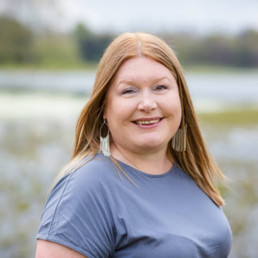
Written by Hannah Wilson
Founder and Director of the Belonging Effect (formerly Diverse Educators).
Last week, I had the privilege of chairing a panel at the IAPS Heads’ Conference exploring a question that sits at the heart of my work: how do we cultivate a culture of belonging for all?
I was joined by three school leaders, Charlotte Crookes, Fergus Llewellyn and Sadia Hussain-Savuk, who generously shared their personal and professional journeys through Diversity, Equity, Inclusion and Belonging (DEIB).
What struck me throughout our conversation was not a claim to expertise or a presentation of perfectly packaged solutions. Instead, there was honesty, vulnerability and a willingness to share what had been learnt along the way. Their reflective and inclusive leadership modelled how we need to show up to start the work and how we position ourselves in order to sustain it.
Belonging is not something we complete
I framed our conversation by considering what we actually mean when we talk about belonging. For me, belonging is about being seen, heard, included, valued and safe. It is about being able to bring our whole selves into a space without having to edit, minimise or leave parts of our identity at the door.
Belonging is not something we achieve, tick off and move on from. It is dynamic. It is relational. It is contextual. Most importantly, it is cyclical.
As our communities change, our understanding needs to change with them. As we learn more about the lived experiences of our pupils, staff and families, we need to be prepared to question practices that may once have seemed inclusive. As the world beyond our school gates changes, we need to consider what those changes mean for the people within them.
The work is never ‘done’.
Looking in the mirror before looking out of the window
One of the recurring themes in our discussion was the importance of reflection. Before asking what everybody else needs to change, leaders need to be prepared to look closely at themselves and their organisations:
- Who feels that they belong here?
- Who does not?
- Whose voices are heard most loudly?
- Whose experiences might we be missing?
- Who has learnt to navigate our culture successfully, and who is expected to adapt themselves in order to fit in?
And, perhaps most provocatively for independent schools: are we really as inclusive as we believe ourselves to be?
These are not comfortable questions. Nor should they be. Cultivating belonging requires us to look in the mirror before we look out of the window.
Responding to the world beyond the school gates
Our conversation also explored the responsibility schools have to respond to what is happening in wider society. I asked Charlotte to reflect on her journey through anti-racism and racial equity, and how school leaders respond when racism, division and social unrest become increasingly visible beyond the school gates.
These moments matter.
Children and young people do not leave the outside world at reception when they arrive at school. Neither do their families or our colleagues. News stories, political discourse, racism, discrimination and social tensions enter our classrooms through the experiences, fears, questions and conversations of the people in them.
Silence communicates something too.
This does not mean leaders need to have an immediate answer to every complex issue. Leadership is not about having all the answers. It is about how we respond when things are difficult, how we support others and the culture we create around us.
Sometimes courageous leadership begins by acknowledging that we do not have all of the answers and need to learn.
Listening to lived experience
Fergus shared reflections from a journey that has considered a range of identities and, crucially, has involved listening to stakeholders about their experiences of school. This is fundamental to bringing the whole school community with us on the journey.
We cannot measure belonging simply by looking at policies, representation or what leaders intended to create. We have to ask people what it feels like to be there. There can be a significant perception gap between our intention and somebody else’s experience.
Listening helps us find that gap. But listening needs to go beyond consultation. If we repeatedly ask people to share their experiences without demonstrating what we have heard, what we have learnt and what we will change, we risk creating consultation fatigue rather than belonging.
The question is not simply: ‘Have we asked?’ It is: ‘What have we changed because we listened?’
Young people should be co-creators, not consumers
Sadia brought another important dimension to the conversation: the role of young people themselves.
Our pupils care deeply about identity, equity and social justice. They notice inconsistency. They question systems. They experience our school cultures differently from the adults who lead them.
So why would we develop DEIB strategies for young people without developing them with young people? It reminds me of the commitment: nothing about us, without us.
Meaningful pupil voice is not about asking pupils to approve decisions that adults have already made. It means creating opportunities for young people to identify issues, shape priorities, challenge thinking and contribute to solutions.
When we involve pupils as co-creators, we communicate something powerful: your experience matters, your voice has value and you have agency within this community. That, in itself, cultivates belonging.
Courage without perfection
As we brought the panel to a close, I asked each panellist what advice they would give to leaders beginning, or developing, their own DEIB journey.
Several themes emerged:
- Being willing to be vulnerable.
- Acknowledging that it does not have to happen to you to matter to you.
- Listening deeply to your stakeholders and involving them as co-creators.
- Distributing responsibility so that inclusion does not become the work of one passionate individual.
- Creating enough psychological safety for people to make mistakes, acknowledge them, learn from them and do better.
- Taking tangible actions, such as signing up to the Halo Code, which challenges hair discrimination.
- Getting started, with small tangible steps to create momentum.
We addressed the fact that one of the dangers of this work is believing that we need to know everything before we can do anything. We do not. We instead need humility, curiosity and courage. We need to know when to lead, when to listen, when to ask for help and when to acknowledge that our understanding has changed.
From intention to impact
I ended the session by thanking Charlotte, Fergus and Sadia for their courageous leadership and their candour. Their stories reminded us that inclusive leadership is not demonstrated by claiming to have got everything right. It is demonstrated by being willing to ask difficult questions, hear difficult answers and respond intentionally to what we learn.
The feedback following the panel reinforced this. One attendee reflected on leaving with a renewed commitment to ensuring every pupil feels ‘seen, safe, valued and supported’, and to creating a culture where belonging is not merely an aspiration but a lived experience.
That distinction matters as:
- Most schools intend for children to belong.
- Most leaders would say they value inclusion.
- Most mission statements contain words such as respect, community, kindness or equality.
The challenge is not necessarily our intention. The real challenge is whether that intention is experienced by everybody.
So perhaps the questions we need to leave ourselves with are these:
- Who belongs in our schools?
- How do we know?
- Who might experience our culture differently from the way we imagine it?
- Whose voice have we not yet heard?
- What are we prepared to change because of what we hear?
And ultimately:
- How will we know when our intention has become impact?
Cultivating belonging is not a project, an initiative or a destination. It is an ongoing commitment to noticing, listening, learning and acting, and then having the courage to begin the cycle again.
Continue the conversation
At The Belonging Effect, our commitment is to Shaping Intention into Impact. Our team supports schools and organisations to move beyond good intentions and create cultures where belonging can be experienced, strengthened and measured.
References and resources
Explore our training and resources on The Belonging Effect website, including our Belonging Toolkit, and continue your professional learning with my book, Cultivating Belonging in Schools.