
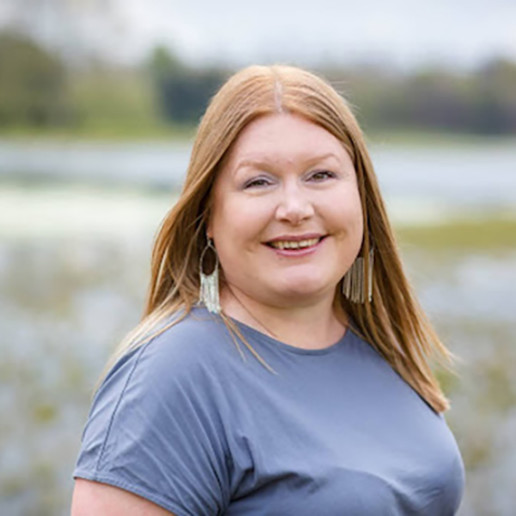
Written by Hannah Wilson
Founder and Director of the Belonging Effect (formerly Diverse Educators).
On Friday, I co-organised and co-hosted a Racial Equity Conference in Sheffield for our partners, Sheffield City Council and Learn Sheffield, in collaboration with our Belonging Effect Associate, Homaira Ibrahim.
We opened the day with Simon Sinek’s Golden Circle, inviting everyone in the room to reflect on and share their why. Why were we there? Why does racial equity matter to us? Why are we committed to doing this work?
Before beginning the programme, we also stood together to show our respect and collectively share our condolences with the family, friends and colleagues of Professor Jason Arday.
It was a poignant way to begin a day centred on race, equity, inclusion and belonging.
But the conference was not simply an opportunity to talk about racial equity. It was an opportunity to explore what racial equity looks like when we examine our systems, interrogate our practice, listen to different lived experiences and consider what we are collectively prepared to change.
Because intention matters. But intention alone does not create equity.
Context and collective responsibility
Our first contributions located the conversation firmly within Sheffield.
Fatima Khan-Shah, Chair of the Race Equality Partnership Sheffield (REPS), explored Sheffield’s race equity journey and the role of REPS, highlighting how race equity sits at the heart of the city’s goals and considering the particular role that education and schools play within this wider context.
Meredith Teasdale-Dixon, Strategic Director at Sheffield City Council, focused on responsibility. How do leaders improve outcomes for children and families across Sheffield? How do we create more equitable opportunities and experiences? And importantly, how do we ensure that our commitment results in measurable change?
Dr Shirley Woods-Gallagher, Assistant Director at Sheffield City Council, then explored belonging through an anti-racist lens.
Her contribution connected race, identity, power and inclusion with wellbeing, achievement and community cohesion. Drawing on Sheffield’s citywide Belonging Framework and wider inclusion work, she challenged us to consider how anti-racist practice moves beyond policies and statements of intent and becomes visible in our everyday behaviours, relationships and decision-making.
There was an important thread emerging: racial equity cannot belong to one team, one strategy, one leader or one organisation – it requires collective responsibility. It also requires effort as mentors, coaches and sponsors. Shirley’s role as mentor coach acting as the ladder and lamp for an AuDHD Black trainee teacher really stood out for very many of the audience.
Moving from allyship to advocacy
My contribution to the day focused on allyship and advocacy and, specifically, the journey we take as allies. I invited colleagues to reflect on privilege, vulnerability and our willingness to get things wrong.
Anti-racist work can create discomfort. It can surface strong emotions. It can challenge our perception of ourselves as inclusive people and force us to recognise the occasions when our intentions and our impact have not aligned. But discomfort cannot become an excuse for disengagement.
We need to develop the confidence and courage to create and hold safe spaces for difficult conversations. We need to become more comfortable with being challenged, with learning from mistakes and with recognising what we do not yet know. And we need to be prepared to challenge language, behaviours, decisions and practices that exclude or disadvantage others.
Jennifer Brown’s Allyship Continuum invites us to consider a journey from Apathetic to Aware, from Aware to Active, and ultimately from Active to Advocate.
Perhaps one of the most important questions we can ask ourselves is not simply:
Where do I think I am on that continuum?
But:
What evidence would somebody else use to place me there?
Allyship is not something we declare. It is something other people experience through our choices, behaviours and actions.
Holding the space for inclusion and belonging
Professor Paul Miller, from the Institute for Equity at University Centre, challenged us through his provocation, Democratic Failure or Democratic Resistance: Holding the Centre-Ground in the Fight for Inclusion and Belonging.
His contribution created space for us to think about the wider environment in which our work is taking place and the importance of continuing to engage with questions of inclusion and belonging when they are contested.
Anti-racist practice does not happen in isolation from society. Our schools, organisations and communities are influenced by the narratives, tensions and inequalities that exist beyond their walls.
This means that our commitment to equity cannot simply be reactive. It requires us to understand the context in which we are leading and educating, while remaining clear about our responsibility to create environments in which every child, family and colleague can experience dignity, safety and belonging.
Intersectionality changes what we see
One of the most important themes of the day was intersectionality. Too often, our organisational approaches separate different aspects of inclusion into parallel workstreams. Race sits here. SEND sits there. Gender, faith, socio-economic disadvantage and other aspects of identity sit somewhere else. But people do not experience their identities separately.
Domini Choudhury, Associate at The Belonging Effect, explored what happens when we frame SEND intersectionally. Her session challenged colleagues to consider the multi-layered barriers some learners and their families navigate when trying to have their needs recognised and met. These include societal and systemic barriers within the SEND system itself, but also culturally specific barriers to diagnosis and support.
Cultural and religious frameworks can shape how disability and additional needs are understood. Practitioner bias and unconscious assumptions can influence whose needs are recognised, how behaviours are interpreted and what support is offered.
This creates an important challenge for leaders:
- What happens when we interrogate our SEND data through an intersectional lens?
- Who is being identified?
- Who is not?
- Who receives support, and when?
- Whose behaviour is interpreted as a need and whose is interpreted as a problem?
The data we collect matters. But the questions we are prepared to ask of that data matter too.
Language, identity and the experiences of Black boys
Johnoi Josephs and Albert Adeyemi, founders of Black Men Teach, focused our attention on the educational experiences of Black boys. Their contribution explored the relationship between the language we use and the realities and self-belief we help to create.
Language is never neutral. The words we use to describe children communicate expectations. They shape relationships. They influence how other adults perceive a child and, over time, can influence how that child perceives themselves.
Johnoi and Albert invited us to think intentionally about how we build pride, belonging and positive identity both inside and outside the classroom, and how we create accessible and empowering learning environments in which Black boys can thrive.
This requires us to move beyond deficit narratives and ask different questions:
- Not What is wrong with this child?
- But What might this child be experiencing?
- Not Why will this family not engage?
- But What barriers might we have created to engagement?
- Not simply How do we raise achievement?
- But How do we create the conditions in which children feel seen, valued, understood and able to succeed?
Whose lived experience are we centring?
Olivia Morrison from The Traveller Movement brought another vital perspective to the conversation. Her session explored the discrimination experienced by Romani (Gypsy), Roma and Irish Traveller people, the equality gaps that persist, and the importance of working in genuine partnership with the communities.
Central to this was the need to centre lived experience within anti-racist activity. There is an important distinction between designing for communities and working with them.
If we are serious about equity, we cannot assume that professional expertise gives us all of the answers. We need to listen to people whose experiences of our institutions and systems may be very different from the experiences we believe we are creating. That requires humility. It also requires us to ask who is missing from the conversations in which decisions about them are being made.
Bringing the conversation back to Sheffield
Homaira Ibrahim, Race Equality Partnership Manager at Sheffield City Council and Belonging Effect Associate, brought the different threads of the day back together through the specific context of race, ethnicity and belonging in Sheffield schools. She shared findings from Sheffield’s Race Equality Commission and its recommendations for education, alongside the city’s ethnicity data and current landscape.
She also highlighted the work of AREAS, the Anti Racist Education Alliance Sheffield, the support available for Sheffield schools and opportunities for future collaboration.
This was important. National conversations help us understand patterns and systems. Research helps us understand evidence. Lived experience helps us understand impact. But ultimately, equity work also has to become local:
- What does our data tell us about our children?
- What are our families telling us?
- What patterns can we see within our institutions?
- And what are we going to do about them?
From conversation to collective action
We ended the day with roundtable discussions prompted by Sheffield City Council’s Director of Belonging, Steve Kay.
Three questions were posed:
- What support, resources or opportunities would help you further develop your anti-racist practice?
- What actions can we take collectively to improve outcomes and opportunities for Roma children, families and communities?
- How can we strengthen engagement with marginalised groups to ensure equitable access to Early Years provision?
For me, these questions captured something important about the day. They moved us from What have we heard? to What are we going to do?
Because conferences can create powerful moments of reflection, connection and learning. But the real test comes afterwards – what changes when we return to our schools, teams, organisations and communities?
We show up. We stand up. We speak up. We check in.
We ended the conference by making commitments:
- We show up – Not only when conversations are comfortable or when racial equity is on the agenda, but consistently.
- We stand up – We challenge inequity when we encounter it. We notice who has power, who has access, who is heard and who may be overlooked.
- We speak up – We use our voices, our influence and our privilege to challenge exclusion and advocate alongside others.
- We check in – We listen. We reflect. We seek feedback. We examine our impact. And when necessary, we change our approach.
Anti-racist practice requires us to move through the fear zone, into the learning zone and onwards into the growth zone. It requires curiosity, humility and courage. And it requires action.
The question is not simply whether we care about racial equity. I imagine that most people who chose to spend Friday in that room do.
The harder questions come next:
- What will we notice that we did not notice before?
- What will we question that we previously accepted?
- Whose experiences will we seek to understand?
- What conversations will we now be willing to have?
- What will we challenge?
- What will we change?
Because our commitment to racial equity cannot be measured solely by what we say in rooms where people have gathered because they already care about it. It must be visible in what happens when we leave those rooms. That is where awareness becomes action. That is where allyship becomes advocacy. And that is where we begin shaping intention into impact.
Continue the learning
For those wanting to continue their learning and reflection, my recommended reading from the day was Emma Dabiri’s What White People Can Do Next.
Professor Miller has also shared the article that he cited in his talk: A common enemy approach to anti-racism in higher education | THE Campus Learn, Share, Connect
The Belonging Effect also has a range of free resources to support individuals, schools and organisations in developing their DEIB practice, including our DEIB Calendar, blogs, toolkits, reading lists and glossaries.
Further development opportunities discussed during the day included Sheffield City Council’s Developing Racial Literacy programme, The Belonging Effect’s Diverse Leaders programme, and our Anti-Racism Virtual Conference.
The conference may have ended on Friday. The work, of course, needs to continue and be sustained.