
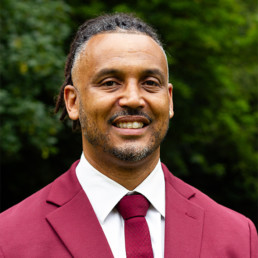
Written by Adrian McLean
Ambassador of Character, Executive Headteacher, TEDx Speaker, BE Associate Trainer & Coach, Governors for Schools Trustee, Positive Disruptor
My family and I were like most people across the country. We had been waiting for the new Wicked film to drop. We booked release day and went in ready for the spectacle. The film delivered what we expected: strong performances, sharp visuals and a story that still hits. But I walked out thinking about something else entirely. Beneath the entertainment sat a message about power, belonging and corruption that felt uncomfortably close to home. That is what pushed me to write this piece.
Wicked lands because it shows how fear, pressure and status can twist people who start with decent intentions. You watch two leaders take different paths, both shaped by the same system that rewards silence and punishes dissent. That world is fiction, but the pattern matches the UK’s struggle with Diversity, Equity, Inclusion and Belonging (DEIB). When a system prizes comfort over justice, virtues start to warp into vices and inequality becomes normal.
The Emerald City and the Illusion of UK Stability
Elphaba is excluded from the start. Her difference becomes a tool for control. The Wizard turns that fear into policy by stripping the animals of their rights. Oz calls itself prosperous, but the shine hides a rotten core.
The UK does the same. The claim of stability masks persistent, recorded inequities. Black Caribbean pupils are still excluded from school at far higher rates than White British pupils, which fuels the Schools to Prison Pipeline. Minority ethnic jobseekers continue to submit far more applications for the same employer interest. Data from the Social Metrics Commission shows Black and minority ethnic people are more than twice as likely to experience relative poverty and face higher exposure to fuel and food insecurity. None of this is new. It is repeated in every major review that looks at structural inequality.
The pattern is simple. Exclusion begins with a label, then becomes a story, then becomes a policy. When a state or organisation frames a group as a threat to stability, belonging becomes conditional and rights become flexible. Oz had the silencing of the animals. We have exclusions, unequal labour market outcomes and cost of living impacts that fall hardest on the same groups every time.
Virtues Turned into Vices
Wicked shows that the Wizard’s regime survives because people with influence let their virtues bend under pressure. They do not wake up intending to harm anyone, they drift into it.
Glinda thrives because she is charming and quick to connect. Her core virtue is affability. She wants harmony, status and approval. Under pressure, this slides into moral silence. She denies Elphaba to keep her place in the system and tells herself that compromise keeps things stable.
The UK has Glindas’ in politics, business and education. These are the institutional centrists who talk about fairness without taking risks that would cost them capital or access. They avoid reforms that would unsettle sponsors, investors or senior colleagues. When DEIB becomes politically inconvenient, they retreat. Their instinct for consensus turns into complacency and the result is stalled progress.
Elphaba’s driving virtue is conviction. She sees injustice and refuses to look away. She fights for the animals when no one else will. Under pressure, this hardens into isolation. She stops listening and her stance becomes so rigid that her allies shrink back. The regime uses that isolation to paint her as the problem.
The UK has Elphabas in social movements, school leadership and community activism. They push equity forward when institutions resist. The risk is that their conviction becomes inflexible. When leaders hold the line alone, they become easy to discredit. They get written off as difficult, extreme or disruptive, even when their claims are evidence backed.
The Wizard builds his authority by shaping the story people live inside. He presents order, progress and unity. Behind the curtain is manipulation and fear. His virtue is charisma coupled with organisational skill. Under pressure, this becomes populism. He manufactures enemies to distract from his failures.
The UK has seen its own operators of conformity. The rise of symbolic politics is one example. The volume of flags, organisational figureheads and public posturing has increased while pay gaps, attainment gaps and poverty rates keep widening. It is easier to demand visible allegiance than to fix structural problems.
A core tactic in this pattern is the creation of a convenient scapegoat. In Wicked, the Wizard convinces the public that Elphaba is responsible for every disruption in Oz. The accuracy of the claim is irrelevant. The story does the work. Parts of UK discourse follow the same script when complex economic pressures are reduced to a simple claim that immigrants are the cause of national strain. This persists even when economic data shows that immigration contributes net labour, tax revenue and essential workforce capacity. The point is not evidence. The point is to give the public a target that keeps attention away from systemic failure. When critics raise equity issues, they are dismissed as divisive or ideological. This mirrors the way the Wizard and Madame Morrible brand Elphaba as wicked to steer attention away from his regime.
Defying the Wizard: finding the mean
Elphaba’s turning point comes when she stops running and confronts the system head-on. She rejects the false choice between silence and isolation. She does not become Glinda. She does not become a fanatic. She chooses the difficult mean between the two.
The UK needs the same shift. Our current system rewards leaders who avoid conflict or leaders who burn out fighting it alone. We need leaders who will act before the next inquiry or crisis forces their hand. That requires policy choices that tackle the structural inequities we keep measuring but rarely fix.
Three moves that will help to shift the system.
- Mandatory and enforced pay transparency
Ethnicity and disability pay gap reporting should match the current gender reporting model with annual publication and mandatory action plans. This exposes the blocks that keep certain groups stuck at the bottom of organisational hierarchies. When data is public, silence becomes harder and accountability becomes real. This cuts off the pattern where affability turns into complacency. - De-biasing the talent pipeline
Hiring and promotion systems need unbiased review at the early stages and consistent scoring frameworks at later stages. Several public bodies and trusts have already piloted these methods with measurable gains in fairness and diversity. The point is not ideology. It is basic organisational integrity. Merit cannot be judged if bias enters the process before talent is seen. This stops conviction from becoming isolated because people no longer have to fight as lone moral actors to access opportunity. - Anchoring belonging in policy
Belonging cannot remain an aspiration or marketing phrase. It needs to sit inside the cost of living strategy, local authority funding decisions and NHS workforce plans. Policies should undergo Equality Impact Assessments (EIA) that account for race, disability, gender and income as a minimum. The data already exists. The gap is political will. Without structural safeguards, the same groups get hit first every time the economy tightens.
The most potent lesson from Wicked is that silence and fear serve the powerful. Until the core structure of the UK (Emerald City) is challenged, the wicked labels, the resulting inequalities and the denial of Belonging will persist.
Call to Action
Belonging will not grow by itself. It grows when people stop accepting shortcuts, scapegoats and silence.
- Challenge claims that have no evidence. Look at the data, not the headline.
- Ask leaders for the numbers behind their decisions and push for policies that close gaps rather than mask them.
- In workplaces, demand transparent reporting, fair recruitment and consistent standards.
- Back colleagues who raise equity issues instead of leaving them exposed.
These steps are not dramatic, but they are the ones that stop a society falling for the Wizard’s story and start shifting it toward something fairer.