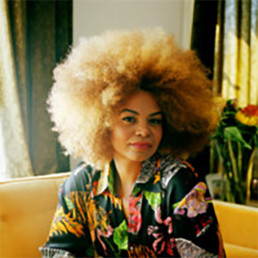
Written by Emma Slade Edmondson
Emma Slade Edmondson is a sustainability consultant, writer, journalist, podcaster, TEDx speaker, presenter and founder of ESE Consultancy. She is recognised as a Forbes 100 environmentalist and is deeply interested in an intersectional approach to environmentalism. She is the co-host of the Mixed-Up podcast, the co-author of The Half of It and the author of Mixed.
It took me a long time to understand that ‘belonging is not a destination – it’s a journey’. It was journalist and broadcaster Afua Hirsch that first shared this nugget of wisdom with me during an interview on my podcast ‘Mixed Up’ and I’ve carried it with me ever since.
When I was young I remember there being a lot of questioning… What felt like an incessant need for others to unpack and define ‘who’ and perhaps ‘what I was’ seemed to be to an underlying theme. From quite a young age – I believe I knew instinctively that this was inextricably tied to the idea that I was a mixed-race child, and later as the boom and bust of youth arrived – a mixed-race teenager.
Filling out school forms – I often ticked the ‘other’ box, wondering which part of me it was meant to capture…P.E teachers reading me in a sea of caucasian children as ‘Black’ would ask me why I couldn’t, or worse – wouldn’t fulfill my potential on the running track – you see “they could tell by looking at me that I had the potential”…I remember classmates telling me what they thought I was, as if my own story were a puzzle they could confidently solve.
And outside of school hours when I was seen with my family – I fielded questions about whether I was adopted? Where was my Black parent? How could this be my mum? Why didn’t we look alike? Were those my step brothers?
The last question I found always left a particularly bad taste in my mouth as we never use that kind of language in my household. My brothers are my brothers – it’s as simple as that..
Some days, I felt like I could belong across cultural divides. Other days, I didn’t feel I belonged anywhere at all. And I don’t think I became aware of this until I was in my 30’s but those small moments, a question in a hallway, a look of confusion at a family gathering quietly shaped how I saw myself.
There wasn’t one particular moment when things changed for me but I do know that finding my voice and the confidence to assert myself and my identity began with creating space for other voices. In 2020 I launched the Mixed Up podcast – exploring race, identity and belonging through the lens of the Mixed race identity. The podcast was born from a simple idea: that mixed heritage people were asking for a safe space to talk about who they are,about their lived experiences and their histories without having to simplify them, and without judgement?
What I learned through those conversations surprised me. Again and again, guests shared the same sentiment – they were not just asking to be seen, but to be understood. Belonging, I now know, is as much about fostering community and confidence and creating spaces for others as it is about finding out where you fit..
The podcast became a space for conversation rather than answers. I wanted to hear how other people navigated their own layered identities, how they made sense of heritage, of multiple and blended cultural touchpoints, language, and belonging.
Through interviews with ordinary mixed race people wanting to share their stories to those with extraordinary stories of displacement and loss, anti miscegenation and adoption – to conversations with mixed actors, historians, psychologists and even a pretty iconic moment with Mel B – each episode was part therapy, part learning curve. Through this dialogue, I started to see my own experiences reflected back to me and I felt an immense sense of connection and pride.
I wanted to keep sharing the beauty and the challenge of what I’ve learned through all of the insight and the stories I’ve been gifted by so many people over the years and writing Mixed– (a children’s book dedicated to exploring and celebrating your mixed identity) felt like the perfect next chapter.
I wanted to create something young people can hold in their hands and something families and educators could return to for support. In a world where identity is often debated or categorized, it is my hope that the book offers gentle guidance, that it can facilitate reflection, recognition, and a permission for children to see themselves, not as half – but as whole – not as too much of one thing and not enough of another – but whole.
There are two things I really love about ‘Mixed – Explore and Celebrate Your Mixed Identity’. Firstly – that the book is based on the idea of pen pals so each chapter starts with an inspiring letter from a Mixed Race icon with lots of wisdom to share. I loved pen palling when I was young and I feel like it opened up the world to me, teaching me the importance of asking questions and learning about others. I wanted to reintroduce this idea to children.
Because the book features letters from the likes of poet – Dean Atta, footballer Ashleigh Plumptre, actress Jessie Mei Li, author Jassa Ahluwalia, and activist Tori Tsui among others – readers will get insight into a range of lived experience perspectives that traverse different cultures and ethnicities. I hope readers will feel seen and that parents and educators will use these letters as tools to foster conversation and exploration with their students.
Secondly I’m really proud of how many practical exercises I’ve been able to include in the book that can be done between a child and a parent, caregiver or educator – from working on talking about our Mixed identities and learning to describe ourselves in a way that suits us, to learning terms and language like ‘cultural homelessness’and ‘misidentification’ to help us describe uncomfortable interactions and situations that might come up for us.
Ultimately I hope this book helps its readers – whether mixed children, parents, educators or otherwise – understand and appreciate that the mixed race identity is best approached as an ongoing conversation, and a dialogue – not a destination or a foregone conclusion.
My Top Tips for Educators who want to include and facilitate exploration of the mixed-race experiences of their students:
- Normalise multiple heritages in the curriculum – represent mixed-race voices across subjects wherever possible.
- Create space for student storytelling – invite learners to share their intersecting identities. Ask them to share how they identify themselves and why whenever you can. You may find this is a surprising and delightful question. *The first time I was asked this was by a guest on my podcast when I was well into my 30’s and I must say it was an epiphany moment for me.
- Address assumptions gently – guide students to question fixed labels and fixed categories, especially when they don’t feel like they fit.
- Model inclusive language – celebrate rather than erase nuance and complexity and avoid flattening storytelling or description that involves multiple cultural POVs.
- Partner with families – ask what cultural strengths they’d like reflected in class.
Celebrating Multiculturalism at Home & School
- Build festivals of culture that go beyond tokenism.
- Showcasing music, food, stories and languages from all backgrounds and celebrating mixed heritage families where these cultures may intersect and overlap is more important now than ever given the current geo-political context and the political landscape Britain is facing. Cultivate ways to remind students that their layered cultural heritage is something to be explored, shared and celebrated.
- Foster curiosity over correctness – teach children to ask about their classmates’ heritage or identity with respect. Asking rather than telling others about their identity is key.
Supporting Linguistic Diversity
- Value home languages as intellectual assets.
- Celebrate code-switching as a cognitive and cultural skill, not a deficit or a deceit. Often Mixed Race people’s ability to move through different cultural landscapes can be described as deceitful, dishonest or duplicitous – we need to normalise the idea of being able to straddle worlds and cultures when you’re of mixed heritage because it may be part of your identity fluidity and daily vernacular.
You can get your copy of Mixed – Explore and Celebrate your Mixed-Race Identity here.