
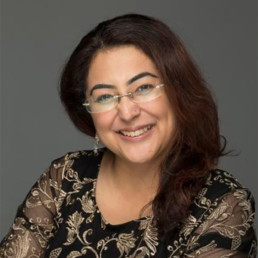
Written by Saiqua Hussain
Saiqua Hussain is a school leader and researcher passionate about supporting young women from global majority backgrounds into education and leadership. Her MA research (King's College London) explored how South Asian women build legitimacy as leaders in English secondary schools. She is a Trustee at a Grammar School and an elected member of the Chartered College of Teaching.
For a long time, people told me, kindly I think, that what I needed was more confidence. That if I just believed in myself a bit more, put myself forward a bit louder, the recognition would follow. I let that explanation sit for longer than I should have, because it was easier than the alternative. The truth was simpler and harder to say out loud: I already knew I was good. I was just as qualified, just as capable, often more prepared than colleagues who were moving ahead of me. I wasn’t missing self-belief. I was missing something else entirely, and it wasn’t mine to fix.
That question sat with me long enough that I eventually built a Master’s research study around it. How do South Asian women aspiring to headship, or in the early years of it, construct leadership identity and legitimacy in English secondary schools? Twelve headteachers and deputy headteachers later, what came back confirmed what I had lived. It wasn’t a confidence gap. It was a recognition gap.
Competent is not the same as recognised
One of the clearest findings to emerge was that competence, formal authority and recognised legitimacy are three different things, not one thing that automatically follows from the others. A woman could be highly competent and still not be seen as ready. She could hold a senior title and still find her authority wasn’t assumed the way a colleague’s was. Being right about your own ability isn’t the same as having that ability believed.
That’s what I’d been living without quite having the language for it. I did the work. I had the results. And still I found myself doing something extra that I don’t think my peers were doing. Building the evidence case before anyone asked me to. Saying yes to the harder, less visible tasks. Making sure there could be no question, because I already knew there would be a question anyway.
The women in my study described the same pattern in their own words. Some of it showed up as code switching, adapting how they presented themselves depending on the room, sometimes strategically, but sometimes protectively, to pre-empt being dismissed. And sometimes it meant quietly folding parts of themselves away, because the room hadn’t made space for the whole person. None of it was about building confidence. It was about surviving an environment that granted trust unevenly.
From waiting to be granted, to self authorisation
The most important thing the research gave me wasn’t a description of the problem though. It was a way through it. Leadership identity is often described as something you claim and others grant. You put yourself forward, and the people around you either recognise that claim or withhold it. What I found, repeatedly, was a third move that happens when that granting becomes too inconsistent to rely on: self-authorisation. At some point, the women I spoke with, and I recognise this in my own story too, stopped waiting for permission that wasn’t reliably coming, and started generating their own legitimacy from within.
I don’t think that’s an inspirational footnote. I think it’s a necessary adaptation to a system that hasn’t caught up, and it shouldn’t have to be necessary at all.
What I’d want other women to take from this
If you’ve been told your problem is confidence, and it hasn’t sat right with you, trust that instinct. You may not be missing belief in yourself. You may be doing accurate, clear-eyed work in an environment that hasn’t yet learned to see it without being made to look twice. Naming that correctly doesn’t undo the extra labour it’s cost you. But it means you stop trying to fix something in yourself that was never broken.