
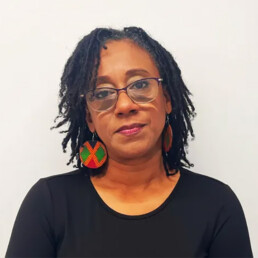
Written by Palma Black
Palma Black is Founder and CEO of Soul Purpose 360 CIC, a Black and Global Majority women's empowerment social enterprise with a membership approaching 2,000 women, based at Soul-Full in Croydon. Palma brings over 30 years' experience in social housing and community regeneration, stakeholder engagement and personal performance coaching. Soul Purpose 360 is one of the Big Issue's Changemakers 2026. Palma is leading #DefinitionRedefined, the National Survey of Black Women & Girls in Britain, to shape a proposed National Commission.
I have spent thirty years in rooms where decisions were made about women like me. Housing panels. Regeneration boards. Consultation meetings. Very few of those rooms had women like me sitting at the table. The same pattern I saw in secondary school was the same in the world of work.
So, I learned something early. If I don’t define myself, someone else will do it for me. And they never get it right. In my coaching practice I learned this story belonged to every client I spoke with – the effects devastating. Something needed to be done. That is why, Soul Purpose 360 launched #DefinitionRedefined: The National Survey of Black Women & Girls in Britain. It is a simple idea with a big ambition: to hand the pen back to the people who have been written about for far too long.
The definitions we inherit
Black girls in Britain are often defined before they have said a single word. Loud. Aggressive. Attitude. Too grown. Prone to violence. These labels follow girls into classrooms, behaviour logs and staffroom conversations, and they quietly shape what adults expect of them.
Researchers call one part of this adultification: Black girls being seen as older, tougher and less in need of protection than their peers. We saw where that can lead with Child Q, the 15-year-old Black girl strip-searched at her Hackney school in 2020. The safeguarding review that followed found that racism was likely to have been an influencing factor. She was a child. She was not treated like one.
As women, the script shifts but doesn’t disappear. We become the ‘Strong Black Woman’: praised for coping, rarely asked if we are coping. Celebrated for resilience, rarely offered rest. Our hair determining our ‘professionalism’ in the workplace. Our sense of dress scrutinised and criticised. In data and policy, we are often folded into “women” or “ethnic minorities” and lost somewhere in the middle, seen in neither picture clearly.
Why a definition is a belonging question
Belonging Effect has done powerful work showing that belonging is more than being let through the door. Tara Elie’s excellent recent blog on Black teacher mattering describes Black teachers being read as “aggressive” simply for speaking assertively. That is a definition imposed from outside, and it chips away at whether someone feels they matter.
Here is what I believe. You can be present in a school, a workplace or a community and still not belong, if the picture people hold of you is wrong. Belonging needs accuracy. It needs to be known, not just seen.
And you cannot know someone accurately if you have never asked them.
#DefinitionRedefined: handing back the pen
The National Survey of Black Women & Girls in Britain is open to Black women aged 18 and over and girls aged 16+, until 31 January 2027. It asks about identity, education, work, health, housing, safety, community, dreams and more. It is deliberately broad, because our lives are. Quantitative and qualitative – because Black women’s voices sit at the heart of this.
We are aiming for at least 2,000 voices, with a stretch goal of 5,000. Those voices will shape a proposed National Commission on the lives of Black women and girls in the UK, built on evidence that comes from us, not about us.
This matters for everyone reading this blog. Many of you teach, lead or support Black girls who are on the edge of adulthood right now. Many of you work alongside Black women colleagues who carry the extra load of representation every single day. Their definitions of themselves belong in the national story.
What educators can do now
Belonging is never “done”, as Belonging Effect reminds us. So here are five practical steps you can take this term:
- Share the survey. Pass it to Black girls aged 16 and over in your sixth form or college, and to Black women on your staff, governing board and parent community.
- Make time and space. Completing a survey about your life takes thought. Offer a quiet room, a lunchtime or a staff network session. Groups can also register to host a Conversation Gathering via our website that has a user-friendly toolkit.
- Audit your language. Look at the words in behaviour records, reports and references. Who gets called “confident” and who gets called “challenging” for the same behaviour?
- Listen without correcting. When Black girls and women describe their experience, resist the urge to explain it away. Curiosity builds trust. Defensiveness breaks it.
- Commit to the findings. Read what comes back next year, and ask what it means for your setting. Listening only matters if it leads to change.
A closing reflection
At Soul Purpose 360, we help women find their soul purpose and use their gifts to uplift others. Again and again, I have watched women grow taller the moment they stop carrying someone else’s description of who they are.
Every Black girl deserves to grow up hearing a definition of herself that she actually recognises.
Every Black woman deserves to be known, not just tolerated.
So let’s redefine the definition, together.
Take the survey or share it: soulpurpose360.co.uk/definition-redefined
Questions, access needs or safeguarding: definitionredefined@soulpurpose360.co.uk