
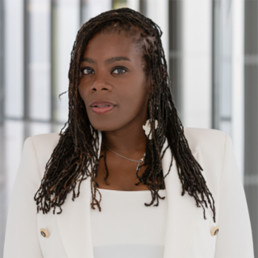
Written by Paulette Watson MBE
Paulette Watson MBE is an award-winning CEO, international speaker, and thought leader in AI, STEM, digital transformation, and inclusive innovation. As Founder and CEO of Academy Achievers, she leads the global #BeMeDigitalInclusion initiative, empowering women and girls, particularly from underrepresented communities, to access opportunities in AI, cloud, cybersecurity, emerging technologies, and the future of work.
“A child could be excluded from opportunity before a teacher even notices — not because of ability, but because an algorithm decided what potential looked like.”
Introduction
Artificial Intelligence is rapidly reshaping education, recruitment, safeguarding, leadership, and the future of work. Every week brings a new tool, a new pilot, a new promise. But while organisations race to adopt AI, a far more urgent question is being left on the table:
Who gets to belong in the future being built?
As the author of She Disrupts: A Black Woman’s Journey in STEM and AI Industries, and through my global work leading #BeMeDigitalInclusion across the UK, Africa, and international networks, I have spent years advocating for equitable pathways into technology, responsible AI adoption, workforce transformation, and inclusive digital futures.
What concerns me most is not AI itself. It is the very real possibility that we automate exclusion at scale and call it progress.
Because AI is not neutral. It reflects the data it is trained on, the systems it learns from, the assumptions embedded within it, and the people who build it. Bias is not removed through automation. Too often, it is amplified.
Leadership Without AI Literacy Is Becoming a Strategic Risk
As a Black woman working across governance, education, digital transformation, and emerging technologies, I have often found myself sitting in rooms where I was both the only Black woman and one of the only people deeply focused on the long-term implications of technology.
I remember completing my Master’s in ICT in 2005, when conversations about automation, digital systems, AI, and emerging technologies were already evolving rapidly. I later completed my MBA in 2008, continuing to explore how technology, leadership, governance, and organisational strategy intersect.
What struck me then, and still concerns me deeply now in 2026, was how many senior leaders responsible for shaping education, workforce systems, safeguarding, governance,
and organisational strategy had little understanding of emerging technologies and their societal impact.
Fast forward almost two decades, and in many spaces, that gap still exists.
The technology has accelerated. So have the risks and the pace of adoption. The risks have accelerated.
The pace of adoption has accelerated.
But leadership understanding has not kept pace.
Too often, AI conversations are delegated entirely to technical teams while boards, governors, executives, and decision-makers remain disconnected from the realities of algorithmic bias, automated decision-making, accessibility, workforce displacement, safeguarding implications, and inclusion.
That disconnect creates operational, ethical, reputational, and human risk. The Belonging Question
One of the most overlooked conversations in AI is belonging. Not representation alone. Belonging.
Belonging is not simply whether someone is invited into the room.
It is whether they can see themselves in the future being built around them.
Through #BeMeDigitalInclusion, I have worked with young girls, Black students, neurodiverse learners, disabled professionals, career changers, educators, and underserved communities who are incredibly capable, creative, and innovative, yet too many quietly disengage because systems subtly communicate:
“This space was not designed with you in mind.”
As someone who is dyslexic, I understand personally how dangerous it is when systems confuse difference with deficit.
Now imagine those same inequalities becoming embedded inside AI systems that shape educational pathways, recruitment, safeguarding, progression, and access to opportunity.
Case Studies in Automated Exclusion
Case Study 1: AI Detecting “High Potential”, But Missing SEND Learners
AI-powered analytics tools are increasingly used to identify “high potential” students, predict attainment, and map intervention pathways. Yet many systems are trained on narrow historical patterns that fail to account for neurodiversity, accessibility needs, trauma, and alternative learning styles.
Through #BeMeDigitalInclusion, I have met young people whose brilliance sits outside traditional systems. If AI only recognises one type of learner, countless young people risk being overlooked before they even have the opportunity to thrive.
Case Study 2: Predictive Behaviour Systems & Black Boys
Research has repeatedly shown that Black boys are disproportionately monitored and excluded from educational systems. If biased historical data feeds predictive AI systems, those inequalities risk becoming digitally reinforced.
Technology should never become a faster route to stereotyping. Yet without intentional governance, inclusive leadership, and bias mitigation, that is exactly what can happen.
Case Study 3: AI Recruitment & Non-Traditional Career Paths
AI-driven recruitment systems often favour traditional career trajectories, elite institutions, and linear progression. But what happens to career changers, mothers returning to work, disabled professionals, self-taught technologists, and community leaders?
They risk becoming invisible, not because of what they lack, but because of what the system was never taught to value.
This matters profoundly in AI itself, where diversity is already critically lacking. The Human Premium
Headlines predict that AI will replace humans. I believe something more nuanced and more urgent is happening.
Human skills are becoming premium.
As automation increases, the value of empathy, ethical judgement, critical thinking, communication, creativity, adaptability, collaboration, cultural intelligence, and leadership will rise significantly.
These are not soft skills.
They are leadership skills.
They are future workforce skills.
And they are the very capabilities that AI cannot replicate.
The future workforce advantage will not belong solely to those who can code.
It will belong to those who can lead humans through complexity, ambiguity, ethics, trust, and change.
AI Literacy Must Become a Human Right
One of the greatest risks emerging now is the unequal distribution of AI literacy.
Too many people are being expected to navigate systems they do not fully understand. Too many children are having decisions made about them by algorithms that their parents, teachers, governors, and leaders have never questioned.
AI literacy cannot become a privilege reserved for technology professionals or elite institutions.
It must become accessible to:
- Teachers
- Parents
- Governors
- Students
- Executives
- Policymakers
- Community leaders
People deserve to understand how algorithms shape decisions, how bias operates, how data is used, and how to participate safely and critically in AI-enabled environments.
Responsible AI Is Not Optional
Responsible AI cannot exist in isolation from diversity, equity, inclusion, and belonging.
They are not parallel conversations.
They are the same essential conversation.
Safe and responsible AI requires:
- Inclusive governance
- Diverse leadership
- Accessible design
- Safeguarding
- Transparency
- Accountability
- Community voice
Without diversity at the centre of AI design and governance, AI risks reproducing inequality on an unprecedented scale.
And without belonging, entire communities may disengage from the very future being built around them.
The #BeMeDigitalInclusion Roundtable
These are exactly the conversations we will continue through the upcoming #BeMeDigitalInclusion Roundtable, where educators, policymakers, industry leaders, governance professionals, and communities will explore:
- Online safety
- Responsible AI
- Workforce transformation
- AI literacy
- Safeguarding
- Accessibility
- Inclusion
- Human skills are becoming premium in the AI era
Because diversity cannot be an afterthought in technological transformation. It must sit at the core, from the first line of code to the first leadership decision. What Educational Leaders Must Do, Right Now
- Build AI Literacy Across Entire School Communities
- Review AI Through a DEIB & Safeguarding Lens
- Include Diverse Voices in AI Decision-Making
- Priorities Human Skills
- Ensure Belonging Remains Visible
- Treat Responsible AI as a Governance Priority, Not Just a Technical One
Educational leaders must act now. Make AI literacy, DEIB, and responsible AI an immediate priority in every school and system. Engage diverse voices, review technology through ethical and safeguarding lenses, and champion human skills and belonging at all levels. Your leadership today will directly shape opportunity, trust, and belonging for generations.
Final Thought
AI will shape the future.
But inclusion will determine whether that future is equitable.
The question is no longer whether AI will transform education and work; it is whether it will.
It already is.
So ask yourself and your organisation: What steps will we take today to ensure everyone can belong in the future we are building?
And who will you include in that decision?
The future will not be defined by the intelligence of our machines alone, but by the courage of our leadership. Let us lead boldly and shape that future together.