Written by Ashtrid Turnbull
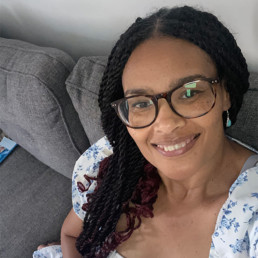
Ashtrid Turnbull is a biologist, a deputy head, and a mother of neuro-distinct twin daughters. Over thirty years in education, she has witnessed how high-achieving, neuro-distinct women across all sectors trade their physical health for professional and personal acceptance.
I have spent twenty seven years as a biologist and a senior leader. For nearly three decades I have lived a double life. In public I am the composed executive navigating the high stakes complexity of professional leadership. In private I have been the woman perpetually apologising for the mess of her own mind.
I have watched countless women like me, the high fliers, the multi taskers, the chaos wizards who can stabilise a company in a crisis but lose their keys while they are still in their hand, be told they are faulty.
We were told that our brains lacked the hardware for focus. We were told our spontaneity was a lack of discipline. We spent years accruing a staggering amount of shame while we tried to squeeze our expansive, electric brains into a dull grey box of neurotypical expectations. I am part of the system that helped build that box. For that I am truly sorry.
The December Revelation
In December 2025, a landmark international study was published in Psychological Medicine by researchers from the University of Bath, King’s College London, and Radboud University (Hargitai et al., 2025). It did the one thing no one has bothered to do in forty years of clinical research into neurodiversity. It stopped looking only for what is wrong with us. Instead, for the first time in a study of this magnitude, they looked at our strengths.
The researchers found that traits like our spontaneity and our ability to hyperfocus are not just personality quirks to be managed. They are biological protective factors. They are linked to higher creativity and a type of psychological resilience that the world desperately needs.
This is the flipping of the script we have waited for. The science finally proves that we are not broken. We are simply a collection of immense strengths that have never been capitalised on properly because the system was too busy trying to medicate them away.
The Metabolic Cost of the Mundane
As a biologist this finding wrecked me. It confirmed that our brains are not generalists. They are specialists. We are built for the high signal and the high stakes. We do not have an attention deficit. We have a biological refusal to waste our life force on the mundane.
When we are forced to operate in environments that prize compliance over brilliance, we pay a massive metabolic cost. We are high definition systems being forced to run on a less than optimised dial up network. The exhaustion you feel is not a character flaw. It is the result of a high torque system being forced to idle for too long. Understanding how to integrate this knowledge into a world that still values the grey box is how we begin to explore the uncomfortable middle ground.
The Ownership of the Middle Ground
I am done with the two extremes of this conversation. I am tired of the ‘ADHD is a superpower’ fluff that ignores the daily struggle. I am equally tired of the ‘just try harder’ boardroom culture that ignores the reality of our biology. The truth is found somewhere in the middle.
Empowerment is not about waiting for the world to become completely ADHD or autism friendly. That is highly unlikely to happen. Real empowerment, the ultimate unmasking, is about taking ownership of your own biology and the energy ledger that comes with it. This requires a three way pact of responsibility.
What we owe ourselves: We owe ourselves self knowledge. We must understand that our rapid scanning of a room is actually a high speed search for a signal. We owe ourselves the bravery to say that while we can solve a crisis in ten minutes, we cannot sit in a two hour meeting without a total exhaustion of our internal resources.
What we owe others: We owe the world clear communication about how we operate. We owe them the effort to find systems that actually serve our high signal hardware, rather than pretending that yet another paper planner is going to save the day.
What others owe us: Others owe us a willingness to adapt and a recognition that focus looks different in a neuro distinct brain. They owe us the space to be brilliant even if it comes with the beautiful, creative mess that often follows in our wake.
Driving the Hardware
The 2025 research is our scientific permission to stop pretending. It is our evidence that our traits are the very things that make us capable of the brilliance the world so desperately needs right now.
We are the ones who stay calm when the atmosphere reaches boiling point, but lose our minds over a tax return. We are the ones who see the patterns others miss because we are looking at the whole sky, while they are staring at the pavement.
We are the ones who can synthesise a thousand disparate data points into a single visionary strategy in an afternoon, but forget to eat because our internal focus is so absolute. We are the architects of the unconventional and the first responders to the impossible. Our brains do not lack order. They simply operate on a frequency that a linear world has forgotten how to tune into.
I am done with the narrative of the broken woman. I am finished with the idea that our worth is measured by our ability to perform administrative gymnastics in an environment that drains our batteries to zero before lunchtime.
It is time we stopped apologising for our hardware. It is time we stopped trying to patch a system that was never actually glitching. We are not a problem to be solved. We are a biological resource to be understood, respected, and finally, driven with the skill and the pride that this incredible machinery deserves.
Call to Action: If this resonates, I want to hear from you.
Whether you are a woman in leadership navigating your own metabolic debt, or a mother supporting a neurodivergent daughter through the triple jump years of Year 10 to university, you are not alone in the mess. It is time we stopped apologising for our hardware and started driving it with pride.
I am currently developing a framework to help chaos wizards move past the narrative of disorder and towards a model of cognitive efficiency.
References: Hargitai, L. et al. (2025). Playing to your strengths improves wellbeing in ADHD. University of Bath. Read the study summary here.